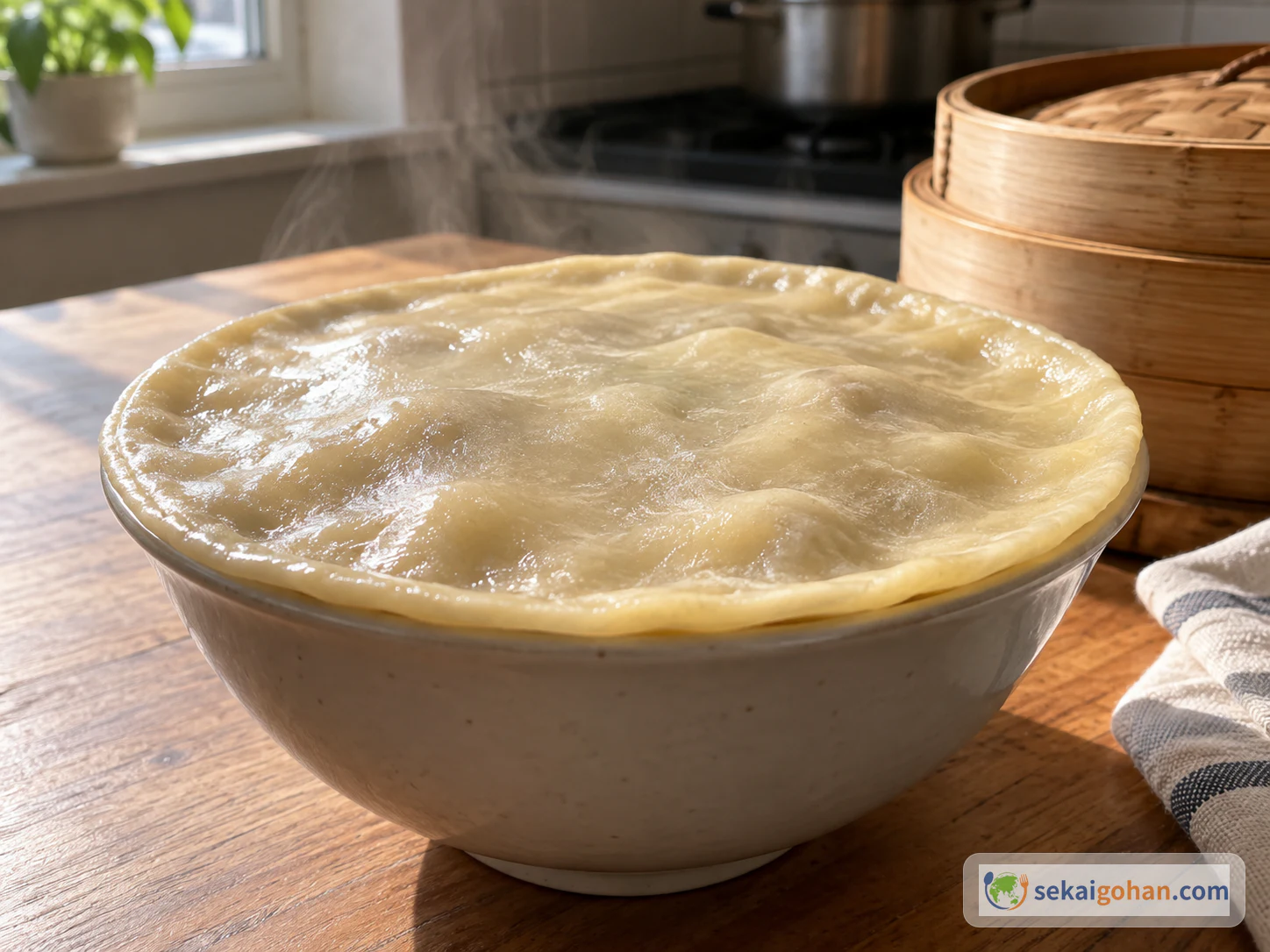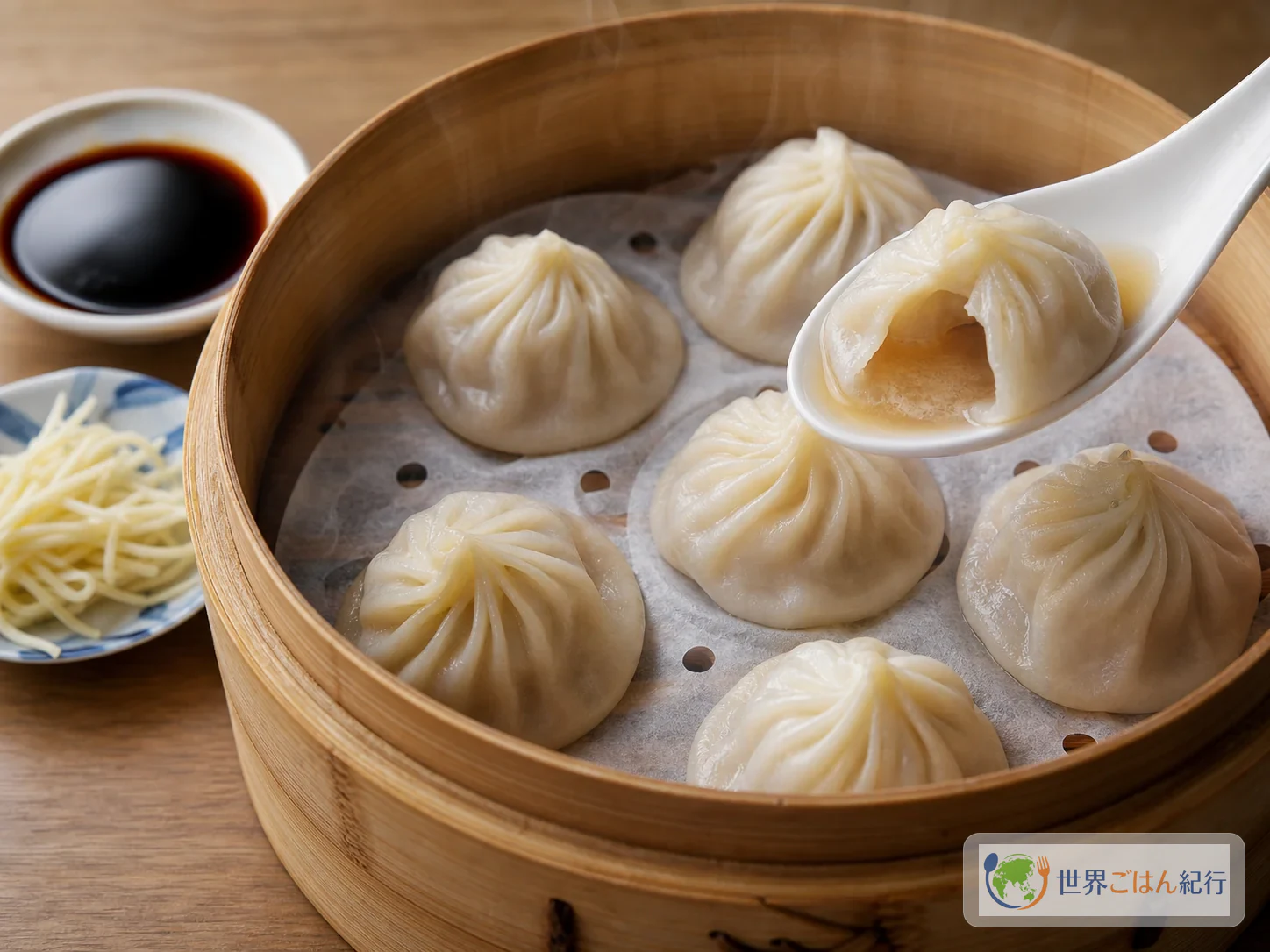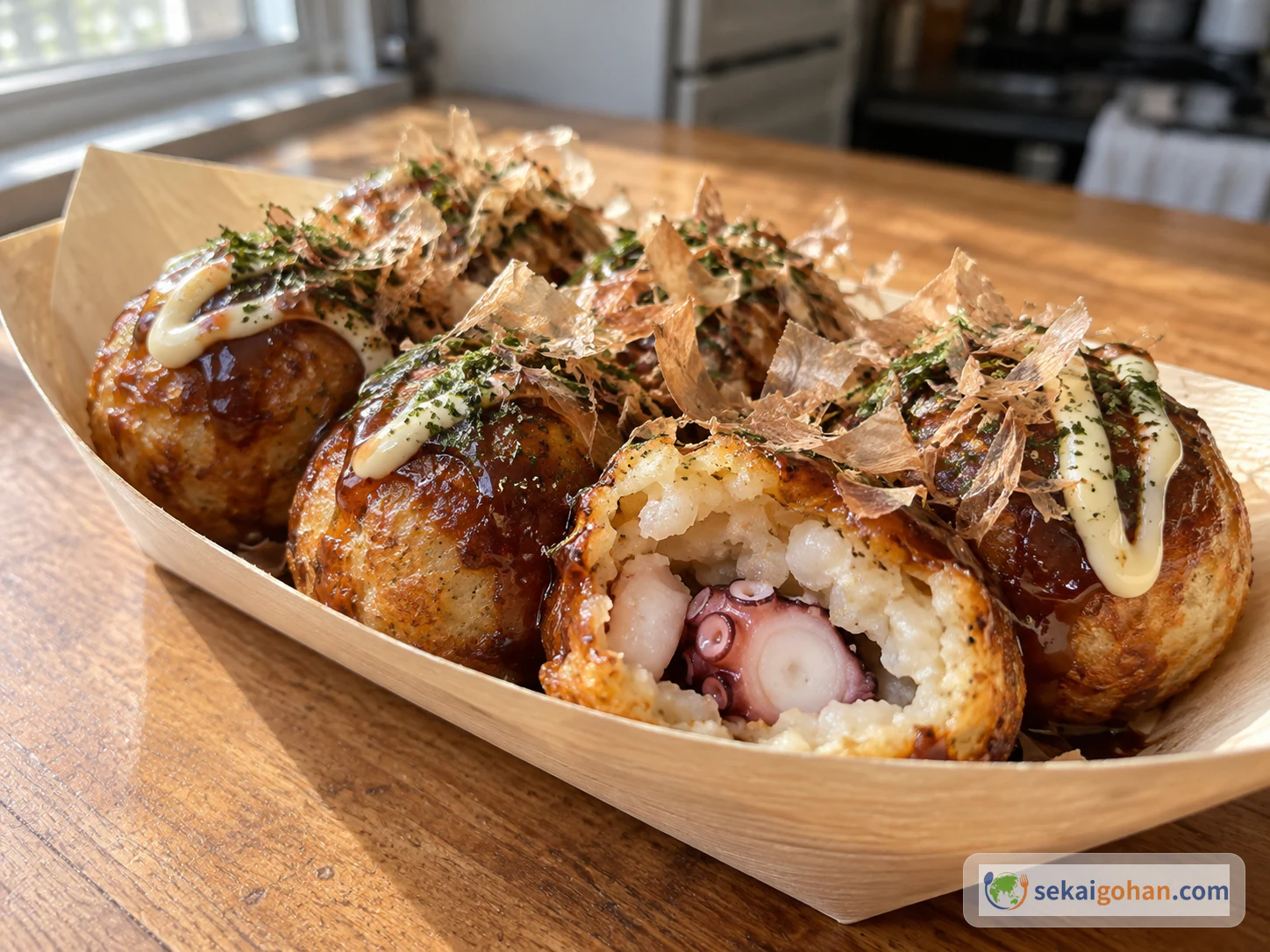
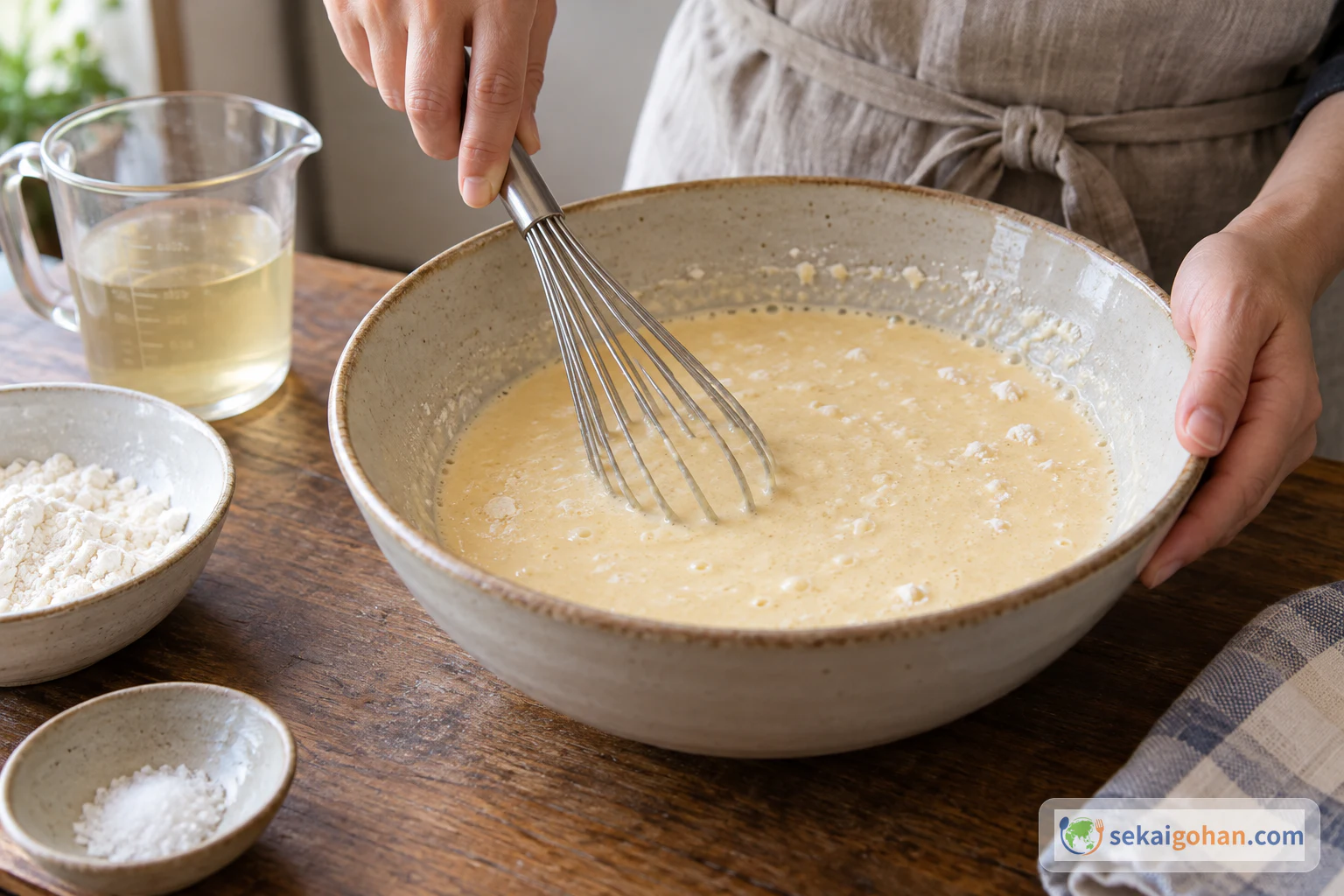
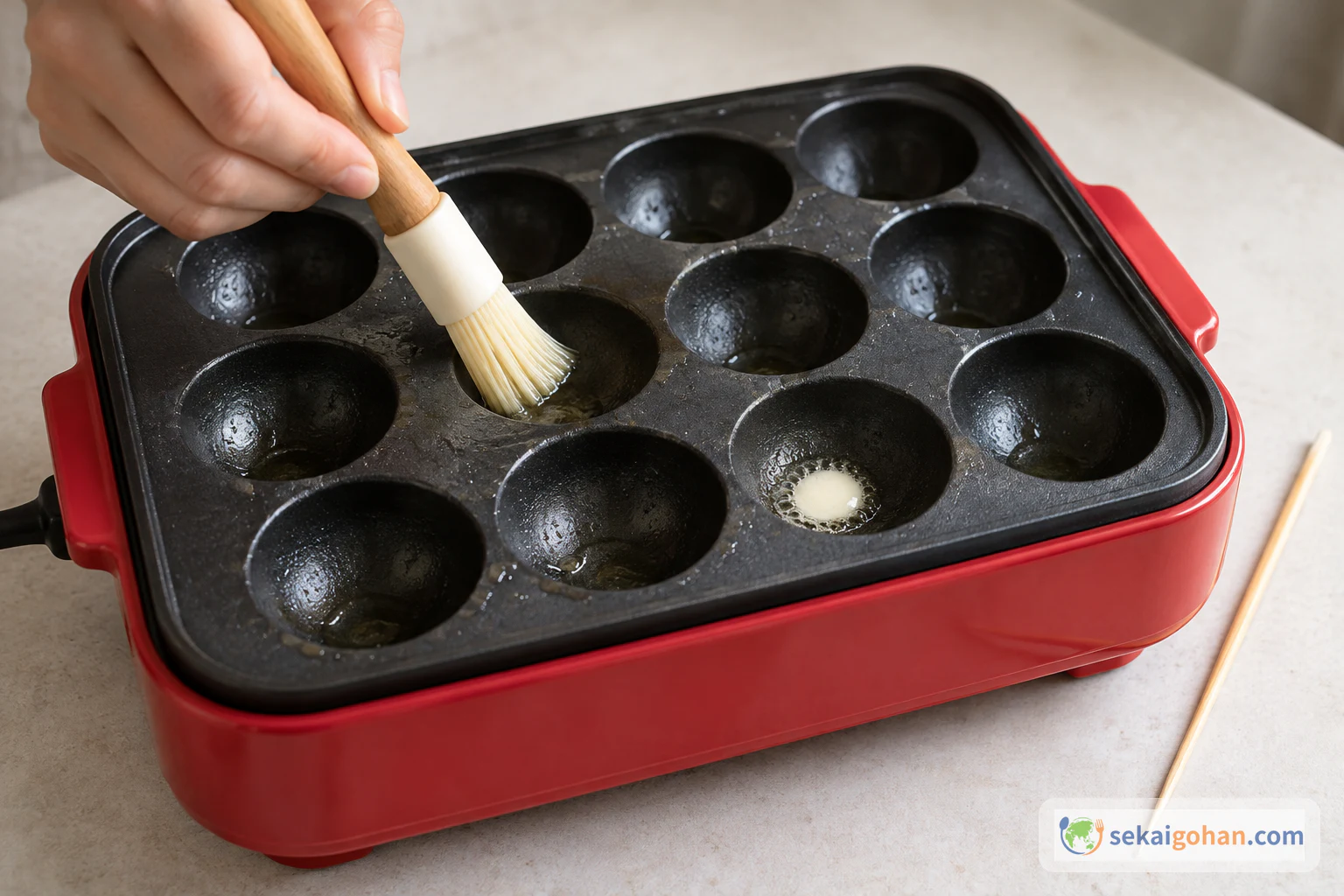
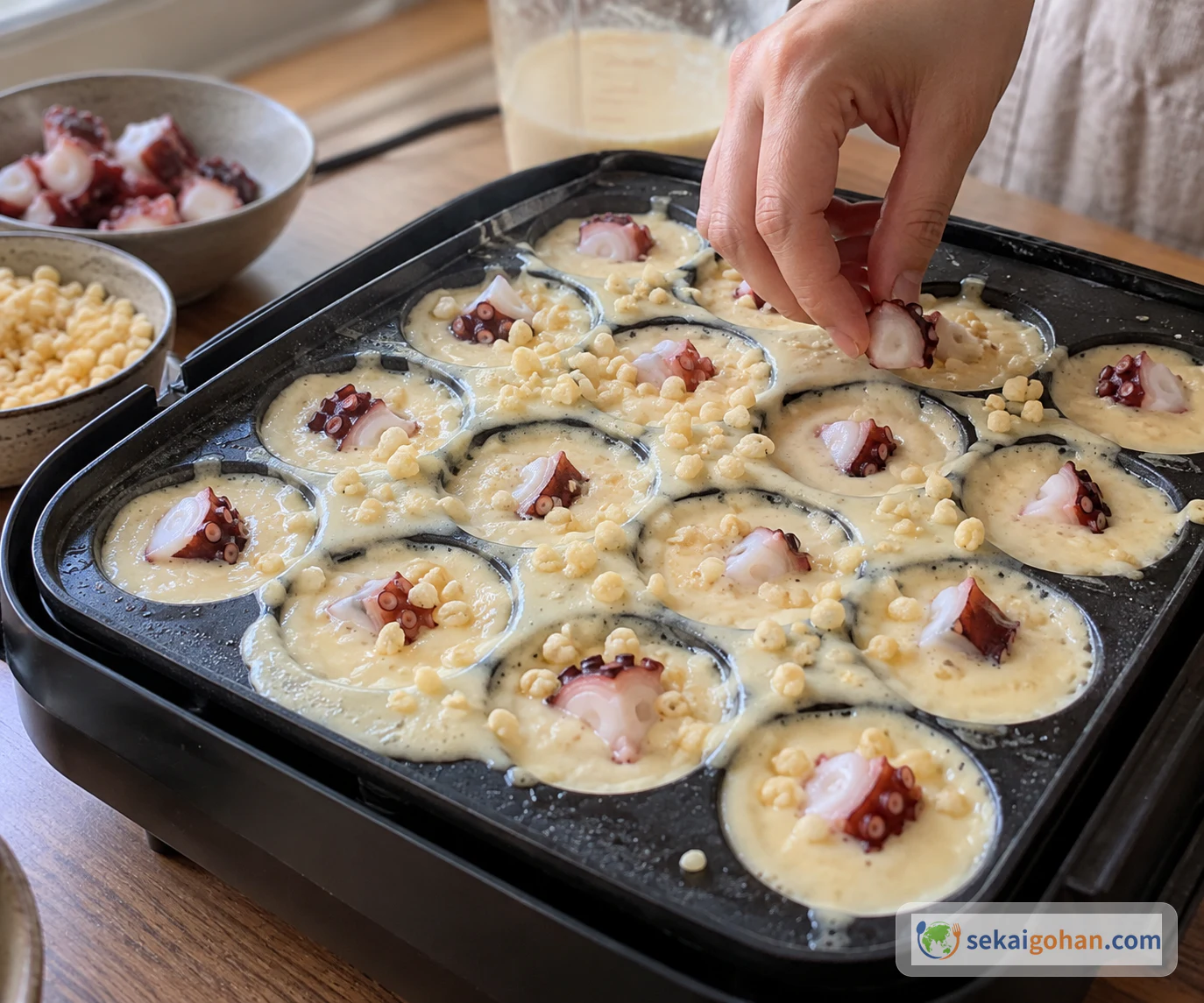
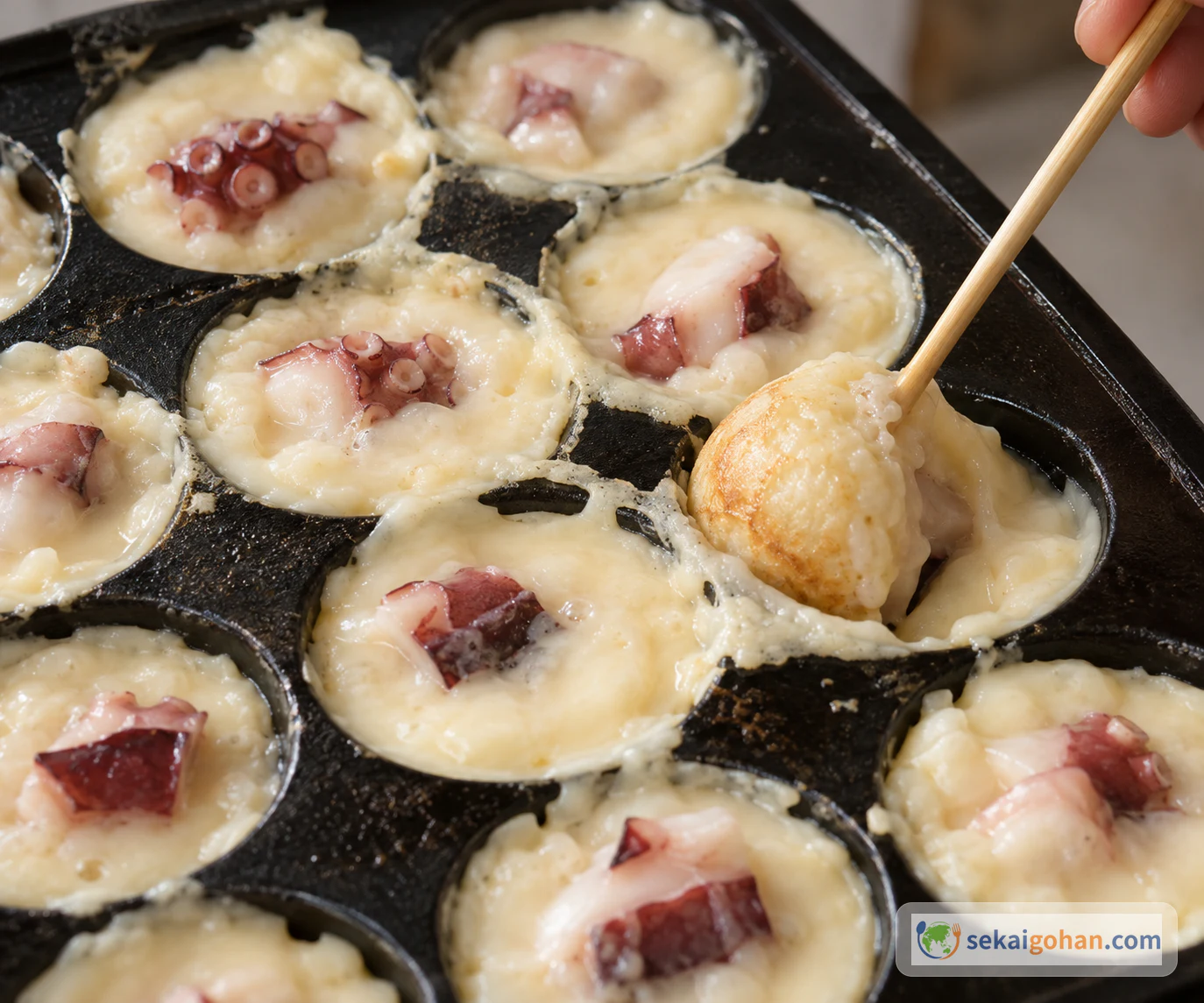
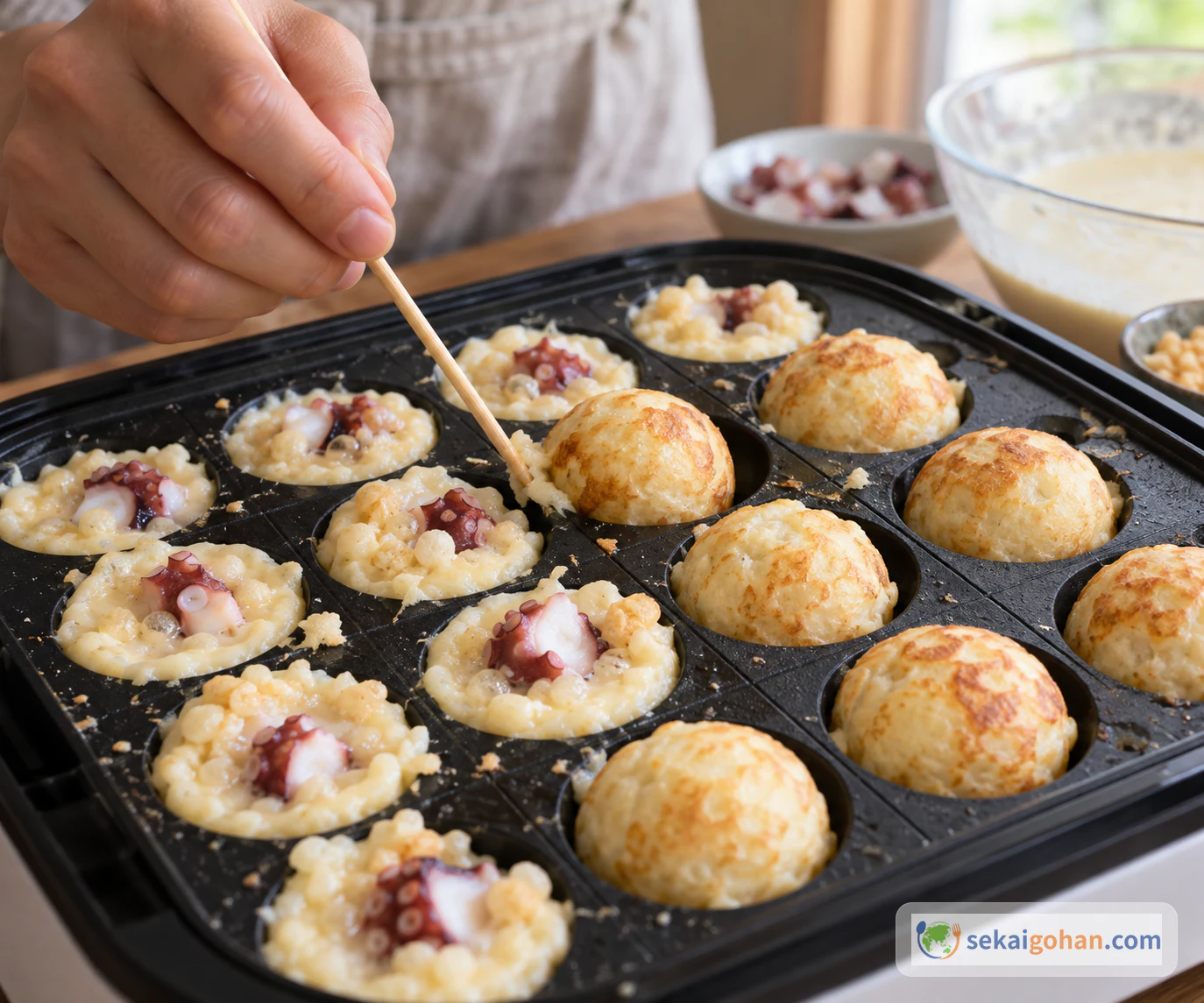
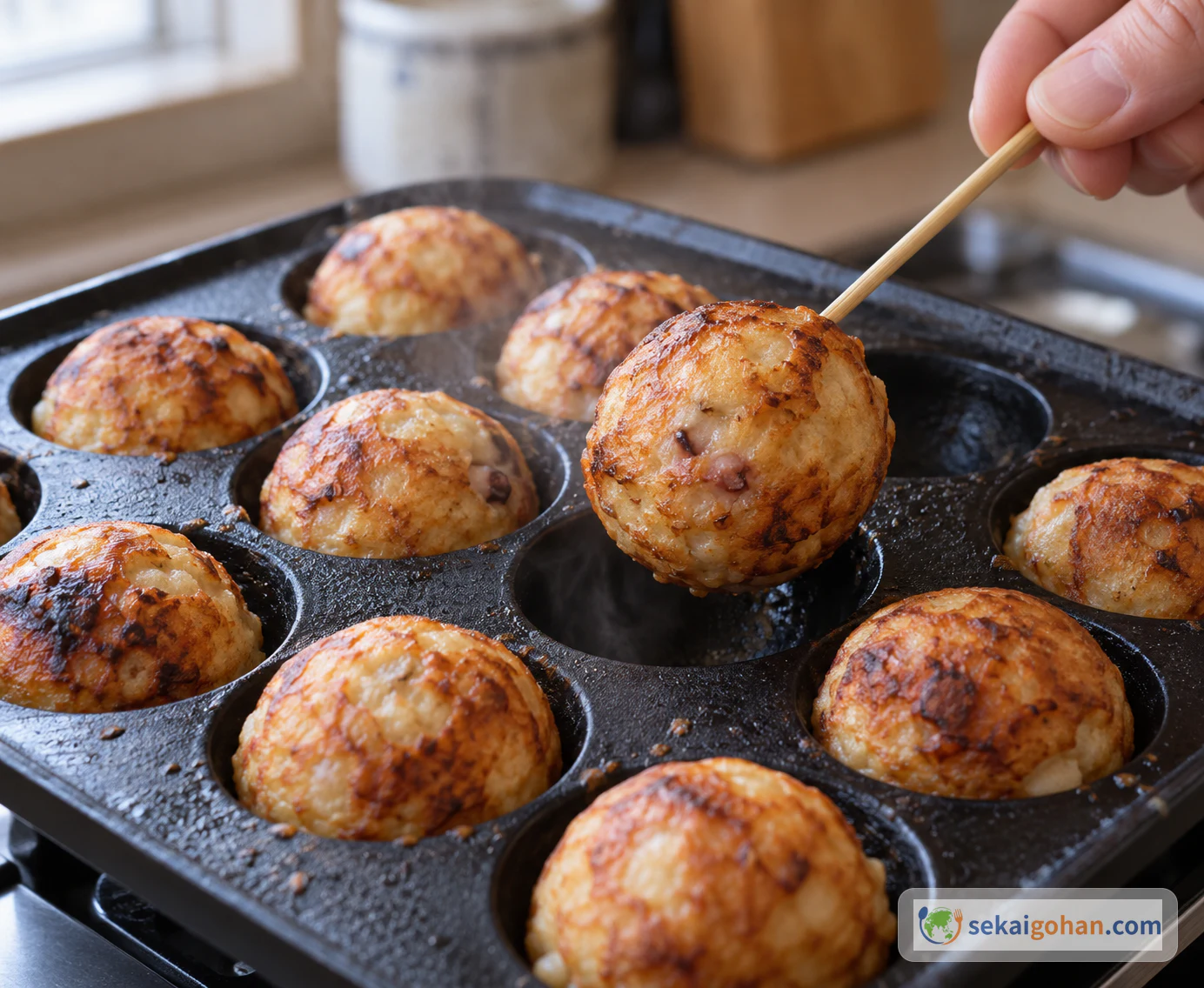
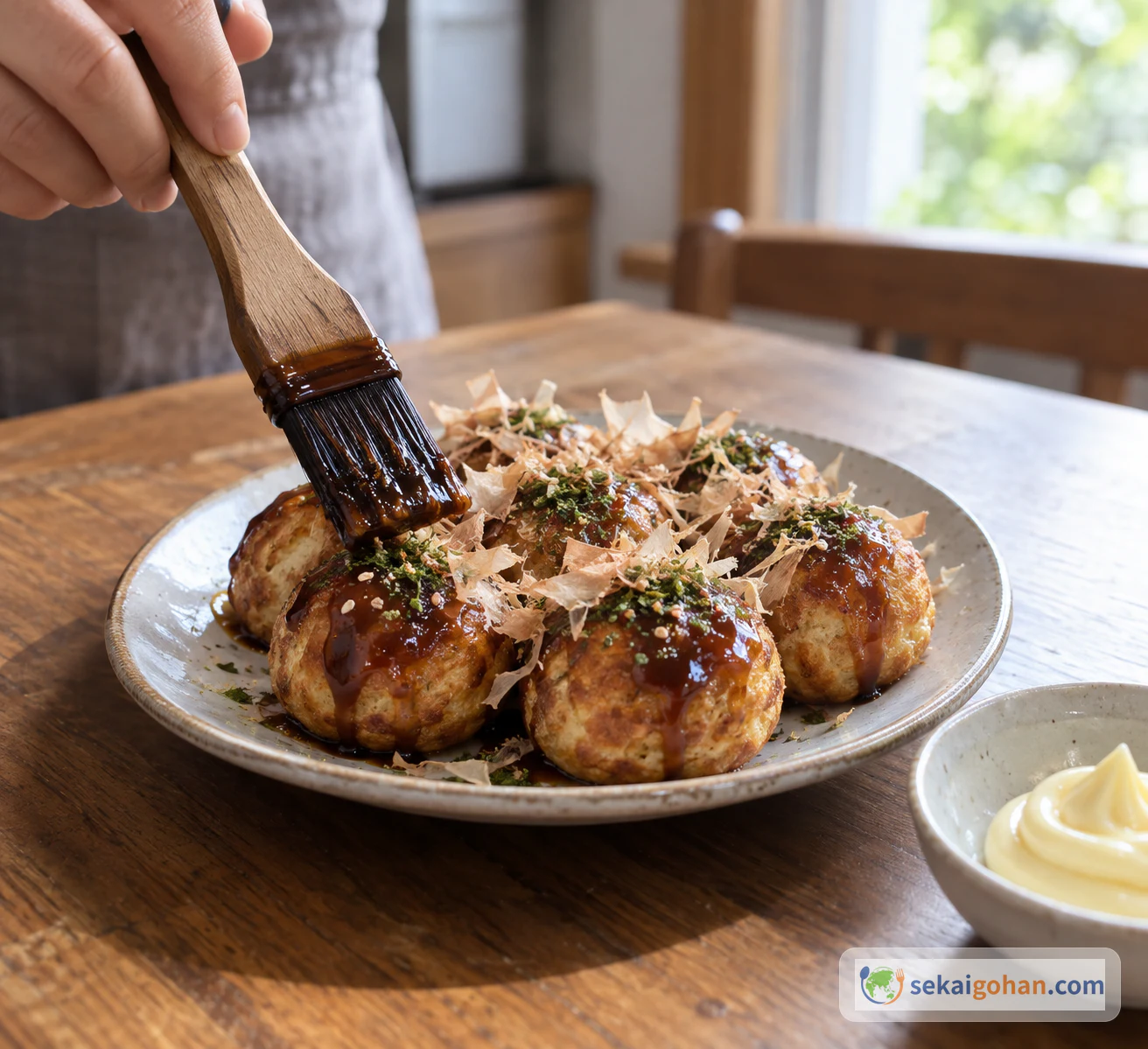
Takoyaki starts with what looks like a mistake. You pour the batter so generously that it overflows each round well and runs together into one loose sheet across the plate. In go pieces of boiled octopus, tenkasu gets scattered over the top, and once the edges turn white you cut the sheet into portions with a bamboo pick. Then come the small turns: a quarter turn first, then all the way around, again and again, until every well holds a golden, steaming ball. You want a thin browned shell, a soft and tender inside that smells of dashi, a bite of octopus in the middle, and sauce added at the table.
Osaka Takoyaki and Akashiyaki
Takoyaki has been handed down mainly in Osaka City. It's a familiar snack there, and people make it at home too. Before it came choboyaki, then radio-yaki in the late Taisho era, and then takoyaki filled with octopus in the early Showa era. At first takoyaki was eaten plain. The rich sauce and toppings caught on after the war, and that's why the finish matters so much in the Osaka style today.
Nearby, in Akashi in Hyogo Prefecture, there's a related dish called Akashiyaki: egg balls eaten with dashi rather than sauce. The two are related but separate dishes. A broth-based batter finished with sauce and toppings makes this the Osaka version. For more dishes from across the country, see Japanese food.
Ingredients (4 Servings, About 20 Pieces per Serving)
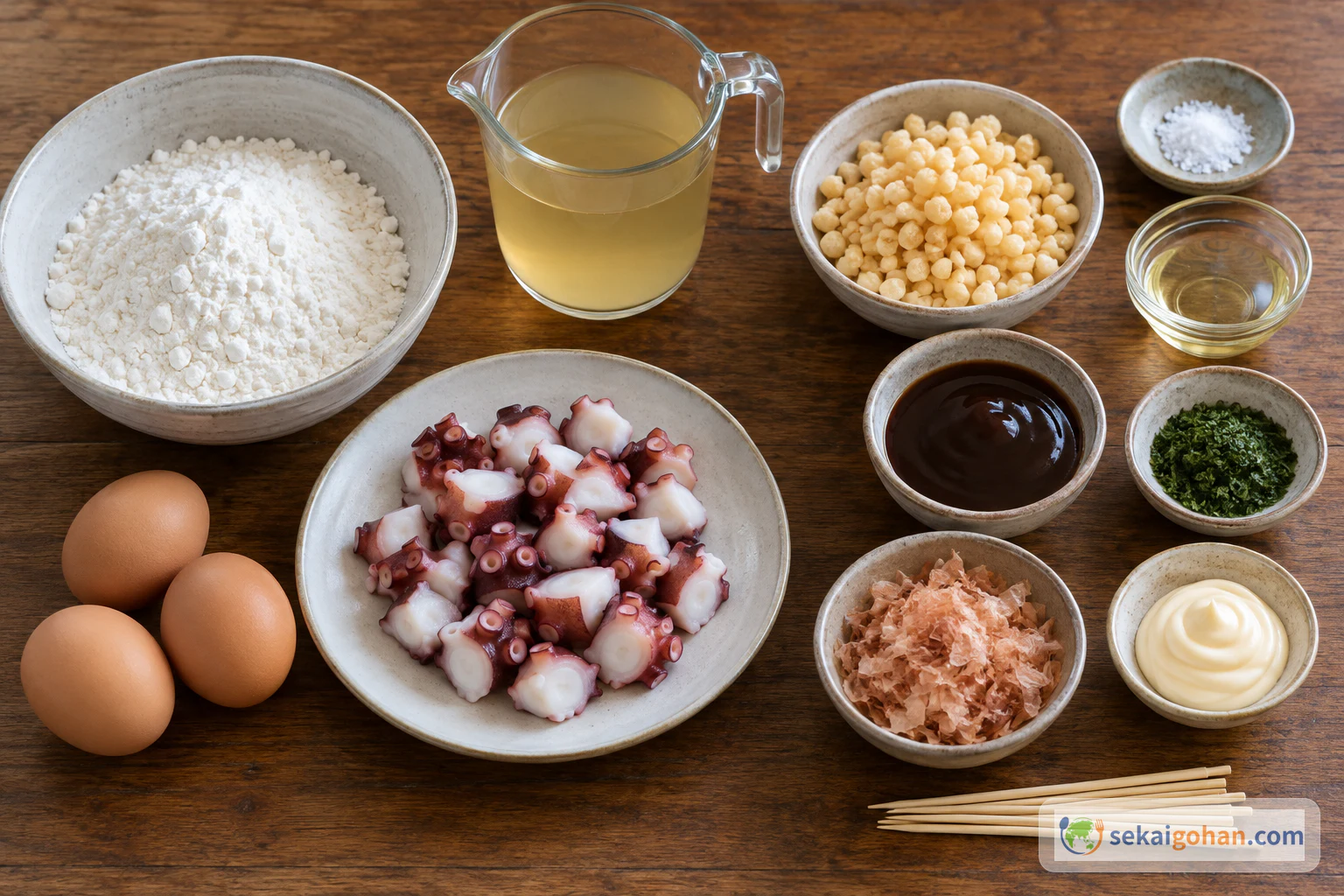
The structure comes from flour, dashi, eggs, octopus and tenkasu. The dashi is large compared with the flour, so the batter is very loose by design. A measuring cup with a pouring spout makes it much easier to handle. The recipe makes 4 servings of about 20 pieces each, depending on the size of the wells in your maker.
Prepare the dashi in advance and let it cool before mixing. Use 2 g of salt, the low end of the 2–3 g range.
This recipe contains wheat and egg, and octopus is a mollusk. Tenkasu may contain wheat and traces from shared fryers, and packaged sauce and mayonnaise may contain other allergens. Check the package labels for your specific allergy. This recipe is not allergen-safe.
Choosing Ingredients for Takoyaki
- Cake flour: Use ordinary cake flour. The takoyaki flour sold in Japan is pre-seasoned, so it's really a different formula and not a straight swap.
- Dashi: Measure it by volume, not weight. Instant dashi made as the package directs works well. Brands vary in flavor and saltiness, which is why this recipe keeps the salt at 2 g. Go by the label to decide how much powder to use.
- Eggs: Ordinary shell eggs.
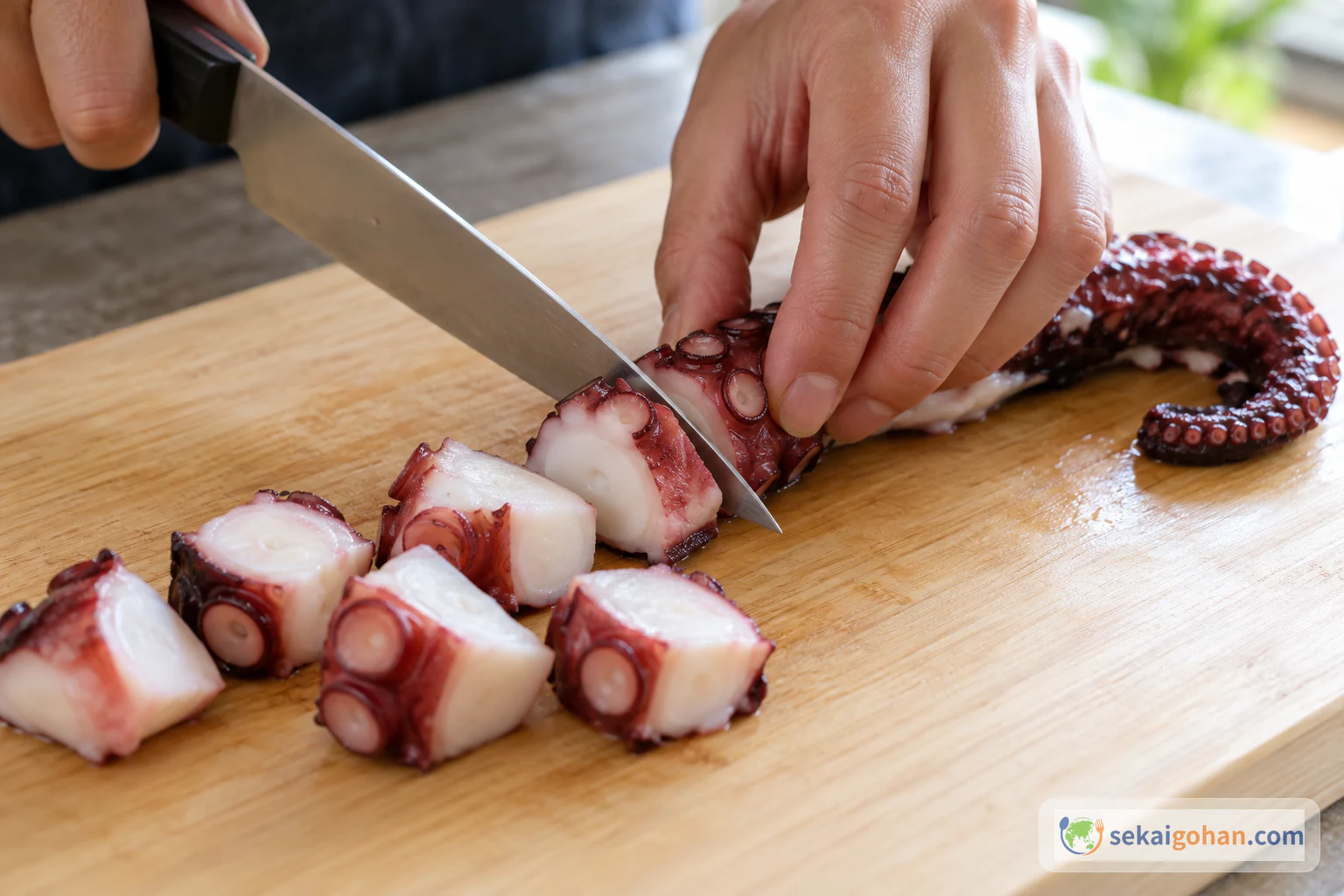
- Octopus: Buy octopus that has already been boiled, not raw. Stick to the amount given, even if it seems small for the number of balls.
- Tenkasu: Use plain tempura bits, since panko won't give the same result. You can leave tenkasu out, but the balls will be less rich and less crunchy.
- Sauce: Takoyaki sauce is the usual choice. Worcestershire or tonkatsu sauce can stand in, though they change the sweetness and thickness.
Equipment
- Takoyaki maker with rounded wells
- Bamboo or wooden picks that can handle heat
- Mixing bowl and whisk
- Measuring cup with a pouring spout
- Knife and cutting board
- Oil brush or a folded paper towel
If you're making takoyaki only once, a maker you already own or can borrow is enough. If you plan to cook it often for groups, look for stable temperature control and a plate that is easy to clean. If your plate has a nonstick coating, check the manual before using metal picks; bamboo or wooden picks are a safe default.
Method: From a Connected Sheet to Separate Balls
A home maker cooks the batter in several rounds. The 1–2 minutes before the first turn applies to each round, not to the whole batch. The heat of your maker and its hot spots matter more than any fixed time.
Fixing Takoyaki That's Hard to Turn
Getting the turning right is mostly about reading the batter, not about speed. Watch how hot the plate is, how firm the edges are, and how much soft batter is still free to flow. Nearly every problem comes back to how set the batter is or how hot the plate is.
| Problem | Likely cause | What to do |
|---|---|---|
| The ball tears when you turn it | Turned too early; edges not yet set | Wait until the lower edge firms, then turn |
| The batter sticks to the well | Not enough oil or heat, or a plate issue | Oil the wells thinly before each round and test the heat with a drop of batter |
| The surface stays pale and wet | Not enough heat or time | Keep turning longer and move the ball to a hotter well |
| Lopsided or flat-sided balls | Batter poured only into the wells, or not enough rotation | Pour across the whole plate next round; patch gaps with batter and keep rotating |
| Some balls brown much faster | Hot spots in the maker | Swap balls between hotter and cooler wells |
Serving, Storing and Varying Takoyaki
The familiar Osaka finish is sauce, bonito, aonori and mayonnaise. You'll also find plain versions and other serving styles, both at home and in shops, so the toppings are up to you.
Takoyaki is best eaten hot. If you have leftovers, spread them out in shallow containers, cool them promptly, and refrigerate them covered. Reheat them until they're steaming hot all the way through, at 167°F (75 °C) or above, and eat them soon.
Variations
- Flavoring the batter: Keep the base batter as it is and adjust the flavor with the sauce. Adding soy sauce to the batter makes it a different formula.
- Without sauce: Finish with just aonori and bonito, or serve with a dashi dip, which brings the balls closer to the Hyogo style. The batter stays the same.
- Octopus-free fillings: Earlier forms used fillings such as konjac and dried shrimp. Octopus is what makes it takoyaki, though, so think of these as variations. Check for allergens too, since they change with the filling.
- More tenkasu on top: Extra tenkasu gives a richer, crisper finish.
Frequently Asked Questions
Isn't the batter too watery?
It's meant to be loose. Stick to the recipe ratio, pour from a cup with a spout, and stir from the bottom before each pour. Adding more flour takes away the soft inside this recipe is built around.
Can I use a frying pan instead of a takoyaki maker?
Not if you want round balls. In a flat pan the batter turns into a different, pancake-like dish.
Why turn it 90 degrees first?
The first quarter turn lets the soft, unset batter run into the gaps in the well. The full turns after that close the ball into a sphere.