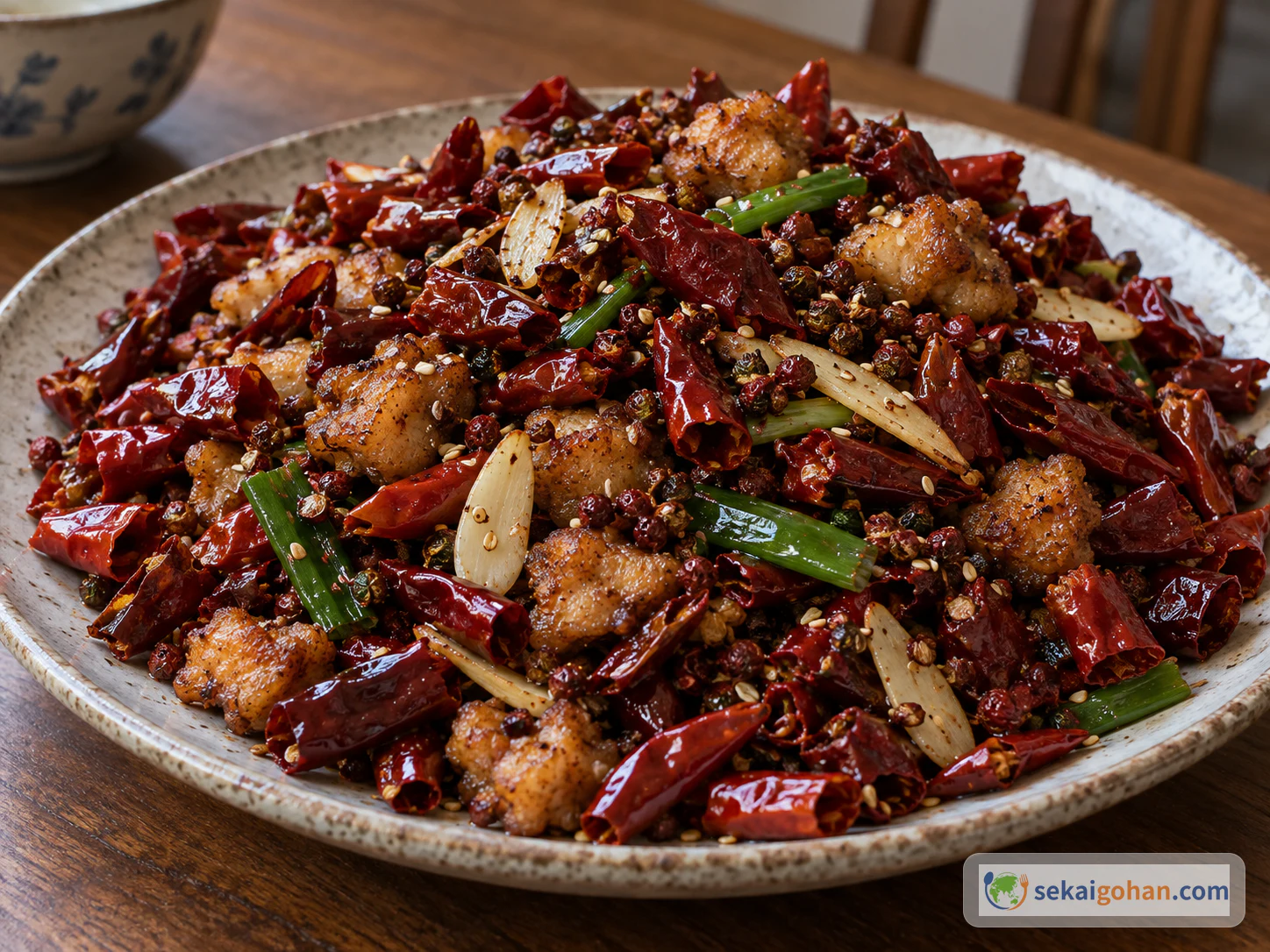
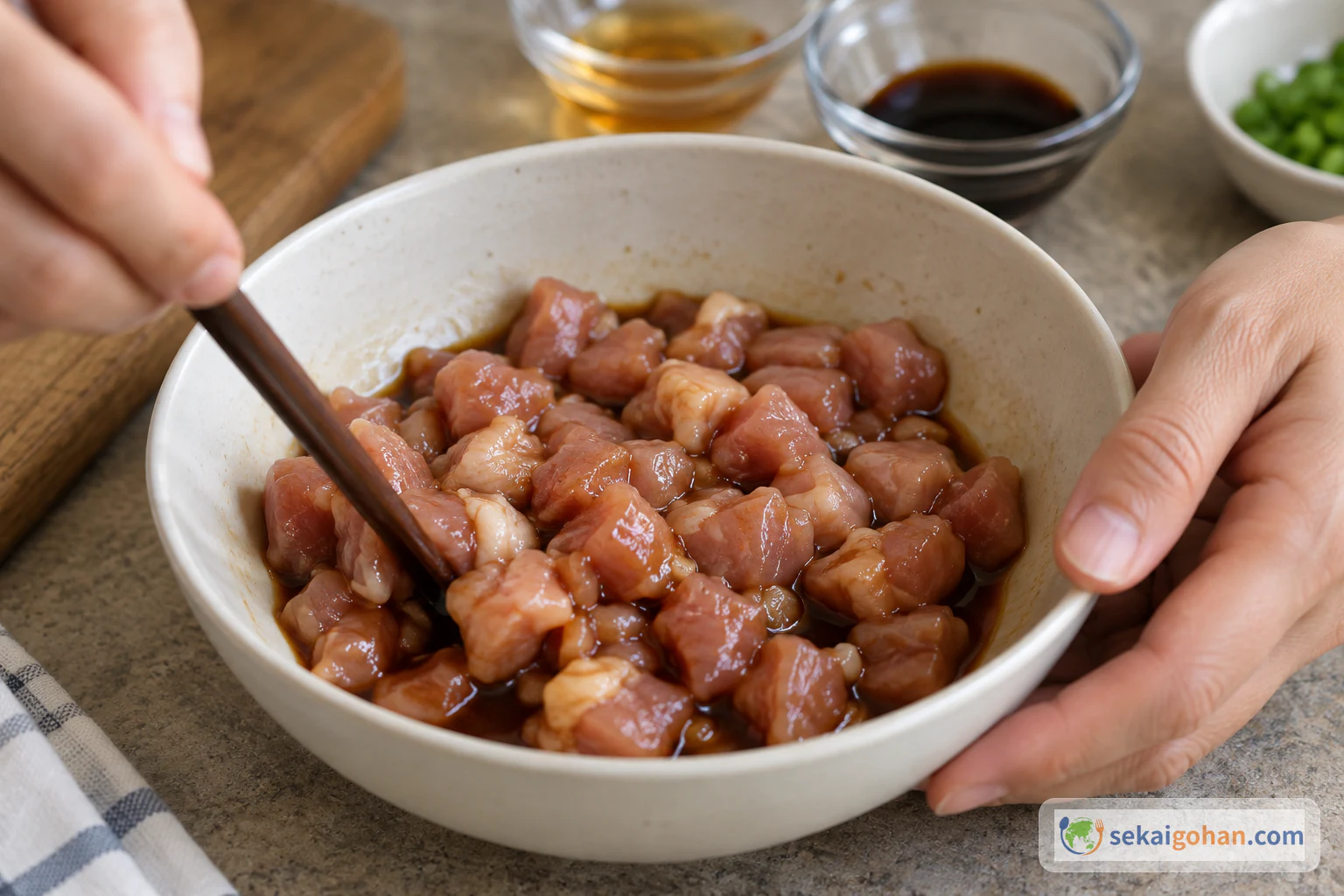
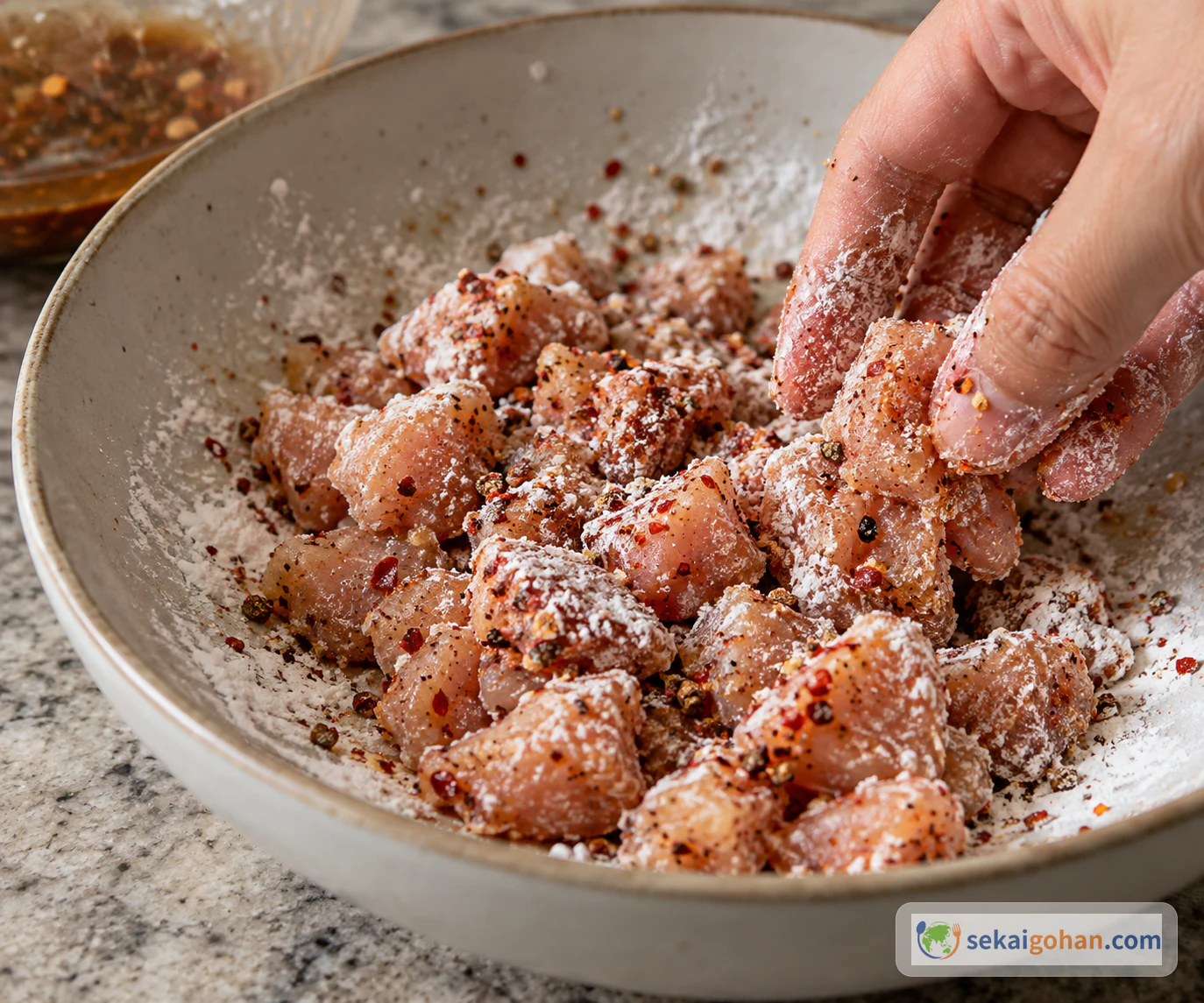
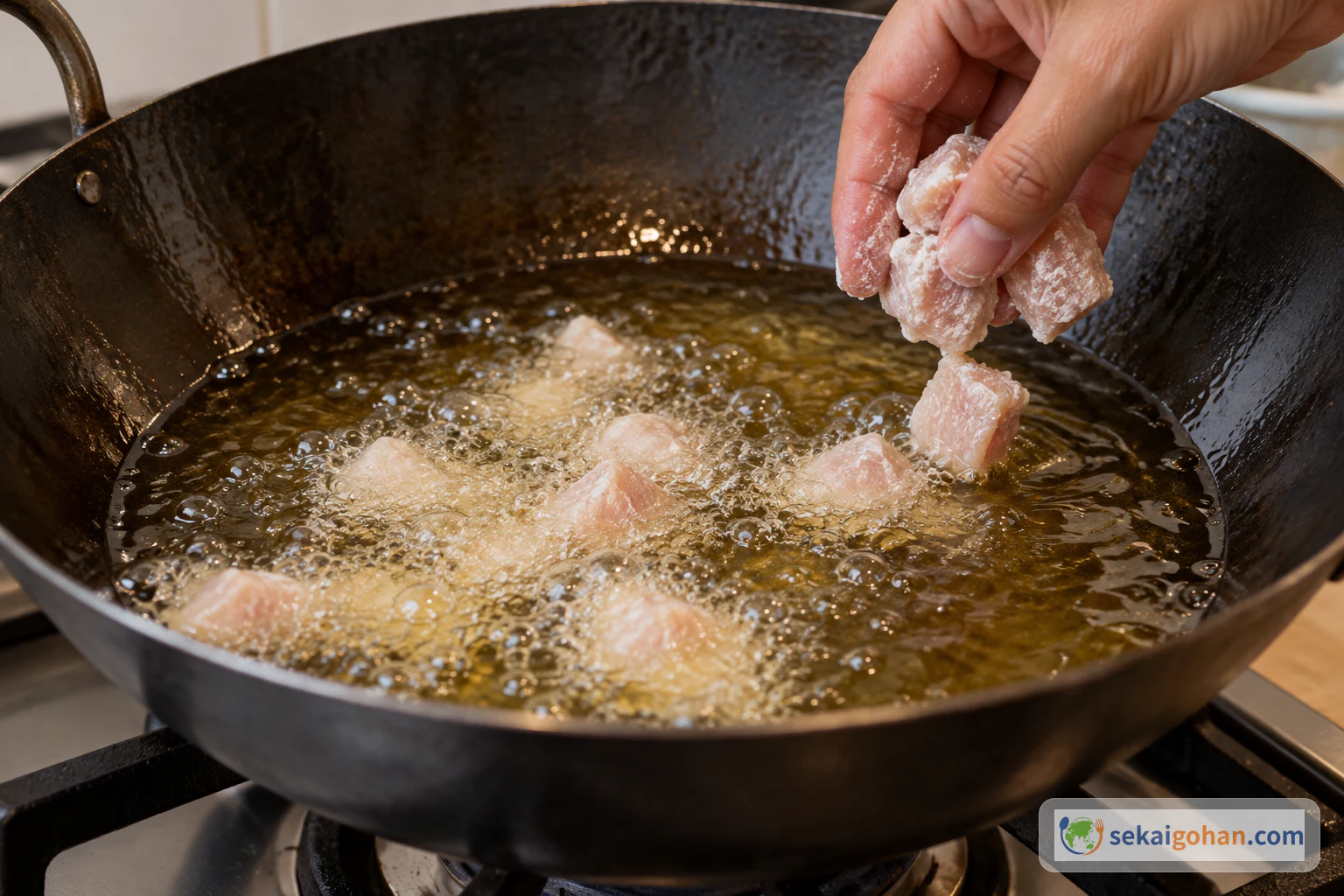
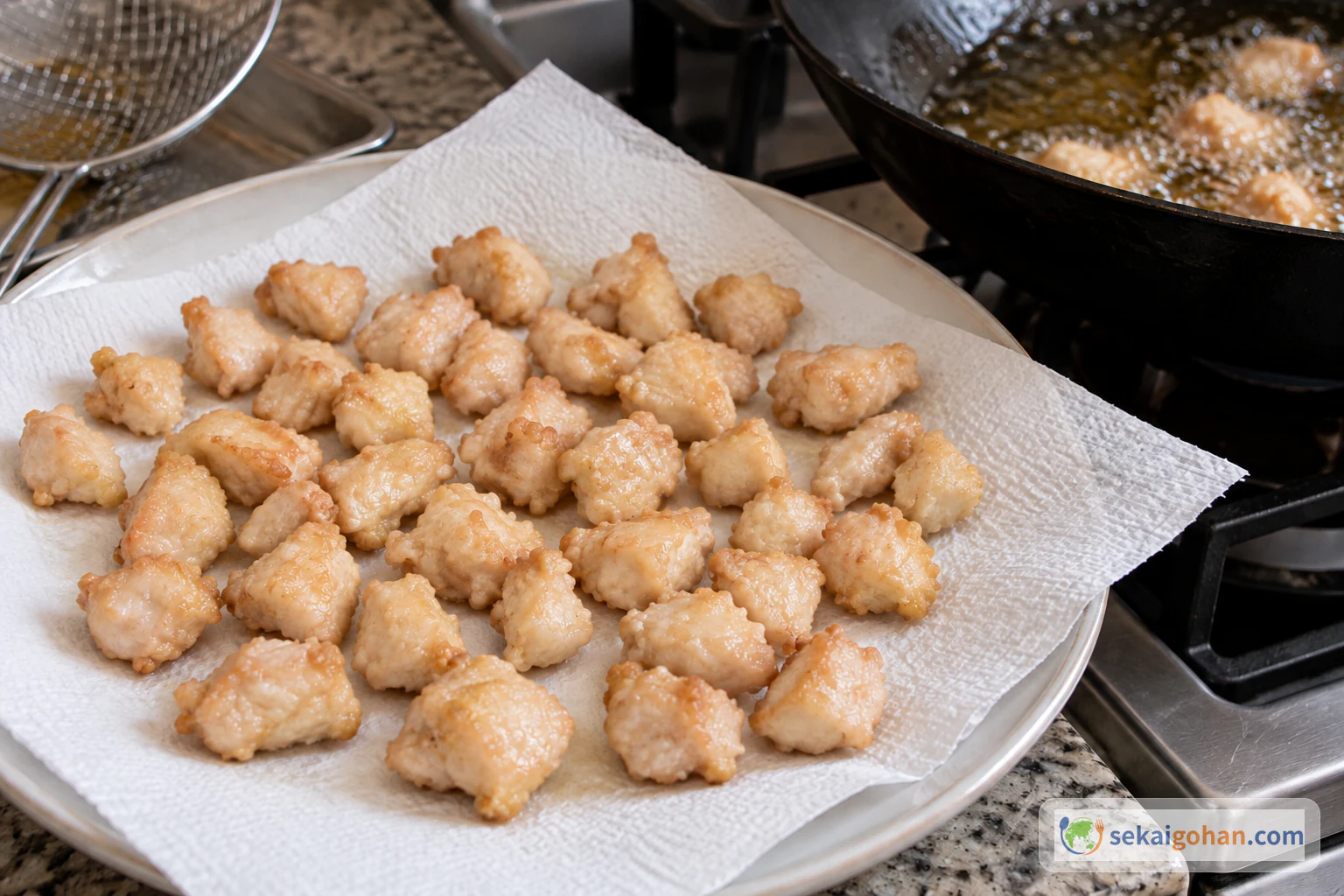
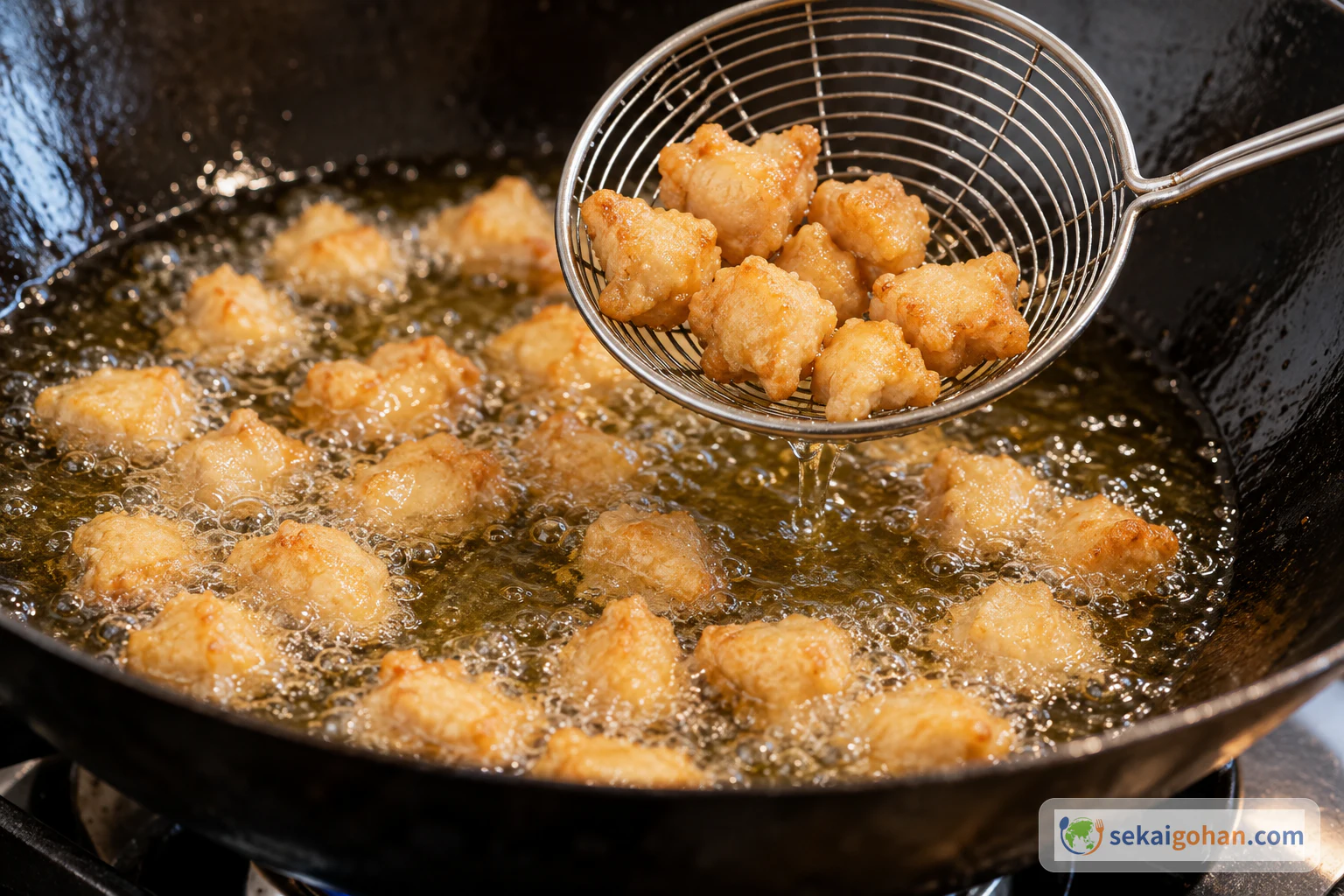
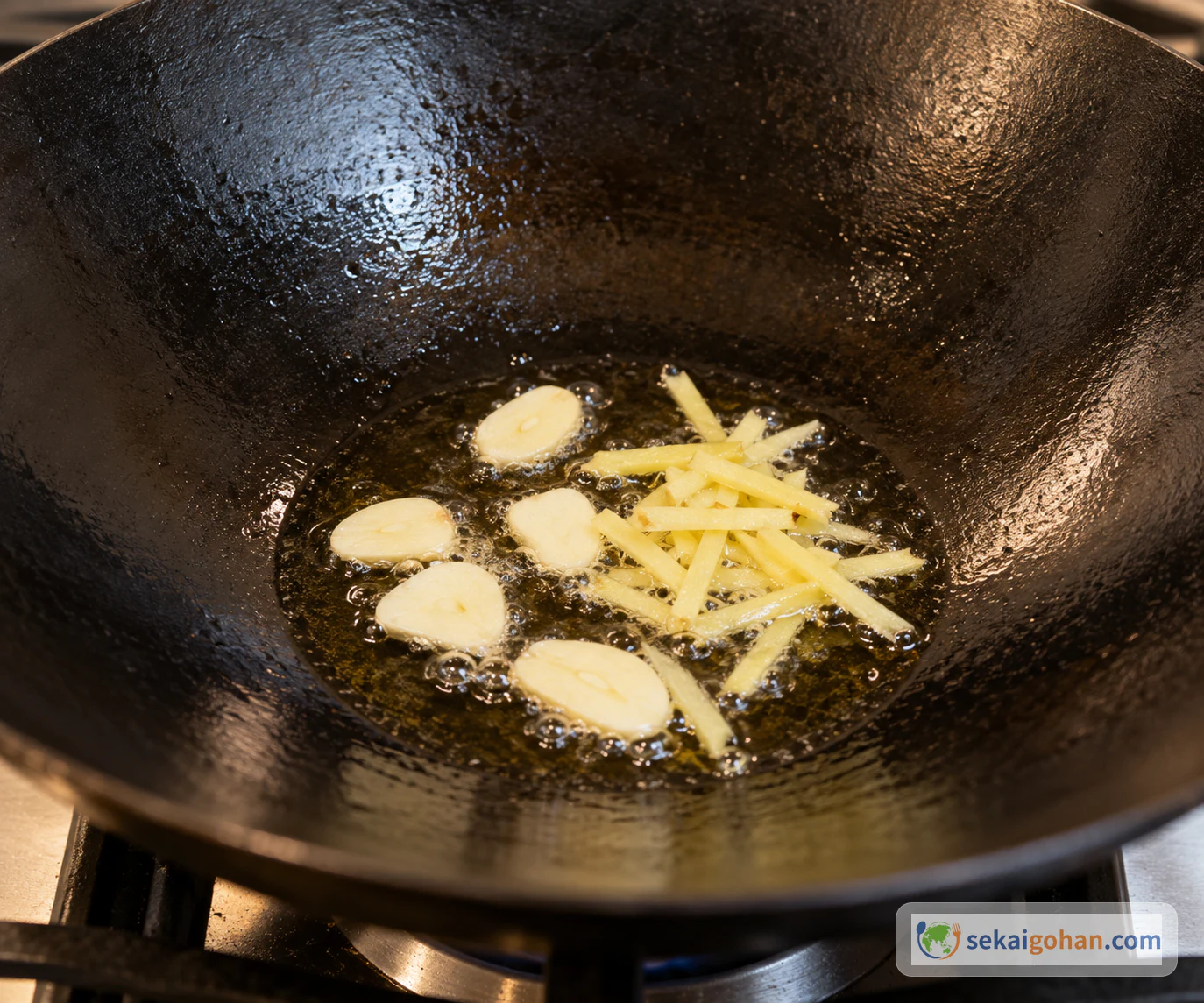
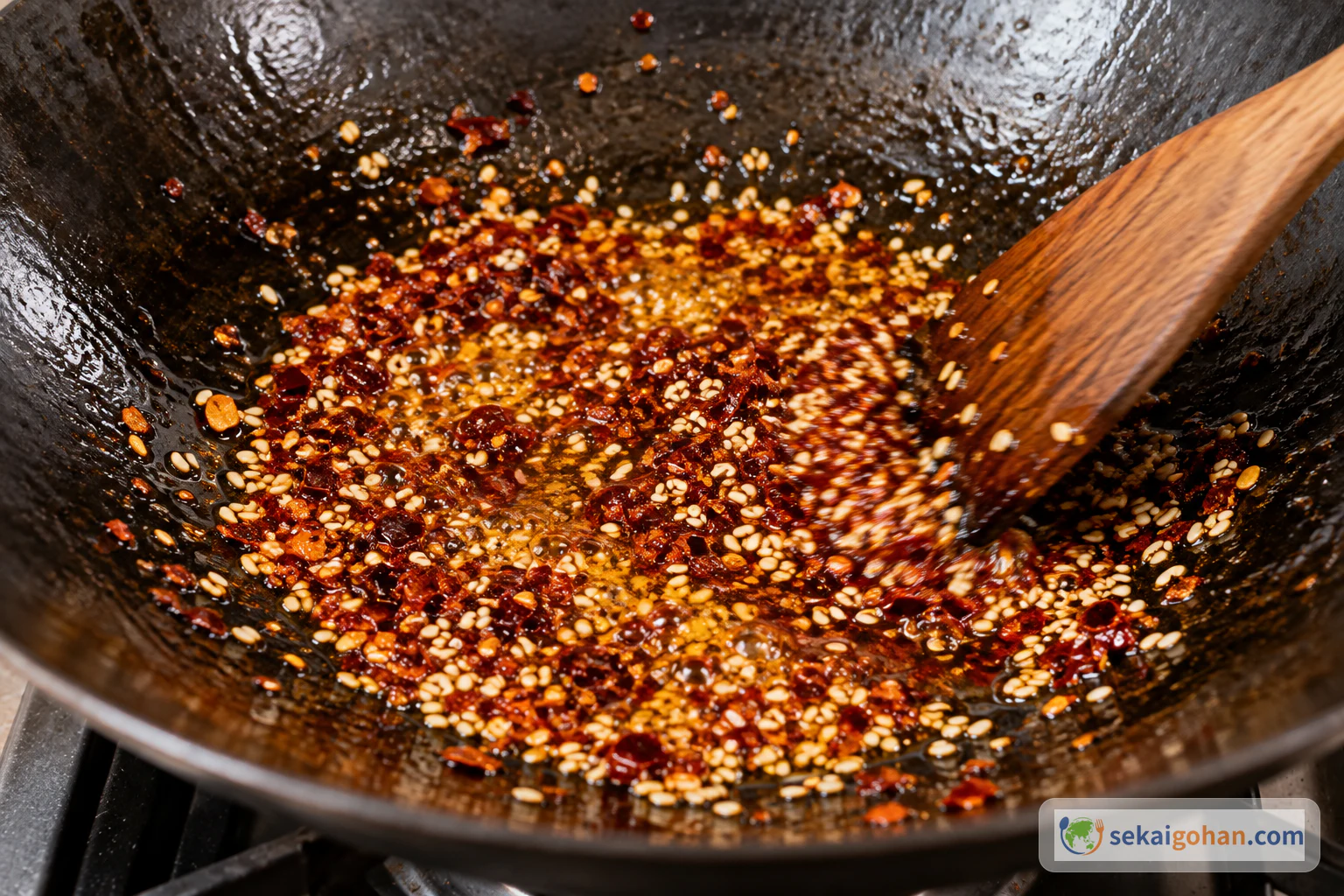
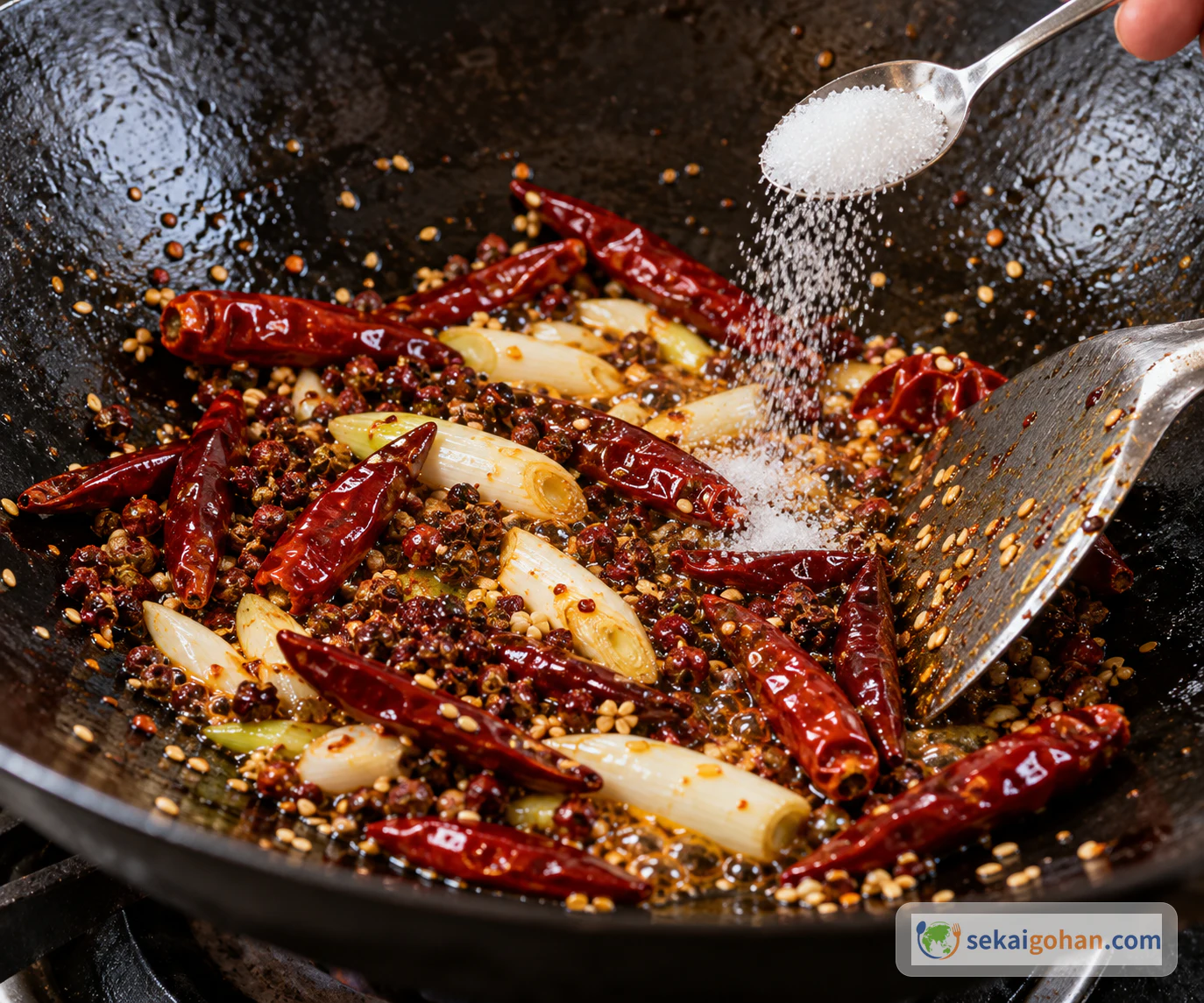
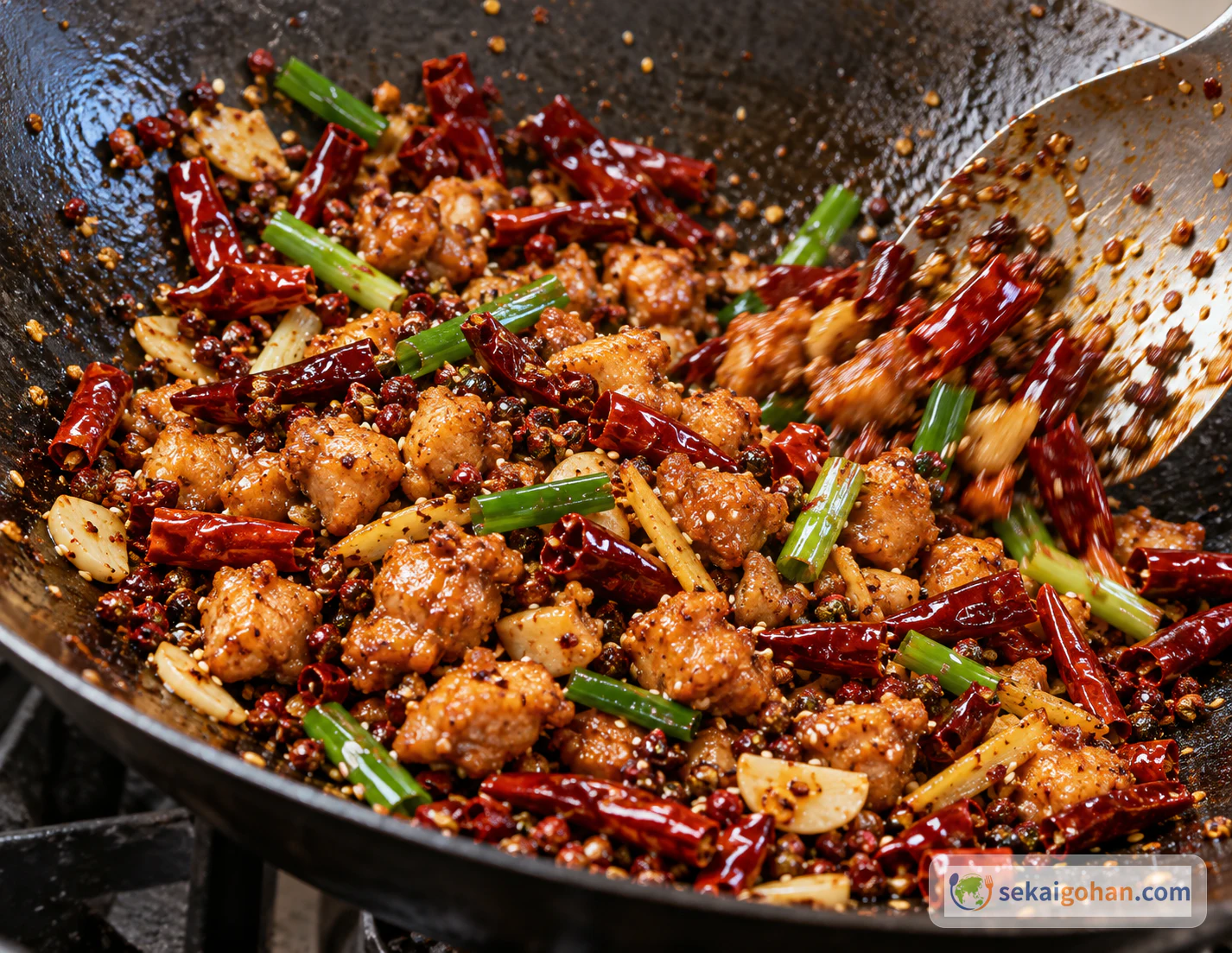
The plate arrives as a hill of red. Whole dried chilies and Sichuan peppercorns are heaped so high that the chicken is hard to find at first, and the air smells of scorched chili and numbing pepper. At one Chengdu restaurant in 2007, the dish came with far more whole chilies than chicken, and diners went searching with their chopsticks for the little fried pieces. This is laziji (辣子鸡, làzǐjī), also called Chongqing chicken with chilies. Small cubes of chicken get a light coat of starch, chili and ground Sichuan pepper and are fried twice. Then they're tossed in a little oil with garlic, ginger, chili flakes, sesame, whole chilies, whole peppercorns, sugar and scallions.
Laziji and Chongqing Jianghu Cooking
Laziji belongs to Chongqing's Jianghu cuisine, the local cooking that grew out of folk food stalls and small restaurants. It shares Sichuan pepper and dried chilies with the cooking of Sichuan Province, but it is a Chongqing dish. It is neither a sweet-and-sour stir-fry nor a thick-battered fried chicken. The traditional version uses small bone-in chicken. This home version uses boneless, skinless dark meat.
Nobody agrees on where it started. One local account ties the dish's early popularity to the Linzhongle roadside restaurant and the popularity of Gele Mountain around 1990. Another dates its creation to the 1920s and its spread to the 1990s. Neither names an inventor or a founding restaurant. What they share is the plate itself: small fried chicken under a great many red chilies. For more dishes from across the country, see more recipes from China.
Ingredients: 1 lb (450 g) Chicken, Chili Flakes and Sichuan Pepper in Two Roles
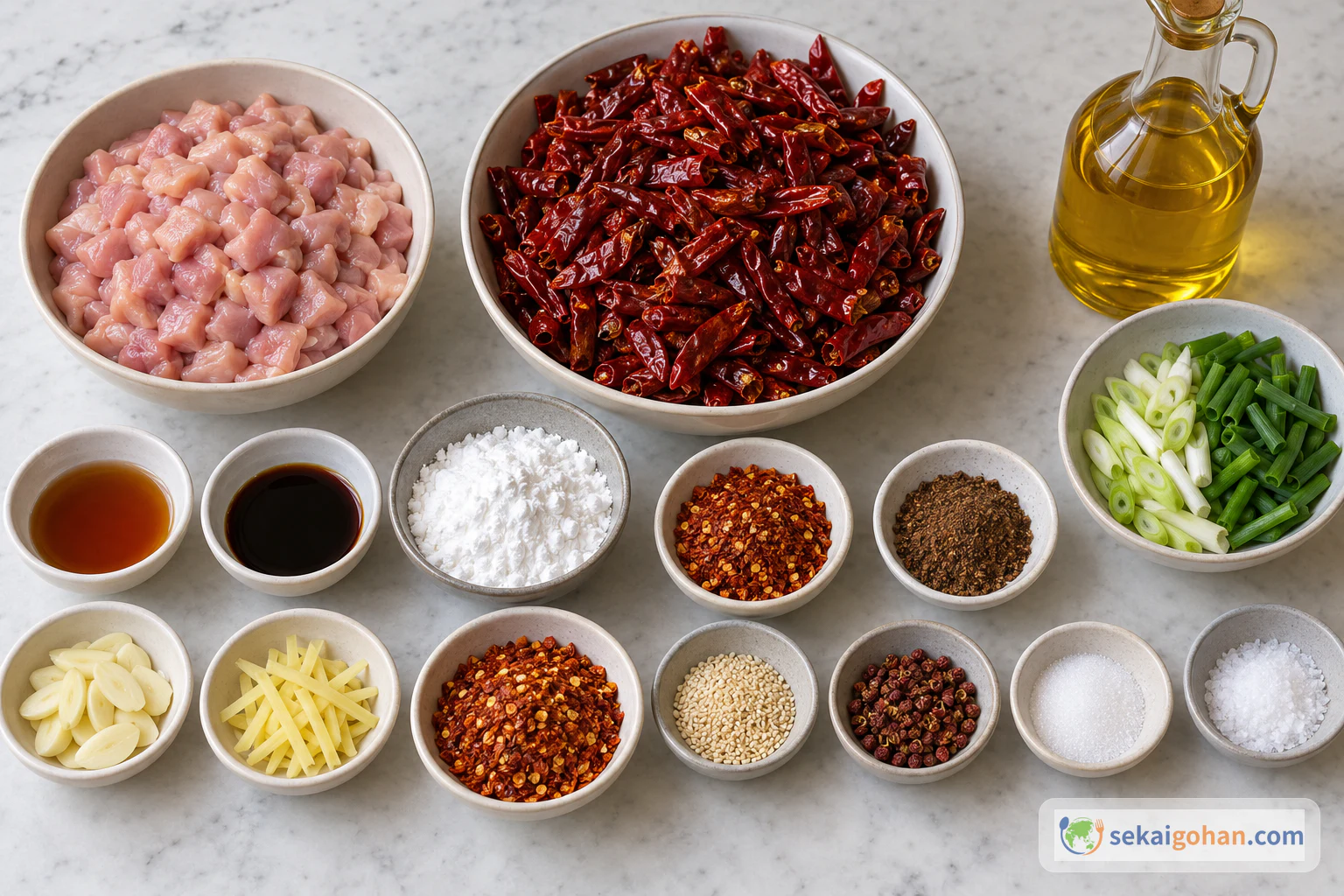
Measure the chili flakes into two separate bowls, one for the coating and one for the finishing oil, and keep ground Sichuan pepper apart from whole peppercorns.
This dish contains soy (soy sauce) and sesame. Check the ingredient and allergen labels on packaged seasonings such as soy sauce, Shaoxing wine and chili flakes.
Equipment
- Wok
- Separate cutting board and knife for raw chicken (or wash and sanitize them before reuse)
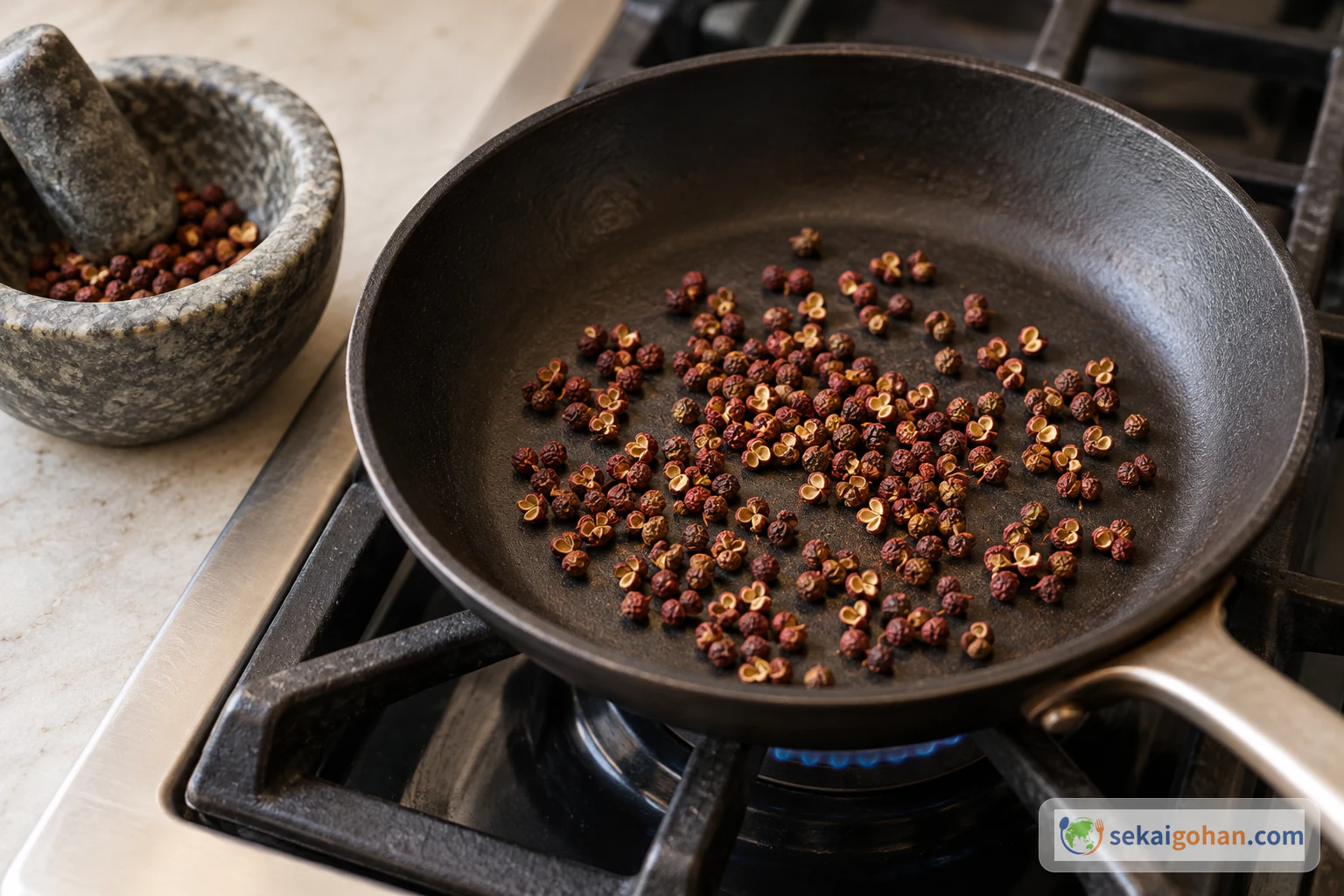
- Dry skillet, plus a spice grinder or mortar and pestle and a fine sieve, if grinding your own Sichuan pepper
- Deep-fry thermometer for the oil
- Food thermometer for the center of the chicken
- Slotted spoon or spider
- Paper towels and a plate
- Heatproof container for the frying oil
Laziji Ingredients and Substitutes
Chicken thigh, potato starch, garlic, ginger, scallions, rapeseed oil, sesame and sugar are everyday ingredients. The flavor of laziji comes from the specialist ingredients: whole Sichuan chilies, Sichuan chili flakes, Sichuan peppercorns, Shaoxing wine and Chinese light soy sauce.
Potato starch is the starch to use, and Japanese katakuriko is potato starch, so it fits directly. Dust it on thinly. Cornstarch works too, but use one starch, not a mix of both.
Whole dried red Sichuan chilies are the visual center of the dish. Look for large, plump chilies of medium heat; searching "Sichuan dried chilies" or "denglongjiao" at a Chinese grocer or online shop is a good start. Small, ordinary dried chilies such as Japanese takanotsume can stand in for heat. Their aroma and size are different, though, so the finished plate will look and smell different. For the Sichuan chili flakes, buy the fragrant kind sold for Sichuan cooking (xiangla lajiao mian, 香辣辣椒面) rather than plain hot chili powder.
Sichuan peppercorns bring the numbing tingle. Buy whole red peppercorns and grind part of them yourself for the coating. Japanese sansho powder changes both the numbing effect and the aroma. If you use it, start with a small amount instead of swapping it in measure for measure.
Shaoxing wine has no exact substitute. Japanese sake will do, though the aroma and finish change. For soy, use Chinese light soy sauce. Japanese usukuchi soy sauce is also called "light," but it isn't the same thing; ordinary Japanese koikuchi soy sauce is the better home stand-in.
A deep-fry thermometer is worth having, since the two fry stages run at different oil temperatures.
Method: Two Fries, Then a Wok of Aromatics
Fry once to cook the chicken through, rest it, then fry again at a higher temperature for color and crunch. Only after that, clean the wok and build the finishing oil from 4 tbsp of the frying oil.
Keep raw chicken, its board and knife away from anything that will be eaten without further cooking, and wash your hands after handling raw chicken.
Laziji Troubleshooting
| Condition | Likely cause | What to do |
|---|---|---|
| Coating is thick and pasty | Marinade went into the starch with the chicken | Lift the chicken out of the marinade, leaving the juices behind, and dust lightly |
| Chicken not crisp after the second fry | Oil not hot enough, or too many pieces at once | Bring the oil back to about 375°F / 191°C and fry in two batches |
| Unsure whether the chicken is done | Judging by color or bubbling | Check the largest piece with a thermometer: 75°C at the center for at least 1 minute |
| Garlic and ginger browning or burning | Heat too high, not enough stirring | Keep to medium heat and stir vigorously from step 6 onward |
| Finished dish is oily | Fresh oil was added for finishing | Use only 4 tbsp taken from the frying oil |
| Coating tastes flat or finishing oil lacks fragrance | Chili flakes all used in one place | Keep 1 tbsp chili flakes for the coating and 2 tbsp for the finishing oil |
Keep the tools you use for raw chicken separate from anything that will be eaten without further cooking.
Serving, Storing and Varying Laziji
At the table
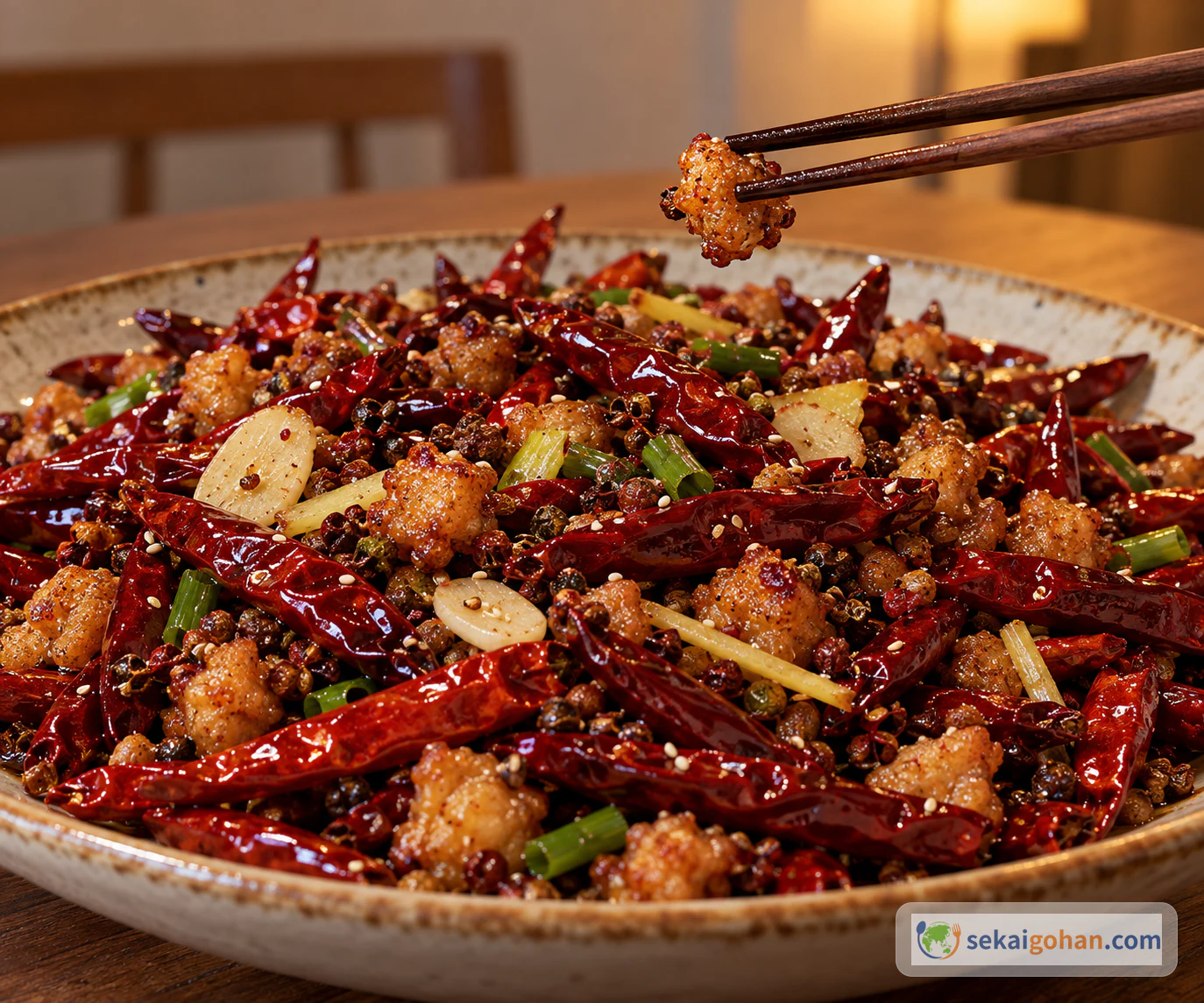
Laziji is served so the chilies look abundant and the chicken looks small among them. Bring it to the table the moment it leaves the wok, while the coating is at its best. People pick out the chicken and leave most of the whole chilies and peppercorns, though some eat a few. Eat as many as you like.
Leftovers and allergens
Leftovers lose their crispness, and reheating doesn't always bring it back. Don't leave them at room temperature for long. With clean utensils, divide them into clean, shallow containers so they cool quickly, then refrigerate. Reheat thoroughly to 167°F (75°C) or above.
The dish contains soy (soy sauce) and sesame (sesame seeds). Check the labels on packaged seasonings for other allergens.
Variations
Each change below keeps the temperatures, quantities and order of steps the same.
- Cornstarch coating: Use cornstarch instead of potato starch, in the same amount.
- Peanut oil: Fry in peanut oil instead of rapeseed oil. This adds peanut as an allergen, so check with everyone at the table.
- Red and green peppercorns: Replace the 2 tsp whole red Sichuan peppercorns with 1 tsp red and 1 tsp green.
- Hotter: Cut some of the whole dried chilies in half and leave the seeds in. Keep the chili flakes in the coating and finishing oil at the same amount.
- Bigger chilies: Choose large, plump, medium-heat Sichuan chilies for a fuller-looking plate.
Frequently Asked Questions
Why fry twice?
The first fry, at 350°F (about 177°C) and a medium bubble, cooks the chicken through. The second, in hotter 375°F oil, makes the thin coating crisp and golden. Go by the chicken, not the clock.
Why are the chilies measured in cups?
Use at least 3 US cups of whole chilies. Cups and ounces aren't exact equivalents, so stick with the cup measure rather than converting to grams.