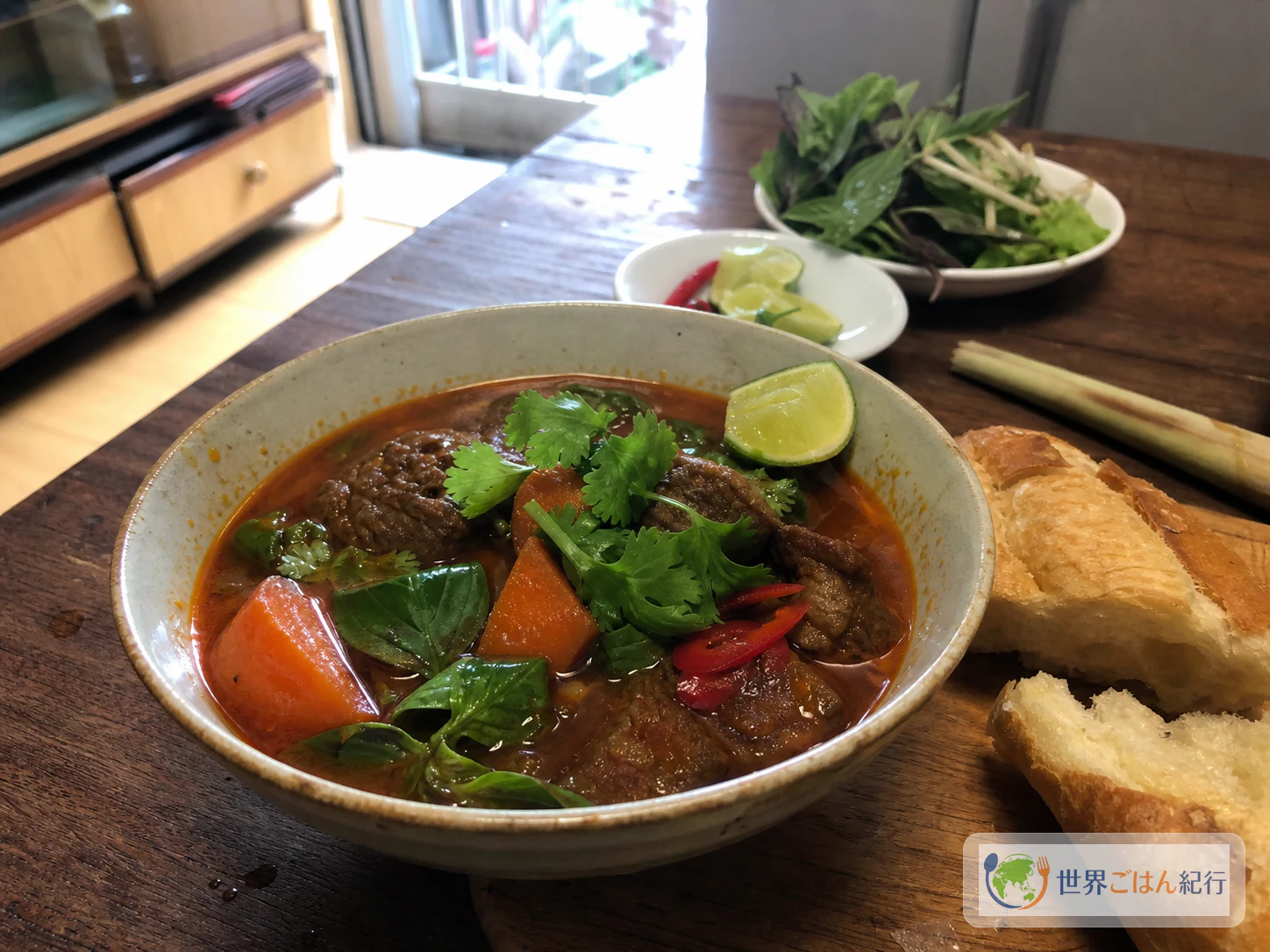
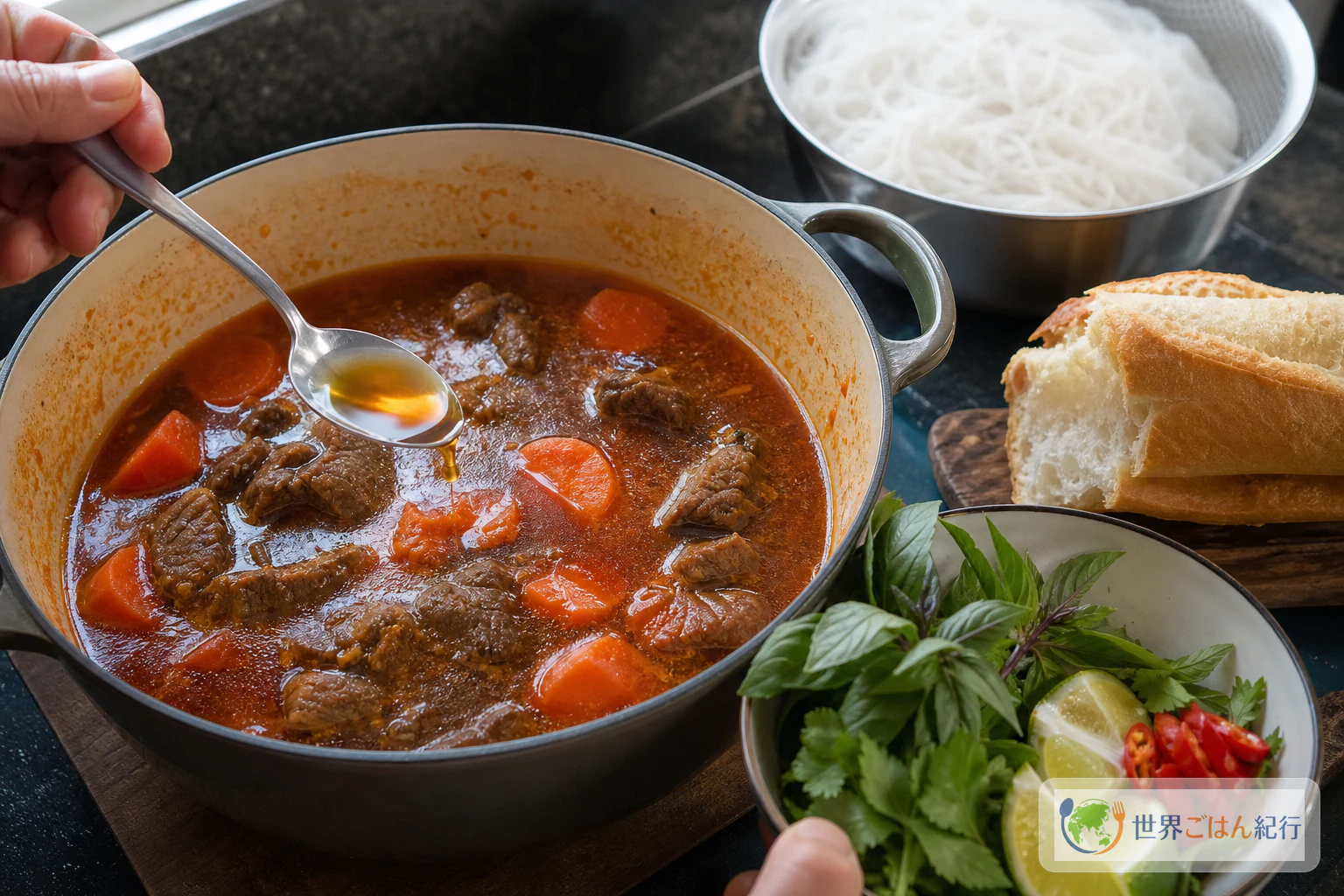
When you smash lemongrass with the flat of a knife, a scent like green citrus rises from the board. Add five-spice, star anise, cinnamon and fish sauce, and the pot heads somewhere ordinary beef stew never goes. Bò kho is a Vietnamese beef stew built on those aromatics: bò means beef, and kho means to braise or simmer down. The red of tomato, the orange of annatto and the savoriness of beef layer together in a light broth, and the best moment comes at the end, when you tear a baguette and dip it in.
About bò kho
Bò kho isn't thickened with flour the way a Western beef stew is. Its light red broth carries the aroma of beef shank or shoulder, carrots, lemongrass, star anise and cinnamon. It should be just thick enough to soak into bread.
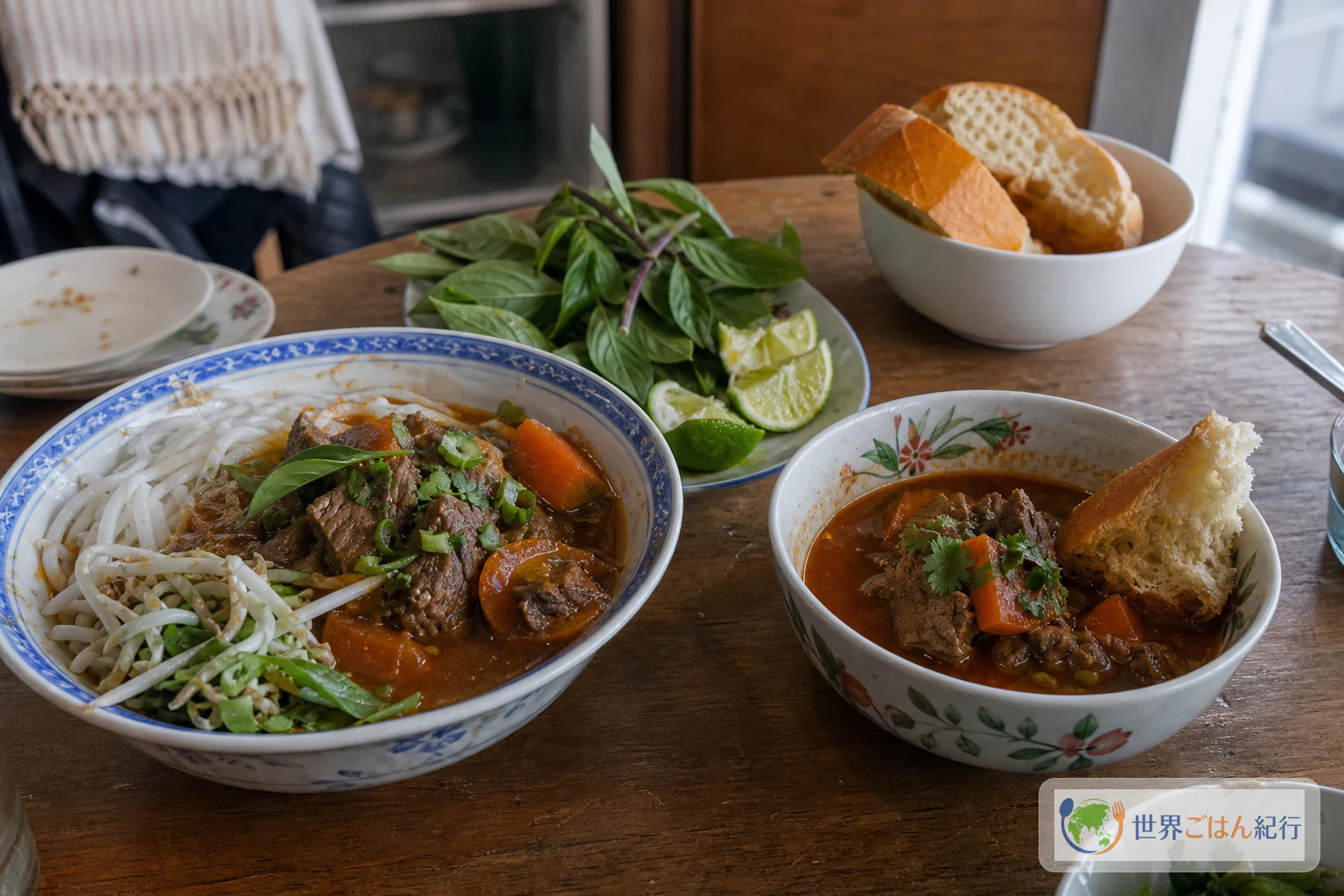
In Vietnam it's served for breakfast or lunch with baguette, or with rice noodles added, as in bún bò kho. Sometimes it goes over rice. The clear chicken broth of phở gà and the spicy beef broth of bún bò Huế are close relatives, but bò kho is a red stew of spices and tomato.
| Point of comparison | Bò kho | Phở gà | Bún bò Huế |
|---|---|---|---|
| Direction of the broth | Beef, tomato, lemongrass, star anise, five-spice | Chicken, ginger, onion, a clear broth | Beef, lemongrass, fermented shrimp, chile oil |
| Thickness of the broth | Light, red-orange. Not thickened with flour | Clear and light | Heat and aromatic oil come forward |
| Main way to eat | Baguette, rice noodles, rice | Rice noodles | Thick rice noodles |
| Key point at home | Beef simmered to fall-apart tender, carrots kept whole | Not clouding the broth | The aroma of the chile oil and lemongrass |
It's tempting to treat bò kho as a curry and add coconut milk or chile. That tastes good, but it pulls the dish away from what bò kho is. The flavor comes from layered aroma, not from a thick sauce.
A stew from many kitchens
Vietnamese cooking takes in ingredients and methods from elsewhere and makes them its own with fish sauce, herbs, rice noodles and lemongrass, and bò kho shows this clearly. The baguette dates from the French colonial period, yet the broth tastes nothing like French beef stew. Star anise and five-spice bring the aroma of the Chinese-speaking world, and fish sauce and lemongrass bring the pot firmly back to Vietnam.
In Vietnamese it is written Bò kho. Elsewhere you will see "bo kho" or "bo ko". Served with rice noodles and beef it is called bún bò kho, and with baguette it is sometimes called bánh mì bò kho.
Ingredients (serves 4): beef shank and the shopping for aroma
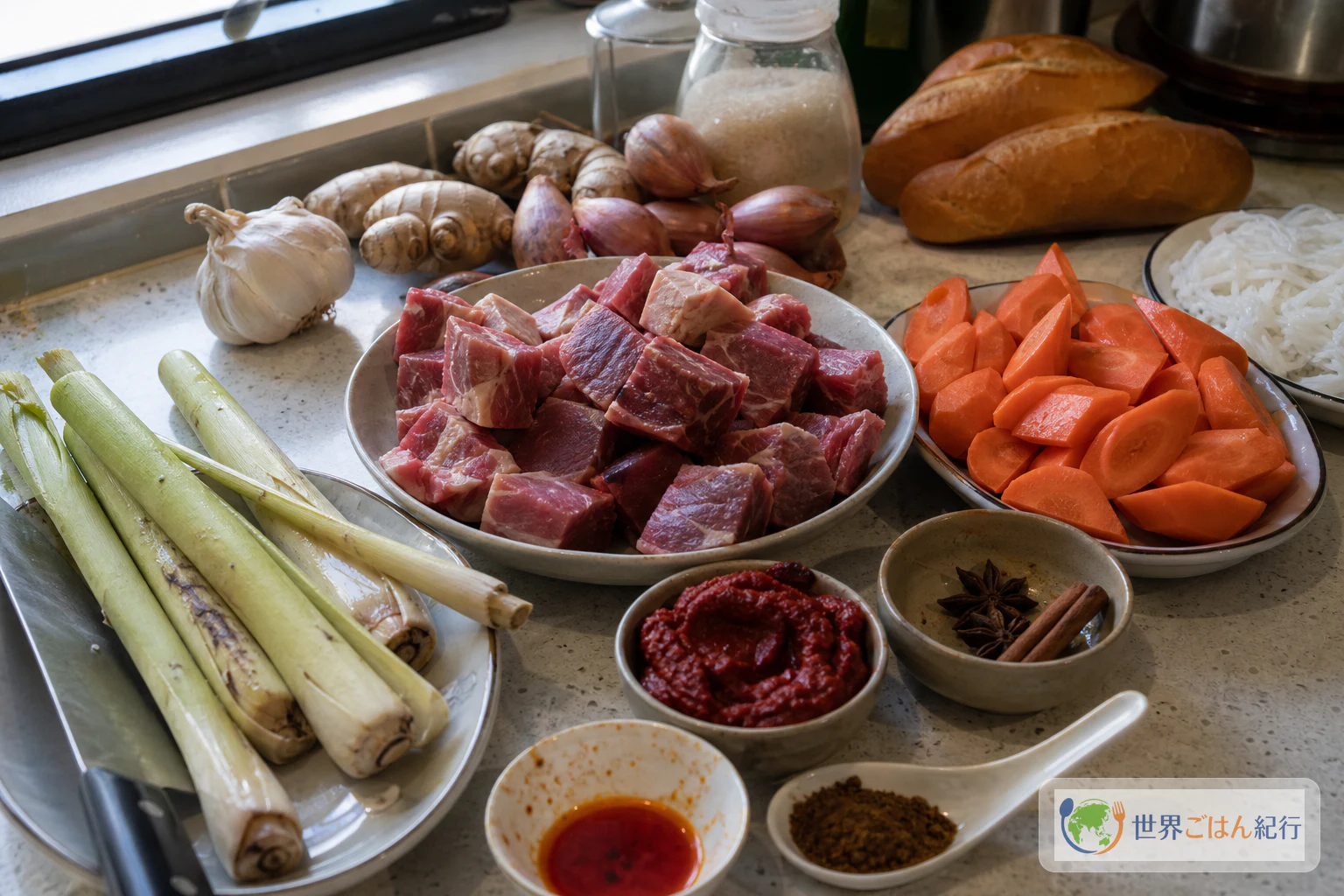
Serves 4. Beef shank suits it best, but some days you can't find it. In that case use a block of chuck or shoulder, a block of beef short rib, or cubed beef sold for stew. Lean round alone tends to stay tough even after a long simmer.
Main ingredients
Fish sauce is fish-derived. Some commercial five-spice powders are made in the same factory as wheat and soy, so check the label if you have allergies. Wash the cutting board, knife and bowls that touched the raw beef with detergent before handling herbs or baguette.
Shank takes time, but the gelatin melts and gives the broth body. Shoulder softens a little sooner, and short rib gives off a lot of fat. With stewing cubes, the cuts are mixed, so simmer only the tough pieces about 10 minutes longer. You can hardly go wrong.
Ingredients that are hard to decide on when shopping
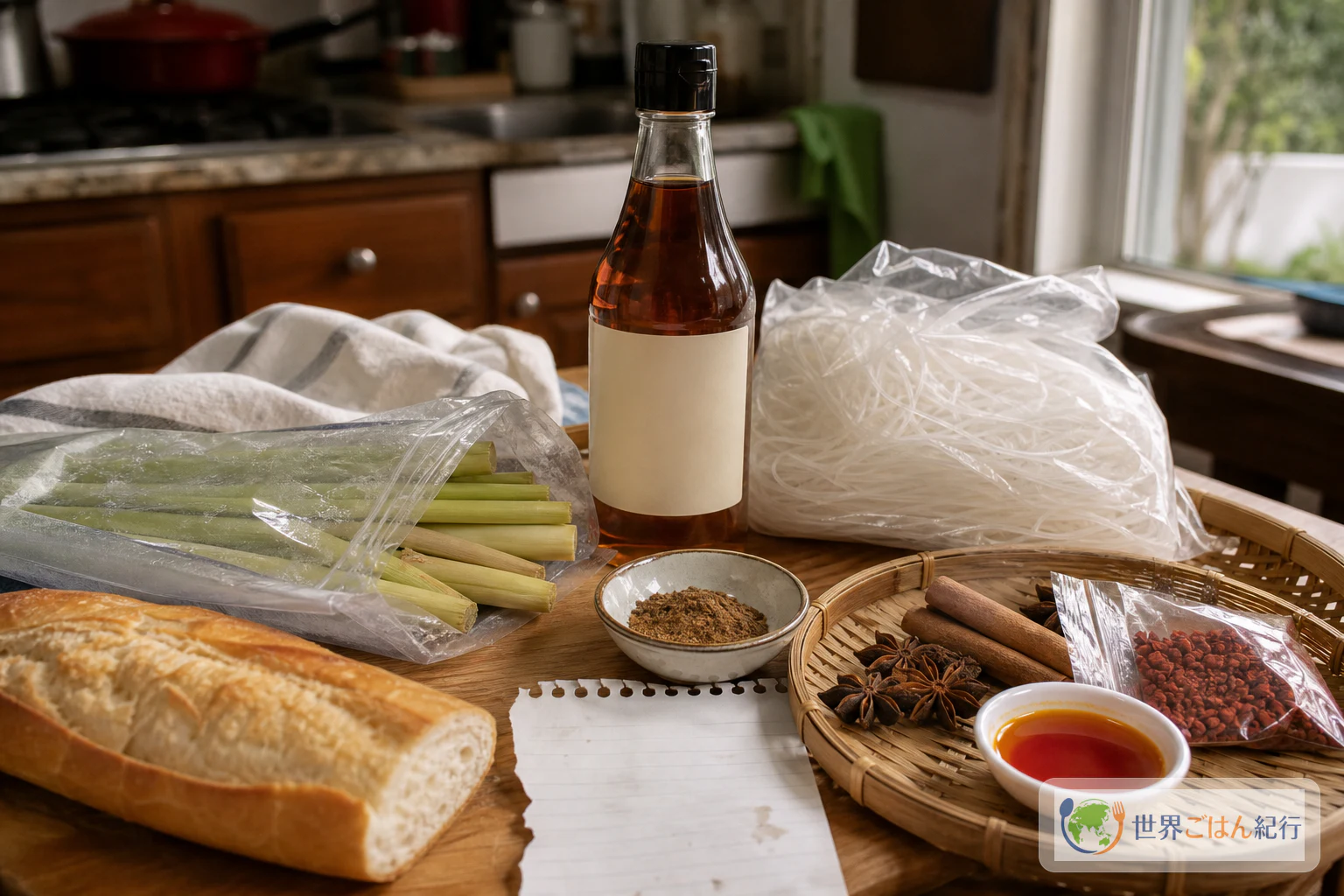
The ingredients for bò kho that are often missing from a nearby supermarket are lemongrass, annatto and star anise. Five-spice can sometimes be found on the Chinese spice shelf. Fish sauce has become easier to find at large supermarkets and import stores, but Vietnamese nước mắm is more natural if you can find it.
| Ingredient | Can it be substituted? | Judgment |
|---|---|---|
| Lemongrass | Weak substitute | Ginger and lemon zest make a different dish. Frozen is fine; look for it |
| Five-spice powder | A small amount can be substituted | Add a little star anise, cinnamon and clove. Be careful not to overdo |
| Annatto | Can be substituted | Provides color. Paprika or tomato paste can make up for it |
| Fish sauce | Can be substituted | Light soy sauce alone makes the aroma flat. A little fish sauce is closer |
| Baguette | Can be substituted | Rice noodles or rice also work. Eating with bread gives a breakfast feeling |
Ranked by how worthwhile they are to buy extra: lemongrass, fish sauce, star anise, annatto. Lemongrass and fish sauce also carry over to bún thịt nướng, bún chả and tom yum goong. Star anise dominates if overdone, but even a small amount takes the aroma of bò kho a step deeper.
Ingredients that build the skeleton of aroma are more satisfying to shop for than ordinary meat and vegetables. If you will make Vietnamese dishes several times, gathering these first makes the kitchen suddenly easier.
Choosing ingredients for bò kho
Making it at home comes down to three things: tender meat, a clear aroma and carrots that hold together. For the beef, pick stewing cuts such as shank, shoulder and short rib, not an expensive steak. Lemongrass and star anise carry the aroma, so they're worth seeking out.
Supermarkets sometimes stock five-spice. You can leave the annatto out, but it's what gives bò kho its red-orange color. Spices vary in strength, so the first time, start with 2 star anise and 1 tsp of five-spice and adjust next time. That's the version least likely to go wrong.
Method: wake up the aroma before simmering
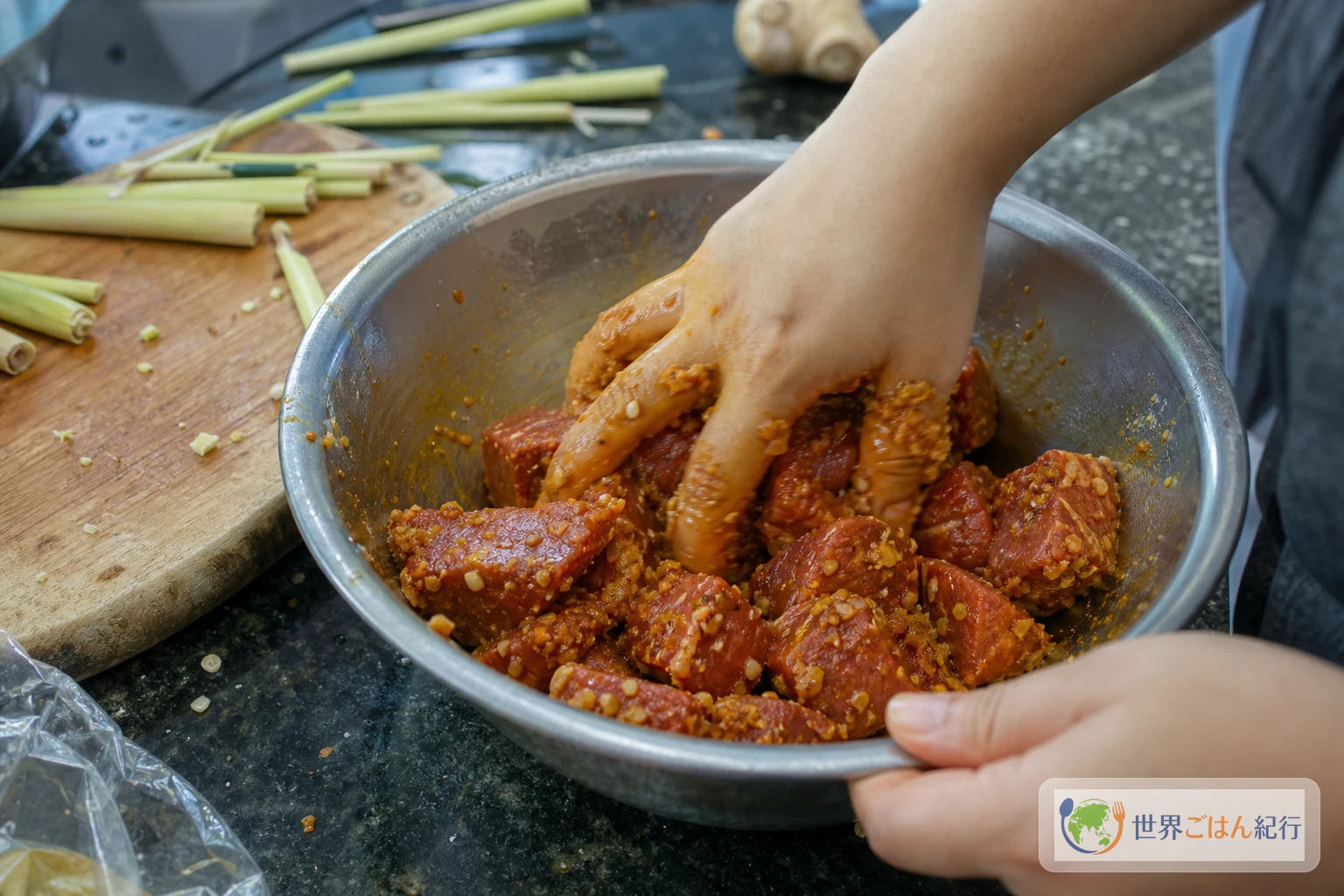
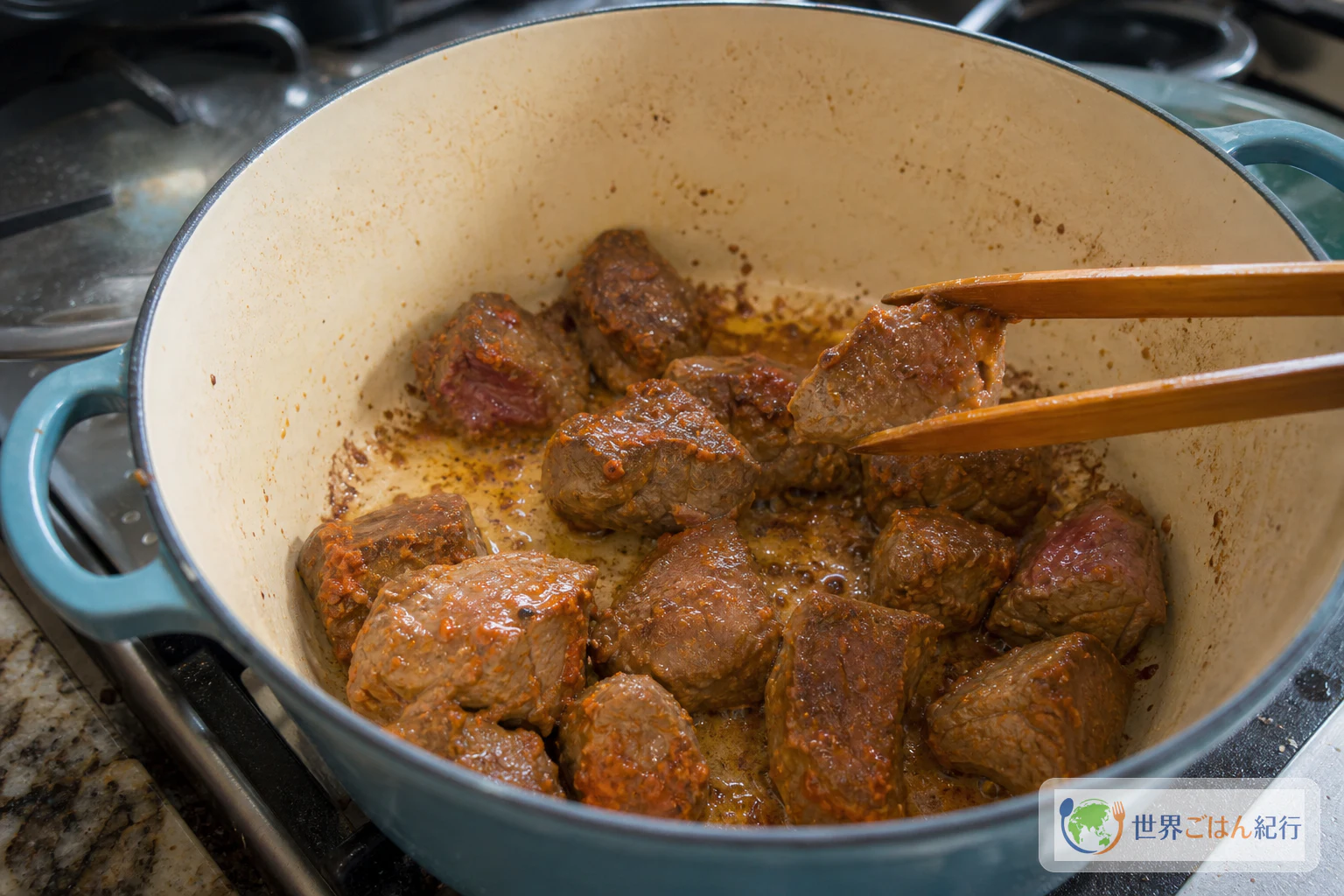
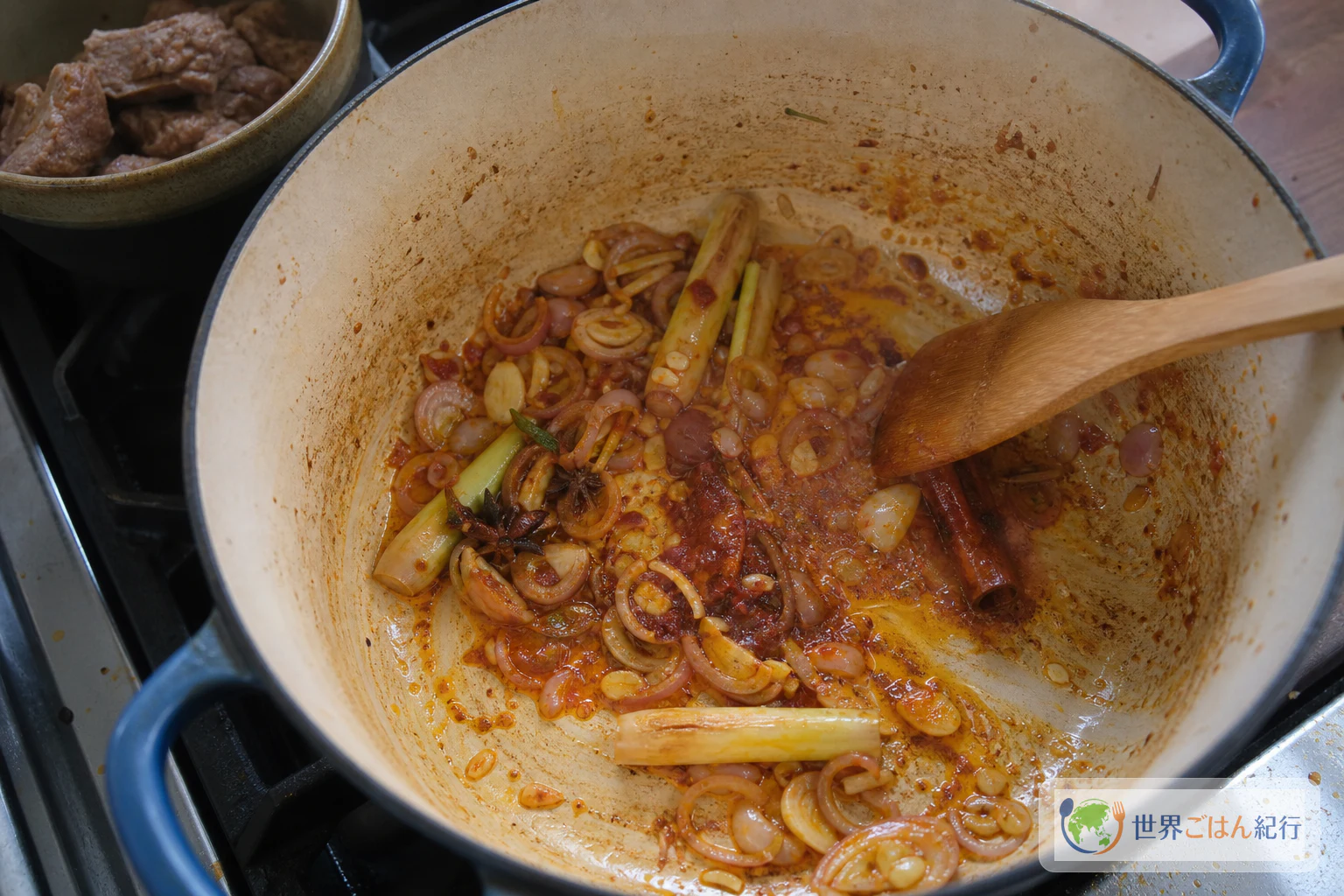
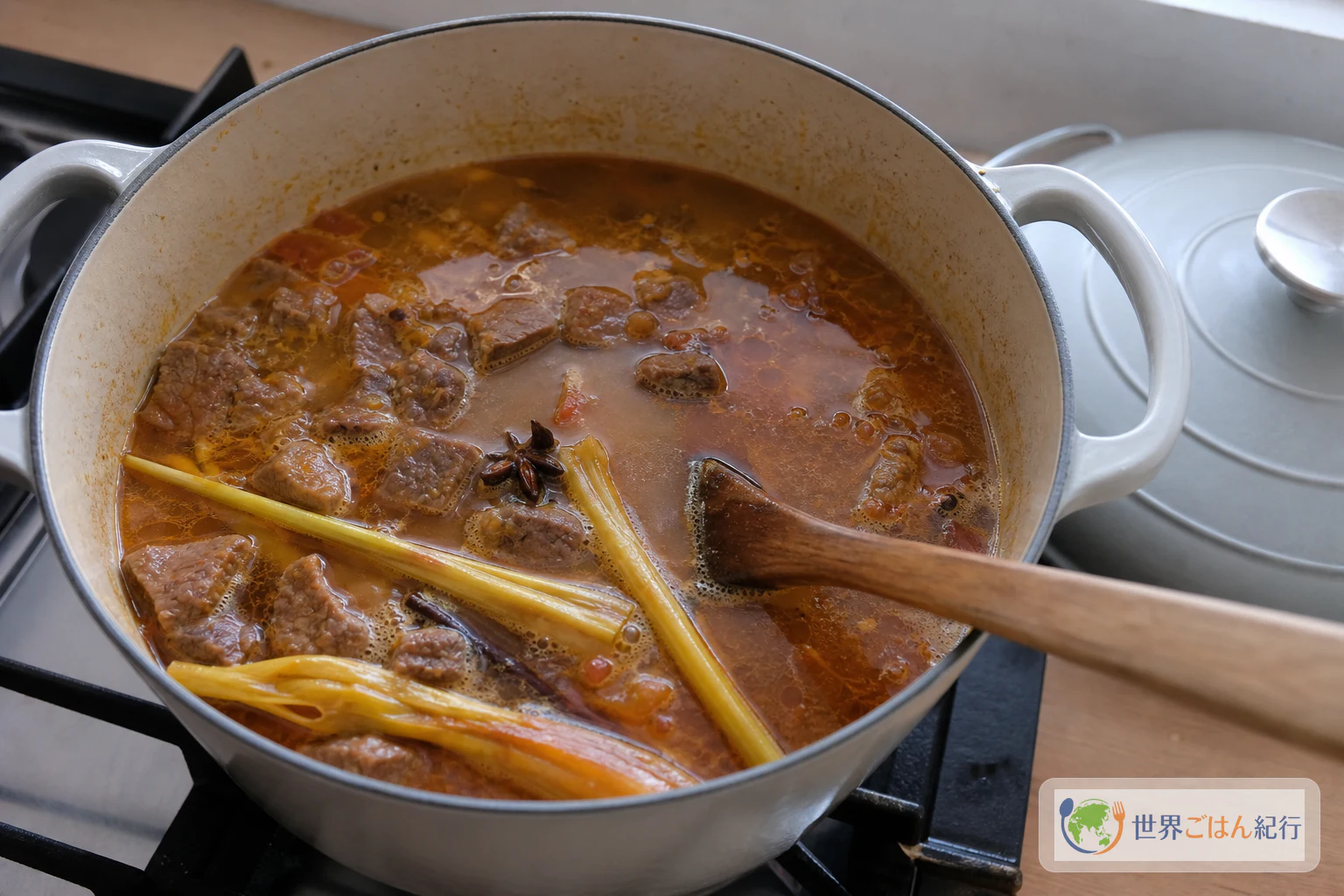
If you just put everything in the pot and simmer, the aroma of bò kho is weak. Brown the beef, bloom the aromatics and spices in oil, and then simmer over low heat. In this order, the broth is light but the flavor is deep.
Fixing common bò kho problems
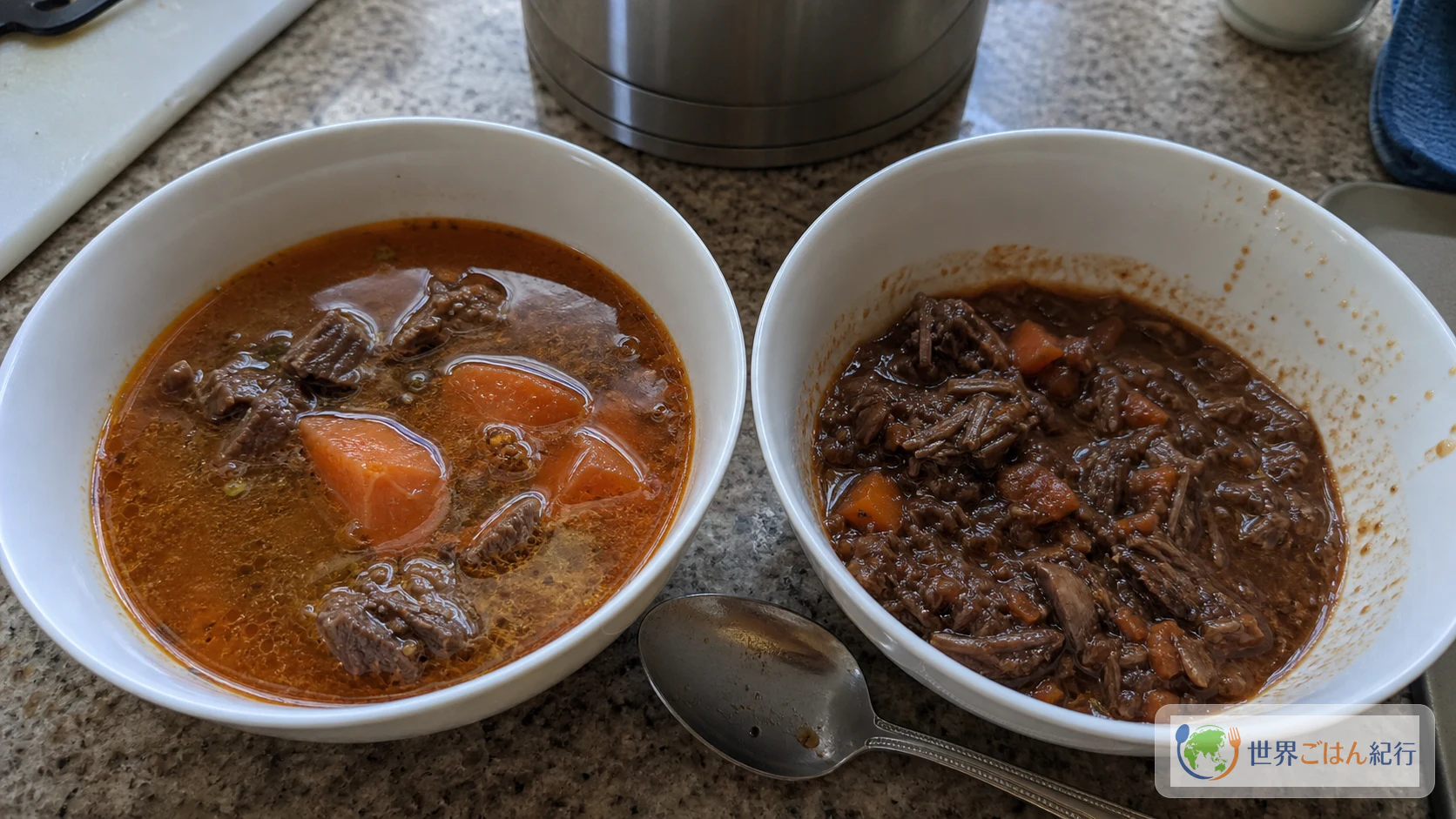
The most common failure is reducing the broth too far. Bò kho is a soup that soaks into bread and noodles, not a sauce that clings to the meat. If a wooden spoon drags heavily along the bottom of the pot, or you can see the bottom, add ½ cup (100 ml) of water and warm over low heat for 5 minutes to bring the aroma back. When it's right, small red beads of oil float on top, the beef fibers have loosened and the carrots still have their corners. If it's too salty, add 1 tsp of sugar and 1 tsp of lime juice along with the water to round off the edges.
Tough beef means the heat was too high or the time too short. A hard boil shrinks the fibers, so the outside looks tender while the center stays dry. Return it to low heat, add 3.5 tbsp (50 ml) of water and check every 15 minutes. Some shank needs more than 90 minutes, and a gentle bubble gets there faster than high heat.
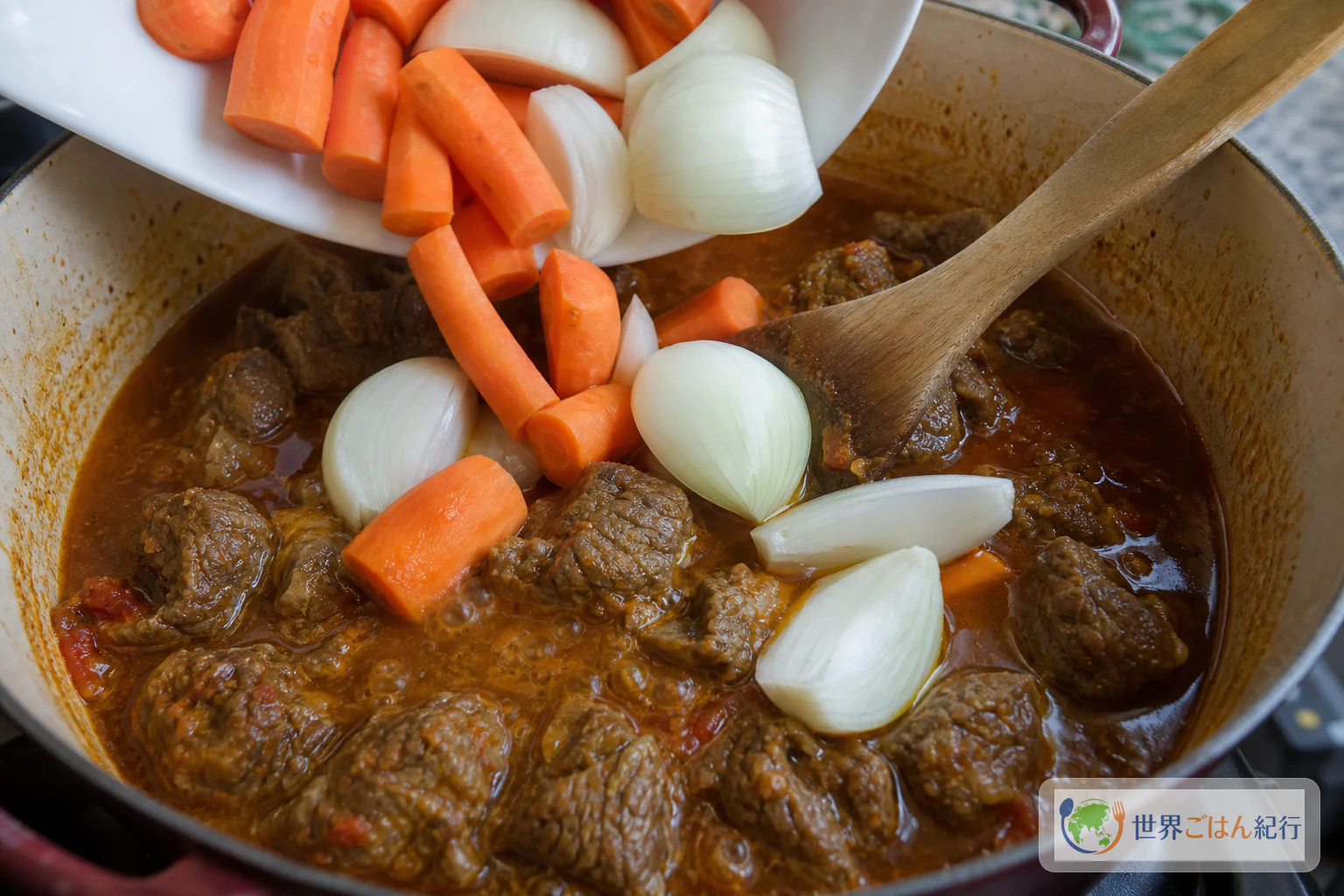
Carrots that fall apart went in too early. Cut them large, add them once the beef is nearly tender and stop at 20 to 25 minutes. If you plan to reheat the next day, turn off the heat while they're still slightly firm.
If the stew smells like herbal medicine, the star anise, cinnamon and five-spice were overdone. Two star anise are enough. When the aroma comes on too strong during the simmer, take out the star anise and cinnamon, add 1 tsp of tomato paste and 3.5 tbsp (50 ml) of water and simmer 10 minutes. Lemongrass and fish sauce should lead, and leaning on them tastes more Vietnamese than adding more spice.
Follow the steps up to browning the beef and stir-frying the aromatics. Reduce the water to 3 cups (700 ml), pressure-cook for 25 minutes once pressure is reached, and wait for natural release. Then add the carrots and simmer uncovered over low heat for 15 minutes. Pressure-cooking the carrots makes them fall apart easily, so add them afterwards.
Serving and storing bò kho
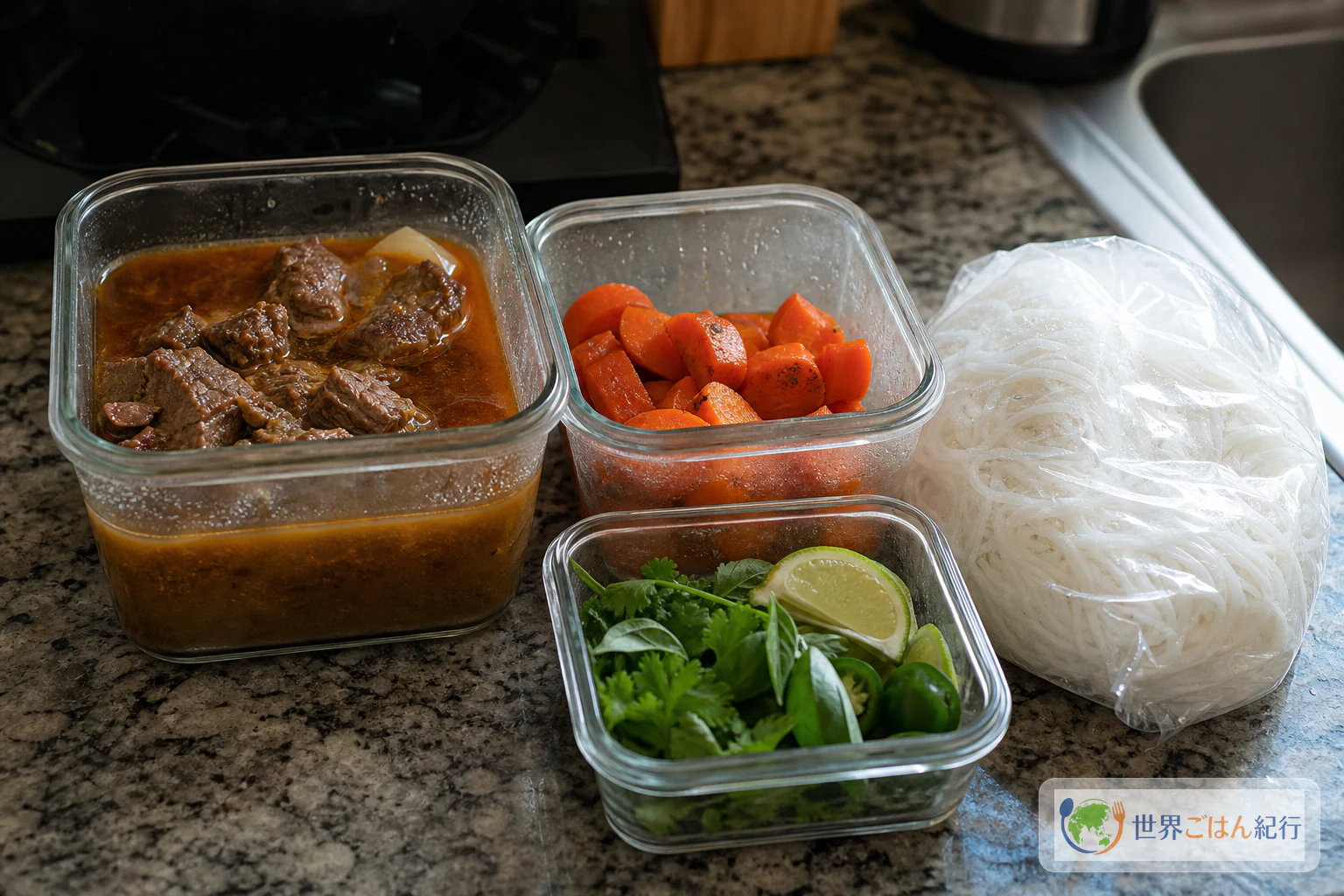
The flavor of bò kho settles by the next day. Let it cool a little, then refrigerate the meat and broth in an airtight container for up to 3 days. If you can, store the carrots in a separate container, since they fall apart easily. To freeze, divide only the meat and broth into single servings and freeze for about 1 month. Carrots lose some texture in the freezer, and herbs, lime, baguette and rice noodles shouldn't be frozen at all. Prepare those fresh.
Reheat in a pot. Thaw frozen portions overnight in the refrigerator. Add 2 to 4 tbsp of water and warm over medium-low heat for about 8 minutes, lower to low heat once it bubbles, and turn it off when the meat is hot through to the center. In a microwave, warm at 600 W for 2 minutes, stir and give it 1 minute more. Add the herbs and lime after reheating.
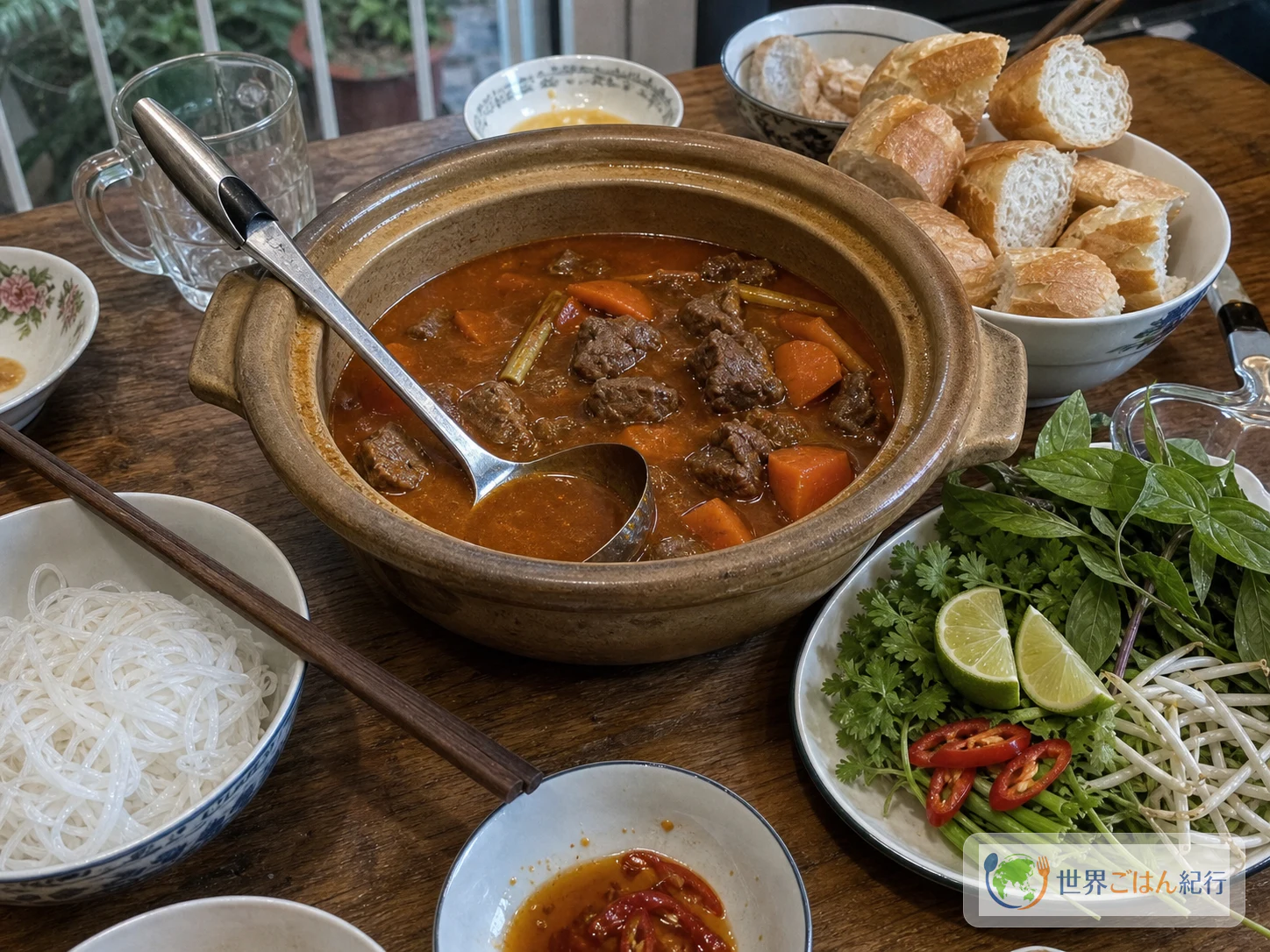
Because it can be eaten so many ways, keep every drop of broth. In the morning, toast a baguette and dip it in. At lunch, add rice noodles in the style of bún bò kho. At dinner, pour it over rice with a little black pepper and lime for a light stewed rice that's nothing like curry. If you have baguette left over from making bánh mì, bò kho is a very good partner for it.
For more Vietnamese meat dishes, try bún chả, grilled over charcoal; bún thịt nướng, lemongrass pork over mixed noodles; and bánh mì, which takes the baguette in another direction.
Frequently asked questions
What cuts suit if I don't have beef shank?
Beef chuck, blocks of short rib and stewing cubes are easy to use. Round on its own has little fat and gelatin, so it tends to dry out even after a long simmer. Stewing cubes are a mix of cuts: take out the tender pieces at 90 minutes, give the tough ones another 15 minutes, and the texture evens out.
Can I make it without lemongrass?
You can, but you'll lose much of the green aroma that makes bò kho what it is. Add 5 g more ginger and just 1/2 tsp of lemon zest instead. Next time, look for frozen lemongrass. It's easy to chop and also works in tom kha gai.
Which is correct, baguette or rice noodles?
Both are natural. Dipping baguette is easy for breakfast or a light lunch, and rice noodles turn it into a filling bowl of noodles. Have it with baguette the first time and switch to rice noodles the next day, and you get two meals out of one pot. Over rice, keep the broth light and add black pepper rather than reducing it.
Can I fix it if I put in too much five-spice?
You can't fully undo it, but you can dilute it. Take out the star anise and cinnamon, add ½ cup (100 ml) of water, 1 tsp of tomato paste and 1 tsp of fish sauce, and warm over low heat for 10 minutes. A generous squeeze of lime just before eating also softens a strong spice aroma. Next time, start with 1/2 tsp of five-spice.