Bánh Cống (Banh Cong): Sóc Trăng Fried Shrimp Cake Recipe

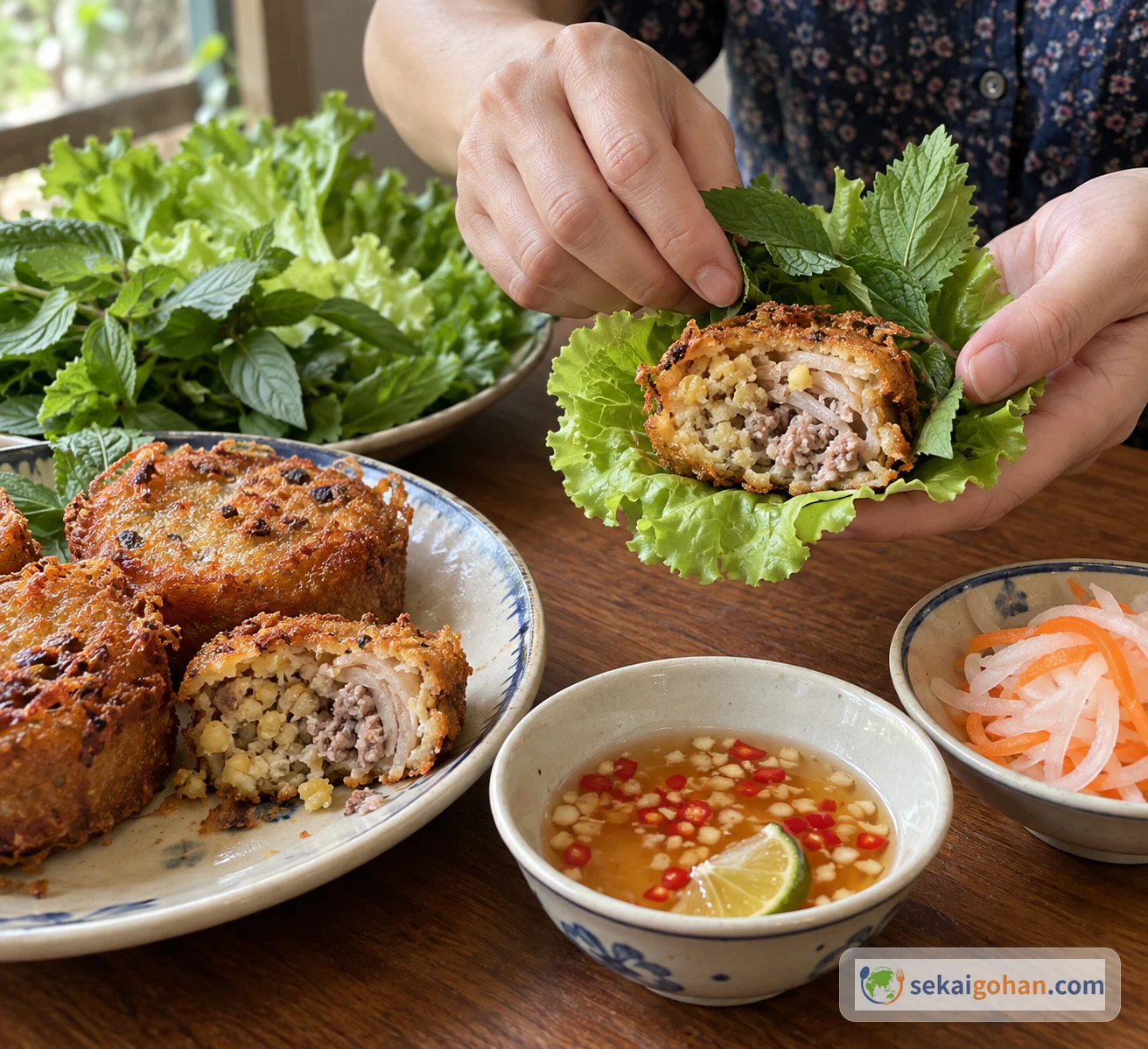
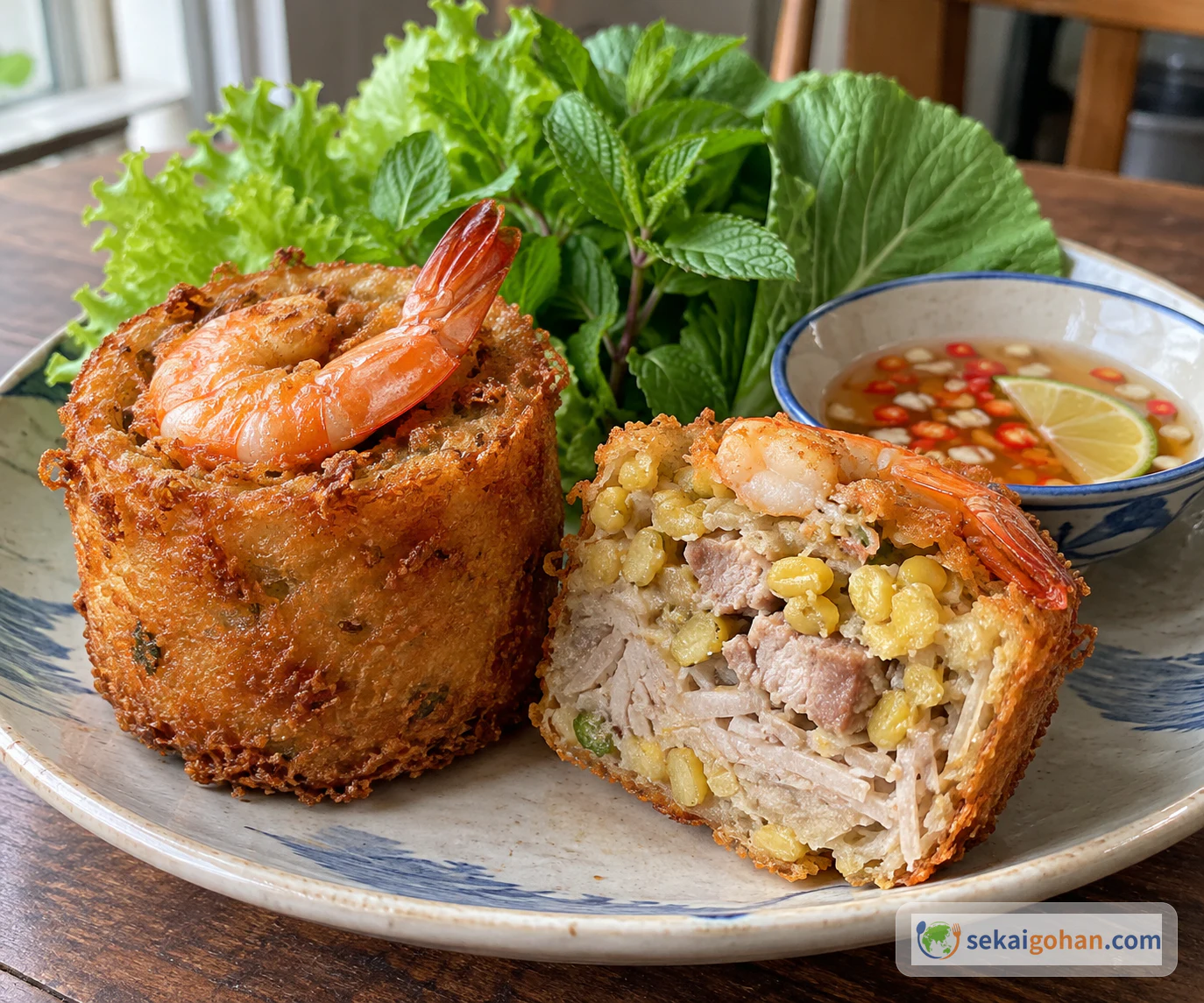
A golden fried bánh cống on the table, one cake broken open to show the shrimp on top and the mung bean layer inside
Level
Intermediate
Cuisine
Vietnamese

Banh cong recipe: turmeric rice-flour batter layered with pork, mung beans, taro and a shell-on shrimp, fried in a deep mold and eaten in lettuce and herbs.

Cooking flow

Cooking steps

STEP11 / 9

Soak and steam the mung beans

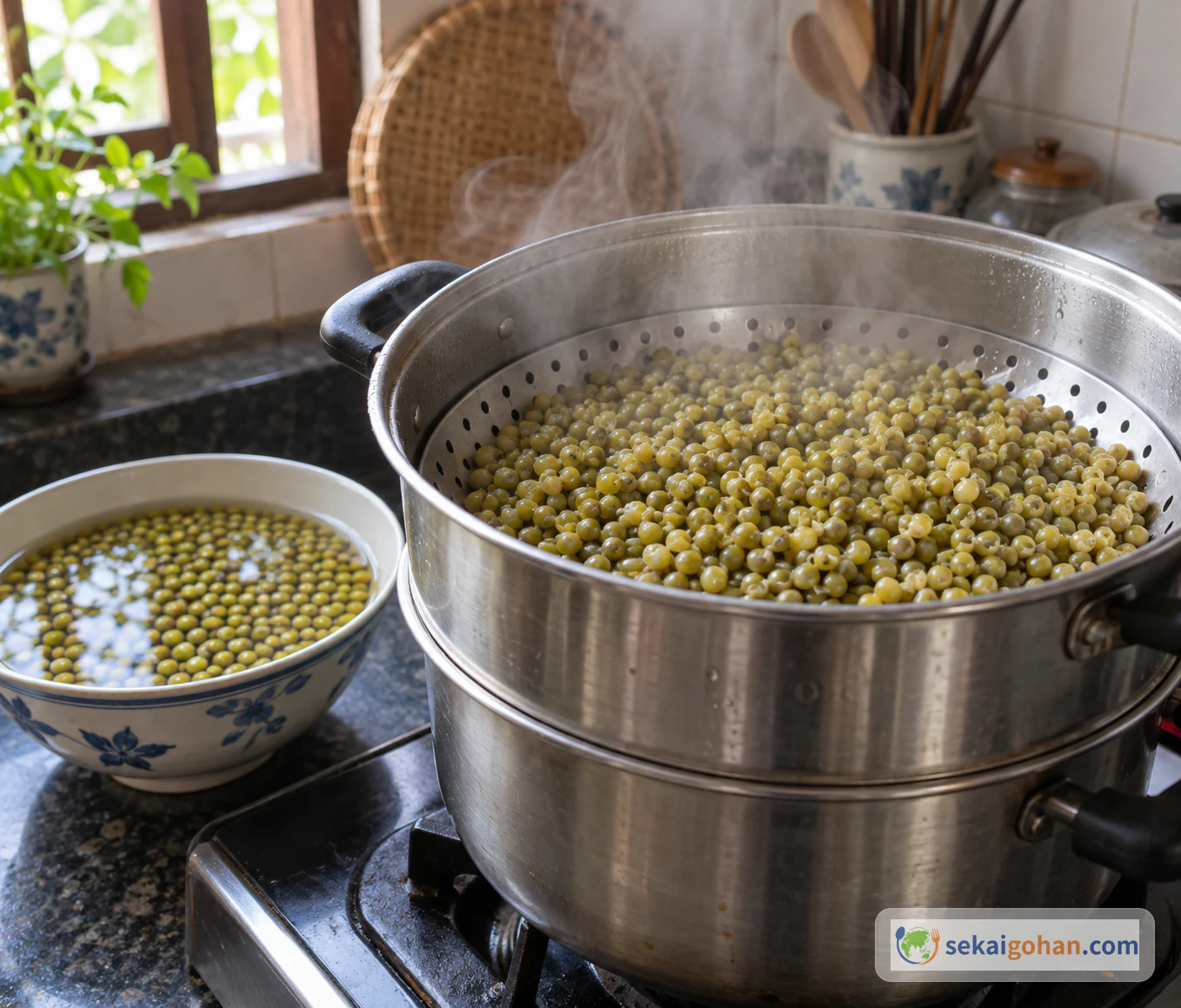
Whole mung beans steaming in a metal basket, with a bowl of soaked beans beside it
Steam the soaked beans until soft but still holding their shape

Soak 3.5 oz (100g) whole mung beans overnight, or in warm water for 15–30 minutes. Rinse them, then steam until soft. They are ready when a bean crushes easily between your fingers but most still keep their round shape.

STEP22 / 9

Prepare the shrimp, pork and vegetables

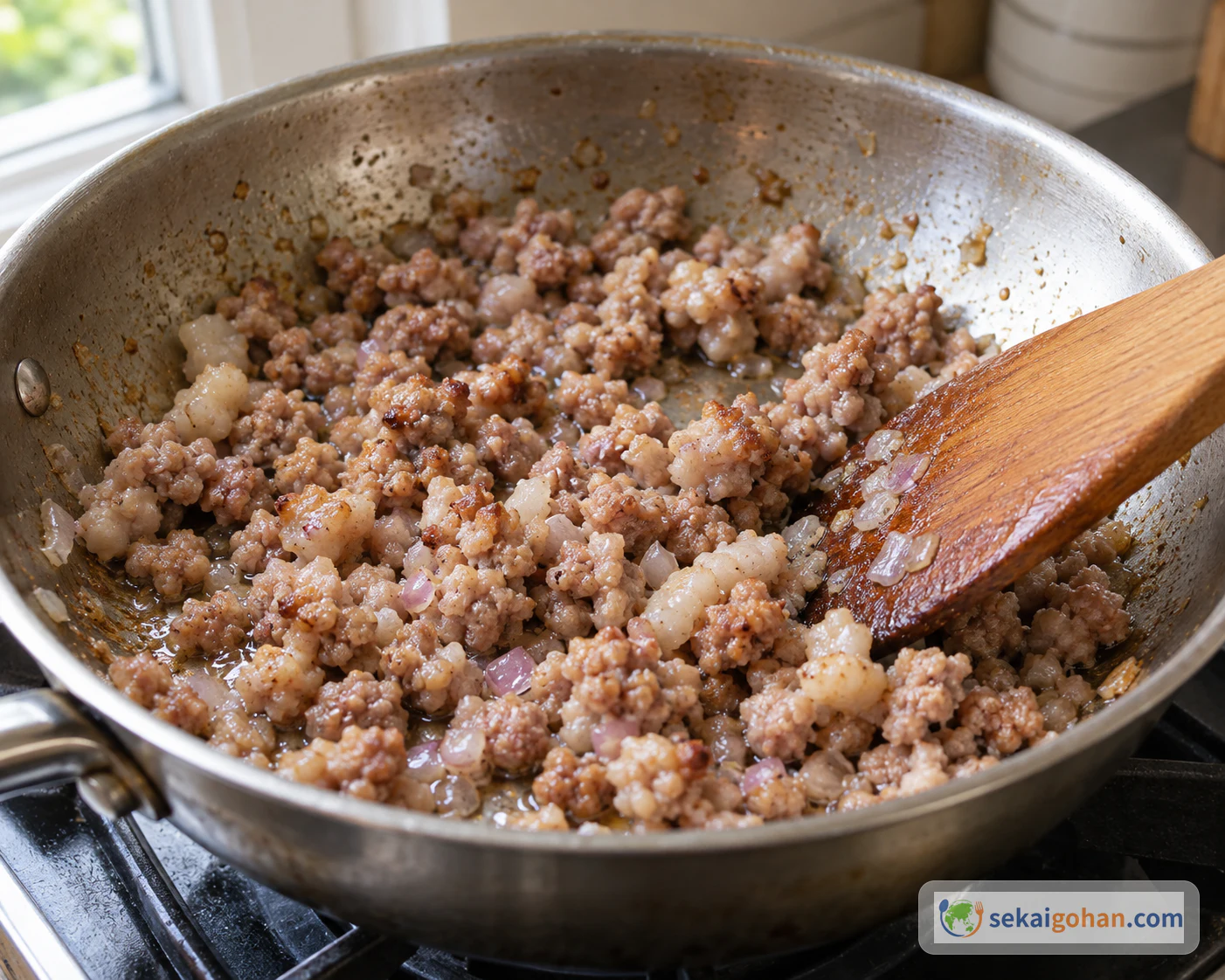
Minced pork and chopped shallot sautéing together in a small pan
Cook the pork with shallot until no pink remains

Remove the heads and legs from the shrimp, keeping the shells and tails. Season them lightly with a little salt, sugar and seasoning powder.

Season the minced pork with salt, sugar, pepper and seasoning powder. Sauté it with minced shallot in a small pan until cooked through.

Julienne the taro, radish and carrot. The taro goes inside the cakes; set the radish and carrot aside for the pickles.

STEP33 / 9

Mix the batter

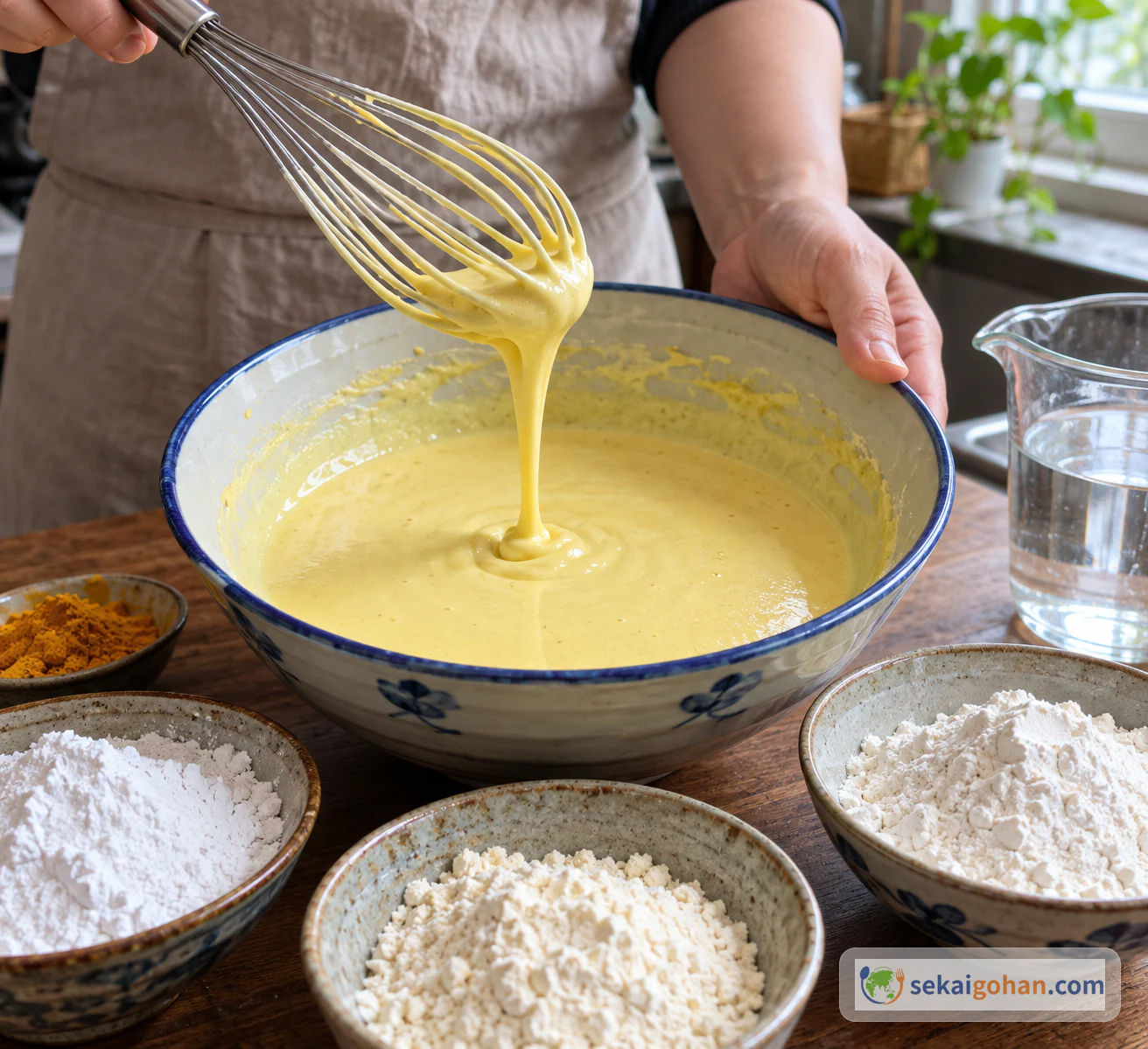
Pale yellow batter being whisked smooth in a bowl, with the flours and turmeric nearby
Whisk until the batter is smooth and pourable

In a bowl, combine 7 oz (200g) rice flour, 1.75 oz (50g) crispy frying flour, 1.75 oz (50g) all-purpose flour and 2g turmeric. Add ¾ cup (180ml) water and whisk until smooth, with no lumps of flour left.

STEP44 / 9

Heat the mold and start the layers

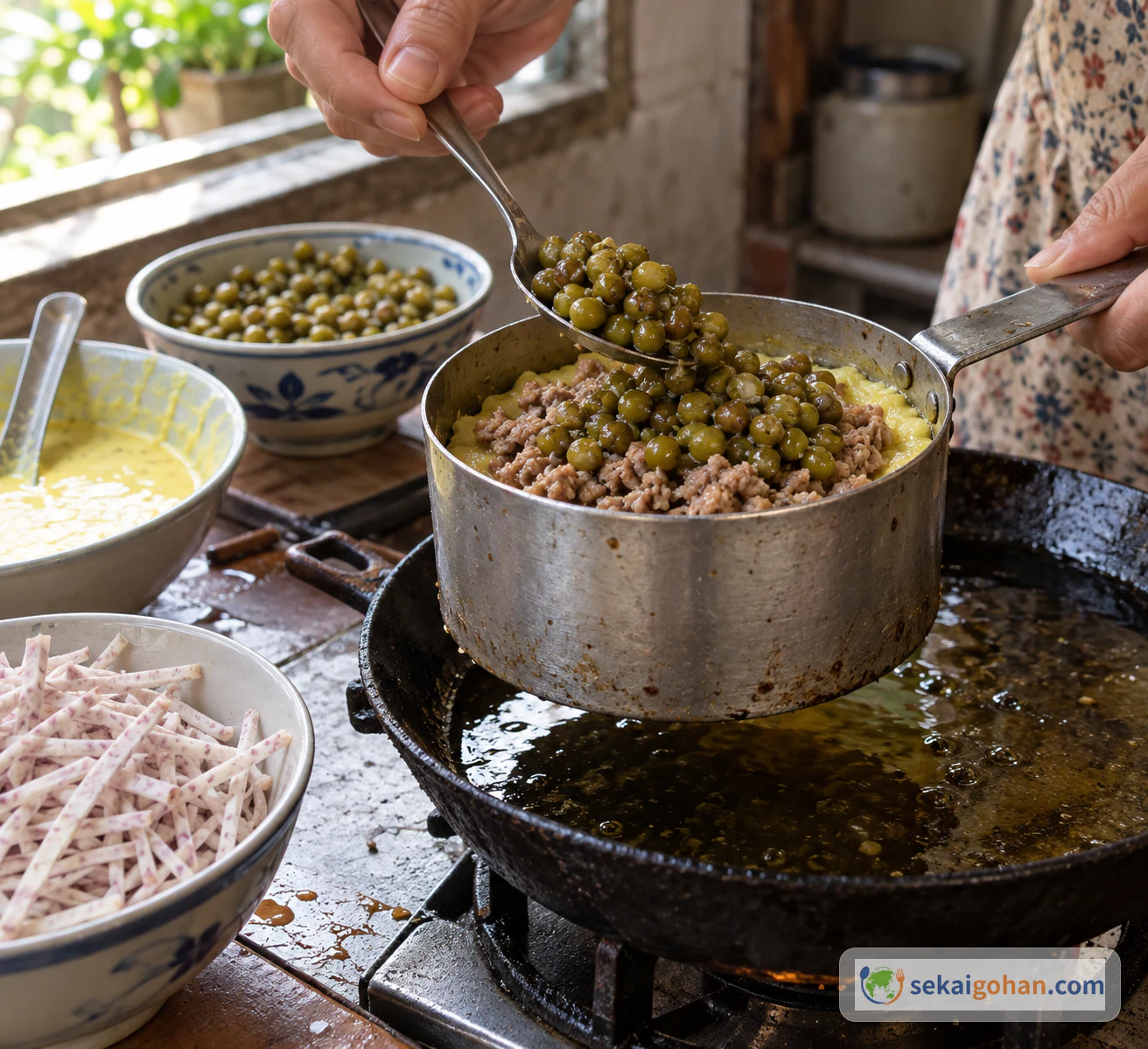
A spoon adding cooked whole mung beans onto the pork layer inside a hot cylindrical metal mold
Batter, pork, then mung beans, one spoonful at a time

Heat the oil in a deep pot. Preheat the cóng mold by holding it in the oil, then lift it out. Add 2 tbsp batter, then 1 tbsp cooked pork, then 1 tbsp steamed mung beans.

STEP55 / 9

Finish the layers and fry

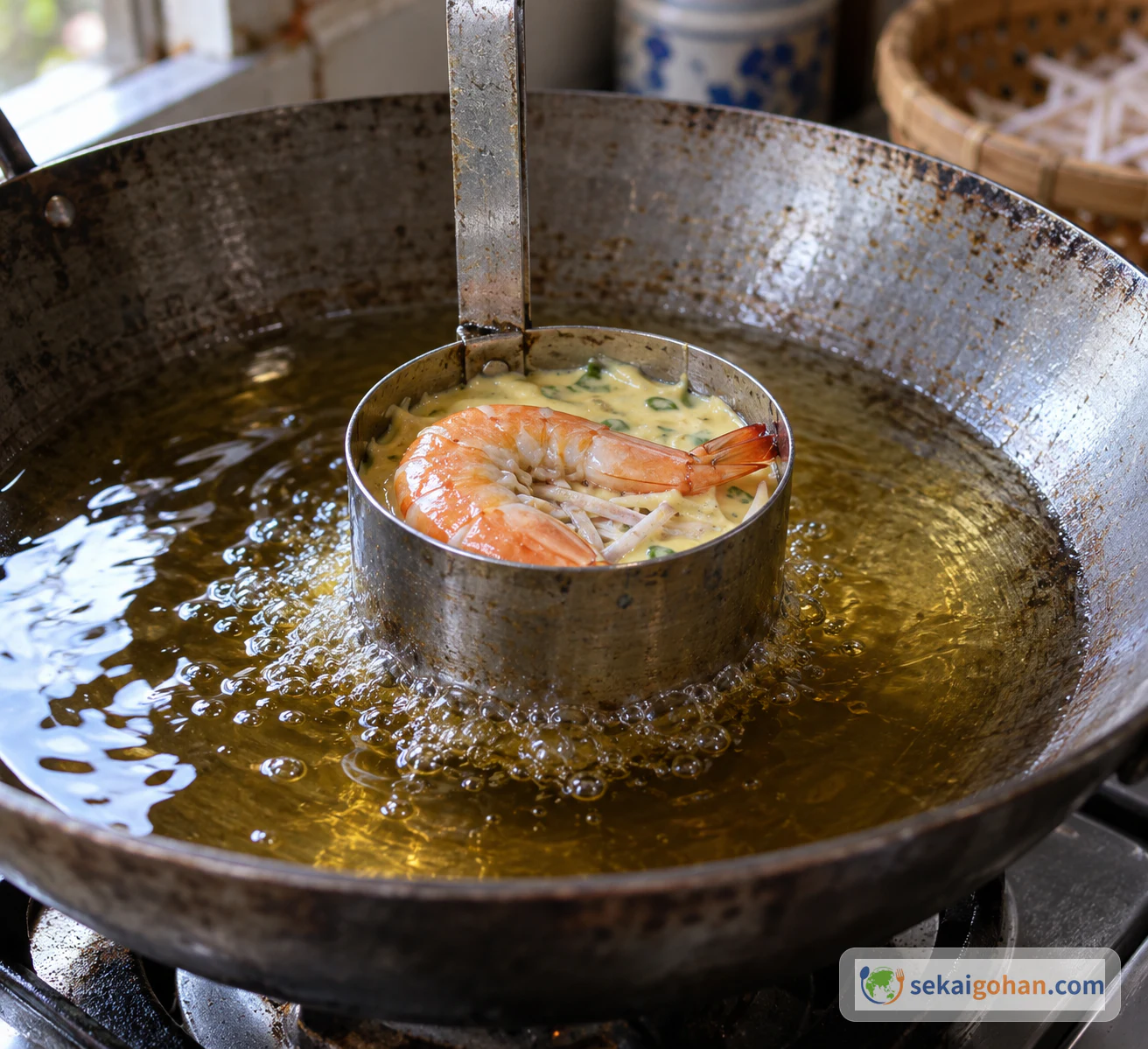
A filled metal mold topped with a shell-on shrimp being lowered into hot oil
Lower the filled mold slowly so the oil does not splash

Spoon in more batter, add a little julienned taro, then more batter, and place one shrimp on top. Lower the whole mold slowly into the oil and fry for 5–7 minutes, until the cake is golden.

STEP66 / 9

Release and drain

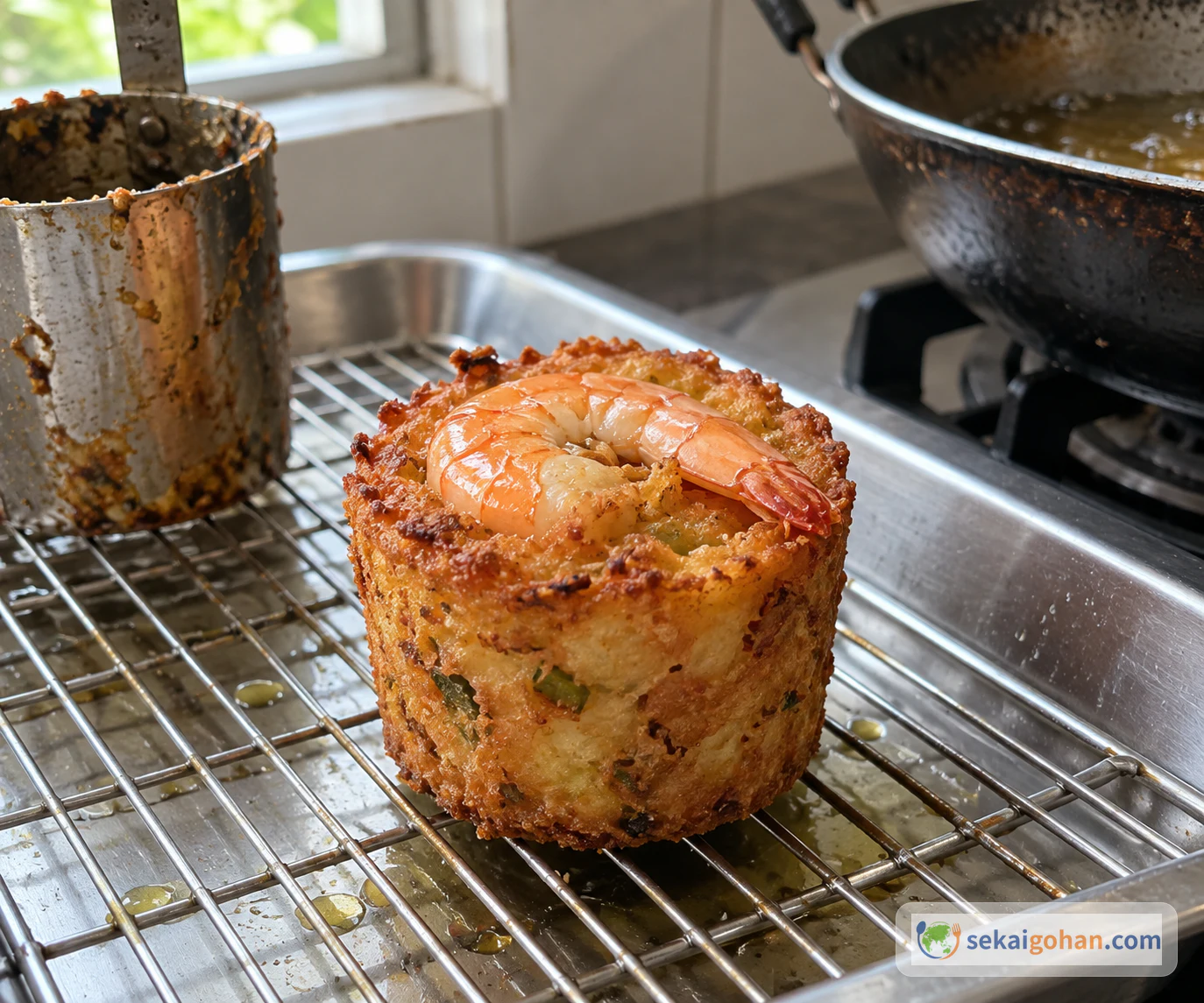
A golden cylindrical bánh cống with a shrimp on top, draining on a wire rack
Drain each cake on a rack as it comes out of the mold

Lift the mold out, release the cake, and drain it on a wire rack. Repeat steps 4–6 with the remaining batter and fillings.

STEP77 / 9

Pickle the radish and carrot

STEP 7

Soak the julienned radish and carrot in salt water. Squeeze them lightly and rinse. Mix with vinegar and sugar, then refrigerate for 30 minutes.

STEP88 / 9

Make the dipping sauce

STEP 8

Heat 3.5 oz (100g) sugar, ¼ cup (60ml) fish sauce and ½ cup (100ml) water briefly, just until the sugar dissolves. Let it cool, then add lime juice, minced garlic and chili to taste.

STEP99 / 9

Serve hot

STEP 9

Serve the cakes hot with lettuce, mint, mustard greens, the pickles and the dipping sauce in a separate bowl.

0 / 0
Ingredients

Ingredients

1 / 1

Ingredients

Ingredient Amount Role
Rice flour 7 oz (200g) Main body of the crisp shell
Crispy frying flour 1.75 oz (50g) Part of the batter
All-purpose flour 1.75 oz (50g) Part of the batter
Ground turmeric 2g Yellow color of the shell
Water ¾ cup (180ml) Mixed with the flours into a smooth batter
Minced pork with fat 7 oz (200g) Savory layer; seasoned and sautéed before layering
Shrimp, shell-on 7 oz (200g) Topping; remove heads and legs, keep shells and tails
Whole mung beans 3.5 oz (100g) Layer inside the cake; soaked and steamed
Taro 1 small Julienned; a thin layer inside the cake
Shallot as needed Minced; sautéed with the pork
Salt to taste Seasoning for the pork and a little for the shrimp
Sugar to taste Seasoning for the pork and a little for the shrimp
Pepper to taste Seasoning for the pork
Seasoning powder to taste Seasoning for the pork and a little for the shrimp
Oil as needed For deep-frying; enough to submerge the mold
White radish 1 Julienned; pickled as a side
Carrot 1 Julienned; pickled as a side
Salt a little For the salt water
Vinegar as needed Sour pickling liquid
Sugar as needed Sweetens the pickling liquid
Sugar 3.5 oz (100g) Sweetness
Fish sauce ¼ cup (60ml) Salt and savor
Water ½ cup (100ml) Dilutes the dip
Lime juice to taste Sourness
Garlic to taste Minced; aroma
Chili to taste Heat
Lettuce as needed For wrapping
Mint as needed For wrapping
Mustard greens as needed For wrapping

Whole mung beans are round, with green-to-brownish skins and yellow insides; it is natural for the skins to show in the finished filling.

0 / 0

A small metal cup on a handle comes up out of the frying oil, already hot. Into it go a spoonful of pale yellow batter, a spoonful of cooked pork, a spoonful of mung beans, more batter, a little shredded taro, more batter, and finally a single shrimp with its shell still on. Then the whole mold sinks back into the oil until the cake turns golden and slips free. This is bánh cống, a fried shrimp cake from Sóc Trăng in Vietnam's Mekong Delta: a crisp, golden turmeric shell around soft whole mung beans and savory pork, with a thin layer of taro and that one shrimp standing on top. You eat it hot, wrapped in lettuce and herbs and dipped in sweet-sour fish sauce.

About Bánh Cống

A Khmer Specialty From Sóc Trăng

Bánh cống is a specialty of the Khmer people of Mỹ Xuyên in Sóc Trăng, and it later spread across the Mekong Delta. Local cooks associate the shallots that go into it with Vĩnh Châu. The core is the same wherever you find it: a rice-flour batter, mung beans, pork, shrimp, a deep mold and the leaf-and-dip way of eating. The details shift from cook to cook, including which flours go into the batter, the order of the layers, and which vegetables and pickles come to the table.

The name appears as both bánh cống and bánh cóng, and it comes from the cóng, the deep cylindrical metal mold the cake is fried in. That mold shapes everything about the dish: the straight sides, the flat base, and the way the fillings stack up inside. If you want to explore more of the country's table, browse more Vietnamese dishes.

Bánh Cống, Bánh Xèo and Bánh Khọt

Vietnam has several rice-flour dishes that can look alike in a photo. Bánh xèo is a thin rice-flour crepe cooked in a pan, and bánh khọt is a small cake cooked in a shallow mold. Bánh cống is deep-fried in a tall cylindrical mold, with its pork, whole mung beans, taro and shrimp built up in layers between spoonfuls of batter. The deep metal cup lets the batter set around the fillings in the oil, which is what gives the cake its column shape.

How the Flavor Comes Together

The batter is mostly rice flour, with a smaller share of crispy frying flour and all-purpose flour, plus a little turmeric for color. Inside, whole mung beans are steamed soft, fatty minced pork is sautéed with shallot, julienned taro forms its own thin layer, and the shell-on shrimp goes on top.

The table around the cake supplies the contrast. Lettuce, mint and mustard greens come with it, along with a dip of fish sauce, sugar and water finished with lime, garlic and chili, and radish and carrot pickled in vinegar and sugar. The lime brightens the dip, while the vinegar gives the pickles their bite.

Ingredients and Amounts
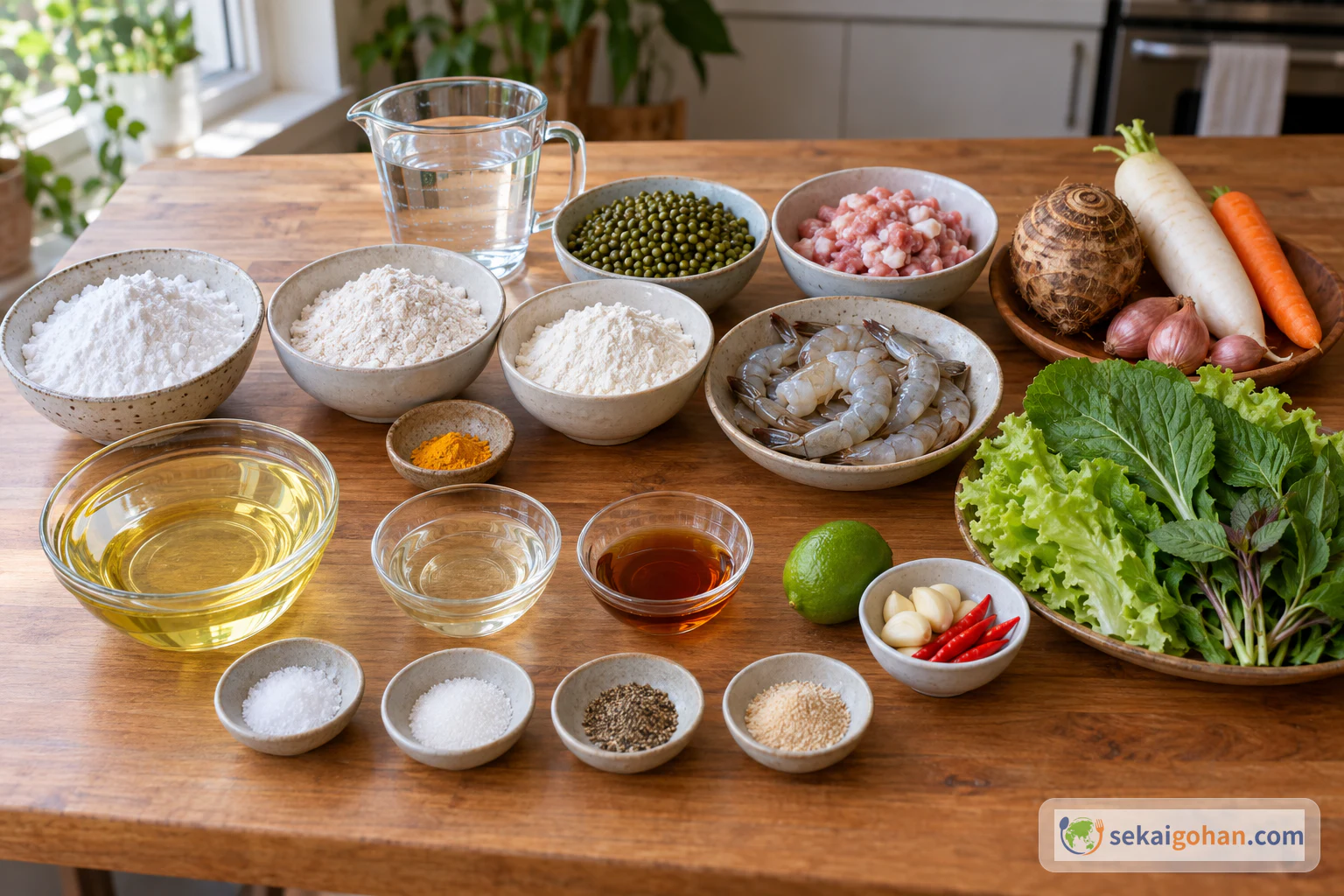
Separate bowls of rice flour, crispy frying flour, all-purpose flour, turmeric, whole mung beans, minced pork, shell-on shrimp, water, lettuce and herbs
Keep the batter, the fillings, the pickles and the dip in separate groups

The number of cakes depends on the size of your mold.

Equipment

  • Cóng mold: a flat-bottomed, cylindrical metal cup with a handle
  • Deep pot for frying, deep enough to submerge the mold
  • Steamer basket
  • Small frying pan
  • Mixing bowl and whisk
  • Tablespoon for layering
  • Wire rack for draining

Choosing Ingredients for Bánh Cống

Crispy frying flour is a prepared frying flour. Potato starch, cornstarch or tempura flour will each change the crispness and color of the shell, so it's worth tracking down the real thing.

All-purpose flour means plain all-purpose flour. Outside the US, a local "soft" or cake flour behaves differently, so look for a plain flour instead.

Mung beans should be whole, with the skins on. The recipe is built around the whole bean, which is what gives the filling its soft texture.

The mold matters. A hot ladle can stand in for a cóng; if you go that route, pick an all-metal one and treat the first few cakes as an experiment.

Allergens and frying safety

This dish contains shrimp (crustacean), wheat (all-purpose flour, and the crispy frying flour if it contains wheat) and fish (fish sauce). Check the labels of prepared flours and seasoning powder. Frying oil used for shrimp can carry crustacean allergens to anything else fried in it. Fry in a stable pot, lower the mold slowly, and never leave hot oil unattended.

Method: Prepare Separately, Then Layer and Fry

Before you start

The pickles need 30 minutes in the refrigerator and the dip needs to cool. Make steps 7 and 8 while the mung beans soak, then come back to the frying.

Troubleshooting Bánh Cống

Your first cake is the test run. Watch it closely, and judge doneness by the golden color and by how easily the cake releases from the mold rather than by a fixed number on a thermometer.

Problem Likely cause What to try
Batter sticks to the mold Mold not hot enough when layering began Preheat the mold in the oil each time before adding the first batter
Cake is pale after 5–7 minutes Oil not hot enough, or a larger mold Leave it in a little longer and judge by color
Fillings overflow or the cake is all batter Layer amounts don't suit your mold size Adjust the spoonfuls on the first cake and keep the same order
Mung beans are hard Too short a soak or steam Steam until a bean crushes easily between your fingers before layering
Dip tastes too salty or sweet Balance of lime, garlic and chili Adjust the lime, garlic and chili, which have no fixed amounts, rather than changing the base

Serving Bánh Cống and Variations

Hands wrapping a cut piece of bánh cống in lettuce and herbs, with fish sauce dip and pickles beside it
Wrap a hot piece in lettuce and herbs, then dip

Break or cut a cake into pieces, wrap a piece in a lettuce leaf with mint or mustard greens, dip it in the sweet-sour fish sauce, and eat it while it's still hot. The pickles go alongside. The cake, the leaves and the dip are the heart of it; how much chili you add and which herbs you reach for is up to you.

There's room to play once you've made it the classic way:

  • Shrimp with or without shell. The shell-on shrimp with its tail is traditional. Peeled shrimp are easier to eat but change the look and the bite.
  • Greens to match what you can get. Other leaves will shift the balance of coolness and bitterness.
  • With pickles or leaf-forward. Lean on the radish and carrot pickles for a sharper, more sour plate, or on the lettuce and herbs for a lighter one.
  • Other regional formulas. Some simpler versions use wheat flour, onion and a different amount of water, and some include egg.

Frequently Asked Questions

How many cakes does this make?

The number depends on your mold. The 5–7 minute frying time is for each mold, not for the whole batch.

Can I make them ahead or reheat them?

Bánh cống is meant to be eaten hot, straight from the oil, so fry them just before you sit down.

Can I make it without a cóng mold?

A hot all-metal ladle can stand in, though the deep metal mold gives the best shape. Expect a little trial and error with a ladle.
Sources

  • Vinpearl, "Cong cake (fried shrimp cake): Origin, recipe & popular eateries." The recipe used here: amounts for pork, shrimp, whole mung beans, rice flour, crispy frying flour, all-purpose flour, turmeric and water; small taro, white radish and carrot; preparation, the cóng mold, the layering order, the 5–7 minute frying time, pickles, the dipping sauce, and serving with lettuce and herbs. Also the Khmer community framing and the explanation of the name. Seasoning, oil and shallot amounts, yield and mold size are not given. https://vinpearl.com/en/cong-cake-vietnam
  • VietNamNet Global, "Khmer people's unique shrimp cake in the delta." The dish as a Khmer specialty of Mỹ Xuyên, Sóc Trăng, later spreading across the Mekong Delta; its main ingredients; the association of shallots with Vĩnh Châu; and eating it wrapped in lettuce and herbs with sweet-sour fish sauce. A food feature, not a measured recipe; its account includes egg, which is not used here. https://vietnamnet.vn/en/khmer-peoples-unique-shrimp-cake-in-the-delta-737730.html
  • Dieutri.vn, "Bánh cóng Sóc Trăng - Hướng dẫn cách làm." An alternate, simpler formula with mung beans, rice flour, wheat flour, shrimp, water, salt, sugar and onion, and the technique of heating the mold in hot oil. Treated as a separate variant only. https://www.dieutri.vn/songkhoe/banh-cong-soc-trang
  • bTaskee, "Cách Làm Bánh Cống Giòn Rụm Thơm Ngon Tại Nhà." A household method using a hot ladle or mold, layered batter and filling, whole shrimp, and serving with greens and dipping sauce. Its measured recipe has inconsistencies and is not used as the main recipe. https://www.btaskee.com/vi-VN/blog/cach-lam-banh-cong-gion-rum-thom-ngon-tai-nha/