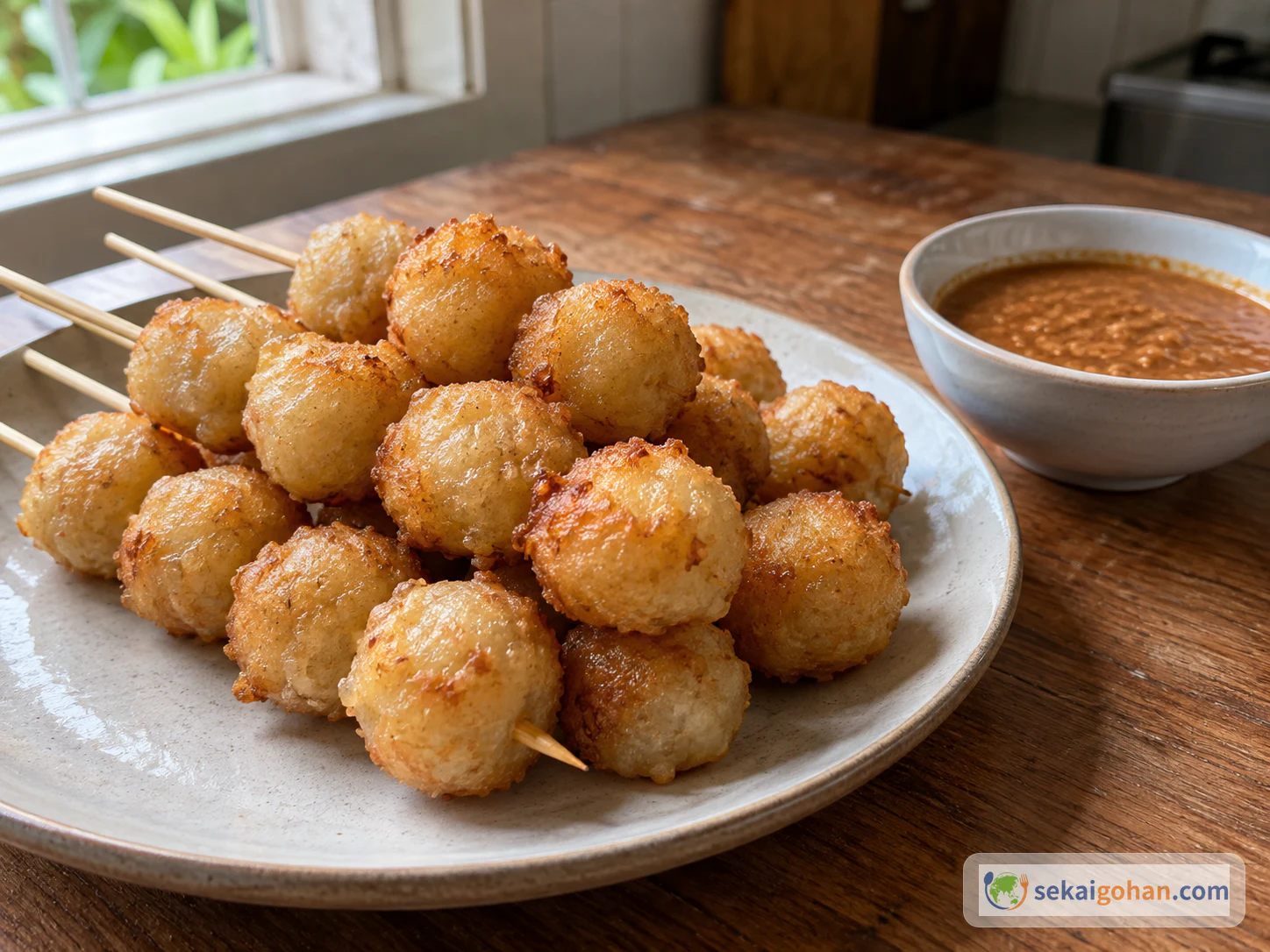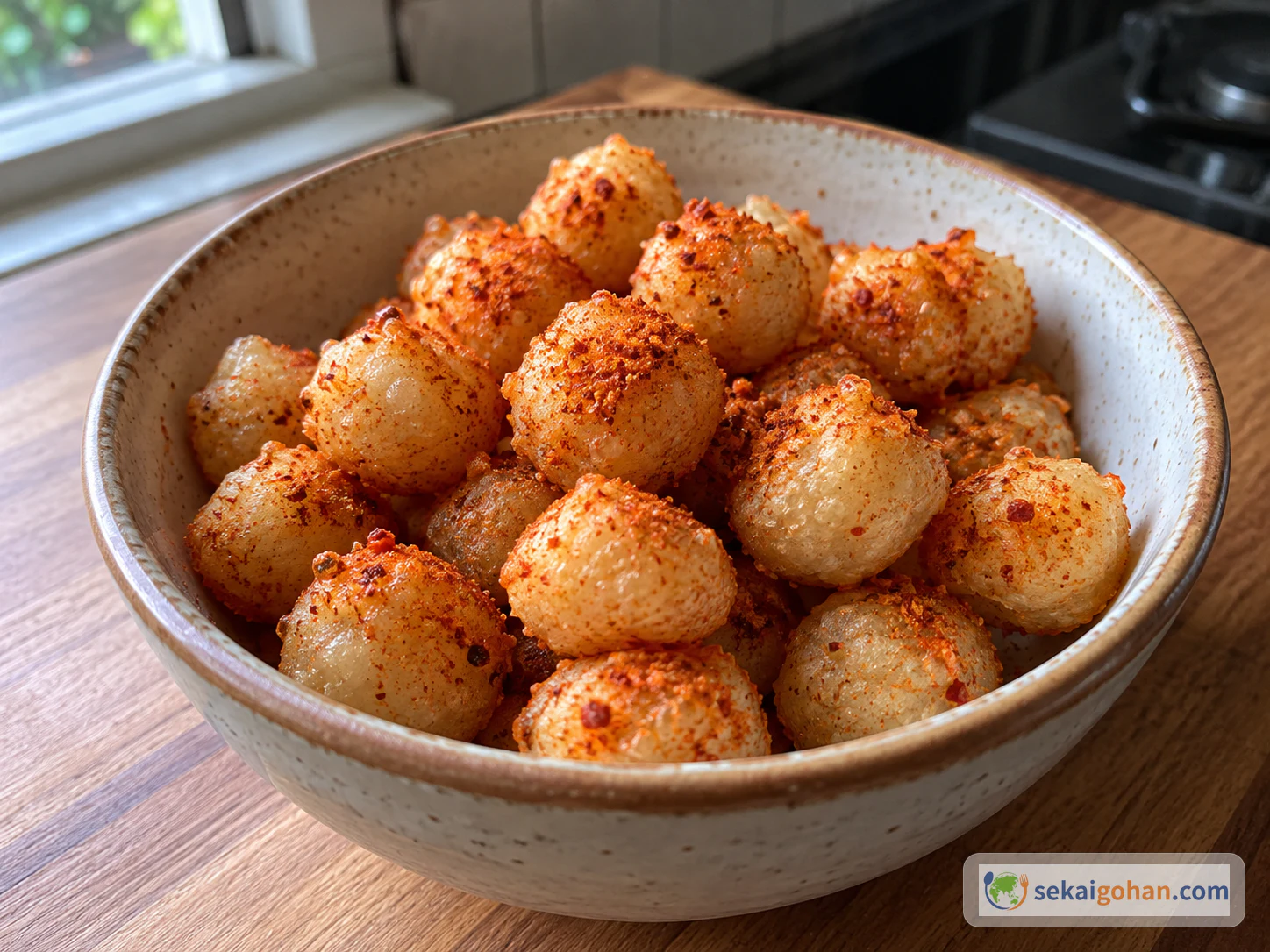
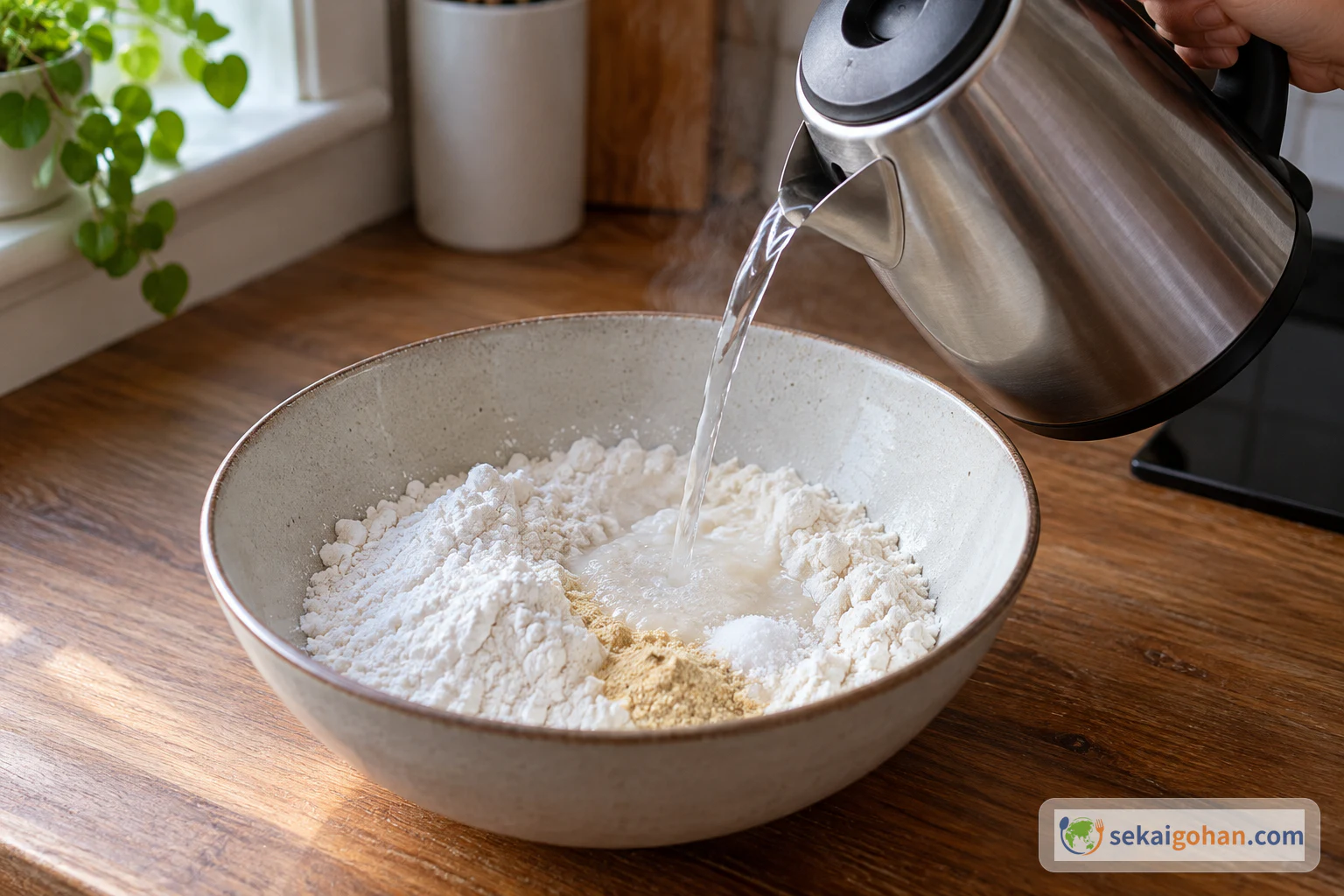
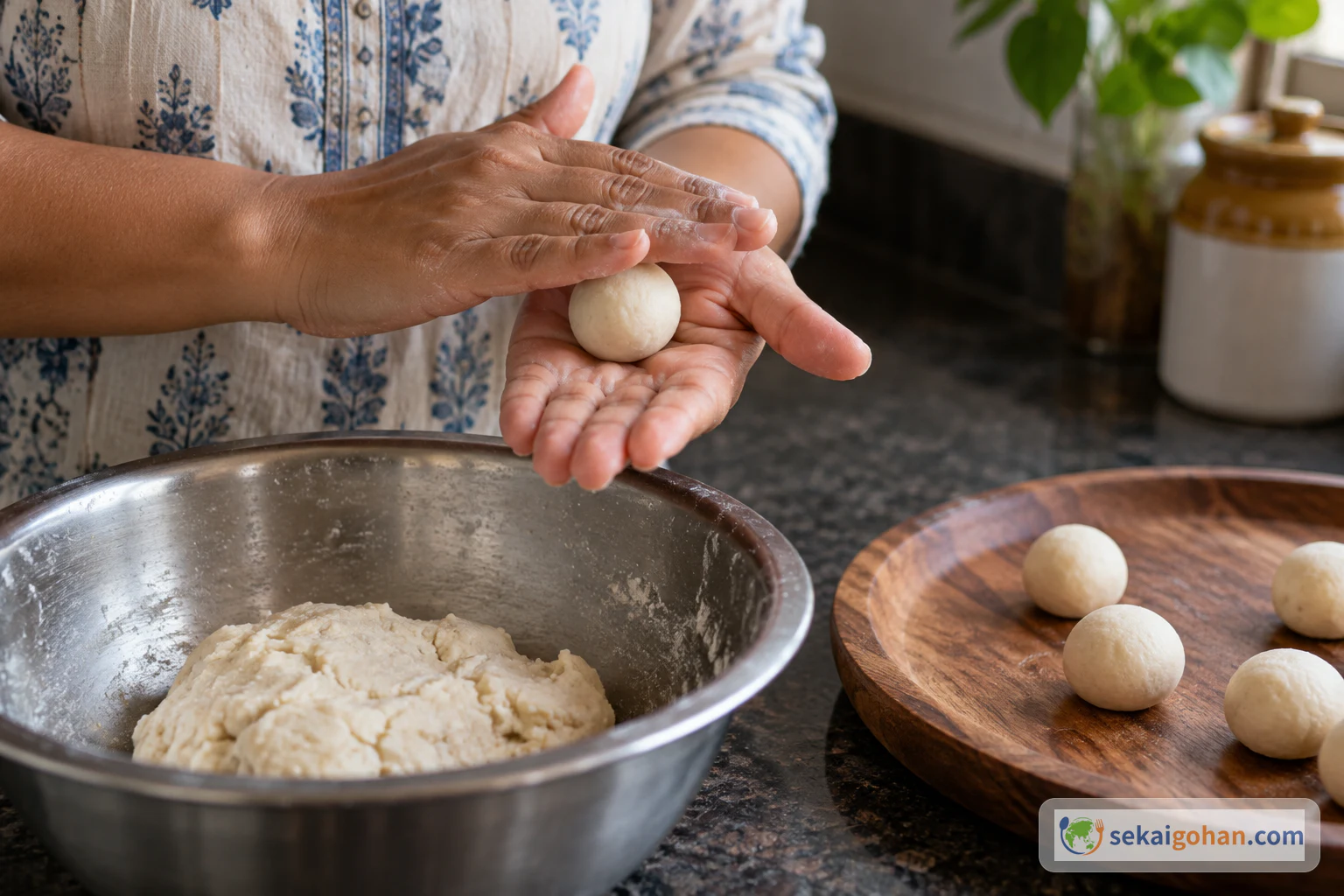
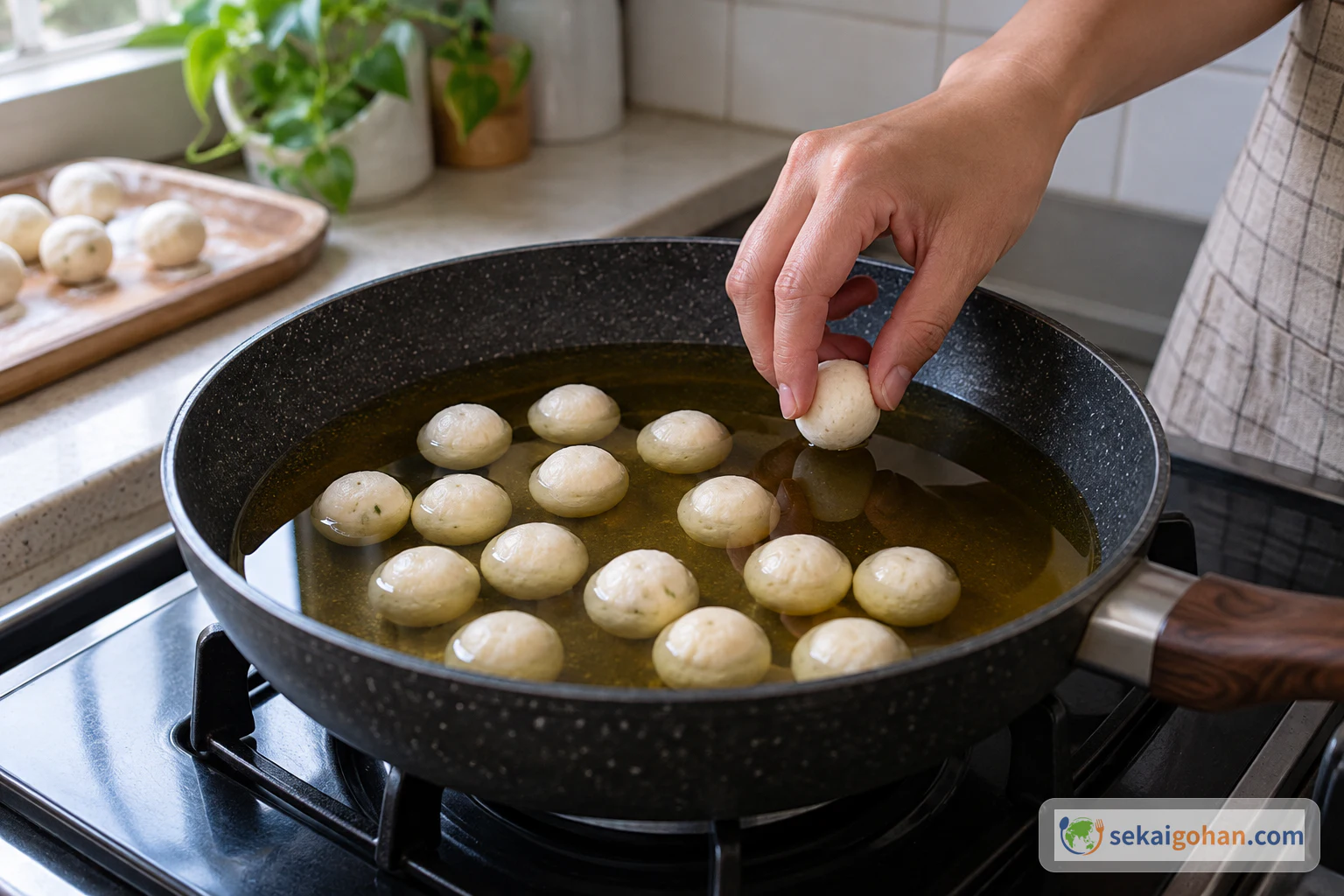
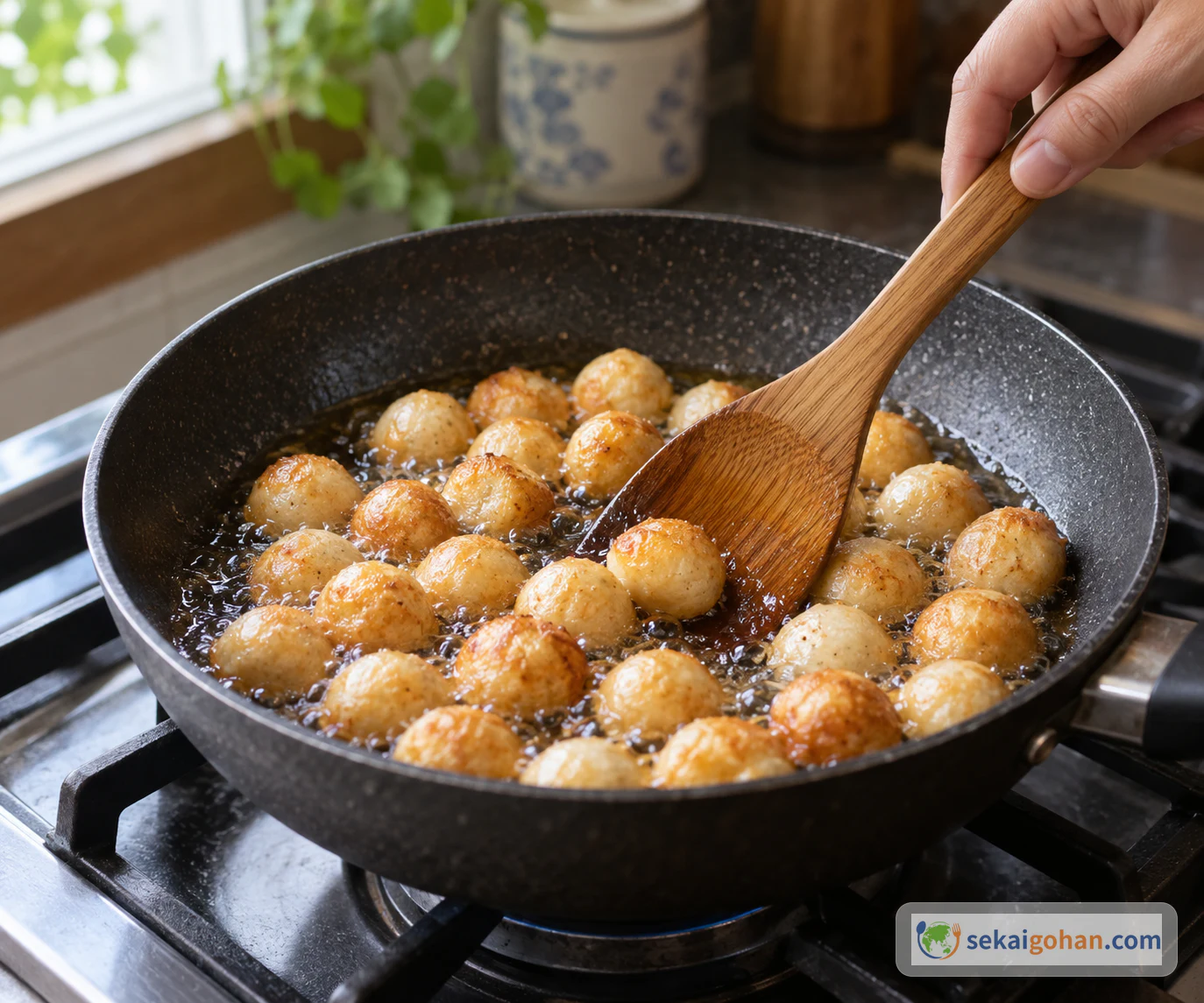
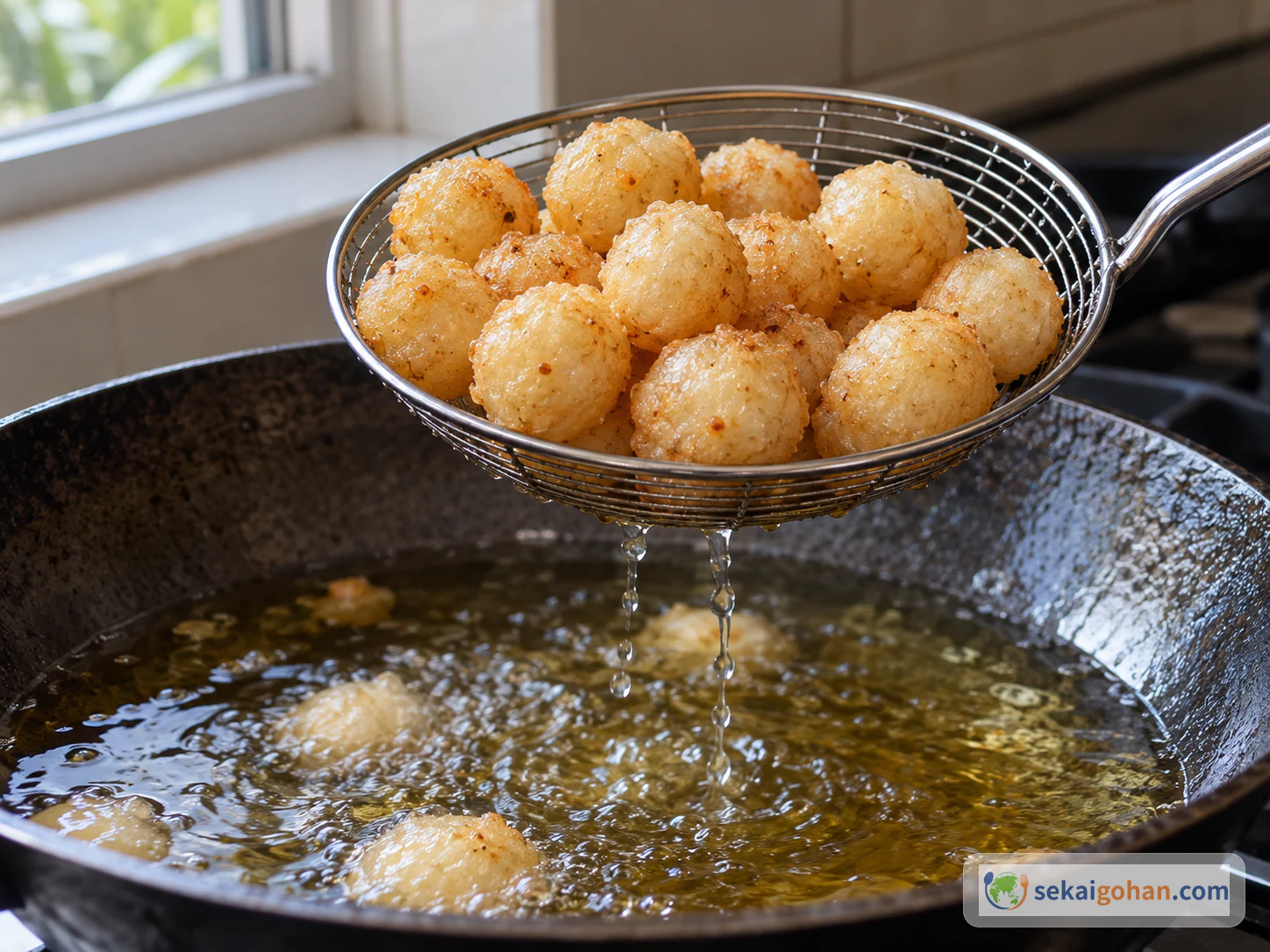
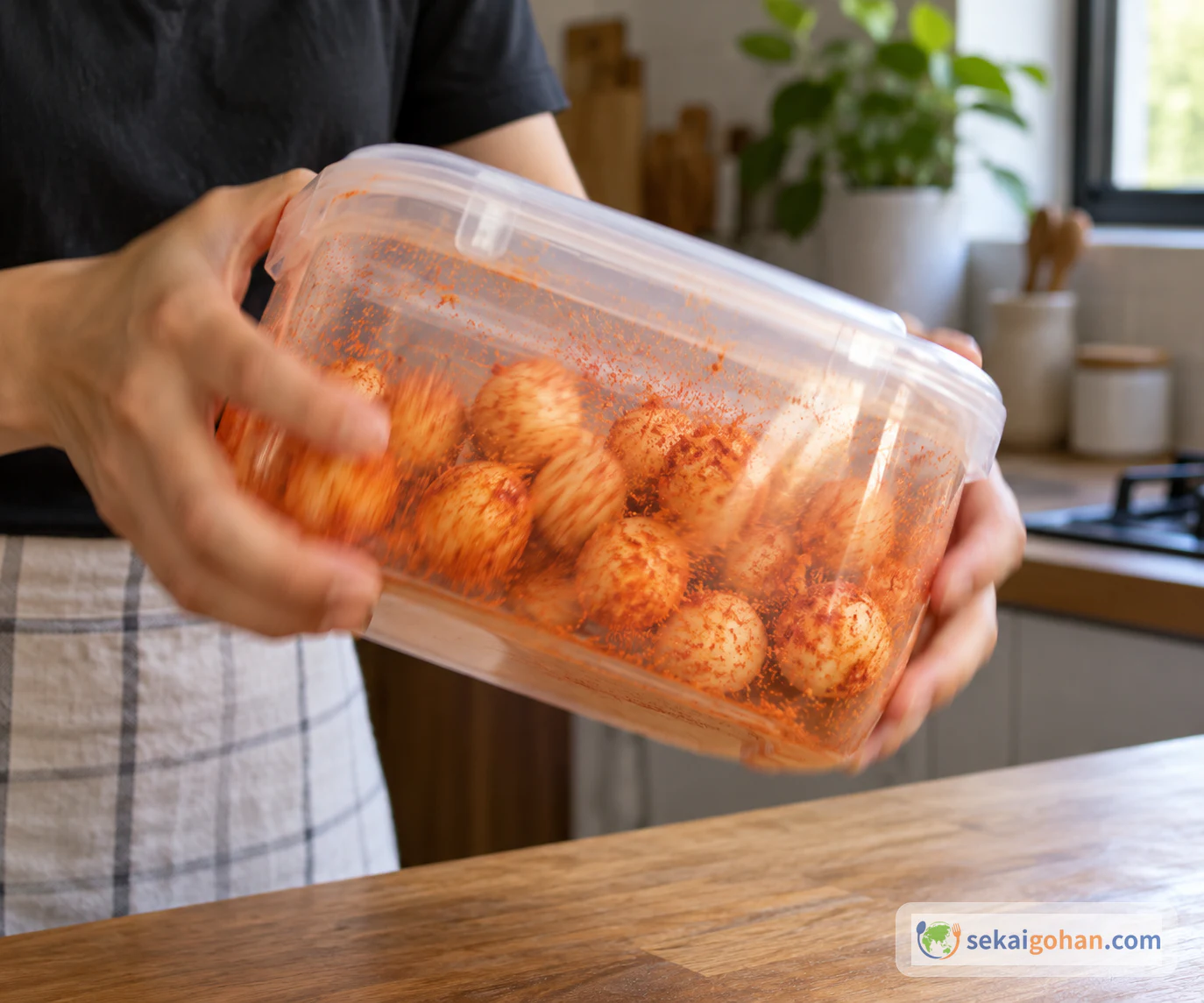
Cimol starts out like most fried snacks, then does something different: the small balls go into the oil before the heat goes on. You bind tapioca flour and wheat flour with freshly boiled water, a spoonful of stock powder and a little salt, then pinch the dough into small balls. All of them go into cold oil, the burner goes on low, and you stir while they slowly brown. After draining, shake them in a lidded container with chili powder and balado flavor powder until coated. For more dishes from the same country, see Indonesian food.
Ingredients for One Batch
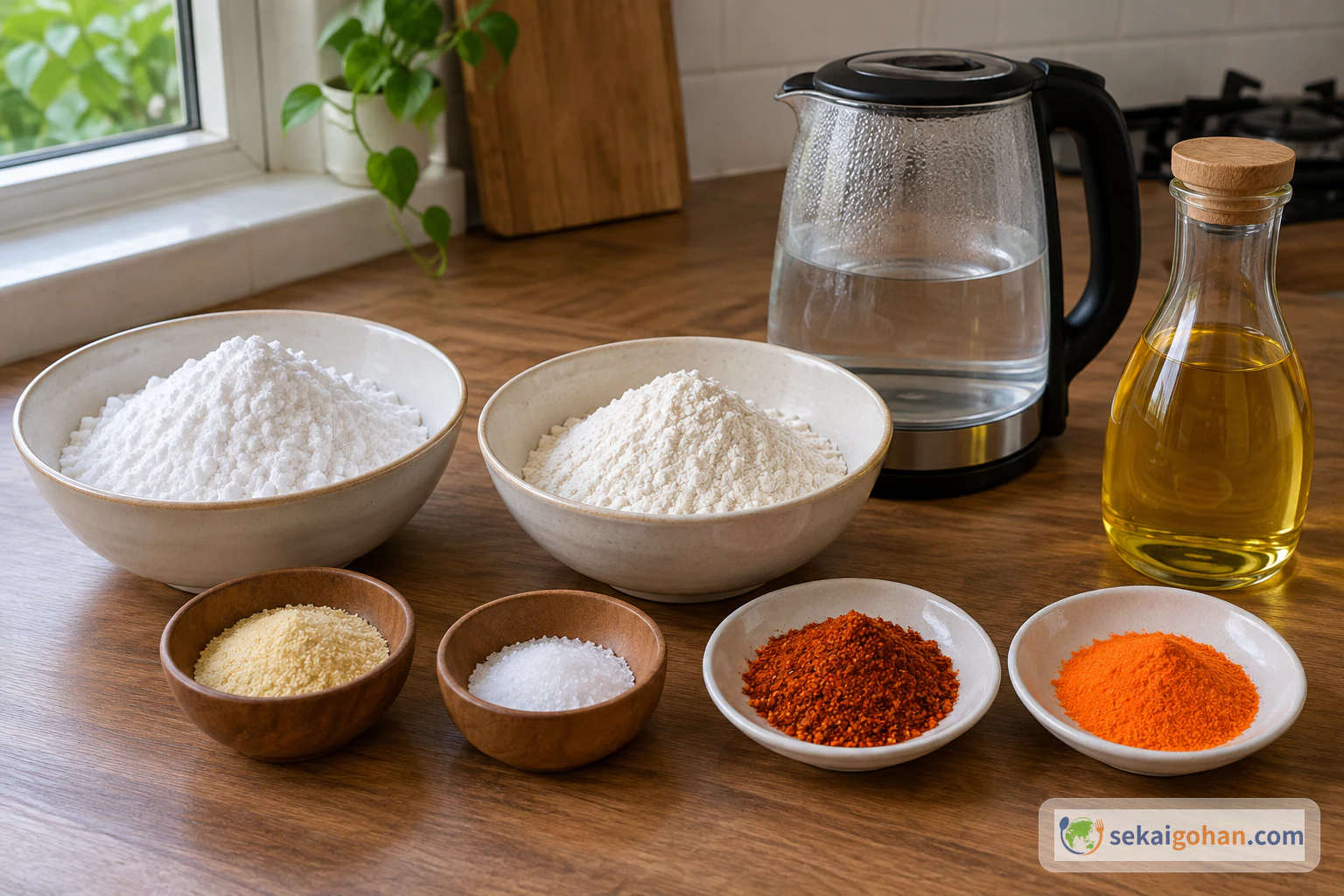
Measure the flours and seasonings for the dough. The frying oil and the two finishing powders are used without fixed amounts.
Equipment
- A bowl for mixing and kneading
- A kettle or pot for boiling water
- A pan for frying
- A spoon or spatula for stirring
- Something to lift out and drain the fried balls
- A container with a lid
Choosing Ingredients for Cimol
Use the tapioca flour and wheat flour at the weights listed. The dough depends on those two flours, so this isn't the place for other flours.
Kaldu bubuk is a powdered stock seasoning. No flavor or brand is fixed, so any one you like will do; it doesn't have to be chicken.
The coating is two powders, chili powder and balado flavor powder. Neither has a set amount or brand. Start with a little of each and add more to taste.
Method: Hot-Water Dough, Cold Oil, Low Heat
Every ball goes into the oil before the heat is turned on. Then fry over low heat, stirring, and judge doneness by the browned color.
Cimol Dough and Frying Troubleshooting
You'll know the dough is ready by its feel, and the balls are done when their color says so. The clock comes second. If something looks off, check here.
Use the frying time only as a rough guide. Watch the color of the balls instead.
| What you see | What it means | What to do |
|---|---|---|
| The dough is smooth and doesn't stick to your hands | This is the target | Move on to shaping |
| The dough still clings to your hands | Fine, as long as it has come together in one mass | Shape it once it stops sticking to the bowl |
| It has been 7–8 minutes but the balls are still pale | The time is only an estimate | Keep stirring over low heat until they brown |
| The coating looks thin | The powders have no fixed amount | Add a little more powder, close the lid and shake again |
Other Ways to Make Cimol
Cimol recipes vary quite a bit, both in how the dough is built and in how the frying starts.
| Recipe | Dough | How frying starts | Finish |
|---|---|---|---|
| This recipe | Tapioca and wheat flour, stock powder, salt, boiling water | All balls into cold oil, then low heat | Chili powder and balado flavor powder |
| Another home-cook recipe | Tapioca/sago and wheat flour measured by spoons, hot water, optional baking powder | Into hot oil, fried over low heat | Barbecue powder |
| Branded recipe | A cooked tapioca paste (biang) with garlic, scallions and branded seasonings, mixed into dry tapioca | Into cold oil, then low heat | — |
The spoon measures in the second recipe have no set size, so they can't be converted to grams. The third recipe leaves out wheat flour and builds the dough around a separately cooked biang. Its branded chicken seasoning and MSG aren't the same thing as the unspecified kaldu bubuk used here.
Frequently Asked Questions
How much water should I use — 100 ml or ½ cup (120 ml)?
Anywhere from 100 ml to ½ cup (120 ml) of boiling water works. Let the dough decide. You want it smooth and not sticky on your hands, or at least gathered into one mass that no longer clings to the bowl.
How many balls does this make, and how big should they be?
Shape them small. There is no set diameter, count or yield.
How much oil and how much powder do I need?
No oil type, amount or temperature is set. Use enough oil to fry the balls, and add the chili and balado powders to taste.
Can I add garlic, scallions, egg or cheese?
This version keeps them out. Garlic and scallions belong to the cooked biang in the branded recipe above, which is a different method. Egg, cheese, sausage, sauces and a pre-boiling step aren't used here.