Cilok Goreng: Tapioca Balls Boiled, Cooled, Skewered and Fried

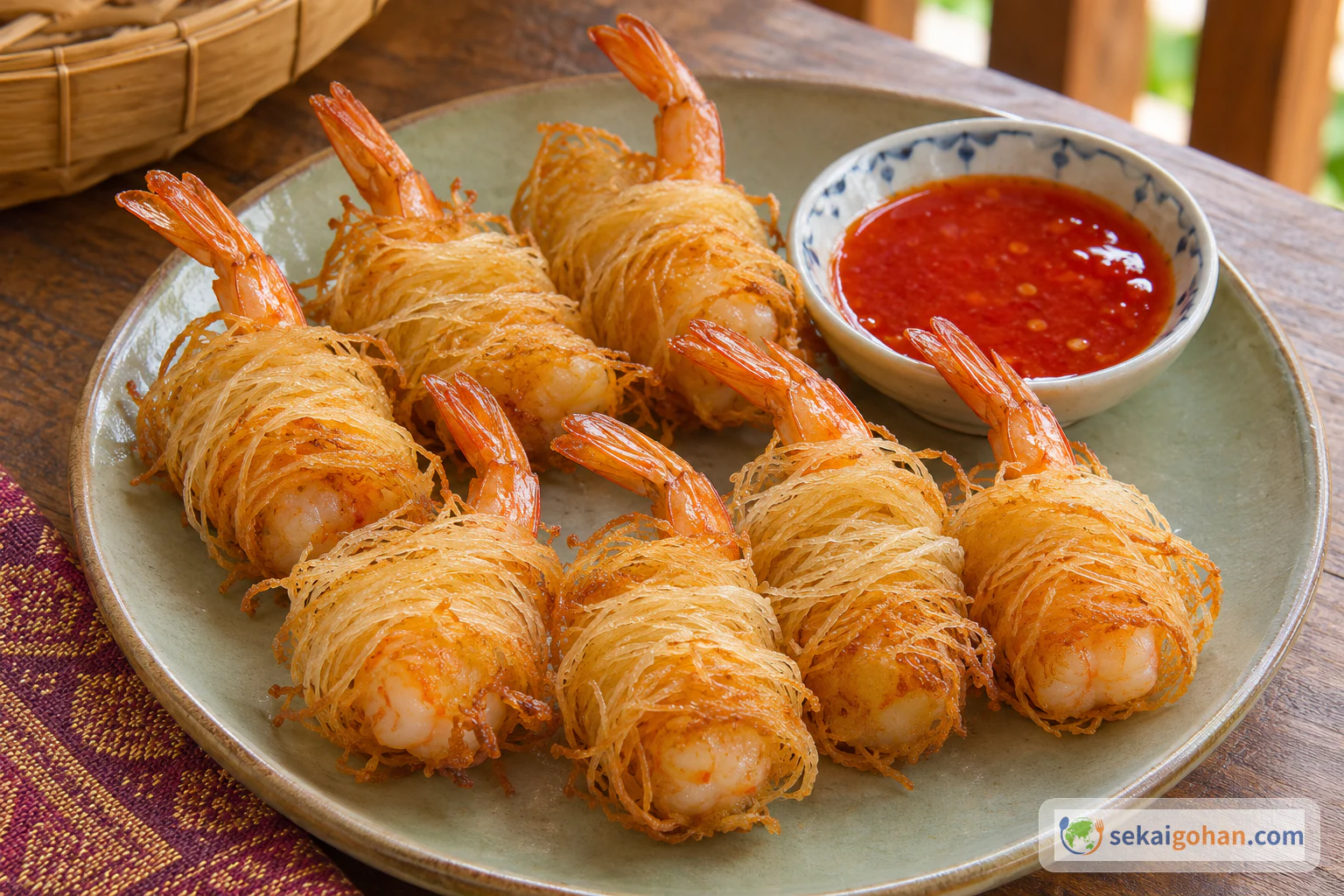
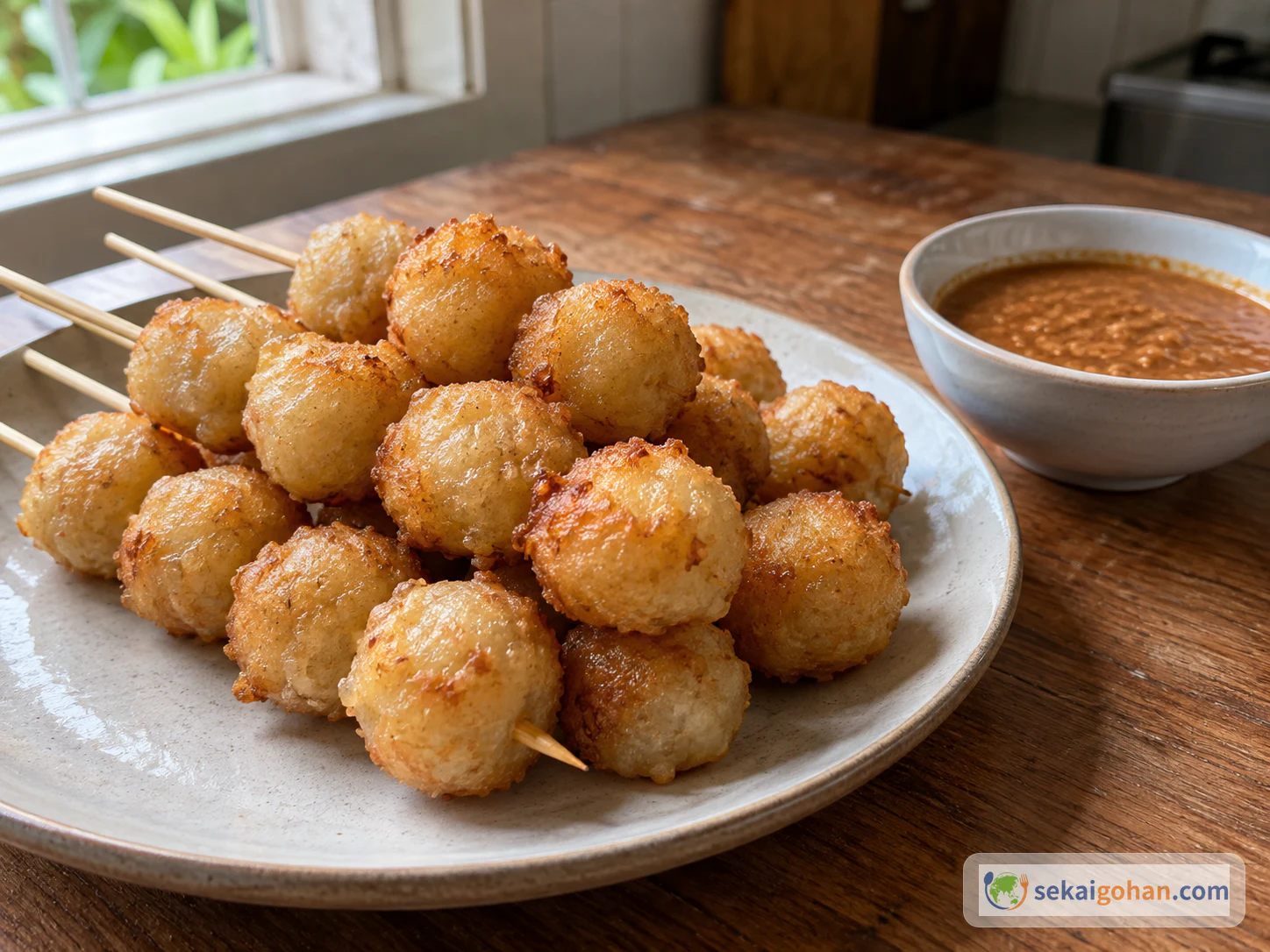
Cilok Goreng threaded on skewers and fried golden-brown, served with ready-made peanut sauce
Cuisine
Indonesian

How to make Cilok Goreng from one Bandung home cook's posted recipe: cook a garlicky water-and-flour biang, mix in scallion and tapioca, shape marble-sized balls, boil until they float, rinse, oil, cool, thread onto satay skewers and deep-fry until golden-brown, then serve with ready-made peanut sauce. Includes what the source does not specify, such as frying-oil amount, temperature, timing and yield.

Cooking flow

Cooking steps

STEP11 / 9

Cook the biang

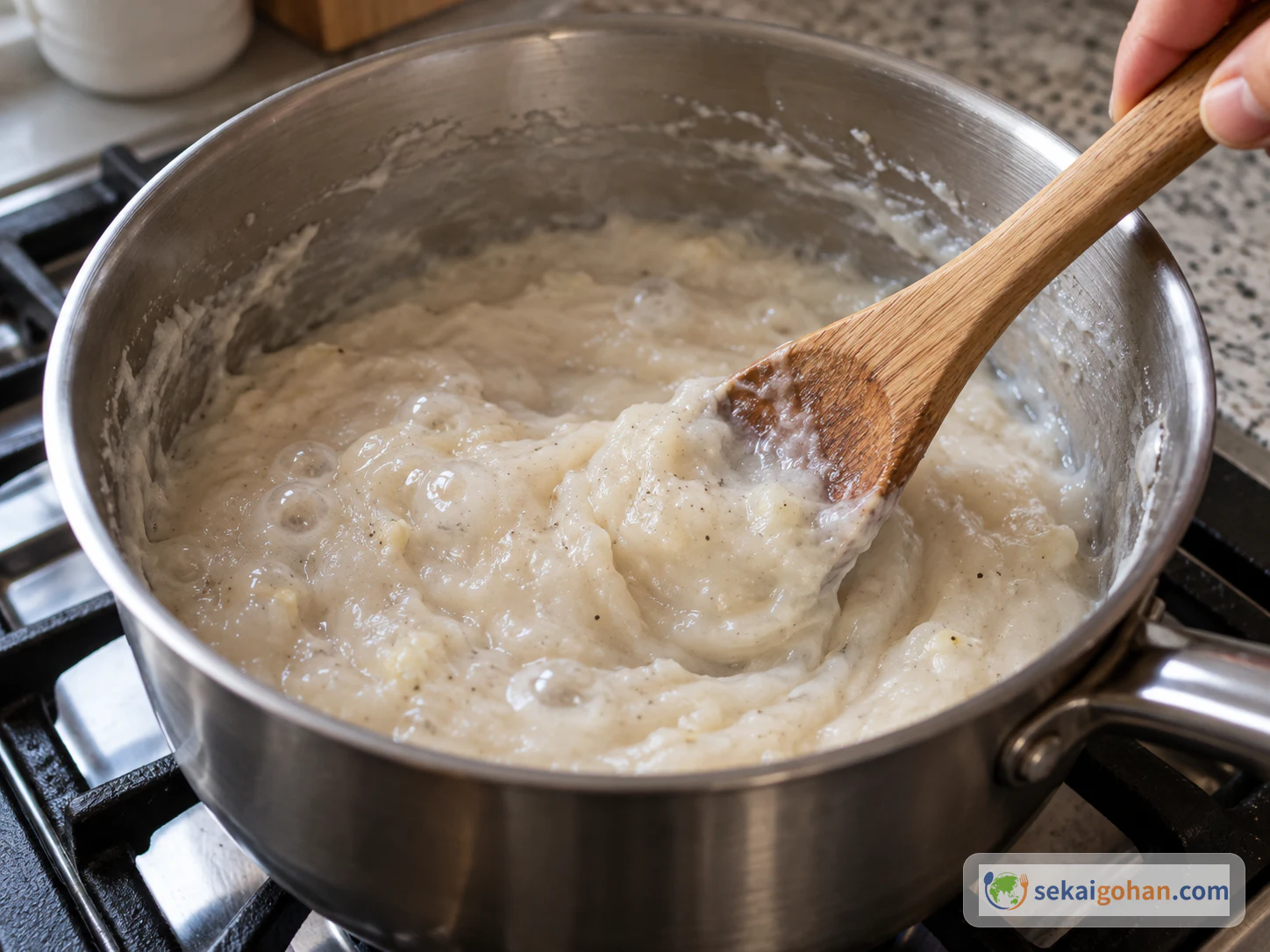
Water, wheat flour, garlic paste, salt, sugar and pepper stirred in a pan into a thick, bubbling biang
The biang is ready when it is thick and bubbling; no oil goes into the pan

Put the 1 cup (250 ml) water, 1 oz (30 g) wheat flour, crushed garlic paste, 3/4 sdt salt, 1/2 sdt sugar and 1/2 sdt ground pepper in a pan. Stir them together over the heat until the mixture is thick and bubbling, then take it off the heat.

This is a paste of water and flour, not a roux: no oil or other fat goes in at this stage.

STEP22 / 9

Mix in scallion and tapioca

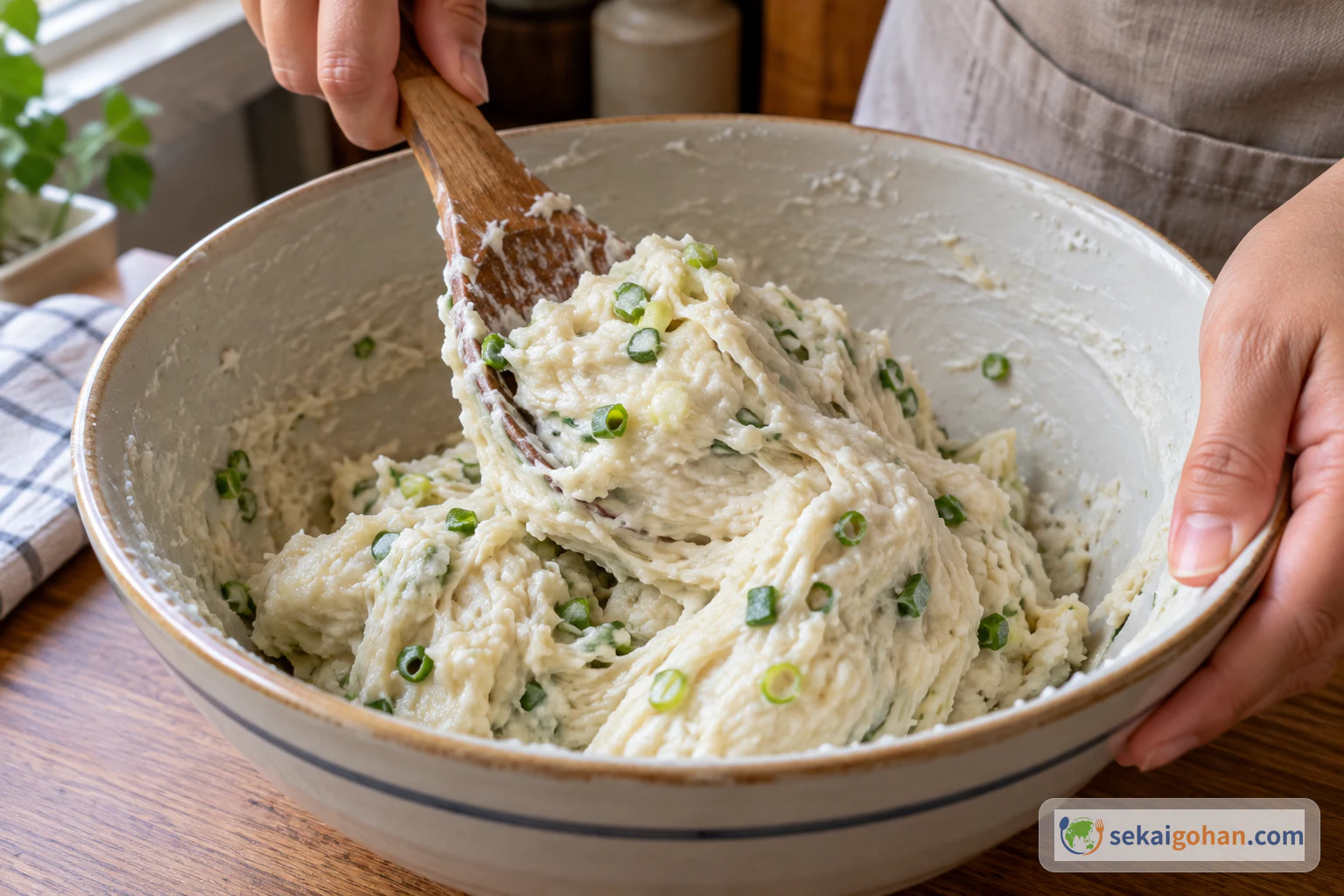
Tapioca flour folded into scallion-flecked biang until the dough comes together
Mix until the dough is cohesive enough to shape

Transfer the cooked biang to a bowl. Mix in the thinly sliced scallions, then add up to 10.5 oz (275–300 g) tapioca flour and mix until the dough holds together and can be shaped.

STEP33 / 9

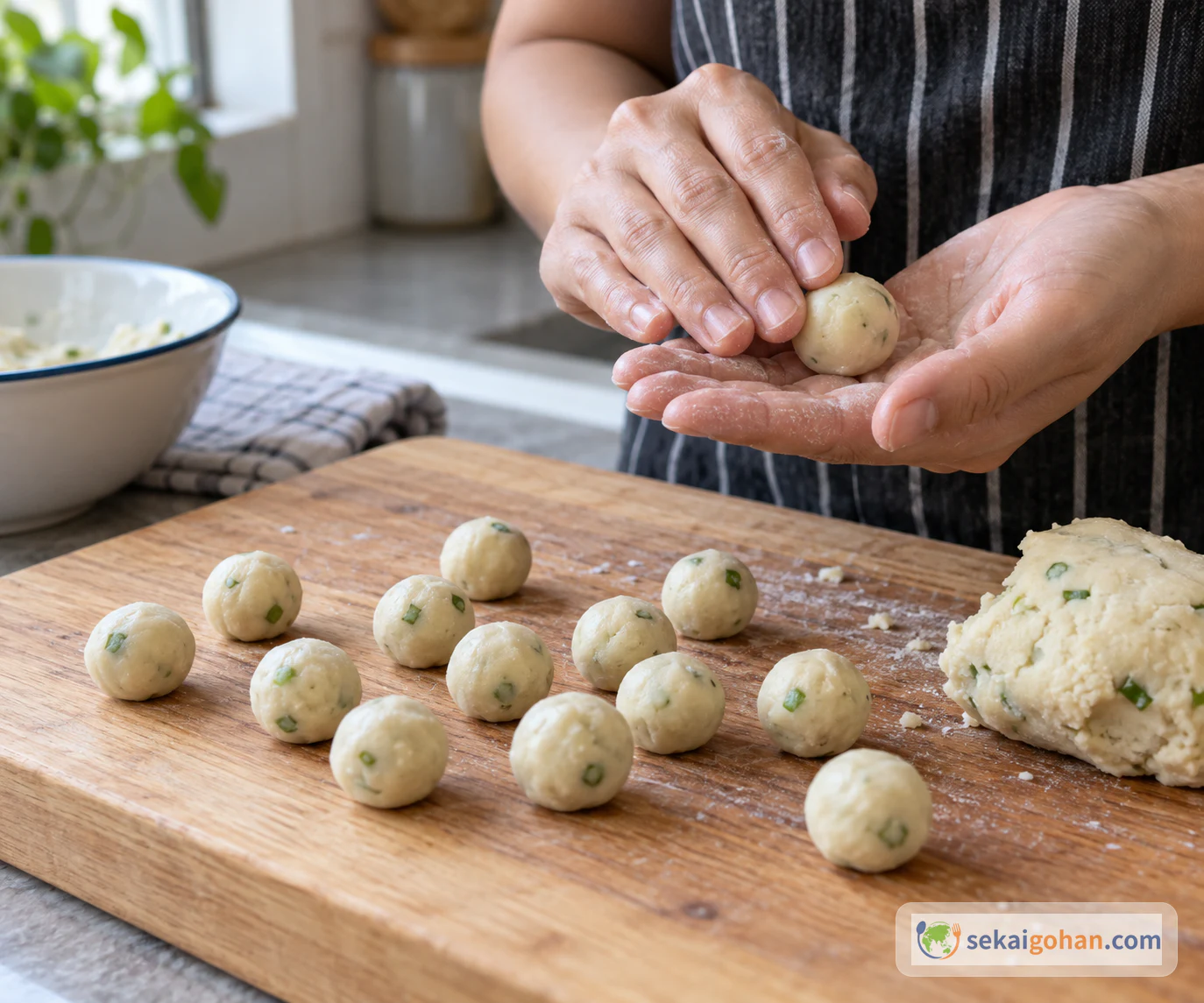
Shape marble-sized balls

Hands rolling cohesive cilok dough into marble-sized balls
Small handmade balls, with no filling

Roll the dough into balls about the size of marbles.

STEP44 / 9

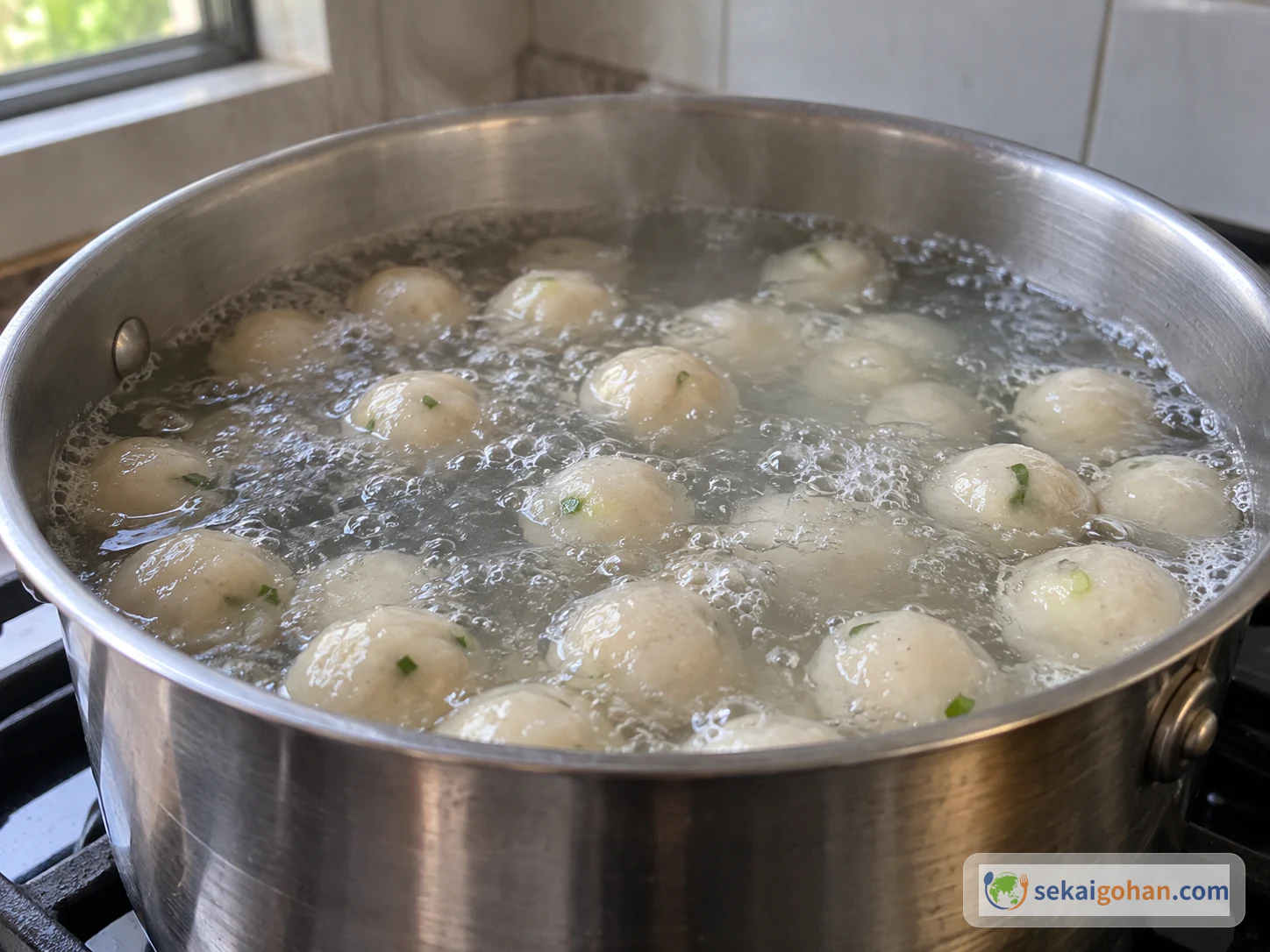
Boil until they float

Cilok balls boiling in a separate pot, with floating balls as the cue
The author takes the balls out once they float

Boil the balls in a separate pot of water until they float, then remove them.

Floating is the cue for taking the balls out. The recipe gives no boiling time.

STEP55 / 9

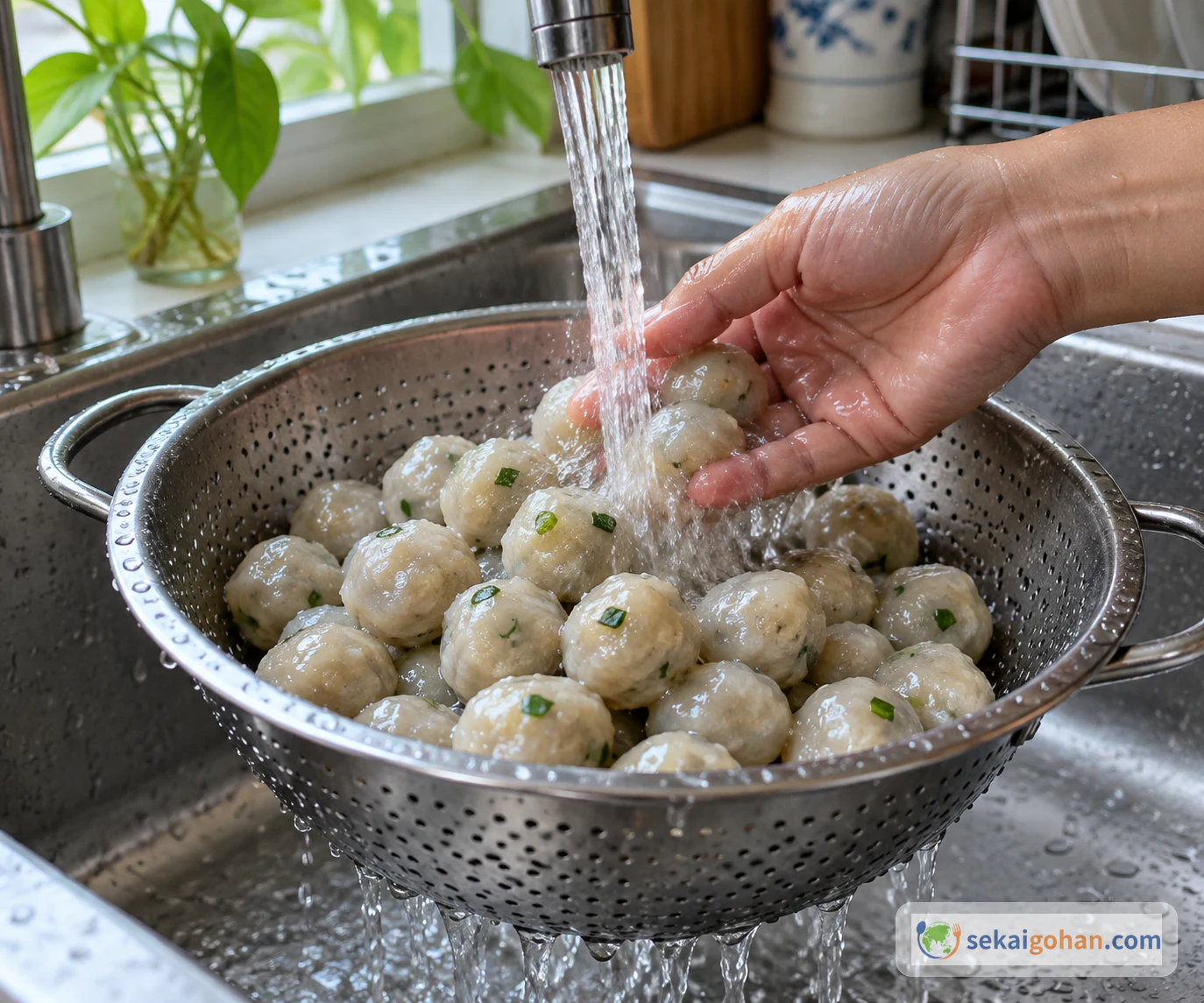
Rinse with cold water

Boiled cilok in a colander being rinsed under cold water
The rinse comes before any oil is added

Rinse the boiled balls with cold water.

STEP66 / 9

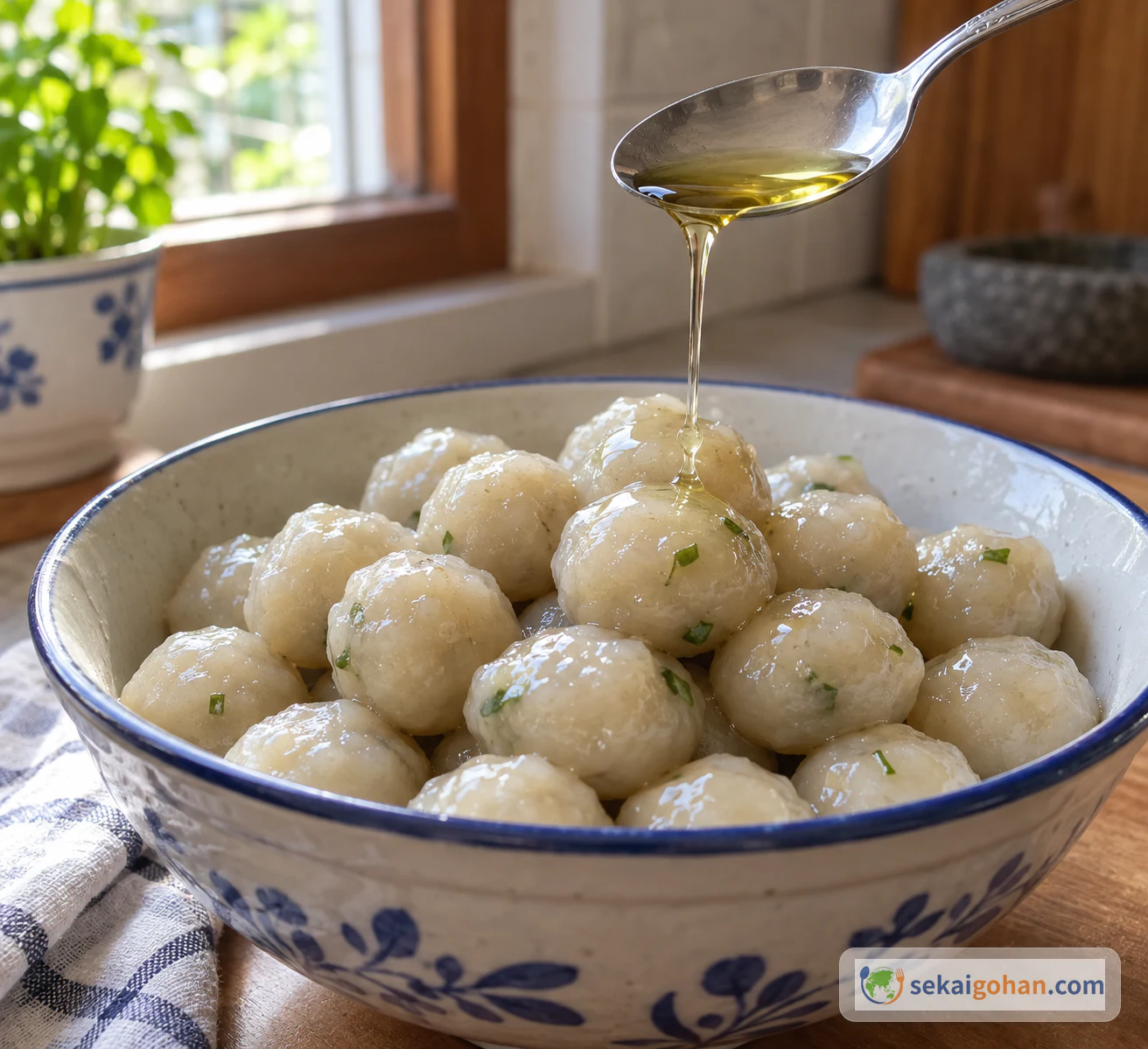
Add 1 sdm oil and let cool

1 sdm of cooking oil poured onto cold-rinsed cilok
This spoonful of oil goes on after rinsing and before cooling; it is not the frying oil

Add 1 sdm cooking oil to the rinsed balls and leave them to cool. This tablespoon is separate from the oil you'll fry in later.

STEP77 / 9

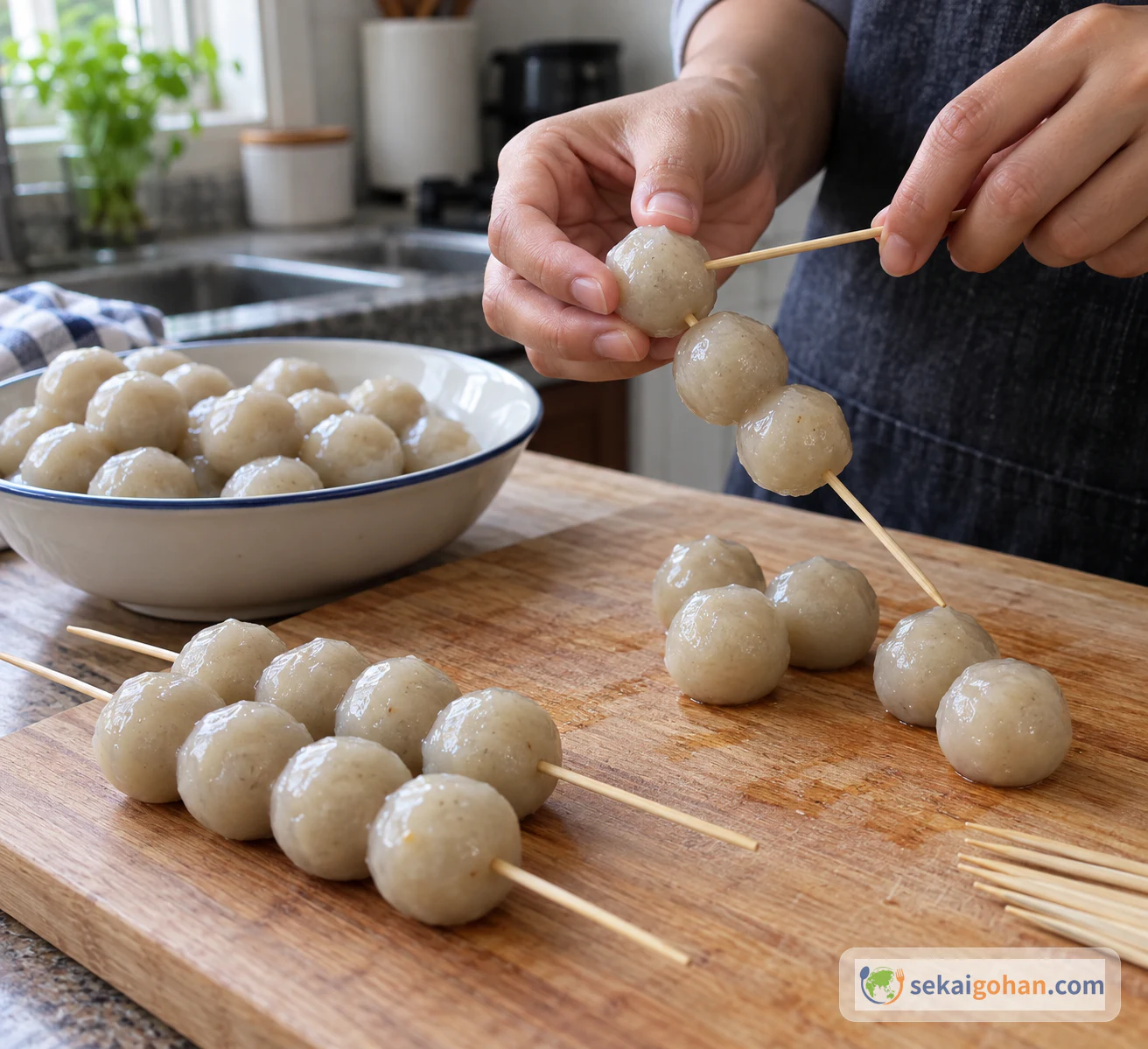
Thread onto satay skewers

Cooled cilok threaded one after another onto bamboo satay skewers
Skewer the balls only after they have cooled

Once the balls have cooled, thread them onto satay skewers.

STEP88 / 9

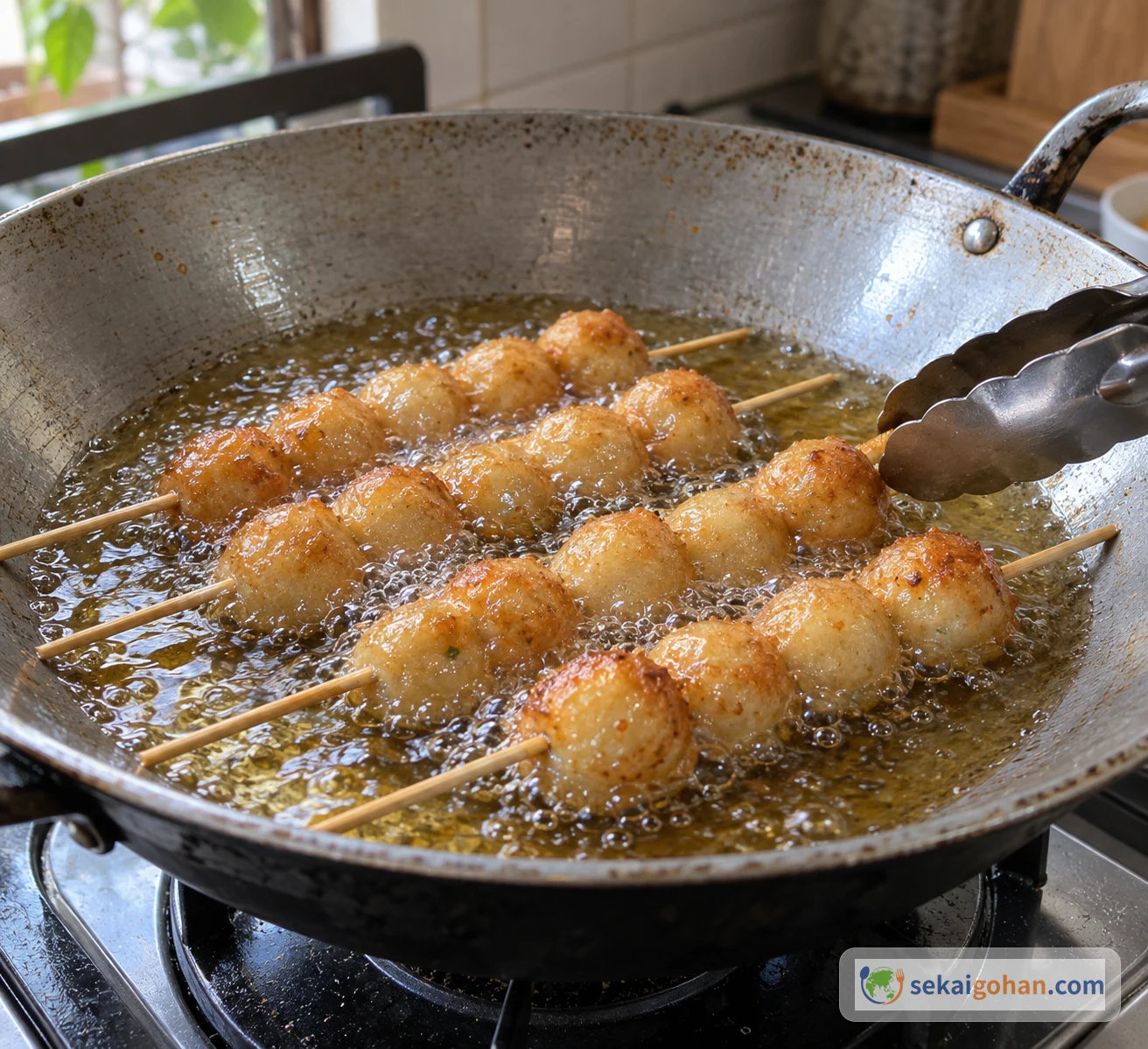
Deep-fry until golden-brown

Skewered cilok deep-frying in plentiful hot oil until golden-brown
Fry until golden-brown; the source gives no temperature or time

Fry the skewered balls in hot, plentiful cooking oil until golden-brown.

STEP99 / 9

Serve with peanut sauce

STEP 9

Serve the fried skewers with ready-made peanut sauce.

0 / 0
Ingredients

Ingredients

1 / 1

Ingredients

Ingredient Amount Role
Water (air) 1 cup (250 ml) Base of the biang. This is only the water cooked into the paste, not the boiling or rinsing water
Wheat flour (tepung terigu) 1 oz (30 g) Thickens the biang
Garlic (bawang putih, haluskan) 4 cloves Crushed or ground to a paste, not just minced
Salt 3/4 sdt Seasons the biang
Granulated sugar (gula pasir) 1/2 sdt Seasons the biang
Ground pepper (merica bubuk) 1/2 sdt Seasons the biang
Tapioca flour (tepung sagu/tapioka) up to 10.5 oz (275–300 g) The body of the dough
Scallions (daun bawang) 2 stalks Thinly sliced and mixed into the dough
Water for boiling and cold rinsing Not measured A separate pot of water for boiling the balls, plus cold water for rinsing
Cooking oil 1 sdm Added to the balls after the cold rinse and before cooling. This is not the frying oil
Cooking oil for deep-frying As needed Fries the skewered balls
Ready-made peanut sauce To taste Dipping sauce
0 / 0

Golden-brown skewers of tapioca balls come out of the hot oil and get dragged straight through peanut sauce. That's Cilok Goreng, a snack from Indonesia. It starts on the stove with a thick, garlicky paste called biang. Tapioca flour and scallion go into the paste, and the dough is rolled into marble-sized balls and boiled until they rise. Then the balls are rinsed cold, cooled, threaded onto satay skewers and fried. The outside turns golden and the inside stays chewy, with plenty of garlic and pepper.

About Cilok Goreng

Cilok Goreng is a boiled-then-fried tapioca ball, and you'll find it in home kitchens and small home businesses. The name stays the same from place to place, but the method changes. This version is a home recipe from Bandung. It is the one with a cooked biang, a cold rinse, a spoonful of oil before cooling, and skewering before frying. Cooks elsewhere do it their own way:

Version Where How it differs
Home-business version Saumlaki Uses 3.5 oz (100 g) each of tapioca and wheat flour mixed with boiling water, crushed garlic, scallion and seasonings to taste. The balls are boiled until floating, dipped in beaten egg with a little salt, then fried in hot oil until golden
Home cook's version Majalengka, West Java Mixes tapioca and wheat flour with water and seasonings, adds 1 tbsp oil to the boiling water to limit sticking, boils the balls until floating, then fries them until brown or slightly crisp. No skewering

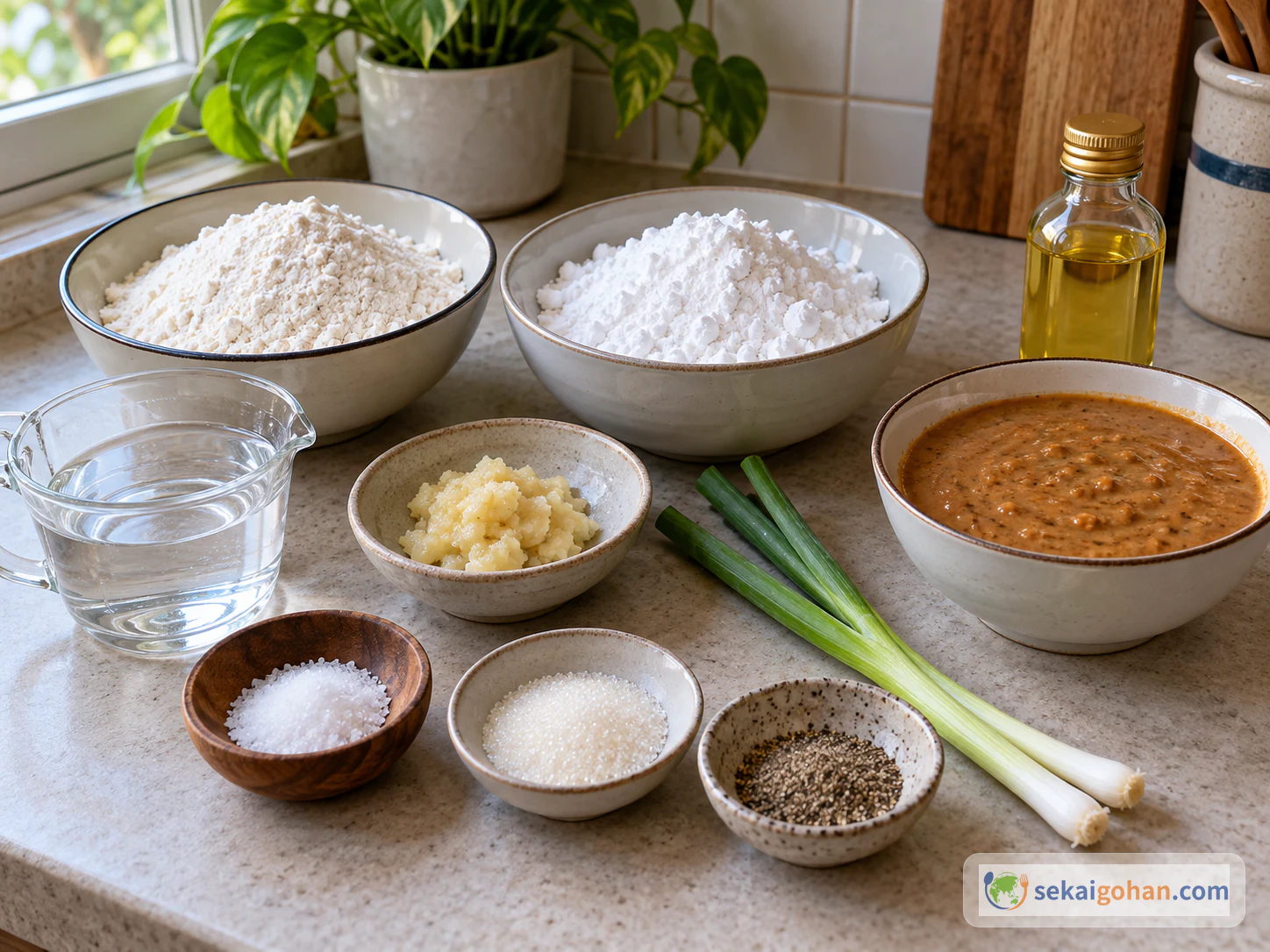
Ingredients for Cilok Goreng

Water, wheat flour, tapioca flour, a paste of four crushed garlic cloves, scallions, salt, sugar, pepper and peanut sauce for cilok dough
Everything for the biang, the dough and serving, with the garlic already crushed to a paste

The spoon measures use the Indonesian labels: sdt (sendok teh, teaspoon) and sdm (sendok makan, tablespoon).

Equipment

  • A pan for cooking the biang
  • A bowl for mixing the dough
  • A separate pot of water for boiling the balls
  • A way to lift and rinse the balls under cold water
  • Satay skewers
  • A pan or wok deep enough to fry in plentiful oil

Choosing Ingredients for Cilok Goreng

Tapioca, not sago palm flour. Use tapioca flour. Anywhere from up to 10.5 oz (275 to 300 g) works, so either end of the range is fine.

The garlic is a paste. Haluskan means crushed or ground smooth. Pound or grate the four cloves into a paste rather than chopping them. For the pepper, plain ground pepper is all you need, white or black.

Stock powder is optional. A little stock powder (kaldu bubuk secukupnya jika suka) can go in if you like. No flavor is named, and it's left out of the ingredients here.

Peanut sauce is ready-made. Use prepared peanut sauce, such as one made with instant gado-gado seasoning.

Method: Biang, Dough, Boil, Cool, Skewer, Fry

What is and isn't specified

The recipe gives visual cues: thick and bubbling for the biang, floating for the boiled balls, golden-brown for the fried skewers. It gives no minutes, oil temperature, or amounts of boiling water and frying oil.

Water and Oil in Cilok Goreng

Water and oil each show up at several stages of this recipe. Mixing them up is the easiest way to go wrong, so here's what goes where:

What Amount Where it goes
Water in the biang 1 cup (250 ml) Cooked with flour, garlic and seasonings into the thick paste (step 1)
Boiling water Not measured A separate pot for boiling the balls until they float (step 4)
Rinse water Not measured Cold water for rinsing the boiled balls (step 5)
1 sdm cooking oil 1 sdm Added to the rinsed balls before they cool (step 6)
Deep-frying oil Hot and plentiful; nothing else specified For frying the skewered balls until golden-brown (step 8)

Keep the boiling water plain. The tablespoon of oil goes on after rinsing. The biang is only water, flour and seasonings, with no oil, so it isn't a roux.

What isn't specified

The recipe gives no frying-oil temperature, frying time, boiling time, yield, or storage and reheating instructions. Take the balls out of the pot when they float.

Frequently Asked Questions

Is the 1 sdm oil the frying oil?

No. The 1 sdm goes onto the boiled, cold-rinsed balls before they cool. Frying takes a separate batch of plentiful hot oil, and the recipe doesn't give its amount or type.

How many balls does this make?

The recipe gives no yield, ball count or weight per ball.

Sources

  • Pritha Pitaloka (@pritha_pitaloka), Bandung, "Cilok Goreng," Cookpad Indonesia, posted 2018-04-17. The adopted home-cook recipe: ingredient amounts and wording for the biang, tapioca, scallions, oil and ready-made peanut sauce, and the full cook, mix, shape, boil, rinse, oil, cool, skewer, fry and serve sequence, including the note on instant gado-gado seasoning. https://cookpad.com/id/resep/4770352
  • Maria Defota Laiyan (edited by Clemens Sarbunan), "Kisah Inspiratif ibu Martha Ubah Camilan Cilok Goreng Jadi Sumber Rejeki," RRI.co.id, Saumlaki, published 2026-05-13. Comparison variant: a Saumlaki home-business owner's version with boiled balls dipped in beaten egg before frying. https://rri.co.id/saumlaki/berita-lain/2410243/kisah-inspiratif-ibu-martha-ubah-camilan-cilok-goreng-jadi-sumber-rejeki
  • Endah Triana (@eriana), Majalengka, West Java, "Cilok Goreng," Cookpad Indonesia, posted 2019-12-17. Comparison variant: tapioca and wheat-flour balls boiled with 1 tbsp oil in the water until floating, then fried until brown or slightly crisp. https://cookpad.com/id/resep/11220174