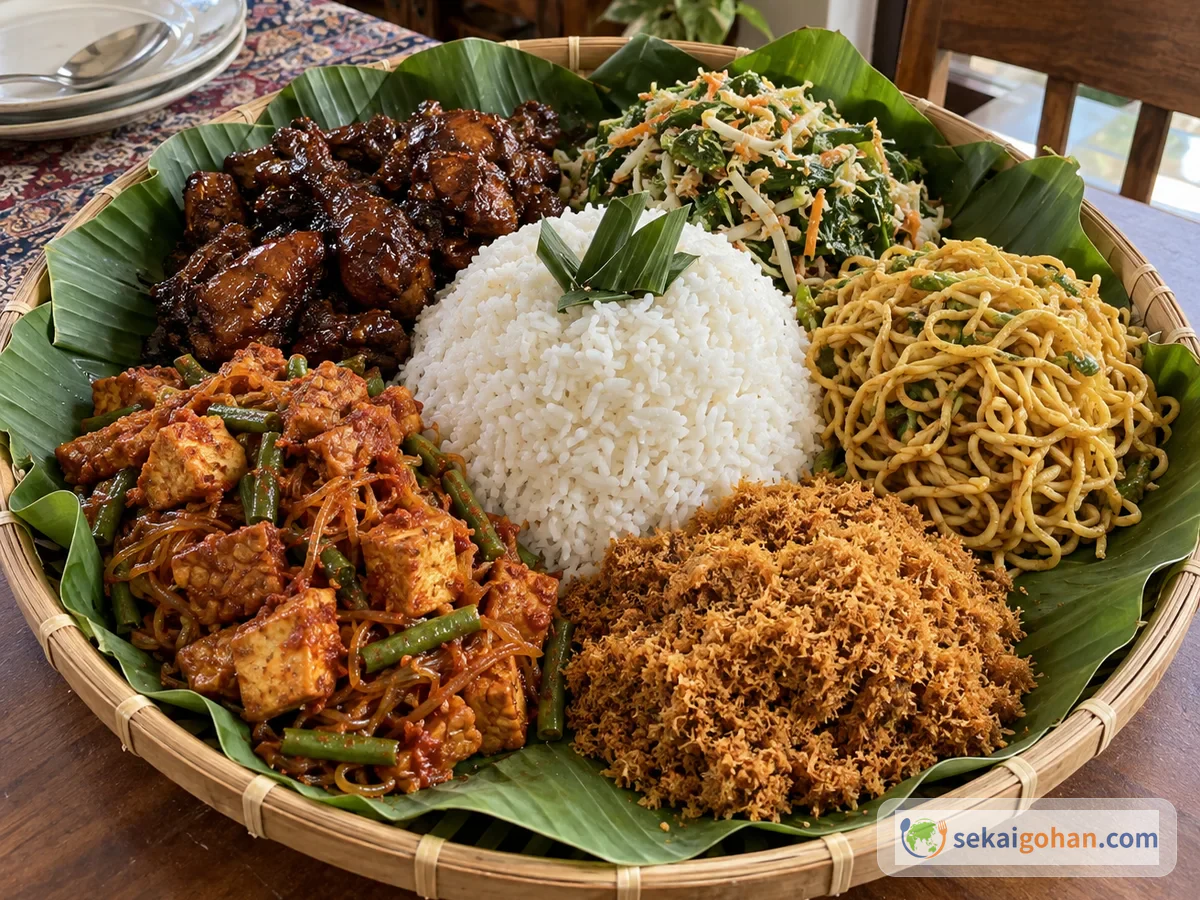
Pass a banana leaf over a flame and its sharp green smell softens almost at once. The stiff leaf goes supple, and with a thin film of oil it becomes pliable enough to wrap rice in the palm of your hand. On go coconut-milk rice and sweet-savory stir-fried chicken, the leaf is folded shut, and the parcel goes onto the grill, where the edges scorch a little and release an aroma that is neither rice nor meat. This is nasi bakar, Indonesia's grilled rice, sold at street stalls and small eateries with fillings of chicken, fish, tuna, mushrooms or tempeh. Galangal, lemongrass, kecap manis and sambal give it its Indonesian flavor, and the smell of the charred leaf is the star.
About nasi bakar
The name and where it fits
The name, Nasi bakar, says it plainly: nasi is rice and bakar means grilled. Indonesian cooking has many ways of wrapping rice in leaves; Sundanese nasi timbel, for example, is all about rice scented by the leaf it is wrapped in. Nasi bakar is a fairly modern dish, an extension of that everyday habit, and it grew out of what works well in homes, eateries and street stalls.
Banana-leaf parcels are easy to carry, keep the rice from drying out and lock in the aroma until just before eating. At markets and eateries they are made in advance and regrilled on a griddle or over charcoal as orders come in, so a hot meal is ready in minutes. The same logic works at home: wrap in the morning, then grill the parcels in a skillet at lunchtime. That makes nasi bakar good for a packed lunch, a light evening meal, or a make-ahead dinner when you don't know how many people will be eating.
It sits apart from its relatives, too. In nasi goreng, cold rice is stir-fried; nasi bakar wraps the rice to protect its moisture and adds the leaf's aroma with a final grilling. Next to look-alike parcels such as arem-arem or lemper, it is closer to a seasoned rice meal.
What the banana leaf does

In Indonesian cooking, the banana leaf serves as plate, wrapper and seasoning all at once. When heated, the green smell of its surface mellows and transfers faintly to the rice. Grilling the outside of the parcel warms the rice inside: the leaf chars a little, but the rice never touches the direct heat. So even though it's a grilled dish, the rice stays moist, and the aroma comes out all at once the moment you open it at the table.
That moment of opening the leaf is part of the dish. Skip the leaf, and even if the flavor is similar, half the fun of nasi bakar is gone.
Regional variations
The regional differences show up in the filling and the seasoning more than in the rice. Some versions pair chicken with kemangi, some use spicy stir-fried tuna or small fish, some lean heavily on sweet kecap manis, and some serve the sambal on the side so the heat can be added later. The smell of the grilled leaf is common to all of them, while the filling follows the local fish, chicken, tempeh and herbs. Outside Indonesia, keep the framework of leaf aroma, dry filling and slightly firm rice, and it still tastes like nasi bakar.
Ingredients

Makes 4 parcels. For a light lunch, allow one per person; for a heartier meal, add a soup or grilled chicken.
This recipe contains chicken and soy-based seasonings. Check the label on store-bought sambal and kecap manis for shrimp, wheat or nuts; some are made in facilities that also handle them. Don't overload the filling with chile; keeping it on the side to add at the table makes the dish easier to share with the whole family.
Ingredients to look for first
The rice and chicken are available at any supermarket. The ingredients worth seeking out, at an Asian grocery or online, are the ones that define the dish's aroma: coconut milk, galangal, kecap manis and sambal. You can make it without all of them, but coconut milk and kecap manis are what move it from plain chicken rice toward Indonesian flavor.
Use canned coconut milk for cooking, not the drinking kind. The rice absorbs it, and a thin product won't leave any aroma behind.
Galangal is harder than ginger, with a scent somewhere between citrus peel and woody root. It can be left out, but if you plan to make nasi bakar more than once, it's the first thing worth buying.
Kecap manis is not just sweet soy sauce; it leaves body and a mellow, caramelized-sugar roundness in the filling. Use any leftovers for sate ayam or mie goreng.
Sambal is there to control the heat. Put a little in the filling and add the rest on the side of the plate, so it doesn't get in the way of the leaf aroma and the sweetness of the rice.
Choosing ingredients and substitutes for nasi bakar
Banana leaves are ideal, and frozen ones work well, but they crack if you fold them cold. Pass them over the flame to soften them first; that also is where the aroma begins. On days you can't find leaves, wrap the inside in parchment paper and support the outside with aluminum foil, and the parcel will hold its shape. You won't get the green leaf aroma or the charred scent, though. Making it this way the first time is a good way to learn the rice texture, and you can buy frozen leaves once you know you like the dish.
Rice is the second sticking point. Short-grain rice alone works, but cooked soft it sets into a solid lump like a rice ball when you open the leaf, so cook it with slightly less water and drain the filling of any juices before wrapping. That gives the lightness of leaf-wrapped rice. Long-grain rice alone is hard to wrap; mixing in jasmine rice improves the aroma but makes the parcels crumble more easily, so keep some short-grain rice in the mix.
Kemangi (lemon basil) is used widely in Indonesian cooking, but supply outside Indonesia is unreliable. Shiso alone tilts the dish toward Japanese food and basil alone toward Italian, so use half and half to cover its sweet scent and its green notes separately. If you don't like herbs, make it with just scallions and shiso.
If you have no kecap manis, simmer 2 tsp soy sauce and 2 tsp dark brown sugar in a small pan for about 30 seconds until dissolved. More sugar on its own won't give enough body, and the filling will bleed into the rice.
Method: cook the rice firm and dry the filling before wrapping
Nasi bakar is 80 percent done before you even wrap it. Slightly firm rice, a filling with no liquid, and leaves soft enough to fold without cracking: get those three right and the rice won't leak out when you grill.
Common nasi bakar problems and fixes

| Problem | Main cause | Fix |
|---|---|---|
| Liquid leaks from the parcel | Filling not cooked down enough, too much kecap manis | Cook the filling 2 more minutes over medium-low until no liquid is left in the pan |
| Sticky rice | Rice cooked too soft, or cooled too much before wrapping | Next time use 2 tbsp less water. This time, open the leaf and eat it as mixed rice |
| Leaves tear | Cold leaves were folded, or the thick ribs were left on | Soften over a low flame for 5 seconds or steam for 30 seconds, and trim the thick ribs a little |
| No char | Pan not preheated enough, too much moisture | Preheat over medium heat for 2 minutes and grill without a lid |
| Only the leaves burn | Heat too high, too much oil brushed on | Lower to medium and don't go beyond 5 minutes per side |
Failed parcels needn't go to waste: take the crumbled rice out of the leaf and eat it as a small bowl of mixed rice with sambal and cucumber. The real mistake is wrapping wet rice and filling just to keep the parcels looking neat. Check the moisture before the shape.
Serving and storing nasi bakar
Freshly grilled parcels smell strongest the moment you open the leaf, so take the first bite plain. Then add about 1/2 tsp sambal to sharpen the sweetness of the coconut rice. For a soup on the side, Indonesian soto ayam is a good match. Among meat dishes, nasi bakar is lighter than ayam betutu, and the rice plays a bigger role than with sate padang.
To store, wrap each parcel, leaf and all, in plastic wrap and keep in an airtight container in the refrigerator for up to 2 days. Reheat the parcels, still in their leaves, in a skillet over medium-low heat for 4 minutes per side. The microwave alone won't bring back the leaf aroma, so if you use it, warm them at 600 W for 40 seconds, then grill in a skillet for 2 minutes per side to restore the texture. Frozen parcels, wrapped in plastic leaf and all, should be eaten within 2 weeks; the rice firms up a little after thawing, so warm it in the microwave before grilling.
Frequently asked questions
Can I use a filling other than chicken?
Yes. Canned tuna, grilled salmon, fried tofu (atsuage) and tempeh all work. Drain the oil from canned tuna, and cube the fried tofu and sear the surfaces before using. Whatever the filling, the key is to leave no liquid in it before wrapping.
Can I cook the rice in a rice cooker?
Yes. Add the rice, coconut milk, water, salt, sugar and aromatics, and use about 2 tbsp less liquid than for regular cooking. Stir as soon as it's done, and wrap once it has cooled enough to handle. If it comes out soft, let the steam escape for about 5 minutes before spreading it on the leaves.
Will it taste flat without sambal?
No. The filling comes together with the kecap manis and soy sauce, so if you don't like heat you can leave the sambal out. If only the adults want it spicy, open the leaf after grilling and spoon a little sambal on top.
How is it different from lemper or arem-arem?
Lemper is a snack of glutinous rice with a chicken filling, and arem-arem is closer to a market snack of rice and filling wrapped in leaves and steamed. Nasi bakar wraps seasoned rice meant as a meal and finishes it on the grill to bring out the leaf aroma. All three are leaf-wrapped, but the type of rice, the final cooking method and the occasion for eating them differ.