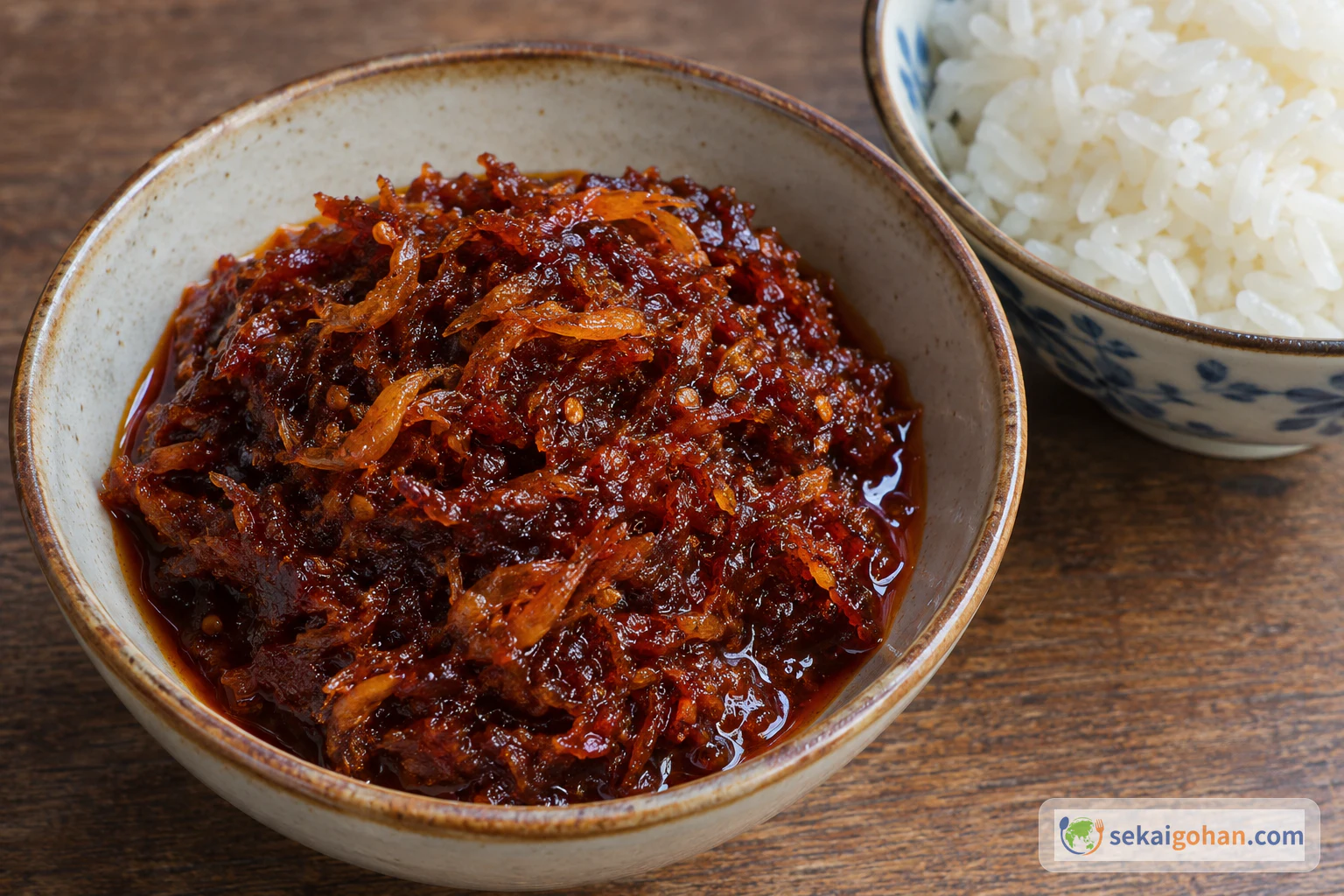
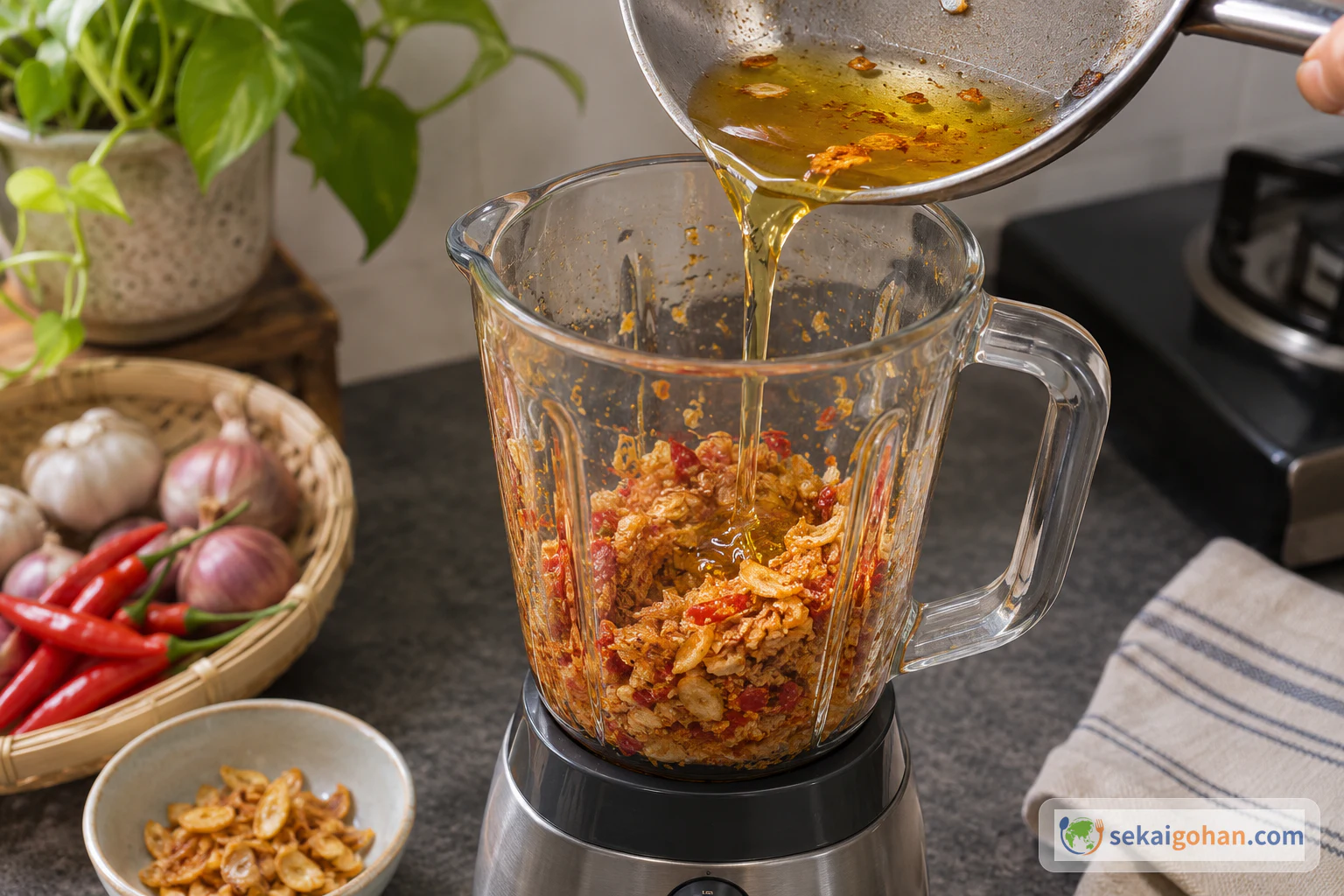
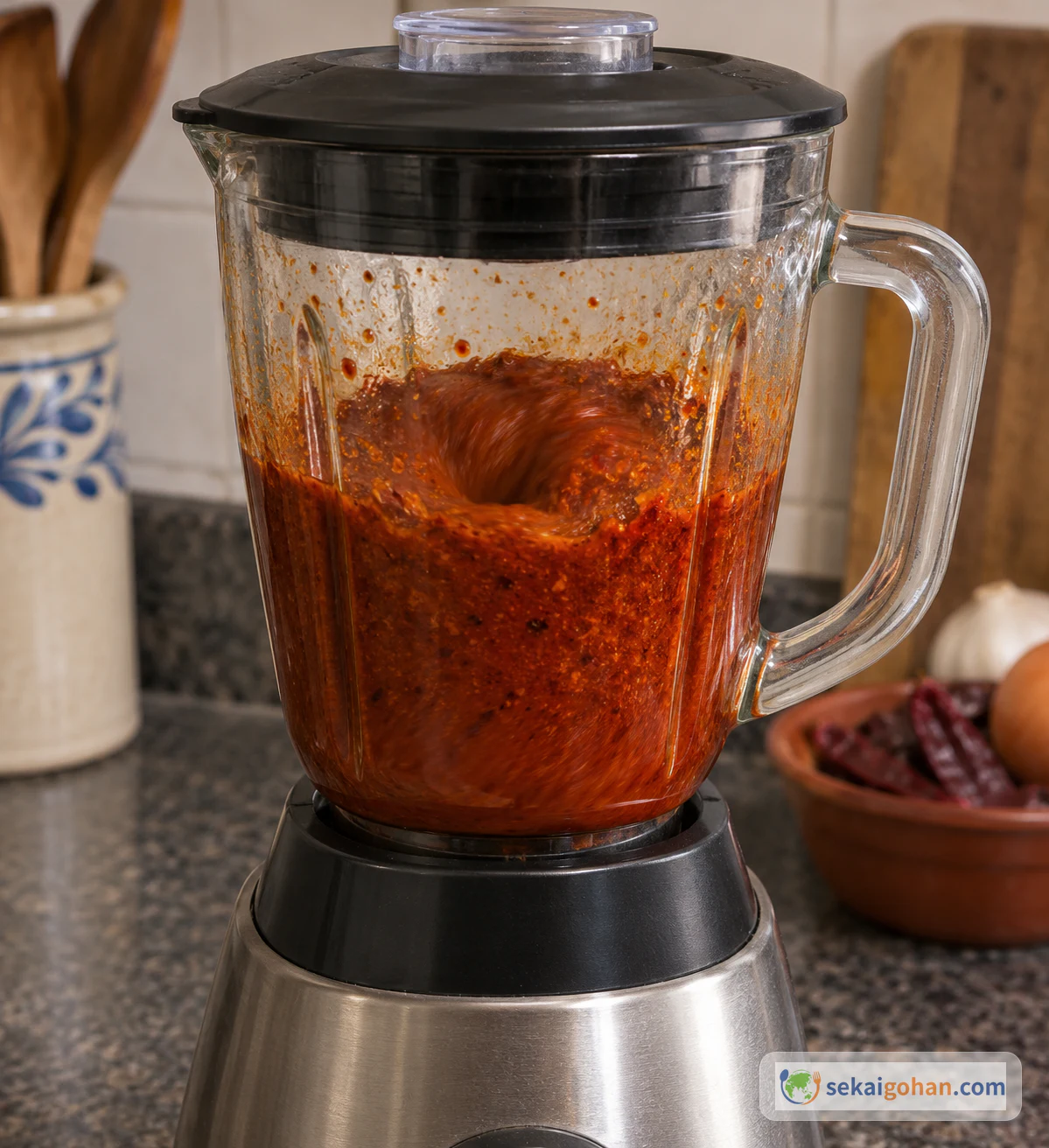
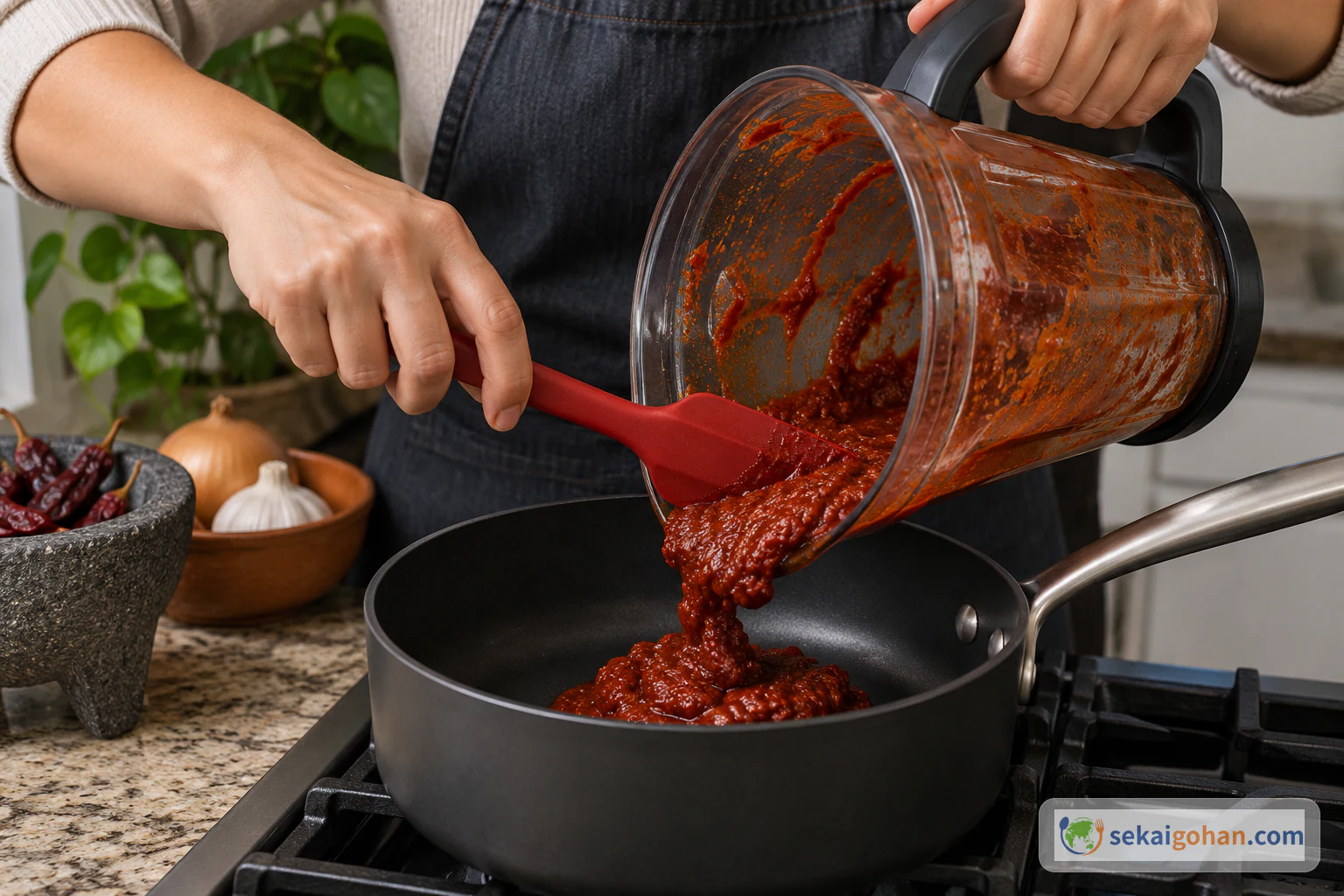
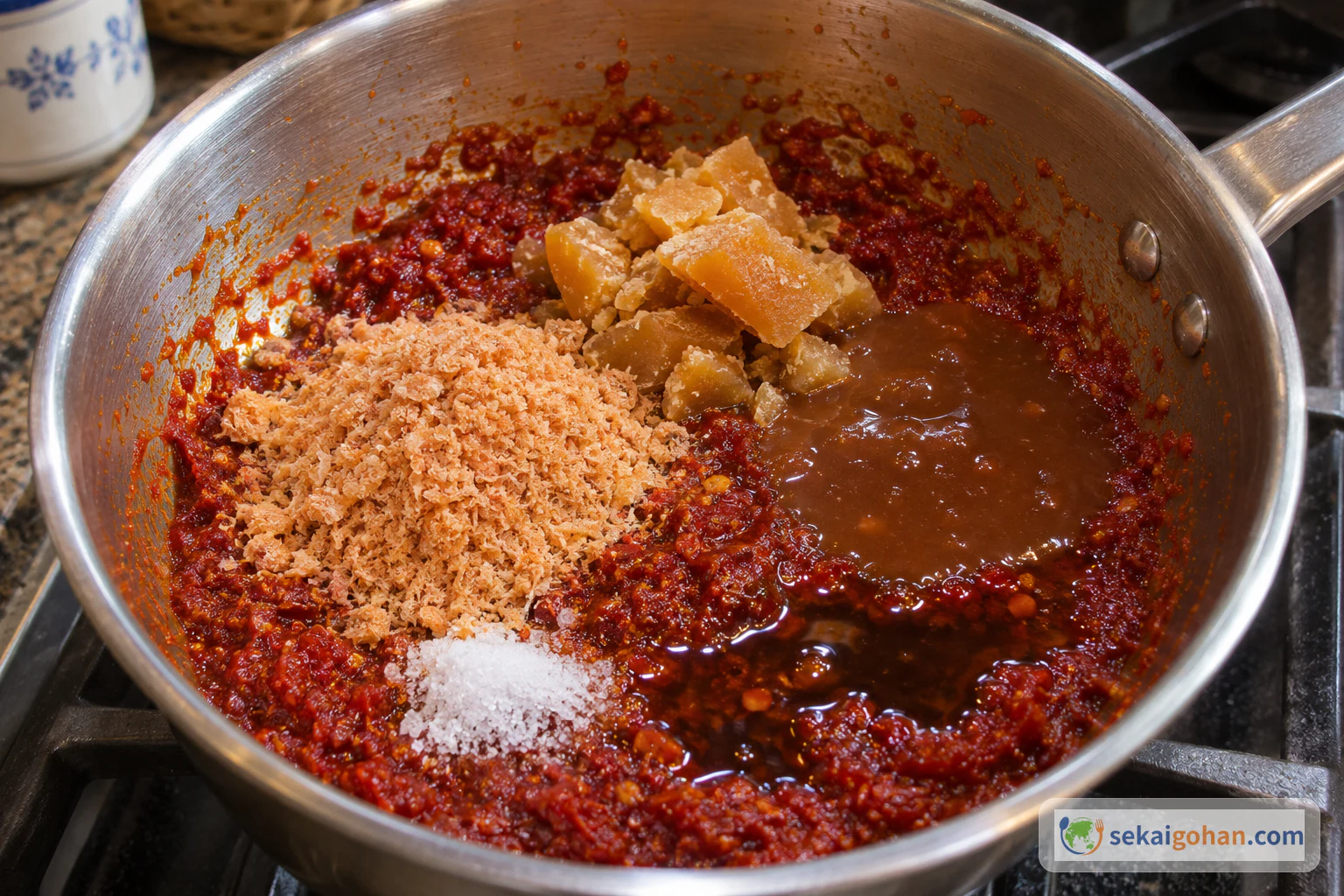
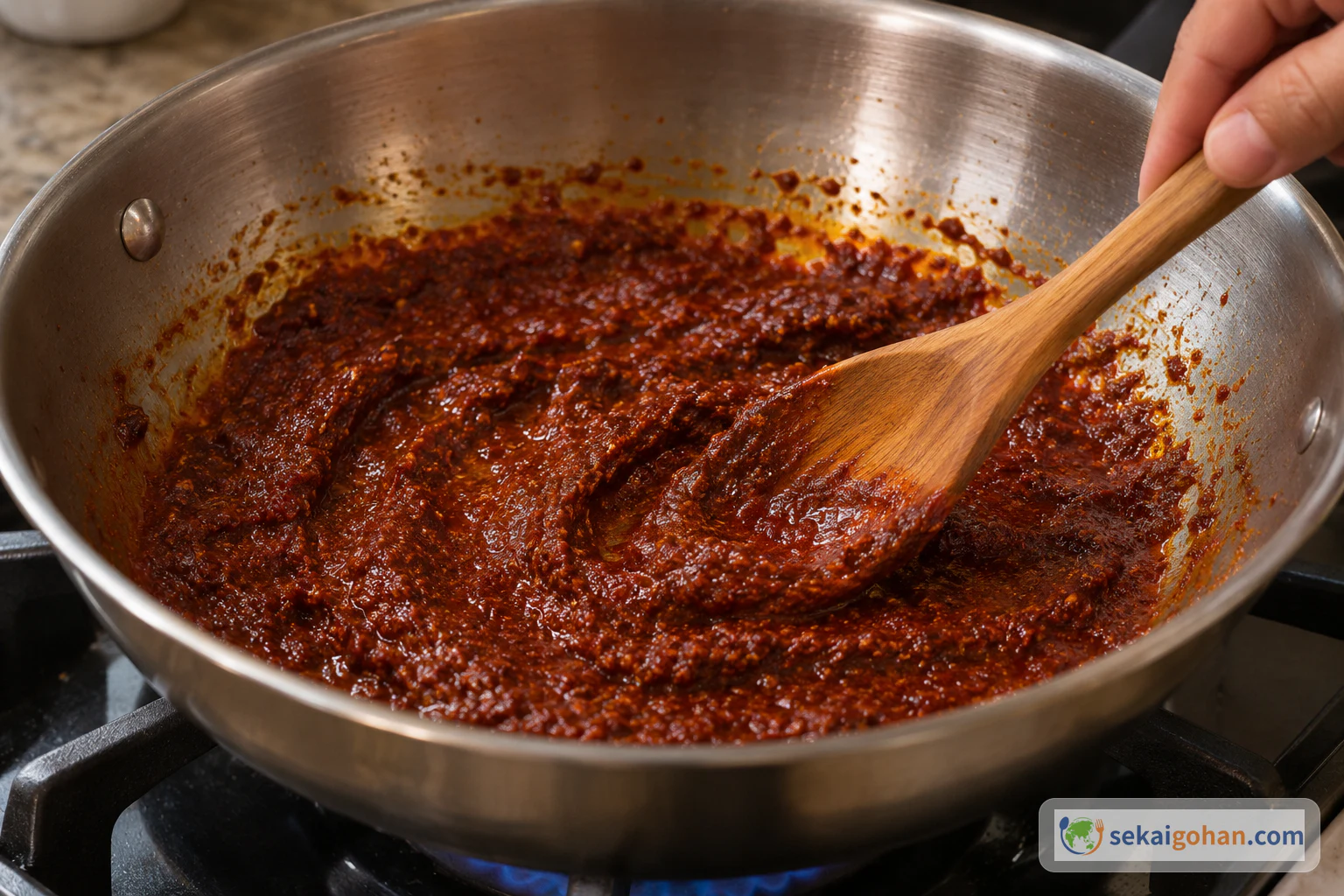
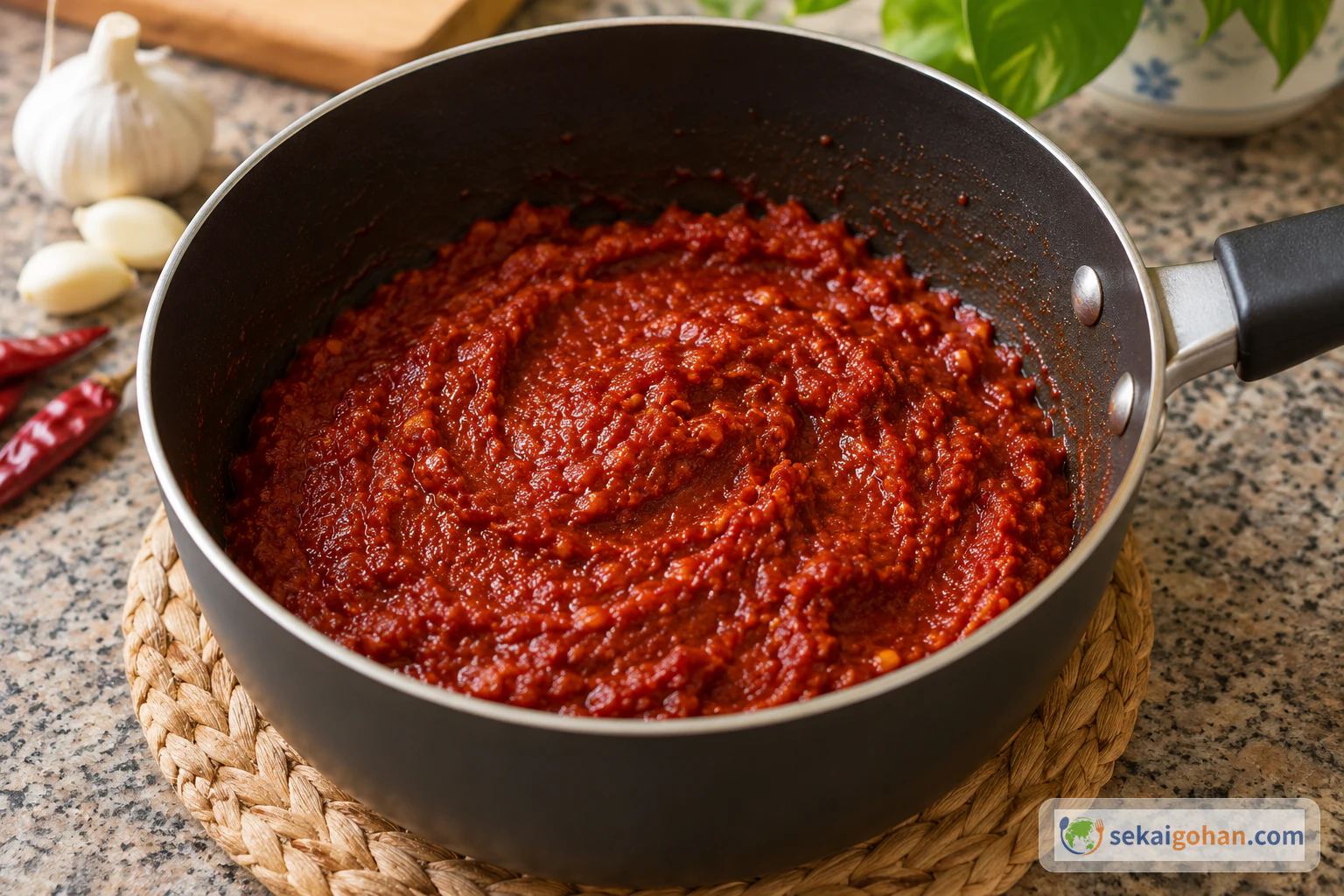
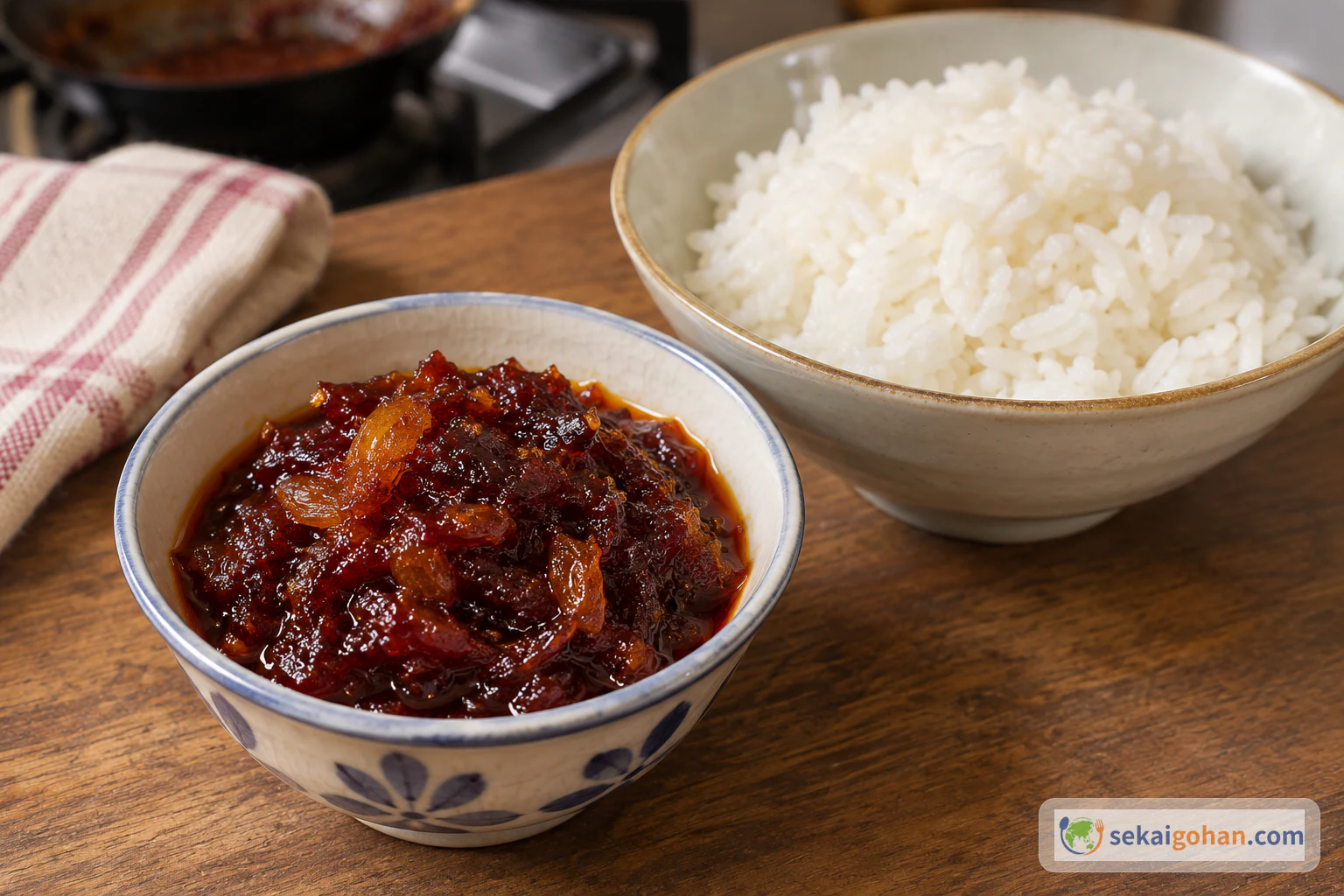
A dark red paste can go two ways at a Thai table: into a pot of tom yum, or into a small bowl beside rice. Nam phrik phao (น้ำพริกเผา, also spelled nam prik phao or nam prik pao) is built from dried red chiles and fried aromatics held together with oil. Ground dried shrimp, palm sugar, tamarind juice and fish sauce add savory, sweet and sour notes. You can explore more of the country's cooking on our Thailand page.
About Nam Phrik Phao
"Nam phrik" covers a wide family of chile pastes and dips. Nam prik kapi, for example, is built on kapi (fermented shrimp paste), fresh chiles and lime. Nam phrik phao starts from dried chiles and fried garlic and shallots, then takes ground dried shrimp and a short cook over low heat.
The paste works both in the pot and at the table. A tom yum goong recipe calls for it as an ingredient, and it can just as easily be stirred into tom yum or eaten with rice. Its character comes from what goes into it: fried garlic and shallots, dried chiles, the savoriness of dried shrimp, and the sweet-sour balance of palm sugar and tamarind.
Ingredients: Makes 1½ Cups
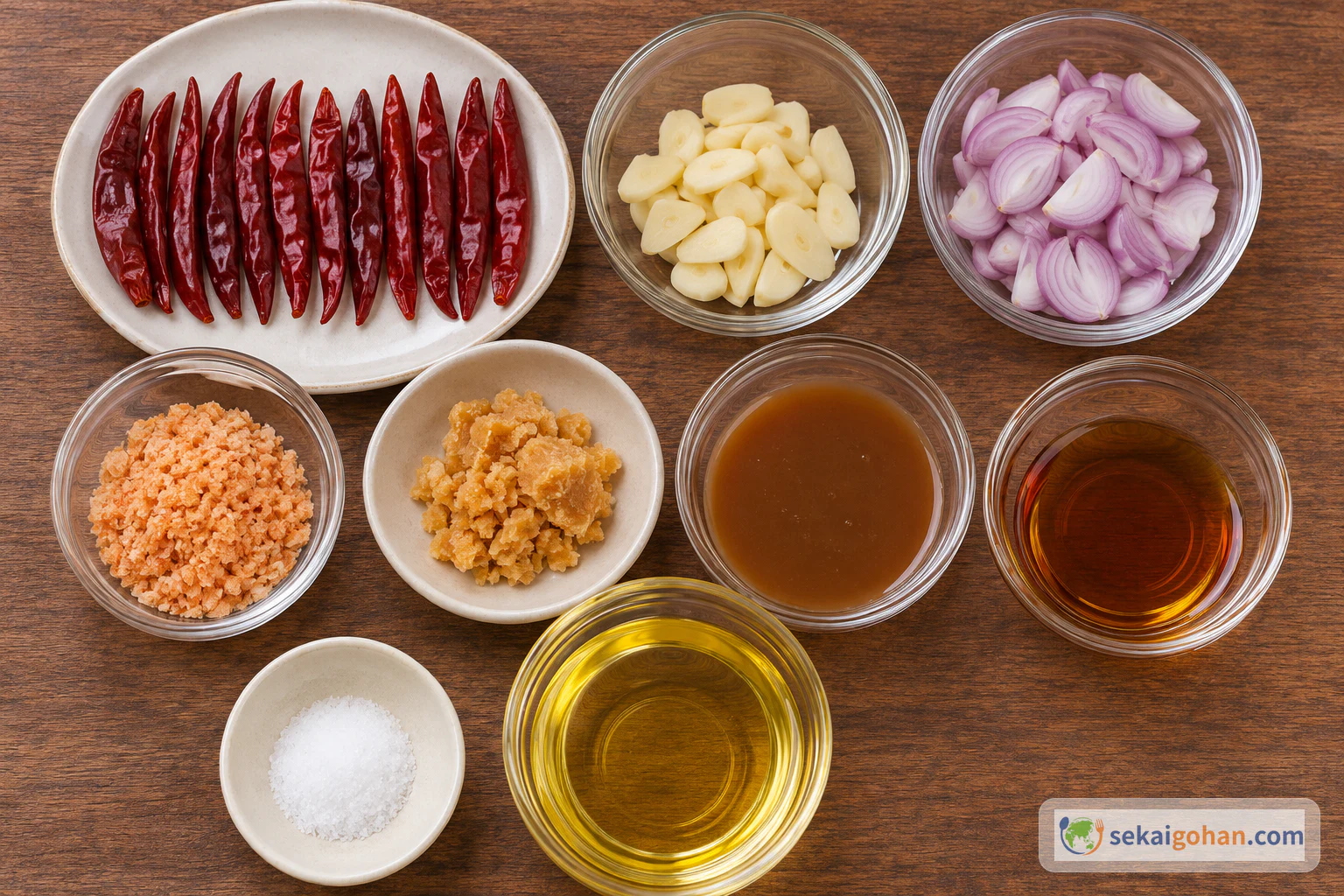
Slice the garlic and shallots finely before you heat the oil.
Equipment
- Wok or deep pan for frying
- Slotted spoon
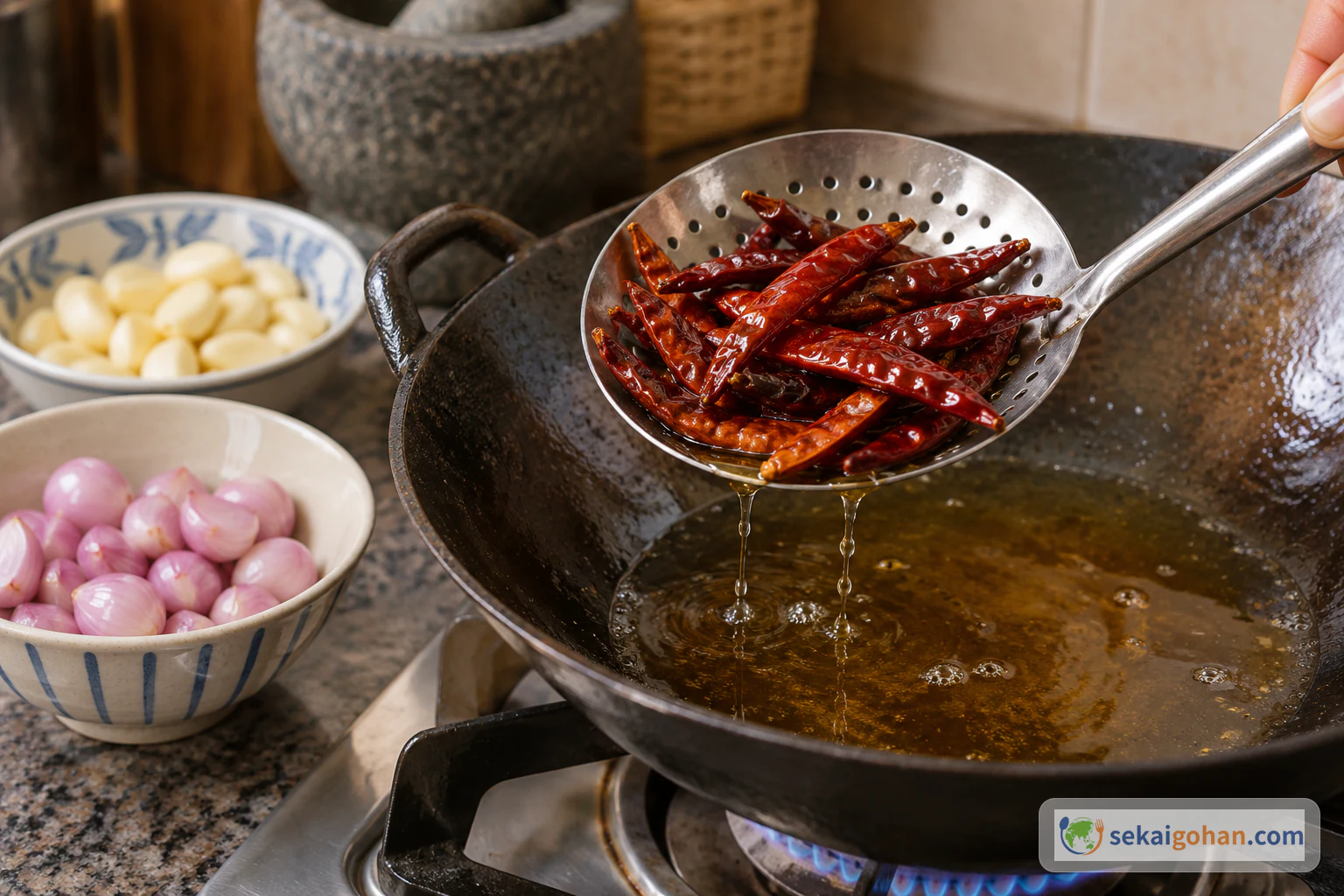
- Bowls for the drained garlic, shallots and chiles
- Measuring cups and spoons
- Blender with a lid
- Spatula
- Nonstick saucepan
- Heatproof trivet
- Clean container with a lid, if you are keeping any paste
Choosing Ingredients for Nam Phrik Phao
Ground dried shrimp is not shrimp paste. Shrimp paste belongs to a different version of nam phrik phao, with its own method, so stick with dried shrimp here. The same goes for the rest of the formula: palm sugar rather than coconut sugar, no added water, and aromatics that are fried, not dry-roasted.
This paste contains shrimp and fish. If you are cooking for someone with allergies, check the labels of packaged ingredients.
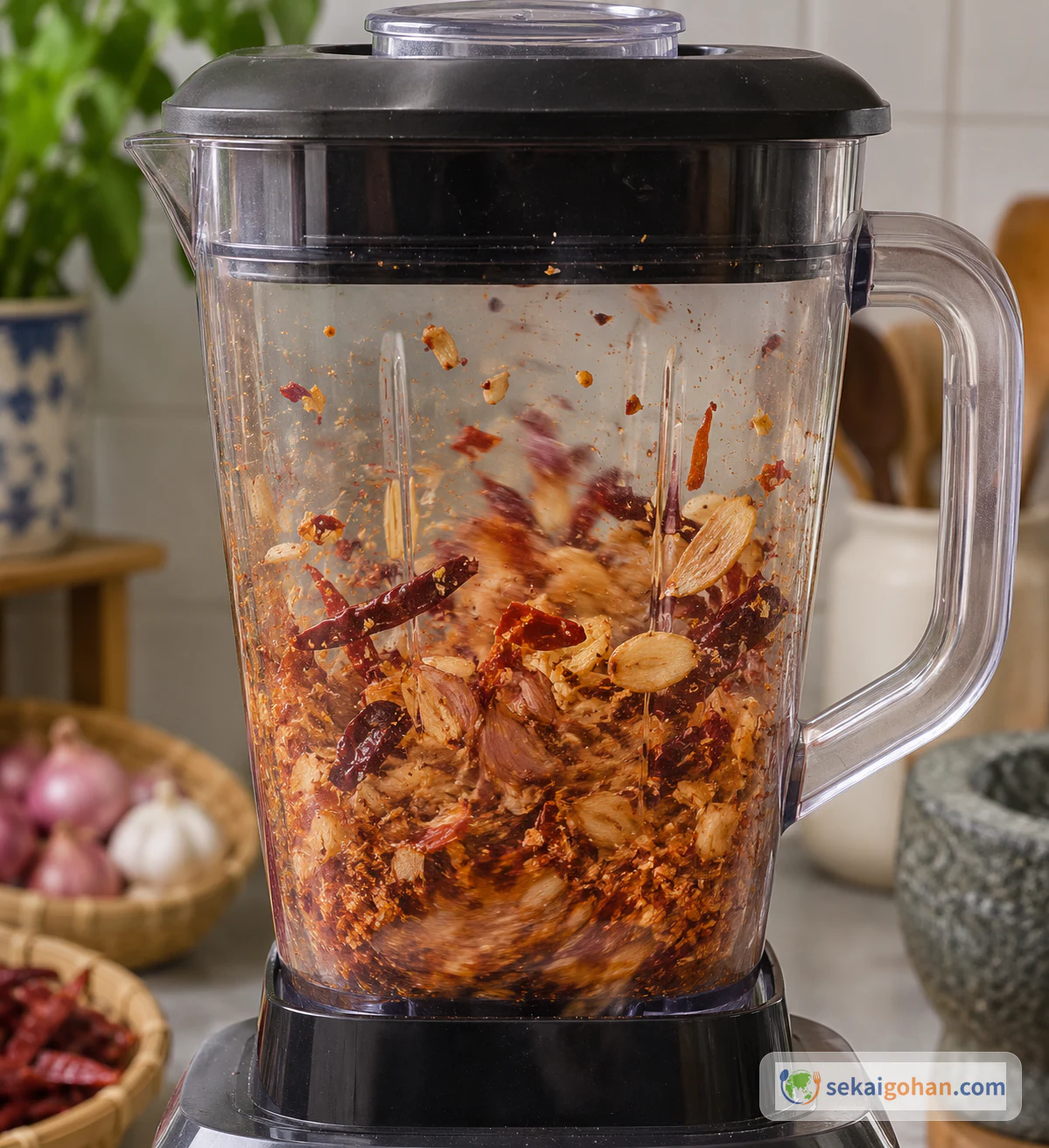
The frying oil is hot through several stages. Keep children away from the stove, stay with the pan, and take care when pouring oil into the blender. Check your blender's instructions on hot contents before you start.
Method: Fry Separately, Blend, Then Season Over Low Heat
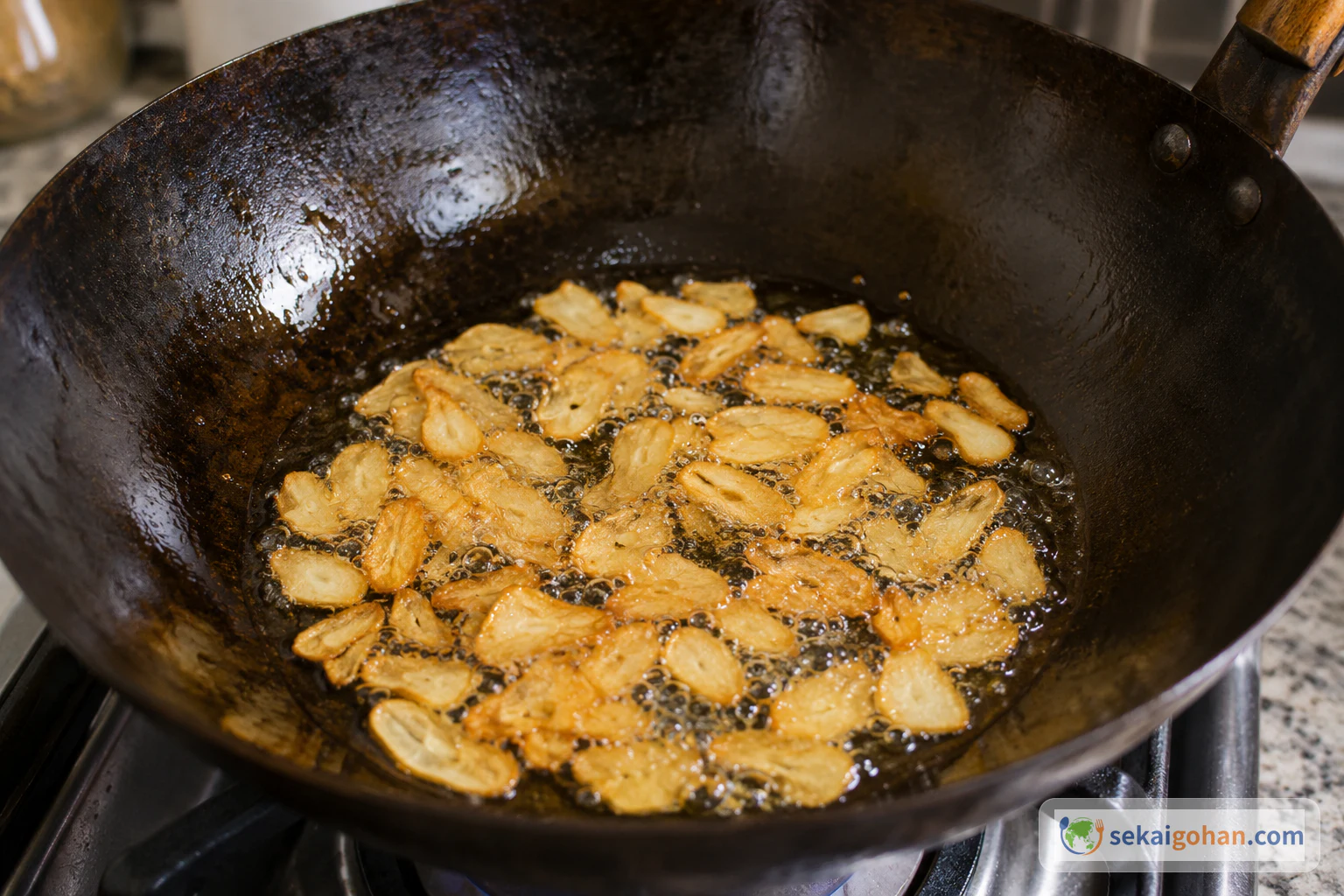
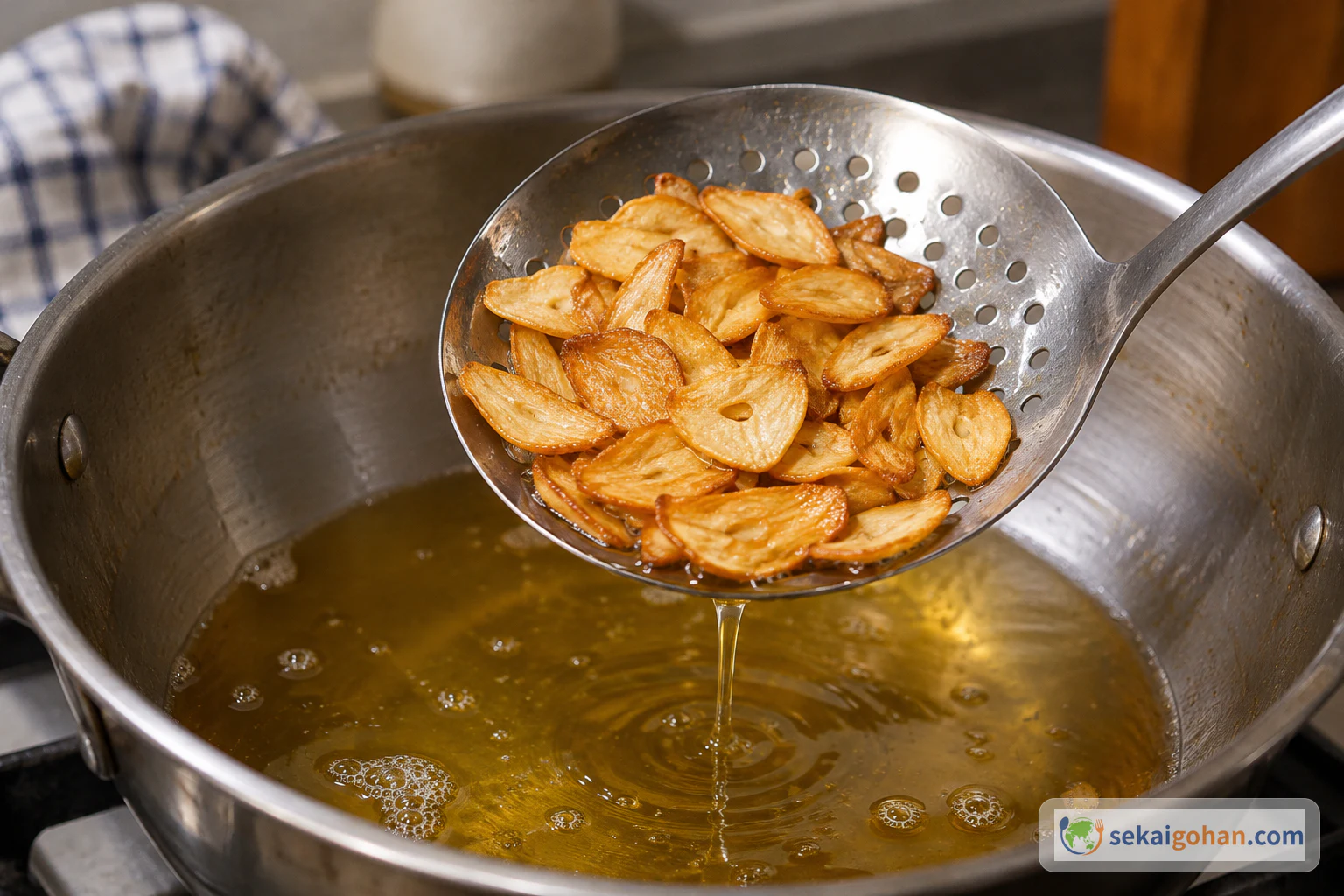
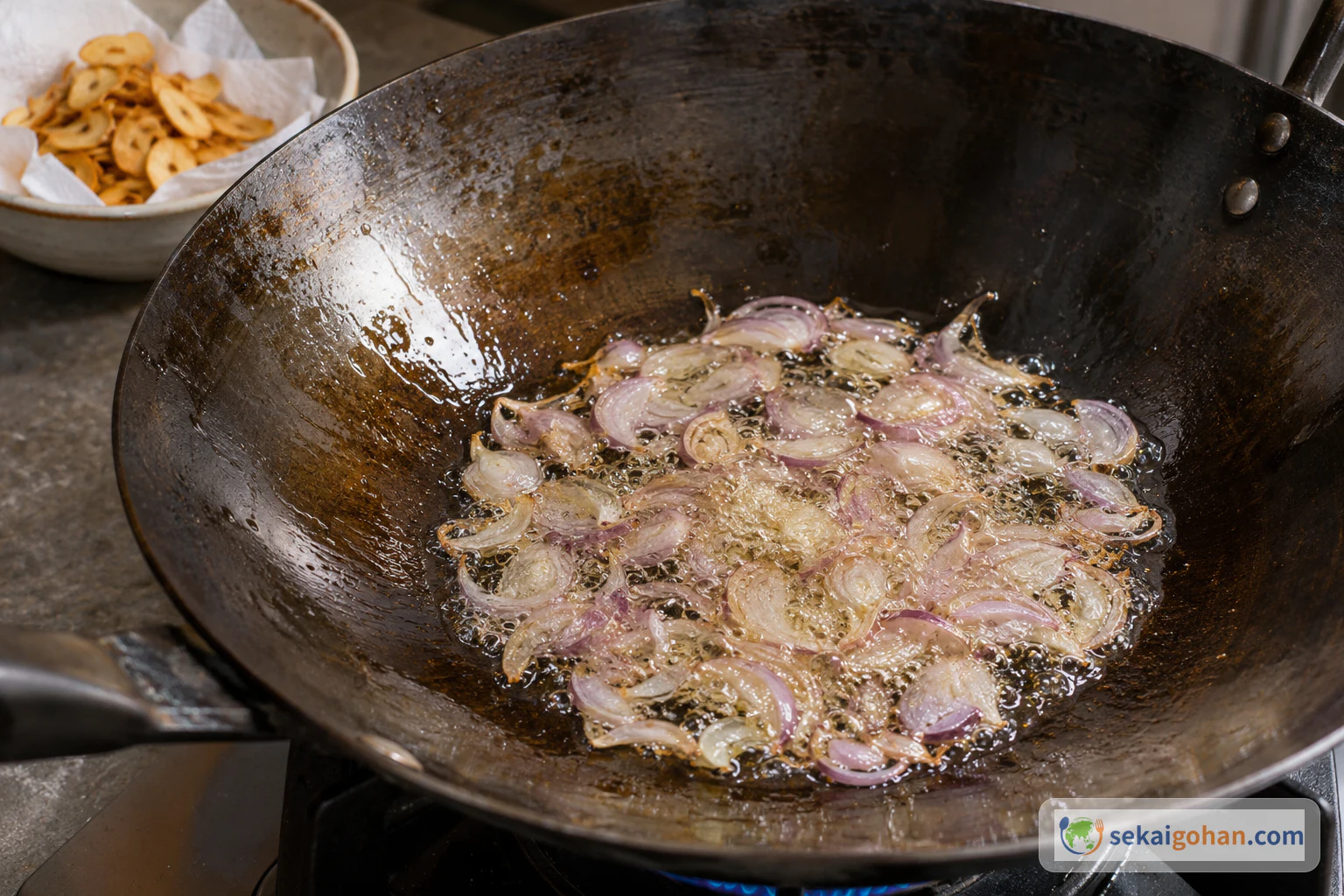
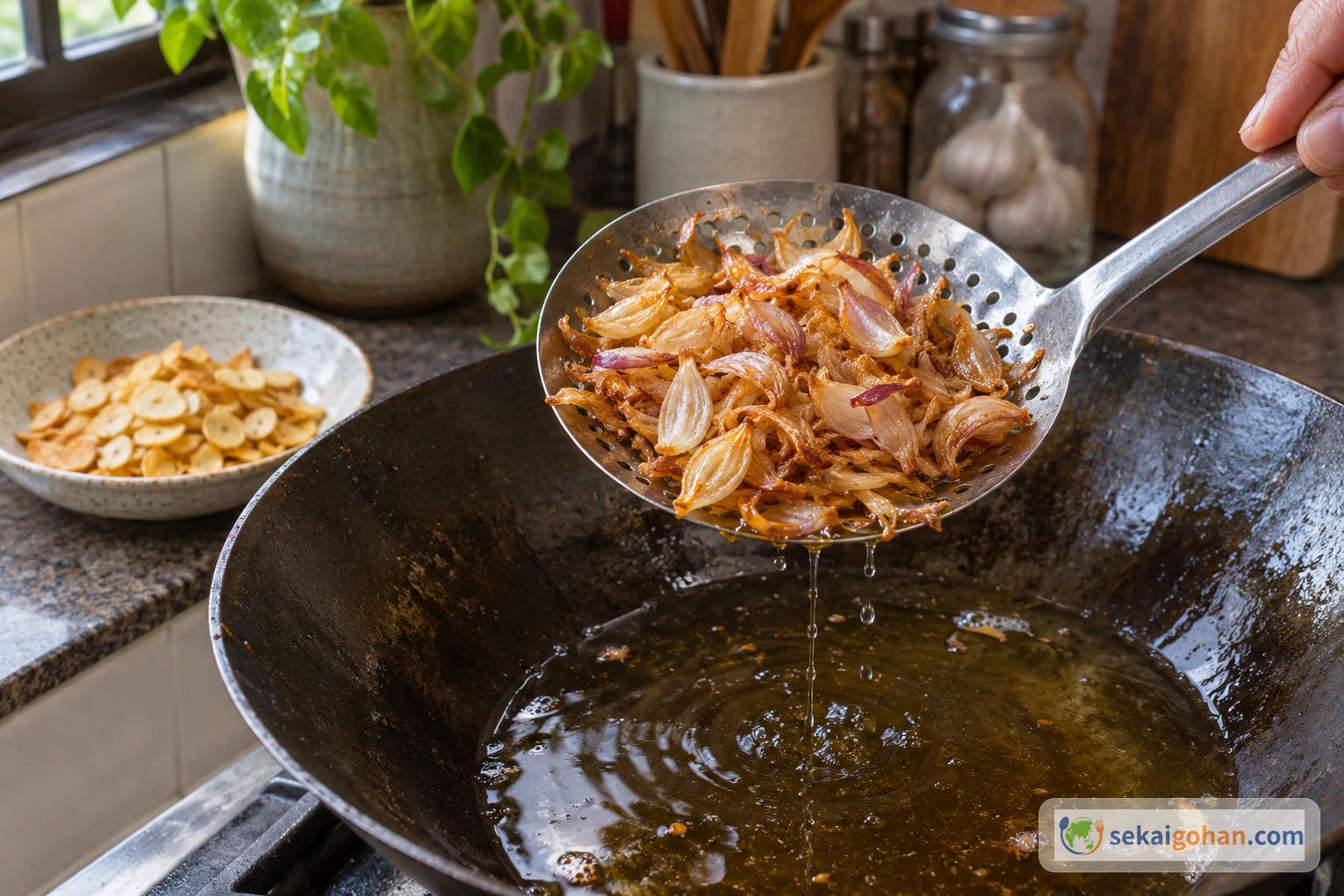
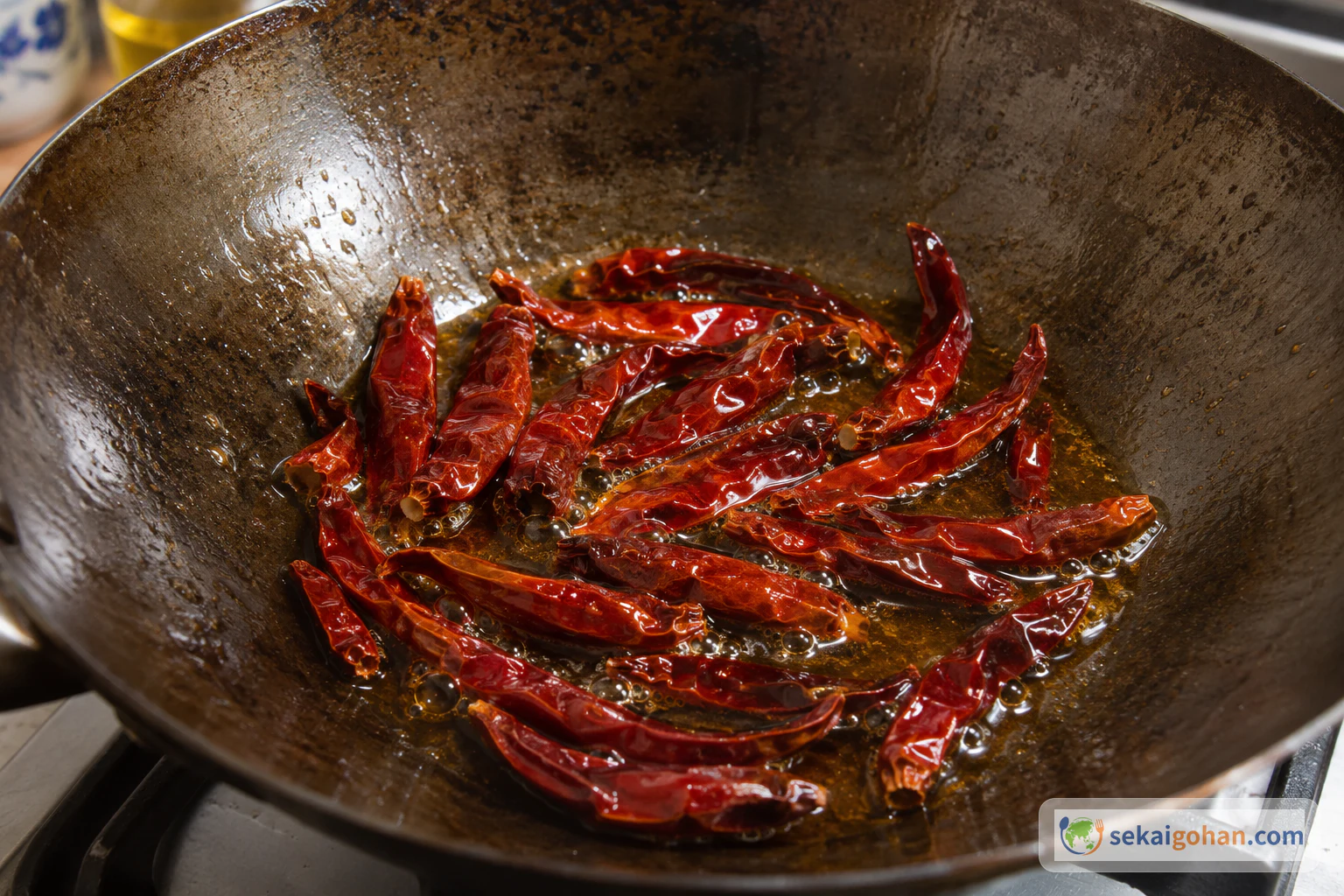
Color is your guide for the frying, so have your slotted spoon and bowls ready before the oil goes on.
Fixing Common Problems with Nam Phrik Phao
There's no set frying temperature or time, so go by color. Frying each aromatic on its own makes that much easier to watch.
| Condition | What to look at | What to do |
|---|---|---|
| Unsure when to lift out the garlic or shallots | The color in the oil | Lift them out when golden, frying each one separately |
| The rough mixture is hard to blend | Whether the oil has gone in | Stop the blender and add the ½ cup oil from step 8; it is there to help the blending |
| You want a looser paste | The amount of oil | Stay at ½ cup. Leftover frying oil does not go into the paste |
| The paste is catching in the saucepan | The heat and your stirring | Keep the heat low and keep stirring through the roughly 3 minutes |
| The paste still looks and smells fine after 4 days | The date, not its appearance | Throw it away. Look, smell and taste can't confirm that it is safe |
Storing Nam Phrik Phao and Other Versions
Storage
Like any homemade oil with garlic or herbs, this paste needs care: keep it refrigerated and throw away what is left after 4 days. Botulism toxin can't be detected by look, smell or taste, so a paste that seems fine may still be unsafe. Neither the tamarind's sourness nor the cooking extends that limit.
Other versions
Nam phrik phao varies a lot from cook to cook. If another version appeals to you, follow it as a whole, since its amounts and method belong together, rather than mixing it with this one.
| Version | Main ingredients | Method |
|---|---|---|
| This recipe | Dried red chiles, garlic, shallots, oil, ground dried shrimp, palm sugar, tamarind juice, fish sauce, salt | Fry separately, blend with oil, stir with the seasonings over low heat for about 3 minutes |
| Second version | Small and large dried chiles, shallot, garlic, rice bran oil, fish sauce, palm sugar, tamarind paste, dried shrimp | Soak the chiles, toast aromatics and chiles separately, cook and season the paste, add dried shrimp near the end |
| Third version | Two types of dried chile, shallot, garlic, shrimp paste, tamarind fruit, salt, coconut sugar, fish sauce, water, vegetable oil | Dry-roast the aromatics, chiles and shrimp paste, pound them, then fry in oil |
Frequently Asked Questions
Can I keep the paste for months in the refrigerator?
No. Use it within 4 days and throw away whatever is left.
Do you have metric conversions?
No. The recipe doesn't specify its cup standard, so the amounts stay in cups, tablespoons and teaspoons.
Why is it called a "roasted" chile paste if the ingredients are fried?
"Roasted Chile Paste" is the English name, but this method fries the garlic, shallots and chiles in oil. Other versions dry-roast or toast their ingredients, so the name alone won't tell you the method.