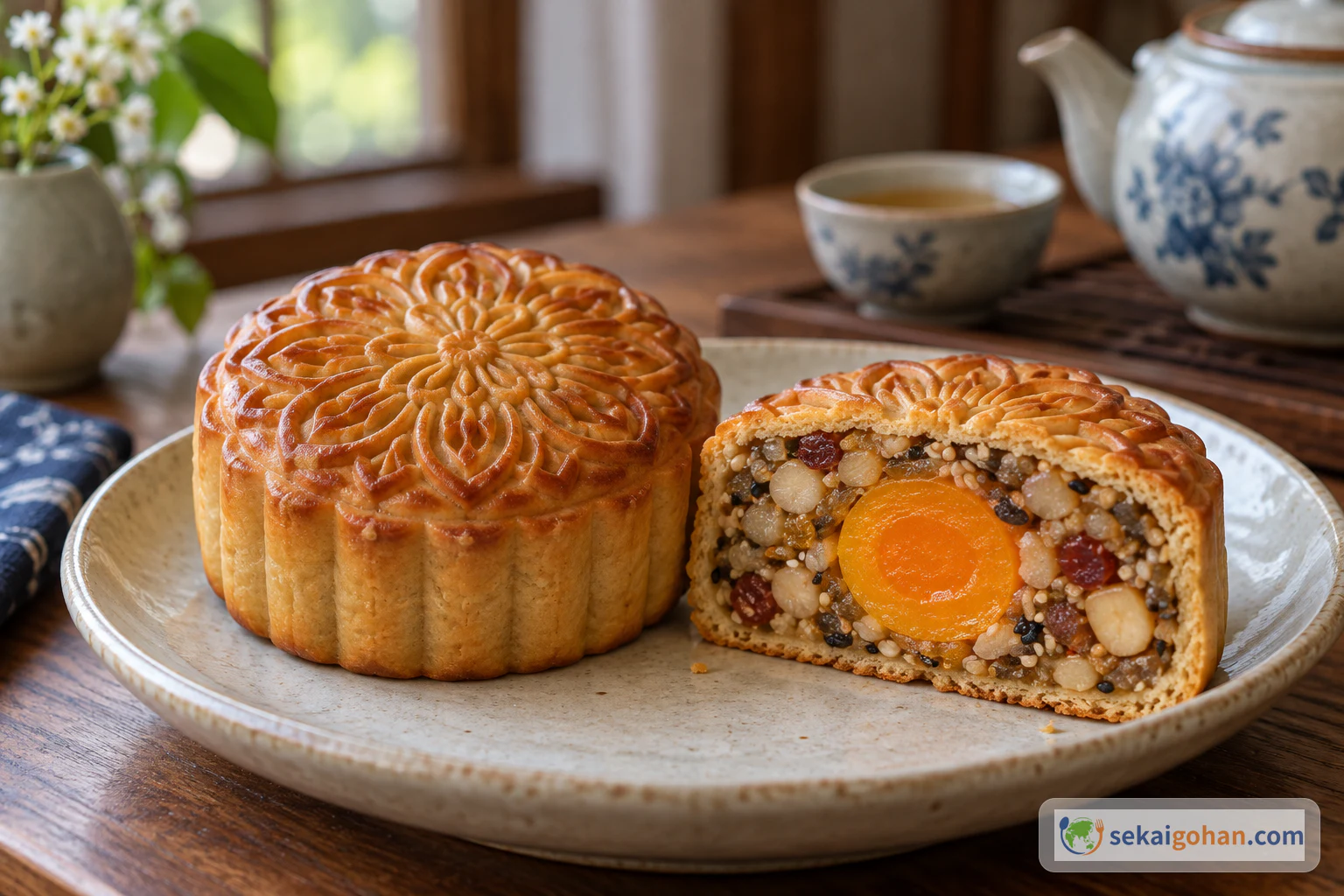
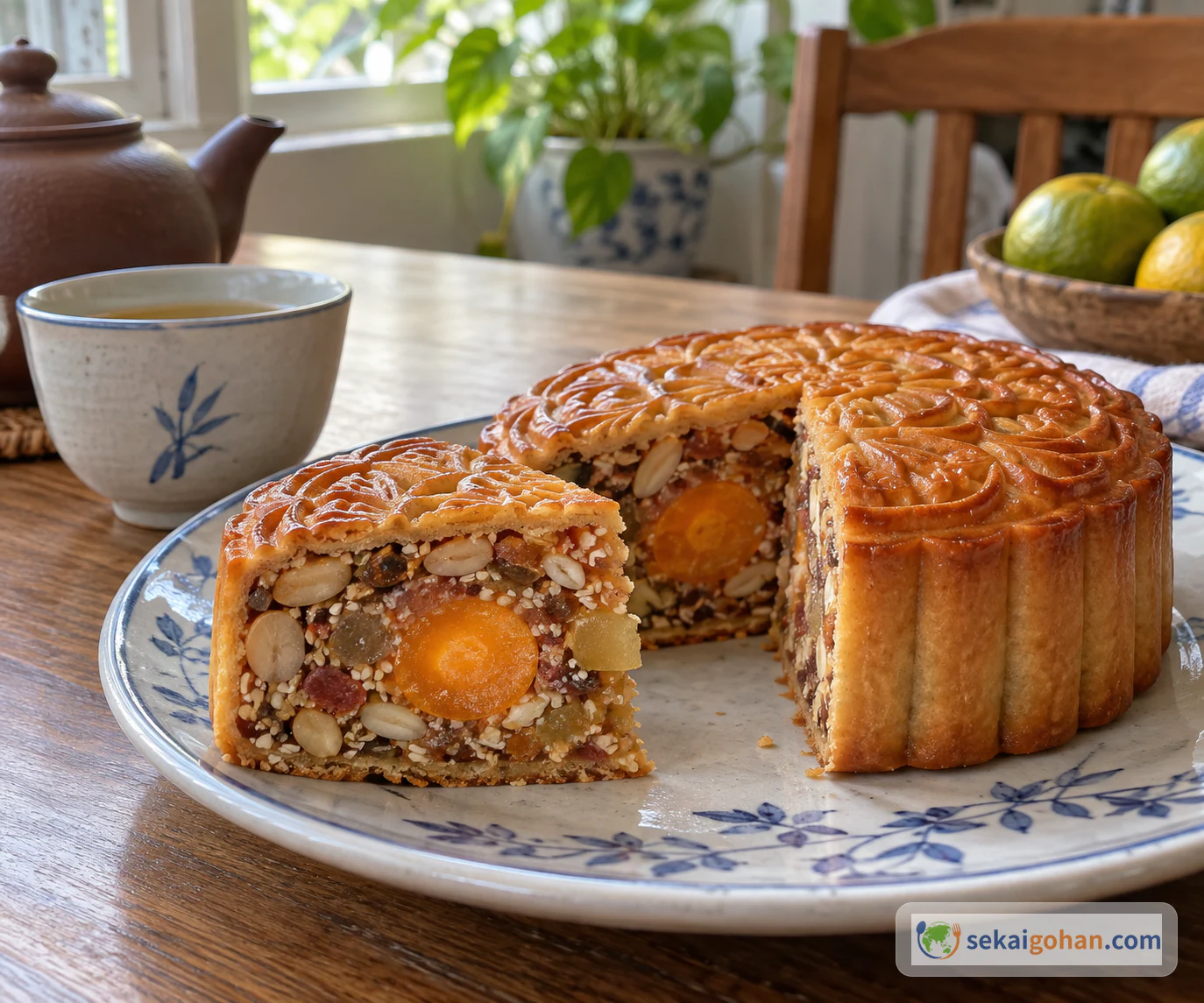
On the night of Tết Trung Thu, the Mid-Autumn Festival, families set five kinds of fruit and festival cakes on the ancestral altar, then share mooncakes together under the full moon. Bánh nướng is the baked kind: a thin golden crust pressed in a mold so that a flower or geometric pattern stands out on top. Cut one open and you find nhân thập cẩm, a "mixed" filling that is textured rather than smooth, with chewy candied fruit, crunchy seeds, savory sausage and a salty duck egg yolk sitting in the center. The long list of filling ingredients and the mold are the two real challenges here, and both are manageable with a little patience.
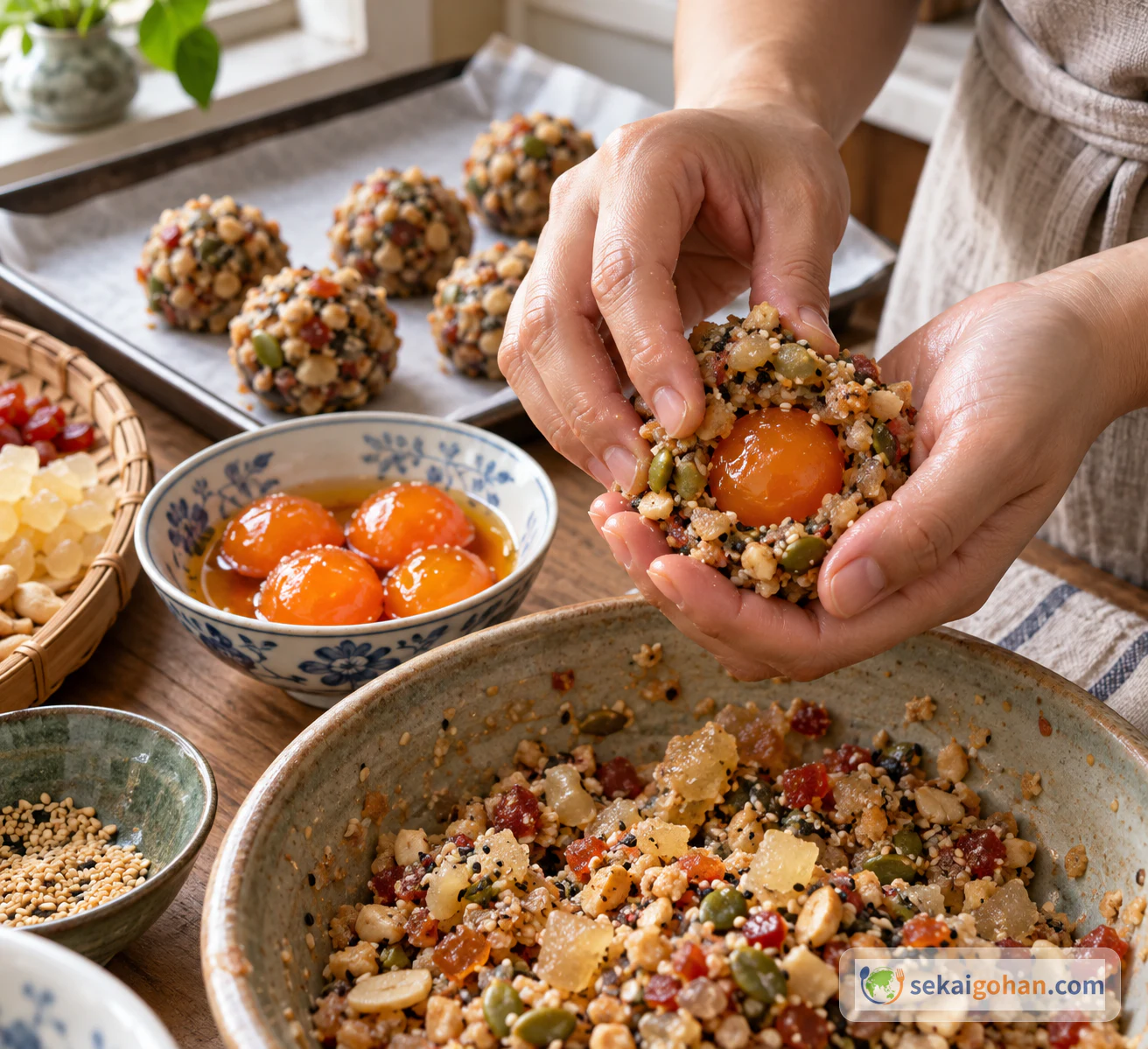
A thin golden crust that holds the mold's pattern, and a filling that is textured rather than smooth: chewy candied fruit, crunchy seeds, savory sausage, and a salty yolk sitting in the center.
Bánh Nướng and the Mid-Autumn Festival
The Mid-Autumn Festival came to Vietnam from China and is celebrated in several countries, but Vietnam keeps its own legend: the story of Cuội and the banyan tree, told and retold as folklore rather than history. The festival falls after the harvest, when families spend time together. Children carry lanterns in processions while lion dances move through the streets.
The cakes on the festival table are called bánh trung thu, a broad name for the season's sweets. There are two main types: bánh nướng, with a baked wheat crust, and bánh dẻo, the soft, mochi-like kind. Within both, shapes, patterns and flavors range widely, from sweet to savory. You can find more dishes from the same country on the Vietnam page.
Bánh trung thu means Mid-Autumn cake. Bánh nướng means baked cake, and bánh dẻo the soft, sticky kind. Nhân thập cẩm is the mixed filling. Searching with these Vietnamese names alongside "Vietnamese mooncake" makes it easier to find the specific style.
The mixed filling
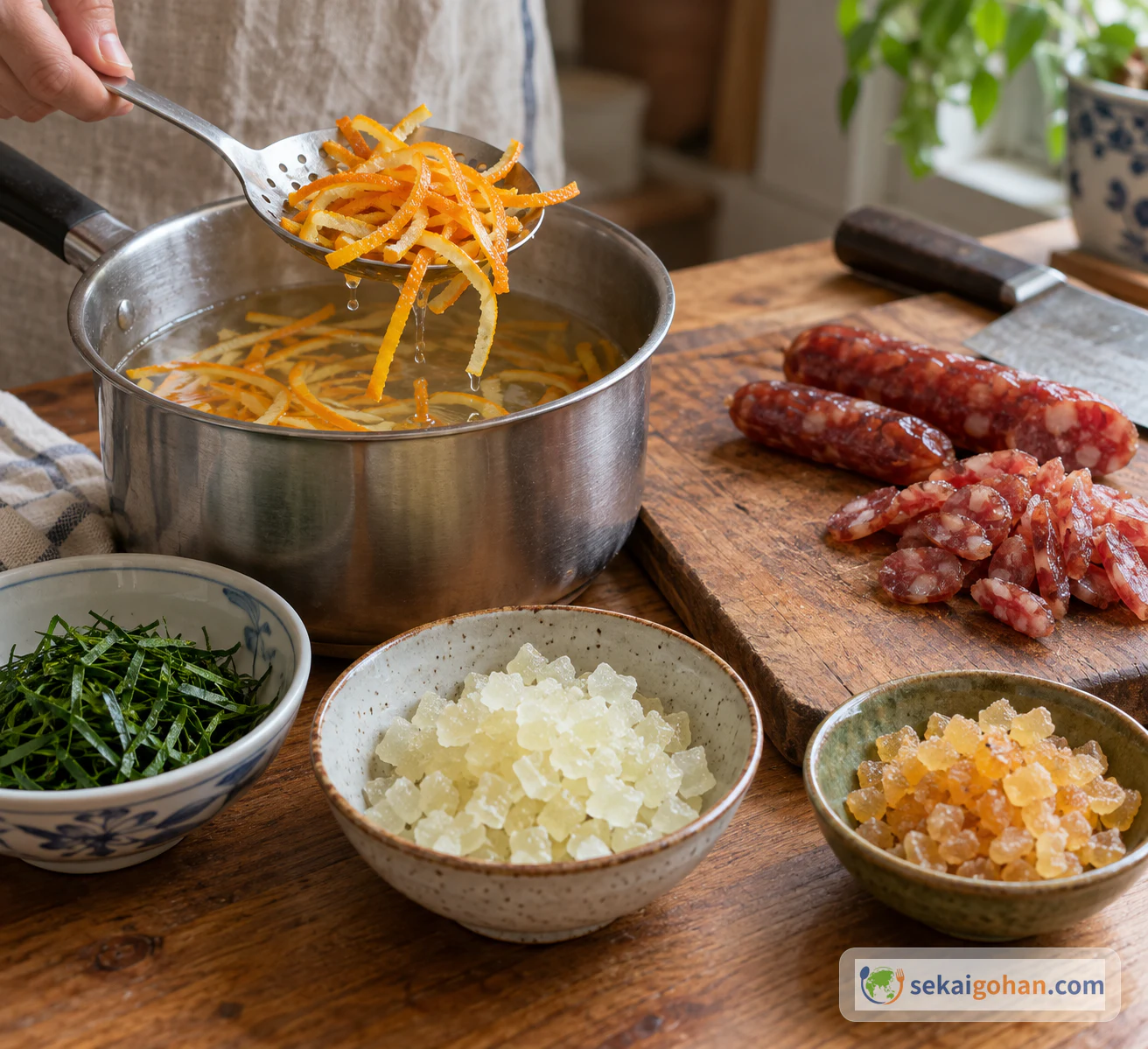
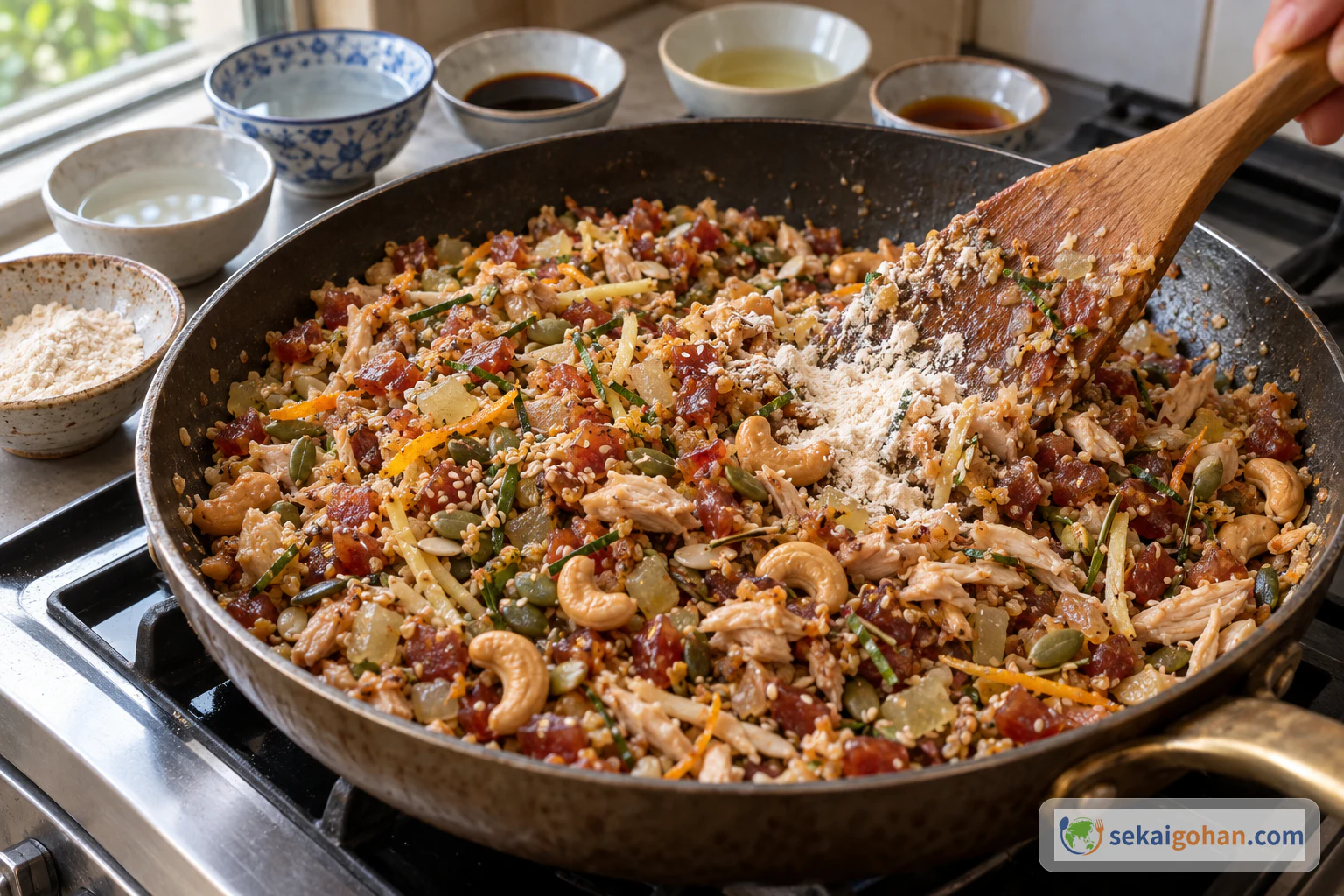
Nhân thập cẩm has no single fixed recipe; it is built in layers. Candied winter melon (mứt bí) and candied ginger (mứt gừng) bring sweetness and chew. Lap cheong (lạp xưởng), roasted chicken and pork floss bring savory depth, with lap cheong the most important of the meats. Cashews, pumpkin seeds, watermelon seeds and white sesame bring crunch, and orange peel and kaffir lime leaves add a bright citrus lift.
Recipes vary from kitchen to kitchen. Some versions add five-spice powder, use different proportions and bake in three stages, so the mold, ingredients and baking steps can differ even under the same name.
Ingredients for 8 Baked Mooncakes (about 3.5 oz (100g) each)
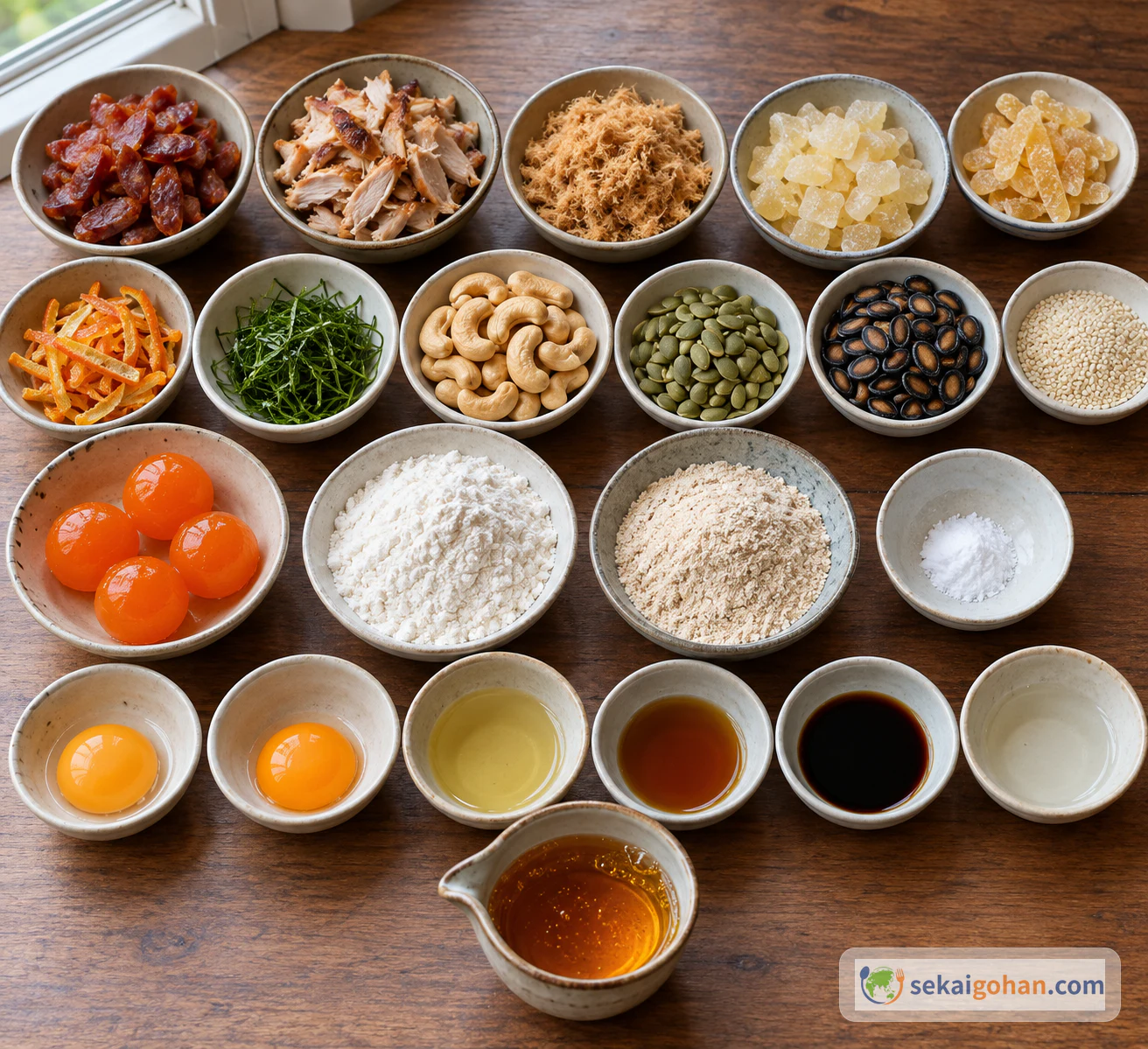
Each cake is 2 oz (60g) of filling (including one salted yolk) wrapped in 1.5 oz (40g) of crust. Divide the wine and sesame oil before you start, so the portions for the yolks and the egg wash don't end up in the filling.
Weigh the finished filling and divide it into 8 balls of 2 oz (60g) each, yolk included. If the full list comes to less or more than 1 lb (480–500g), weigh what you have rather than scaling the table up or down.
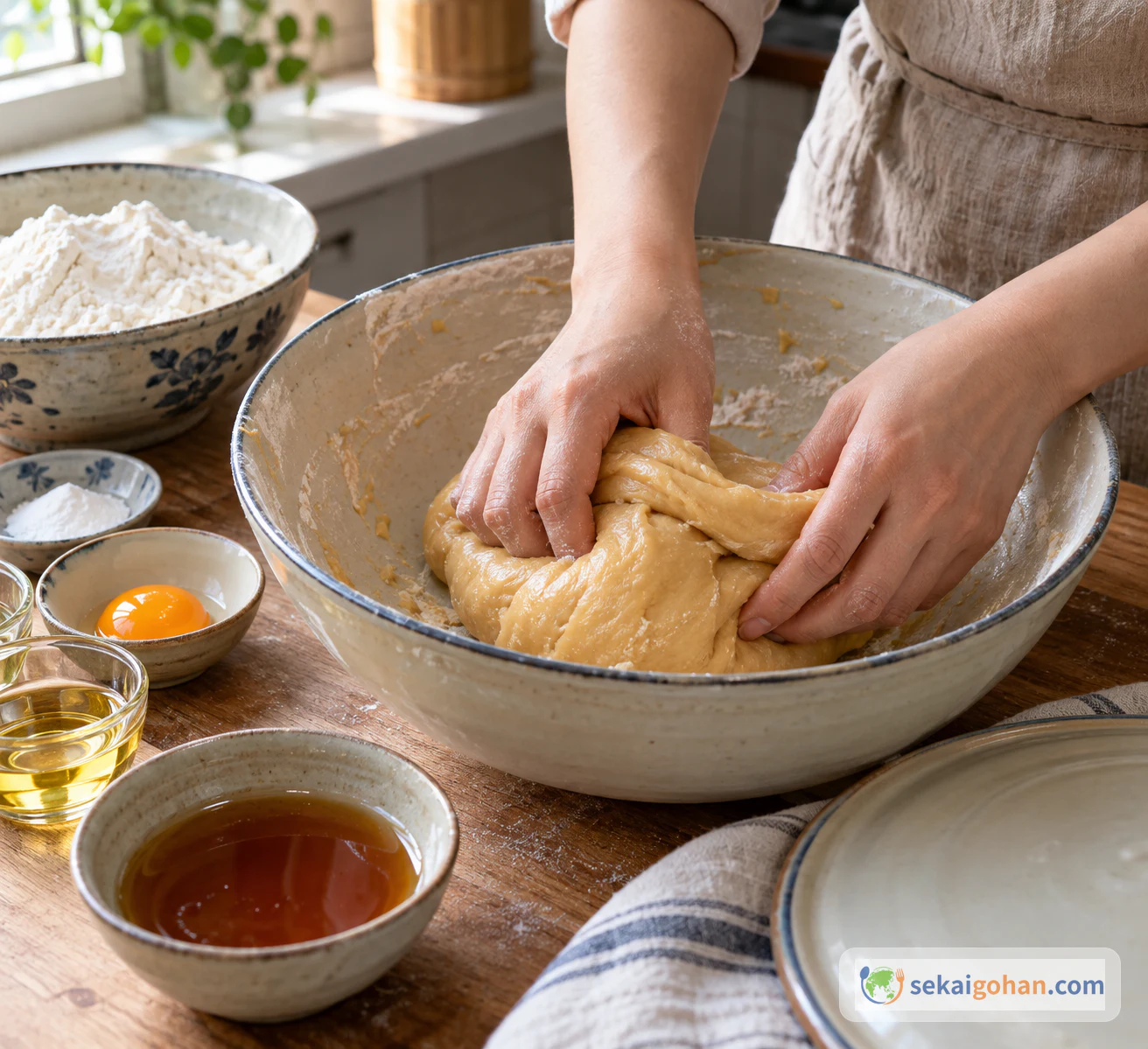
Homemade golden syrup needs at least a week before use, so make it ahead of baking day. Store-bought golden syrup can bake differently.
These cakes contain wheat, egg, cashews, sesame and soy (soy sauce). Sausage, pork floss, candied fruits and roasted seeds can contain further allergens depending on the product, so check every label. The filling uses only cooked meats; lap cheong is blanched and then cooked in the pan. Use roasted chicken that is already fully cooked.
Equipment
- 100g mooncake mold with a floral or geometric pattern
- Kitchen scale that reads in 1g steps
- Small saucepan for blanching
- Frying pan or wok
- Food processor or chopper for pulsing the nuts
- Steamer
- Plastic wrap
- Mixing bowl and a cover for resting the dough
- Rolling pin (optional; fingers work too)
- Baking tray and parchment paper
- Thin skewer or toothpick for poking holes
- Soft pastry brush
- Oven thermometer, to check the real oven temperature
Choosing Ingredients for Bánh Nướng
The items worth tracking down at an Asian or Vietnamese grocer are lap cheong (lạp xưởng), candied winter melon (mứt bí), candied ginger (mứt gừng), roasted watermelon seeds (hạt dưa), salted duck egg yolks, Mei Kuei Lu wine (rượu Mai Quế Lộ) and a 3.5 oz (100g) mooncake mold. Searching by these general names, in English and Vietnamese, is the easiest way to find them.
Several parts of the filling are flexible. Aim for a total of about 1 lb (480–500g) including the yolks, and whatever you change, keep each filling ball at 2 oz (60g). The candied fruits are already sweet, which is why no extra sugar goes in.
- Nuts and seeds: rearrange the mix according to what you can get.
- Meats: leave out the roasted chicken, or some of the other meats such as the pork floss.
- Salted yolks: leave them out and make up the weight with the other ingredients.
- Flour: use cake flour for a slightly softer crust.
Lap cheong and candied winter melon give this filling its character, so swapping them out turns it into your own variation. A lotus-seed paste or other regional filling makes a different mooncake altogether.
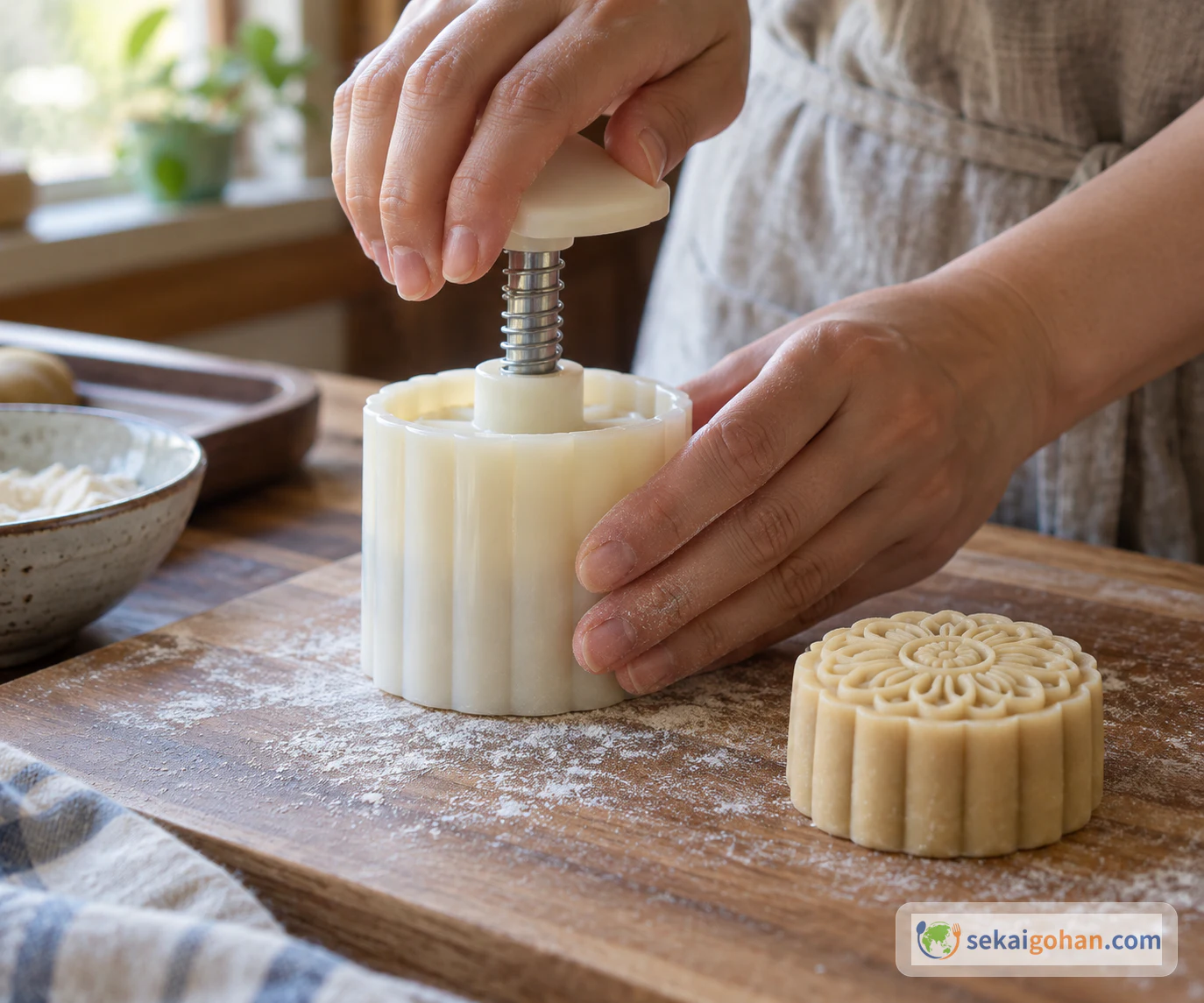
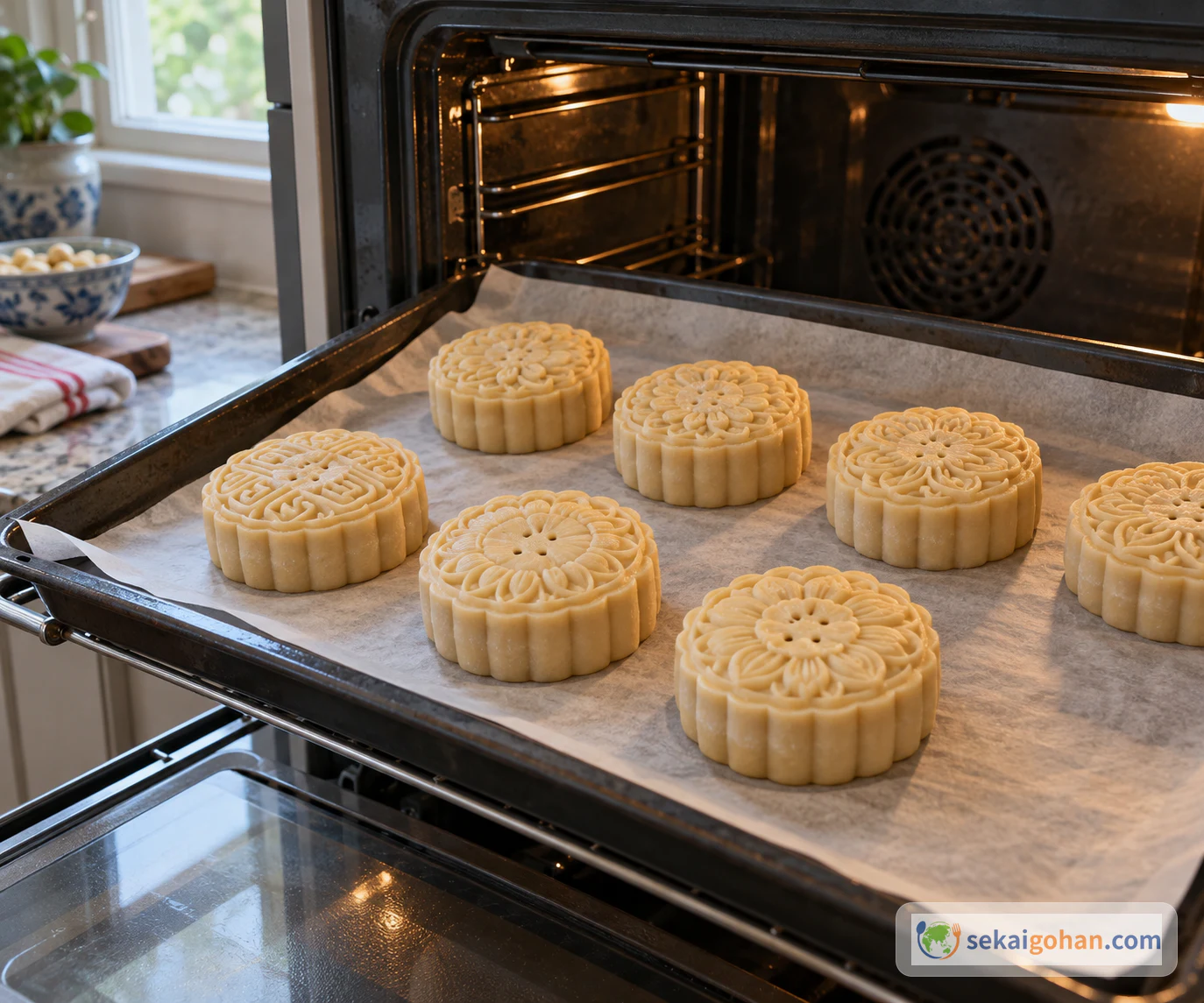
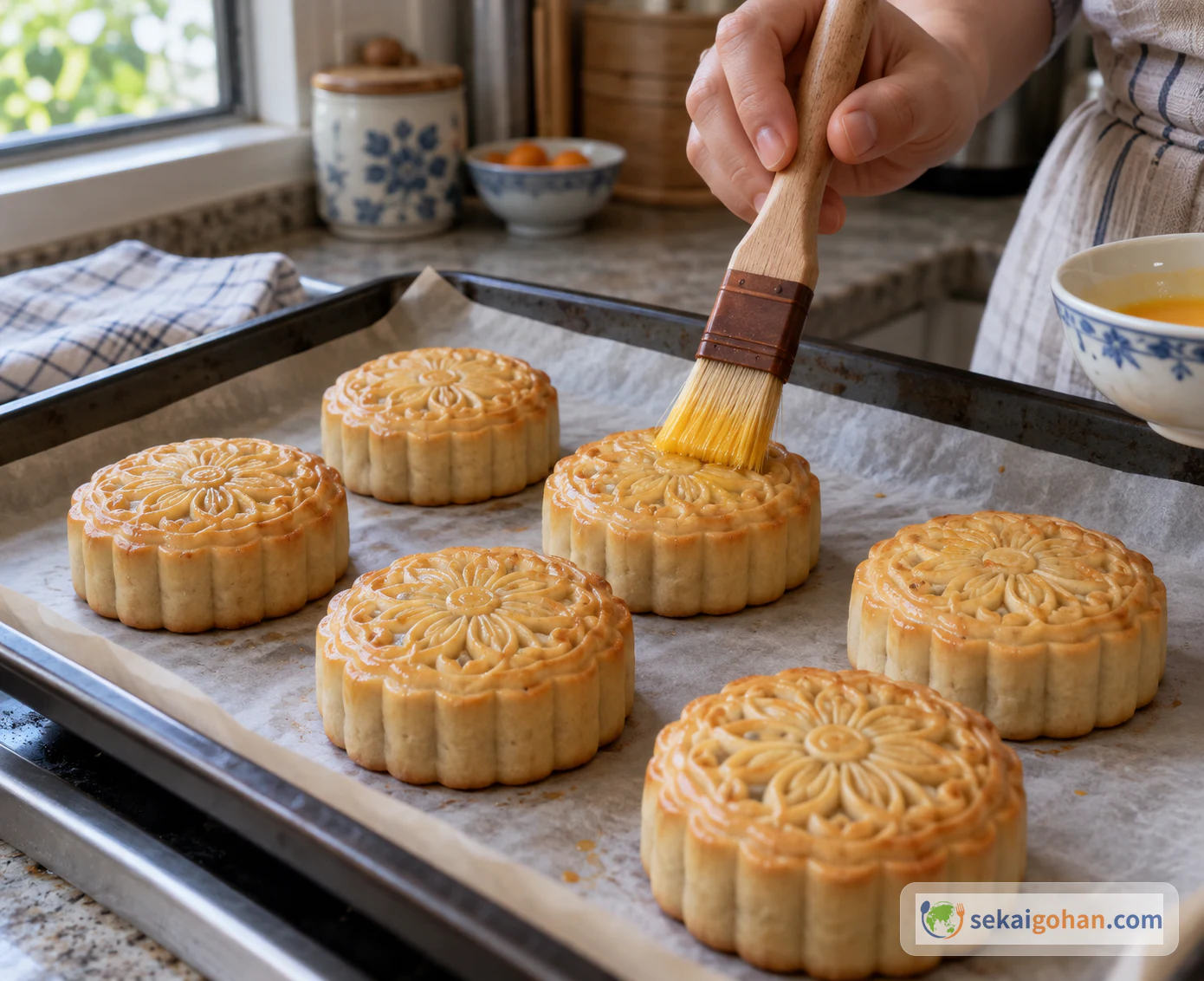
Method: Filling, Yolk, Crust, Mold and Two Bakes
Have the golden syrup ready (at least a week old if homemade), and divide the wine and sesame oil into their portions. The filling has to cool before wrapping, so make it first.
Bánh Nướng Troubleshooting
Because the cakes are baked in several stages, they don't crack even without misting them with water. Most other problems come down to the filling or the mold.
| Problem | Likely cause | What to do |
|---|---|---|
| The filling won't hold together | Too little oil or binder | Add a little more oil and toasted glutinous rice flour, a little at a time, until a squeezed handful holds |
| The yolk is off-center | The filling wasn't built evenly around it | Start with 20–25g under the yolk, then tighten the plastic wrap around the ball |
| The pattern is faint | Dough didn't reach the corners of the mold, or the wash pooled in the grooves | Press the handle a few times on a flat surface; brush the wash in thin coats |
| The crust tears while wrapping | Dough stretched too thin | Flatten it evenly and keep it thick enough to cover the filling without strain |
| The color is too pale or too dark | Oven running hot or cool, or tray differences | Check with an oven thermometer and judge the last bake by color as well as time |
Frequently Asked Questions
Can I make the crust without lye water?
This recipe uses a small amount of baking soda in place of lye water (kansui). It is not an exact equivalent, so if you want a lye-water crust, choose a recipe written for it rather than mixing methods.
How do I get a clear pattern from the mold?
Dust the mold and your hands with flour, press the handle a few times on a flat surface so the dough fills every corner, and brush the egg wash thinly so it doesn't fill the grooves.
Can I eat them right after baking?
The crust is dry just after baking and softens as the cakes rest. Cover them and keep them in a cool, dry place, then eat them after 2–3 days. These cakes contain cooked meat and egg, so refrigerate them after that rather than leaving them at room temperature.