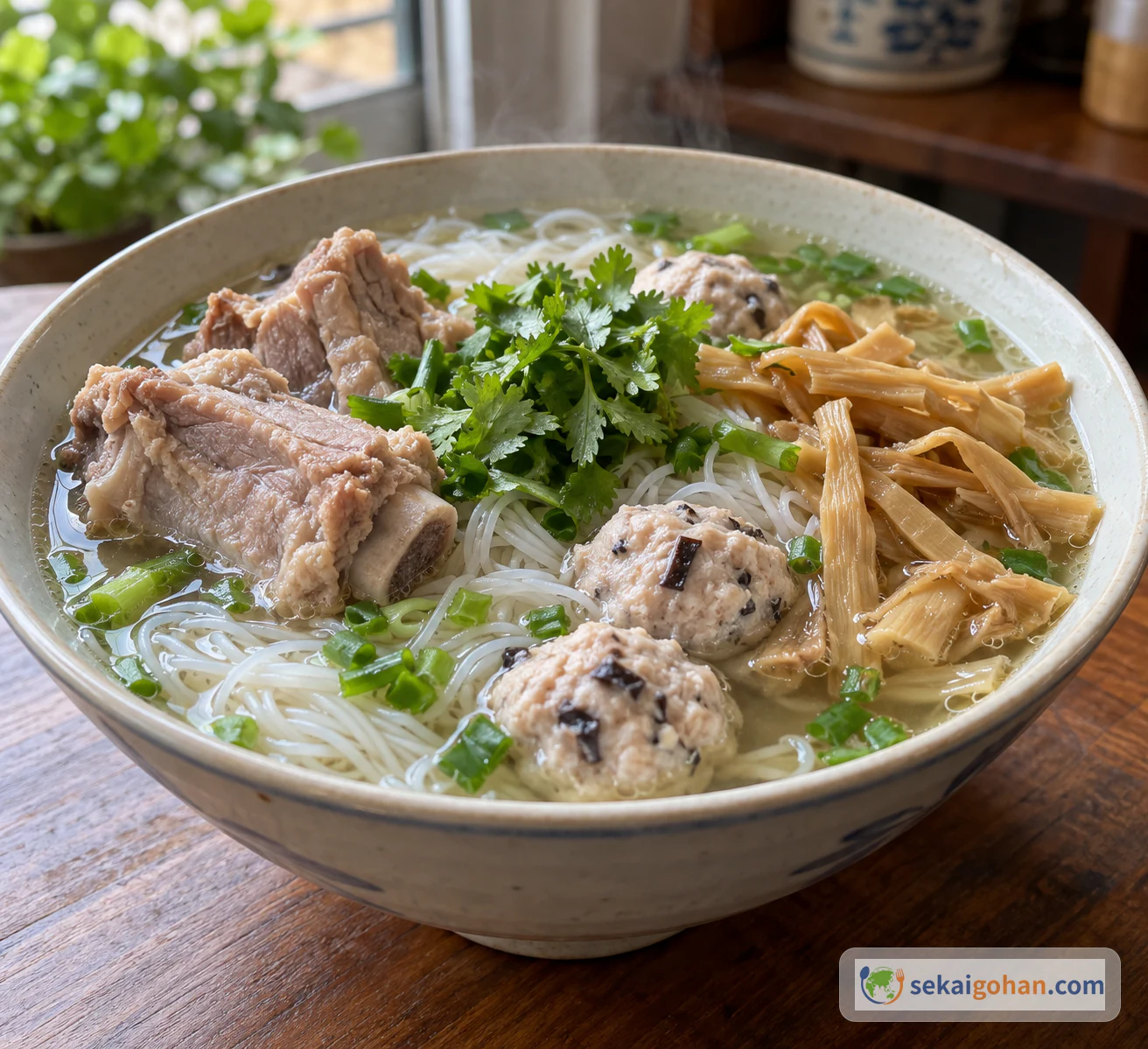
Lift the lid on the pot at the end of the day and the smell of beef shank rises with lemongrass and makrut lime leaves, while thin white rice vermicelli shows through the steam. Into the bowl go perkedel, a boiled egg and fried shallots. The heat gets settled at the table, not in the pot: everyone stirs in sambal a little at a time, and that's the fun of making it at home. Sop saudara is a beef soup from Pangkep and Makassar in South Sulawesi. It's a clear, aromatic broth made filling with noodles, potato and egg.

Sop saudara in South Sulawesi
How sop saudara is eaten
A bowl of sop saudara layers rice vermicelli, potato perkedel, egg and fried shallots over beef broth, and in Makassar it is also eaten with warm rice or grilled milkfish. Eateries often add offal. At Warung Pangkep in Makassar, you can choose beef liver, tripe, fried lung or kikil, the gelatinous cut of beef foot.
It stands apart from other Indonesian soups: soto ayam has chicken in a yellow broth, rawon uses black nuts, and Coto Makassar has a rich, nutty flavor. What sets sop saudara apart from Coto Makassar is the rice vermicelli and perkedel. They stretch a meat soup into something halfway between a staple and a side dish.
Indonesian uses both spellings, Sop Saudara and Sop Sodara. "Saudara" means brother or relative, but there are several explanations for where the name came from.
Where the name comes from
The history of sop saudara has more than one version. H Abdullah, from Pangkep, has told how he worked in the 1950s at Sop Sentral in Makassar before starting his own shop at Pasar Senggol. He explains the name as "Saya Orang Pangkep, Saudara," meaning "I am a person from Pangkep, brother," and says he added intestine, lung, heart and so on to the beef. Another report names the founder as Haji Dollahi, so the years and names vary. The accounts agree on one thing: people from Pangkep built up the meat-soup business in Makassar.
A third story, recorded in a collection of traditional Indonesian food and drink, says Sop Pangkep came from a shop run by two brothers, and customers started calling it "sop sodara." Whichever version you follow, the name links a person from Pangkep, a shop in Makassar and a friendly relationship with customers.
A bowl for celebrations
Sop saudara wasn't always an everyday restaurant dish. It was served at circumcisions, weddings, birth celebrations, Eid al-Fitr and Eid al-Adha, house moves and thanksgiving gatherings, and Makassar families still make it for celebrations and guests. Noodles, potato and egg turn a single pot of beef soup into a full meal. Piling on the extras is a way of telling a guest, "have this too."
At home, make beef shank the star and prepare the noodles, perkedel, fried shallots, lime and sambal separately. You can skip the offal and still enjoy putting your own bowl together.
| Element of the table | Meaning locally | How to make it at home |
|---|---|---|
| Beef or water buffalo, offal | Broth and the fun of choosing toppings | Use beef shank as the base; offal is optional |
| Rice vermicelli | A thin staple to take up the meat broth | Rehydrate dried vermicelli in a separate pot |
| Perkedel | Sweetness of potato and fried toastiness | Mash potatoes and make 8 |
| Rice or ketupat | A staple to take the soup | Serve rice separately, or put a little in the bowl |
| Lime and sambal | Sourness and heat adjusted at the table | Serve at the end, apart from the pot |
Ingredients (serves 4)

This makes four large bowls. If you serve rice separately, as at local eateries, allow about 5.5 oz (150 g) of cooked rice per person. For lontong-style rice in the bowl, press 1 lb (500 g) of cooked rice to a thickness of 1 inch (2 cm), chill it and cut it into 1 inch (2.5 cm) cubes.
This dish uses beef, egg, and candlenuts or the cashews that substitute for them. Store-bought sambal, fried shallots, rice vermicelli and spices can contain wheat, soy, shrimp and so on. If you have a food allergy, check the ingredient label before buying. If you add offal and are unsure about freshness or preparation, don't force it; make it with beef shank alone.
Telling the aromatic ingredients apart
Galangal looks like ginger, but using ginger alone rounds off the outline of the aroma. Its local name is lengkuas, makrut lime leaves are daun jeruk and fried shallots are bawang goreng. When searching at import shops or online, use both the English and local names. If you can't find galangal, increase the ginger by 10 g and grate a little lime zest at the end. The aroma changes, but it disperses the heaviness of the beef.
Choosing ingredients for sop saudara

You can find beef, potatoes, eggs and rice vermicelli at any nearby supermarket. If you want offal, lung or liver can go in, but beef shank is plenty the first time. Two things matter more than the meat: galangal, the heart of the aroma, and frying the aromatic paste in oil before it goes back into the broth.
Galangal
Galangal is worth seeking out. Adding more ginger just makes the soup taste more of ginger, and you lose galangal's slightly hard, woody aroma. Only 20 g goes into the paste, so frozen galangal is the practical buy: look for a pack of about 7 oz (200 g) you can cut from, rather than chilled or powdered, and divide the rest into portions. It earns its place if you also cook soto ayam or rawon. If you'll make this only once, use 10 g more ginger plus a little lime zest. The aroma won't be the same, but it lifts the heaviness of the beef.
Sambal and cumin
Sambal oelek is there so each person can add heat to their own bowl, not to turn the soup red. It's worth buying if your family members differ in how hot they like things. If you rarely eat spicy food, the red pepper flakes you already have, plus lime, will do. Check the ingredient label when you buy.
Cumin is only 1 tsp, but it gives the aromatic paste its shape. Ground cumin that has been open a long time loses its aroma, and then even good galangal won't bring out the depth of the beef. If you cook other Indonesian dishes or curries, pick a reliable brand and stick with it. If the cumin in your cupboard still smells good, or you keep whole cumin on hand, use what you have.
Method: simmer, fry, assemble in the bowl
Fry the aromatic paste in a separate pot and simmer the beef quietly. Don't simmer the rice vermicelli, perkedel, rice and egg in the soup for long. Layering them in order in the bowl lets you keep both the clarity of the broth and the texture of the fried elements.
If you put perkedel in the pot and simmer it a long time, the potato falls apart and the soup gets heavy. Putting it in the bowl and pouring hot soup over is enough. The toasty surface remains and it soaks up a little soup as you eat. If you are short on time you can use baked potatoes instead of frying, but the aroma of the fried surface weakens.
Fixing cloudy, tough or bland sop saudara

Cloudy soup means the beef boiled too hard. Instead of bringing it to a boil fast over medium heat, take about 12 minutes to warm it, and drop to low heat when the foam gathers. If it has already gone cloudy, turn off the heat, leave it for 10 minutes, skim the foam and excess fat from the surface, then rewarm it over low heat. It won't turn clear again, but it will taste lighter.
Tough beef needs more simmering. Add ¾ cup (200 ml) water and keep going 15 minutes at a time over low heat, with only small bubbles at the edge. Larger pieces take longer, so keep going past 70 minutes if you need to. The beef is done when a skewer slides into the center and the fibers loosen when you press the meat.
A weak aroma means the aromatic paste wasn't fried long enough. Paste that goes straight into the soup keeps the raw taste of onion and garlic and buries the galangal and cumin. Fry it in a skillet over medium-low heat until oil seeps out at the edge. If it smells burnt, loosen the bottom with 2 tbsp water and leave the blackened bits behind.
Too much sambal? Watering it down alone won't fix it. Rehydrate 20 g more vermicelli and add 1.75 oz (50 g) of rice, and squeeze in a little lime to soften the heat. If you add water to the whole pot, do it last so the beef broth keeps its richness.
Serving and storing sop saudara
At the table

Sop saudara is a full meal on its own. For a menu that recalls the Pangkep table, grill a little salted mackerel or white fish under the broiler to serve alongside. On days you don't want fish, warm vegetables like gado-gado are enough.
The sweet peanut sauce of sate ayam can clash with the soup's flavors. If you want another rich beef dish, try rendang. To compare clear soups, move on to soto ayam, which shows off the regional differences in Indonesian cooking.
Put the sambal, lime and fried shallots in separate small dishes. That way only the people who want heat get it, and anyone can add sourness to their own bowl. You don't have to copy the local bowl exactly; let each person finish the flavor.
Storage and reheating

Don't leave the soup sitting in the pot at room temperature. Divide it into shallow containers, cool it as quickly as possible, then refrigerate or freeze. Stews need this care because of Clostridium perfringens (in Japanese). Eat refrigerated soup within about 2 days, counting from the next day. Store the vermicelli, rice, perkedel, garnishes and sambal separately; noodles left in the soup absorb the liquid and make the next day's bowl heavy.
To reheat, warm only the soup in a pot over medium-low heat for about 8 minutes, stirring from the bottom, until it is hot all the way through, at least 167°F (75°C). Pour boiling water over refrigerated vermicelli for 10 seconds to loosen it, and warm the rice in a microwave. Three minutes in a toaster oven brings back the perkedel's crisp surface.
Freeze only the soup and beef. Thaw them in the refrigerator over half a day, then warm over low heat; high heat tightens the meat and separates the fat. If anything seems off in smell or appearance, throw it out rather than tasting it to check.
Frequently asked questions
Do I put the rice in the bowl or serve it separately?
Either works. Serve rice or ketupat alongside, or put about 2.75 oz (80 g) in the bowl. Serving it separately keeps the soup from getting diluted, while rice in the bowl makes it easier to eat as one dish. This recipe serves it separately.
Can I substitute glass noodles for the rice vermicelli?
Yes, though you lose some of the rice aroma and texture. Use 2.75 oz (80 g), soak them a little less than the package says, and drain. Glass noodles feel light in the soup, so keep the perkedel and fried shallots to make the bowl more satisfying.