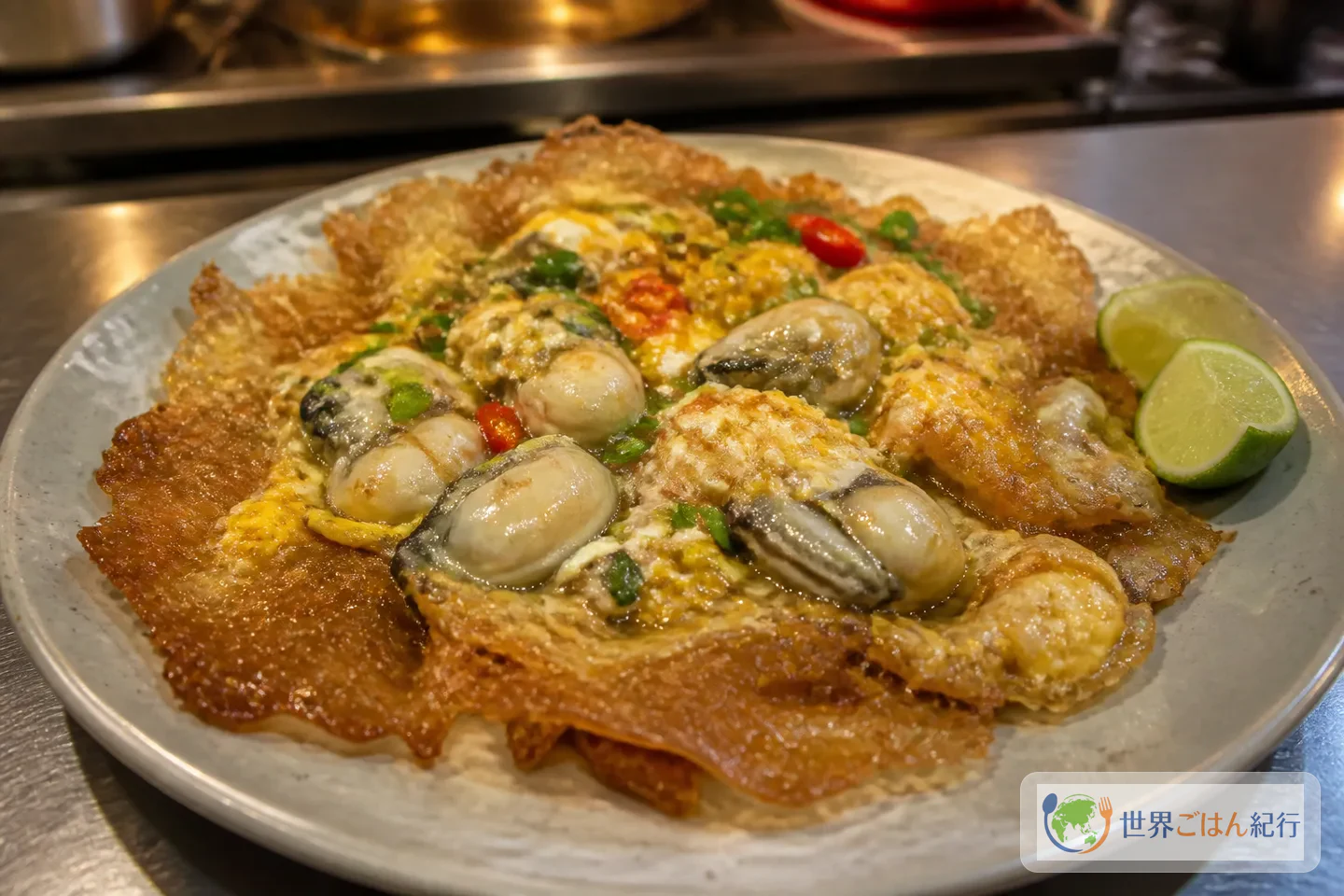
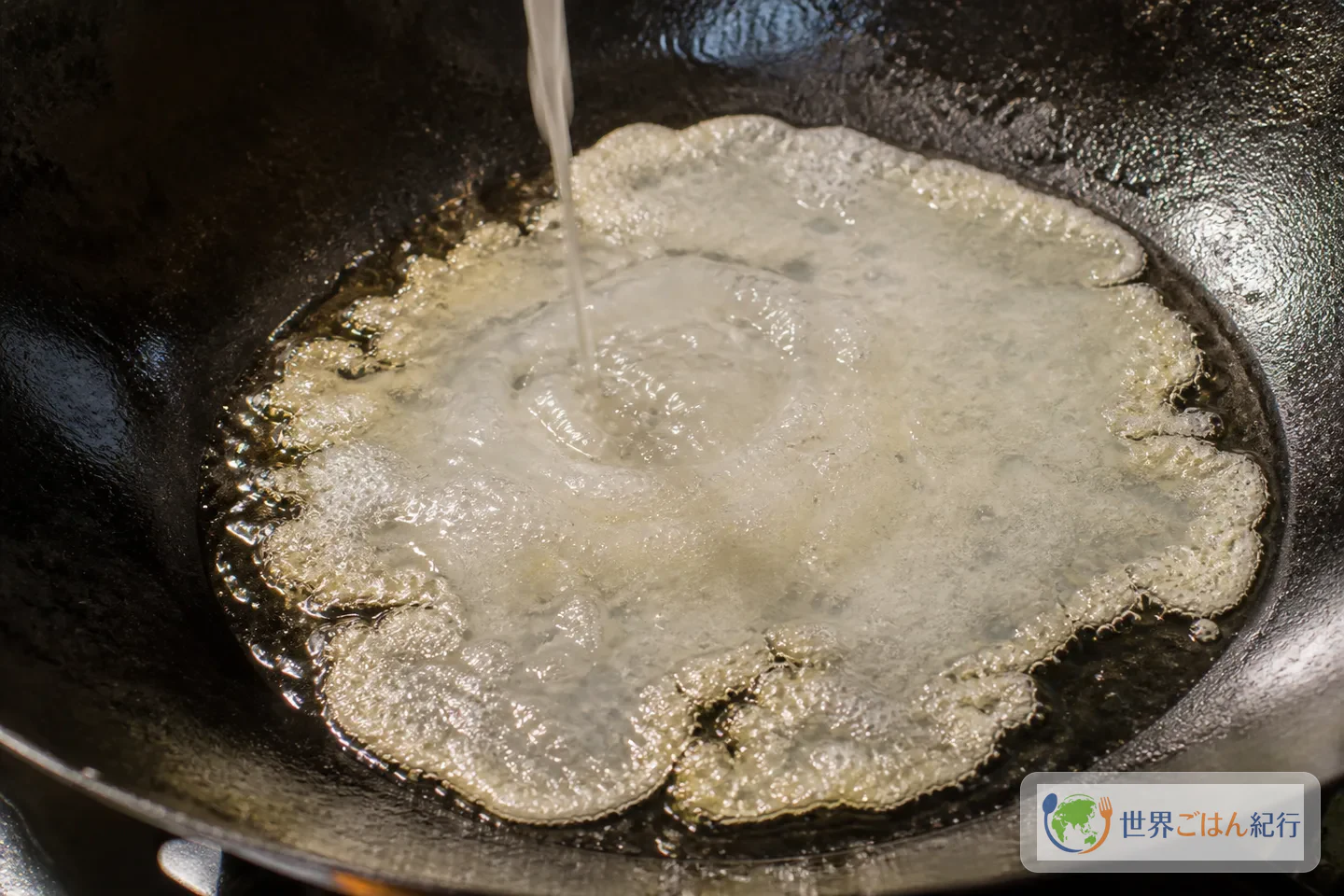
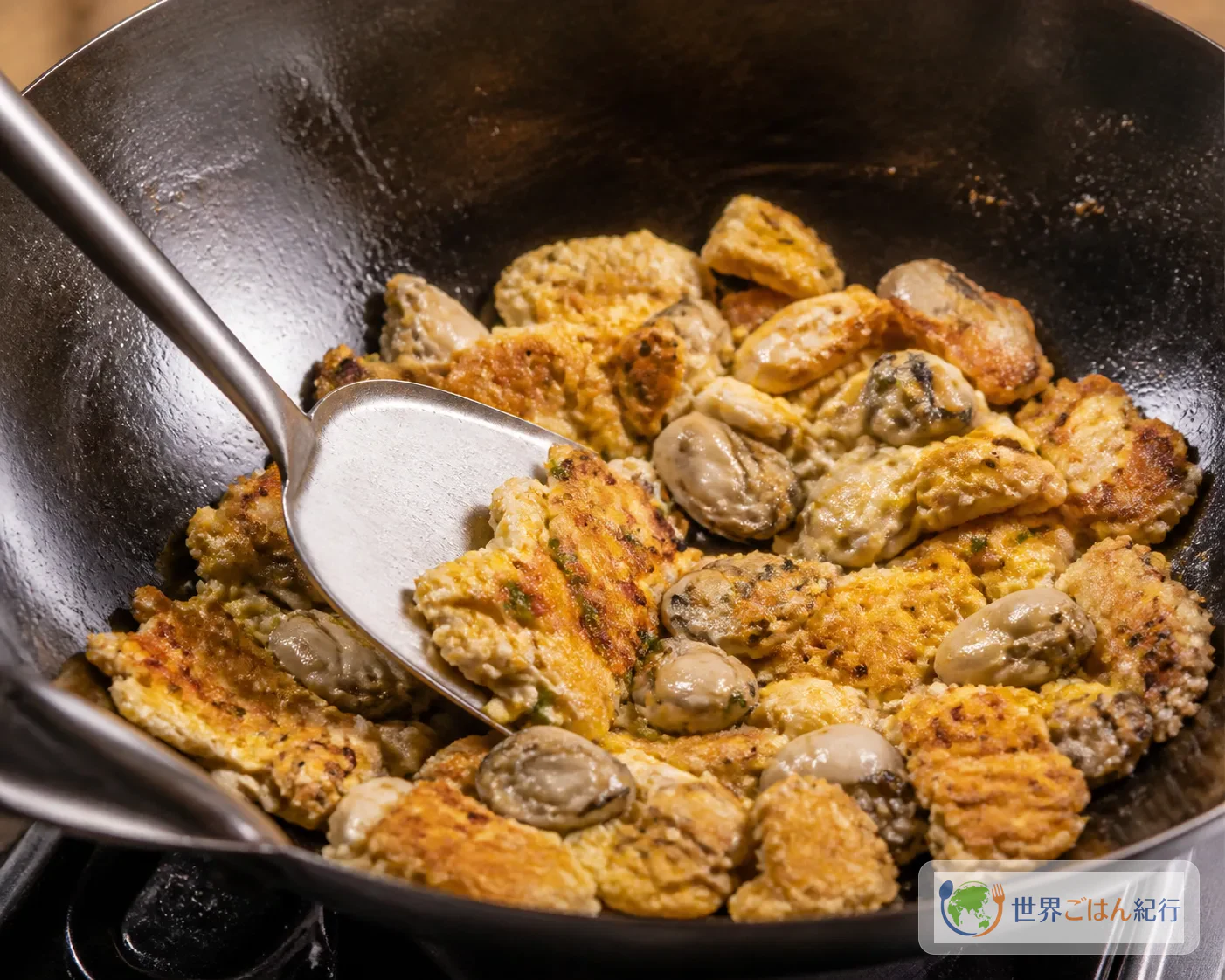
Batter hits the hot pan with a sizzle, turns white as it sets, and the edges go thin and golden brown before anything else does. The oysters go on next, then the egg. That is the order of orh luak (蚝煎), Singapore's oyster omelette, which brings silky egg, plump oysters and a chewy fringe of tapioca starch together on one plate. Unlike a plain omelette, it has no thick, fluffy center: a thin layer of starch fries first so the edges pick up crisp spots. At home, the trick is blotting the oysters dry, pouring the batter thin and layering on the egg before the pan loses its heat. Cook the two servings in two batches and even a home stovetop will keep those edges crisp.
Orh luak and Asia's oyster omelettes
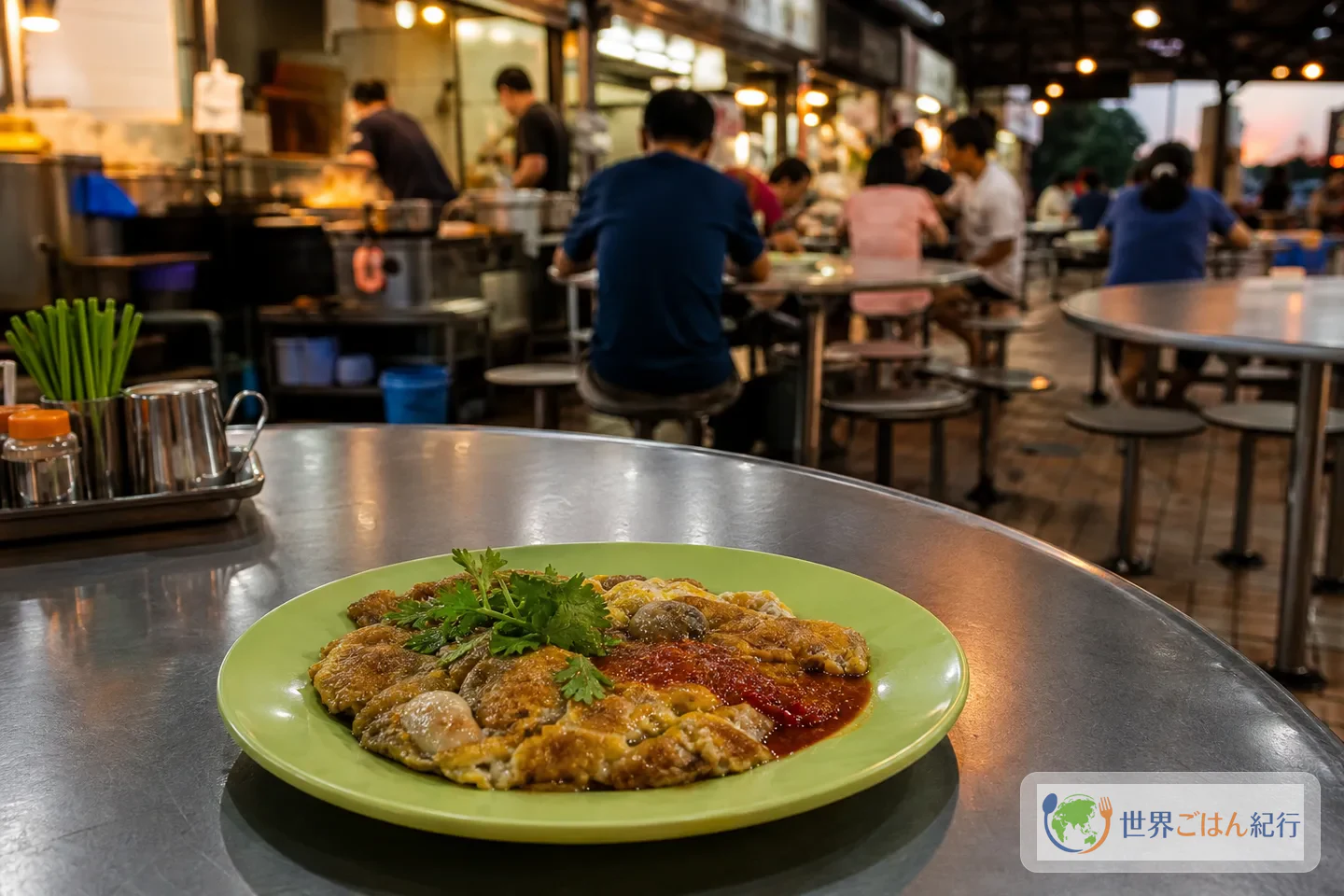
A hawker centre dish
A Singapore hawker centre works like one big dining room, with many stalls and shared tables under one roof. In 2020, Hawker Culture in Singapore was added to the Intangible Cultural Heritage list, recognized for its cooking skill and also as a custom of people gathering to eat in the middle of the city.
At the stall, the pan is heated hard once the order comes in, and starch, oysters and egg are layered in a matter of minutes. Right in front of the waiting customer, the batter sets, the sound of the oil changes and the edges take on color. That change is part of the dish, which is why it's meant to be eaten straight from the pan rather than left to sit.
The Chinese name 蚝煎 means, roughly, "pan-fried oysters." In Singapore you will also see it written as "Or Luak" or "Oyster Omelette."
Hokkien roots
People who migrated from various parts of China in the 19th century brought Hokkien, Teochew, Cantonese and other cuisines with them. Hokkien cooking makes generous use of seafood, reflecting the abundance of the Fujian coast, and orh luak is one of its dishes.
The version you find today took shape where the food culture of southern China, Singapore's hawker stalls and the seasonings of the Malay Peninsula overlapped, settling into a quick plate of oysters and egg. The fish sauce and chili on the side add salt and acidity to the briny oysters, so each bite feels lighter.
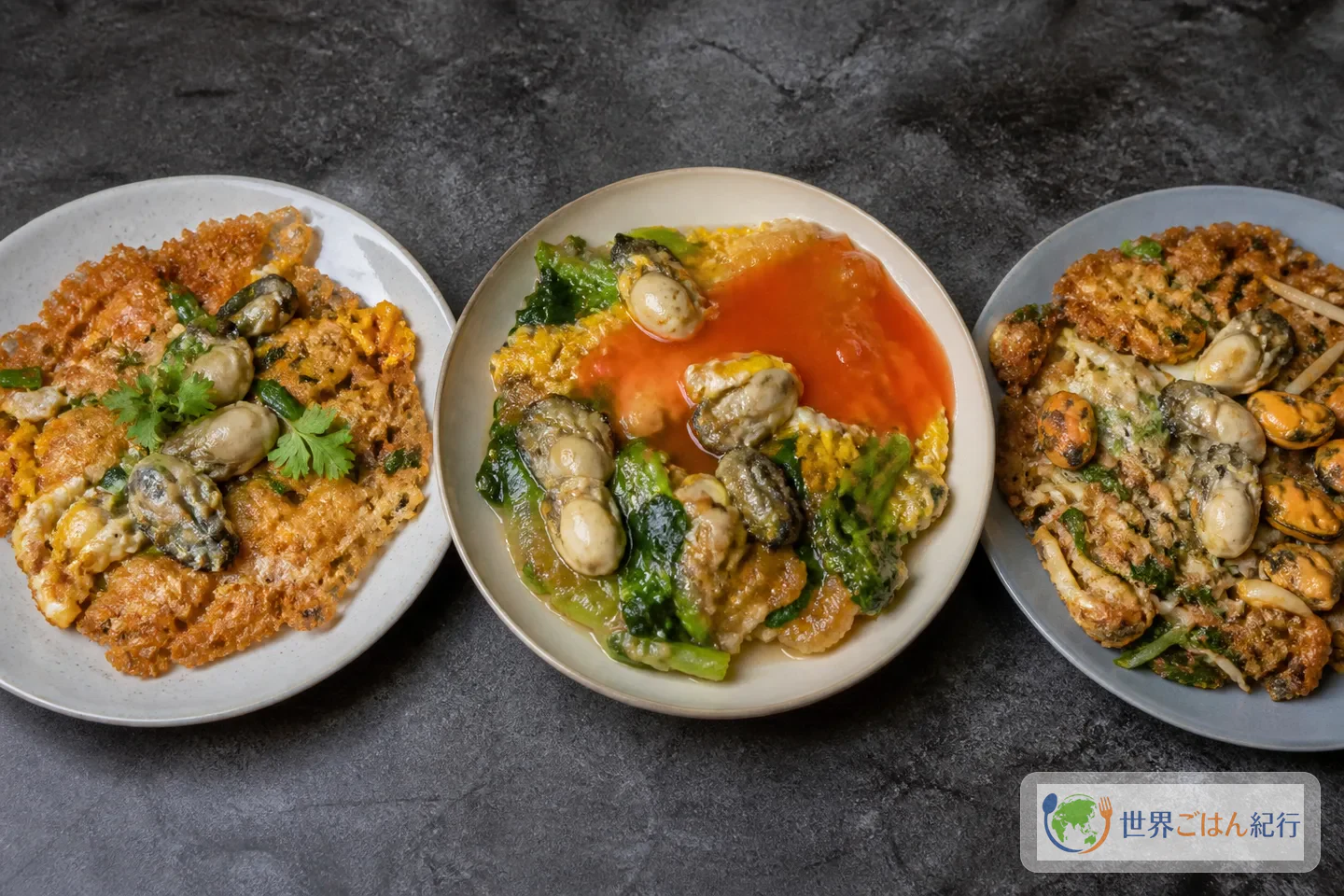
Taiwan's oyster omelette
In Taiwan, the night-market oyster omelette (蚵仔煎) is made with oysters coated in potato starch and tapioca starch, fried over high heat with egg and leafy greens, and served with a sweet-and-sour sauce. There, the greens are part of the filling and the sauce completes the plate.
The Singapore version keeps the scallions as aromatic support and lets the starch layer and egg take the lead, which brings the oysters' brininess forward. If you'd like some greens anyway, toss in just a handful of shreds with the egg so their moisture doesn't weigh down the edges.
Malaysia and Thailand
The oyster omelette spread in Malaysia as a street food of Hokkien origin. It's made with egg, oysters and a starch batter, has a texture closer to a pancake than an omelette, and is eaten with a tangy chili sauce. Even with shared roots, the batter changes everything: thicker means more chewy starch, thinner means more toasty edges.
At a market in Ratchaburi, Thailand, hoi tod comes with a choice of mussels or oysters, in both crispy and soft styles. Shellfish, egg and starch fried on a hot griddle end up eating quite differently depending on the local shellfish, sauce and cooking method. Singapore-style orh luak keeps the egg soft and uses tapioca starch to give the edges some bounce.
Ingredients (serves 2)
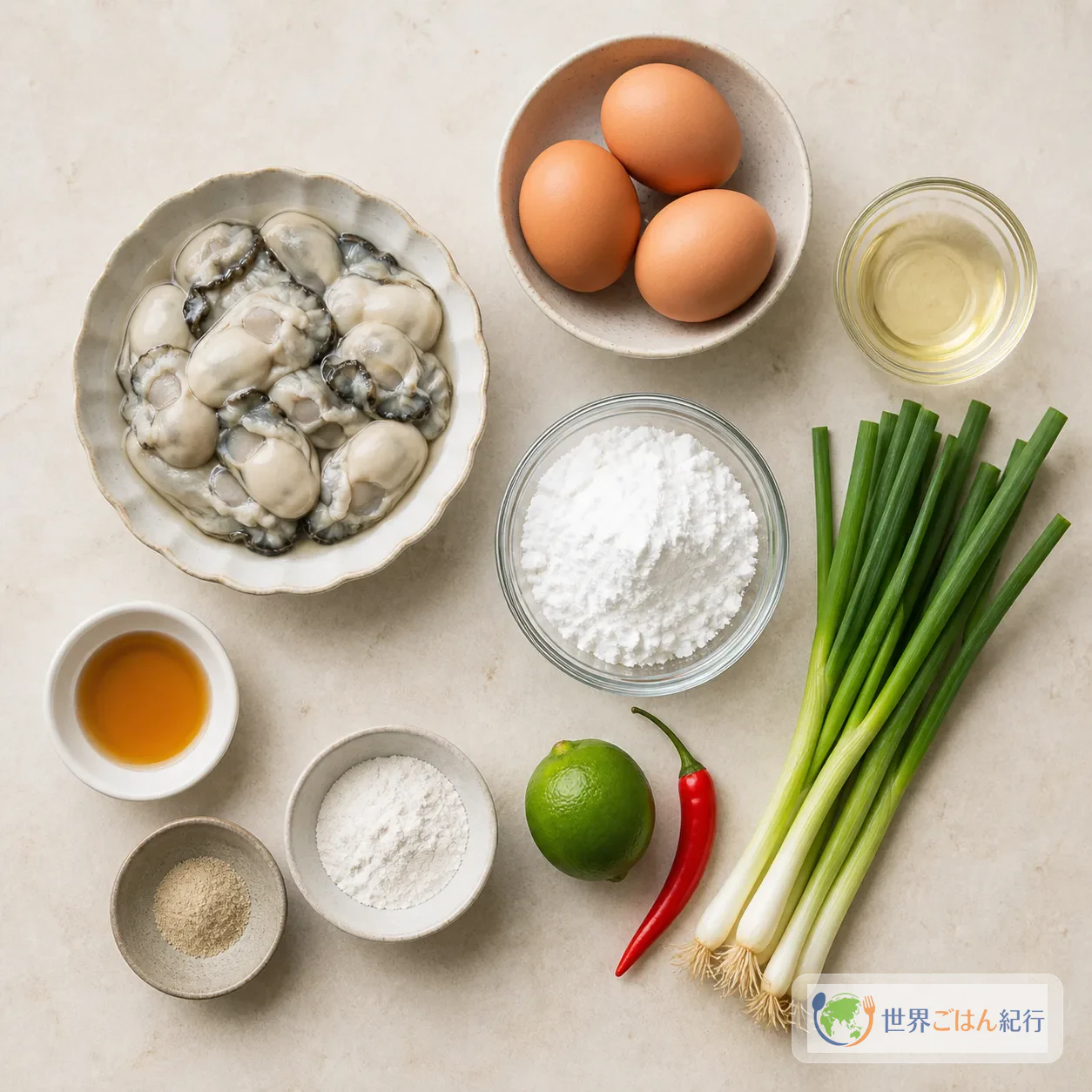
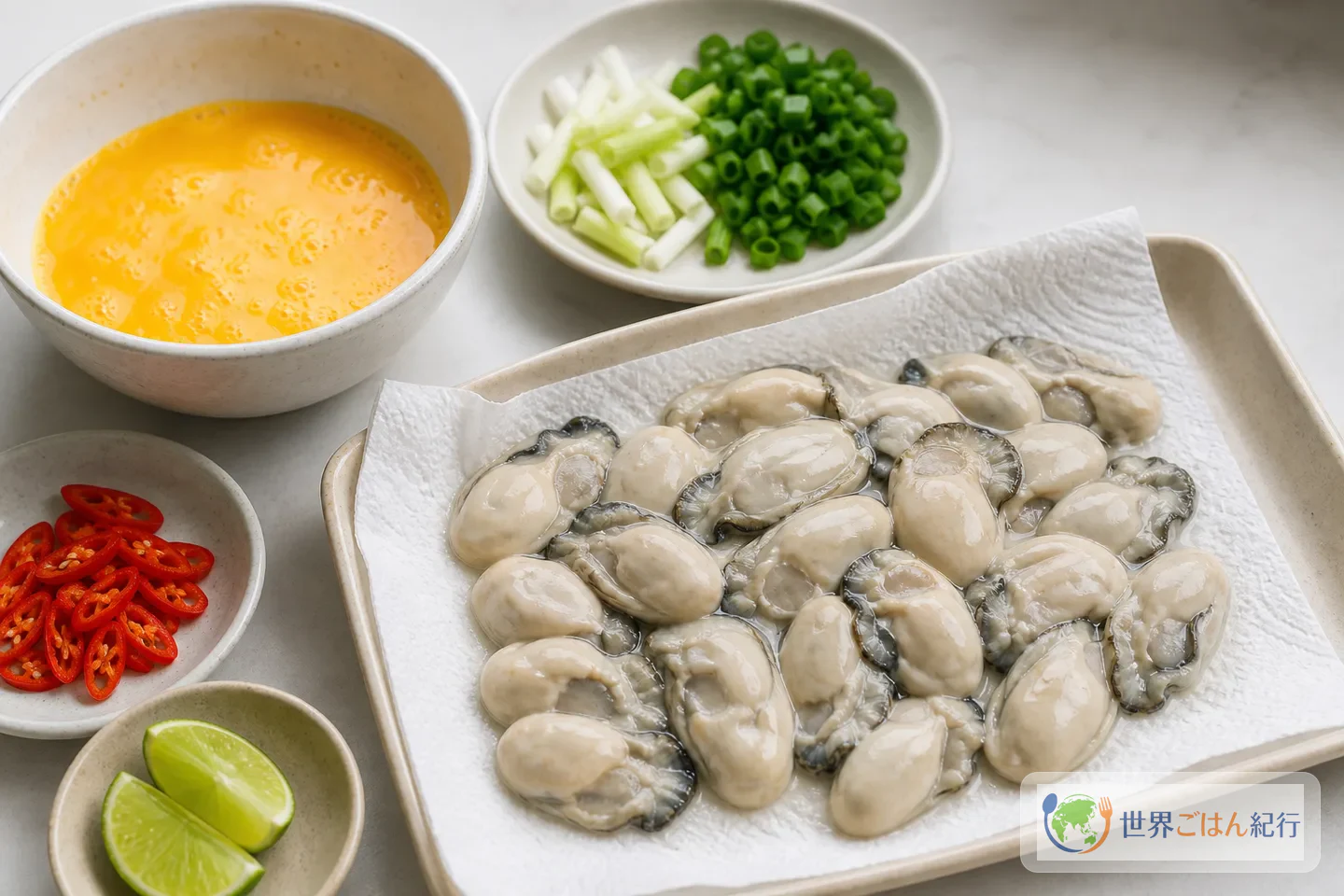
Use oysters sold for cooking, not oysters meant to be eaten raw. Shucked oysters weighed out, rather than oysters in the shell, make it easier to judge the cooking. After buying, keep them at 4°C (39°F) or below and refrigerated until right before cooking.
How the starch changes the texture
Tapioca starch gives a thin batter a bouncy, translucent edge when fried. Mixing in 15 g rice flour softens the strong stickiness of tapioca on its own and makes the cooked surface easier to break apart. Swapping in 1.5 oz (45 g) potato starch alone sets quickly while hot but tends to tighten in the center as it cools.
If you'll only use tapioca starch once, you don't need to go out of your way to find it. A test batch with 1 oz (30 g) potato starch and 1 oz (30 g) rice flour will still give you thin edges, though the translucent chew you get at a hawker stall will be weaker. If you plan to make orh luak more than once, or to use the starch for noodles or steamed sweets, a bag of tapioca starch is worth buying. Check that the label says "tapioca starch" or "tapioca flour." This recipe uses 1.5 oz (45 g), so a 9 oz (250 g) bag leaves enough for several more batches. Asian grocery stores usually carry it.
Instructions
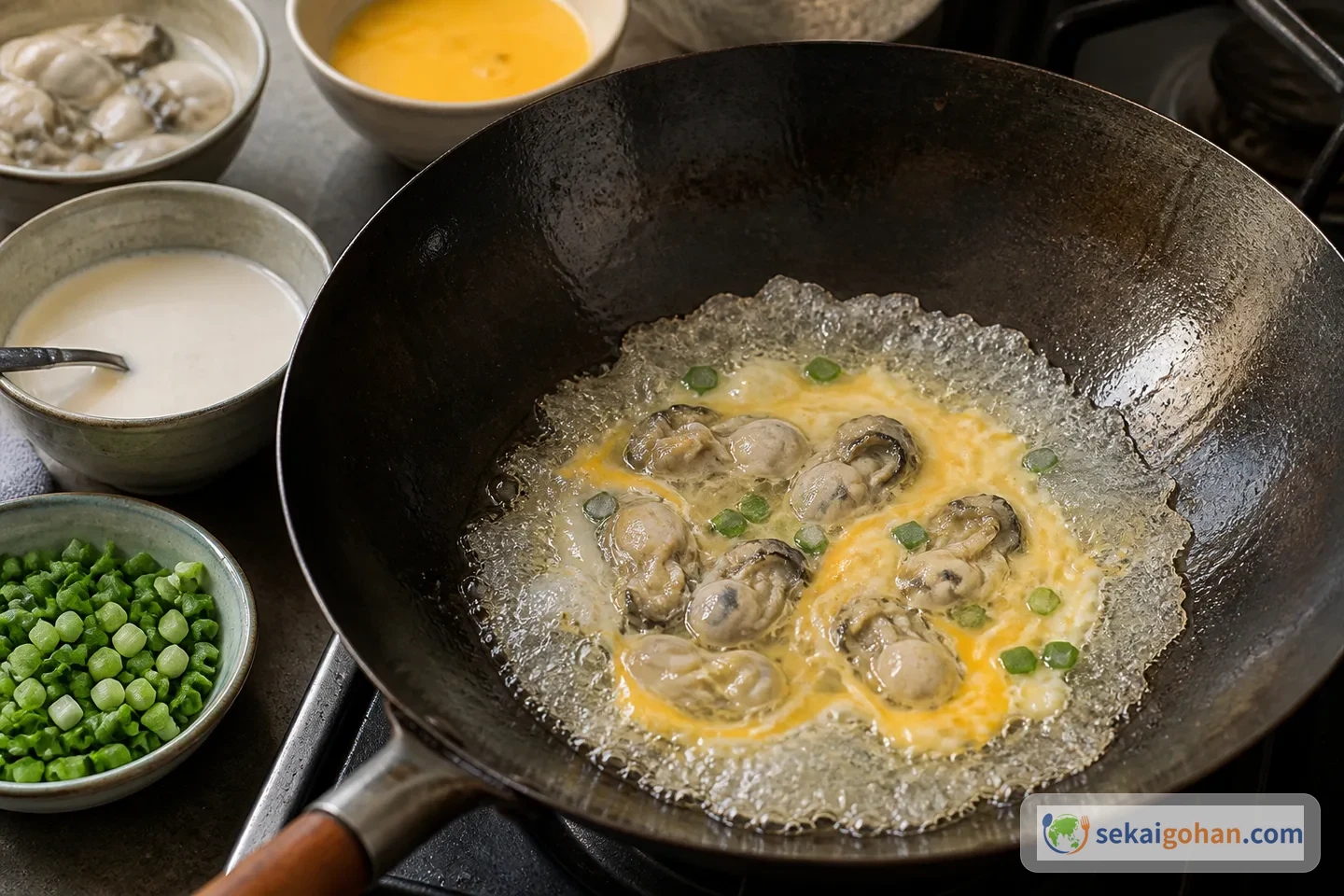
Prep (8 minutes)
Pour the batter (7 minutes)
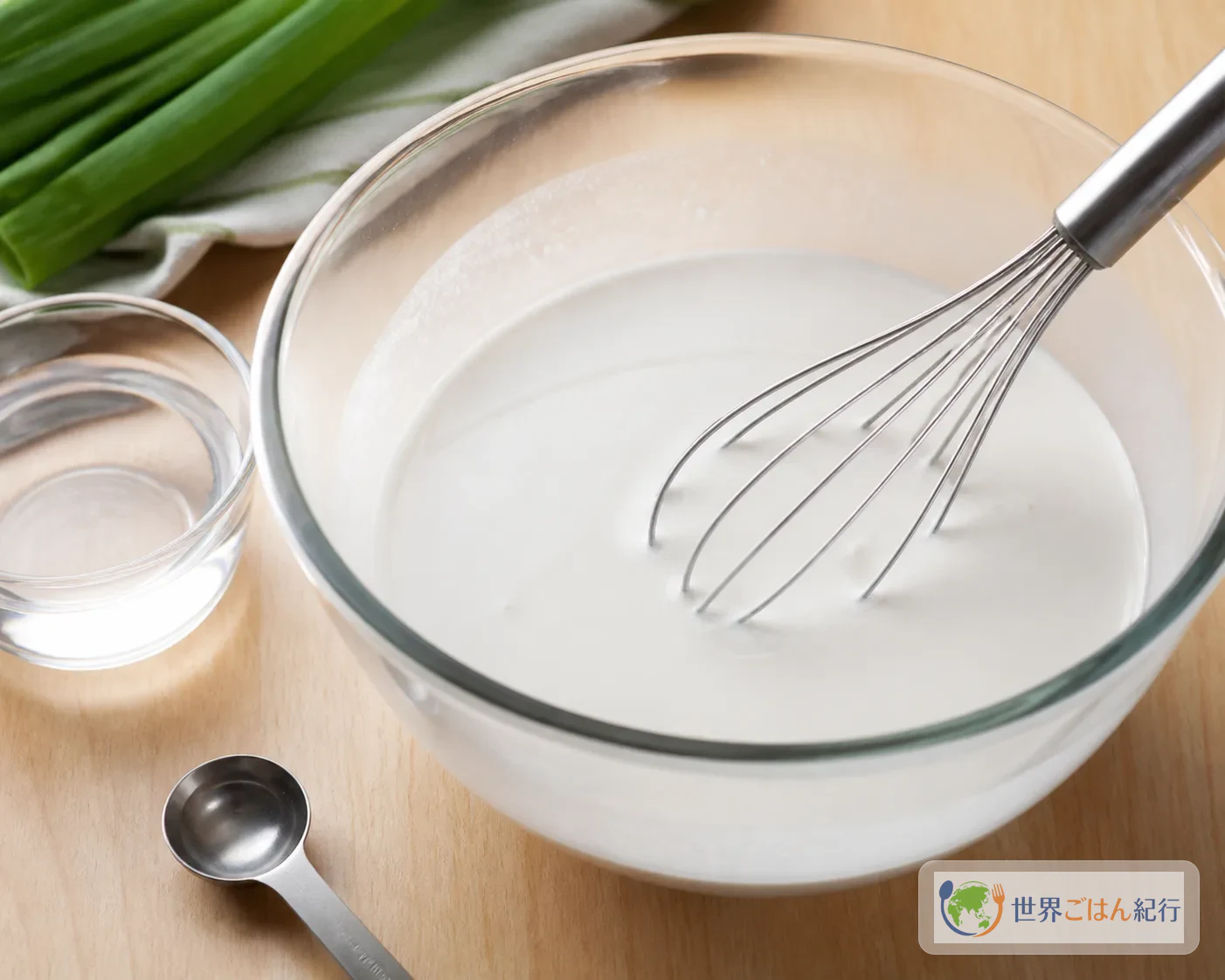
Stir the starch batter well again right before frying. Tapioca starch sinks to the bottom easily, and if you pour without stirring, the layer will be uneven.
Add the oysters and egg (10 minutes)
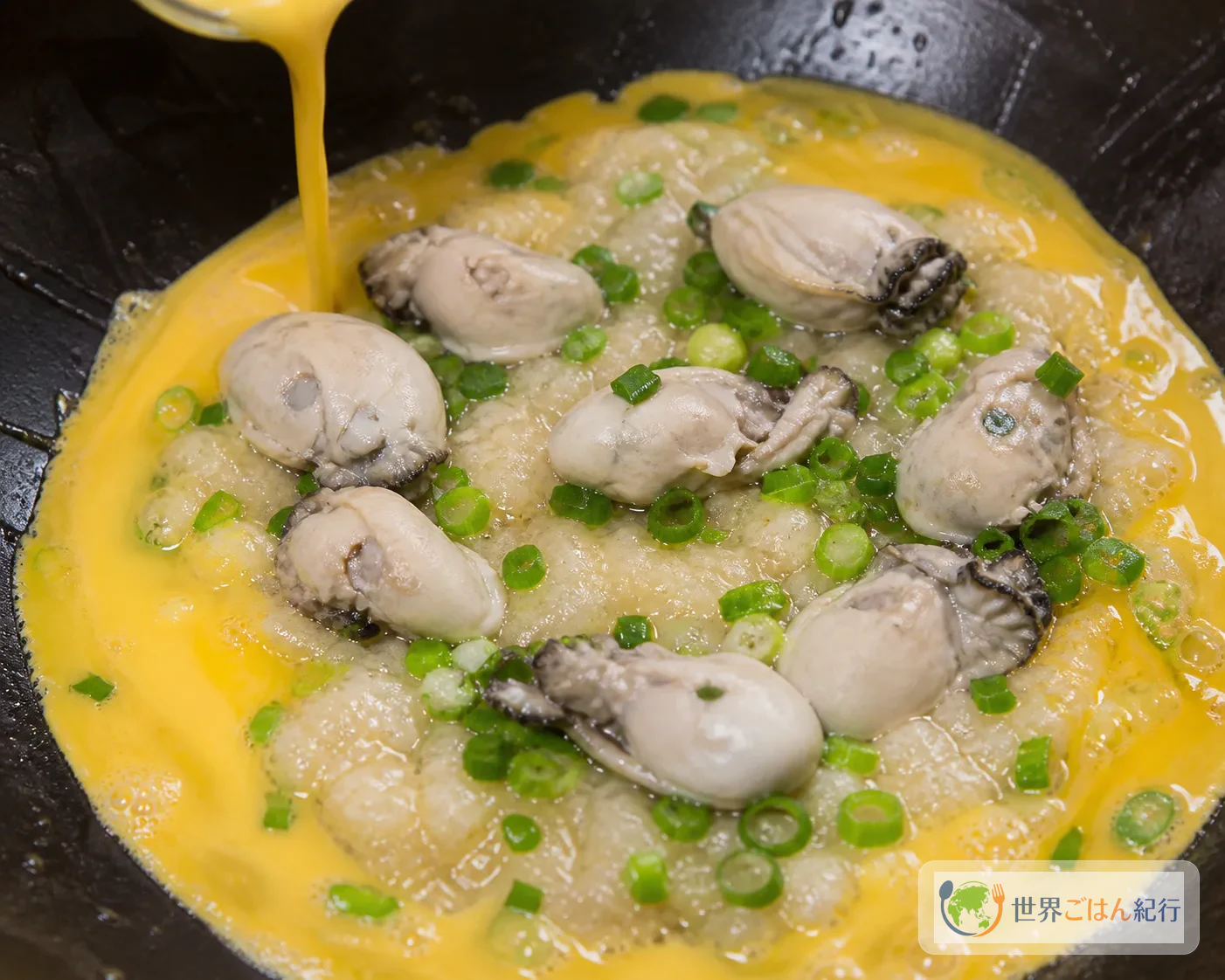
Cook the second batch the same way. Stir the batter right before pouring it in, and add the oysters before the egg. Transfer to a plate, scatter with the green parts of the scallions and the red chili, and serve with lime and chili sauce.
Bivalves carry a high risk of food poisoning when eaten raw or undercooked. Some shellfish toxins and chemical contaminants are not removed by cooking. Don't harvest wild shellfish; buy from licensed retailers. Pregnant people, children, older adults and anyone with a weakened immune system should avoid raw or undercooked oysters, whether they are labeled for cooking or for eating raw. Wash any utensils that touched raw oysters before using them on the finished dish.
Orh luak troubleshooting
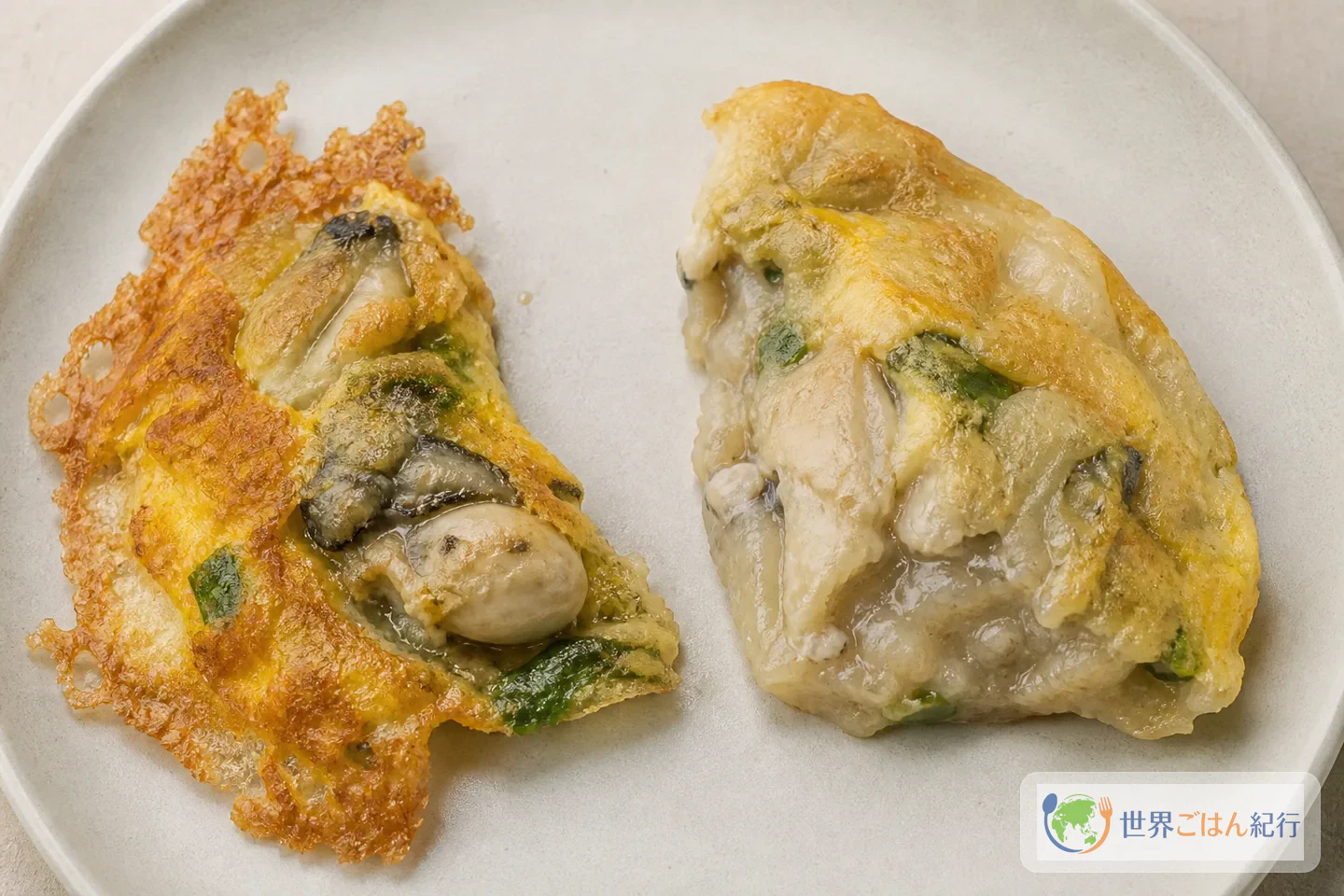
With so few ingredients, any difference in moisture and heat shows up directly in the texture. Use this table to trace the cause from the result.
| Problem | Main cause | Fix |
|---|---|---|
| Center is thick, translucent and gluey | Batter too thick, or all of it poured in at once | If it's still in the pan, break it into small pieces; for the next batch, use batter thinned with hot water, 1 tbsp at a time |
| Edges stay white with no bubbles | Pan not preheated enough, too much oyster liquid | Wipe the oysters again, and preheat the pan for 2 minutes before adding oil |
| Watery only around the oysters | Oysters placed on batter before it set | Wait 30–60 seconds until the batter's edges turn white, add the oysters, then pour in the egg |
| Egg is dry and oysters shrink | Left over low heat for a long time after the egg went in | Lower to medium, break it up quickly, and move to a plate as soon as you've checked the center temperature |
| Sticks to the spatula and tears | Not enough oil on the pan, flipped too early | Cut it into 4–6 pieces instead of flipping one big piece, add 1 tsp oil around the pan, and fry the contact side |
If the batter turns out too thick, adding more starch only makes it heavier. Whisk in water 1 tbsp at a time until it spreads at the edges again. A lot of water at once dilutes the flavor, so fix the thickness first and hold off on extra fish sauce.
Serving and storing orh luak
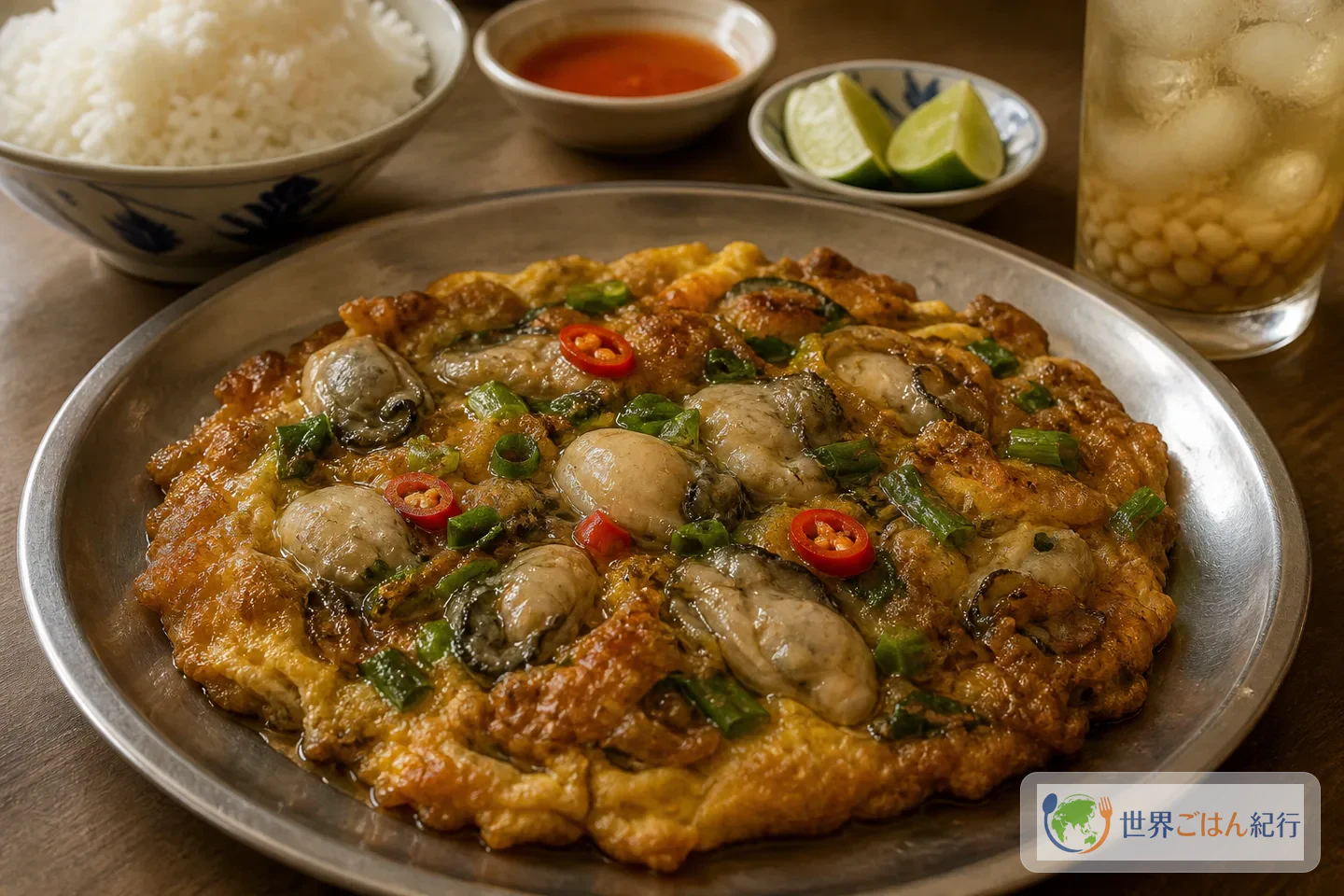
Serving
Within a few minutes of plating, steam works its way back into the edges and the crisp parts soften, so eat it hot. Put the chili sauce in a small dish rather than over the top, and dip the edges one piece at a time. Taiwan's sweet-sour sauce or a spicy Thai sauce work too, served the same way. A squeeze of lime tightens the oyster flavor and lightens the egg and oil.
With white rice, it's a main dish for dinner; fry a small amount to share and it's closer to a hawker snack. More scallions mean more aroma, but a lot of greens release water and keep the edges from crisping, so stick to the amounts in the ingredient list at first.
If you're cooking more Singaporean food, Hainanese chicken rice, built on chicken fat and ginger, is an easy pairing. On days you want noodles in a sweet sauce, mee rebus keeps the table heading in the same direction.
Storing and reheating
If you can't finish it hot, let it cool slightly, put it in a shallow airtight container and refrigerate at 4°C (39°F) or below. Because it contains oysters and eggs, plan to eat it by the next day. Reheat in a skillet over medium heat, covered, until hot all the way through, then uncover to cook off moisture from the edges. A microwave alone softens the starch, and the edges won't crisp up again.
Freezing makes the egg weep, and the batter tends to crack when thawed. For both texture and safety, cook the two servings when you're ready to eat them.
Nutrition estimate (per serving)
| Calories | Protein | Fat | Carbohydrates | Salt equivalent |
|---|---|---|---|---|
| About 410 kcal | About 17 g | About 24 g | About 25 g | Under about 2.5 g |
These figures are approximate; oil absorption, oyster size, and your fish sauce and chili sauce all affect them. The dish contains oysters, eggs, soy-based seasoning and fish sauce made from fish, so if you have allergies, check the ingredient labels.
FAQ
Can I make it with potato starch only?
Yes, but you'll lose the translucent chew that tapioca starch gives. Start by frying a thin batch with 1 oz (30 g) potato starch, 1 oz (30 g) rice flour and ½ cup (150 ml) water, and check how firm the edges are. If the center sets too hard, use less potato starch and more rice flour next time.
What if I don't have a wok?
A 26 cm (10-inch) nonstick skillet works fine; just divide the ingredients in half. The pan stays hotter and it's easier to break the omelette into small pieces with a spatula. If you use a thin steel griddle, season it with oil before preheating, and leave the batter in place until the oysters go on.
Can I use frozen oysters?
Yes. Thaw them slowly in the refrigerator, discard the liquid that comes out, and pat the surface thoroughly dry. Choose oysters sold for cooking, and don't refreeze thawed oysters. Cutting large oysters in half makes it easier to cook them through to the center.
Can I keep the oysters from shrinking too much?
Keep the oysters' time in the pan short, both before they go on the batter and after the egg goes in. Still, put safe cooking ahead of texture. Cutting the oysters to a thickness that cooks through to the center is more reliable than choosing bigger ones.
Which sauce is most authentic?
Sauces differ from stall to stall. A sweet-sour chili sauce leans toward the Taiwanese style, while a hot chili sauce or sambal is closer to Malay Peninsula street food. Start with a little on the side, taste the oysters' brininess and the egg, then add more.
Sources
Food culture and local sources:
- UNESCO. "Hawker Culture in Singapore, Community Dining and Culinary Practices in a Multicultural Urban Context." https://ich.unesco.org/en/RL/hawker-culture-in-singapore-community-dining-and-culinary-practices-in-a-multicultural-urban-context-01568 (accessed and checked August 20, 2026)
- National Heritage Board Singapore. "Chinese Cuisine in Singapore." https://www.roots.gov.sg/ich-landing/ich/chinese-cuisine-in-singapore (accessed and checked August 20, 2026)
- Tourism Administration, Republic of China (Taiwan). "Taiwan Snacks." https://eng.taiwan.net.tw/m1.aspx?sno=0024013 (accessed and checked August 20, 2026)
- Tourism Malaysia. "Malaysian Food: 52 Top Picks You Shouldn’t Miss." https://www.malaysia.travel/index.php/explore/malaysian-food-52-top-picks-you-shouldn-t-miss (accessed and checked August 20, 2026)
- Tourism Authority of Thailand. "Sanamya Market: The Mecca of Ratchaburi’s Local Specialties." https://www.tourismthailand.org/Articles/sanamya-market-the-mecca-of-ratchaburi-s-local-specialties (accessed and checked August 20, 2026)
Recipes and safety:
- WWF Singapore. "Or Luak (Oyster Omelette): A Sustainable Seafood Recipe." https://awsassets.panda.org/downloads/or_luakoyster_omeletterecipe.pdf (accessed and checked August 20, 2026)
- Singapore Food Agency. "Safety of Bivalve Molluscs such as Cockles, Oysters, Clams, Mussels and Scallops." https://www.sfa.gov.sg/food-safety-tips/food-risk-concerns/risk-at-a-glance/safety-of-bivalve (accessed and checked August 20, 2026)
- 厚生労働省. 「ノロウイルスに関するQ&A」. https://www.mhlw.go.jp/stf/seisakunitsuite/bunya/kenkou_iryou/shokuhin/syokuchu/kanren/yobou/040204-1.html (accessed and checked August 20, 2026)