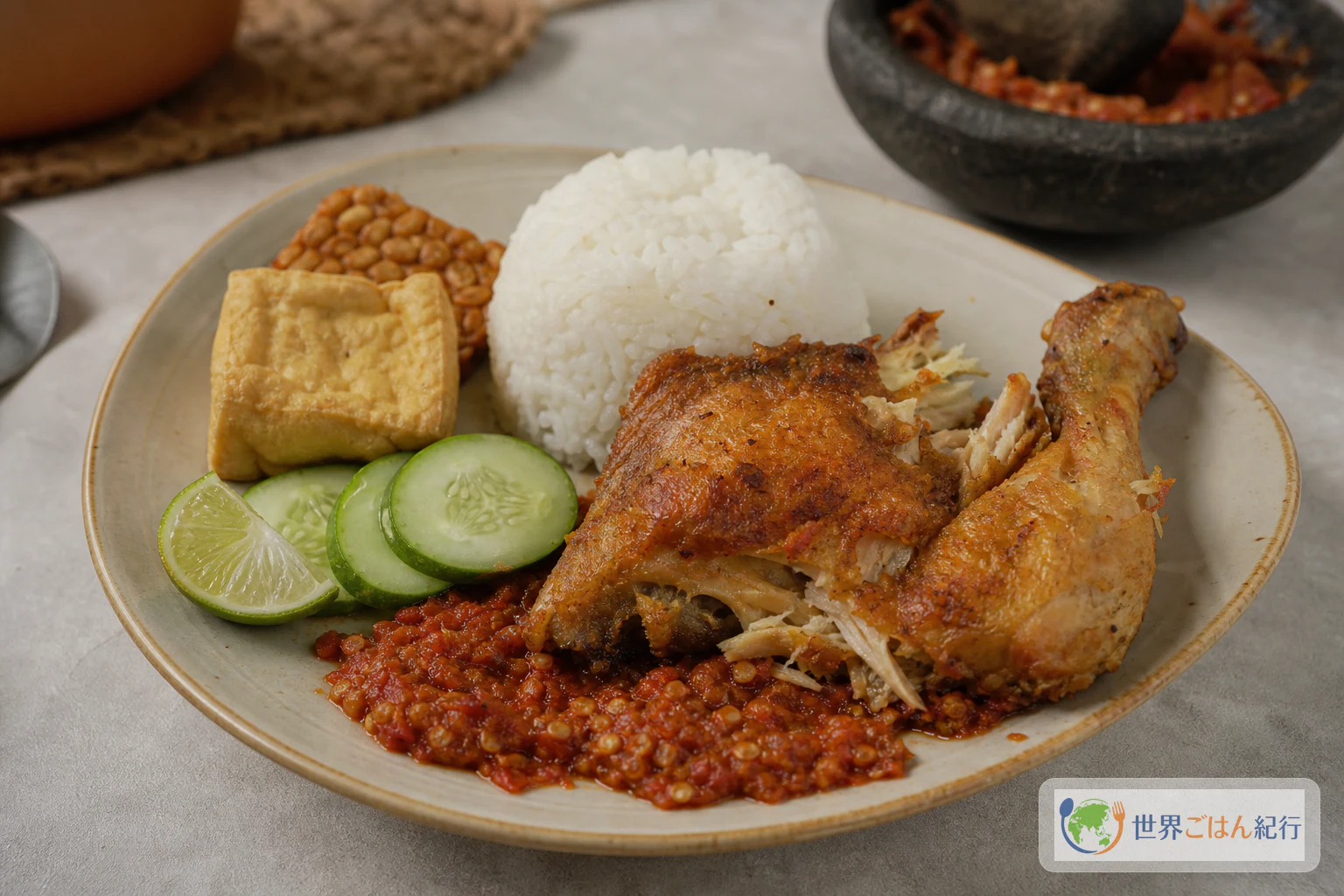
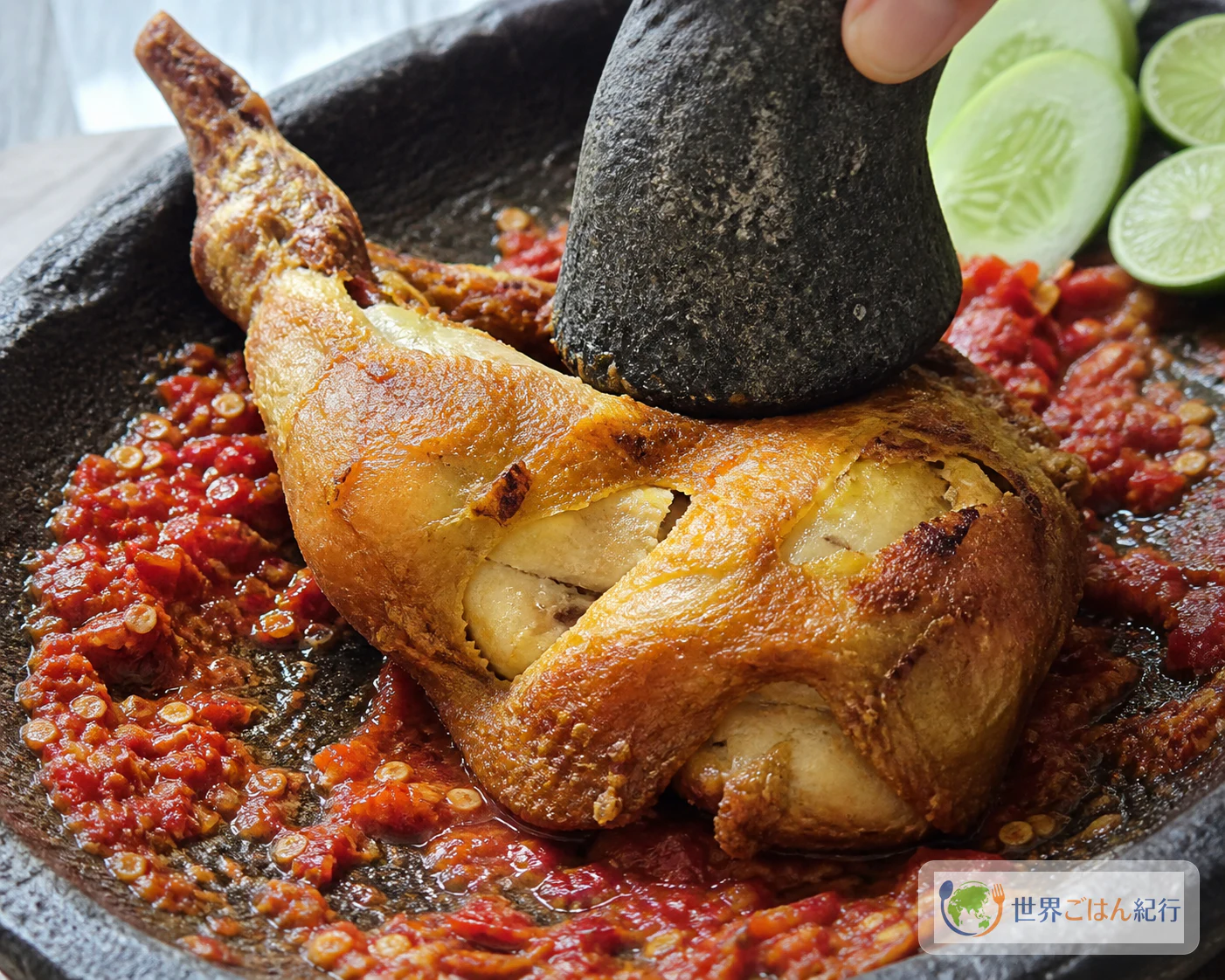
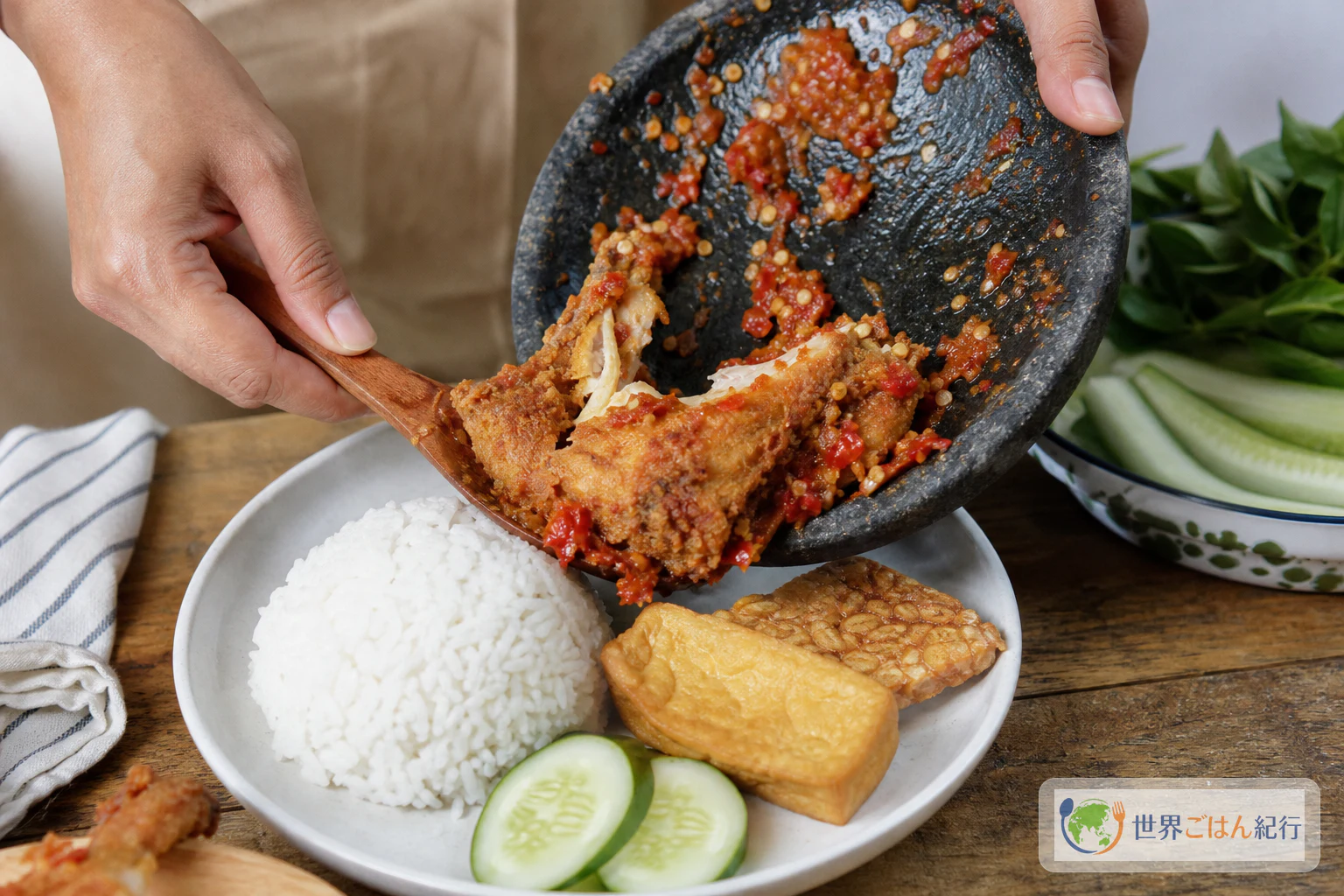
Spread red sambal in a stone mortar, set a piece of hot fried chicken on top, and press once with the pestle. The skin cracks, the smell of chili, tomato and fermented shrimp paste works into the gaps in the meat, and suddenly your kitchen smells like a Javanese street stall. That's ayam penyet, "smashed chicken" in Indonesian and Javanese. It comes from East Java, especially around Surabaya. The chicken is simmered in yellow aromatics, fried briefly, then lightly pressed into a hot, savory sambal and eaten over rice.
About ayam penyet
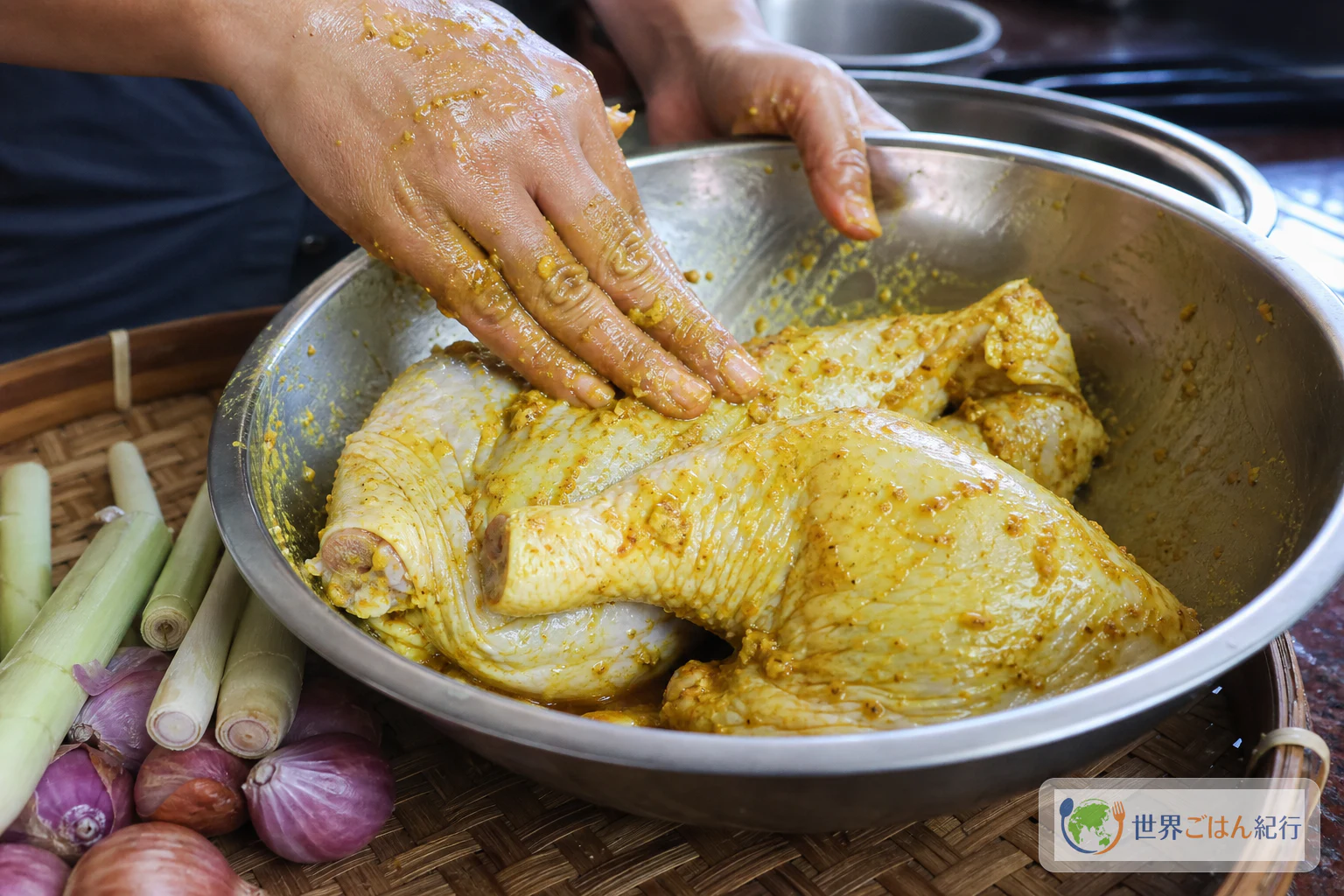
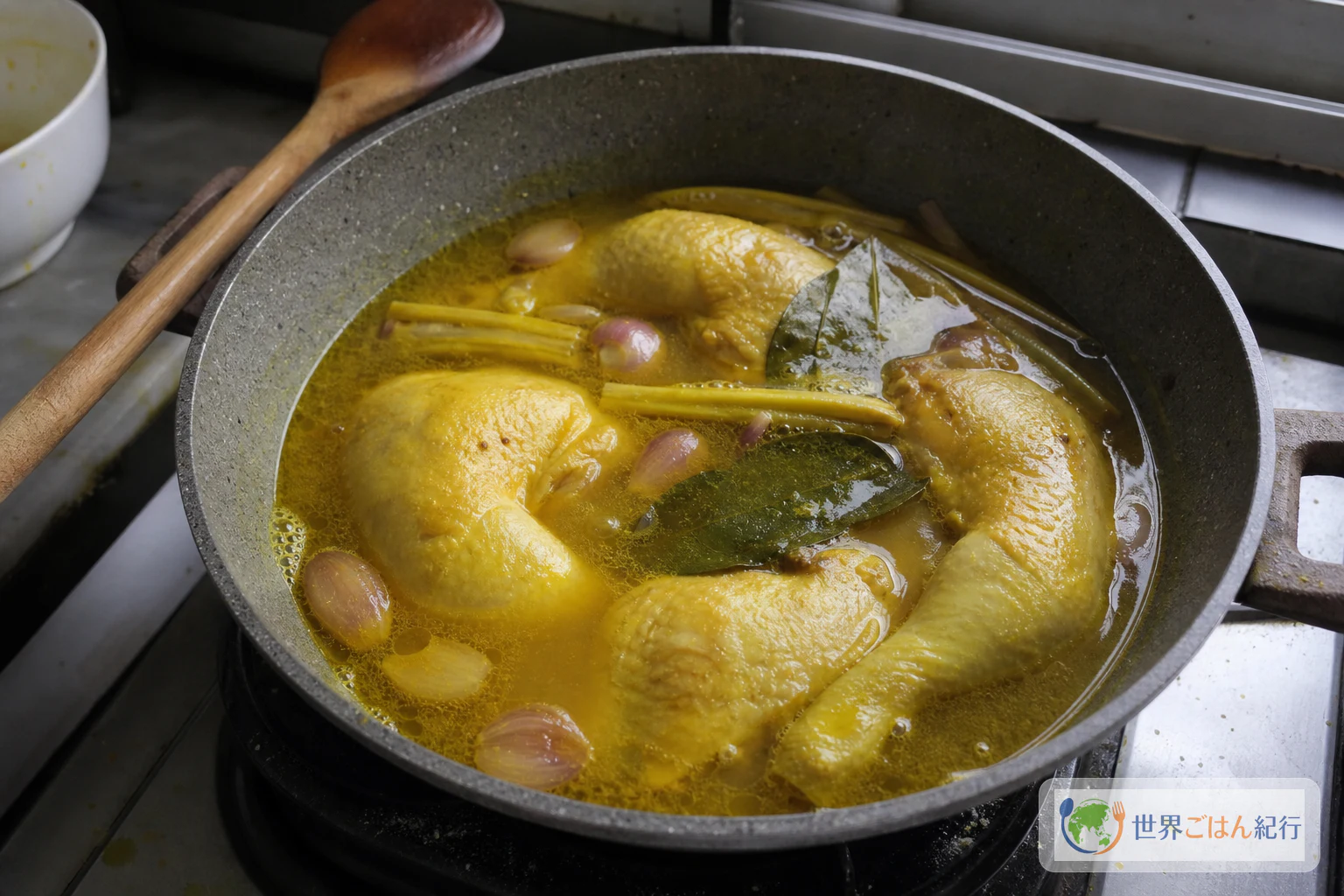
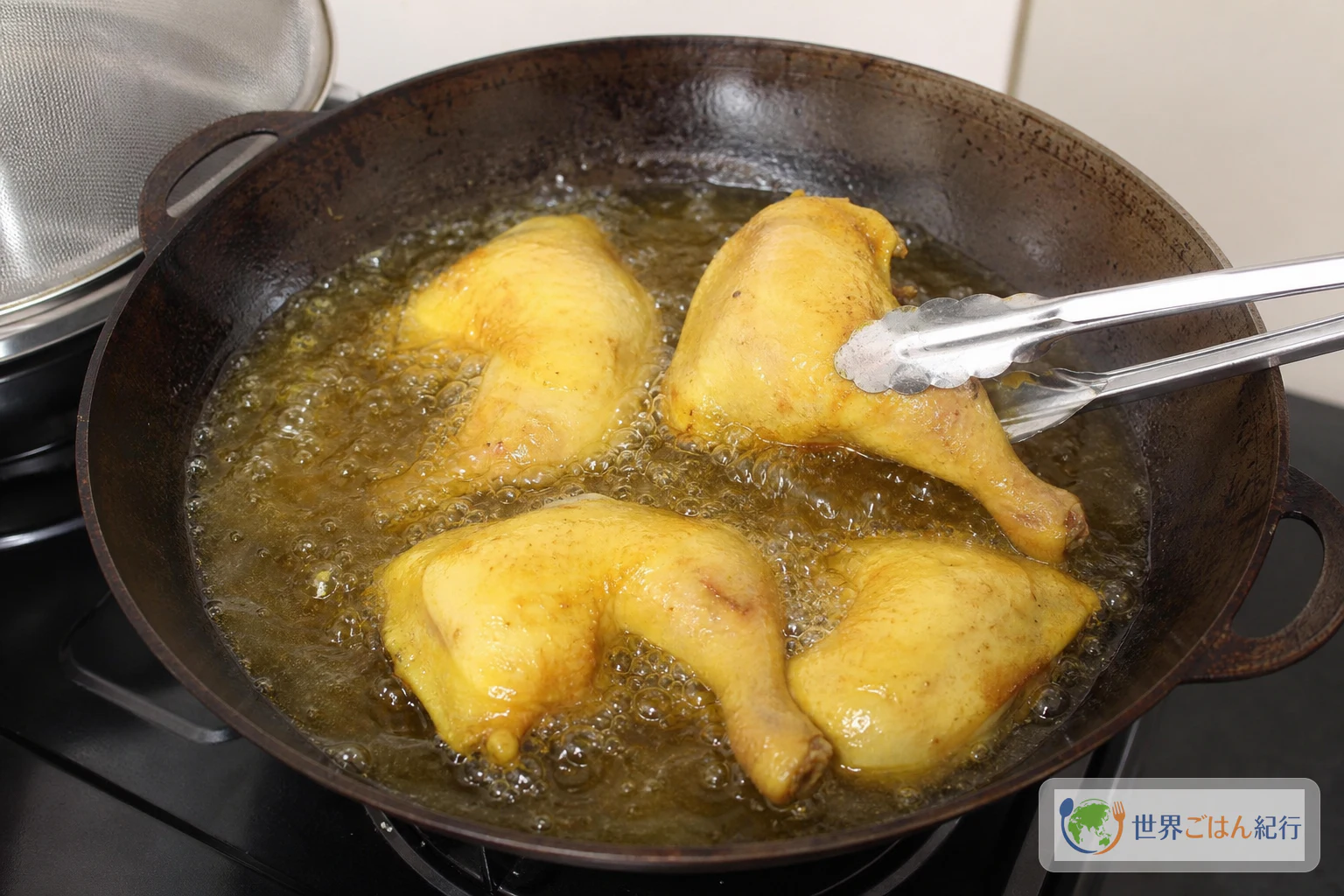
Ayam means chicken, and penyet carries the sense of pressing or smashing. The dish rests on four things: the simmer, the fry, the press and the sambal. The chicken first simmers in a yellow paste of turmeric, coriander, garlic and lemongrass, which seasons it and cooks it through. Then it goes into hot oil just long enough to crisp the skin. Some shops in Singapore and Malaysia give the chicken a light coating to make it crisper and sturdier. At home, a thin dusting of potato starch is enough.
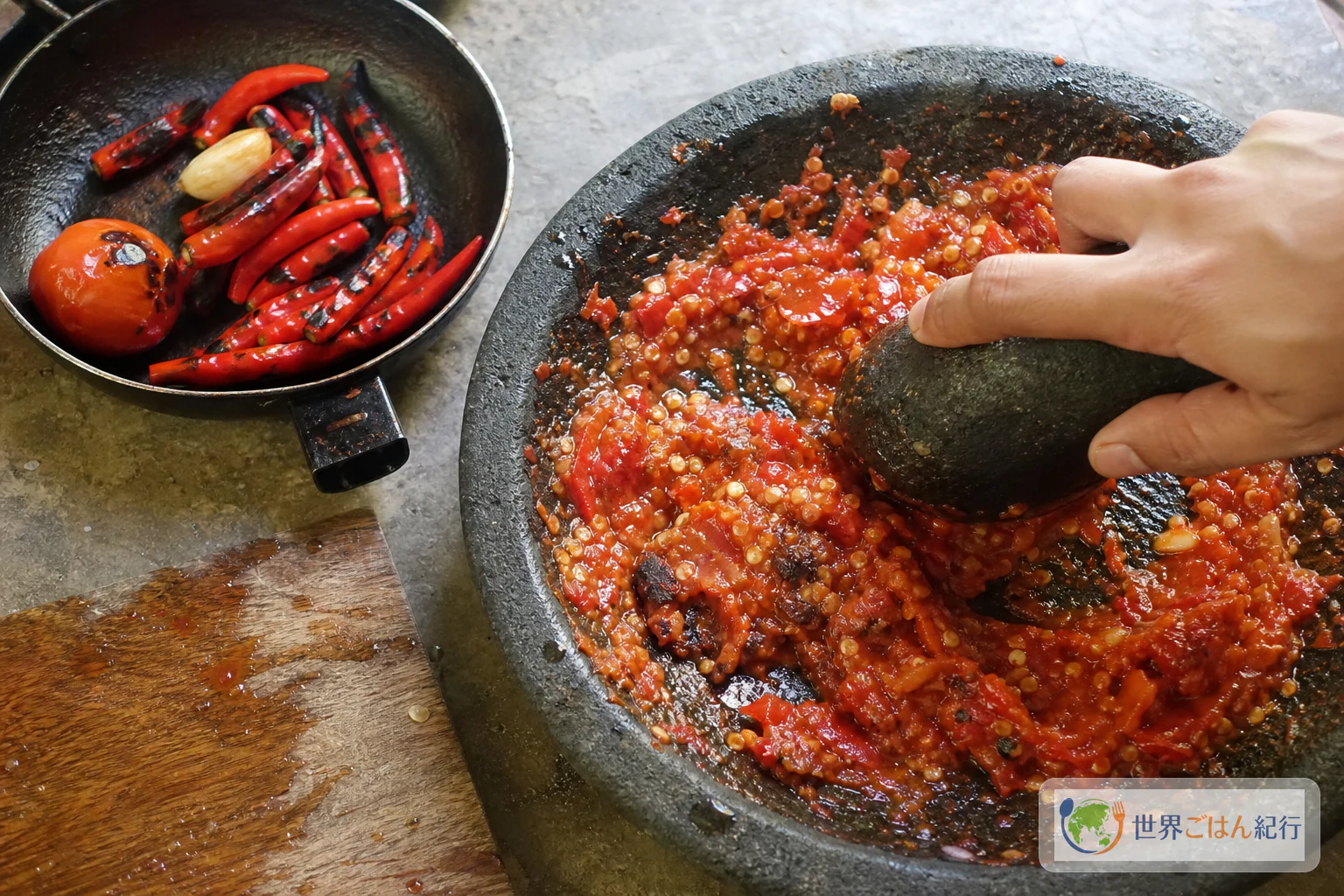
The sambal here is in the sambal terasi style: chilies, tomato, garlic and shrimp paste, crushed coarsely, with sugar and lime to round it out. The chicken is served with rice, cucumber, lalapan (raw vegetables), fried tofu and tempeh. Locally, you press the chicken on the sambal and put it over rice.
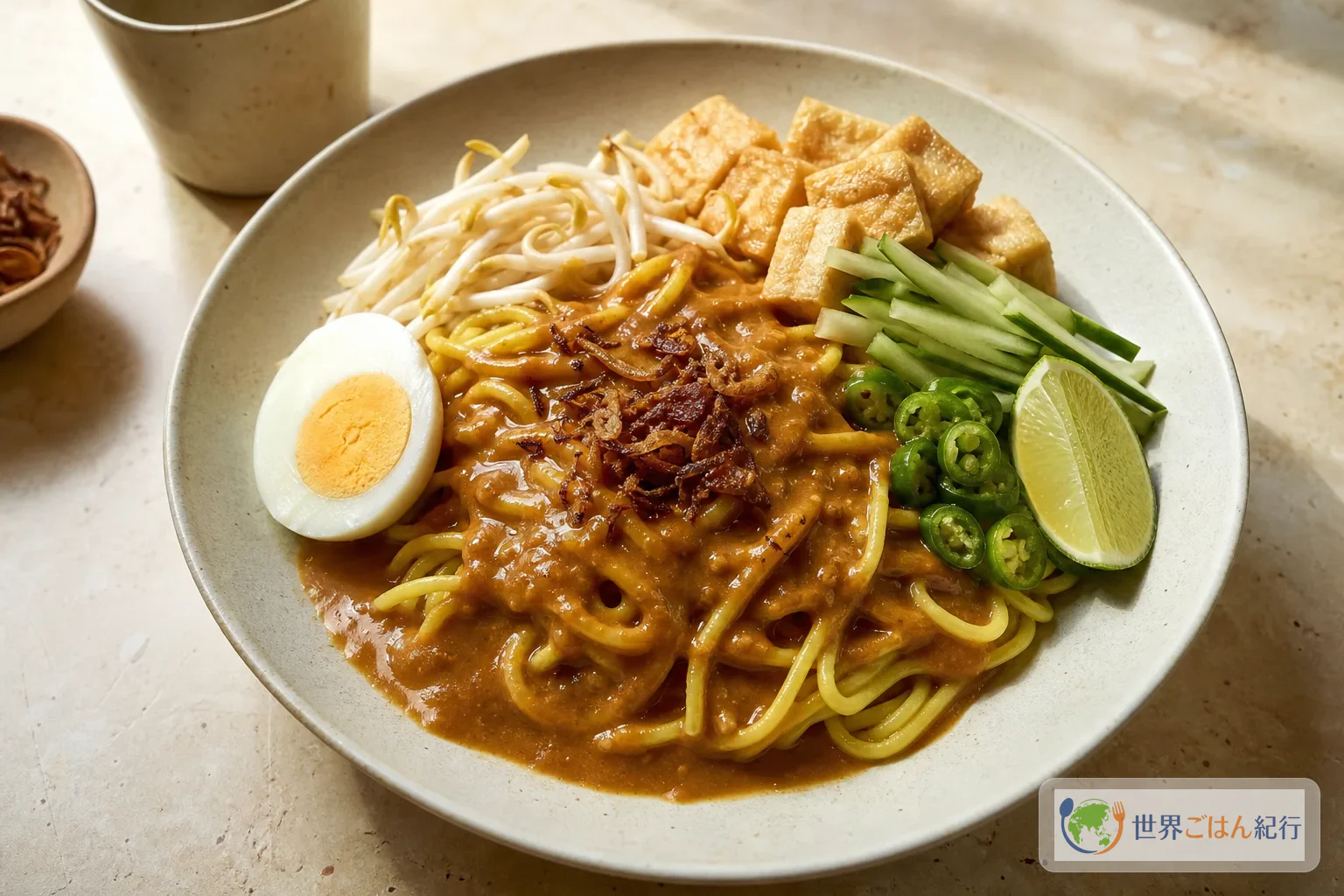
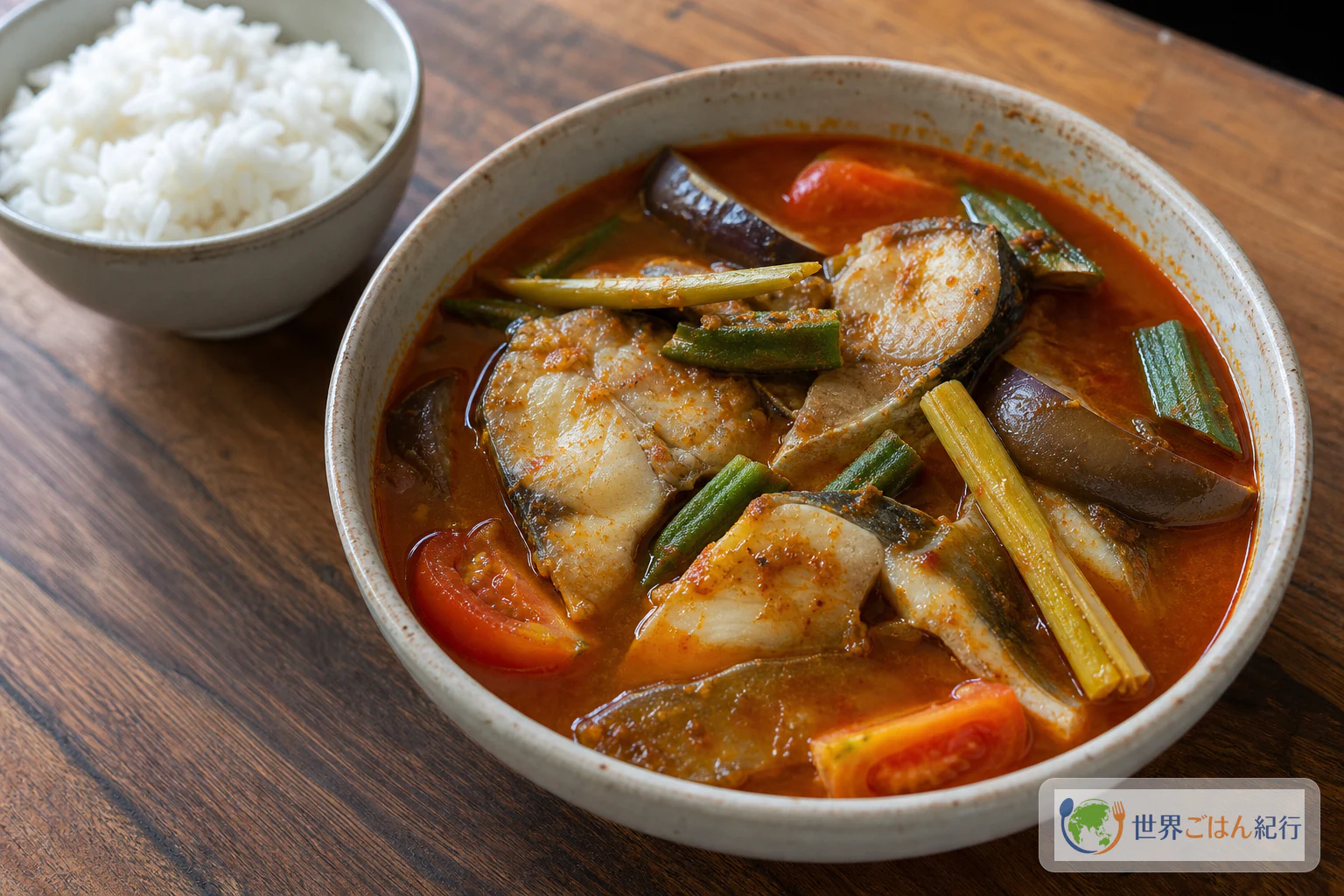
Many people think of it as Singaporean food, and it has long been a favorite at Indonesian-style eateries and food courts in Singapore, Malaysia and Brunei. Its origin is Indonesian, though. It's a dish that spread through migration and eating-out culture, and that history explains where the flavor comes from. If Singaporean food is what you're after, try roti john or the sour-and-spicy fish stew assam pedas.
Ingredients: keep the chicken, the yellow simmer and the coarse sambal separate
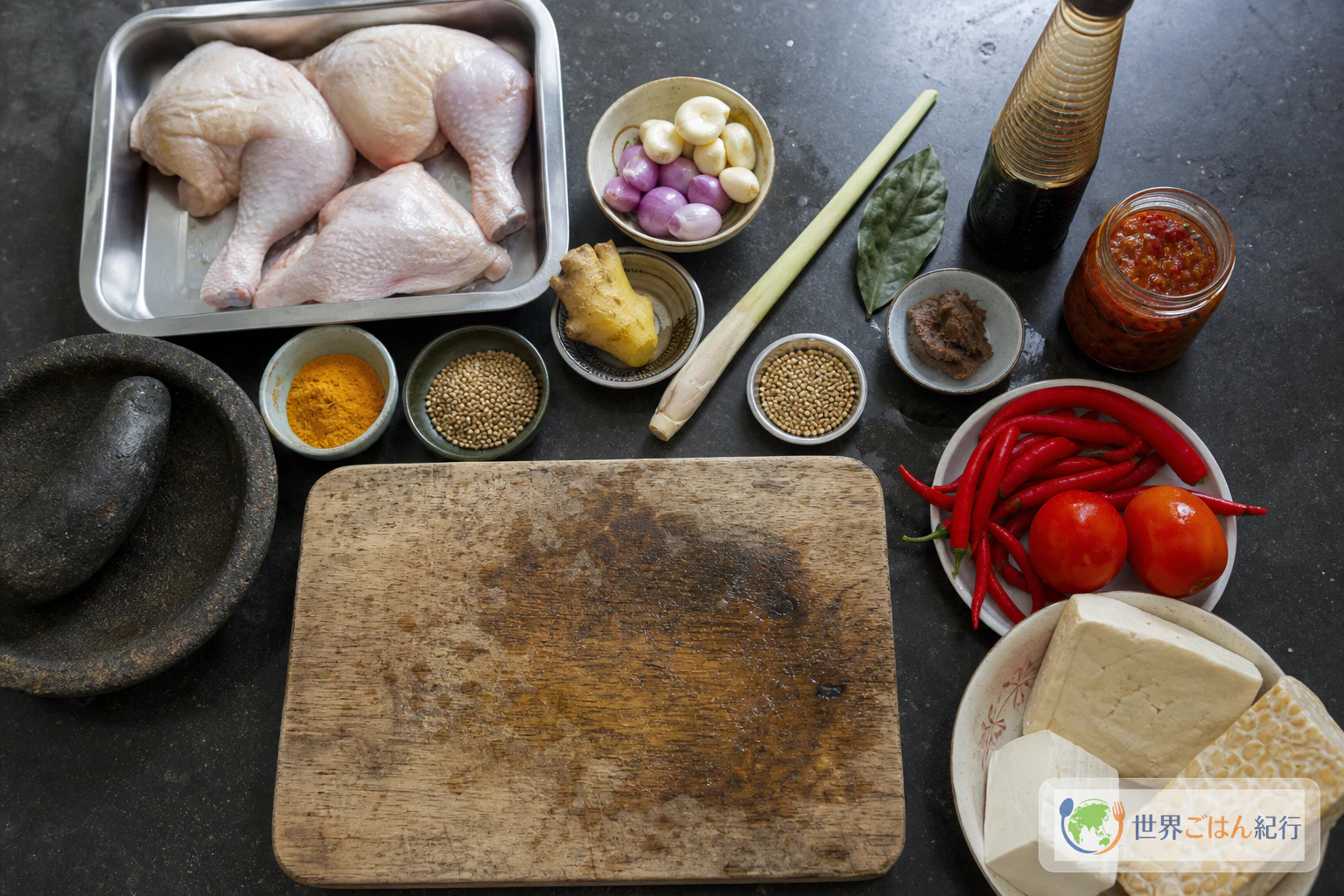
This serves 4. With bone-in chicken thighs, the plate looks like a set meal at a local eatery. If they are hard to find, 8 drumettes or 1.25 lb (600 g) of boneless thighs also work. When using only boneless thighs, shorten both the simmering time and the frying time slightly.
This dish uses chicken, soy products and shrimp-based seasonings. Shrimp paste, dried shrimp and fish sauce relate to crustacean and seafood allergies, so be sure to check with everyone who will eat it. To avoid shrimp, add depth with 1/2 tsp white miso and 1/2 tsp soy sauce.
Choosing ingredients for ayam penyet
Chicken, cucumber, rice and tofu are everyday groceries. What you may have to hunt for is the sambal and the shrimp paste. Bone-in thighs are the classic choice, but boneless thighs work fine. If terasi is missing, use kapi. If you can't get tempeh, use thick fried tofu. Drop the sambal, though, and you're just making fried chicken.
Terasi is a strong-smelling seasoning made from fermented shrimp. If you can't find the Indonesian product, Thai kapi or dried shrimp get close. Even 1/2 tsp makes the flavor stand out, so start small. On a day when making sambal from scratch feels like too much, sambal oelek still gives you the basic chili flavor. For more ideas, see sambal substitutes.
| Ingredient in question | Closest to the original | Practical option | Judgment |
|---|---|---|---|
| Chicken | Bone-in thighs, a whole bird in pieces | Bone-in thighs, drumettes, boneless thighs | Check the internal temperature in the simmer |
| Fermented shrimp seasoning | Terasi | Kapi, dried shrimp, a little fish sauce | Switch to miso if there is a crustacean allergy |
| Chilies | Fresh red chilies, cabai rawit | Fresh red chilies, dried red chilies, red bell pepper | Adjust the heat by the number of chilies |
| Sides | Lalapan, cucumber, tempeh, tofu | Cucumber, cabbage, thick fried tofu, tofu | Raw vegetables give a refuge from the heat |
| The pressing tool | Stone mortar and pestle | A grinding bowl, a sturdy plate, a wooden spoon | Don't over-press; just crack the skin |
A thermometer is worth having. Bone-in chicken is hard to judge by color alone, so check the temperature at the thickest part. The same thermometer reads oil temperature too, so it pays for itself if you fry chicken often.
Method: cook it through in the simmer, fry, then press
The failure to avoid with ayam penyet is worrying that the center is raw, frying too long, and ending up with burnt skin and dry meat. Cook the chicken through in the simmer, and treat the fry as the step that gives the surface its savory color. Pressing comes last. Pressing once while the chicken is hot lets the sambal in and keeps the skin's texture.
Some shops in Singapore and Malaysia use a heavy coating. At home, a thick coating cracks when pressed and comes away from the chicken. On the first try, a thin dusting of starch gets you between ayam goreng and ayam penyet.
Common problems with ayam penyet
| Symptom | Cause | Fix |
|---|---|---|
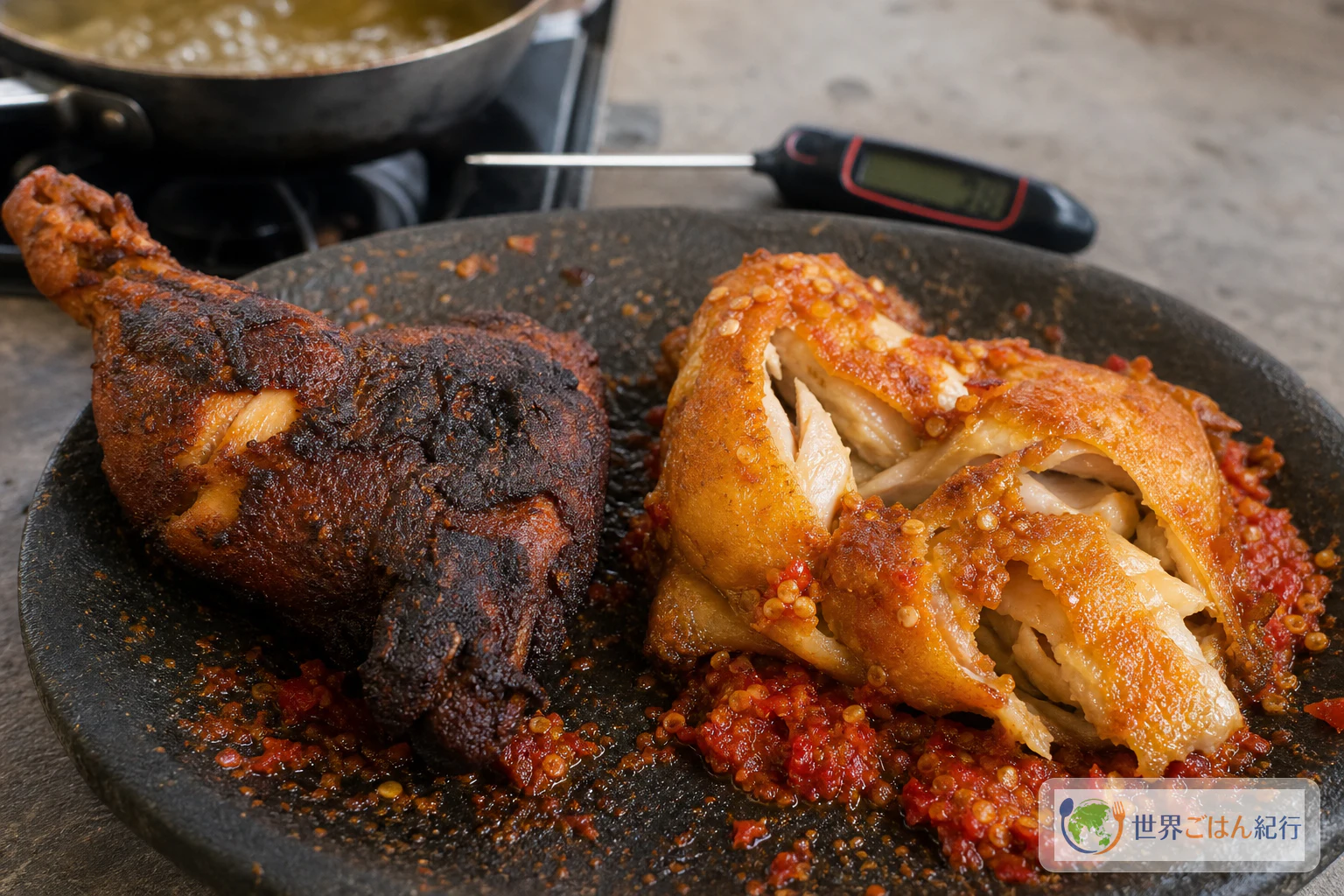
| The skin goes black | Fried while the oil was above 350°F (180°C) | Drop to 350°F (170°C) and fry 1 or 2 pieces at a time |
| The meat is dry | Tried to cook it through in the fry | Get to 165°F (74°C) or higher in the simmer; keep the fry short |
| The sambal is too hot | Strong chili seeds, shrimp paste or salt | Add tomato and round it out with 1 tsp sugar and a little lime |
| The sambal is watery | The tomato was under-seared or over-crushed | Cook off the moisture over medium heat and crush coarsely |
| The skin goes limp | Left sitting after pressing | Press just before eating, and put some sambal on the side too |
Hotter oil does not mean crisper skin. Simmered chicken carries moisture on its surface, so the oil temperature drops the moment the chicken goes in. Crank the heat to compensate and the oil rebounds fast, and the edges of the skin blacken. No thermometer? Drop in a pinch of starch. At the right temperature it shouldn't sink to the bottom, and it should give off fine bubbles about halfway down.
Pressing takes restraint too. The name suggests heavy pounding, but keep hitting the chicken and the juices escape, the meat dries out, and the skin soaks up sambal and turns heavy. You only want the skin to split and the meat to open a little so the sambal can get in. Think of it as making room for the sambal, not tenderizing the meat.
Serving and storing ayam penyet
Serving
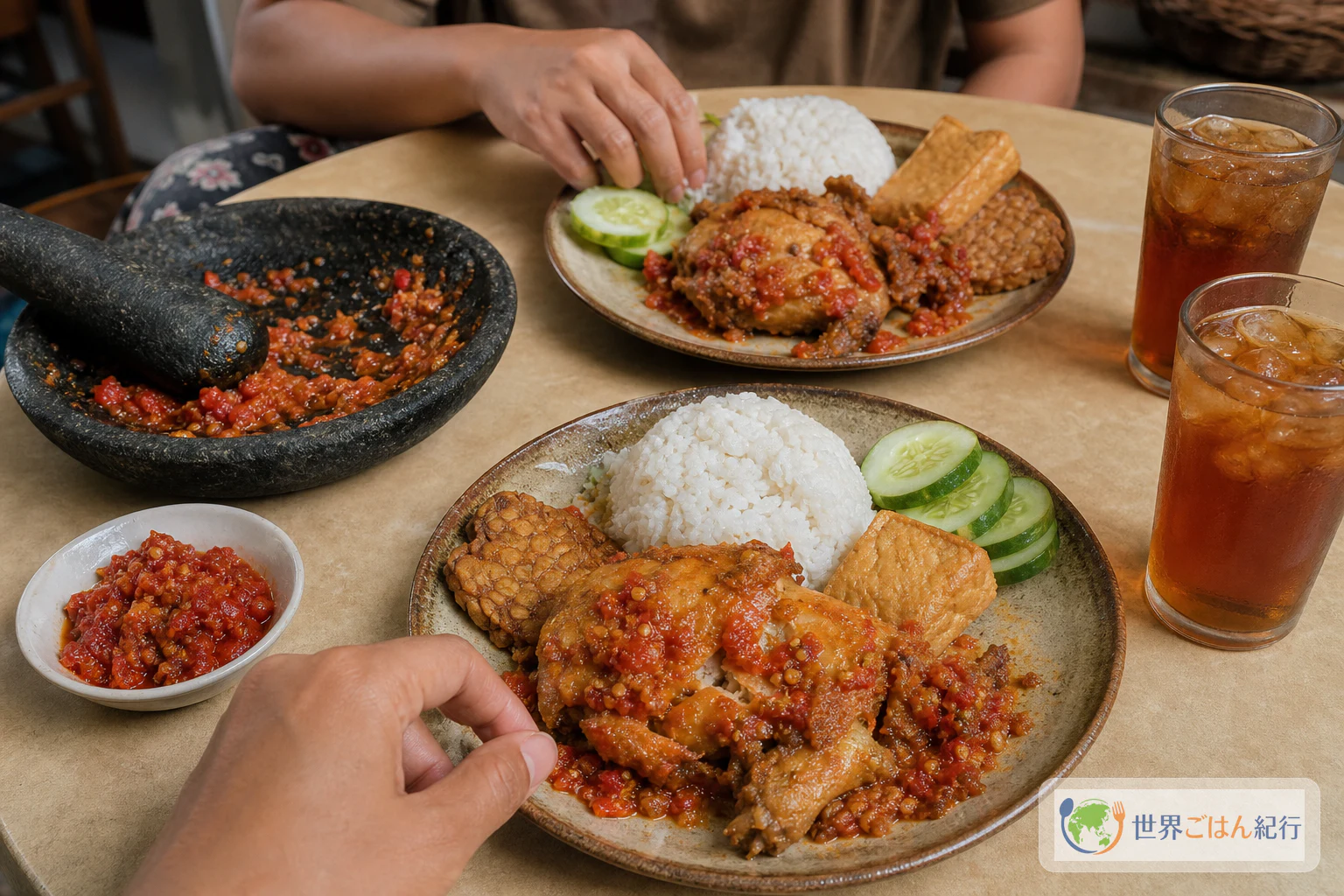
The simmer has no chili in it, so everyone can set their own heat at the table. When you're feeding a family, don't toss all the sambal onto the chicken. Add 1 tsp of sambal oelek to the adults' plates, and give children and anyone who dislikes heat kecap manis, lime and cucumber instead.
Rice is the center of the meal, and plain white rice is all you need. Swap in coconut rice and you're heading toward nasi lemak, or try the fragrant rice nasi uduk. Add lime for acidity, boiled cabbage or cucumber for more vegetables, and a light chicken broth if you want soup. Something that soaks up the heat and the oil is easier to eat alongside the chicken than another heavy fried dish. If you're cooking a spread, ayam goreng shares many of the same ingredients.
Don't break up all the chicken at once. Split the skin for one bite and scoop up a little sambal with it. Sambal spread straight on the rice spreads the heat everywhere, so build each bite in small layers: chicken, sambal, rice, cucumber. Local shops often put raw vegetables at the edge of the plate as a break from the chili and the frying oil. At home, cut cucumber about 0.125 inch (3 mm) thick and crisp the cabbage in cold water so it holds up to the sambal.
Storing and making ahead
Store fried chicken with sambal on it and the skin will be limp by the next day. When making ahead, keep the simmered chicken, the sambal and the sides separate. Simmered chicken keeps in the refrigerator until the next day, and sambal in a clean container keeps refrigerated for 3 days. Fry the chicken just before you eat it.
Before frying refrigerated chicken, let it sit out for 15 minutes and wipe the surface dry. Cold chicken drops the oil temperature sharply and leaves the skin heavy. When you reheat, heat until the center of the chicken is back to 74°C (165°F).
Leftover sambal is good with fried eggs, grilled fish, fried tofu, nasi goreng and mie goreng. It's strong with oil and salt, so start with 1 tsp. If the aroma has faded after a while in the refrigerator, warm it gently with 1 tsp oil to bring it back. If it smells sour or feels slimy, throw it out.
Frequently asked questions
Can I make it with only boneless thighs?
Yes. Cut 1.25 lb (600 g) of boneless thighs into 4 large pieces, simmer on low heat for 12 minutes, and start by frying 1 1/2 minutes on each side. They cook faster than bone-in pieces, so keep the fry short. The internal temperature target is the same: 165°F (74°C).
I don't have terasi or kapi. Can I leave it out?
You can, but the sambal will have less depth. If no one has a shrimp allergy, soak 2 tsp dried shrimp in warm water and chop them; that comes close. To avoid seafood, mix 1/2 tsp white miso with 1/2 tsp soy sauce. The aroma changes, but it still works as a spicy condiment for rice.
Can I just use sambal oelek?
When you're short on time, yes. Sambal oelek, though, is mostly a sharp, one-note chili heat. For the rounder heat of ayam penyet, sear and crush a tomato into it and add a little sugar, lime and shrimp paste. Even with a jarred sambal, don't put 3 tbsp on at once. Add it 1 tsp at a time.
What can I do on a day when I want to avoid deep frying?
Dry the surface of the simmered chicken and sear the skin side under a broiler or in a skillet. In a skillet, heat 2 tsp oil over medium heat and cook skin side down for about 4 minutes, then 2 minutes after turning. You lose some of the fried flavor, but as long as you still press the chicken into the sambal, it's still ayam penyet.