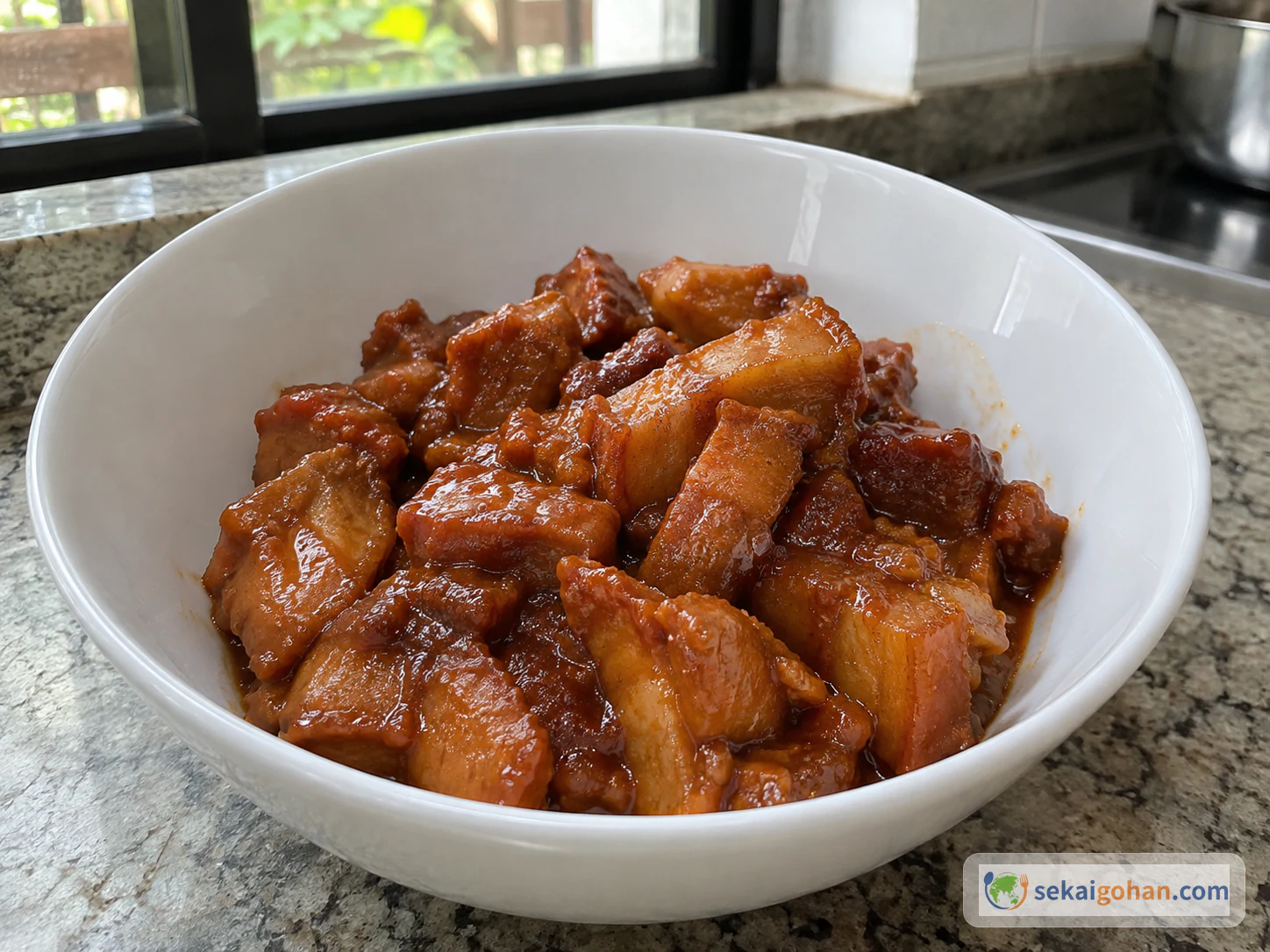
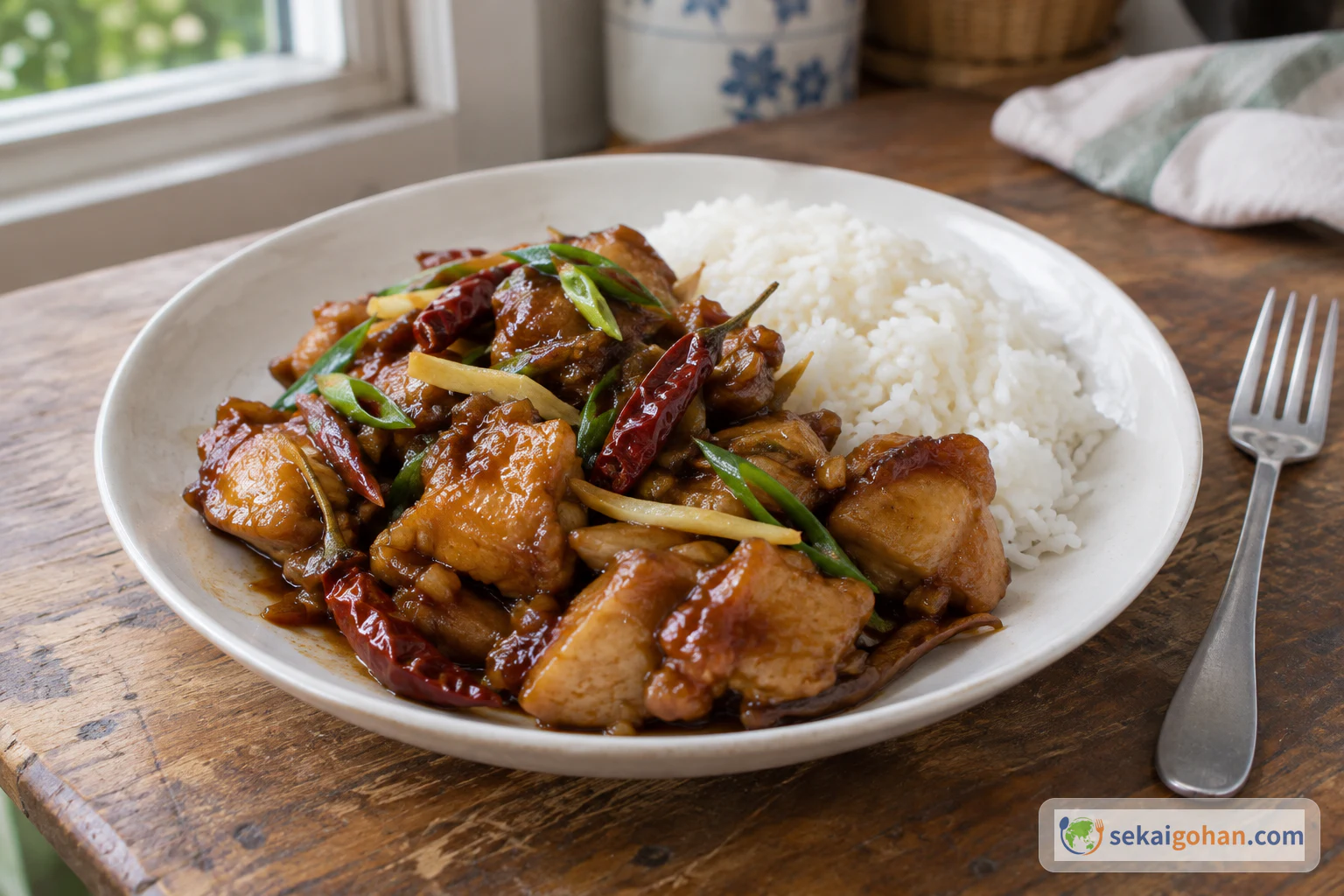
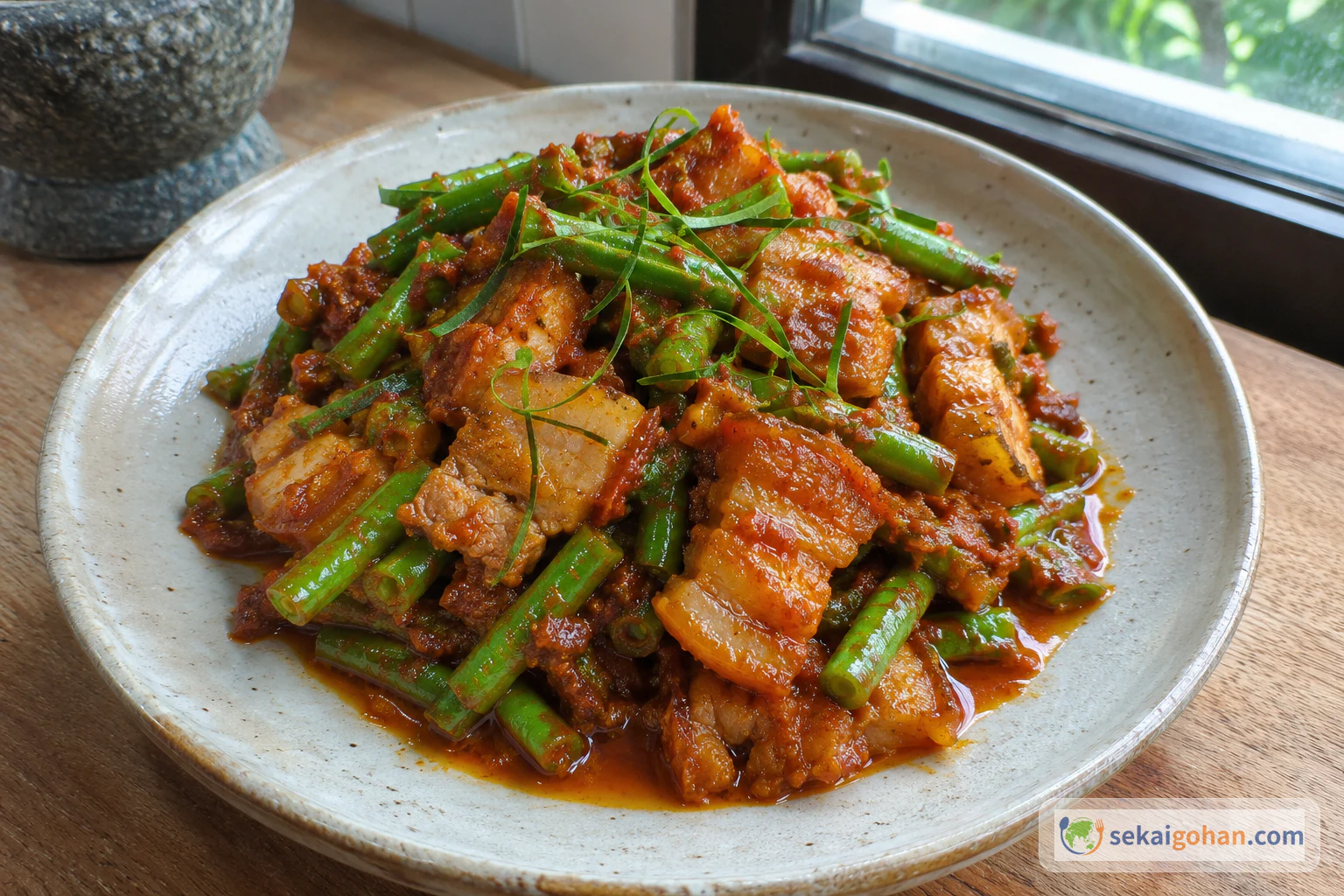
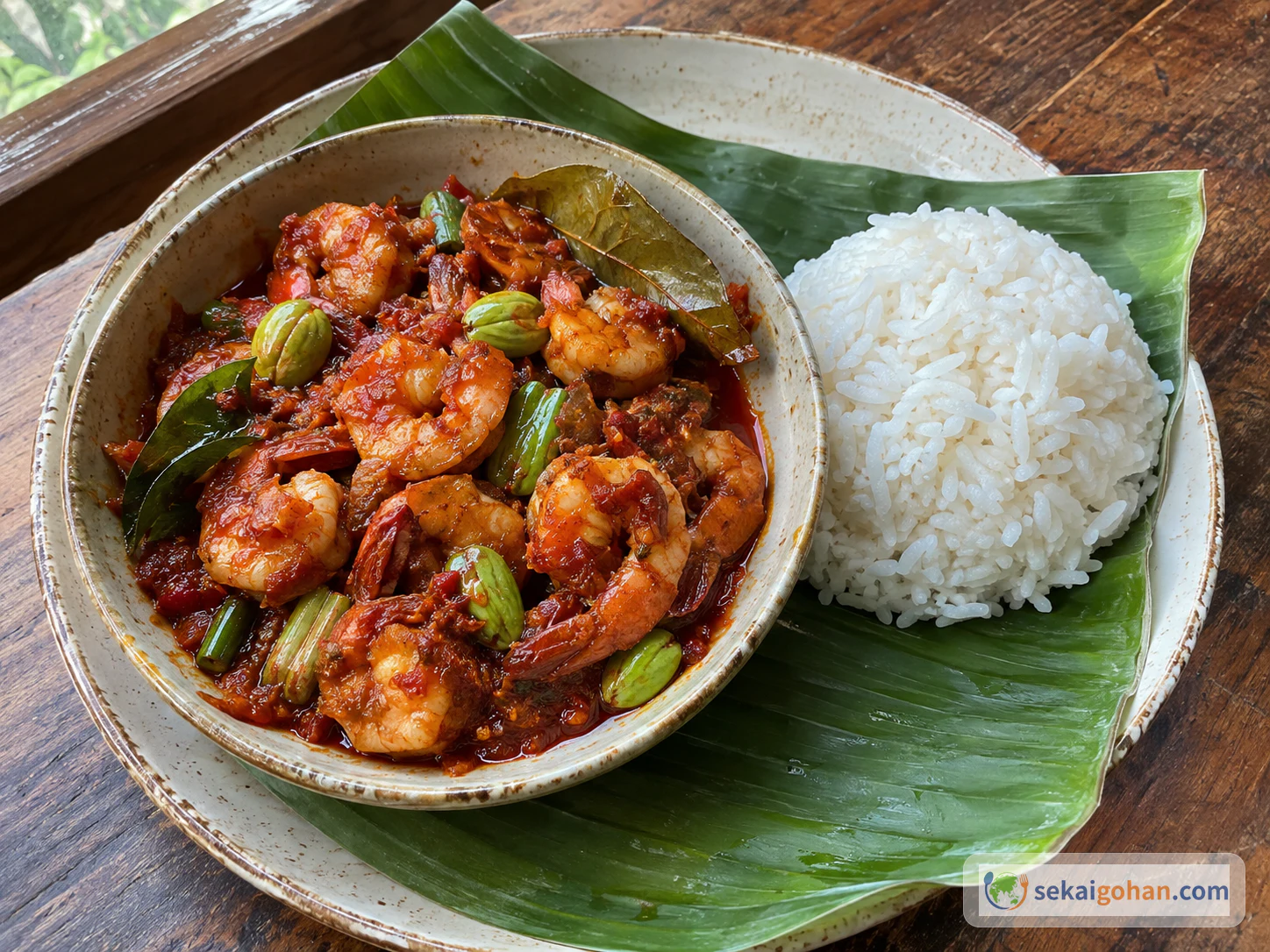
Vinegar shows up everywhere in Filipino cooking: in adobo, simmered with soy sauce; in sinigang, a sour soup; in the spicy dip served beside grilled chicken. Bopis comes from the same line. Pork lung and heart are chopped fine and stir-braised with garlic, onion, chili, vinegar and annatto. The vinegar cuts the smell of the offal and the red annatto oil makes you hungry. What you end up with is hot, sour and rich, and it practically asks for a plate of white rice.
Bopis in the Philippines
Bopis is made from finely chopped pork or beef lung and heart. In the Philippines it is eaten as pulutan, a snack with drinks, or as a main dish over white rice. The name is used across the country. In Pampanga the dish is also known as Kapampangan bopis or pulutok, and there the drier style, with distinct grains, is the one people favor.
Among Filipino chopped-pork dishes, sisig is served on a sizzling plate with browned edges and citrus. Bopis is an offal stir-fry reduced with vinegar and annatto. Add lechon, the celebration platter, and chicken inasal, with its charcoal aroma, and you can see how many different ways Filipino cooking puts sourness to work.
Ingredients (serves 4): If There Is No Lung, Use Heart and Shoulder

If you can get pork lung, use it. If not, build on pork heart and make up the bite with pork shoulder. More liver brings out an iron-like smell, so do not add too much in the home version.
This dish uses pork, fish sauce and soy sauce (some products contain soy and wheat). Offal spoils easily, so simmer it soon after buying, and do not reuse the cutting board and knife that touched raw meat for the cooked ingredients. When reheating, heat all the way through, and do not leave it long at room temperature.
Ingredients and tools that cause hesitation when shopping

What makes bopis bopis is annatto and vinegar, more than the meat. Annatto also works in chicken inasal and lechon, so if you plan to keep cooking Filipino food, buy it first.
Rice vinegar works, but coconut vinegar gives a rounder sourness and a fermented character that fits Filipino cooking while cutting the offal's smell.
Color is not a reliable guide for offal. Use a thermometer to check it, including when you reheat.
Choosing Ingredients and Substitutes for Bopis
Pork lung is the hard part outside the Philippines. Ordinary supermarkets almost never stock it, so ask a butcher or an Asian grocery. If you can get it, follow the full recipe. If you can't, make the home version with pork heart and pork shoulder. Either way, four things keep it bopis rather than a plain rich pork stir-fry: chop finely, boil the vinegar, fry the aromatics in red annatto oil, and cook off the moisture so the grains suit white rice.
| Uncertain ingredient | Closer to the original | Realistic substitute | What to keep |
|---|---|---|---|
| Lung | Pork or beef lung | Replace with 7 oz (200 g) pork shoulder | Chop finely and reduce with vinegar |
| Heart | Pork heart | Pork heart first. If none, 9 oz (250 g) chicken hearts | Keep the chew and the offal aroma |
| Red color | Annatto, achiote | Annatto seeds or powder | Paprika alone gives weak aroma |
| Sourness | Coconut vinegar, sugarcane vinegar | Rice vinegar + apple cider vinegar | Boil the vinegar to drive off the edge |
| Heat | Siling labuyo | Green chili, red chili | Keep it moderate in the pot; add more at the table |
Without lung, bopis loses a little of its airy texture. In exchange, the chew of pork heart and the meatiness of shoulder make a home version that goes very well with rice. The key is to chop the shoulder to 0.25 inch (5 mm) dice rather than leaving it in big pieces. That way vinegar, annatto and onion work into the gaps in the meat, and every bite gets both sourness and fat.
Annatto is hard to replace. Paprika comes close on color, but it lacks the red-orange that moves into the oil and the earthy aroma. If you also make chicken inasal and lechon, you'll use up a bag of annatto. If you're only trying bopis once, a small packet of powder leaves less sitting in the cupboard.
Method: Simmer, Chop, and Reduce with Sourness
Bopis looks like a dish fried fast over strong heat, but in practice the simmering and the chopping decide most of it. Remove the odor, chop finely, properly boil the vinegar, and cook off moisture at the end. Miss these and you get a watery offal stir-fry.
Common Bopis Problems and Fixes

Most bopis failures come from moisture, not from the offal itself. Three habits do the damage: chopping while steam from the simmering still clings to the meat, lowering the heat right after adding the vinegar, and leaving too much liquid at the end. When all three pile up, you get a stir-fry that is sour but blurry.
The way you boil the vinegar matters, too. Stir hard right after adding it and the sourness jabs at the whole dish. Instead, let it boil for about 2 minutes over medium heat without much stirring, and add the liquid once the sharp smell has softened. This cuts the offal smell and leaves a rounder sourness.
| Problem | Cause | Fix |
|---|---|---|
| Watery | Moisture after simmering; not enough reduction at the end | Remove the lid and cook off over medium heat until a spatula track remains |
| Smells of offal | Under-simmered, not enough ginger, vinegar not boiled | Simmer another 10 minutes with ginger and bay leaves, then chop |
| Tough | Short boil over strong heat; heart chopped too large | Simmer another 10 minutes over low heat and re-chop to 0.25 inch (5 mm) dice |
| Too sour | Stirred right after adding vinegar; not boiled enough | Boil for 2 minutes over medium heat; add a pinch of sugar and 2 tbsp water |
| Flat flavor | Thin annatto oil; not enough salt | Add 1 tsp patis, black pepper and citrus at the end |
| Red in color only | Made with paprika powder alone | Make annatto oil and fry the aromatics first |
Because bopis is simmered first and then stir-braised, a cold center is rare. If you're new to cooking offal, check with a thermometer anyway: cook pork to 145°F (63°C) or higher, then let it rest, and reheat leftovers to 165°F (74°C).
Serving and Storing Bopis
How to Eat Bopis

Bopis has a strong flavor. Spoon it over white rice, add a little vinegar from a small bowl as you go, and squeeze citrus over it at the end so the richness of the offal doesn't feel heavy. As a snack with drinks, serve sliced cucumber, tomato and onion alongside to balance the sourness and heat.
For a Filipino menu, add a small bowl of sinigang. If you serve noodles, keep the pancit canton modest, and if you want something fried, a few pieces of lumpiang shanghai are enough. Bopis is already rich, so the meal is easier to enjoy when it isn't stacked with more fat.
The next day, bopis is good mixed into garlic rice. A firmly cooked omelet on the side, rather than a fried egg, softens the heat and sourness.
Storage and Reheating
Refrigerate for up to about 2 days. Once it has cooled, spread it in a shallow container, cover and refrigerate. Onion and citrus get stronger in storage, so if you're making it ahead, add the juice just before eating.
A frying pan is best for reheating. Warm it over medium-low heat for 2 minutes, add 2 tsp water to loosen, then finish with 1 minute over medium heat to cook off the moisture. In a microwave, heat for 1 1/2 minutes at 600 W, stir, then give it another 30 seconds. Once it's hot to the center, a squeeze of citrus brings the aroma back.
Bopis can be frozen, though the offal smell and the onion texture come out a little stronger. Spread single portions thin and use them within 1 month. After thawing, cook off the moisture in a frying pan and finish with citrus instead of vinegar so the sourness stays gentle.
Frequently Asked Questions
I cannot get pork lung. Can I still make it?
Yes. Replace the 9 oz (250 g) pork lung with 7 oz (200 g) pork shoulder and keep the 10.5 oz (300 g) pork heart. You lose the lung's airy texture, but chopped fine and reduced with vinegar and annatto, it still tastes like bopis. Leave out the heart as well and it becomes more of a sour pork mince.
Is it more authentic with liver?
Use only a little. To add aroma in place of lung, simmer just 2 oz (60 g) pork or chicken liver, chop it to 0.25 inch (5 mm) dice and add it. Beyond 4 oz (120 g), the iron-like smell takes over and it tastes more like liver stir-fry than bopis.
Can I make it with rice vinegar alone?
Yes, though ¼ cup (60 ml) rice vinegar on its own gives a sharp acid. Splitting it into 2.5 tbsp (40 ml) rice vinegar and 1.5 tbsp (20 ml) apple cider vinegar rounds it out.
Can I make bopis that is not spicy?
Yes. Use just 1 green chili and remove the seeds, then put chopped chili and vinegar on the table so those who like heat can add their own. Keep the black pepper, though; without any heat at all the flavor goes flat.
It turned too sour after reheating.
Adding vinegar when reheating makes the sourness stand out. Loosen leftovers with 2 tsp water, warm them in a frying pan and finish with a little citrus instead. Over white rice, some chopped onion or cucumber softens it further.