

Mageli: Balikpapan Mung Bean Fritters with Garlic, Chili and Celery

A plate of small, round fried mung bean fritters
Level
Intermediate
Cuisine
Indonesian

How to make mageli, a savory mung bean snack from Balikpapan, Indonesia: an overnight soak, a mortar-mashed batter, small round balls and a plain fry. Includes clear food-safety guidance, comparisons with other published versions, and what is still unknown about the measurements.

Cooking flow

Cooking steps

STEP11 / 9

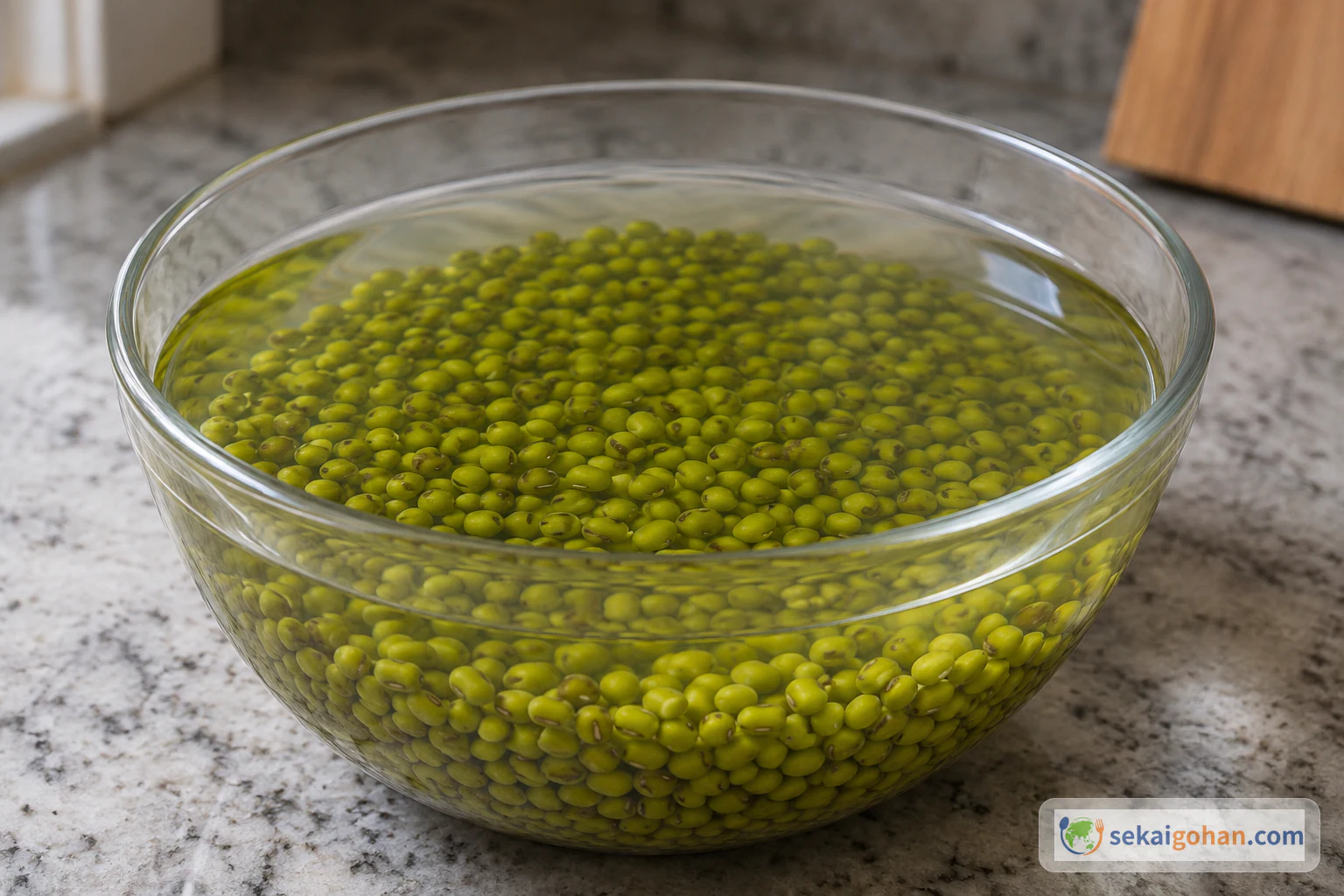
Soak the mung beans overnight

Mung beans submerged in a bowl of water for the overnight soak
The beans stay in water overnight

Wash the mung beans in a bowl of clean water, then pour in clean water to cover them. Put the bowl in the refrigerator and soak the beans for 6 to 8 hours or overnight. The beans should sit fully submerged in the water.

STEP22 / 9

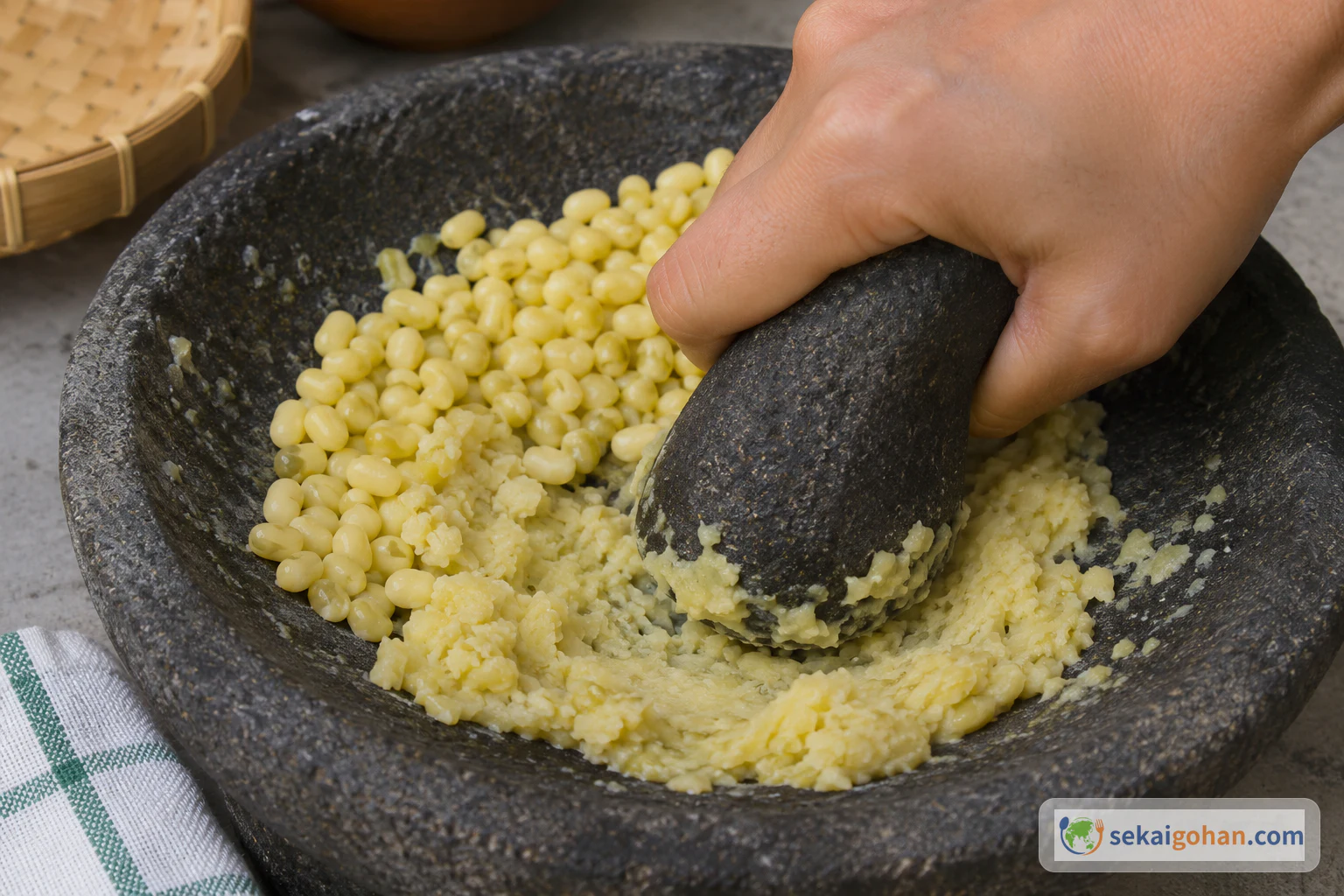
Drain and mash the beans

Drained soaked mung beans being mashed in a traditional mortar
Mash the beans on their own first

Drain the beans in a colander and discard the soaking water. Rinse the beans with cold water and drain off any water that remains. Mash the drained beans in the ulekan, then move them to a bowl. The beans should be broken down into a coarse paste.

STEP33 / 9

Grind the aromatics and mix them into the beans

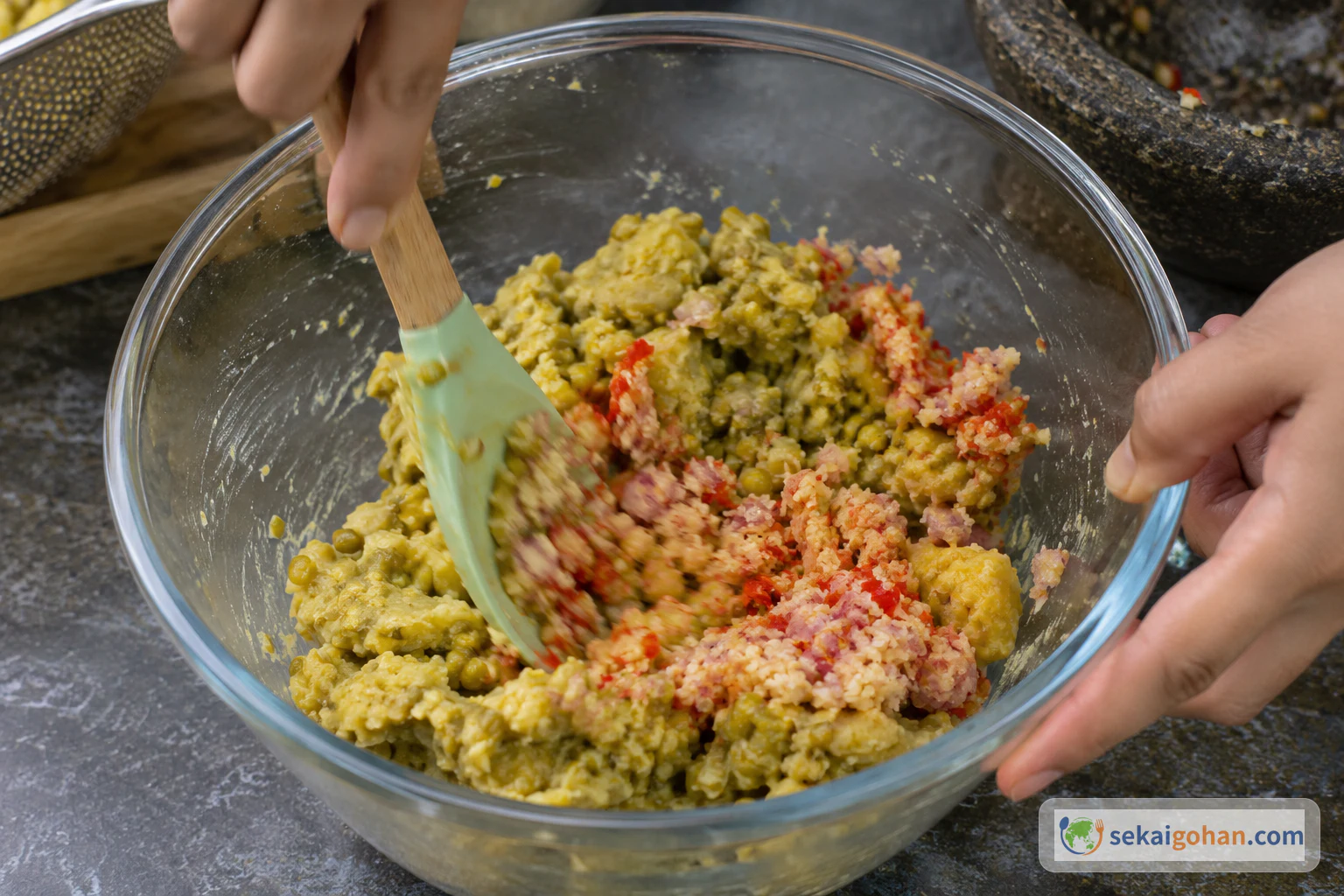
Mashed mung beans and ground aromatics being mixed by hand in a bowl
Mix the aromatics through the beans

Put the garlic, shallot and washed chilies in the mortar and grind them together. Add the ground aromatics to the mashed beans and mix them together. The garlic, shallot and chili should be spread evenly through the beans.

STEP44 / 9

Mix in the flour

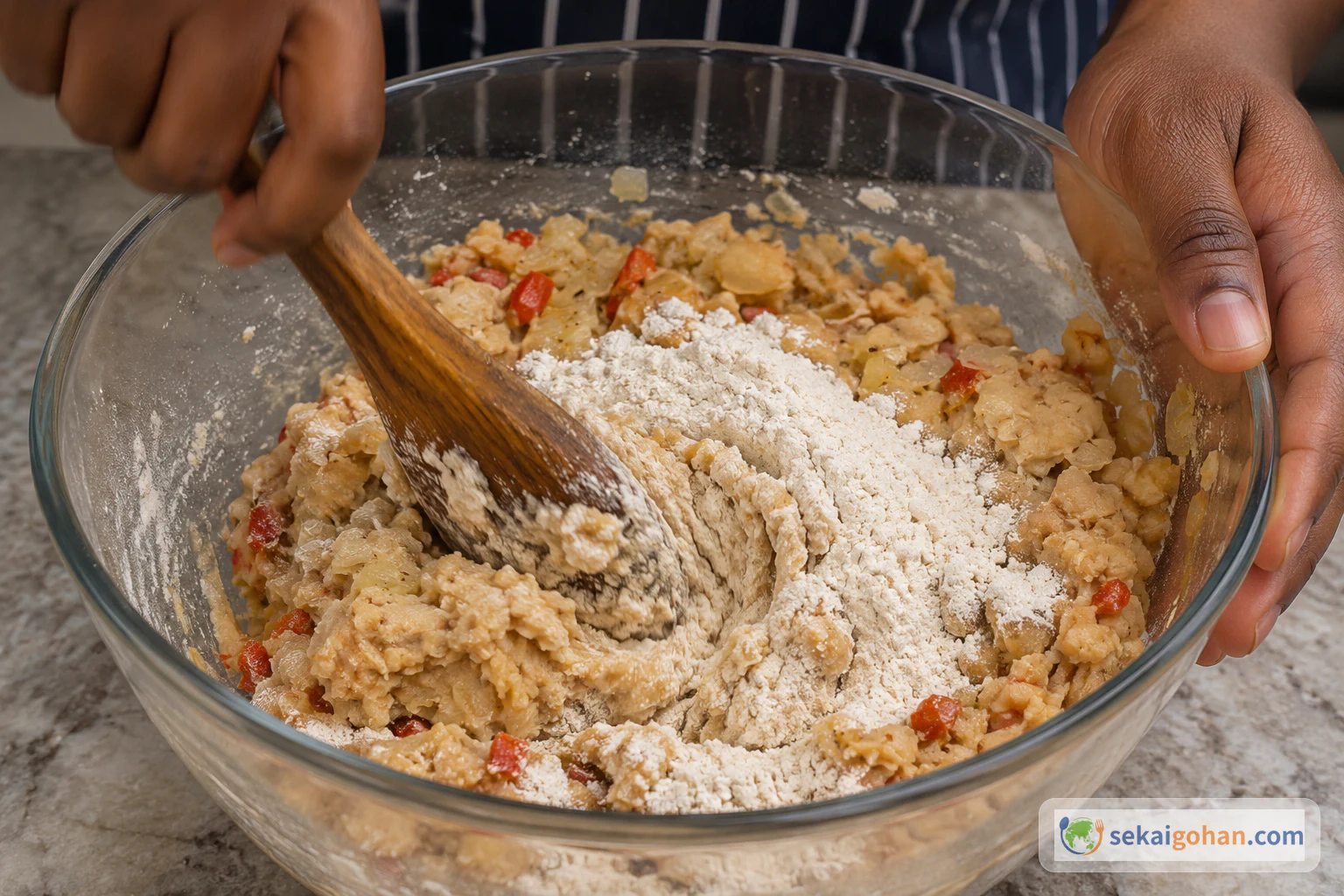
Flour being worked through the mashed mung beans and aromatics
Work the flour through the batter

Add 1 sdm wheat flour to the bean mixture. Mix the flour through the whole batter. No dry flour should remain visible.

STEP55 / 9

Slice and add the celery and scallion

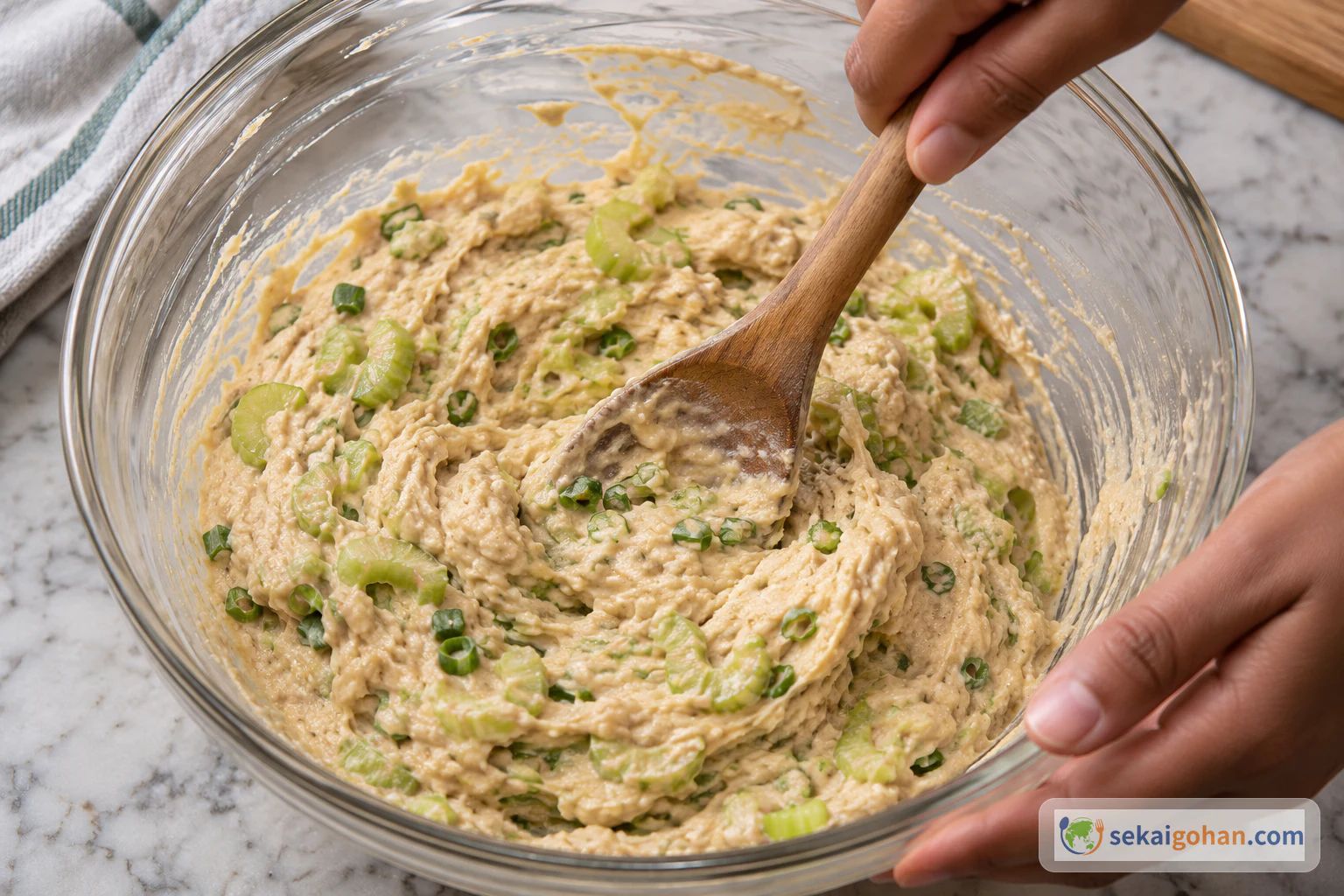
Sliced celery and scallion being mixed through the bean batter
Mix the greens through the batter

Thinly slice the washed celery stem and the washed 1/2 scallion stem. Add the sliced celery and scallion to the batter and mix them through. The greens should be evenly distributed in the batter.

STEP66 / 9

Season the batter

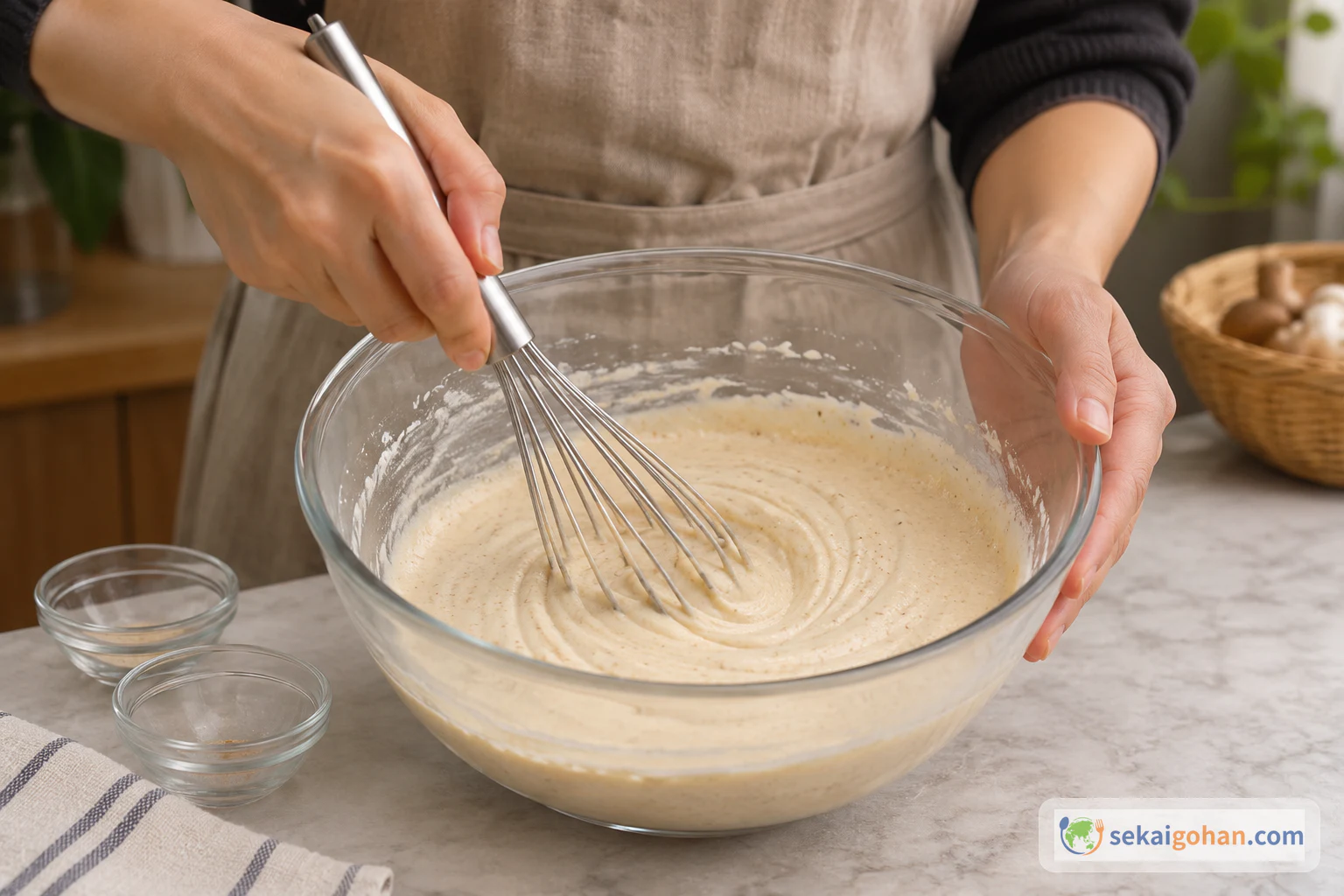
Bean batter being mixed in a bowl to spread the seasoning
Mix in the seasoning without tasting the raw batter

Add 1 sdt mushroom stock powder and 1.5 sdt salt to the batter. Mix the mushroom stock powder and salt through the batter. Do not taste the raw batter. The seasoning should be evenly mixed with no pockets of powder.

STEP77 / 9

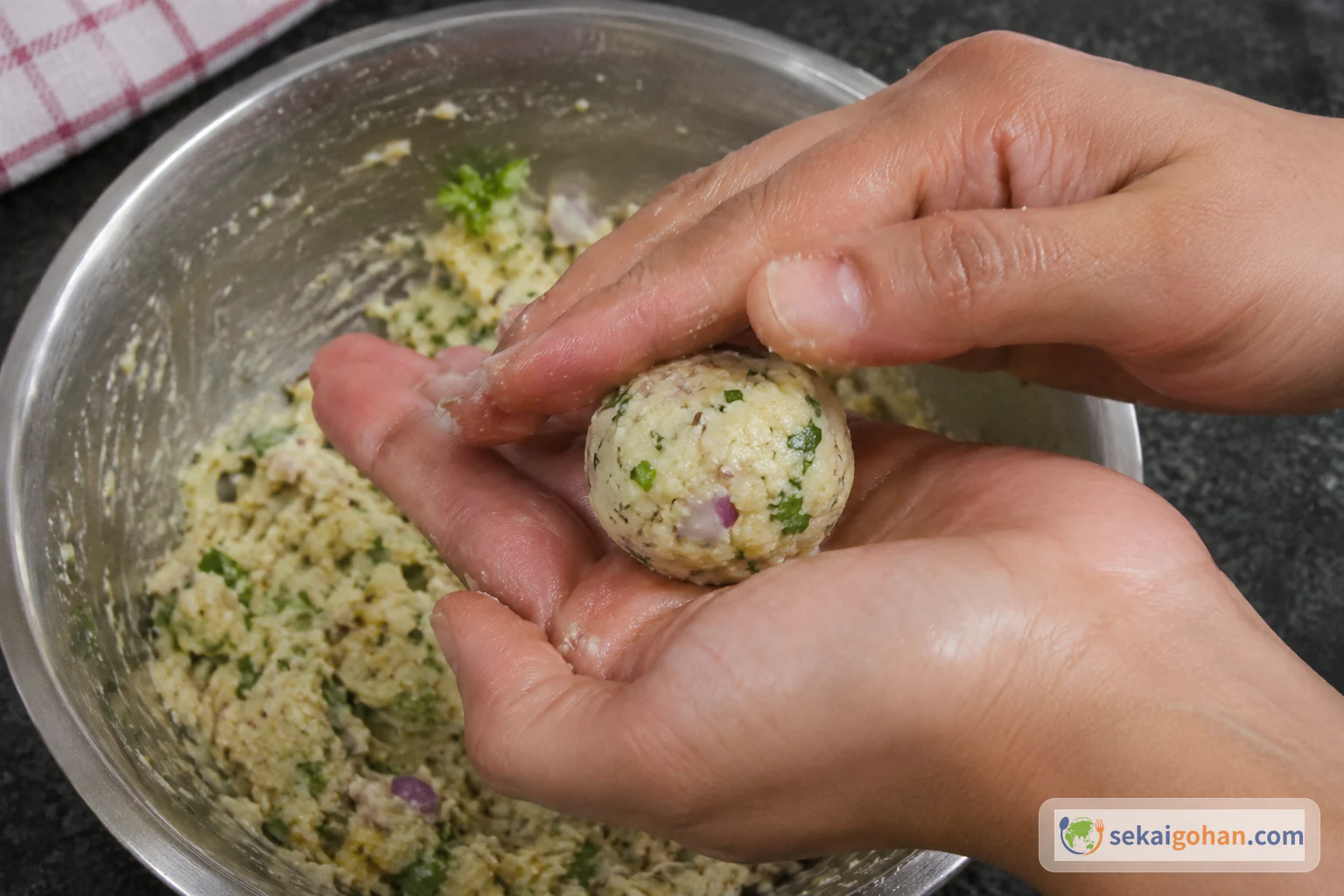
Shape the balls

Hands rolling a small portion of raw mageli batter into a round ball
Roll a round ball, not a flat patty

Scoop up about 1/2 sdm of batter. Roll each portion into a round ball. Do not flatten it into a patty. A little natural unevenness is fine.

STEP88 / 9

Fry until cooked through

Small round mung bean fritters browning in hot oil
Fry until brown, then rely on the center temperature rather than the color

Heat the frying oil in a pan. Carefully place the shaped balls into the hot oil and fry until brown. A brown outside does not show that the center is cooked. Choose the largest ball and measure its center with a calibrated food thermometer. Once the center reaches 167°F (75°C) or higher, keep frying for at least 1 more minute.

STEP99 / 9

Drain and serve

Round golden-brown mageli draining on a rack over a tray
Let the excess oil drain away

Lift the fritters out of the oil with a slotted spoon. Rest the fritters on a rack over a tray to drain the excess oil. Put the mageli on a plate and serve them as they are, with no sauce. The fritters should look round and golden brown.

0 / 0
Ingredients

Ingredients

1 / 1

Ingredients

Ingredient Amount Role
Green mung beans (kacang hijau) 20 sdm (tablespoons) The body of the fritter
Garlic (bawang putih) 3 cloves Ground aromatic
Shallot (bawang merah) 1 Ground aromatic
Bird's-eye chilies (cabe rawit) 3 Heat, ground with the garlic and shallot
Wheat flour (tepung terigu) 1 sdm (tablespoon) Mixed through the mashed beans
Celery (seledri) 1 stem Thinly sliced
Scallion (daun bawang) 1/2 stem Thinly sliced
Mushroom stock powder (kaldu jamur) 1 sdt (teaspoon) Savory seasoning
Salt (garam) 1.5 sdt (teaspoons) Seasoning
Frying oil as needed For frying
0 / 0

Small, round and golden, mageli are mung bean fritters from Balikpapan, in Indonesia, where you'll find them for sale as a spicy, savory snack. Soaked beans are mashed with garlic, shallot and chili, loosened with a little flour, flecked with sliced celery and scallion, then rolled into balls and fried. The ingredient list is short and the method is simple. They're served plain, with no sauce.

Mageli, a Balikpapan Mung Bean Snack

At its heart, mageli is mung beans that have been mashed, seasoned and fried. The beans are mashed in an ulekan, the Indonesian mortar, and each portion of batter is rolled into a ball rather than pressed flat. That round shape is what sets these fritters apart. For more of the country's cooking, see our Indonesia page.

Ingredients for Balikpapan Mageli
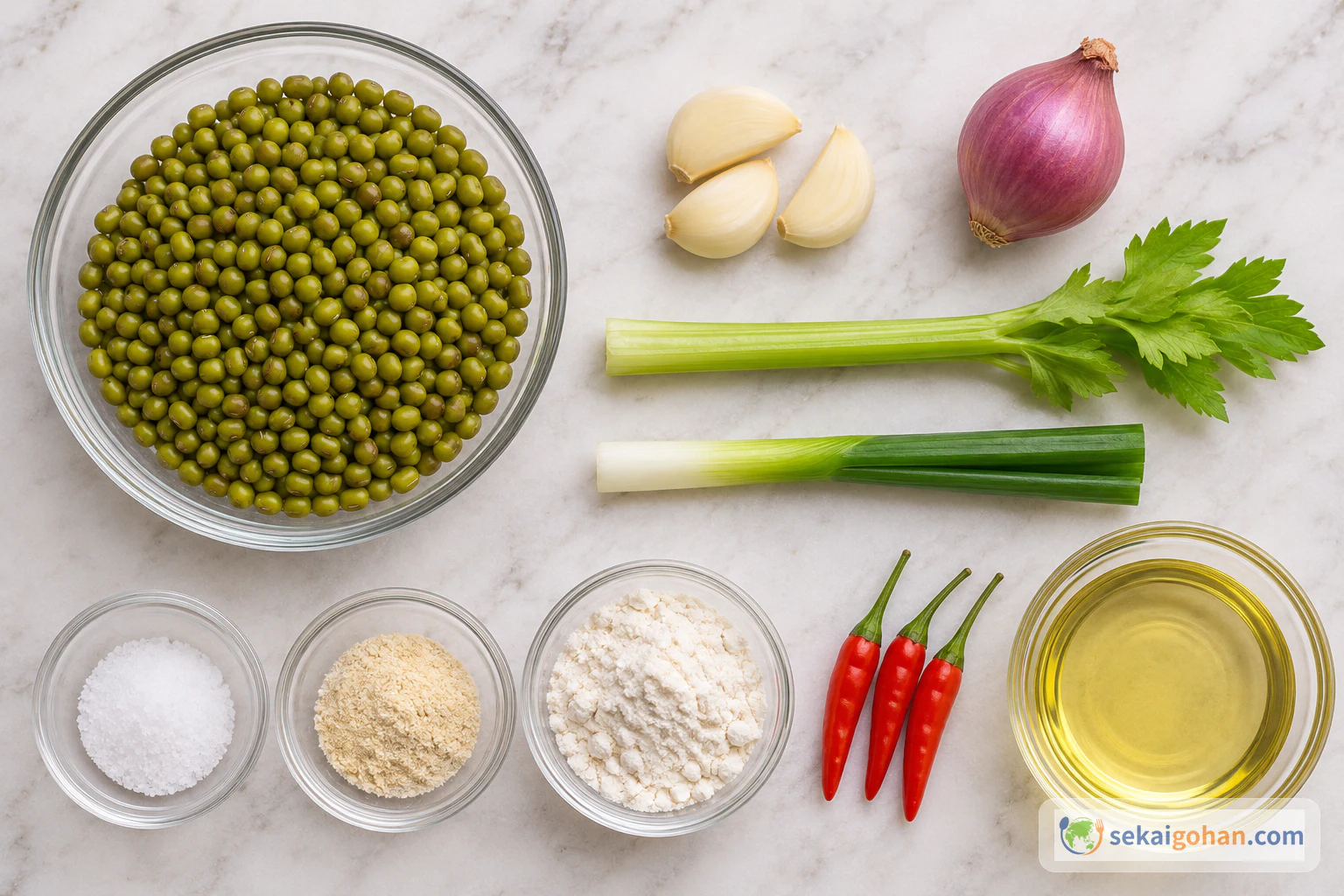
Mung beans, garlic, shallot, celery, scallion, salt, mushroom stock powder, chilies, wheat flour and frying oil set out separately
Everything for the batter, set out separately, plus oil for frying

Wash the celery, scallion and chilies well under running water before using them.

Equipment

  • Bowls
  • Colander
  • Mortar and pestle (ulekan)
  • Knife and cutting board
  • Tablespoon and teaspoon
  • Pan for frying
  • Slotted spoon
  • Draining rack and tray
  • Calibrated food thermometer

Choosing Ingredients for Mageli

The beans are measured by spoon, in sdm, and no weight is listed, so use a spoon to measure them. Wash the celery, scallion and chilies well under running water before slicing. This batter contains wheat flour, so don't serve it to anyone who avoids wheat.

Method: From Overnight Soak to Plain Fried Fritters

Before you start

Soak the beans in the refrigerator. Do not taste the raw batter. A brown outside does not show that the center is cooked, so have a calibrated food thermometer ready for step 8.

Start the night before. Watch the fritters as they fry and measure the center.

Getting Mageli Right

Soaking, Tasting and Checking the Center

Soak the beans in the refrigerator for 6 to 8 hours or overnight, then discard the soaking water and rinse them with cold water. Raw flour is only made safe by cooking, so don't taste the batter. Judge the seasoning from a finished fritter and adjust it the next time you cook.

A brown outside doesn't tell you the center is cooked. Use a calibrated thermometer on the largest ball, since it takes longest. Once the center reaches 167°F (75°C), keep frying for at least 1 more minute.

Troubleshooting

What you notice What to look at What to do
The outside is brown, but the center is below 167°F (75°C) Color does not show that the center is cooked Keep frying. Count at least 1 more minute only after the center reaches 167°F (75°C) or higher
The balls are hard to measure They are small Choose the largest ball for the check
The fritters look flat The portions may have been pressed down Roll the next ones into round balls. Slight unevenness and a small flat spot from frying are fine
The seasoning seems off Raw batter should not be tasted Judge it from a finished fritter and adjust the next time you make the recipe

Serving Mageli and Variations

Serve the fritters plain. If you want something alongside, ketupat or sambal both work well with mageli.

There are other ways to make it, though their amounts don't carry over to this recipe:

  • Potato or no flour: Some cooks use boiled, mashed potato in place of the flour, and others leave the flour out entirely.
  • Blender: A blender can stand in for the mortar.
  • A different bean: One version uses kacang tolo instead of mung beans.

Frequently Asked Questions

How many fritters does this make?

About 17 pieces. The 1/2 sdm scoop is a guide to size, so your count may vary a little.

Can I soak the beans at room temperature?

Soak them in the refrigerator. Refrigerated soaking is the method this recipe relies on for safety.

Can I skip the thermometer?

It's best not to. A brown exterior doesn't show that the center is cooked, and a calibrated thermometer is the reliable way to check.

Sources