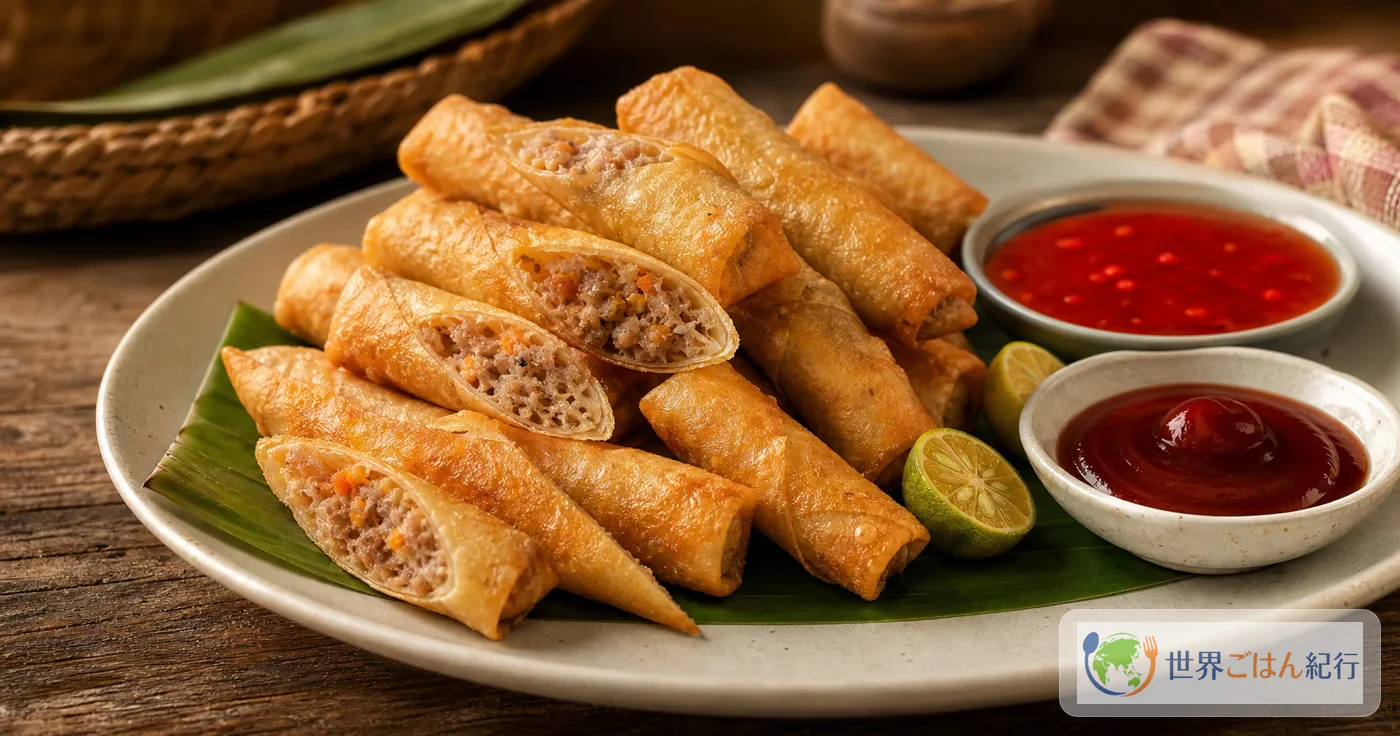
A kitchen where something is frying pulls people in. The oil bubbles finely, the wrapper turns pale gold, and the moment a roll comes out onto the rack, you want to try one. Lumpiang Shanghai, the slim fried spring roll of the Philippines, has exactly that pull. Ground pork, finely cut vegetables, egg and soy sauce are rolled raw in a thin wrapper and cook through in the oil, so you get a light, shattering shell around a savory, meaty center. Three things decide how it turns out: the moisture of the filling, the thickness of the roll and the oil temperature.
Lumpiang Shanghai at the Filipino table
A party plate
In the Philippines, lumpiang Shanghai turns up at birthdays, graduations, Christmas and any day relatives gather. The rolls are piled high on a big platter. Children eat them with a sweet sauce, and adults eat them with vinegar and garlic. It's less a main dish than the first plate that loosens up the mood at the table, and it's the one children reach for first.
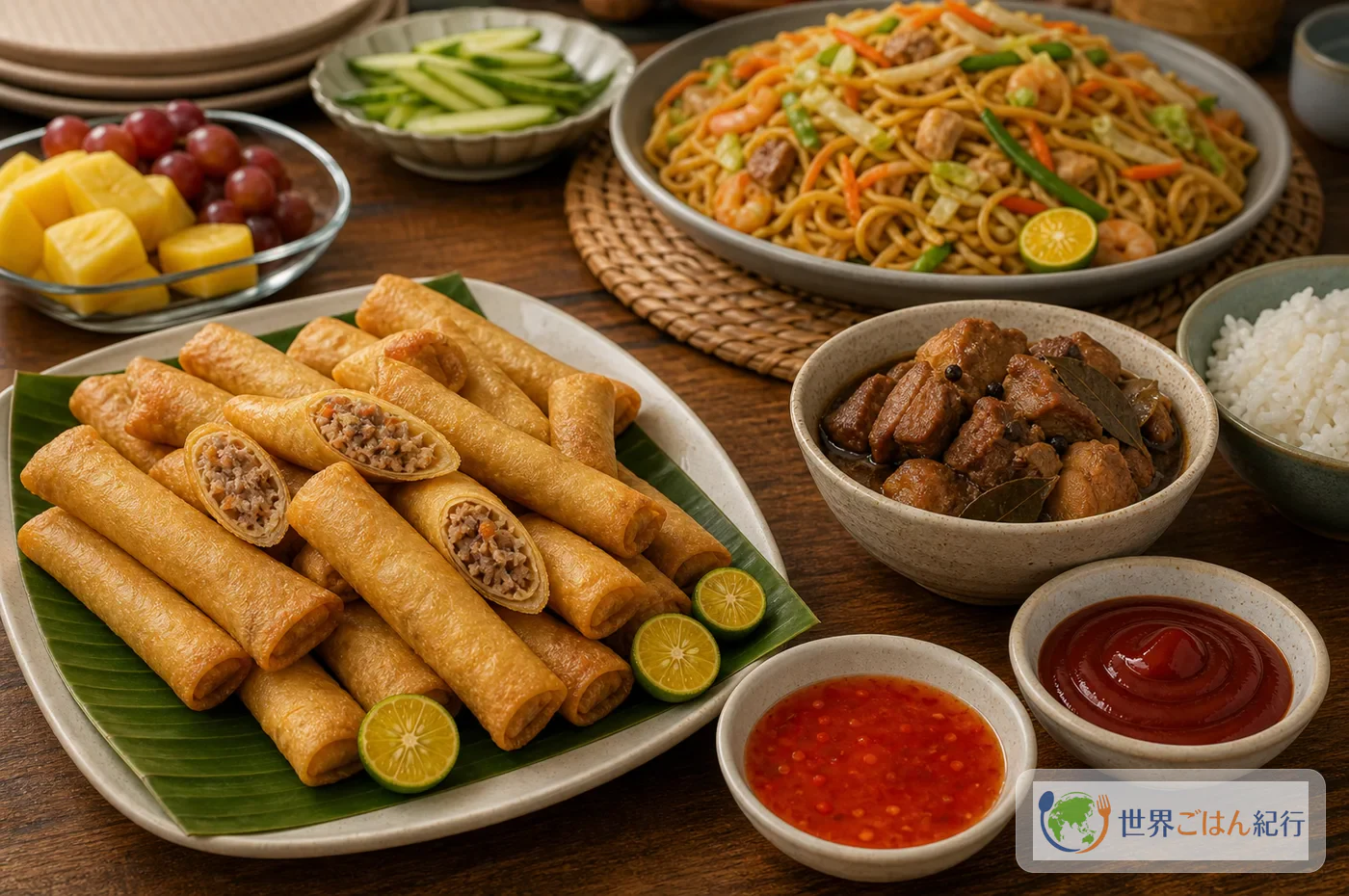
The rolls are slim for a reason. When relatives gather, you want something you can eat in one bite while holding a plate. It should still be tempting after it cools a little at a potluck, and it should work with both a sweet sauce and a vinegar dip. A thick spring roll makes a dependable main dish, but it's heavy to eat several of. Lumpiang Shanghai turns the savory pork into a small stick that moves easily between noodles, stews and plain rice.
From Chinese spring roll to Filipino lumpia
Filipino cooking is layered with Chinese, Spanish, American and Malay food culture, and lumpia is a classic example. The spring rolls of Chinese immigrants changed to suit Philippine ingredients, seasonings and festive tables. Compared with a Chinese spring roll, lumpiang Shanghai is slimmer, holds more meat and is more of a party finger food.
Lumpia is the name for the dish as the Chinese spring roll tradition spread through Southeast Asia. Although "Shanghai" is in the name, today's lumpiang Shanghai has settled into Filipino home cooking as a thin, meat-filled fried spring roll.
How it differs from other spring rolls
Filipino recipes share the same basics. The filling centers on ground pork with finely chopped carrot, onion, garlic and green onion. It goes into a thin wrapper and is rolled into a slim stick, which is either cut before frying or rolled short to begin with. A Japanese-style spring roll is different: it usually wraps a stir-fried filling in a thicker roll and is eaten with rice as a main dish.
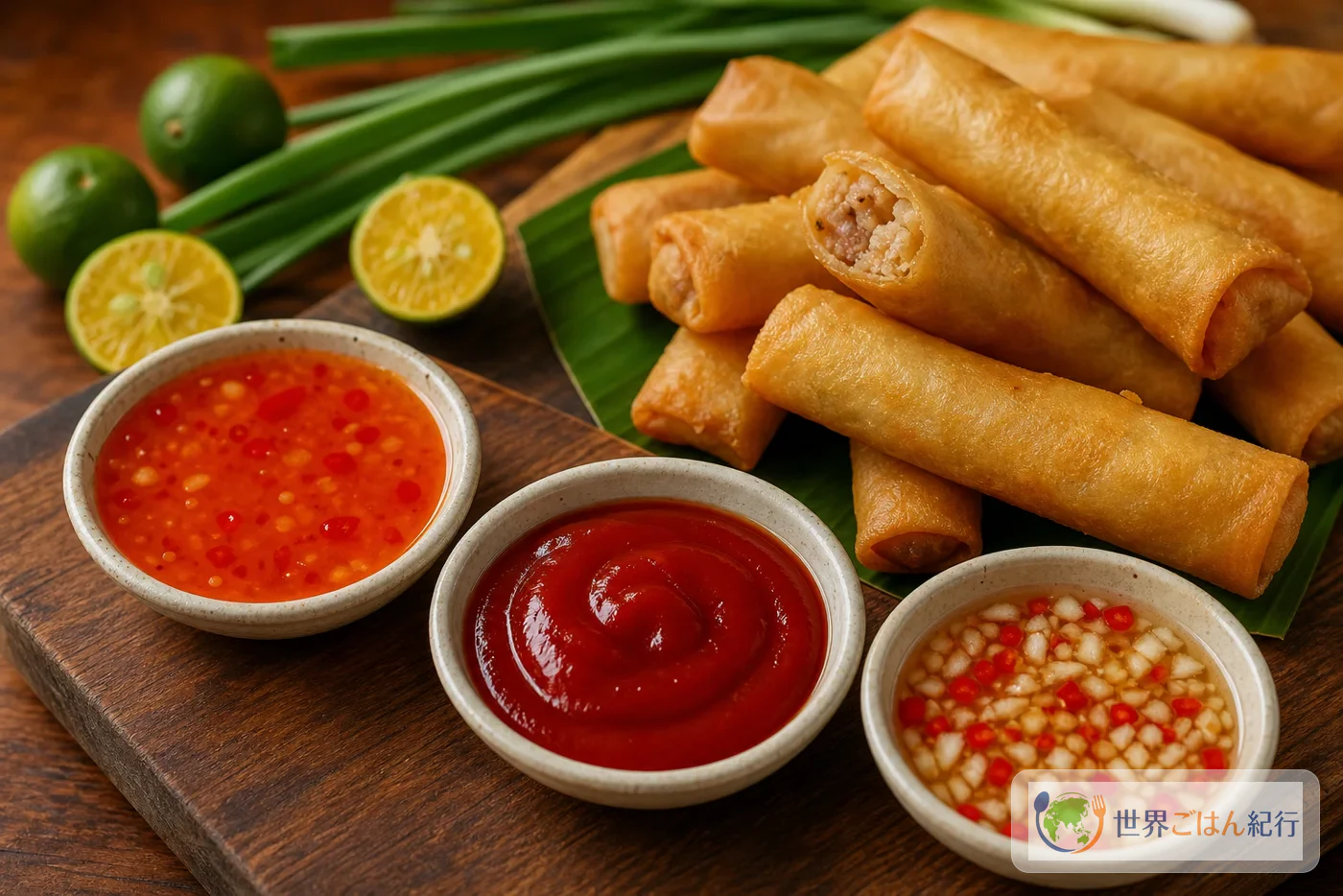
The sauces are different too. Instead of a thick glaze, the rolls come with small dishes for dipping, like a sawsawan: sweet chili sauce, banana ketchup, or vinegar with garlic and chili.
| What to look at | Closer to a Chinese-style spring roll | Filipino lumpiang Shanghai |
|---|---|---|
| Thickness | Thicker, more filling | Slim and easy to pick up |
| Cooking the filling | Often a stir-fried filling is wrapped | A raw meat mixture is rolled thin and fried |
| How it is eaten | Main or side dish | Celebration platter, appetizer, potluck |
| Sauce | Mustard, soy-vinegar, thick sauce | Sweet chili, banana ketchup, vinegar dip |
| Make-ahead | Best fresh-fried | Easy to freeze uncooked |
Ingredients (serves 4): how close can ordinary spring roll wrappers get?
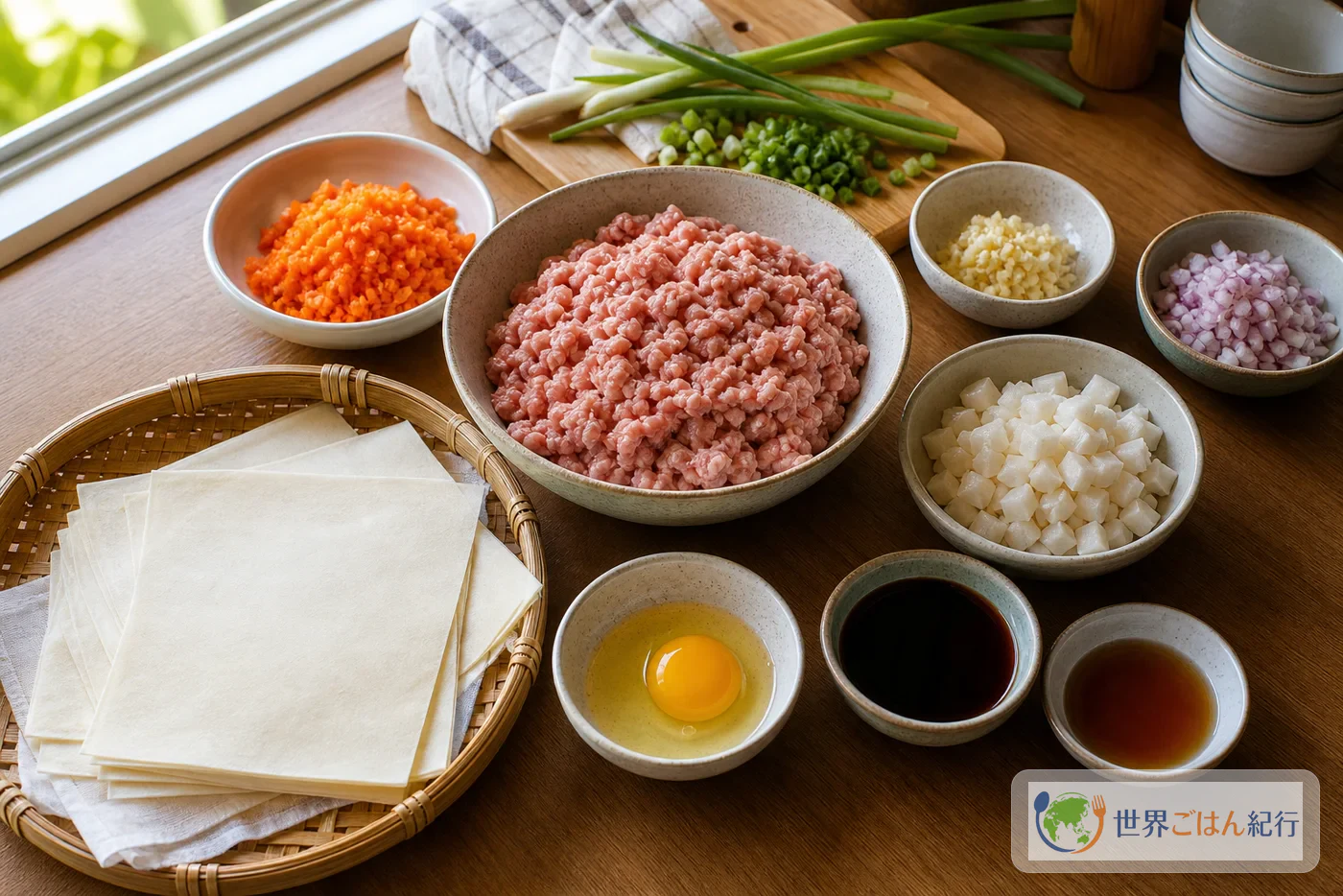
This serves 4 and makes about 24 to 30 slim, easy-to-pick-up rolls. As a main dish it serves 4; as a party plate it stretches to 6 to 8 people.
Seasonings
| Seasoning | Amount | Substitutes & notes |
|---|---|---|
| Soy sauce | 1 tbsp | If you have Filipino soy sauce, mix in half |
| Patis or fish sauce | 1 tsp | If you dislike it, leave it out and add a little more salt |
| Oyster sauce | 2 tsp | Sweetness and savory depth. To avoid seafood, add 1 tsp soy sauce instead |
| Sugar | 1 tsp | Just enough to round off the edges of the filling |
| Salt | 1/2 tsp | Don't overdo it, since a sauce is served alongside |
| Black pepper | 1/2 tsp | Coarsely ground suits it |
| Potato starch or cornstarch | 1 tbsp | Holds the juices in. Too much makes it tough |
This dish contains pork, wheat, egg, soy and seafood. Shrimp, oyster sauce and fish sauce can trigger seafood allergies, so leave them out if needed. Check the wrapper label for egg or dairy.
The first thing to look for is thin wrappers. The filling ingredients are all available at an ordinary supermarket, but the thickness of the wrapper changes the texture a great deal. If there is no Filipino or Asian grocer nearby, search online for "lumpia wrappers" or "thin spring roll wrappers," and if they are frozen, check the thawing instructions.
Choosing wrappers and filling for lumpiang Shanghai
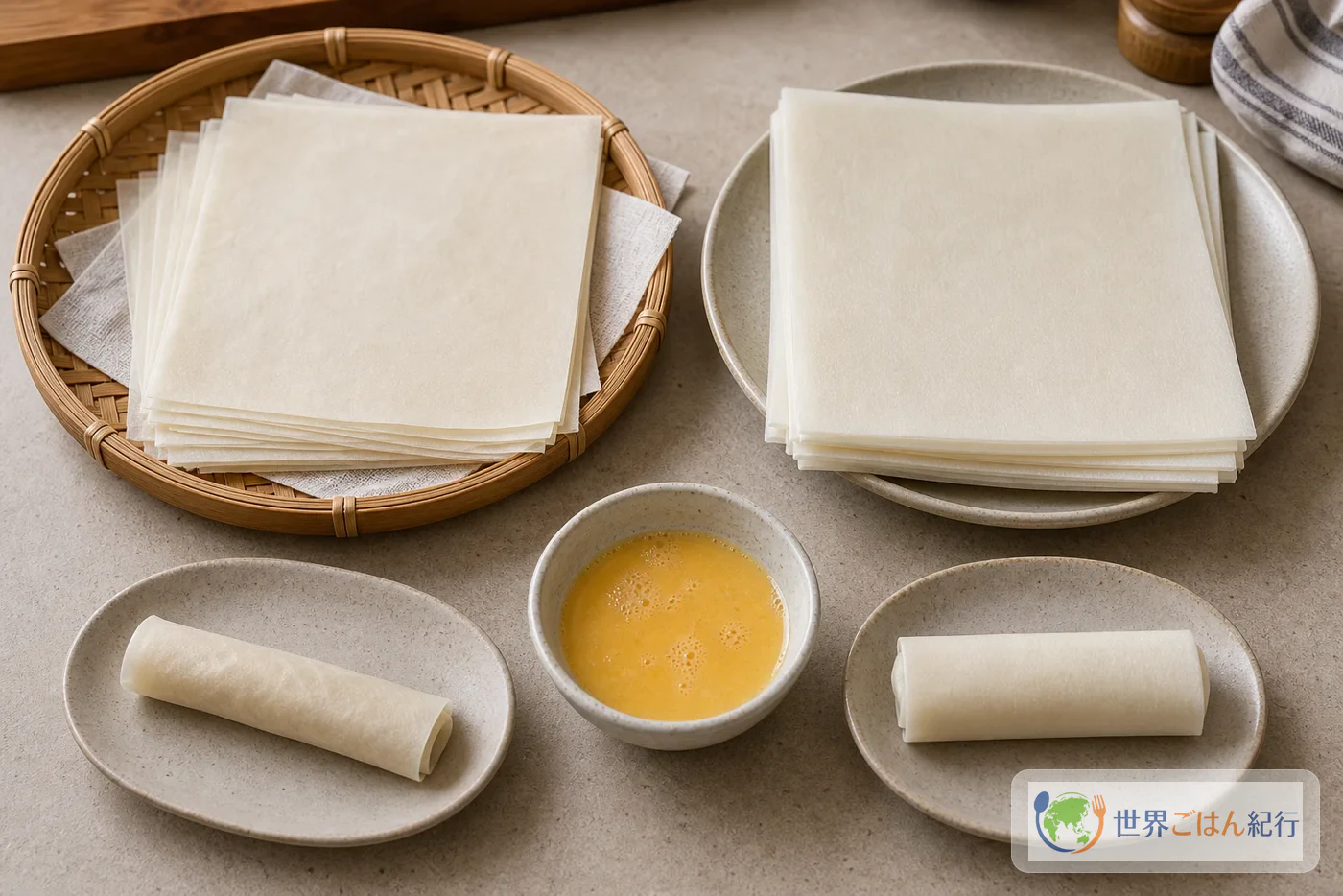
You can make this with supermarket ingredients, but it helps to know which swaps change the texture.
| The ingredient in question | Closer to local | Realistic at home | Verdict |
|---|---|---|---|
| Wrapper | Thin lumpia wrapper | Spring roll wrappers cut narrow | Roll thick wrappers thin. Rolled fat, they are heavy |
| Meat | Mostly ground pork | Ground pork plus a little shrimp | Shrimp is for aroma. It works without it |
| Texture | Water chestnut, jicama | Lotus root, canned bamboo shoots | Wipe off moisture and chop fine |
| Seasoning | Filipino soy sauce, patis | Dark soy sauce, a little fish sauce | 1 tsp of fish sauce is enough |
| Sauce | Banana ketchup, sweet chili, vinegar dip | Sweet chili, ketchup with vinegar, soy-vinegar | Offering both sweet and sour keeps it from getting boring |
| Frying | Plenty of oil, shallow deep-frying | At least 1 inches (3 cm) of oil in a small pot | A skillet with little oil colors unevenly |
Wrappers
Outside the Philippines, the wrapper is the hard part. A thin lumpia wrapper fries up light and shatters when you bite it. Ordinary spring roll wrappers are thicker and come out a little heavy if you roll them to the same size. Slimness is the one thing you shouldn't compromise on. Cut the wrappers into strips and use less filling, and you get surprisingly close to the real texture.
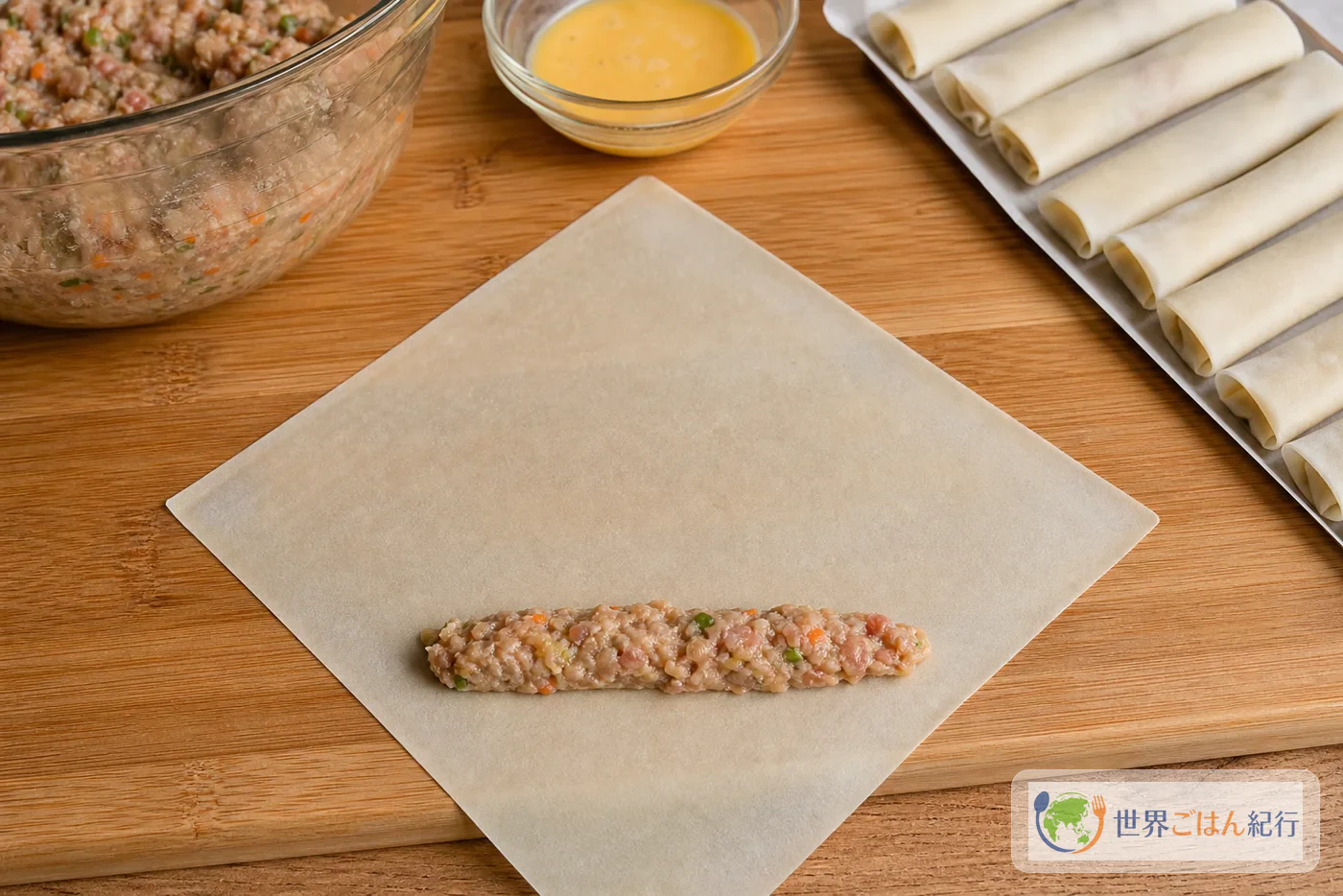
With ordinary spring roll wrappers, decide how to cut them before you start. A whole square makes thick rolls, so cut each one into thirds and roll thin strips. If the seams won't stick, use a paste of 1 tsp flour dissolved in 2 tsp water. Once dry, it holds better than egg. Too much of it shows up white after frying, though, so use it only on the last 0.5 inches (1 cm).
Thaw frozen lumpia wrappers slowly in the refrigerator, still in the bag. If you rush them at room temperature, the outside gets damp while the inside stays stiff, and they tear when you peel them apart. Take out only what you'll use and keep the rest in the bag. Dry thin wrappers crack like paper, so handle them more gently than ordinary spring roll wrappers.
Filling
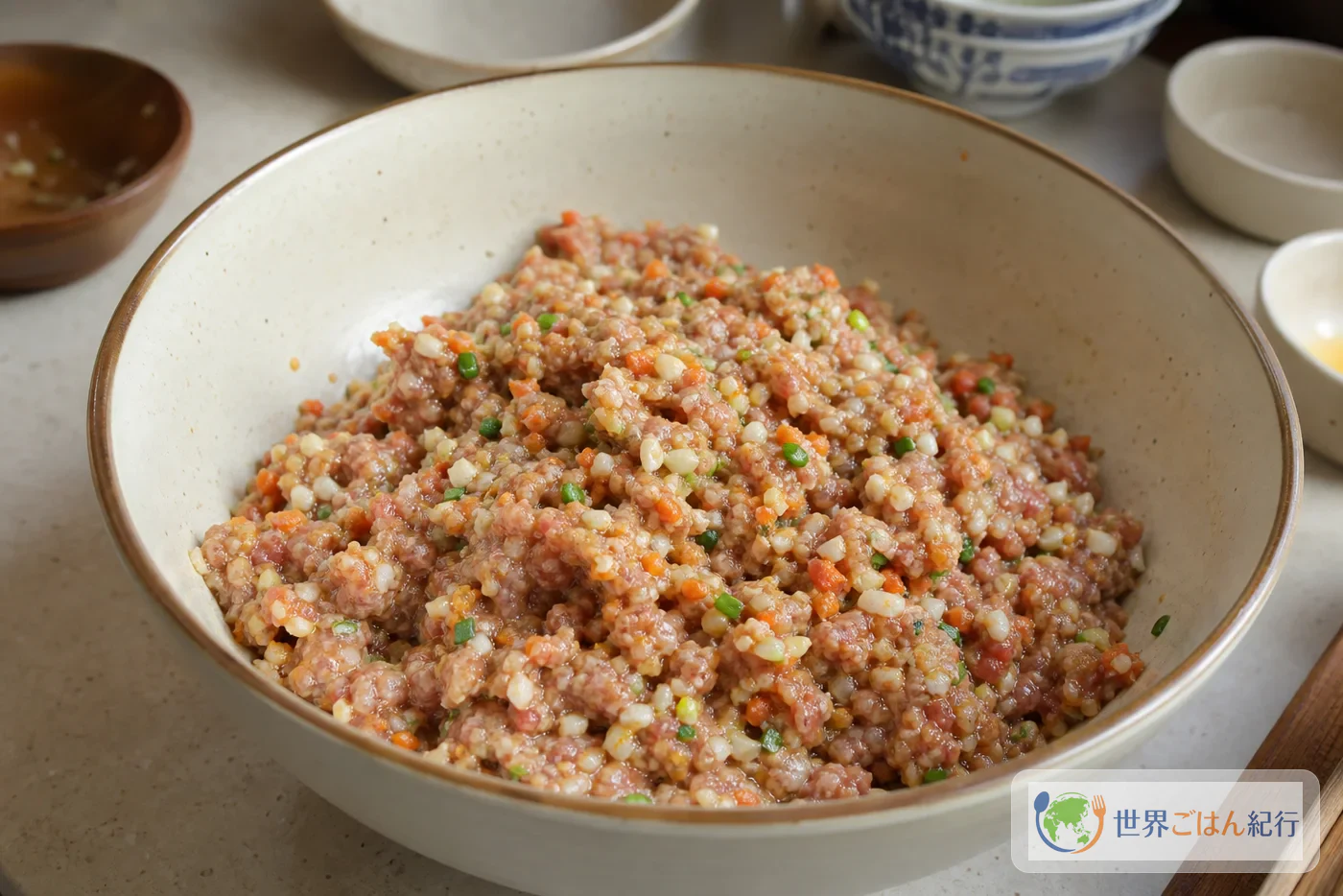
Keep the filling dry. Onion, lotus root and canned bamboo shoots are handy, but if they're wet, the wrapper goes soft from the inside. After chopping, blot them with paper towels so the meat mixture doesn't turn soggy.
Fish sauce is worth including, but it plays a supporting role. As with the bagoong substitute in Bicol Express, a little seafood savoriness is all a home kitchen needs. For your first batch, ground pork, carrot, onion, spring roll wrappers and sweet chili sauce are enough. Next time, try thin lumpia wrappers, banana ketchup, calamansi and a garlic-vinegar sauce.
Method: roll thin and fry without letting the oil temperature drop
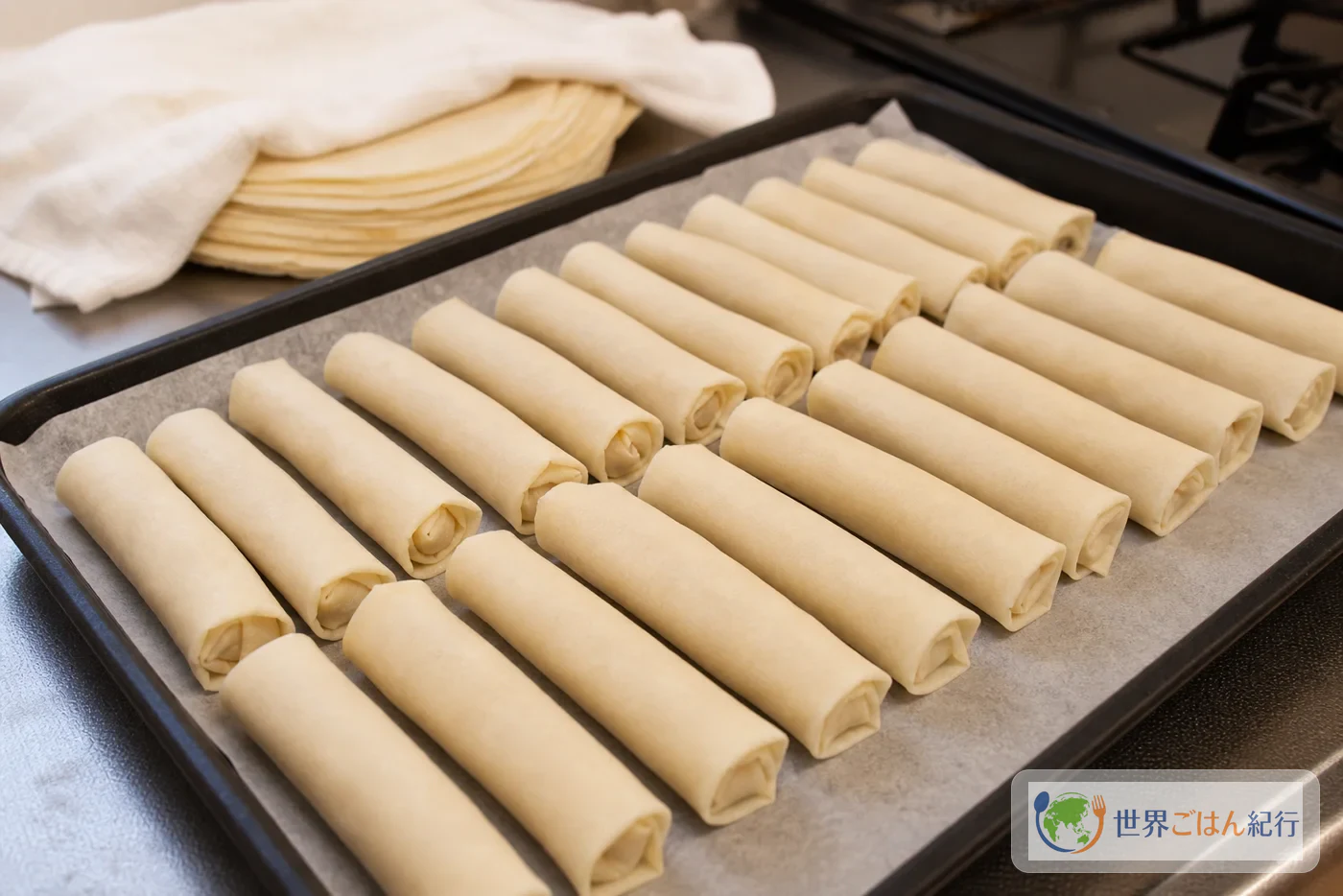
Lumpiang Shanghai is easier if you set up your workflow before you start rolling. Mix the filling, keep the wrappers from drying out, line up the rolled ones in a row and fry them in batches. The kitchen turns a bit like a factory, but that repetition is part of the fun.
The first roll is a test of temperature and filling thickness. If only the wrapper darkens quickly, the oil is too hot. If after 5 minutes it is still pale and greasy, the oil is too cool. If the inside is underdone, the roll is too thick. Use this one to adjust before frying everything at once.
On days when the fried food is the star of the table, the soup beside it changes how heavy the meal feels. For a sour counterpoint, sinigang; to lean toward breakfast or a light dinner, steaming arroz caldo with ginger and fish sauce is easy to pair.
Lumpiang Shanghai problems and fixes
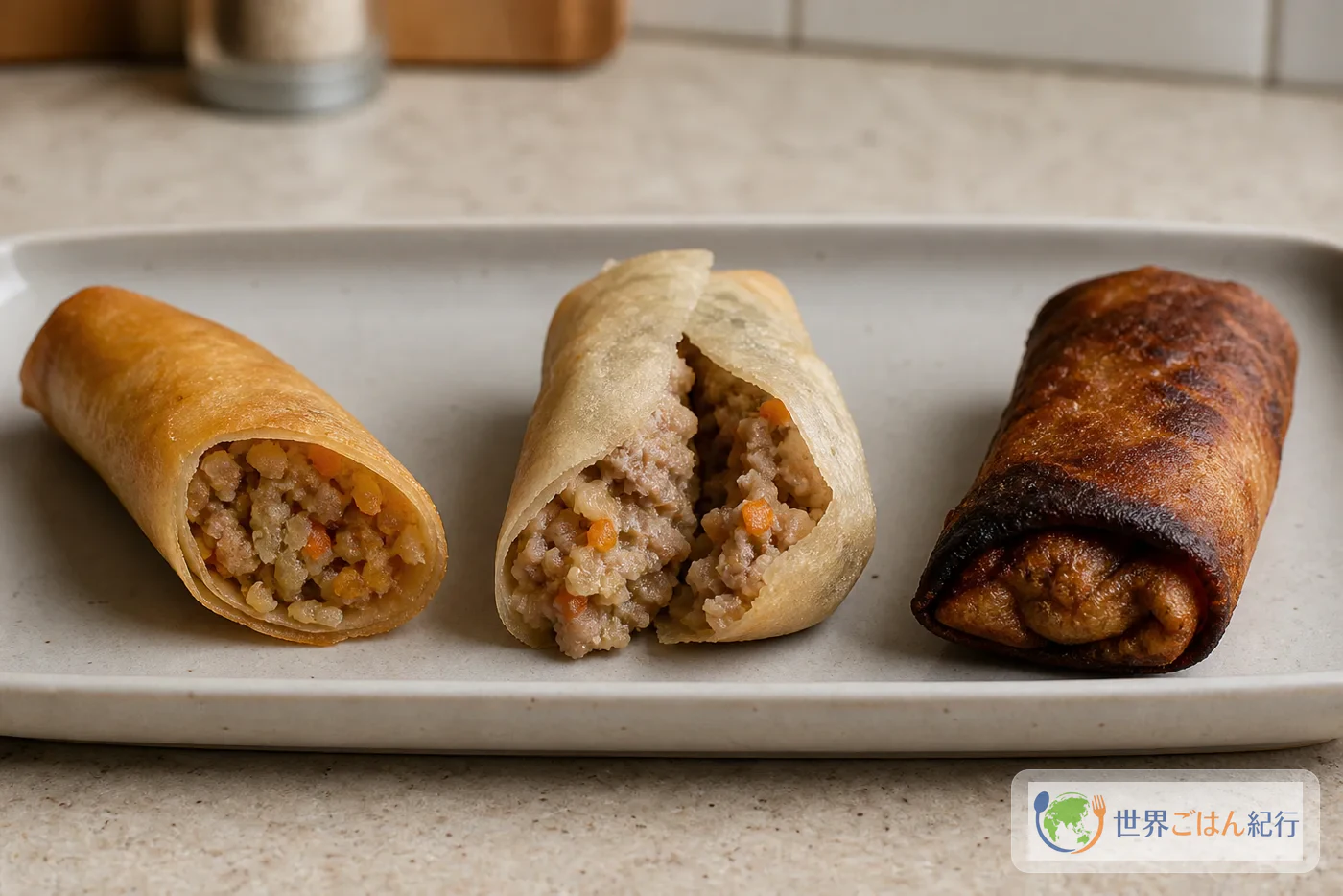
Problems with lumpiang Shanghai show up right away: a torn or burnt wrapper, greasy rolls, a raw center. Small adjustments prevent most of them.
| Problem | Cause | Fix |
|---|---|---|
| Wrapper tears | Too much filling, dry wrapper, loose seam | Reduce the filling to a little under 1 tbsp and cover with a damp paper |
| Greasy | Oil too cool, too many in the pot | Bring it back to 350°F (170°C) or higher before adding the next batch |
| Only the wrapper burns | Oil too hot, filling too thick | Lower to 325°F (165°C) and roll thinner |
| Raw center | Rolled thick, not fried long enough | Cut one to check, and fry thick ones longer |
| Filling is tough | Overmixed the meat, too much starch | Don't overmix, and keep the starch to 1 tbsp |
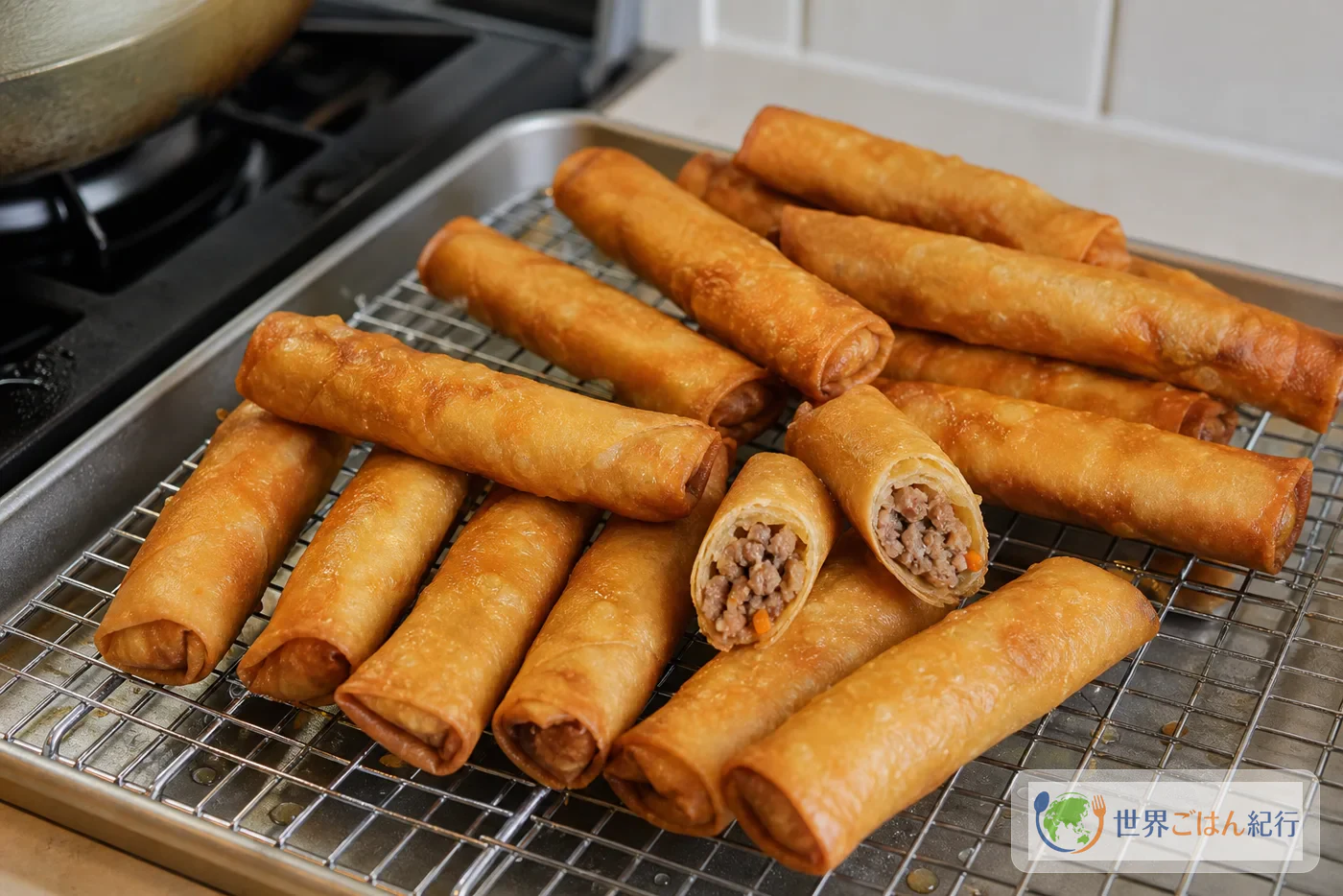
| Wrapper goes soft | Stacked after frying | Set on a rack and let the steam escape |
| Flavor is vague | Too little salt in the filling, relying on the sauce | Adjust using a test-cooked bit of filling |
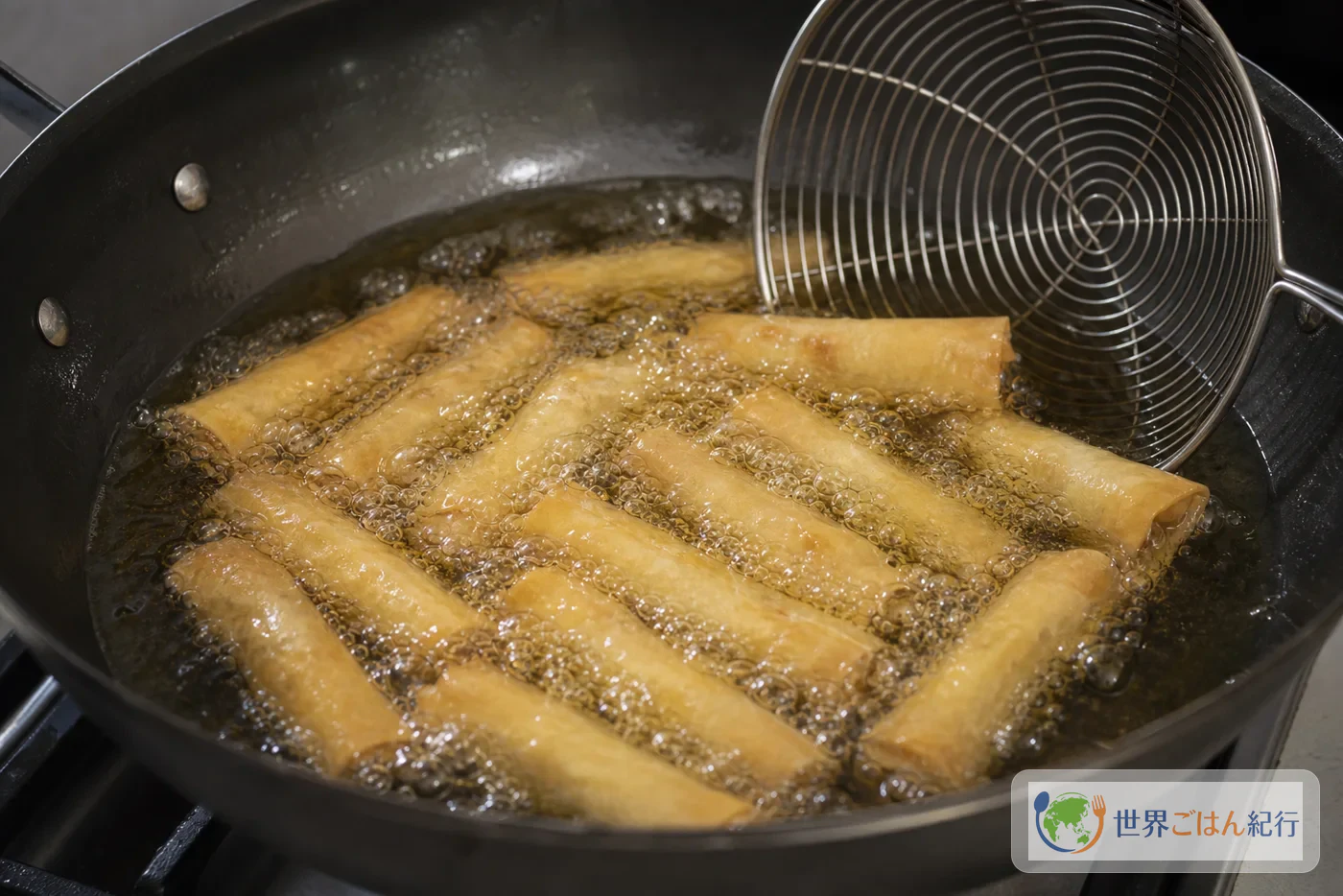
Cool oil looks gentle, but the wrapper soaks it up. The temperature drops as soon as the rolls go in, so wait until the oil is bubbling again before adding the next batch. Oil that's too hot causes the opposite problem. The filling holds water, so if the wrapper darkens early, it starts to burn before the center is cooked. No thermometer? Drop in a scrap of wrapper. It shouldn't sink right away but rise with fine bubbles.
A bigger pot doesn't help. On a home stove, a small pot with 1 to 1.5 inches (3 to 4 cm) of oil and 6 rolls at a time is easier to control. A 11 inches (28 cm) skillet with shallow oil looks like it can fry more at once, but the oil cools quickly and the edges heat unevenly. Thin lumpia fry fast, so steady heat matters more than batch size.
Because this uses ground pork and shrimp, cook it through to the center. After frying, cut one open and check that the meat inside is not red and the shrimp is not translucent. Avoid leaving the fried rolls at room temperature for long, and refrigerate leftovers promptly.
Serving and storing lumpiang Shanghai
Sauces
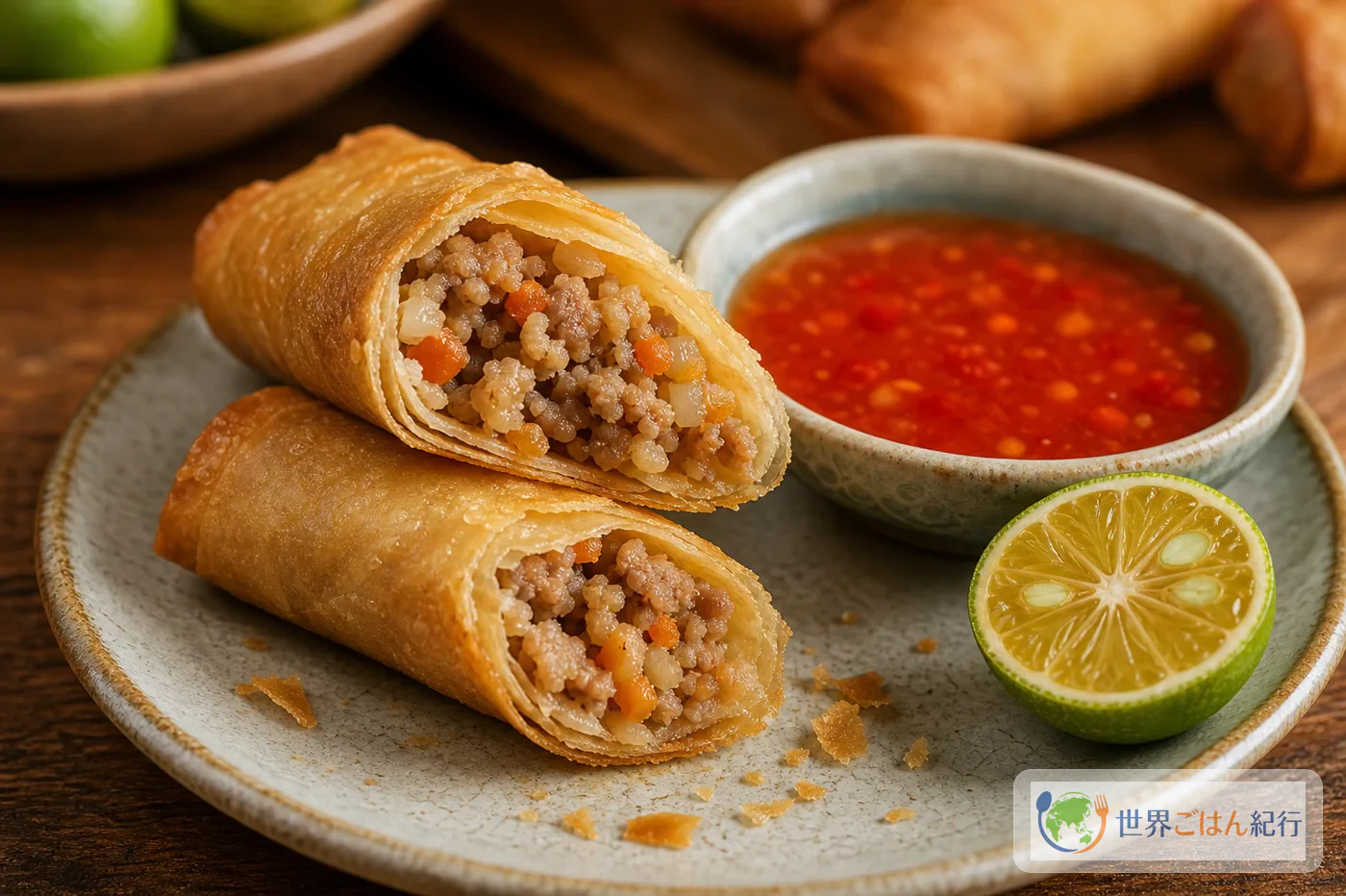
The sauce changes the whole impression. For children and anyone with a sweet tooth, go with sweet chili or banana ketchup. To go with drinks, offer a vinegar dip with garlic, black pepper and chili. Better yet, put out one sweet dish and one sour dish, and people will help themselves to both.
| Sauce | How to make it | When it suits |
|---|---|---|
| Sweet chili | Store-bought, as is | Children, a first try, guests |
| Banana-ketchup style | 3 tbsp ketchup, 2 tsp vinegar, 1 tsp sugar | When you want to lean Filipino |
| Garlic vinegar | 3 tbsp vinegar, 1 clove garlic, a little chili | When you want to eat fried food lightly |
| Soy-vinegar | 2 tbsp vinegar, 1 tbsp soy sauce, black pepper | When you want to lean toward a Japanese table |
| Calamansi | Sudachi, lime, lemon | When you want to add aroma at the end |
What to serve with it
What goes beside the rolls sets the menu. For a Filipino spread, add a small platter of pancit canton noodles, a sour sinigang and soy-and-vinegar adobo. That way the fried dish doesn't weigh the meal down. For a sweet finish, sapin-sapin, made with glutinous rice and coconut, ties it together.
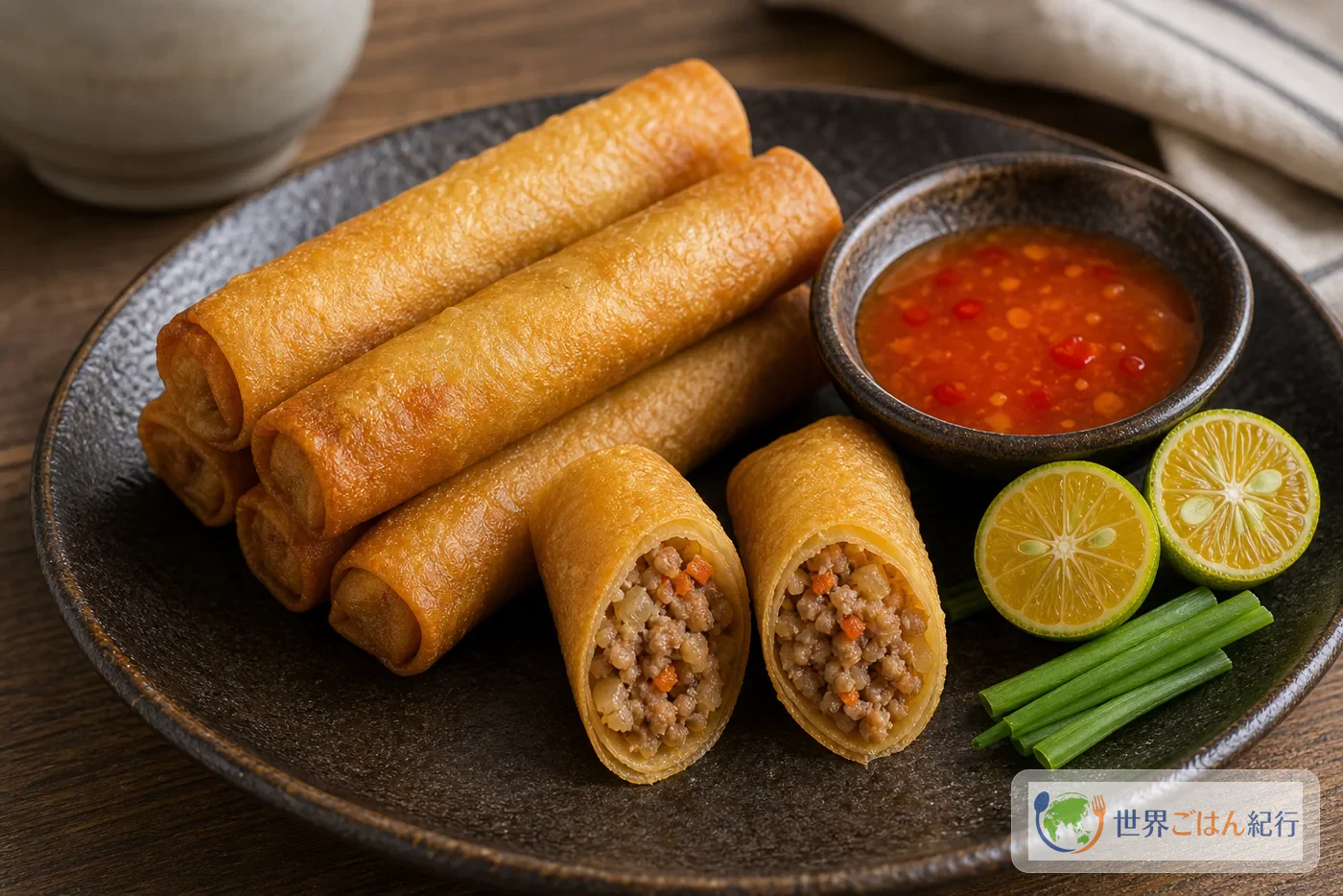
When guests come, don't make the lumpia the star. A big pile of fried food is fun at first but gets heavy halfway through. Spread the meal across pancit, a sour soup, plain rice and dessert, and you get the easy, little-of-everything pace of a Filipino party table. For a more grown-up plate, add the Indonesian sambal substitute. For other Southeast Asian noodles to compare, try the sweet-soy mie goreng or the sour, nutty pad thai.
Make-ahead and freezing
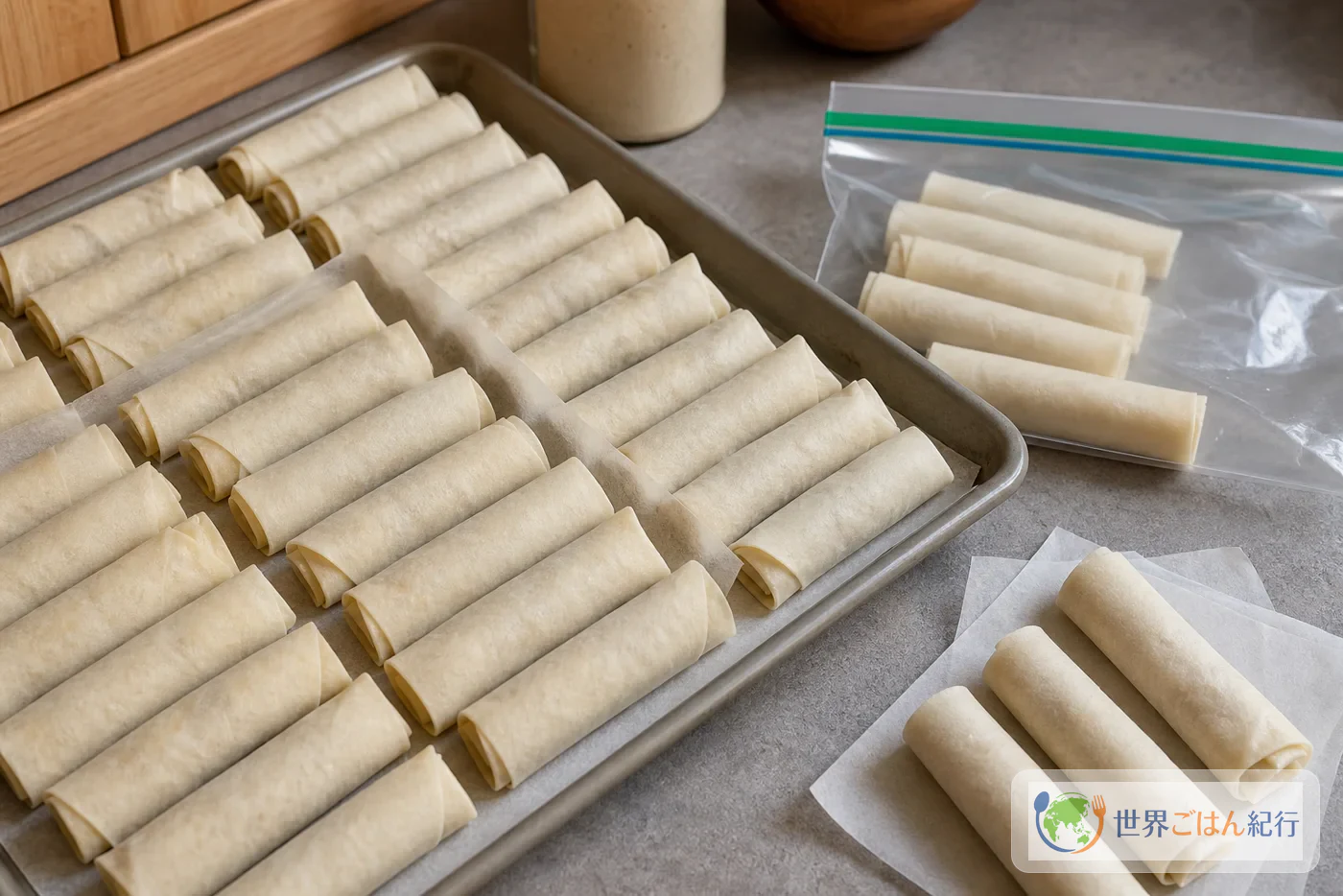
Lumpiang Shanghai is great for making ahead, but store the rolls uncooked, not fried. Once fried rolls go into the fridge, the wrapper never gets its lightness back. To freeze, lay the rolls in a single layer on a parchment-lined tray, not touching. Freeze them for 1 to 2 hours, and when the surface is hard, move them to a freezer bag. Use them within 2 to 3 weeks and they're unlikely to pick up freezer odors. Then you can fry only as many as you need.
Fry frozen lumpia without thawing, since thawing makes the wrapper damp and prone to tearing. Start with oil a bit cooler than usual, 325–350°F (165–170°C), and fry 1 to 2 minutes longer. If the outside colors too fast, turn down the heat so the center can catch up.
Leftovers and lunch boxes
Refrigerated fried leftovers are best eaten by the next day. The microwave alone leaves the wrapper limp. Instead, microwave for just 20 seconds to warm the inside, then crisp the rolls in a toaster oven for 3 to 4 minutes. They won't be quite as good as fresh, but the crunch mostly comes back.
For a lunch box, let rolls fried in the morning cool completely and pack the sauce separately. Sauce poured over them will leave the wrappers soft by noon. For a potluck, cool them a little on a rack and arrange them in a shallow container. Packed piping hot into a lidded box, they steam and go soft.
Lumpiang Shanghai variations
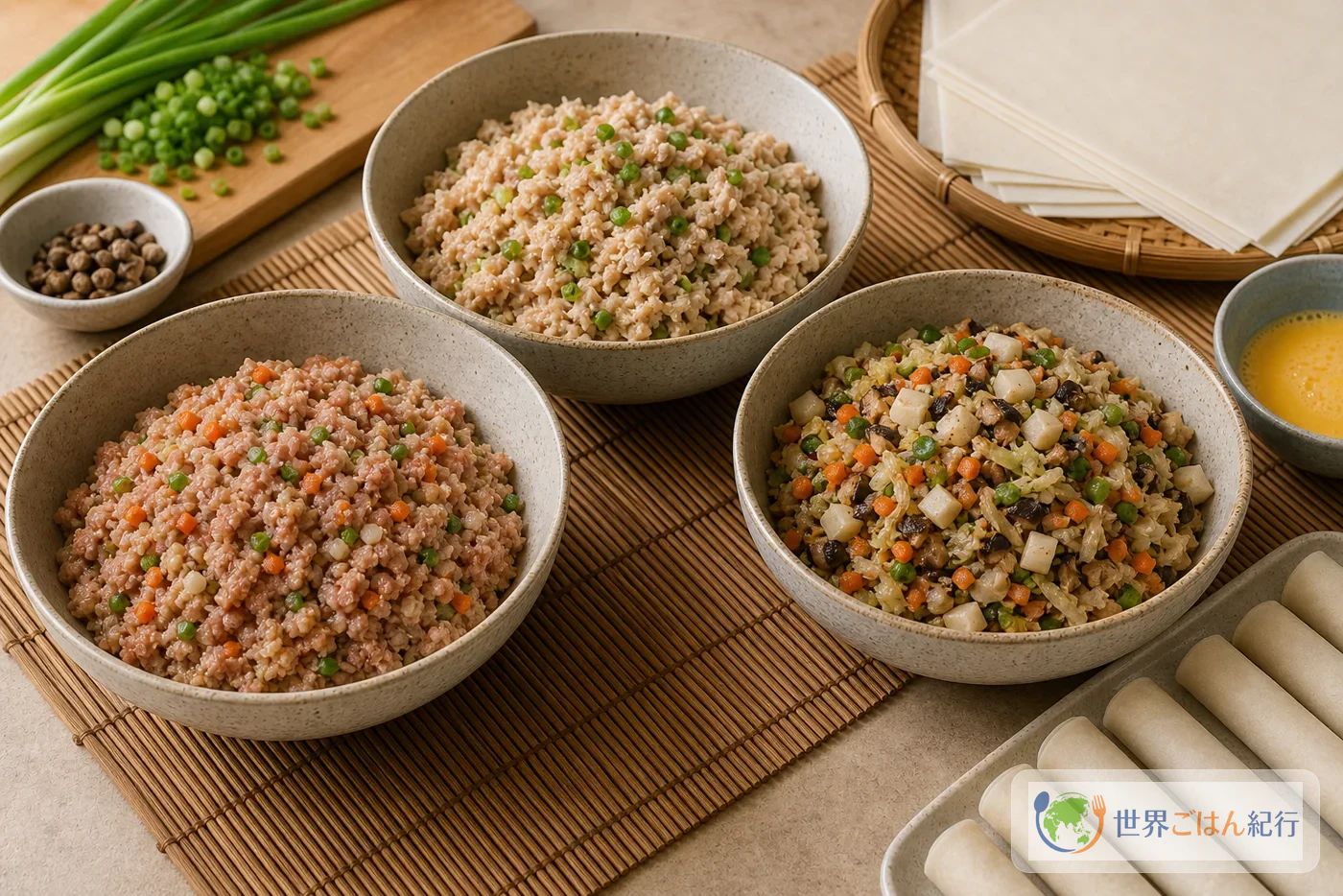
The filling takes changes well, but change one thing at a time. Keep the wrapper and thickness the same and adjust only part of the filling. If you change the wrapper, thickness and oil temperature all at once, it's hard to tell what went wrong.
Without shrimp
Leave out the shrimp and increase the ground pork to 1 lb (480 g). The aroma gets a little weaker, so add 1 more clove of garlic and more black pepper. For a seafood allergy, also skip the oyster sauce and fish sauce, and season with 1 tbsp soy sauce and 2/3 tsp salt.
Ground chicken version
Ground chicken works, but it's lean and can turn tough. Use ground chicken thigh and mix 2 tsp oil into the filling so it stays moist. If you use only ground chicken breast, add more lotus root or bamboo shoot for texture and serve a sweet-and-sour sauce.
More vegetables
For more vegetables, canned lotus root or bamboo shoots are a safer choice than extra carrot and onion. Lots of leafy greens or cabbage will release water and soften the wrappers. Whatever you add, keep the meat mixture firm enough to hold together.
Air fryer version
Brush the rolls with a thin layer of oil and air-fry at 350°F (180°C) for 10 to 12 minutes, turning once. It's handy for everyday lunch boxes, but you won't get the fine bubbling and light wrapper that oil gives you. The first time, fry them in oil so you know what lumpiang Shanghai is meant to taste like.
If you want to roll them thick
Thick rolls are more filling, but they cook through more slowly and lose that easy, pick-up-another quality. If you want them thick, treat them as ordinary spring rolls with a pre-stir-fried filling and give them their own frying time.
Frequently asked questions
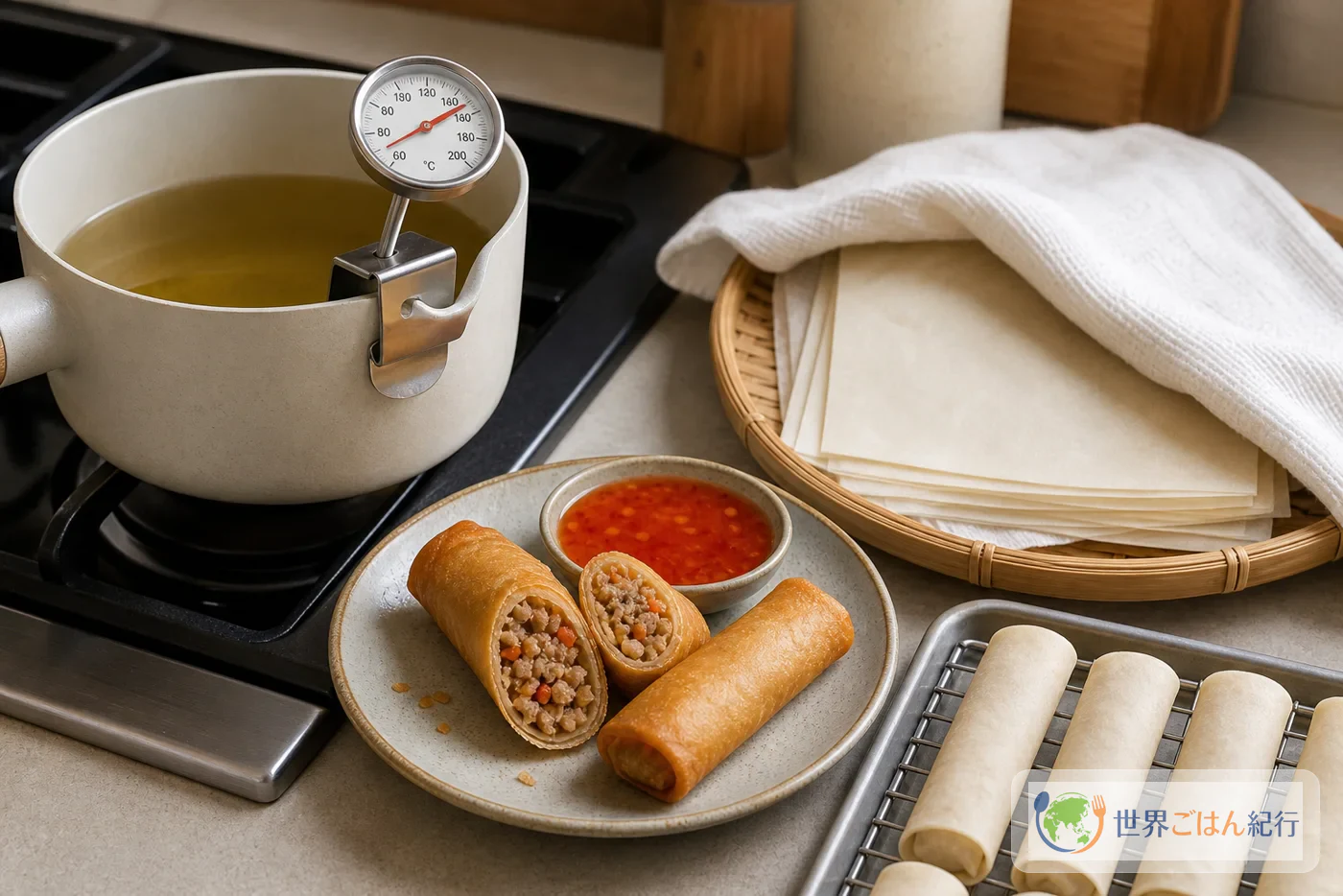
Q1. I only have spring roll wrappers. Can I still make it?
Yes. Cut ordinary spring roll wrappers into thirds, or use small ones, and use a little under 1 tbsp of filling. With a thick wrapper, the fatter you roll, the heavier it gets. It won't be as light as a thin lumpia wrapper, but rolled thin it makes a very good home version.
Q2. Can I pan-bake instead of frying?
You can, but the texture will be different. Use a little extra oil in a skillet and cook over medium-low heat, turning so every side browns. Since the oil doesn't touch the whole wrapper at once, you won't get the fine crispness of deep-frying. For a lighter version, an air fryer works better.