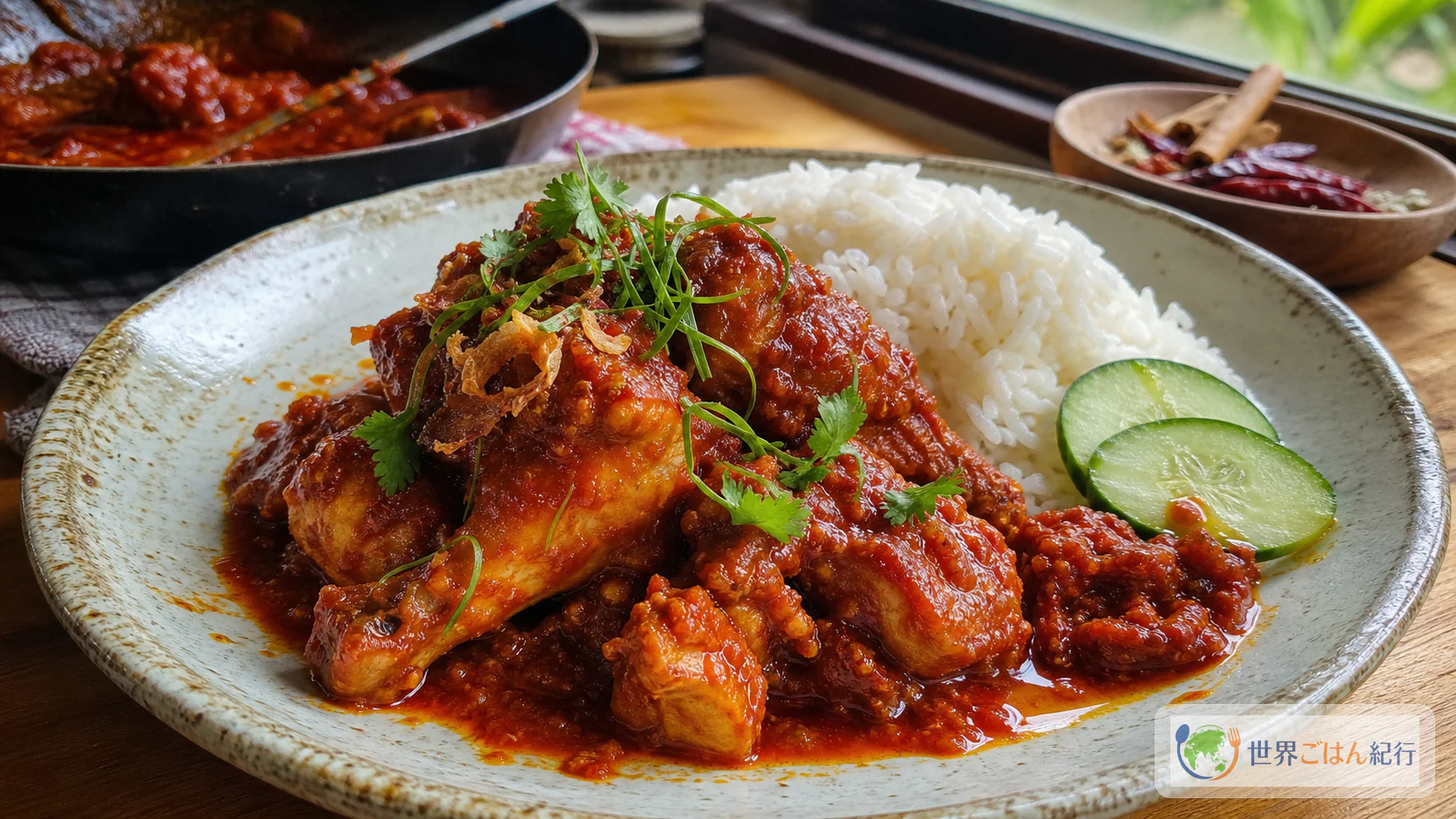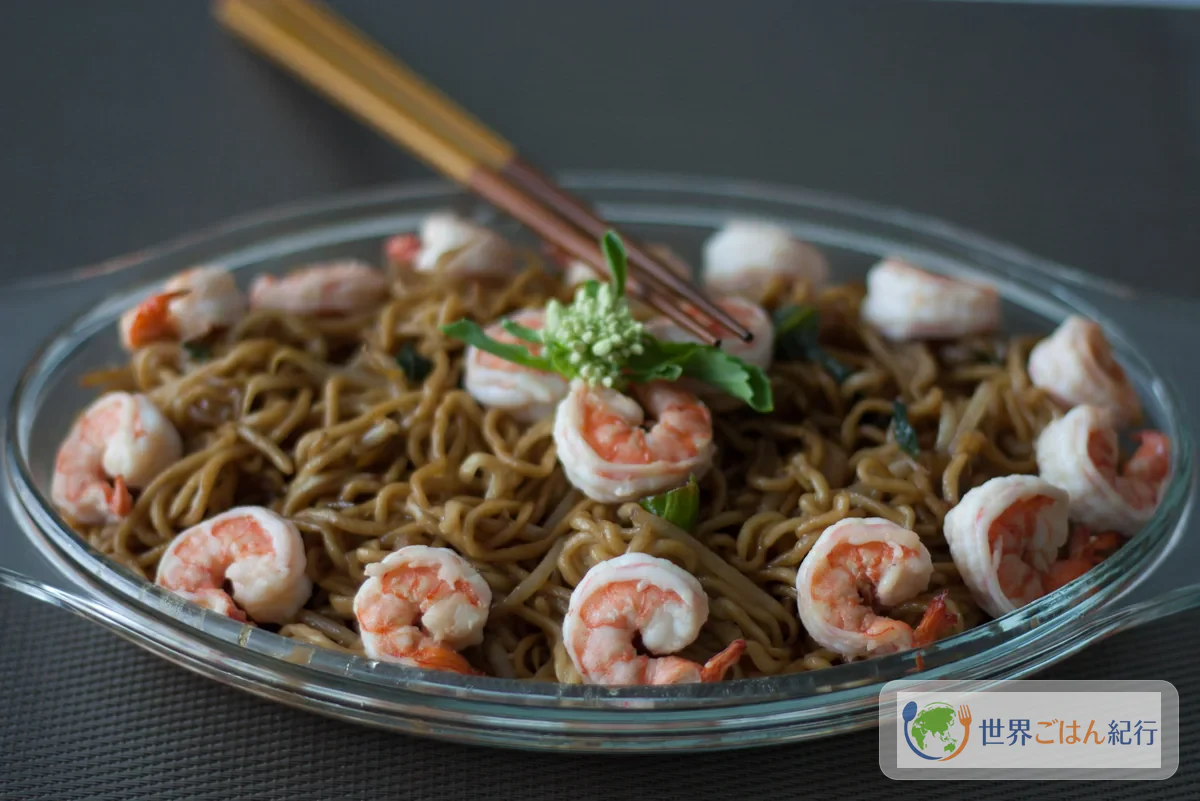
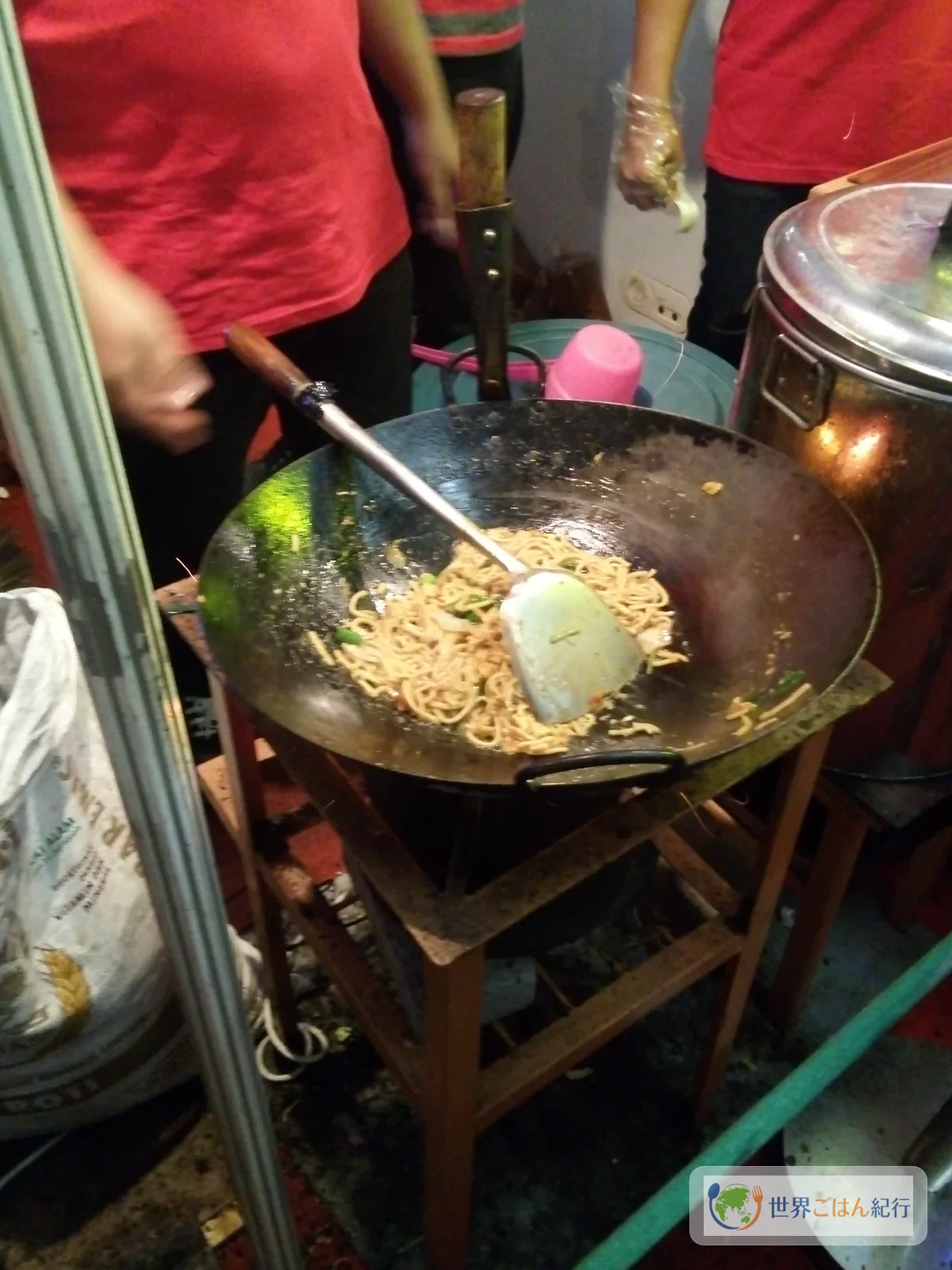
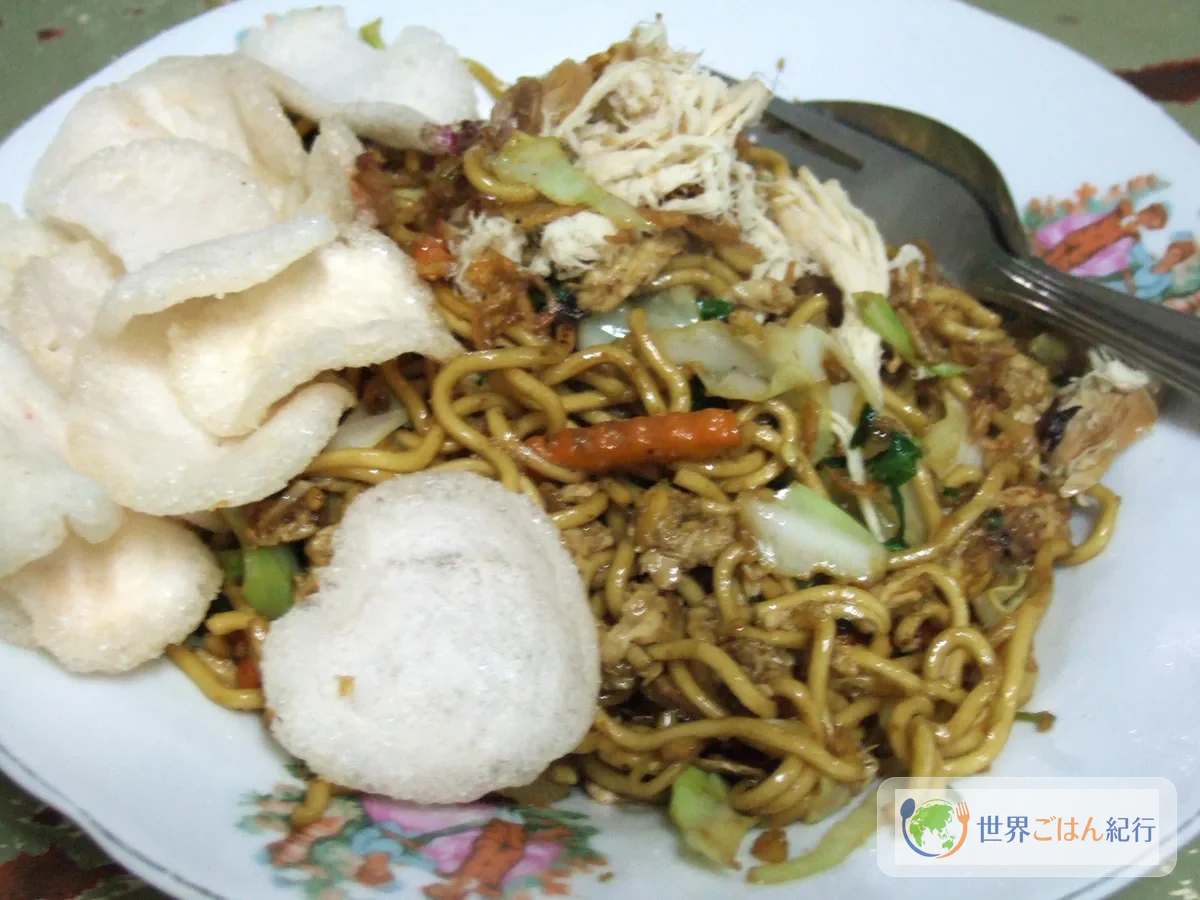
Half a cabbage and a few carrots in the vegetable drawer and one bag of Chinese noodles in the pantry usually add up to yakisoba or ramen. But sauté garlic and shallots in oil, drop in black, syrupy kecap manis, and the air in your kitchen shifts toward a Javanese street stall. Mie goreng means "fried noodles" in Indonesian. It's wheat noodles seared sweet and savory, with the aroma of garlic and shallots, the heat of sambal and the crunch of shrimp crackers and fried shallots. If nasi goreng is the art of reviving leftover rice, mie goreng is its everyday noodle counterpart.
Mie Goreng in Indonesia
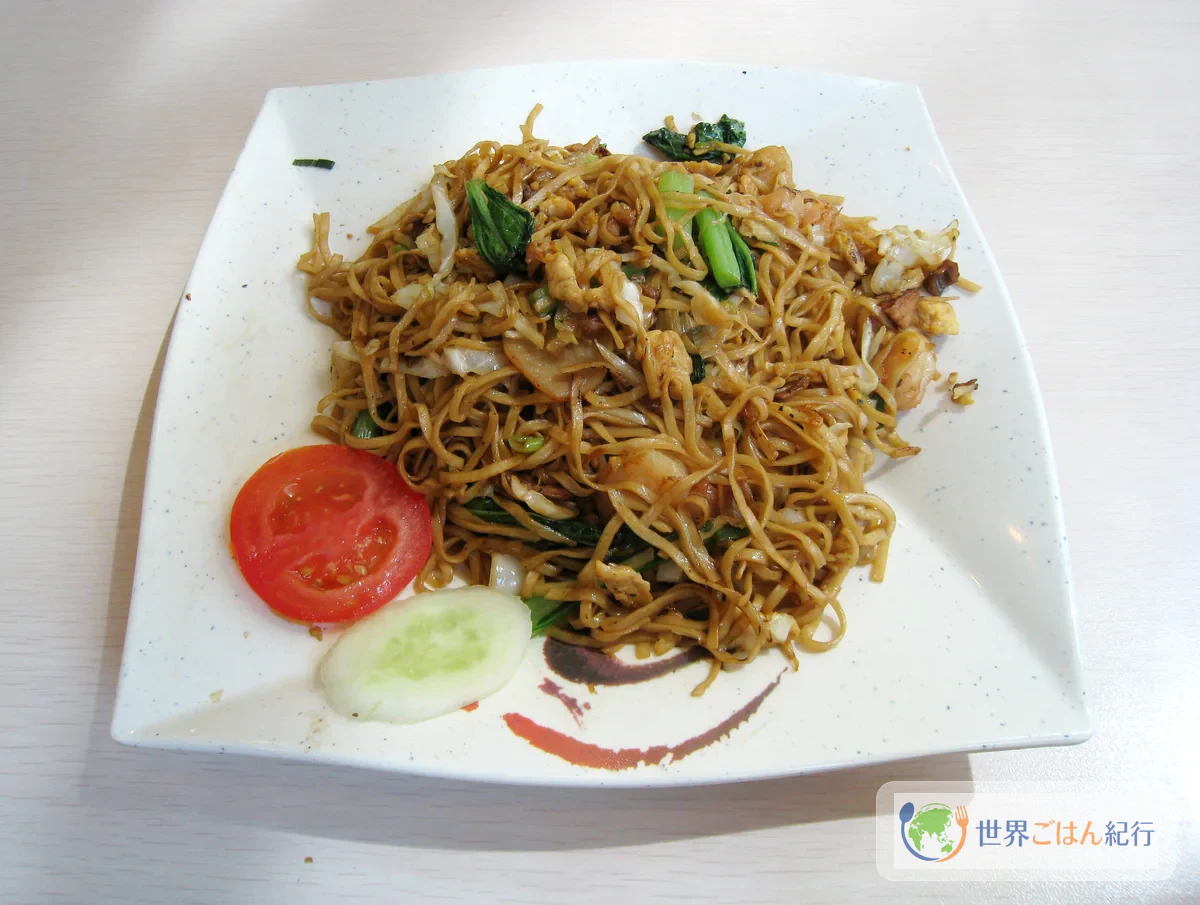
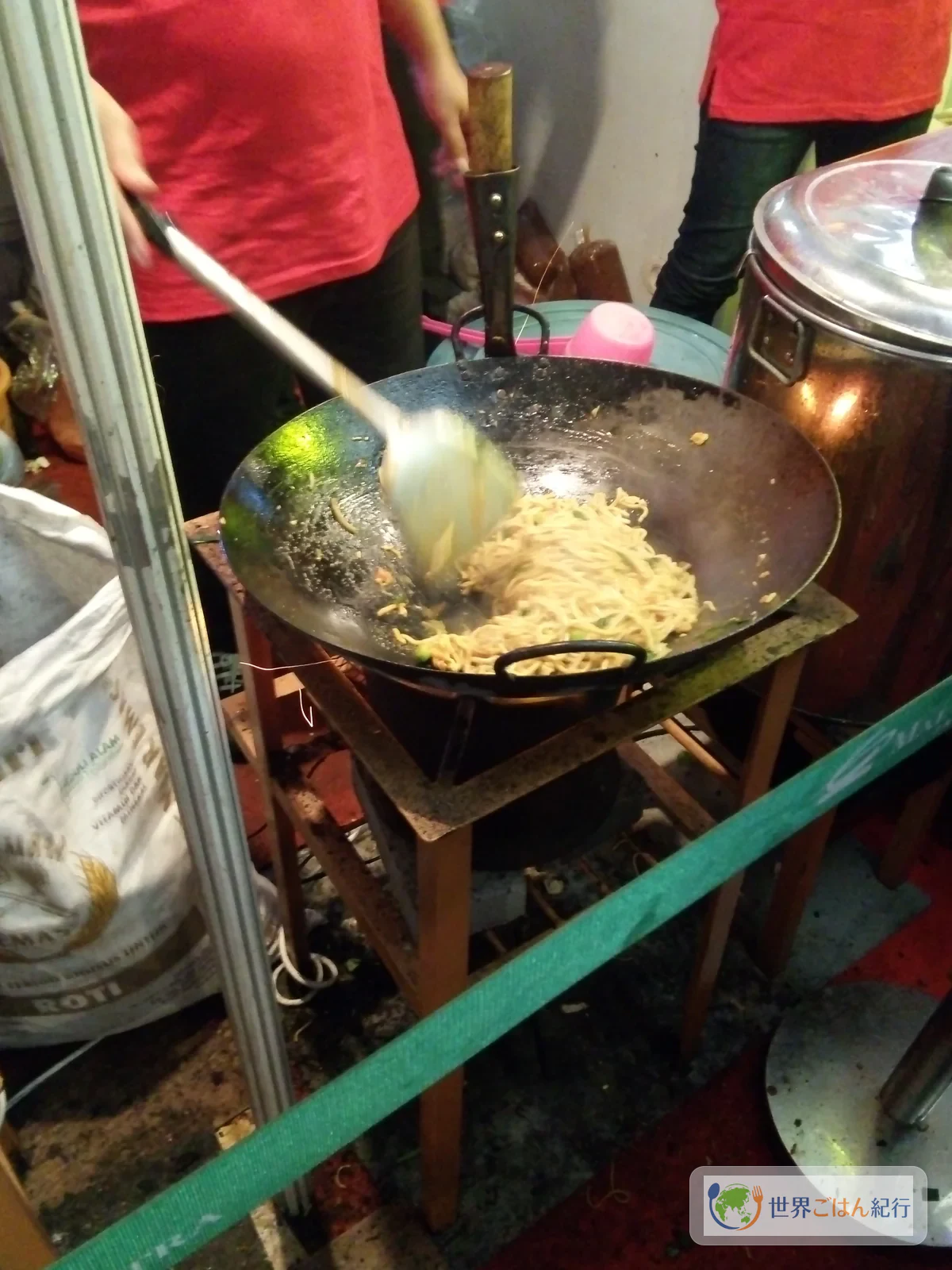
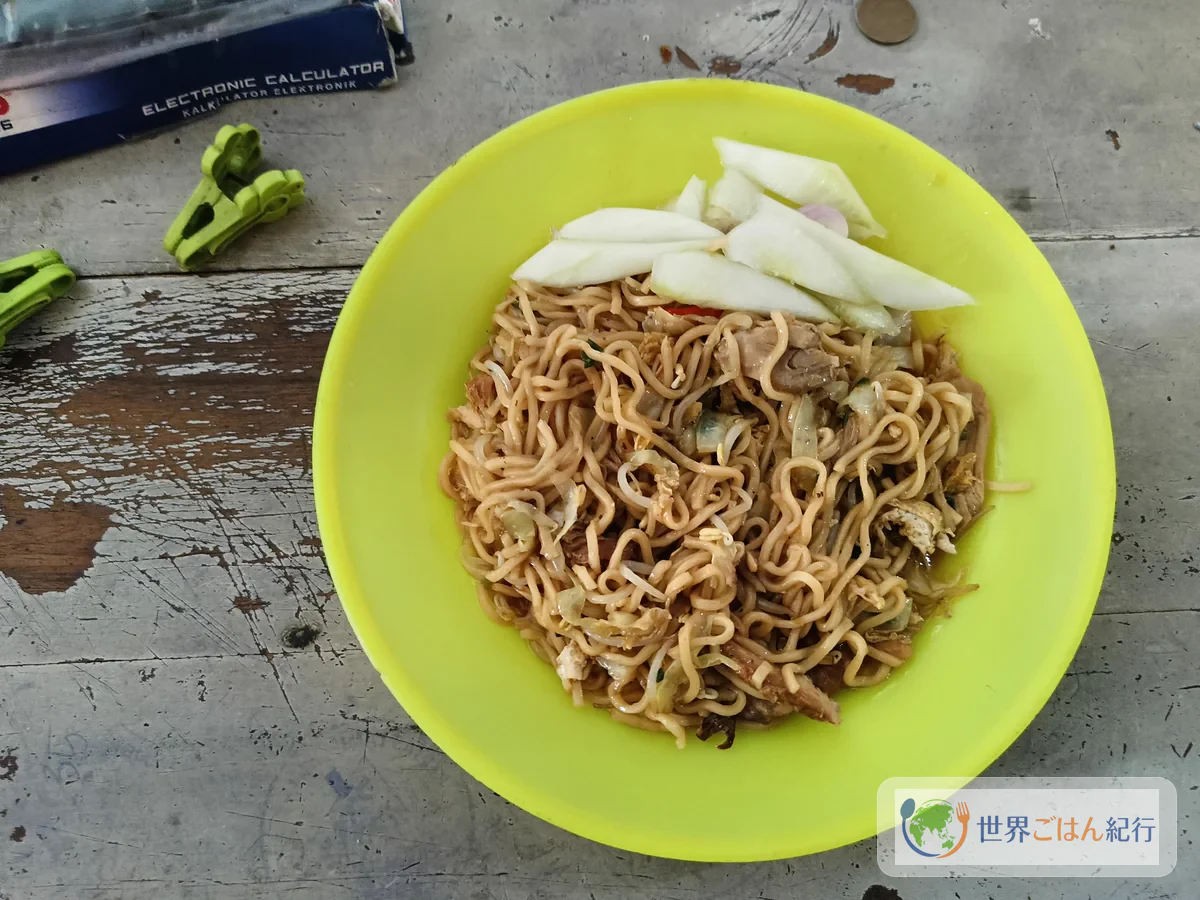
Mie goreng turns up all over Indonesia in different forms. You'll find it at street carts, eateries, home kitchens and even the Warung Mi Indo (Warmindo) shops that serve instant noodles.
The standard Indonesian spelling is mi goreng, but mie goreng is the more common spelling in English.
From Chinese Noodles to Kecap Manis
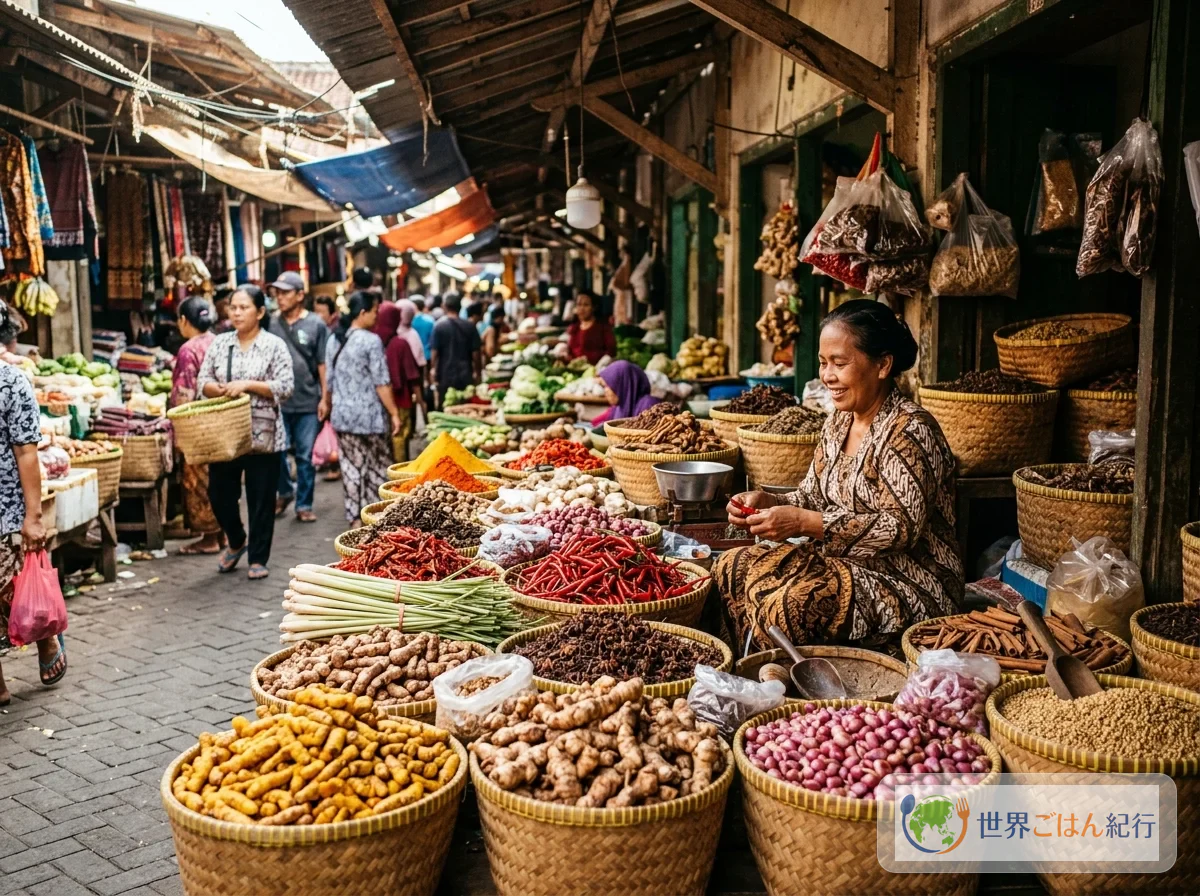
Mie goreng grew out of the fried noodle tradition brought by Chinese immigrants. The Indonesian "mie" comes from the Chinese "mian," meaning noodles, and over long years of migration and trade those seared noodles took on local seasonings.
What makes the dish Indonesian is the sweet soy sauce, kecap manis. It dates to around the mid-19th century, when Chinese settlers in Java added palm sugar to soy sauce to suit the Javanese taste for sweetness. Just a little gives the noodles a deep brown glaze and the smell of caramelized sugar and soy.
Religion shapes what goes in, too. Indonesia has a large Muslim population, so street-cart mie goreng usually uses chicken, shrimp, beef meatballs, egg and vegetables instead of pork or lard. At home, chicken thigh, frozen shrimp, egg, cabbage and carrots are enough to get the feel.
Regional Styles of Mie Goreng
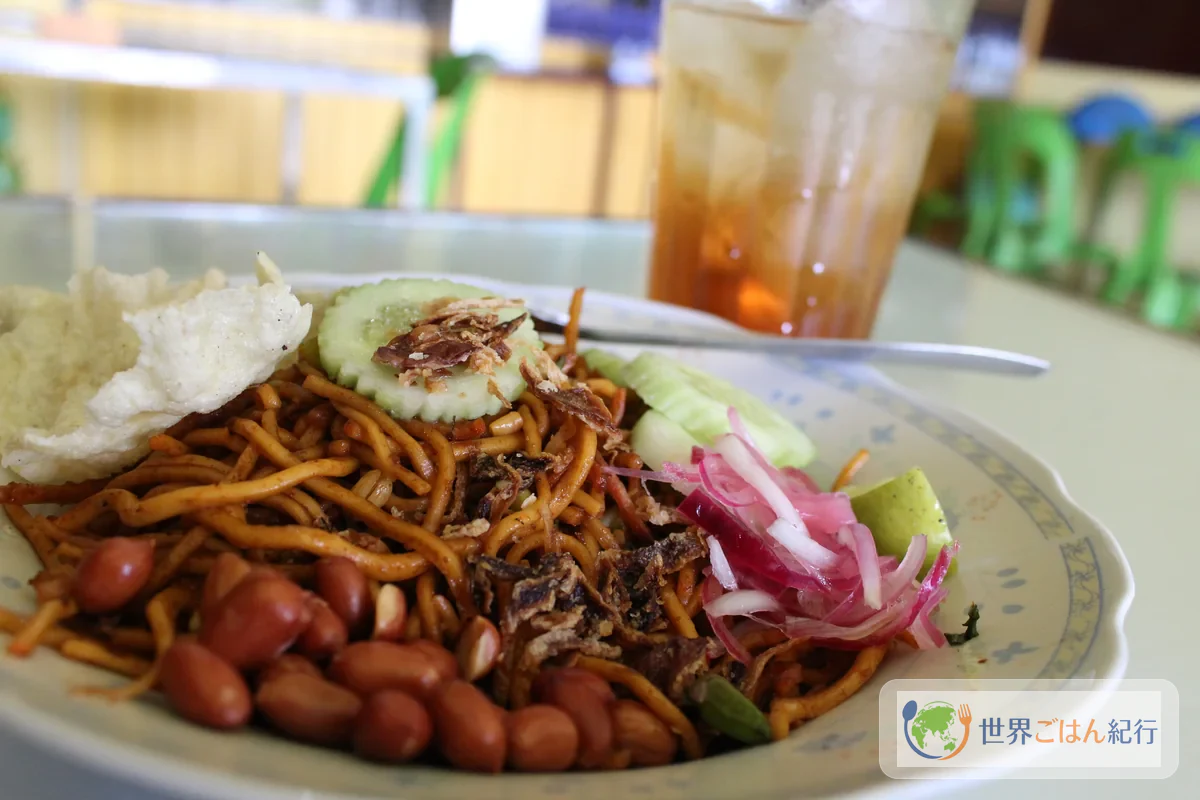
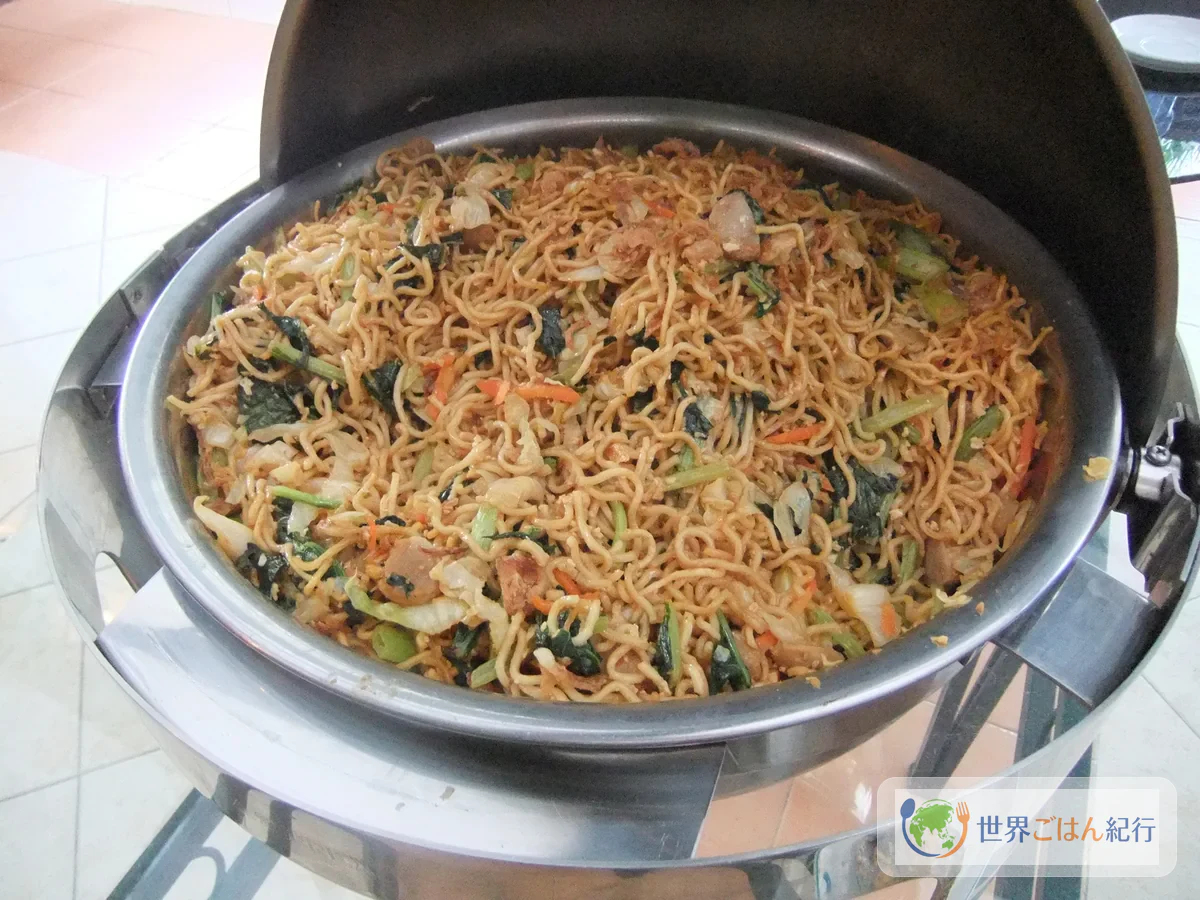
The name is the same across Indonesia, but the dish changes a lot by region and by shop. Image searches turn up plates that look alike and taste quite different.
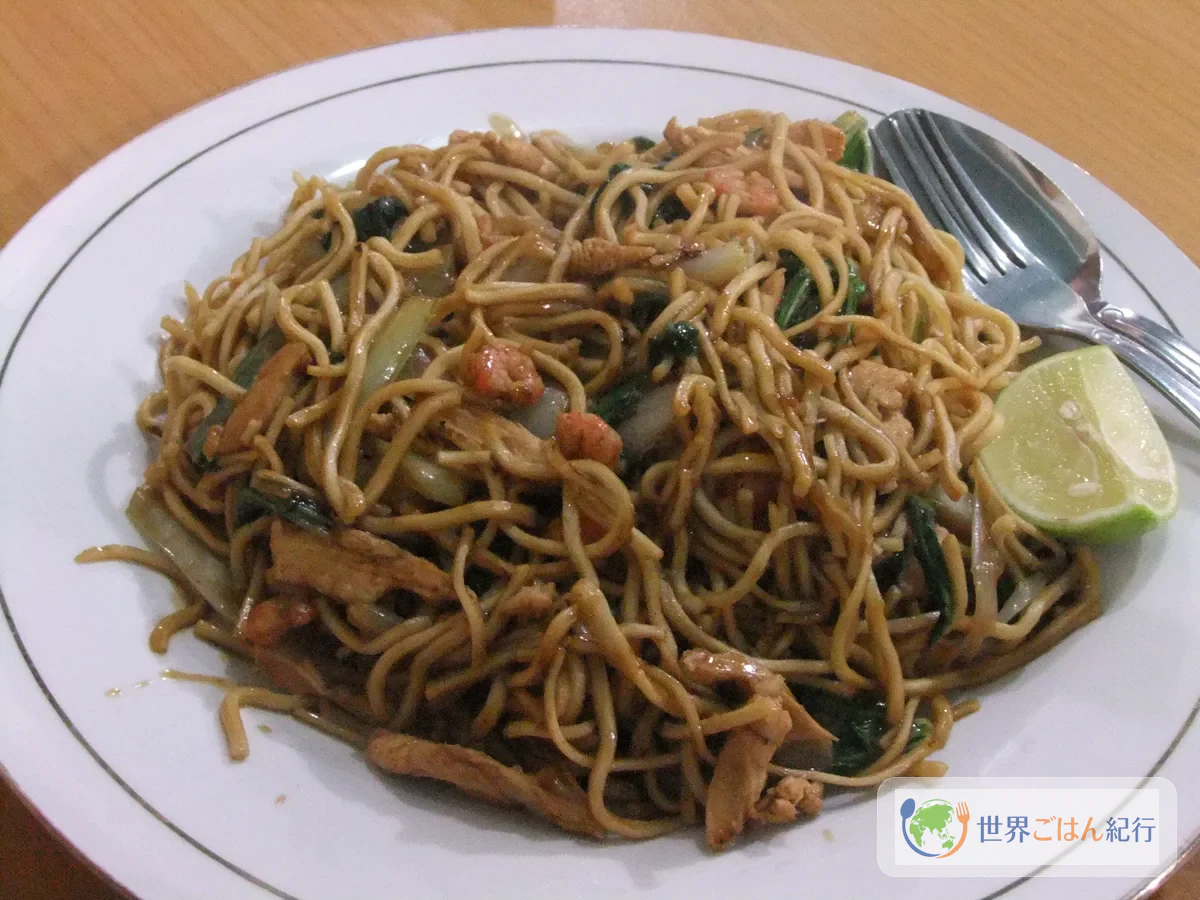
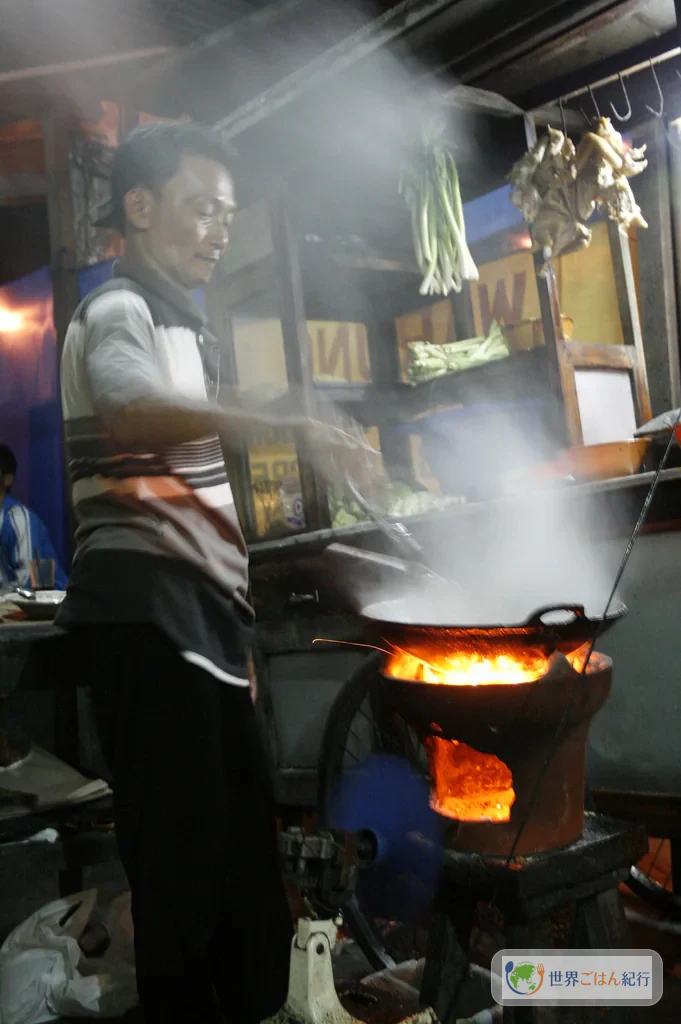
Javanese mie goreng (mi goreng Jawa) is the style where sweet kecap manis with chicken, egg and vegetables is easiest to recognize, and this recipe is a home version of it. The tek-tek type comes by street cart at night and is named for the sound of wood being knocked; the same cart sometimes sells both fried noodles and noodle soup.
Mie Aceh, from Aceh in northern Sumatra, is heavily spiced and sometimes made with thick noodles. It has a curry-like aroma, and heat and spice come forward far more than in the Javanese version.
Instant Mi Goreng is worth knowing as well. Soupless instant mi goreng is widely eaten in Indonesia, sometimes with egg, vegetables and even cheese added. It isn't always fried, but for many people this is the flavor they remember.
| Style | Flavor direction | If you make it at home |
|---|---|---|
| Java style | Sweet-savory, with the aroma of garlic and soy sauce | The basic recipe here |
| Aceh style | Strong spice, thick noodles, heat | A little curry powder, chili, more shrimp |
| Tek-tek style | Rich fried noodles from a night cart | Everyday style with chicken, egg and cabbage |
| Instant style | Sweet-savory powder or liquid seasoning, soupless | Add vegetables and egg to make it a meal |
| Bihun goreng | Rice noodle version | Use rice vermicelli to avoid gluten |
Javanese-style sweet-savory noodles are the easiest place to start; the others can come later.
Ingredients (serves 2): Decide on Noodles and Sweet Soy Sauce First
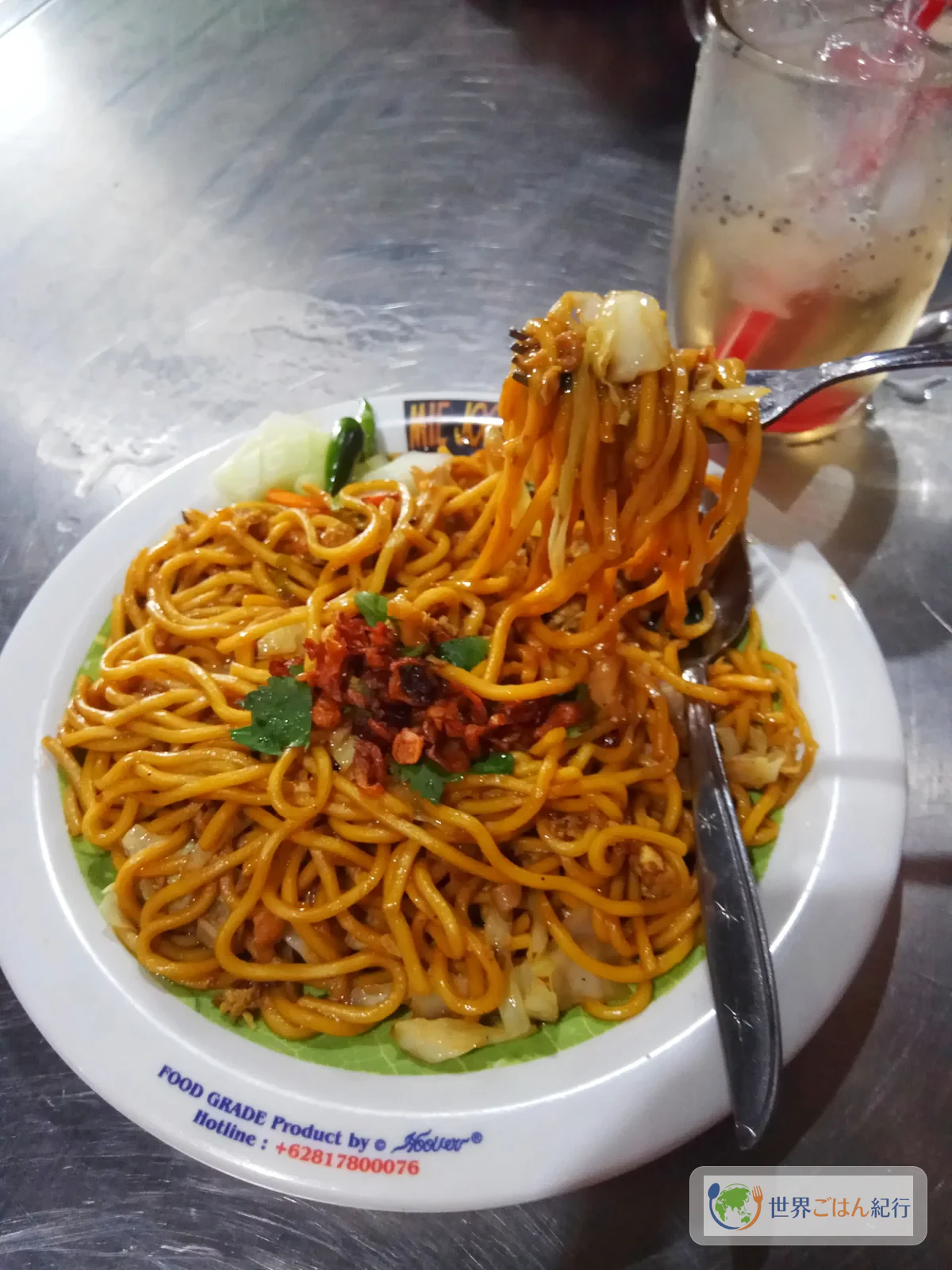
This serves 2. Adding a bit more vegetable and protein keeps you from tiring of it faster than adding more noodles. If you cook for more people, do not double the batch in one pan; cook in two rounds. If you add too many noodles on a home stove the moisture does not cook off and you get steamed noodles.
This recipe contains wheat (noodles), egg, shrimp, soy (soy sauce and kecap manis), and depending on the product, fish and shellfish (oyster sauce). To avoid shrimp, leave out the peeled shrimp and the krupuk, and increase the chicken or fried tofu.
If You Have No Kecap Manis
Put 3 tbsp regular dark soy sauce, 2 tbsp dark brown sugar or raw cane sugar and 1 tbsp water in a small pot and simmer over low heat for 2–3 minutes. It thickens as it cools. A piece of star anise strengthens the aroma, but too much pushes mie goreng toward Chinese flavor, so you can leave it out at first.
Stir-fry noodles can replace the noodles. For heat, a little chili bean paste works in place of sambal. But the sweet gloss of kecap manis is the heart of the dish, so don't leave it out. If you are buying, get kecap manis first and sambal second.
Ingredients and Tools for This Dish
Once you buy kecap manis, it serves mie goreng, nasi goreng, sate marinade and glazes for grilled fish. If you turn it to a sweet-savory beef sauce, it connects directly to the Solo-style Western-influenced salad selat Solo. Soy sauce and sugar alone can substitute, but if you will keep cooking Indonesian food, one bottle gets you to the right flavor faster.
If each person in the family wants a different heat level, sambal served in a small amount at the edge of the plate is more convenient than cooking it in. It also works with nasi goreng and grilled chicken, so it becomes a small staple in your refrigerator.
Shrimp crackers are not a garnish but the texture that adds lightness between bites of sweet-savory noodles. If frying them is a bother, store-bought shrimp crackers are fine.
Choosing Ingredients for Mie Goreng
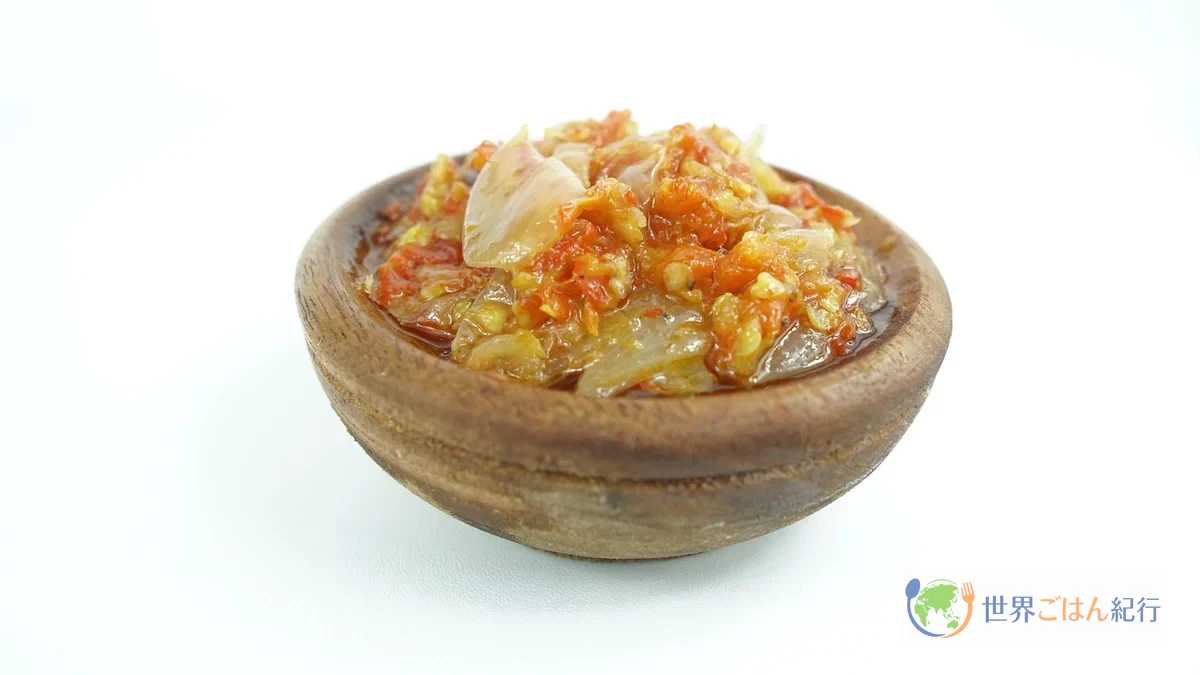
Most of the hesitation at the store comes down to noodles, sweet soy sauce, heat and shrimp crackers. On your first try, sort out what to keep and what to replace, so you know what to adjust next time.
| Ingredient in doubt | Closest to the original | Realistic substitute | Effect on the dish |
|---|---|---|---|
| Noodles | Fresh yellow wheat noodles, egg noodles | Yakisoba-style noodles, fresh Chinese noodles, dried Chinese noodles | Texture differs but easy to substitute |
| Kecap manis | ABC, Bango and the like | Homemade soy sauce + dark brown sugar | Leave this out and it becomes a different dish |
| Sambal | Sambal oelek, sambal bajak | A little chili bean paste + lemon, or a little chili flakes | Heat is covered but the fermented note is weaker |
| Terasi | Fermented shrimp paste | Fish sauce, anchovy, dried shrimp powder | Use a little if at all. A home version works without it |
| Krupuk | Fry your own shrimp crackers | Store-bought shrimp crackers, fried rice crackers | Adds a light crunch |
| Fried onions | Bawang goreng | Packaged fried onions | Worth keeping for the aroma |
The sweet-savory gloss of kecap manis is the one thing you can't replace; with soy sauce alone, the dish drifts toward yakisoba or fried rice. Shallots are more forgiving, and an ordinary onion works fine. Terasi is strongly aromatic and easy to overuse if you're not used to it, so start with a little fish sauce or dried shrimp powder and move on to terasi later.
Sambal is best decided by who's eating. If everyone likes it spicy, stir-fry 1 tsp with the aromatics; with children or anyone who dislikes heat at the table, put it at the edge of the plate instead, since heat and saltiness can't be taken back once stirred in. To make your own, the sambal substitute guide uses chilies, dried shrimp, fish sauce and lime, and it works both ways: 1 tsp stir-fried in, 1 tsp on the side.
Method: Coat the Noodles with Flavor First, and Don't Crowd the Pan
Almost every mie goreng failure is about moisture. Wet noodles, too many vegetables, dumping the seasoning in at the end, or cramming noodles into the pan: any of these gives you strongly flavored steamed noodles instead of sweet-savory fried noodles.
If your pan is under 10 inches (26 cm) in diameter, your induction burner is weak, or you want extra vegetables, cook one plate at a time. Don't crowd the pan; it is the key to avoiding stickiness at home.
Common Mie Goreng Failures and Fixes
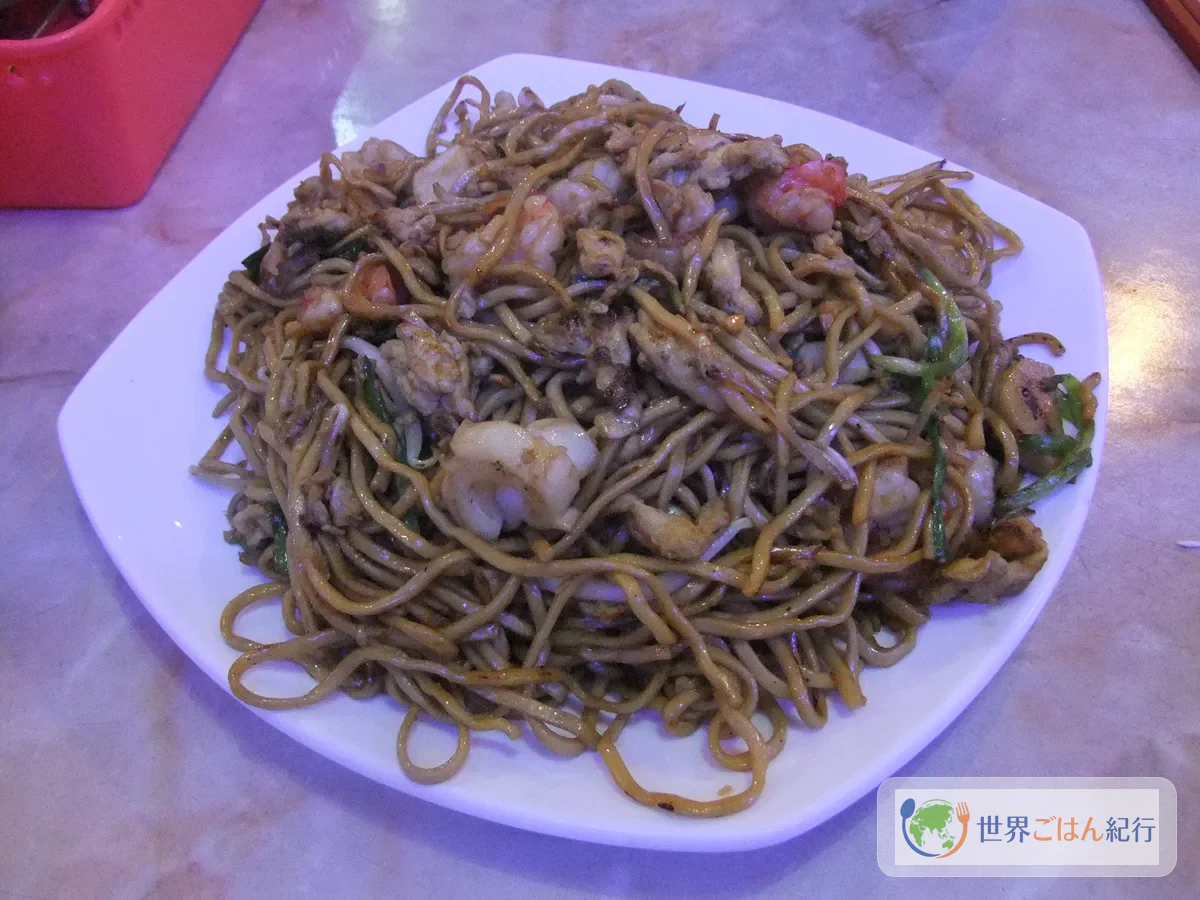
Mie goreng is quick to make, but sloppy work shows. Sweet soy sauce turns bitter if it scorches, and if you lower the heat to avoid that, the noodles go sticky. Get the order of seasoning or the moisture wrong and supermarket noodles clump almost immediately.
| Failure | Cause | Fix |
|---|---|---|
| Sticky noodles | Wet noodles, too many vegetables, crowded pan | Boil noodles briefly and drain, cook one plate at a time |
| Too sweet | Seasoned with kecap manis alone | Tighten with soy sauce, fish sauce or lemon |
| Tastes like yakisoba | Used Worcestershire or tonkatsu sauce | Return to kecap manis and soy sauce |
| Too spicy | Too much sambal from the start | Serve at the side. Stir in no more than 1 tsp |
| Weak aroma | Garlic and onion not fried enough | Make the aromatic oil before adding the noodles |
| Color only is dark | Seasoning only sits on the surface | Coat the noodles with seasoning first |
A home stove can't match the firepower of a street stall, which is why separating the steps matters. Cook the egg separately, season the noodles before they go in, and cook one plate at a time if needed. Trying to fix everything at once in the pan only slows you down.
If it turns out too sweet, keep the water out of it: moisture weighs the noodles down and just dilutes the flavor. A squeeze of lemon, 1 tsp soy sauce or sambal at the edge of the plate will bring back the outline.
A soft-cooked fried egg is delicious if you eat right away, but if you are packing a lunch box or saving for the next day, cook the egg through. Do not leave mie goreng with shrimp at room temperature; refrigerate it soon after it has cooled a little.
Serving, Storing and Pairing Mie Goreng
How to Eat Mie Goreng
In Indonesia, mie goreng comes with krupuk, cucumber, tomato and acar; at home, shrimp crackers, cucumber, cherry tomatoes and a sweet-sour pickled onion do the job. The fun is in not mixing too much on the plate. Combine the sweet-savory noodles, soft egg, cucumber, shrimp crackers and sambal a little at a time. Pile some noodles on a shrimp cracker and you get that street-stall lightness, and if you want more heat, work sambal into the noodles at the edge of the plate so you can adjust right to the end.
Storing and Reheating
Mie goreng is best freshly made, but leftovers are good the next day and keep in the refrigerator for 2 days in an airtight container. If it has shrimp or soft-cooked egg, finish it sooner.
To store, remove the egg, cucumber, tomato and krupuk, and spread just the noodles in a shallow container to cool. Seal once they've cooled a little and refrigerate; sealing while hot traps steam that softens the noodles further.
A pan restores the texture better than the microwave. Heat 1 tsp oil, add the noodles and cook 2–3 minutes over medium-low heat. Rather than adding water, cover for just 30 seconds to let the steam circulate, then uncover and cook off the moisture. A finish of lemon, sambal and fried onions lifts the next-day heaviness.
Freezing isn't recommended: the noodles break, the vegetables release water and the flavor blurs after thawing. If you must, freeze only noodles without egg or shrimp and with fewer vegetables, and use them within 2 weeks.
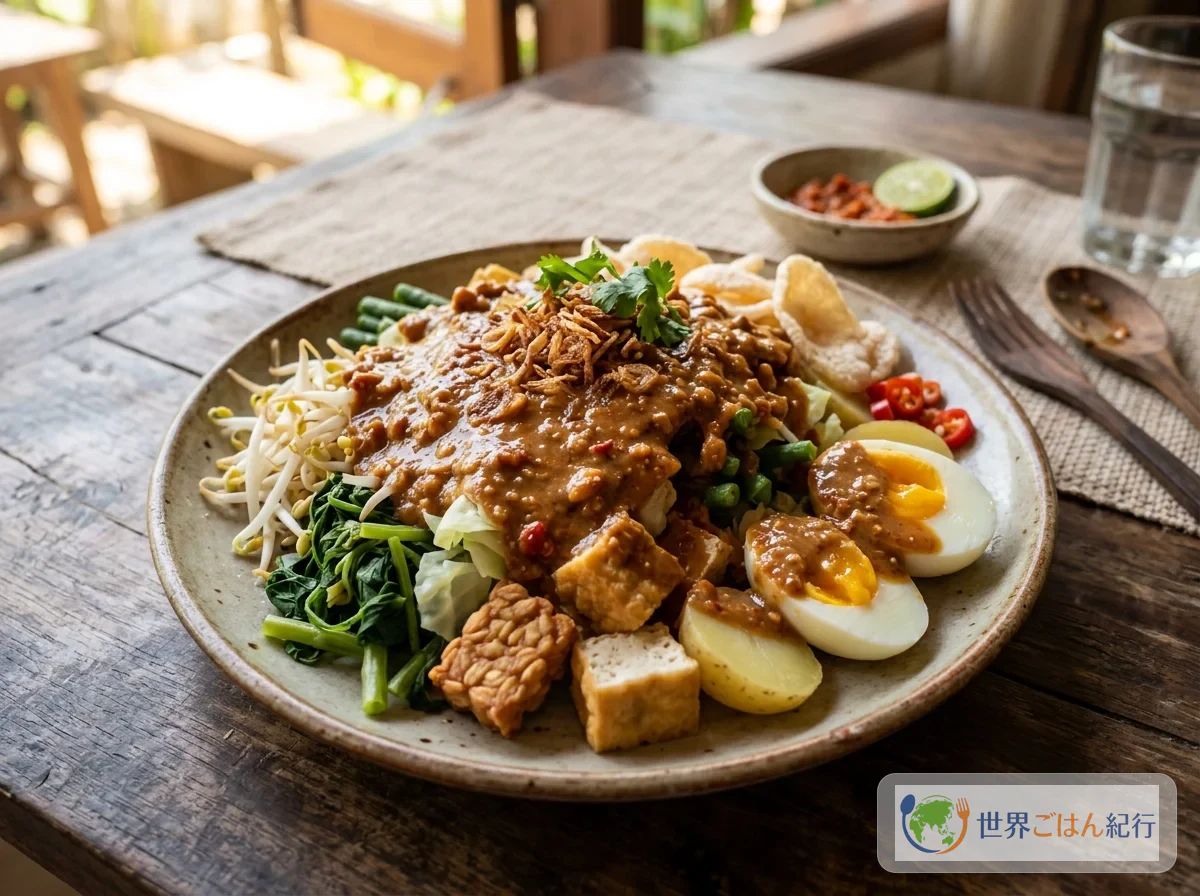
For lunch the next day, a fresh fried egg on top is enough. A small portion wrapped in lettuce with a little sambal eats like a noodle salad. Lighten leftovers with acidity and heat first, rather than pairing them with the peanut sauces of sate or gado-gado from the Indonesian cuisine guide (in Japanese).
Menu Ideas and Related Recipes
For a weeknight dinner, mie goreng with cucumber, tomato, shrimp crackers and a soup is plenty. On a weekend, add chicken sate (in Japanese) or a gado-gado-style salad with peanut sauce and it starts to feel like an Indonesian table.
The closest relative is nasi goreng: nasi goreng on days you have cold rice, mie goreng on days you have noodles. Both use kecap manis, sambal and fried onions, so the shopping overlaps and the condiments get used up.
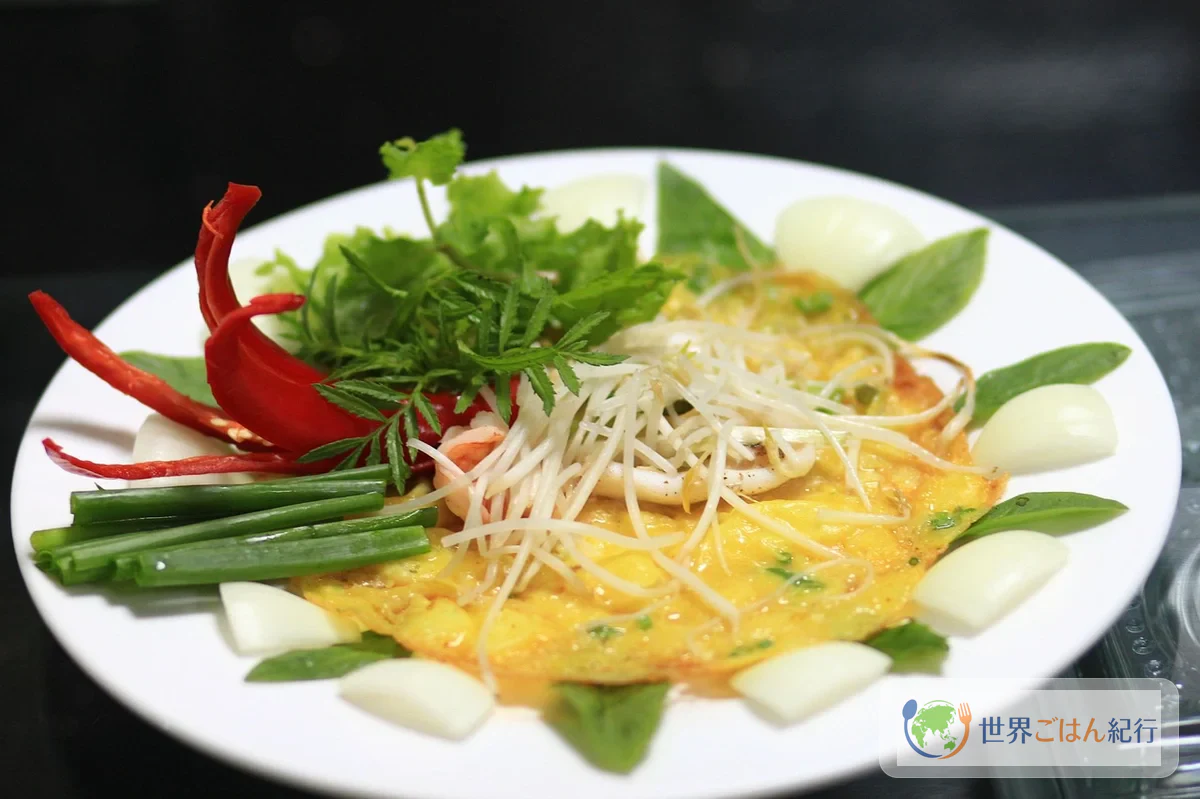
Other Southeast Asian stir-fries share the "high heat, short time, keep the texture" approach. Thailand's pad thai has tamarind sourness and rice noodles, Vietnam's banh xeo has a rice-flour batter and herbs, and Sri Lanka's kottu is chopped roti fried on a griddle. Mie goreng stands apart for the sweet char of kecap manis.
To keep eating your way through the region's noodles and rice, try the rich rendang, coconut rice nasi lemak, roti canai with curry and the noodle soup laksa. For sourness, there's the Philippines' sinigang, Vietnam's pho ga and Laos's khao piak sen. Spicy green papaya som tam, Cambodia's amok, the Philippines' adobo, Malaysia's bak kut teh, Myanmar's mohinga and the steam-roasting tradition of mumu round out the picture. For something light after all those sweet-savory noodles, there's Vietnam's banh mi or the Philippine glutinous rice sweet sapin-sapin.
FAQ
Q1. Does using stir-fry noodles take it far from the original?
Not too far. Steamed stir-fry noodles are easy to handle and hard to fail with at home heat levels. Skip the packaged powder sauce and build the flavor with kecap manis, soy sauce and oyster sauce. If the noodles are soft, loosen them lightly through the bag rather than over-microwaving them.
Q2. Can I make it without kecap manis?
You can, but soy sauce alone won't give mie goreng its sweet gloss. As a substitute, lightly simmer 3 tbsp soy sauce, 2 tbsp dark brown sugar and 1 tbsp water. Dark brown sugar, raw cane sugar or unrefined sugar gets closer to the aroma than white sugar.
Q3. Is the flavor weak without shrimp?
It works without shrimp. Increase the chicken to 5.5 oz (150 g) and use a little oyster sauce or fish sauce to make up the umami. If you have a shrimp allergy, avoid the krupuk too, and add texture with fried onions or nuts.
Q4. Can I pack it in a lunch box?
Yes, but cook the egg through rather than soft, and pack the cucumber, tomato and shrimp crackers separately. Noodles stiffen a little when cold, so don't skimp on the oil; a finish of white pepper and fried onions keeps the aroma.