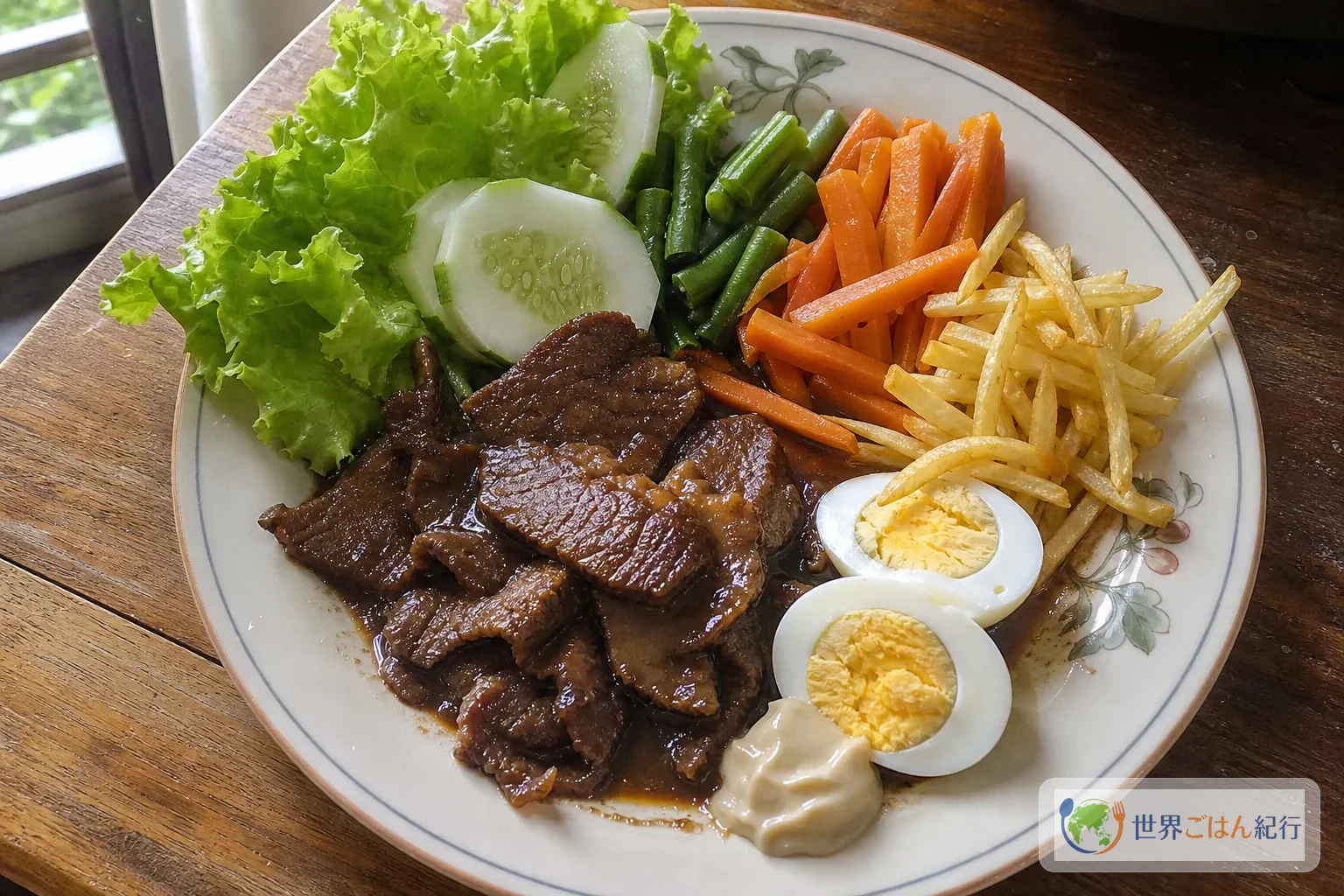
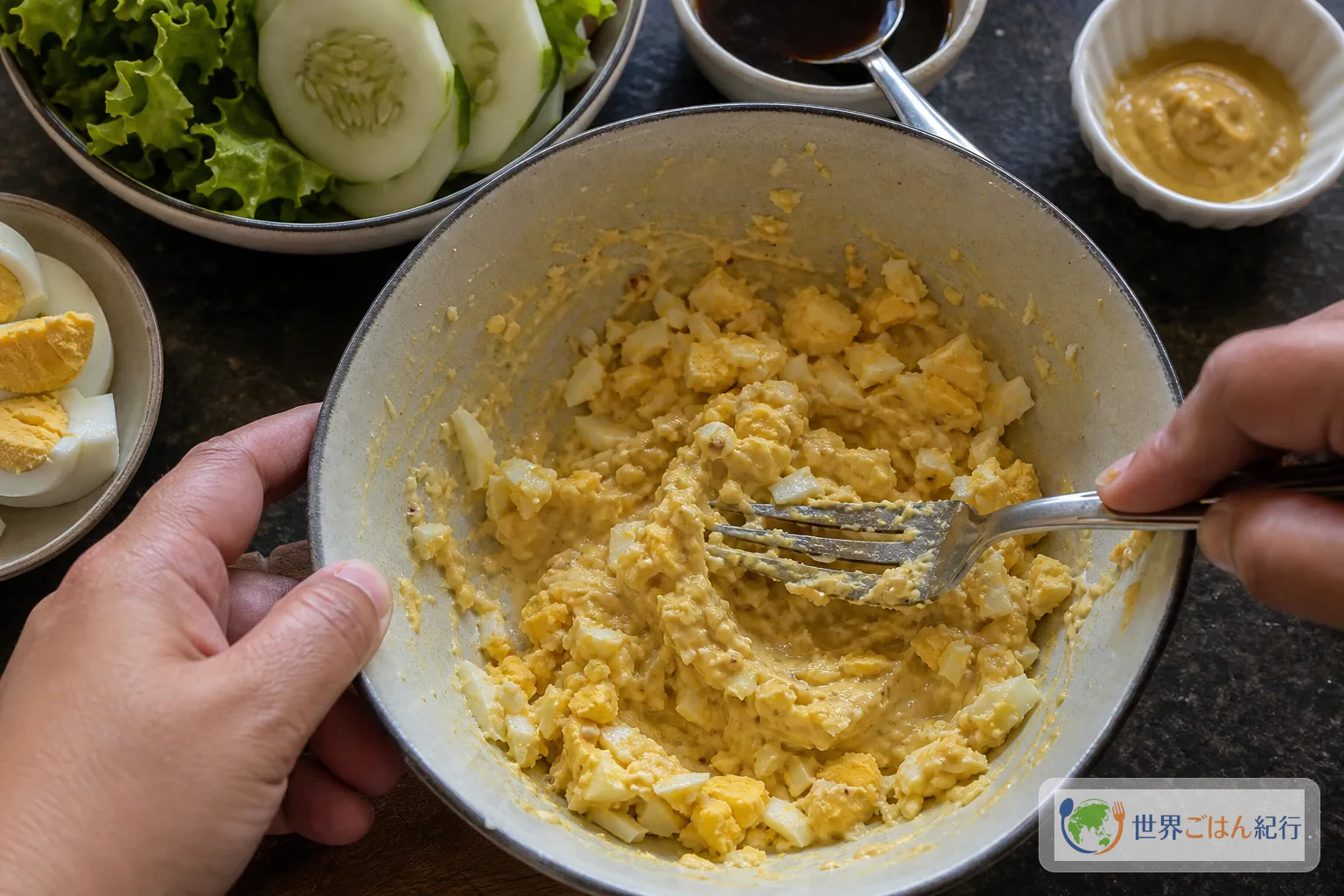
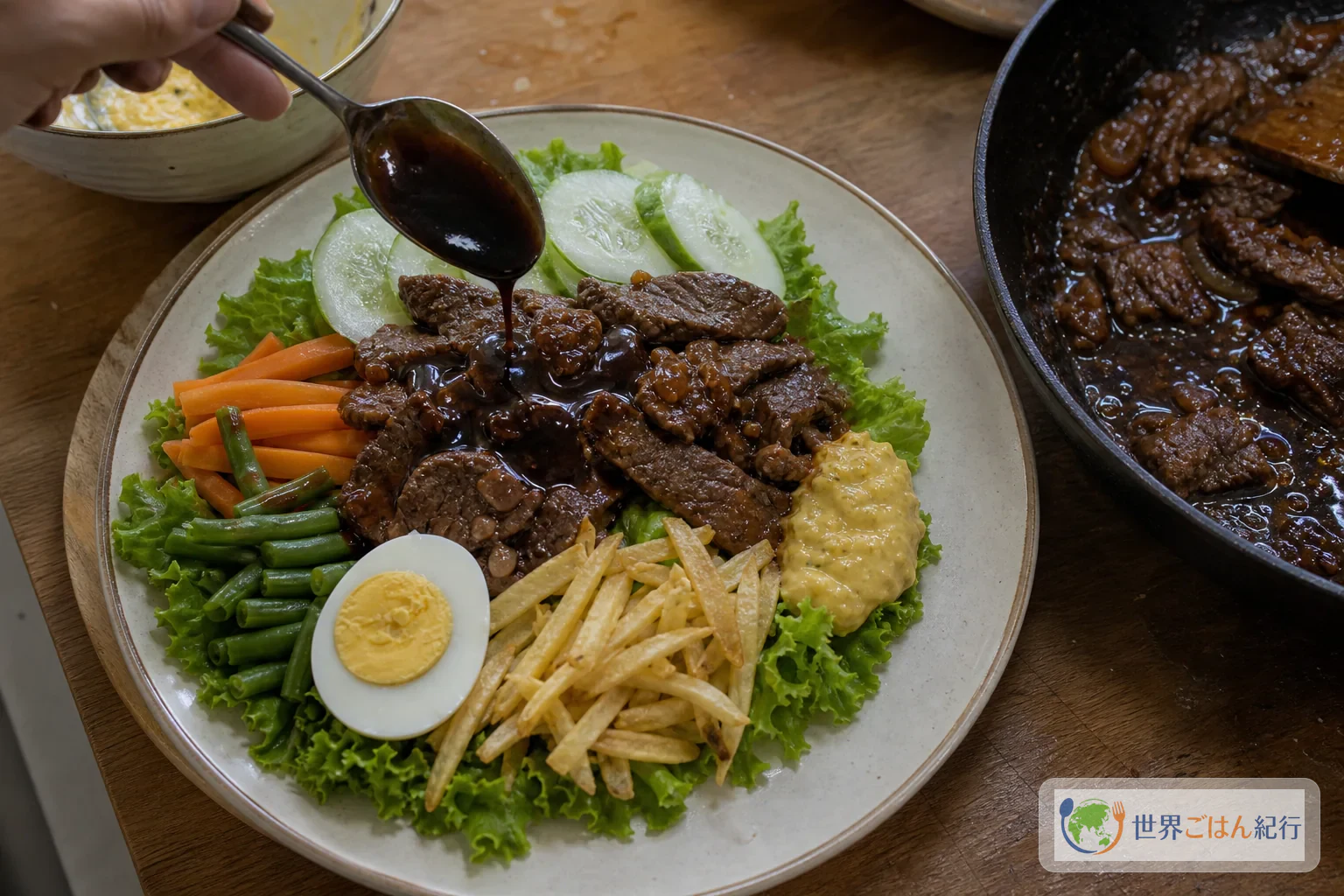
Picture an evening eatery in Solo. Dark beef juices run a little across the bottom of a white plate, and their sweetness moves into the lettuce and green beans beside them. Selat Solo comes from Solo in Central Java, around present-day Surakarta. It brings together thinly sliced beef, boiled carrots and green beans, potatoes, eggs and lettuce, all under a sweet-savory braising liquid. It looks like a salad and eats like a Javanese beef stew that has gone sweet. If you know Indonesian food through the oil and sweet soy of nasi goreng or mie goreng, this Western-looking plate shows you another side of the same kitchen.
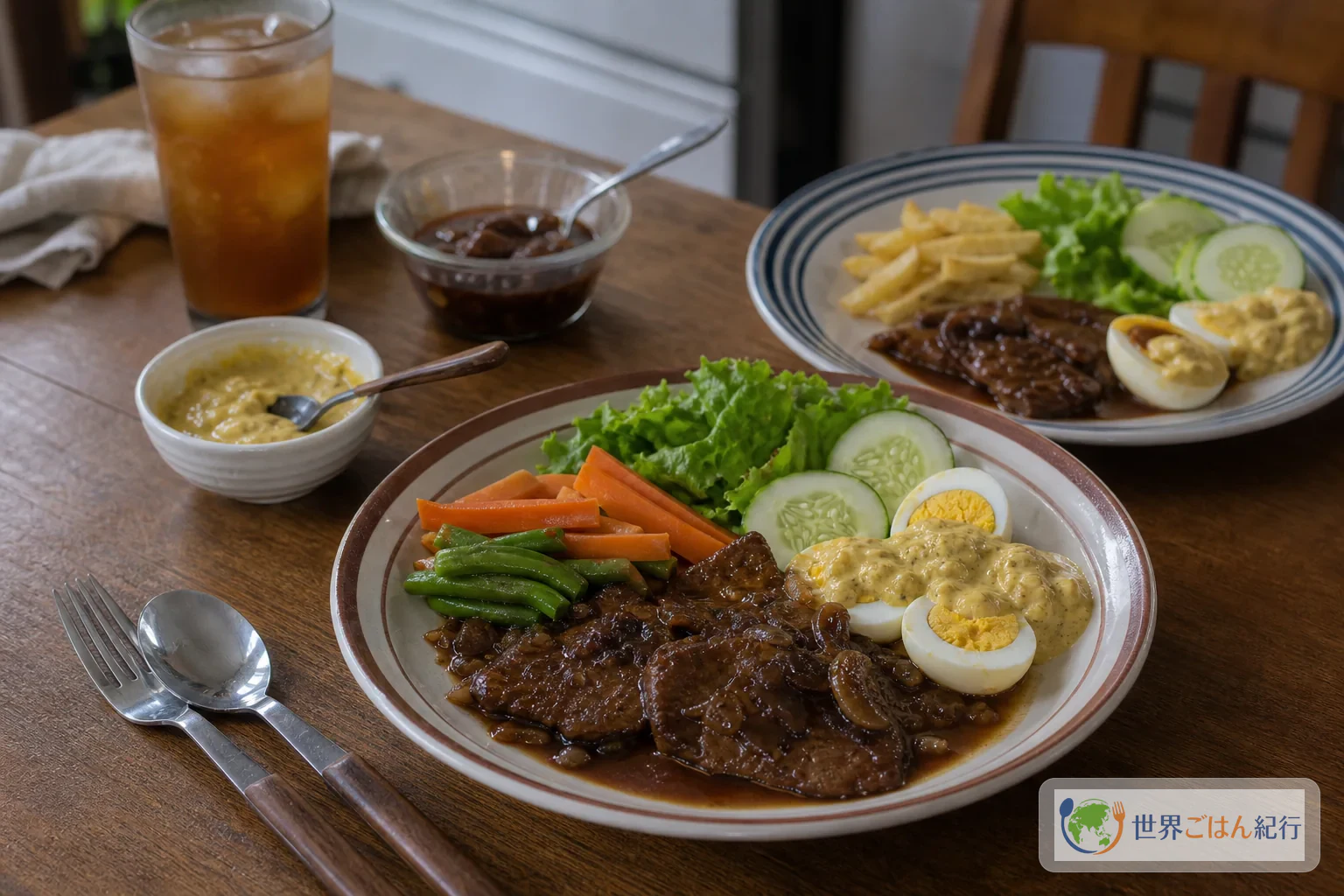
About Selat Solo
A Dutch-Style Plate Turned Javanese
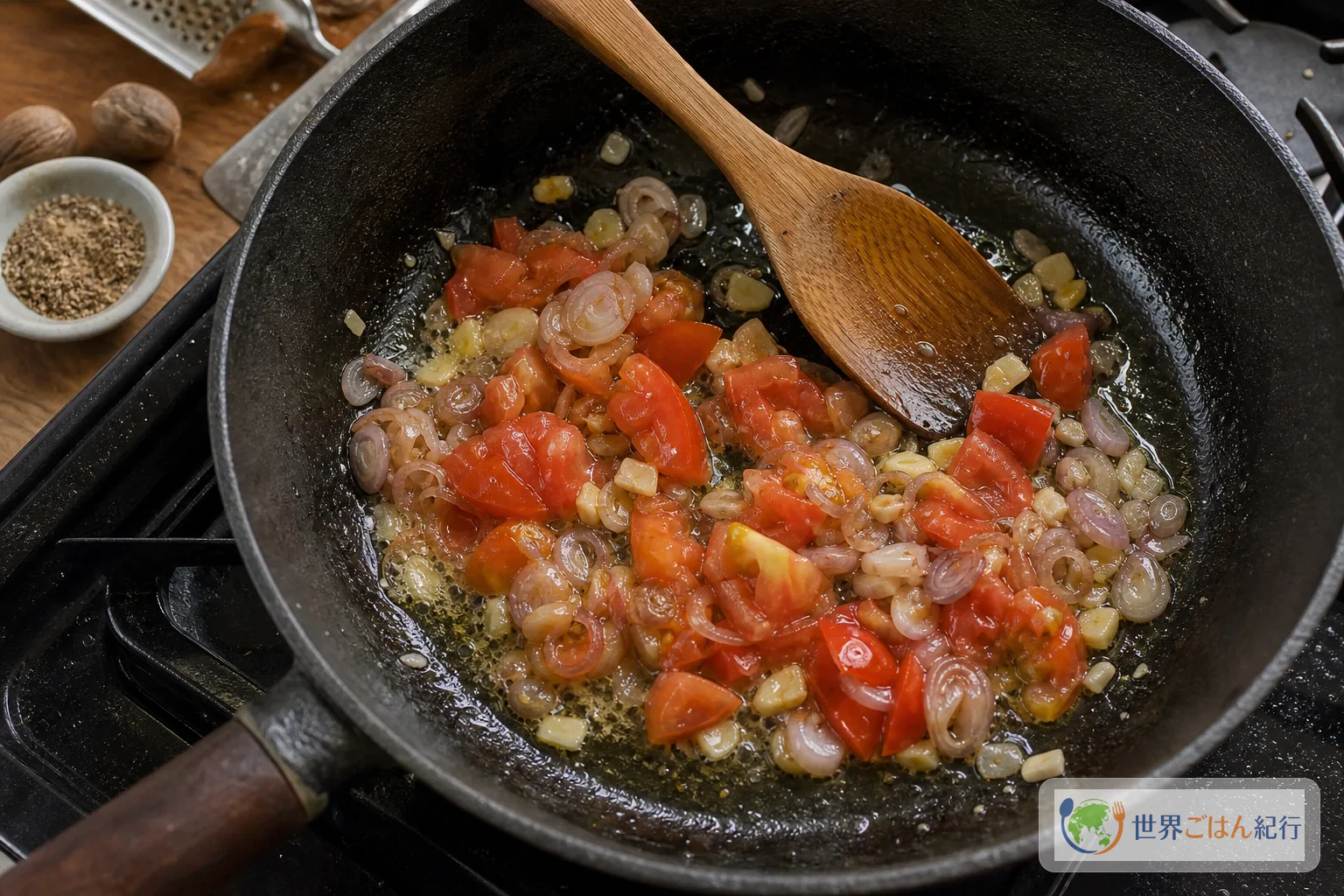
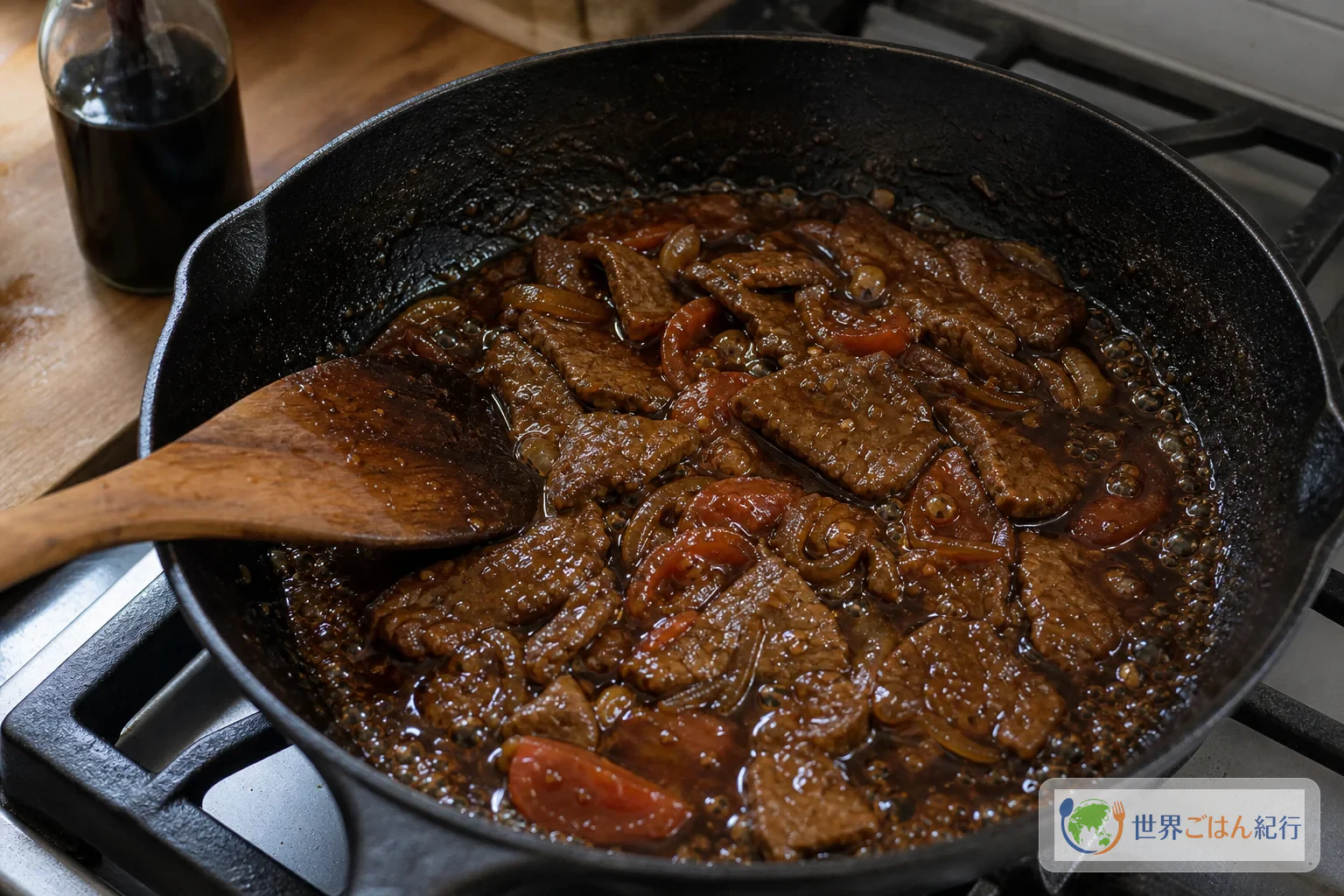
Selat Solo started from the European salad-and-steak plate, and the beef steak and salad of the Dutch colonial period still show in it. The word selat is often linked to the English "salad." The sauce, though, is pure Java: kecap manis, red onion, garlic, nutmeg and tomato, simmered in a pot until it has the depth of home cooking. That "Western but sweet" feel is the charm of the dish.
The local spelling is Selat Solo. Surakarta is commonly called Solo, hence the name. A similar dish, selat galantin, uses a ground-meat loaf. This recipe uses the sliced-beef version, which is easier to make at home.
How Selat Solo Is Eaten
At the table in Solo, selat Solo is less a cold leaf salad than a plate where the vegetables catch a sweet braised beef. It comes with boiled carrots, fried potatoes, beans, egg, meat and a mustard-style sauce. People eat it casually around town as well as on special occasions, either with a knife and fork or with a side of white rice. Break into the egg sauce and the line between salad, steak and soup goes soft.
At home, the beef can be an ordinary cut, and carrots, green beans and potatoes are enough for the vegetables. What you want to keep is the sweet blackness of kecap manis, the light Western note of nutmeg, and the vinegar and mustard that cut the sweetness. Leave those out and you have a sweet braised beef sitting next to boiled vegetables, and the plate no longer reads as Western-style with Javanese flavor.
Selat Solo and Rendang
Among Indonesian beef dishes, rendang is a rich braise cooked down with coconut and spices until the liquid is gone. Selat Solo goes the other way. It leaves a thin sauce and some vegetable moisture on the plate, so every bite can recombine beef, potato, egg sauce and lettuce. Breaking up the plate bit by bit with a fork shows the dish better than piling it all on rice like a rice bowl.
| What to look at | Selat Solo in Solo | What to keep at home |
|---|---|---|
| Meat | Beef tenderized in sweet-savory braising liquid | Thin lean slices or thin grilling cuts rather than thick steak |
| Sauce | Sweetness of kecap manis and aroma of nutmeg | Keep the sweetness; add a little acidity to cut the weight |
| Vegetables | Boiled vegetables, egg and potatoes plated separately | Plate separately and mix on the plate as you eat |
| How to eat | Knife and fork, or with rice | Pair with white rice, nasi uduk or a light soup |
Ingredients (serves 3): Slice the Beef Thin and Prepare Vegetables Separately
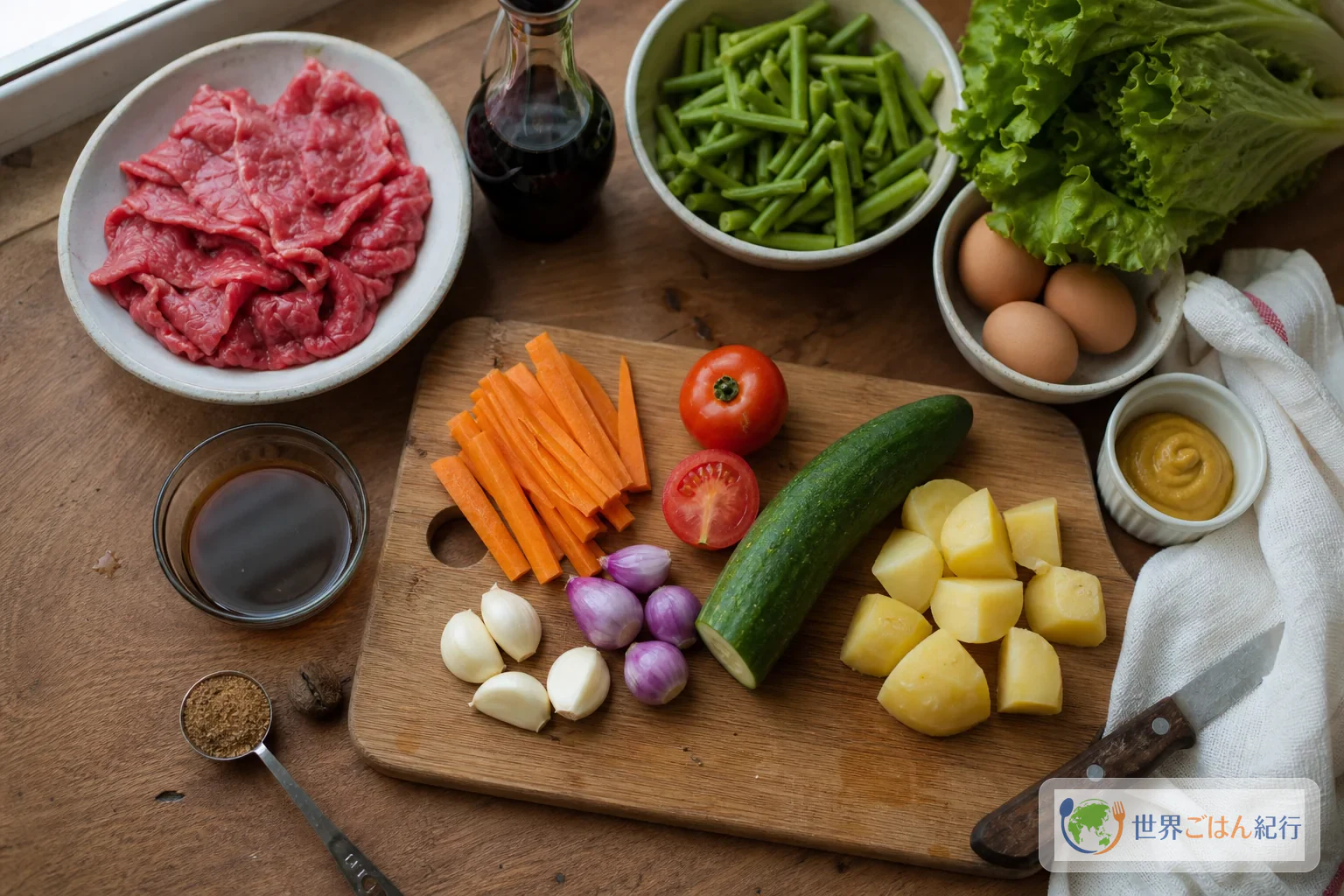
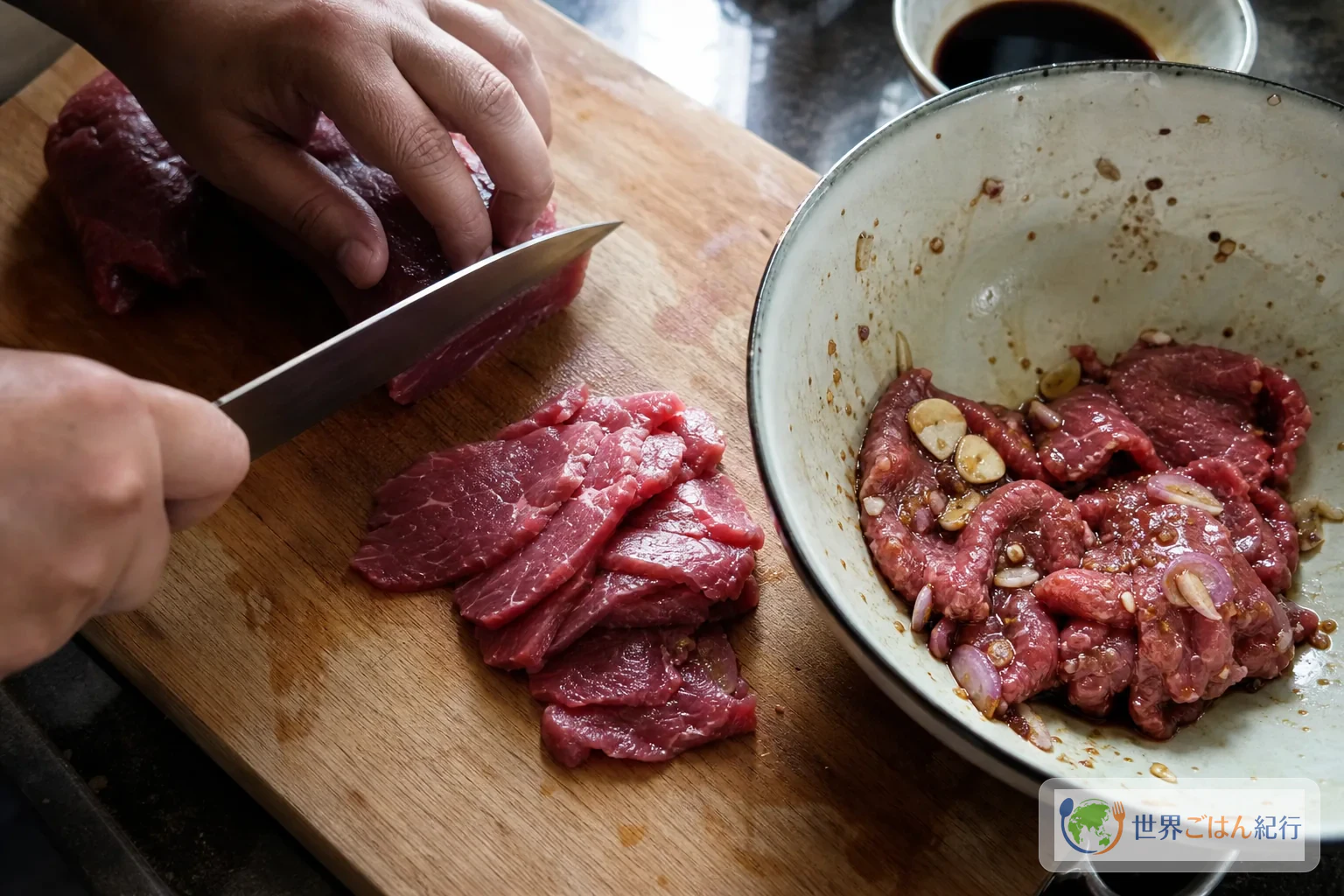
Choose lean beef. Fatty short-rib cuts combined with the sweet sauce get heavy and erase the fresh role of the vegetables. Chuck, round, rump or lean thin slices are easy to handle.
This dish uses beef, egg, wheat, soy and mustard. Some Worcestershire sauces contain wheat or apple, among other ingredients. If you follow religious dietary restrictions, check the sauce ingredients and how the meat was slaughtered and processed.
Choosing Ingredients for Selat Solo
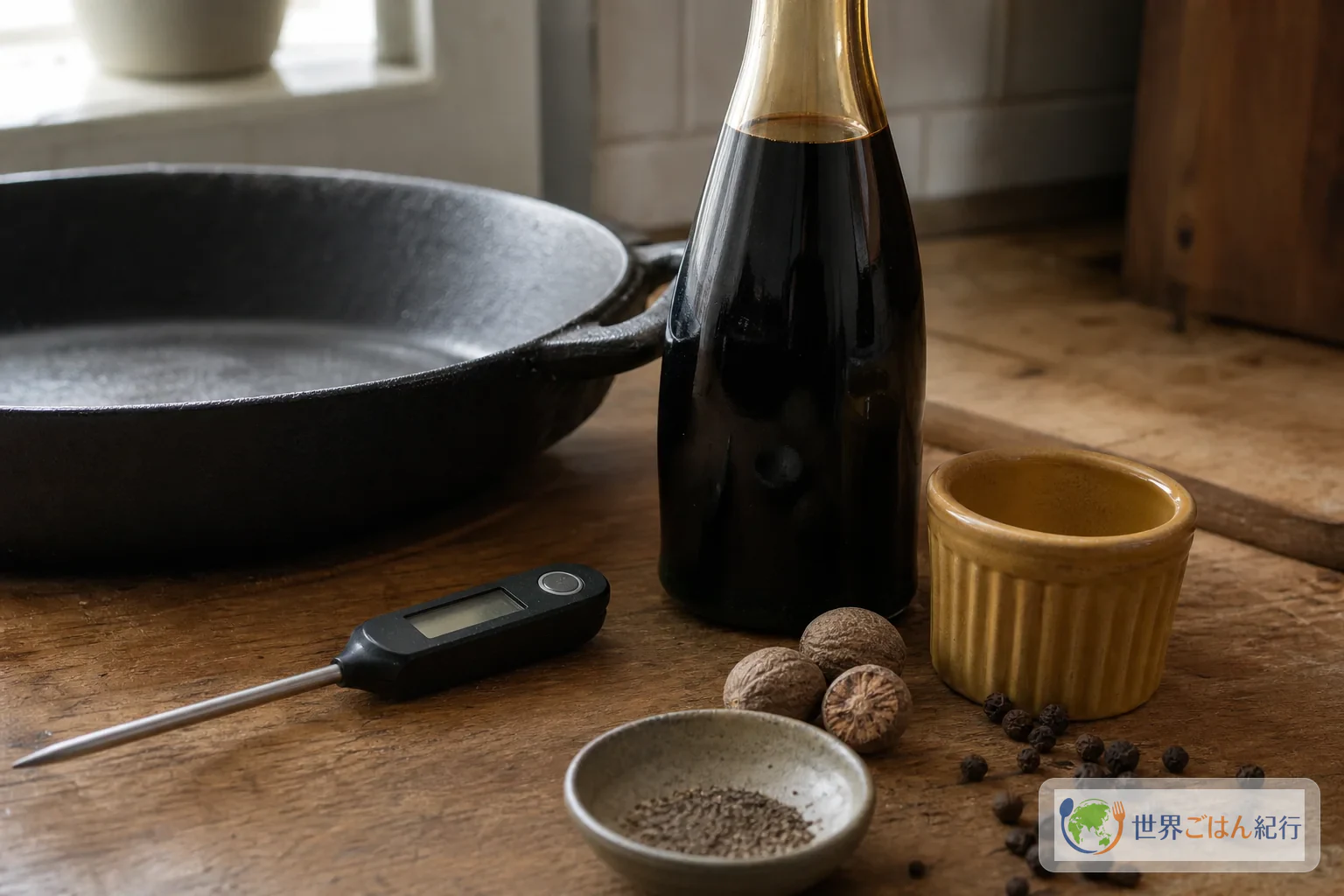
Vegetables, eggs and beef are available at any supermarket. If you are going to buy anything extra, get these in order: kecap manis, a heavy skillet for shallow frying, and a probe thermometer. Each part of the plate has a job, with sweet beef, salty vegetables, an acidic egg sauce and savory potatoes. When those four taste distinct, a home version gets quite close.
Kecap Manis
Kecap manis is the core of the flavor and gives selat Solo its sweet gloss. Soy sauce and sugar can come close, but the thick dark shine, the roundness of palm sugar and the aroma when it catches on the pan are hard to replace. A bottle won't go to waste either, since it also goes into chicken sate and gado-gado.
If you can't find it, put 2 tbsp (30 ml) soy sauce, 25 g dark brown sugar and 2 tsp (10 ml) mirin in a small pot and reduce over low heat for only 2–3 minutes. It isn't identical, but you do get a sweet gloss. Ketchup or tonkatsu-style sauce on its own takes you away from the sweet soy aroma. Cutting the kecap manis too far out of fear of sweetness also backfires, because you end up with a thin beef-tomato stew. Keep the sweetness and balance it with vinegar and mustard.
Beef
Thin lean slices are the practical choice. A whole tenderloin cooked thick costs more and is harder to get cooked through. Thin lean slices or thin round take seasoning quickly and stay tender over medium-low heat. Because the sauce is sweet, lean meat that has soaked up the braising liquid also sits better with the vegetables than a rich, fatty cut.
Vegetables and Tomato
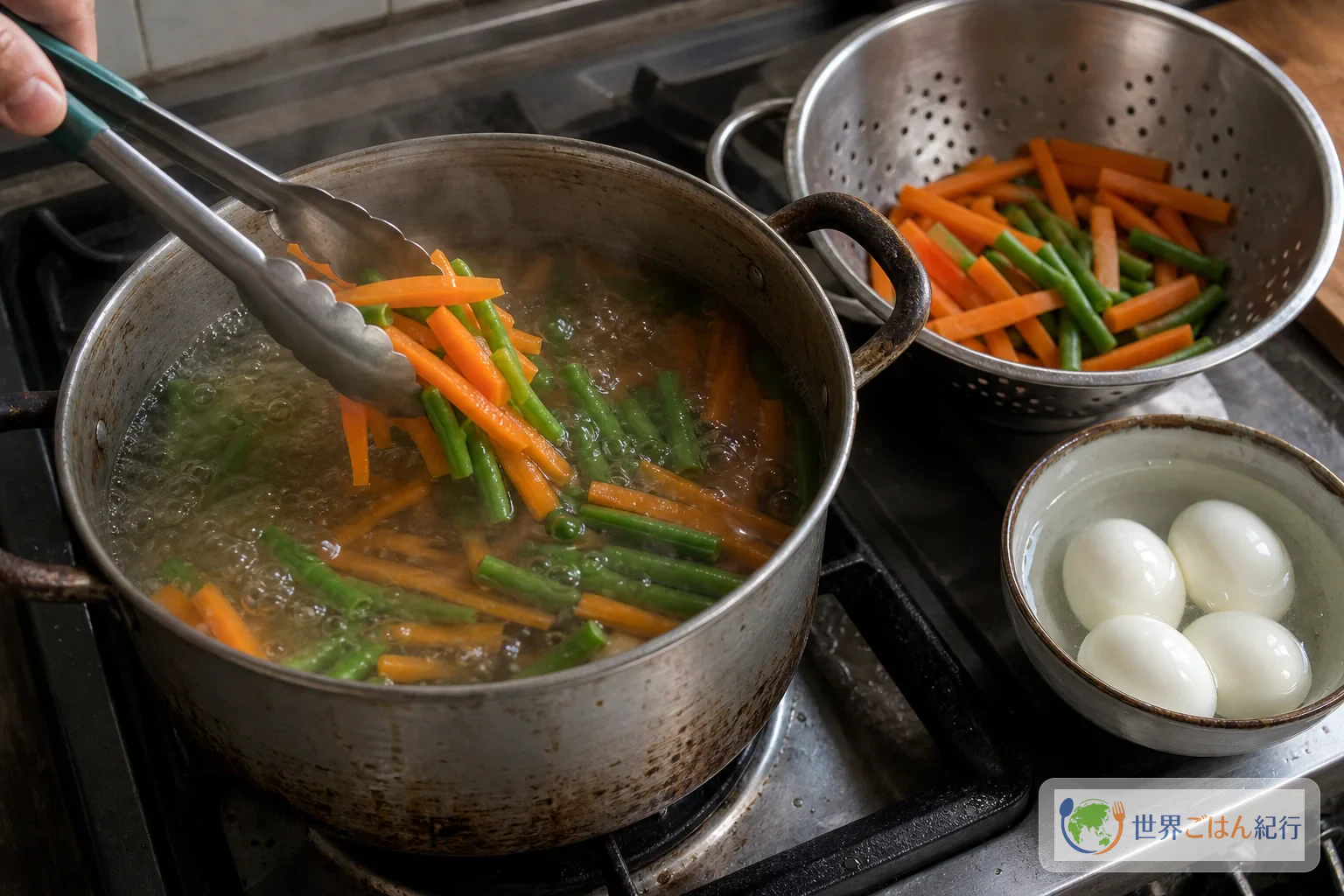
With vegetables, how well you drain them matters more than which ones you use. Broccoli or cauliflower work, but if they go on the plate still steaming, the beef sauce thins and the kecap manis aroma blurs. Spread boiled vegetables in a colander and pat the lettuce dry with a cloth. It's plain work, but it decides the finish of the plate.
Fresh tomato is easiest. Canned is fine in winter: reduce it to 2.75 oz (80 g) and add 2 g sugar if it is too acidic.
| Where you get stuck | Acceptable substitute | Avoid |
|---|---|---|
| Beef | Lean thin-sliced beef, thin round, thin rump | Fatty short rib, thick steak cooked only briefly |
| Kecap manis | 2 tbsp (30 ml) soy sauce + 25 g dark brown sugar + 2 tsp (10 ml) mirin, lightly reduced | Making the sweetness from tonkatsu-style sauce alone |
| Worcestershire sauce | A little thicker fruit-vegetable sauce, or add 1 tsp (5 ml) vinegar | So much that it tastes like a Western steak sauce |
| Mustard | Smooth mustard, or a little Japanese mustard + vinegar | Lots of mayonnaise, ending up with potato-salad flavor |
| Vegetables | Broccoli, green beans, potatoes, lettuce | Boiling everything in one pot and losing color and texture |
Skillet and Thermometer
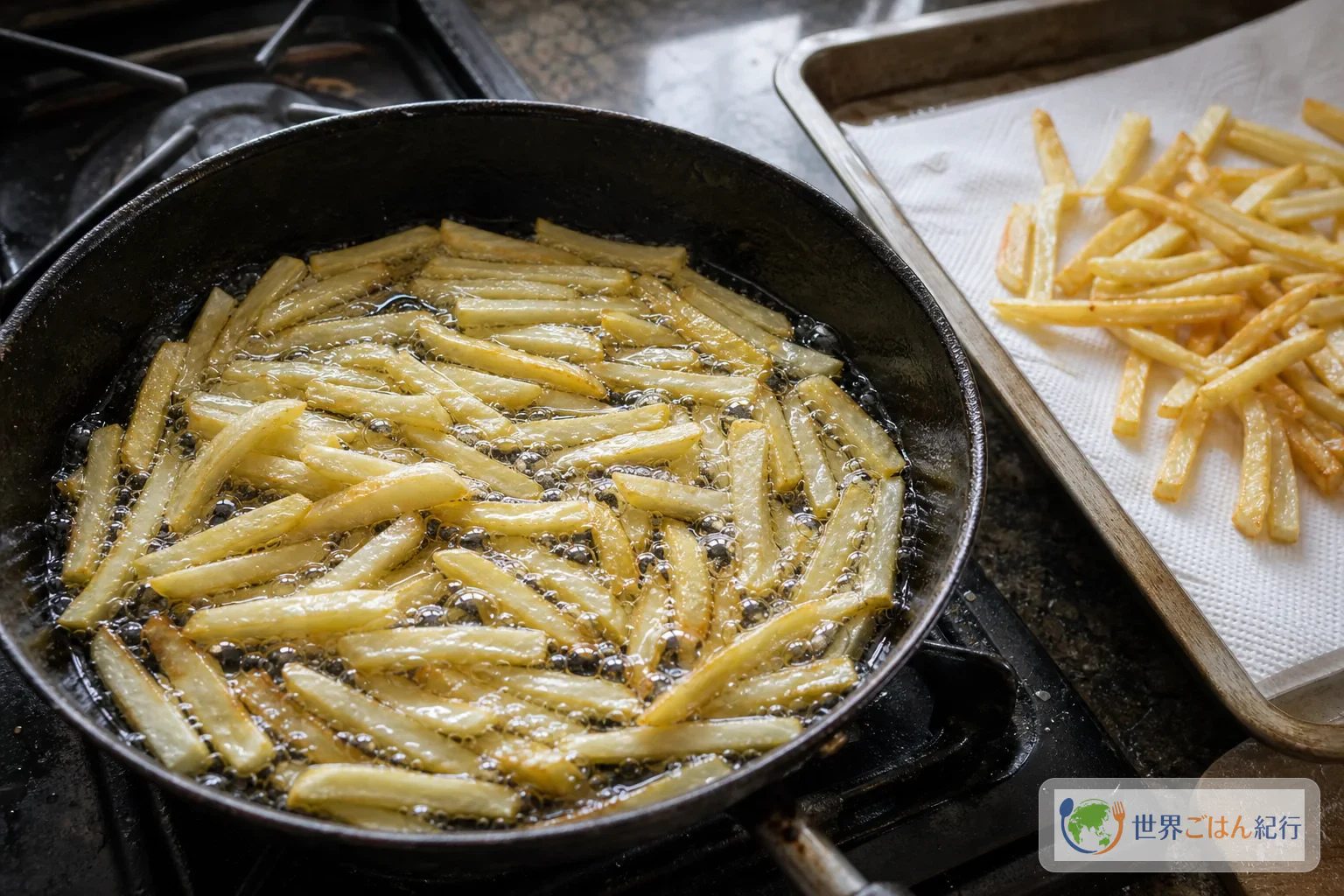
You will be shallow-frying potatoes and working on the beef sauce in the same kitchen, so a heavy skillet that holds heat helps. In a thin pan the oil temperature drops, the potatoes soak up oil and the whole plate turns heavy.
Even with thin-sliced beef, check while it simmers that no red remains. If you're unsure, measure the thickest part with a probe thermometer and move the beef to the plate only when it is fully cooked.
Method: Braise the Beef Sweet-Savory and Plate the Vegetables Cleanly
The work has three stages: prepare the vegetables first, simmer the beef sauce, and assemble on the plate. If everything goes in one pot, the layered look of selat Solo disappears, so handle the vegetables separately.
Common Selat Solo Failures and Fixes
The tricky parts at home are keeping the beef tender, keeping the vegetables from turning watery, and stopping the kecap manis sweetness from collapsing into plain sugar-and-soy. Most failures come from moisture and doneness rather than seasoning. The dish looks like a salad, so it's tempting to keep it light, but reduce the beef sauce properly and let the vegetables lose their steam before plating.
| Symptom | Cause | Fix |
|---|---|---|
| Water collects at the bottom of the plate | Vegetables and lettuce not drained enough | Leave boiled vegetables in a colander 5 minutes; pat lettuce dry with a cloth or paper |
| Sauce too sweet | Reduced with kecap manis alone | Add 1 tsp (5 ml) rice vinegar, 1 tsp (5 ml) Worcestershire and 2 tbsp (30 ml) water and simmer 1 minute |
| Tough beef | Thick meat cooked briefly | Slice thin. Simmer 18 minutes or more over medium-low and leave a little liquid |
| Heavy potatoes | Oil too cool, or too many in at once | Hold 350°F (170°C) and shallow-fry in 2 batches |
| Grainy egg sauce | Too stiff from yolk alone | Add 1 tsp (5 ml) each of beef braising liquid and water to return it to a spoon-drop consistency |
The most common mistake is rushing at the end and putting warm vegetables straight on the plate. While steam is still rising, moisture is still moving. Spread the vegetables in a colander while the beef simmers and leave them there until just before plating. You'll notice how much sharper the flavors are.
Serving and Storing Selat Solo
What to Serve with Selat Solo
Half the plate is vegetables, so the staple you choose changes the feel of the meal. For a light meal, serve a little white rice. For more fragrance, try nasi uduk. To stay in sweet-savory Indonesian territory, add a small portion of mie goreng.
On days you want heat, put a little at the edge of the plate, using the sambal substitute guide. For a soup, soto ayam, gentle with turmeric and chicken, is handy. For more vegetables there's gado-gado, and for sweet-savory grilled chicken, chicken sate. If you want a richer beef dish next, slow-cooked rendang takes the same beef in a completely different direction. The Indonesian cuisine guide (in Japanese) gives an overview for picking combinations.
Storage and Reheating
The beef sauce keeps 2 days in the refrigerator in a clean container with its liquid. To reheat, warm it in a small pot over low heat for 2 minutes after it starts bubbling. In a microwave, heat at 600 W for 1 minute 30 seconds, stir, then check in 30-second increments. If the meat looks dry, add 1 tbsp water.
Drain the boiled vegetables, refrigerate them in a separate container and finish them by the next day. Lettuce, cucumber and the egg-mustard sauce do not freeze well. Potatoes get a little heavy in the fridge, so reheat them in a toaster oven at 350°F (180°C) for 4–5 minutes to crisp the surface again.
If you're making it ahead, keep the beef sauce, vegetables, potatoes and egg sauce in separate containers and plate them only when serving. Stored together, the sauce soaks into the vegetables overnight and the separate textures are lost.
FAQ
Can I make it with sukiyaki-style beef?
Yes. With lean sukiyaki-style slices, just divide them into 3–4 pieces. Because they are thin, start checking at about 15 minutes of simmering and stop when the liquid is down to about half. Heavily marbled beef tends to turn heavy with the sweet sauce.
Can I skip the mustard egg sauce?
You can, but then the sweet beef sauce dominates. Add 1 tsp (5 ml) rice vinegar to the beef braising liquid instead, or add more cucumber for lightness. A lot of mayonnaise turns it into a different salad, so keep it to about 1 tsp if you use any.
How far should I check the doneness of the beef?
For thin slices, wait until the red is gone and the liquid looks clearer, then simmer a few more minutes. If there are thick parts, check with a probe thermometer for 145°F (63°C) or higher. If you use ground or formed meat, cook it to 167°F (75°C) and treat it as a different dish from this sliced-beef recipe.