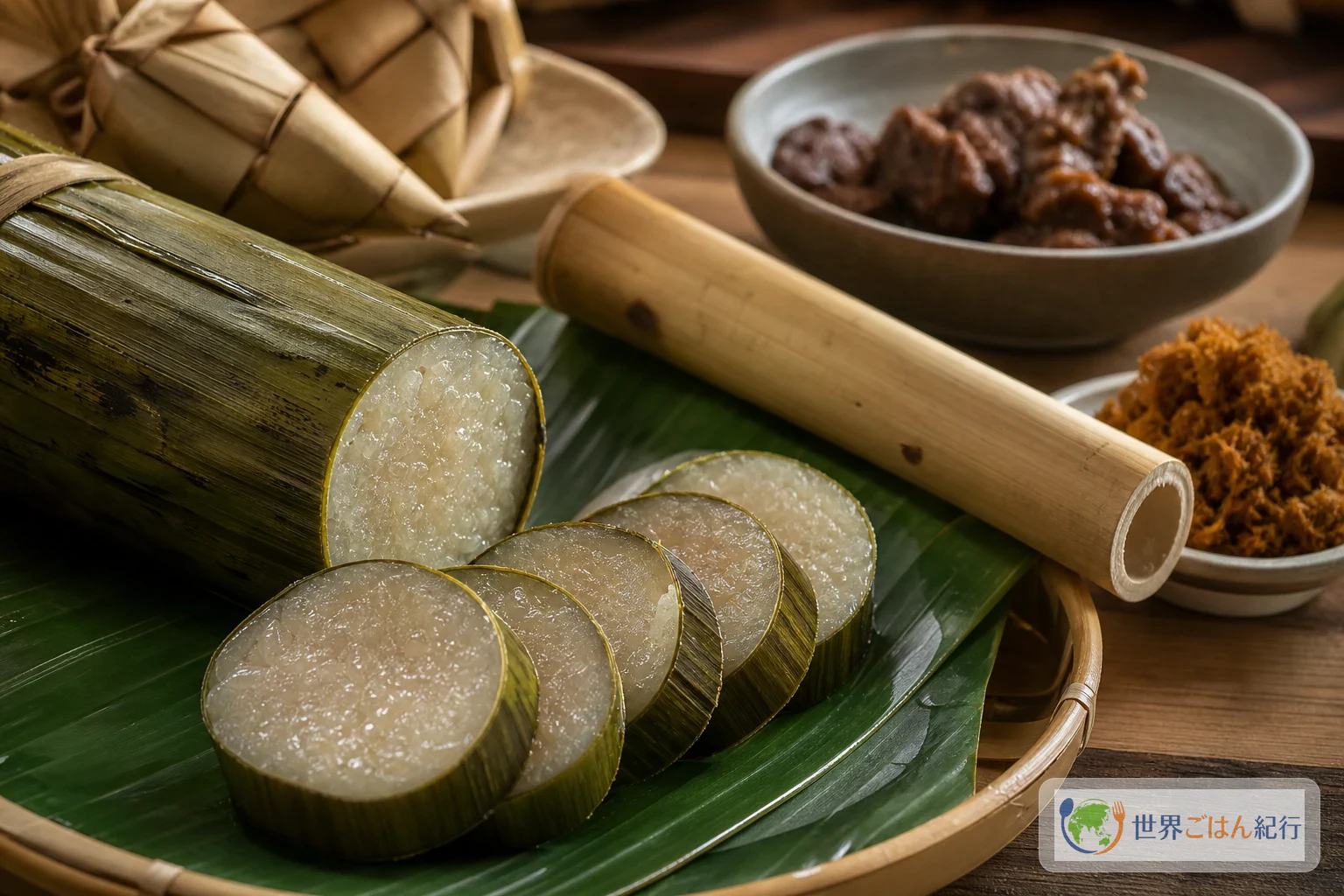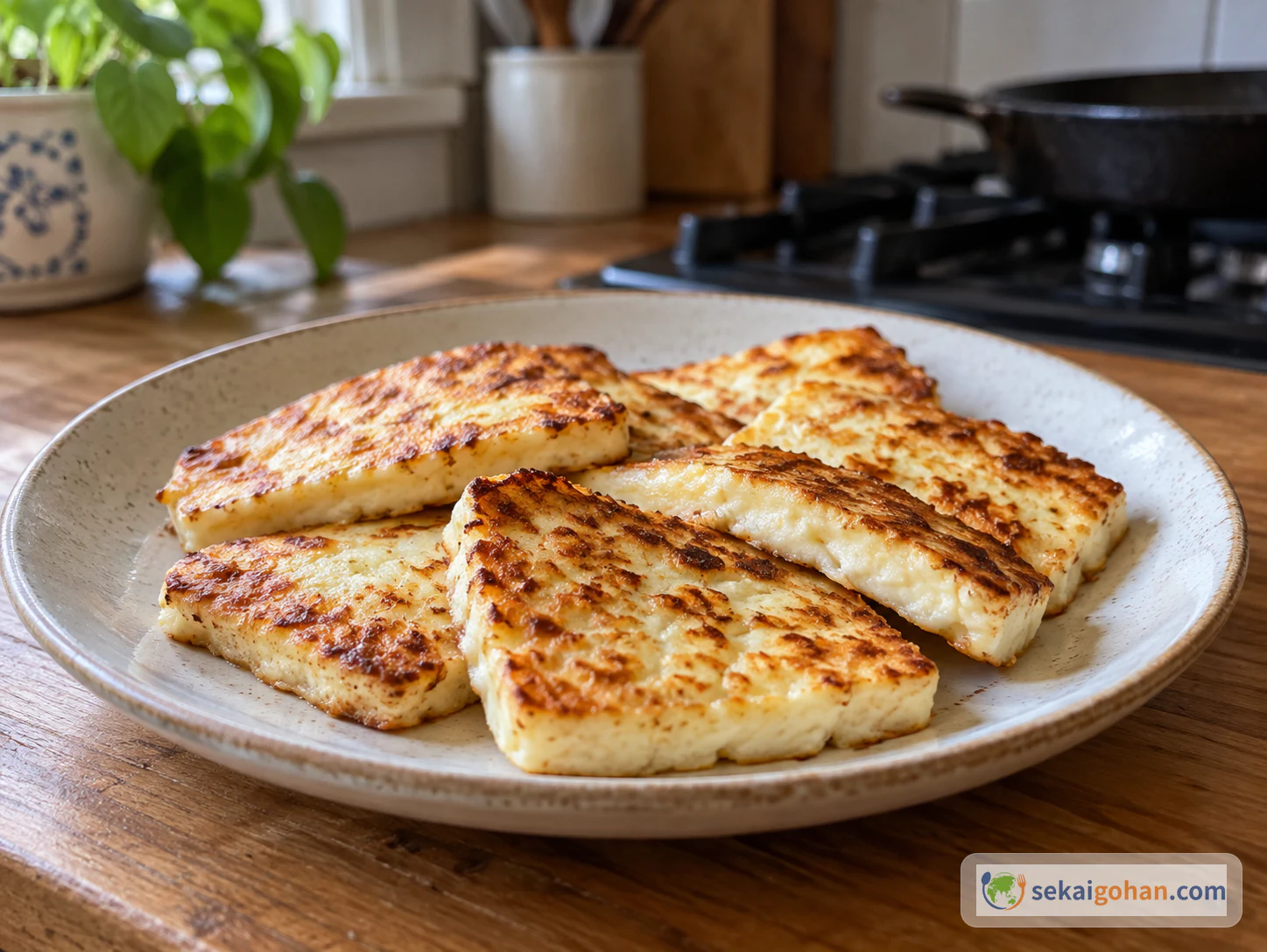
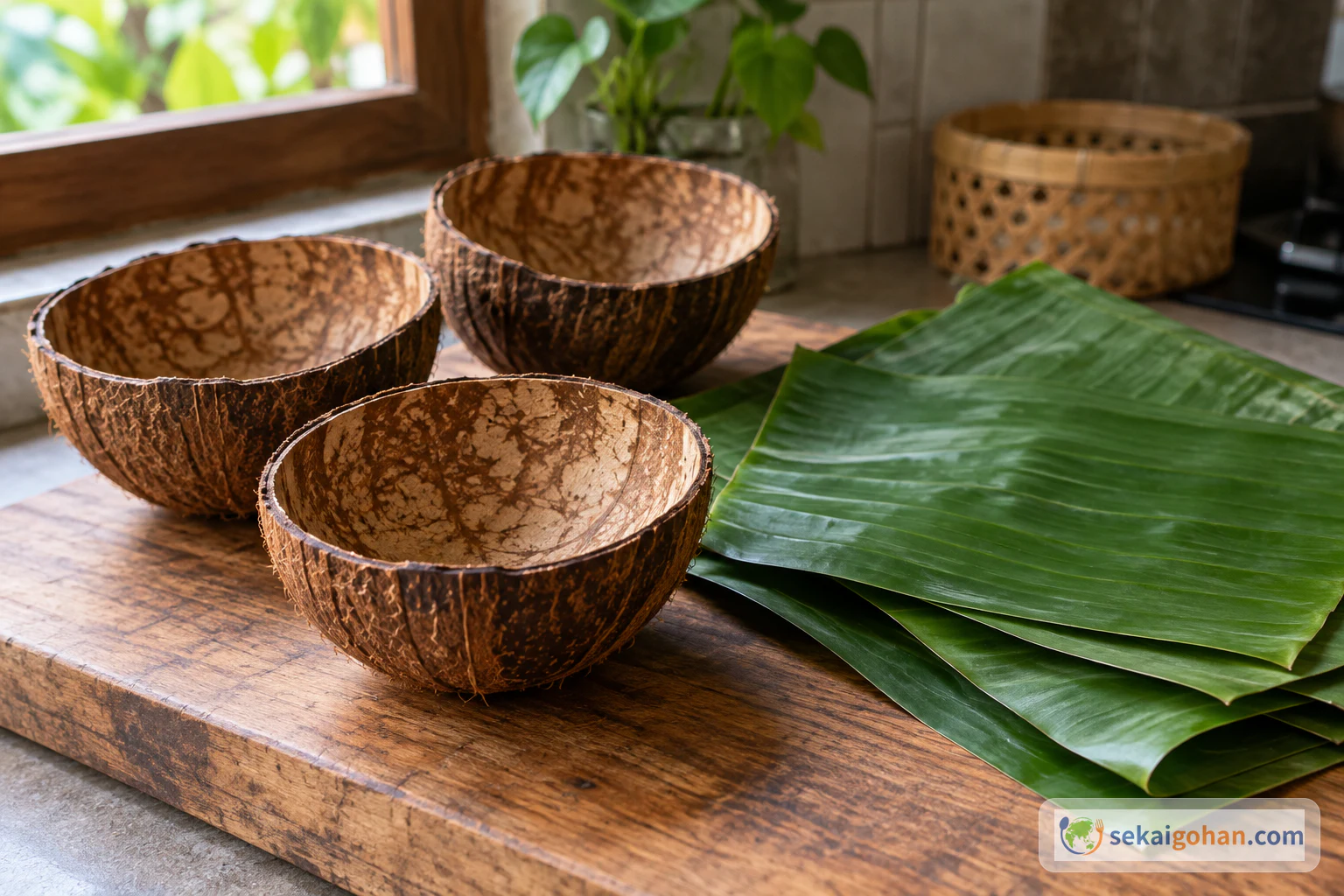
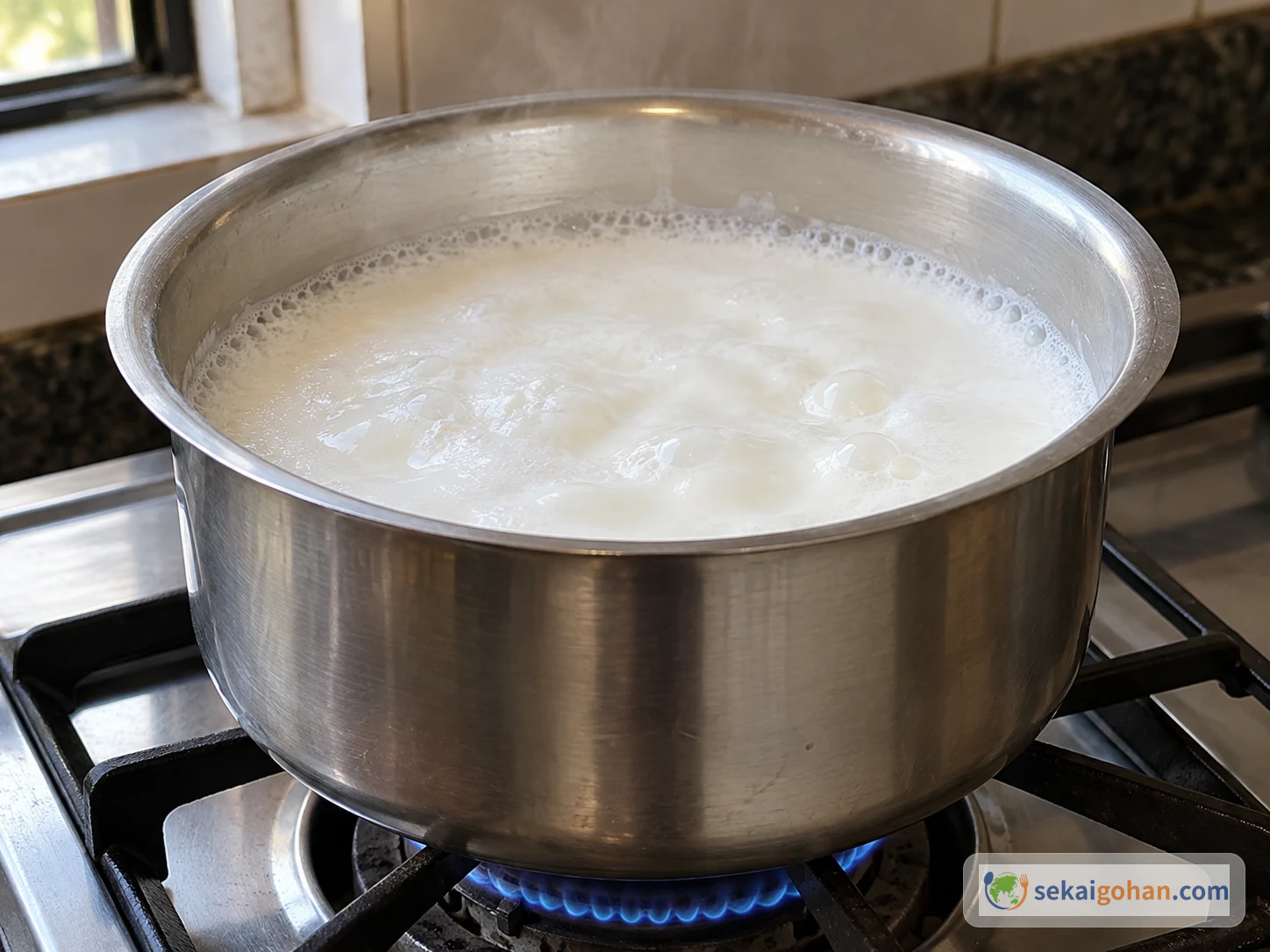
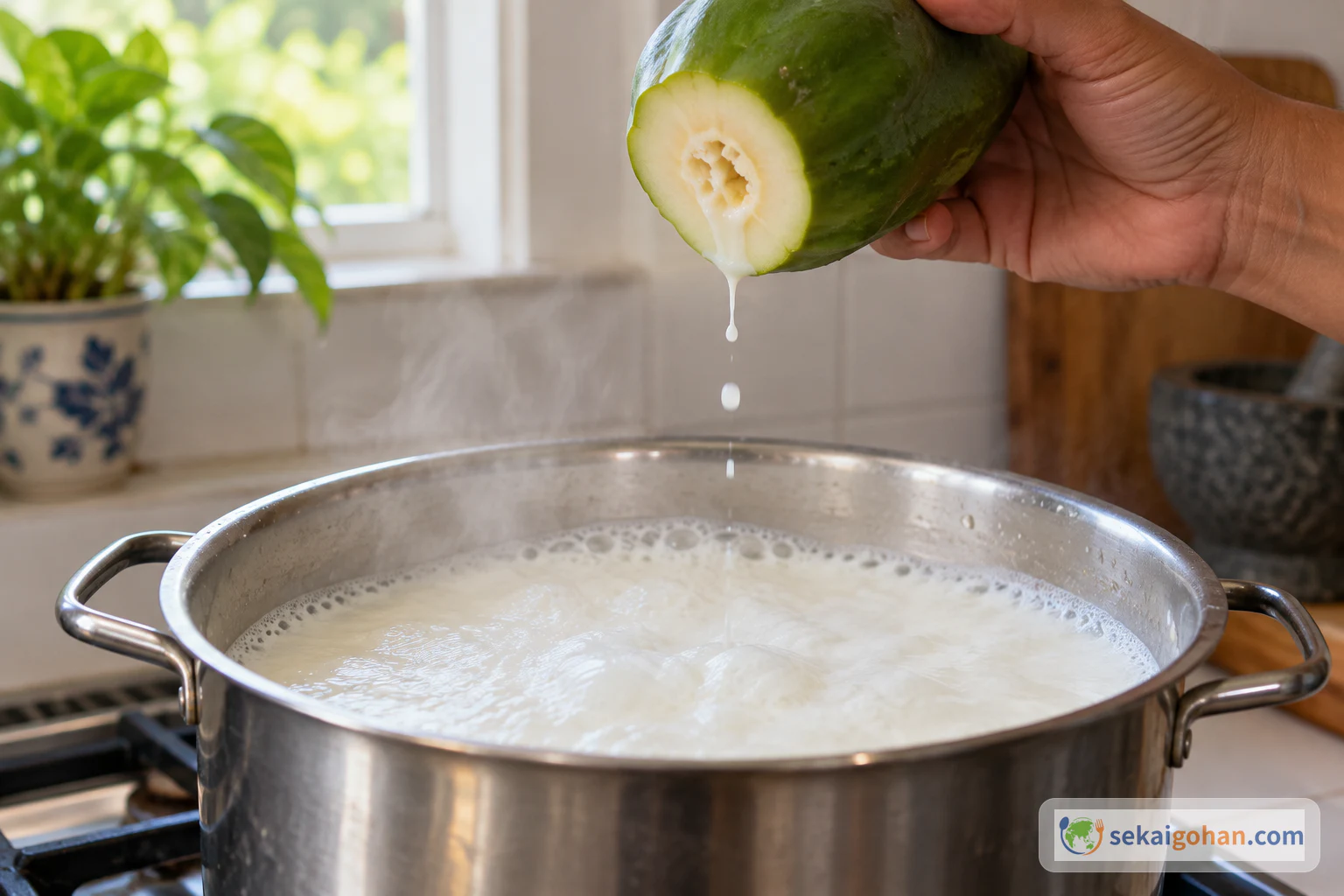
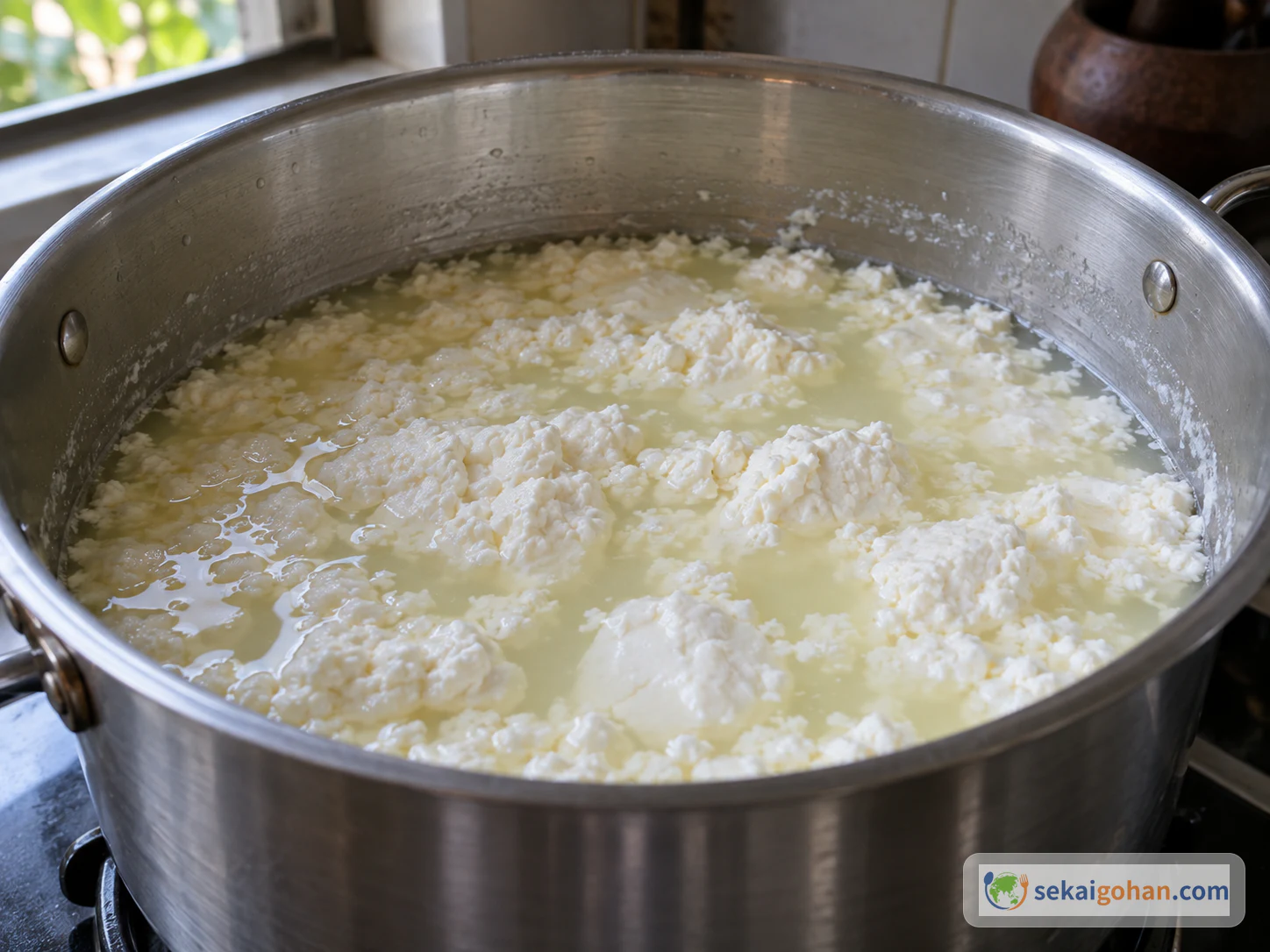
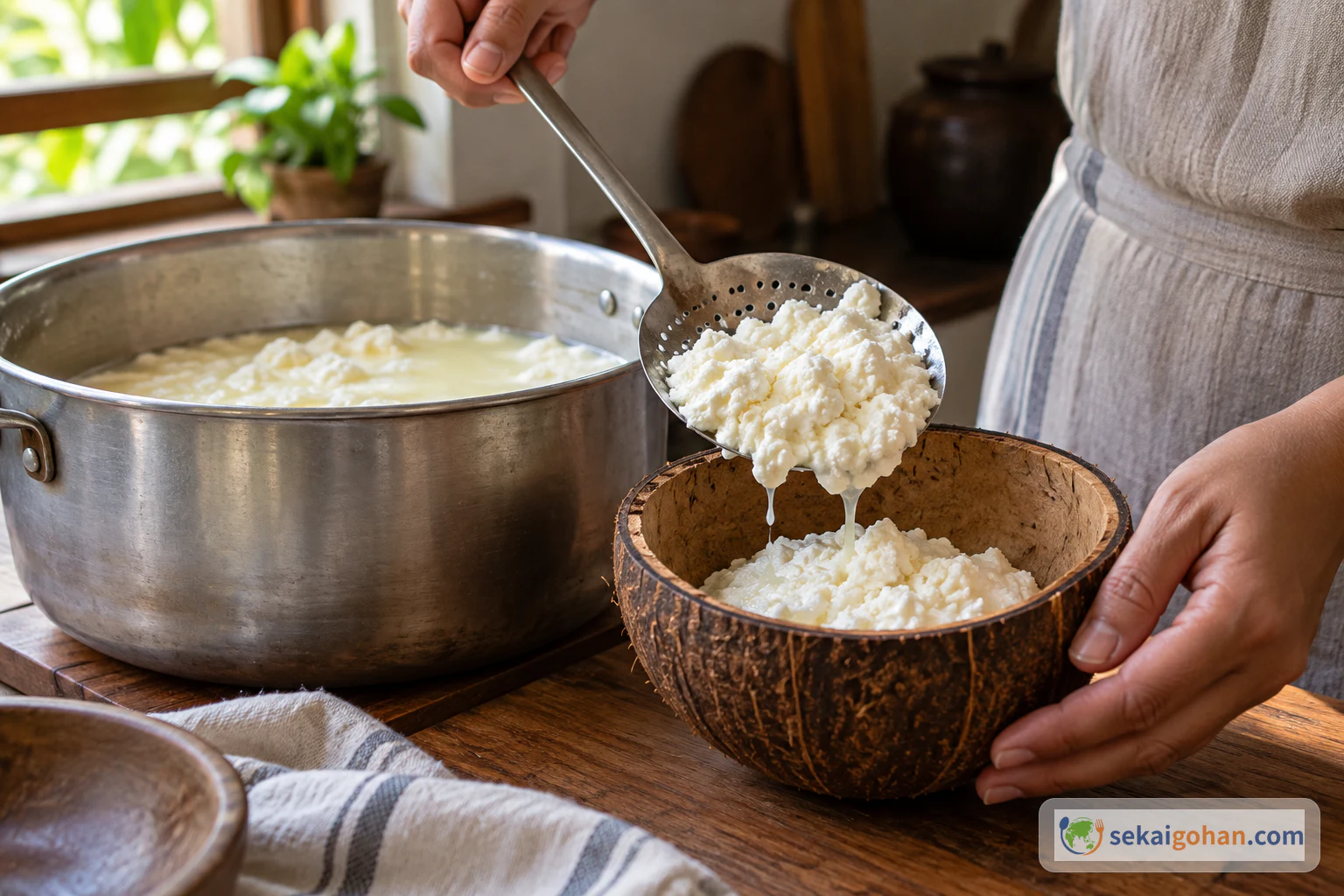
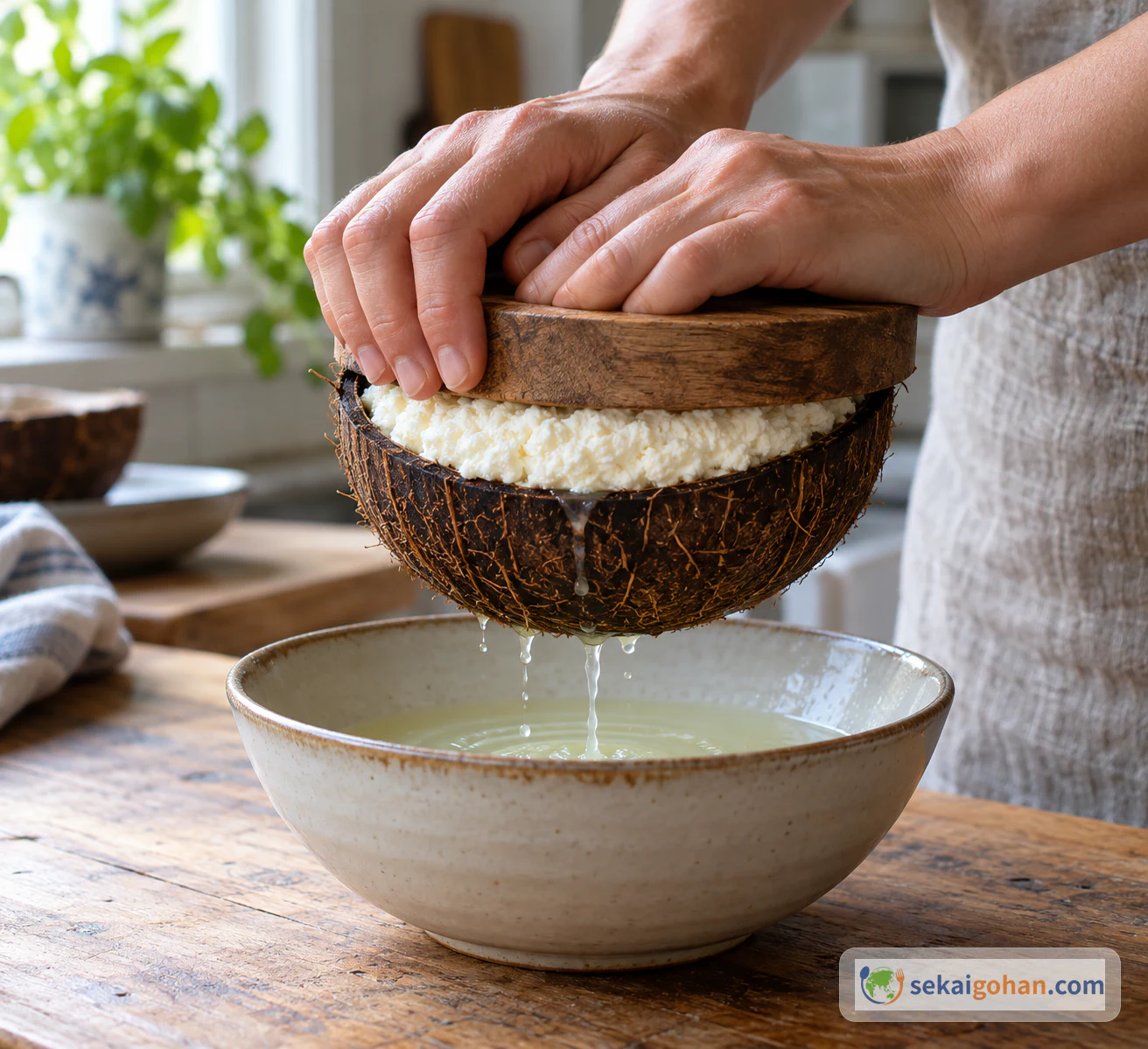
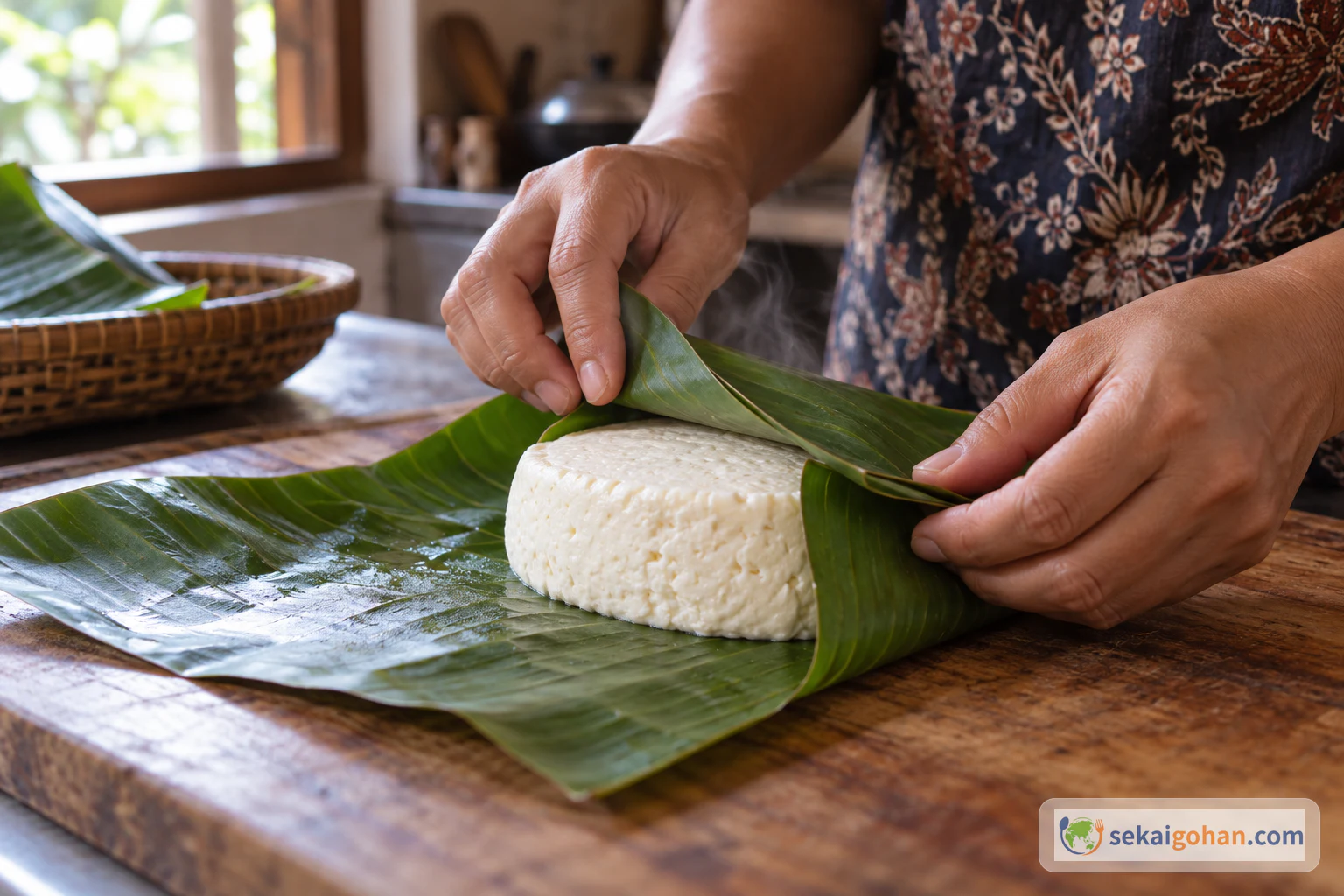
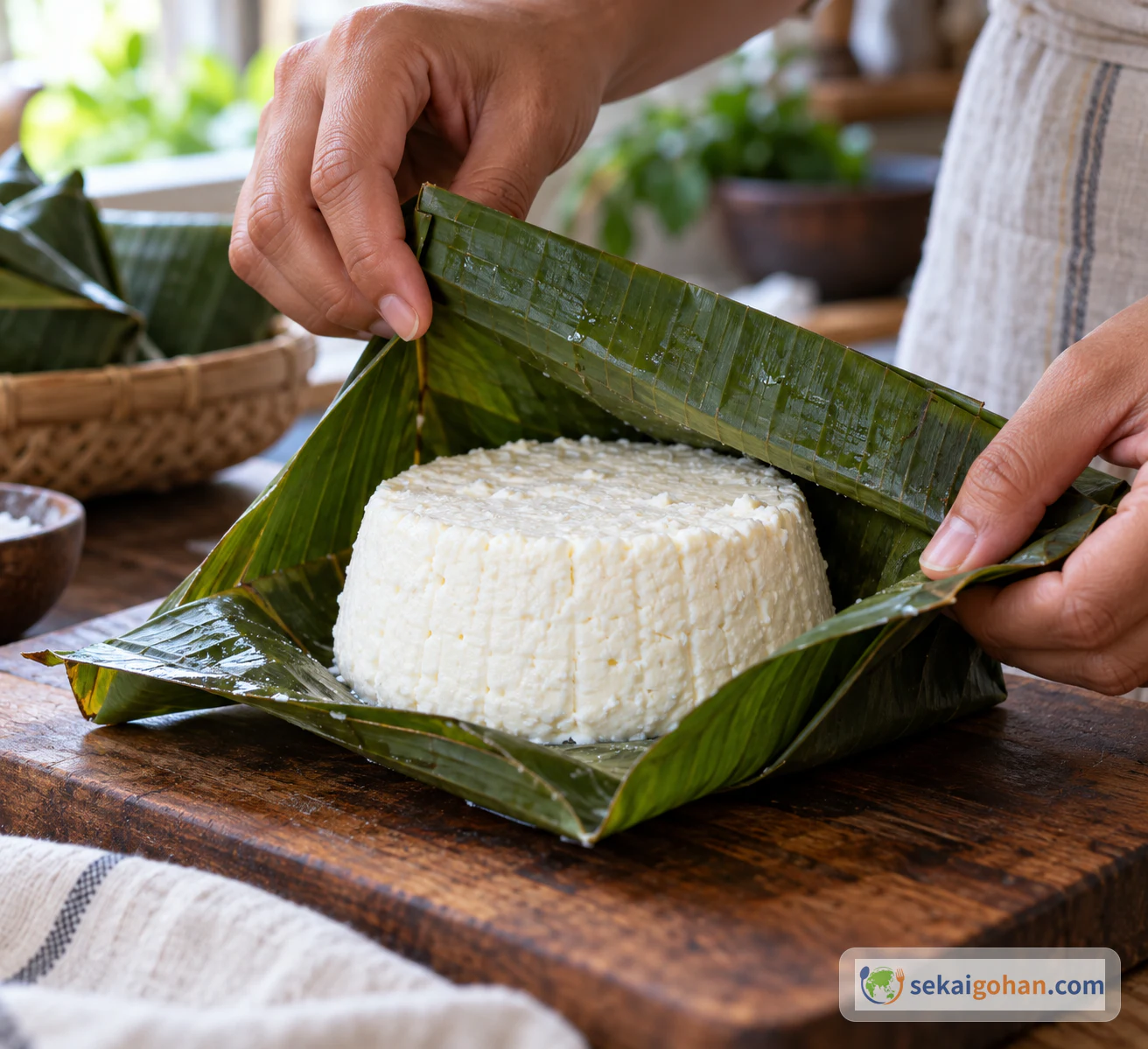
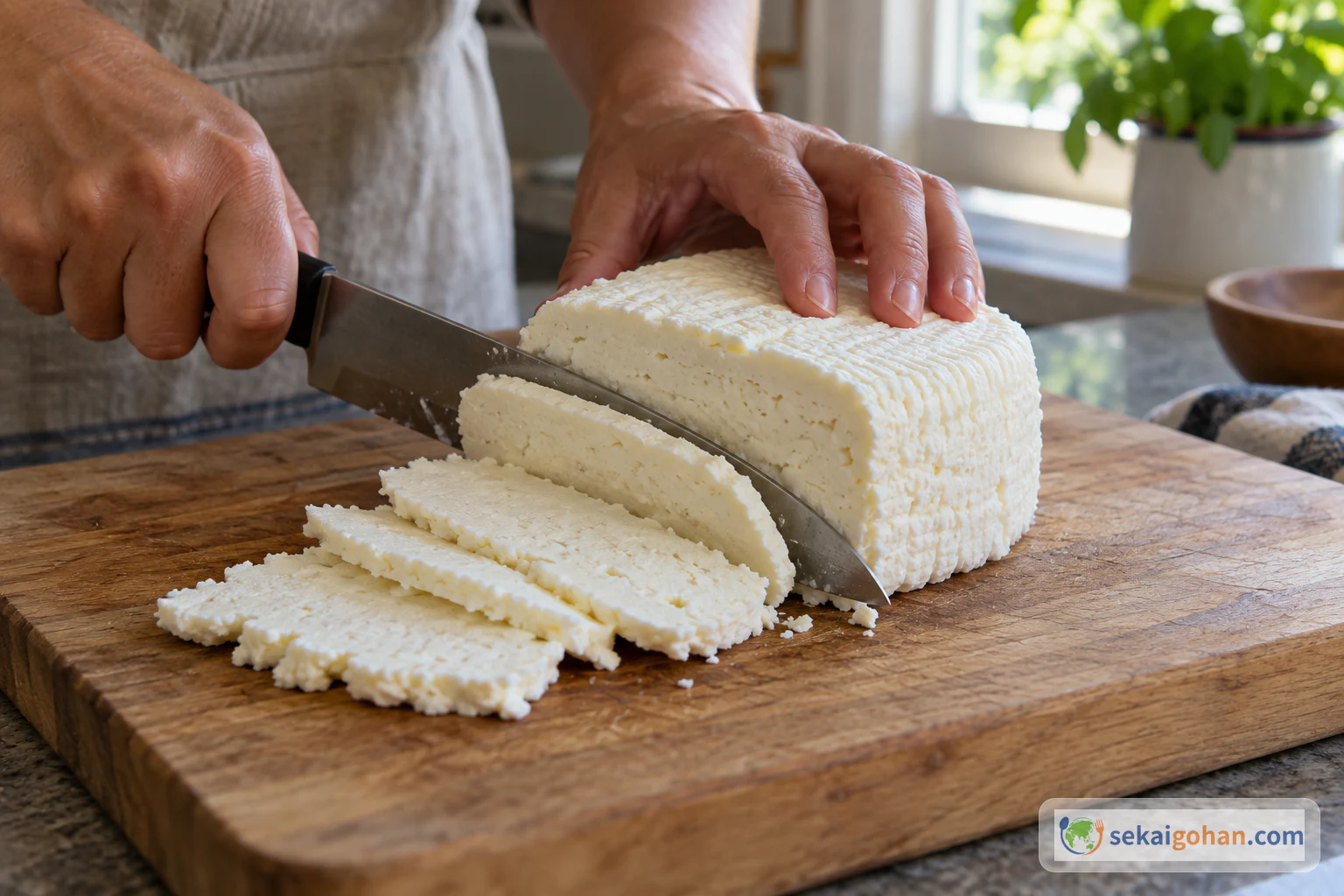
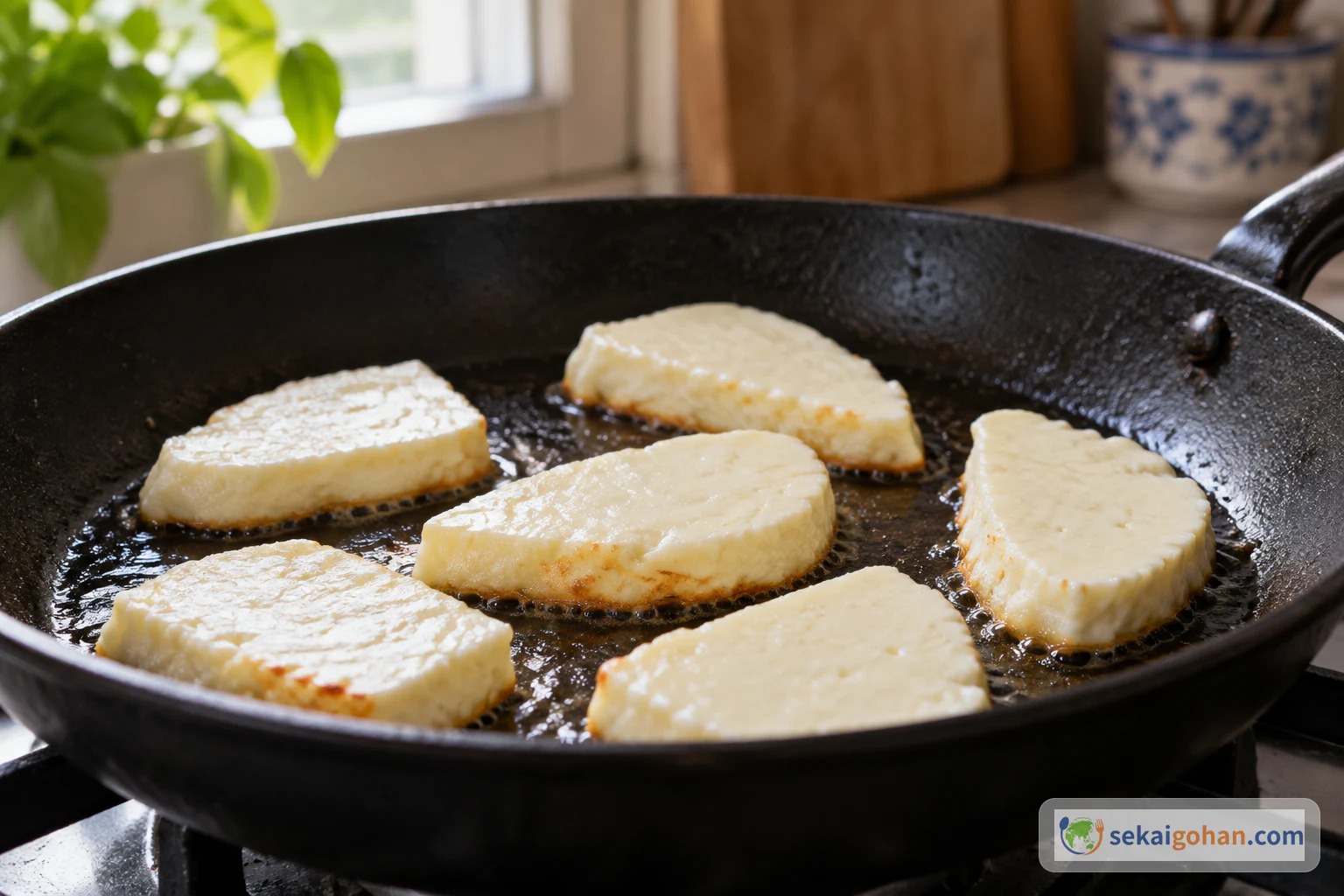
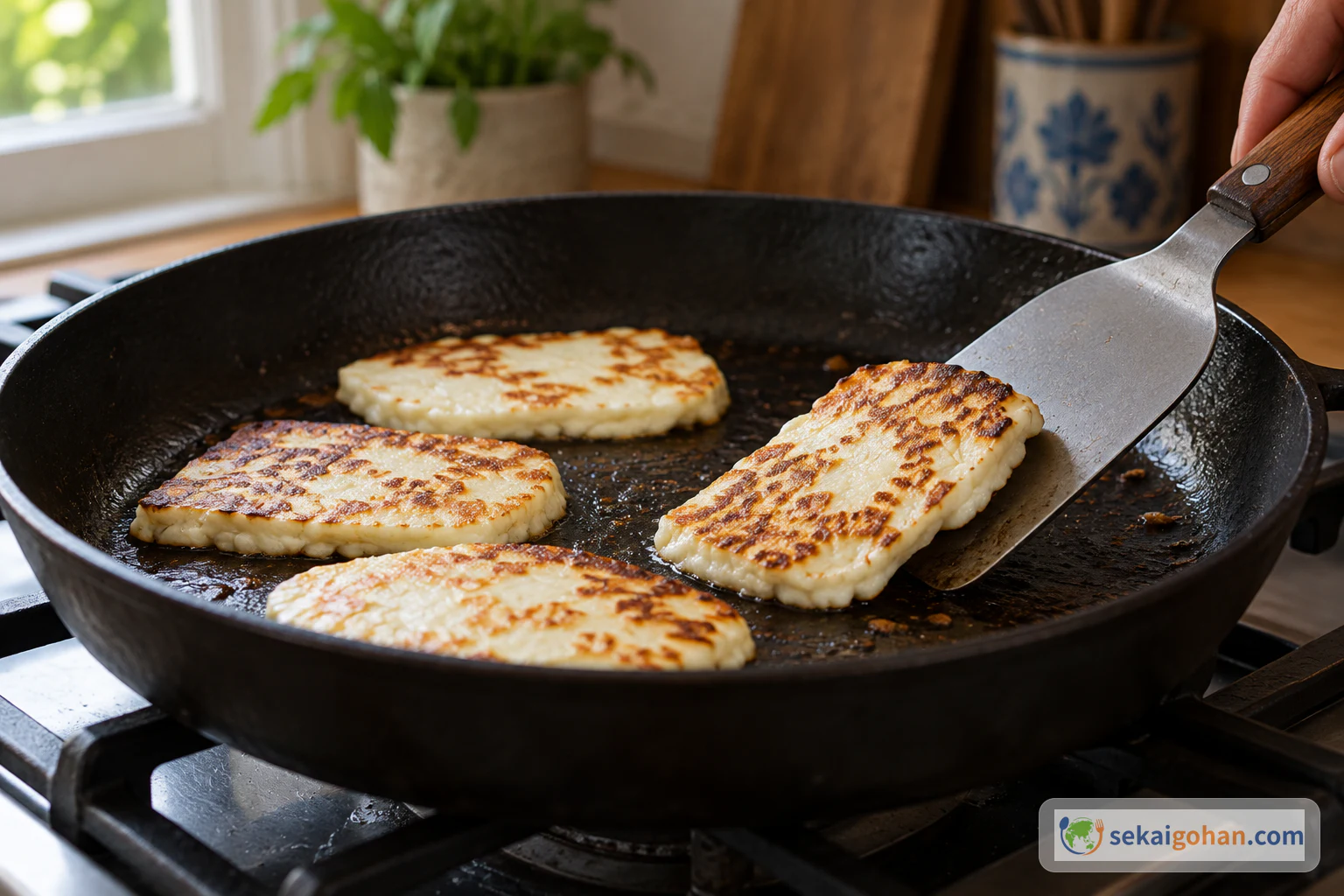
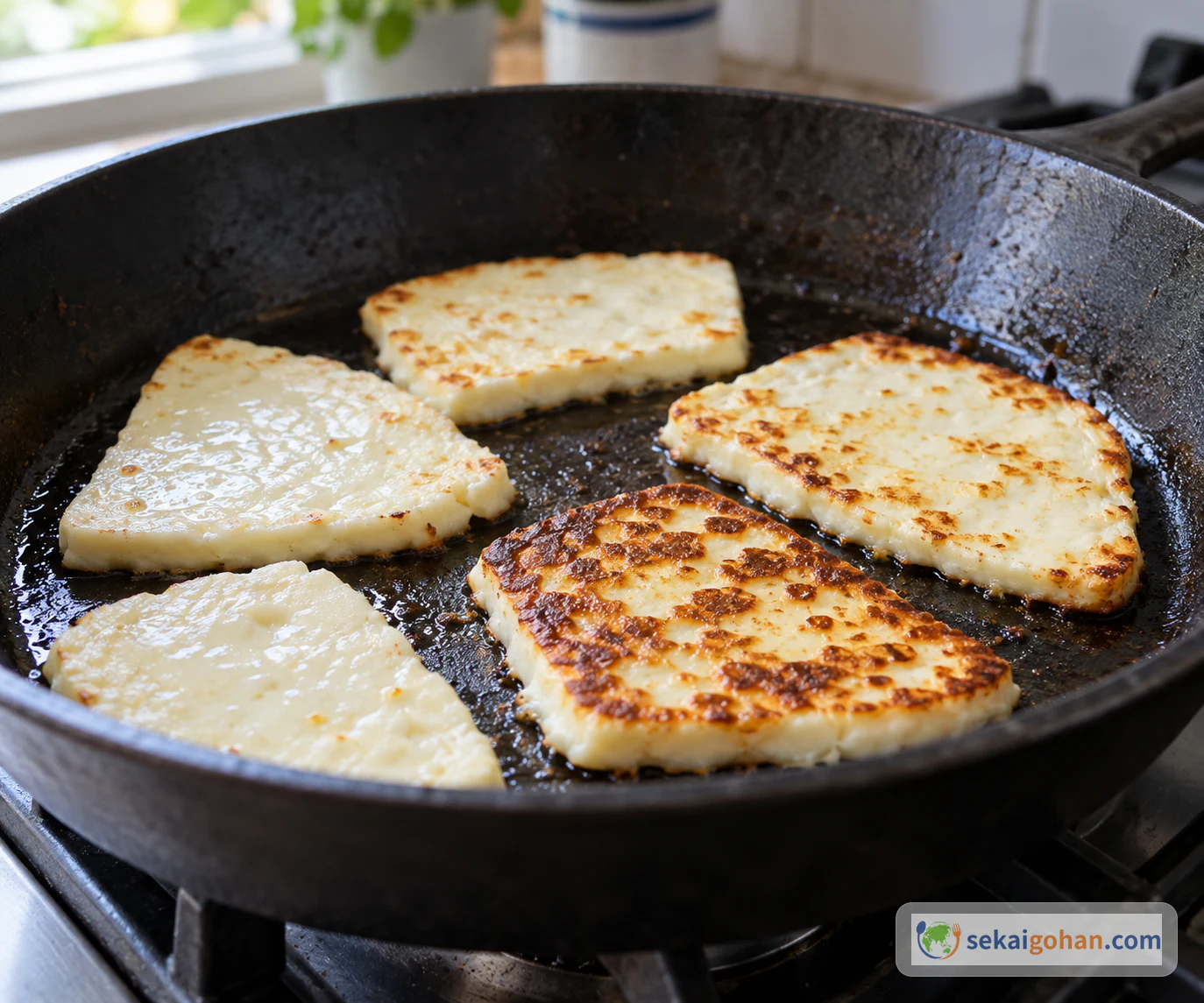
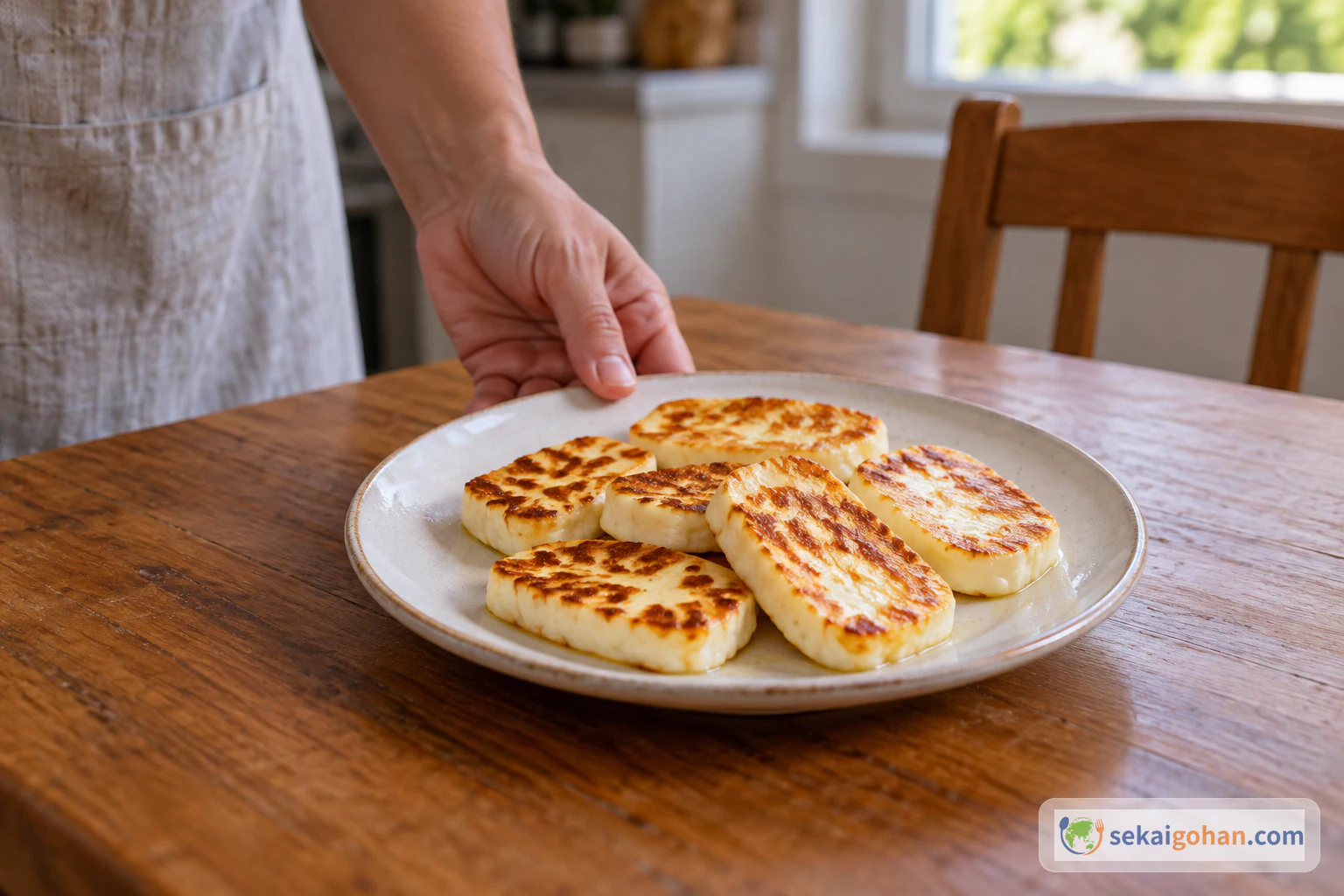
A pot of milk comes to a boil over low heat. The papaya latex goes in while it's still bubbling, and the milk gathers into soft curds. Those curds get packed into halved coconut shells and pressed until the whey runs out, then wrapped in banana leaf while still hot. This is Dangke, the fresh milk curd of Enrekang in South Sulawesi, Indonesia. To eat it, you slice it thin and pan-roast both sides until golden brown.
Dangke in Enrekang and South Sulawesi
Dangke comes from Enrekang and is made with cow or buffalo milk. It's a boiled local product, set with papaya and pressed in coconut-shell molds, and the coconut shell gives each piece its rounded shape. Some people call it a cheese: one recipe title reads "Dangke (Keju Susu)," and the term "Dangke-cheese" turns up too. Making it takes three steps: heat the milk, curdle it and press it.
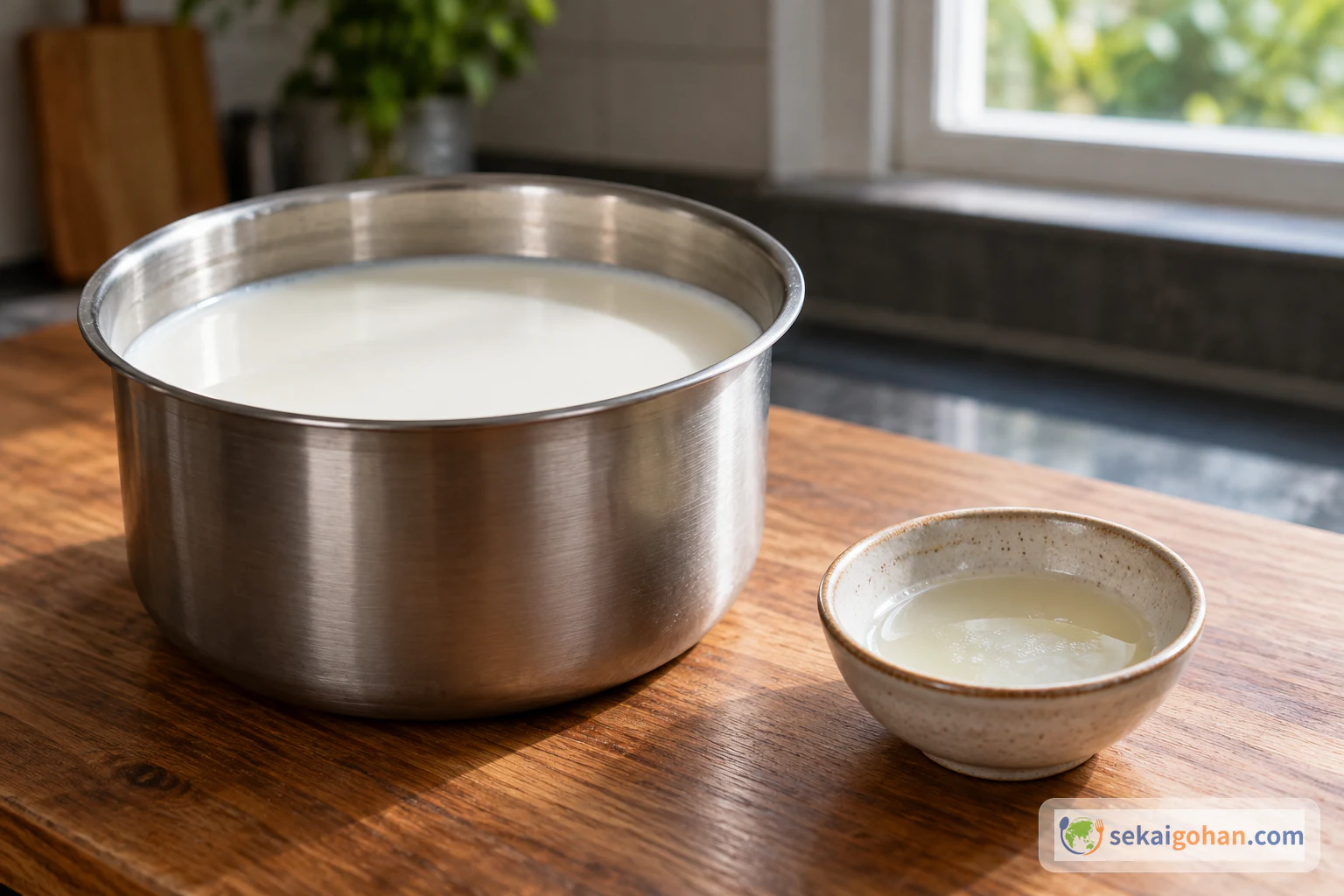
This version uses plain pasteurized whole cow milk, which is easy to find at home, with fresh papaya fruit latex as the coagulant. It makes four pieces of Dangke, each 330–350 g (up to 12.5 oz), from 5.25 quarts (5 liters) of milk and 1/2 sendok makan (an Indonesian tablespoon) of papaya coagulant.
Dangke is made from milk. Anyone avoiding dairy should not eat it.
Ingredients: 5.25 quarts (5 L) Milk and Papaya Latex
Choosing Milk and Papaya Coagulant for Dangke
- Milk: Use plain pasteurized whole cow milk. Skim milk, goat milk, sweetened condensed milk and coconut milk won't work as swaps.
- Coagulant: Use fresh latex from papaya fruit, measured at 1/2 sendok makan.
- Other papaya forms: Papaya leaf juice, dried crude papain powder and commercial papain each have a different strength, and there's no equivalent amount for any of them. Don't use them at the same amount as the fruit latex.
- Nothing extra: The milk and the latex are the only ingredients. Salt, oil, lime juice, rennet and citric acid all stay out.
Equipment
- A large pot for 5.25 quarts (5 L) of milk
- Coconut-shell molds
- Banana leaves for wrapping
- A spoon for moving the curds
- A knife and cutting board
- A skillet
- A flat spatula
Method: From Boiling Milk to Golden Slices
Steps 1–7 make the fresh Dangke. Steps 8–13 are the way of eating it: slice, roast both sides, serve.
Common Dangke Problems and Fixes
There are no numbers here for heat, time, pressing force or slice thickness, so you go by what you see. Look for each of these in order: a low-heat boil, curds forming, whey pressed out, a hot wrap in banana leaf, and golden brown on both sides. Timing matters most with the coagulant. Adding it while the milk is boiling, not before you start heating, gives a higher yield.
| What you notice | What to check | What not to do |
|---|---|---|
| Curds are slow to form or few form | That the milk was boiling when the latex went in, and that the milk is plain whole milk | Don't add lime, salt, rennet or extra latex as a fix |
| The curd is very wet in the mold | Whether it was pressed until the whey separated | Don't skip the press. Judge by the whey separating |
| Slices brown on one side only | That each slice was turned and roasted on the second side | Don't deep-fry instead; this is a pan-roast |
The latex is the biggest variable, because fresh papaya latex varies in strength. If the milk sets poorly, check the latex first.
Serving Dangke and Regional Versions
Dangke is eaten sliced thin and pan-roasted golden on both sides, so you get a browned outside on each slice. In Duri, the curd is made from fresh cow milk, water and a papaya stalk. It's heated, stirred, pressed and served with rice.
Some households in Makassar make a different version with 1 quart (1 L) fresh cow milk or canned milk, 0.5 tsp (3 ml) papaya sap, ½ cup (100 ml) lime juice and 5 g salt. They stir the milk gently over a low flame and wrap the curd in foil or banana leaf, then serve it as is or fry it. That's its own recipe with its own amounts, so keep it separate from the version above.
For more of the country's cooking, see our Indonesia page.
Frequently Asked Questions
Can I use papaya leaf juice or dried papain at the same amount?
No. Each form has a different strength, and the 1/2 sendok makan here is for fresh fruit latex only. There's no conversion between forms.
Should I add lime, salt or oil?
Not to this version. Lime juice and salt belong to the separate Makassar household recipe. No amount of oil is given for the pan-roast, so it isn't certain the roast works without any.
Is Dangke fermented?
No. There's no fermenting, culturing or ripening step. It's milk heated, set with papaya latex and pressed.