


Chilli Crab Recipe: Singapore's Sweet-Spicy Tomato Sauce Crab

Chilli crab in red crab shells coated in plenty of sweet-spicy tomato chili sauce streaked with beaten egg, served with fried mantou
Prep
1 hr 20 min
Cook
25 min
Total
1 hr 45 min
Serves
3 servings
Level
Advanced
Cuisine
Singaporean

A recipe for Singapore's signature seafood dish, chilli crab, made with swimming crab, a paste of fresh red chilies and garlic, belacan (shrimp paste), palm sugar, tomato, and beaten egg. The story of its 1950s beginnings at a street stall, how to prepare the crab, finishing the sauce by pouring in egg in ribbons, and eating it with fried mantou.

Cooking flow

Cooking steps

STEP11 / 7

Put the crab to sleep and remove the carapace

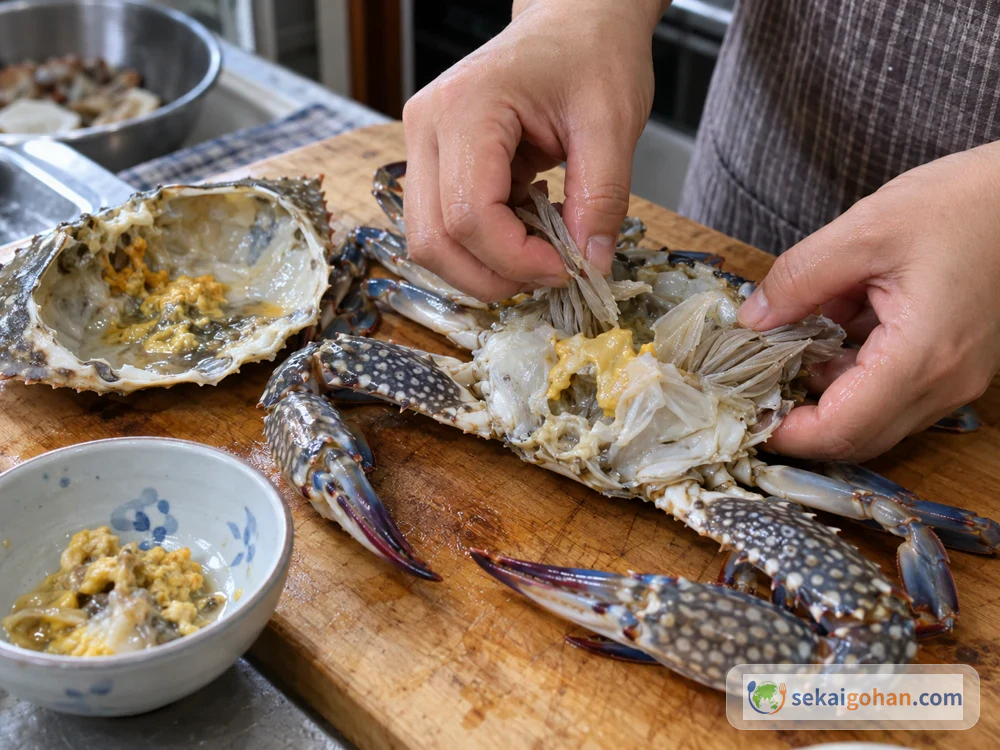
Removing the carapace of the swimming crab, taking out the gray gills, and saving the crab fat
Remove the carapace and the gills, and set the yellow crab fat aside in a dish

Put live swimming crab in a lidded container and leave it in the freezer for 1 hour, and start the preparation after it has stopped moving. Under running water, scrub the shell clean with a brush and remove the triangular apron on the belly. Put your thumb into the gap between carapace and body and pry the carapace off. Remove the gray, feathery gills on both sides of the body, which are not edible. Don't throw away the yellow crab fat (tomalley) left inside the carapace and body; set it aside in a small dish. The work takes about 5 to 10 minutes per crab.

STEP22 / 7

Remove the claws and cut the body into four

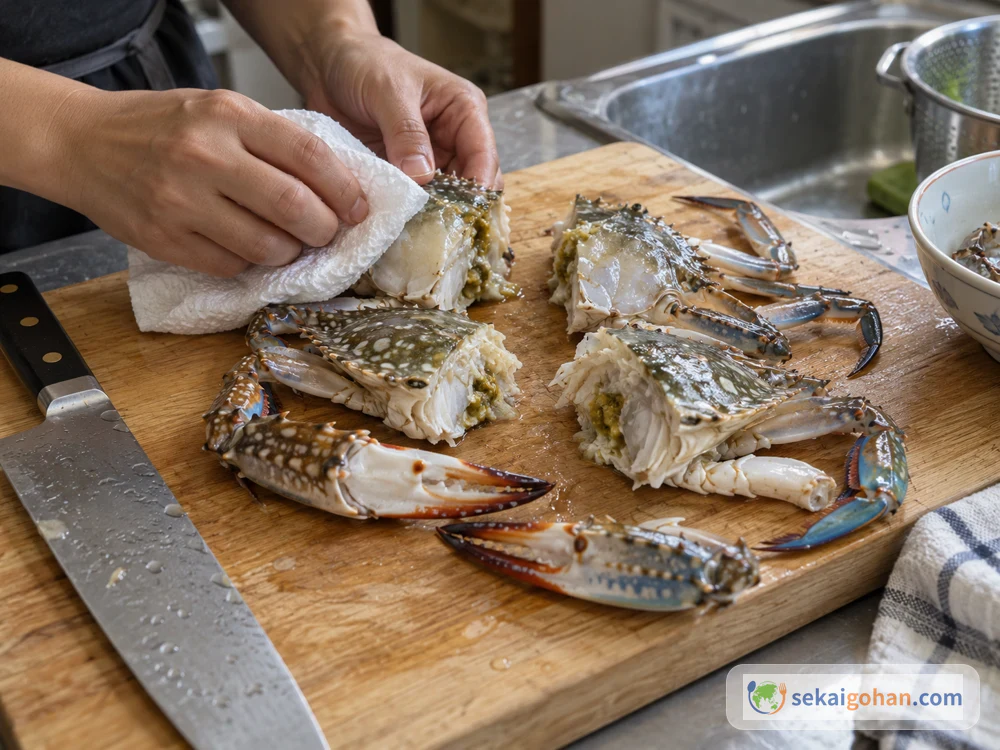
Cutting the body of the swimming crab into four pieces with two legs each
Crack the claws and cut the body into four, two legs each

Twist off the legs bearing the claws at the base, and lightly tap the shells with the back of a knife or a rolling pin to crack them. This lets the sauce get in and makes them easier to crack when eating. Cut the body in half lengthwise with a heavy knife, then cut each half in half crosswise, into four pieces with two legs on each. After cutting, wipe off the moisture with paper towels.

STEP33 / 7

Make the chili paste

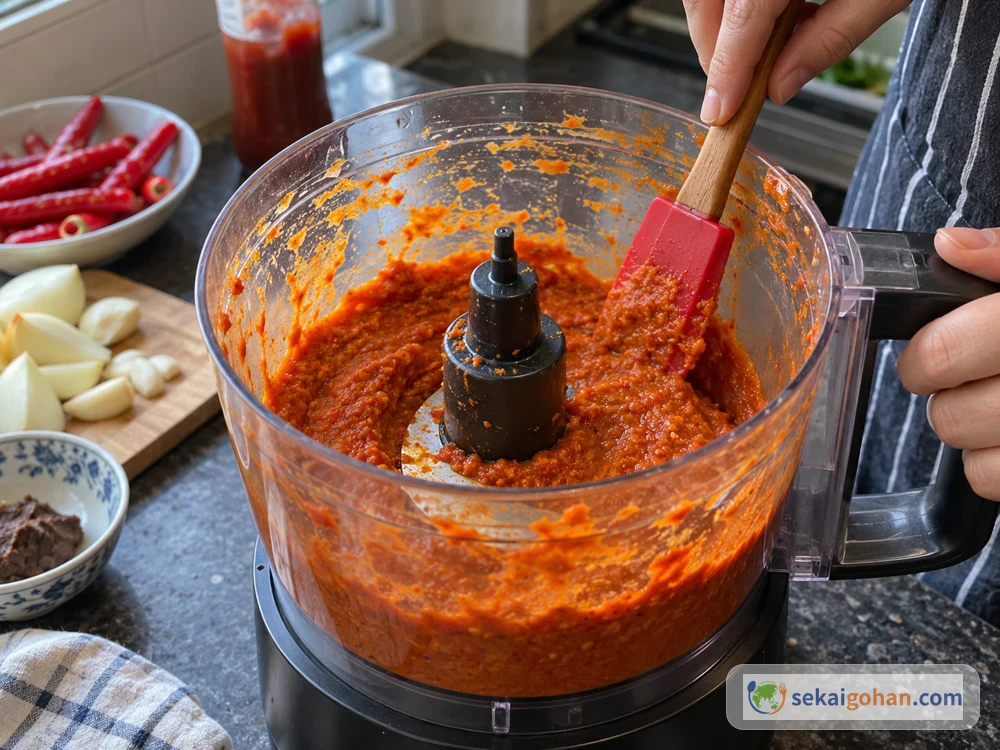
Blending onion, garlic, and red chilies into a smooth paste in a food processor
One to two minutes, until a smooth paste with no visible grains

Put the sliced onion, 4 cloves garlic, 6 seeded red chilies, 1 tbsp tomato ketchup, and 1 tsp belacan in a food processor or blender and process 1 to 2 minutes. Stop once partway and scrape the sides with a spatula, and process until a smooth paste with no visible grains. If it is too dry to blend, add 1 tbsp water.

STEP44 / 7

Fry the paste in oil

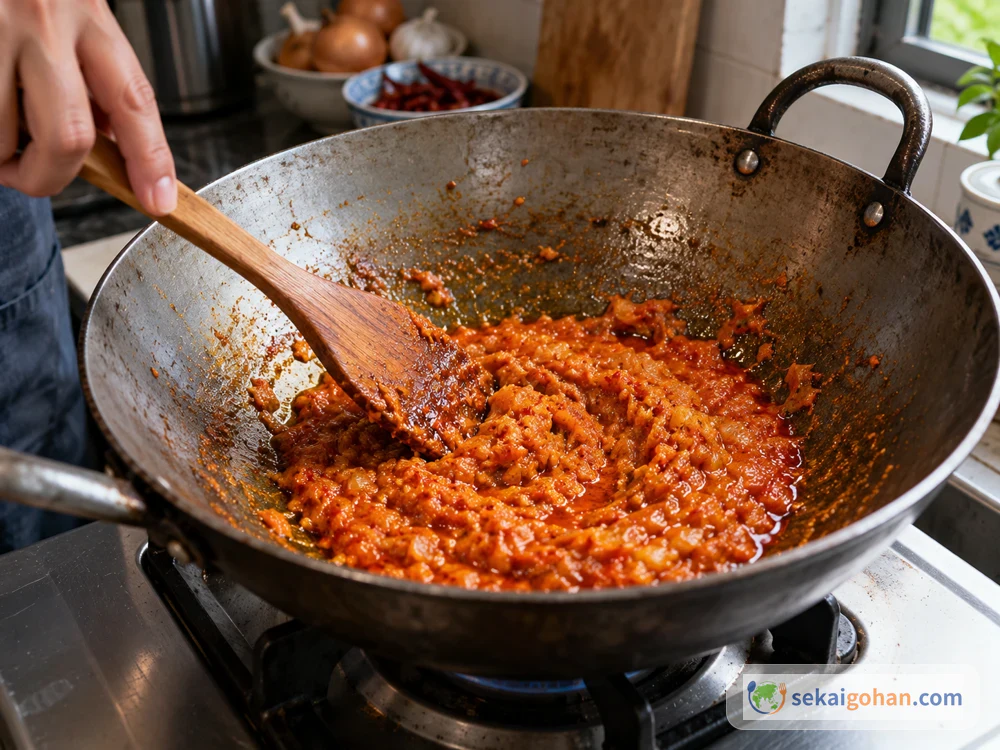
Frying the chili paste in a wok until red oil seeps out
About 5 minutes over medium heat, until the color deepens and red oil seeps out

Heat ¼ cup (60 ml) vegetable oil in a wok over medium heat, add the paste, and fry for about 5 minutes, stirring with a wooden spoon. At first it bubbles from the moisture, but gradually the moisture cooks off, the color deepens to orange, and red oil seeps out around the paste. It is done when the smell of raw onion and garlic is gone, a sweet, toasty aroma rises, and the paste comes together thickly. The strong smell of the belacan also turns toasty here.

STEP55 / 7

Add the crab and fry, then add the liquid and simmer

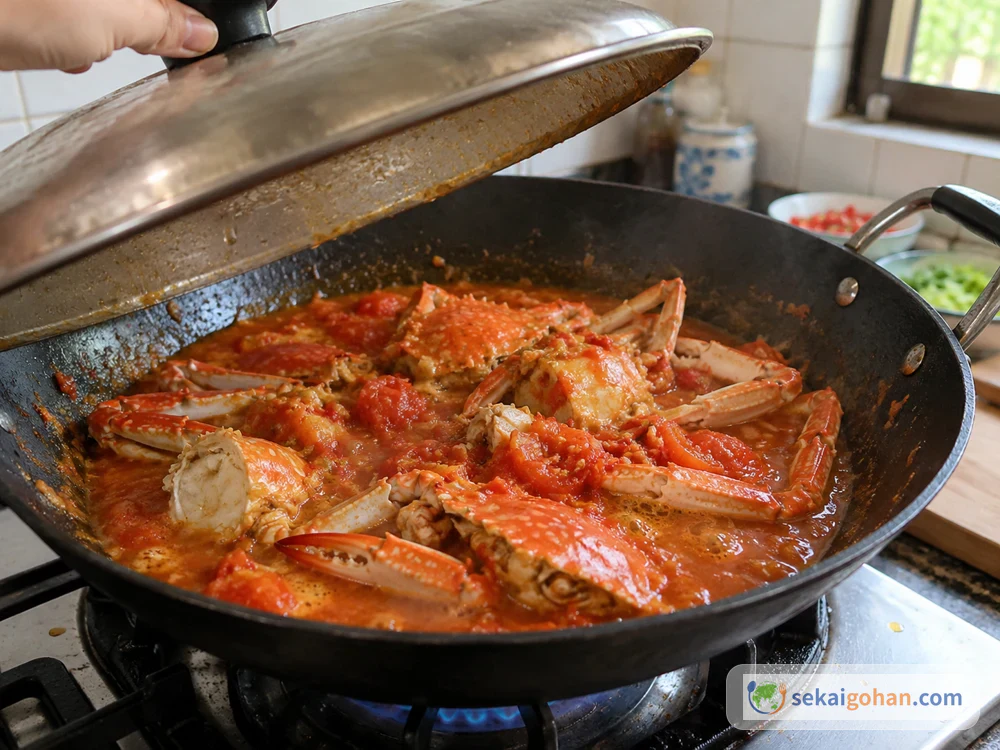
Frying the crab in its shell with the paste, then adding the tomato liquid and simmering covered
Once the shells turn red, add the liquid, cover, and cook 10 to 15 minutes

Put the cut crab, shell and all, in the pot, sprinkle on 1/4 tsp salt, and fry 2 to 3 minutes, coating everything with the paste. When the shells begin to change from bluish gray to red, add the tomato purée, chicken stock, palm sugar, vinegar, and soy sauce, mix until the liquid blends all over, and add the reserved crab fat. Cover and simmer over medium heat for 10 to 15 minutes. It is cooked when the shells are completely red and the meat in the thick claws is white and opaque.

STEP66 / 7

Remove the crab and finish the sauce with egg

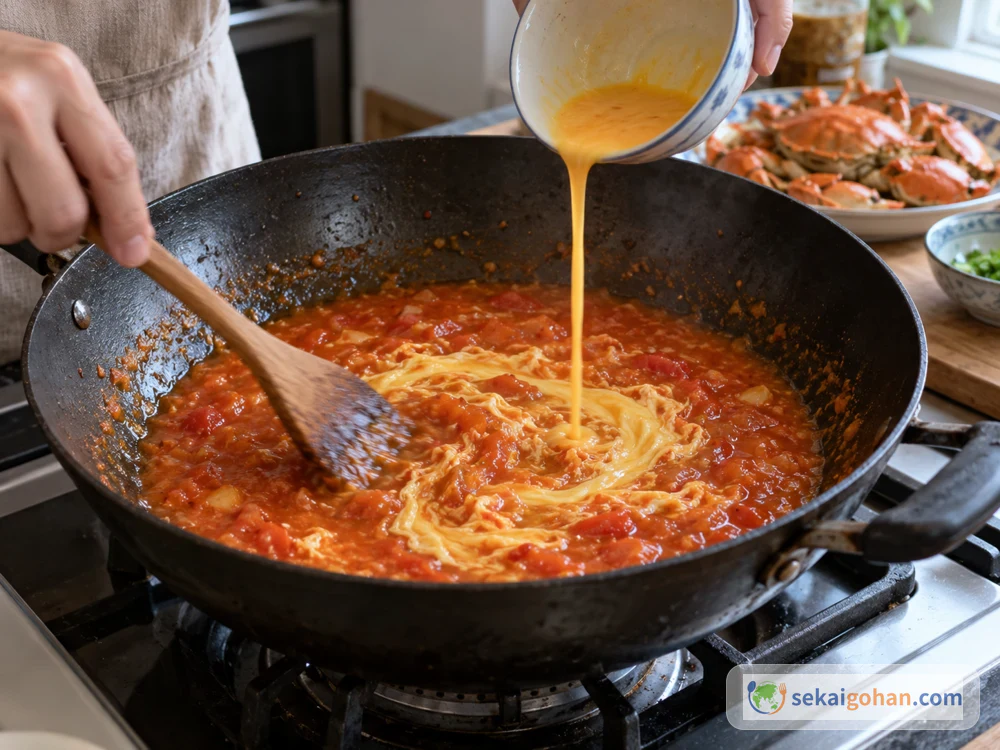
Drizzling beaten egg in a thin stream into thickened tomato sauce to make ribbon-like streaks
Drizzle in the beaten egg thinly and stir slowly to set it in ribbons

Take the crab out onto a large platter, and with the sauce left in the pot over medium heat, pour in the cornstarch slurry a little at a time, stirring. When it thickens in about 30 seconds, drizzle in the beaten egg in a thin stream while continuing to stir slowly and widely. You've succeeded when the egg sets softly and forms ribbon-like streaks in the sauce. Finally add 20 g butter and the scallions to melt, taste, and adjust with salt if needed.

STEP77 / 7

Spoon the sauce over and serve

Chilli crab on a large platter garnished with cilantro, served with fried mantou
Spoon on plenty of sauce, scatter cilantro and chili, and add the mantou

Spoon plenty of the finished sauce over the crab on the platter. Scatter on cilantro and sliced red chili, add the warmed mantou, and bring it to the table right away. Since you crack the shells by hand, have finger bowls and plenty of wet towels or napkins ready.

0 / 0
Ingredients

Ingredients

1 / 3

Crab

Ingredient Amount Substitutes & notes
Swimming crab 2 (about 1.75 lb (800 g)) 1 large mud crab also works. Frozen is fine
Vegetable oil ¼ cup (60 ml) —
Salt 1/4 tsp —
2 / 3

Chili paste

Ingredient Amount Substitutes & notes
Onion 1 medium Sliced thin
Garlic 4 cloves —
Fresh red chilies (large) 6 Remove the seeds
Tomato ketchup 1 tbsp —
Belacan (shrimp paste) 1 tsp Can be omitted
3 / 3

Cooking liquid and finishing

Ingredient Amount Substitutes & notes
Tomato purée 1 cups (250 ml) 1 can (14 oz (400 g)) of diced tomatoes also works
Chicken stock or water 1 cups (250 ml) Fish stock also works
Palm sugar 2 tbsp Finely shaved. Raw cane sugar also works
Vinegar 1 tbsp Grain vinegar
Soy sauce 1 tbsp —
Cornstarch 1 tsp Dissolved in 2 tbsp cold water
Egg 1 Beaten
Butter 20 g —
Scallions (green parts) 3 Cut into 2 inches (5 cm) lengths
Cilantro, sliced red chili A little of each For garnish
Fried or steamed mantou 6 Baguette also works
0 / 0

On a big platter, red crab shells are piled into a mountain, and a thick orange sauce of tomato and chili spills from the gaps between them. Beaten egg floats through it in fluffy streaks, and a sweet, spicy, slightly sour smell rises off the plate. Everyone at the table has sauce on their hands, cracking shells and tearing off pieces of freshly fried bread to wipe up every drop. This is chilli crab, the star of Singapore's evening tables: sweet and fiery, with a sharp edge of sourness from tomato and vinegar.

Chilli crab's origins on the Kallang River
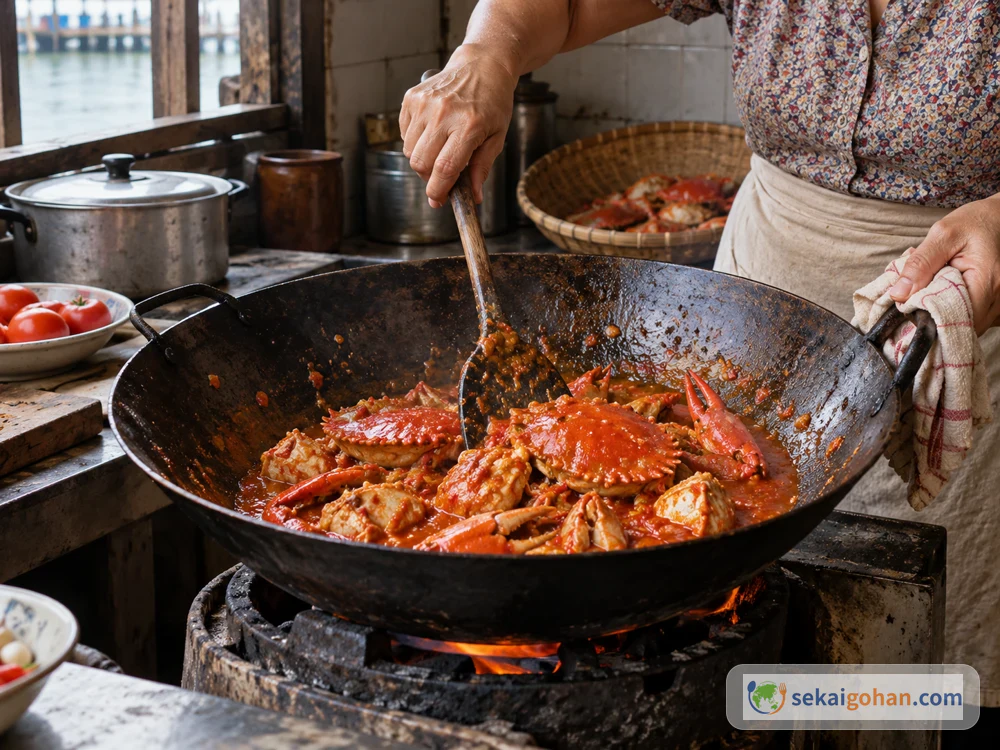
Cooking crab and red chili sauce in a well-seasoned wok

Singaporeans still tell the story of a married couple who started it all. In the 1950s, Cher Yam Tian was experimenting with crabs her husband, Lim Choon Ngee, had caught, stir-frying them with tomato. He told her the dish was "too sweet" and urged her to add chili. That became the very first plate of chilli crab.

In 1956, the couple set up a small stall on the banks of the Kallang River in eastern Singapore. They started without a license and sometimes moved the stall to stay ahead of enforcement officers. As their reputation grew, they opened a restaurant on Upper East Coast Road in the early 1960s. During the same decade, chef Hooi Kok Wai refined the recipe into the chilli crab we know now. He added lemon juice, vinegar, sambal, tomato paste and egg white, which gave it a thick sauce with a pronounced sourness.

Did you know?

The chili pepper itself was brought by the Portuguese to Malacca on the Malay Peninsula in the 16th century. Until then, Malay cooking used pepper for heat. Behind the red heat of chilli crab lies several hundred years of trading history.

The couple gave up their restaurant in 1985, but the dish stayed in the family. Their son Roland Lim kept making it and later opened his own restaurant at Marine Parade.

Today chilli crab is one of Singapore's best-known dishes and appears on the list of the "World's 50 Most Delicious Foods." People in neighboring Malaysia eat it too, and the two countries sometimes argue over whose dish it is. Locally it's made with hard-shelled mud crab and served with mantou, small fried or steamed buns that are perfect for scooping up the sauce.


Ingredients (serves 2–3)
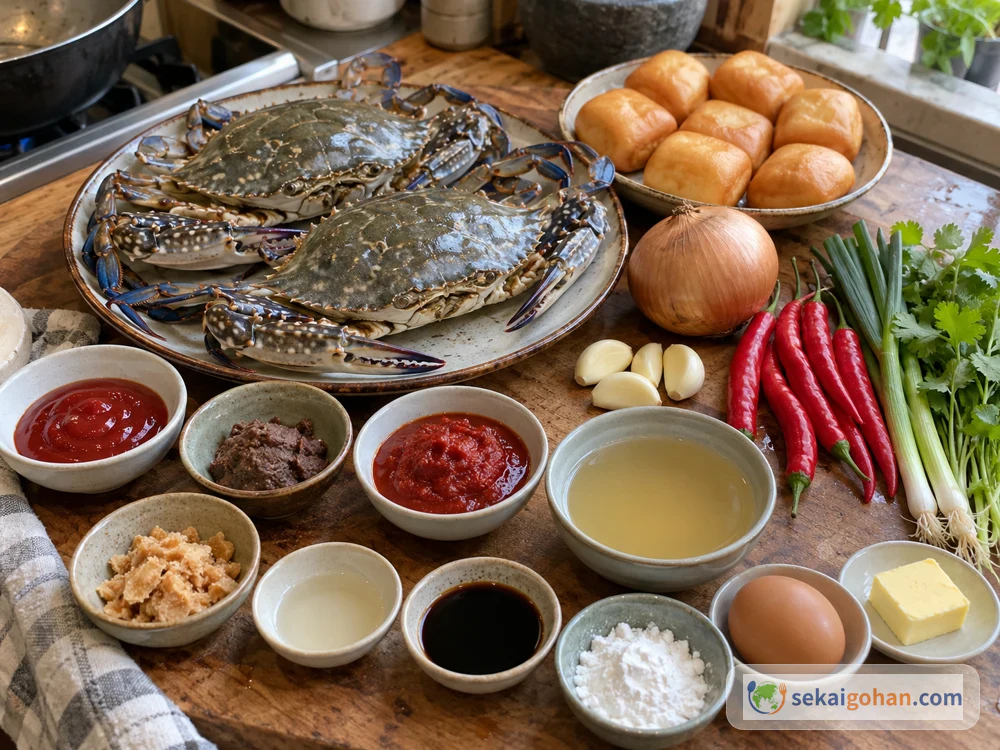
Chilli crab ingredients: swimming crab, onion, garlic, red chilies, ketchup, belacan, tomato purée, palm sugar, egg, and butter

Caution

This dish contains crab, shrimp (belacan), egg, dairy (butter), and wheat and soy (soy sauce, mantou). People with a shellfish allergy cannot eat it. The cut edges of crab shell are sharp, so be careful of injury both when preparing and eating.

Choosing crab, belacan and chilies for chilli crab
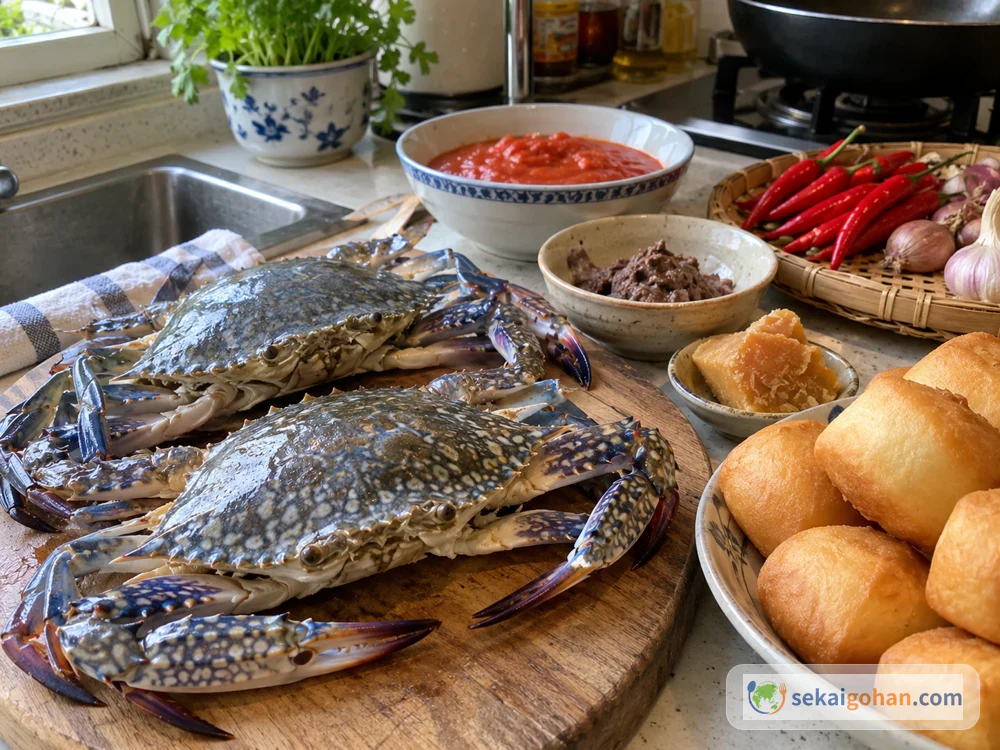
Swimming crab, belacan, palm sugar, tomato purée, red chilies, and fried mantou

Mud crab is hard to find in many places, so this version uses 2 swimming crabs (about 1.75 lb (800 g)), which fish markets and supermarkets carry more often. Swimming crab has a thin shell and sweet meat, and the sauce clings to it well. Frozen swimming crab works too.

Belacan, the Malay word for shrimp paste, is what gives the sauce its depth. It's made from small shrimp that are fermented and pressed. It smells strong in the jar, but heat turns it into a deep savoriness. Look for it at Asian grocery stores or online. If you can't get palm sugar, raw cane sugar works in its place.

Tip

Choose large, long fresh red chilies (a type like the long Thai chili) and remove the seeds. Their aroma and red color lead, and the heat is gentle. If you make it only with small, hot chilies, the paste becomes too hot. If you can't find them, use 1/2 red bell pepper with 2 dried red chilies rehydrated in water for the color and heat.

Chinese grocery stores and restaurant-supply stores sell mantou either frozen and already fried, or steamed. Warm the fried ones in a toaster oven and the steamed ones in a steamer or microwave.


How to make chilli crab

Preparing and prepping the crab takes about 1 hour 20 minutes (including 1 hour to put live crab to sleep in the freezer), and cooking about 25 minutes. If using frozen crab, thaw it in the refrigerator from the day before.

Caution

Cook the crab thoroughly all the way through. Check that the shells have all turned red and that the meat is white and opaque with no translucent parts. When handling live crab, work only after it has stopped moving in the freezer, so the claws can't pinch your fingers.

Tip

If you add the beaten egg all at once, it forms big clumps in the sauce. The trick is to drizzle it thinly, running it down chopsticks, while stirring the sauce slowly. If the heat is too high, the egg turns crumbly, so keep it at medium.

Serving and varying chilli crab

Eating with your hands
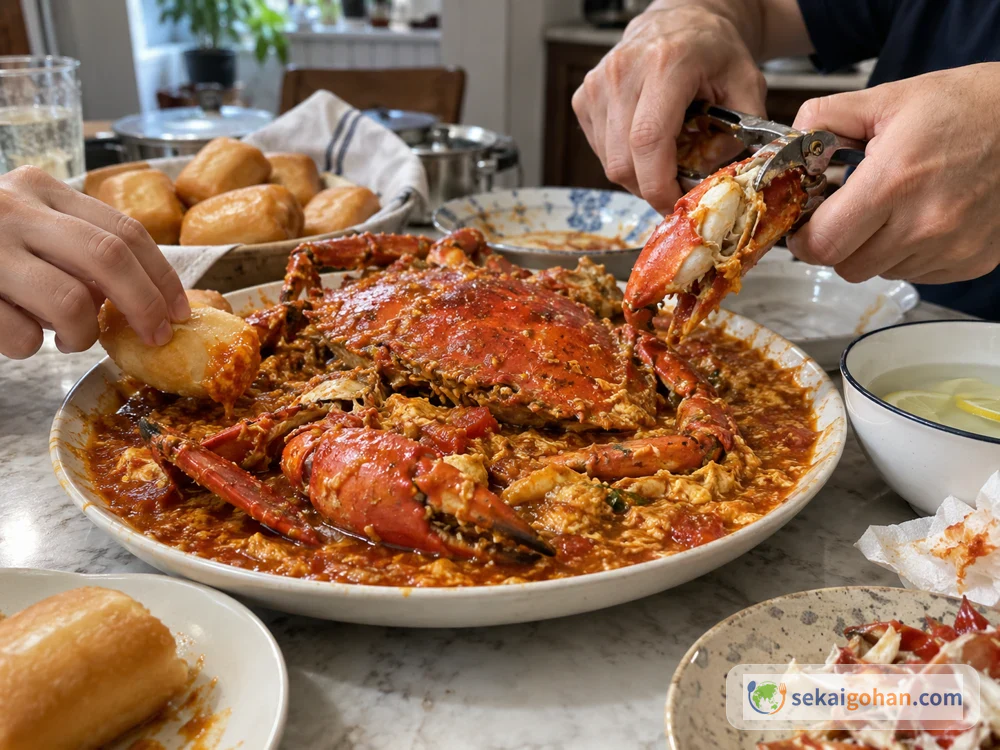
A table where chilli crab shells are cracked by hand and the sauce is wiped up with fried mantou
Crack the shells by hand and wipe up the sauce with mantou

You eat chilli crab with your hands. Crack the shells, slurp out the meat, and lick the sauce off your fingers. Once the crab is gone, the sauce left on the plate is the main event, so tear off pieces of fried mantou and wipe the sauce right down to the bottom of the plate. The sweet, crisp mantou is a good match for the heat and sourness.

Singapore's seafood restaurants usually serve black pepper crab, made with plenty of black pepper, alongside chilli crab. For a seafood spread at home, add Assam pedas, fish simmered in a sour-spicy sauce; Orh luak (蚝煎), the hawker-stall oyster omelet; or Otak-otak, fish paste wrapped in banana leaf and grilled.

Variations
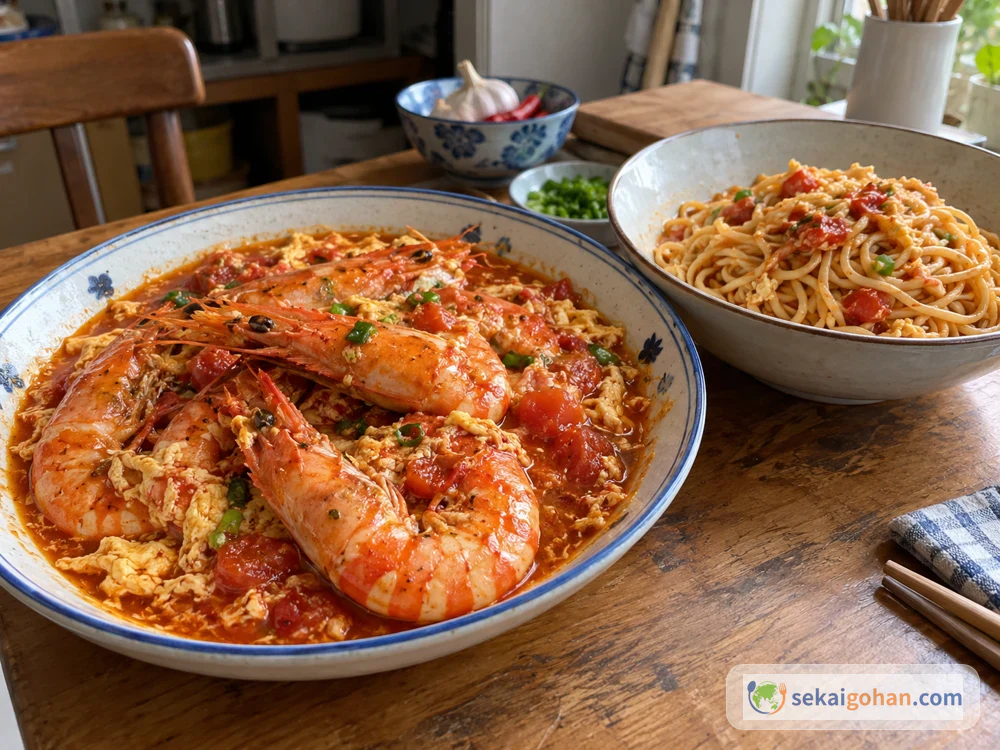
Chili sauce made with shrimp, and a plate of noodles tossed in the leftover sauce

Large shell-on shrimp can stand in for the crab. Devein them, fry them in their shells in the paste, and simmer for just 3 to 5 minutes, until the flesh turns white and they curl. The sauce is made the same way as for crab.

Any leftover sauce is good tossed with boiled Chinese noodles or spooned over rice. To tame the heat, replace some of the red chilies with red bell pepper, which keeps the same color with only the heat dialed back. If you want more heat, add 2 to 3 small, hot fresh chilies to the paste.

FAQ
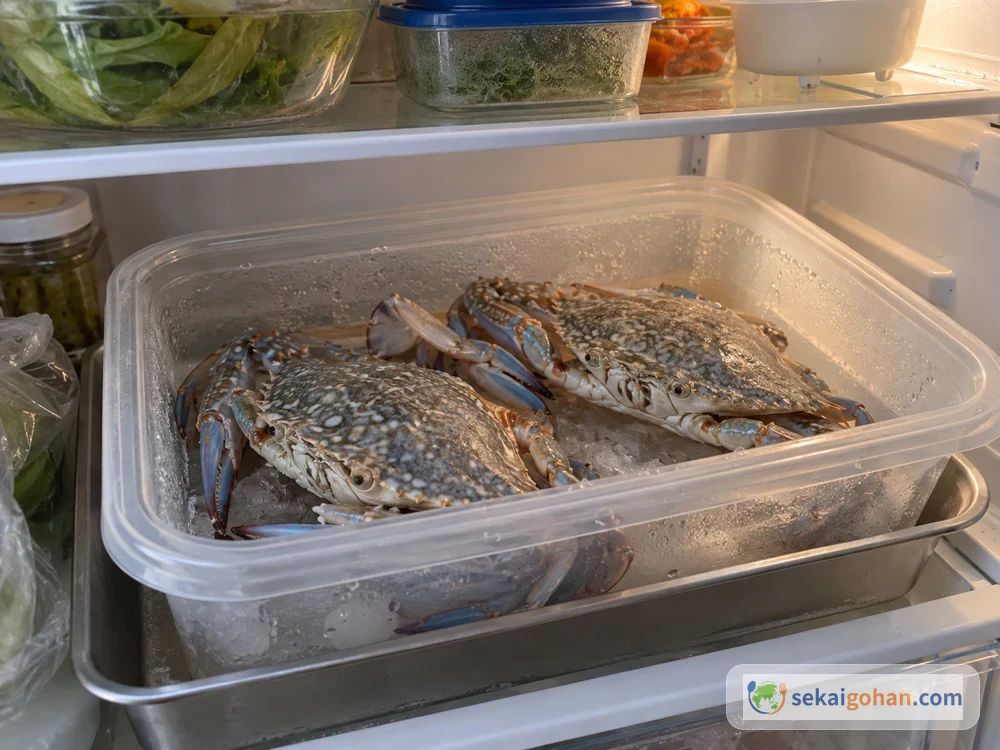
Thawing frozen swimming crab in the refrigerator

Can I make it with frozen crab?

Yes. Move the crab to the refrigerator the day before so it thaws slowly, then prepare it as usual. If your frozen crab is already boiled, simmer it for only about 5 minutes, just long enough to heat it through. Any longer and the meat turns tough.

Does the flavor change without belacan?

It does. You can leave belacan out, but you lose the fermented shrimp savoriness it gives the sauce. About 1 tsp fish sauce in its place brings back a little of that seafood flavor.

Can I make it ahead?

Not really. Crab meat toughens as it sits, and the egg in the sauce separates easily, so serve it the day you make it. Leftover sauce on its own keeps in the refrigerator until the next day. Reheat it in a pot and bring it to a full boil.

What if I don't have mantou?

Cut a baguette into slices about 1 inch (2 cm) thick, toast them, and serve them on the side for wiping up the sauce. The sauce is also good spooned over white rice.

Sources