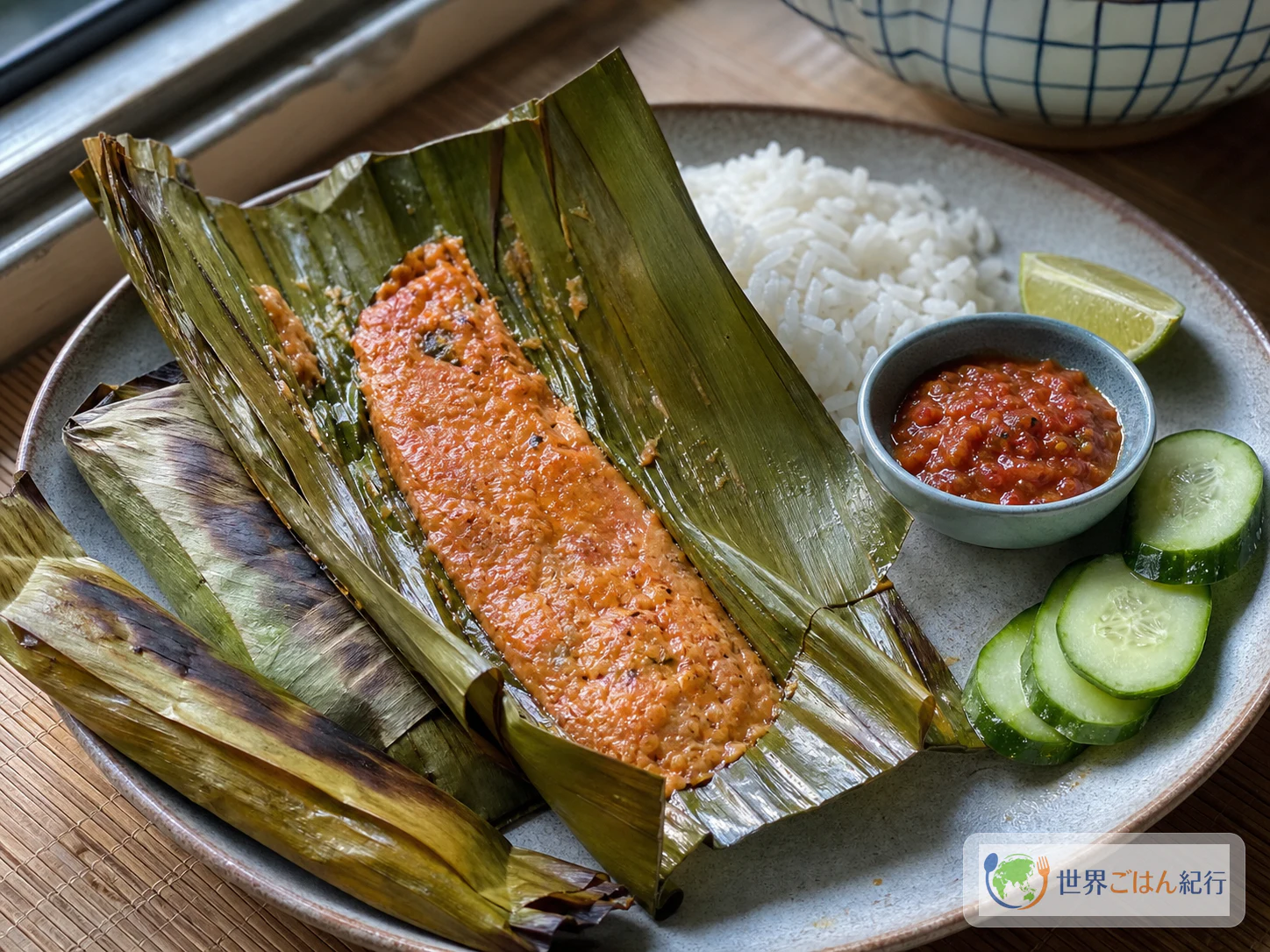
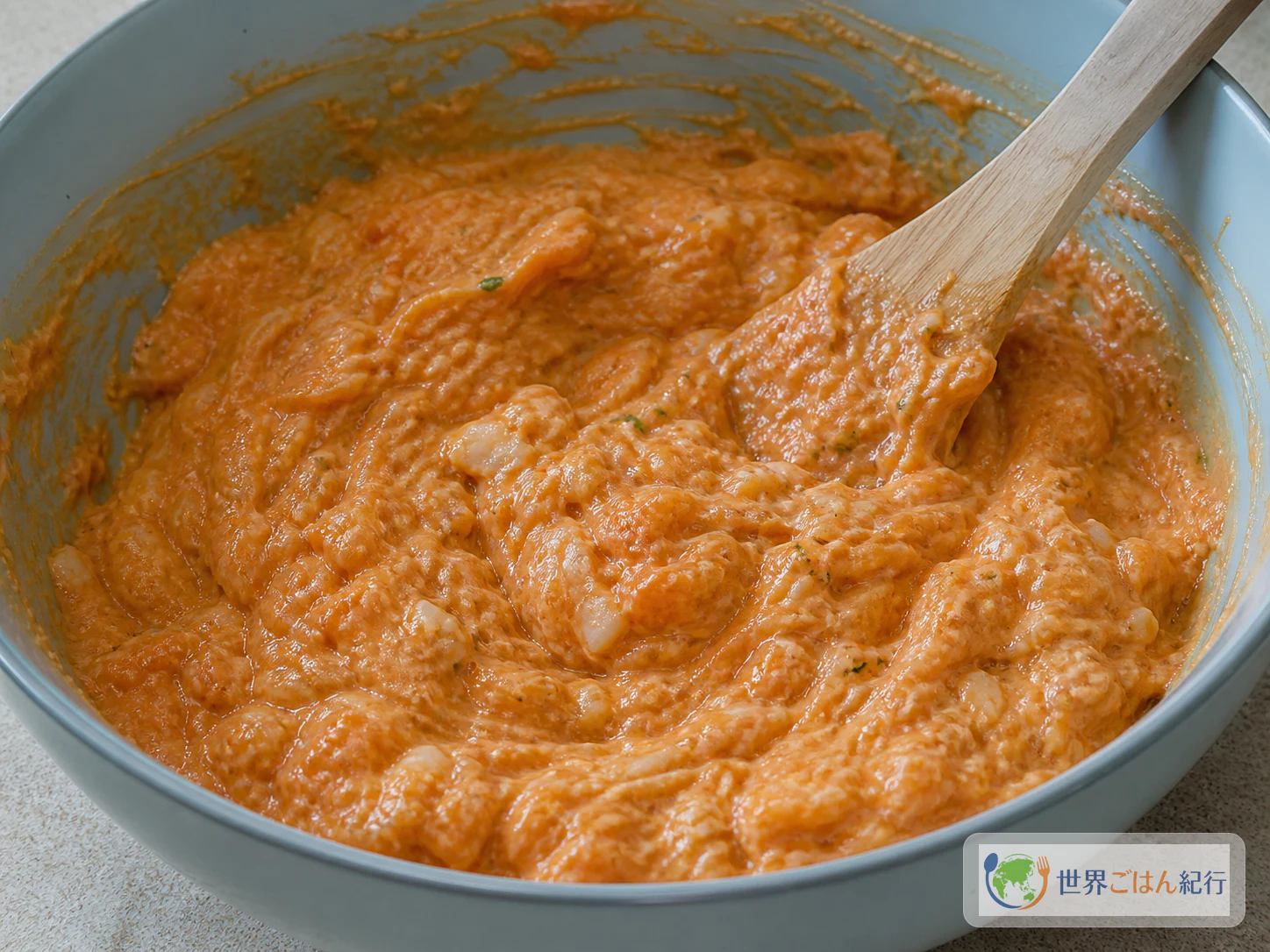
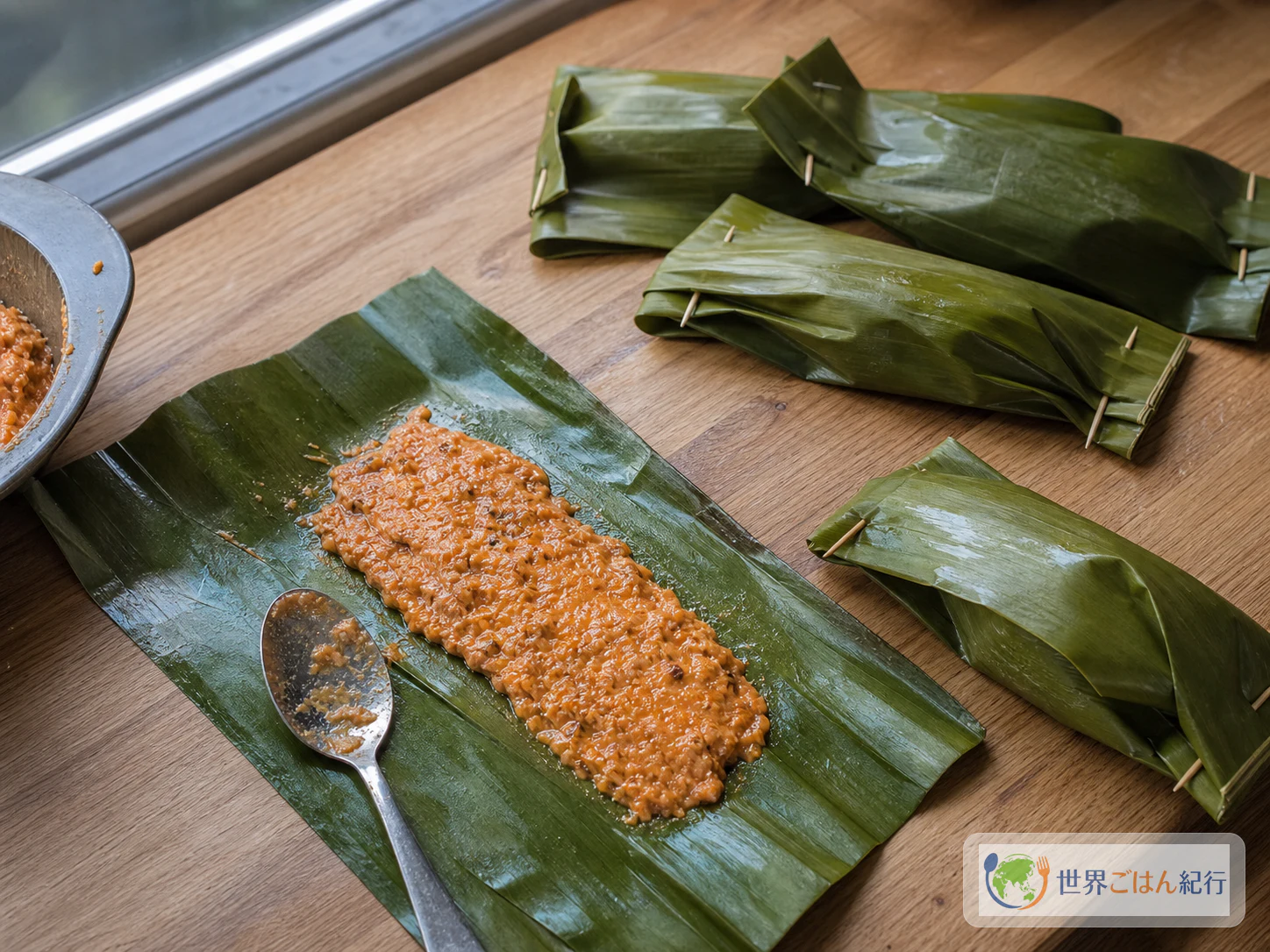
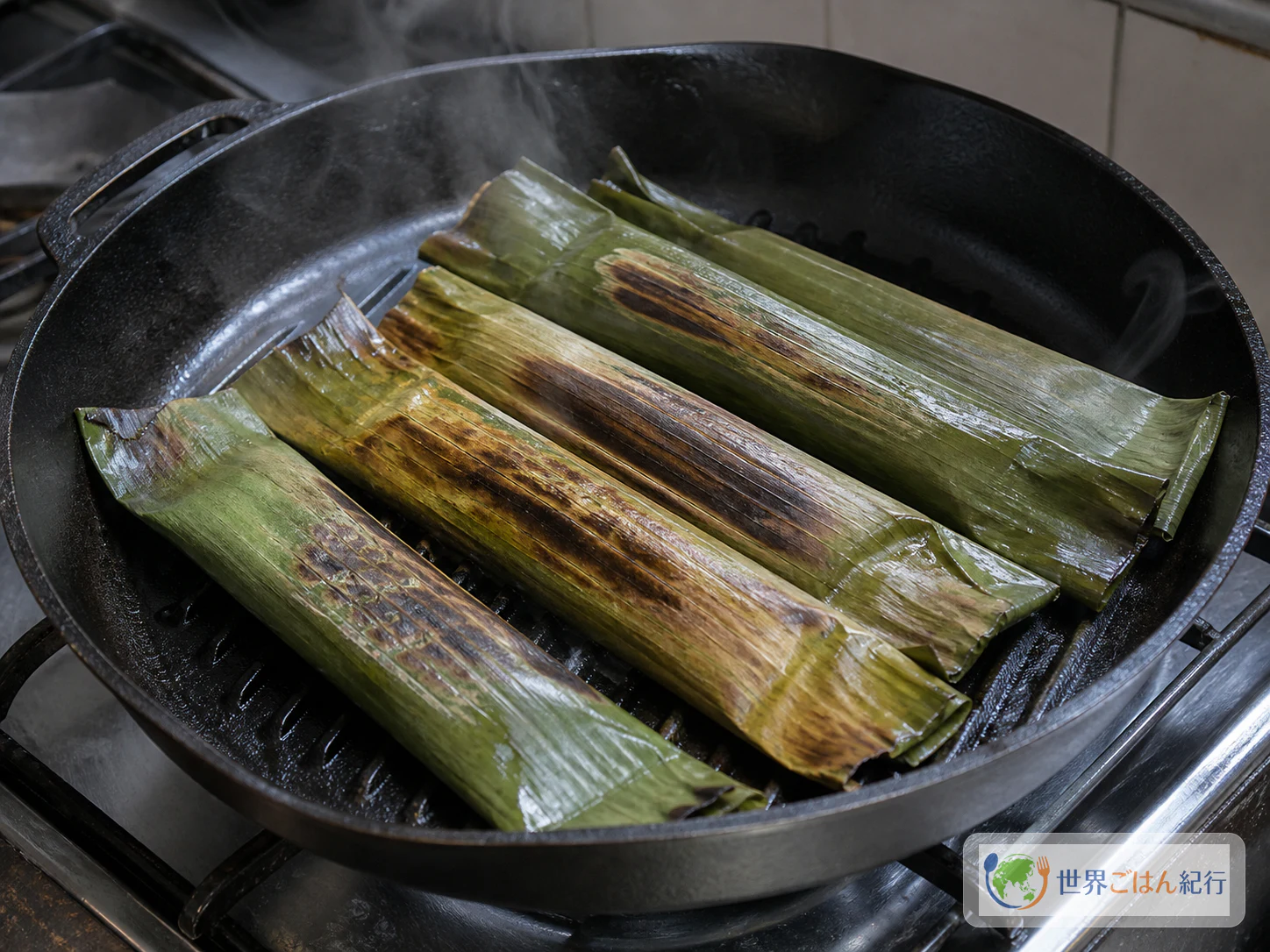
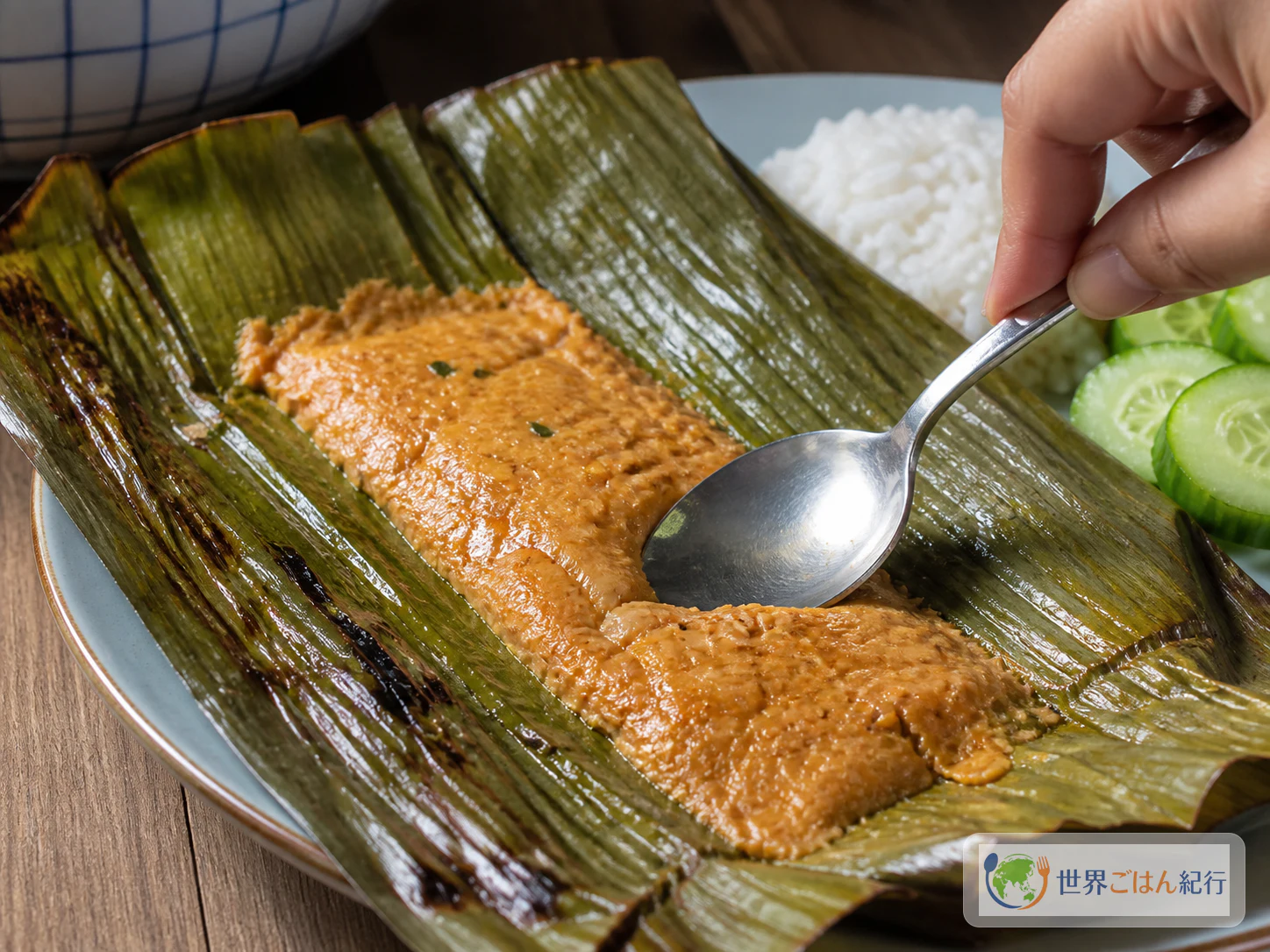
The steam that rises when you open the leaf is nothing like grilled fish or chawanmushi. It smells like a Southeast Asian street stall. In the skillet you first hear moisture steaming inside the wrapper, and a little later the sweet smell of scorching banana leaf. Otak-otak (also written otah) is fish paste mixed with chiles, shallots, galangal, lemongrass, makrut lime leaves and coconut milk, wrapped in banana leaf and grilled. It's eaten across Singapore, Malaysia and Indonesia. Expect springy fish, the roundness of coconut milk and the heat of red aromatics, all carrying the green scent of the leaf.
Otak means "brain" in Malay and Indonesian, a name that comes from the soft look of the fish paste. It is written otak-otak in English-speaking places and sometimes otah in Singapore.
About otak-otak
Otak-otak is grilled, but it doesn't have the texture of grilled fish. The fish is minced, mixed with aromatics and wrapped in a leaf, so the surface never dries out in the heat. The leaf gives off its aroma over the skillet or charcoal, while inside, egg and coconut milk steam and set. The result falls somewhere between fish balls, a terrine and chawanmushi, and it's moist when you cut into it with chopsticks.
In Singapore and on the Malay Peninsula, otah is a stall snack, a side next to plain rice or a topping for noodle dishes. At Singapore stalls it often comes as a small side to laksa or nasi lemak. Several small wraps are grilled at once and sometimes handed over on a paper plate just as they are. It's less a showy main dish than a way to bring the umami of fish and hot aromatics to the table in small amounts. So at home, too, keep the fish thin rather than shaping it into a thick patty like a big hamburger.
The form changes a lot by region. It can be steamed or grilled, made with more egg, or with the fish left coarse. Around Muar in Malaysia, long, red, leaf-wrapped otak-otak is famous, and Peranakan households sometimes combine coconut milk, egg and aromatics to make it smoother. In Indonesia, places such as Palembang and the Riau Islands have their own styles: steamed and then grilled, or a whitish fish paste served with peanut sauce.
Compare it with assam pedas (in Japanese), Singapore's sour-hot stew, to see the difference between fish stewed in tamarind and fish grilled in a leaf.
Ingredients: wipe the fish dry and decide the aromatics first
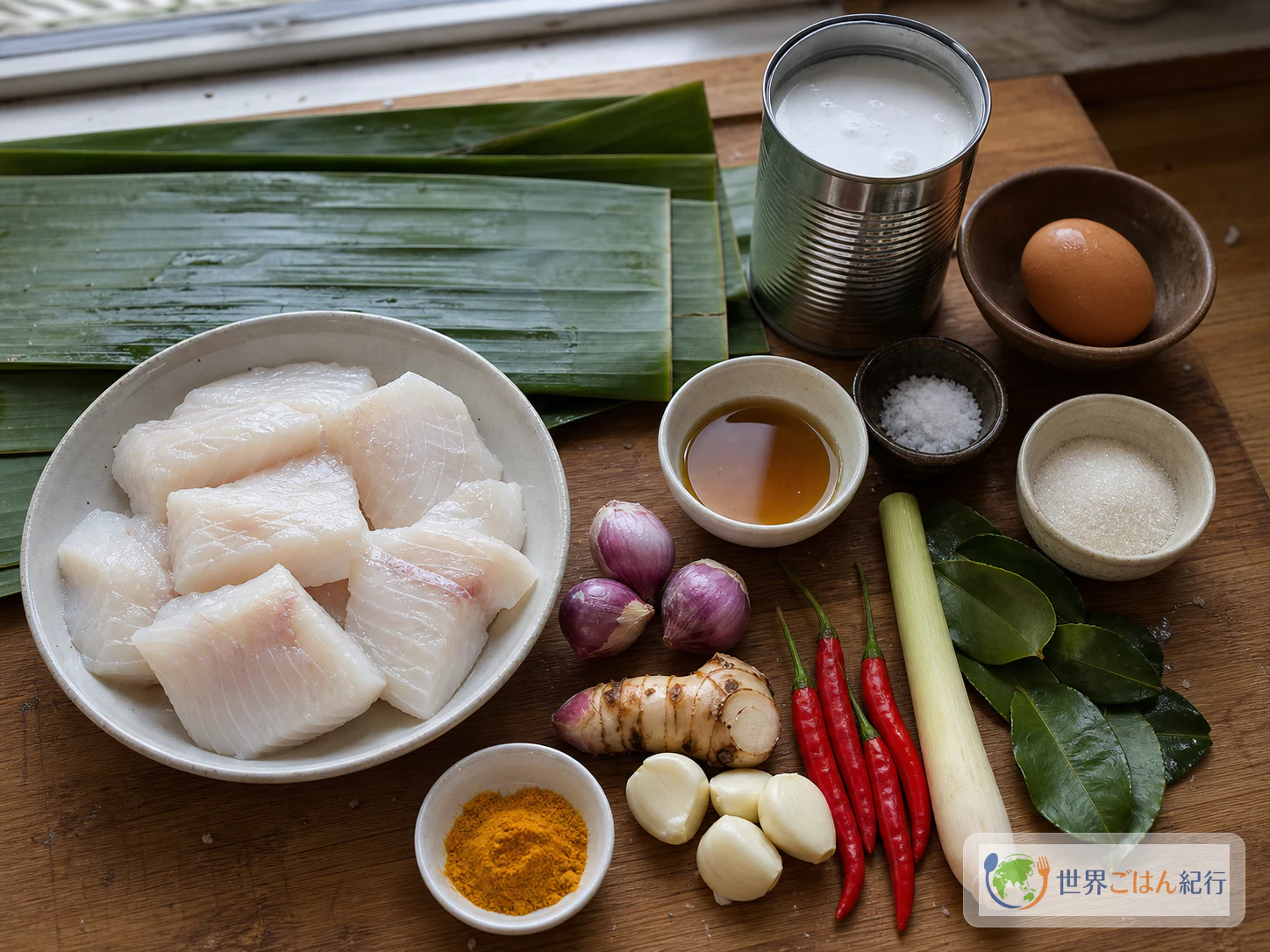
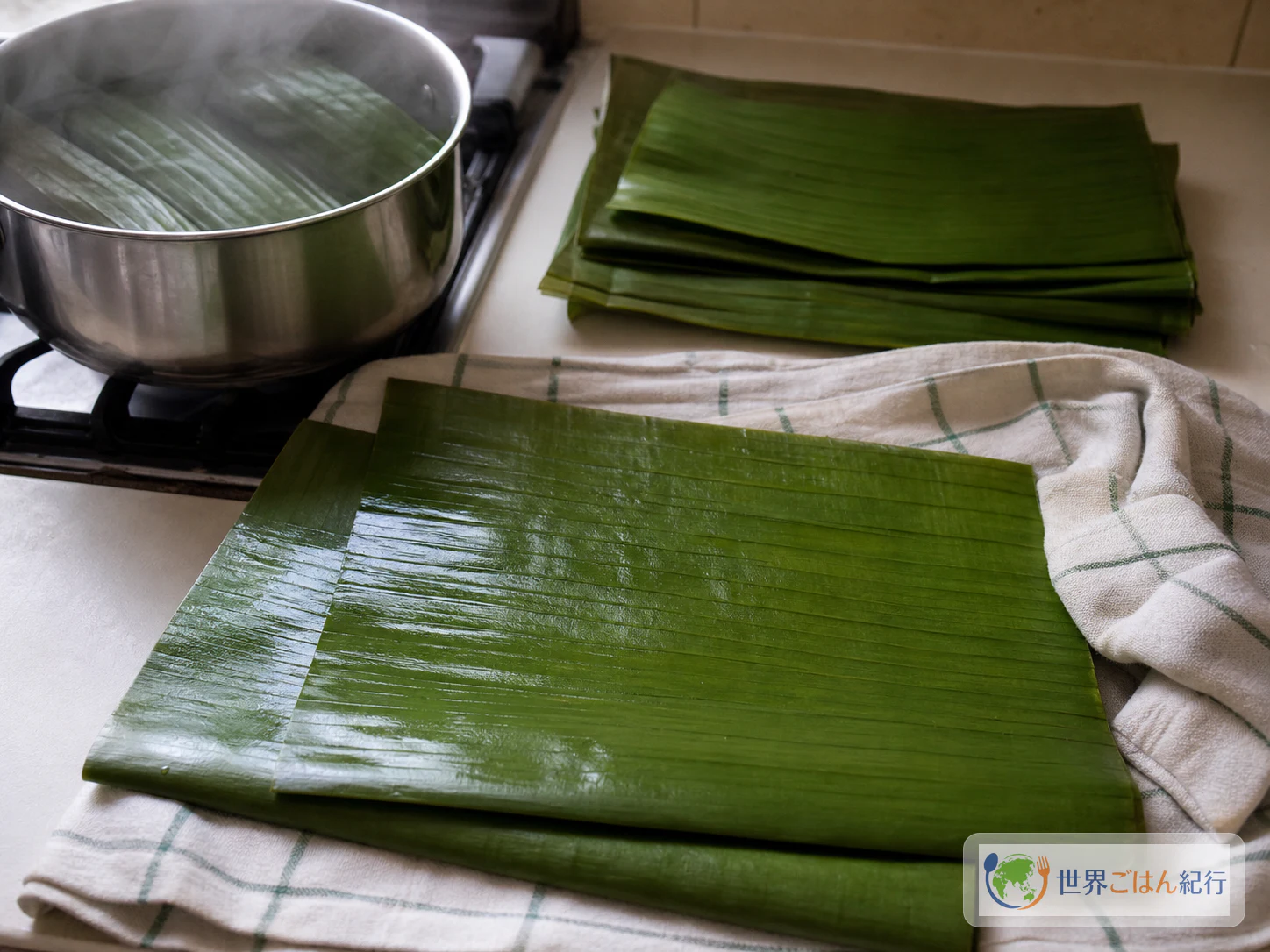
Serves 4, making 8 long packets. With rice, allow 2 per person, or make slightly smaller packets, 10 in all, for a light snack. Prepare eight 12 inches (30 cm) square banana leaves and keep several small leaves aside for patching tears.
This recipe uses fish, egg, fish sauce and a shrimp-based seasoning. If you add shrimp paste, be careful of crustacean allergies. Don't leave the fish paste at room temperature for long before cooking. On warm days, rest the mixture in the refrigerator before wrapping. Cook until the center reaches 145°F (63°C) or higher.
Choosing ingredients for otak-otak
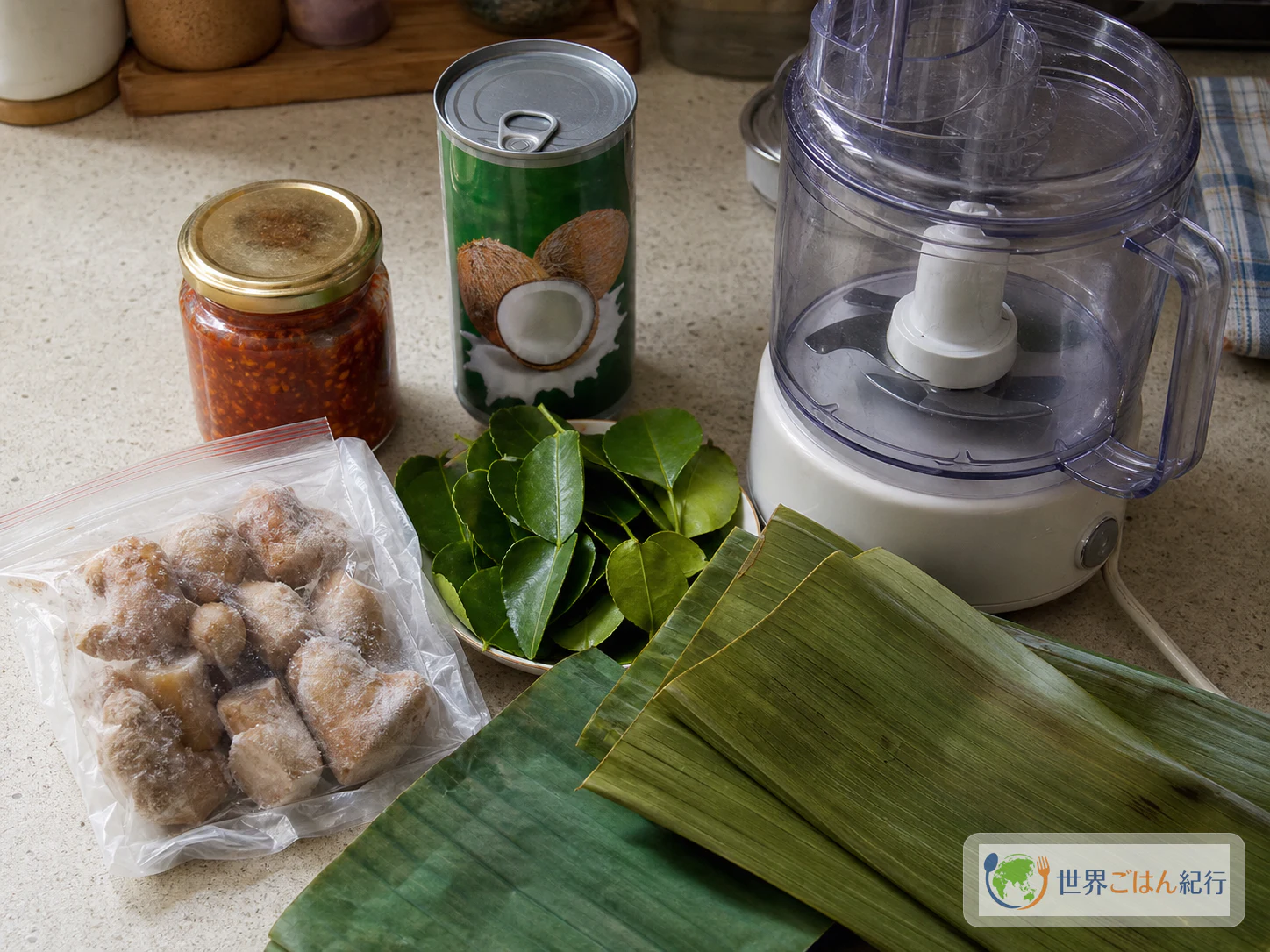
Fish, eggs, cucumber and rice are easy to find at a neighborhood supermarket. The harder items are coconut milk, galangal, makrut lime leaves, banana leaf and the tools for making the aromatic paste. Otak-otak gets much easier once you separate what you can substitute from what you'd like to keep. Hold on to the leaf wrapping, the red aromatics, the coconut milk and careful control of the fish's moisture. The fish itself can suit your fish counter.
| Ingredient you're unsure about | Closer to the real thing | Realistic option | Judgment |
|---|---|---|---|
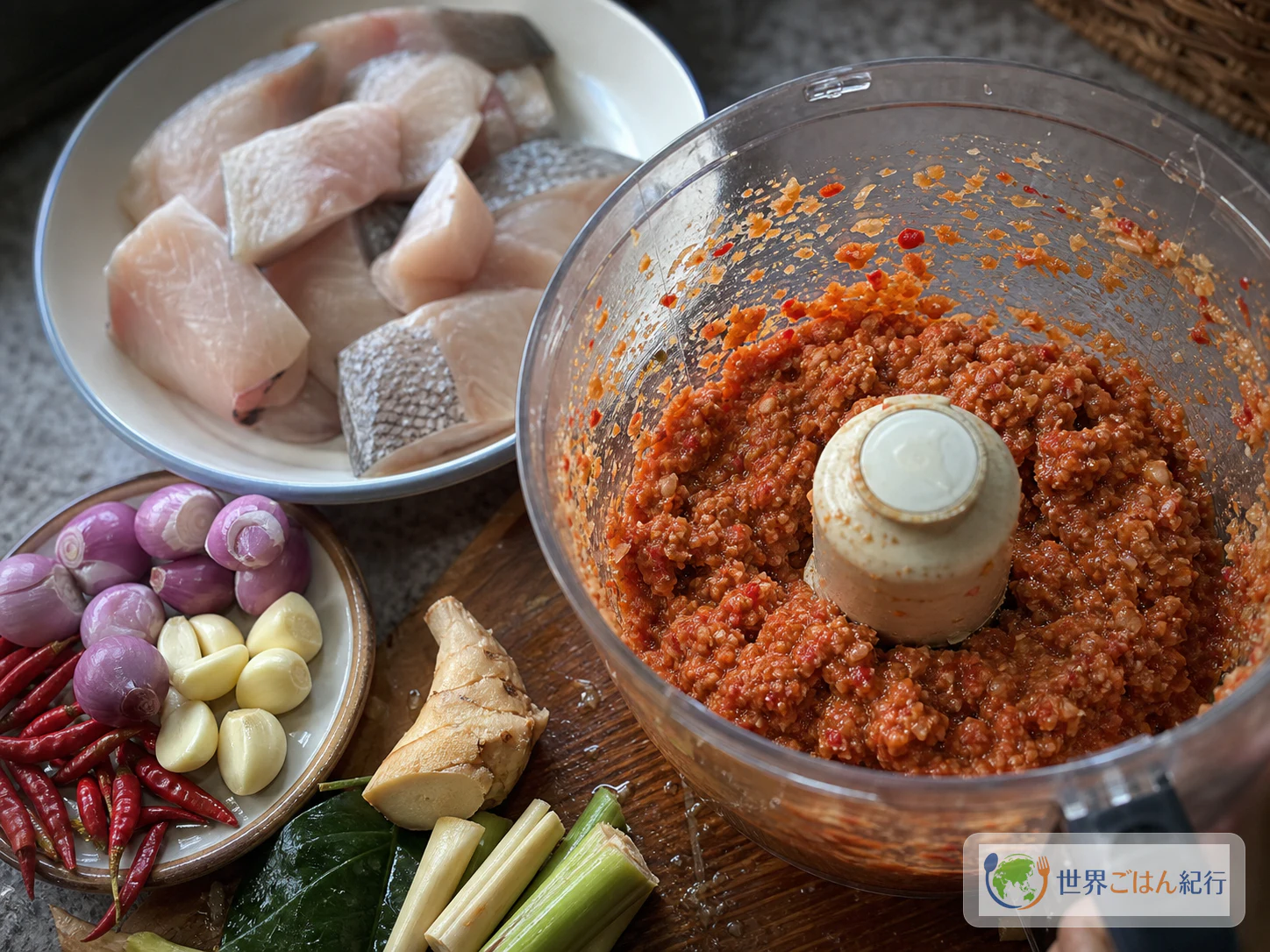
| Fish | Mackerel types, Spanish mackerel types, white fish | Sea bream, sea bass, cod, swordfish | Wipe off moisture and leave some coarseness |
| Leaf | Banana leaf | Frozen banana leaf. For practice, parchment paper | Use the leaf if you want the aroma |
| Galangal | Fresh or frozen | Partly substitute ginger | Add a little galangal if you can |
| Makrut lime leaves | Fresh or frozen | More lemongrass and a little lime zest | Hard to substitute fully |
| Shrimp paste | Belacan, terasi and so on | Only 1/2 tsp. Miso if there's an allergy | Too much makes it salty |
| Heat | Dried and fresh chiles | Use rehydrated dried chiles | More aroma than chile powder alone |
Fish
Cod gives a soft, light result, but it holds a lot of water. Sprinkle it with salt, leave it for 5 minutes and wipe off the liquid thoroughly so the paste holds together. Swordfish is easy to handle and gives springiness, though low-fat fish can turn a bit firm. Sea bream and sea bass have a refined aroma that goes well with coconut milk.
Breadcrumbs or wheat flour make the mixture easier to handle, but they turn it into ordinary fish patties and lose the tender texture of fish setting inside the leaf. Let egg, the protein in the fish, a little potato starch and coconut milk do the binding, and don't overcook it.
Aromatics and coconut milk
Galangal and makrut lime leaves are what give the dish the aroma of Southeast Asian leaf-wrapped cooking. Galangal has a hard, citrus-like aroma unlike ginger; you can make otak-otak with ginger alone, but even a small amount of galangal makes a difference. Makrut lime leaves, cut into thin strips and mixed into the paste, keep their aroma after grilling, and their green note cuts the fat of the fish when lemongrass alone would make it too round. Onion can stand in for the shallots.
Coconut milk is what connects the hot aromatics and the fish. Milk or fresh cream takes the aroma in another direction. Leftover coconut milk can go into nasi uduk (in Japanese) or soto betawi (in Japanese).
You can make the aromatic paste with a knife, but chopping lemongrass and galangal fine takes time. A small food processor makes it easy to stop at a coarse paste, and any extra can go into ayam betutu or a sambal substitute. Whatever tool you already own is enough.
Banana leaf
If you can't find banana leaf, wrap the packets in parchment paper, then in aluminum foil, and grill. The green aroma of the leaf will be missing, so treat the first time as wrapping practice and look for frozen banana leaf next time to taste the difference. For more dishes that use the leaf as a vessel for aroma, try Venezuela's hallaca (in Japanese) and the Central African Republic's maboke (in Japanese).
Method: wrap in leaf and let the aroma come in from outside
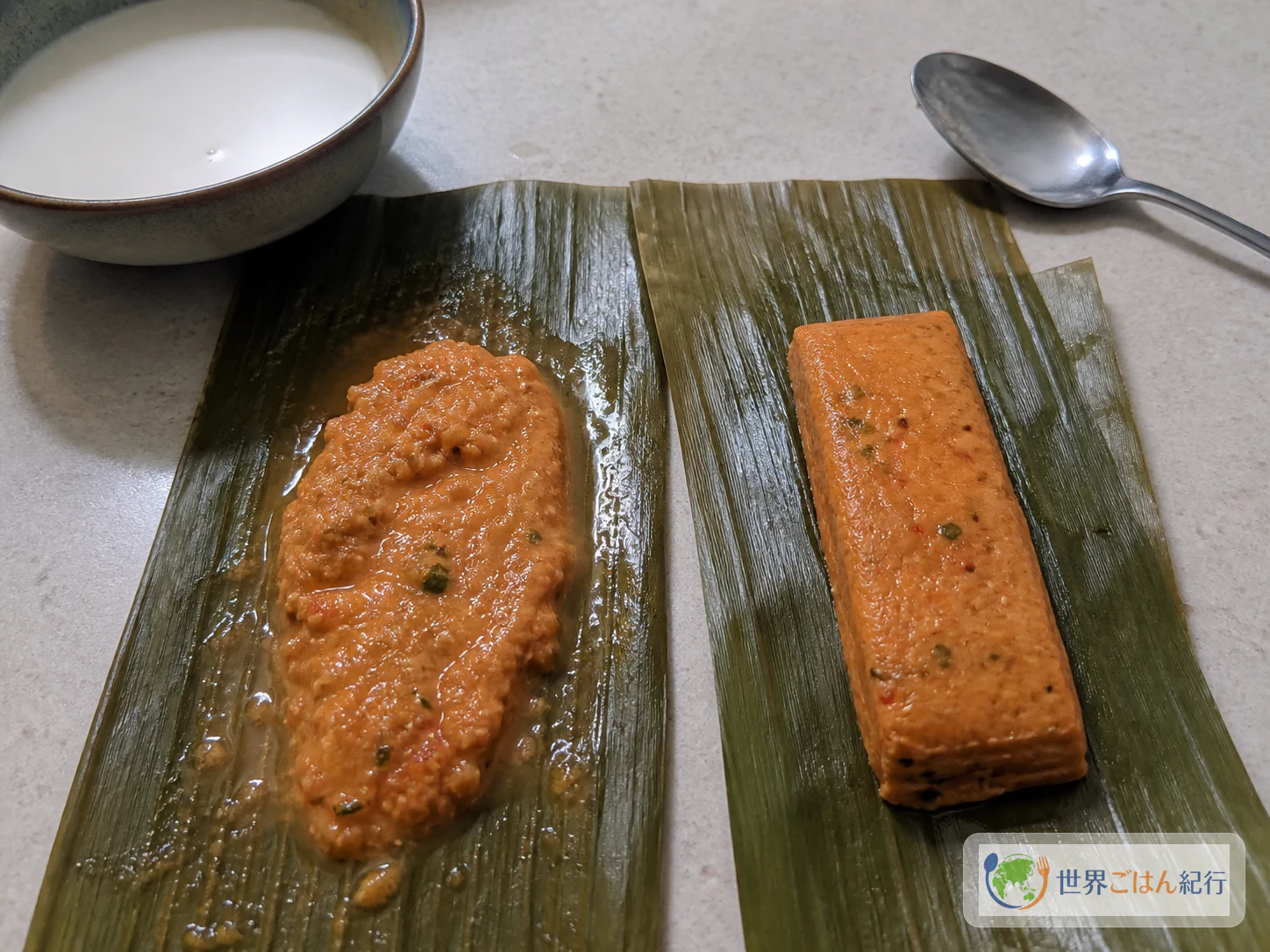
If the fish mixture is too thick, the outside dries before the center sets. Shape it long and slim, 1.5–2 cm thick, and steam-grill it in the leaf. Too high a heat in the skillet scorches only the leaf, and too low makes it watery. Start at medium and lower to medium-low once the leaf has color.
Cutting too much chile from the mixture also thins the aroma. On days when a family splits on heat, use 4 dried chiles in the mixture and add a little sambal substitute at the table, which is easier to adjust.
Otak-otak troubleshooting
| State | Cause | How to fix it |
|---|---|---|
| Watery and runs | The fish has too much moisture, too much coconut milk | Wipe the fish. Add 1 tsp potato starch and chill for 10 minutes |
| Crumbly and tough | Overcooked, the fish was minced too fine | Make it thinner and check from 5 minutes per side. Leave half the fish coarse |
| Only the leaf scorches black | The heat is too strong, the skillet was heated too much | Start at medium and lower to medium-low once it has color |
| Fishy | Fish moisture, too little aromatics, undercooked | Salt and wipe off the moisture. Add galangal, lemongrass and makrut lime leaves |
| Leaks from the packet | The leaf is stiff or torn, the mixture is loose | Warm the leaf to soften it. Double up where it's torn |
Wateriness is mostly decided by how you prepare the fish. Thaw frozen fish slowly in the refrigerator, and discard the liquid that collects on the plate as well as the surface moisture. Washing the fish adds water and loosens the paste, so if the smell bothers you, salt it and wipe it dry with paper instead.
Toughness comes from the cooking and from how fine the paste is. If you aim for a smooth fish terrine and run all the fish for a long time, it grills up too uniform and dense. In a home food processor, the safest approach is to pound half the fish coarsely and make the other half into paste.
Serving and storing otak-otak
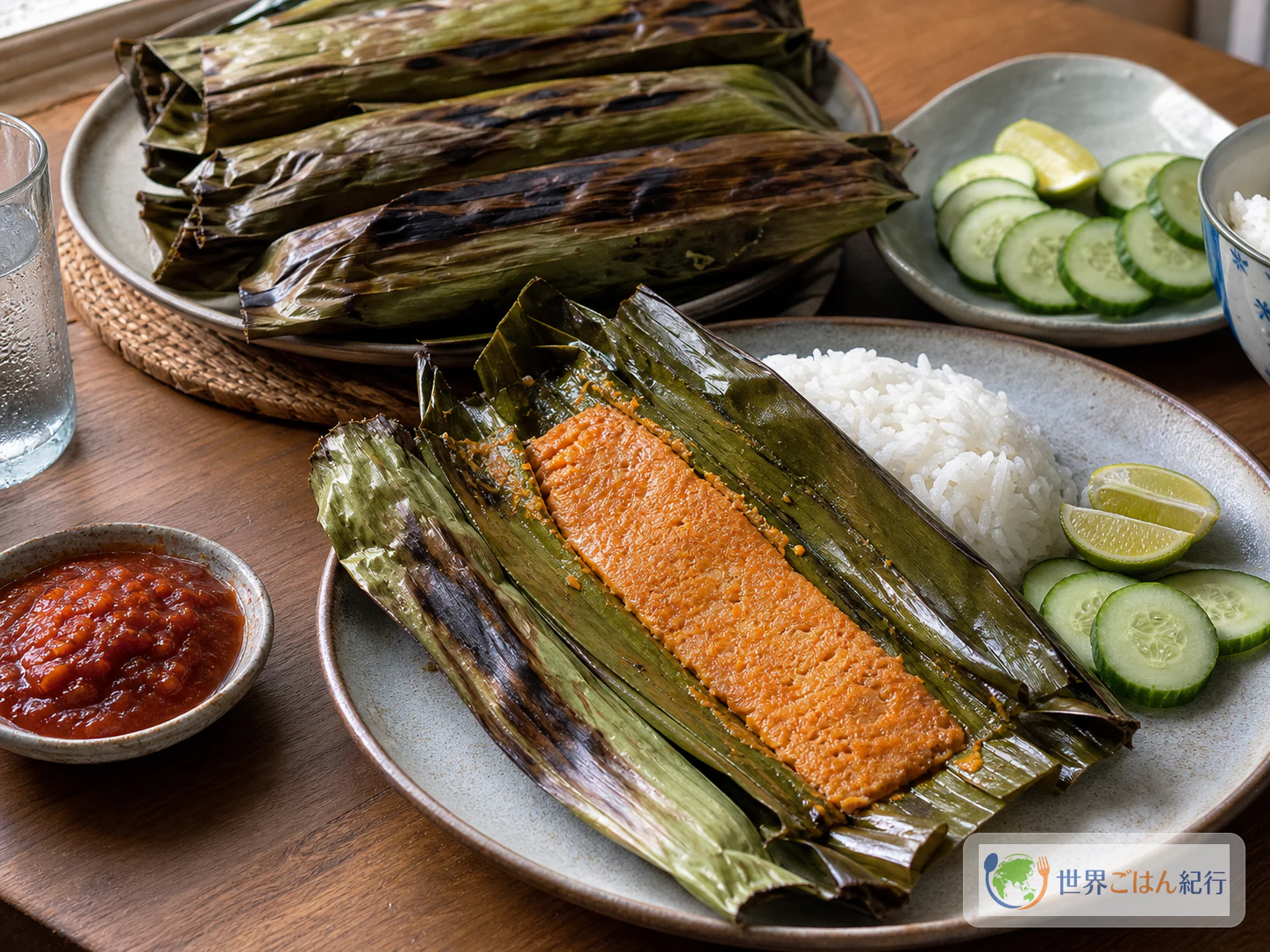
White rice is the basic accompaniment, and cucumber and lime lighten the richness of the fish and coconut. For a street-stall plate, put rice, cucumber and something hot together like nasi lemak (in Japanese), or serve it with laksa (in Japanese), the coconut noodle soup. For a lighter table, pair it with Hainanese chicken rice (in Japanese) or roti john (in Japanese).
If you add a soup, choose a light chicken soup or some stir-fried greens. They won't fight the aroma of the otak-otak the way a sour sinigang would.
The leaf smells best on the day you grill it. Let leftovers cool without opening the leaf, put them in an airtight container and finish them within about 2 days in the refrigerator. To reheat, warm the packets in a skillet over low heat for 3 minutes per side. In a microwave, open the leaf, set it on a heatproof plate, cover loosely with plastic wrap and heat at 600 W for 40–50 seconds, though the microwave tends to drive off the aroma.
Grilled packets freeze better than the uncooked mixture, which releases water and loosens when thawed. Cool the grilled packets, wrap them one by one in plastic wrap and keep them in the freezer for about 2 weeks. Thaw in the refrigerator for half a day, then warm slowly in a skillet over low heat.
Frequently asked questions
Q1. Which fish suits it best?
For a first attempt, swordfish, sea bream and sea bass are easy to handle. Cod works too if you salt it and wipe off the moisture first, since it breaks easily. Mackerel has a strong aroma and brings out the local feel, but in a home kitchen the fishy smell can win out; if you use it, choose very fresh fish and make the aromatics a little stronger.
Q2. I don't like coconut milk.
Reduce the amount from ½ cup (120 ml) to ¼ cup (80 ml) and add 2 tbsp water. Leaving it out completely tightens the fish paste and makes the heat feel angular. Milk or fresh cream moves it away from the Southeast Asian aroma, so reducing the amount is the more natural fix.
Q3. Can I cook it in an oven or toaster oven?
Yes. Arrange the packets on a baking sheet and bake in a 400°F (200°C) oven for 12–15 minutes, turning once partway, and confirm 145°F (63°C) or higher at the center. In a toaster oven the heat is close and the leaf scorches easily, so cover lightly with aluminum foil at first and remove it for only the last 2 minutes.
Q4. Can I make a non-spicy version for kids?
You can, but with zero chile the aroma weakens too. Use 2 dried chiles with the seeds removed, and put the sambal on a separate plate for the adults. A little more makrut lime leaf, lemongrass and lime keeps it from tasting vague.