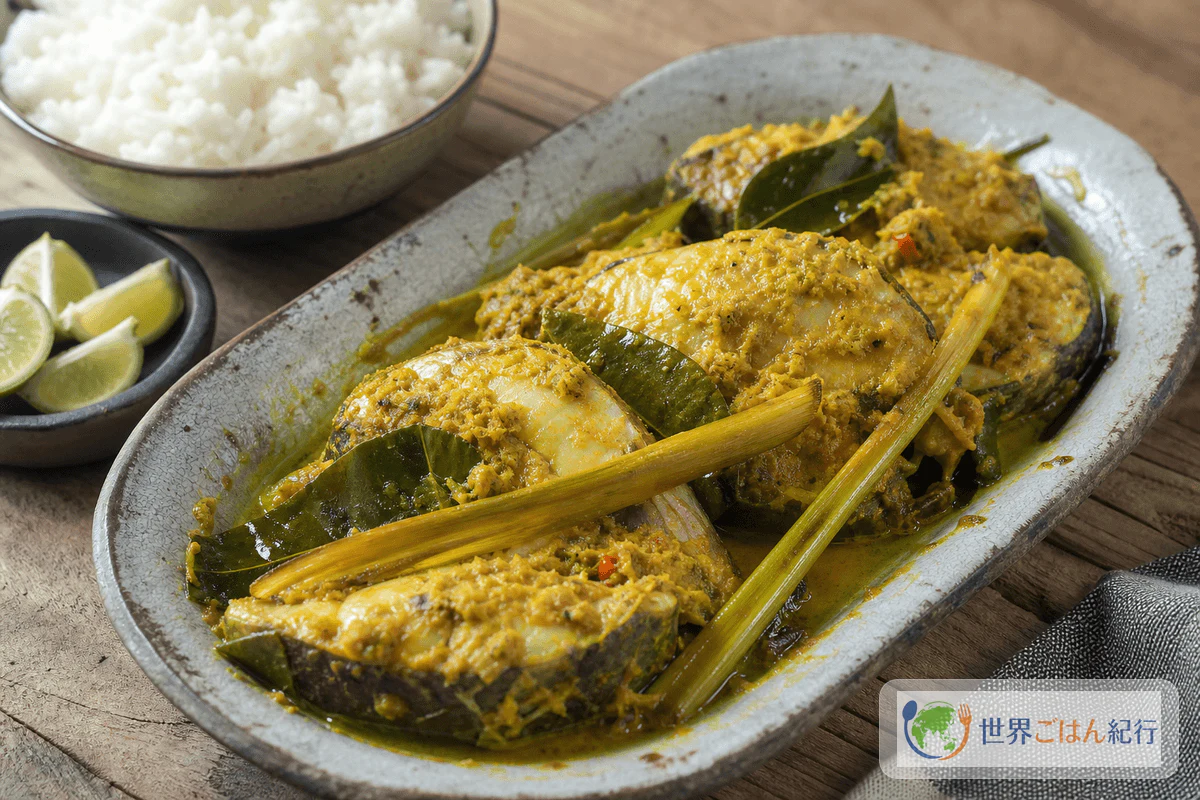
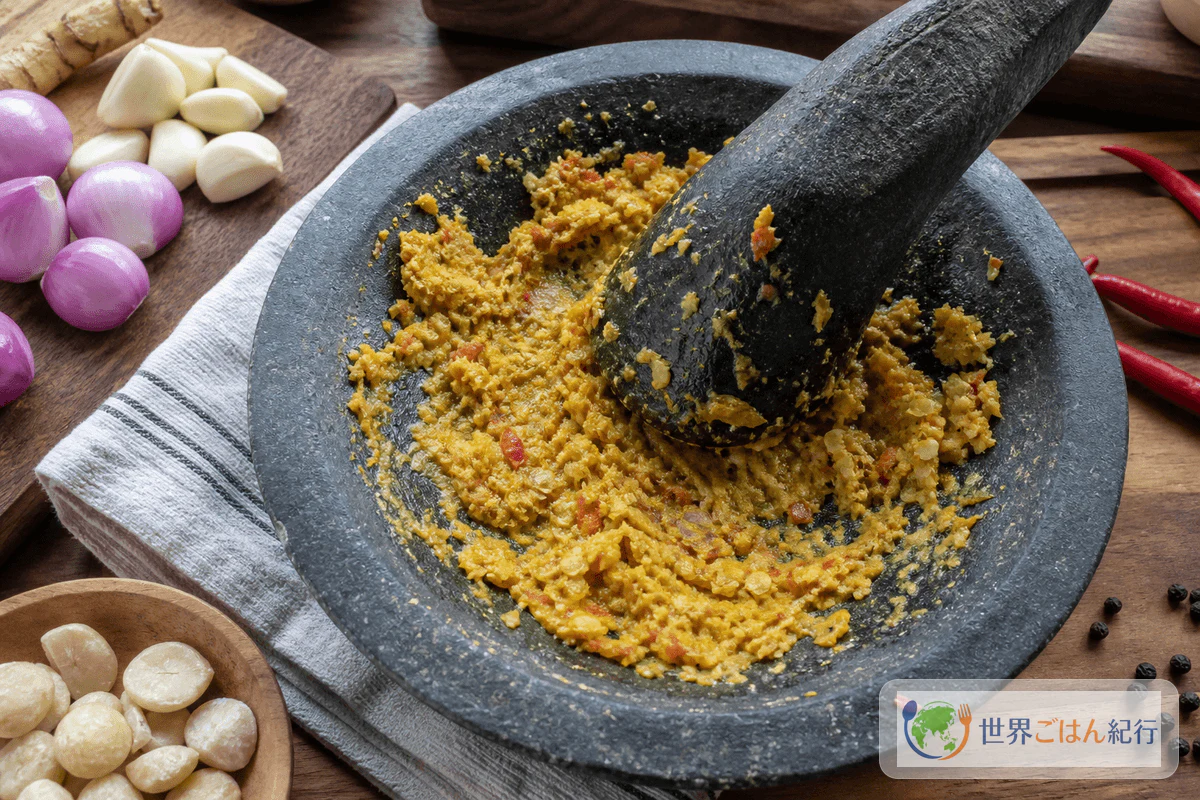
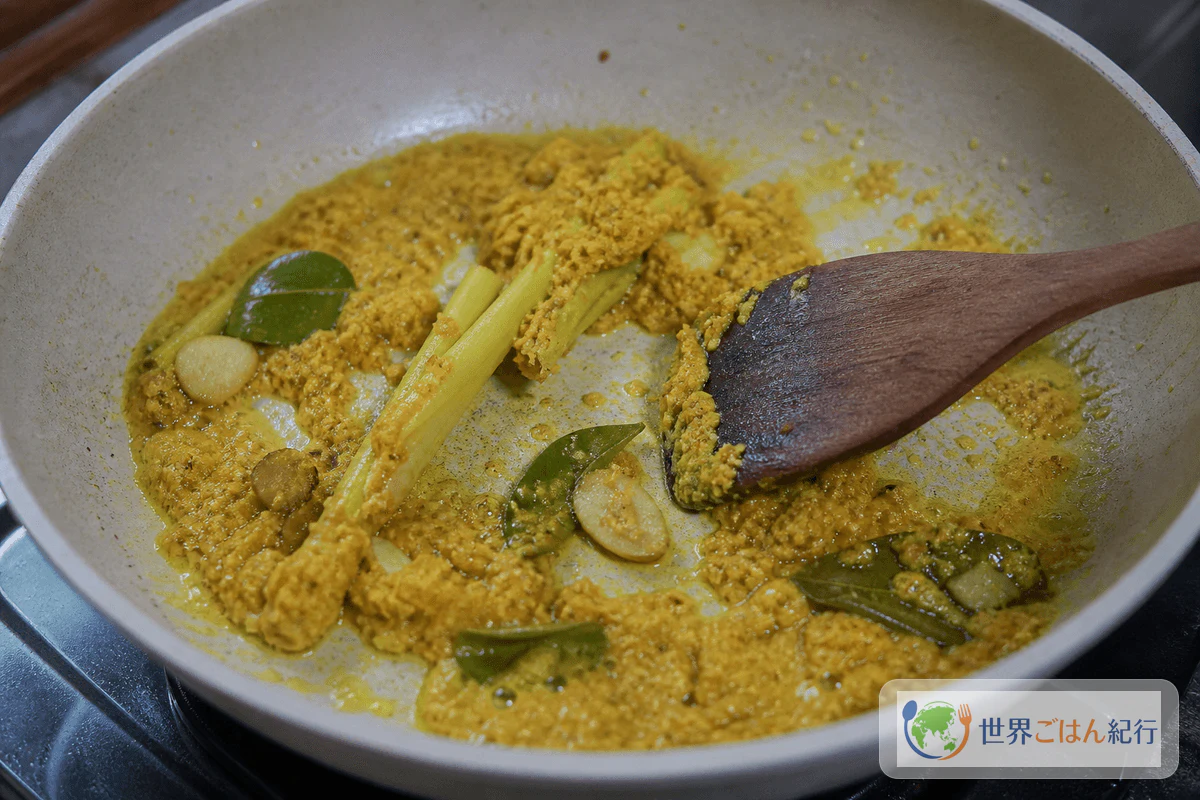
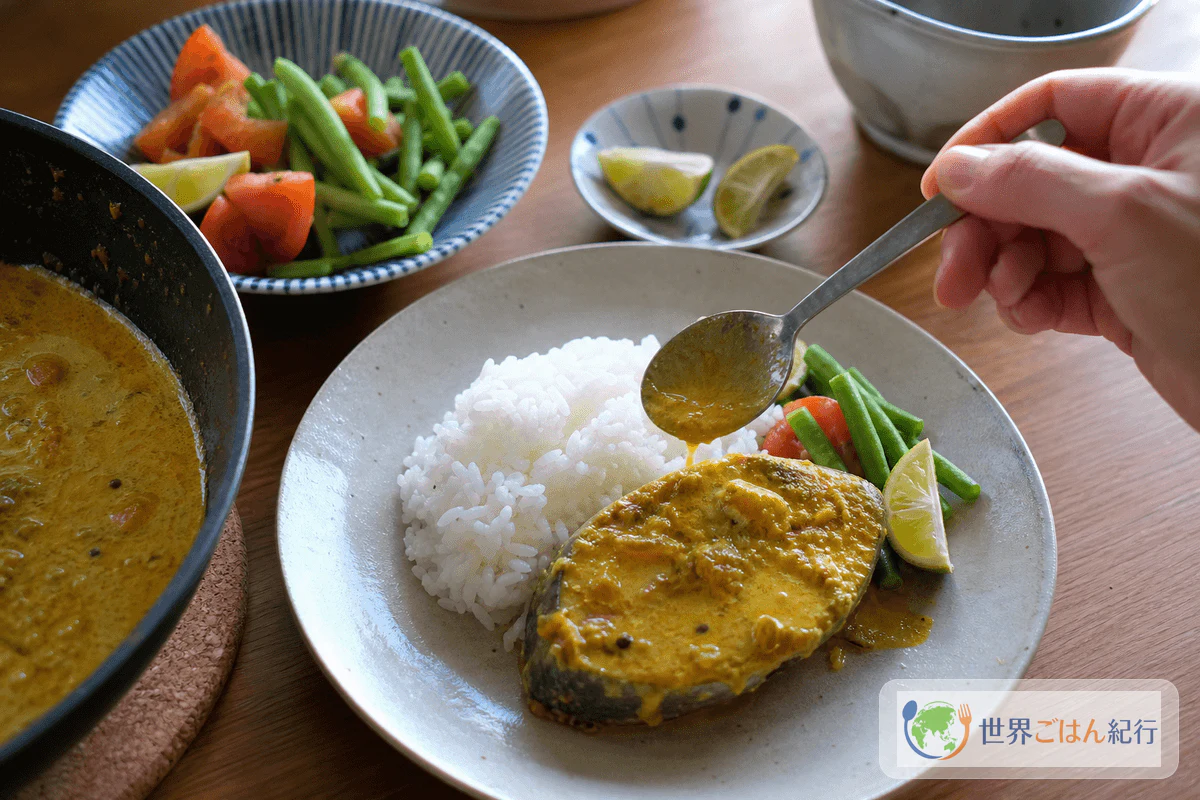
Bruise a stalk of lemongrass with the back of a knife and the green citrus scent hits you first. Fry a yellow paste of turmeric, galangal and chili in oil, and before the fish even goes in, you feel a little closer to a Sumatran table. Arsik (Arsik / ᯀᯒᯘᯂ) is a Batak dish from North Sumatra, Indonesia, and its whole job is to move that aroma slowly into the fish. The finished braise is golden and fragrant, with gentle sourness, some chili heat and a faint citrusy numbness that lingers.
Arsik in North Sumatra
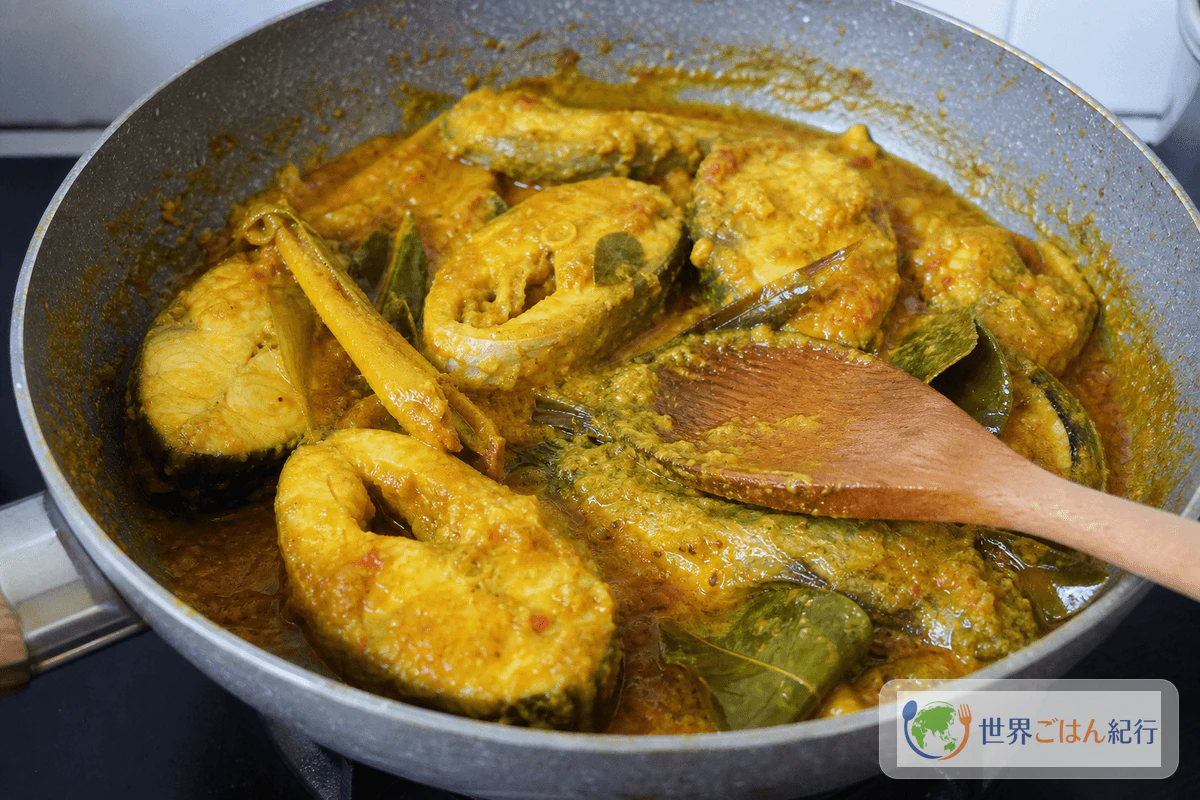
Arsik is fish braised in a yellow bumbu (aromatic paste). Turmeric gives the color, lemongrass and galangal give the aroma, and tamarind or citrus brings acidity, all layered with chili. Don't think of it as a dish weighed down with coconut milk. The fish soaks up the aromatic sauce, and rice catches whatever is left. Locally it is often made with ikan mas, a carp-family fish, and it is known as a dish that comes to the table at weddings and ceremonies.
Andaliman is the spice most often named as the mark of Batak cooking. It has a numbing quality close to sansho pepper and a citrus-like aroma, and it shapes the whole impression of North Sumatran food. The other mark is acidity: local recipes call for regional souring ingredients such as asam cikala and asam gelugur. Done well, the sourness pulls the sweetness of the sauce and the fat of the fish together.
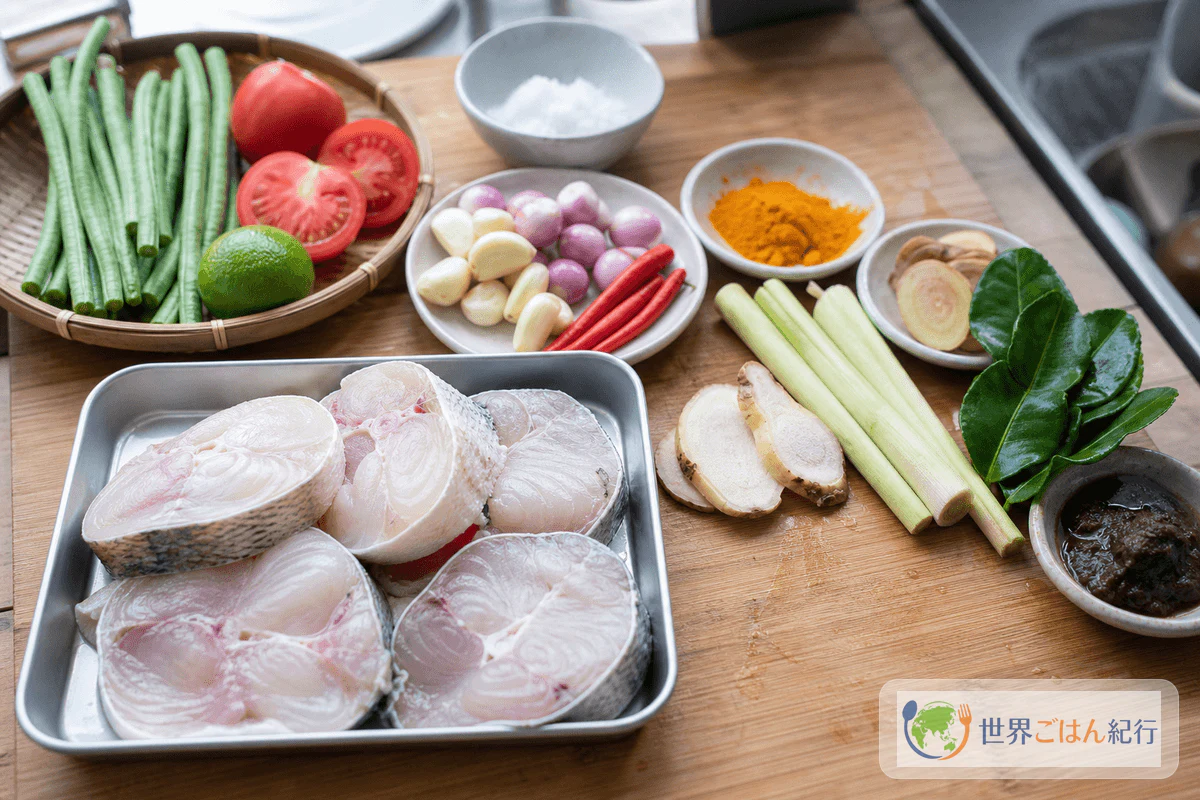
Ingredients (serves 4)
Skin-on fillets are easiest to handle. Mixing in a few bone-in fish collars makes the broth deeper, but for the first time fillets that don't fall apart are enough.
Allergens and heat
This is a fish dish. If you are concerned about nuts, omit the candlenuts or macadamia nuts and add 1 tsp oil to the aromatic paste to help it hold together. It works without the chili, but increasing the Sichuan peppercorn to make up for heat shifts the aroma, so it is better to let only those who want heat add sambal in their own bowl.
Ingredients That Cause Hesitation When Shopping
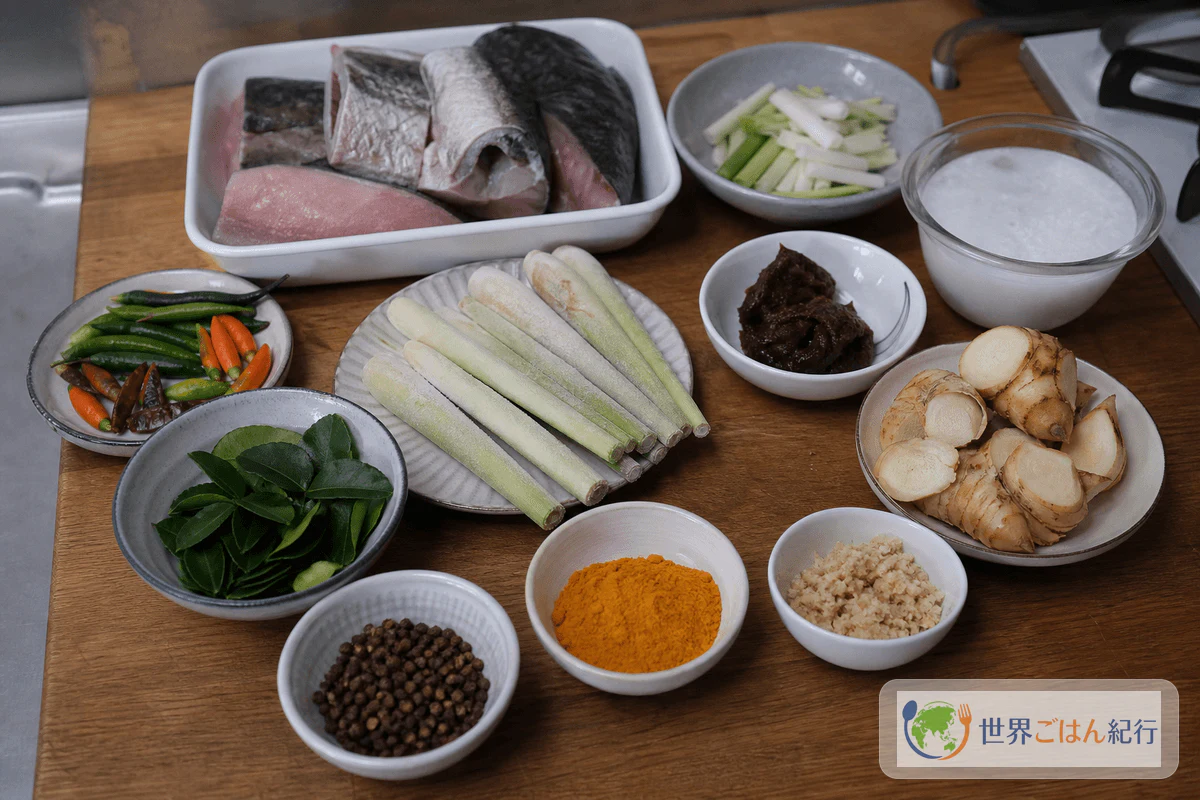
What is worth seeking out specially is not the fish but the aroma and acidity. Buy the fish at a nearby fish counter and gather galangal, lemongrass, makrut lime leaves and tamarind in small quantities, and they carry over to your next papeda or tom kha gai.
| Ingredient | Priority | Reason |
|---|---|---|
| Galangal | High | Ginger alone struggles to give North Sumatra's hard citrus feel |
| Lemongrass | High | Rounds the fish smell and lightens the yellow sauce |
| Makrut lime leaves | Medium | Gives the braising liquid a citrus outline. Frozen is convenient |
| Tamarind | Medium | Easy to make a round acidity close to the local souring ingredients |
You don't need to get everything in large bags from the start. For arsik alone, prioritize galangal, lemongrass and tamarind, and add makrut lime leaves if you spot a small frozen bag. Souring with lime alone gets too light, so look for a small jar of tamarind at an import store or an Asian grocery online and flavor adjustment gets much easier. The useful extras are aromatic ingredients easy to move to other dishes after leftovers, Sichuan peppercorn as the andaliman substitute, and sambal to split the heat at the table.
On days you can't find andaliman, a small amount of Sichuan peppercorn moves the numbness in that direction. Buy it whole and crush coarsely just before using, and it keeps a more citrus-like aroma than powder.
Frozen makrut lime leaves have a strong aroma in a small amount, and the rest is easy to move to curries and soups. For people who want a citrus outline in the braising liquid, they are worth looking for after lemongrass.
On days you want to divide the heat within the family, serving sambal in a separate dish is easier than putting too much chili in the pot. Leftover sambal also goes into nasi goreng, sate and egg dishes.
Choosing Fish and Substitutes for Arsik
Outside Indonesia, you'll have better luck sorting out what the dish needs than hunting down every local ingredient. Hold on to four things: the yellow aroma, the round acidity, a lingering numbness, and heat that cooks the fish without you moving it. Use at least two of lemongrass, galangal and citrus leaf for aroma.
| Local axis | Role | Realistic approximation |
|---|---|---|
| ikan mas | Freshwater fish umami and bone-in stock | Thick fillets of sea bream, cod, Spanish mackerel, yellowtail or swordfish. Closer if bone-in |
| andaliman | Citrus-like numbness | Just 1/4 tsp Sichuan peppercorn. Don't overdo it |
| asam cikala | Round acidity | Supplement with 2 tsp tamarind paste and lime juice |
| galangal | Harder, cooler than ginger | Thin slices of frozen galangal. If none, just a little ginger |
| daun jeruk | Aroma of citrus leaf | Frozen makrut lime leaves. If none, a little lime zest |
| turmeric | Yellow color | Powder is fine if no fresh |
Bone-in fish makes a deeper broth, but the first time you make it, fillets that hold together are the safer bet. Sichuan peppercorn isn't a perfect stand-in for andaliman, though it nudges the numbness and aroma the right way. Start with 1/4 tsp for 4 servings and don't let the numbness take over, or the dish starts drifting toward Chinese mala.
Galangal and tamarind are the two gaps most likely to throw the dish off. Lots of ginger in place of galangal turns it into an ordinary ginger-simmered fish, so if you use ginger, cap it at 10 g and add more lemongrass and makrut lime leaves. Without tamarind, mix 1 tbsp lime juice, 1/2 tsp dark brown sugar and 1 tbsp water. This reduces more lightly, so give the dish a longer rest at the end. If lime is all you have for acidity, add 1/2 tsp sugar.
Method: Don't Move the Fish, Simmer in the Aromatic Sauce
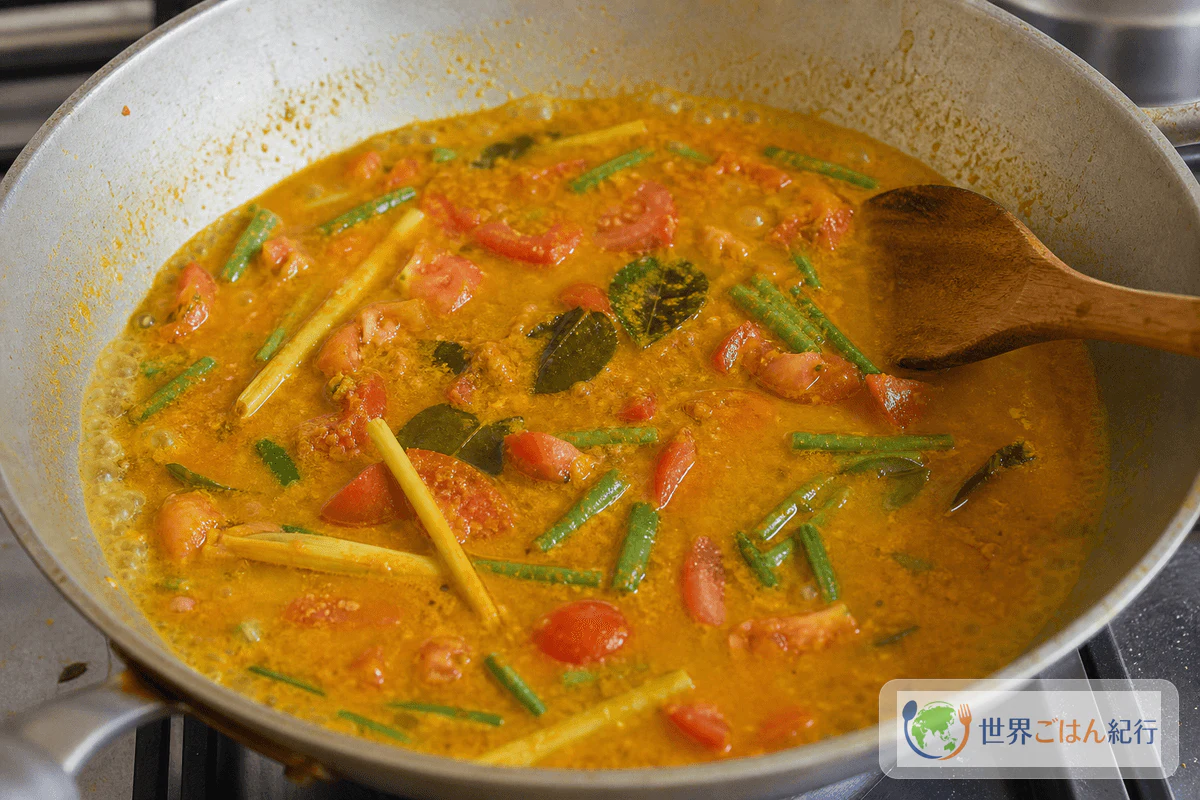
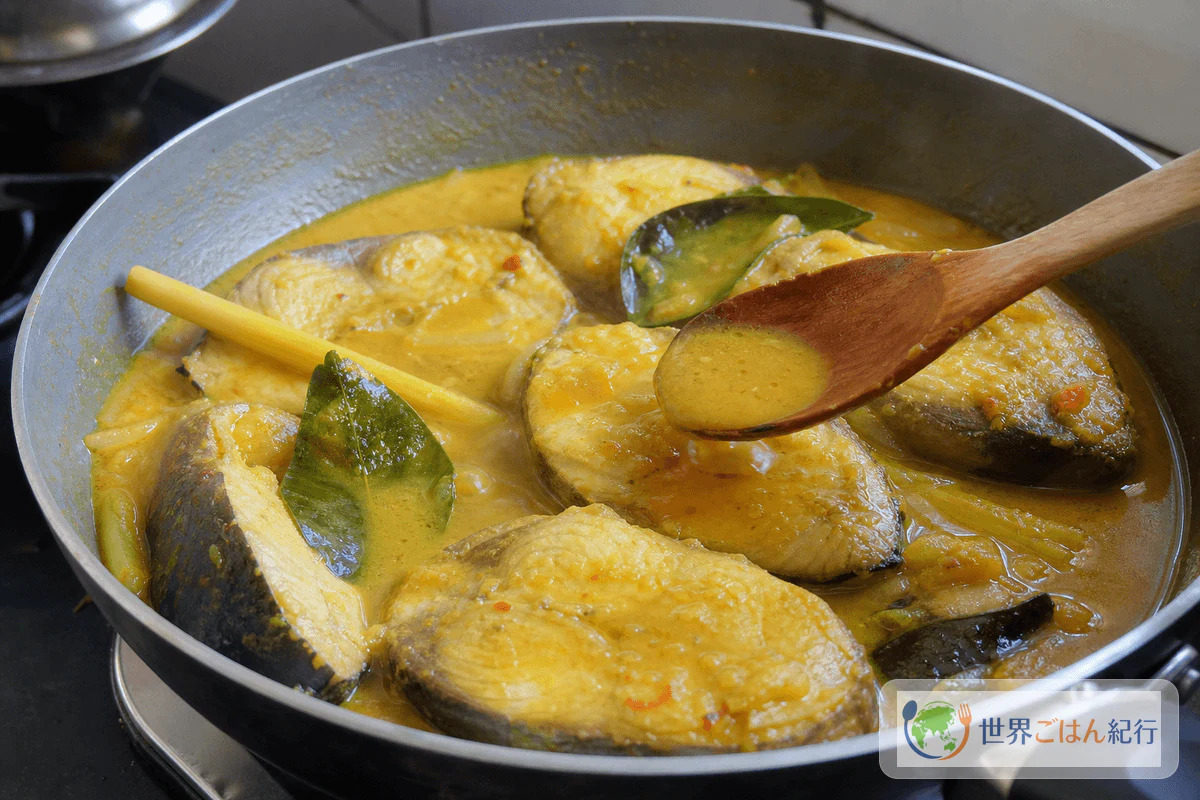
Arsik is not a dish to boil hard and flake the fish. Fry the aromatic paste first, then lay the fish in gently at a heat where the surface of the liquid just trembles with bubbles. Spooning the liquid over rather than flipping keeps the flesh from breaking and concentrates only the sauce.
The easiest failure with arsik is not weak flavor but the fish breaking apart. It is fine if the liquid only half covers it. Spoon the liquid over instead of flipping, and keep the heat between medium-low and low. A hard boil splits the flesh and clouds the sauce.
Common Arsik Problems and Fixes
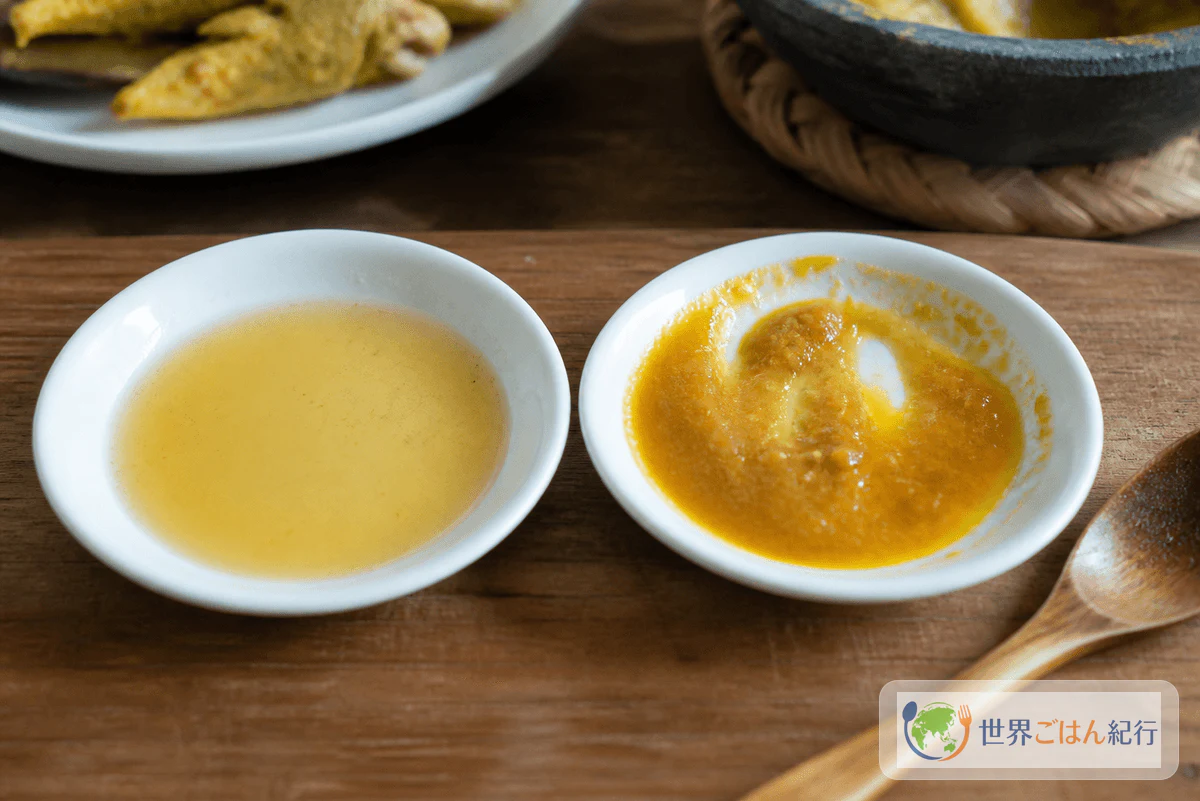
You can spot an under-reduced sauce the moment you plate it: it runs off the fish and spreads like water to the edge of the plate. When that happens, lift the fish out first. Reduce just the sauce for 2 to 3 minutes over low heat, until a spatula leaves a visible track, then put the fish back.
| Symptom | Cause | Fix |
|---|---|---|
| Fish broke apart | Boiled hard, flipped midway | Next time use medium-low. This time move the large pieces to the plate and spoon sauce over |
| Floury taste | Paste not fried long enough | Return only the sauce to the pot and reduce 3 minutes over low heat |
| Too sour | Too much tamarind and lime | Add 1/2 tsp raw cane sugar and 2 tbsp water and warm 2 minutes over low heat |
| Weak aroma | Herbs only boiled from cold water | Add 1/2 stalk lemongrass and 1 makrut lime leaf and warm 3 minutes over low heat |
| Fishy | Moisture left from prep | Add 1 tsp lime juice at the end and increase the herbs a little |
Serving, Storing and Nutrition for Arsik
Building a Menu Around Arsik
Arsik is a rich fish dish made for rice. Keep the sides light on oil and lean on vegetables or acidity for contrast.
| Dish to pair | Reason |
|---|---|
| Papeda | Lets you compare the same Indonesian line of fish and yellow aromatics |
| Pindang | A South Sumatran sour soup that lets you eat fish lightly with tamarind and herbs |
| Gado-gado | Warm vegetables with peanut sauce round out the table |
| Ayam betutu | Easy to compare as a Balinese dish that also uses aromatic paste |
| Tom kha gai | Uses up leftover galangal, lemongrass and makrut lime leaves |
Shopping gets much easier when the herbs carry over from one dish to the next. Frozen lemongrass can go into soups, makrut lime leaves into curries, and tamarind into pad thai.
Storage and Making Ahead
Arsik actually tastes better after resting about 20 minutes, once the aroma has worked into the fish. It is still a fish dish, though, so don't leave it out at room temperature for long.
| Method | Guide | Reheating |
|---|---|---|
| Refrigerate | 2 days | In a pot, add 2 tbsp water and heat 5 minutes over low heat |
| Freeze | Not suitable | The flesh breaks easily and the herbs' aroma fades |
| Make ahead | Sauce only the day before | Fry the paste and make the braising liquid, add the fish on the day |
The sauce firms up in the fridge. The microwave tends to toughen the edges of the fish, so reheat in a small pot over low heat if you can. Spoon the sauce over the top as it warms and leave the fish alone, and the flesh will hold together better.
Nutrition Estimate
These numbers shift with the type of fish and the amount of oil. They are per person, based on 1.25 lb (600 g) white fish and 2 tbsp oil, without rice.
| Item | Estimate |
|---|---|
| Energy | About 360 kcal |
| Protein | About 1 oz (31 g) |
| Fat | About 18 g |
| Carbohydrates | About 16 g |
| Fiber | About 4 g |
| Salt equivalent | About 1.9 g |
FAQ
Q1. Can I make it without tamarind?
Yes. Use the lime juice, dark brown sugar and water mix described above. It won't have the round acidity of tamarind, so go easy on the finishing lime and taste before you add it.
Q2. Can I make a mild arsik for children?
Yes. Leave out the red chili and the Sichuan peppercorn. Turmeric, lemongrass, galangal and makrut lime leaves still carry the aroma, so it holds up as a yellow aromatic fish braise without any heat. Put sambal in the adults' bowls only, and everyone can adjust at the table.
Q3. What do I do if the fishy smell bothers me?
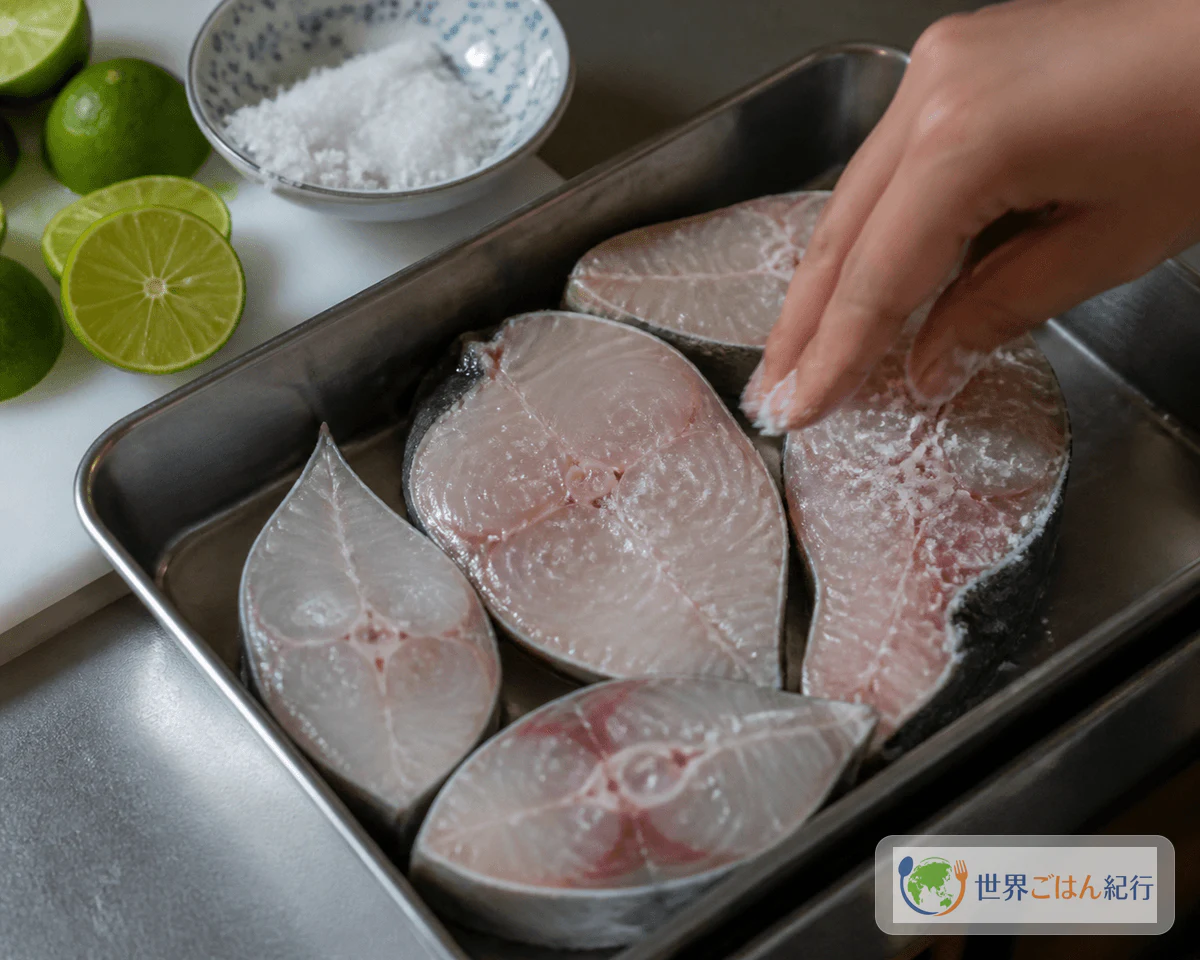
Let the fish sit 10 minutes with salt and lime, and make sure to wipe off the moisture that comes out. A hard boil after the fish goes into the liquid brings the fishy smell out, so keep it at a gentle bubble over medium-low heat. Add the finishing lime juice after you turn off the heat so the aroma stays fresh.