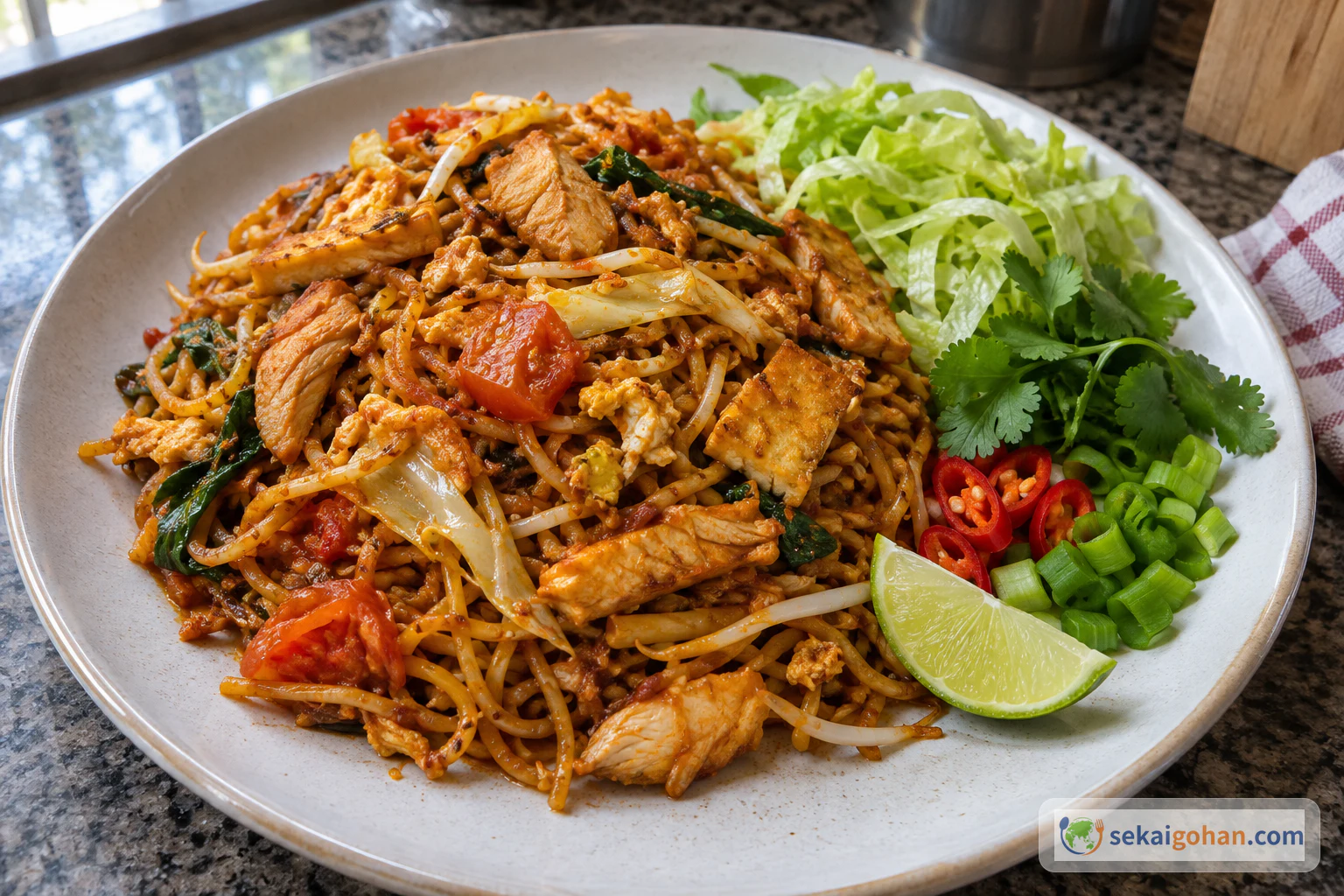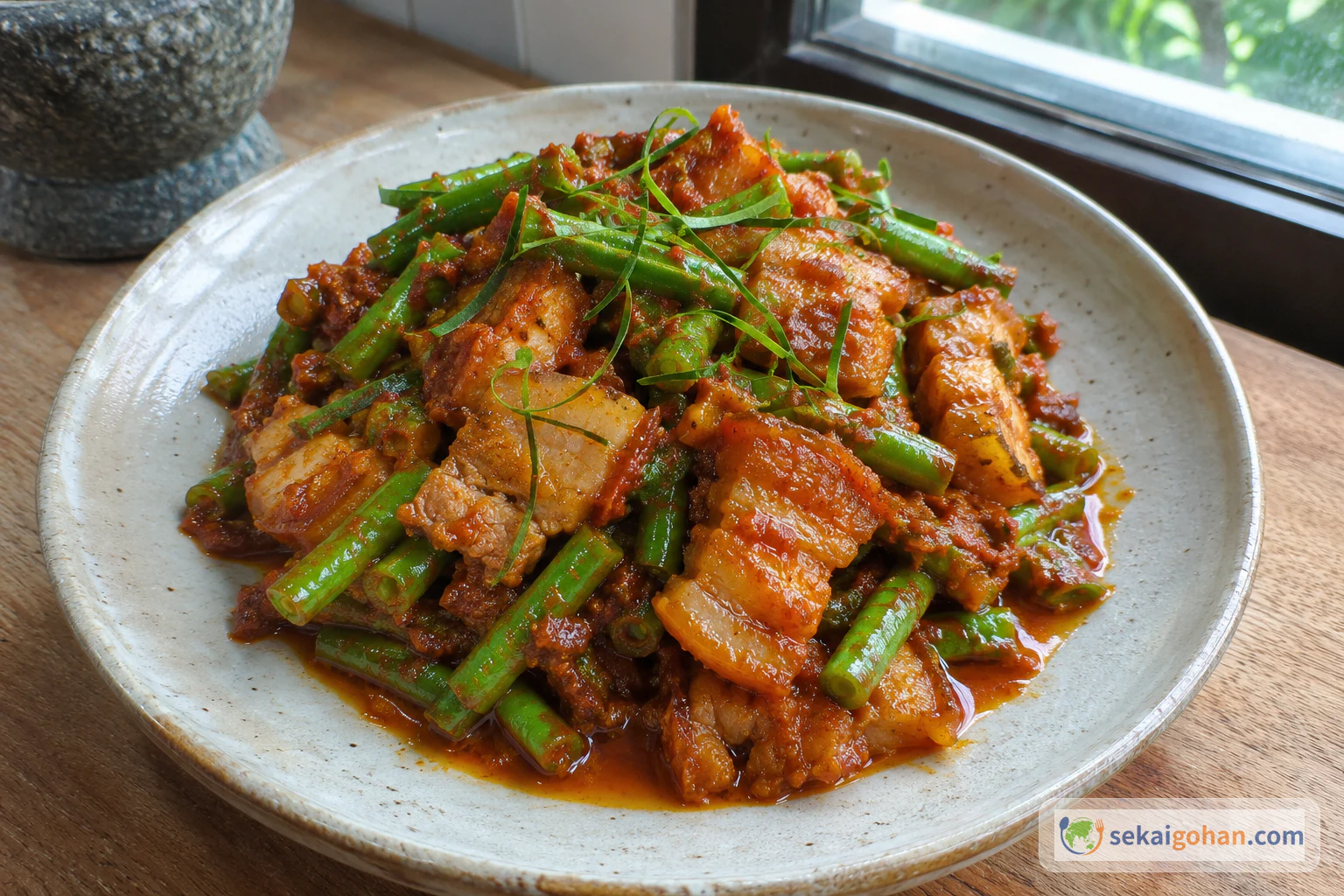
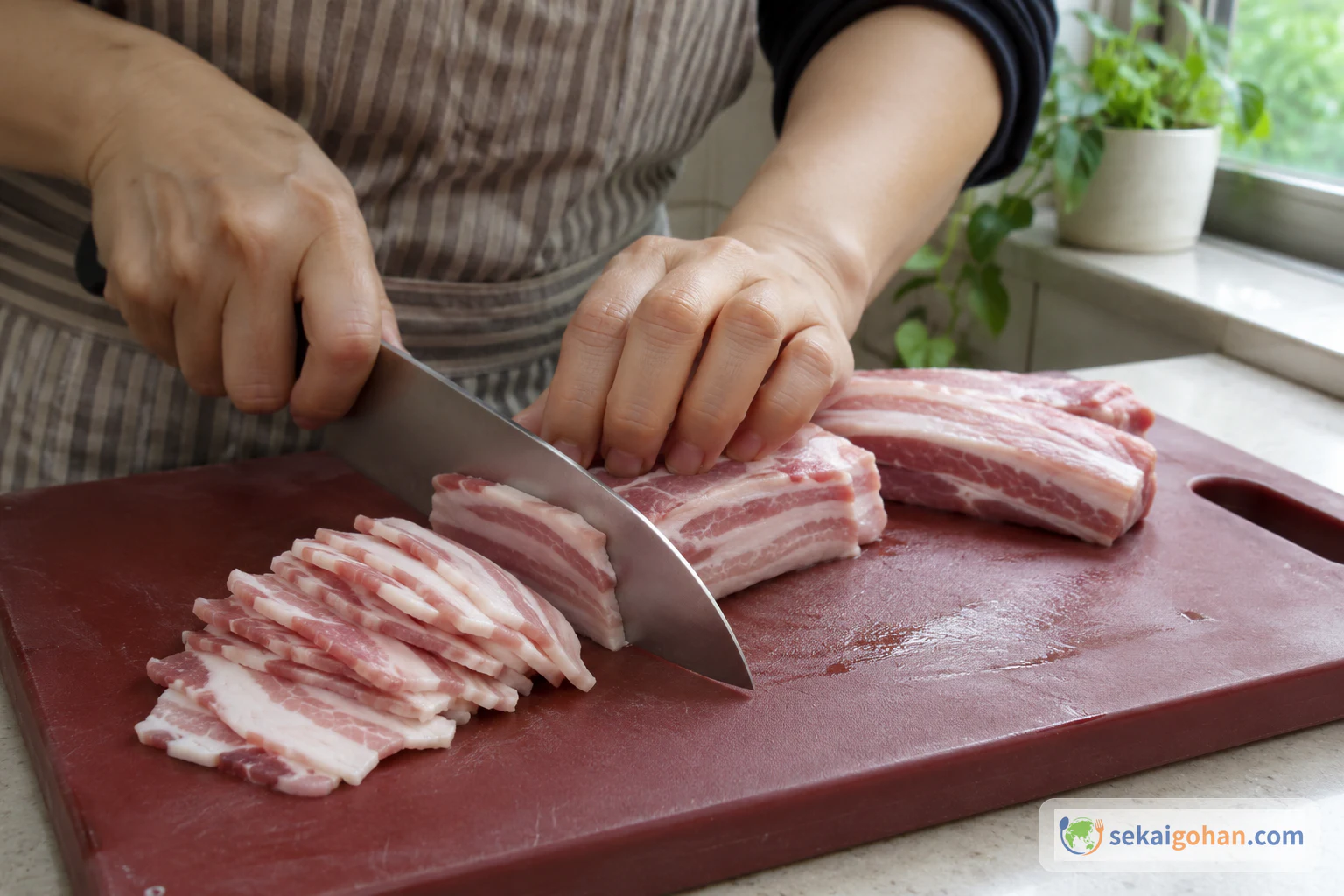
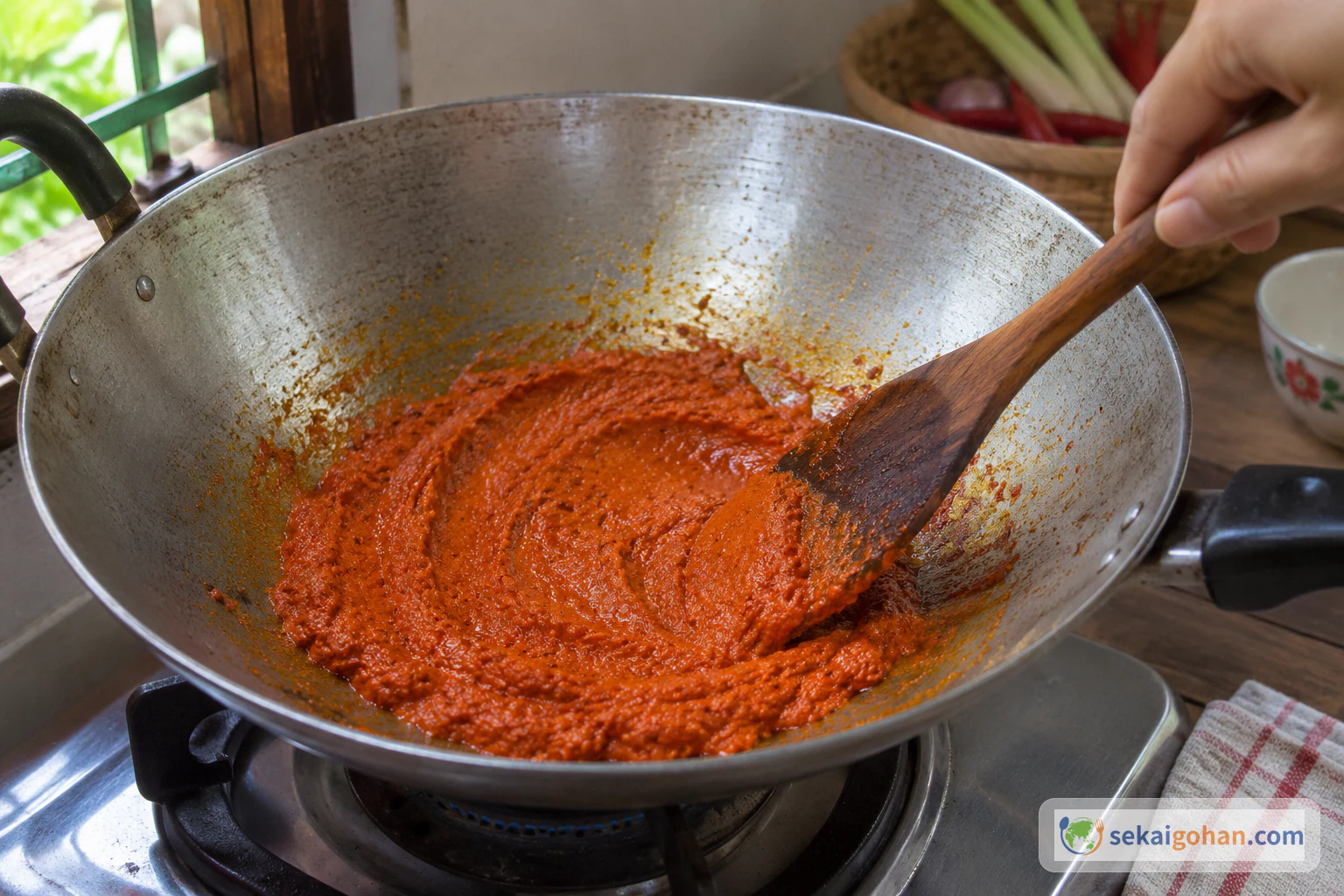
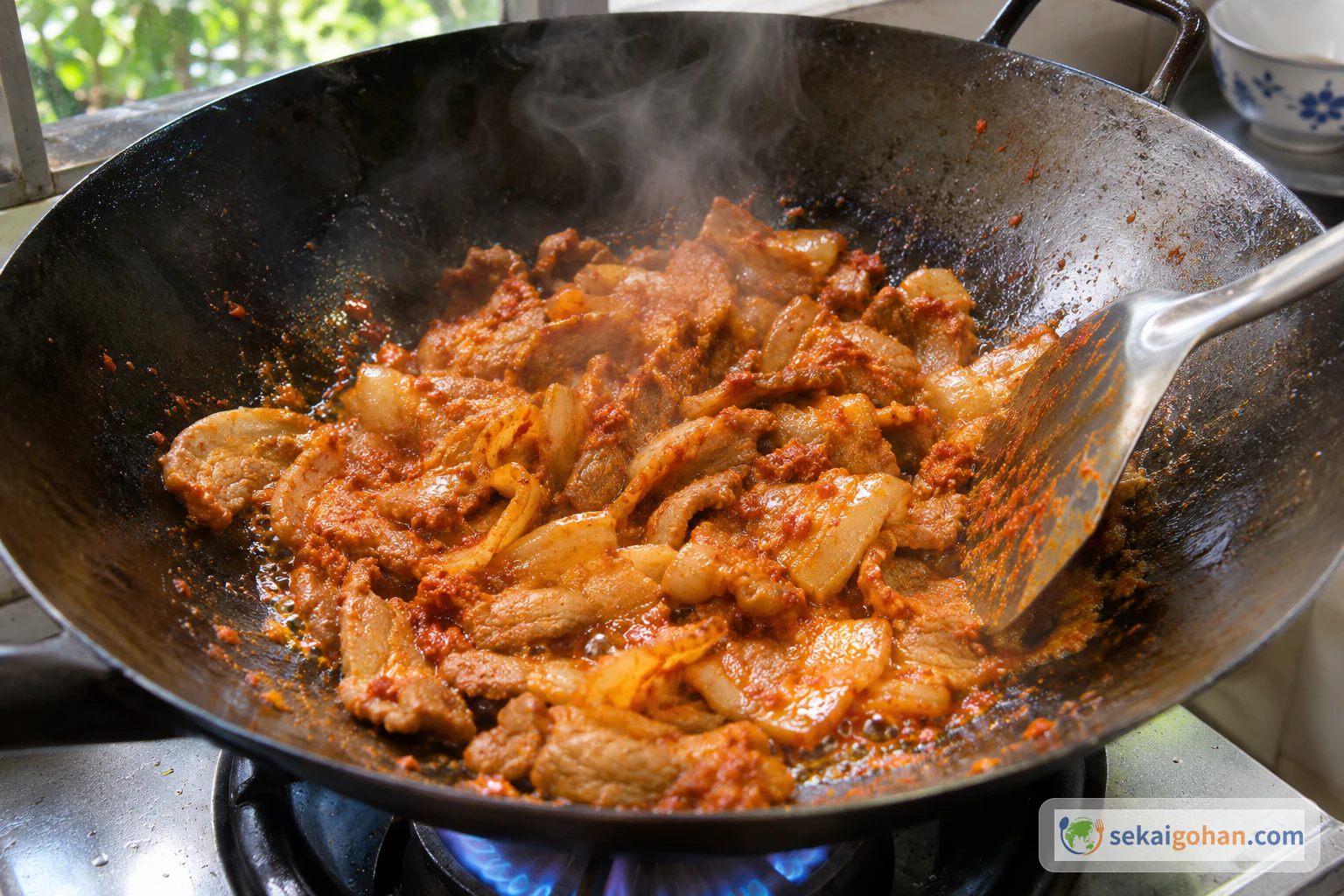
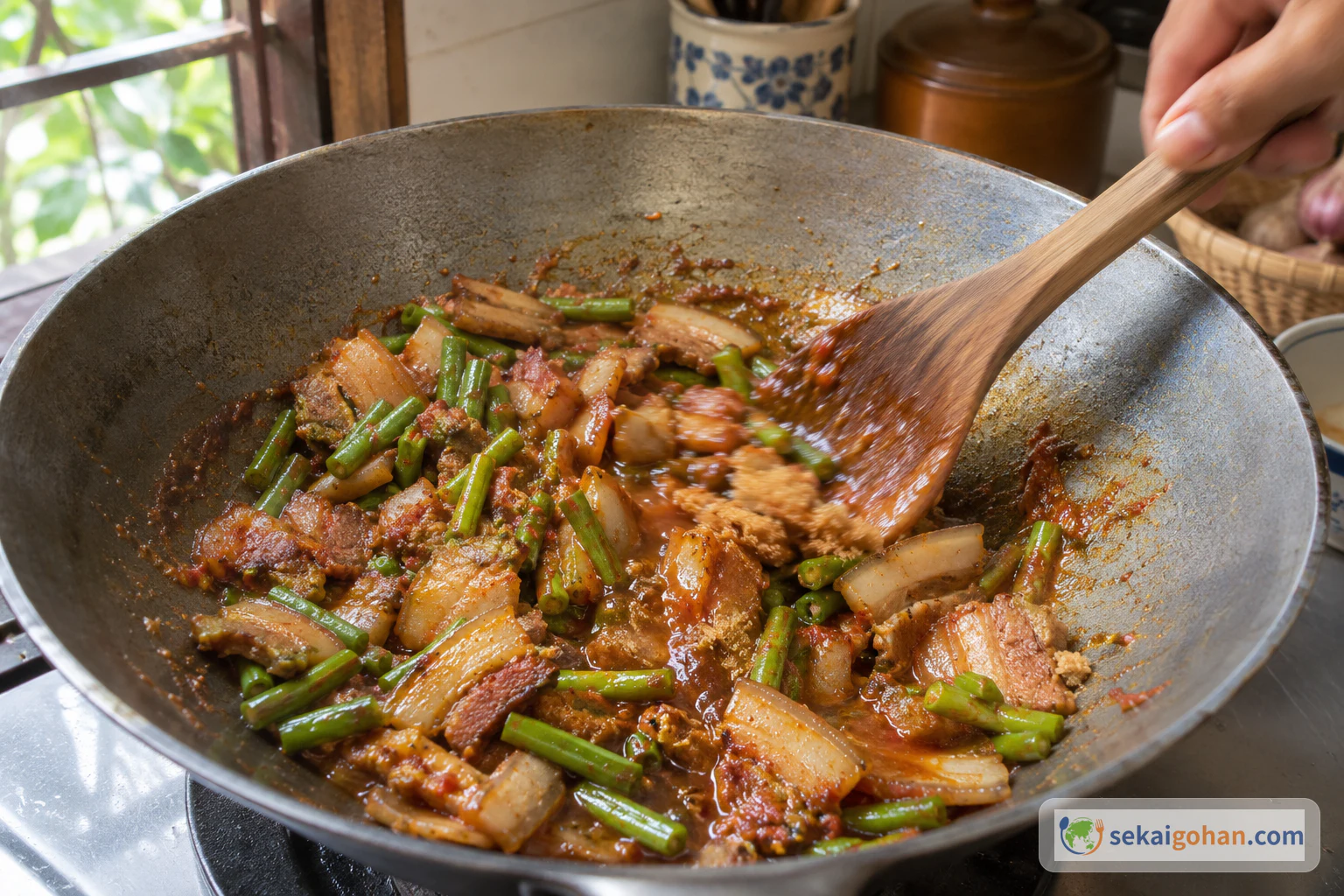
Skin-on pork belly, sliced thin, browns in a deep pan until most of its fat has run out. Red curry paste goes into that oil and fries over low heat until it turns smooth and creamy. Then the pork goes back in over high heat, sizzling, with yardlong beans, light soy sauce and coconut sugar close behind. Phat phrik khing (ผัดพริกขิง) is a Thai stir-fry where a little water brings it all into just enough sauce to coat each piece.
Phat Phrik Khing, a Thai Stir-Fry
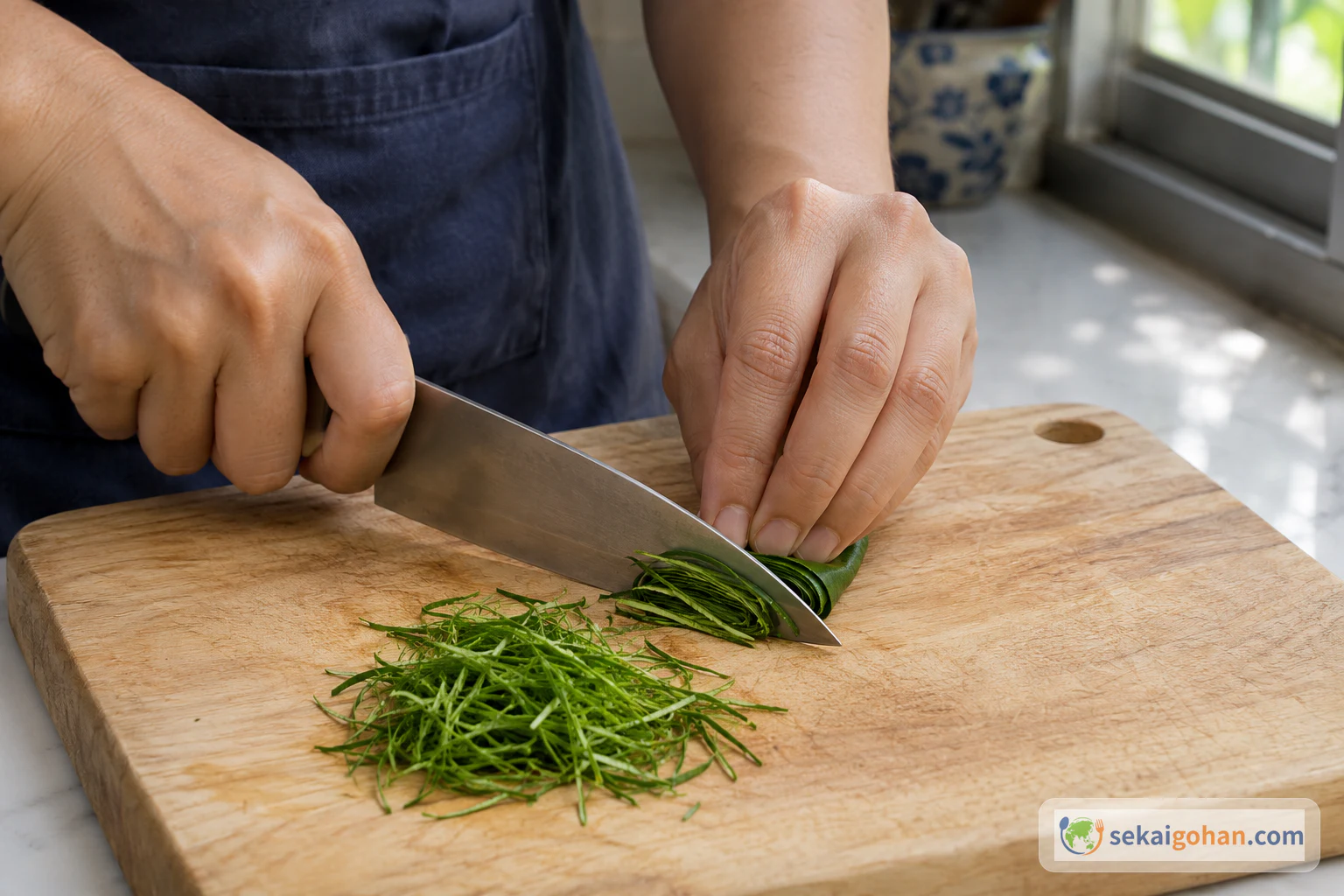
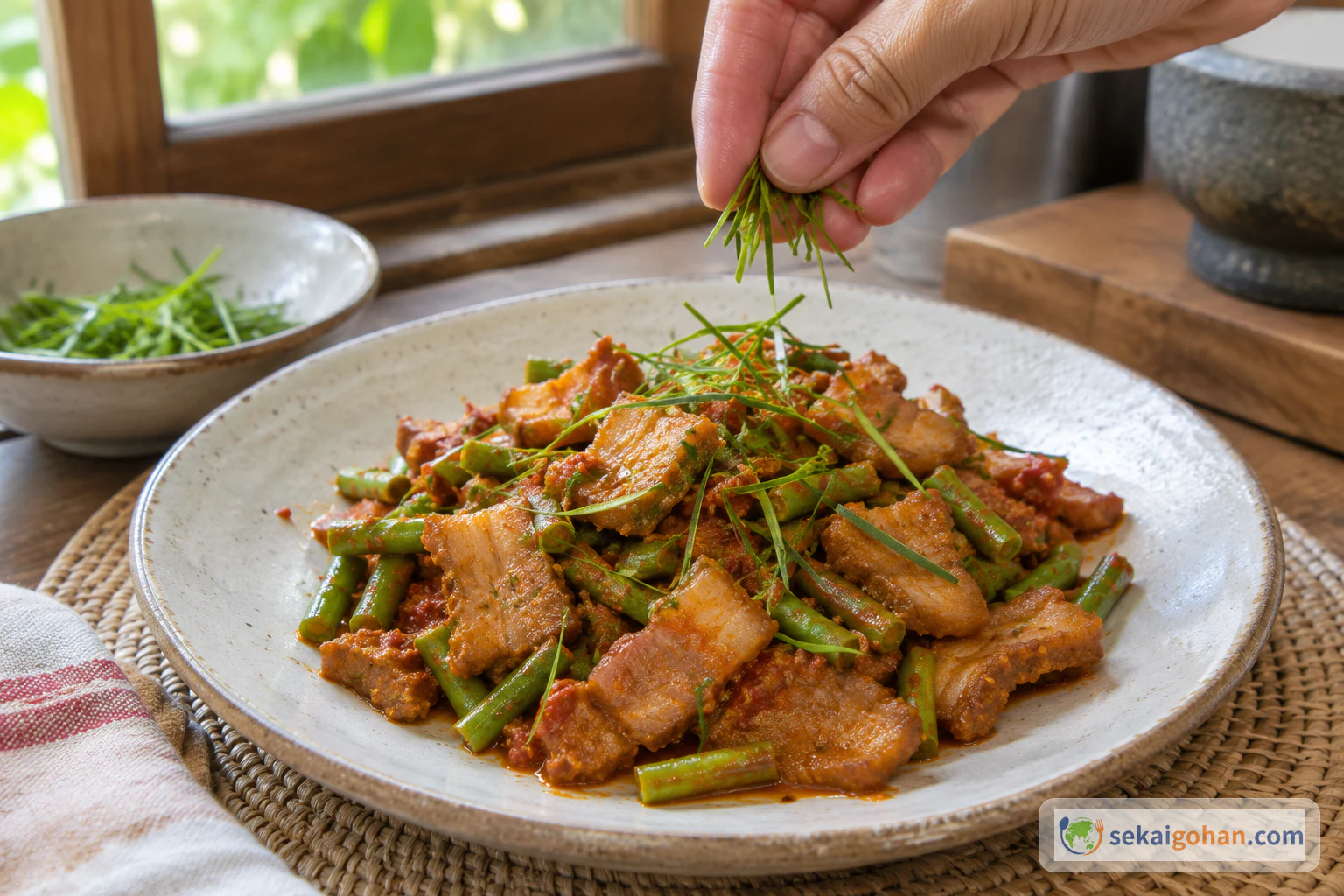
Phat phrik khing belongs to the stir-fry family, not to the dishes built around plenty of liquid. The paste is fried gently until smooth, and the sauce is there to coat the pork and beans rather than to take center stage. On the plate it gets a scattering of finely cut makrut lime leaf and a mound of steamed rice alongside. For more from the same kitchen, see Thai dishes on Sekai Gohan.
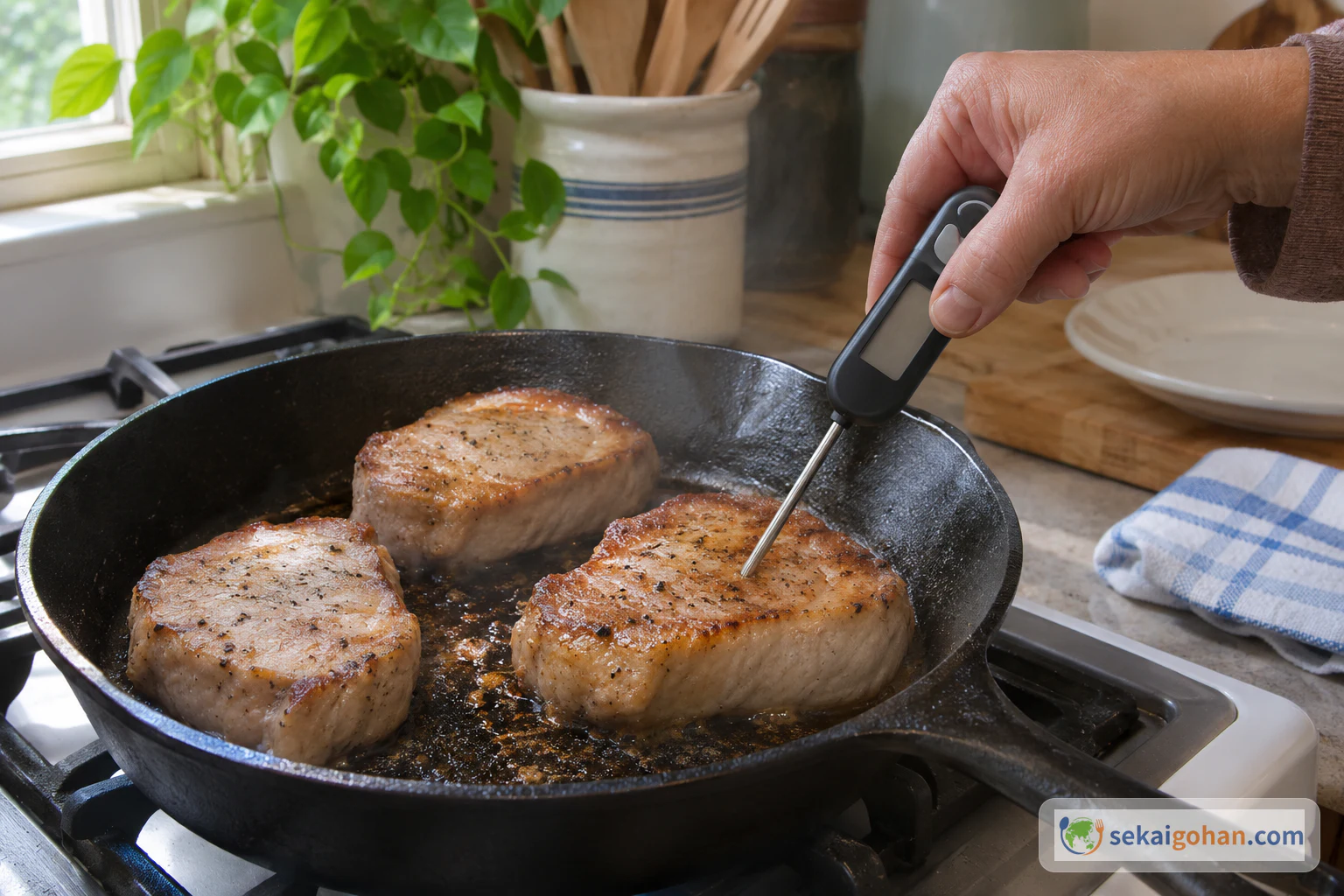
Use a food thermometer to check the center of the pork, and follow the hygiene steps below.
Ingredients for 2–4 Servings
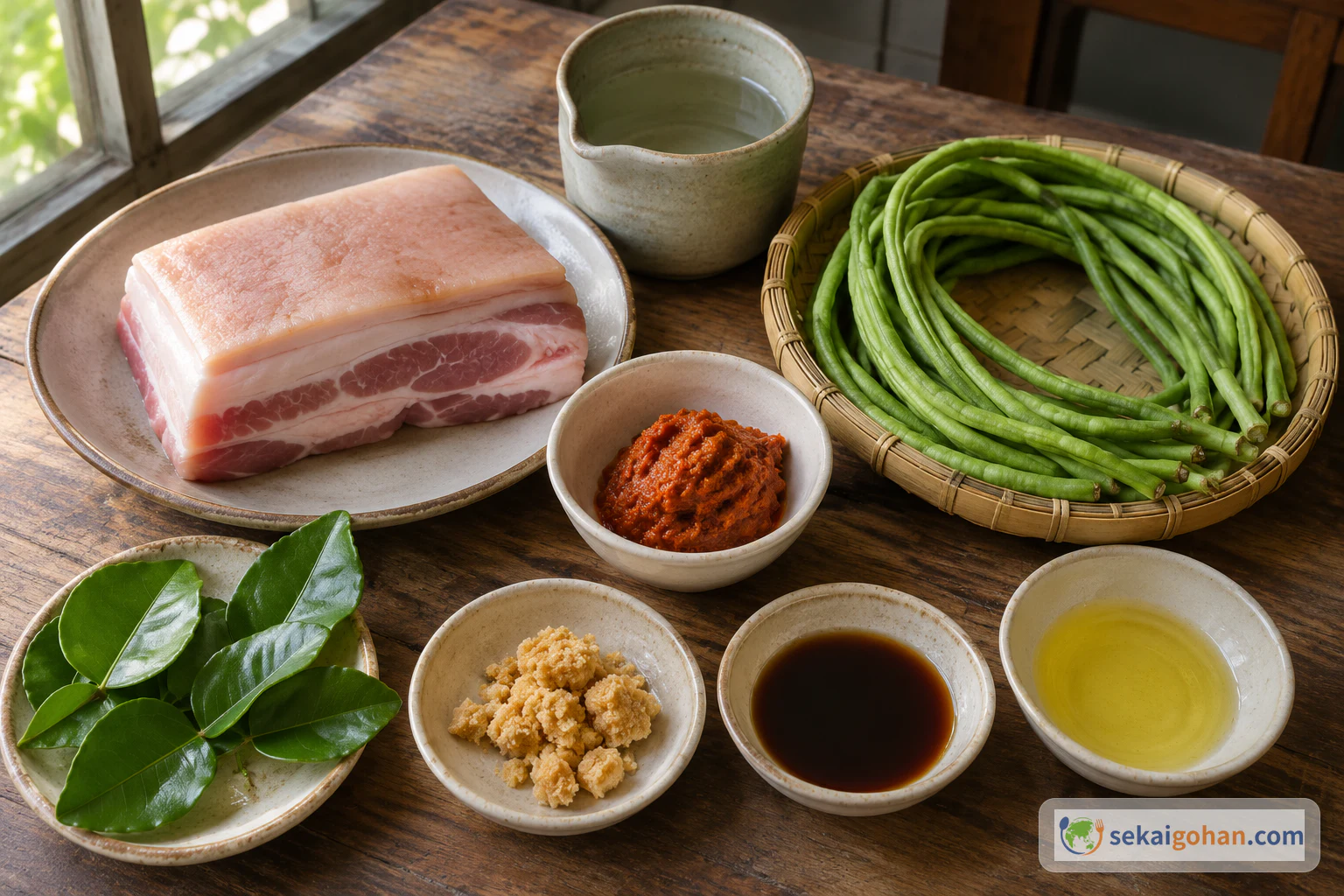
Equipment
- Deep pan or wok
- Knife
- Cutting board reserved for raw pork
- Separate clean cutting board for the washed leaves and beans
- Food thermometer suited to the thickness of the pork
- Stirring utensil and slotted utensil
- Clean plate that has not touched raw pork
- Stable, heat-resistant container for excess hot oil
- Small shared serving plate
Choosing Ingredients for Phat Phrik Khing
Pork belly: Look for a skin-on piece that is about half fat. The cutting directions and the amount of fat left in the pan both assume this cut. Leaner pork works, but expect a different result, and check the center of the meat in the same way.
Red curry paste: An ordinary Thai red curry paste is all you need, and no particular brand is required. Homemade paste can take its place at about the same 2 tbsp, though the flavor will depend on the paste you make.
Light soy sauce: Use Thai light soy sauce here. Japanese usukuchi soy sauce is a different product, not a direct swap.
Method: Brown, Check, Fry the Paste, Bring It Together
Do not wash raw pork. Keep separate boards and plates for raw pork and for washed vegetables and leaves. After handling raw pork, wash your hands, then wash the tools and work surfaces with hot, soapy water.
Browned color, sizzling and cooking times do not show that the pork is cooked through, and neither do the images below. Use a food thermometer to check the pork in step 3.
Have everything cut and ready before you heat the pan. Steps 15 to 17 each cover one addition; add them one after another, without waiting between them.
Fixing Problems in the Pan
| What you notice | What to do |
|---|---|
| The pork looks browned, but the center has not reached 167°F (75°C) for at least 1 minute | Keep cooking before removing it from the pan. Color is not a reliable guide |
| There is a lot of fat in the pan after browning | Carefully pour the excess into a stable, heat-resistant container until about 2 tbsp remains |
| The paste looks close to burning | Make sure the heat is low and keep stirring; it stays on low for this whole stage |
| The sugar is still visible | Keep stir-frying until it has melted, then add the water |
| The pan looks a little dry before plating | Check that you added the little water from step 7, then stir so the sauce comes together |
| You are tempted to add a lot of water | Add only a little. The dish wants a small amount of sauce, not a pool of liquid |
Serving Phat Phrik Khing
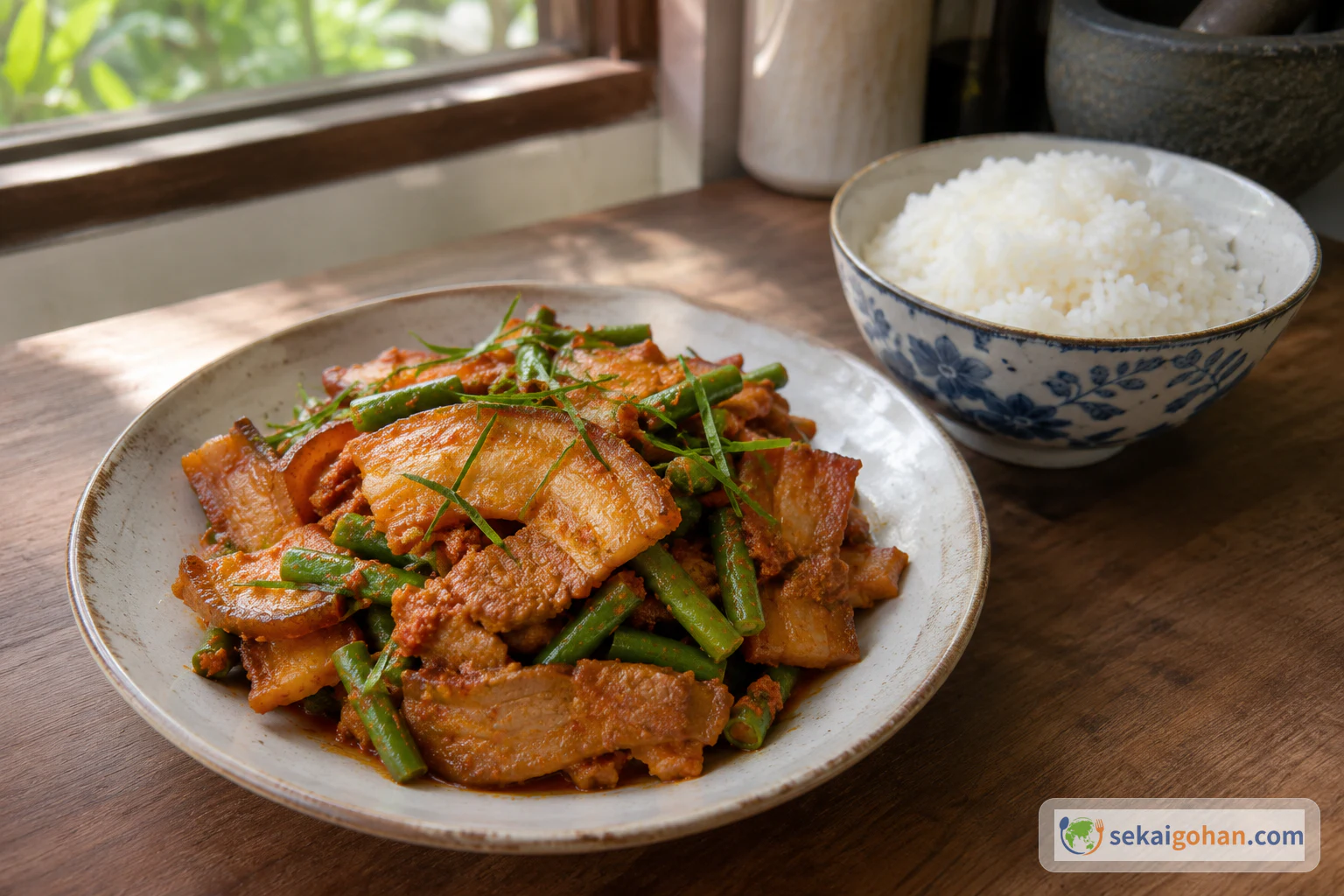
Bring it to the table on a small plate with steamed rice alongside. The recipe uses 3 makrut lime leaves, but 2 works just as well if you'd like the citrus note a little quieter.
Frequently Asked Questions
Are the makrut lime leaves eaten raw?
Yes. The leaves go on after plating, so treat them as an uncooked garnish. Wash them well under running water, and keep them away from raw pork and the tools used for it.
Why add a thermometer check when the recipe gives times?
The times rely on browning and about 2 minutes at each stage, and neither tells you the temperature at the center of the pork. Fresh meat still needs to be cooked through, so check the center with a thermometer against the reading in the table above.
What if my thermometer can't read such a thin piece?
Measure the thickest individual piece, following your thermometer's instructions, rather than stacking slices to make a thicker target. Browning and sizzling can't stand in for this reading, so use a thermometer suited to thin cuts.
Why does the recipe mention both 1 lb and about 2 cups of pork?
They're the same meat: the ingredients give a weight, and the method gives a rough volume once it's sliced. 1 lb is about 454 g.
How much water should I add?
Just a little, without measuring. It's part of the method rather than an optional extra, and its job is to make a small amount of sauce that brings the flavors together.
How long does it take?
The prep time is 5 minutes and the cooking time is 10 minutes, for 2–4 servings. Go by the cues in each step and the pork's temperature rather than the clock alone.