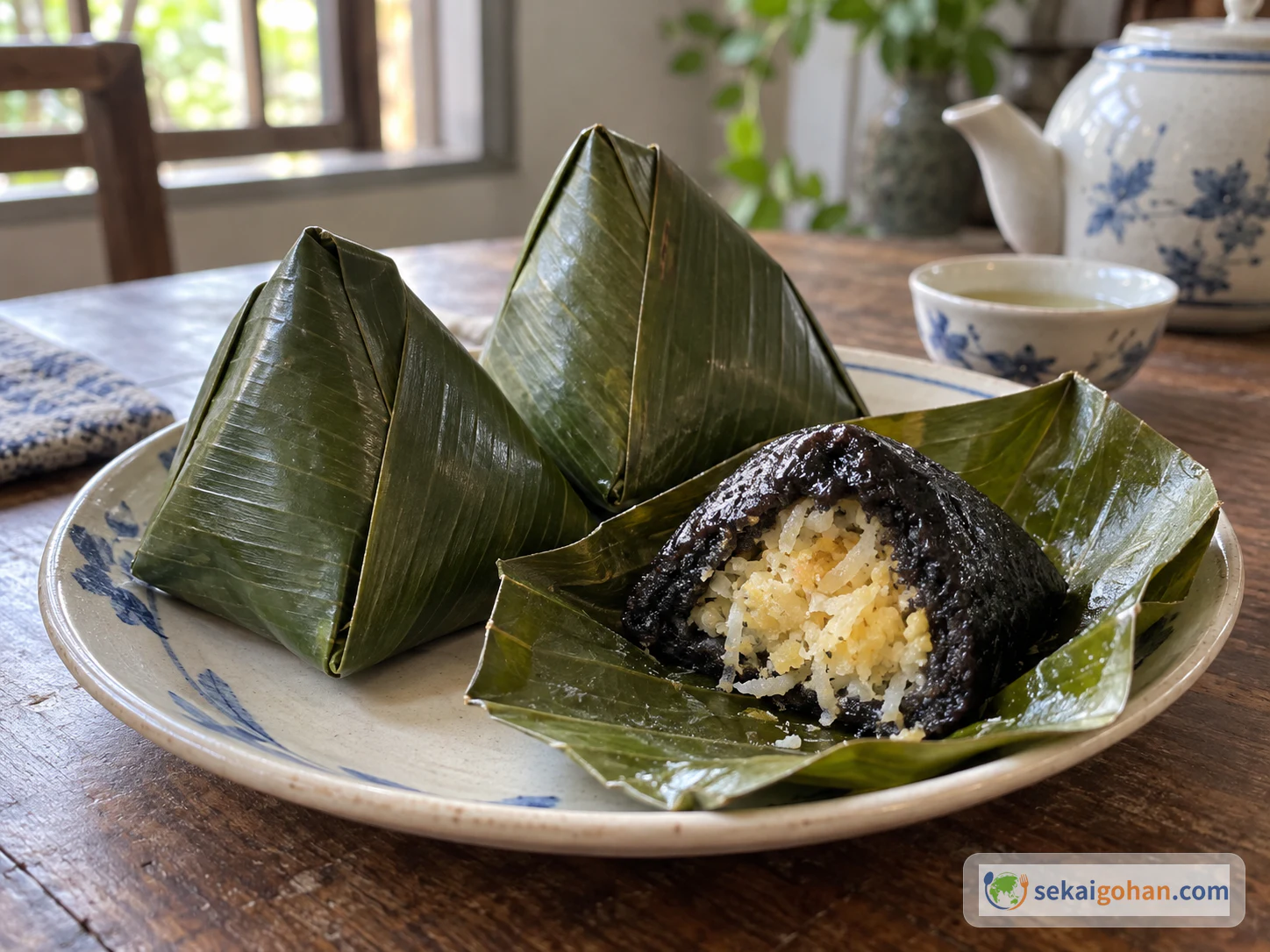
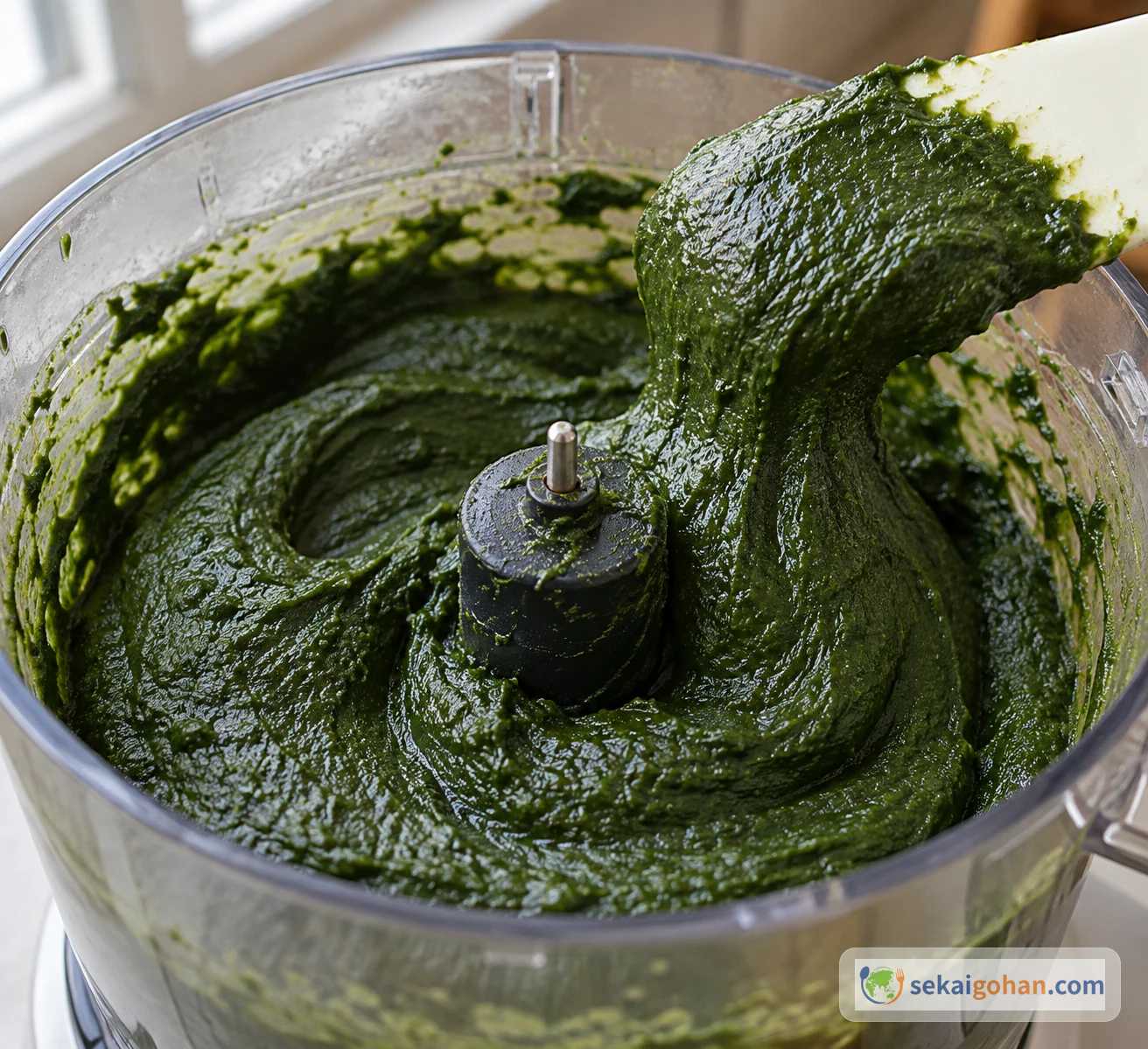
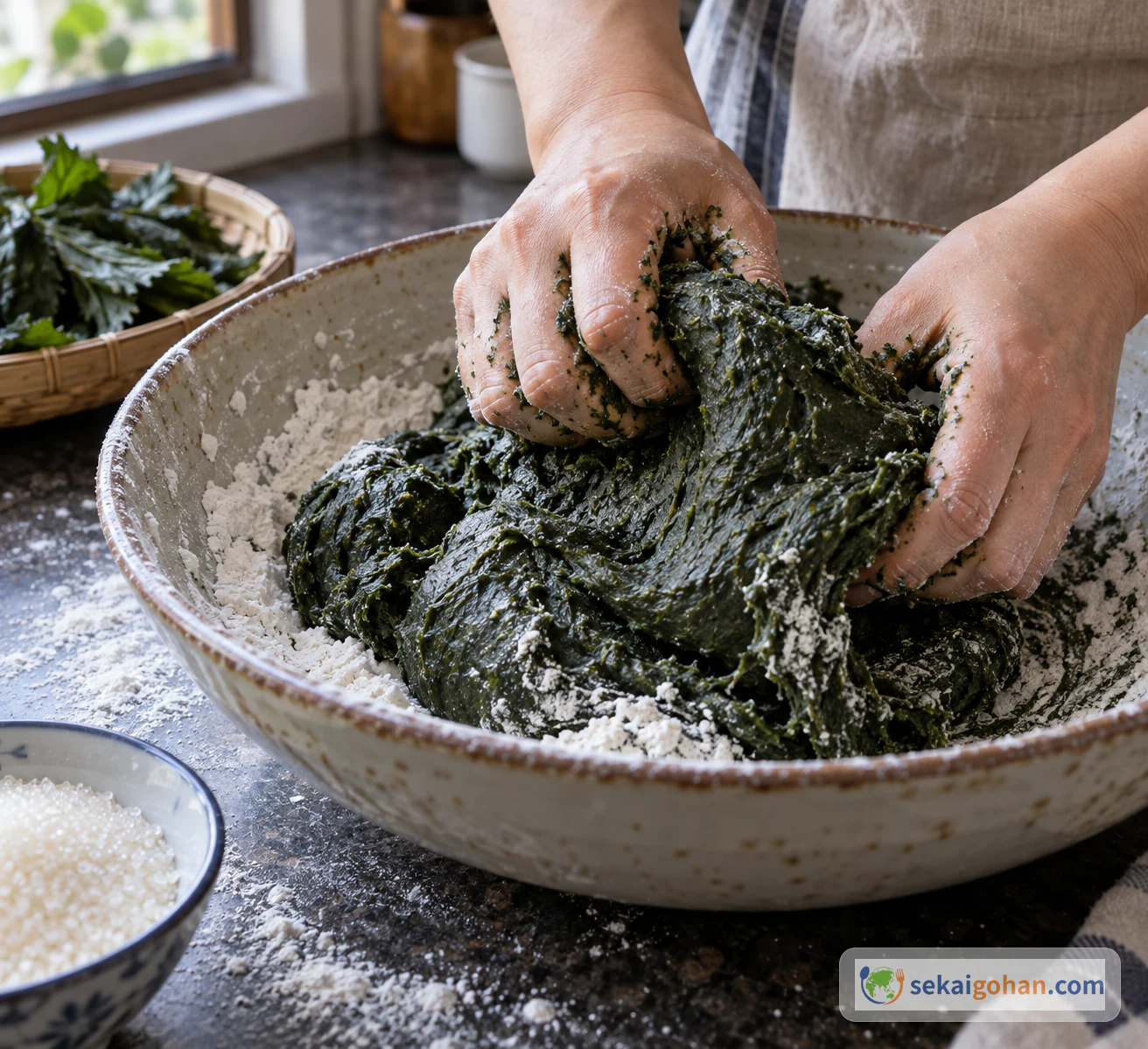
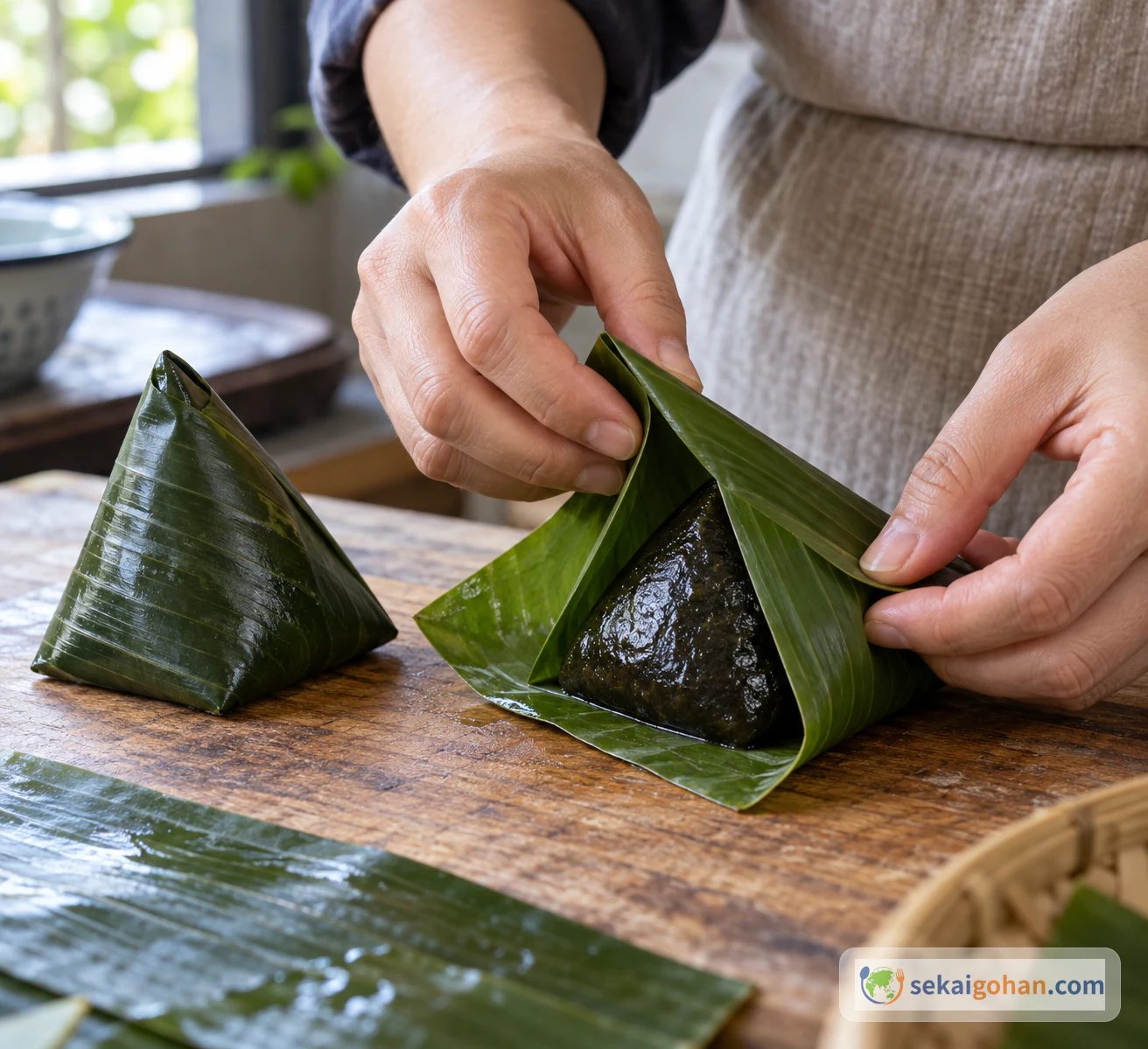
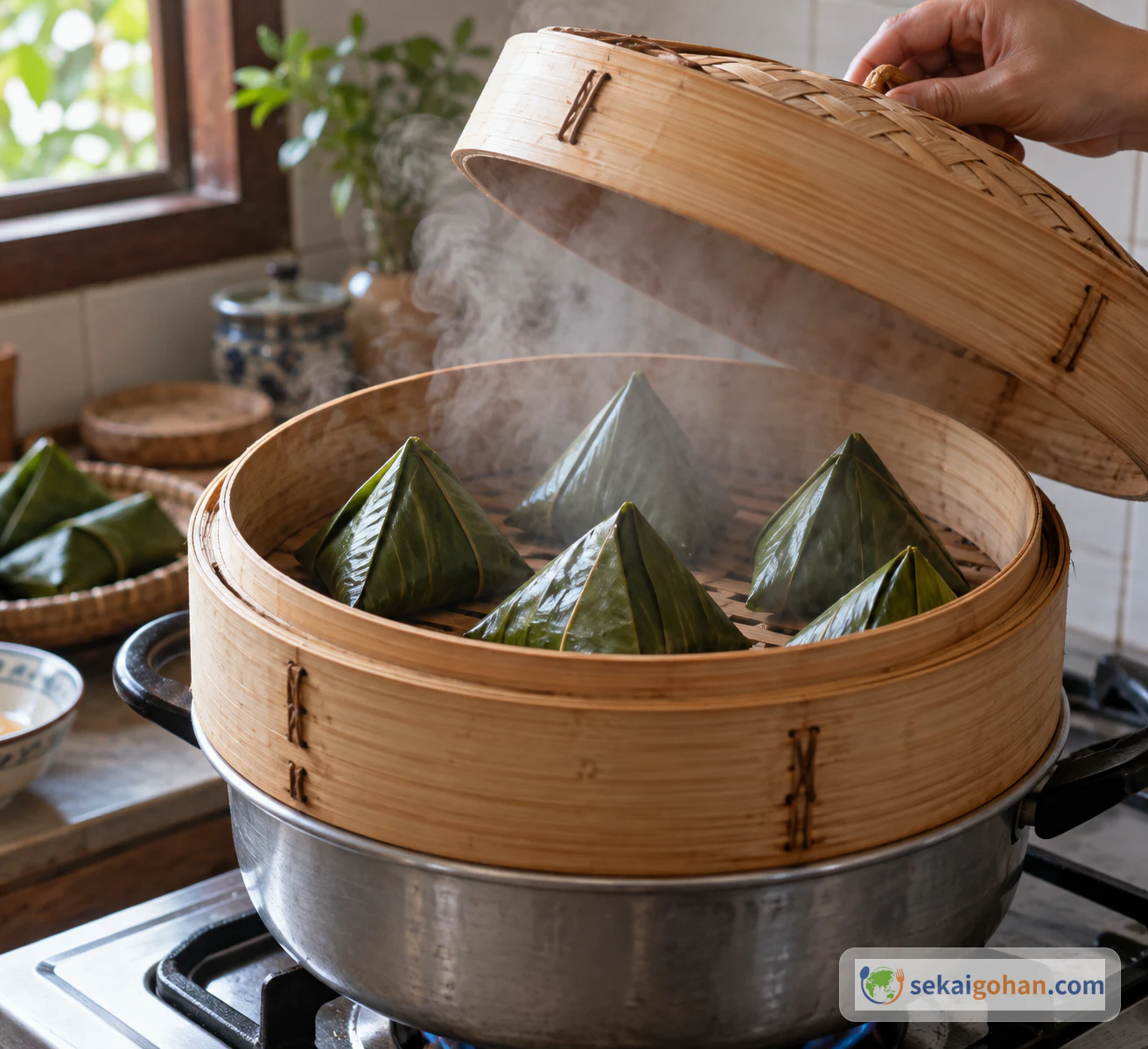
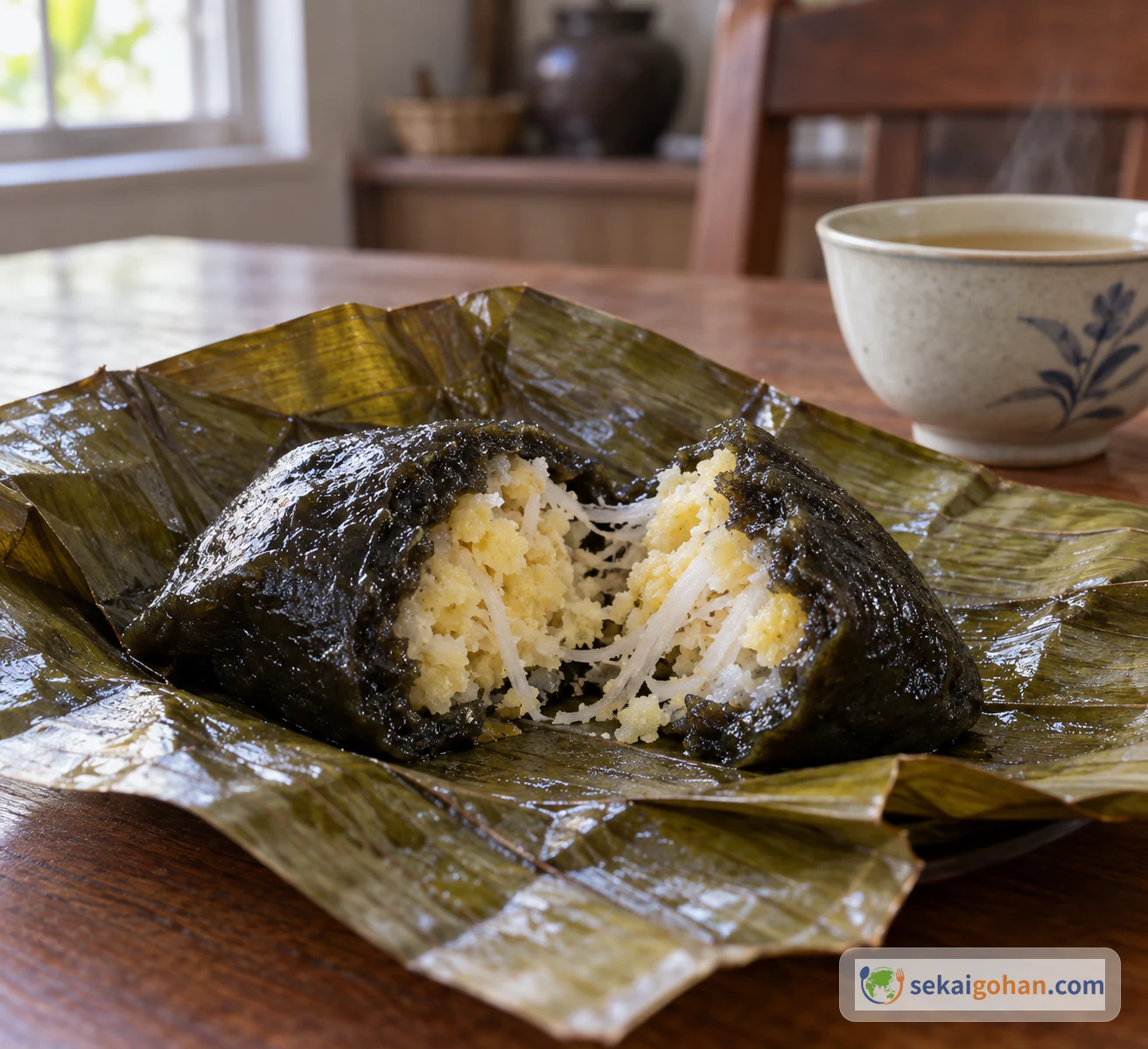
Peel back the banana leaf and the cake inside is almost black, with a soft sheen. Bite through the stretchy glutinous rice shell and you reach a sweet filling of mung bean and shredded coconut. This is bánh ít lá gai, a small cake from Bình Định in central Vietnam. The dough gets its dark color and flavor from lá gai (ramie leaves), and each cake is wrapped in banana leaf, folded into a little tapered tower, and steamed.
Bánh Ít Lá Gai in Bình Định
Where and When It Is Eaten
Bánh ít lá gai is a specialty of Bình Định. It turns up at Tết and other festive occasions, at weddings and death-anniversary gatherings, and as a sweet at the end of a feast. Locals eat it as it is, with hot tea and no dipping sauce.
Towers, a Folk Verse and a Legend
The pyramid-shaped parcels are a regional symbol, linked to the cluster of Chăm towers in Tuy Phước. A well-known folk verse goes roughly: "If you want to eat bánh ít lá gai, marry a husband from Bình Định, though you may fear the long road." One legend about the name tells of a woman who bought just a few cakes to take home to her mother-in-law.
In Tuy Phước, making the cake is local craft work, with skills passed down and the steps shared among a team of makers.
Bánh Ít Lá Gai and Other Bánh Ít
The name bánh ít covers more than one cake, including bánh ít trần and other versions made without lá gai. There is also a similarly named northern cake, bánh gai. For more dishes from the same country, see the Vietnam page.
Ingredients: One Batch of Shell, Filling and Leaf Wrapper
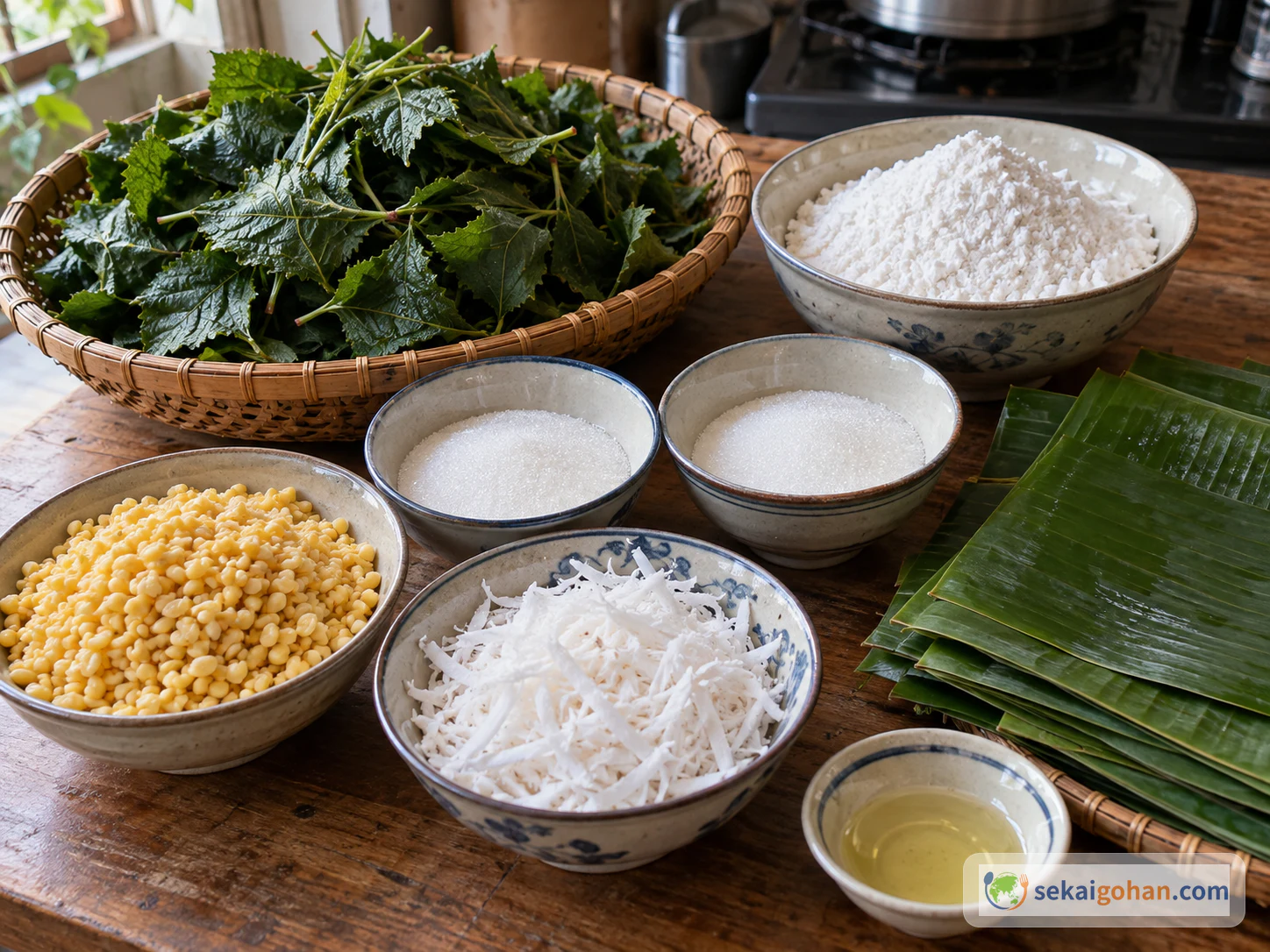
This is one batch. The sugar is divided between the shell and the filling, so keep the two portions in separate bowls from the start.
Check the labels on packaged coconut, glutinous rice flour and mung beans for allergens and any shared-facility statements.
Choosing Ingredients for Bánh Ít Lá Gai
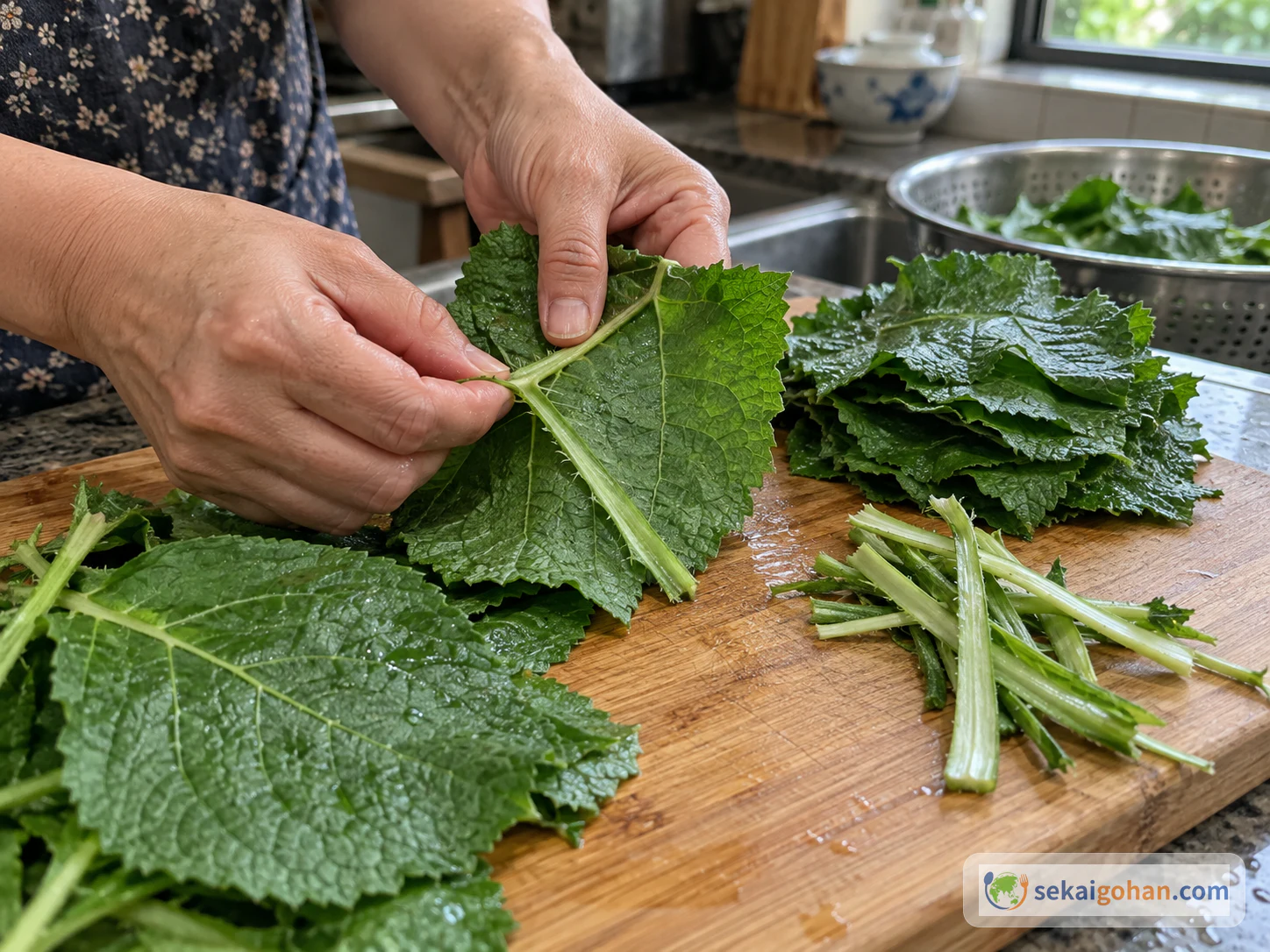
Lá gai (ramie leaves) are the heart of this cake and the hardest thing to find outside Vietnam. Ask for "lá gai" at Vietnamese or other Southeast Asian grocers. Dried lá gai powder exists, but there is no confirmed ratio for replacing 1 lb (500 g) of fresh leaves, so follow the maker's instructions for this kind of cake rather than swapping by weight. Leaves of a similar color, such as mugwort, give a different result, and unidentified wild leaves should never be used.
Glutinous rice flour. Look for a flour labeled glutinous rice flour (bột nếp). Japanese mochiko and shiratamako differ in grain size and how much water they absorb, so they are not a direct swap here.
Mung beans. Use hulled split mung beans (peeled mung beans, sometimes sold as moong dal). Whole mung beans with their green skins would change the method.
Coconut. The filling uses finely shredded flesh of mature coconut. Packaged dried or desiccated coconut has a different moisture level, and sweetened coconut changes the sweetness too, so read the label before you buy.
Sugar. The 5.5 oz (150 g) + 5.5 oz (150 g) split shapes the texture of both shell and filling. Treat any reduction as a new recipe to test, not a small tweak.
Banana leaves. Fresh or frozen banana leaves from an Asian grocer work well. Baking paper can hold the shape if a leaf tears, but you lose the leaf's aroma and look, so keep it as a fallback.
Equipment
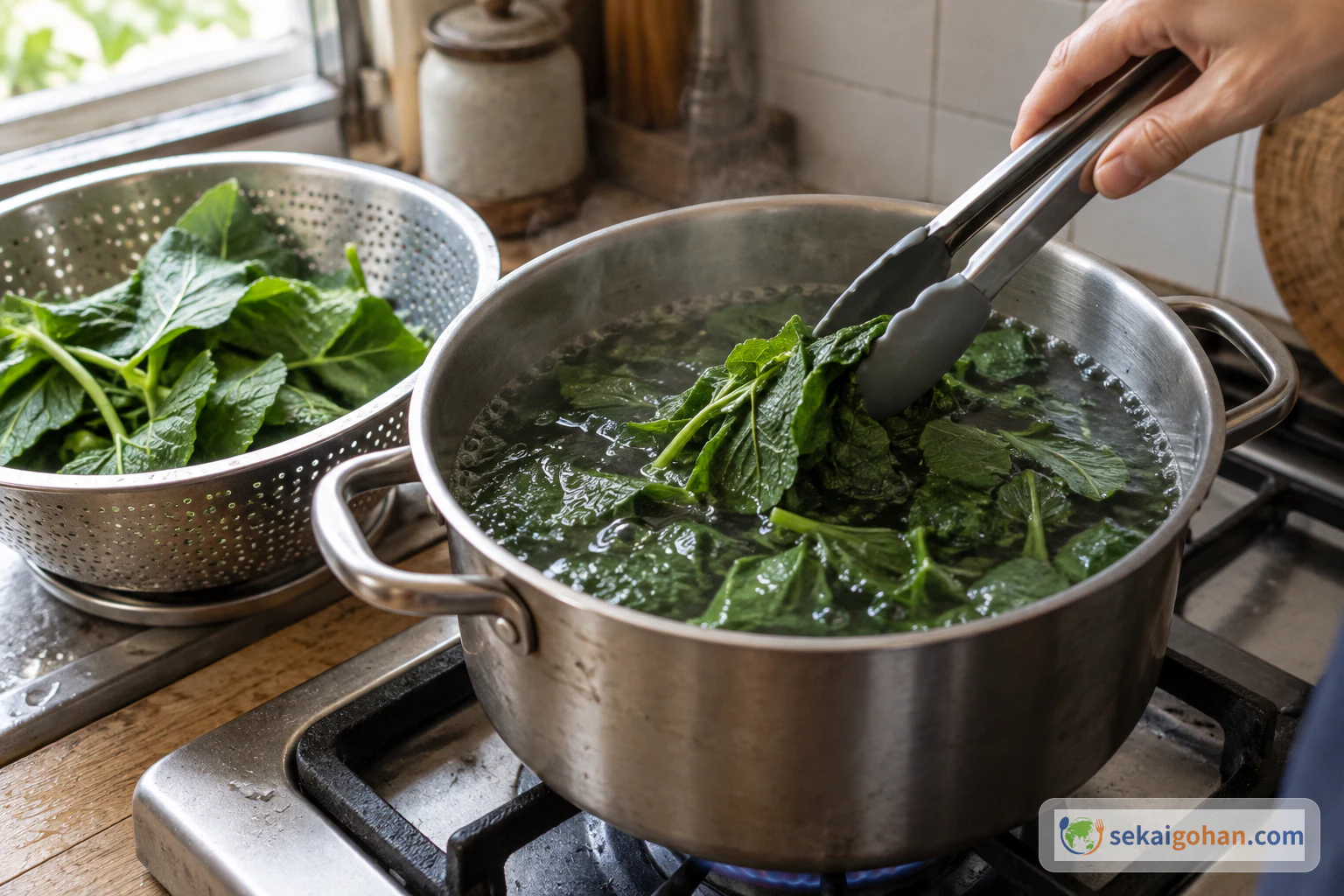
- Large pot and colander, for boiling and draining the leaves
- Knife and cutting board
- Blender or food processor
- Large mixing bowl, for kneading the dough
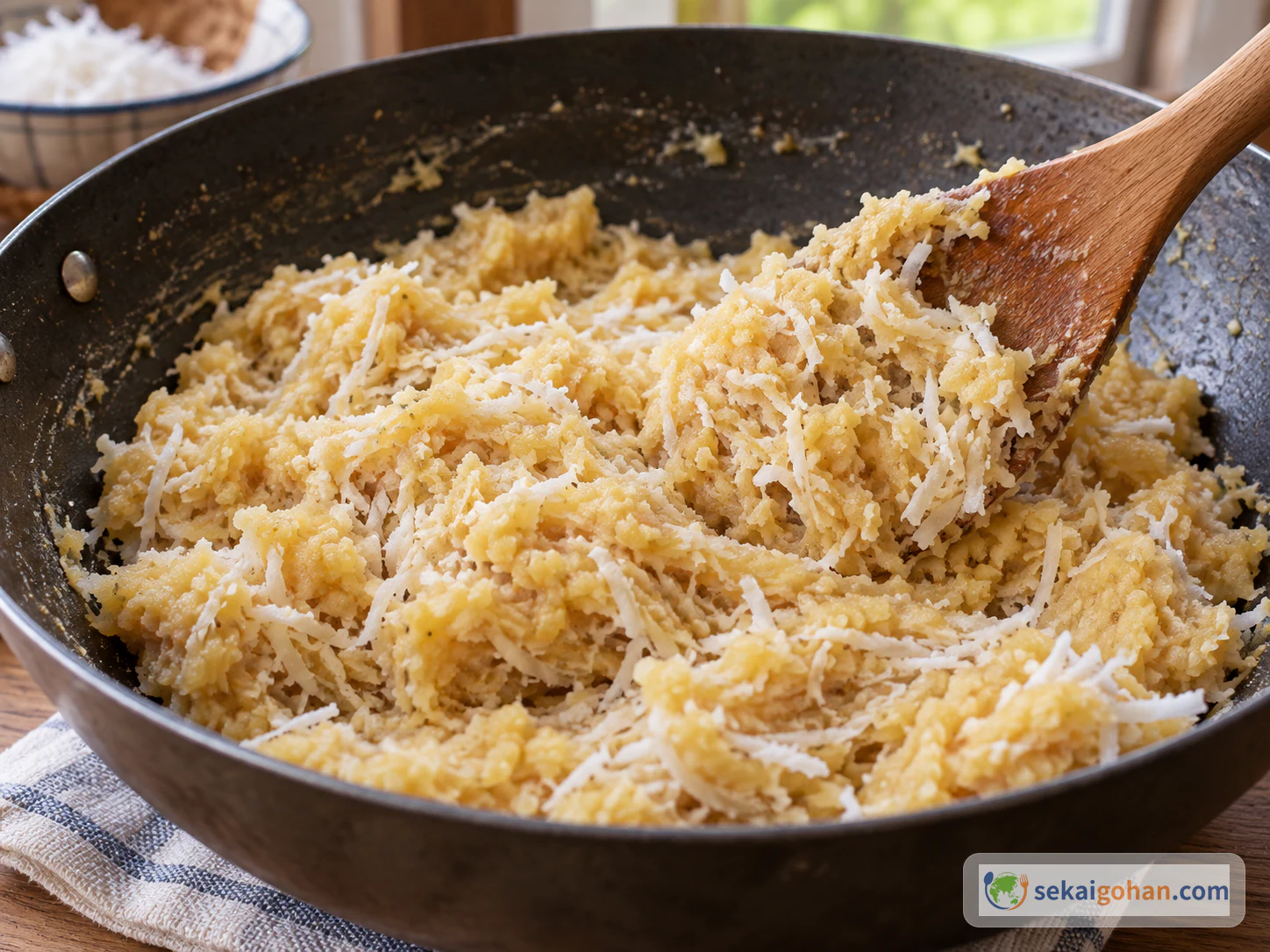
- Pan, for drying out the filling over low heat
- Steamer, or a pot with a steaming rack and lid
- Small brush, for oiling the leaves
Method: From Leaf to Steamed Tower
The mung beans need about 4 hours of soaking, so start them first. Judge the leaf paste, dough and filling by their state, not by the clock, except where a time is given.
Bánh Ít Lá Gai Troubleshooting
Moisture is the main thing to watch. The boiled leaf paste brings water into the dough, so check the texture before you start shaping.
| Problem | Likely cause | What to do |
|---|---|---|
| Dough is too wet to shape | The leaf paste holds more water than the flour can take | Don't add flour by guess. Weigh the drained leaves and paste so you can track the water |
| Dough cracks when you wrap it | Not kneaded enough, or uneven thickness | Knead until smooth and even, and flatten each round to the same thickness all around |
| Filling is sticky and slumps | Not dried out enough in the pan | Return it to low heat and stir until it holds a shape once cooled, then cool before adding the coconut |
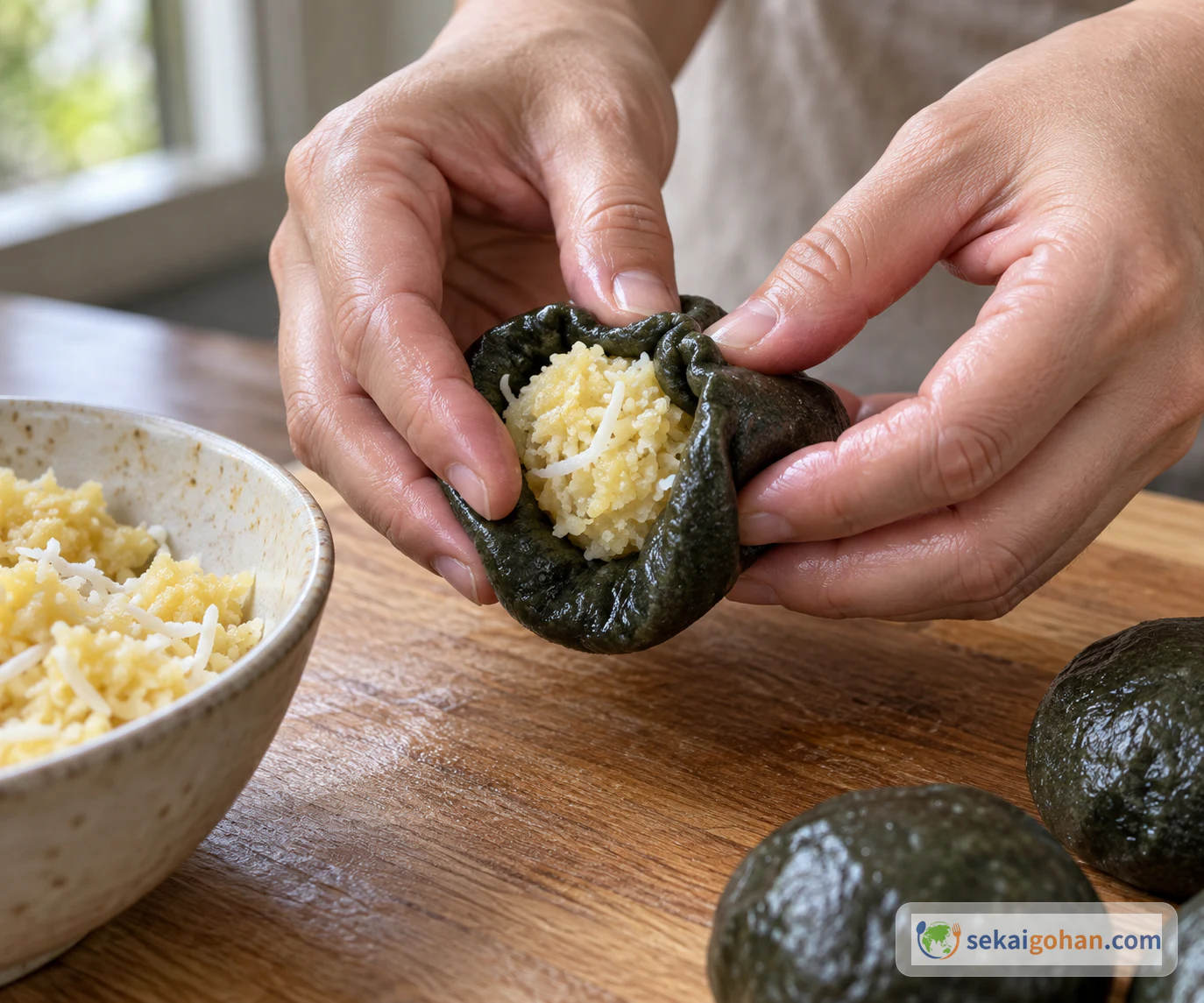
| Filling breaks through the shell | Shell too thin in one spot, or seam not closed | Keep the round evenly thick and pinch the seam firmly before rolling |
| Leaf tears while folding | Leaf not softened enough | Warm the leaf again until it bends without splitting |
| Leaf sticks to the cake | Leaf not oiled | Brush a thin layer of oil on the inside of the leaf before wrapping |
Leaf color alone won't tell you the cake is cooked. Check that the parcel is hot all the way through and the shell has set.
Storing Bánh Ít Lá Gai and Variations
The cakes are best freshly steamed. Any you aren't eating right away should be cooled quickly, refrigerated and eaten soon. If anything looks, smells or feels wrong, or you have any doubt, throw them away.
In some places the cakes are steamed bare and wrapped afterward, which keeps the banana leaf green. At a workshop in Tuy Phước, Bà Dư's team boils and pounds the leaves with sugar and flour, steams the dough for about 30 minutes and lets it cool, then cuts it, fills it with mung bean mixed with coconut, and wraps it in banana leaves softened over heat. Because the dough is cooked before filling, it's a separate method rather than a swap for the recipe above.
Traditionally, the boiled lá gai is pounded, and the glutinous rice and sugar are worked together by pounding too. Here a blender handles the leaves and the dough is kneaded by hand.
Frequently Asked Questions
Is bánh ít lá gai the same as bánh ít trần?
No. Bánh ít trần is steamed bare, without a leaf wrapper, and can have a savory filling of shrimp and pork. Bánh ít lá gai has a dark shell made with ramie leaves, a sweet mung bean and coconut filling, and a banana-leaf wrapper.
What can I use instead of lá gai?
There is no direct replacement for fresh lá gai. Dried lá gai powder is sold, but follow the maker's own instructions, since there is no ratio for using it in place of fresh leaves.