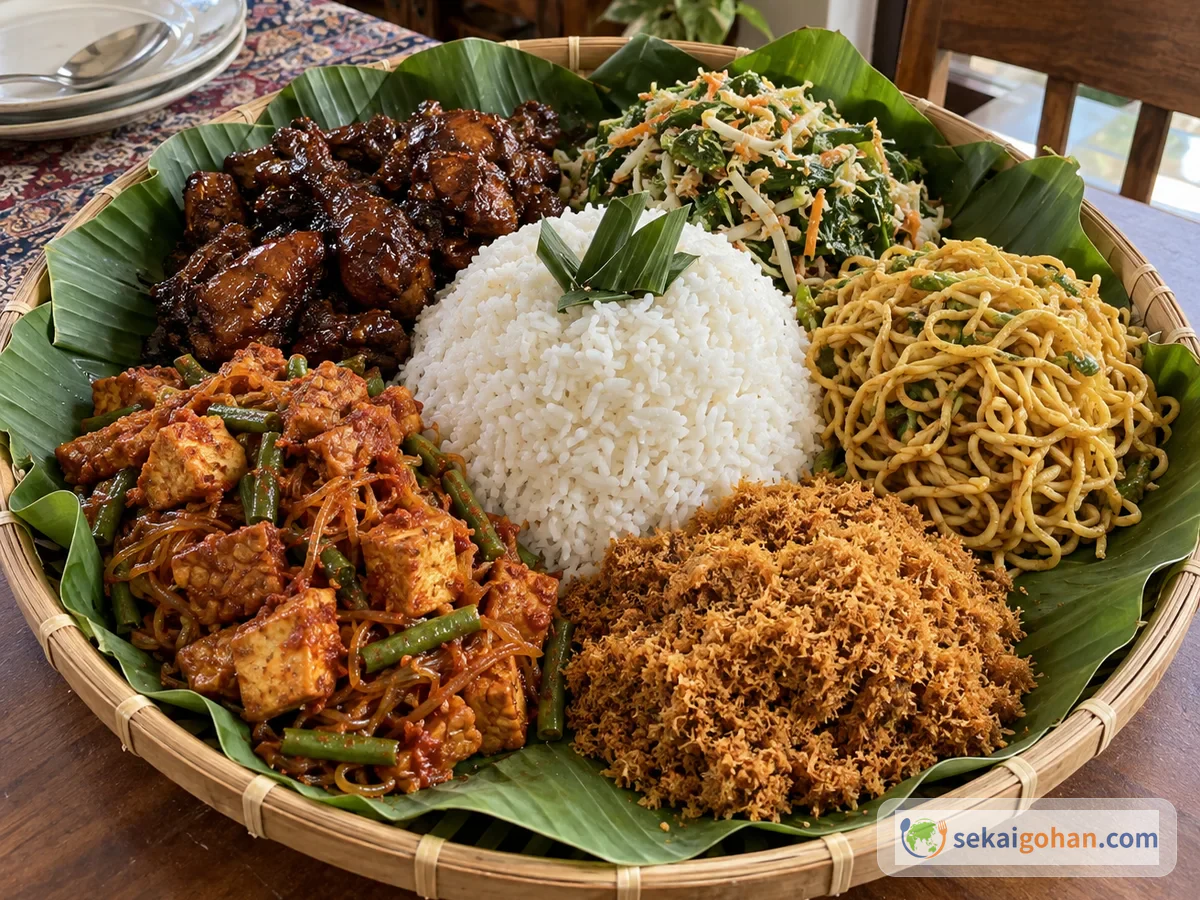
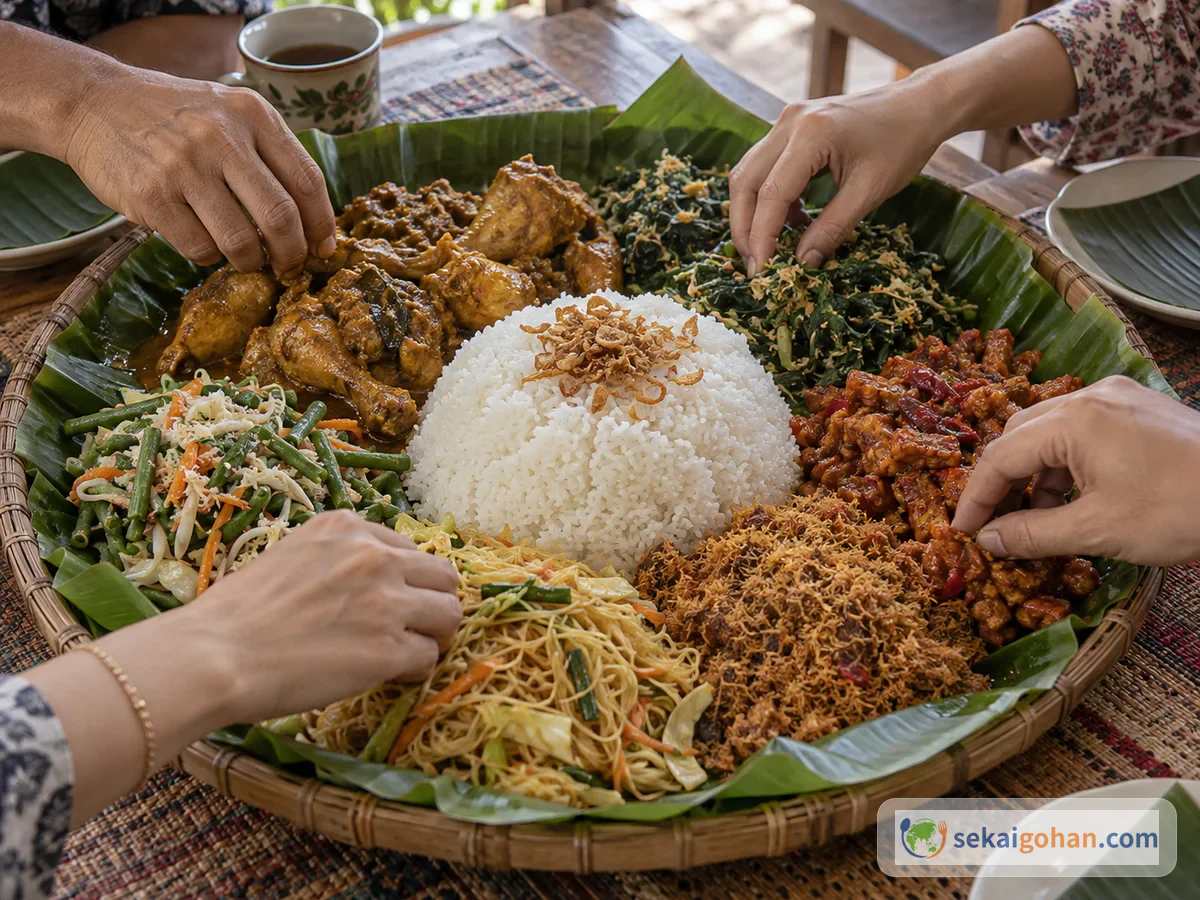
A large round tray lined with banana leaf is carried to the middle of the table. White rice is heaped high in the center, and around it sit sweet-savory braised chicken, sambal goreng, coconut serunding, vegetables and noodles. Four or five people gather around a single tray, and the meal is as much about who reaches in, and in what order, as about the food itself. Nasi ambeng is a shared meal with Javanese roots, and the name covers both the dish and this way of serving it. Nothing is mixed: each person builds the flavors around the white rice, so one bite soaks up the sweet braising juices of the chicken, the next brings vegetables and coconut, and the flavor keeps changing in your hand.
Nasi ambeng in Java, Malaysia and Singapore
A dish for celebrations and gatherings
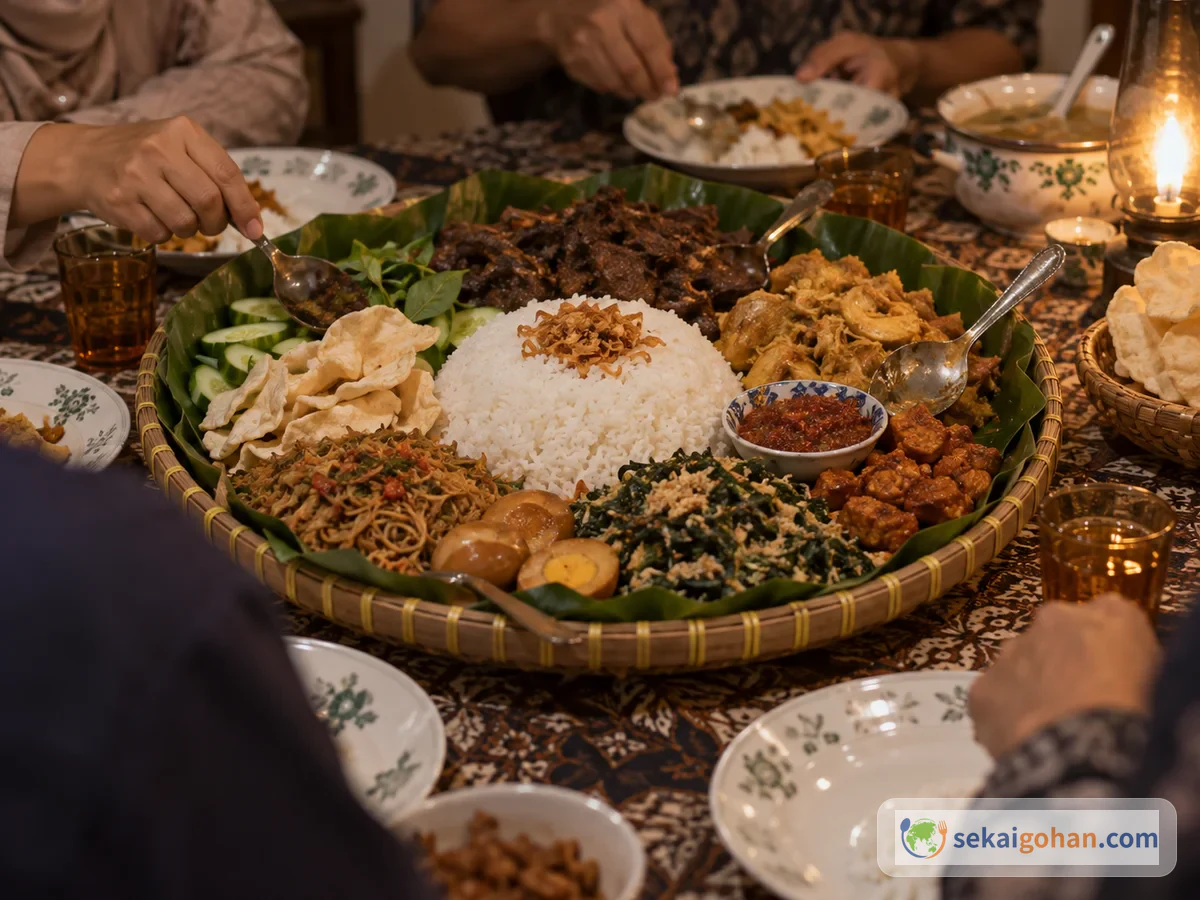
Nasi ambeng is a traditional Javanese dish. In Malaysia it is a communal dish of Selangor, shared by the Javanese communities of Selangor and Johor, and a large platter is carried to feasts, tahlil rituals and communal gatherings, where sharing food stands for unity and cooperation. In Singapore it is a dish carried to family events, tied to Javanese food culture and identity.
Traditionally, four or five people sit around one tray, and the leftovers are divided into four to take home. The same idea is behind Nasi Berkat, where the divided food goes home with the guests. Dividing the table's food for home carries the dish on to another table.
Today nasi ambeng is served at restaurants and at home, and at gatherings for graduations, weddings, births and reunions. From the late 1970s it was commercialized and spread into broader Malay cuisine, and some restaurants now serve it in individual portions. Even as a dish served on individual plates, the idea of tasting several dishes together survives the change.
Sides by region and household
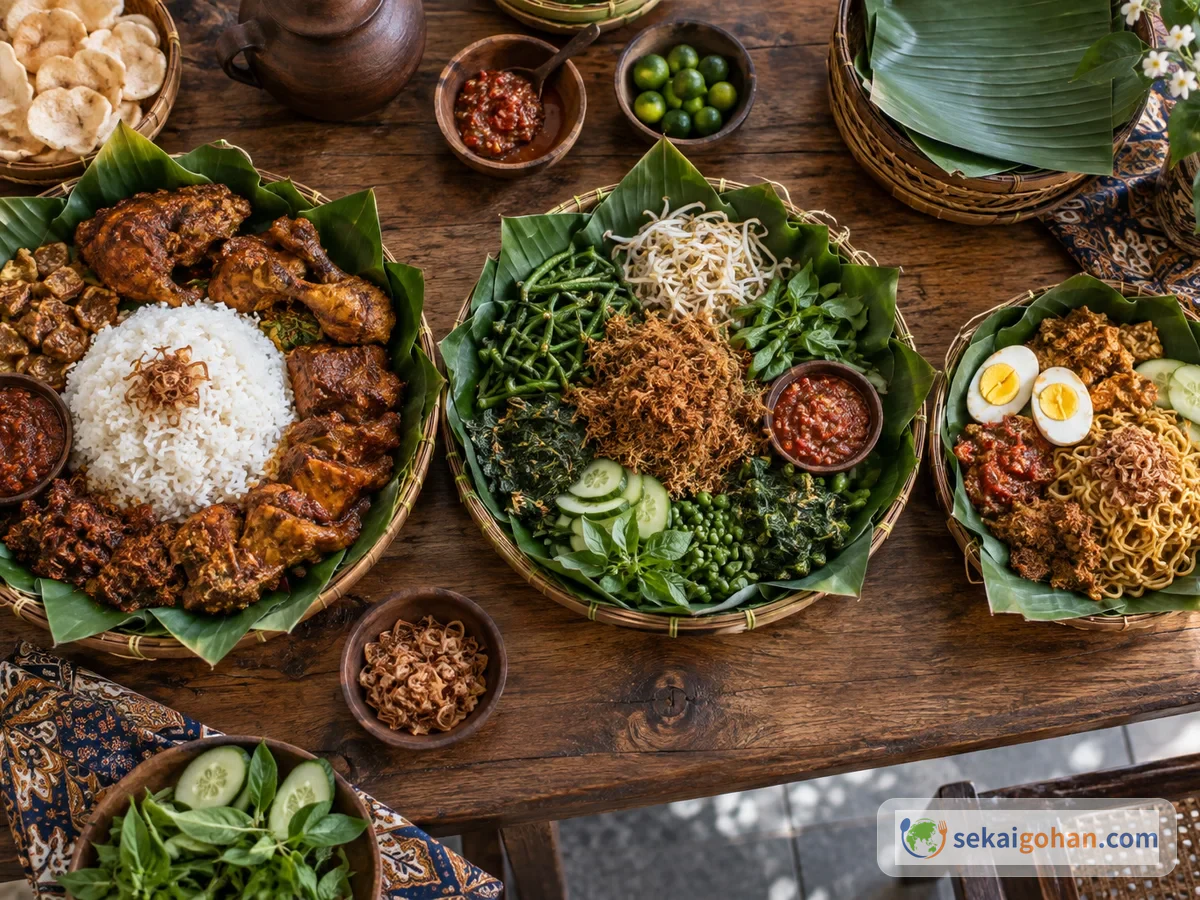
The white rice and the shared tray are constant; the side dishes around them are not. Typical arrangements include chicken kicap or opor, sambal goreng, serunding, noodles or glass noodles, urap, salted fish, potato patties, rempeyek and boiled eggs. Other versions bring rendang, ayam lemak, sambal goreng with tempeh, tofu and green beans, and fried small fish with peanuts. Keep the rice in the center and change what surrounds it.
| Place or occasion | Example arrangement | How to make it at home |
|---|---|---|
| Javanese communities of Selangor and Johor | White rice, ayam kicap or opor, sambal goreng, serunding, noodles or glass noodles, urap, salted fish, rempeyek, eggs and so on | Use the Selangor arrangement as the base: braised chicken, sambal goreng, serunding, urap and fried noodles |
| Javanese family events and restaurants in Singapore | Braised chicken or beef, sambal goreng, tempeh, urap, serunding, fragrant rice and so on | Keep the shared platter, and choose sides to suit your family |
| Celebrations and communal gatherings | Rice in the center and several sides depending on the number of people. Sometimes shared around a tray, sometimes in individual portions | Use a round tray that 4 to 5 people can sit around, and serve the heat and salted fish on the side to leave room for each eater |
| Home adaptation | 5 to 6 dishes sized to what can be sourced and finished | Keep the roles of fragrant rice, chicken, coconut, vegetables and noodles. Substitutes are listed below |
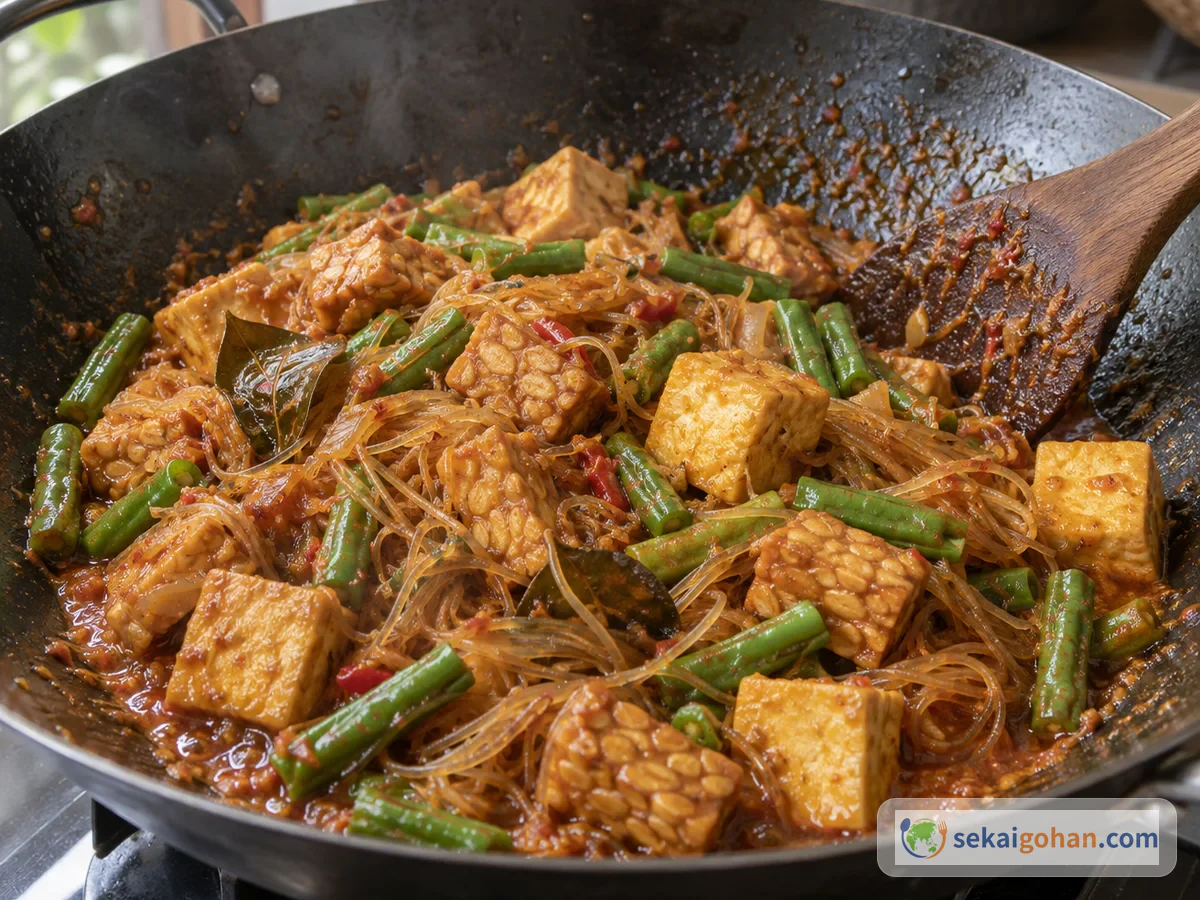
This version scales the Selangor-style arrangement down to a single plate for 4 to 5 people: white rice, braised chicken, sambal goreng, serunding, urap and fried noodles. What matters is the range of textures on the plate: the softness of the rice, the sweet-saltiness of the chicken, the beans and tofu of the sambal goreng, the dry fragrance of the serunding, the green crunch of the urap and the cohesion of the noodles. The difference in texture matters more than the number of dishes. Salted fish and rempeyek add crunch and salt with no extra cooking, so serve the saltiness on the side to bring the plate closer to the local arrangement.
Nasi ambeng and similar dishes
Nasi ambeng is a shared dish served on a round tray, while nasi tumpeng is a cone-shaped rice dish. Both lay out rice and sides for an occasion, but nasi ambeng centers on sharing around a flat tray.
The name appears as both Nasi Ambeng and Nasi Ambang in English, and it is written in katakana in more than one way in Japanese. When searching, use both English spellings to find more results.
Ingredients (serves 4 to 5)
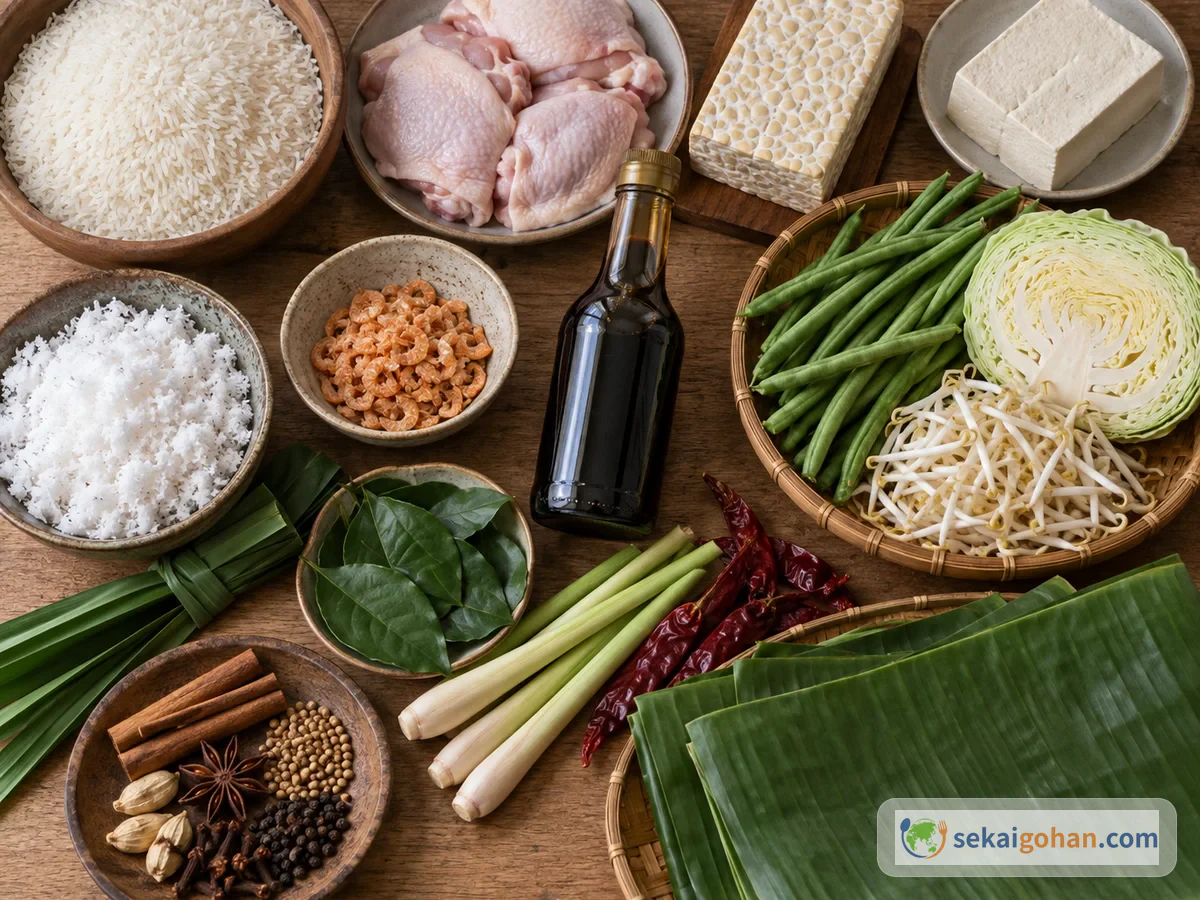
The ingredients are listed separately for rice, braised chicken, sambal goreng, serunding, urap, fried noodles and plating. Because six dishes are finished separately, the quantity looks large, but each dish is a small-pot job. The quantities are scaled down for 4 to 5 people sharing, with cut chicken and small side dishes instead of a whole chicken. When shopping, start by gathering the ingredients by their general names. First check whether you can get tempeh, kecap manis, salam leaf, banana leaf and dried shrimp. If not, use the substitute column in the tables to keep the role of the aroma.
| Ingredient | Amount | Substitutes & notes |
|---|---|---|
| Jasmine rice | 450 g | Scaled down for home from a 5-cup rice recipe. Japanese short-grain rice works too, but it turns stickier |
| Water | 540 ml | Adjust by 10-20 ml depending on your pot and rice. Do not follow a rice cooker's markings |
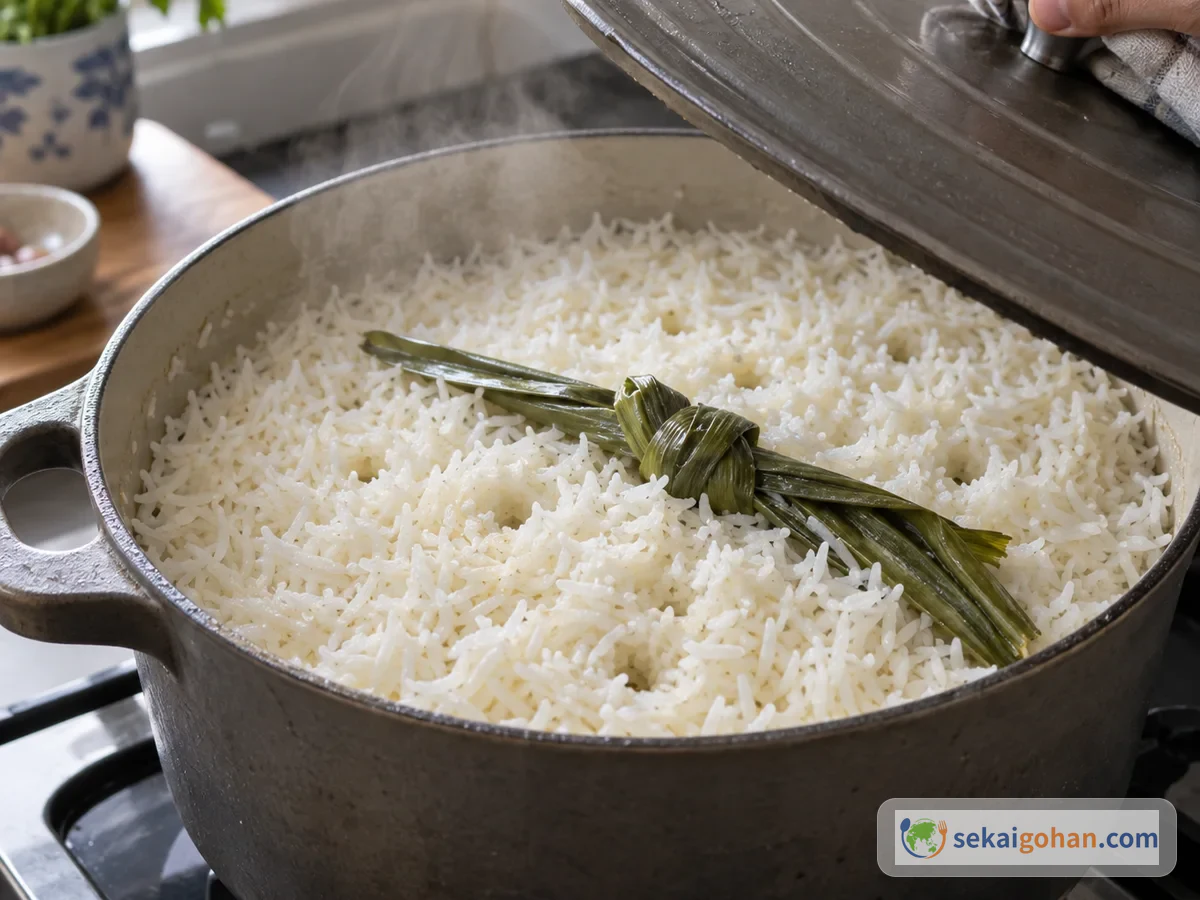
| Pandan leaf | 1 leaf | Use if you have it. Omit if not; the rice still holds its shape |
| Salt | 4 g | The sides carry salt, so keep the rice lightly seasoned |
Kicap-braised chicken
| Ingredient | Amount | Substitutes & notes |
|---|---|---|
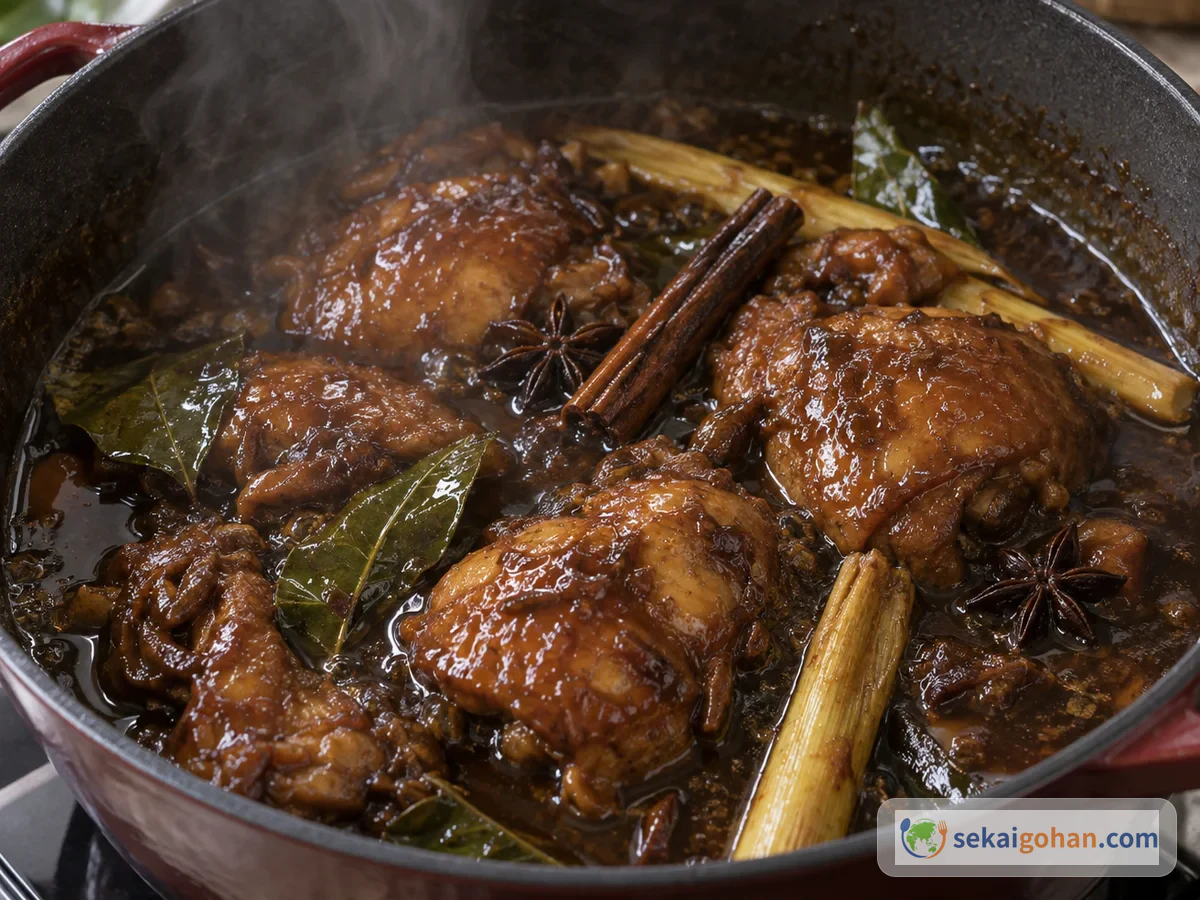
| Chicken thighs | 1.5 lb (700 g) | Skin-on, boneless. Open up the thick parts and cut into 1.5 inches (4 cm) cubes |
| Shallots or red onion | 2 oz (60 g) | About 1/2 of a regular onion. Thinly sliced or coarsely chopped |
| Garlic | 20 g | Crush, then chop |
| Ginger | 1 oz (30 g) | Peeled and thinly sliced |
| Dried chilies | 4–6 | Remove the seeds to lower the heat |
| Coriander seeds | 2 g | About 1 g if ground |
| Fennel seeds | 1 g | Can be omitted if you have none |
| Cumin seeds | 1 g | Can be omitted if you have none |
| Kecap manis | ¼ cup (80 ml) | Sweet thick soy sauce. Ordinary soy sauce alone lacks the sweetness and body |
| Coconut milk | ¾ cup (200 ml) | For cooking. A thin drinking type needs a longer reduction time |
| Water | 1 cup (250 ml) | Start with enough to come halfway up the chicken |
| Salam leaf | 2 leaves | If you have none, use 1 bay leaf. The aroma will be different |
| Cinnamon | 1/2 stick | Use a stick |
| Cardamom | 2 pods | Lightly crack the pods |
| Star anise | 1 | The aroma is strong, so do not increase it |
| Oil | 1 tbsp (15 ml) | For frying the aromatics. Ordinary rice bran or vegetable oil is fine |
| Salt | 5 g | Adjust at the end, considering the salt in the kecap manis |
Javanese-style sambal goreng
| Ingredient | Amount | Substitutes & notes |
|---|---|---|
| Tempeh | 5.5 oz (150 g) | 1 inch (2 cm) cubes. If you don't have it, use thick fried tofu. The fermented soy aroma will be weaker |
| Firm tofu | 5.5 oz (150 g) | Drained, cut into 1 inch (2 cm) cubes |
| Potatoes | 6.5 oz (180 g) | 1 inch (2 cm) cubes. Pan-fry first so they hold their shape |
| Green beans | 3.5 oz (100 g) | 1.5 inches (4 cm) lengths. If frozen, wipe off the moisture |
| Glass noodles | 1 oz (30 g) | Rehydrate and cut into 2 inches (5 cm). You can add dried yuba, soaked in the same amount of water |
| Dried shrimp | 15 g | Rehydrate in water and chop. If avoiding shrimp, omit and adjust the salt later |
| Red chilies | 2 | Remove the seeds to lower the heat |
| Shallots or red onion | 2 oz (60 g) | Coarsely chopped |
| Garlic | 15 g | Coarsely chopped |
| Chili paste | 15 g | Sambal oelek works too. Check the heat, since brands differ |
| Kecap manis | 2 tbsp (30 ml) | Add at the end, judging the sweetness |
| Coconut milk | ½ cup (150 ml) | Stir and measure even if it has separated |
| Water | ½ cup (100 ml) | The cooking liquid for rehydrating the glass noodles |
| Oil | 2 tbsp (30 ml) | Includes what is used to pan-fry the tofu, tempeh and potatoes |
| Salt and white pepper | A little each | Adjust, considering the salt in the dried shrimp and kecap manis |
Serunding (spiced coconut)
| Ingredient | Amount | Substitutes & notes |
|---|---|---|
| Unsweetened shredded coconut | 5.5 oz (150 g) | Freshly grated coconut is fine too. Do not use sweetened |
| Dried shrimp | 15 g | Optional. If you do not use seafood, do not add more salt |
| Shallots or red onion | 2 oz (60 g) | About 4 shallots. Thinly sliced |
| Garlic | 10 g | About 2 cloves |
| Coriander seeds | 2 g | Lightly crushed |
| Fennel seeds | 1 g | Omit if the aroma is too strong |
| Cumin seeds | 1 g | A small amount to keep the aroma |
| Turmeric powder | 1 g | For color. More brings bitterness |
| Sugar | 3 g | An amount that does not make it a sweet side |
| Salt | 3 g | Adjust after dry-toasting |
| Oil | 1 tbsp (15 ml) | For frying the aromatics. Reduce if the coconut is already oily |
Urap (vegetable and coconut salad)
| Ingredient | Amount | Substitutes & notes |
|---|---|---|
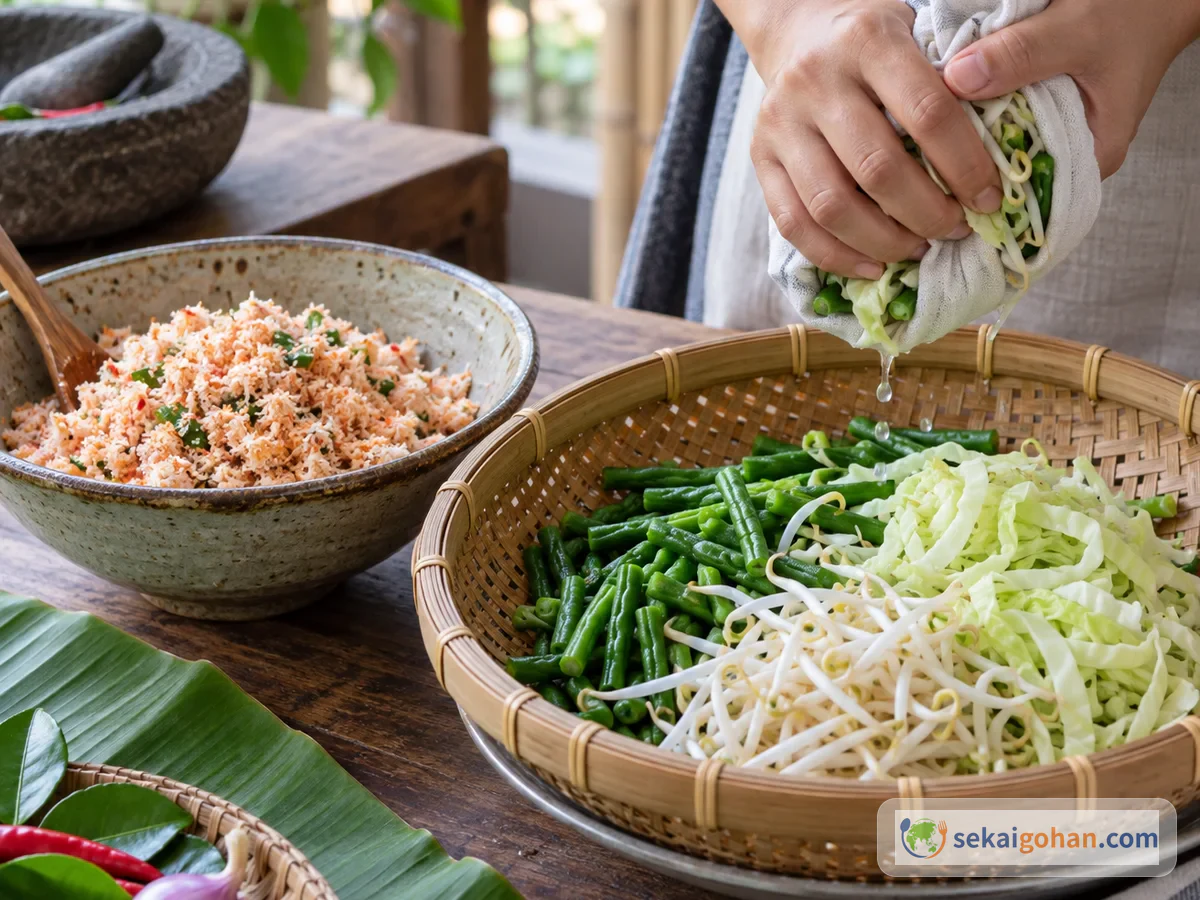
| Cabbage | 5.5 oz (150 g) | 0.25 inch (5 mm) wide. Napa cabbage releases water easily, so blanch it briefly |
| Bean sprouts | 3.5 oz (100 g) | Removing the roots helps keep them from releasing water |
| Green beans | 3.5 oz (100 g) | 1.5 inches (4 cm) lengths. Prepare separately from the sambal goreng portion |
| Unsweetened shredded coconut | 2.75 oz (80 g) | If dried, rehydrate with a little boiling water and drain |
| Red chili | 1 | Kept modest because sambal is served on the side |
| Shallots or red onion | 1 oz (30 g) | Coarsely chopped |
| Garlic | 1 clove | For aroma |
| Lime juice | 2 tsp (10 ml) | Add the sourness after the seasoned coconut has cooled |
| Sugar | 3 g | Rounds off the sharp edge of the sourness |
| Salt | 3 g | Adjust after draining the vegetables |
Fried noodles and plating
| Ingredient | Amount | Substitutes & notes |
|---|---|---|
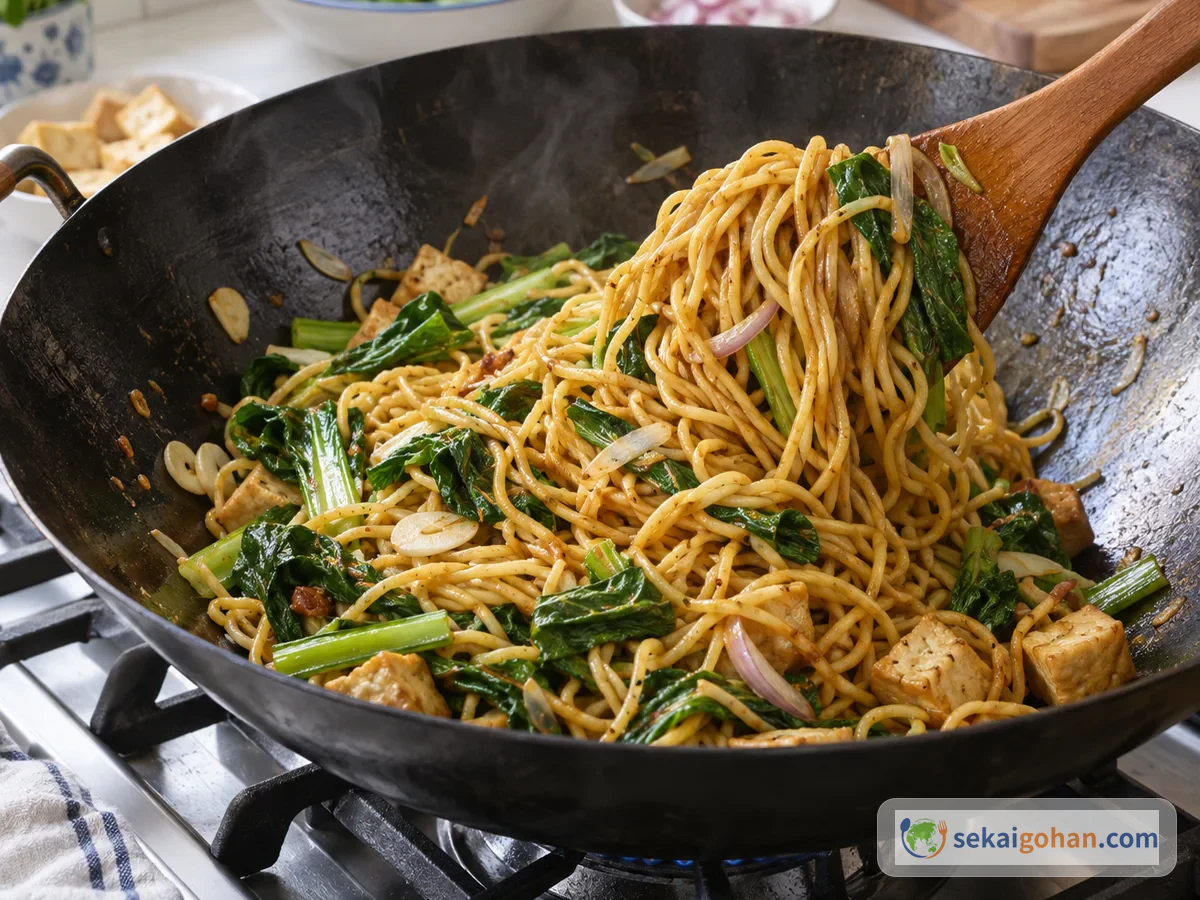
| Steamed Chinese noodles or yellow noodles | 9 oz (250 g) | Wipe the moisture off boiled noodles. Rehydrate dried noodles as directed on the package |
| Mustard greens or komatsuna | 3.5 oz (100 g) | 1.5 inches (4 cm) lengths. Bok choy also works |
| Firm tofu | 3.5 oz (100 g) | Cubed. May be taken from the sambal goreng |
| Shallots or red onion | 1 oz (30 g) | Thinly sliced |
| Garlic | 1 clove | Minced |
| Dried shrimp | 10 g | Optional. If using, rehydrate and chop |
| Chili paste | 10 g | Serve on the side if children are eating |
| Kecap manis | 2 tbsp (30 ml) | Add from an amount that does not turn all the noodles too dark |
| Oil | 1 tbsp (15 ml) | Over strong heat to loosen the noodles |
| Boiled eggs | 4–5 | Halved. Salted fish and rempeyek are optional on the side |
| Banana leaf | 2–3 leaves | Check that it is labeled as food-safe, wash and wipe dry. If none, use parchment paper |
Tempeh, tofu, kecap manis and noodles can contain soy or wheat. Check the labels on dried shrimp, salted fish, peanuts and rempeyek for seafood, shrimp and peanut. If anyone at the table will eat them, keep utensils and oil separate, even when they are served on the side. Allergen labeling differs between products for chili paste, coconut milk and dried goods, so read the label on each one rather than assuming from the ingredient name.
Choosing ingredients and substitutes for nasi ambeng
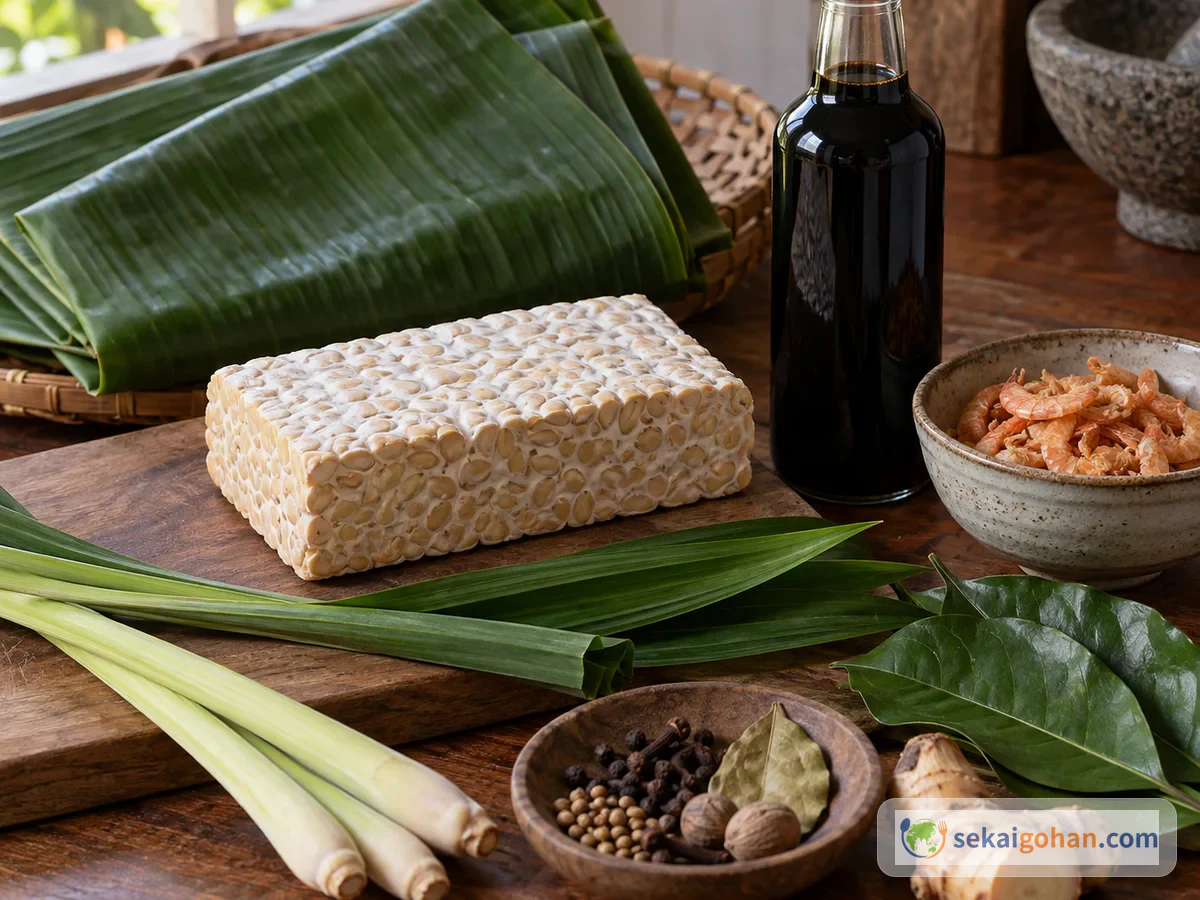
At an Asian or import grocery, or online, look first for three things: tempeh, which keeps the fermented aroma, kecap manis, the sweet thick soy sauce, and banana leaf, which gives the aroma and the look of a shared platter. If you do get edible banana leaf, wash it, wipe off the water and use it for plating. Salam leaf and pandan leaf add layers of aroma, but the dish holds together without them. Rice, chicken and vegetables can be made with local ingredients and the pots and pans you already have.
Dried shrimp goes into the serunding, sambal goreng and noodles in small amounts. Use it if your household eats seafood; if there is an allergy, leave it out of every step.
| Ingredient you cannot get | Substitute | What changes and how to adjust |
|---|---|---|
| Tempeh | Pan-fried thick fried tofu or firm tofu | The fermented soy aroma and loose texture weaken. Brown it more deeply and let it absorb the sauce |
| Kecap manis | Dark soy sauce with a little brown sugar or light brown sugar | The viscosity will not be the same, so reduce the sauce a little longer and adjust the salt at the end |
| Salam leaf | 1 bay leaf, or omit | It cannot fully replace the camphor-like aroma. Do not add more bay leaf and bring out bitterness |
| Pandan leaf | Omit | The rice becomes lighter in aroma. Leave the other aromatics as they are |
| Banana leaf | Parchment paper | The edible aroma and appearance are reduced, but the shape of the shared platter is kept. Use it for plating, not for cooking |
| Dried shrimp | Omit | Finish without making up the umami with salt, and keep the kecap manis and aromatics at the same amounts |
Rather than hunting down every specialty ingredient, secure three roles: tempeh or thick fried tofu, sweet soy sauce, and dry coconut. It is easier if you replace aroma and texture separately.
In place of kecap manis, do not add too much soy sauce. It only makes the dish salty; build the richness with sweetness and reduction instead.
Store-bought kecap manis, chili paste, noodles and dried goods are not all held to the same standards. When serving someone with religious requirements, check certification and ingredient labels at each place of purchase, including for pork-derived ingredients, seafood, shrimp, soy and wheat. Keep a separate pot for anyone who avoids shrimp, and do not share knives, cutting boards, cooking chopsticks or oil.
Method
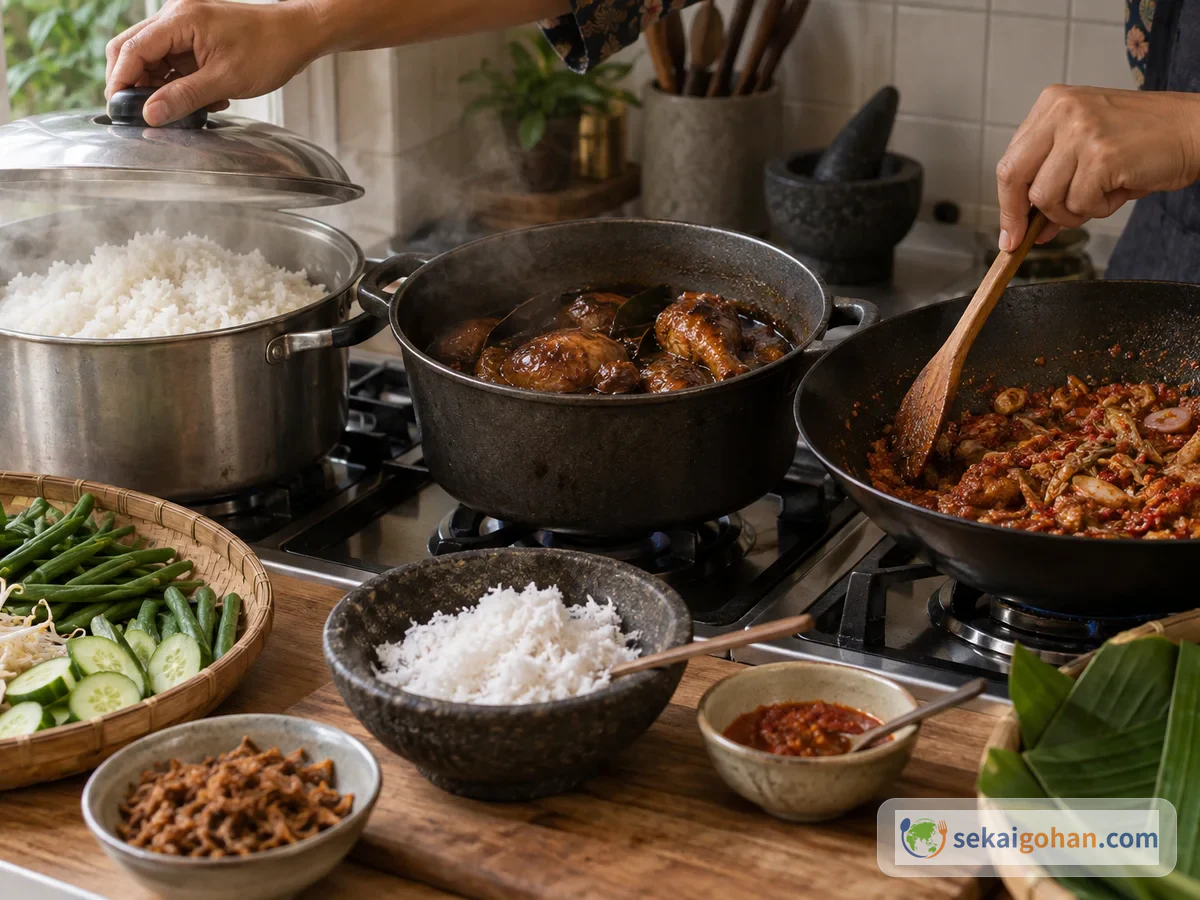
Prep takes about 55 minutes and cooking 1 hour 35 minutes, about 2 hours 30 minutes in total. The coconut for the serunding and urap is finished as coconut dried over low heat, whereas the chicken keeps some of its braising liquid. Both reduce, but the finished state differs. Also, do not reuse the knife, cutting board and tongs that handled raw chicken for the cooked chicken or for plating.
Each pot needs a different way to bring back its moisture balance. If the serunding turns damp, return it to a clean frying pan and dry it over low heat for 2–3 minutes at a time. You cannot fix it by adding water after it has burnt. If the sambal goreng has dried out, add water or coconut milk 1 tbsp at a time and loosen the bottom without breaking up the ingredients. The rule is never add water to scorched ingredients.
If the urap is watery, lift only the vegetables into a sieve and add a little cooled coconut. Do not just increase the salt or sourness. If the rice is too soft to heap, do not force it into a mold; plate soft rice flat. Spread it on a large plate lined with banana leaf and surround it with the sides, and it will be fine.
Timing and fixes for nasi ambeng
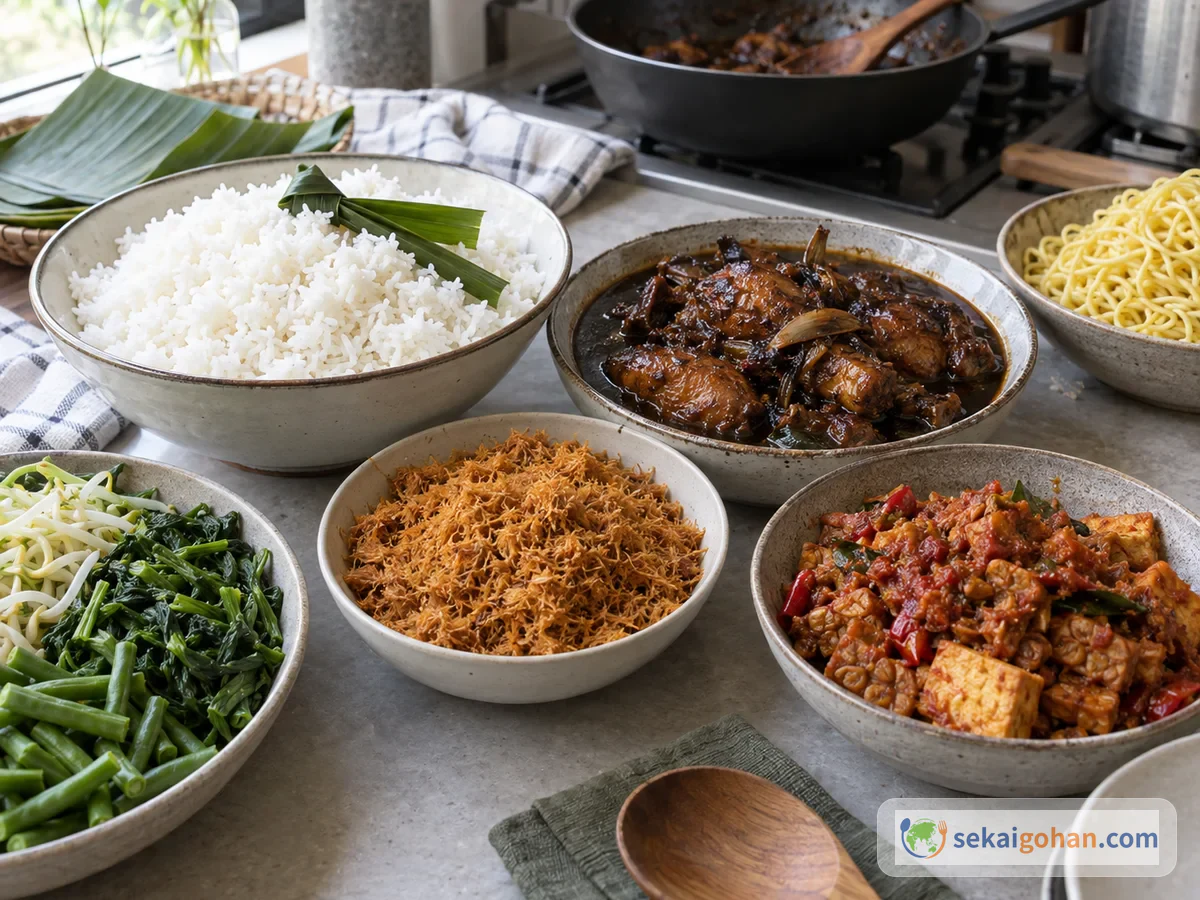
There are many dishes, but you do not make them all at once. Finish the dry components first: toast the serunding, then braise the chicken. While the rice cooks, make the sambal goreng and urap, and stir-fry the noodles last. Dry coconut firms up in aroma and texture as it cools, and the vegetables are dressed after draining, so both can be finished early without the flavor going blurry. The chicken can sit over low heat and keep pace with the rice.
Managing the liquids separately is the key to this dish. Keep each finished component in its own pot or small plate, and gather them on one plate at the end, only when they move onto the tray.
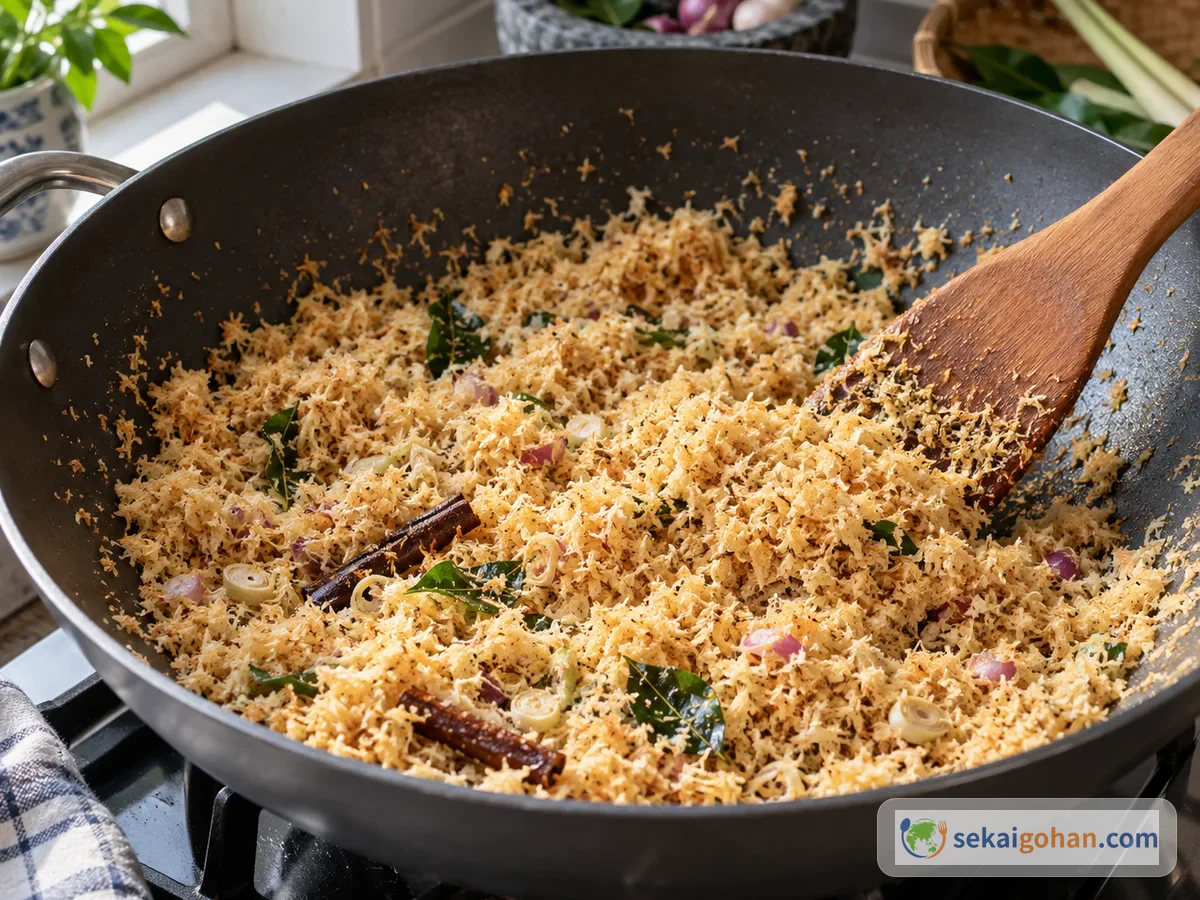
If the serunding turns moist because it was under-fried, return it to a clean frying pan and drive off the moisture over low heat. Remove any part that smells burnt rather than mixing the black bits back in. Sealing it while still hot causes condensation, so spread it on a shallow plate and let it cool before storing.
Serving and eating nasi ambeng
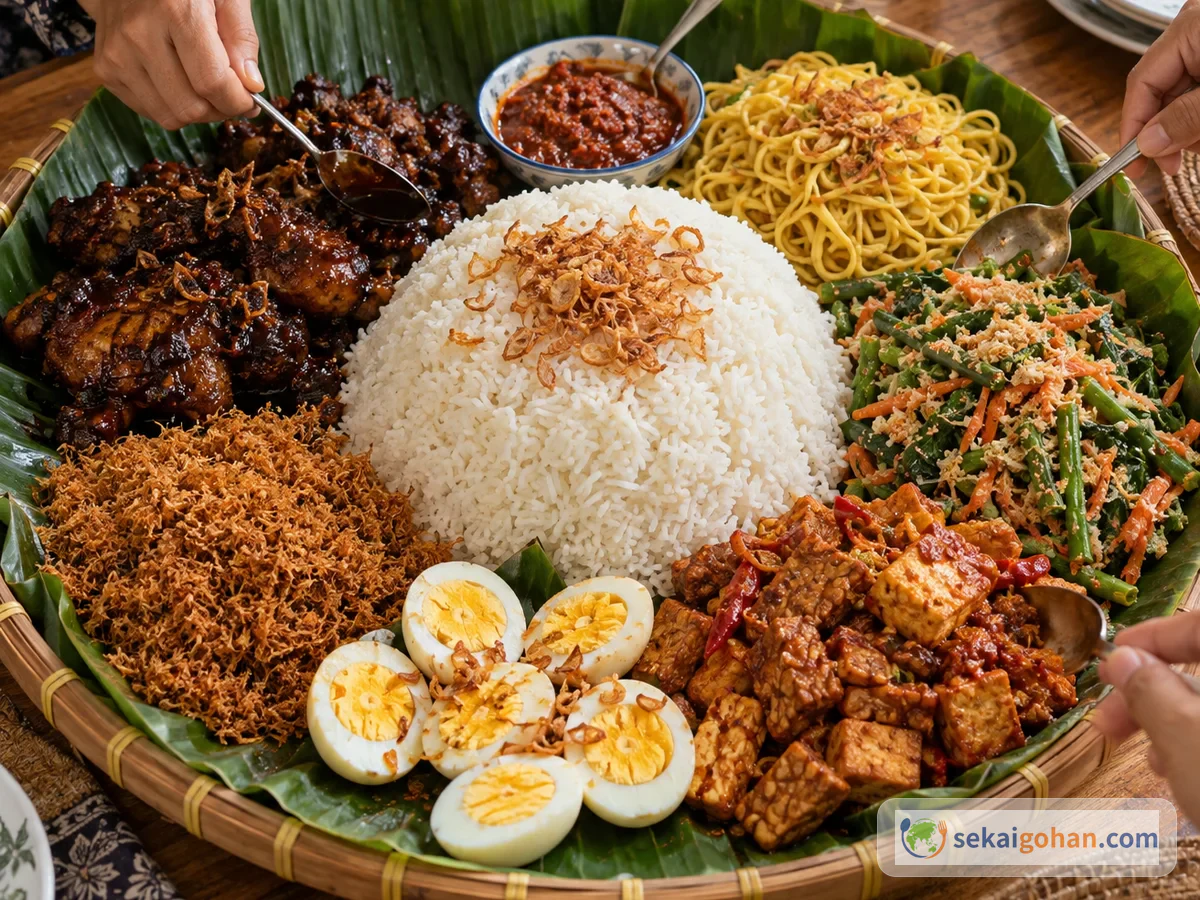
Line a round tray with washed and dried banana leaf and heap the white rice in the center while still warm, in a mound about 8 inches (20 cm) wide. Around it, make separate mounds of the kicap-braised chicken, sambal goreng, serunding, urap and fried noodles, as separate flavors around the edge. Put the soupy chicken in a shallow dish or at the edge of the leaf, tuck the boiled eggs between the mounds, and set the salted fish, rempeyek and sambal at the edge where everyone can reach them.
Each bite changes in color and texture. The chicken is tender and sweet-savory, the tempeh, tofu and glass noodles of the sambal goreng have soaked up the sauce, the serunding is dry and toasty, the urap keeps its crunch, and the noodles bring a cohesive saltiness. Combining them bite by bite is the pleasure, so match a little of each side to the rice as you go. If you serve onto individual small plates, arrange them so the rice and each side stay distinct, and choose between eating by hand or with chopsticks or a spoon to suit who is at the table.
| Dish | Role on the plate | How to combine when eating |
|---|---|---|
| White pandan rice | The center that receives every flavor | Match with a little chicken braising liquid or sambal at a time |
| Kicap-braised chicken | Sweet-saltiness and tenderness | Eat with rice, urap and serunding |
| Sambal goreng | A rich braise of tempeh, tofu and glass noodles | A little at a time over rice, with extra sambal if more heat is needed |
| Serunding | The dry aroma and loose texture of coconut | Sprinkle over chicken or rice |
| Urap | Green vegetables and sourness | Tuck in a little between the rich braises |
| Fried noodles, eggs and salted fish | The spring of noodles, the roundness of egg, saltiness | Each person takes from the open spots on the plate |
Frequently asked questions
Which dishes can I make the day before?
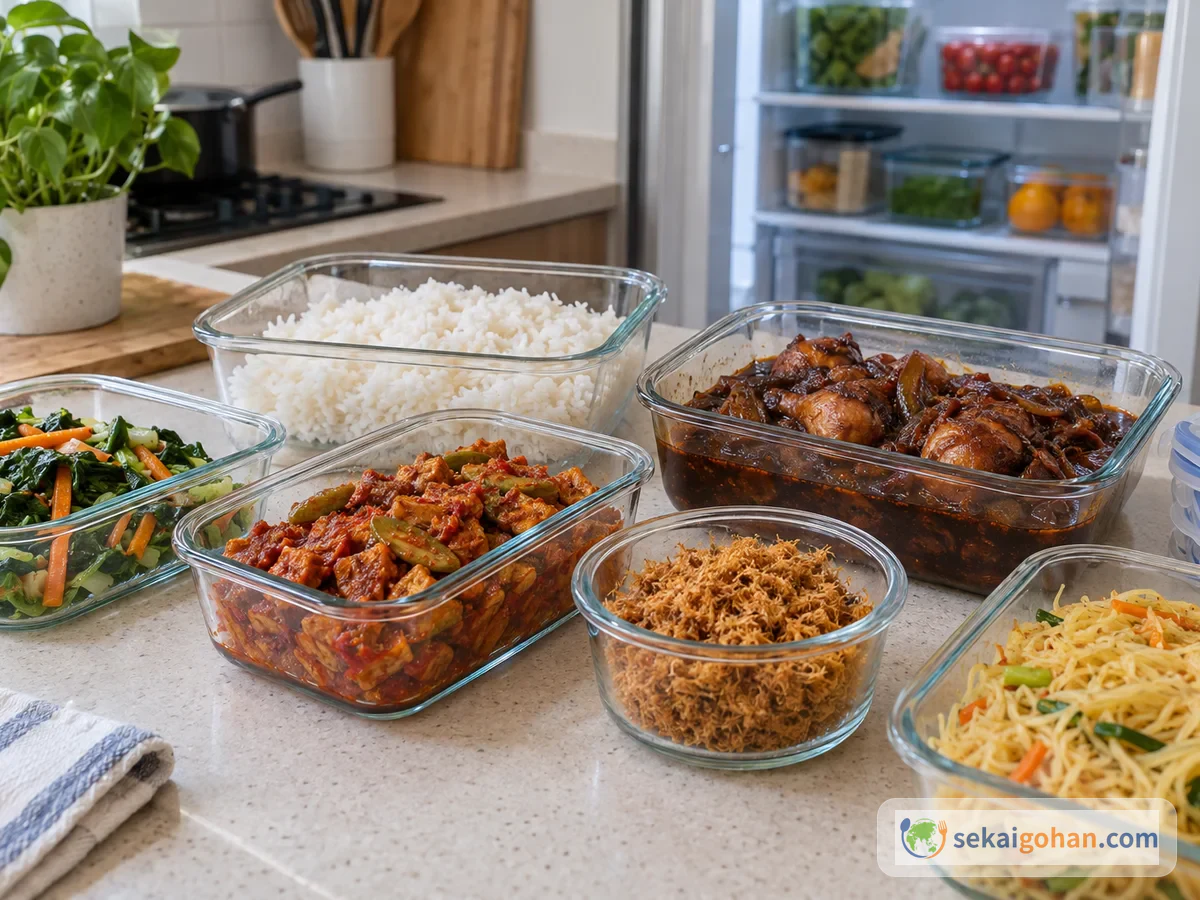
Dry components the day before; rice and vegetables on the day. Make the serunding, kicap-braised chicken and sambal goreng ahead, and put each into a clean shallow container once off the heat. On the day, cook the rice, make the urap, fry the noodles and plate, which keeps the rice and vegetables fresh and the noodles moist. Reheat the chicken and sambal until hot to the center so cold components never go onto the rice.
Can I store the finished tray as it is?
No. Do not leave the finished tray at room temperature, and do not refrigerate it on the tray. After eating, divide the rice, chicken, sambal, vegetables and noodles into clean shallow containers so each component cools separately. Leftover cooked meat and poultry keep for about 3 to 4 days at 39°F (4°C) or below; reheat the chicken and sambal until hot to the center. The vegetables and noodles taste best made fresh, only as much as you will eat that day.
What if someone avoids heat or seafood?
Reduce the chili paste and red chilies and serve the sambal on the side, so each person sets their own heat on the same plate. Make the shrimp-free sambal goreng and serunding first and set them aside, away from the pot, utensils and oil used with shrimp, to avoid cross-contact. Tempeh and tofu contain soy, so check for other allergens such as soy and wheat too. Commercial seasonings differ in labeling even under the same name, so read the ingredients on each package.