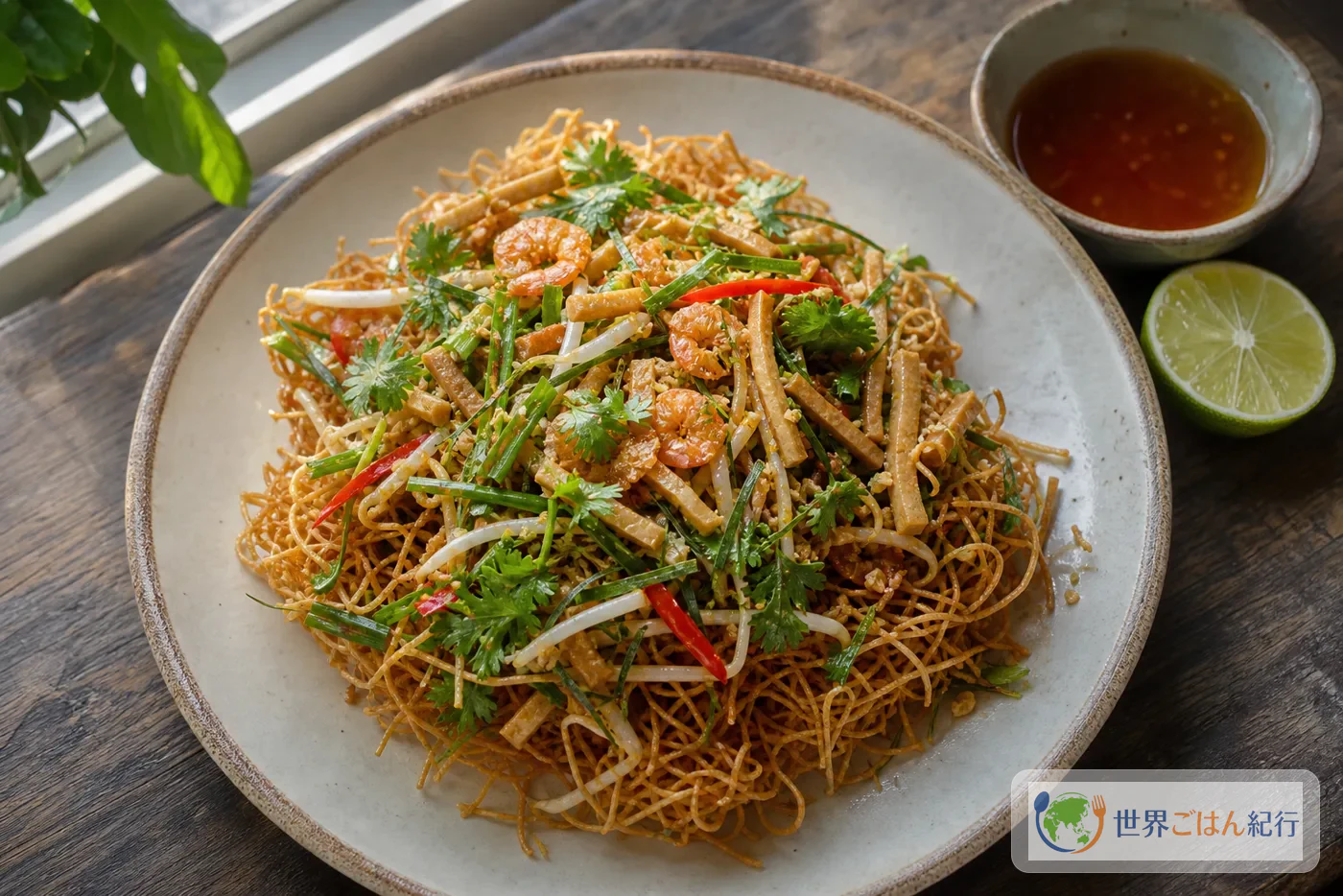
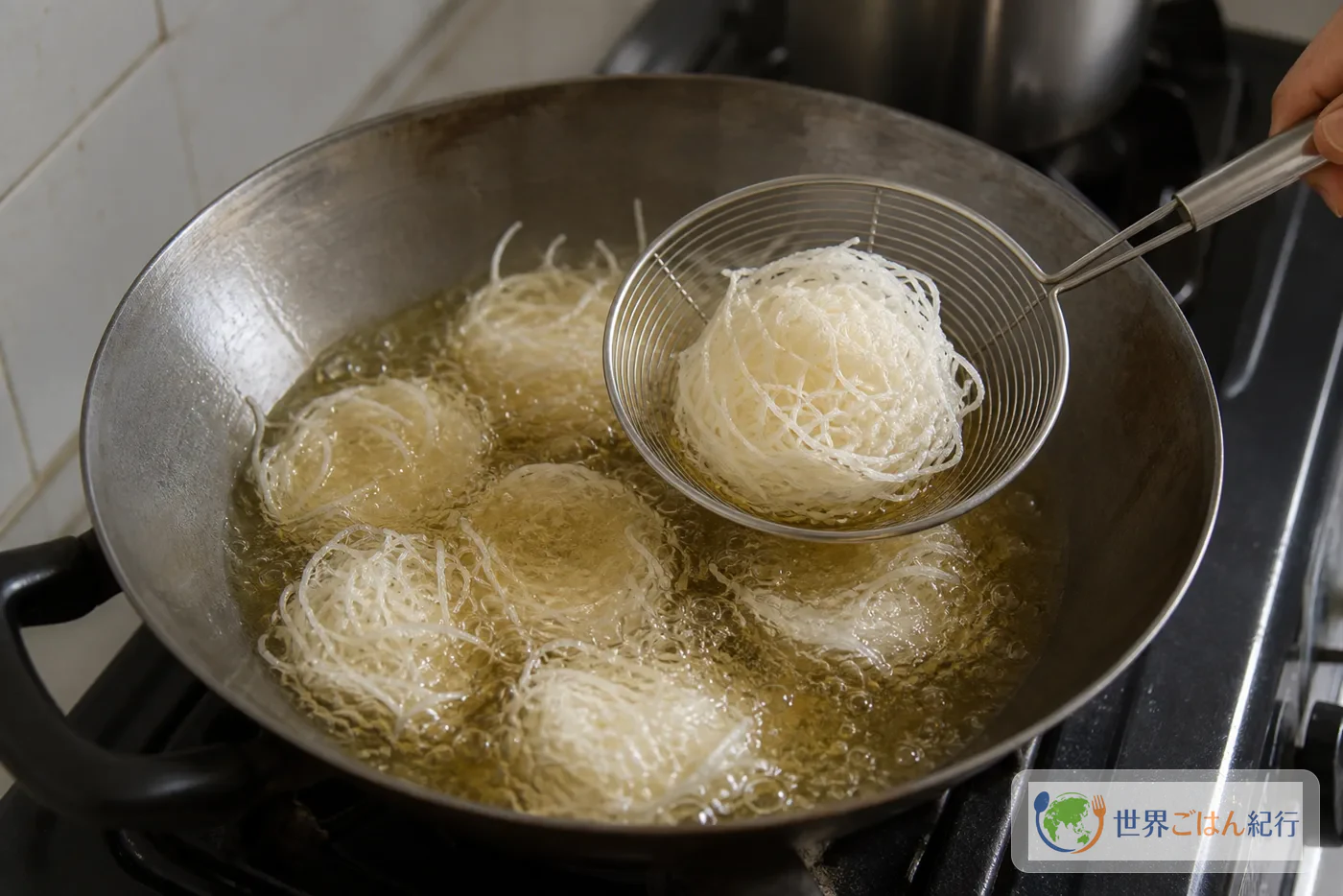
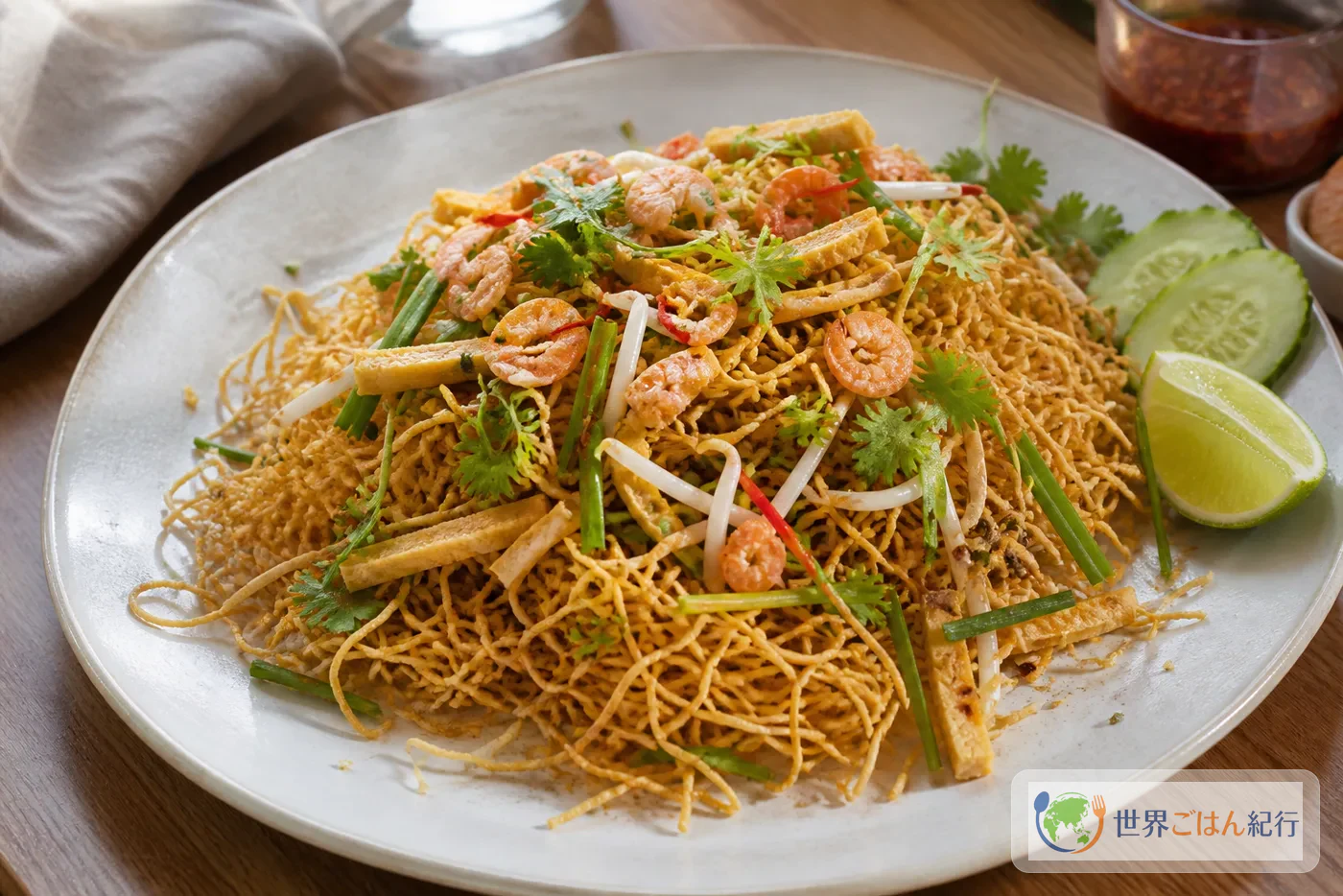
Drop a bundle of dry rice noodles into hot oil and it puffs white in an instant, crackling lightly in the pot. With mi krop, the sound comes first. The crisp noodles are then coated thinly with a thick sauce reduced from tamarind, fish sauce and sugar, and you have a Thai fried noodle dish that is sweet, sour and slightly salty. The first bite is light, the tamarind's sourness comes through as you chew, and the fish sauce and the toasty aroma of fried tofu linger afterward.
Mi krop and how it differs from pad thai
In Thai it is หมี่กรอบ, written Mi Krop or Mee Krob in English. หมี่ (mi) means noodles and กรอบ (krop) means a crisp texture, so the name simply means "crispy noodles."
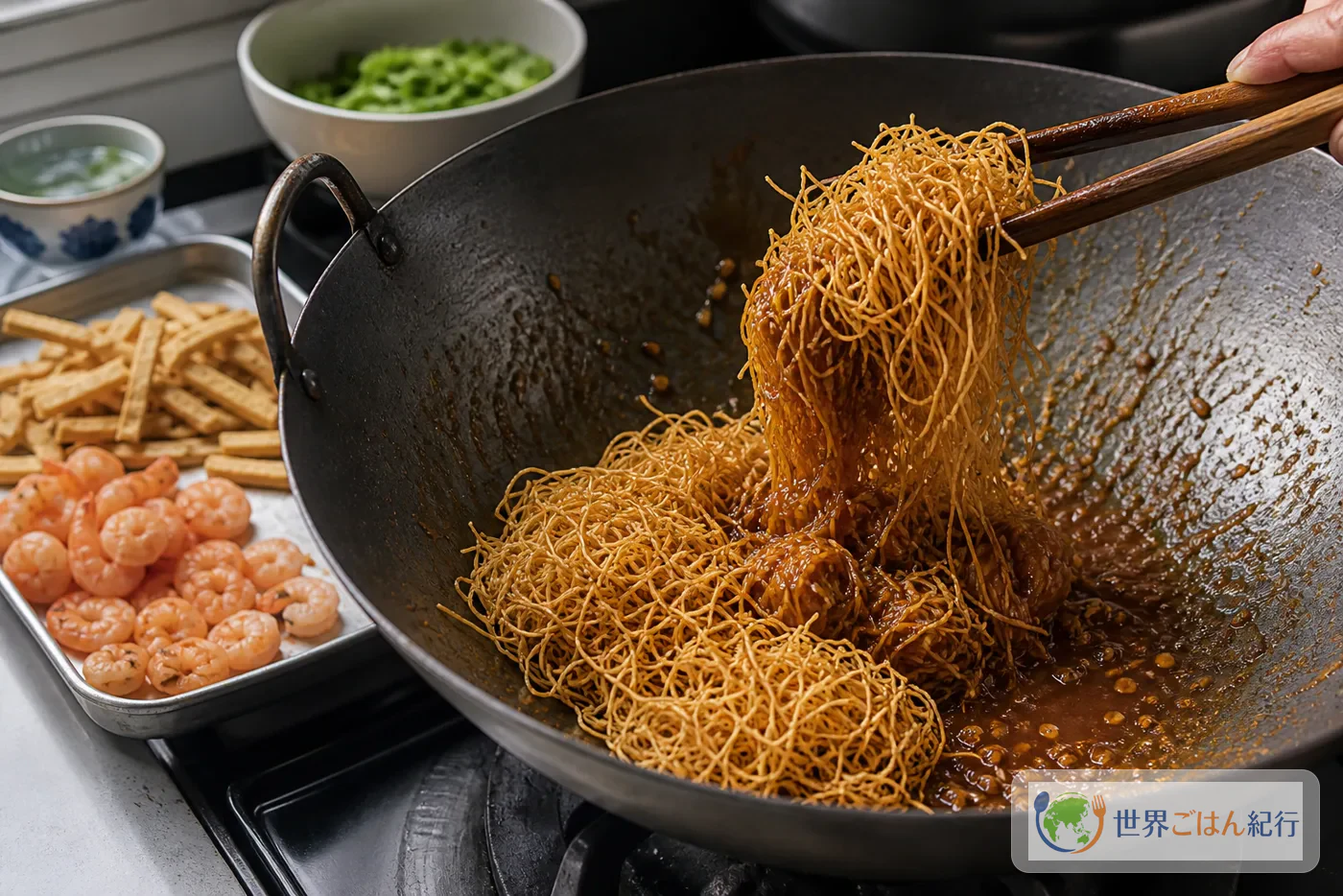
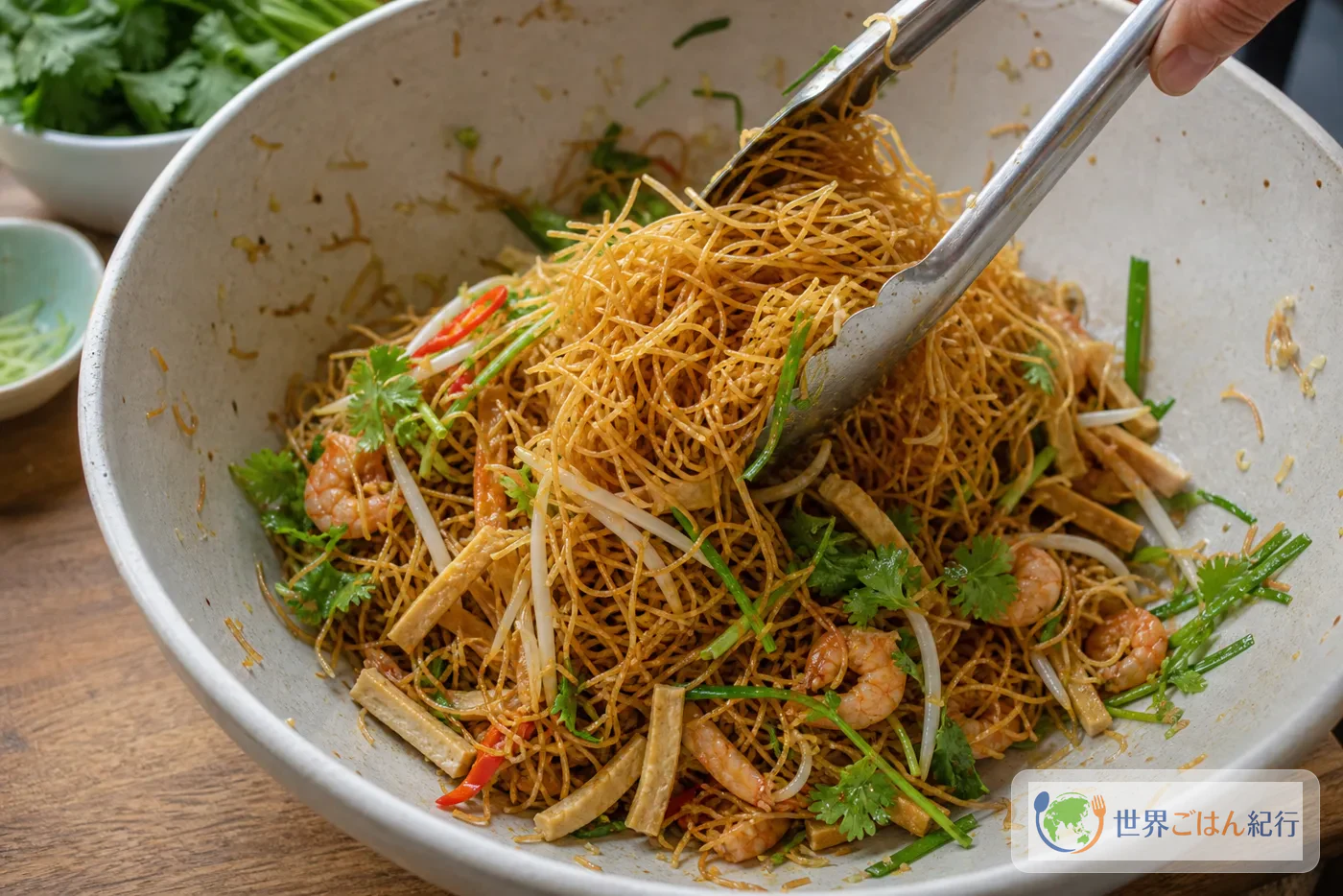
Unlike pad thai, where rehydrated rice noodles are stir-fried, mi krop starts with thin rice noodles fried dry, then tossed briefly in a sweet-sour sauce reduced in a separate pan. The noodles come off the heat before they can absorb the sauce and soften, and tofu, shrimp, bean sprouts, chives and herbs are folded in.
It isn't a Thai dish that leans on heat. You eat it for the balance of sweetness, sourness, saltiness and aroma, with texture as the star, which takes it in a different direction from a bold basil stir-fry like pad kee mao. At home, the hard part is less about special technique than about two things: not overdoing the sauce and not letting the noodles get damp. Get those right and you have a light snack or side, quite different from street-stall stir-fried noodles.
Ingredients and prep
If you are gathering everything from an ordinary supermarket, build around thin rice vermicelli, peeled shrimp, firm tofu, bean sprouts and chives. If you can get to a Thai grocery store or order online, you'll want tamarind paste and fish sauce. If you lean on only lemon juice and soy sauce, it becomes a plain sweet-and-sour fried noodle and loses much of mi krop's depth.
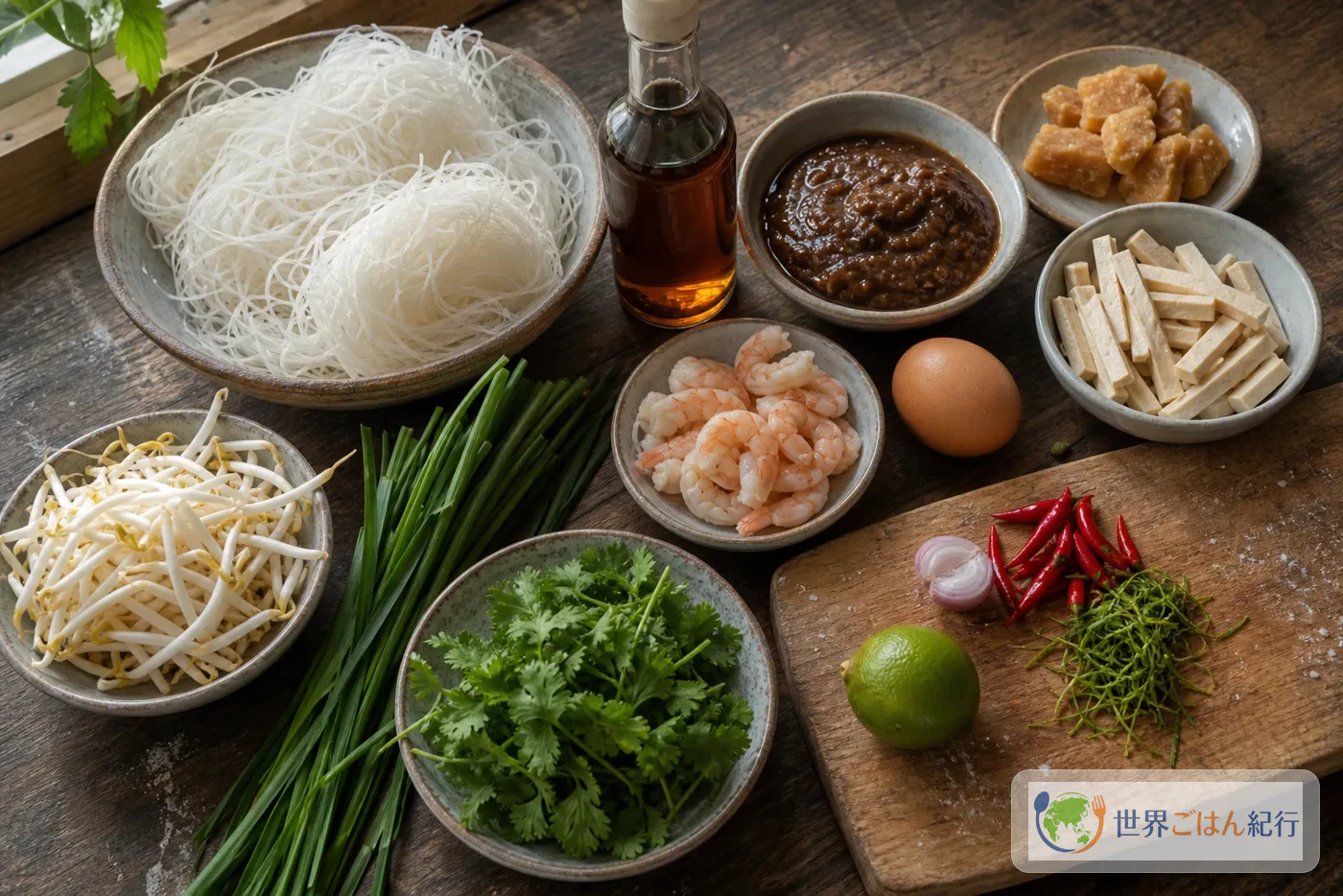
Substitutions, and ingredients not to swap
| Authentic ingredient | Substitute | Verdict |
|---|---|---|
| Tamarind paste | 2 tsp rice vinegar, 2 tsp lemon juice and 1 tsp sugar combined | Gives sourness, but less of the depth of plums or dried fruit |
| Palm sugar | 1.25 oz (35 g) light brown sugar plus 10 g dark brown sugar | A little dark sugar brings the aroma closer |
| Thin sen mi noodles | Thin rice vermicelli | Wide pho noodles are hard to fry and tend to become a different dish |
| Si-io khao | Light soy sauce | Up to 1 tsp so the color doesn't get too dark |
| Cilantro | Mitsuba and scallions | The aroma changes, but it is easier to eat |
This uses shrimp, fish sauce and rice noodles. If serving people with shellfish, fish or rice product allergies, always check the ingredient labels. To omit the shrimp, increase the amount of fried firm tofu cut small to make up the texture.
Mi krop ingredients and substitutes
Mi krop can come together from your neighborhood supermarket. Tamarind and fish sauce are what build the outline of the flavor, and with them the dish tastes Thai rather than like a generic sweet-and-sour fried noodle. A wok isn't essential, but the extra room to move the noodles around makes it easier to coat them thinly.
| Element | Role | What to keep in mind at home |
|---|---|---|
| Thin rice noodles | A light base | Fry them dry, without soaking |
| Tamarind | The core of sweet-sour | Substituting only lemon juice makes the aroma shallow |
| Fish sauce | Saltiness and fermented aroma | Too much makes the fish sauce smell come forward once it cools |
| Palm sugar | Mellow sweetness | A little dark brown sugar helps get closer |
| Bean sprouts and chives | Raw crunch | Add after the heat is off and let residual heat soften them |
The tamarind may look like more than you'll use up, but it also goes into pad thai, sour curries and fish stews. Fish sauce is handy in small amounts in the marinade for gai yang, in stir-fries and in soups.
Instructions
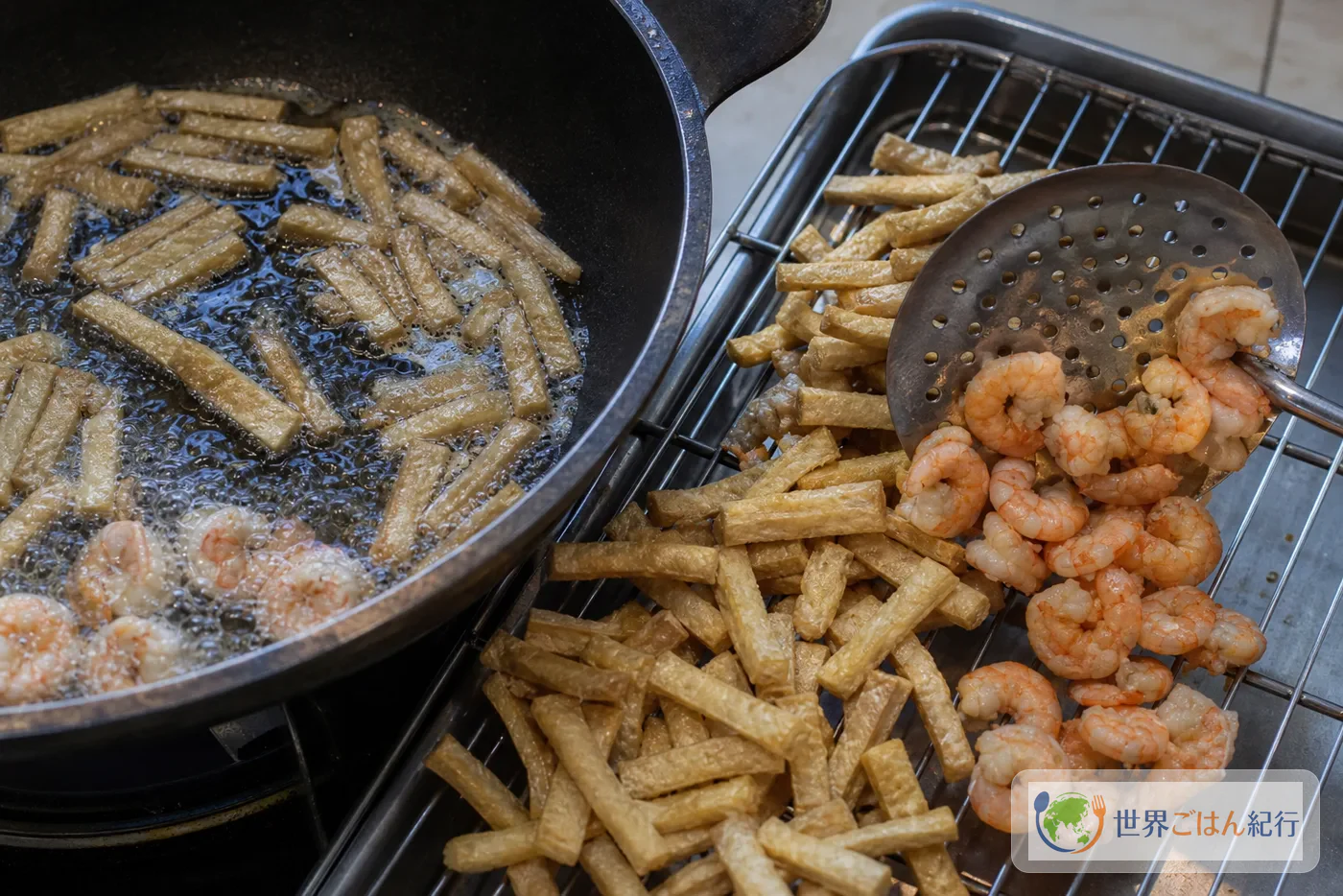
Fried noodles absorb moisture quickly, so before you make the sauce, set out the plate, tongs, a rack and paper towels. Rummaging around in a hurry can mean the sauce over-reduces or the noodles break in those dozens of seconds.
Common mi krop failures and fixes
Most failures in mi krop are about texture, not flavor. A sweet-sour balance that's a little off is still perfectly edible, but once the noodles get damp the whole character of the dish changes. Watch three things carefully: the frying, the reduction, and how much sauce ends up on the noodles.
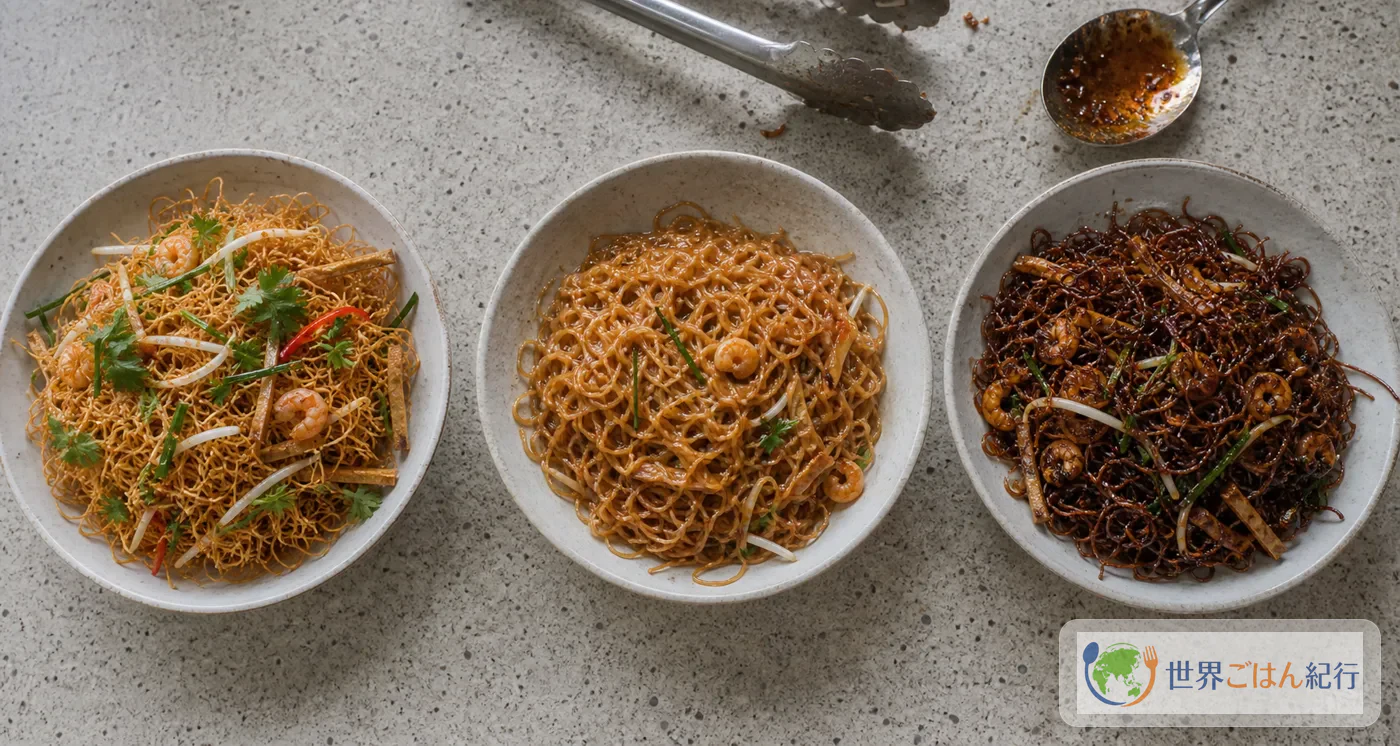
| Symptom | Cause | Fix |
|---|---|---|
| Noodles are oily | Oil too cool, too many noodles at once | Return the oil to 170–175°C and fry 20 g at a time |
| Noodles brown and bitter | Fried too long, oil too hot | Take out within 10 seconds of puffing |
| Everything sticky | Sauce too loose or too much of it | Reduce the sauce until it pulls a thread and coat half the noodles at a time |
| Too sweet | Too much sugar, not enough acid | Add lime at the end, or 1 tsp tamarind |
| Strong fish sauce smell | Too much fish sauce added at the end | Next time add it during reducing, and add no more than 1/2 tsp at the end |
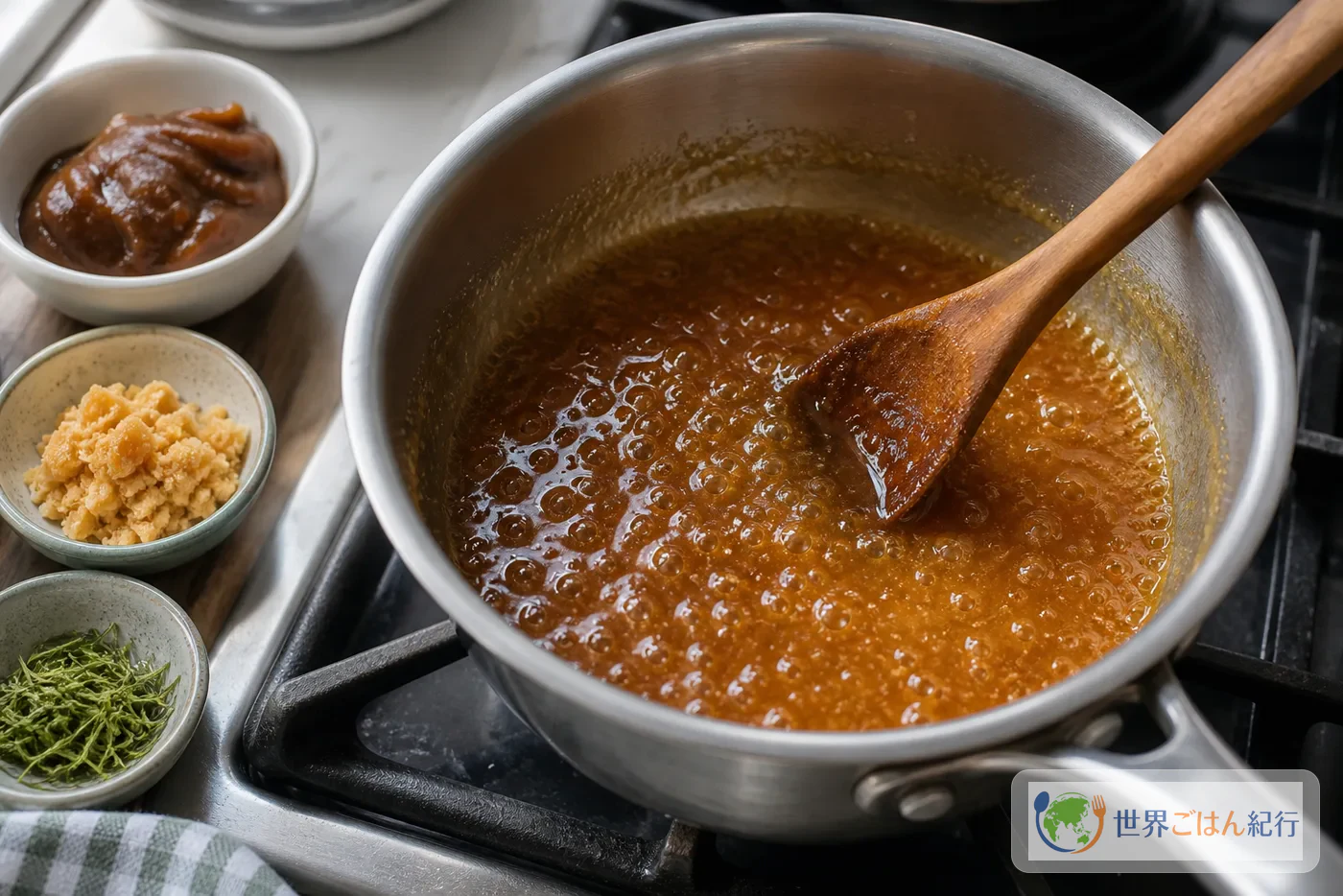
If the sauce gets too stiff, add 2 tsp water and loosen it over low heat. If it's too loose, reduce it without the noodles in 30-second steps, until the bubbles are large and burst slowly.
Serving and storing mi krop
Serving and menu ideas
Mi krop works best as an appetizer, snack or light dish rather than a side for rice. Because it's sweet, a spicy soup or a sour salad balances the table: try tom yum goong alongside som tam, and you get sweet, sour, spicy and toasty all at once.
For a weeknight dinner, let something else be the main event. Put grilled chicken or grilled fish on a separate plate and serve mi krop in a portion a little larger than a small side, so the richness of the fried noodles never feels heavy. When you're cooking several Thai dishes together, set fish sauce and lime on the table so everyone can adjust sourness and saltiness.
Storage and making ahead
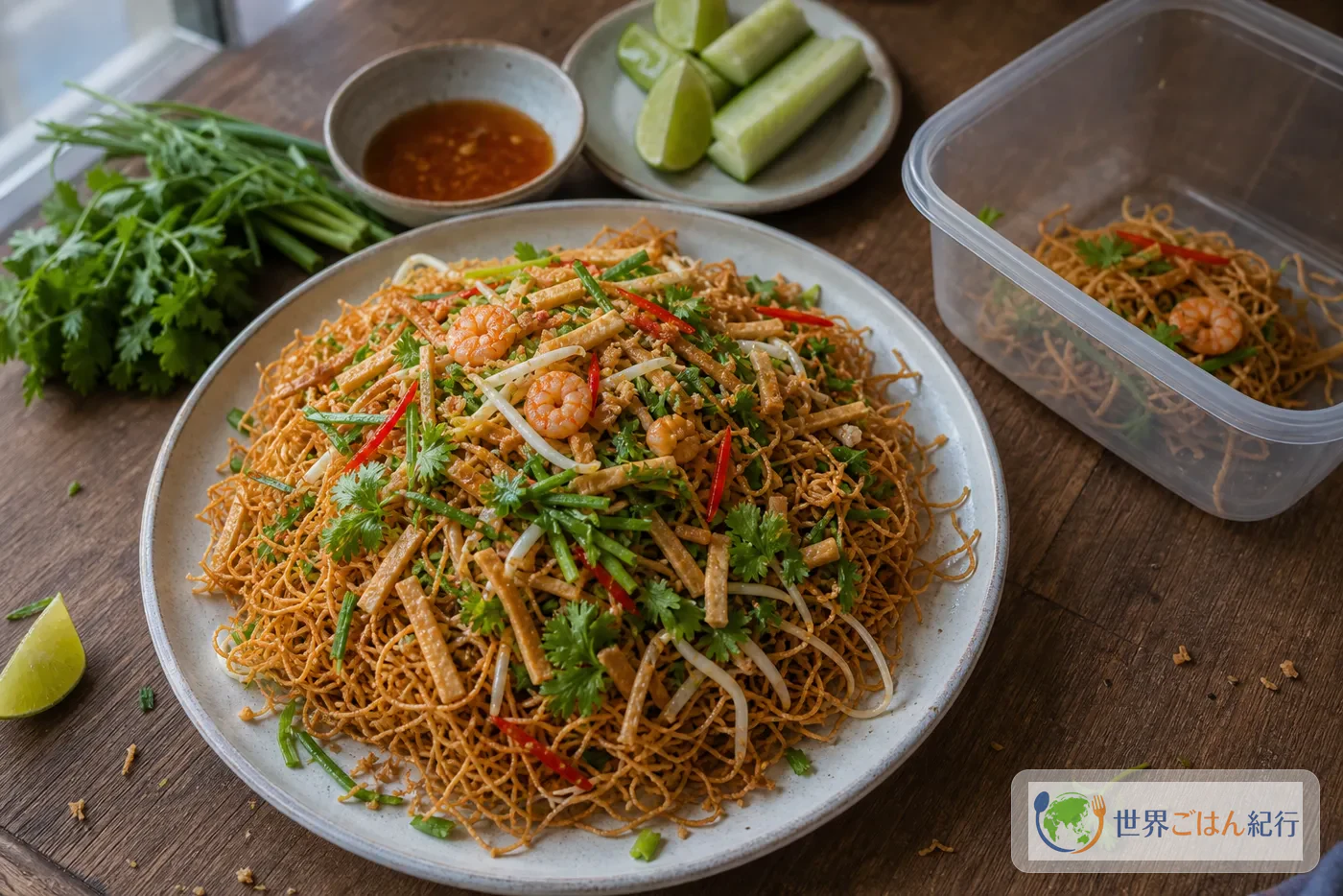
Finished mi krop is best eaten the same day. In the refrigerator the noodles go damp, and by the next day it has turned into a different kind of dressed noodle dish.
To make ahead, keep the fried noodles, sauce and toppings separate and combine them only just before eating. Cool the fried noodles completely, put them in an airtight container without a desiccant, and keep them at room temperature for up to 2 days. Store the sauce in a clean container in the refrigerator and use it within 3 days; keep the shrimp and tofu refrigerated and finish them by the next day.
Mi krop is best not reheated, and the microwave makes it hard to bring back the noodles' lightness. If you must warm it, heat only the toppings and sauce over low heat, add the noodles last and eat right away.
FAQ
Do I soak the rice noodles in water?
No. Mi krop fries dry thin rice noodles as they are, so they puff instantly. Soaked noodles make the oil splatter and never come out light, even once fried.
Can I make it with glass noodles?
You can, but the texture and aroma change a lot. Glass noodles puff lightly, but they lack the toasty aroma of rice noodles. For your first batch, thin rice vermicelli gets you closer to mi krop.
Is it a spicy dish?
By default it's mild. Keep the chili powder to about 1/4 tsp so sweet-sour comes ahead of heat. If you're serving it as a starter alongside spicy Thai dishes, it works without any chili at all.
Is it worth making without tamarind?
You'll get a sweet-sour fried noodle dish, but it loses much of what makes mi krop itself. Tamarind adds not only sourness but a depth like that of pickled plum, dried fruit and dark brown sugar.
Sources consulted
- Wikipedia: Mi krop
- Temple of Thai: Mee Krob recipe
- Reuters: Mee krob anyone? Thais try to revive ailing cuisine