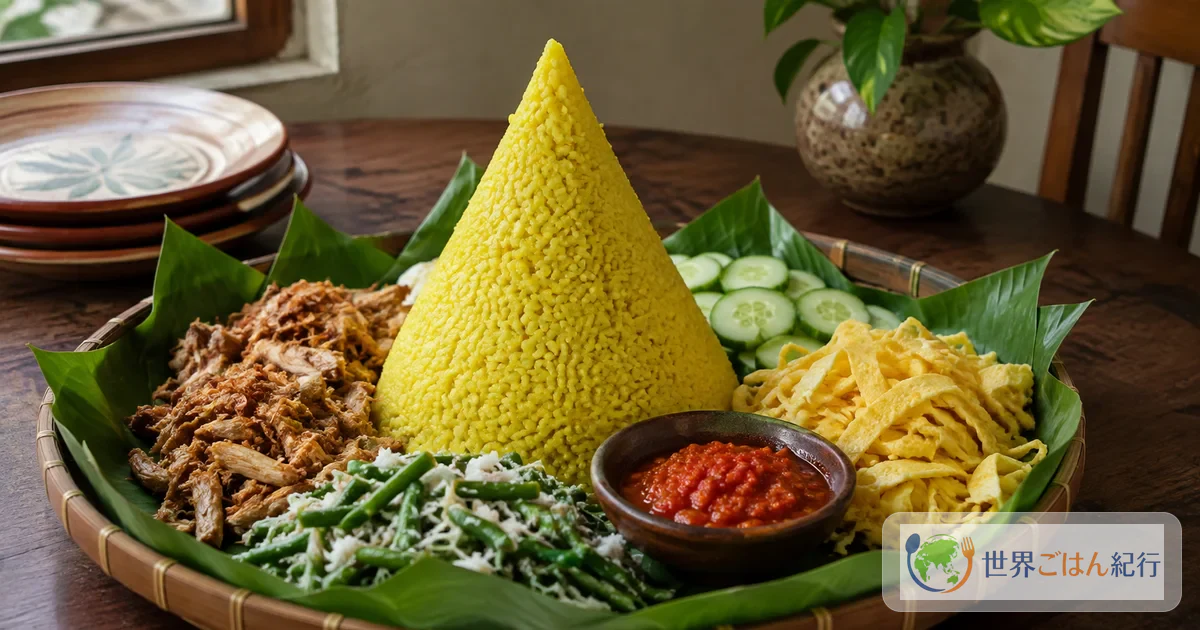
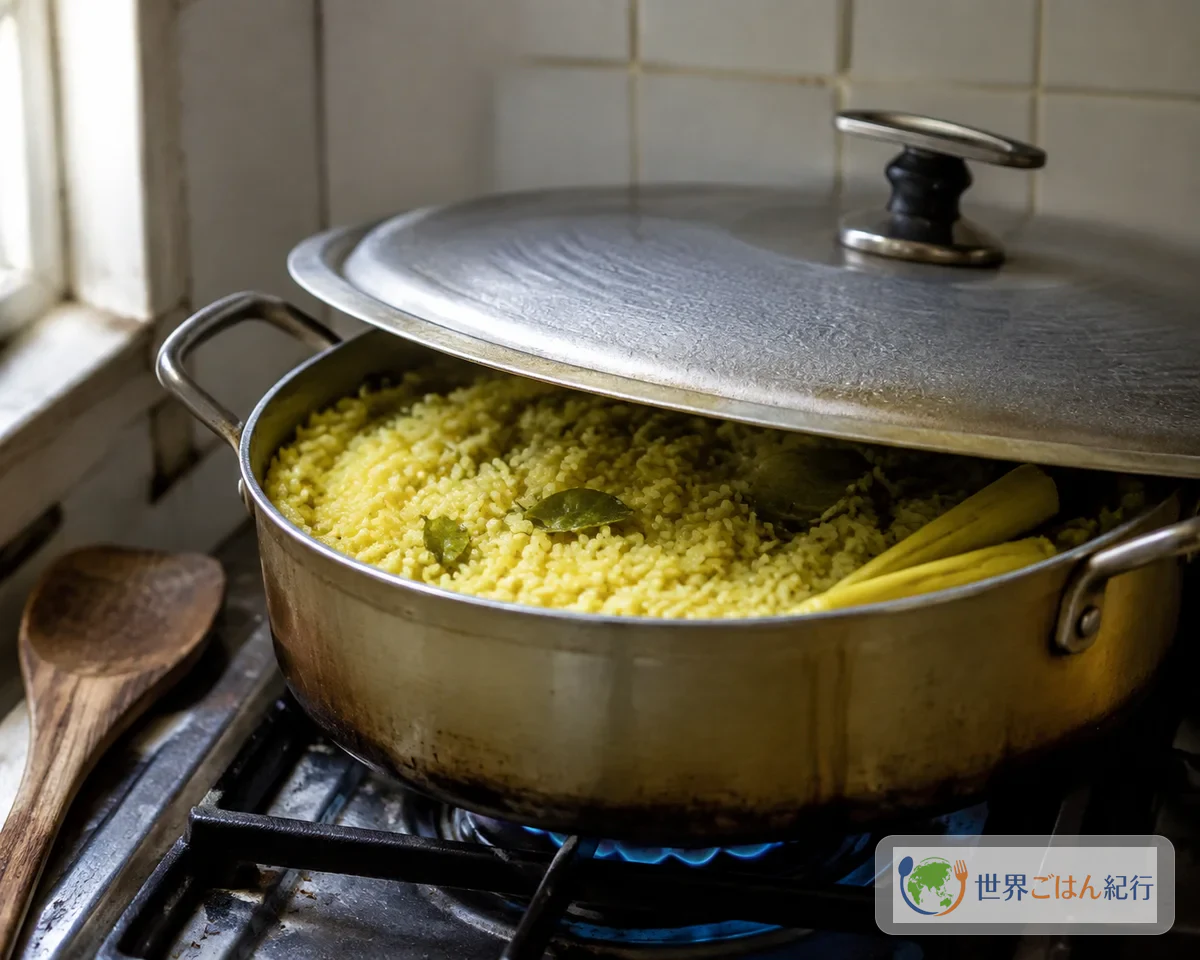
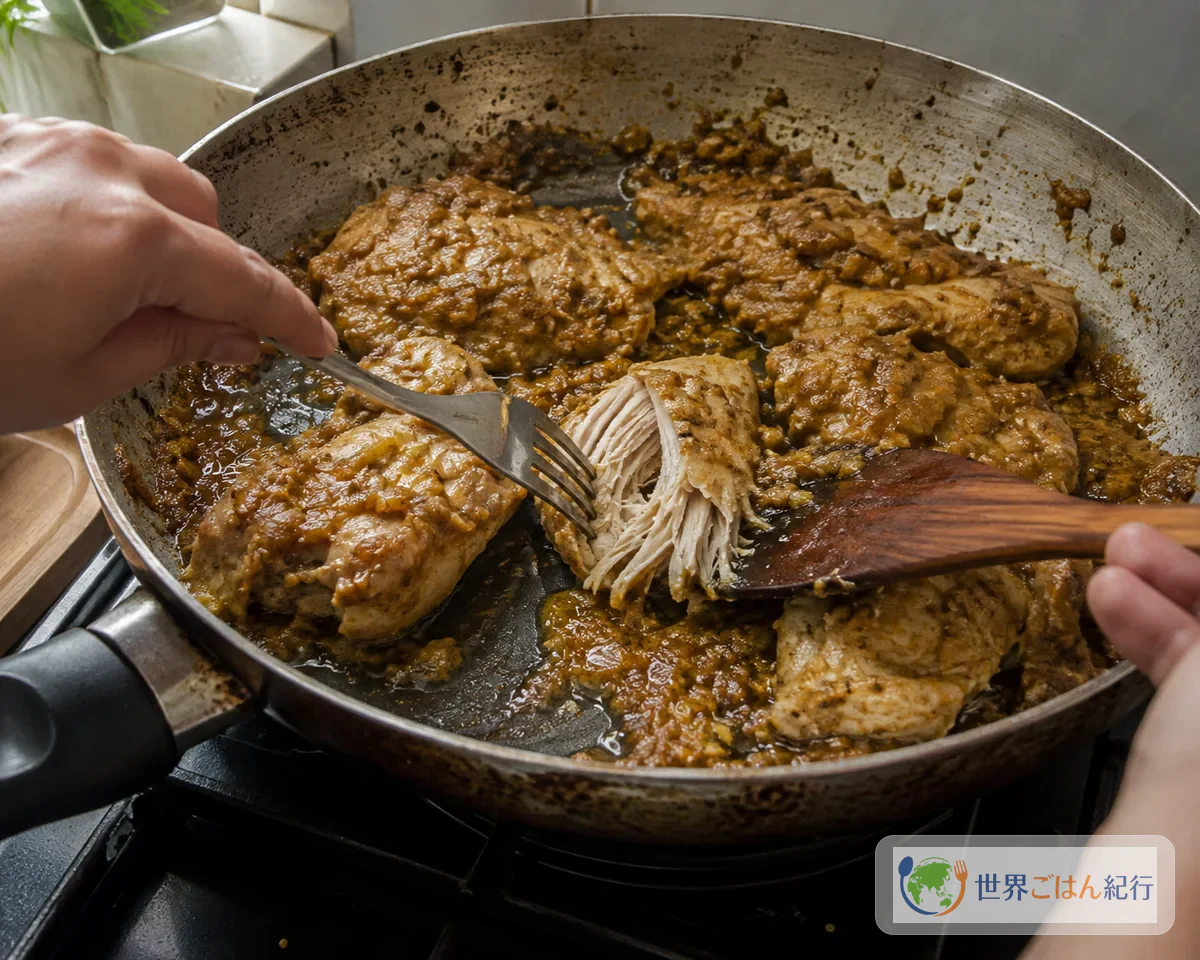
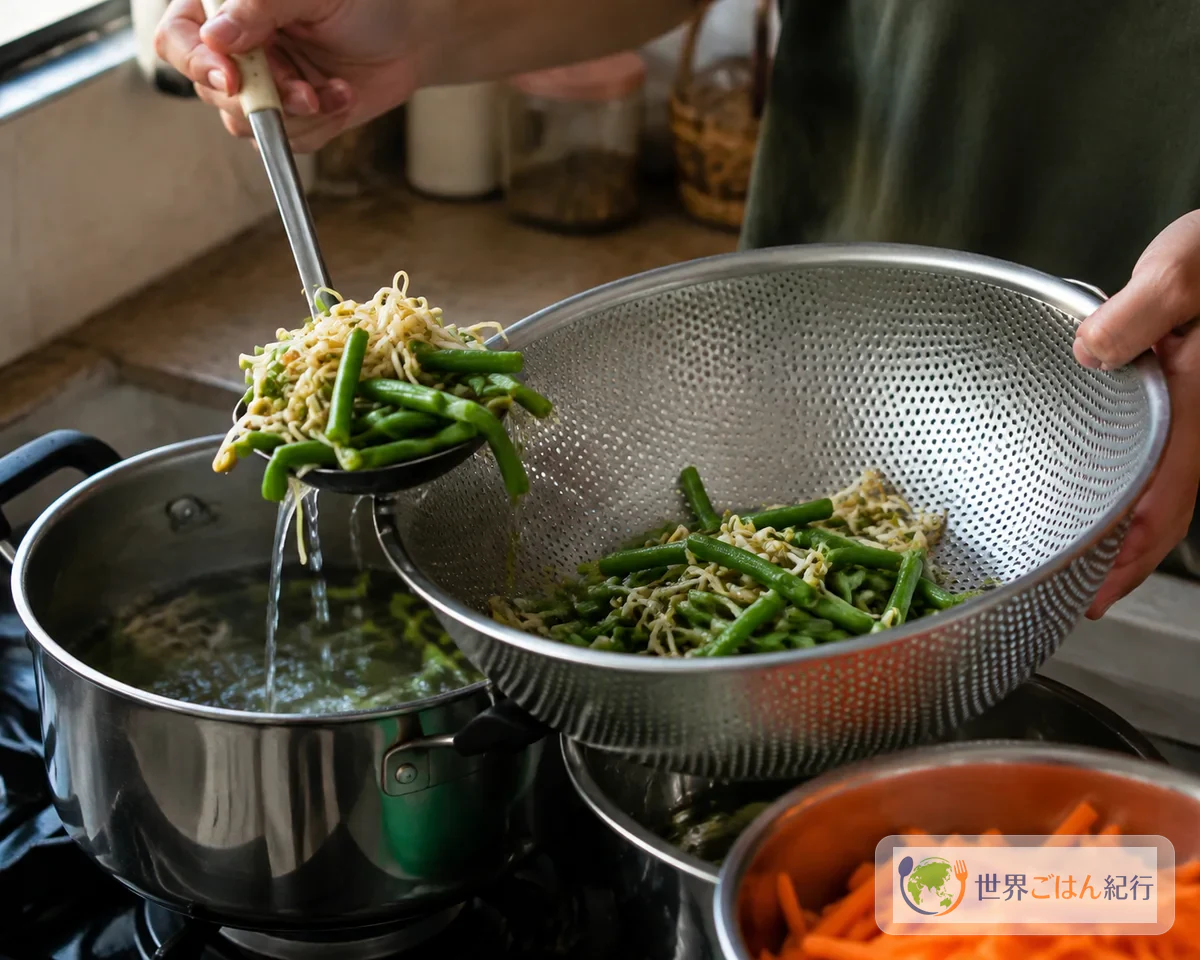
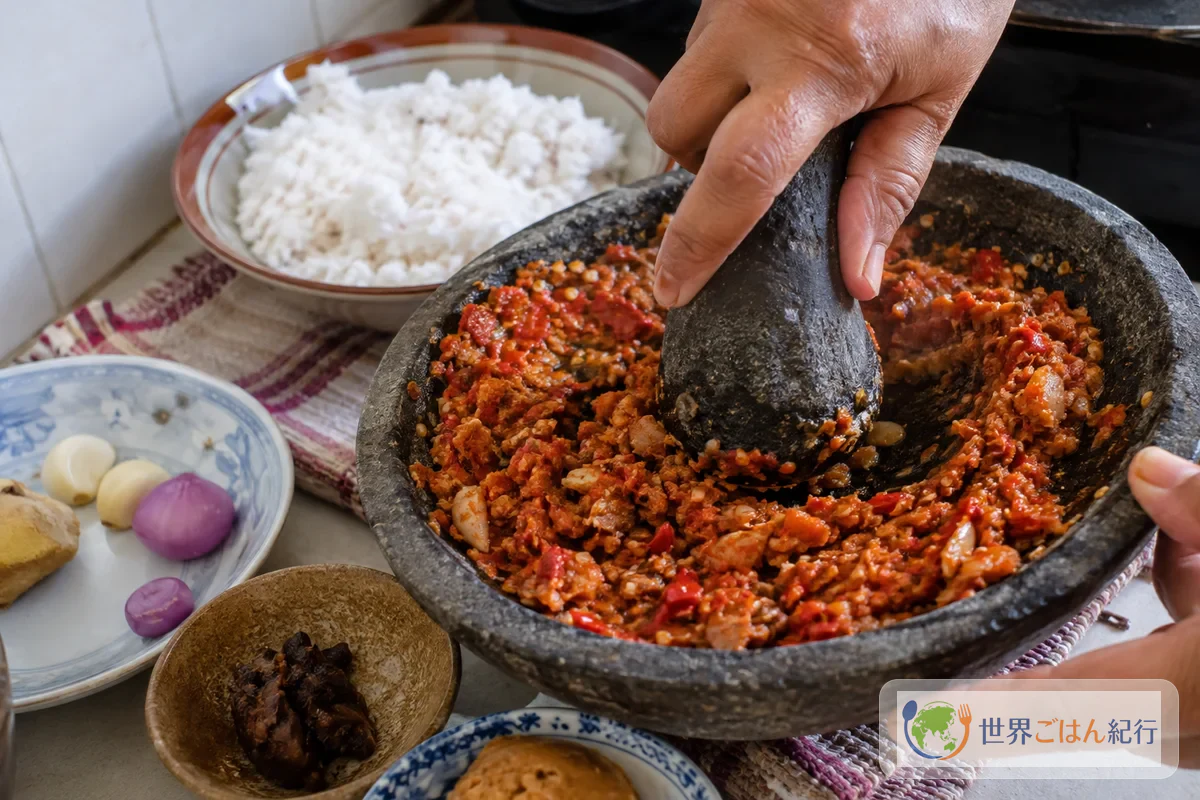
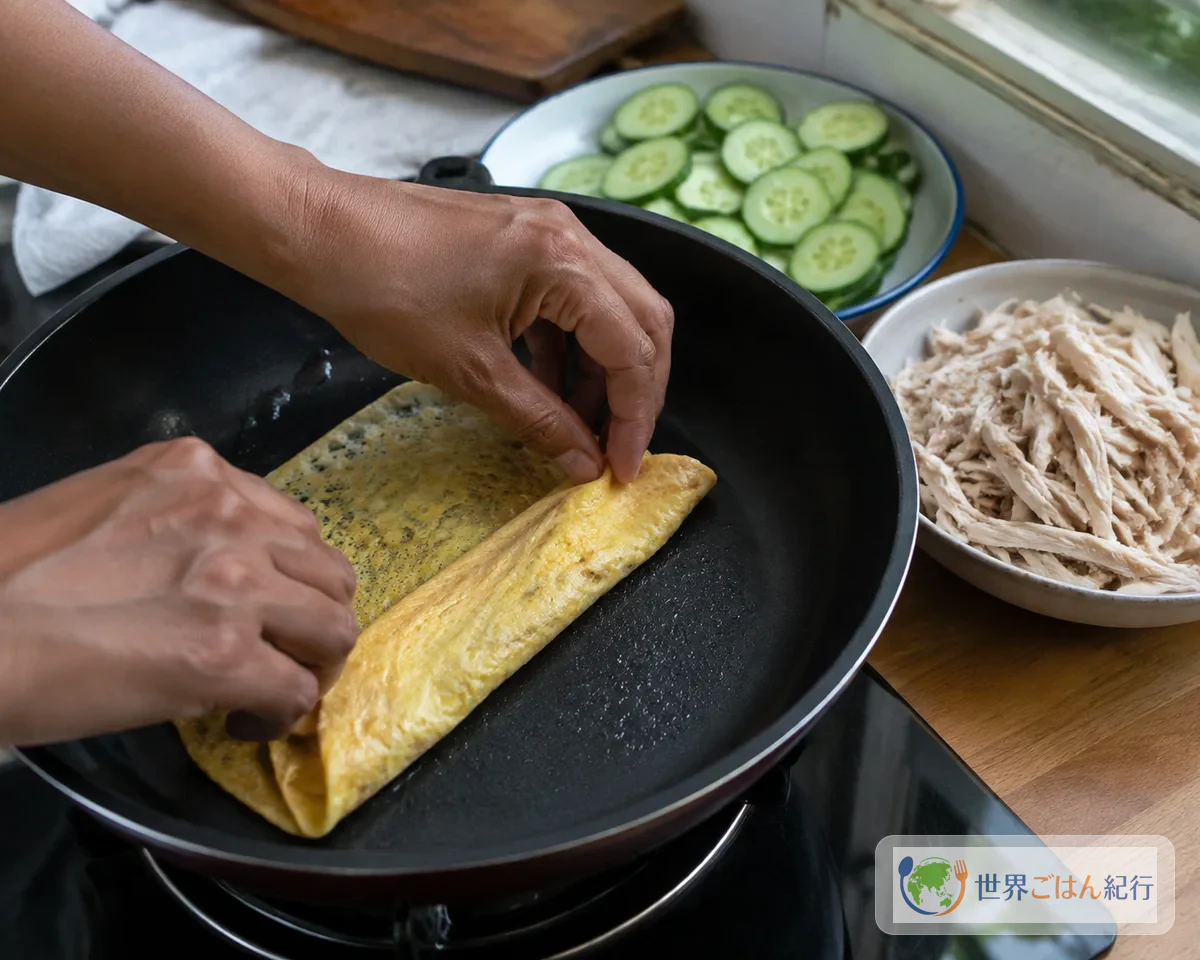
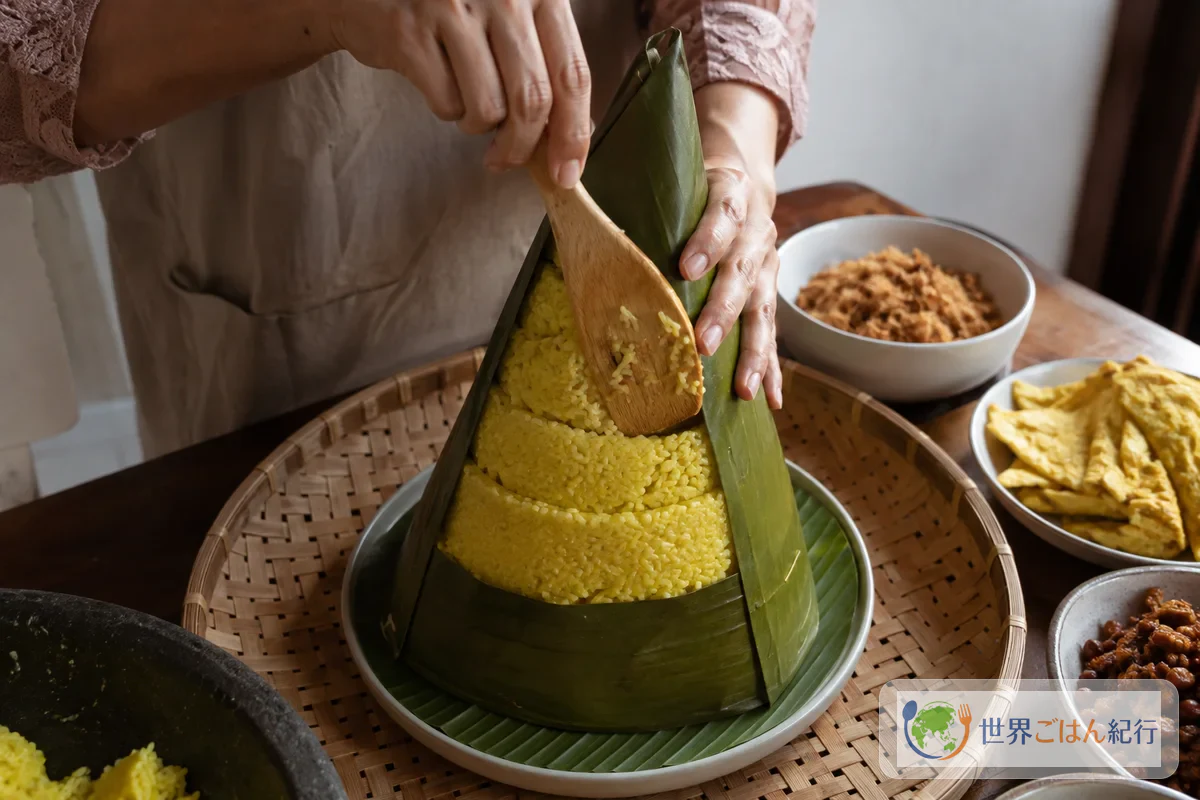
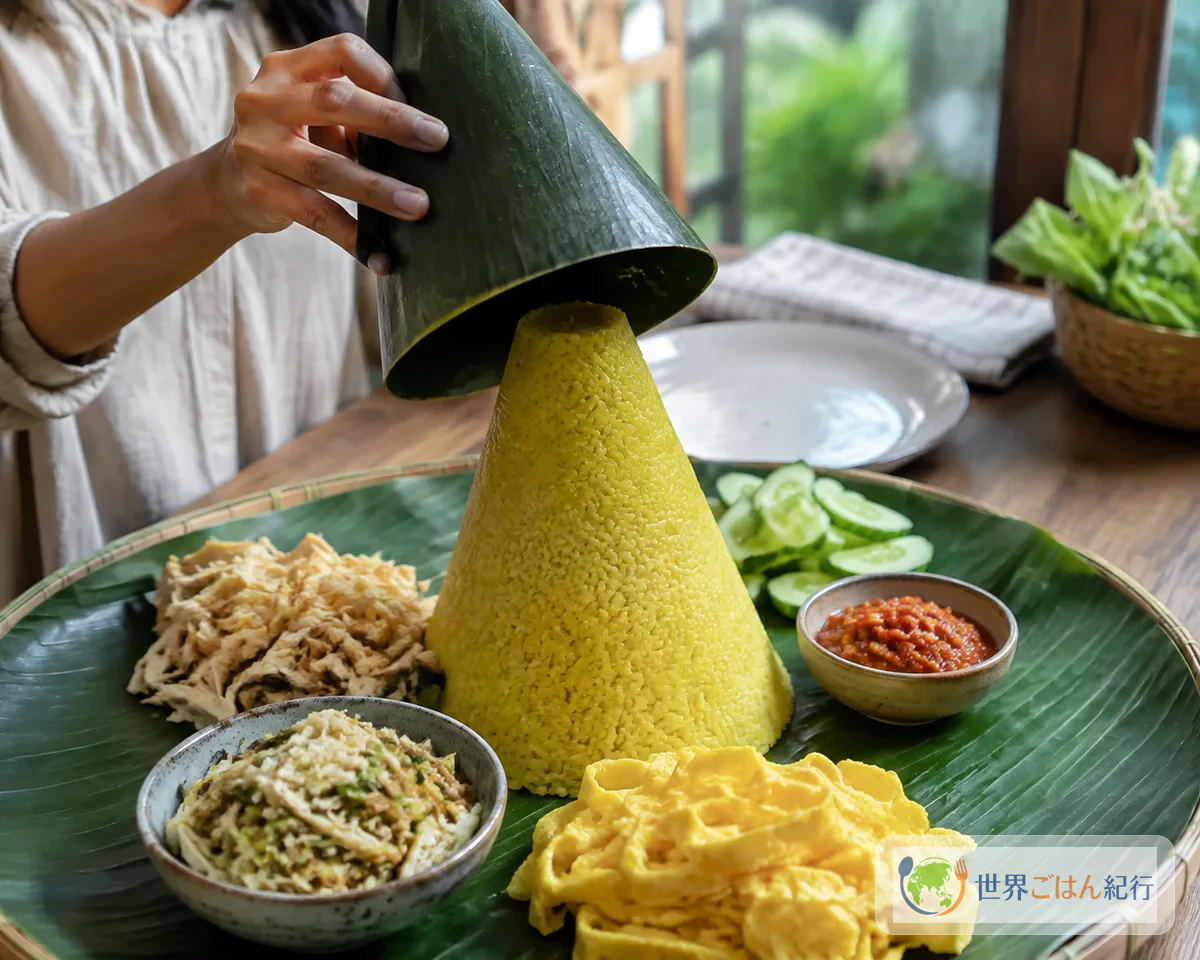
Press yellow rice into a cone mold, turn a plate over it and lift slowly. When the rice stands without collapsing, and you set shredded braised chicken, a coconut-dressed vegetable salad, thin strips of omelet, cucumber and red sambal around it, a small mountain rises in the middle of the table. This is nasi tumpeng, Indonesia's celebration rice. Nasi means rice, and tumpeng is the style of piling food into a cone with its accompaniments, so the name covers the whole platter, not just the rice. The center is most famously nasi kuning, cooked with turmeric and coconut milk, though versions with plain white rice or nasi uduk exist too. This version is a celebration meal four people can share easily. Fragrant jasmine rice sits in the middle, with chicken, vegetables, eggs and heat around it.
Nasi tumpeng and the Javanese selamatan
Origins and meaning
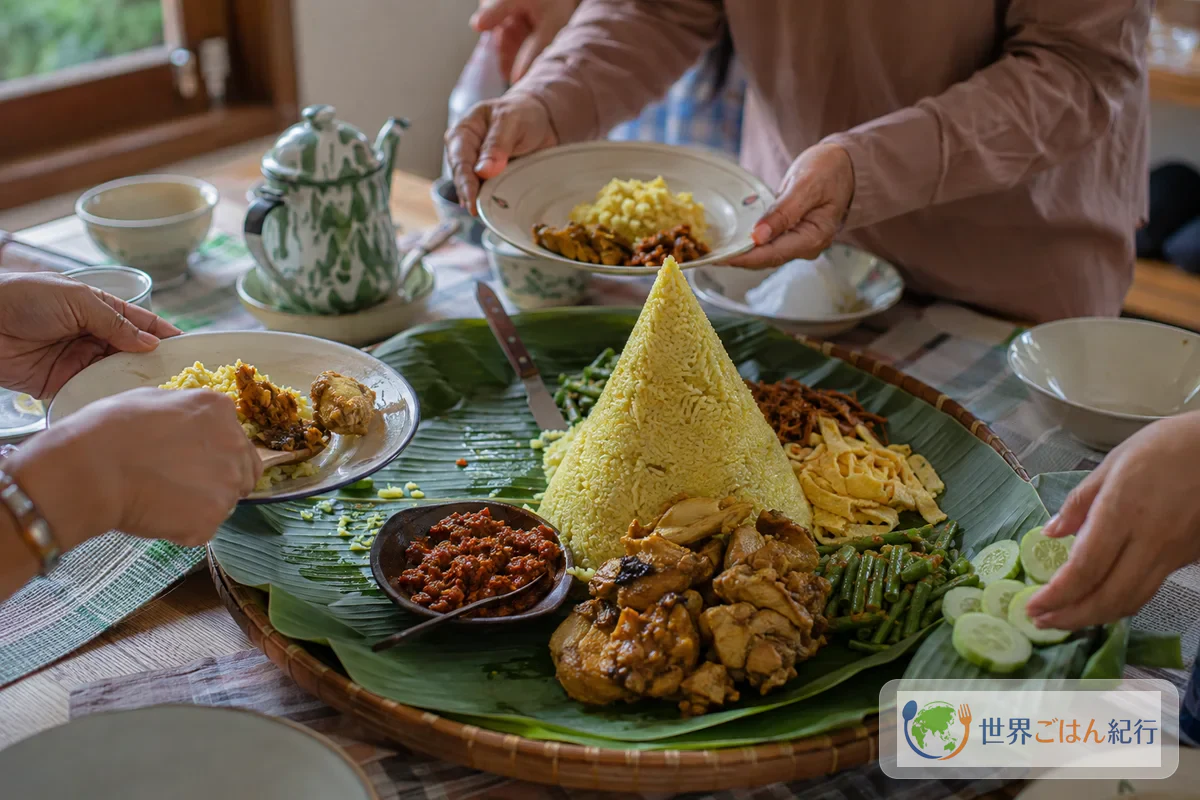
Before you think about how the rice tastes, ask who you are eating it with and what you are wishing for. Nasi tumpeng belongs to the Javanese selamatan, a custom in which neighbors and relatives gather at life milestones and moments of thanks to share food. The cone with its high tip, surrounded by food, expresses both gratitude and community.
The history of tumpeng overlaps with old Hindu ideas of the mountain as a place close to ancestors and gods, and the cone of rice brings that image onto the plate. Over time it adapted to religion and local custom in Indonesian society, so an older layer of meaning and today's celebrations sit together in the same dish.
Yellow is the color of turmeric, and it stands for gold and prosperity. White tumpeng carries a meaning of its own; it is not a simplified version of the yellow one. The color and the accompaniments follow the purpose of the event, family custom and the ingredients available locally.
In traditional settings, the host or an elder cuts the tip of the cone and hands it to the person being honored. In modern homes and workplaces, people often take photos first and then serve themselves, and birthdays, shop openings, anniversaries and Independence Day gatherings all bring their own presentation. Cutting the tip is less a fixed rule of etiquette than a way to respect the people eating and the purpose of the occasion.
Rice colors and regional types
Most people picture a single yellow cone, but the types differ in color, the decoration at the top, the accompaniments and the occasions where they appear.
| Name | Character of the rice | Examples of accompaniments and occasions | How to approximate it at home |
|---|---|---|---|
| Nasi tumpeng kuning | Yellow from turmeric, with a round coconut aroma | Platters for celebrations, thanks and openings | The base of this recipe. Serve 4 with chicken, vegetables, egg and sambal |
| Tumpeng putih | White rice molded into a cone | Rituals and family milestones that place purity at the center | Leave out the turmeric and let the aroma of the rice lead |
| Nasi uduk type | Fragrant rice cooked in coconut | Celebrations such as Maulid (the Prophet's birthday) in Yogyakarta | Move the aroma of nasi uduk into a cone |
| Tumpeng robyong | White rice | Egg, red onion, chili and so on decorate the top; used for large celebrations | Replace the decorations with eggs and vegetables that are easy to eat |
| Home and modern platters | Rice color and quantity are matched to the occasion | Choose from chicken, tempeh, egg, urap, potato, fish and so on | Choose a number of dishes you can finish, and build with 3–4 colors and textures |
You will often hear of seven accompaniments. The Javanese word for seven, pitu, is linked to pitulungan (help), and some lists count chicken, egg, fish, chili, urap and so on. At home, a smaller set carries the meaning better than dishes you can't finish. Tender chicken, green vegetables, yellow egg and some heat around the rice are plenty.
Indonesia has many islands and many ethnic groups, and the ingredients and the way food is served change with them. At a Javanese selamatan, a Sundanese or Madurese celebration or a Balinese ritual, the same cone can carry different dishes and a different meaning. Tumpeng has now spread to company and personal events across the country, and each place puts its own spin on gathering around a central rice to share it.
How it differs from nasi uduk and nasi lemak
Nasi uduk is a breakfast where the coconut aroma lives inside the rice. Nasi tumpeng builds a whole table around that rice, with accompaniments that bring salt, sweetness, acidity and heat. Nasi lemak also cooks rice in coconut and comes with sambal and egg, but it centers on wrapped rice and breakfast. Tumpeng is shared by breaking into a mountain at the center of the table, and no other fragrant rice dish in Southeast Asia plays quite that role.
Ingredients (serves 4)
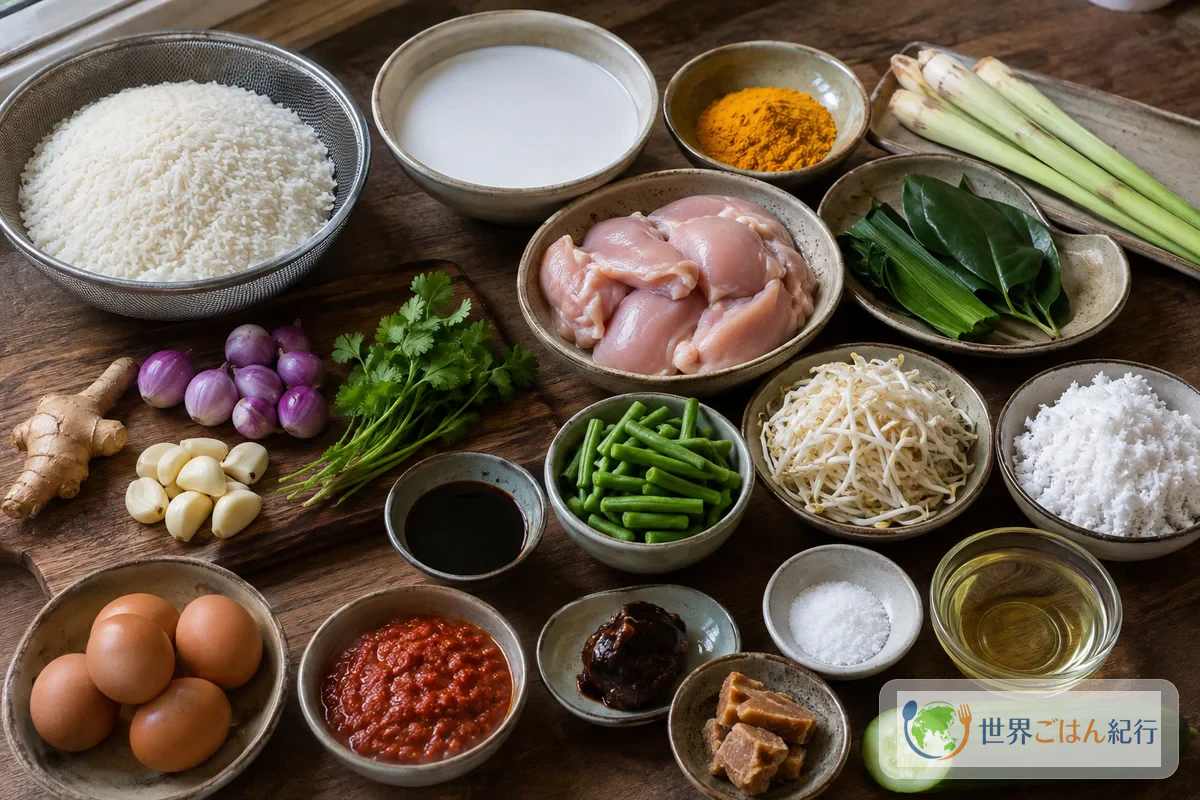
The recipe uses rice, coconut, soy sauce (which contains soybeans), chicken, eggs and chili. Some commercial sambals and coconut products contain wheat, shrimp, seafood or nuts. If you have an allergy to soy, egg, nuts or seafood, check not only the ingredients themselves but also the ingredient labels of products and the shared-facility notes. Do not reuse the cutting board or chopsticks that touched chicken for the vegetables and plating utensils; wash them with detergent before use.
Choosing ingredients for nasi tumpeng
Start with four things: the roundness of coconut milk fat, the yellow of turmeric, the green aroma of lemongrass and the heat of the accompaniments. Indonesian salam leaves and pandan leaves deepen the aroma if you can find them, but the dish still works without them.
Rice
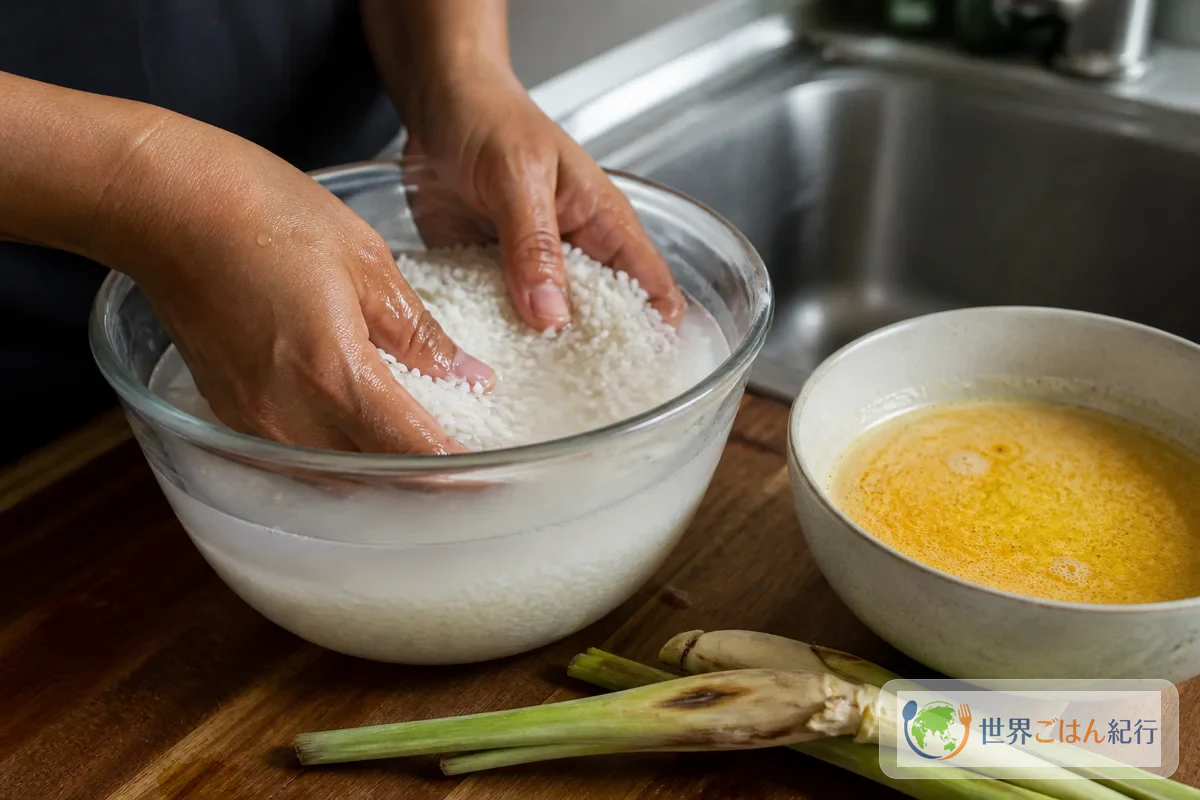
Jasmine rice is the base. Its grains are light, and the aroma of coconut and herbs rises from it easily. Short-grain Japanese-style rice is sticky, so it molds steadily, but with the same amount of liquid it tends to turn heavy. Use a little less water so it doesn't come out too soft.
If you use a rice cooker, measure the total of rice and liquid first rather than following the marks on the inner pot, because reference lines differ by model. For your first try, cook it in a pot. You can watch the liquid reduce and see when the coconut milk sinks and starts to scorch on the bottom.
Coconut milk
Choose a canned coconut milk for cooking, not a drinking type. Look for a 1¾ cups (400 ml) can with the ingredients listed and a "for cooking" label. The recipe uses only part of the can, so refrigerate the rest for curries or soups. Powdered coconut milk or a type you dilute with water also works, but the richness differs, so adjust the water amount in the table.
Cone mold
Use a cone mold lined on the inside with food-safe parchment paper or banana leaf. A mold about 4.5 inches (12 cm) tall and a plate 18–20 cm across give you the full effect without any special large equipment. A deep bowl turned upside down works too, though the tip comes out rounded. Even if the shape slumps, the nasi kuning and its accompaniments taste just as good.
Sambal
Serve sambal at the edge of the plate, not mixed into the rice, so each person can add a bite at a time. In a store-bought jar, look for the label sambal oelek, the net content, and chili and salt in the ingredients. If only one person at the table eats spicy food, chop a little red chili for them instead. A jar is worth buying if your household cooks spicy dishes often.
For a table without sambal, add a little more lime juice and more cucumber. The coconut fat, the sweet-salty chicken and the green vegetables still give the plate its shape. When small children or people sensitive to heat are eating, keep heat out of the rice and urap from the start.
Mortar
You can chop the urap aromatics with a knife. A mortar, though, pounds chili, shallot, garlic and ginger into a coarse paste that coats the coconut, and you can stop whenever you like to check the texture. For one nasi tumpeng the tools you already have are enough. Buy a mortar, sold with its pestle, only if you'll keep making sambal or curry paste.
Method: layer the aromas and finish by building the mountain
The rice, chicken, vegetables and egg do not have to be finished at the same time. If you simmer the chicken while the rice rests, and finish the vegetables and egg while the chicken cools, the moisture of the accompaniments settles by the time you unmold.
Fixing common nasi tumpeng problems
The rice is sticky
Treat coconut milk like water and you add too much fat and moisture, so the grains lose their outlines. If liquid remains after cooking, take off the lid and drive off the moisture over low heat for only 2–3 minutes. Then leave it for 10 minutes without stirring it up from the bottom. If it is still too soft for the mold, make a smaller cone, or serve the rice on a flat dish surrounded by the accompaniments.
The cone cracks
Once the rice is completely cold, the surface dries and gaps open between the layers. Before packing, check that the rice is still warmer than body temperature, and press it out to the edge with each addition. Wet the mold with water only, because oil makes the rice slide. If a crack runs all the way to the bottom, switch to a bowl presentation. It looks better and is easier to eat than a cone patched with warm rice.
The urap is watery
The water comes from the vegetables, or from coconut that wasn't toasted enough. After draining the vegetables in a colander, press them in a cloth before tossing. Toast the aromatic coconut dry over low heat and let it cool before adding it to the vegetables. If water still appears after tossing, add 1 tbsp dry-toasted coconut to absorb it. More salt only makes the flavor stronger.
The chicken is tough
Boiling off the liquid fast over high heat tightens the chicken fibers. Cook the chicken through over medium-low heat first, then take it out and shred it, reduce the cooking liquid, and return the chicken at the end. Check doneness by cutting open the thickest part to see that it has turned white. Heat meat to a core temperature of 167°F (75°C) for at least 1 minute.
Serving, storing and varying nasi tumpeng
At the table
You can cut from the tip a little at a time, or serve from the bottom along with the accompaniments around it. Either way, put some chicken, vegetables, egg or cucumber on each plate with the rice instead of a large portion of rice alone. Eat the urap after the sweet-salty chicken and finish with a little sambal, and you taste what each accompaniment brings, one after another.
Storage
Once the rice and chicken have cooled slightly, move them to separate shallow containers and refrigerate. Plate only what you will eat that day, and don't keep a cone that has sat at room temperature for a long time. Refrigerated rice keeps until the next day; reheat it until hot through the center. Urap releases water from the vegetables, so finish it the same day, and take sambal from its container with a clean spoon.
Variations
| Variation | What changes | Character of the dish |
|---|---|---|
| White celebration table | Leave out turmeric and make the rice white | Mute the color and bring forward the aroma of chicken and vegetables |
| Vegetarian | Replace the chicken with 5.5 oz (150 g) fried tofu or 5.5 oz (150 g) tempeh | Check the ingredients of the soy sauce and simmer in a separate pot until sweet-salty |
| Seaside platter | Replace half the chicken with 5.5 oz (150 g) grilled white fish | Wipe off the fish's moisture and keep the sambal on a separate dish |
| For children | Serve red chili and sambal on the side | Add more cucumber and egg and reduce the acidity |
| Small anniversary | Halve the rice and make it in a 5.5 inches (14 cm) mold | Narrow the accompaniments to 2 dishes and put finishing it first |
If you want the vegetables to take center stage, make the Indonesian urap on its own and spoon a little at a time around the tumpeng. As long as the rice stays at the center, the rest of the plate can change to suit the region and the family.
Frequently asked questions
Can I make it without a special cone mold?
Yes. Press warm rice into a deep bowl lined with food-grade plastic wrap, turn it onto the serving plate and shape the sides by hand. The tip won't come to a sharp point easily, so start small, about 5.5 inches (14 cm) across. Line any surface that touches the rice with parchment paper or banana leaf, and keep paper or craft cardboard away from the food.
How much liquid if I swap jasmine rice for short-grain rice?
For 10.5 oz (300 g) of short-grain rice, start from ¾ cup (200 ml) water. With the ¾ cup (200 ml) coconut milk that makes 1¾ cups (400 ml) in total, which is your standard. Reduce it a little further if the pot is thin or the rice soaked for a long time. In a rice cooker, go by the total liquid rather than the line on the inner pot. If the grains stay hard, pour 1 tbsp hot water around the edge, cover and leave on the residual heat of low heat for 5 minutes.
What if I have no fresh grated coconut for the urap?
Add ¼ cup (60 ml) hot water to 2 oz (60 g) unsweetened dried coconut and leave it for 10 minutes to rehydrate. It holds less moisture than fresh coconut, so fry the aromatic paste for less time and turn off the heat before it scorches. Sweetened baking coconut changes the taste, so look for one labeled unsweetened.
What if the sambal is too hot?
Eat it a little at a time with cucumber and egg instead of mixing it into the rice or urap. Diluting it with water blurs the flavor. Stir a few drops of lime juice into the sambal on its own dish instead, or add more cucumber. When children or people sensitive to heat are present, put the sambal in a small dish away from the table.