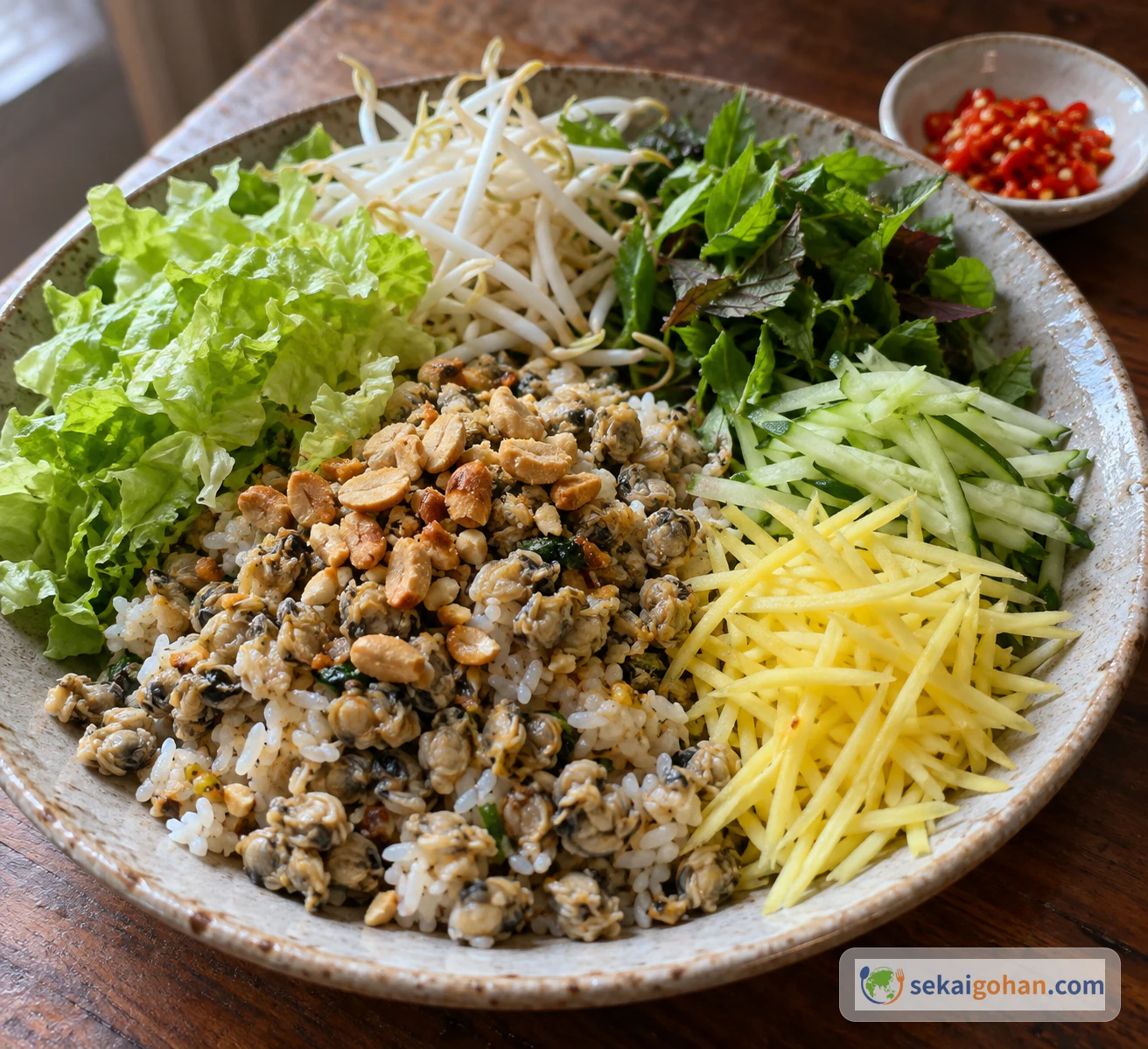
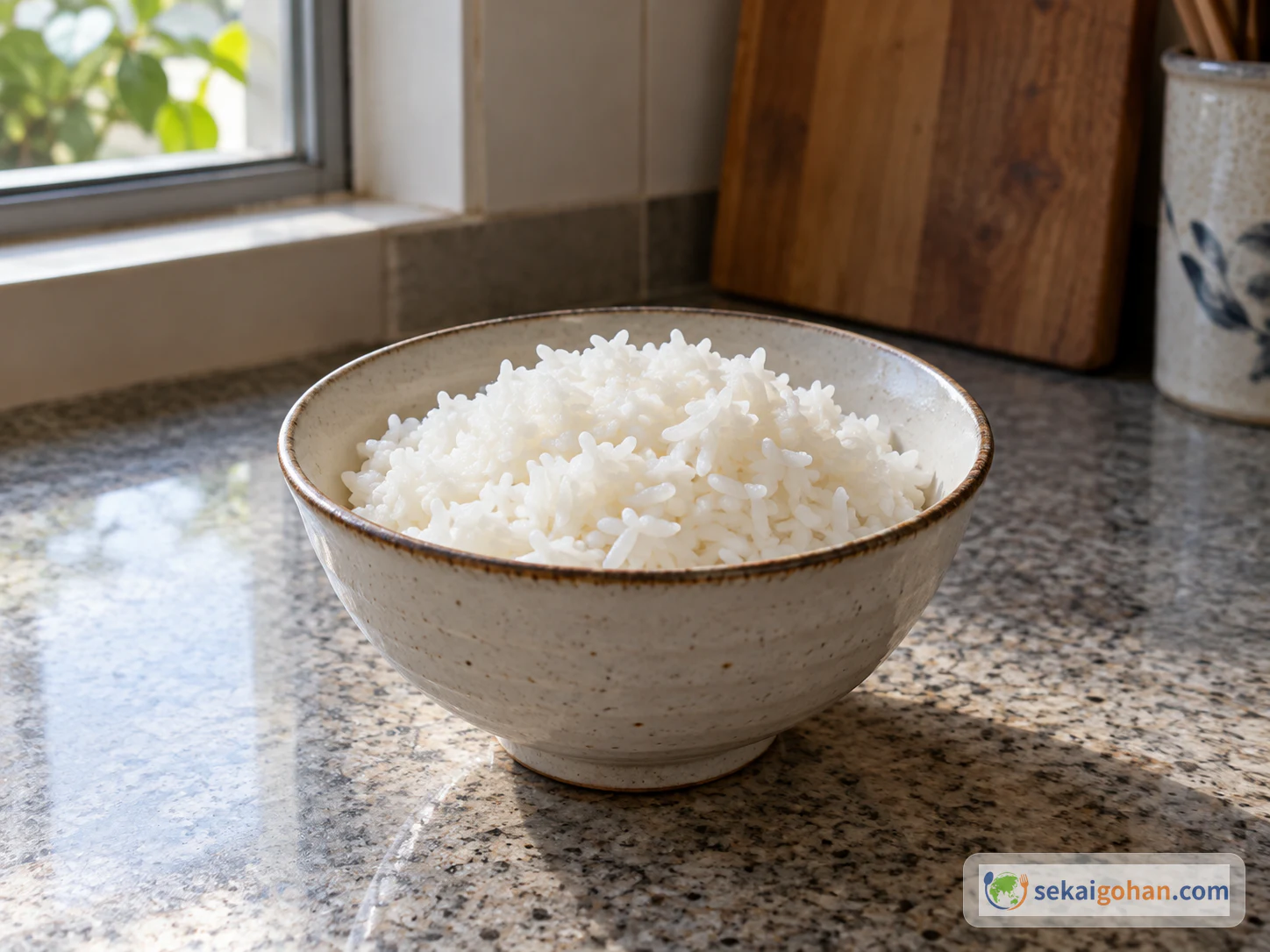
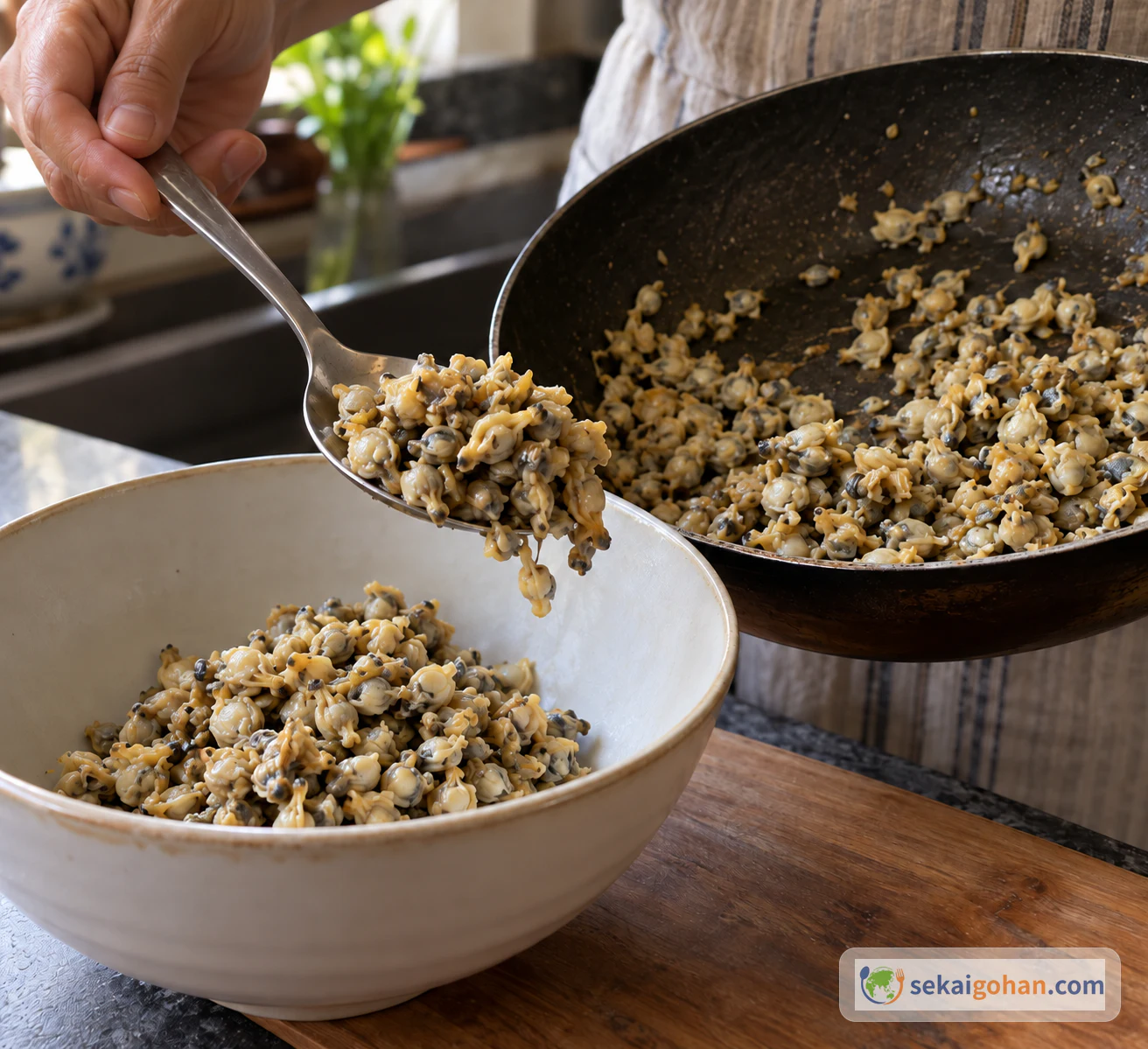
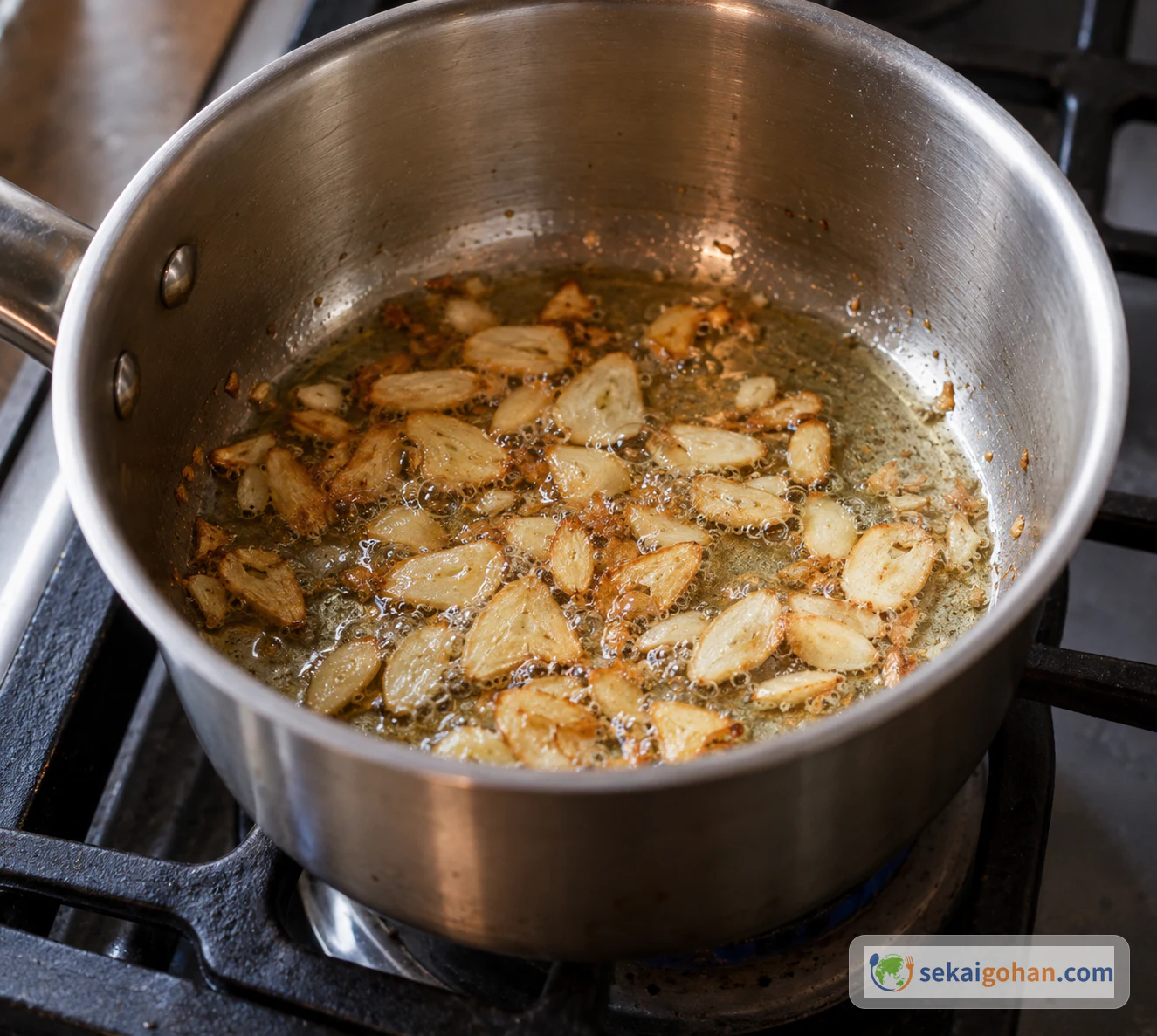
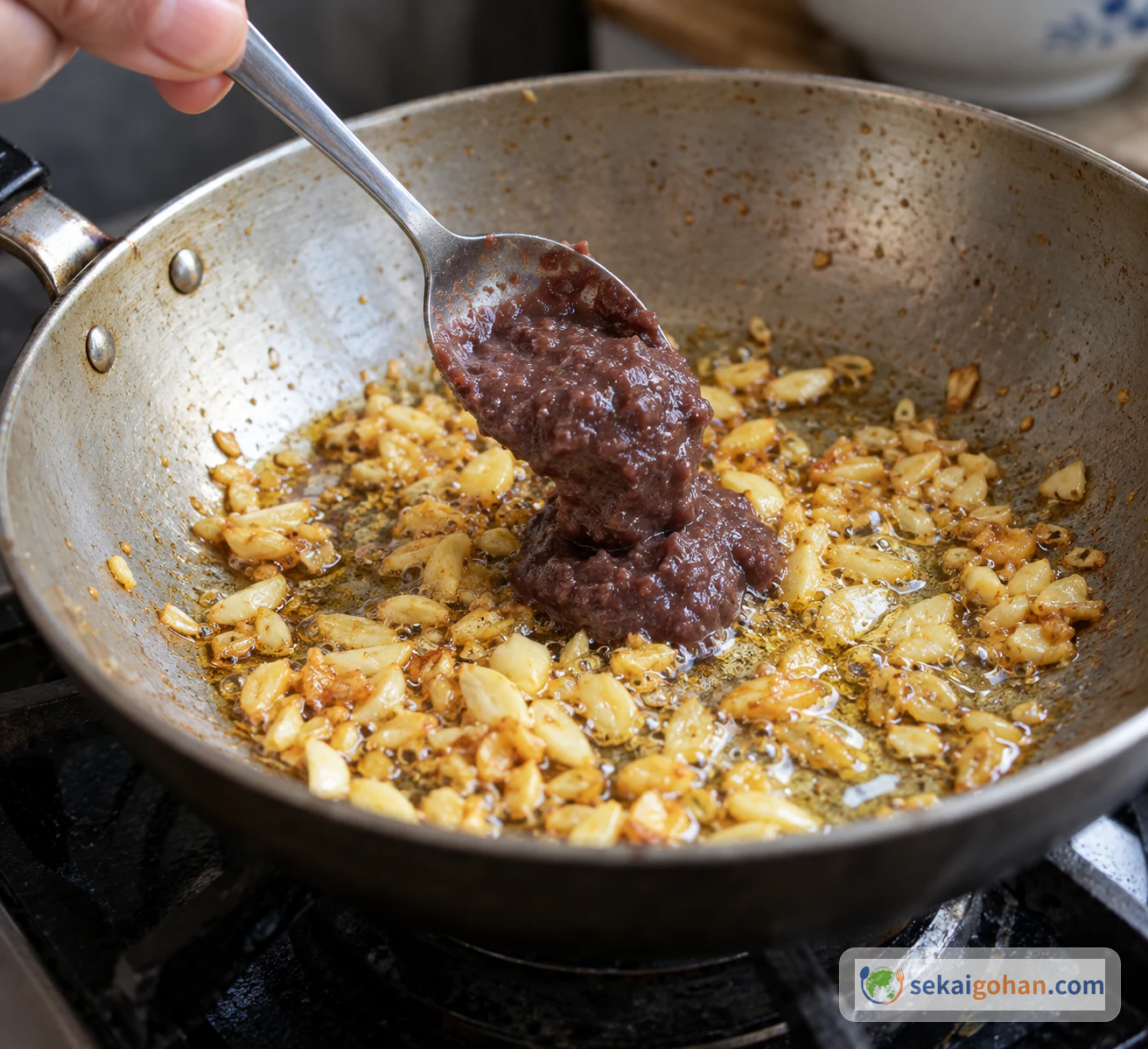
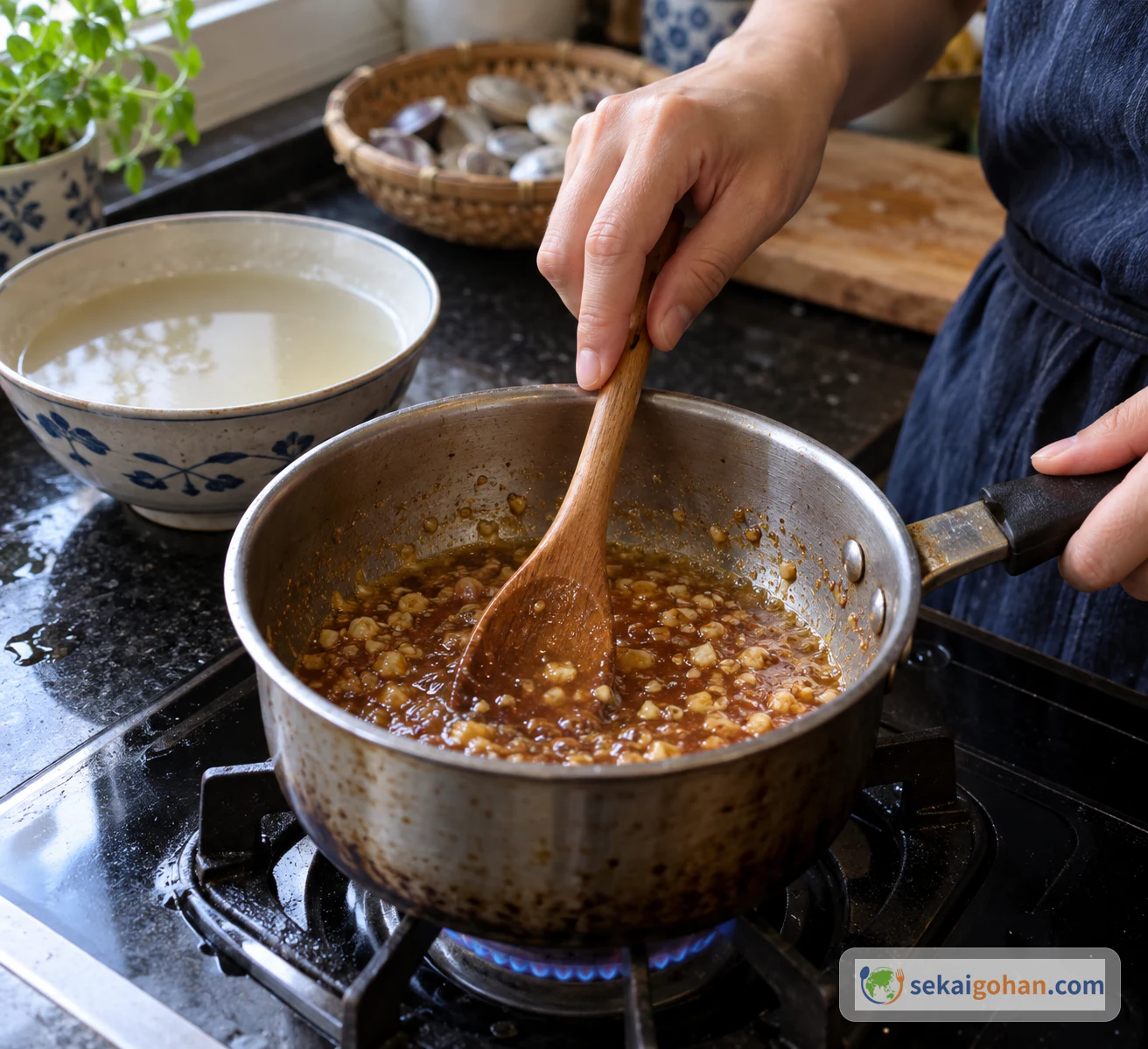
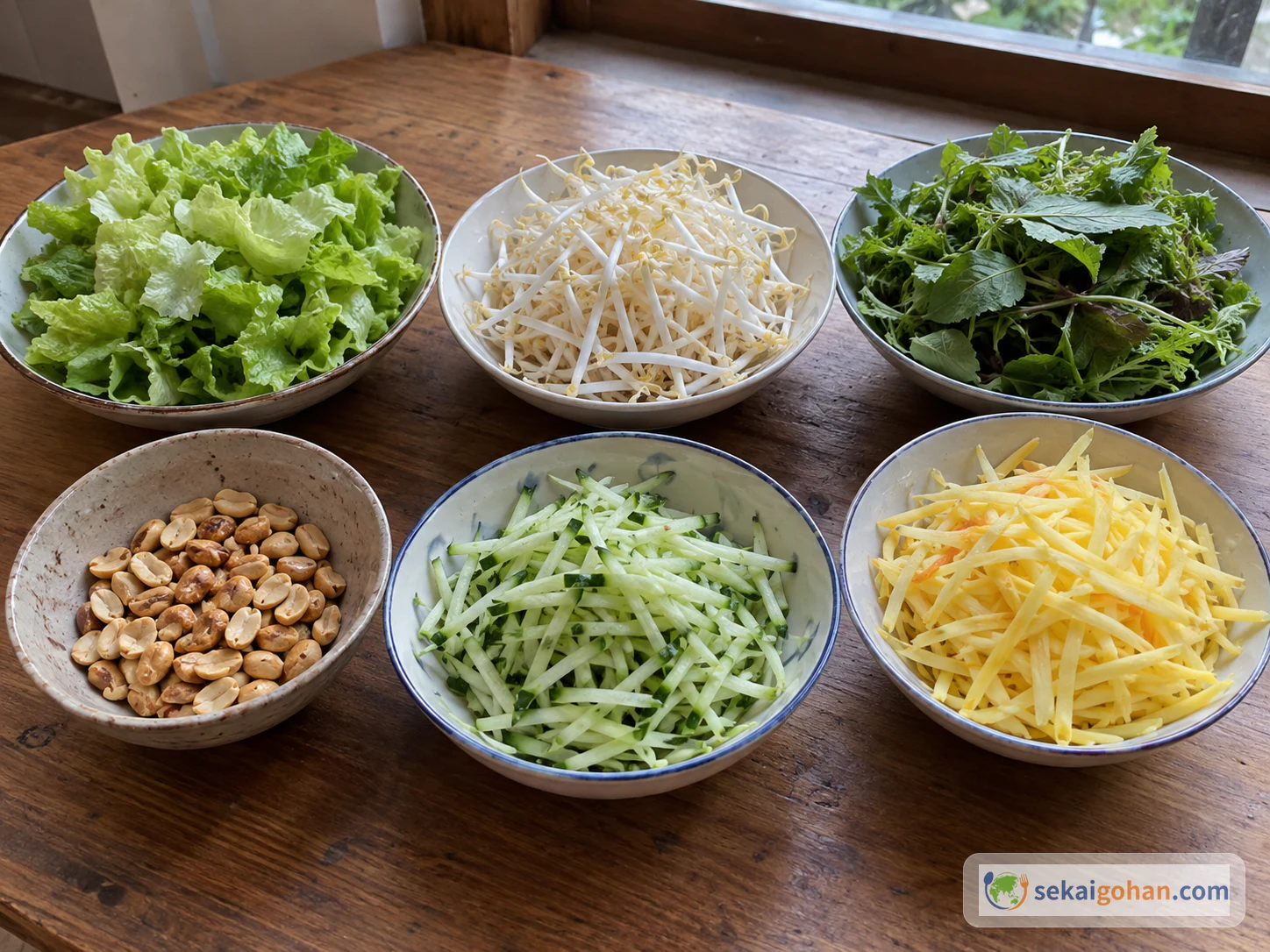
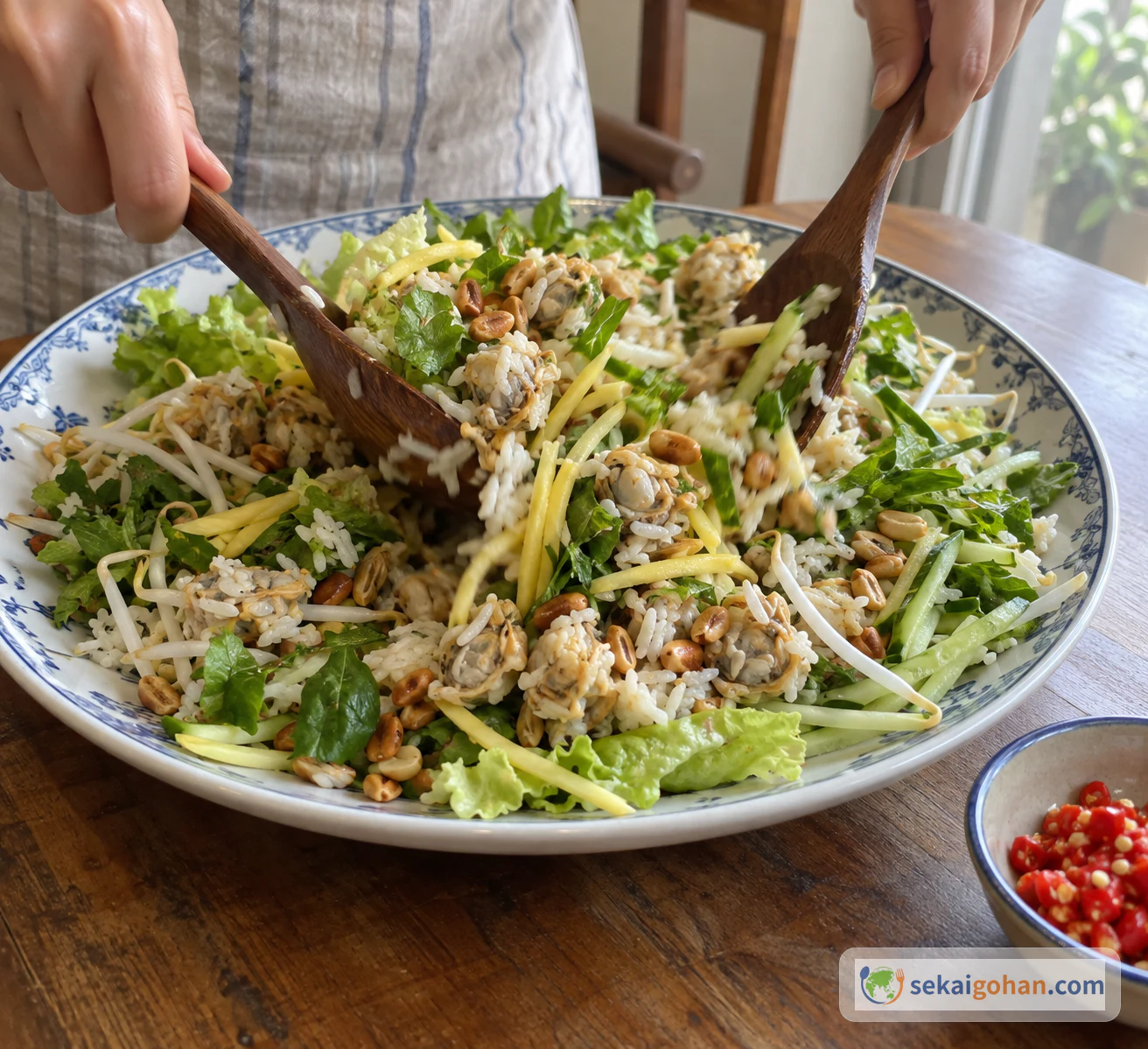
Cooked rice comes to the plate with small shucked clams beside it. The clams are firmed in a pan with a little mắm ruốc and chili powder. Then comes a sauce of golden garlic, mắm ruốc, sugar and the clams' own blanching liquid. Around them go lettuce, bean sprouts, raw leafy greens, roasted peanuts, shredded cucumber and shredded mango. Everything gets mixed together right before you eat, so each bite has salt from the clams, crunch from the peanuts and cool, fresh greens.
What Cơm Hến Is
Cơm is rice, and hến is a family of small bivalves. The dish is a Vietnamese rice plate built from those clams, a pungent shrimp-based sauce and a pile of fresh toppings. Nothing is mixed in advance. The rice, clams, sauce and vegetables stay separate until the moment of eating, and then they all get tossed together on the plate.
For more dishes from the same country, see Vietnamese recipes.
Ingredients: A Guide for About 5 Servings
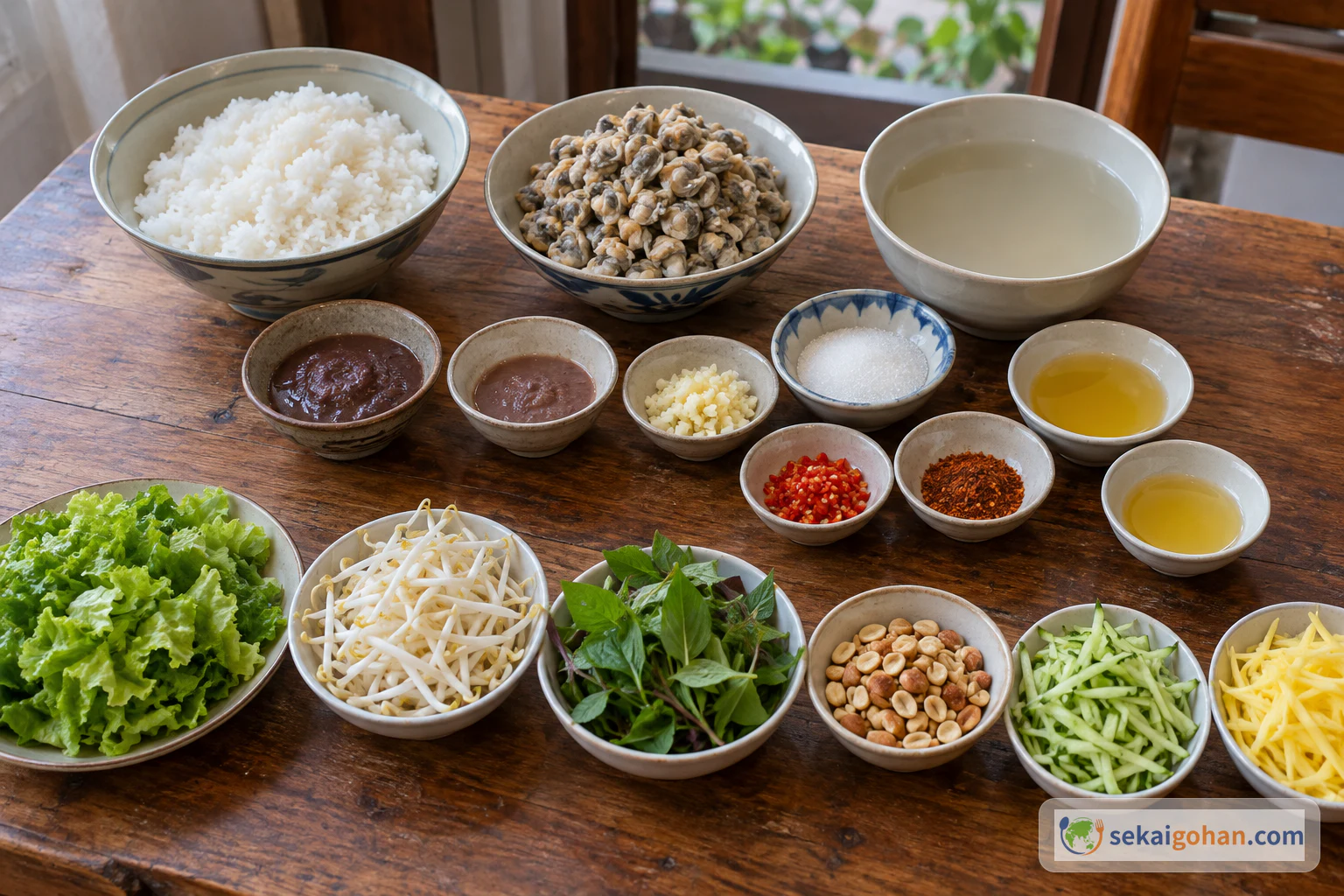
Allergens: this dish contains peanuts, a shrimp-based seasoning and shellfish.
Bean sprouts: children, older adults, pregnant people and anyone with a weakened immune system should not eat them raw or lightly cooked. For those eaters, cook the sprouts thoroughly or leave them out.
Equipment
- Knife and cutting board
- Fine-mesh strainer
- Saucepan for blanching the clams
- Bowl for catching the blanching liquid
- Pan for sautéing the clams
- Separate bowl for the cooked clams
- Small saucepan for the sauce
- Tablespoon measure
- Serving plates
Choosing Clams and Mắm Ruốc for Cơm Hến
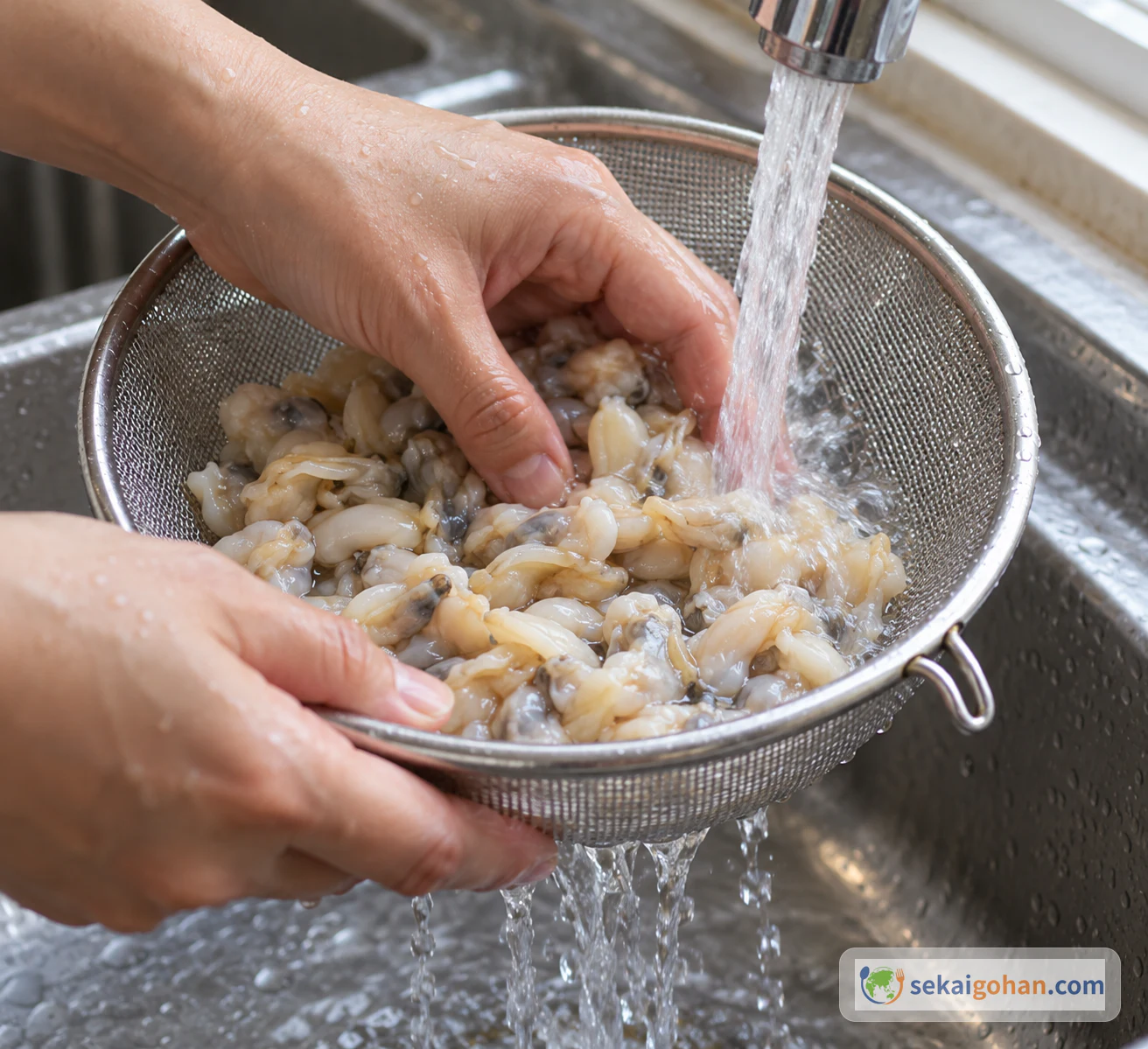
Clams. Use edible, shop-bought shucked clam meat. In Japan, frozen shucked asari is one option, so check what's on sale near you. Asari is a different shellfish from hến, so expect a slightly different flavor. Thaw frozen clams according to the package. If the meat is sold already cooked, it still goes through every step of the recipe.
Mắm ruốc. Check the Vietnamese spelling on the label. Mắm ruốc and mắm tôm are different products with different smells and tastes, and English labels sometimes call both of them shrimp paste or shrimp sauce. Mắm nêm or fish sauce will give you a different dish, so they aren't real substitutes here.
Hến belongs to the Corbiculidae family of bivalves. That family alone does not tell you which clam this recipe uses.
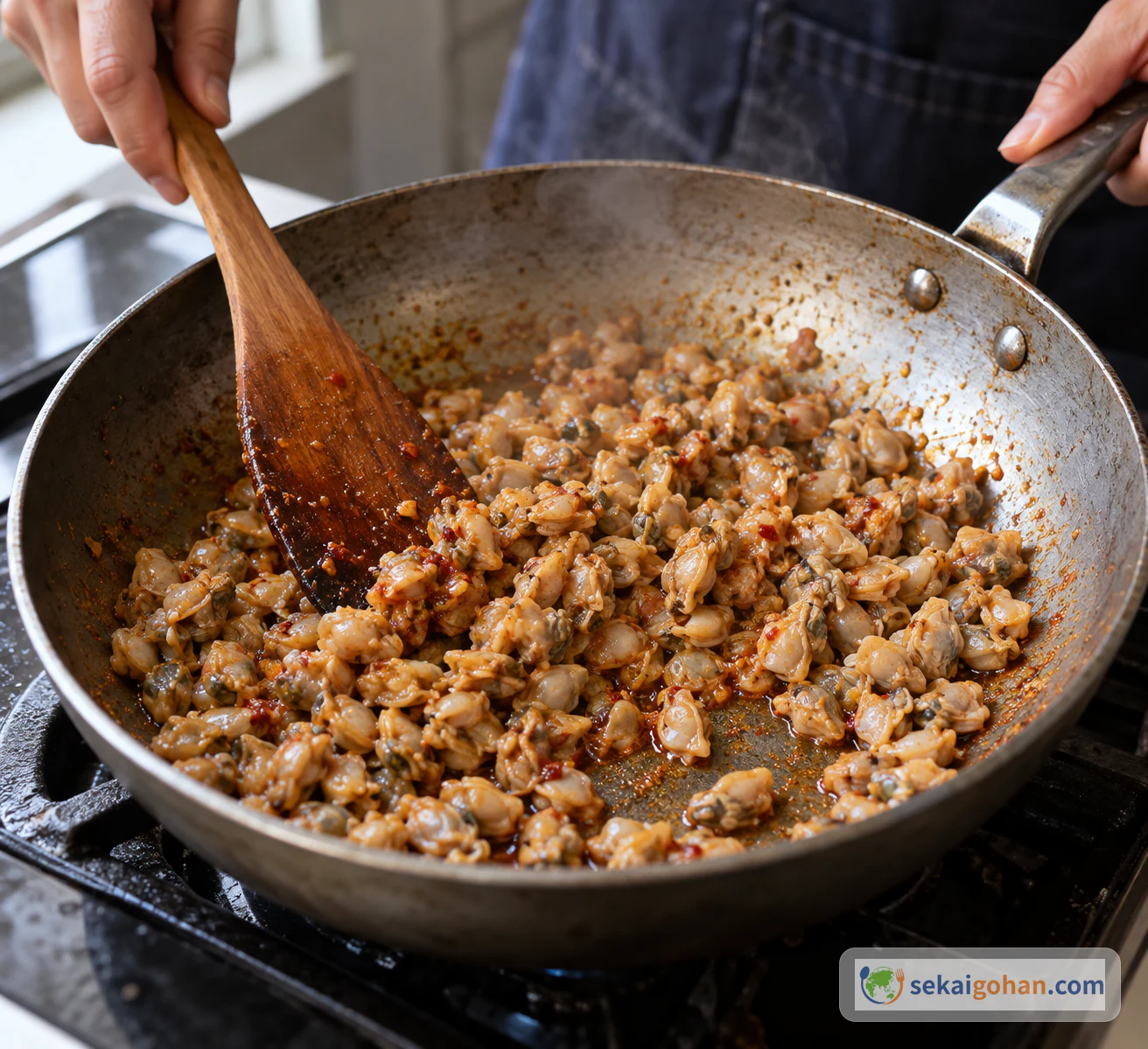
Heat bivalves, which can carry norovirus, to 85–90°C at the center for at least 90 seconds. With enough heat, the meat shrinks and the brown or black innards, where the virus is found, set firm.
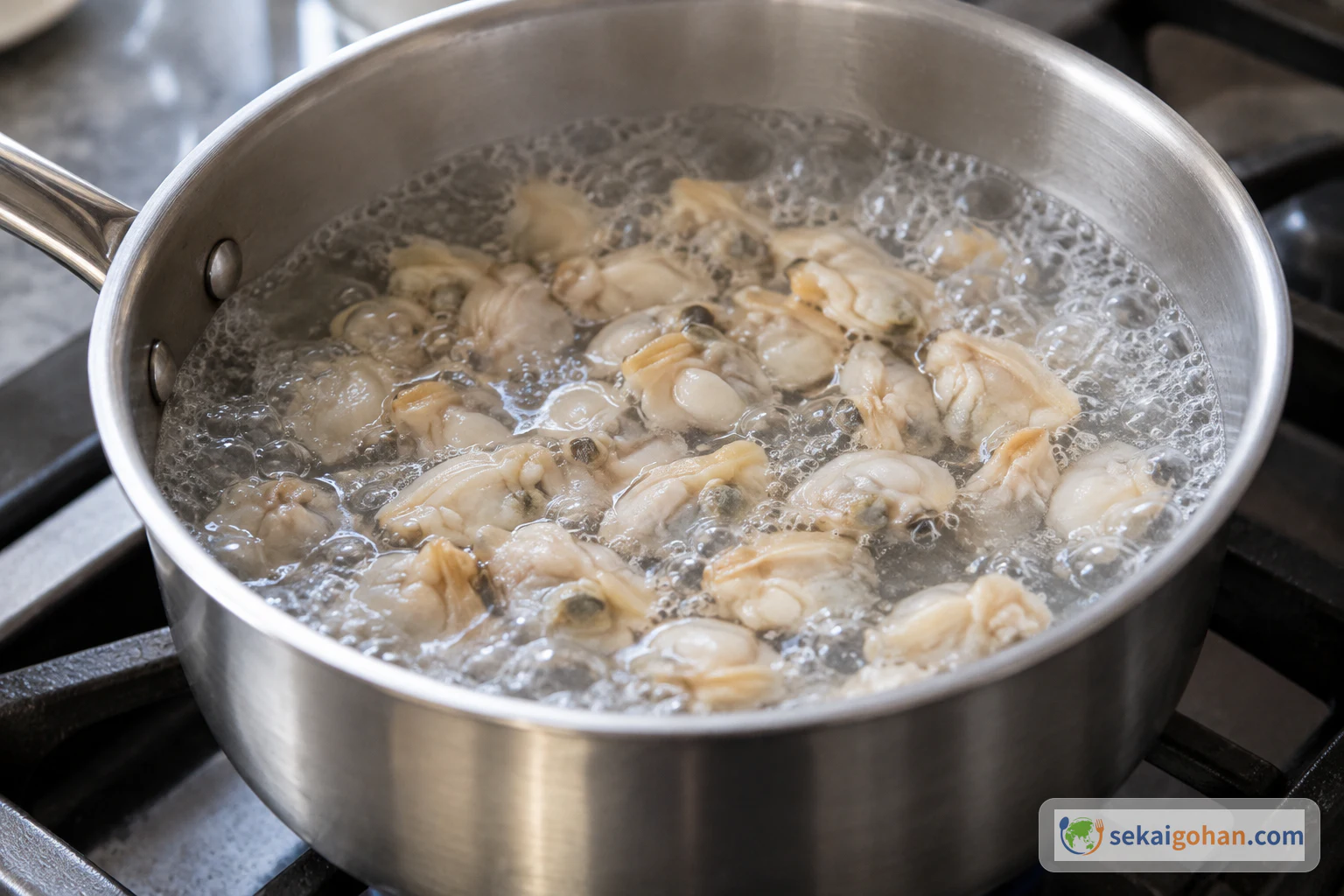
A short blanch alone does not cook the clams through. Sauté for at least 90 seconds, since small pieces are hard to probe. Bring the sauce to a boil after adding the blanching liquid.
The U.S. FDA advises washing produce thoroughly under running water, noting that this reduces bacteria but will not eliminate them.
Common Problems with Cơm Hến
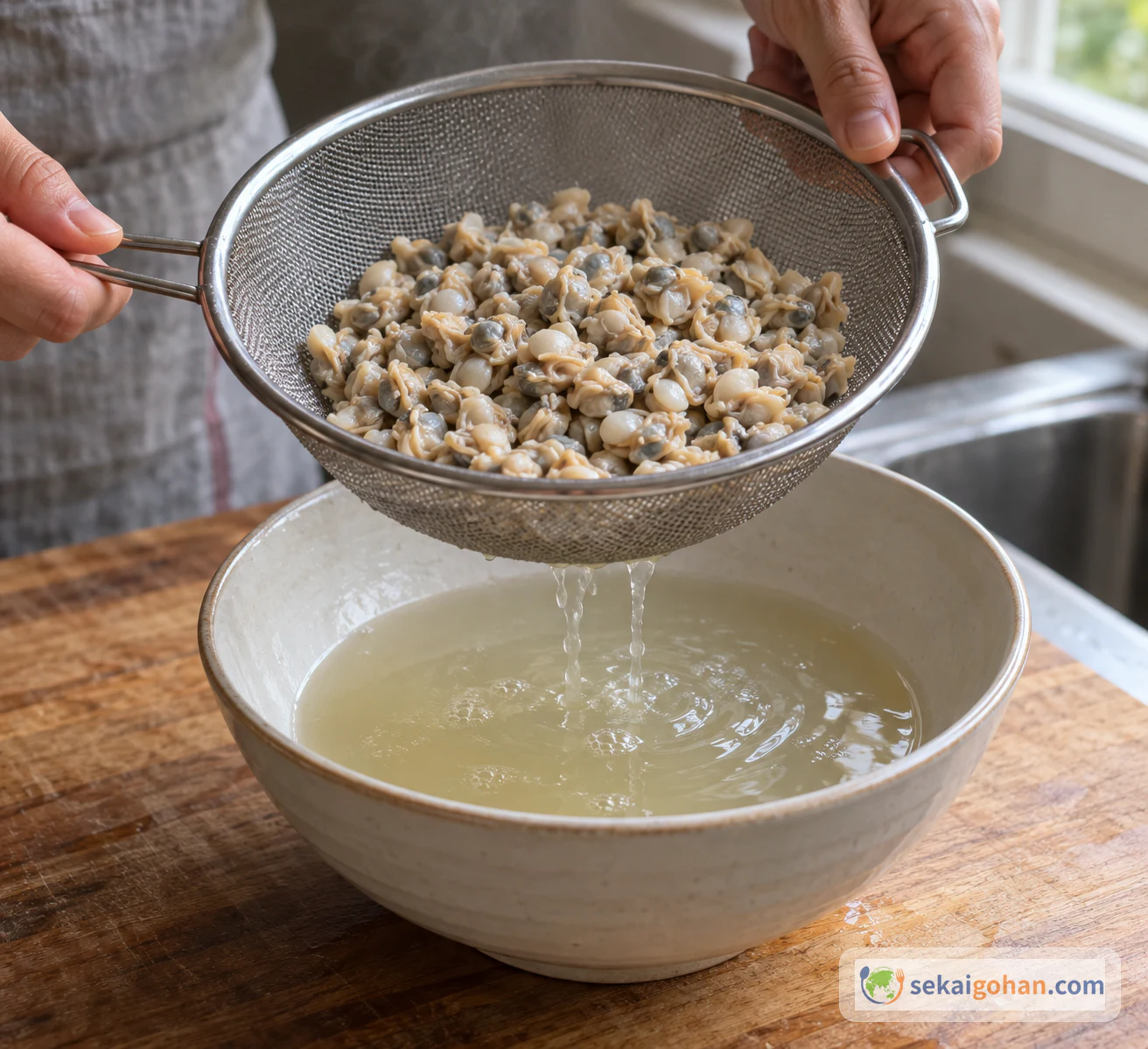
Keep the liquid from blanching the clams, because it goes into the sauce. Cook the clams until the meat has shrunk and the dark innards have set. Mix everything together just before eating.
| Problem | What to do |
|---|---|
| The clams look firm very quickly | Keep sautéing for at least 90 seconds, and look for shrunken meat and set innards |
| The innards still look soft | Keep cooking until they have set |
| The plate is getting too salty | Stop adding sauce and mix before tasting again. The clams are seasoned too, so next time add the sauce more gradually |
| You have less than 4 tbsp of blanching liquid | Use what you have and taste. Next time, make sure the water just covers the clams |
| You're unsure which mắm ruốc is which | Before you start, measure the 2 tbsp for the sauce into its own dish, and keep the small amount for the clams separate |
| You're unsure which chili goes where | Chili powder goes in the clam sauté. Minced chili stays at the table |
Serving and Variations
Put the minced chili in its own dish at the table so everyone can add as much heat as they like. If anyone eating should avoid raw bean sprouts, cook the sprouts or leave them out.
Other cooks make the dish in other ways. Some stir-fry the rice. Some use frozen precooked baby clams and add apple, taro stems and mắm nêm. Others start with shell-on clams, then strain the cooking liquid and boil it again.
Frequently Asked Questions
Is blanching enough to cook the clams?
No. Blanching only prepares them, and the clams still need the full sauté in step 5.
Can I use plain water or canned clam juice in the sauce?
Not for this recipe. The sauce is built on the liquid from blanching these same clams.
How do I keep leftovers?
Keep only the clams and sauce, and only if they haven't been mixed into the plate. Store them in separate shallow containers so they cool quickly. Refrigerate them at 50°F (10°C) or below, and reheat them to 167°F (75°C) or above.