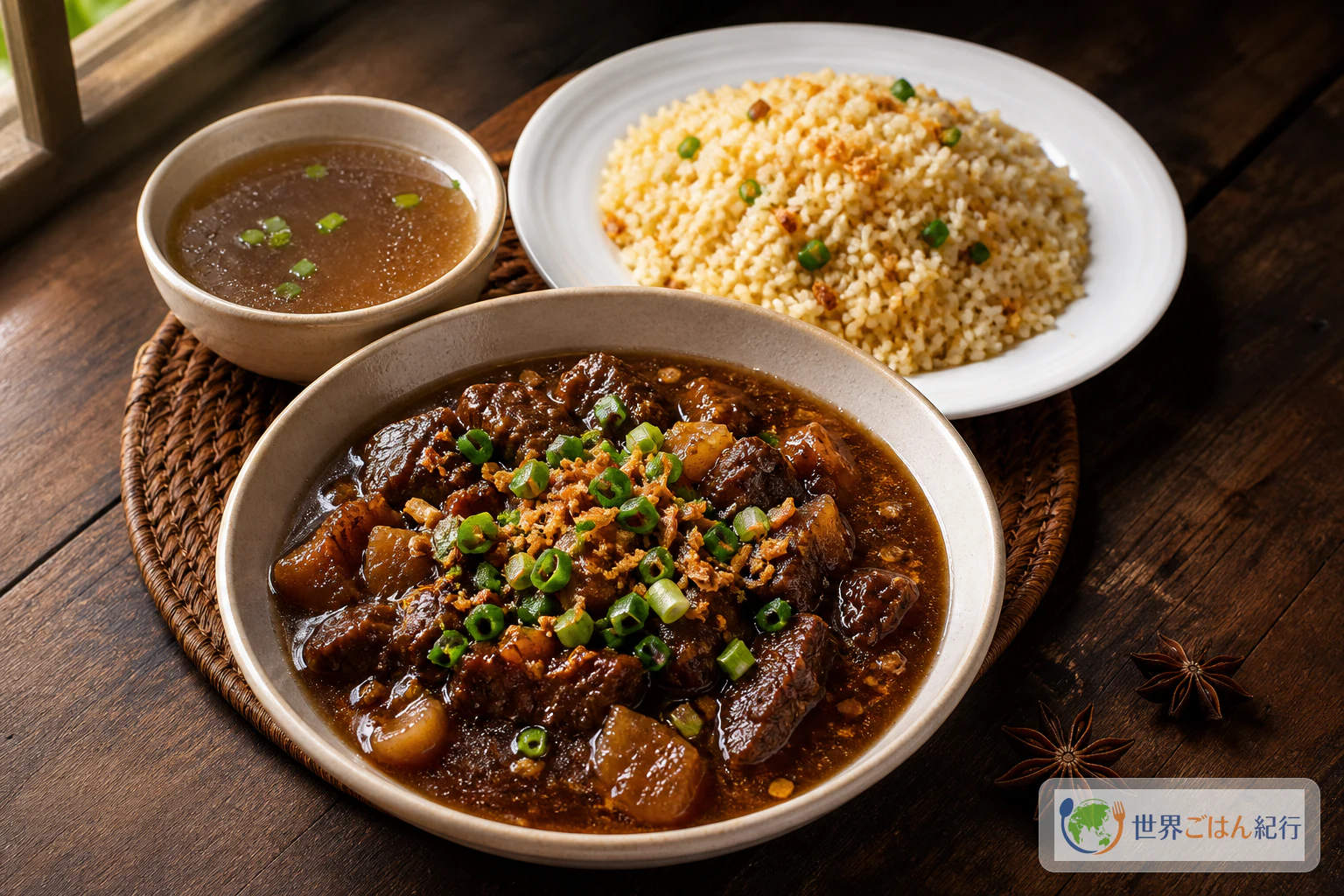
Drop garlic into hot oil and the edges of the thin slices start to bubble. Once the aroma rises, in goes cold rice, dried out against the hot sides of the pan, while in another pot beef stock scented with star anise sends up steam and beef coated in soy sauce and sugar takes on a deep, glossy sheen. Beef pares brings these together: Filipino sweet-and-savory braised beef served with garlic fried rice, called sinangag, and a clear beef soup. Pile only the meat into a bowl and you have a rich beef stew. Set the soup and rice apart, though, and work a little of the sauce into the rice as you eat, and you have the combination loved at street stalls and neighborhood eateries.
Beef pares at a Filipino eatery
The name and its origin
Pares means "pair," and the name comes from pairing sweet soy-braised beef asado with sinangag and a light beef soup. The stew was never meant to stand alone: the rice takes the edge off the rich sauce, and the soup resets your palate.
The carinderia Jonas in Quezon City popularized this combination in 1979. From there, beef, rice and soup as one meal took hold at specialist shops called paresan and at carinderias, the casual eateries serving everyday food. The cut of beef, the sweetness and the strength of the soup change from one eatery to the next.
How it's served
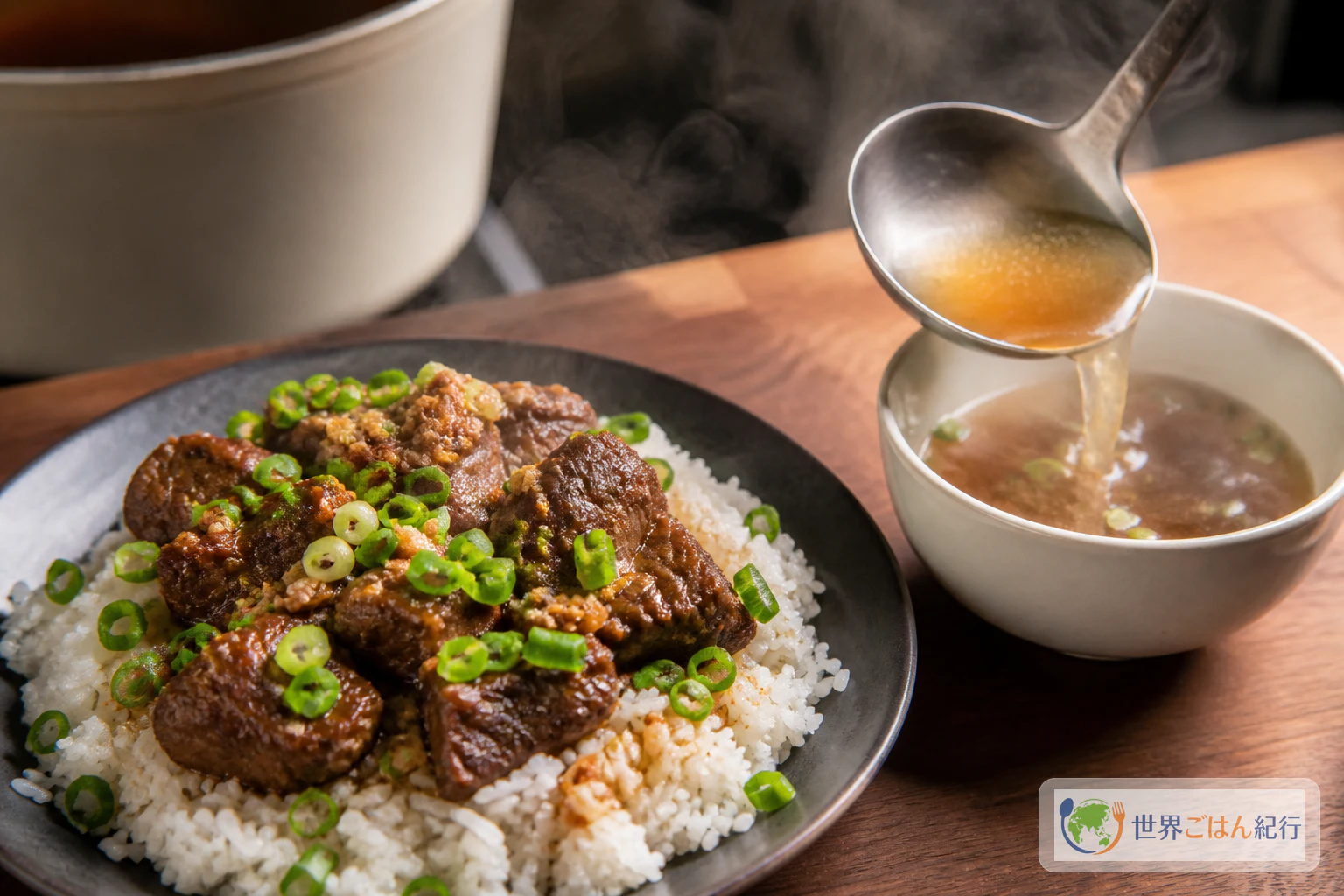
On a table in the Philippines, the big chunks of beef aren't the only star. White rice or garlic fried rice goes on the plate, the dark beef sits beside it, and hot soup comes alongside in a small bowl. Chopped scallions, fried garlic, chili-spiked vinegar and calamansi go on the table so everyone can adjust the sweetness and salt themselves. Serving the three at different temperatures and intensities, rather than ladling stew and liquid together from one pot, gets you closer to how a local eatery does it.
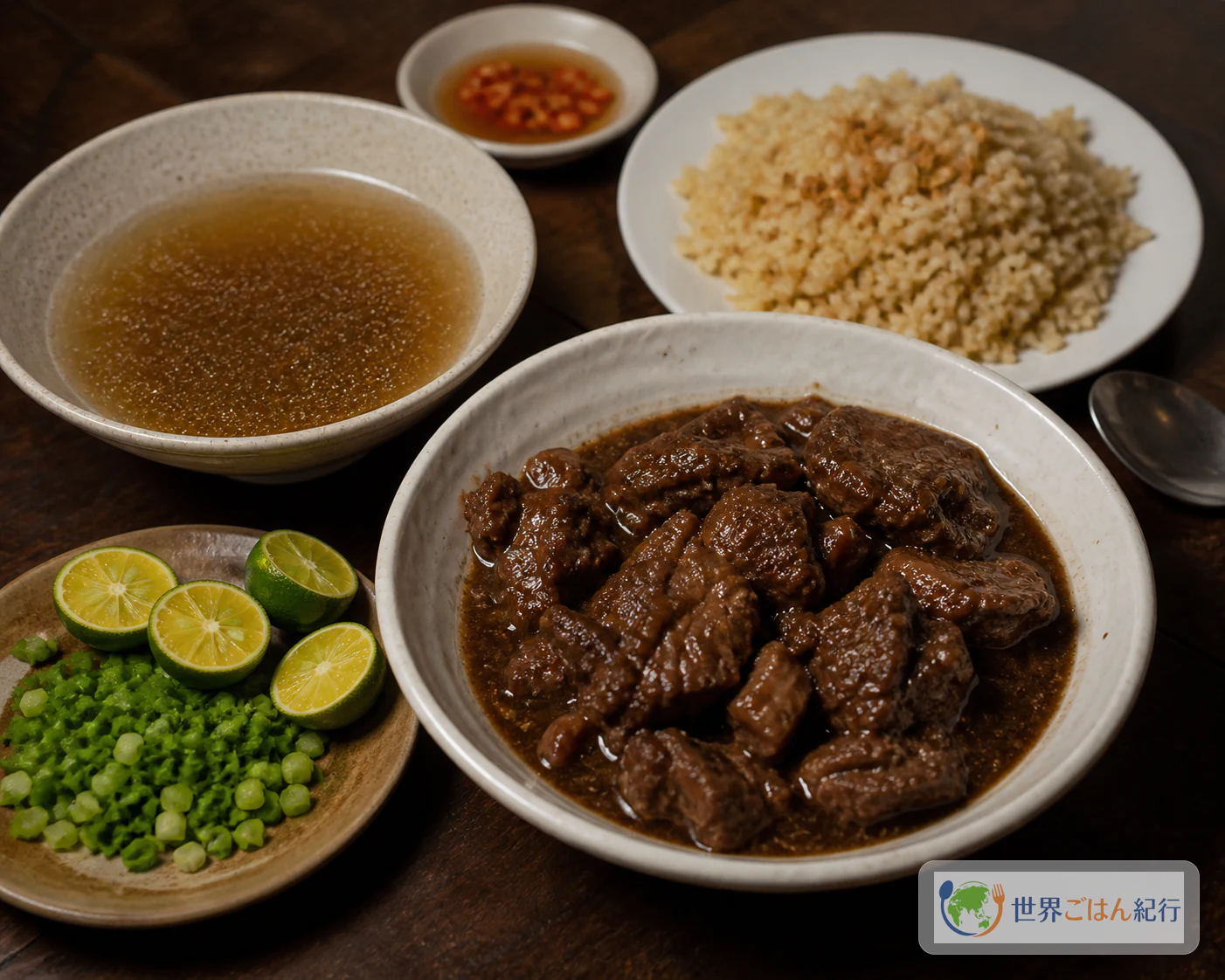
Shop styles and pares mami
Differences between styles of shop show more clearly than regional ones. The style that keeps the sweet beef asado on its own has a rich sauce heavy on star anise and sugar. Street-corner, cart-style versions called pares kanto or pares kariton combine beef and soup and thicken them a little with starch, and some shops hold back on sweetness and spice to put the savoriness of shank, tendon and bone marrow up front.
Swap the rice for noodles and you get pares mami, which layers pares onto mami, a beef-broth noodle soup, so the noodles soak up the sauce instead of rice. Some customers choose plain white rice instead. At home, make the trio first, then try white rice or noodles the next day.
Keeping the three components apart
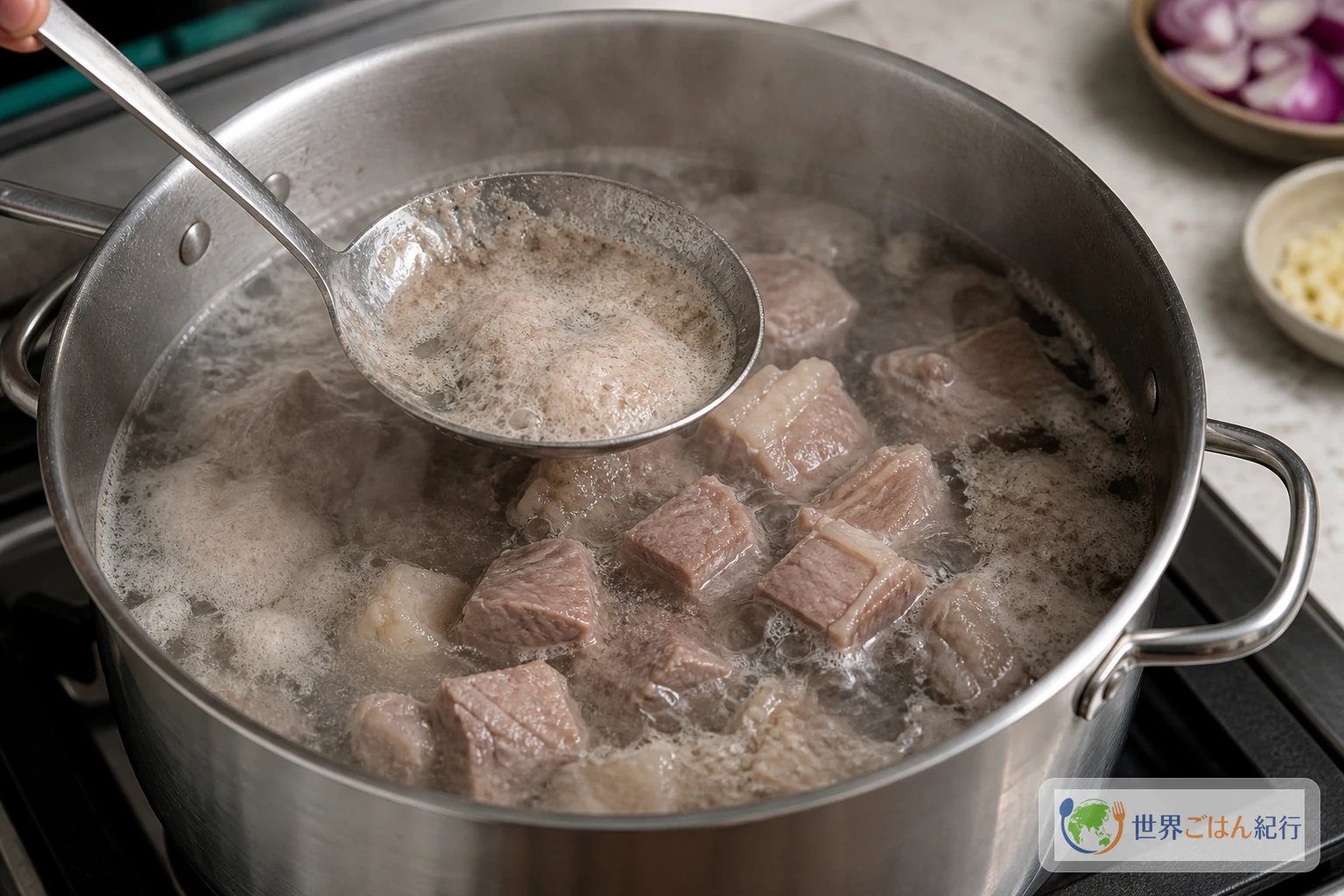
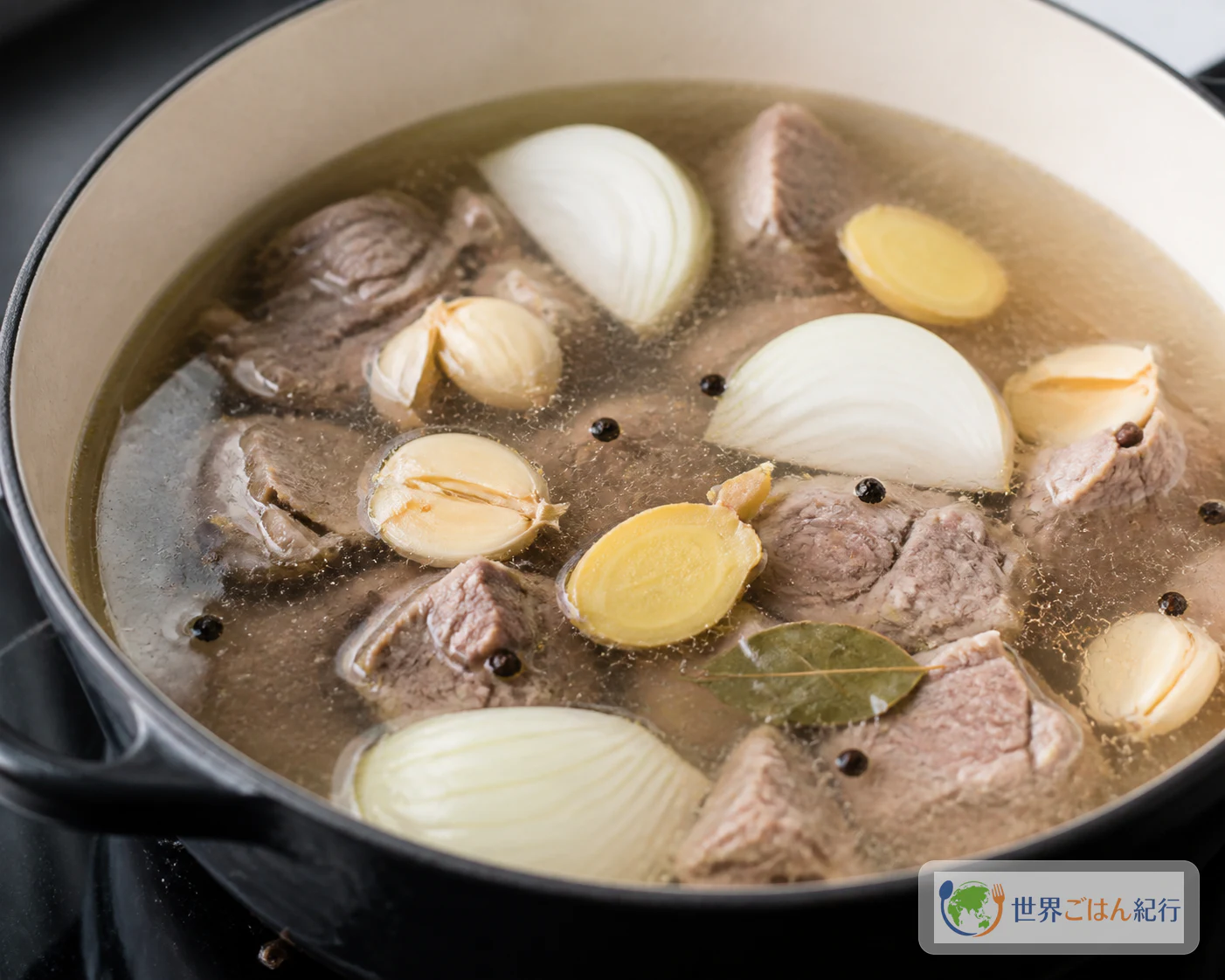
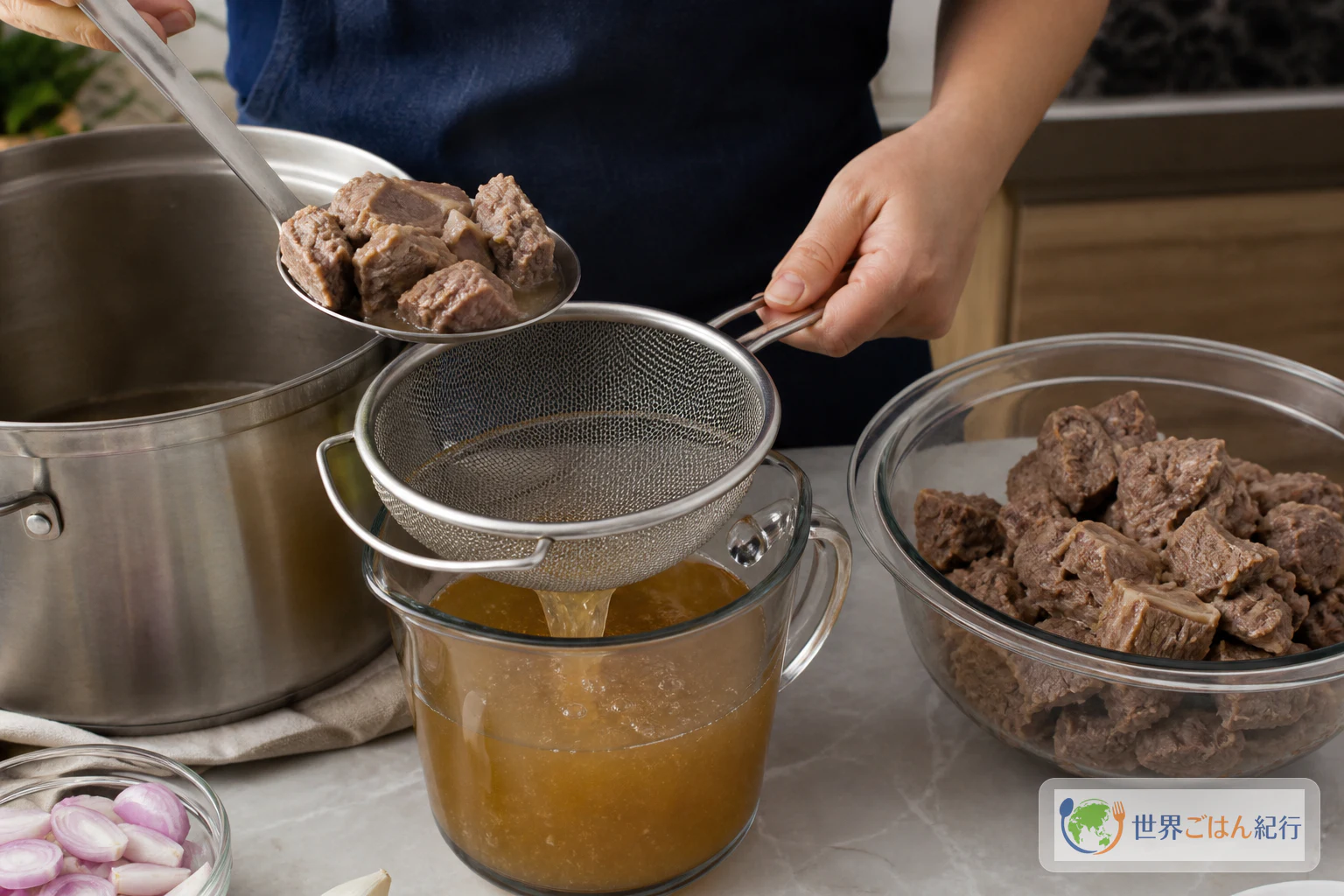
The trickiest part in a home kitchen isn't making the beef tender. It's keeping the stock clear. Instead of cooking the beef in soy sauce from the start, you blanch it, simmer it with aromatics, and set that liquid aside for the soup. Only the meat moves into the sweet soy sauce, so one round of prep gives you both a rich plate and a light bowl of broth.
Make the beef sauce strong enough that you can taste it even when only a little is worked into the rice. Keep the soup light, not stained all the way with soy sauce, so you can taste the aromatics and beef stock. If the garlic rice is heavily seasoned too, the three dishes compete, so go easy on the salt and let it handle the toasty note.
Ingredients (serves 4)
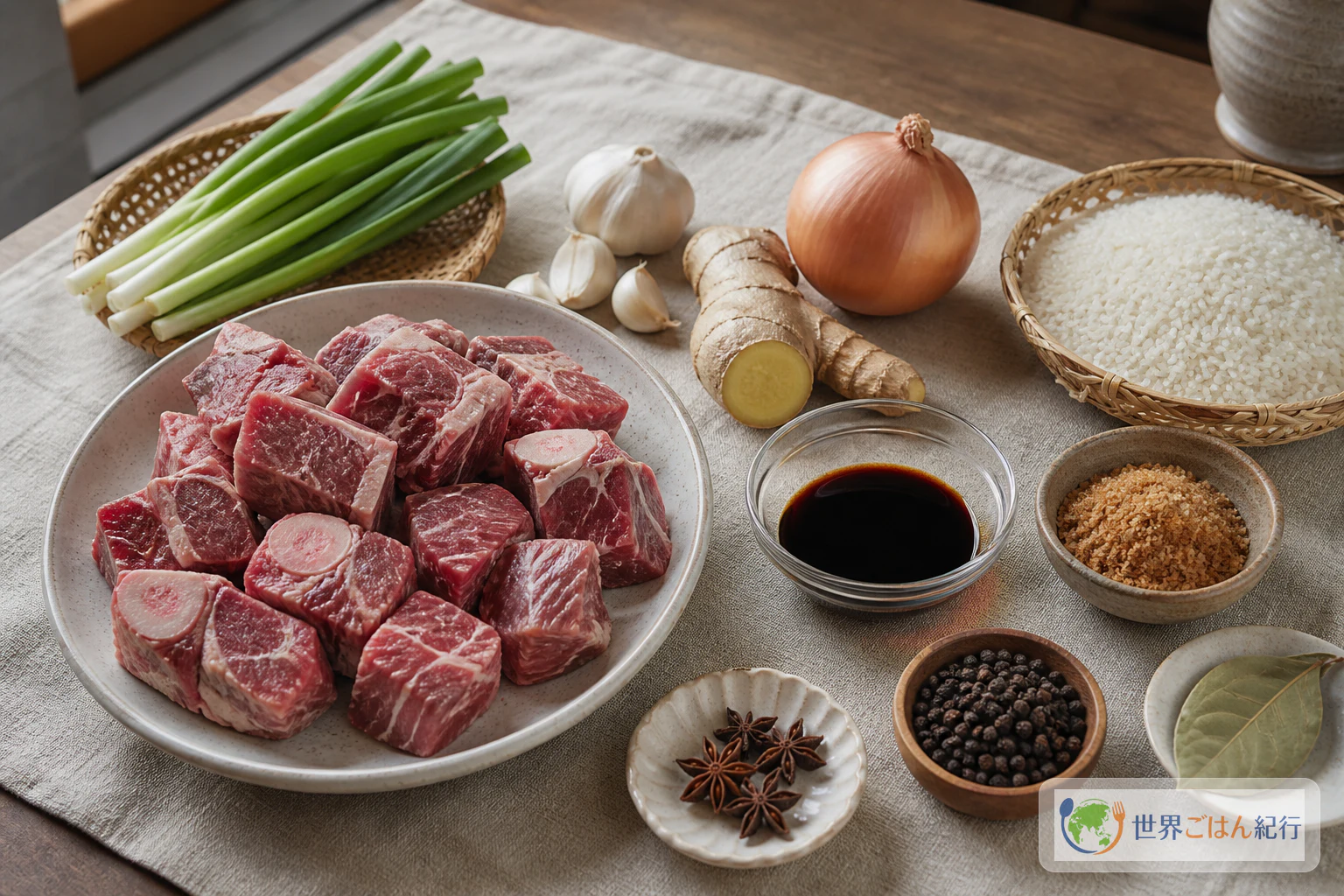
Cut the beef shank into even 1.5-inch (4 cm) cubes so it all turns tender at the same time. Beef chuck or brisket also works, but lean beef round tends to stay tough even after the same cooking time, before you've even reduced the sauce. The amount of water depends on the size of your pot, so if the meat pokes above the surface while it simmers, add boiling water 3.5 tbsp–½ cup (50–100 ml) at a time.
Soy sauce may contain wheat and soy. If you need to avoid wheat, switch to a tamari or gluten-free soy sauce after checking the ingredient label, but sodium varies by product, so add it to the sauce a little at a time. Wash the cutting boards and tools used for the beef, soy sauce, starch and rice separately from those used for serving.
Choosing ingredients and substitutes for beef pares
What defines pares isn't how many ingredients carry local names; it's finishing the beef sauce, the clear stock and the garlic rice separately. When substituting, ask whether the ingredient's role changes.
| Filipino ingredient or practice | Easy substitute | What changes and how to use it |
|---|---|---|
| Beef brisket, shank, chuck | Beef shank, beef chuck | Cuts with some sinew and fat suit a slow simmer better than lean round |
| Brown sugar | Dark muscovado, raw cane sugar, light brown sugar | Muscovado is richer. With white sugar, don't increase the amount, and let the soy sauce aroma come through |
| Filipino soy sauce | Regular dark soy sauce | With a saltier brand, don't add all ¼ cup (60 ml) at once; start with 3.5 tbsp (50 ml) and taste |
| Star anise | Whole star anise | If replacing with five-spice powder, start at 1/4 tsp. If the aroma is strong, don't force more in |
| Calamansi | Lemon or lime | Leave it out of the braise and squeeze it in at serving to put the acidity in the right place |
| Sinangag | Garlic rice made with cooled short- or medium-grain rice | For sticky rice, spread it on a plate after cooking and cool for 30 minutes so it fries more easily |
Star anise
Star anise shouldn't hit you on the first bite. Two pods in the braising liquid, leaving a sweet, medicinal note somewhere behind the beef fat and soy sauce, is a level you can happily eat again and again. Whole pods are easier to fish out of the pot than powder, and you can pull them the moment the aroma is enough. A few pods from the Asian foods shelf of your grocery store are all you need; if you plan to keep making Filipino, Taiwanese or Chinese braises, keep around 1.75 oz (50 g) of whole star anise on hand.
If you can't find it, or you're making pares just once, leave it out. The sweet aroma that links the dish to Filipino-Chinese asado fades, but as long as you keep the thickness of the sauce, the lightness of the beef stock and the garlic rice, the structure of beef with rice and soup holds. Trying to make up for it with cinnamon or a heavy hand of five-spice pushes the dish toward a different spiced braise.
A wide pan for garlic rice
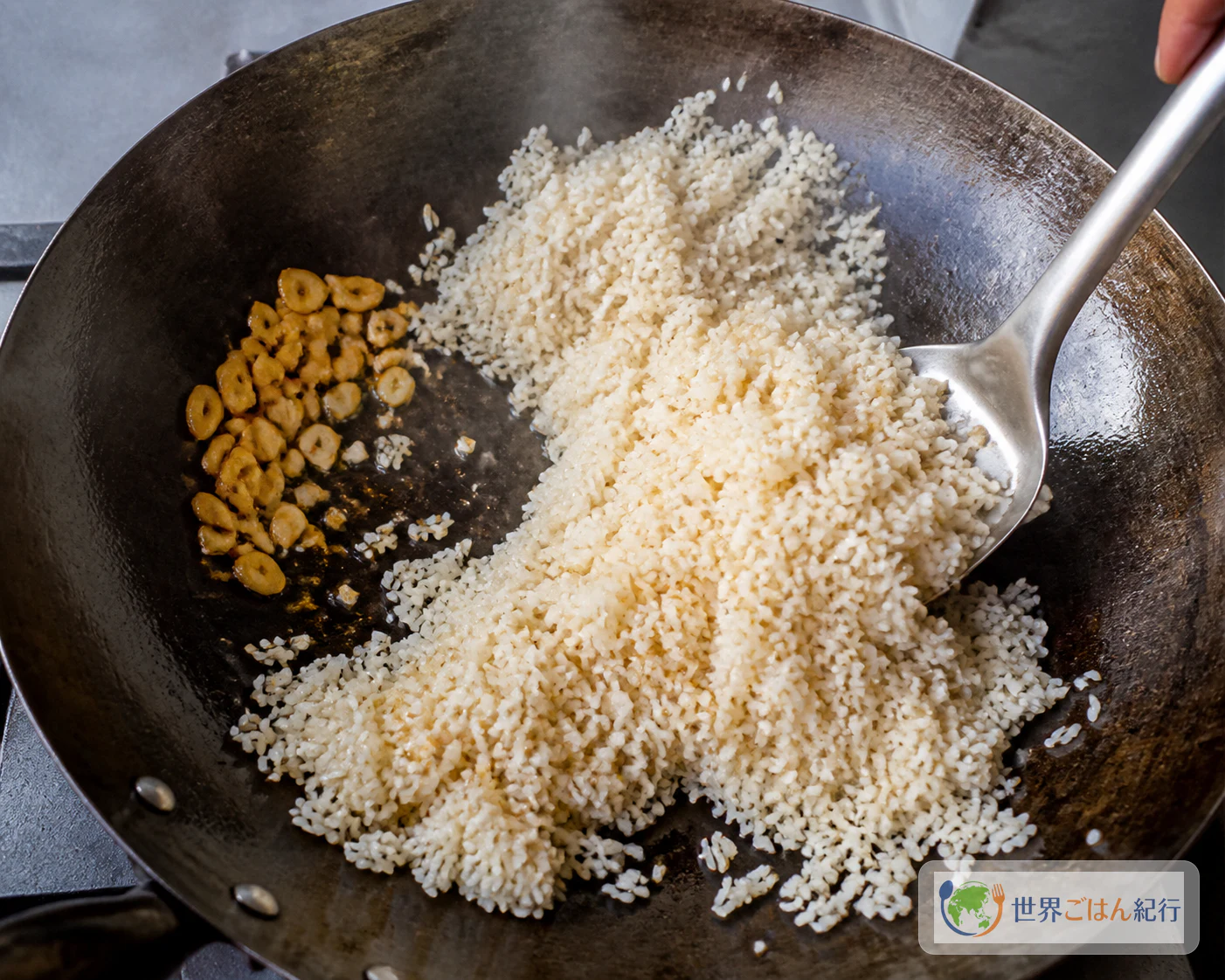
Frying 4 servings of cooled rice at once in a small skillet piles the grains up so the steam can't escape, but working in small batches, the skillet you have is perfectly adequate. A wide carbon-steel wok of around 13 inches (33 cm) only makes sense if you regularly cook fried rice, stir-fried noodles and vegetable stir-fries. If you've never used carbon steel or cook on induction, use a wide skillet rather than buying a wok you haven't confirmed works on your stove.
Method
Simmer the beef in the stock until tender first, then combine it with the sauce in a separate pan. If you simmer it in the sauce from the start, the flavor gets too strong before the meat turns tender.
The quantities match the ingredient tables above. Use a pot of about 9.5 inches (22–24 cm), a shallow pot or skillet for the sauce, and a wide pan for frying the rice. Don't judge the meat's tenderness by time alone; go by whether a skewer slides through and how thickly the sauce clings.
Beef pares tips and troubleshooting
Tender meat first, flavor second
Beef pares separates the step that makes the meat tender from the step that concentrates the flavor. Beef shank varies a lot from piece to piece, and the same 90 minutes can leave a skewer sliding in differently. Rather than keeping it at a boil to rush the meat, hold a low heat where the surface just trembles, and reduce the sauce only at the end. Adding sugar and soy sauce to tough meat won't fix the center; you'll just be left with a thick sauce on the bottom of the pan.
Reading each component
| Flavor role | Result | How to judge it in the kitchen |
|---|---|---|
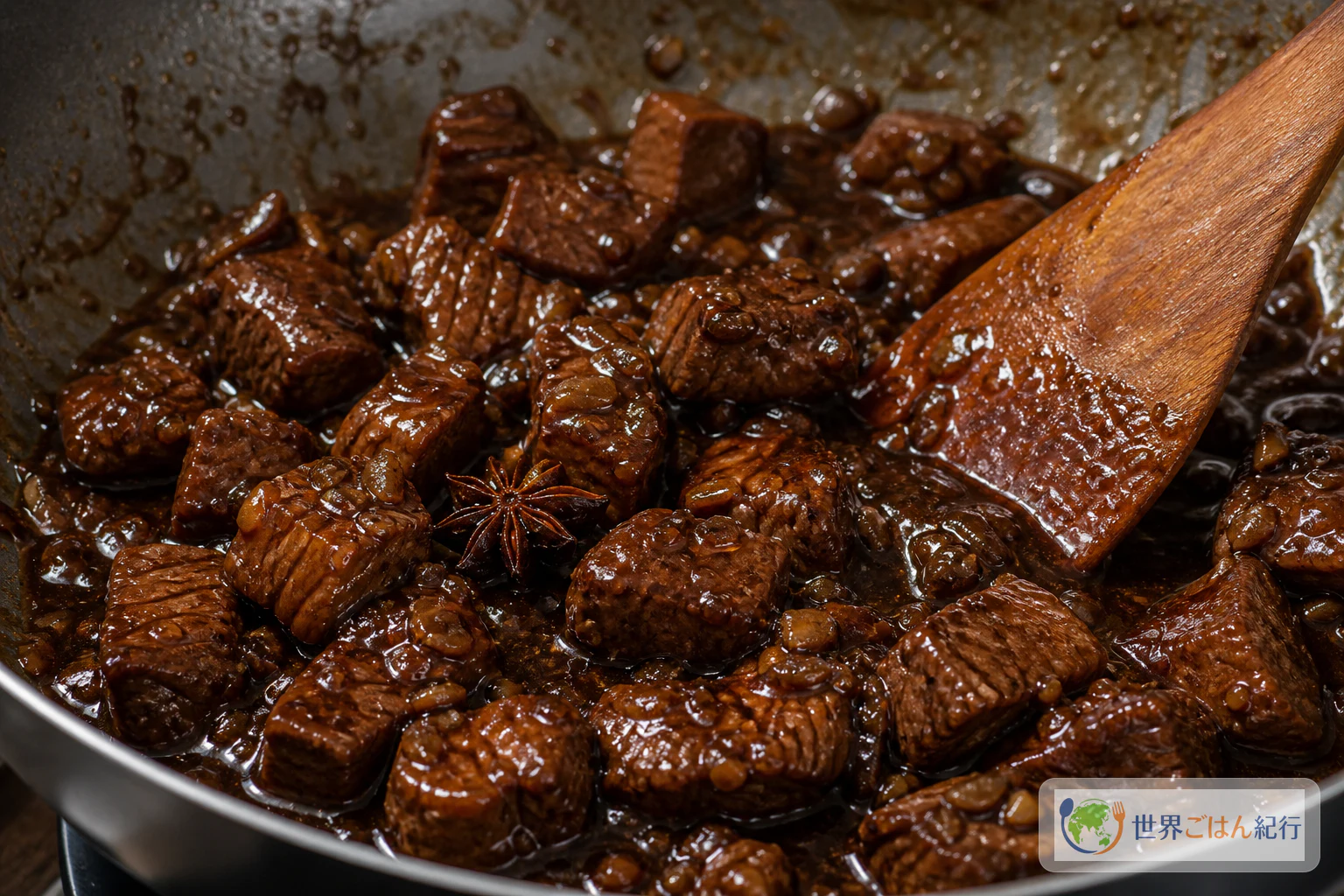
| Sweet-savory beef sauce | Salt from soy sauce, rounded sweetness from sugar | Reduce until a line drawn across the pan bottom with a wooden spatula holds for 1 second |
| Clear beef soup | Light savoriness of meat and aromatics | Discard the blanching water and simmer gently in fresh water |
| Star anise | A sweet aroma deep in the sauce | 2 pods for 1.25 lb (600 g) of meat. Fine to remove once fragrant |
| Garlic rice | Toasty grains and a lingering garlic note | Spread out cooled rice and drive off the stickiness |
Taste the sauce, soup and rice separately. If you taste only the sauce and add more soy sauce, it will be too salty once combined with rice and soup. Turn off the heat when the sauce is "a little short when spooned over rice," then sharpen it after plating with scallions or lemon.
Go easy on starch. Adding a lot when the sauce is thin keeps the soy flavor from spreading into the rice and leaves a heavy, gravy-like coating. Cook off the water over medium-low heat first and watch how quickly the spatula line closes; add a little dissolved starch only if the sauce runs almost entirely off the meat when you lift a piece.
When something goes wrong
Work out whether the problem is in the meat, the sauce or the soup, and you can rescue it without wrecking the flavor.
| What happened | Likely cause | How to fix it |
|---|---|---|
| The sauce is rich but the meat is tough | Reduced before the meat was tender | Remove only the meat, add ½ cup (150 ml) unsalted stock or water and simmer on low for 20 minutes. Return it to the sauce once tender |
| The stock turned cloudy | A hard boil mixed fat and protein into the liquid | Turn off the heat, wait 5 minutes and strain the clear top layer through a fine-mesh sieve. Even if it doesn't turn clear, the flavor is still usable |
| The sauce is too salty | The soy sauce is saltier than expected | Separate the beef and sauce, add 3.5 tbsp (50 ml) unsalted stock to the sauce and warm it over low heat. Don't add sugar alone |
| The star anise is too forward | Too many pods, or simmered too long | Remove them immediately and add 3.5 tbsp (50 ml) stock to the sauce. Serve with extra rice and scallions |
| The garlic is bitter | Rice went in after the slices had darkened | Remove the bitter garlic, replace just 2 tsp of the oil with fresh, and reheat the rice |
Serving and storing beef pares
At the table
What makes pares fun is how it turns a braise into a small three-part meal. Take a piece of beef, drip a little sauce onto the rice, layer on the toasty garlic, then take a sip of soup. Because white rice alone isn't left to absorb all that rich flavor, the sweetness of the beef never gets monotonous.
Set out lemon in place of calamansi, plus chopped scallions, fried garlic and chili vinegar in small dishes, so everyone can adjust the heat and acidity. Leaving chilies out of the beef pot makes it easier for kids and anyone avoiding spice to share the same pot.
For the rest of the menu, a plate of stir-fried greens or quick-pickled cucumber keeps the beef and soup in their roles better than sour Filipino sinigang on the same table. If you're cooking Filipino food several days running, put adobo, meat braised in soy sauce and vinegar, on a different day, or serve tinola, a clear ginger chicken soup, in place of a side dish.
Nutrition
The nutrition values are an estimate for the full batch, calculated with 1.25 lb (600 g) beef shank, 1.25 lb (600 g) cooked rice, 3 tbsp (45 ml) oil, ¼ cup (60 ml) soy sauce and 25 g sugar; they depend on the fat on the beef, the sodium in the soy sauce and the moisture in the rice. Divided among 4, one serving comes to roughly 630 kcal, 1.25 oz (32 g) protein, 25 g fat, 2 oz (59 g) carbohydrates, 1.5 g fiber and 1,350 mg sodium.
Storage and reheating
Store the beef and sauce, the soup and the garlic rice in separate containers. Don't leave them at room temperature in a deep pot; divide them into shallow containers to cool and refrigerate or freeze within about 2 hours of cooking. In a hot room, refrigerate even sooner.
To reheat, move the beef and sauce to a small pot, add 1–2 tbsp water or stock and warm over low heat for 6–8 minutes. Heat the soup in a separate pot until just below a boil. Microwave the rice at 600 W for 1 minute 30 seconds, then stir, adding 30 seconds at a time if any part is still cold. Rice tends to harden in the fridge, so make only as much as you'll finish by the next day, and freeze individual portions for longer storage.
To freeze, let the beef and sauce and the soup cool slightly, divide into single portions, and aim to use them within 2–3 weeks for best home quality. Thaw in the refrigerator, and reheat the sauce and soup until hot all the way through. If you notice anything off in smell or color, or a bulging container, don't try to save it by reheating; throw it out.
FAQ: pares quantities and how to eat it
Q. Can I make just the braised beef?
The beef asado alone makes a fine sweet-savory beef stew, but you lose the pairing behind the dish's name. On days when garlic rice is too much work, serve plain white rice; if you can't make a separate soup, serve a little of the simmering stock alongside.
Q. Can I speed it up with a pressure cooker?
After blanching and washing the meat and pot, add 1.25 quarts (1.2 L) water and the aromatics; plan on 25 minutes at pressure and 10 minutes of natural release. Follow your model's guidance on water volume and release method, then separate the meat and stock once the pressure is released and reduce the sauce uncovered. If you try to finish everything in the pressure cooker, the meat will be tender but the sauce won't take on its gloss.
Q. My beef shank isn't tender after 90 minutes.
Check whether the liquid has dropped and part of the meat is sticking out above the surface; add 3.5 tbsp–½ cup (50–100 ml) boiling water and keep it on low heat. If the skewer still meets resistance, extend by 10 minutes at a time. If you've already reduced the sauce, use the fix for tough meat in the troubleshooting table.
Q. Can I swap the garlic rice for plain white rice?
Absolutely. With white rice, the sweetness of the beef and the lightness of the soup come through even more clearly. To keep some of sinangag's toastiness, skip frying the rice and just mix the fried garlic and 1 tsp of its oil into freshly cooked rice.
Q. What variations can I try?
Leftover beef and sauce can go in several directions:
- For pares kanto style, stir about 2 tbsp of the beef sauce into the soup, thicken it lightly and combine it with the beef.
- For something closer to pares mami, swap the garlic rice for egg noodles and pour in plenty of beef stock.
- Replace some of the shank with beef tendon and extend the cooking time for a gelatin-rich texture.
- Cut the beef small and mix it into the next day's rice with just a little sauce for fried rice.