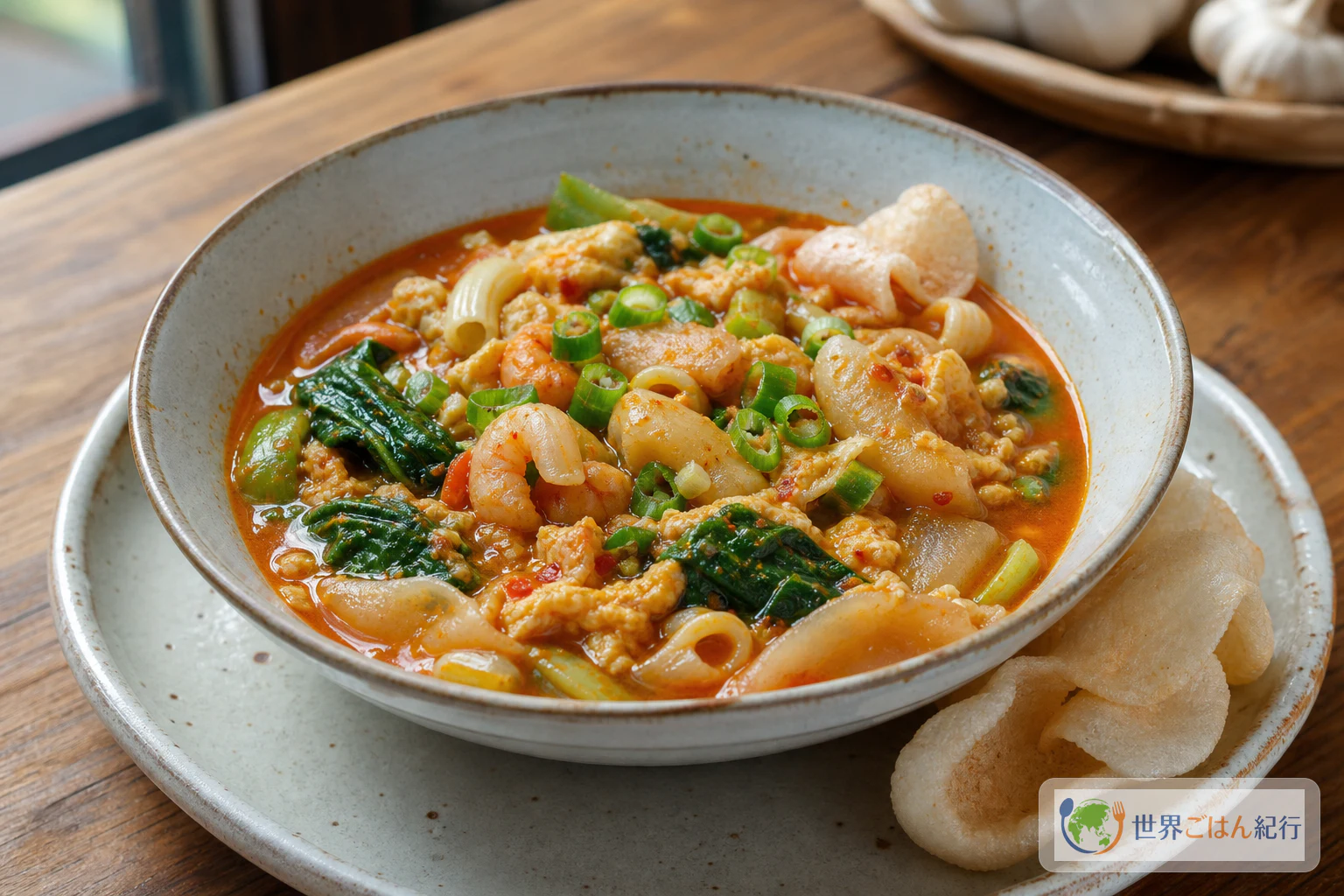
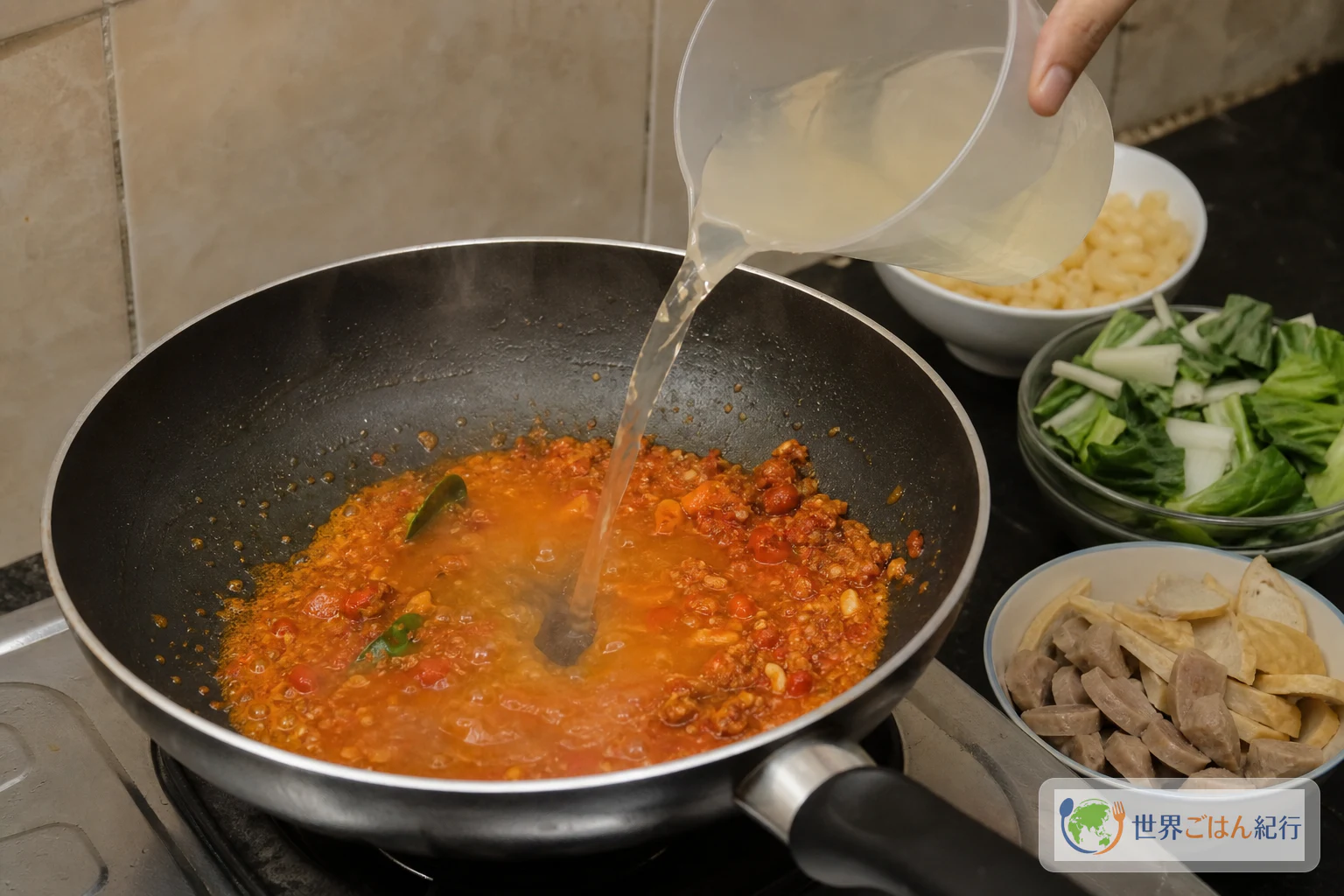
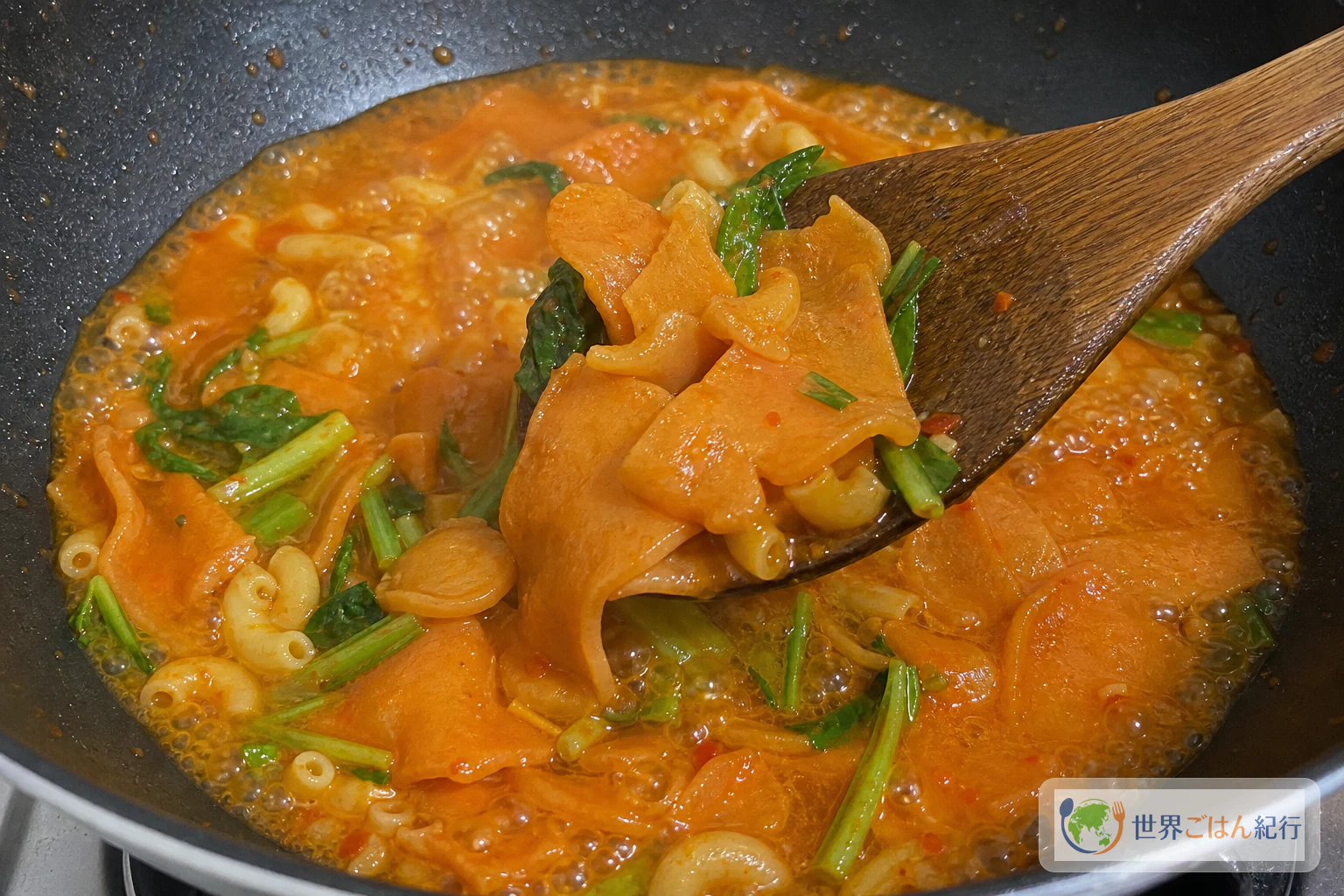
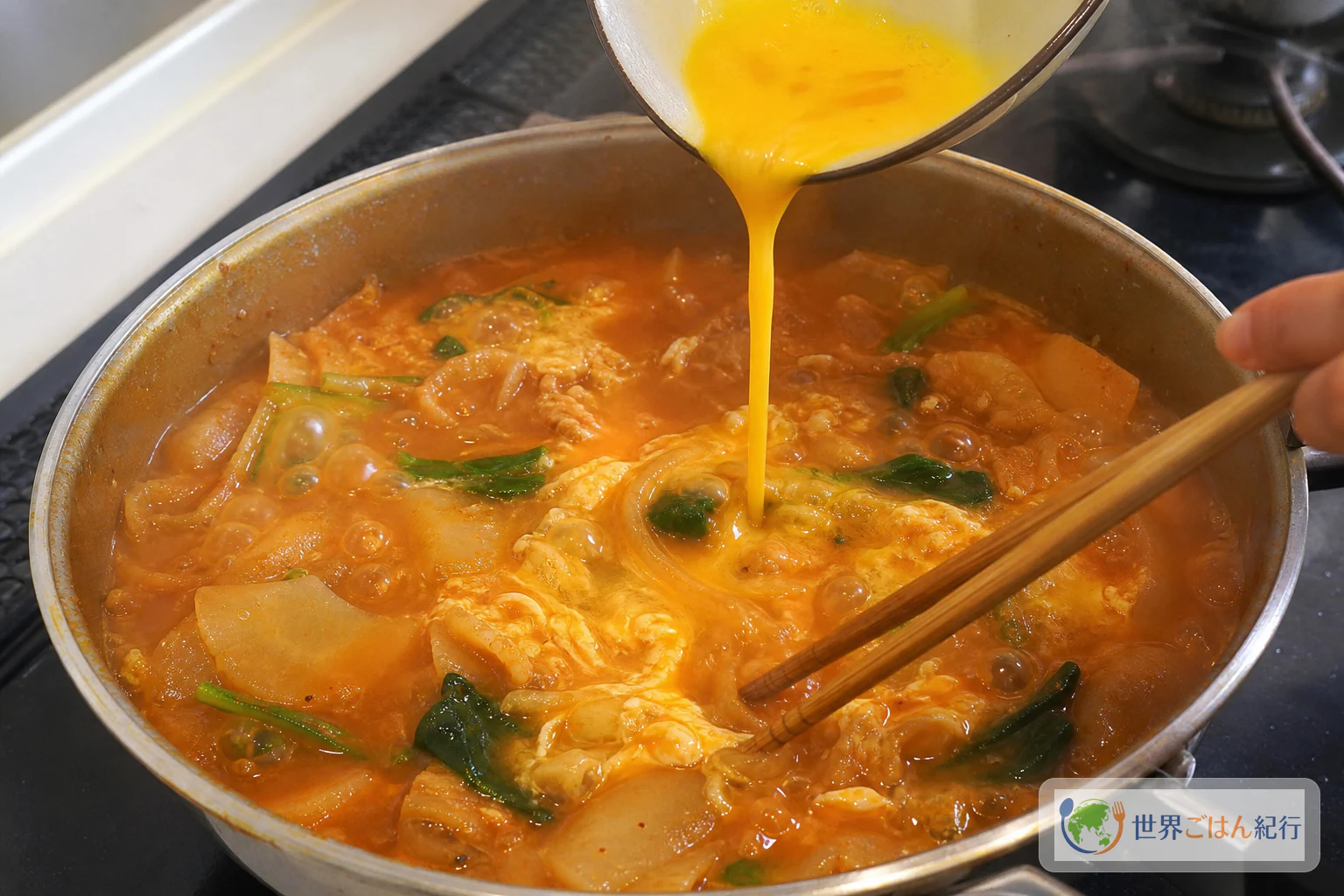
Seblak is a spicy Indonesian street soup from West Java, made by soaking dried kerupuk (crackers) until chewy and simmering them in a garlicky, chili-red broth scented with kencur. It is usually served with egg and greens, and it tastes hot, savory and aromatic rather than crisp or sweet.
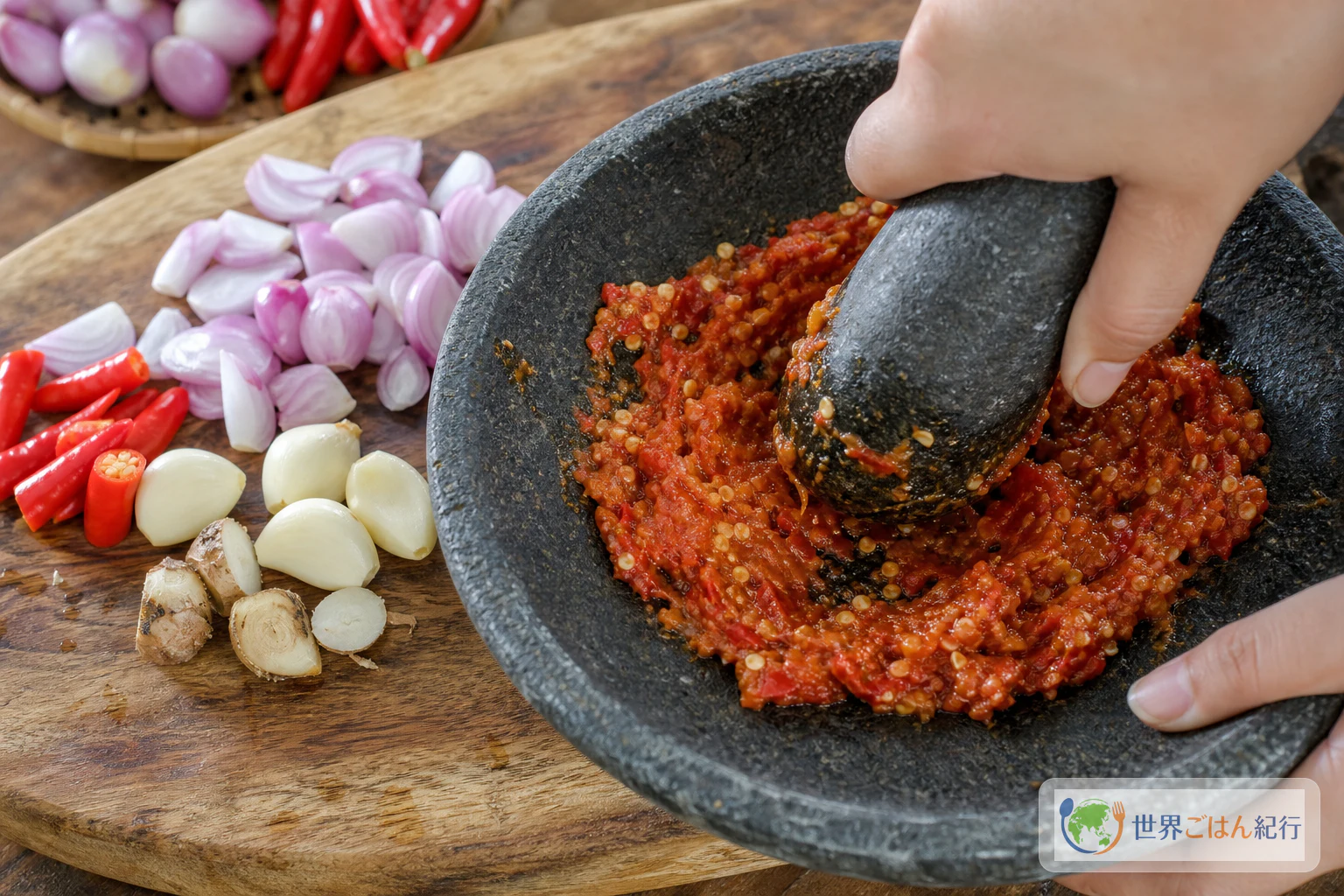
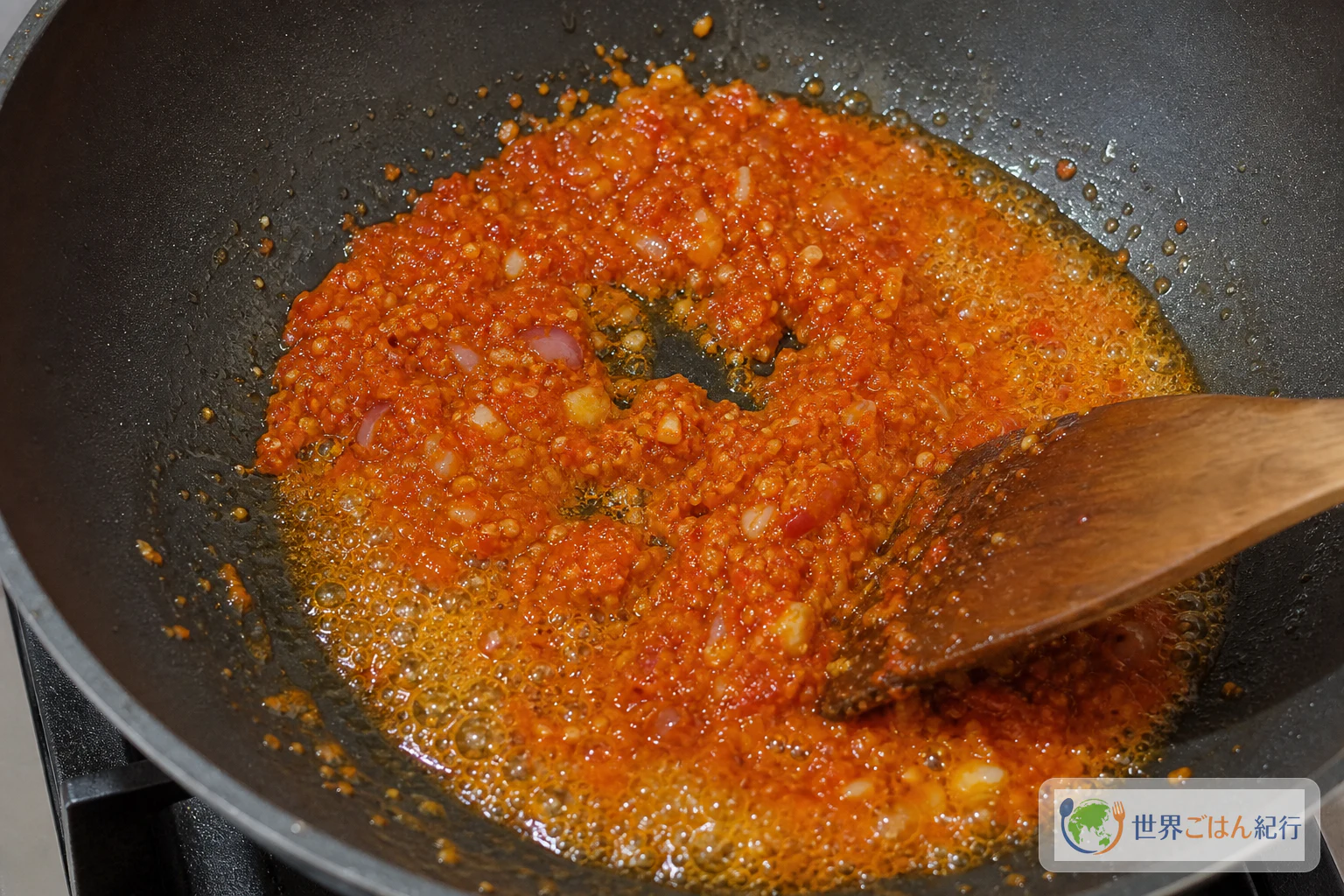
Pour water over a paste of crushed red chili, shallot, garlic and kencur sizzling in oil, and an earthy aroma rises fast. Then the soaked kerupuk goes in and slowly loosens in the pot. Seblak is a spicy kerupuk stew from West Java, Indonesia, loved especially around Bandung. Its heat carries a root fragrance a little different from Japanese chili dishes, and the first bite is softer than the name suggests: chewy kerupuk, red broth, maybe a soft egg. On evenings when you want something warm that isn't ramen or hot pot, this is a good answer.
Seblak and how it's eaten in West Java
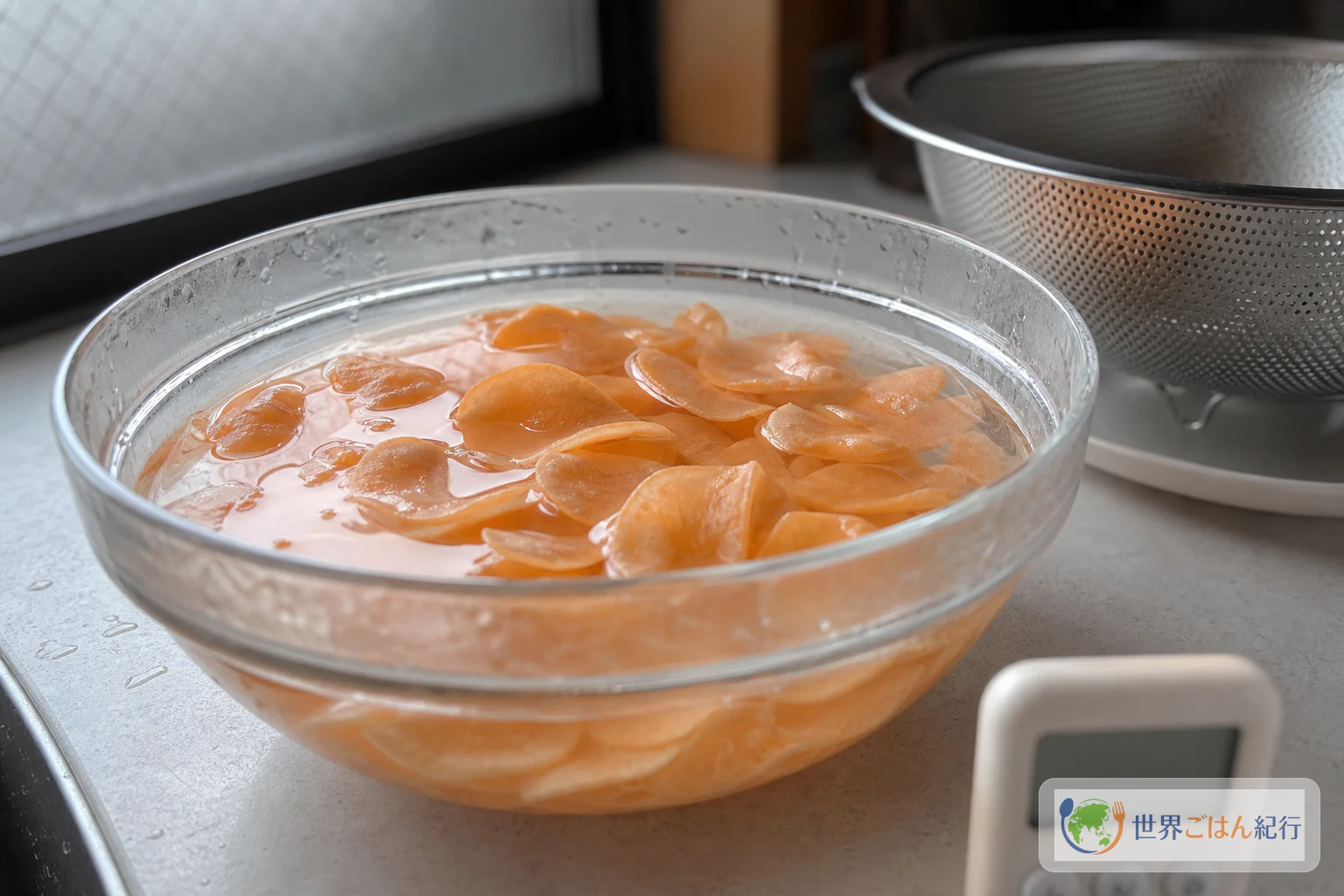
Kerupuk is the cracker served at tables and stalls all over Indonesia, and most of it is fried and eaten crisp. Seblak goes the other way. Dried, unfried kerupuk, the kind that tastes like a shrimp chip, is soaked in water until chewy, then simmered in a spicy aromatic broth. Deliberately making chewy what is meant to be crisp is what makes the dish so interesting.
Seblak began in Bandung. In recent years, stalls, eateries and social media have multiplied the add-ins: egg, greens, macaroni, meatballs, sausage, seafood, even chicken feet. The core of the flavor is still soaked kerupuk, kencur and chili, so if you want to stay close to the older form, keep the aroma of kerupuk and kencur clear.
| What to look at | Seblak as made locally | What to hold on to elsewhere |
|---|---|---|
| Kerupuk | Dried, unfried kerupuk soaked | Use dried shrimp-type or Indonesian-style kerupuk |
| Aroma | The root aroma of kencur (kencur / cikur) | Kencur if you can find it; if not, a little galangal and ginger |
| Heat | Strong, from chili and sambal | Reduce the chili, and add the sambal last |
| Ingredients | Egg, greens, meatballs, seafood, macaroni and so on | Egg, greens, macaroni and a little shrimp are easy |
| Texture | Chewy kerupuk and broth | Fix the soaking time and don't overcook |
Kerupuk is lighter than starch noodles or rice cake, and it bounces a little as it soaks up the broth. With soft egg and leafy greens added, your chopsticks keep moving despite the heat. Other spicy soups pull in different directions: Thai tom yum leans on herbs and sourness, Korean jjigae on fermentation and chili powder. Seblak rests on the root aroma of kencur and the texture of soaked kerupuk, and that's what gives it its West Javanese character.
Ingredients (serves 3) | First decide the kerupuk and the aromatic roots
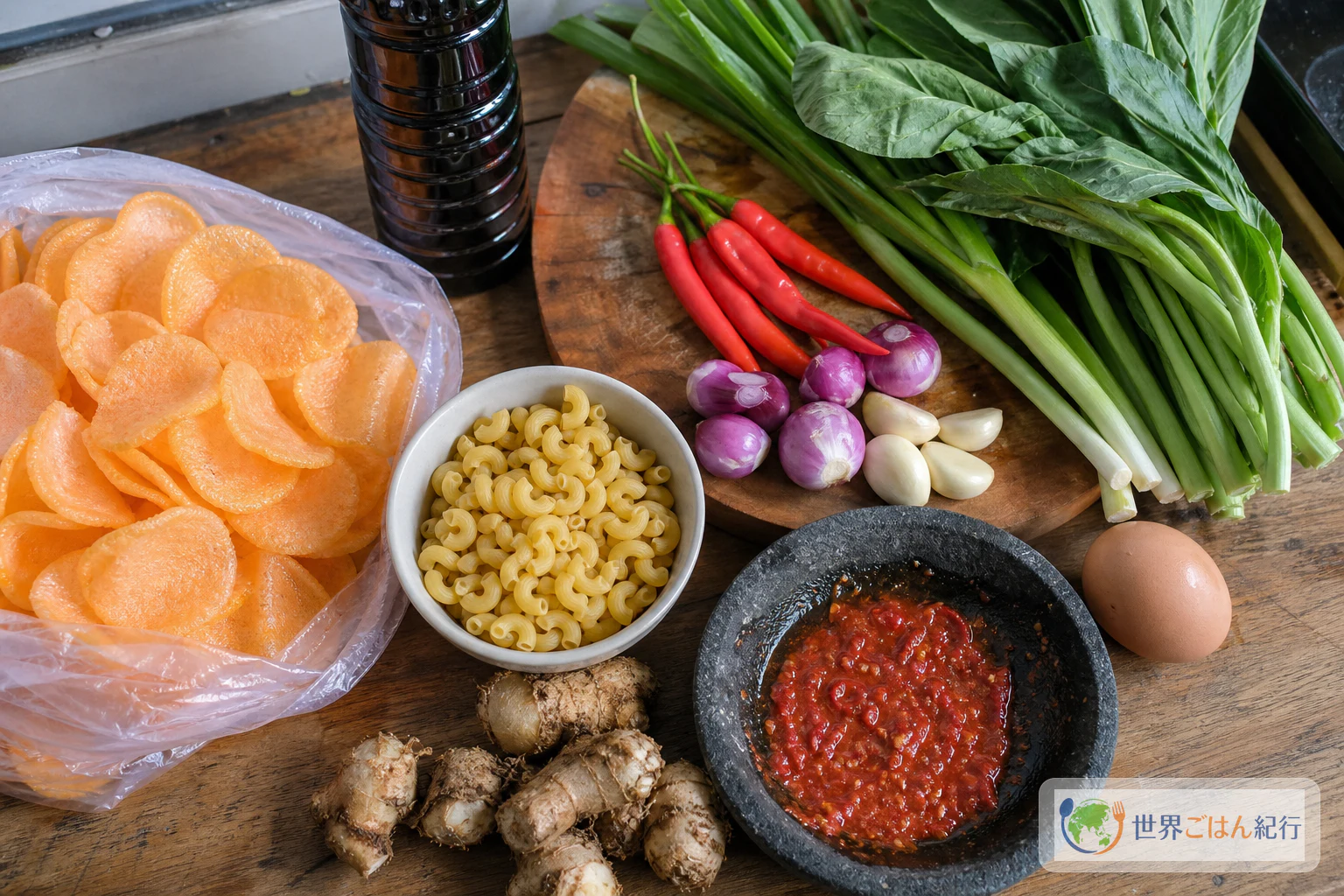
This makes three servings. Kerupuk swells in the pot, so it fills you up more than its dried amount suggests. If someone dislikes heat, halve the red chili and add the sambal at the table, not in the pot.
Notes on allergies and heat
Some kerupuk products contain shrimp, fish, wheat and egg. If you have a shrimp allergy, check the ingredient labels and avoid shrimp kerupuk and frozen shrimp. If you skip the egg, add 2.75 oz (80 g) thick fried tofu for protein and substance.
It is safer to add heat later with sambal than with chili. The first time, keep to 3 red chilies and 1 tbsp sambal, and add more at the table.
Choosing kerupuk, kencur and substitutes for seblak
Kencur
Kencur is the ingredient shoppers struggle with most. It's a root smaller than the galangal used in Thai cooking, more medicinal than ginger, with a strong earthy aroma. Nothing else matches it exactly, but a little each of frozen galangal and ginger keeps the broth from tasting like a plain chili soup, and galangal's root aroma goes deeper than ginger alone.
| Ingredient | How realistic a substitute | How to use it |
|---|---|---|
| Kencur | Top priority if available | Scrape the skin, slice thin, into the aromatic paste |
| Galangal | Gets quite close but is not the same | 8 g frozen, chopped thin since it's hard |
| Ginger | The aroma isn't close but it works for home | Only 5 g. Too much makes it a plain ginger soup |
| Lemongrass | Changes the direction | If used, only 2 inches (5 cm). The aroma leans Thai |
| Sambal | Effective as reinforcement of heat | Don't overdo it in the pot; add more at the table |
Kerupuk, sambal and kecap manis
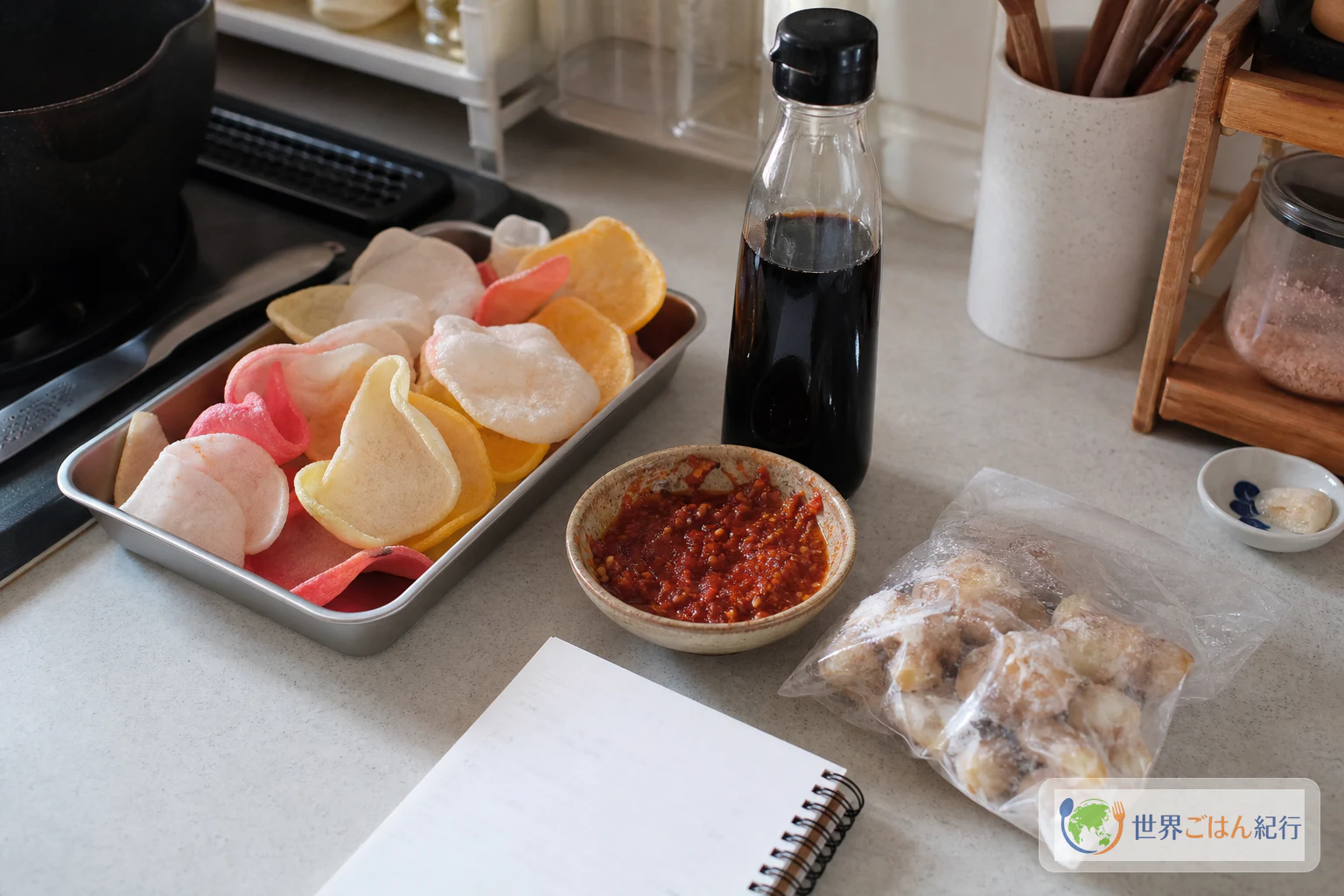
Kerupuk is the star, so buy the dried kind you soak and simmer. Store-bought fried shrimp chips won't give seblak its chewiness. If you have no dried kerupuk, break dried rice paper into 1 inch (3 cm) squares and simmer them for 30 seconds, though the result is closer to a different dish. Ordinary eggs and greens from any supermarket are fine.
Sambal is how you manage the heat. Heat set in the pot is hard to share with a family, so keep the pot mild, put sambal on the table, and let those who like it hot add their own.
Kecap manis adds a sweet roundness to the spicy broth. Leftovers go easily into nasi goreng, mie goreng and sate ayam, so the bottle won't sit around for long.
Instructions | Soak the kerupuk and simmer it briefly
Seblak looks like a spicy soup, but water management matters more than heat. Three mistakes blur the aroma and make the texture heavy: soaking the kerupuk too long, under-frying the aromatic paste, and simmering the ingredients too long after adding them.
Seblak troubleshooting
Texture is the hard part. Soak the kerupuk too long and it tears and turns slimy; too little and a hard core stays in the center.
| Problem | Cause | How to fix it |
|---|---|---|
| The kerupuk turns mushy | Soaked too long or simmered too long | Next time soak 15–20 minutes and simmer within 6 minutes |
| The center is hard | Soaked a thick kerupuk briefly | Soak thick ones 30 minutes and break one open to check before simmering |
| Too hot | Increased both the chili and the sambal | Add 1 beaten egg, ½ cup (100 ml) water and 1 tsp kecap manis and simmer 2 minutes over low heat |
| Thin aroma | Under-fried aromatic paste | Fry over medium-low until red oil appears at the edge |
| Tastes like a plain ginger soup | Too much ginger | Keep ginger to 5 g. Use a little galangal or kencur |
| Too many ingredients | Added too many meatballs, noodles or greens | The first time keep to 4 oz (120 g) kerupuk and 2 oz (60 g) macaroni |
Serving, storing and varying seblak
Serving
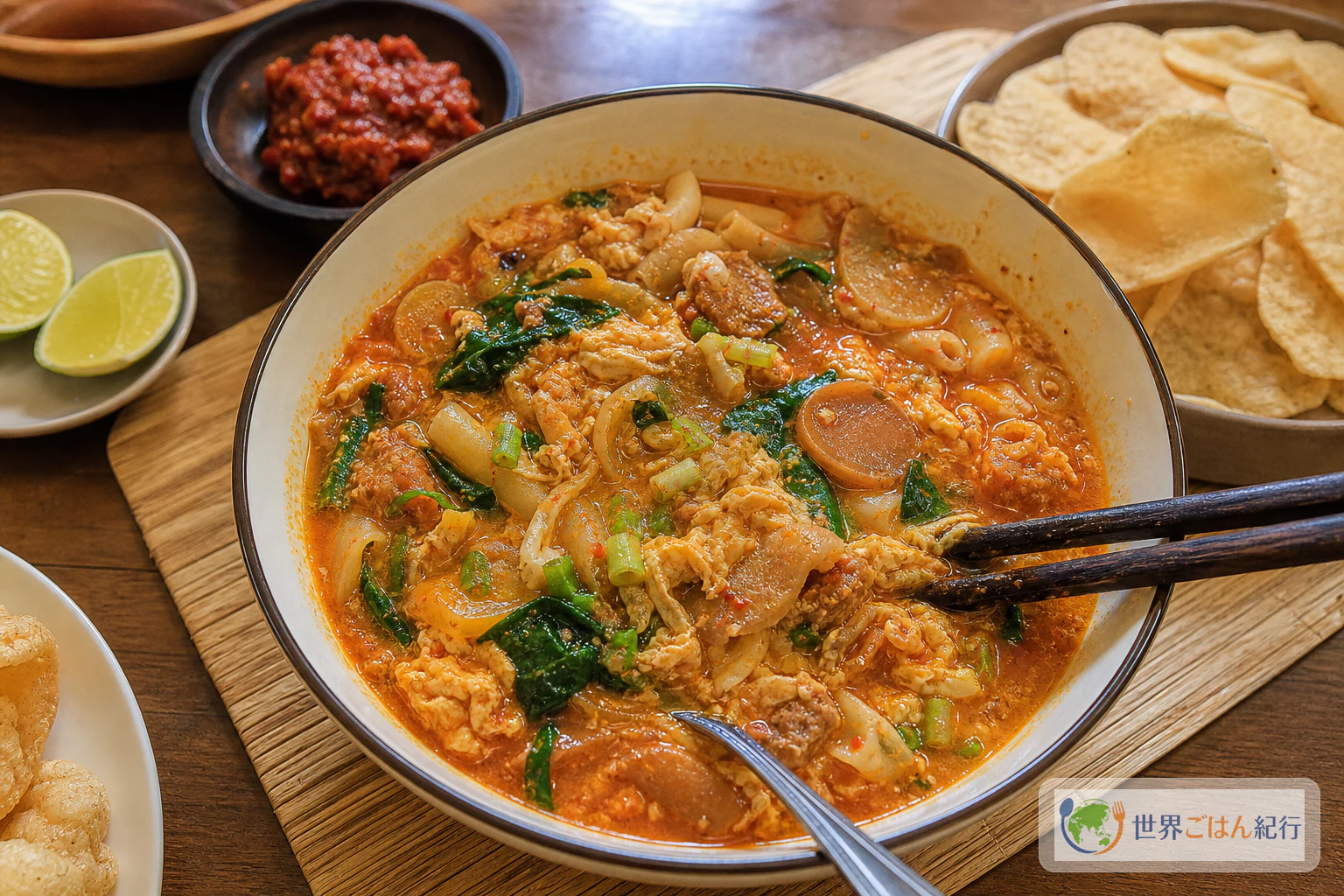
Eat seblak fresh. The kerupuk keeps soaking up broth, and if it sits long after serving it goes from chewy to heavy. Take the first few bites as they are, then stir in sambal a little at a time so the flavor doesn't go flat.
Light sides go well: cucumber, tomato, lemon, fried shallots and extra fried kerupuk. Skip the rice. Seblak works better as a light meal, on a different day from nasi goreng or mie goreng.
If someone at the table wants less heat, put only 1 tsp of sambal in the pot and the rest in small dishes. Heat lovers can mix sambal and lemon at the edge of the plate and coat the kerupuk bit by bit, which keeps the aroma lively to the last bite.
Storing and making ahead
Seblak is best made just before eating. Overnight in the refrigerator, the kerupuk keeps absorbing broth and turns from chewy into a sticky stew.
To get ahead, prepare only the aromatic broth and keep the kerupuk dried and unsoaked. Just before eating, soak the kerupuk 20 minutes and simmer it 5–6 minutes in the warm broth. It tastes nearly fresh.
Let leftover seblak cool, put it in an airtight container, refrigerate, and eat it within a day. To reheat, move it to a pot, add ¼ cup (80 ml) water and warm 3–4 minutes over medium-low heat. In a microwave, warm at 600 W for 2 minutes, stir once and warm 1 more minute. Either way, keep it from boiling hard, or the kerupuk breaks.
Add-ins and what to cook next
Adding everything at once makes it hard to taste what you're eating. The first time, kerupuk, egg, greens and a little shrimp or meatballs are enough. Once you're used to it, try fish balls, chicken balls, glass noodles, napa cabbage and mushrooms.
The kecap manis also carries sate ayam and its sweet char aroma, and how to make a sambal substitute shows how to split the heat between what you stir-fry in and what you serve on the side. For other Indonesian street snacks, try cilok, the chewy tapioca balls in Bandung style, or cimol, fried tapioca balls shaken with chili flavor powder. For a soup of a different kind, bakso is the beef meatball soup. For a vegetable-centered table, try gado-gado, the vegetables with peanut sauce. For a rich stew, go to rendang, or see rawon for the aroma of black soup. Next to these, seblak is the unusual, lighter plate that treats kerupuk as a staple.
FAQ | Where people get stuck making seblak
Q1. What is seblak, and what does it taste like?
Seblak is a West Javan soup, loved especially around Bandung, built on soaked kerupuk with chili, shallot, garlic and kencur. It is spicy and savory, with an earthy root aroma from kencur, and the kerupuk turns soft and chewy rather than crisp. Egg and greens round it out.
Q2. Can I substitute store-bought fried shrimp chips?
I don't recommend it. Fried shrimp chips crumble when simmered and won't give seblak its chewy texture. If you use them anyway, keep them out of the pot and set them on top of the bowl at the end.
Q3. Can I make seblak that isn't spicy?
With 1 red chili and 1 tsp sambal it is much milder. Leave the kencur, shallot and garlic in the aromatic paste and reduce only the heat. If you took out too much, 1 tsp kecap manis and a little lemon can restore the outline.
Q4. Can I make it as next-day lunch?
It isn't suited to a lunch box, since it has broth and heat and the kerupuk breaks down over time. If you want it the next day, refrigerate it and reheat it in a pot with water added, or make just the aromatic broth ahead.