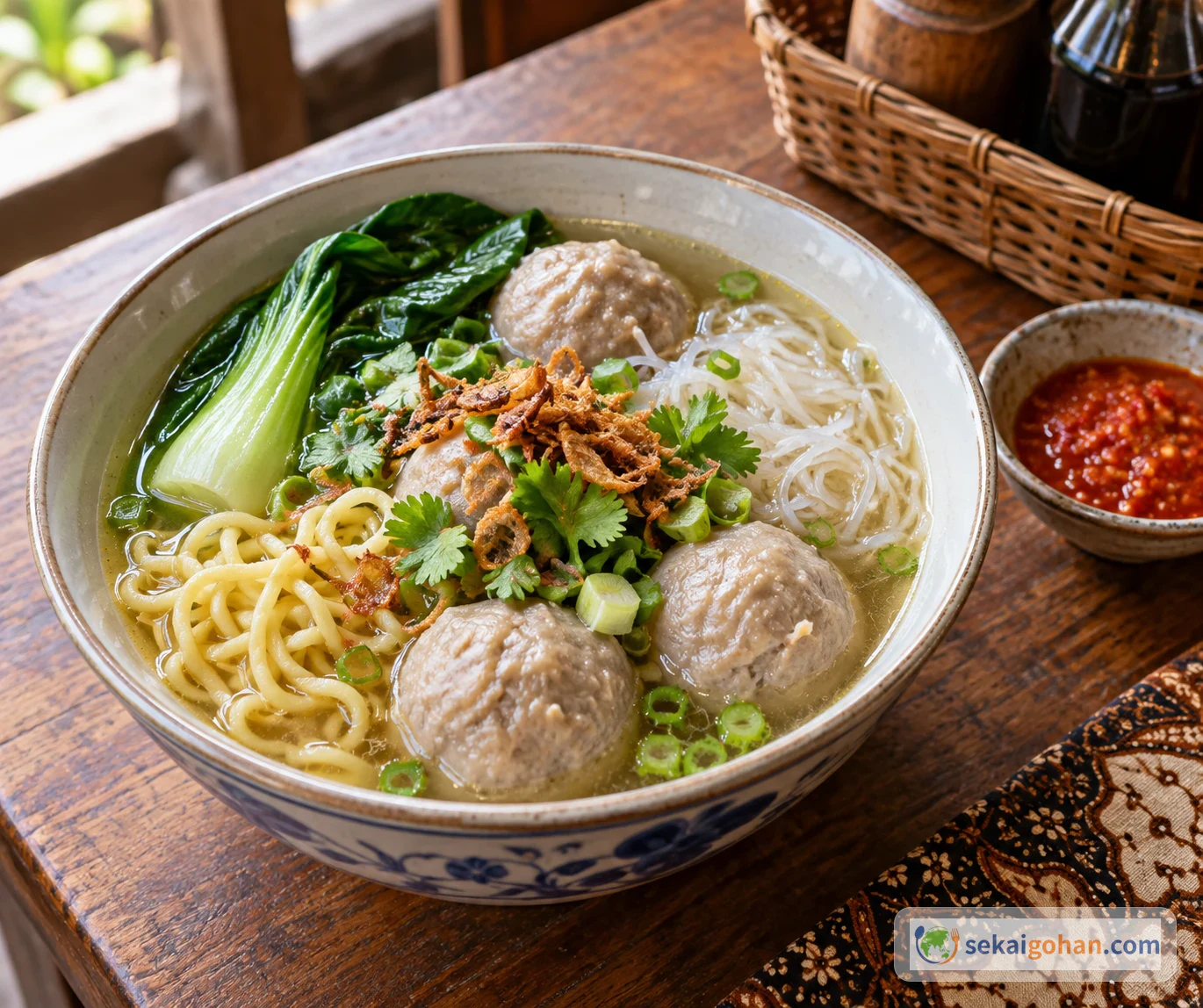
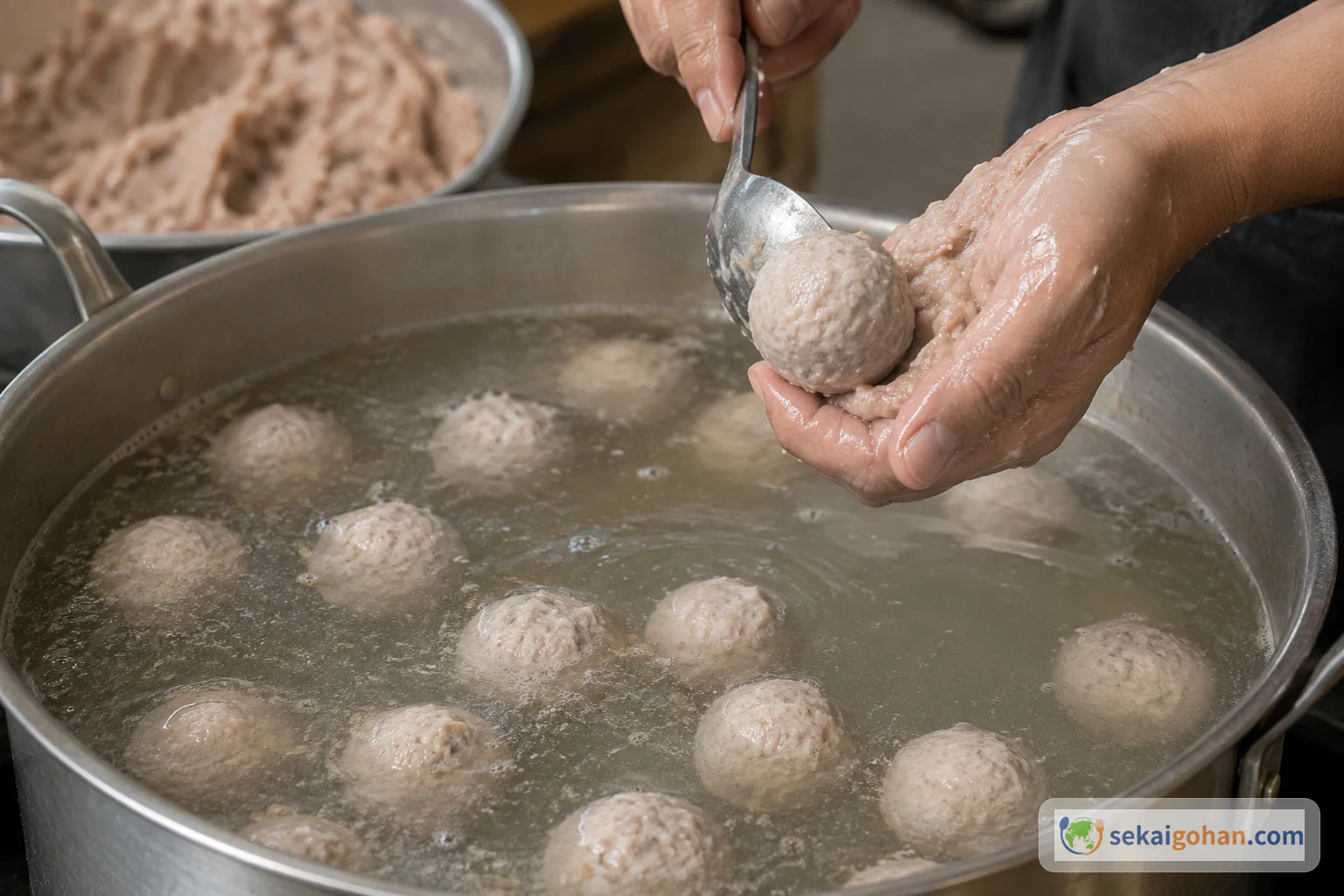
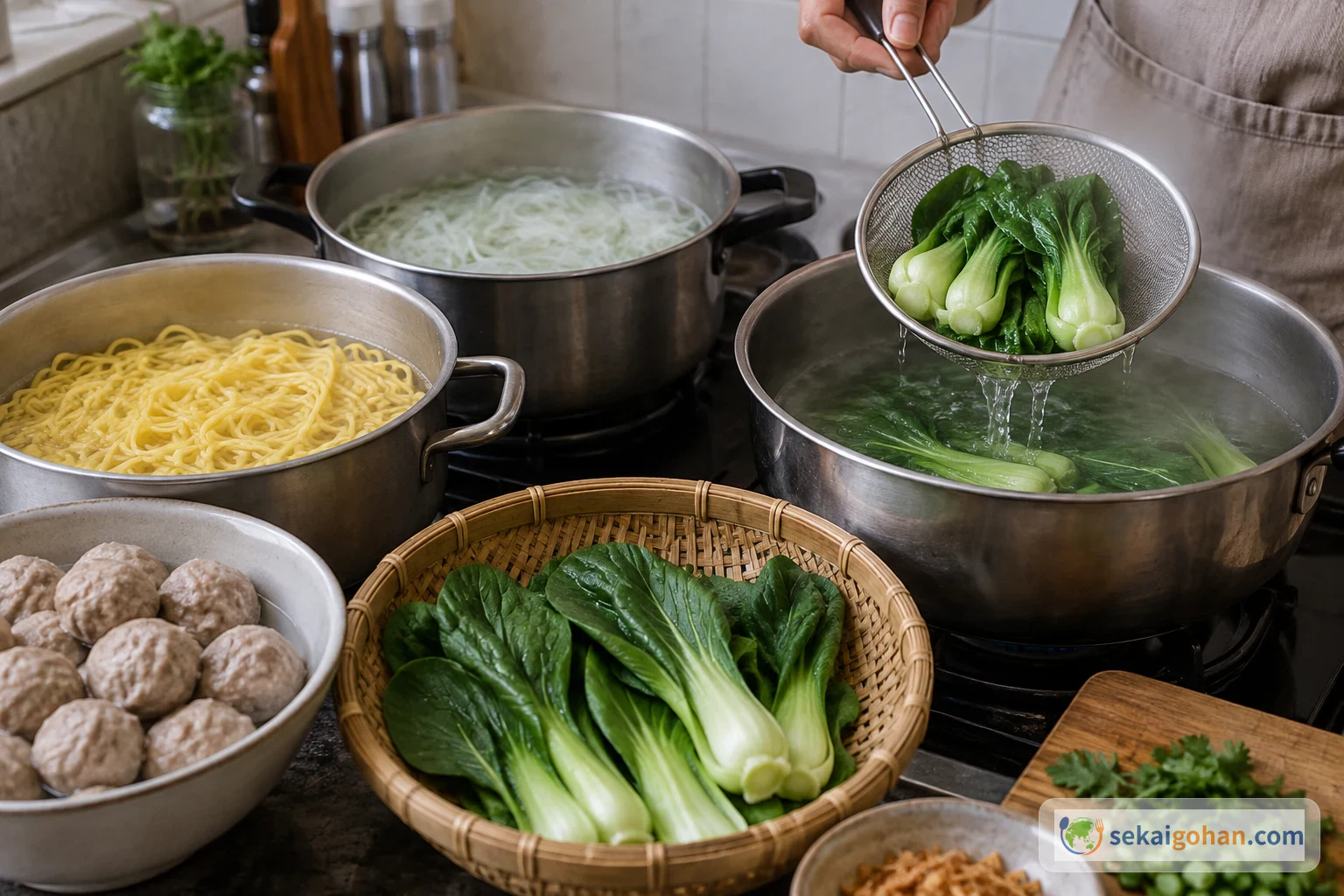
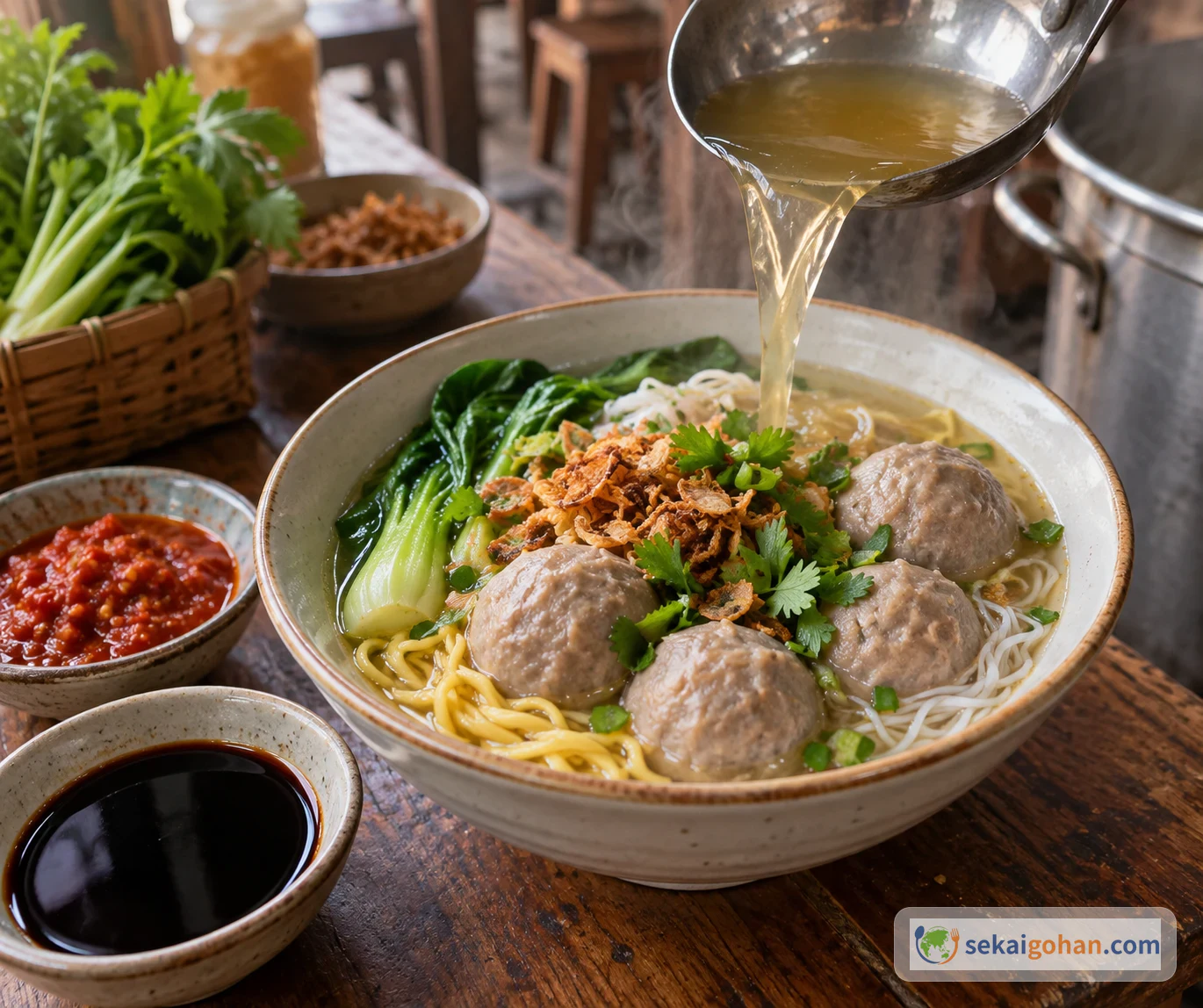
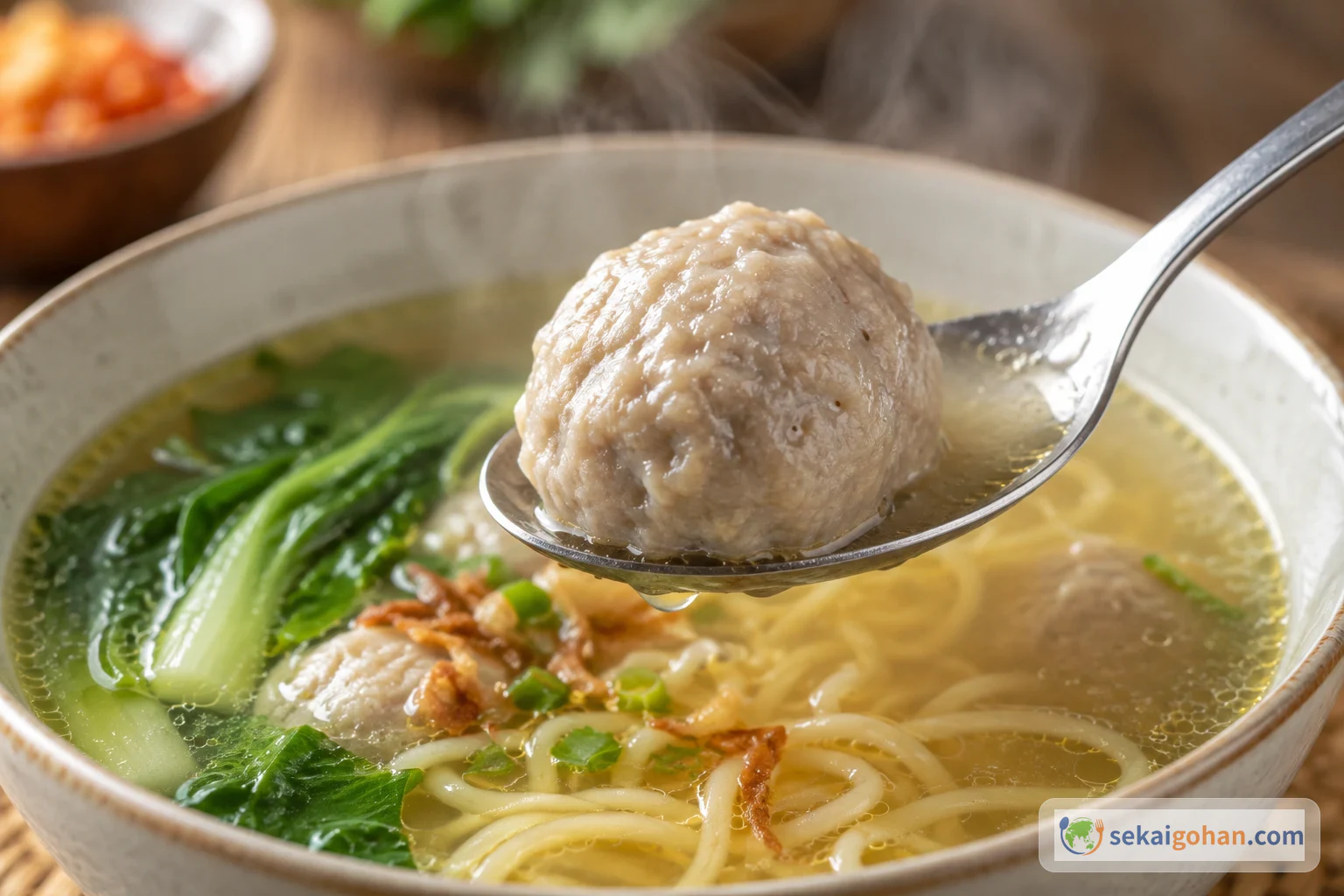
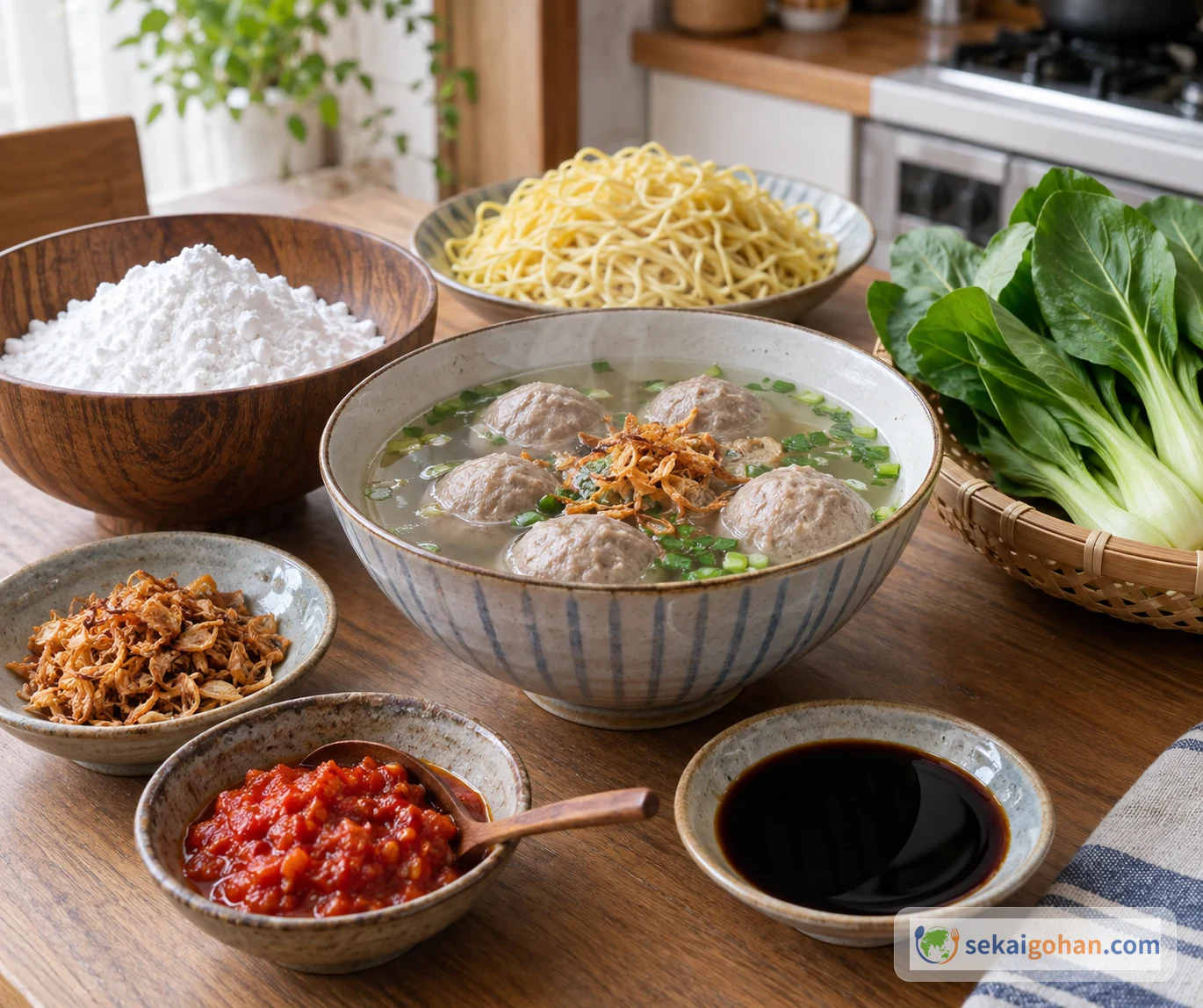
Scoop up a little cold beef paste, squeeze it out of a wet palm, and let it drop into hot water. The surface tightens and turns smooth, and the ball drifts up from the bottom of the pot. Put those meatballs in a bowl of hot beef broth fragrant with garlic and white pepper, and you have Indonesian bakso. The meatballs are made with beef and tapioca, and they're springy rather than soft: they bounce back when you bite in.
Bakso in Indonesia
Bakso is an Indonesian staple, sold everywhere from street carts to restaurants. Vendors push their carts and tap a bowl with a spoon to let customers know they're coming. People eat it when they're simply hungry, but it's also a bowl for tired days and for gatherings of family and friends.
Yellow noodles, glass noodles, tofu, fried shallots, and celery are the classic additions, though every vendor and region builds the bowl a little differently. Soto ayam, the yellow chicken soup, also comes with noodles and greens. In bakso, though, the springy meatballs and the beef broth are the stars.
Solo, Malang, and other bakso styles
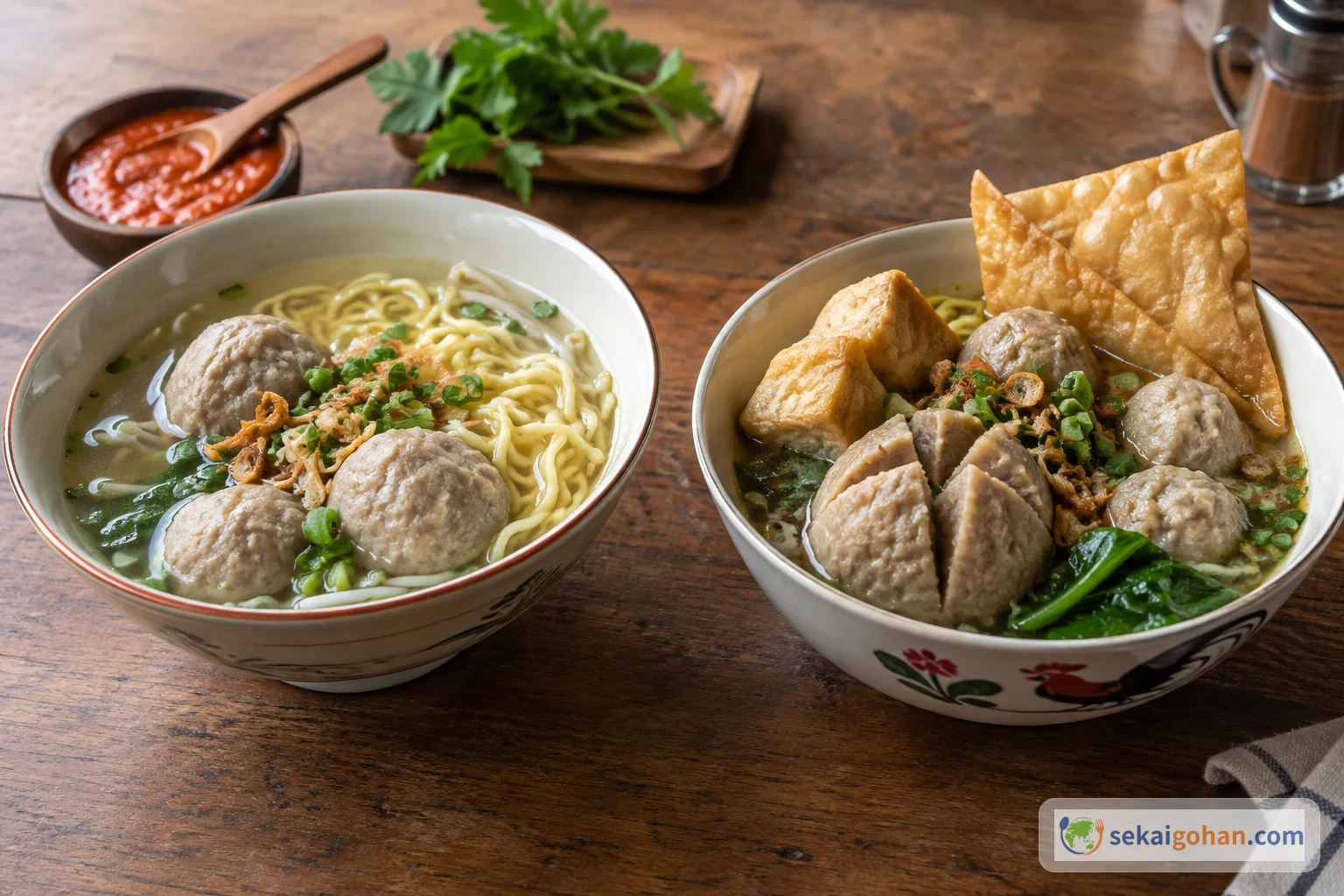
Solo-style bakso is a simple bowl of clear broth with yellow noodles. Malang-style bakso is a loaded bowl with tofu, wontons, and more. Beyond those two, bakso names are built along several axes: ingredients, accompaniments, region, size, shape, color, filling, cooking method, and presentation. What's in the bowl tells you how that place or vendor means it to be eaten.
| Name / region | Typical bowl | How to approach it at home |
|---|---|---|
| Solo | Clear broth, yellow noodles, relatively simple toppings | This recipe's base. The beef broth and springy meatballs take center stage |
| Malang | More tofu, wontons, and greens; many topping combinations | Halve the meatballs and add fried tofu or wontons |
| Bakso urat | Meatballs with the texture of tendon or sinew | Beef tendon needs prep. For a first try, check the texture with regular meatballs |
| Bakso tenis / beranak | Large meatballs filled with an egg or small meatballs | Cooking through to the center takes longer, so treat it as a separate dish |
| Bakso mercon | Spicy meatballs filled with chiles | Start by serving sambal on the side and let everyone adjust |
The bowl here starts from the clear Solo style. To move it toward Malang, add extra toppings and put sambal on the table.
Where bakso comes from
Nobody fully knows. Some link it to the food culture of Chinese traders and the way that food was adapted in Java, but no record names a single inventor or a definite year it arrived. It's best understood as Chinese meatball traditions mixing with Indonesian street food, religion, and regional ingredients to become the bakso of today.
In Muslim-majority Indonesia, beef and chicken bakso are the norm. Pork meatballs exist in areas with larger non-Muslim populations, but this recipe uses beef.
Ingredients (serves 4)
That's about 24 meatballs of 25–30 g each (around 6 per person), and enough broth to ladle generously even with noodles and greens in the bowl. Ground beef that's too lean turns dry; too much fat makes the paste loose. Choose lean ground beef with a little fat and keep it in the refrigerator until right before you use it.
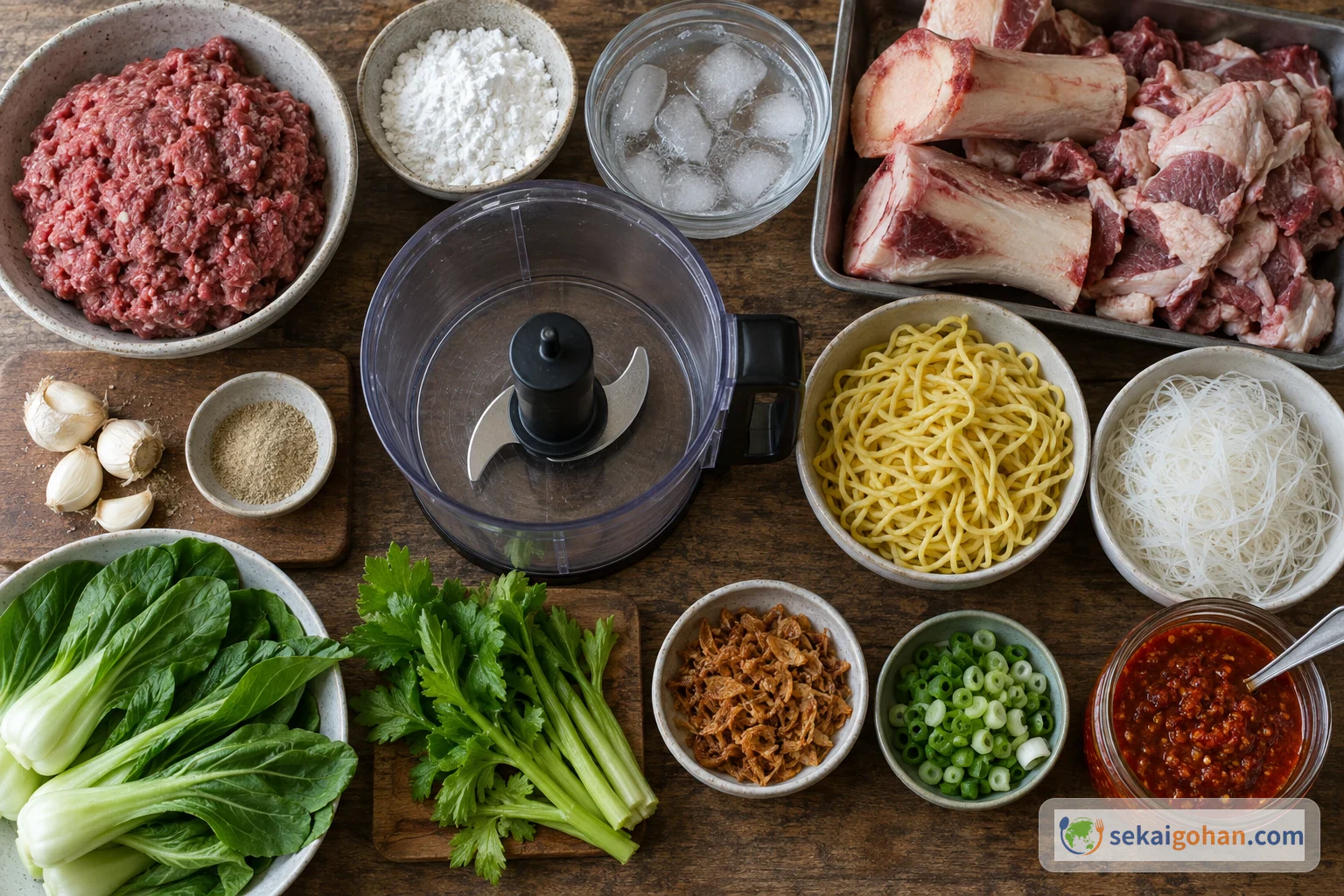
Wash any tools that touched raw beef or its juices with dish soap before you cook the meatballs. Don't judge ground beef by color: use a thermometer to confirm the center of the largest meatball has reached 75°C (167°F) for at least 1 minute. If eggs, beef, tapioca products, or wheat and soy in store-bought condiments are a concern, check each product's label.
Where shopping effort pays off
Ground beef, beef bones, noodles, and greens are all at a regular supermarket. What's worth seeking out at an Asian grocery or online is tapioca starch, which gives the meatballs their bounce, and sambal oelek, which sharpens the bowl at the end. Potato starch can stand in for tapioca, but the mouthfeel gets a bit lighter, so if you want the Indonesian texture from the first try, go with tapioca.
Don't stir sambal oelek into the soup from the start; set it beside the bowl. That way you add not just heat but garlic and chili aroma later, and kids or anyone who doesn't like spice can eat from the same pot. One jar that lists its ingredients and heat level is enough. If you use fresh chiles instead, balance acidity and salt separately.
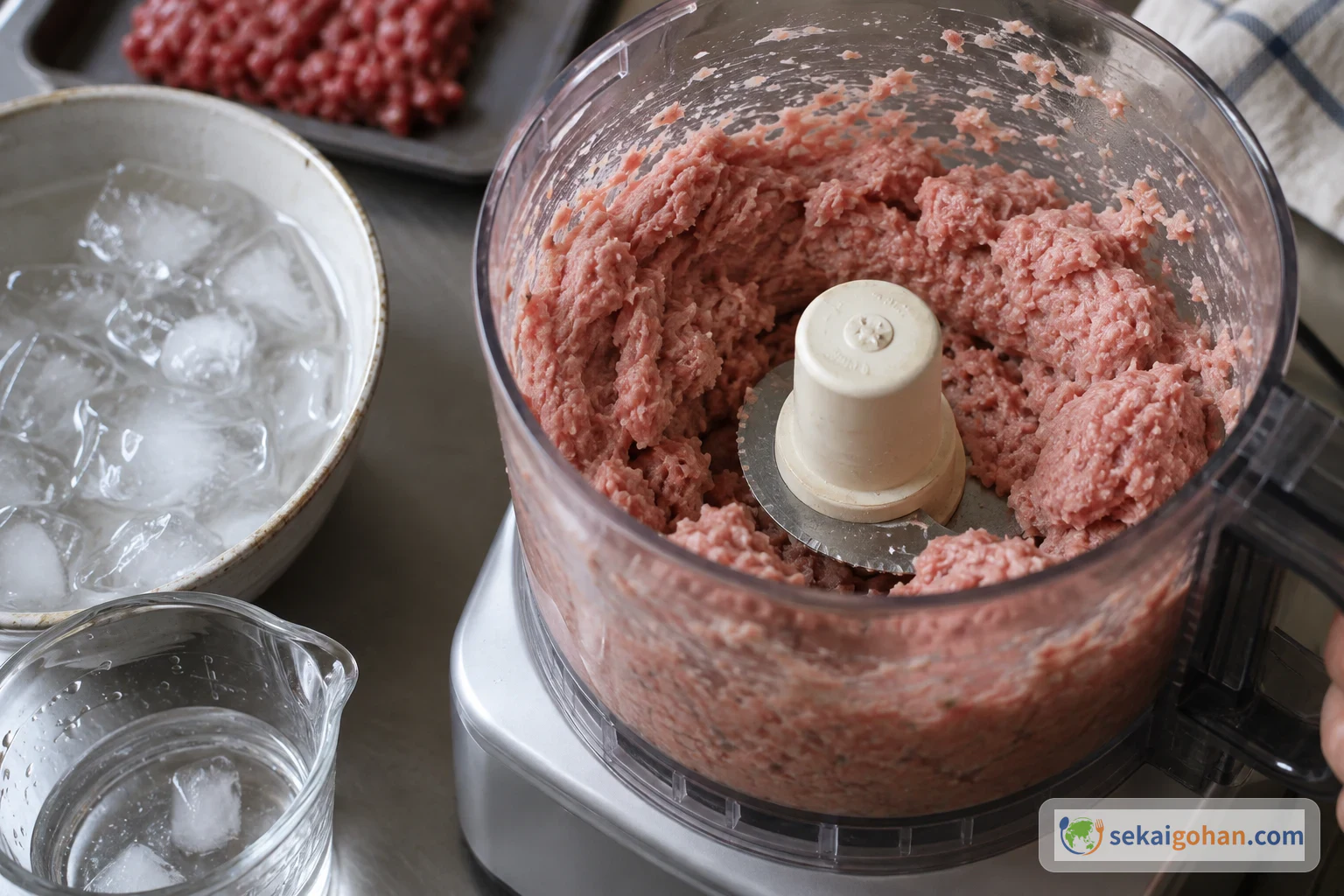
You can make the smooth meat paste with just a knife, but chopping cold meat evenly fine takes a long time. A large food processor mainly buys you the room to process 1 lb (500 g) of ground beef and the ice water in one go. For smaller batches, two rounds in the machine you already have is fine, and if you don't plan to make bakso or similar meatballs regularly, you don't need to buy one.
Choosing beef, starch, and noodles for bakso
The fat in the beef, the amount of tapioca, and the noodles you choose set the texture and heartiness of the bowl. If you don't have beef bones, use more beef shank and replace part of the water with store-bought unsalted beef stock. With less gelatin from the bones, the soup will have a lighter body. If you add granulated bouillon, check how salty it is first, and do the final seasoning after the meatballs go in. Pouring lots of kecap manis into the pot for a richer flavor takes you away from a clear Solo-style broth.
For noodles, either yellow or glass noodles works. Yellow noodles bring wheat aroma and heft, and glass noodles bring a light texture that soaks up the broth. If you use both, keep each portion small so the meatballs and greens don't get buried. Which noodles you pick matters less than cooking the noodles separately so the soup stays clear.
Instructions
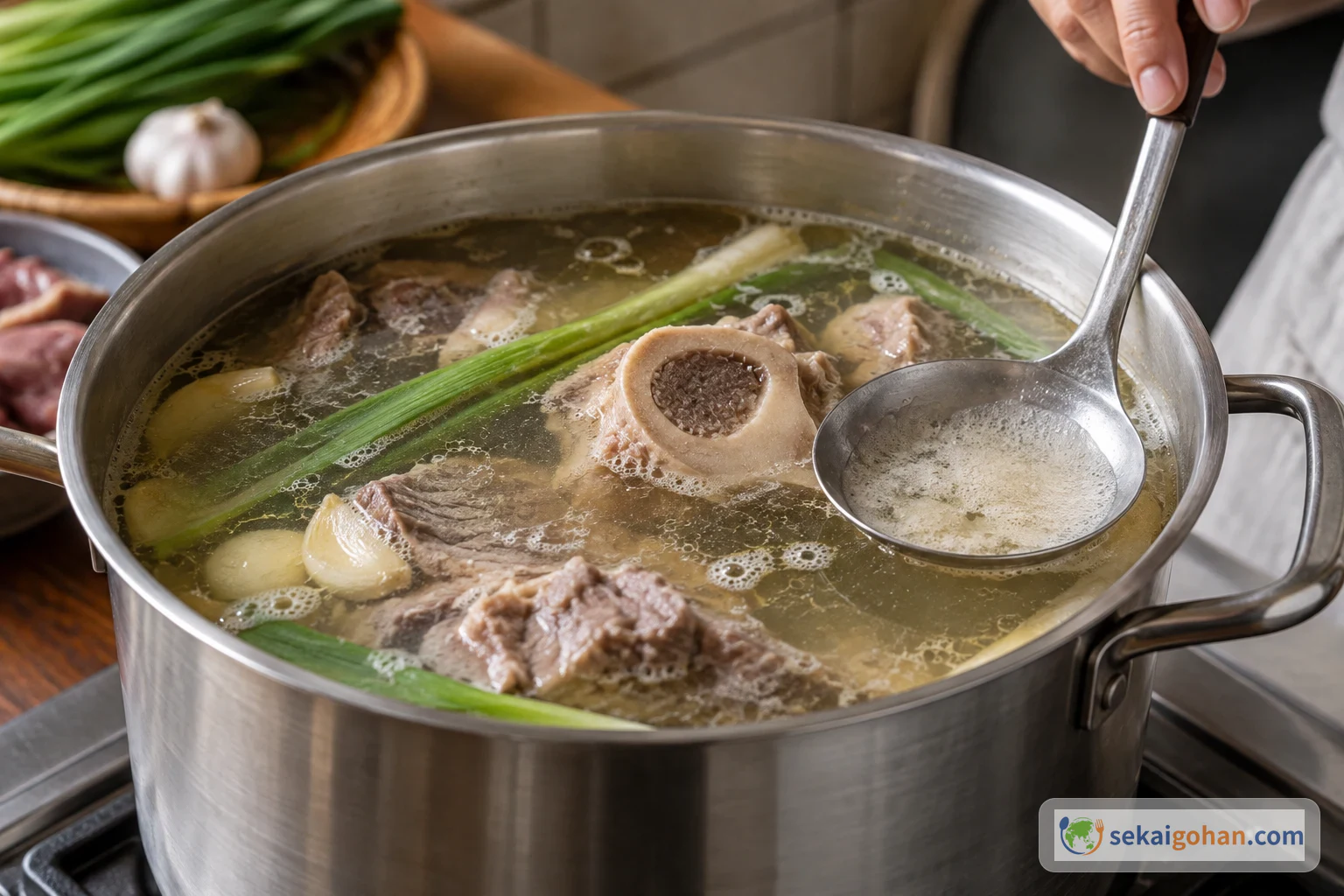
You can make the meatballs while the broth simmers. Start the broth first and keep the pot at a quiet, low simmer while you make the paste. Dropping meatballs into rapidly boiling water roughens their surface, so watch the cooking after they float and the internal temperature as two separate checks.
Keeping the meat and equipment cold is the shortest route to springy meatballs. When the paste warms up, the fat separates and the surface turns grainy when cooked. Even mid-process, put the container back in the refrigerator if it gets lukewarm.
Common bakso problems and fixes
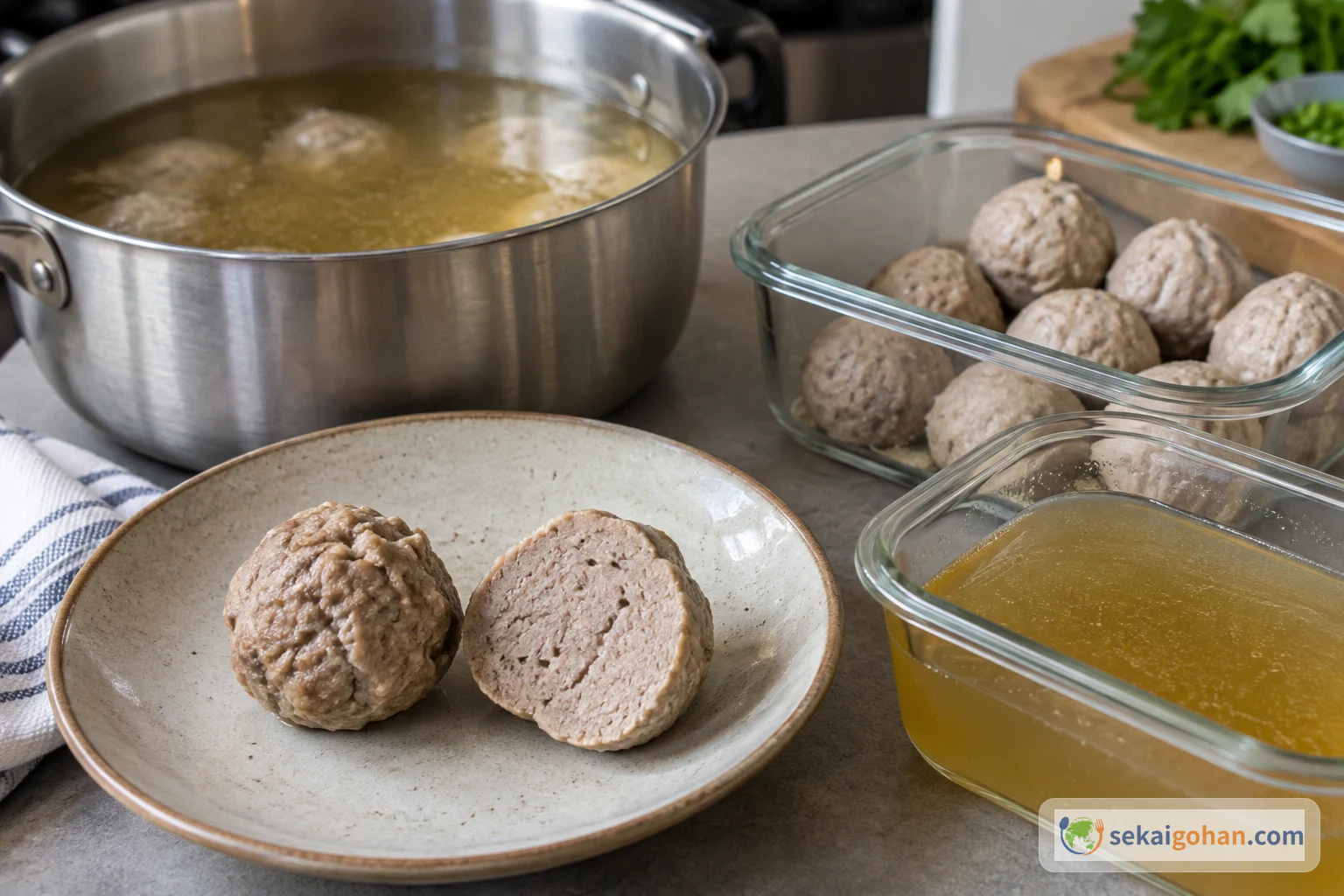
The hard part at home is making meatballs that aren't tough but still hold together. Keep the beef cold while you grind it fine, work in ice water a little at a time, and add the tapioca last. Then keep the pot from boiling hard. More tapioca doesn't automatically mean better meatballs, because the meat's temperature, the mixing order, and how hard the water moves all play a part.
| What happened | Main cause | Fix |
|---|---|---|
| Meatball surface is grainy | The paste warmed and the fat separated | Chill the bowl over ice and smooth it with short pulses. Don't add water |
| Meatballs fall apart in the water | The tapioca isn't evenly mixed in | Fold from the bottom with a spatula and rest 10 minutes. If still loose, add 1 tsp at a time |
| Meatballs are hard and starchy | Too much tapioca, or the water boiled hard | Next time use 10 g less starch and poach at 80–85°C (176–185°F) |
| Broth turns cloudy white | Bones boiled hard, or noodles cooked in the same pot | Strain through a fine-mesh sieve, add a little boiling water, and bring back over low heat. Season last |
| Flavor is flat | Too little salt in the broth | Add salt a pinch at a time; add heat, acidity, and sweetness separately at the table |
Don't judge the meatballs safe because they float or because of their color. Cook until the center of the largest one has been at 75°C (167°F) for at least 1 minute. If you can't measure, cut one open, check that the center is no longer raw paste, and keep warming the rest over low heat. When you serve, use tongs and cutting boards that never touched the raw meat.
Serving and storing bakso
Season the pot simply and let each person add sambal and sweet soy sauce at the table, which is closer to how bakso is eaten in Indonesia. The same condiments also go well with sate ayam and nasi goreng.
For leftovers, keep the noodles and greens apart, and put the meatballs and broth in separate shallow containers. Let them cool slightly, then refrigerate or freeze them. Stored separately, the noodles won't soak up the liquid and fall apart. To reheat, bring the broth to just below a simmer without letting it boil, then return the meatballs. Frozen meatballs and broth taste best when used soon, and they shouldn't be refrozen after thawing.
Nutrition estimate (1 serving, with toppings and noodles)
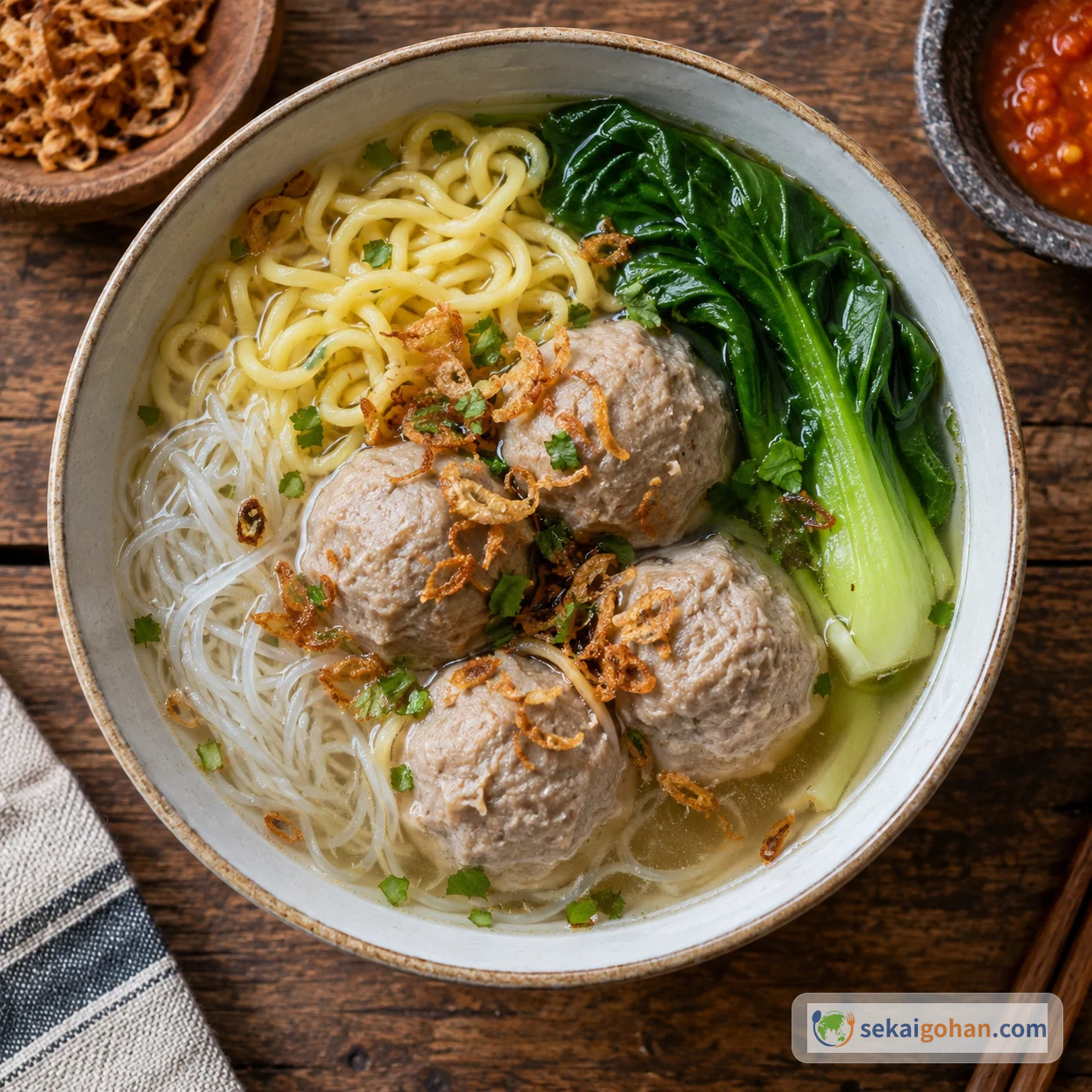
These values assume the ground beef, bone broth, yellow noodles, glass noodles, and greens are divided into 4. They change with the beef's fat, the amount of noodles, fried shallots, and kecap manis. Leaving some of the soup in the bowl cuts your salt intake.
| Per serving (estimate) | Value |
|---|---|
| Energy | about 560 kcal |
| Protein | about 1 oz (29 g) |
| Fat | about 27 g |
| Carbohydrates | about 1.75 oz (48 g) |
| Fiber | about 3 g |
| Sodium | about 1800 mg |
| Salt equivalent | about 4.6 g |
FAQ
Can I use potato starch instead of tapioca starch?
You can, but at the same amount the meatballs come out a little harder and less bouncy. With potato starch, start with 2.5 oz (70 g) and add 5 g at a time if the paste doesn't come together. Tapioca gives the Indonesian bounce. Potato starch is the convenient choice, and it still makes a good, simple "meatball soup."
What if I don't have a food processor?
Chill the ground beef, chop it fine with a knife, then knead it in a bowl while adding ice water a little at a time. Some grain of the meat remains, so the texture is coarser than with a machine, but the order stays the same: work cold, and add the salt first. For small batches it's easier to split the meat mixture in two and knead each half than to buy a machine just for this.
How do I make bakso that isn't spicy?
Keep sambal oelek out of the pot and serve it on the side. Without chiles, the garlic and white pepper in the broth come forward. Anyone who likes heat can add 1 tsp at a time, which helps when people at the table have different spice tolerances. A little vinegar or lime on the side sharpens the flavor without adding heat.