Cơm Nắm Muối Vừng: Vietnamese Rice Balls with Sesame-Peanut Salt

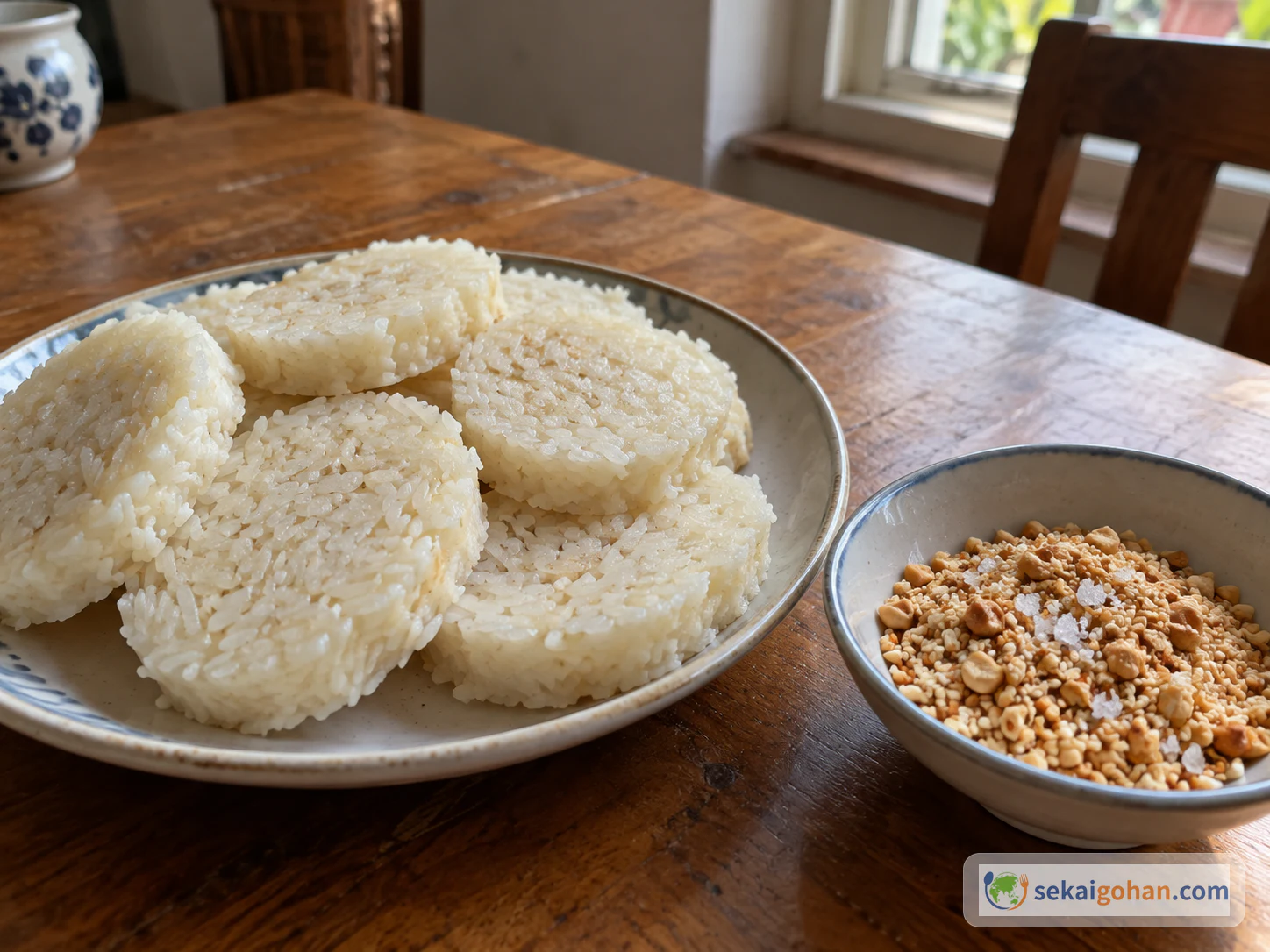
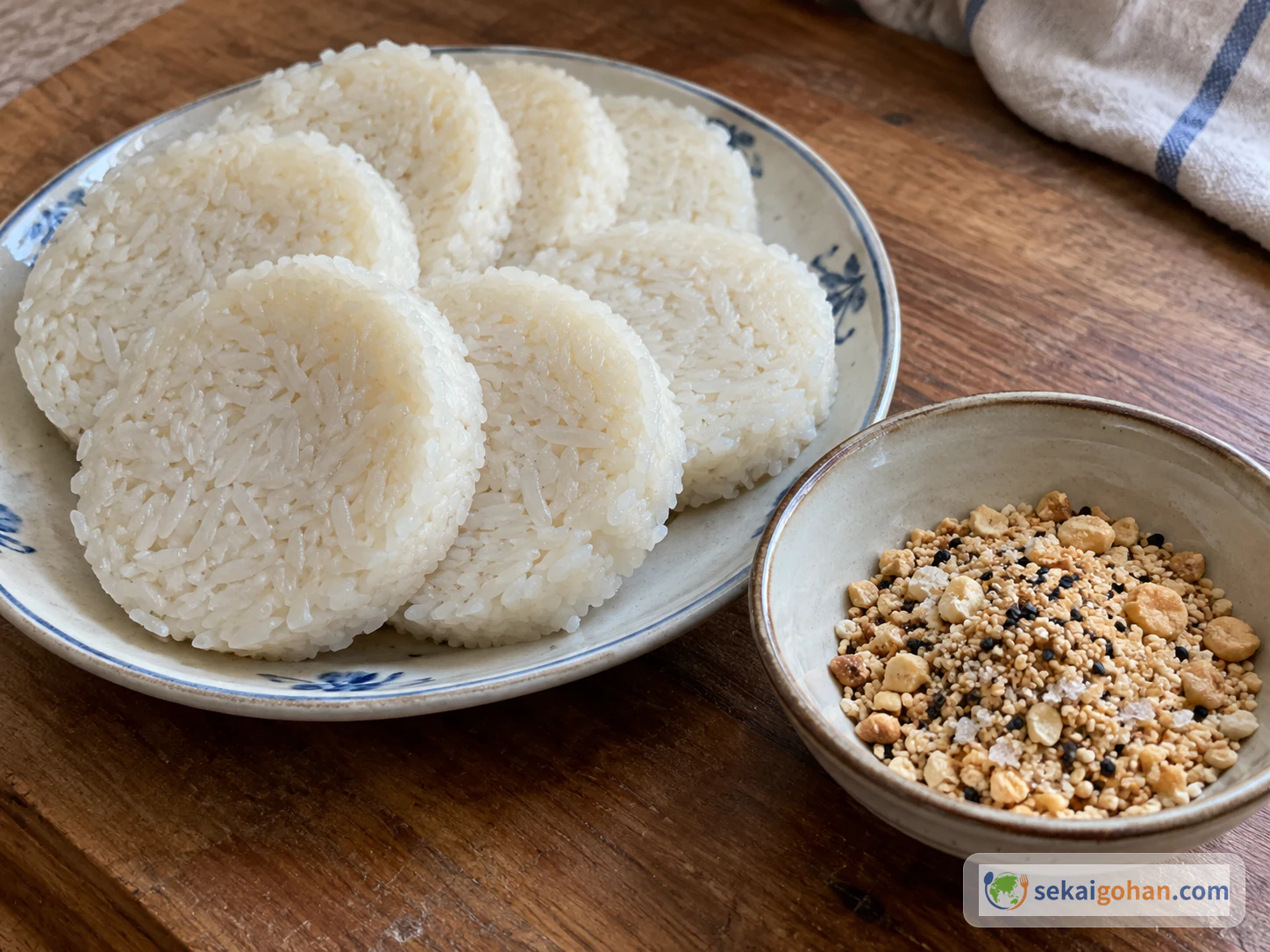
Round cơm nắm of long-grain non-glutinous rice sliced 1 cm thick, with a separate bowl of muối vừng made from peanuts, sesame and coarse salt
Serves
4 servings
Cuisine
Vietnamese

How to make cơm nắm muối vừng, plain long-grain rice pressed into two round balls, cooled, sliced 1 cm thick and served with a separate bowl of toasted sesame, peanuts and coarse sea salt. Follows one home cook's recipe, with notes on choosing rice, roasting by colour, salting to taste, food hygiene, and how other Vietnamese versions differ.

Cooking flow

Cooking steps

STEP11 / 14

Cook the rice

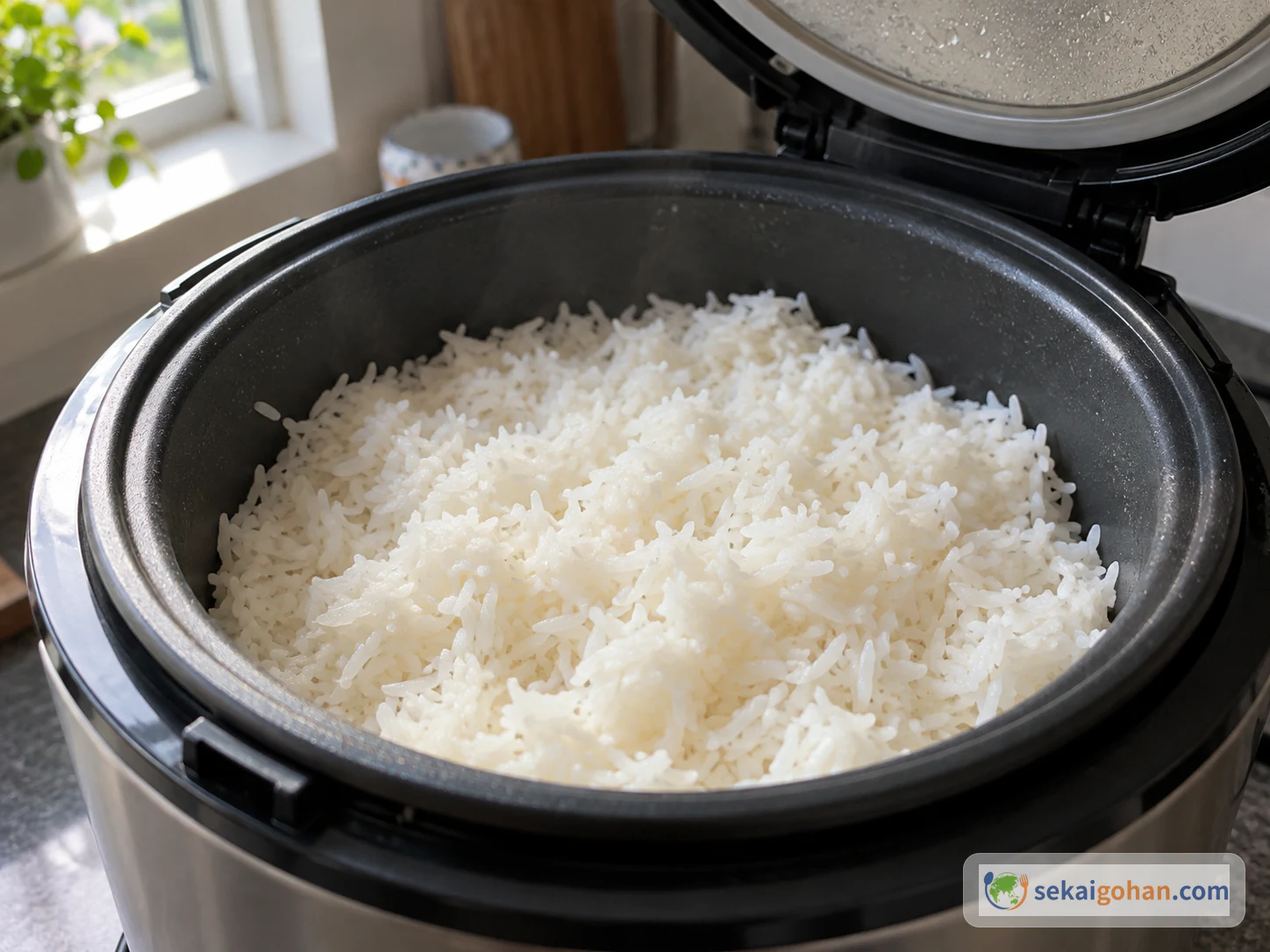
Cooked long-grain rice in an open rice cooker, slightly sticky and gathering together
Cook the rice until tender and just sticky enough to press together

Cook 10.5 oz (300 g) rice with 2 cups (500 ml) water in a rice cooker. Aim for rice that is tender and slightly sticky, so it holds together when pressed.

STEP22 / 14

Press the rice into two round balls

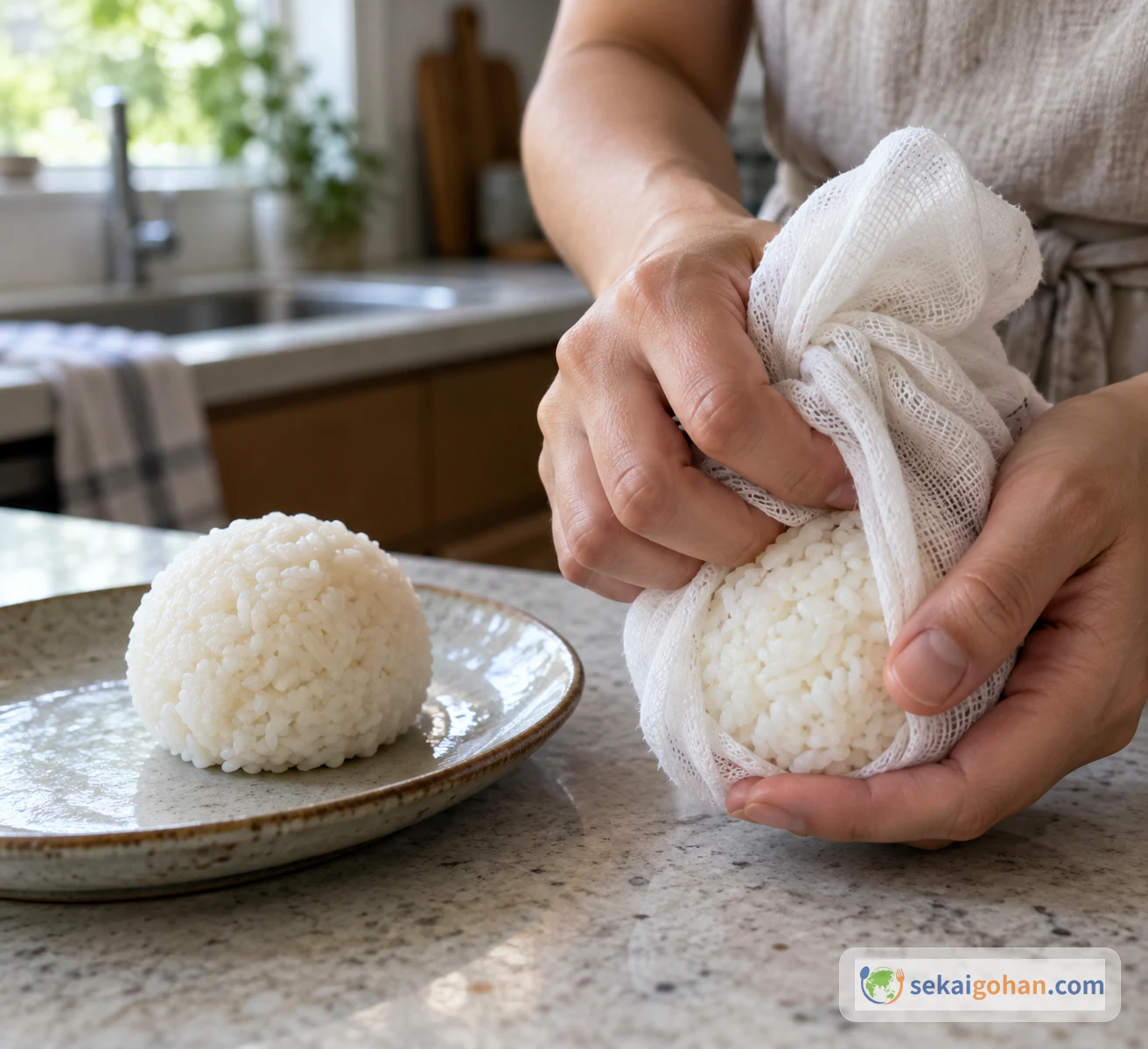
Hands pressing plain cooked rice into a round ball in a damp, clean cheesecloth, with a finished ball beside it
Press the rice tightly in the damp cloth until the surface is smooth and round

Dampen a clean cheesecloth. Wrap some of the plain cooked rice in the cloth and press it firmly into a tight, smooth round ball. Repeat with the rest, so you have two balls. Do not add any seasoning or filling.

STEP33 / 14

Cool the rice balls completely

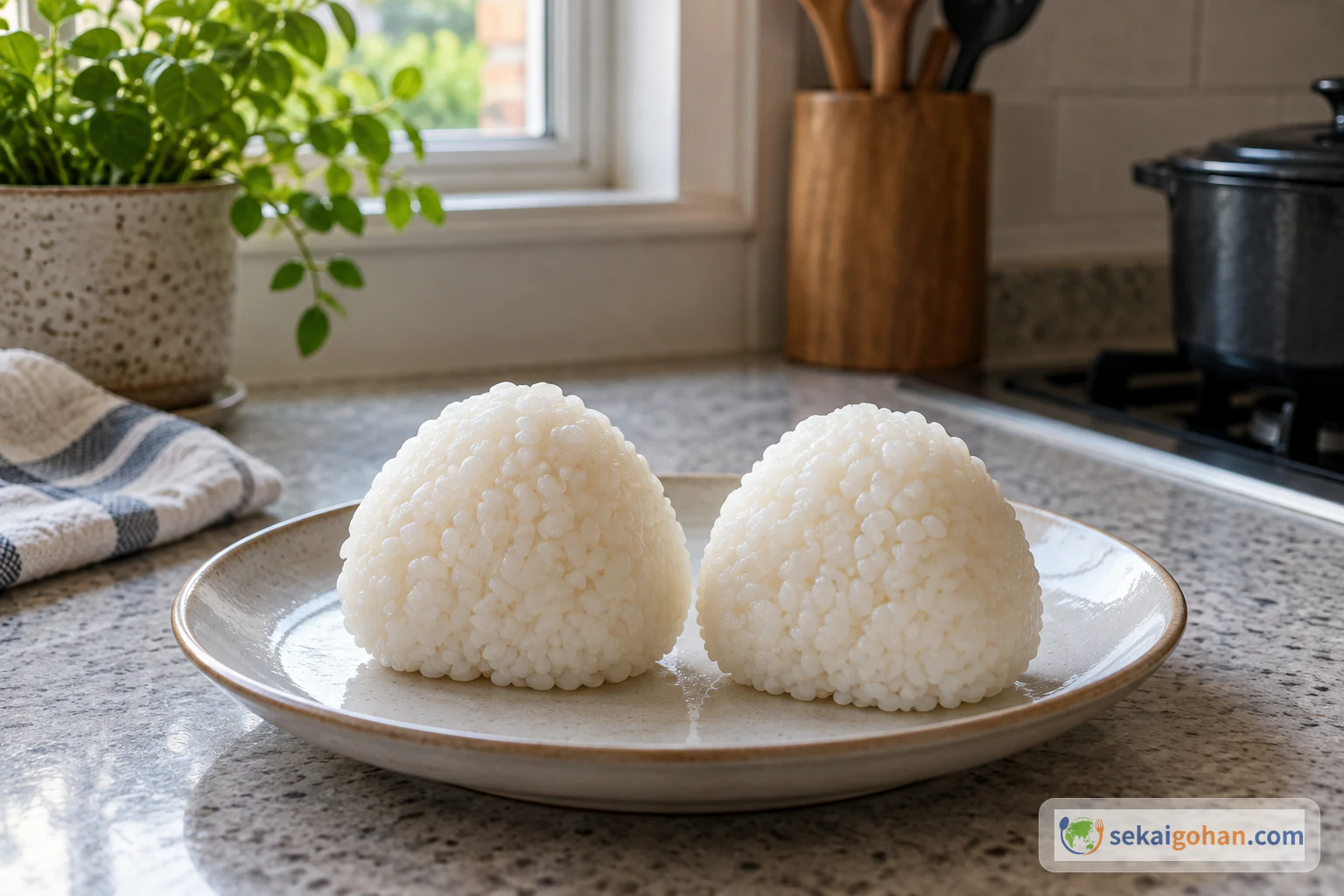
Two plain round rice balls on a clean plate, cooling to room temperature
Let the plain rice balls cool fully before slicing

Set both rice balls on a clean plate on the counter and let them cool completely to room temperature. This is a cooling step, not a way to store the rice. Make the muối vừng in the meantime.

STEP44 / 14

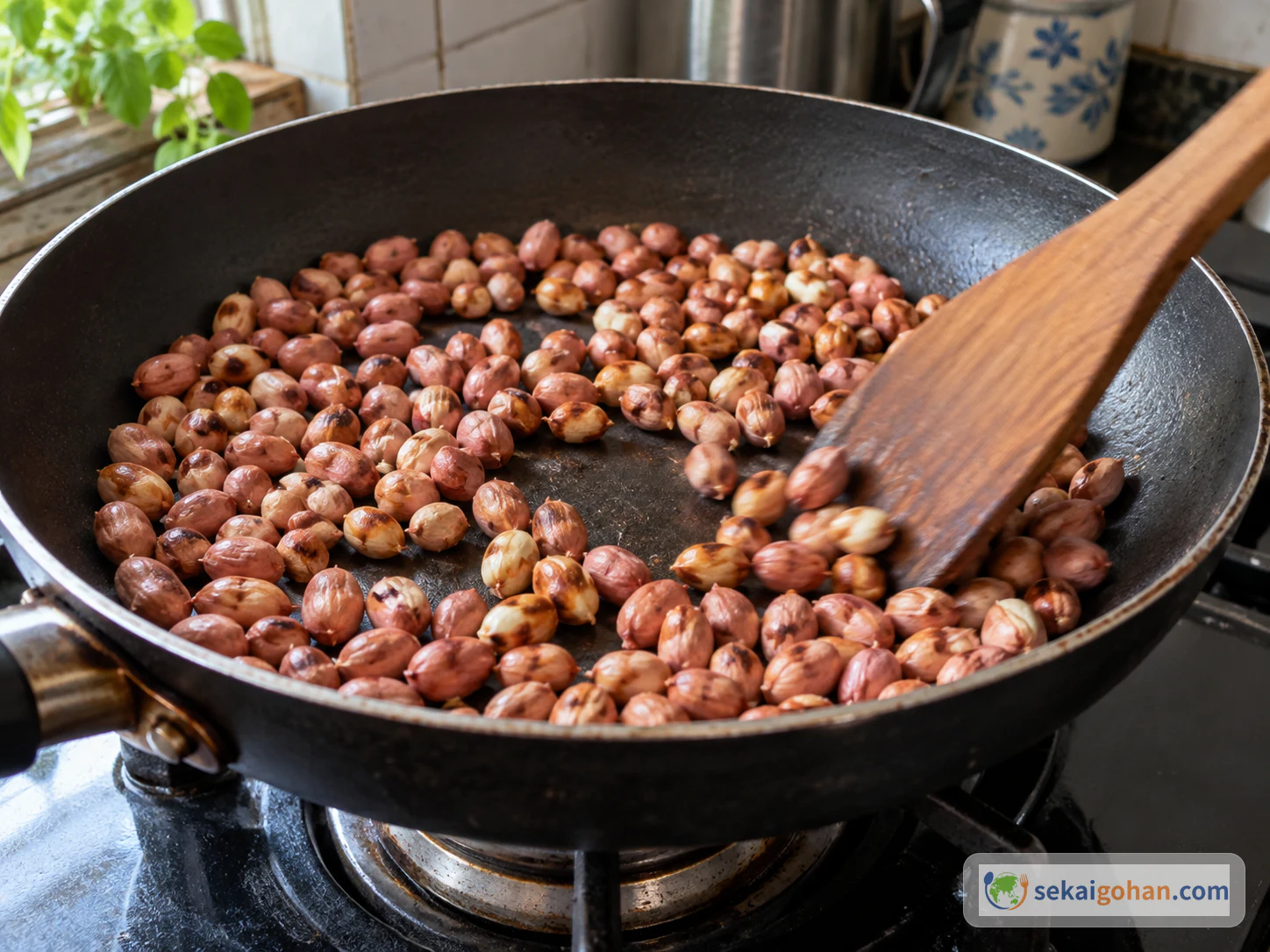
Roast the raw peanuts

Raw peanuts spread in a single layer in a large frying pan, stirred over medium-low heat
Keep the peanuts moving until they turn golden and smell toasted

Spread the raw peanuts in a single layer in a large dry frying pan. Roast over medium-low heat, stirring constantly, until they are golden and fragrant.

STEP55 / 14

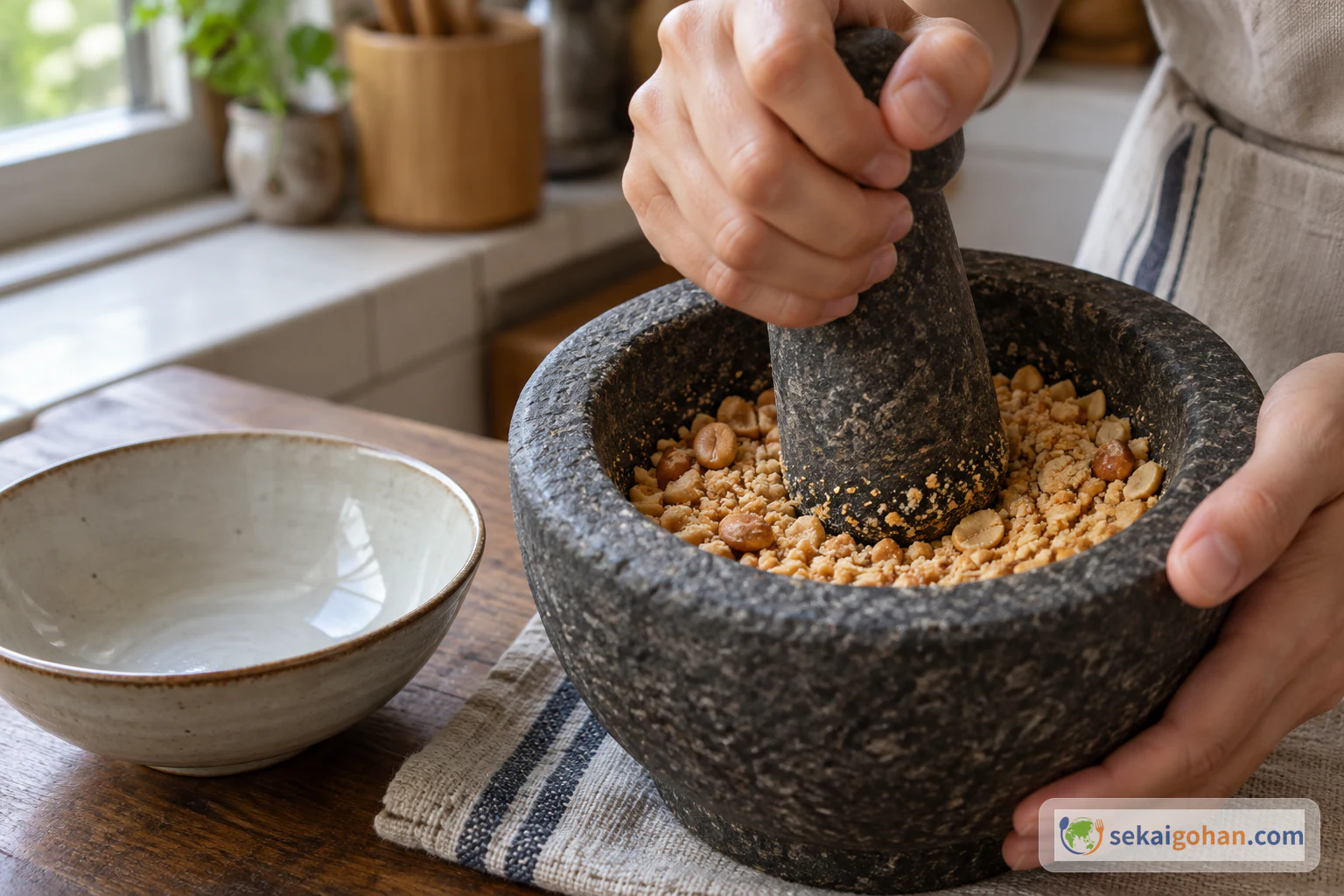
Crush the peanuts

Roasted peanuts being crushed in a mortar, with a bowl ready to hold them before any salt is added
Crush the peanuts and set them aside before starting the sesame

Crush the roasted peanuts in a mortar with a pestle, then tip them into a small bowl and set aside.

STEP66 / 14

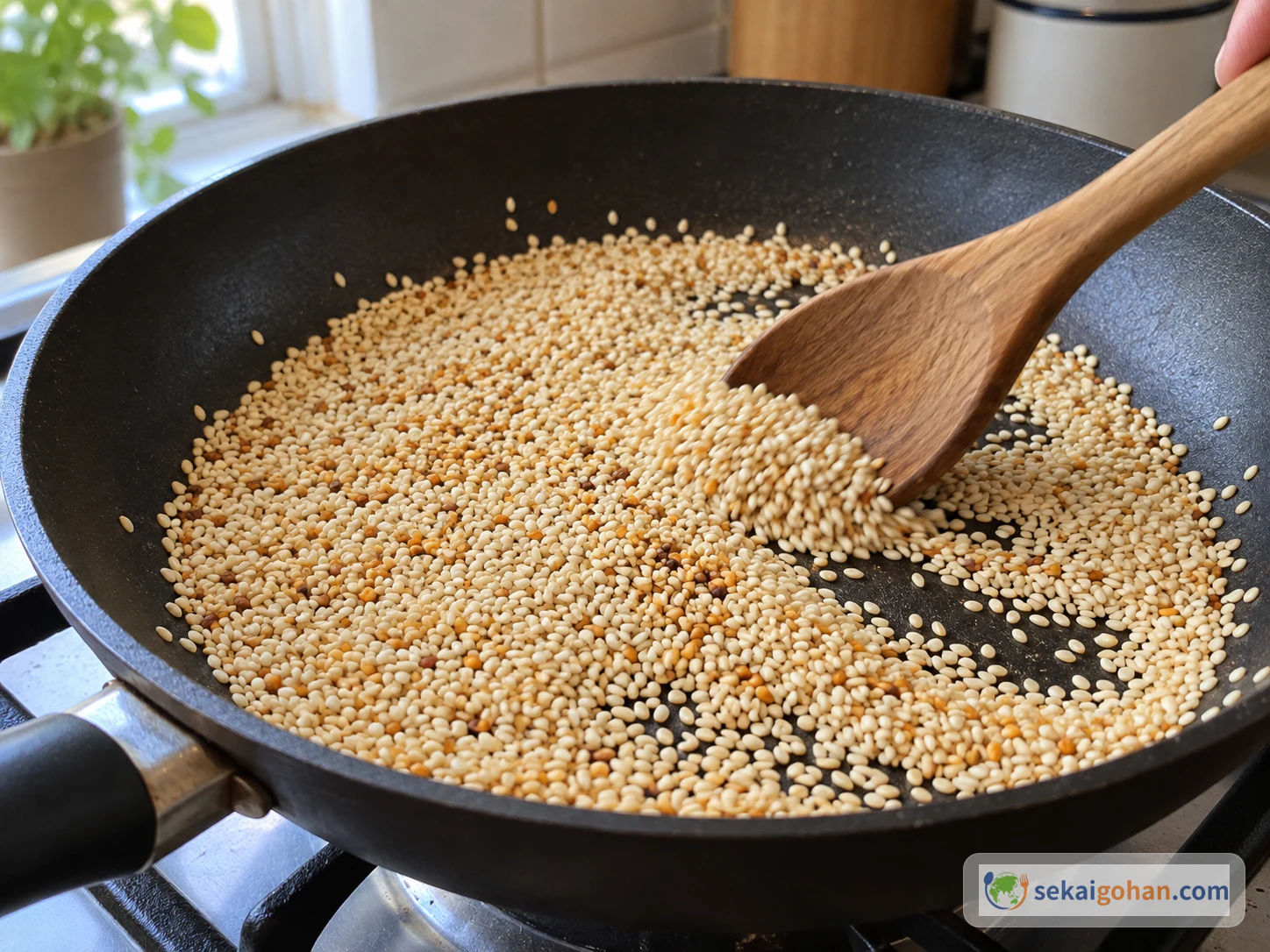
Roast the raw sesame seeds

Raw sesame seeds roasting in a dry frying pan over medium-low heat, turning golden
Roast the sesame until the seeds turn golden

Put the raw sesame seeds in the same dry frying pan over medium-low heat and roast, stirring, until golden.

STEP77 / 14

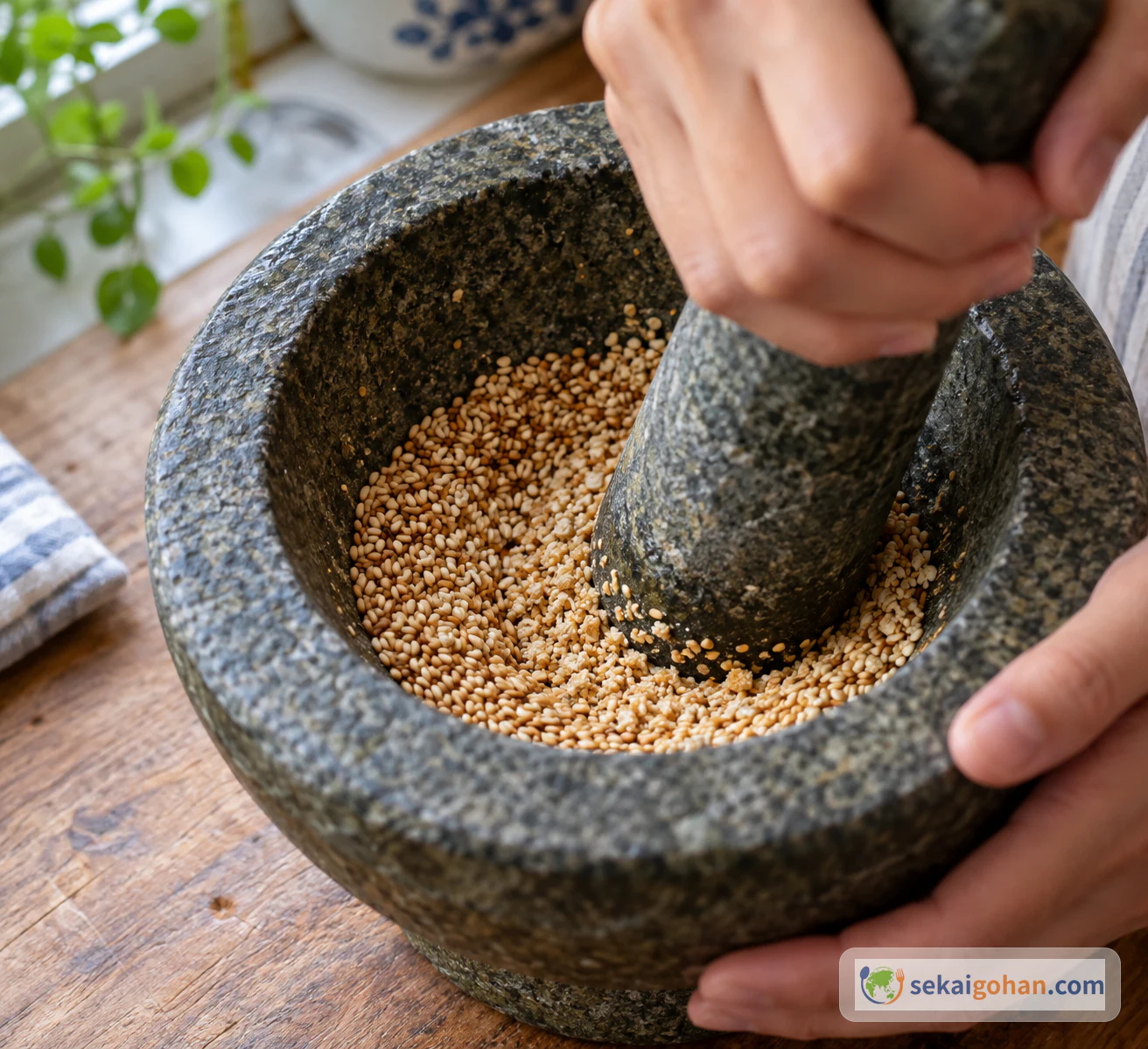
Crush the sesame

Roasted sesame seeds being crushed in a mortar with a pestle
Crush the sesame on its own before combining

Crush the roasted sesame in the mortar with the pestle. Stop around the time the seeds stop crackling.

STEP88 / 14

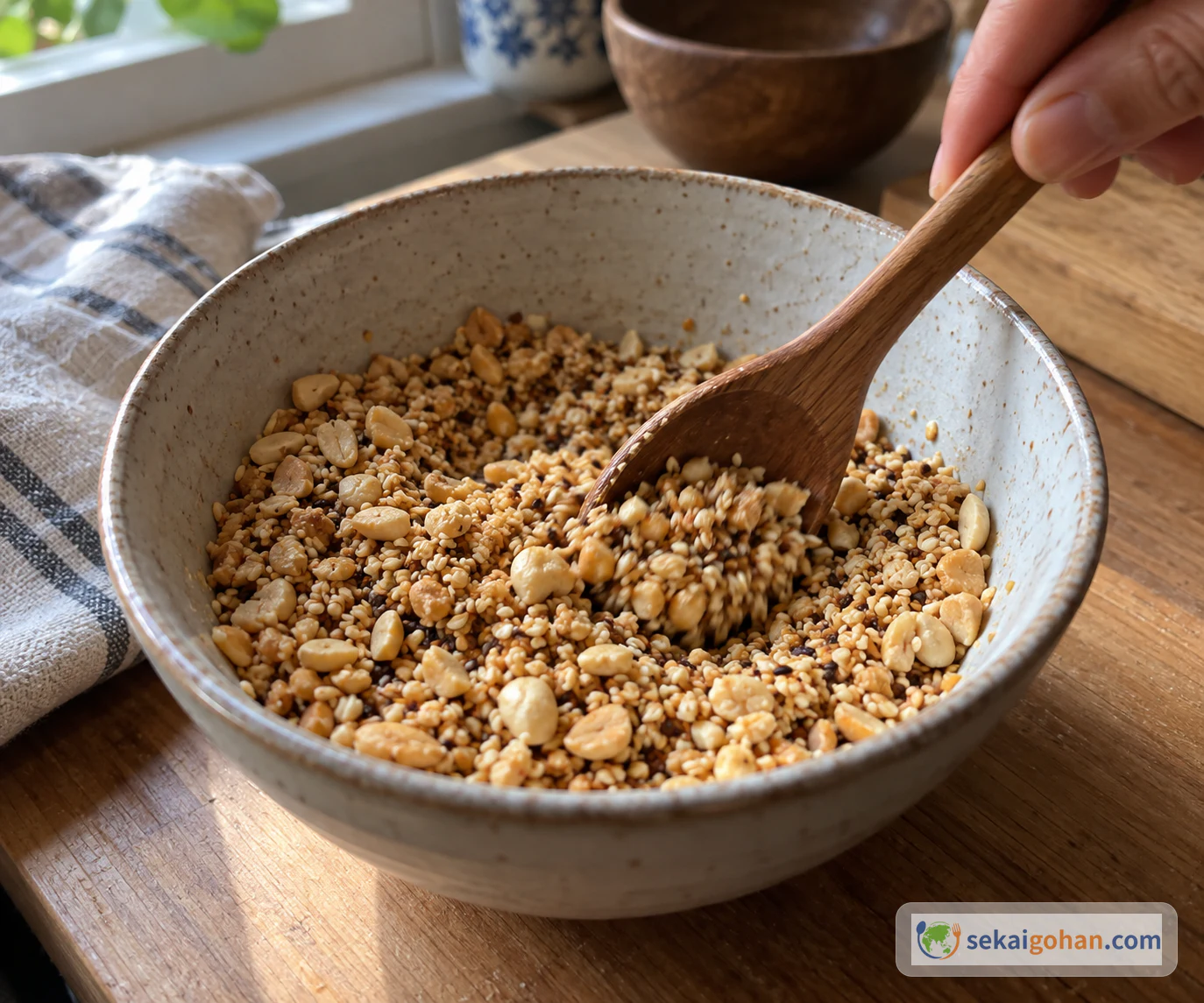
Combine the sesame and peanuts

Crushed sesame and roasted peanuts combined in a bowl, before any salt is added
Mix the sesame and peanuts first; the salt goes in later

Add the crushed sesame to the bowl of crushed peanuts and mix. Do not add salt yet.

STEP99 / 14

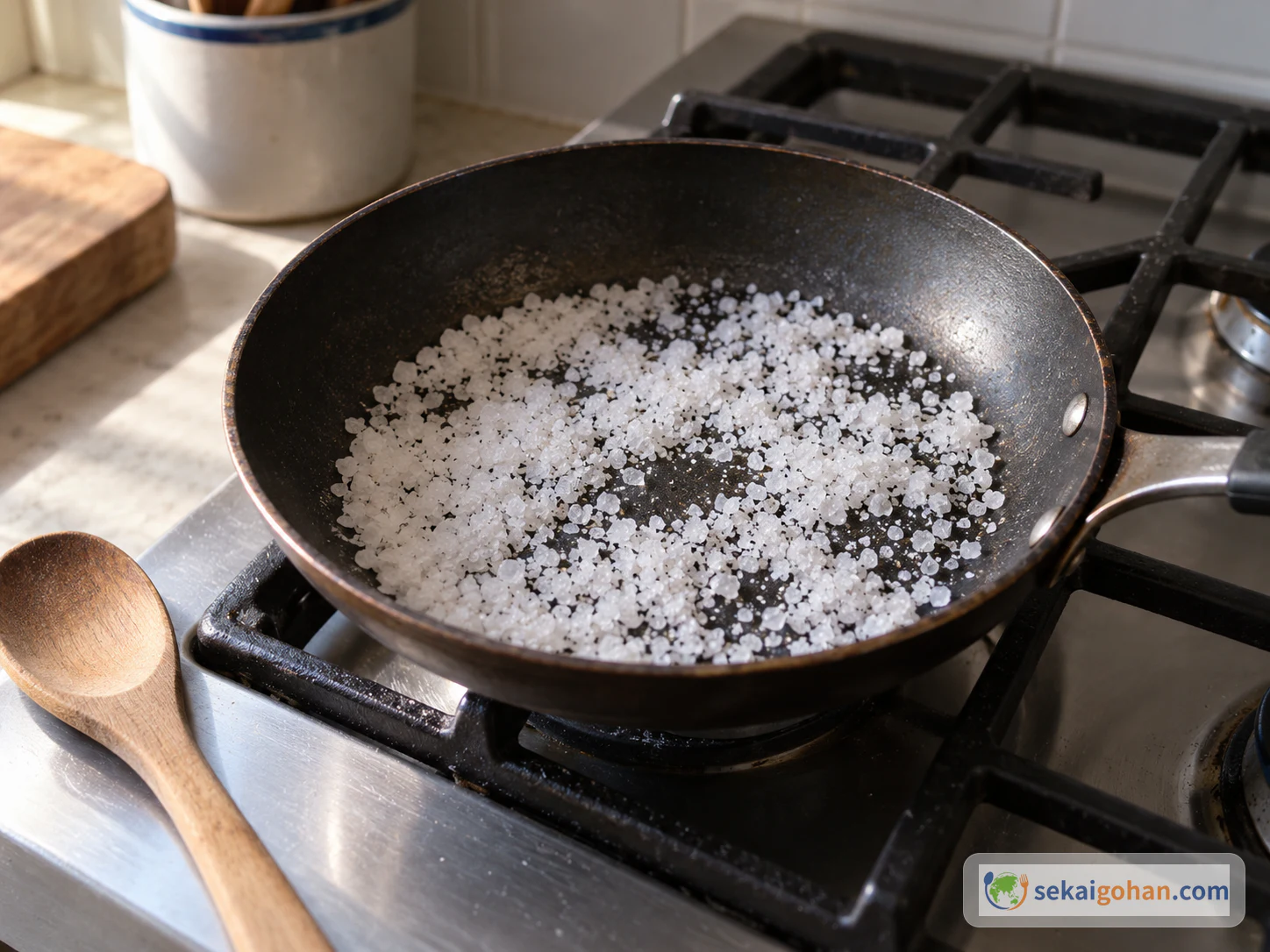
Dry-roast the coarse salt

Coarse sea salt dry-roasting alone in a small dry pan
Roast the coarse salt on its own for about 1 minute

Put the coarse sea salt in the dry pan and roast it for about 1 minute.

STEP1010 / 14

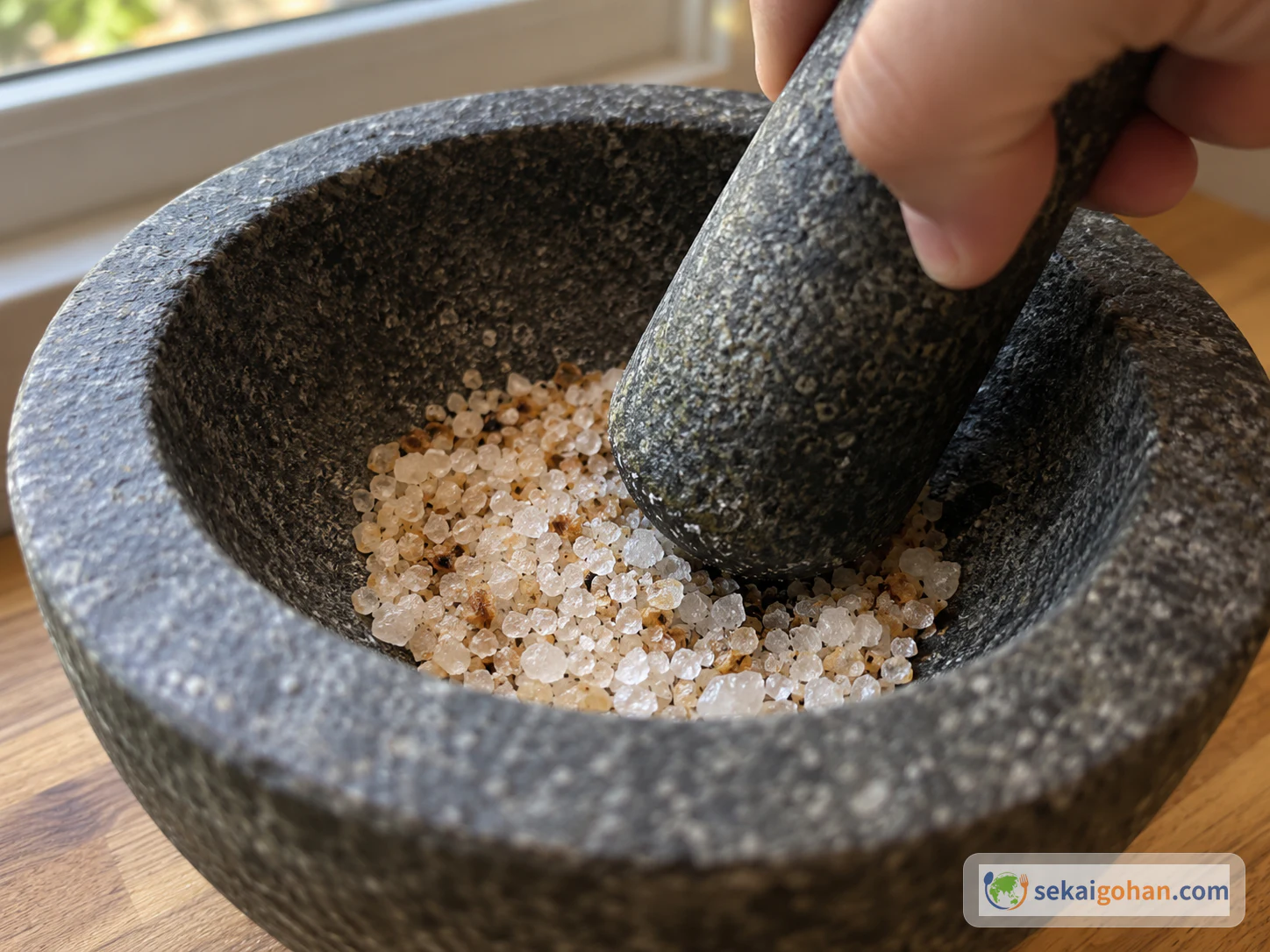
Lightly crush the salt

Roasted coarse salt being lightly crushed in a mortar
A brief, light crush is enough; the salt does not need to become powder

Tip the roasted salt into the mortar and crush it quickly and lightly with the pestle.

STEP1111 / 14

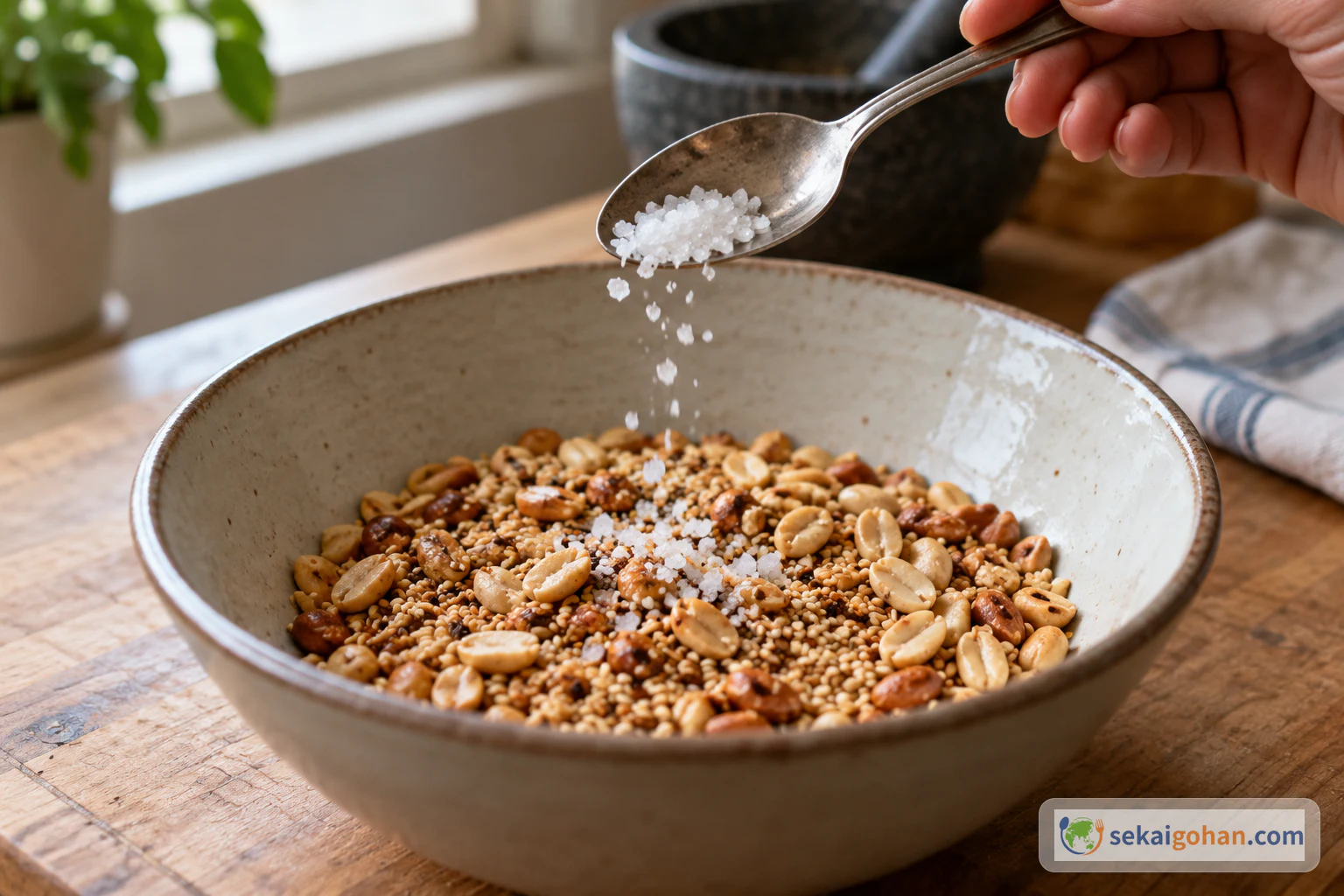
Add the salt a little at a time

A spoonful of crushed coarse salt being added to the sesame and peanut mixture
Add salt in small amounts and taste each time

Add the crushed salt to the sesame and peanuts a little at a time, mixing and tasting after each addition. Stop when it tastes right to you; you do not need all of it.

STEP1212 / 14

Transfer the muối vừng to an airtight container

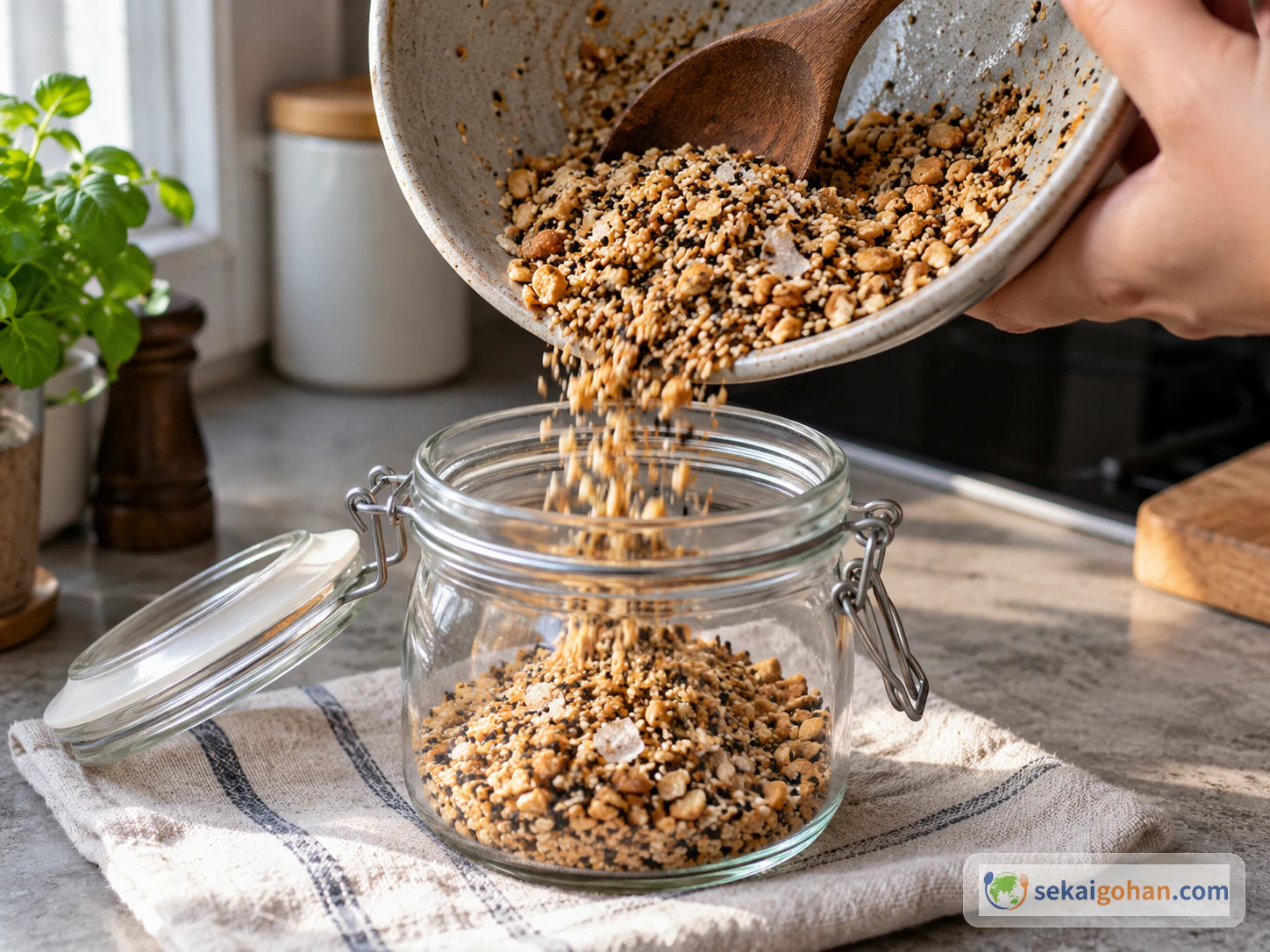
The finished sesame, peanut and coarse salt seasoning being spooned into a clean airtight container
Keep the finished muối vừng in an airtight container

Spoon the finished muối vừng into a clean airtight container. This is for the seasoning only, not the rice.

STEP1313 / 14

Slice the cooled rice balls 0.5 inches (1 cm) thick

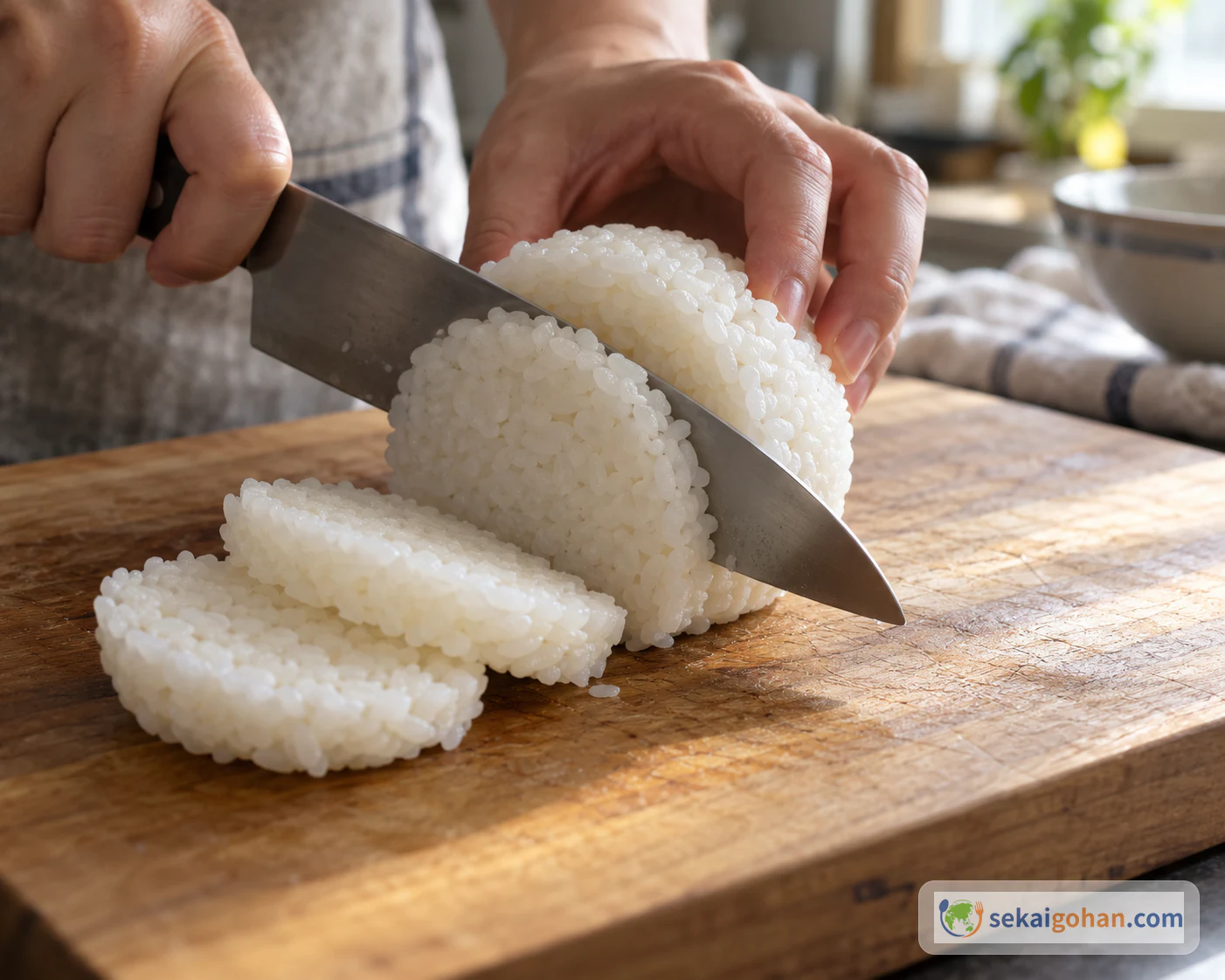
A completely cooled round rice ball being cut 1 cm thick with a clean knife
Slice the cooled rice into 1 cm rounds

Once the rice balls have cooled completely, slice them 0.5 inches (1 cm) thick with a clean knife.

STEP1414 / 14

Serve with the muối vừng on the side

Slices of cơm nắm cut 1 cm thick, with a separate small bowl of muối vừng
Serve the plain rice and the muối vừng separately, for dipping

Arrange the rice slices on a plate and put some muối vừng in a small bowl beside them. Do not rub the seasoning into the rice; dip each slice as you eat.

0 / 0
Ingredients

Ingredients

1 / 1

Ingredients

Ingredient Amount Role
Long-grain non-glutinous rice, such as jasmine rice 10.5 oz (300 g) The rice balls. Cooked plain, with no seasoning
Water 2 cups (500 ml) For cooking the rice
Raw sesame seeds (vừng) 3.5 oz (100 g) Toasted and crushed for the muối vừng
Raw peanuts 2.5 oz (70 g) Toasted and crushed for the muối vừng
Coarse sea salt 1.5 tbsp, added to taste Dry-roasted, lightly crushed and added a little at a time
0 / 0

Freshly cooked rice is gathered into a damp, clean cloth and pressed tight until it forms a smooth, round ball. While two of these balls cool on the counter, raw peanuts move across a wide dry pan, turning golden and fragrant. Then come the sesame seeds, a little coarse salt, and the mortar and pestle do the rest. By the time the rice has cooled, a small bowl of muối vừng is waiting beside it.

The rice itself stays plain, with no filling and no seasoning pressed in. All the flavour sits in that bowl of toasted sesame, toasted peanuts and coarse salt, and you dip each slice as you eat. For more dishes from the same country, see Vietnam.

About Cơm Nắm Muối Vừng

Cơm means cooked rice, and nắm is the act of pressing something together by hand. Here, cơm nắm is cooked long-grain rice pressed into a round shape and eaten with muối vừng on the side. Because the rice holds nothing inside, it differs from filled rice balls, and also from other Vietnamese rice dishes such as cơm lam, glutinous rice cooked in bamboo tubes, or bánh chưng, the leaf-wrapped glutinous rice with mung beans and pork associated with Tết.

Muối vừng is often translated as "sesame salt." This version also contains peanuts, which give it a rounder, toastier flavour than sesame and salt alone.

Cơm nắm muối vừng began as a food from a time of scarcity and has since become a countryside gift carried into the city. It is linked to villages in the north, where it is also called cơm vắt: the rice is shaped in cloth, cut with string and served with muối vừng or muối lạc (peanut salt). A Saigon-style offshoot fries the rice ball and serves it with dried fish, pickles and a tamarind fish-sauce dip.

Ingredients: Two Round Rice Balls, 4 Servings
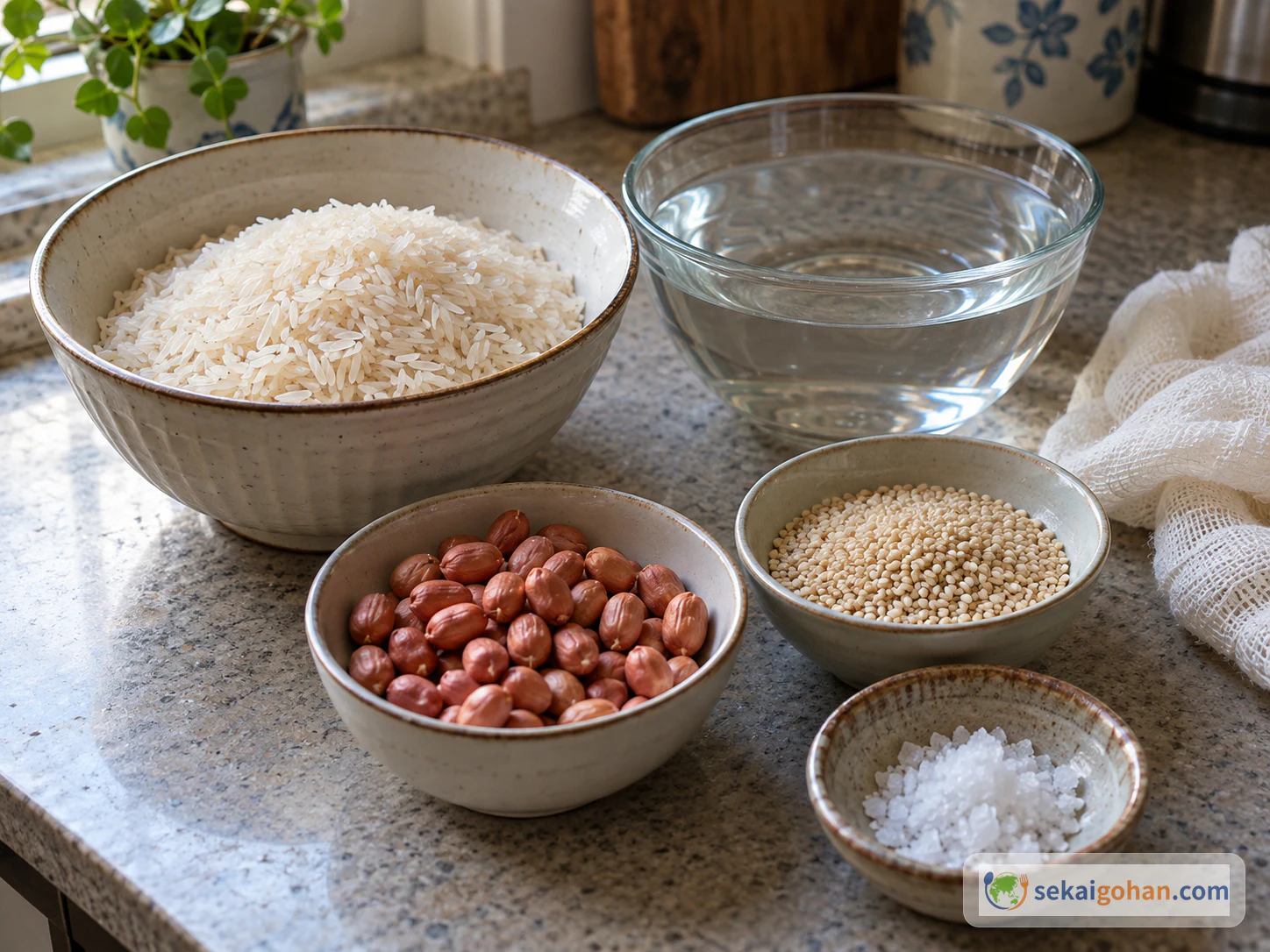
Long-grain rice, water, raw peanuts, raw sesame seeds and coarse sea salt set out in separate bowls
Plain rice and water for the rice balls; raw peanuts, raw sesame and coarse salt for the muối vừng

Add the salt gradually and stop when the muối vừng tastes right to you; you do not have to use all of it. The water for dampening the cloth is separate from the 2 cups (500 ml) for the rice.

Equipment

  • Rice cooker
  • Clean cheesecloth, dampened with water as needed
  • Large frying pan (used dry, for the peanuts, sesame and salt)
  • Mortar and pestle
  • Small bowls for the crushed peanuts and the finished muối vừng
  • Plate for cooling the rice balls
  • Clean kitchen knife
  • Airtight container for the muối vừng

Choosing Rice, Peanuts and Sesame

Rice. Use long-grain rice that is not glutinous, such as jasmine rice. It cooks up tender and just sticky enough to hold its shape when pressed.

Peanuts and sesame. Buy them raw and roast them yourself. Toasting them fresh in a dry pan is where the fragrance of the muối vừng comes from.

Allergies

The muối vừng contains peanuts and sesame. If anyone eating has a peanut or sesame allergy, check the ingredients and labels yourself and decide whether the dish is suitable.

Method: Shape the Rice, Then Make the Muối Vừng While It Cools

Order of work

Cook and shape the rice first. While the two balls cool to room temperature, roast and crush the peanuts, sesame and salt. Slice the rice only once it has cooled completely.

Most stages are judged by colour, smell and texture rather than by time. No total time is given.

Getting Cơm Nắm Right

The recipe works by look and feel more than by the clock. Watch the colour of the peanuts and sesame and the texture of the rice, and use this table as a guide at each stage.

What you are checking What to aim for
Rice after cooking Tender and slightly sticky, so it holds when pressed
Shape of the rice balls Press firmly in the damp cloth until each ball is tight, smooth and round
Peanuts Golden and fragrant. Keep them in one layer and stir constantly
Sesame Golden. Use the same dry pan, over medium-low heat
Salt level Add in small amounts and taste each time; stop when it suits you rather than using all 1.5 tbsp at once
Slicing Wait until the rice balls have cooled completely, then cut 0.5 inches (1 cm) thick

Serving, Storage and Variations

Cooling the rice balls completely before slicing is part of making the dish, but it is no reason to leave the rice out for long. Wash your hands, handle the rice cleanly and keep its time at room temperature short. Staphylococcus aureus is linked to rice balls and Bacillus cereus to cooked rice, so if any leftovers seem off, throw them away.

The muối vừng keeps for one month in an airtight container. That applies only to the seasoning, never to the rice balls.

Families make the dish in their own ways. Some add MSG or sugar to the muối vừng, and some serve the rice with Vietnamese pork sausage (giò lụa or chả chiên) and pork floss (ruốc). One version leans heavier on peanuts, using 7 oz (200 g) of peanuts to 3.5 oz (100 g) of sesame with 1–1.5 tbsp coarse salt, and cooks the rice with slightly more water, shaping it while still warm using leaves, cloth or gloves.

Frequently Asked Questions

Do I have to use all 1.5 tbsp of salt?

No. Add it a little at a time, tasting as you go, and stop when the muối vừng tastes right to you.

How long do the rice balls and the muối vừng keep?

The muối vừng keeps for one month in an airtight container. The rice balls are a different matter: handle them with clean hands and tools, and don't leave them at room temperature for long.

Is this dish safe for people with nut or sesame allergies?

The muối vừng contains both peanuts and sesame. Anyone with either allergy should check carefully and decide for themselves.
Sources

  • Mai, MM Bon Appétit, "Cơm nắm muối vừng • Vietnamese rice ball with sesame salt." The recipe followed in this article: the meaning of cơm and nắm as the author explains them; long-grain non-glutinous rice with jasmine rice as an example; rice 300g, water 500ml, sesame 100g, peanuts 70g, coarse sea salt 1.5 tbsp added gradually to taste; two round rice balls listed as 4 servings; roasting cues for raw peanuts and raw sesame; dry-roasting and lightly crushing the salt; storing the seasoning in an airtight container; cooling the rice fully, slicing 1 cm thick and serving the seasoning separately; optional pork accompaniments; and the inconsistent time fields. One home recipe, not a nationwide standard. https://mmbonappetit.com/com-nam-muoi-vung/
  • Rachel Phạm (compiled), VTC News, "Cơm nắm muối vừng: Món ăn của một thời thiếu thốn, giờ là quà quê nơi thành phố." Presents the dish as a food of a time of scarcity and a countryside gift in the city, describes gathering the rice in cloth, and reports some families adding MSG or sugar. A compiled news article, not a quantified recipe or proof of origin. https://amp.vtcnews.vn/com-nam-muoi-vung-mon-an-cua-mot-thoi-thieu-thon-gio-la-qua-que-noi-thanh-ar668344.html
  • Thi Ngoan, VnExpress Đời sống, "Cơm nắm, món quê thành 'đặc sản' Sài Gòn." Gives the name cơm vắt, links the dish to northern villages, describes shaping in cloth and cutting with string, muối vừng or muối lạc as accompaniments, and a Saigon-style fried version with dried fish, pickles and tamarind fish-sauce dip. A news article, not a representative oral history. https://vnexpress.net/com-nam-mon-que-thanh-dac-san-sai-gon-2321860.html
  • Bùi Thủy, VnExpress Cooking, "Cơm nắm muối vừng - món ăn dân dã tuổi thơ," 2021. A separate recipe with peanuts 200g, sesame 100g and coarse salt 1–1.5 tbsp, with rice cooked slightly wetter and shaped while warm; no rice amount is given. Used for comparison only. https://vnexpress.net/com-nam-muoi-vung-mon-an-dan-da-tuoi-tho-4376833.html
  • Consumer Affairs Agency, Japan, "細菌・ウイルスによる食中毒" (Food poisoning caused by bacteria and viruses). General information on Staphylococcus aureus and grain products such as rice balls, Bacillus cereus and cooked rice, handwashing and not leaving food at room temperature for long. Not specific to cơm nắm and sets no times, temperatures or storage limits for it. https://www.caa.go.jp/policies/policy/consumer_safety/food_safety/food_safety_portal/microorganism_virus/
  • Ministry of Health, Labour and Welfare, Japan, "家庭での食中毒予防" (Preventing food poisoning at home). General home hygiene: handwashing, not leaving cooked food at room temperature for long, handling leftovers cleanly and not eating them if anything seems off. Not specific to cơm nắm. https://www.mhlw.go.jp/stf/seisakunitsuite/bunya/kenkou_iryou/shokuhin/syokuchu/01_00008.html