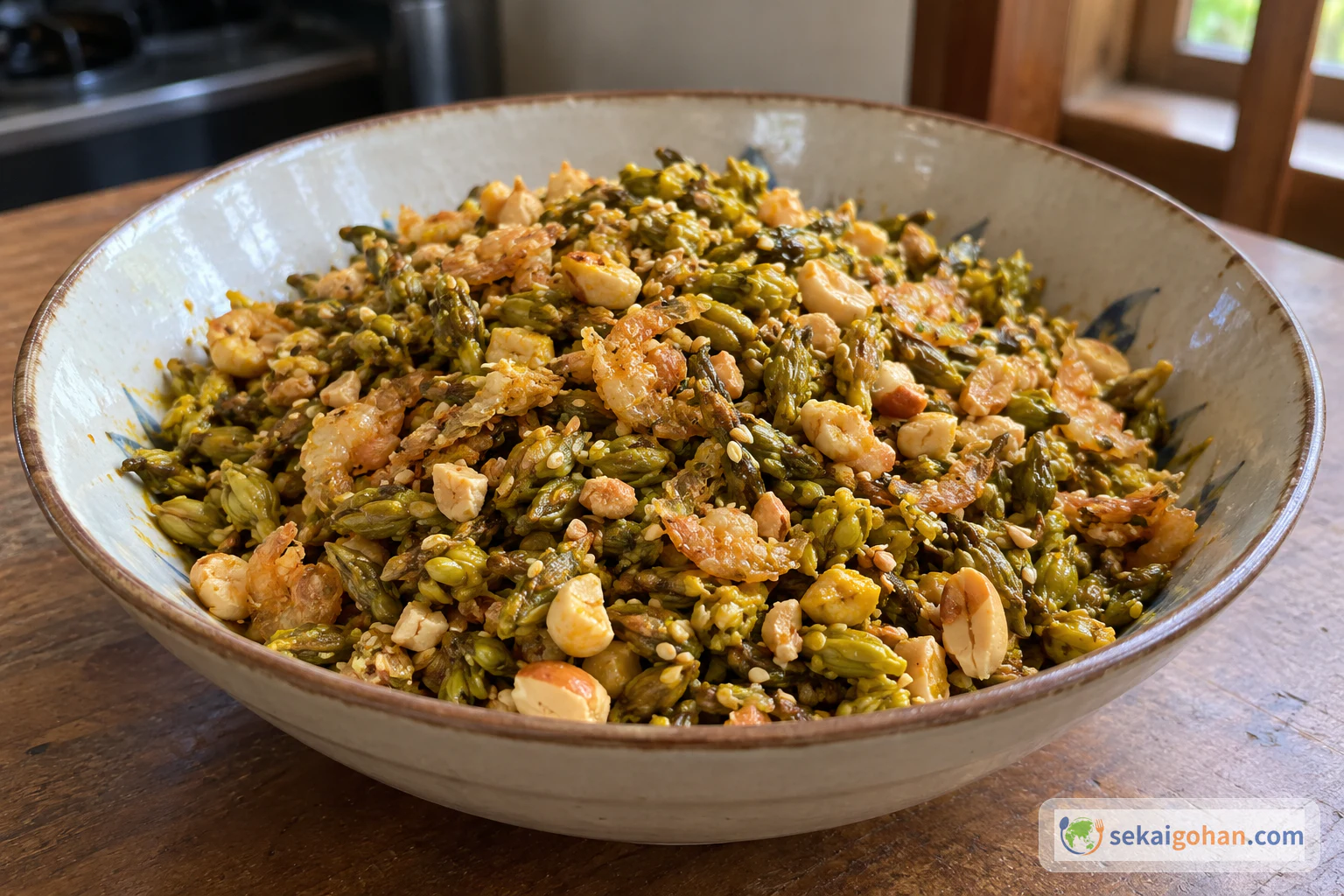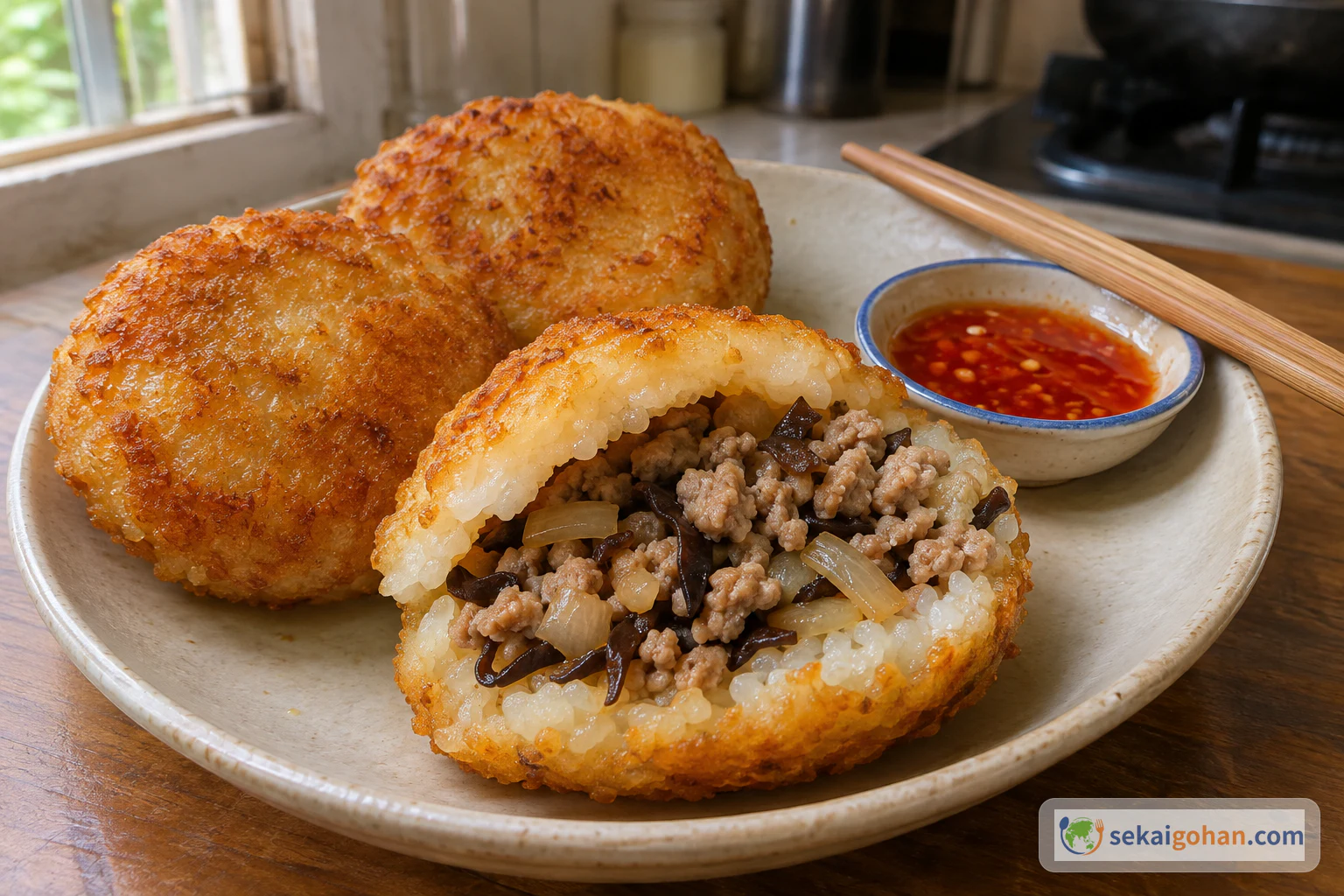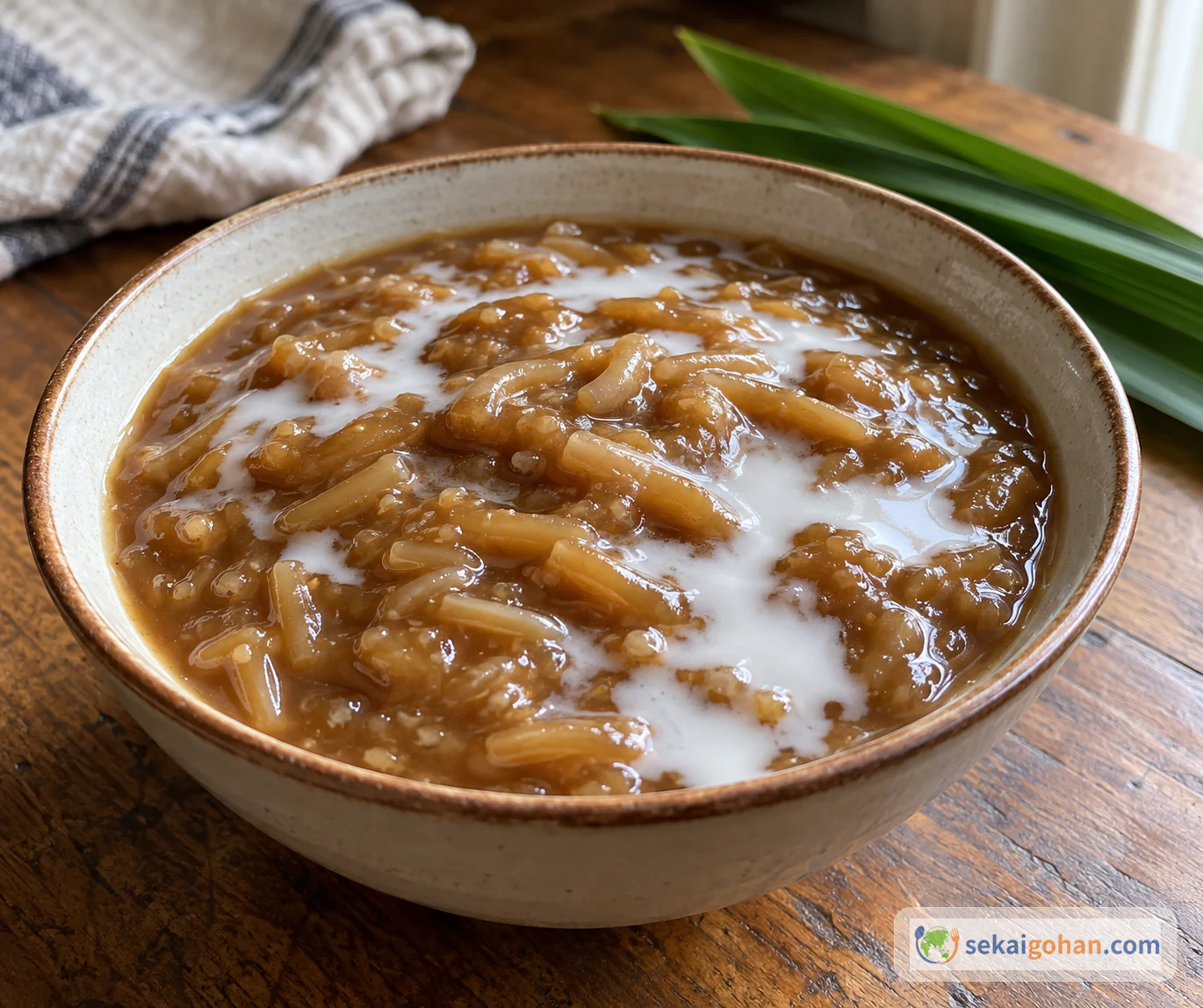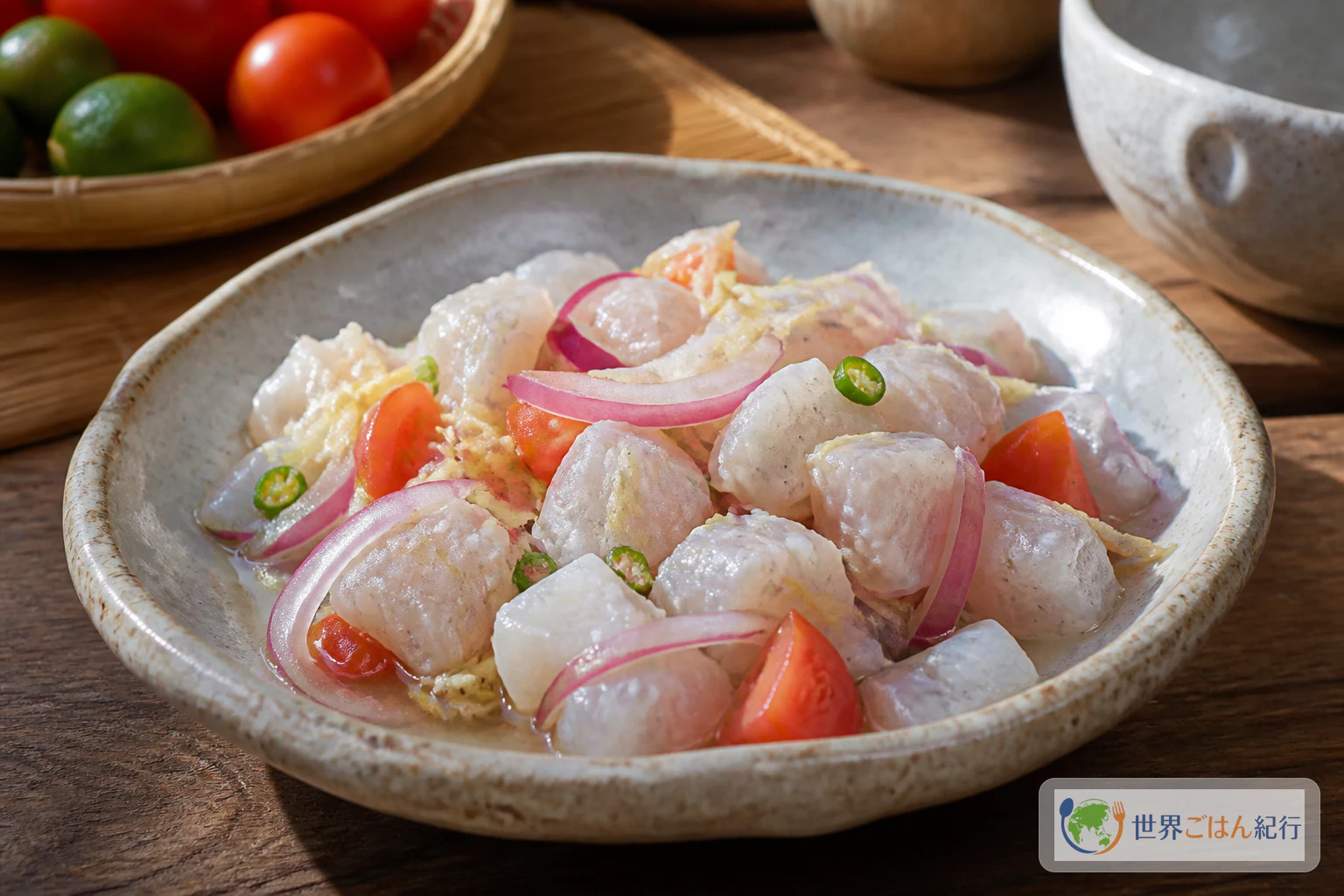
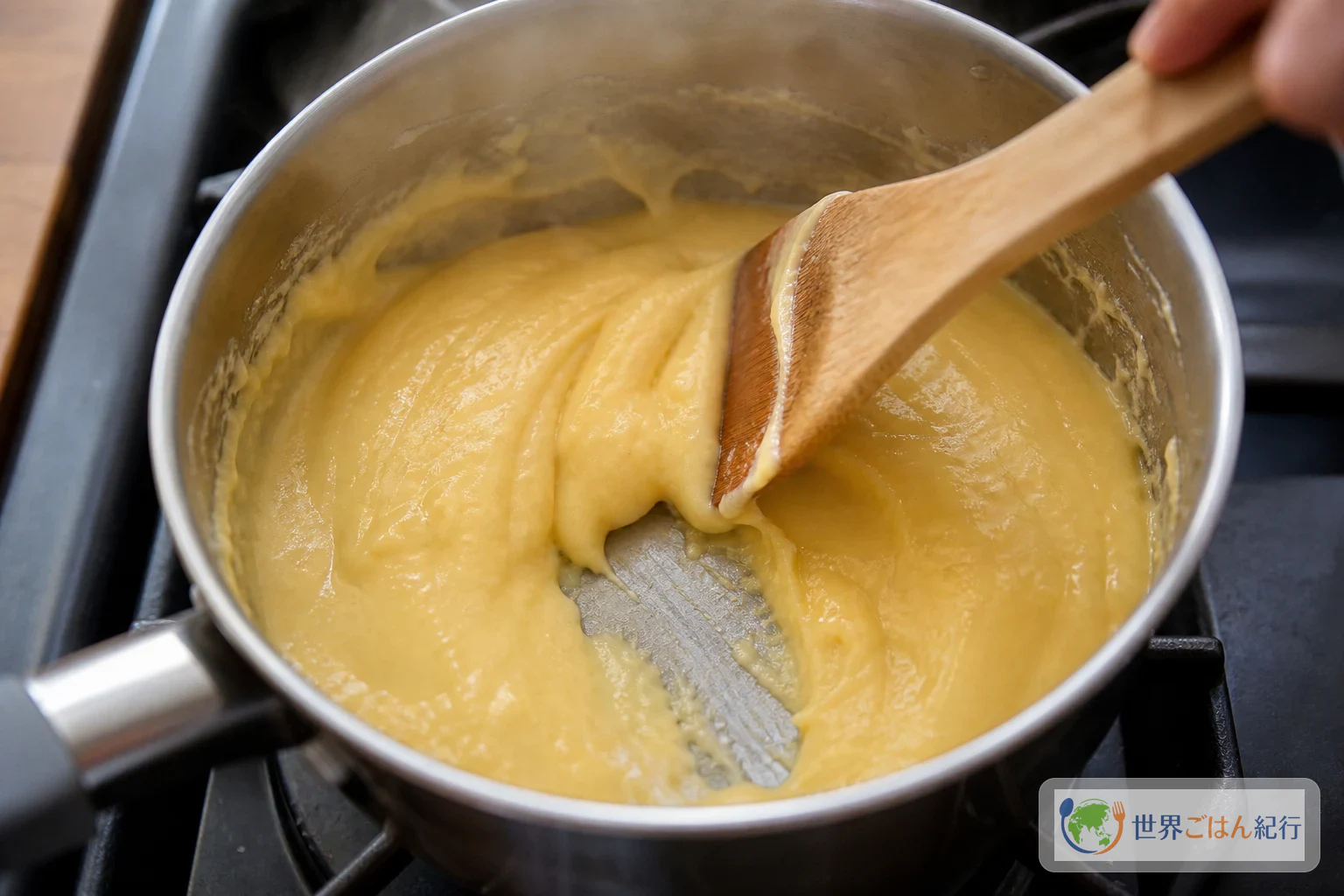
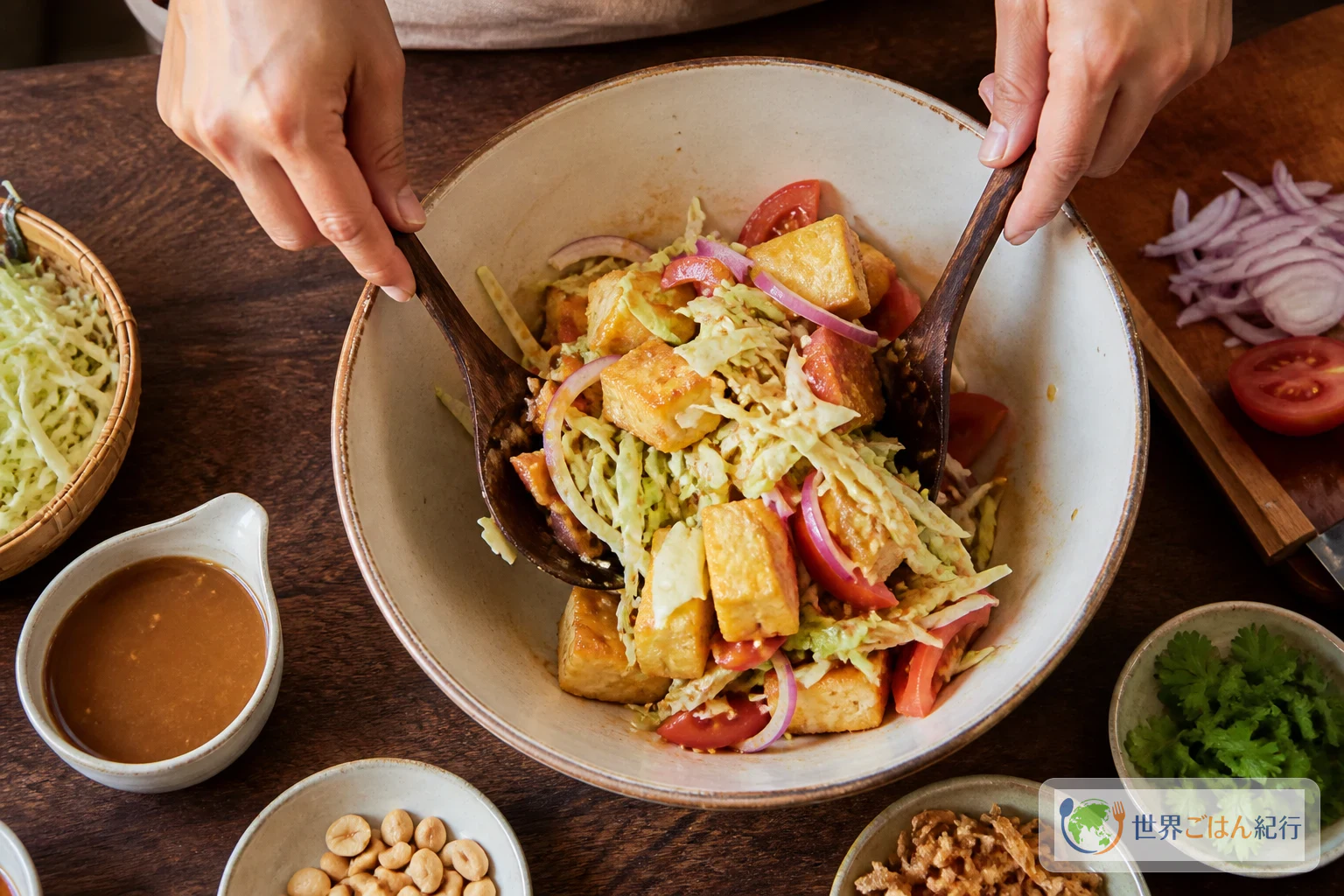
In the pot, the yellow batter slowly grows heavy. Draw the wooden spoon across the bottom and it leaves a single line that fills back in, quietly, over several seconds. Pour it into a tray, and as it cools the soft batter becomes a "tofu" you can slice with a knife.
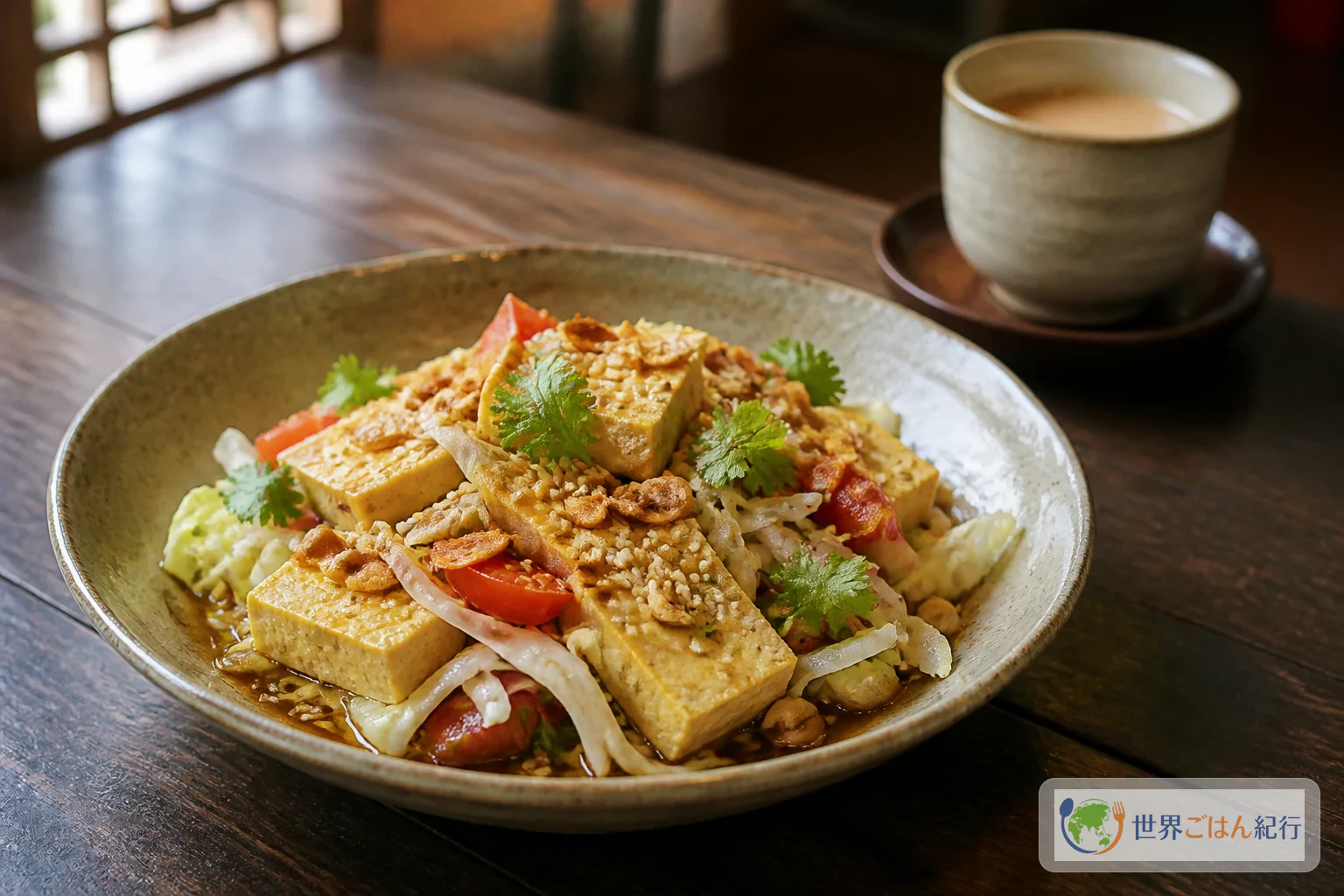
That tofu is the heart of tohu thoke, a chickpea tofu salad from the Shan region of Myanmar. The slices keep the sweet aroma of the beans. You pile cabbage, tomato, red onion, fried garlic, and peanuts on top, then toss everything with sour tamarind and salty fish sauce. If you can find chickpea flour, you can make it in a home kitchen without losing the backbone of the flavor.
Shan Tofu and the Myanmar Tea Shop
Tofu Without Soy Milk
Japanese tofu is made by setting soy milk with nigari. Shan tofu works differently: you heat chickpea flour and water, and the starch sets it. Shan State is a highland in eastern Myanmar bordering China, Laos, and Thailand. Its mountain cooking leans on rice, beans, fermented foods, and aromatics, and chickpea tofu is as well known there as Shan noodles and sticky rice. Since you simply stir the flour into water and cook it, there's no soy milk to squeeze, and you can make just the amount you need.
In English it goes by "Burmese tofu" or "Shan tofu," and there's no single formula. Some home cooks use only chickpea flour, salt, and water, while some shops use yellow split peas. If you're picturing a smooth white block like soy tofu, expect something a little different. It's closer to polenta: a smooth bean batter that crumbles softly.
Shan Style and Burmese Style
In the Shan region, the yellow tofu also goes into fried dishes and onto noodles. In central Myanmar, where chickpea-flour tofu is widely made, it's cut into salads or coated and fried. The Shan areas also have a white tofu made with rice flour, so even among dishes called "tofu," the color, aroma, and springiness depend on what it's made from.
Nobody can pin the dish to one shop or village, but it's usually described as a tofu that began in Shan State. The regional differences go beyond the raw material. They show in how it's cut, whether it's fried or tossed cold, and which aromatics come with it.
Tohu Thoke at the Tea Shop
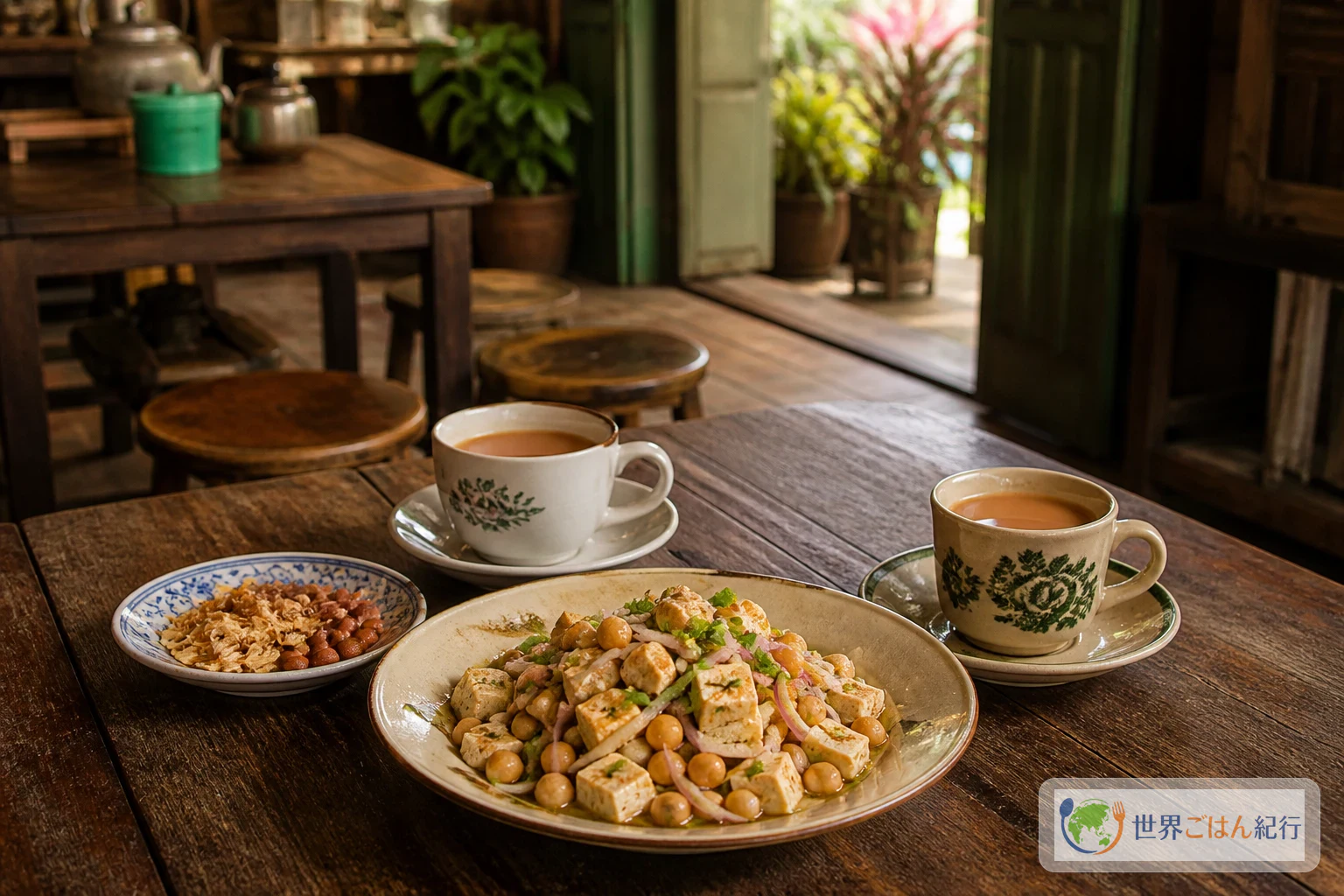
Tohu thoke is that tofu tossed with vegetables. A Burmese salad isn't built only on leafy greens. Beans, noodles, fried things, and fermented ingredients come together with sourness and oil. Here, the fruity tang of tamarind, the saltiness of fish sauce or soy sauce, chili, fried garlic, and toasty nuts layer on top of each other. Even so, the tofu is the center of the dish. Straight from the refrigerator it's smooth and slightly springy, and it soaks up the juices from the vegetables.
It's a tea-shop dish that brings beans and vegetables together on one plate. That makes it quite different from the fermented tea leaf salad lahpet thoke and from mohinga, which people eat for breakfast. A Myanmar tea shop has low stools and small tables where people sit over tea and light food, and where conversations and business talks get started. Tohu thoke isn't a meal to finish on your own. It's something to slip in between noodles and tea, or to share. At home, set the chilled tofu in the center of a large plate and let everyone toss in vegetables and toppings, and you'll get a hint of the tea shop.
Ingredients and substitutions
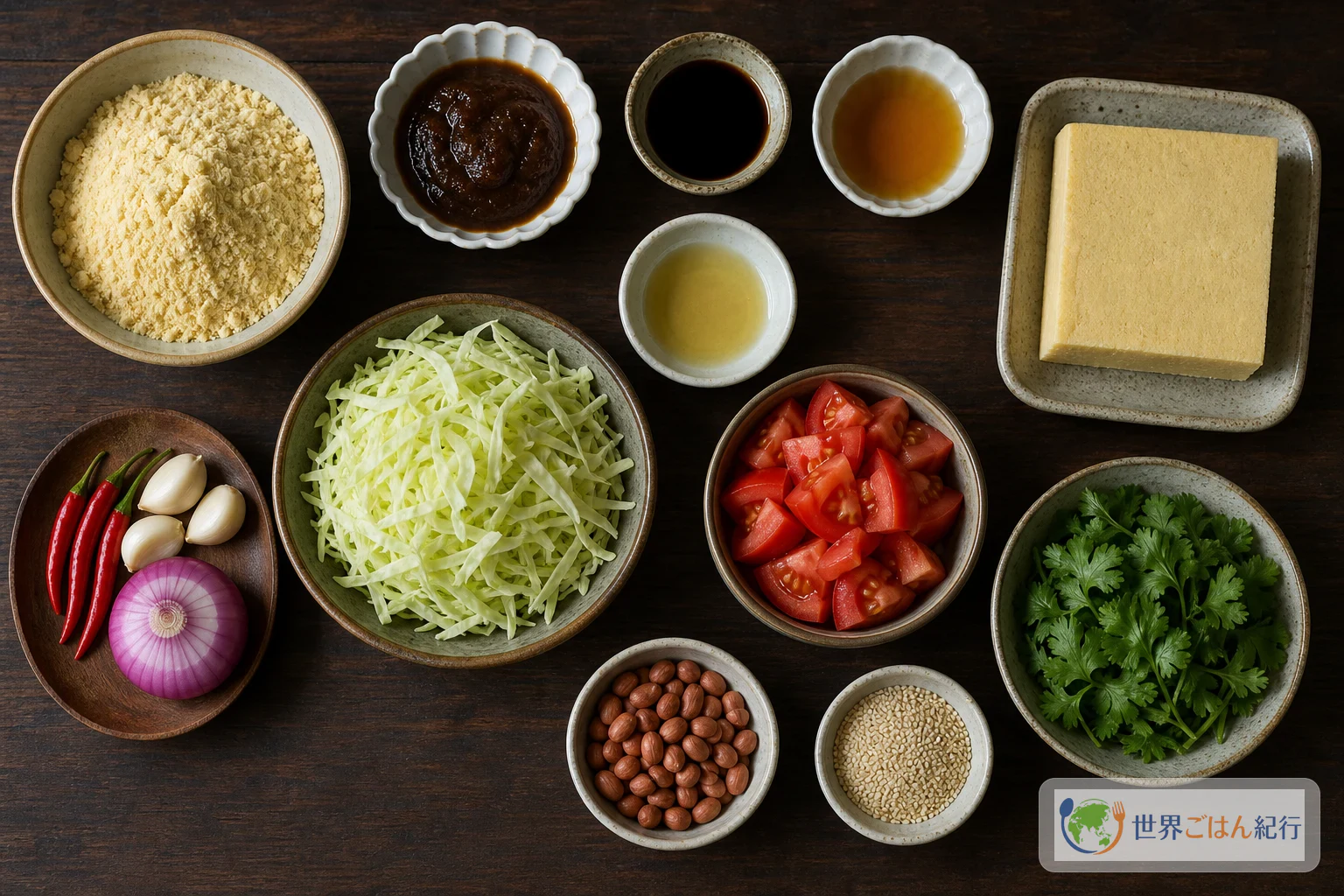
This serves 4. Make only the tofu first, and prepare the vegetables and dressing while it cools. The less water in the batter, the firmer it gets, but cut too far and floury taste comes ahead of bean aroma. This formula is firm enough not to fall apart when tossed into the salad, and soft enough to bend gently when lifted with chopsticks.
Tamarind varies in sourness with the thickness of the paste and how many seeds remain. If the label indicates a concentration, check it before diluting with water. Tossing in stiff paste as is makes it clump in one place and only the tomatoes turn sour, so dissolve it in hot water and then strain.
For chickpea flour, choose besan whose only ingredient is chickpeas as the first condition. Seasoned falafel mixes and flours with baking powder change the viscosity and aroma during cooking. Ordering online is worth it if you will make the tofu several times and have trouble comparing sizes and ingredients at a nearby flour aisle. If you are trying a small amount once, it is not too late to wait until you find 100% chickpea flour at an import grocery.
What stays and what changes with substitutes
When you have no chickpea flour, I do not recommend setting it with potato starch or cornstarch alone. You get a shape, but not the bean aroma, and when chilled it turns into a hard jelly. If you must try, replace half the chickpea flour with yellow split pea flour, which keeps the bean flavor and the softly crumbling texture. Replacing it with rice flour alone gives a white, sticky, different tofu, so treat it as a variation modeled on the white tofu of the Shan region.
Using 2 tbsp (30 ml) of rice vinegar in total in place of tamarind makes the sourness cleaner but loses the fruity roundness. Without fish sauce, using soy sauce and salt makes it plant-based, but the fermented fish aroma and finish are gone. If you change something, change just one of the sourness or the saltiness, not everything at once, so you do not lose the taste of the tofu.
If you buy tamarind, check not only the name but whether it is paste or concentrate, and whether it is a type with seeds or fibers left. If you make only small amounts, rice vinegar as a substitute still gives you a table. Tamarind suits people who want the depth of sourness at the center of a dish, or who keep cooking Southeast Asian food.
Choosing Ingredients for Tohu Thoke
Fish sauce adds a fermented fish aroma and a saltiness that catches the sourness of the tamarind. To leave out fish, use 1.5 tbsp (25 ml) of light soy sauce and 1 g of salt instead, though the aroma builds more gently. Before buying a large bottle of fish sauce, check the label for the ingredients, volume, and type of fish. It's worth having if you cook other Southeast Asian dishes. For a one-time plant-based version, the soy sauce you already have is enough.
Dried chilies you crush coarsely yourself keep more of their aroma than chili powder. A knife works for a small amount. If you make this often, a spice mill gives you an even grain size. When choosing one, check that it handles dried chilies, that its capacity suits coarsely crushing roasted peanuts and sesame, and that the blades and container are easy to wash. A mortar does the job just as well, and if you skip the heat at the end, you won't need either.
Method
From preparation to chilling
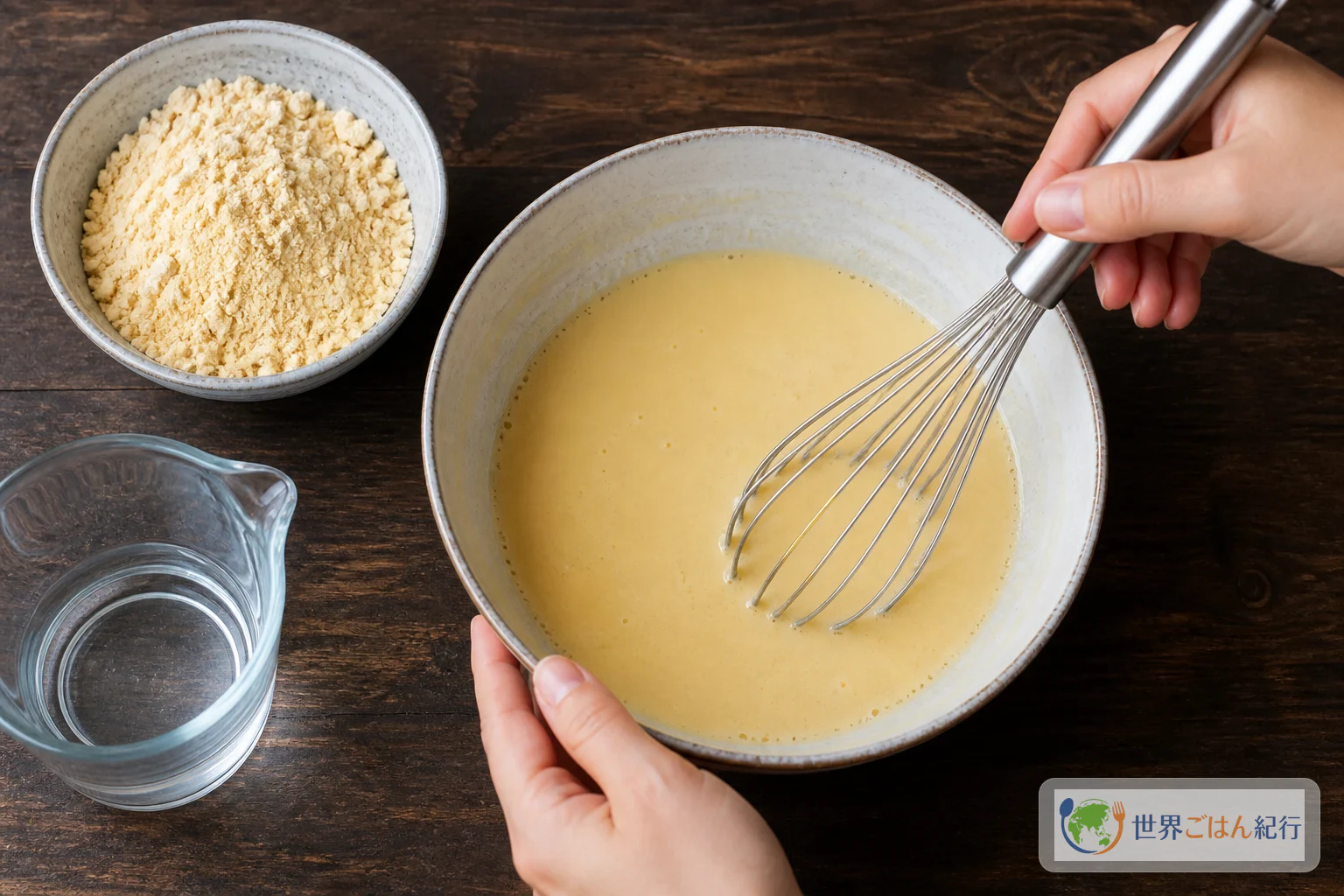
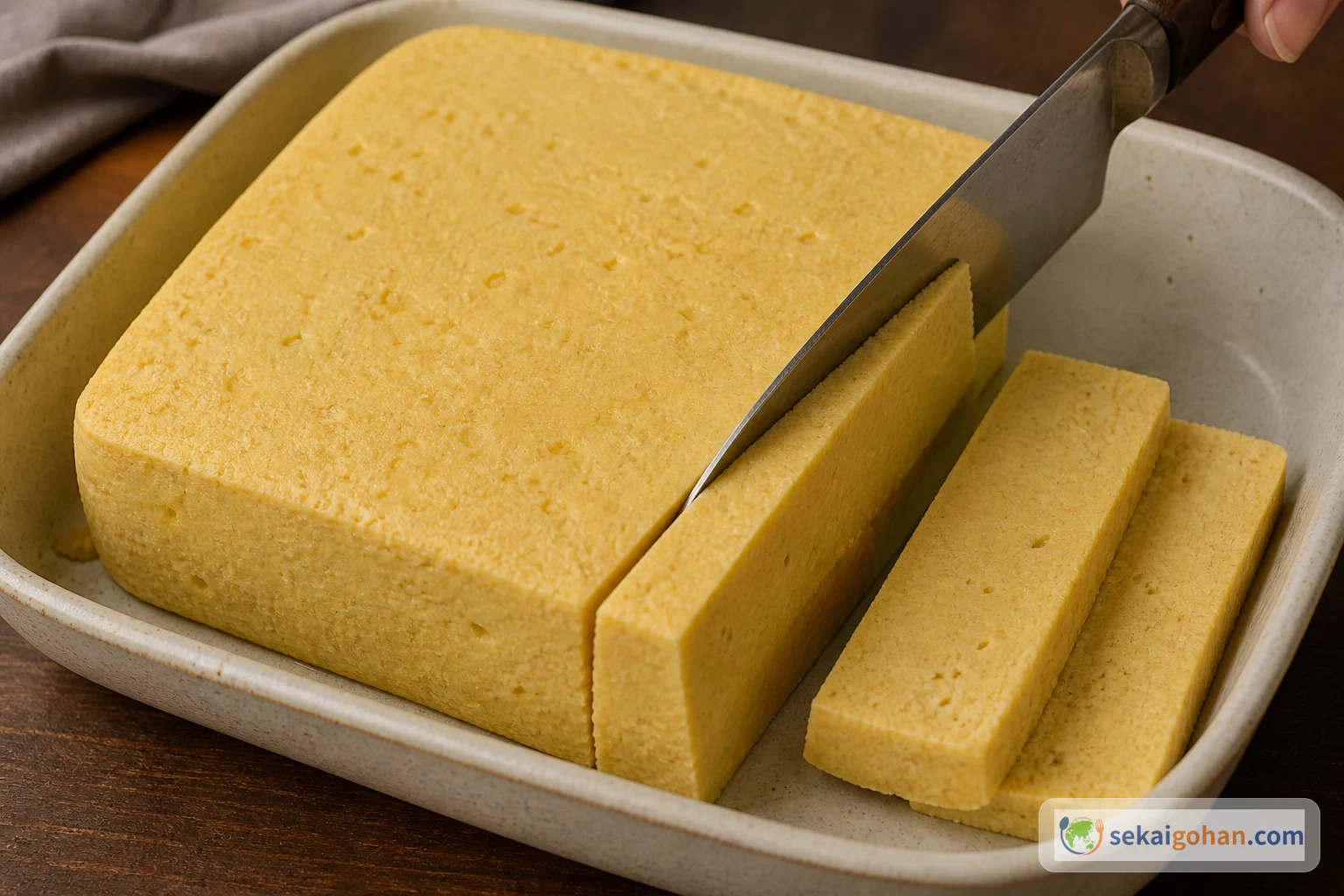
The tofu does not set suddenly after boiling; the viscosity rises little by little in the pot. This dish tends to go wrong if you finish it quickly over high heat, because only the bottom of the pot sets and the top stays floury. Keep the whisk against the bottom of the pot and move it in one direction, and the state is easier to read.
If the poured batter keeps trembling like the surface of water, it was not cooked enough. Return it from the tray to the pot and cook it again over medium-low heat, 1 to 2 minutes at a time. If, on the other hand, it has become so stiff that the spoon will not move, add boiling water 1 tbsp at a time to smooth it again. Adding cold water drops the temperature and creates more lumps.
The water needed changes a little with the type of flour and the humidity. Rather than reducing the water from the start to make it stiffer, it is easier to recover if you begin cooking at 2½ cups (600 ml) and judge by the thickness in the last 2 minutes. If you want it poured thick, put the same amount into a smaller tray; if you want it thin, spread it in an 8 inches (20 cm) square tray. A change in thickness changes the chilling time, so press the center lightly with a finger to check, not only the surface.
Make the sour dressing and toss
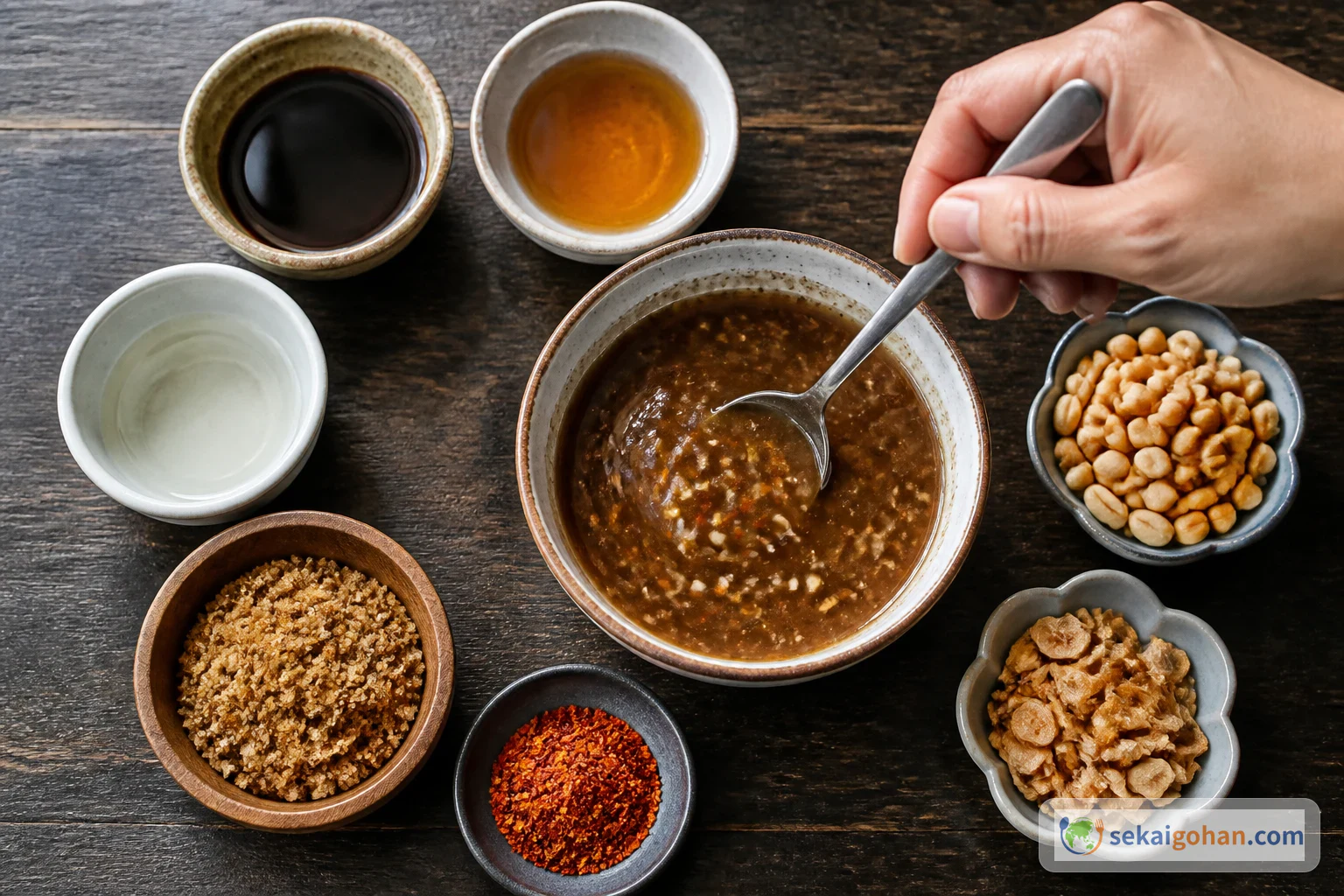
Add the tea-shop toastiness with garlic and nuts
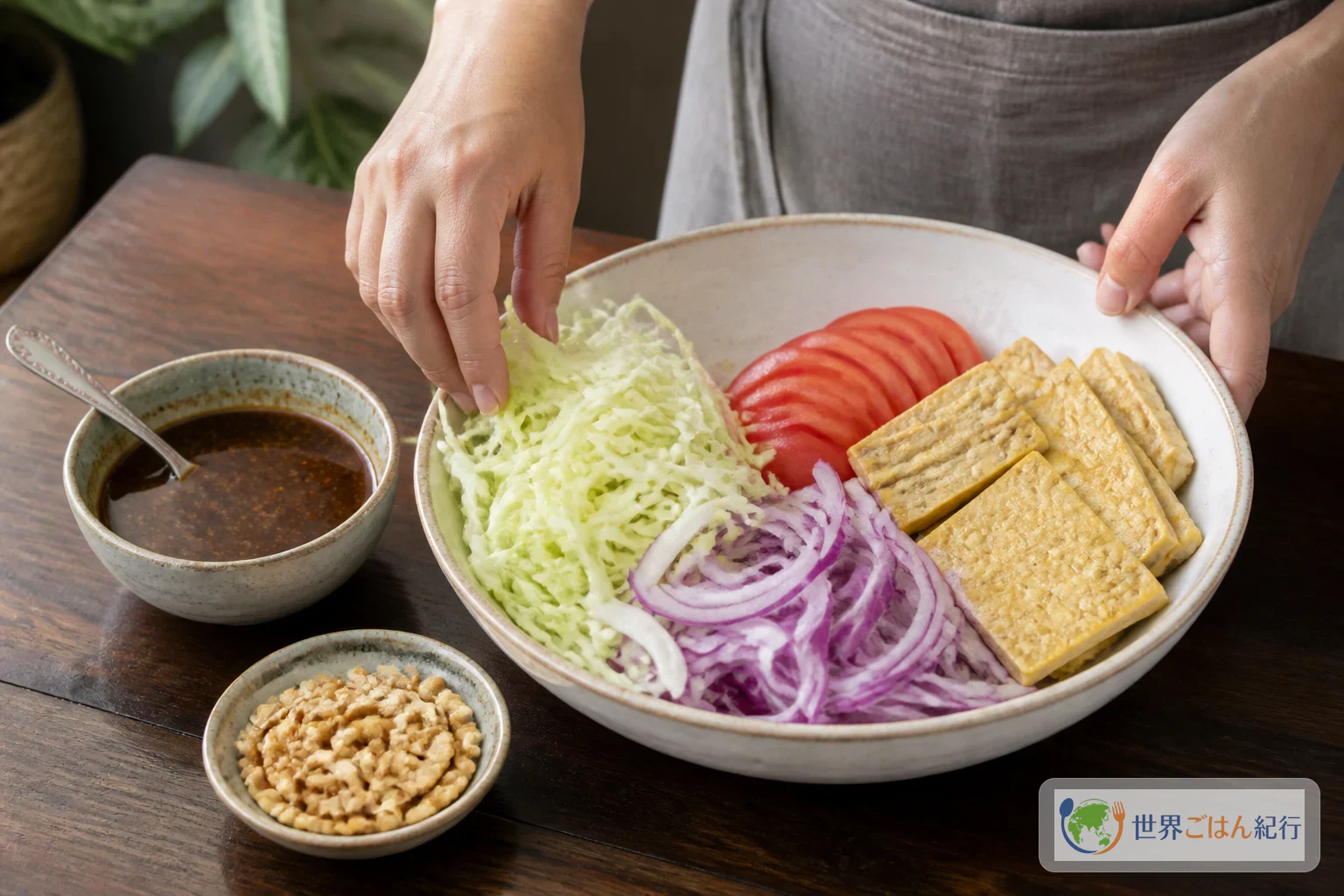
The flavor of tohu thoke comes up not from soaking seasoning into the tofu but from layering sourness, aroma, and crunch on the surface. If the vegetables are watery the dressing is diluted, so press the surface moisture off the cut cabbage and tomatoes with paper towels. There is no need to soak the tomatoes in water.
Fixing Common Tohu Thoke Problems
If the tofu doesn't set and won't cut cleanly, it most likely wasn't cooked long enough. Cook over medium-low heat until the batter falls from the spoon in a thick ribbon and the line on the bottom of the pot holds for about 2 seconds. If it's still loose, put it back in the pot and heat it 1 to 2 minutes at a time, without adding boiling water. If the flour was high in moisture, or clumped because it went straight into the water, push it through a fine-mesh strainer and cook it again.
If the fish sauce smell seems too strong, the bottle is usually the reason, because fish sauces vary in saltiness and fermented aroma from one product to the next. Next time, start with 2 tsp (10 ml) and see how it balances with 20 g of tamarind. If the sweetness of the tofu comes through first, with the nuts and garlic following, the flavor is right.
Too much sourness drowns out the sweetness of the beans. Hold back some of the dressing at first and add more as you taste.
Serving and Storing Tohu Thoke
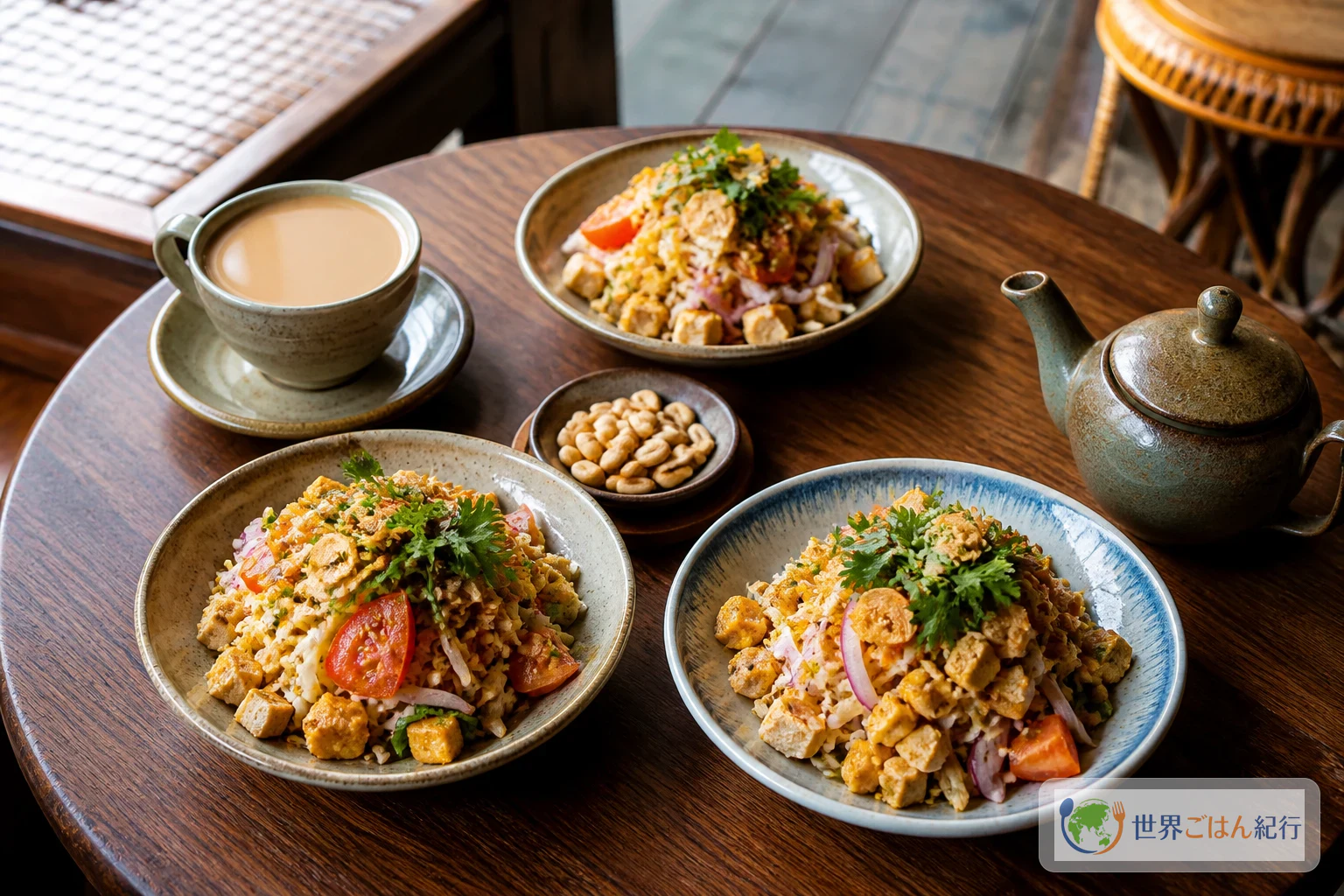
With Tea or as a Light Lunch
Right after tossing, the cabbage is crisp and the cold tofu stands out. After about 5 minutes, the tamarind's sourness moves into the vegetables and the surface of the tofu turns slightly moist. Eat it right away for texture, or give it 5 minutes for a more settled flavor.
To make tohu thoke a light meal on its own, be generous with the fried garlic and nuts so the beans feel more filling. If it's one dish among several, use less dressing and let it refresh the palate between rich noodle dishes such as ohn no khao swe.
Storage
Let the tofu cool, then keep it in a clean airtight container in the refrigerator and eat it by the next day. Once it's tossed with vegetables, they start releasing water, so eat it the same day. To make it ahead, chill the tofu, vegetables, dressing, and toppings separately and combine them at the table. Freezing draws water out of the tofu and makes it grainy.
Variations
- Make it plant-based: Swap the fish sauce for light soy sauce and salt as described above. The saltiness stays, but the fermented fish aroma is gone.
- Make it fried tofu: Dust the chilled tofu lightly with rice flour and pan-fry both sides in a little oil. The outside turns toasty, and it becomes more of a tea-shop snack than a salad.
- Toss with warm tofu: Shorten the chilling and add the cut tofu to the vegetables while it's still warm. The cabbage wilts slightly and the bean aroma comes forward.
- Add split-pea flavor: If you can get yellow split pea flour, use it for half the chickpea flour. The bean aroma gets stronger and the color a little paler.
- Move toward white tofu: Using rice flour for all of the chickpea flour gives a different batter, sticky and translucent. The amount of water changes, so follow the cooking instructions on the bag rather than swapping the same amount.
- Lighten the sourness: Replace the 20 g of tamarind with 1 tbsp (15 ml) of rice vinegar and cut the sugar to 6 g. The fruitiness fades and the tomatoes come forward.
Frequently asked questions
Q1. Can I eat it if I have a soy allergy?
The tofu itself contains no soy. But the soy sauce in the dressing does, and depending on the brand it may contain wheat too. Fish sauce contains fish. Even with soy-free tofu, the dish as a whole isn't automatically safe for allergies, so check the labels of everything you use, including the chickpeas, peanuts, and white sesame.
Q2. I have no tamarind. Can I make it with vinegar alone?
Yes. Use 2 tbsp (30 ml) of rice vinegar and 8 to 10 g of sugar instead. You lose tamarind's brown-sugar-like aroma, but it still works as a tangy salad. Lemon juice gives a brighter aroma and suits a salad you'll eat right after tossing. If it will sit for a while, rice vinegar goes better with the water the cabbage releases.
Q3. Can I make it from dried chickpeas instead of chickpea flour?
You can. Soak dried chickpeas overnight, drain them well, blend them finely with water, and strain through cloth or a fine strainer. You then heat the liquid with the settled bean starch to set it. It takes longer than starting from flour, and the bean aroma is stronger. In hot weather, soak the beans in the refrigerator rather than at room temperature.
Q4. Is it all right to make it the day before?
You can set and chill the tofu the day before. Keep the vegetables, dressing, fried garlic, and nuts separate and combine them just before eating. If it sits overnight already tossed, the tomatoes and cabbage release water and the corners of the tofu break down. If you're taking it somewhere the next day, keep it cold and don't leave it at room temperature for long.