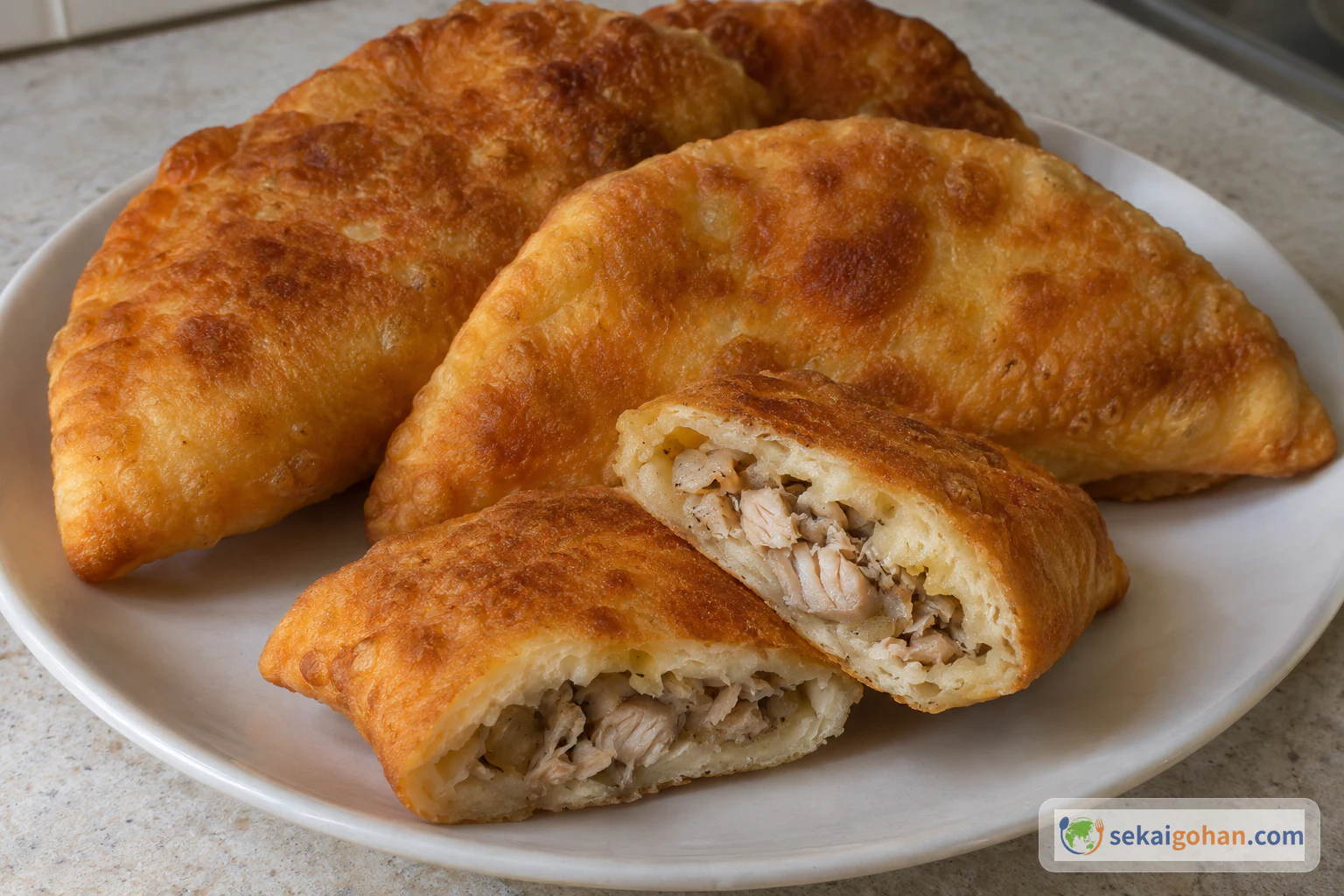
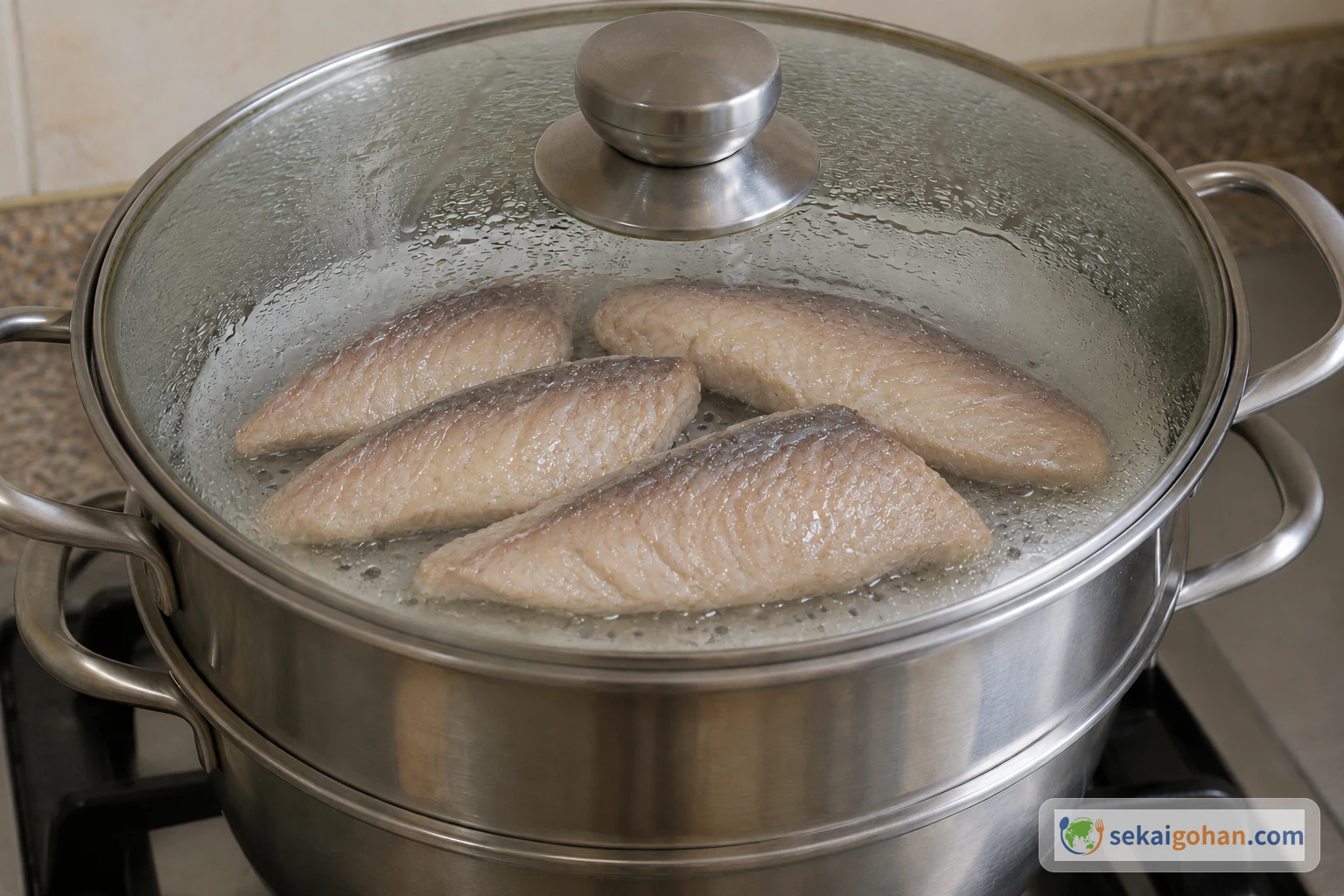
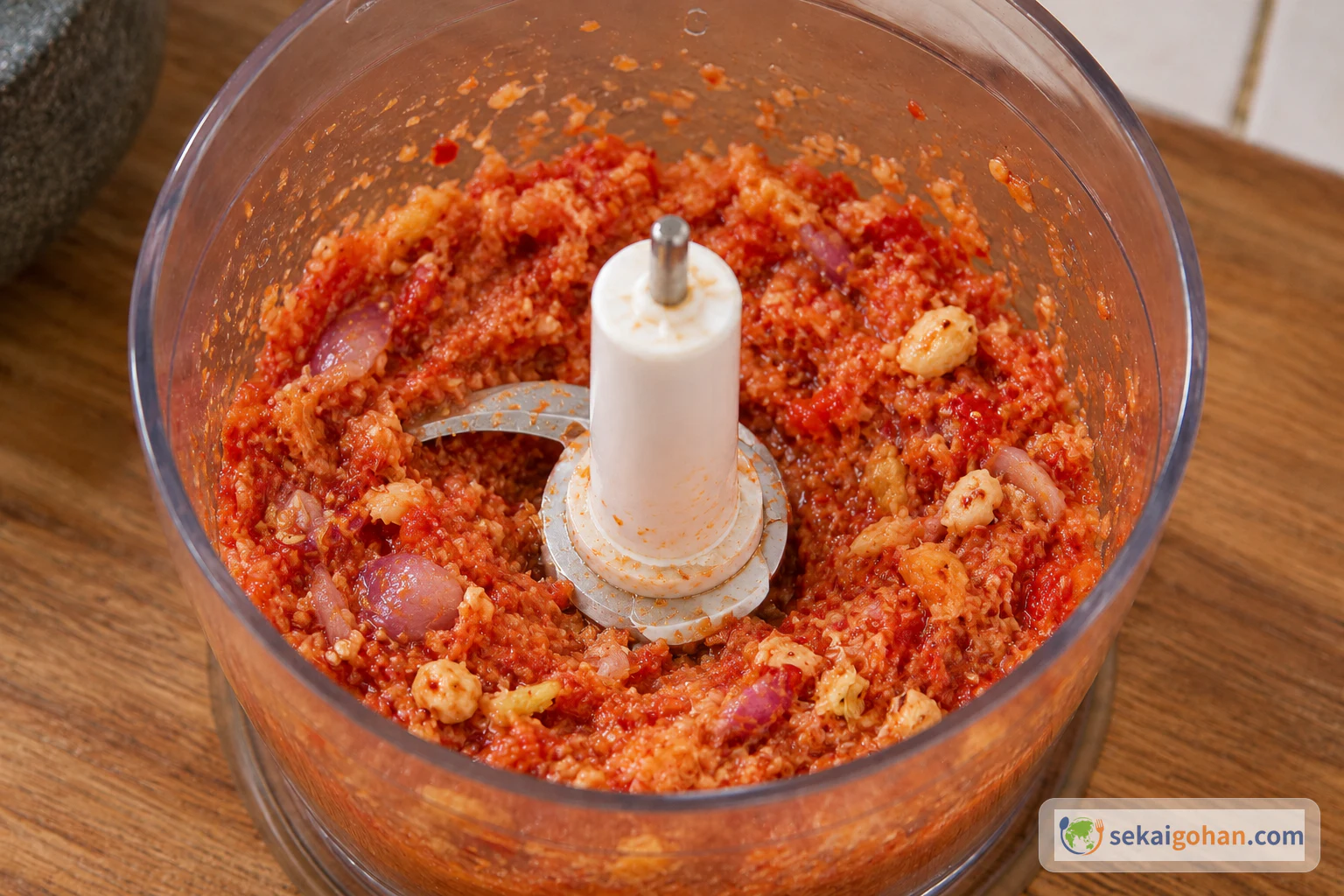
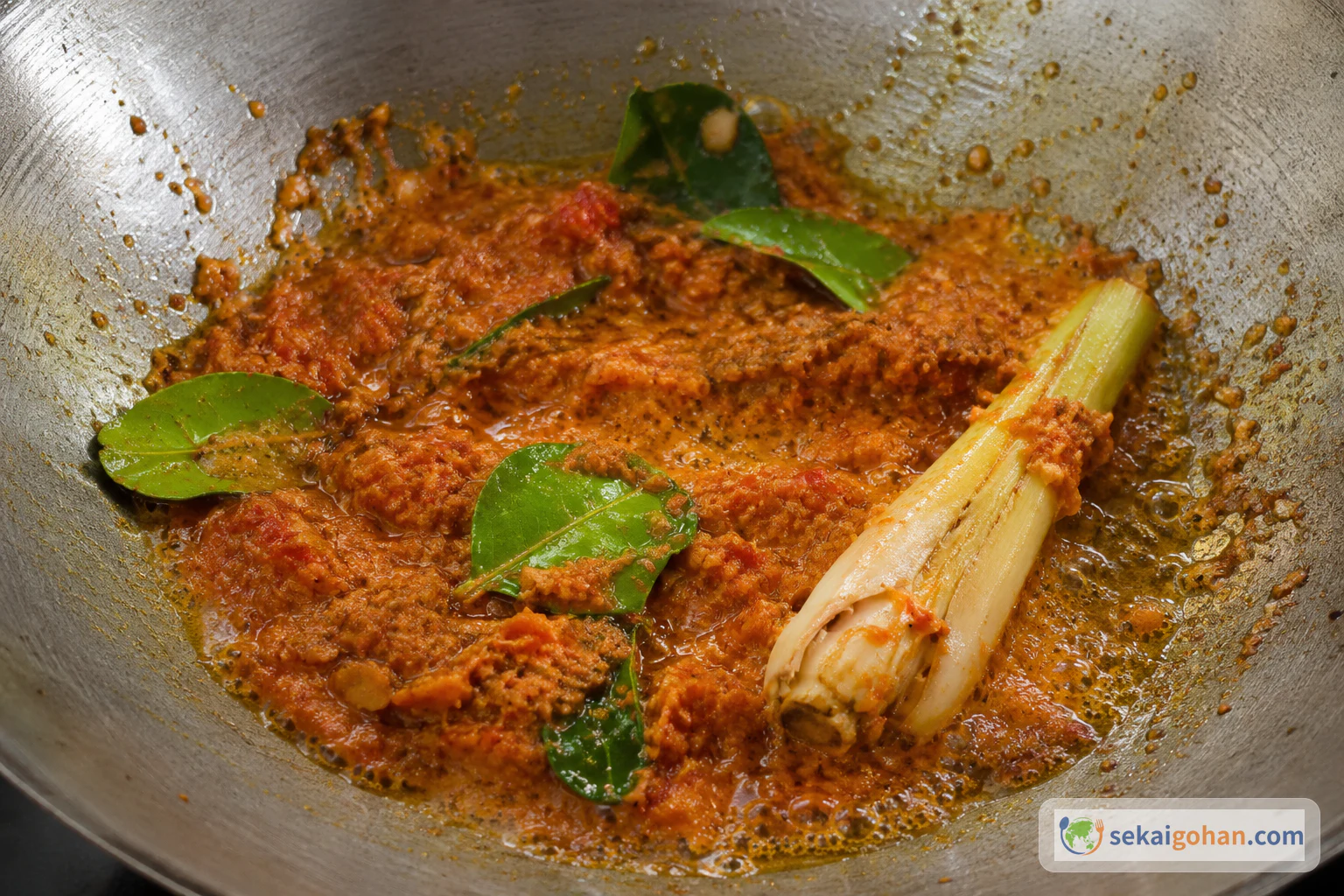
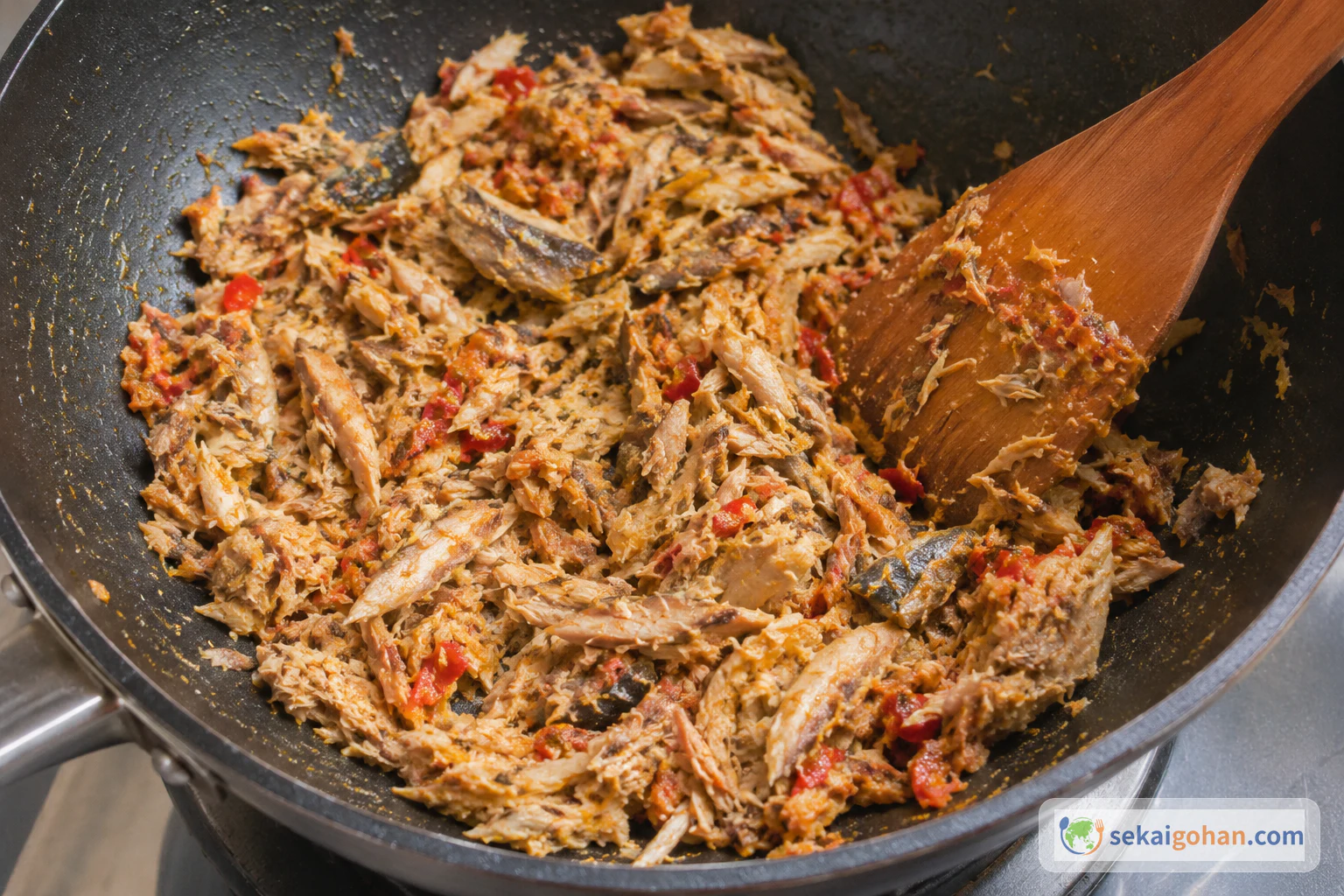
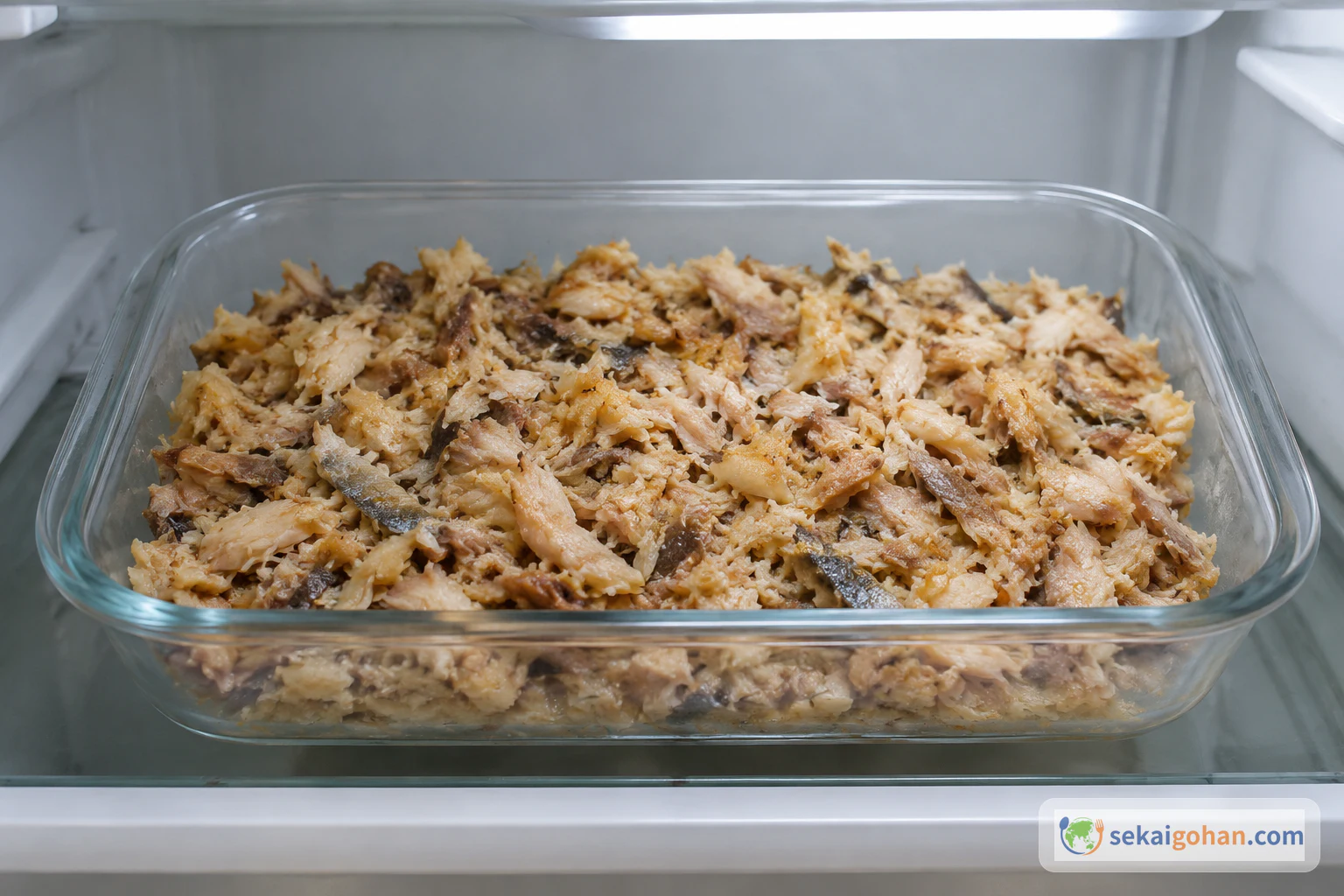
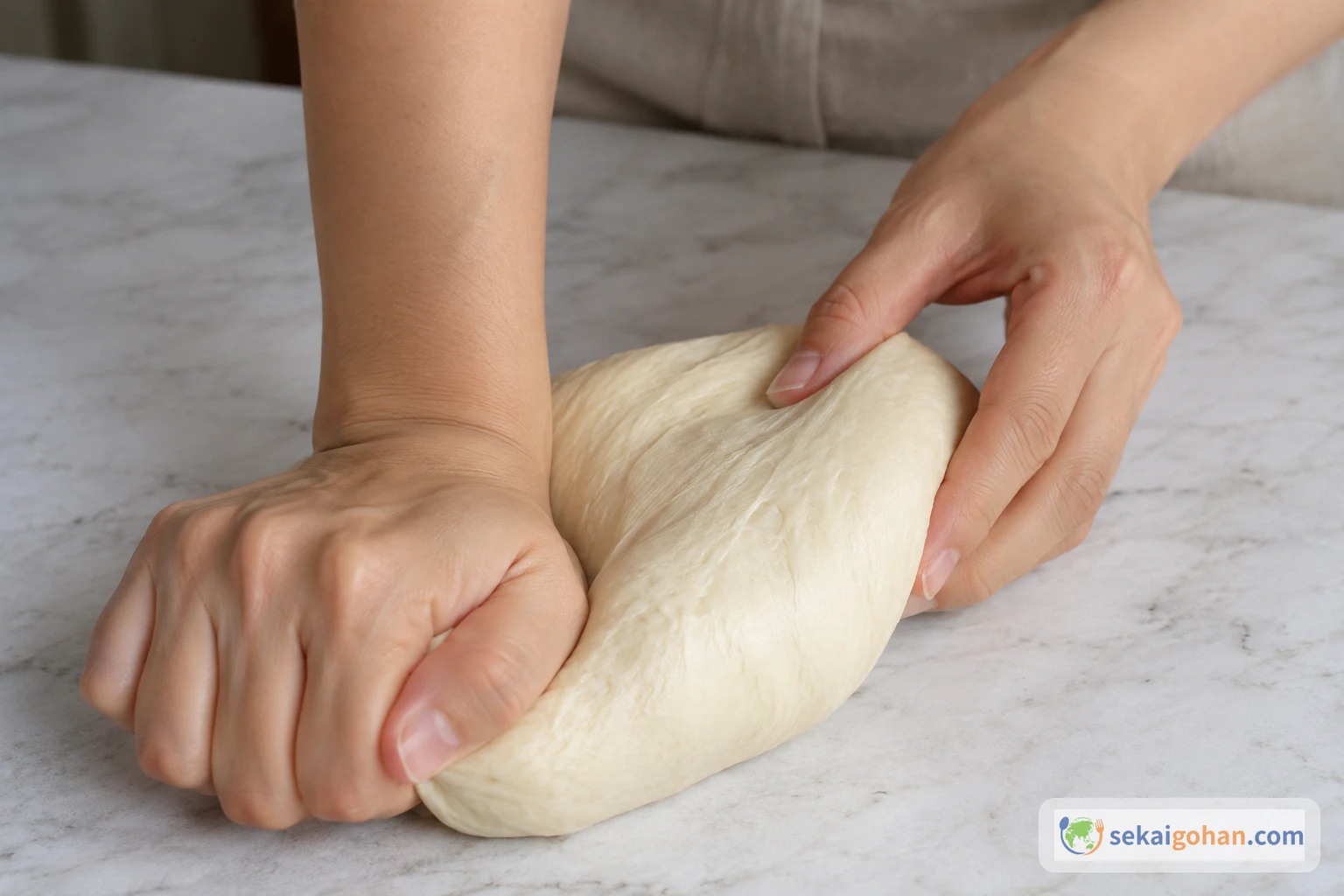
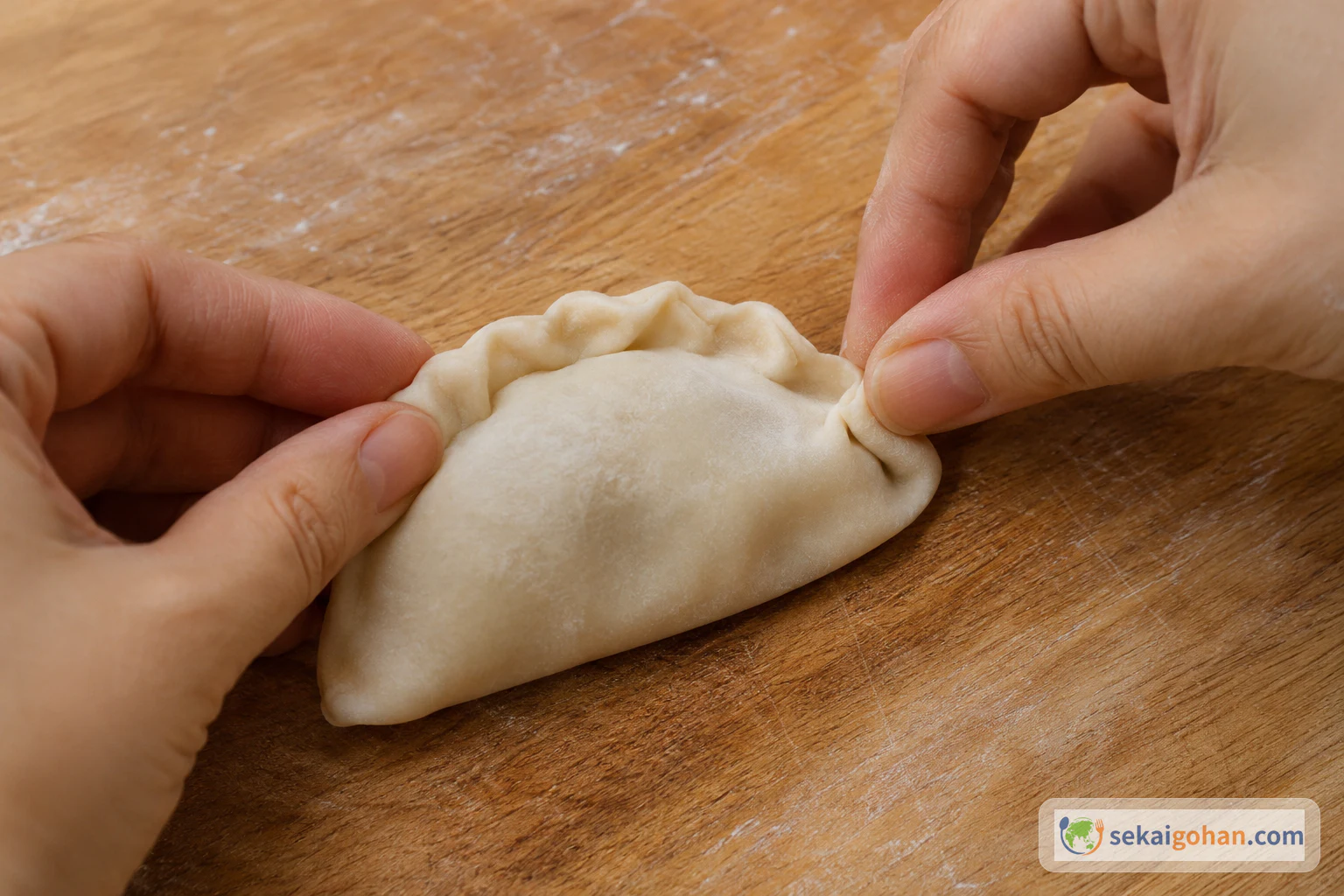
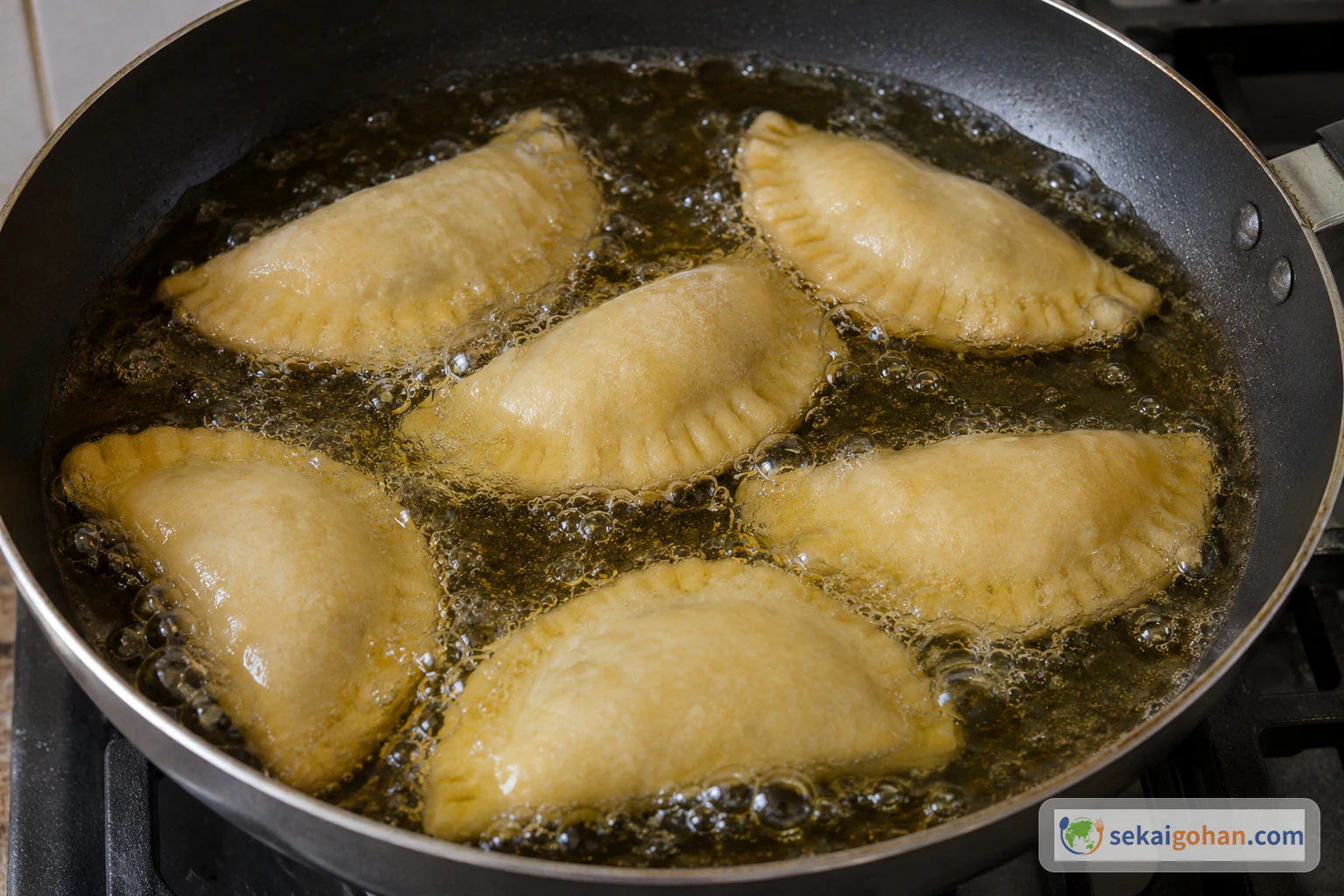
Fish flakes turn in a hot pan with ground chili, shallot and lemongrass. Coconut milk goes in and cooks down until the mixture is nearly dry, and kemangi wilts into it at the very end. Once cool, that fragrant filling is wrapped in a soft yeasted dough, pleated shut into a half-moon and fried until golden. This is panada, the fish-filled snack of Manado in North Sulawesi: a tender, bread-like bite around a spiced, coconut-rich center.
Panada in Manado and North Sulawesi
Panada is a specialty of Manado. Its dough is made with yeast and coconut milk, wrapped around shredded, sautéed fish and sealed like a pastry. Locally, the filling is cakalang cooked with onion, chili and basil.
At a glance, panada resembles kue pastel, the thin, crisp Indonesian pastry, and the seam is closed in much the same way. The difference is the dough. Panada's is yeasted and rests twice before frying, so it comes out bread-like rather than flaky.
It also looks a lot like the South American empanada, and a Portuguese cultural influence is often reported. Its detailed origin and timeline aren't well documented, though, so treat that as a reported connection rather than settled history. For more, browse recipes from Indonesia.
Ingredients for the Filling, Paste and Dough
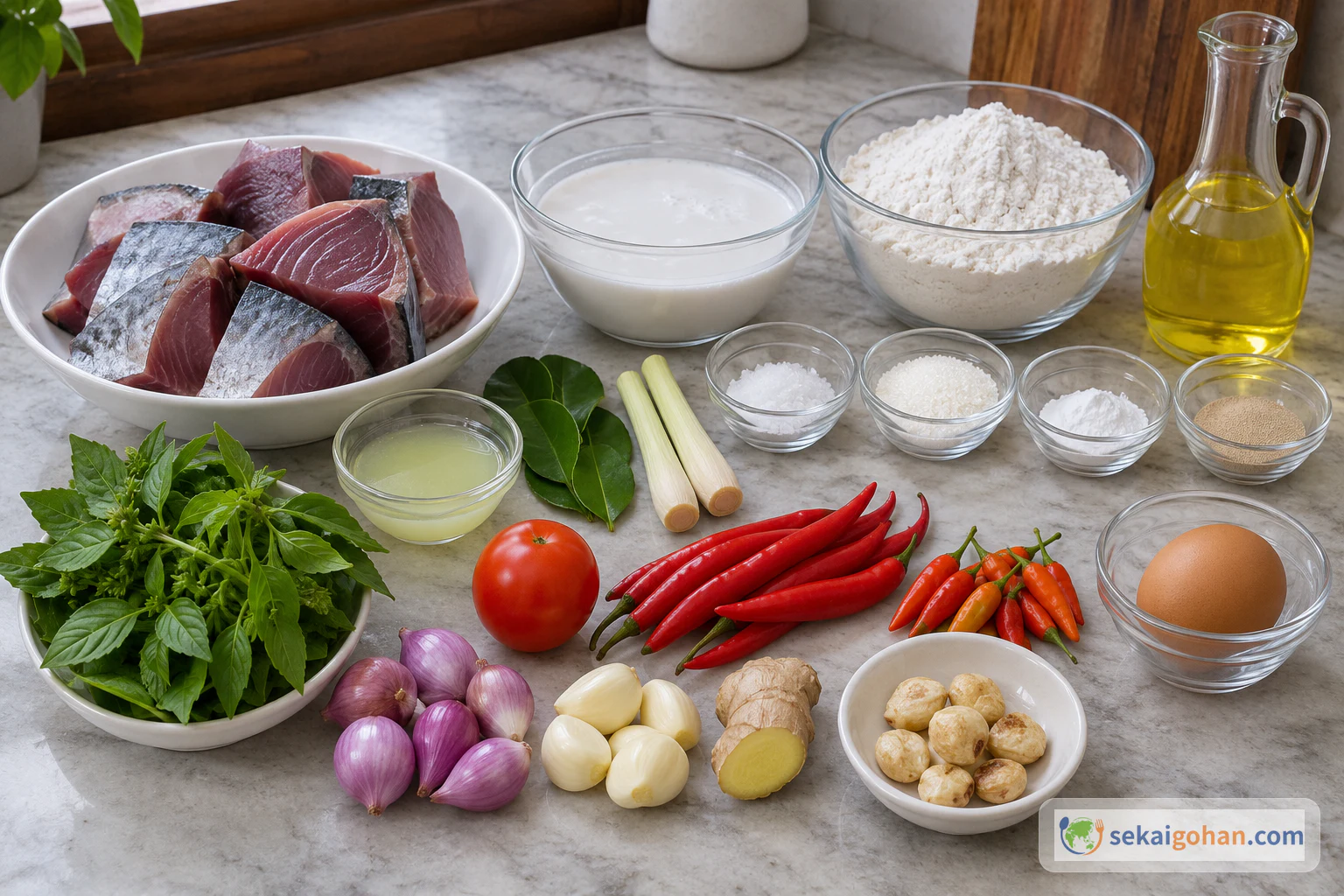
You need two stalks of lemongrass in all. One is bruised and goes into the pan whole, and the other is ground into the paste.
Choosing the Fish, Candlenuts and Coconut Milk for Panada
Fish. Use 150g of bonito fillet, weighed as the raw edible portion. Local cooks use tongkol or cakalang. Bonito is a practical substitute when you can't find them, though its flavor isn't quite the same.
Candlenuts. Buy food-grade kemiri that has already been roasted.
Coconut milk. The dough and the filling each get their own measure of santan, and the liquid amounts are written for coconut milk, so use it in both.
Fish thickness, your steamer, how much liquid your flour absorbs and how much moisture stays in the filling will all shift the result a little. Keep an eye on each as you go.
Equipment
- Steamer
- Two forks
- Mortar and pestle or a food processor
- Frying pan for the filling
- Clean, shallow heat-safe container
- Mixing bowl with a lid, or plastic wrap
- Kitchen scale
- Deep pan for frying
- Slotted spoon
- Food thermometer
Method: Filling First, Then Dough, Then the Fryer
Steaming and frying times, color and steam do not prove that food is cooked through. Use a food thermometer to confirm that the center of the fish, and later the center of each fried panada, reaches 167°F (75°C) for at least 1 minute. If it doesn't, keep cooking. Wash your hands and tools before and after they touch raw fish or egg, and keep them away from cooked food.
Food Safety and Common Problems with Panada
The method gives times but no internal temperature, so a thermometer is your best friend here. Marinate the fish in the refrigerator, wash your hands and tools, and keep raw and cooked food apart. Chill the cooked filling quickly in a shallow container, and check that the center of both the steamed fish and the fried panada reaches 75°C for at least 1 minute.
A cool filling also makes shaping easier, since it passes less heat and moisture to the raw dough. Rest the dough at about 24–26°C (75–78°F), covered with a lid or plastic wrap.
| What you notice | What to do |
|---|---|
| The fish center is below 167°F (75°C) after 20 minutes | Keep steaming, then measure again |
| A panada looks golden but its center is below 167°F (75°C) | Keep frying and measure again. Color doesn't show the internal temperature |
| Coconut milk is still pooling in the filling | Keep cooking and stirring before you add the kemangi |
| The filling is still warm when you are ready to wrap | Return it to the refrigerator until it has cooled |
| The dough's surface is drying out | Check the cover. A cloth lets moisture escape, while plastic or a lid holds it in |
| The dough doesn't look much bigger after 20 minutes | No rise is specified for this rest, so size alone tells you nothing either way |
| The dough feels different from what you expected | Flours absorb liquid differently, so expect some variation |
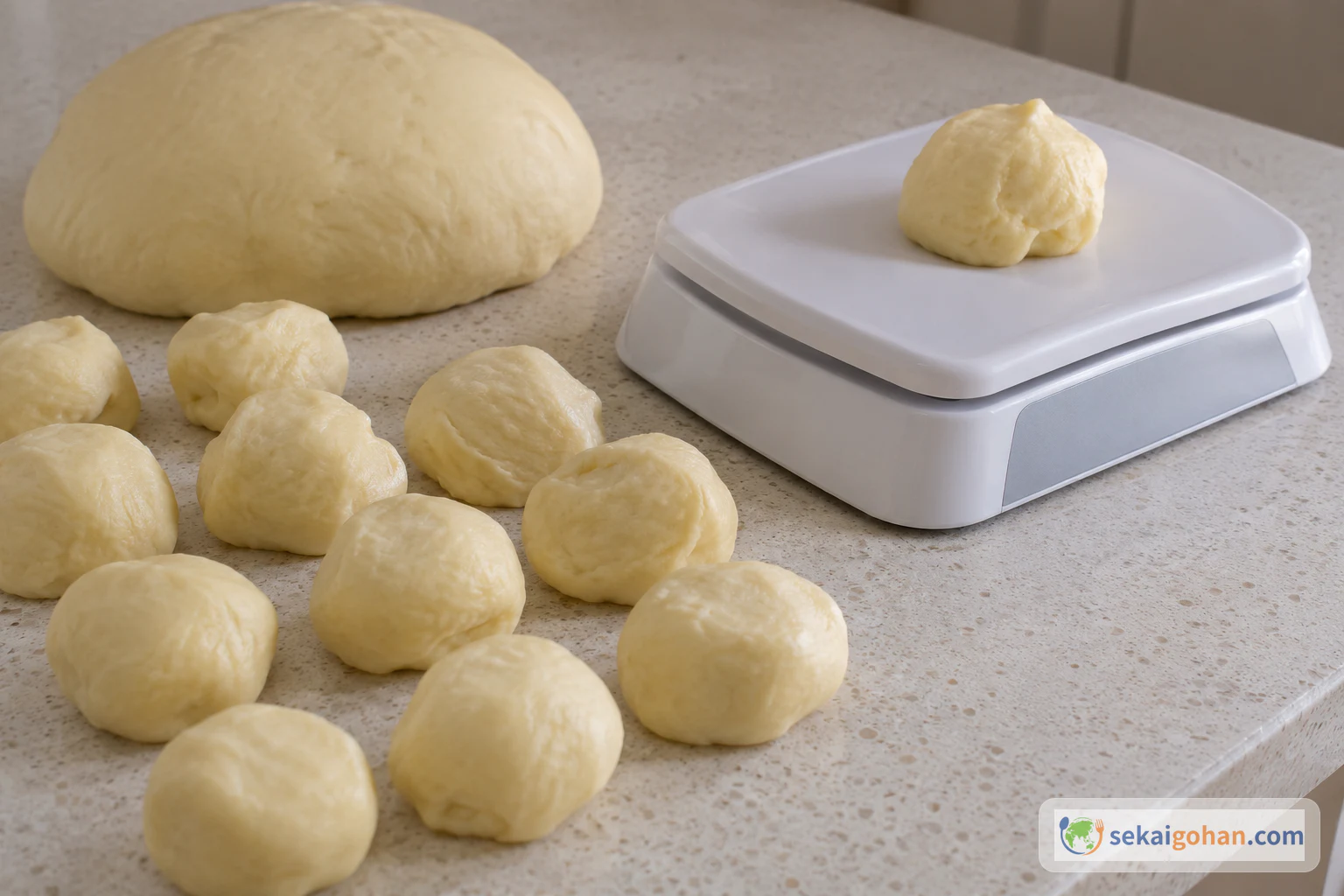
| You don't end up with 21 pieces | Keep portioning at 20g. The count can come out a little above or below 21 |
Serving Panada and Other Versions
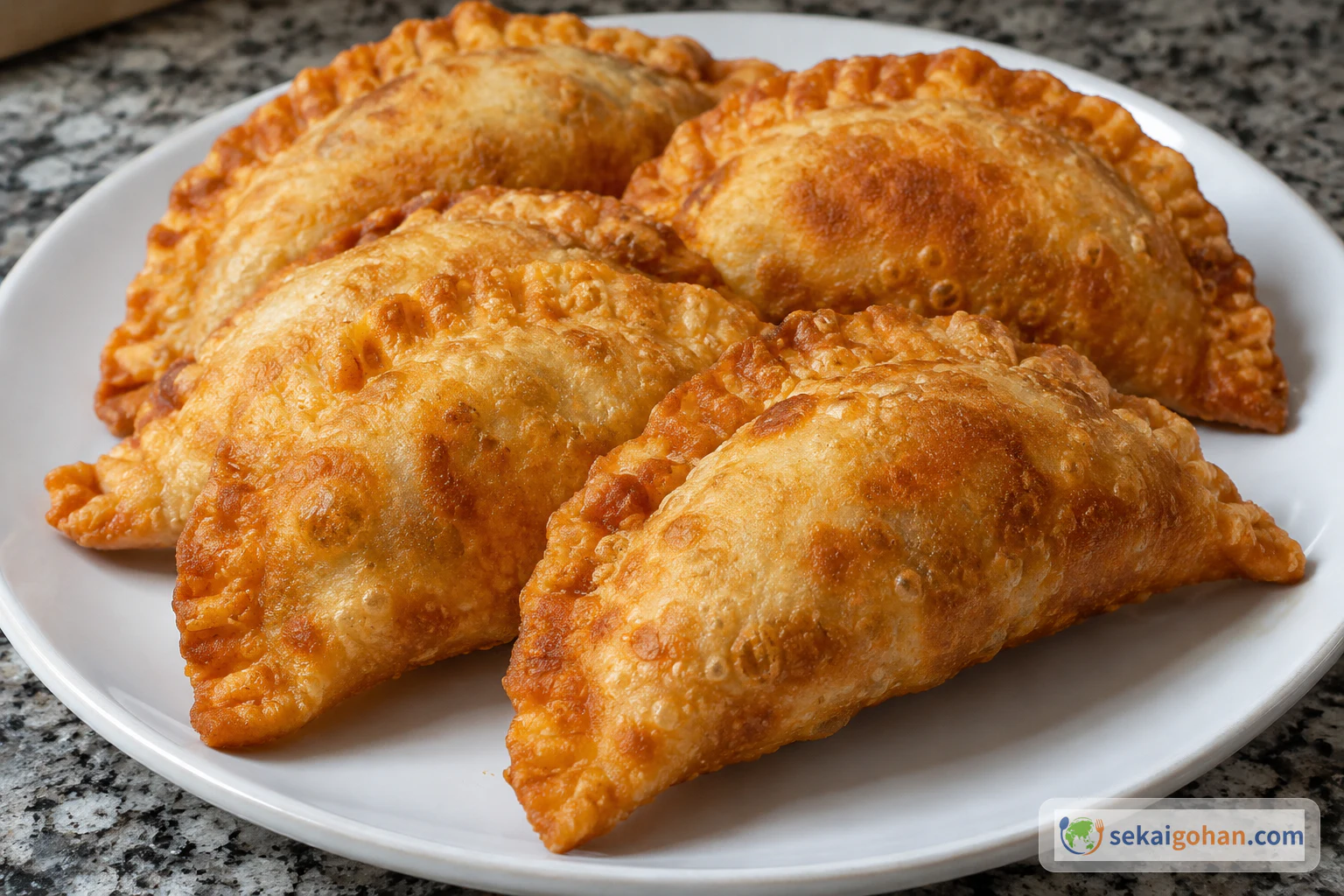
Move the fried panada straight to a clean plate. Leftovers should be cooled quickly in a clean, shallow container and refrigerated.
Recipes around Manado vary quite a bit, each with its own balance of fish, dough and spices. Since the proportions differ, cook each version as written rather than mixing its numbers into this one.
| Version | Fish | Dough and filling | Worth noting |
|---|---|---|---|
| Manado style | Cakalang or tongkol, 9 oz (250g) | 1 lb (500g) flour with a variable amount of water | Aromatics are garlic, shallot, chili, scallion and kaffir lime |
| Steamed tongkol version | Steamed tongkol, 7 oz (200g) | 10.5 oz (300g) flour and ½ cup (130ml) santan | Has its own spice set. Yield: 20 |
| Santan filling version | Fish, 1 lb (500g) | 2 cups (500ml) coconut milk in the filling | Shaped into 15 pieces |
| Baked or fried version | Cakalang | Varies | Can be fried or baked to taste |
Frequently Asked Questions
How many panada does it make?
The dough is portioned at 20g each, which makes 21 pieces.
Is this a fermented food?
The dough uses instant yeast and rests for 20 minutes twice before frying. These are short rests, not a long room-temperature fermentation.
Is 20 minutes of steaming enough?
Start with 20 minutes, then check with a thermometer: 167°F (75°C) at the center for at least 1 minute. If the fish isn't there yet, keep steaming.