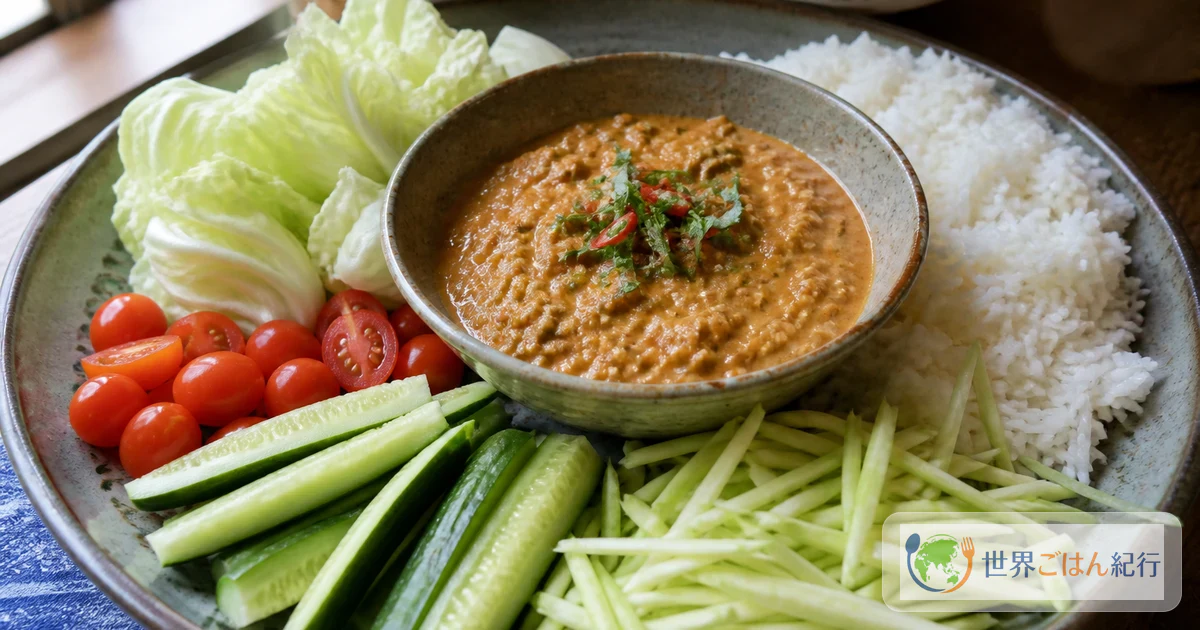
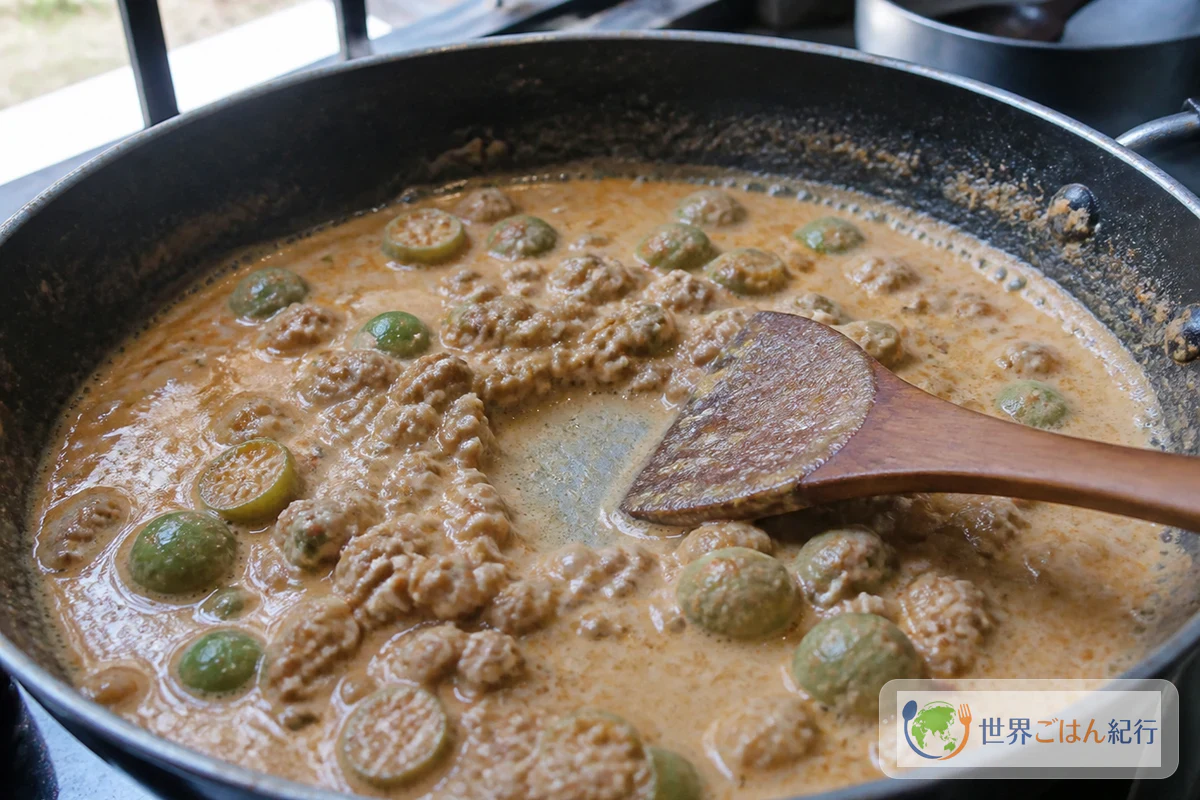
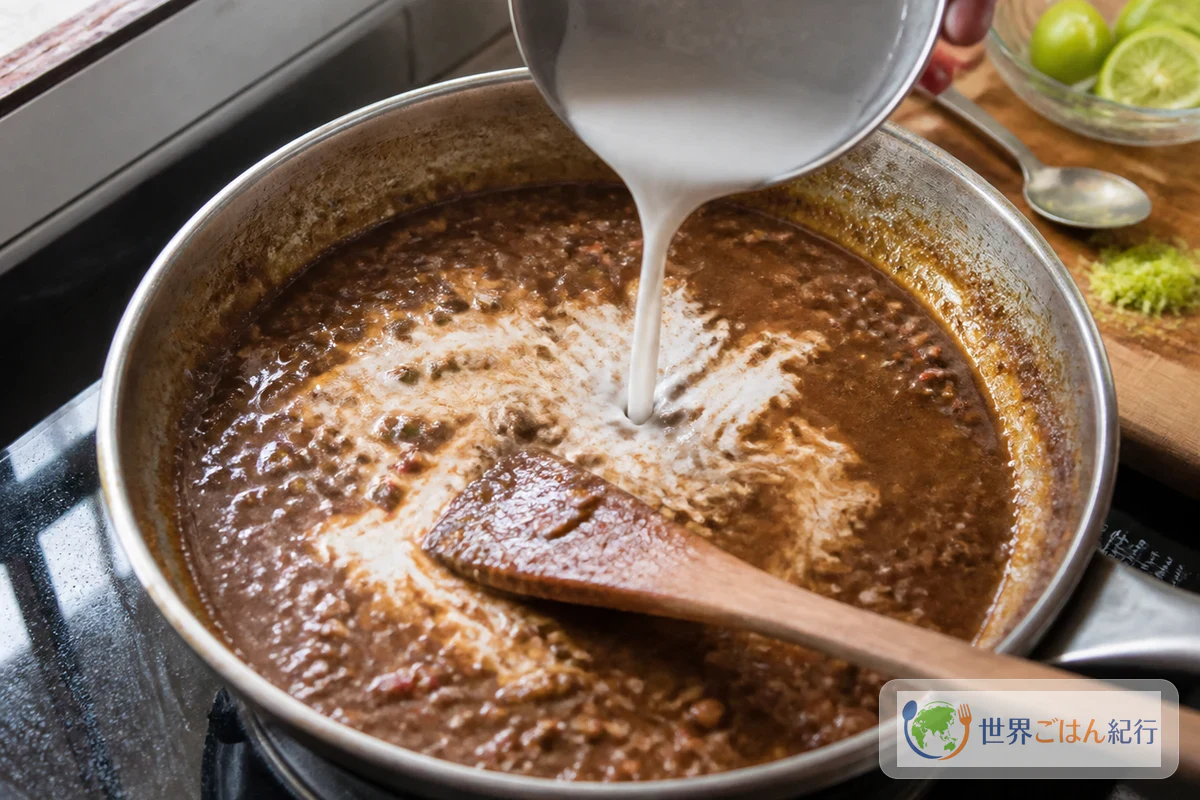
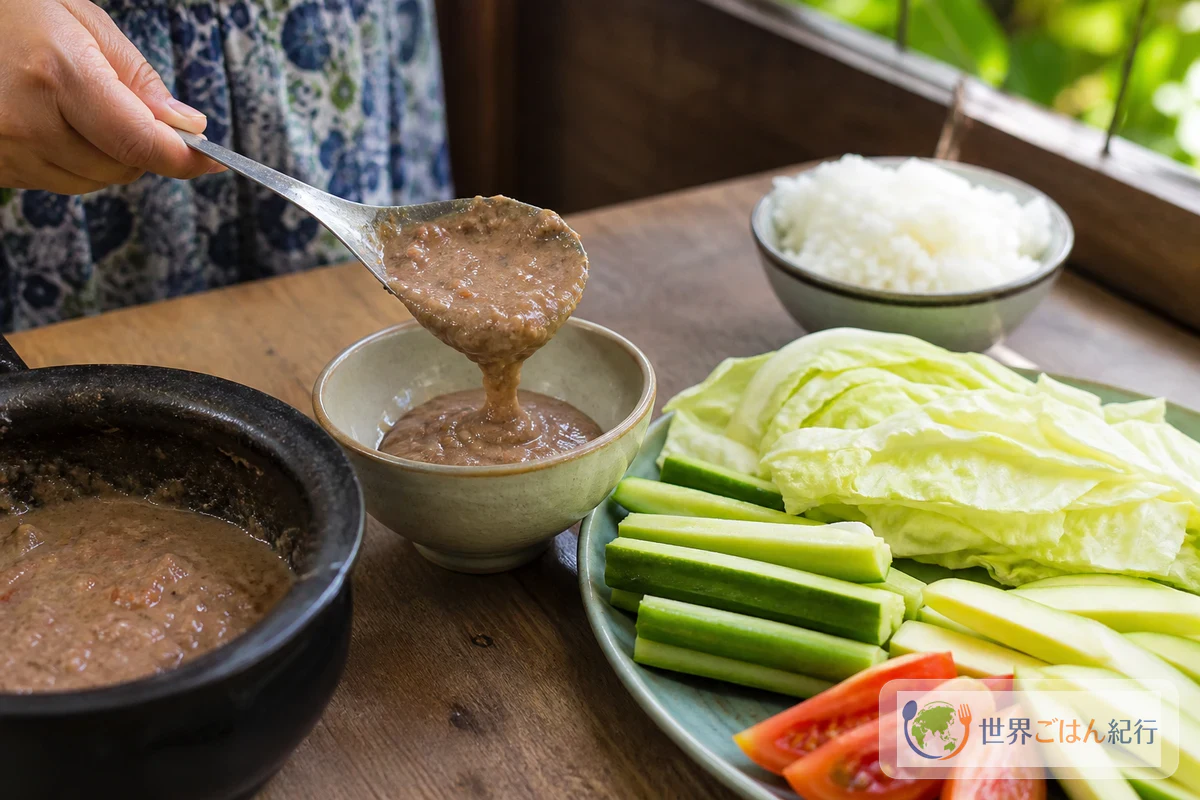
The saltiness of fermented fish and the scent of lemongrass sit over a warm, white coconut sauce. The vegetables around it count as much as the dip: watery cucumber, sour green mango and crunchy cabbage all catch the rich sauce. Prahok ktis is a Cambodian dip in which prahok, the country's fermented fish paste, is simmered with pork, aromatics and coconut. It doesn't hide the fermented fish. The sweetness and fat round it out, and you scoop it up with raw vegetables.
Prahok Ktis in Cambodian Cooking
What Prahok Is
Prahok is a paste of freshwater fish that has been salted and fermented. Fish sauce is only the liquid, but prahok keeps the fish flesh along with the umami of fermentation. Its aroma is distinct as soon as it goes into the pot. Once it's layered with pork fat, sweet coconut and sour tamarind, though, the sharp edge of the salt softens.
Prahok is a flavor base used in small amounts in everyday cooking, in a diet built on rice and fish. The fermentation time, the type of fish, the amount of salt and the storage conditions all change its aroma, texture and saltiness.
Lake Fish and the Seasons
Prahok is a preserved food that Cambodian meals depend on. The water in Tonle Sap lake and the Mekong changes with the seasons. Fish gather in the rainy-season flood, and the fishing and processing come in the dry season. The water rises from May to October, and fish are caught and processed from December to March. Salting and fermenting the fish lets a household eat one season's catch in another.
How Prahok Ktis Is Eaten
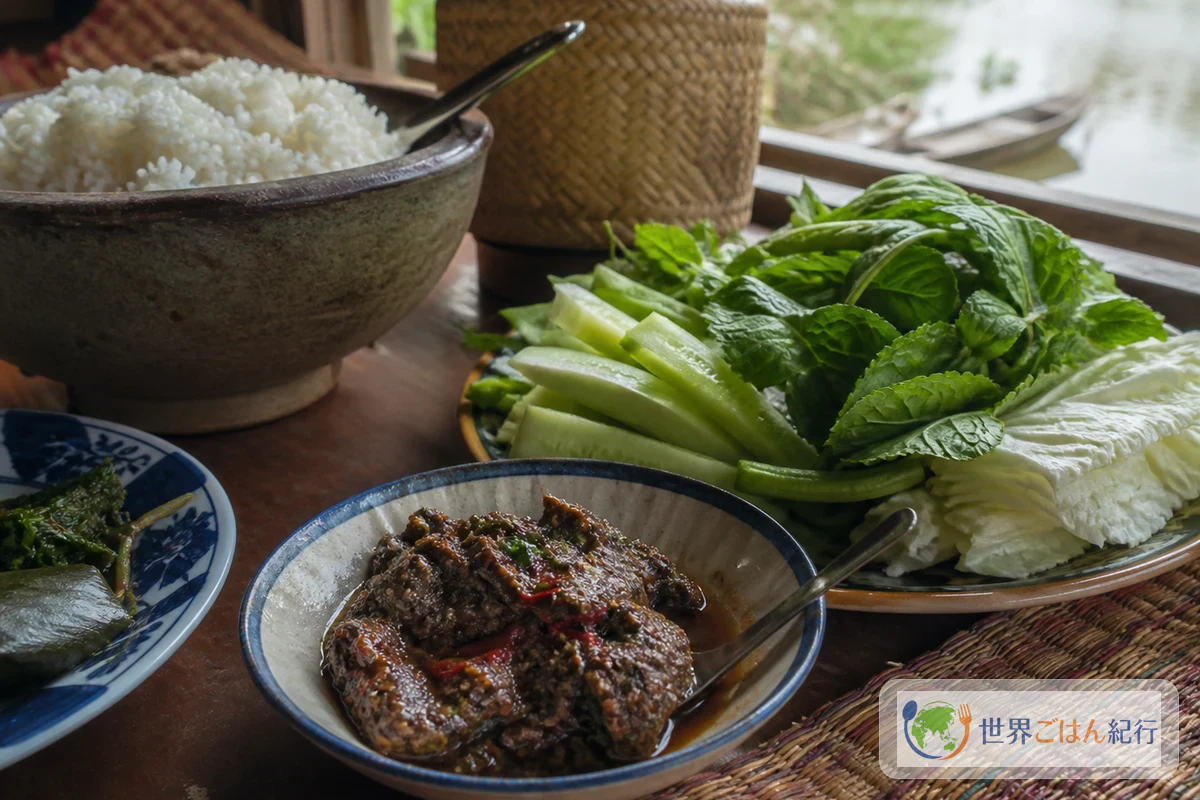
A Cambodian meal has rice at the center, with several dishes laid out and shared among family and friends. The spoon is the main utensil, and a fork pushes food onto it. The vegetables served with prahok ktis do more than add color: juicy vegetables and rice soften the strong fermented fish in every bite.
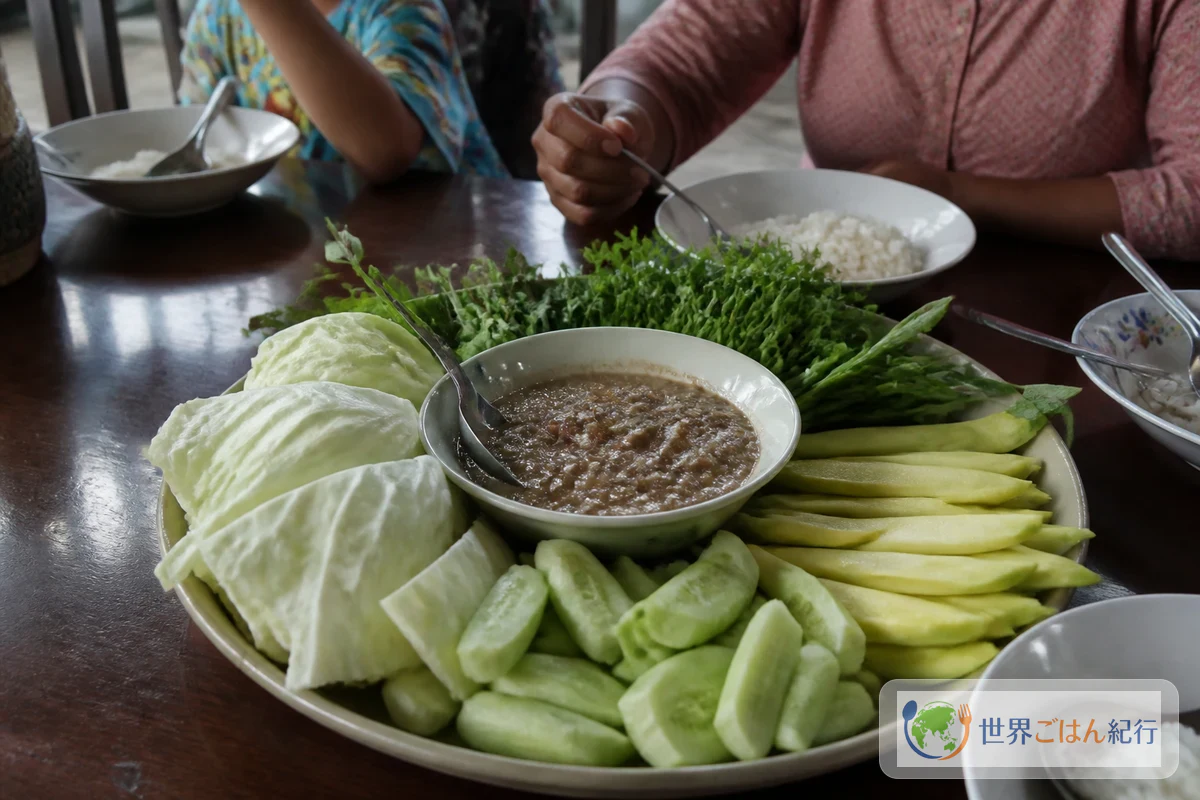
Put the warm dip in the middle of a bowl, spread cut vegetables and fruit around it, and spoon the sauce onto the vegetables a little at a time. Keep the vegetables out of the pot. They would release water, thin the flavor and lose their crunch. On one plate you can move back and forth between rich and light.
Prahok Ktis, Amok and Related Dishes
Amok steams fish in coconut. Prahok ktis simmers fermented fish with pork and is eaten as a dip for vegetables. So even two coconut dishes from the same country treat fish differently and are eaten differently at the table.
Laos and northeastern Thailand also use fermented fish in seasonings and dishes. The aromas can be similar, but the processing, the saltiness and the way it goes into a dish differ. Laos's padaek and Thailand's pla ra each have their own flavor within a related food culture, so don't swap one for prahok one-to-one.
Ingredients (The Base of Aromatics, and Vegetables for the Table)
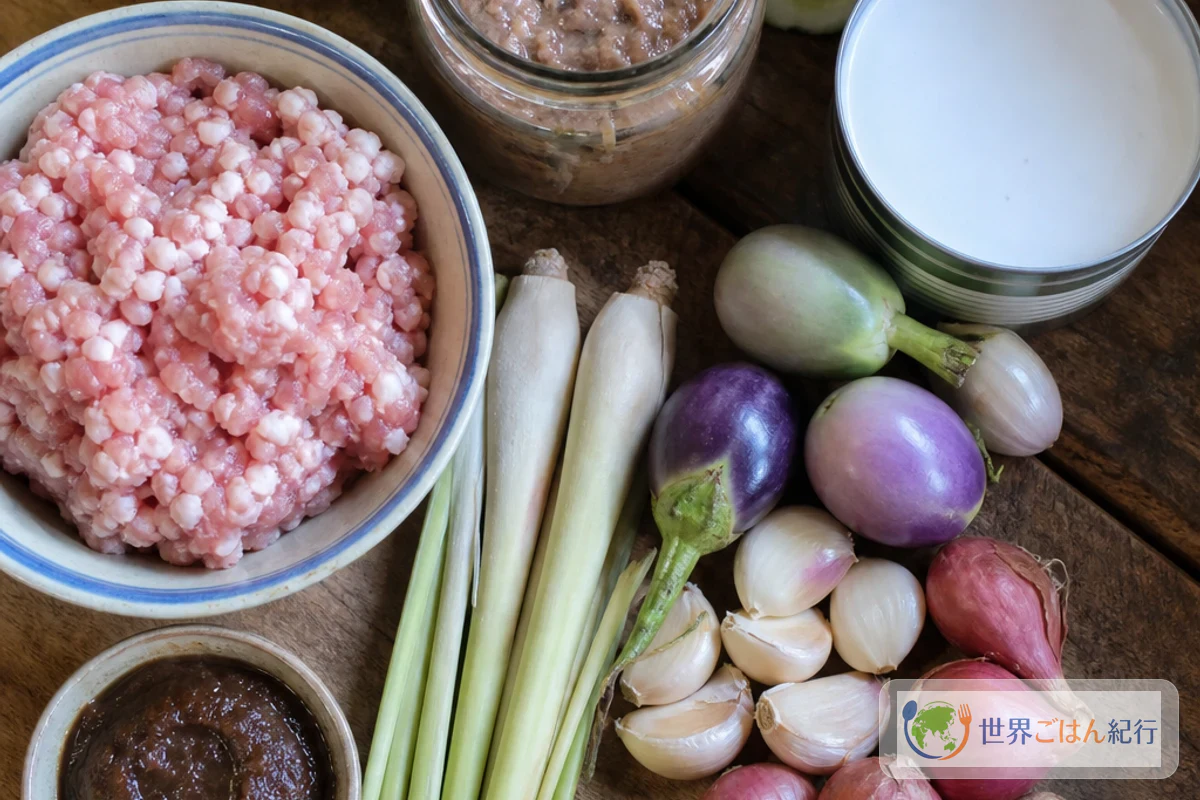
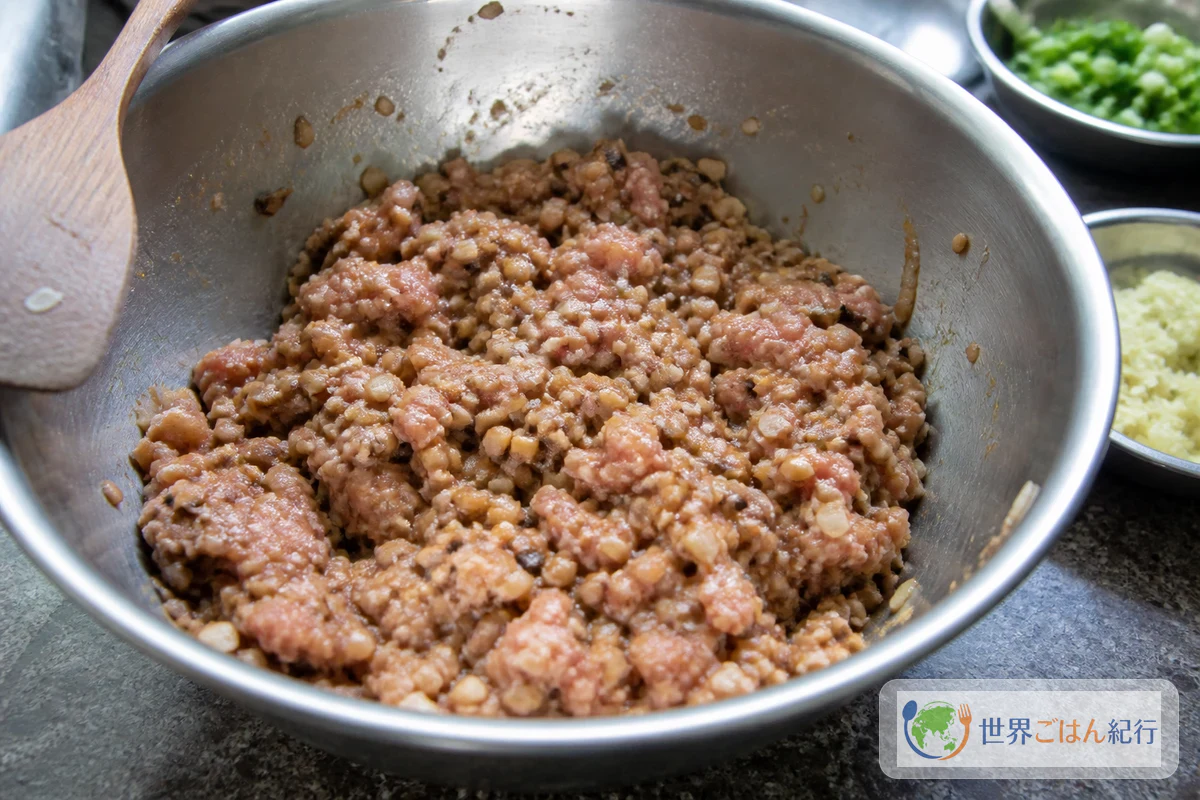
This serves 4. The ratio is 5.5 oz (150 g) prahok to 2.25 lb (1 kg) pork, scaled down here to 2 oz (60 g) prahok with 14 oz (400 g) ground pork for home. Saltiness differs from one product to another, so don't add all the salt at the start.
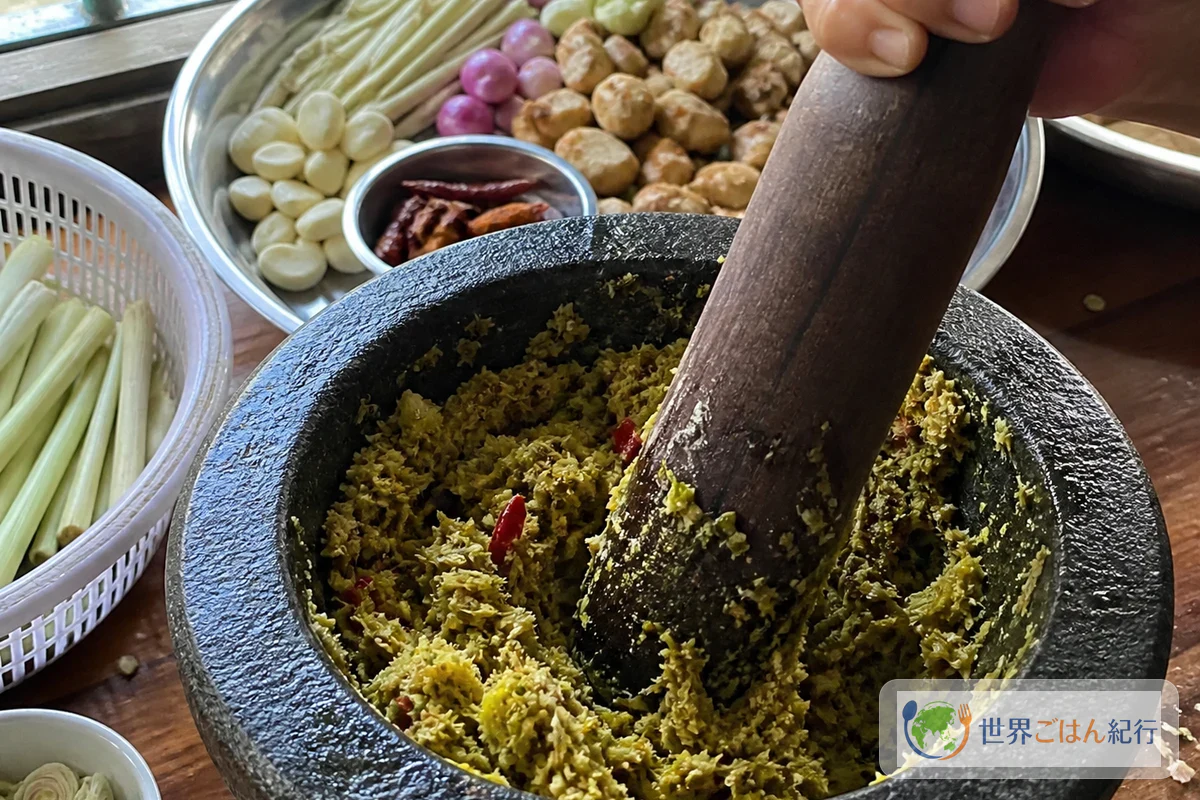
Kroeung is the base of Cambodian cooking: aromatics ground into a single paste. Yellow kroeung combines lemongrass, galangal, garlic, shallots, makrut lime leaf, turmeric and so on. Here, ginger replaces galangal and lemon zest replaces makrut lime leaf, so the layers of aroma stay.
For lemongrass, choose fresh or frozen stalks over dried powder, so a thin citrus scent stays in the simmer. A small pack from an import store is enough for one time. If you also make tom yum or curry, divide frozen stalks into portions so less goes to waste.
Prahok is not always sold at neighborhood supermarkets, so it's worth seeking out as the main ingredient. If you're making it once and a nearby import store has a small size, you don't need to order online. Fish sauce, shrimp paste and chili paste are different things, even when the names look similar. Check the label for a fermented fish paste made from fish and salt, and check the size and whether it is stored refrigerated or at room temperature.
Choosing Ingredients and Substitutes for Prahok Ktis
If you cut back the prahok too far for fear of the smell, the dish drifts toward a coconut-flavored pork crumble. Keep the saltiness of the fermented fish, and dilute each bite with the water of the vegetables. That is the key to making this dish outside Cambodia. If it's your first time, start with the 2 oz (60 g) in the ingredient list and adjust for the saltiness of your brand with salt at the end. Some versions also add fish. Here, canned coconut milk and water stand in for coconut water and coconut cream, so you need fewer extra purchases.
You can change the vegetables to suit the season. Replace the fermented fish with another seasoning, though, and you're making a different dish, so decide first what you'll keep and what you'll give up.
- Lower the fish aroma a little: Reduce the prahok to 1.5 oz (40 g) and add salt at the end after tasting. The aroma gets gentler, but the coconut and pork feel heavier, so serve plenty of vegetables.
- Do not use fermented fish: Combining 1.5 oz (40 g) anchovy paste and 20 g miso adds saltiness and umami, and builds more body than a little fish sauce would. Prahok keeps freshwater fish flesh and fermented aroma, though, so the aroma and the grains left on the tongue will differ. This is a home-style variation with fermented seasonings, not Cambodian prahok ktis. To avoid fish, skip the anchovy too and use 3.5 oz (100 g) mushrooms and 1 oz (30 g) miso.
- Add acidity with fruit: If you have no green mango, choose a hard green apple, starfruit or a sour citrus. Sweet ripe mango doubles up on the dip's sweetness, and you lose the crunch of green fruit.
- Replace the small eggplants: Pea eggplants simmered whole burst with sauce when you bite them. Japanese eggplant is watery and soft, so cut it into 0.5 inches (1.5 cm) squares, or use bell pepper in 0.5 inches (1 cm) squares for a lighter texture. Add either in the last 5 minutes so it doesn't break down. Green peas give the texture of round grains. Don't lengthen the simmer for any of them, or they will release too much moisture into the sauce.
Crushing the kroeung in a mortar leaves thin fibers of lemongrass that slowly release their flavor into the aromatic oil. A spice mill, which grinds to an even size, is also handy if you use dried chilies and peppercorns often. If you already have a mortar or are making this just once, there's no need to buy anything new.
Method (Fry the Aromatics, Leave Some Coconut for the End)
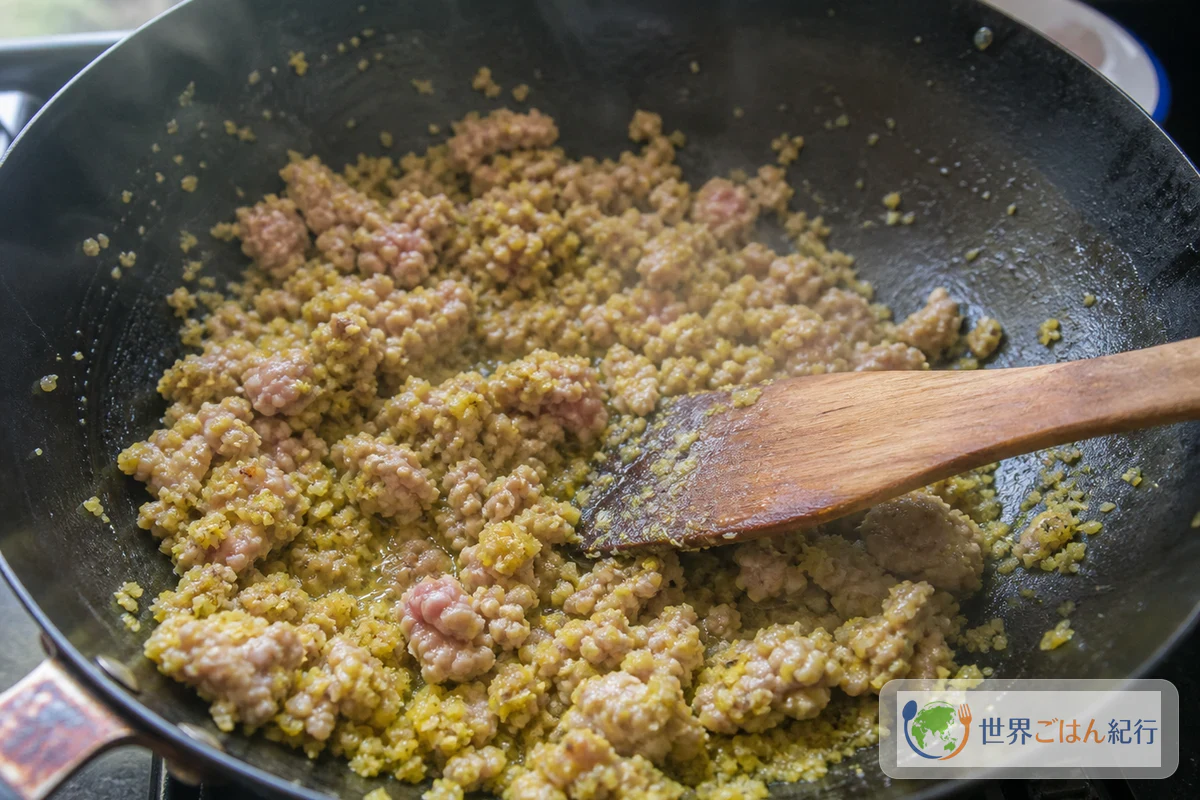
Don't start on high heat to weaken the smell of fermented fish. The aromatics scorch, and the prahok sticks to the bottom of the pan. Follow this order: open the aromatics in oil, fry the pork, simmer in coconut, then add a little at the end.
Common Problems with Prahok Ktis and How to Fix Them
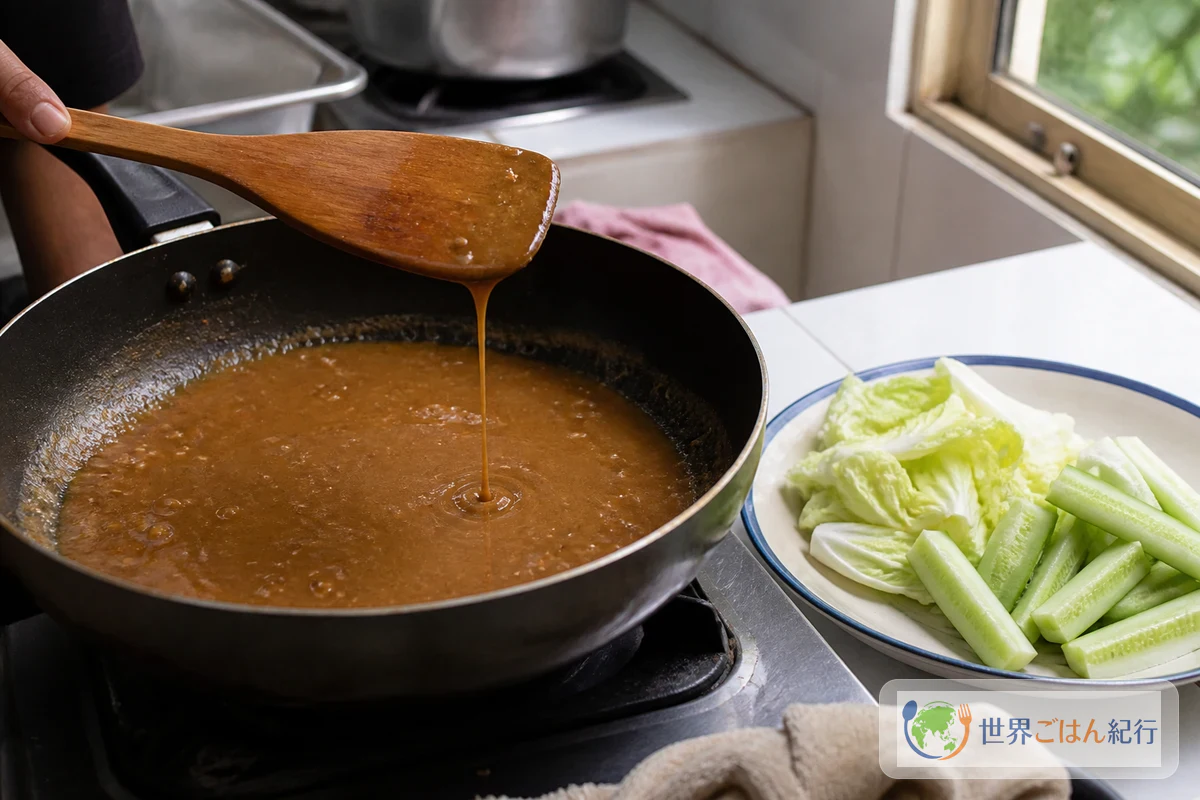
Heat won't drive off the aroma of prahok. The aim is to pass its umami to the aromatics and pork, layer coconut and acidity over it, and end up with a sauce that isn't too rich once it meets the vegetables. Check the saltiness and aroma of the prahok, the richness of the coconut milk and the doneness of the ground pork. Tasted from the pot, it seems a bit strong. Dip a piece of cucumber or cabbage, and the saltiness settles where it should.
If the fish aroma comes forward during simmering, before diluting with water, add 3.5 tbsp (50 ml) coconut milk and simmer 3 minutes over low heat. If it is still strong, add 1 oz (30 g) mushrooms and simmer 2 minutes. Cutting the prahok back from the start lowers not only the saltiness but also the depth of fermentation, so next time, go from 2 oz (60 g) to 1.5 oz (40 g) for easier control.
Oil floating on the surface with white granules does not mean it is inedible. Turn off the heat, add 2 tbsp (30 ml) water and mix 1 minute over low heat, scraping the bottom with a whisk. Boiling again over high heat makes the separation worse, so stop when the surface is smooth again and a spatula's track stays for just a moment.
If you stack cut vegetables in a bowl, the water of the tomato and cucumber runs onto the plate. Cut the cabbage in 1 inch (3 cm) squares and press with a dry cloth, and set tomatoes cut side down for 5 minutes. If water still comes out, don't return the vegetables to the pot; spoon a little dip onto each.
Keep the bowl, knife and cutting board that touched raw pork and prahok separate from the tools used for vegetables and plating. Cook the pork not just until the red is gone but to at least 167°F (75°C) for at least 1 minute at the center. Wash raw vegetables under running water and pat dry. If serving elderly people, small children, pregnant people or people in weak health, skip the raw side vegetables and replace them with briefly cooked vegetables.
Serving Prahok Ktis and Adjusting the Heat
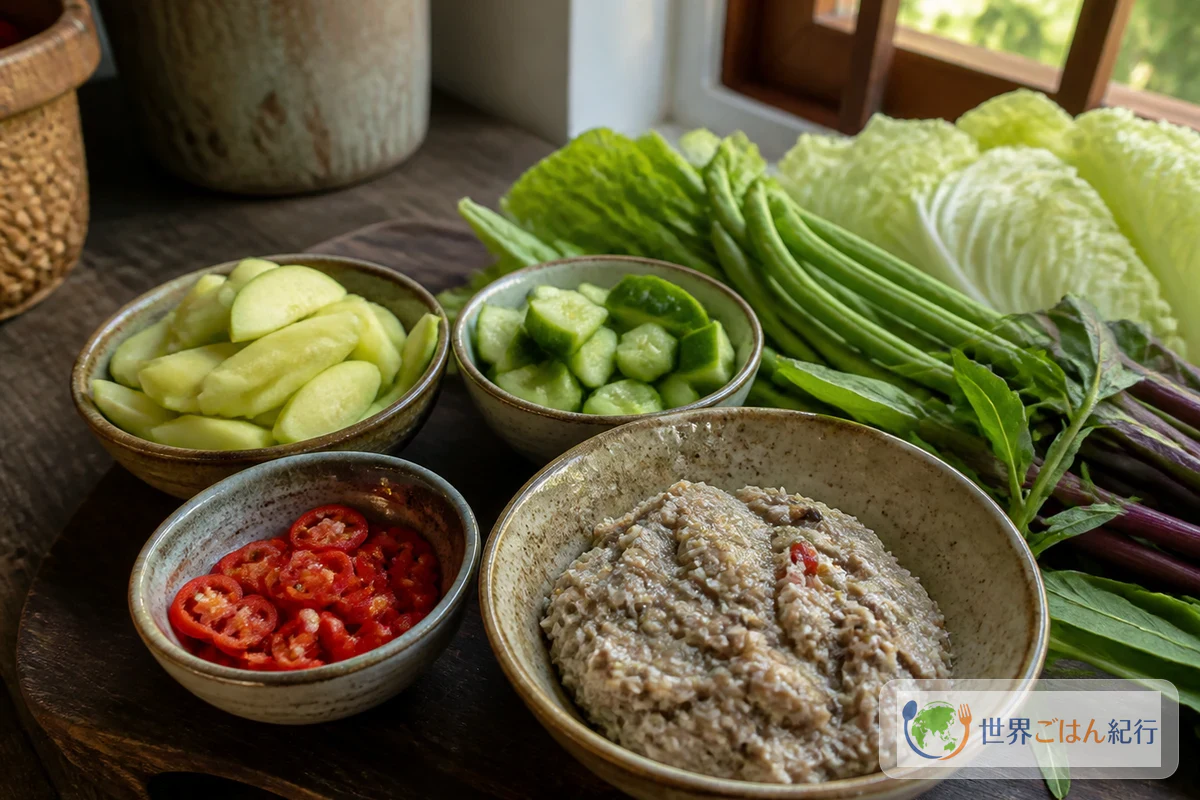
For a milder dip, seed the dried red chili and use only 1/2. Anyone who wants more heat can take chili powder from a small dish on the table rather than having it go into the pot.
You can also eat it wrapped. Take a little rice and layer dip, cucumber and cabbage on top. If you wrap it in lettuce, wipe the leaves dry and go easy on the sauce so the leaf doesn't tear.
FAQ
How do I tell the smell of prahok from a spoiled smell?
The strong fermented-fish aroma stays after heating. If there is blue-black mold, abnormal swelling when you open the container lid, an unusual putrid smell or sliminess, don't use it; discard it. Fermentation alone does not guarantee keeping quality, so follow the storage instructions on the label and handle it carefully after opening.
Is it OK to make it the day before?
Cool the dip slightly, put it in a clean airtight container and refrigerate. Finish it by the next day. Keep raw vegetables and rice separate, and cut the vegetables just before eating. When reheating, heat the whole thing thoroughly over low heat, adding 1 tbsp water at a time if it has lost moisture. Don't repeatedly cool and reheat the dip, and don't reuse leftover raw vegetables.
Can I make it if I don't eat fish or pork?
You can, but it becomes a variation rather than prahok ktis. Without prahok and anchovy, increase the mushrooms to 3.5 oz (100 g) and adjust the saltiness with 1 oz (30 g) miso, 1 tsp (5 ml) soy sauce and coconut milk. If you avoid animal ingredients, check the labels on the miso and other seasonings too. Without fermented fish the aroma changes, so enjoy it as a vegetable dip built on kroeung and coconut.
Can I make it without a mortar or spice mill?
Yes. Slice the lemongrass as thin as you can with a knife and chop it finely with the garlic, onion and ginger. If you use a food processor, don't add water, and stop every 5 seconds to check the coarseness. If the paste turns liquid, it takes longer to fry.
What should I check if there are allergies?
Prahok contains fish, and ground pork contains pork. Commercial seasonings and miso can contain soy and other ingredients, and some people need to be careful with coconut. Check the ingredients and allergen labels on the product. If you share the same cutting board or knife, wash the fish and meat tools and the vegetable tools separately with detergent. Since the dish is served with raw vegetables, serve cooked vegetables to anyone whose health calls for it.