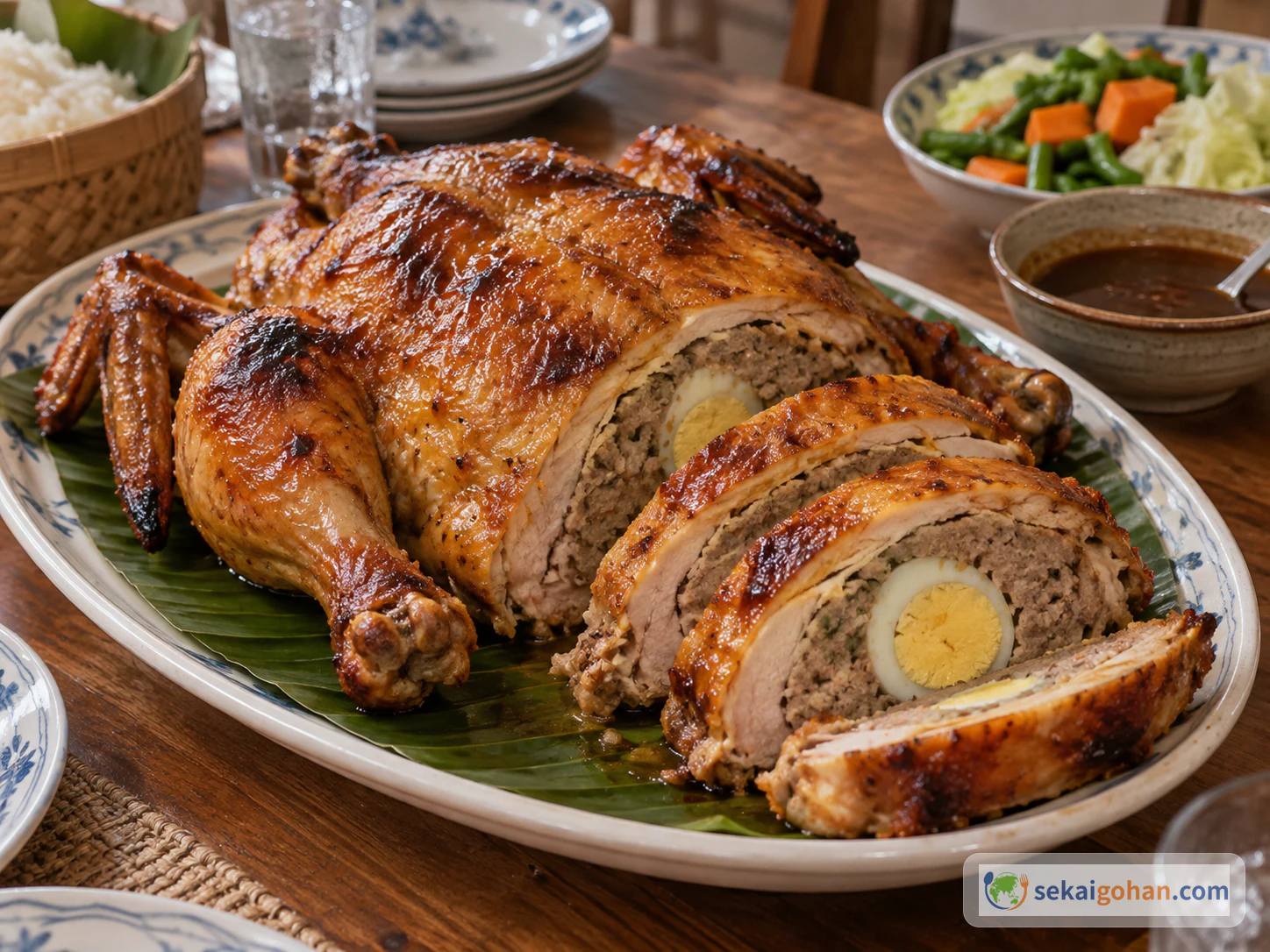
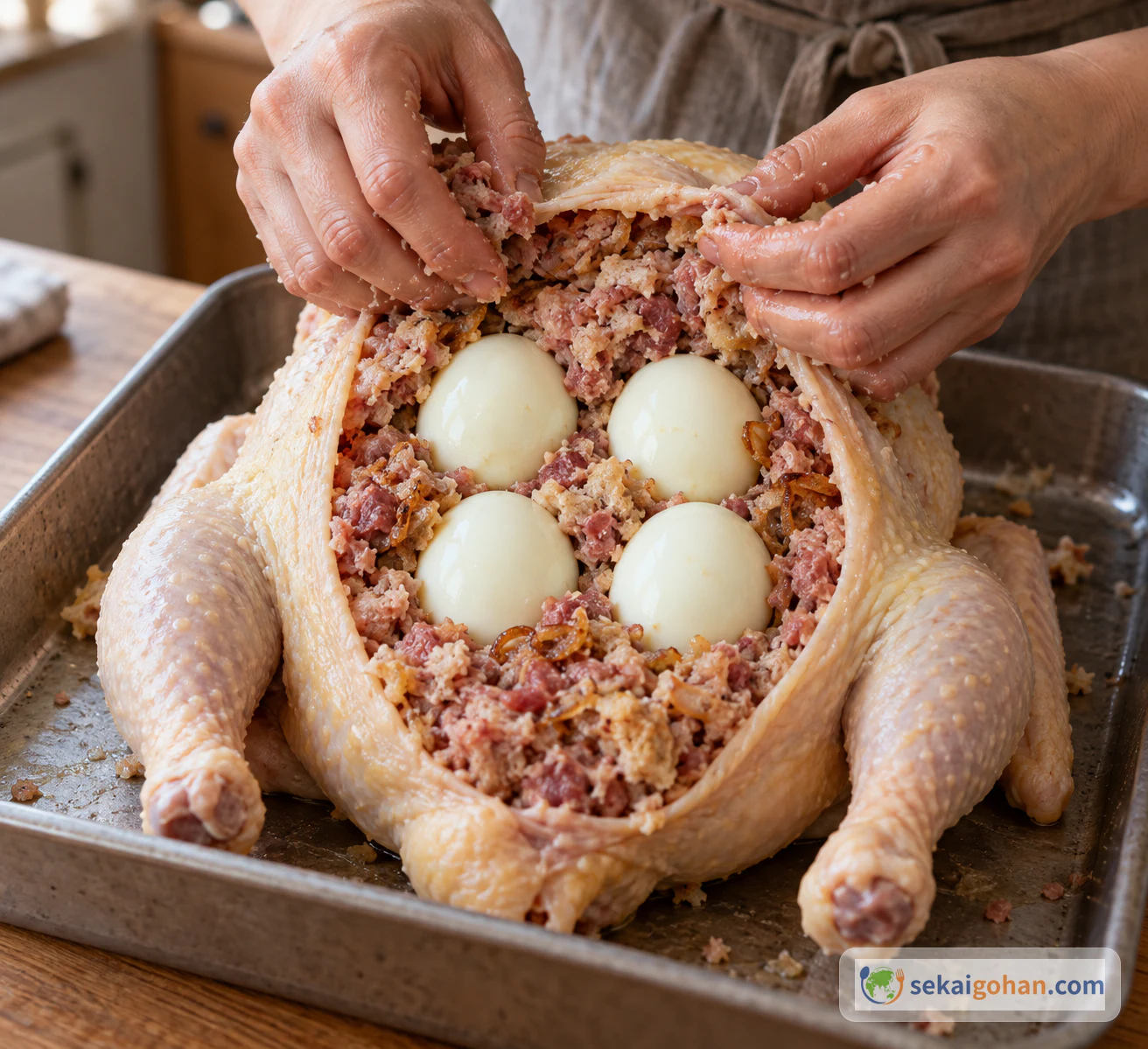
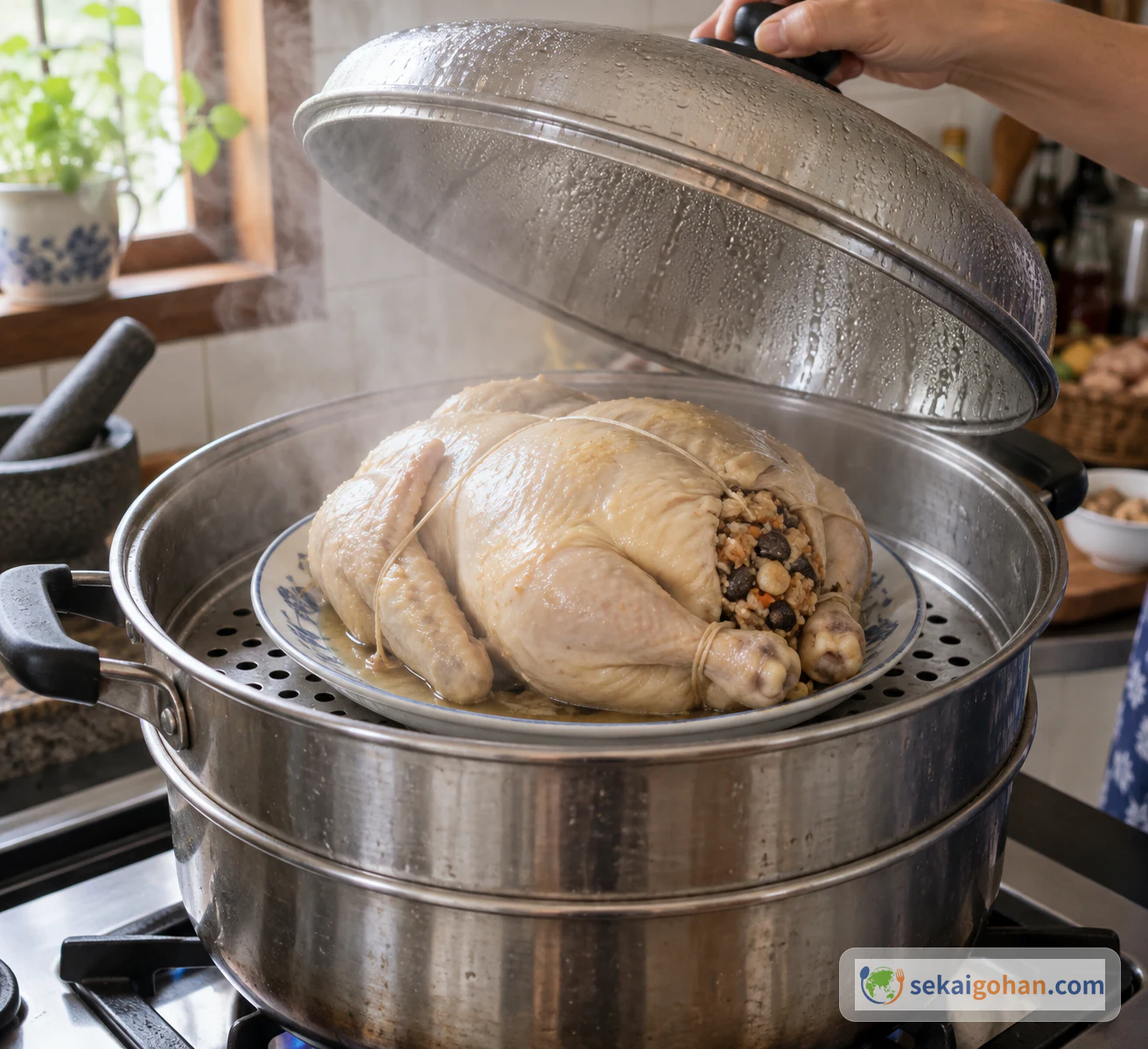
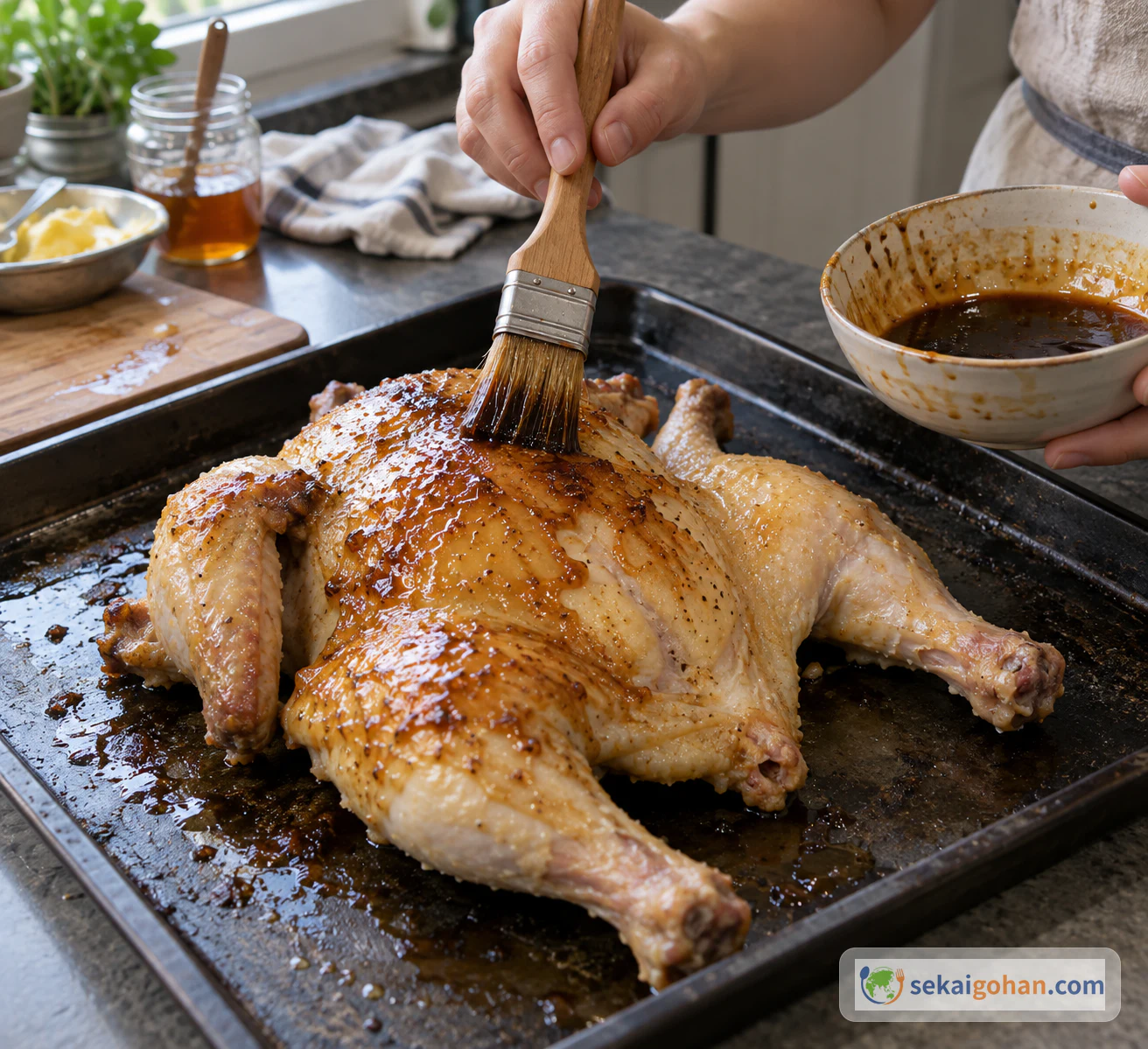
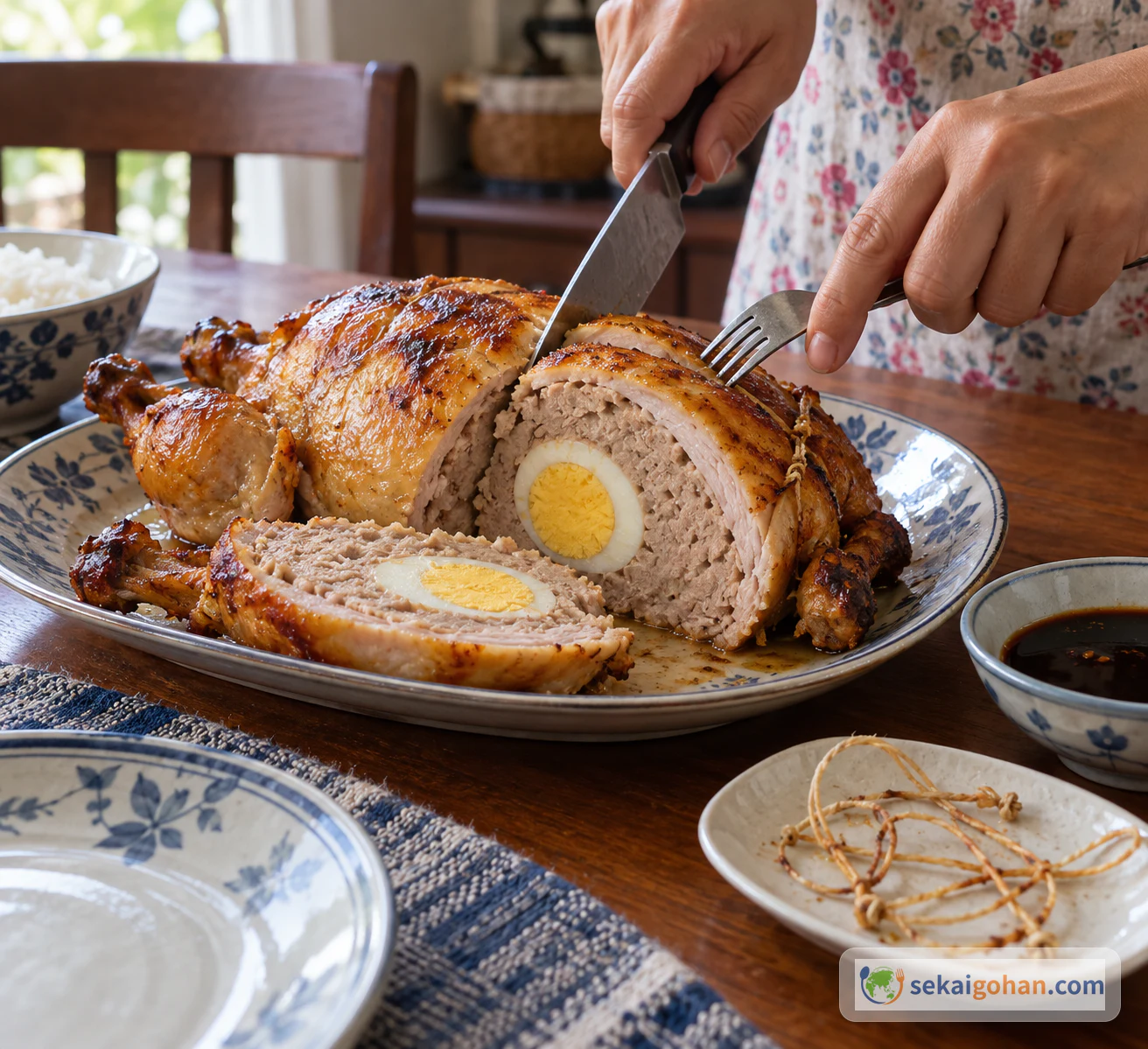
The bird comes out of the steamer pale and plump, its skin wrapped tightly around a filling of minced chicken and beef. Brushed with kecap manis and honey, it goes into the oven and darkens to a deep, sweet sheen. The surprise only shows when it's carved at the table: rounds of boiled egg set into the meat, a cross-section that turns one chicken into the centerpiece of a shared platter. This is ayam kodok, the Indonesian stuffed whole chicken, seasoned with pepper and nutmeg and glazed until it shines.
About Ayam Kodok
Ayam means chicken and kodok means frog, but there's no frog anywhere in the dish. The name comes from the shape. The stuffed bird is flattened with its legs spread out, so it looks like a frog sitting on the plate. Inside, it's all chicken, beef, bread, eggs and spices.
Ayam kodok is a festive dish, especially at Christmas, and it's served at family meals and at banquets. One story links it to gevulde kip, the Dutch name for stuffed chicken from the colonial period, and to French boned-and-stuffed preparations such as ballotine and galantine. That origin story isn't established history, though.
The filling changes from cook to cook. You'll find versions with chicken, beef or pork, with bread or potato, and with boiled eggs. Steaming and then roasting is one method among several. This version uses ground beef, bread and boiled eggs. Other recipes use 9 oz (250g) of beef with liver paste and milk powder, and those are best treated as separate recipes, not tweaks to this one. More Indonesian dishes are gathered on the Indonesia page.
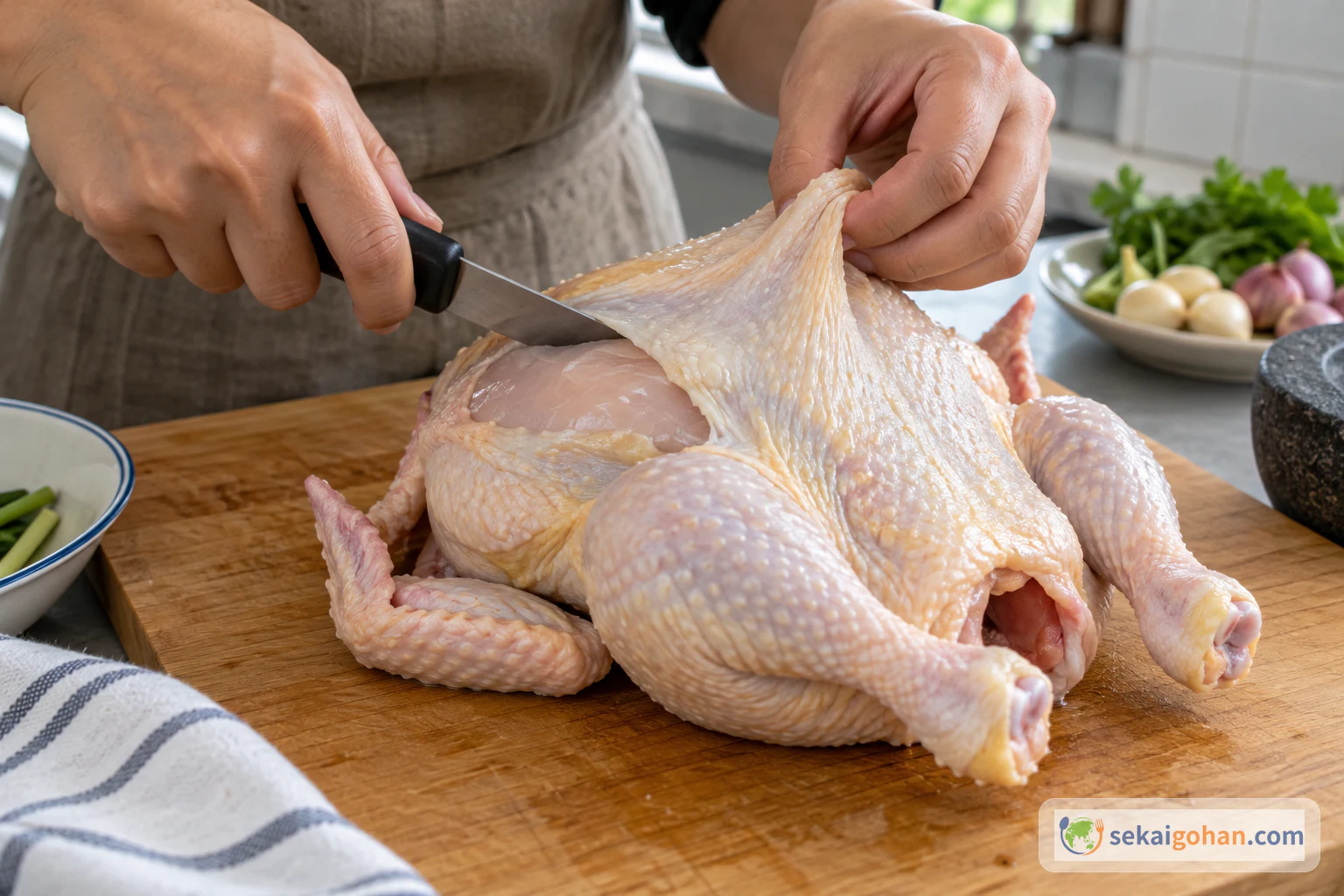
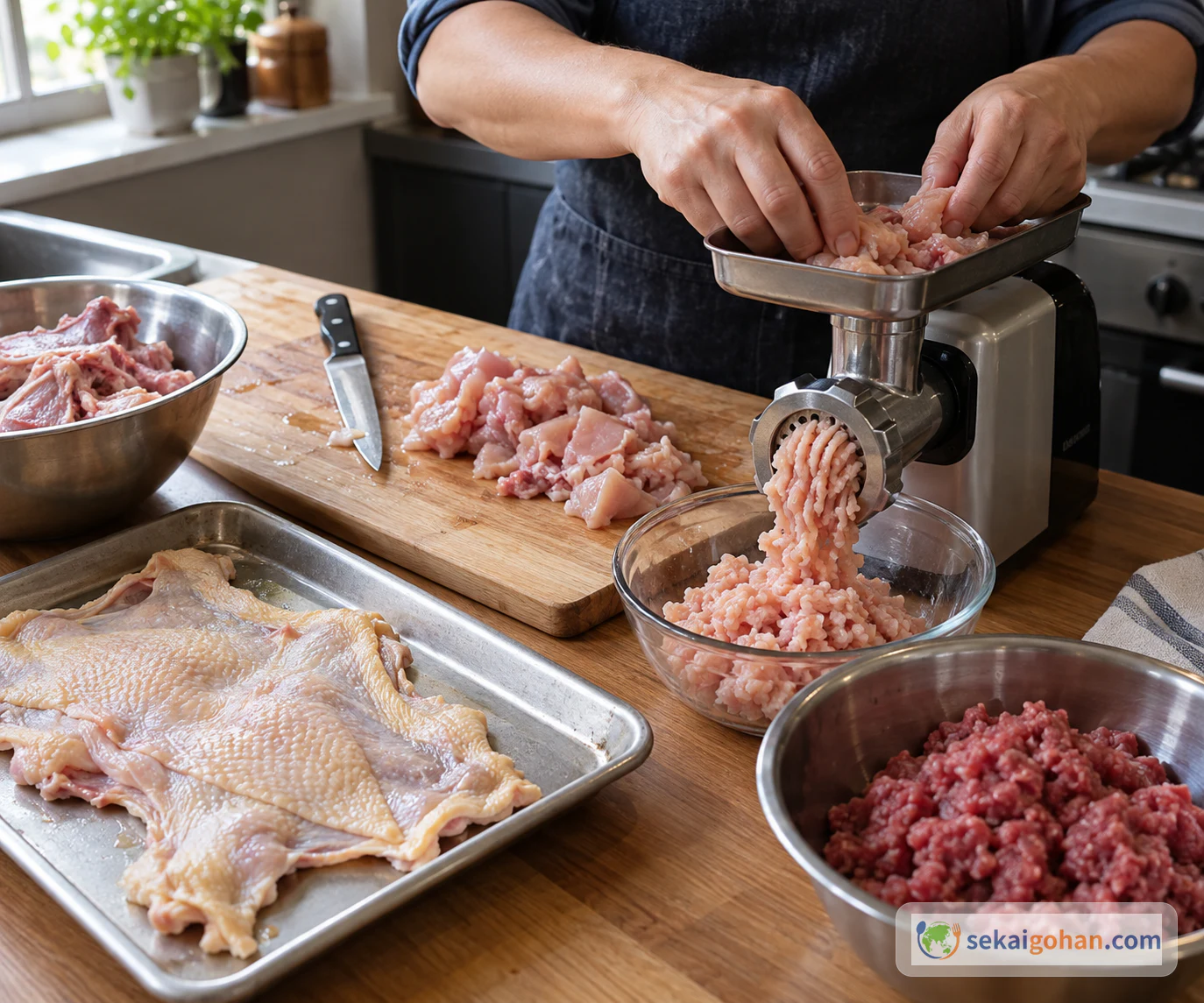
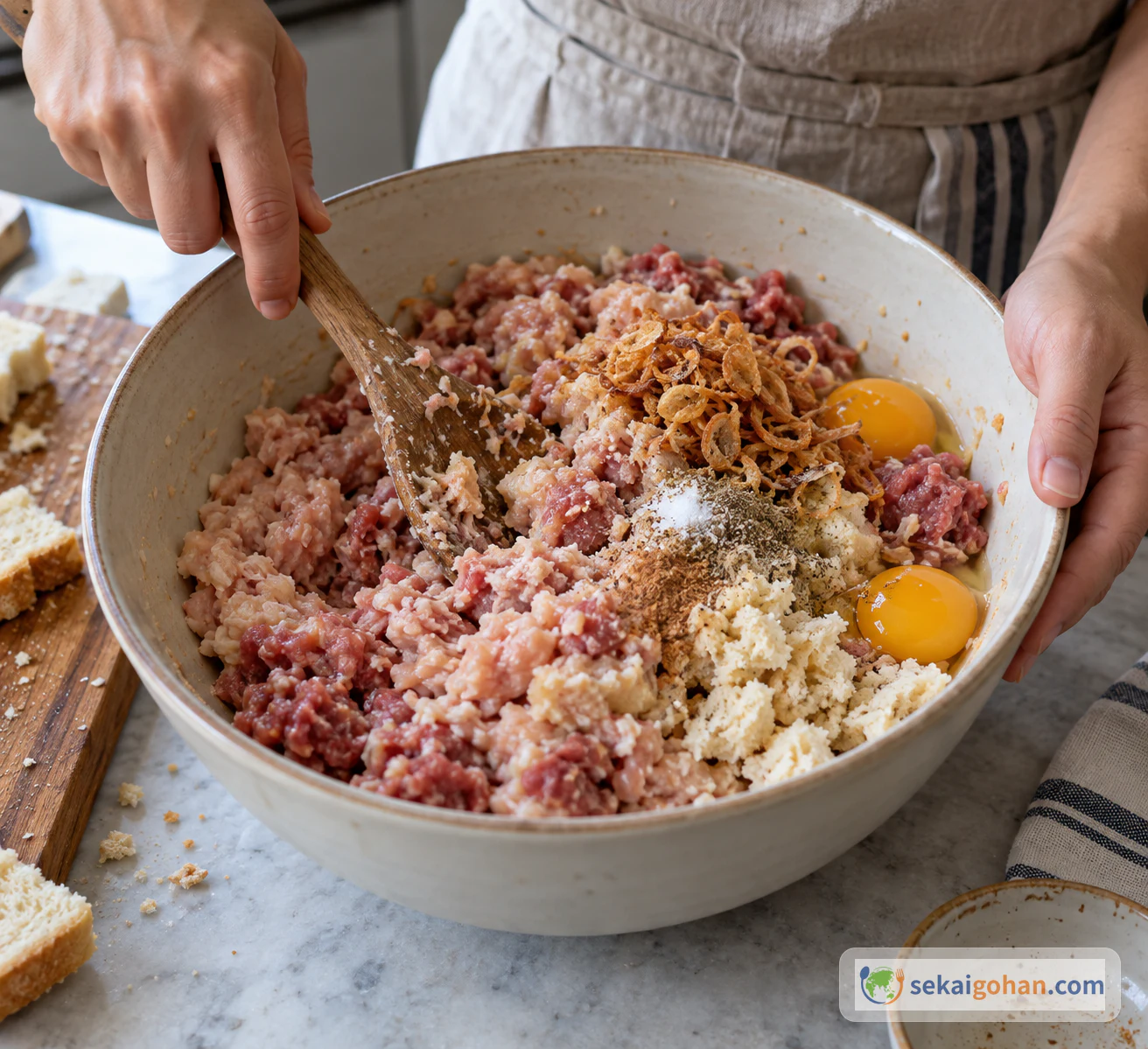
No single step is complicated, but the whole job takes time. You loosen the skin from the whole bird without tearing it, remove the bones and meat, mix the filling, pack it back into the skin around four boiled eggs, steam it, then glaze and roast. Read the whole method before you start, and you'll know whether your kitchen and your day are ready for it.
Ingredients: One Whole Chicken, Beef, Bread and Four Boiled Eggs
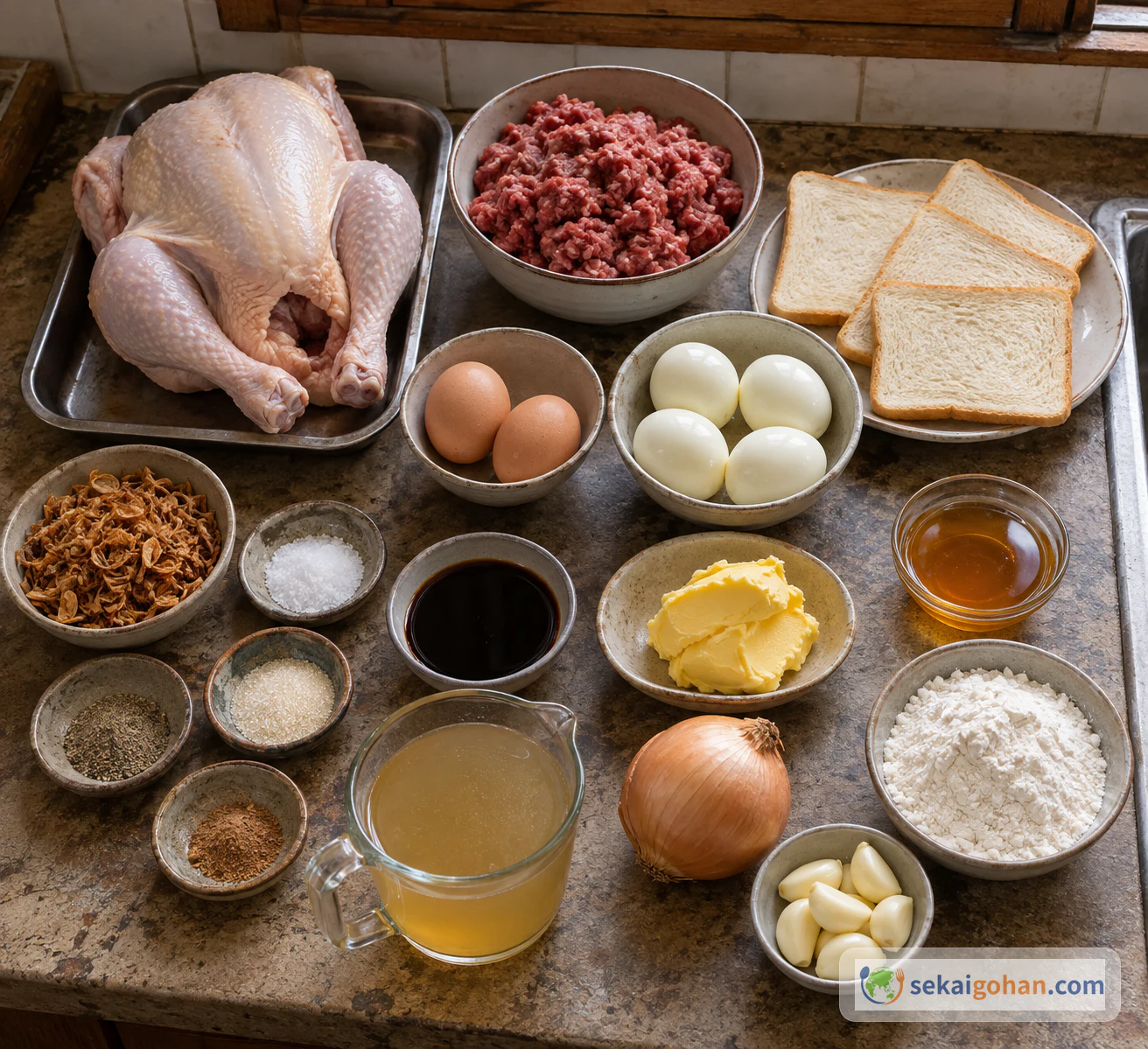
Choose a whole chicken with room inside the skin for the filling. If some filling does not fit, cook it separately (see step 4).
Equipment
- Small, sharp boning knife
- Clean cutting board, plus a separate tray for the loosened skin
- Large knife or meat grinder for mincing the chicken meat
- Mixing bowl
- Food-safe cotton thread and a trussing needle for closing the opening
- Fine needle or skewer for pricking the skin
- Lidded steamer large enough to hold the whole stuffed bird flat on a heatproof plate
- Oven that holds 325°F (160°C), and an oven tray
- Pastry brush and a small bowl for the glaze
- Small saucepan and wooden spoon
- Food thermometer
Choosing Ingredients for Ayam Kodok
The chicken matters more than any other ingredient. Pick a bird that looks like it will hold the filling with room to spare. Deboning a whole chicken while keeping the skin intact is the hardest part of the dish, so if a butcher can help with the deboning, it's worth asking.
Kecap manis is Indonesian sweet soy sauce, thick and sweet, and it gives the bird both its gloss and its flavor. Plain soy sauce will change both, so look for kecap manis at an Asian grocer.
Fried shallots have a flavor of their own. Fried onions will still add crunch and aroma, but the filling will taste different.
This dish contains wheat (bread and flour), egg and beef. Some margarines and breads contain milk. Kecap manis and other packaged items can carry their own allergens, so check the labels of the products you buy.
Method: Loosen, Fill, Steam, Glaze and Check the Center
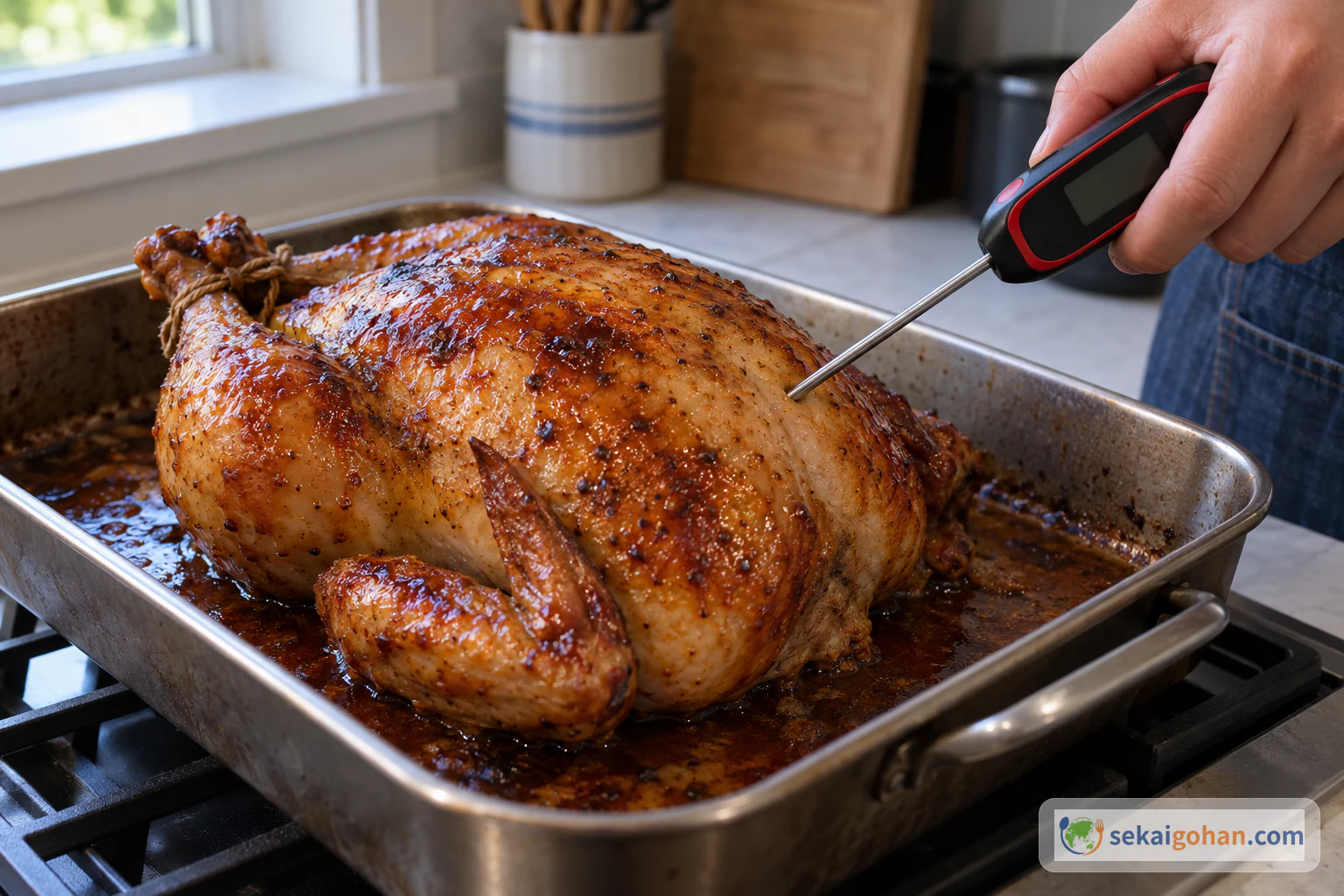
Do not rush the skin. Loosen it a little at a time, and remember that the steaming and roasting times do not prove the bird is safe to eat: the meat and the filling at the center must reach 165°F (74°C) on a food thermometer.
Common Problems with Ayam Kodok
| Problem | Likely cause | What to do |
|---|---|---|
| The skin tears while loosening | Pulling the skin at the joints, or working too fast | Slow down and use the knife tip at the joints instead of pulling. A torn skin can still be filled and cooked, though the filling may show through |
| Filling will not fit, or the skin is stretched tight | More filling than this bird's skin can hold | Leave room in the skin. Cook the extra filling separately until its center reaches 165°F (74°C) |
| The skin bulges or splits during cooking | Skin packed too tightly, no vent holes | Prick small holes in the skin, not into the filling. Fill less tightly next time |
| The glaze darkens too fast | Sugar in the kecap manis and honey | Brush on thin layers and watch the color closely between brushings |
| The center has not reached 165°F (74°C) | A large bird or a thick filling | Keep cooking and measure again. Trust the thermometer, not the steaming and roasting times |
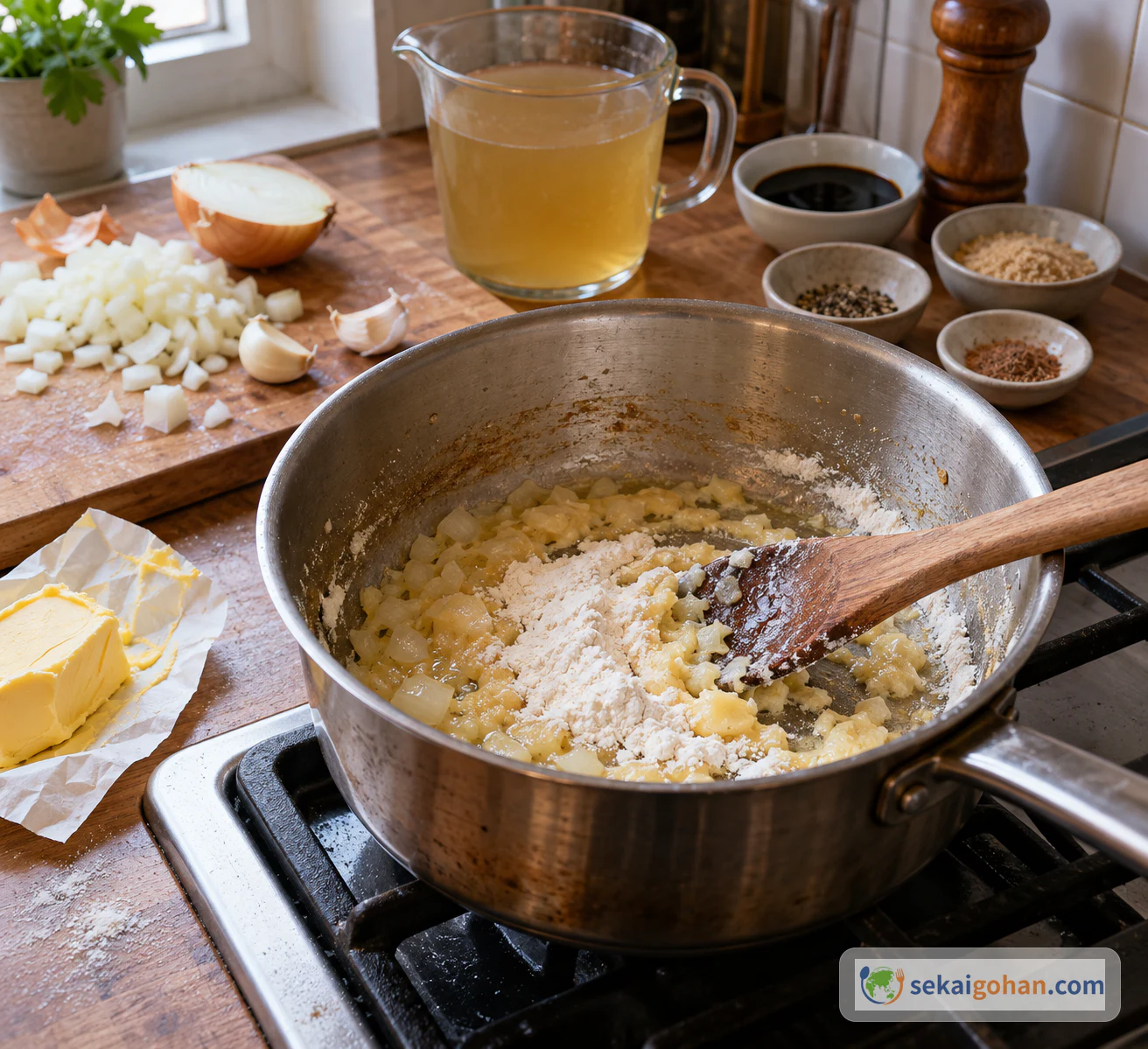
| The sauce is lumpy | Broth added all at once | Stir the flour into the fat first, then add the broth a little at a time |
Serving and Varying Ayam Kodok
Bring the bird to the table whole on a platter with its sauce, then carve it there so everyone sees the eggs. Vegetables, potatoes or rice on the side are nice but optional.
| Direction | What changes | How to approach it |
|---|---|---|
| Filling | Beef or pork, bread or potato, with boiled eggs | Treat each as its own recipe rather than swapping one ingredient into this one |
| Cooking | Steam then roast, or other methods | Whatever the method, make sure the meat and filling at the center reach 165°F (74°C) |
| Serving | Platter with sauce; vegetables, potatoes or rice on the side | Side dishes are optional; there are no set amounts for them |
Frequently Asked Questions
Is there frog in ayam kodok?
No. Kodok means frog, but the dish is made with chicken. The name comes from the flattened shape, with the legs spread out.
How big should the chicken be?
Choose a bird whose skin will hold the filling with room to spare, and cook any filling that doesn't fit separately.
Why is it steamed first and then roasted?
Steaming cooks the stuffed bird gently while it holds its shape. The glaze and the oven then give it color and shine.
What internal temperature is safe?
Poultry, ground poultry and stuffing inside poultry should reach 165°F (74°C) on a food thermometer. Check several spots in the meat and the filling, away from the bone and the eggs.