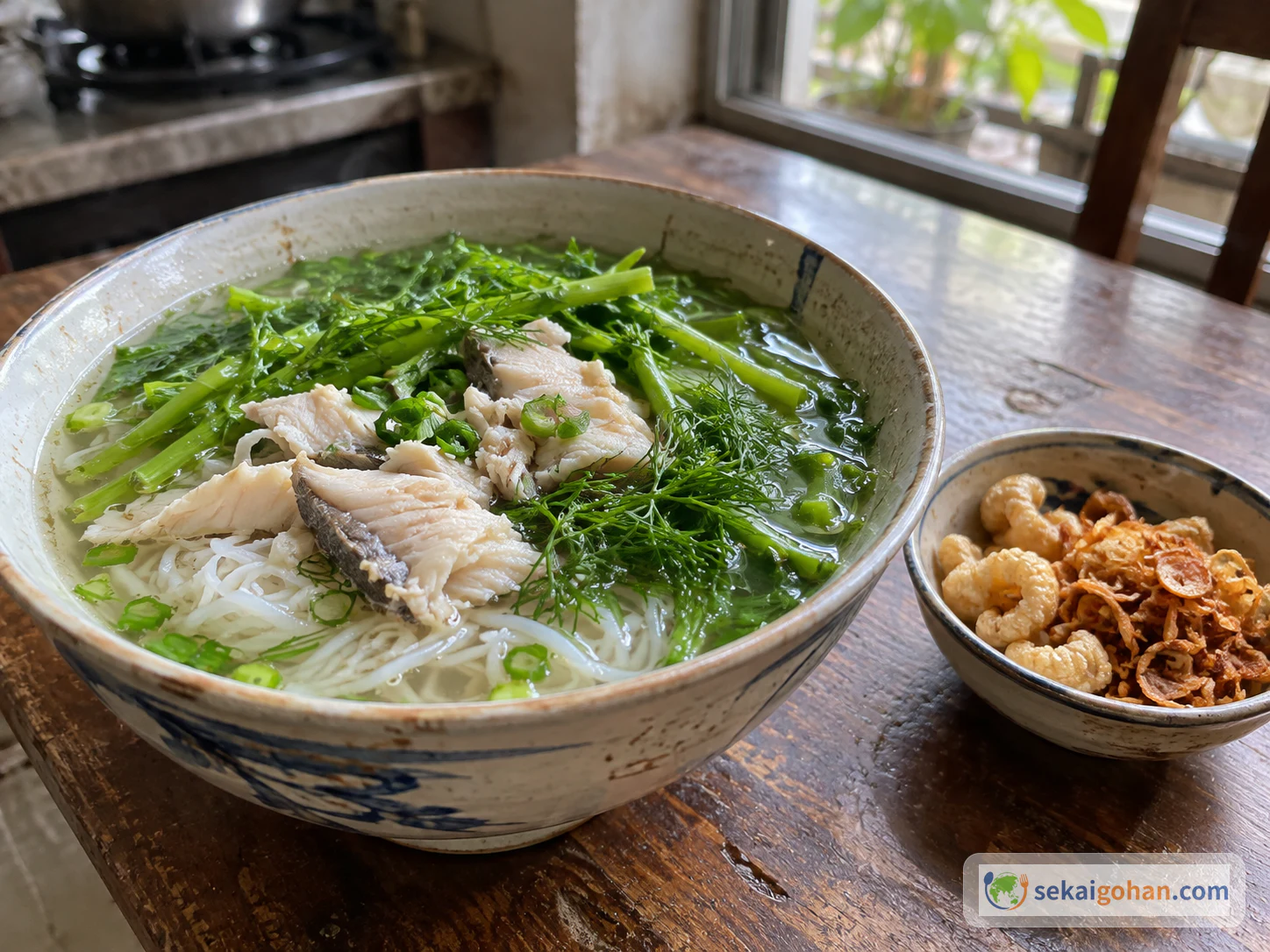
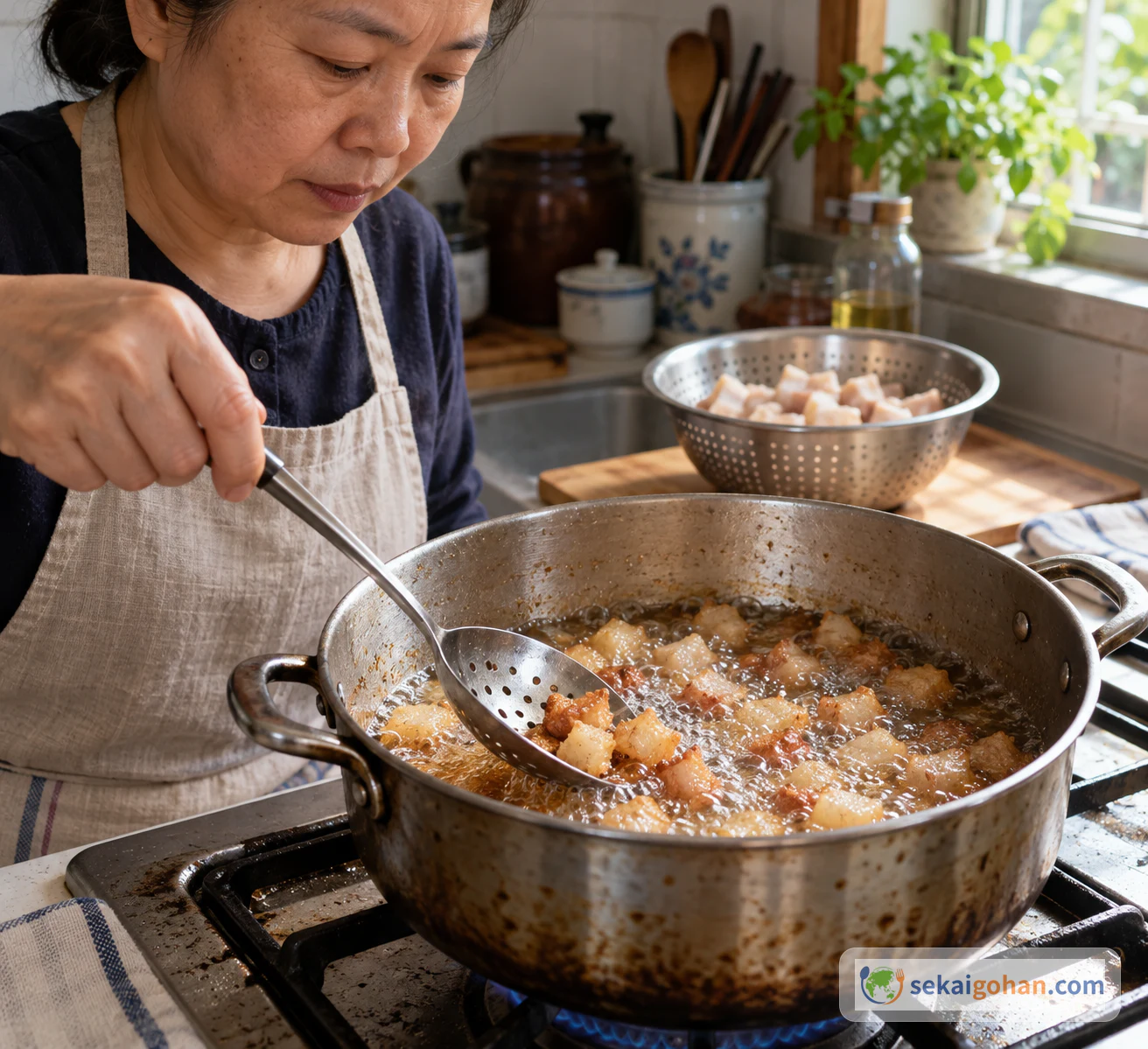
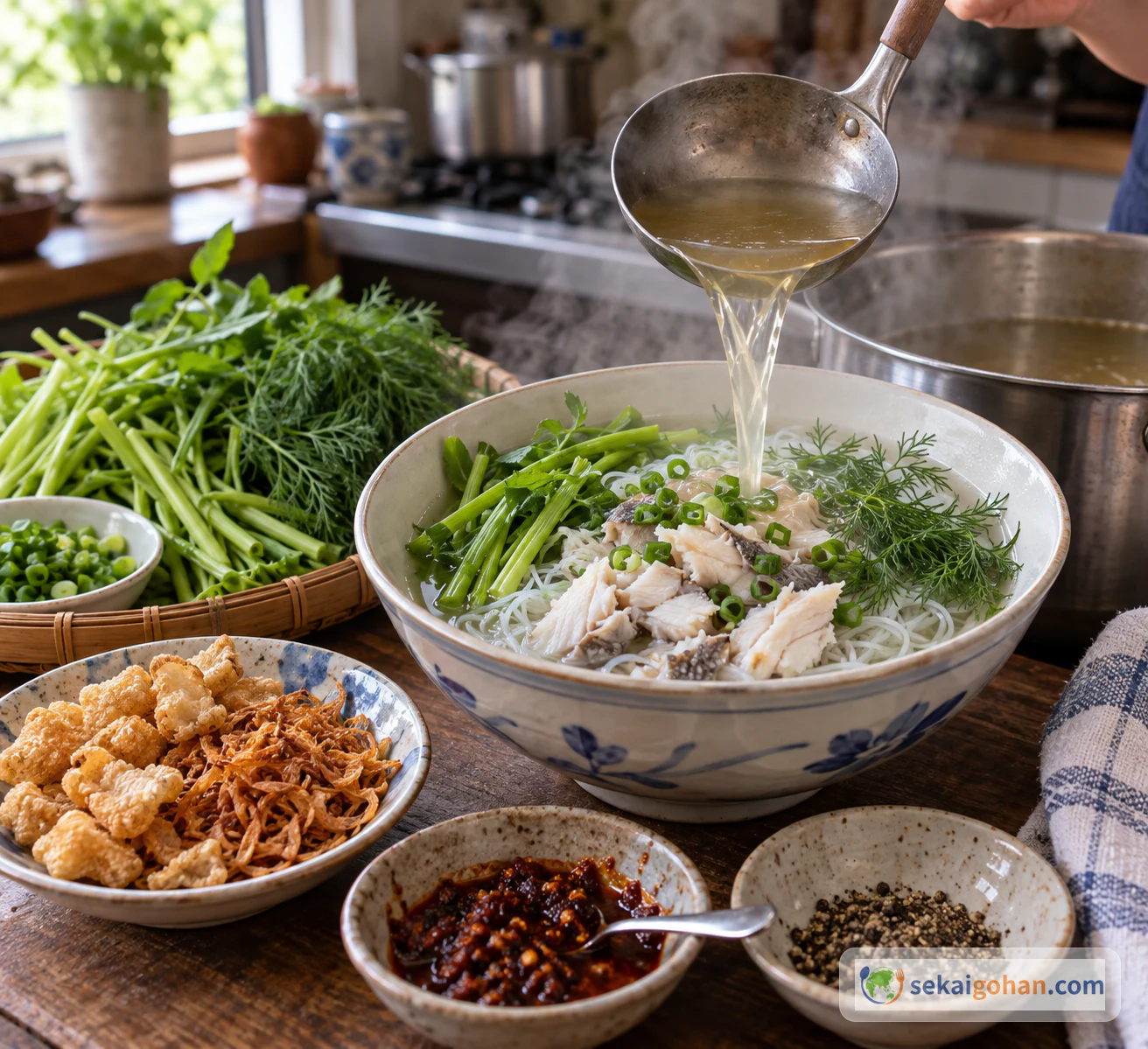
Soft white flakes of snakehead rest on fresh rice noodles with a single blanched green, a handful of dill and scallion, and hot broth poured over the top. The broth is clear, not red or sour. Next to the bowl sit crisp pork cracklings (tóp mỡ), fried shallots, black pepper and chili paste, so everyone can finish their own bowl.
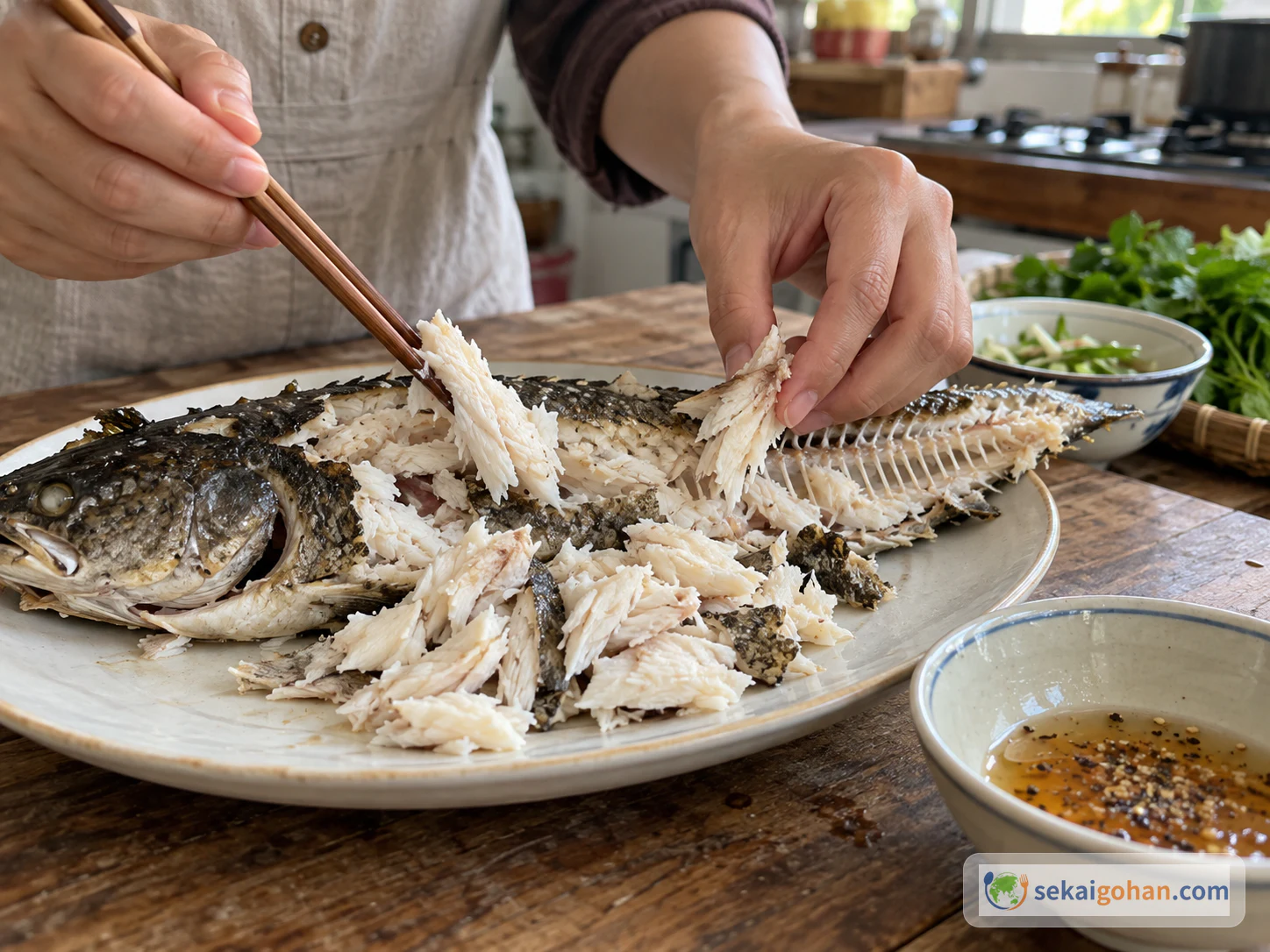
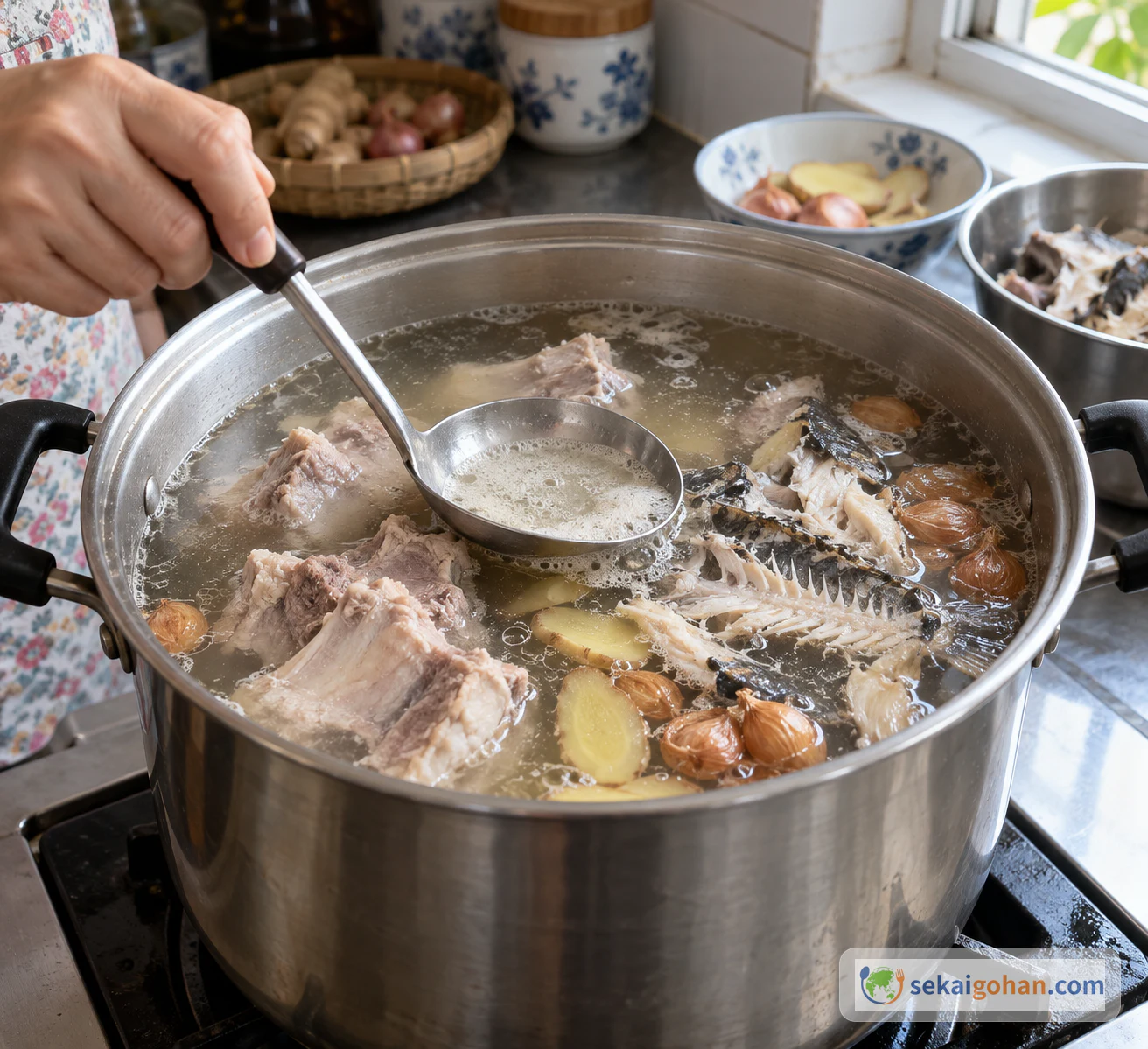
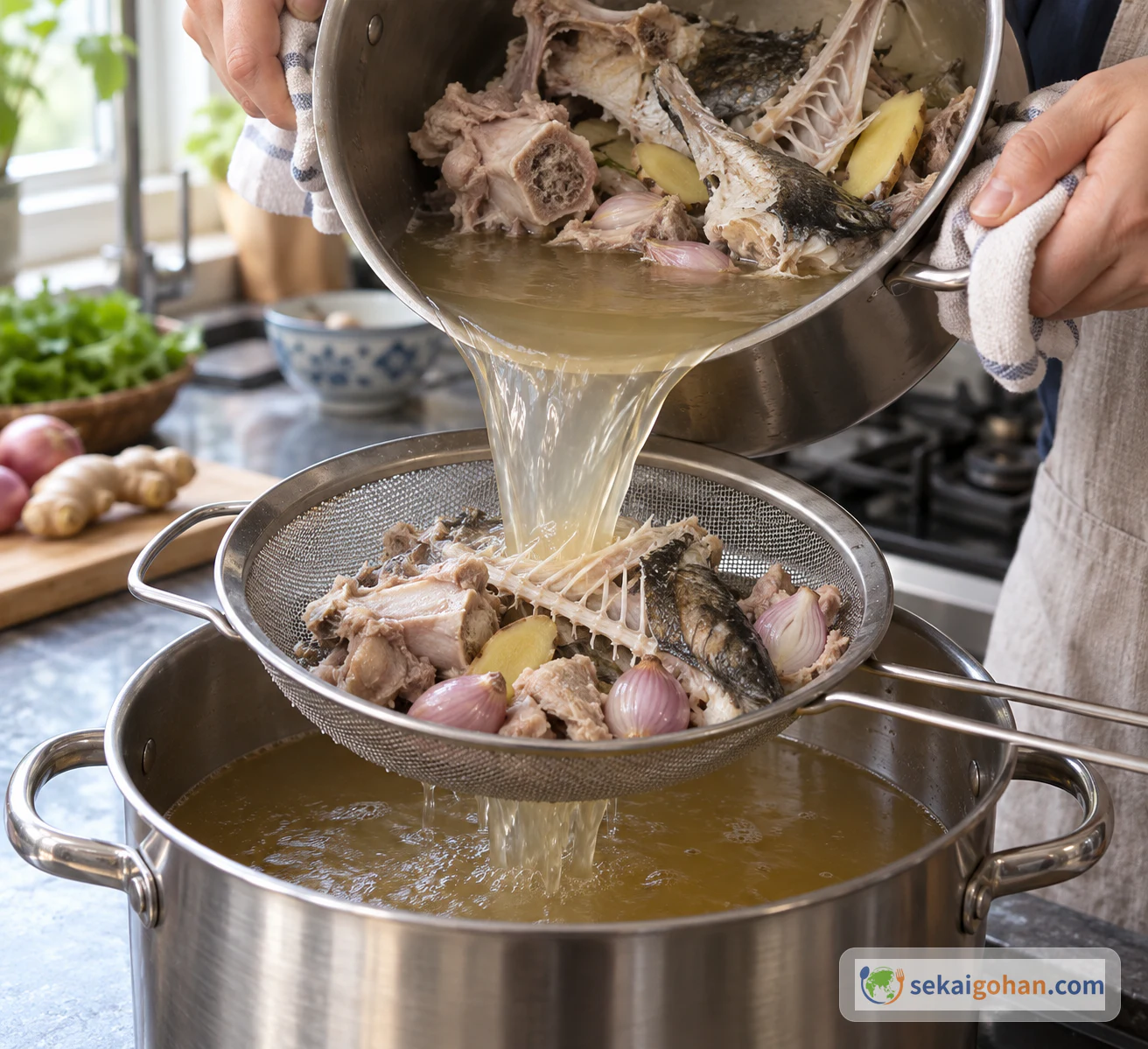
This is canh bún cá, a fish noodle soup from old Hanoi. A whole snakehead (cá quả) is boiled with ginger and shallots, and its meat is lifted off the bones. The bones then go into a gently simmered stock with pork bones. The result is a clean, mild bowl with no sourness, and the pork fat on the side adds richness and crunch. For more dishes from the same country, see Vietnam.
Bún Cá in Hanoi and Beyond
Bún cá is a family of dishes, not a single formula. The name simply means "fish with rice noodles," and across Vietnam it covers many different bowls. In Hanoi, bún cá is often eaten at lunch, either in broth (chan) or as a dipping style (chấm). One broth version has fried fish pieces and greens, with cilantro and dill as the herbs. A home-style Hanoi version uses tilapia marinated with turmeric, coated and fried, then served in a broth of fish stock and pork-bone stock with tomato and pineapple.
The dish changes from region to region. The usual Hanoi bowl has a sour broth and fried fish. In Hai Phong, cooks add heat and pile on several fish toppings, using both fried fish and fried fish cake (chả cá). Thái Bình uses a rich stock with no sourness and turmeric fish, and Nha Trang pairs a clear fish-bone broth with seafood. Canh bún cá is defined by what it leaves out: the fish isn't fried, and the broth has no tomato, no pineapple and nothing sour.
Don't confuse bún cá with chả cá Lã Vọng, another famous Hanoi fish dish. For chả cá Lã Vọng, turmeric fish is grilled, finished with herbs and eaten with rice noodles, peanuts and mắm tôm. It's a dish of its own, not a noodle soup with broth poured over.
Ingredients for Old Hanoi Canh Bún Cá
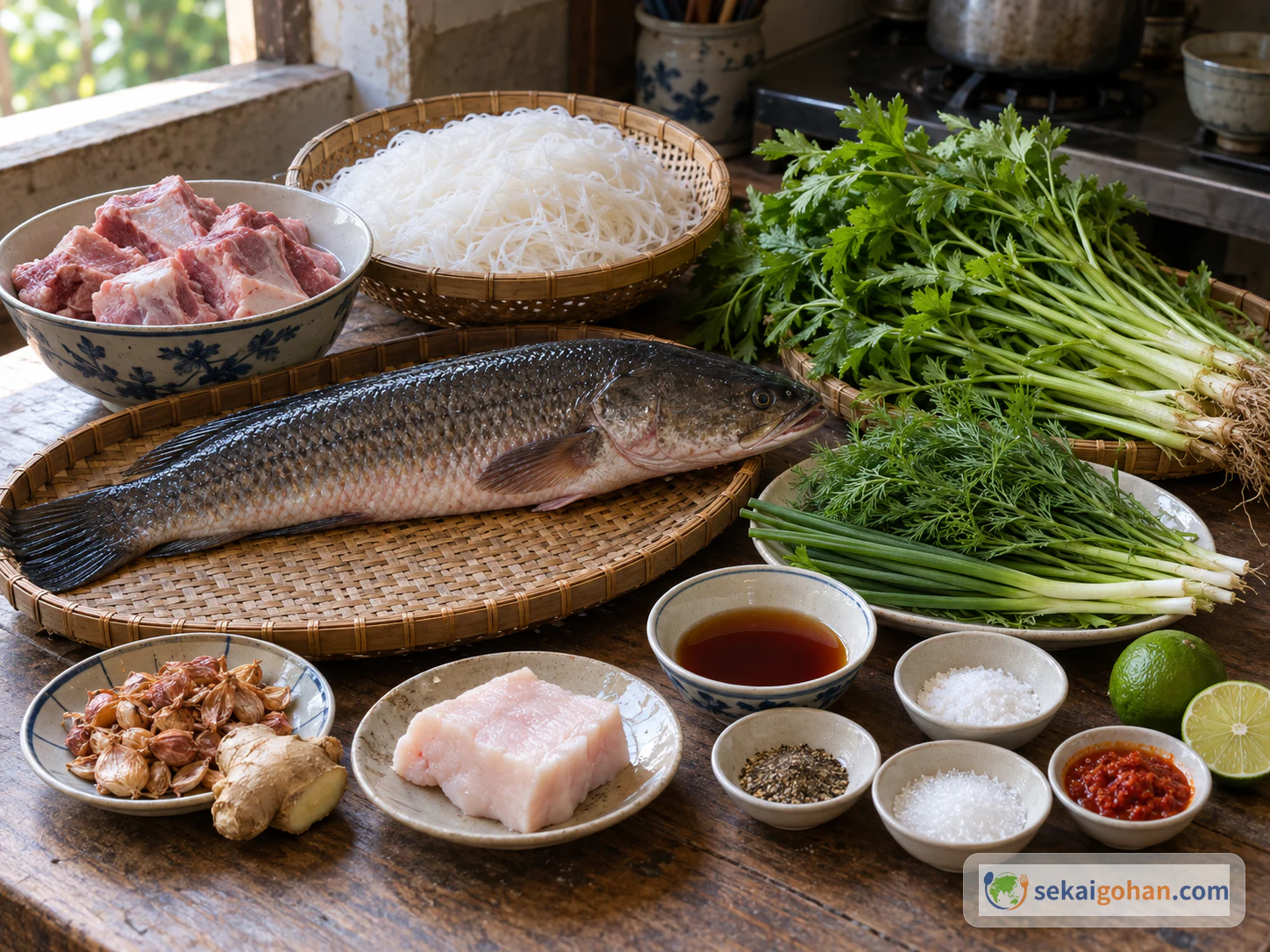
This dish contains fish and pork. Check the labels of your fish sauce, MSG and chili paste for allergens such as soy.
Equipment
- A pot large enough to boil the whole fish
- A stockpot for the bone broth
- A separate cutting board and knife for the raw fish
- A food thermometer for checking the fish
- Fish-bone tweezers for picking small bones out of the flaked meat
- A fine-mesh strainer for the broth
- A slotted spoon for the cracklings and fried shallots
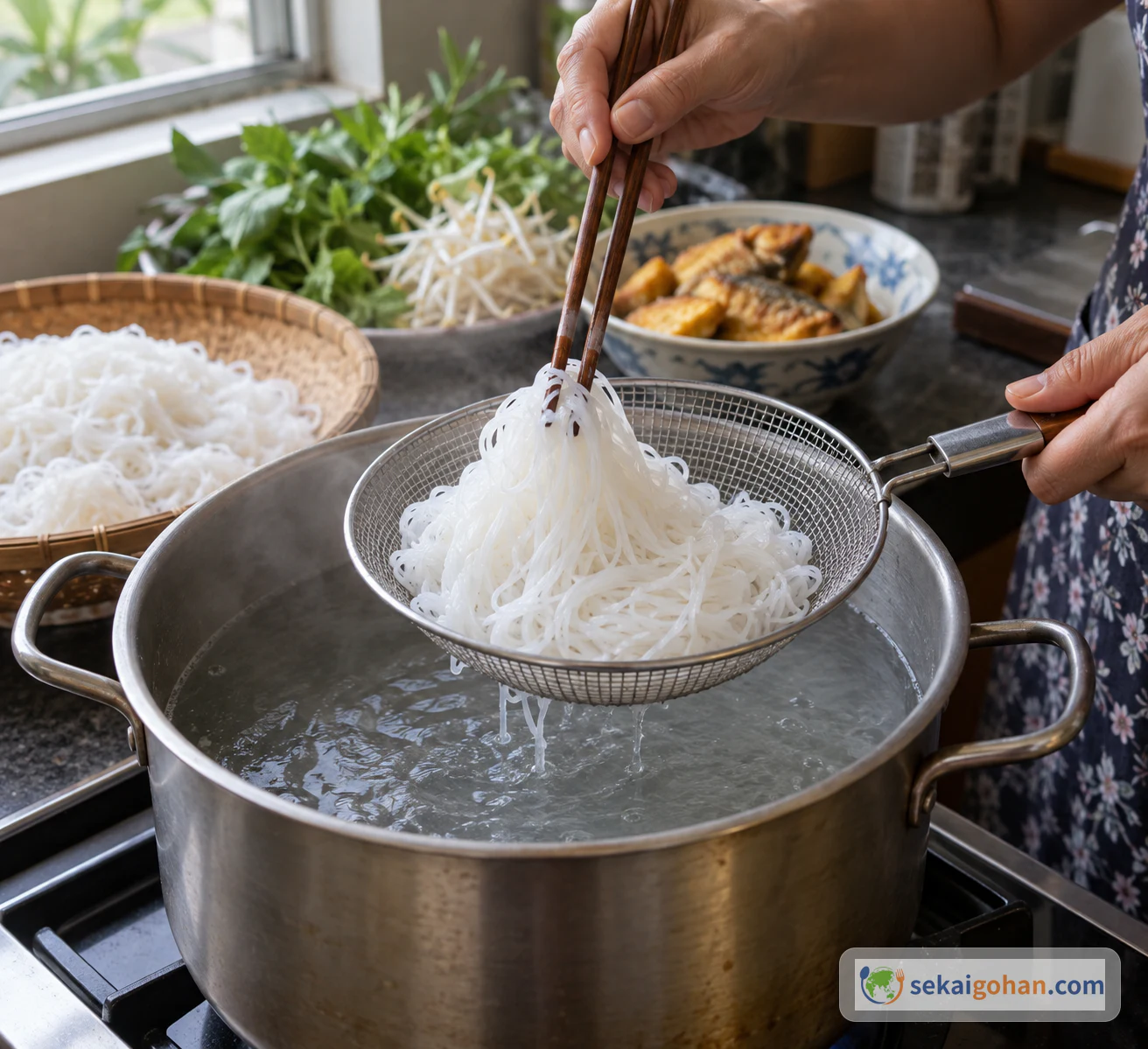
- A wire strainer basket for dipping the noodles
- A ladle
Choosing the Fish, Greens and Noodles
The fish. Use snakehead (cá quả). A different fish makes a different bowl.
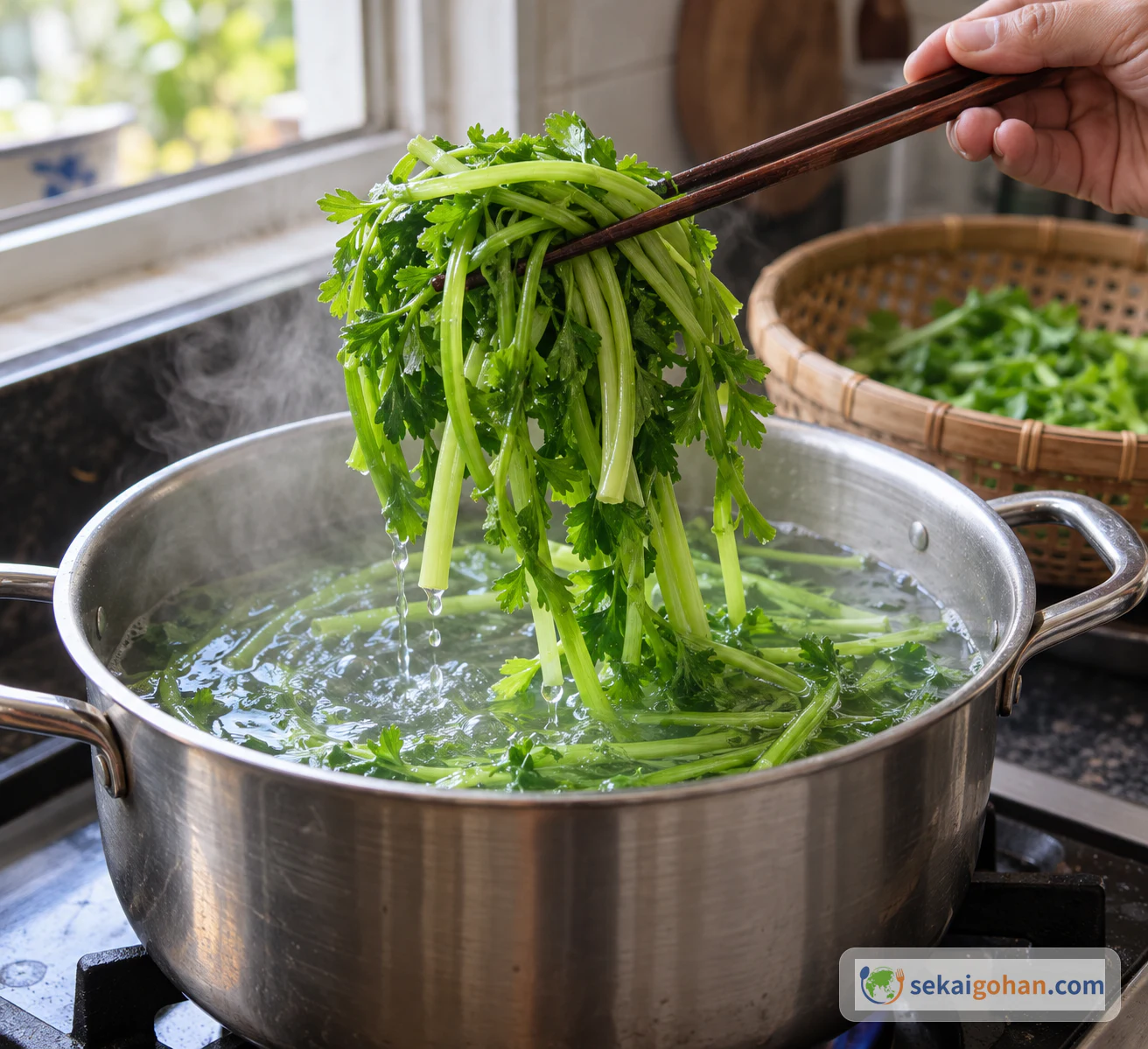
The green. Choose one seasonal green: water celery (rau cần), crown daisy (cải cúc) or rau rút. They're different plants with different flavors, and each one changes the bowl, so use just one at a time.
The noodles. Use fresh bún.
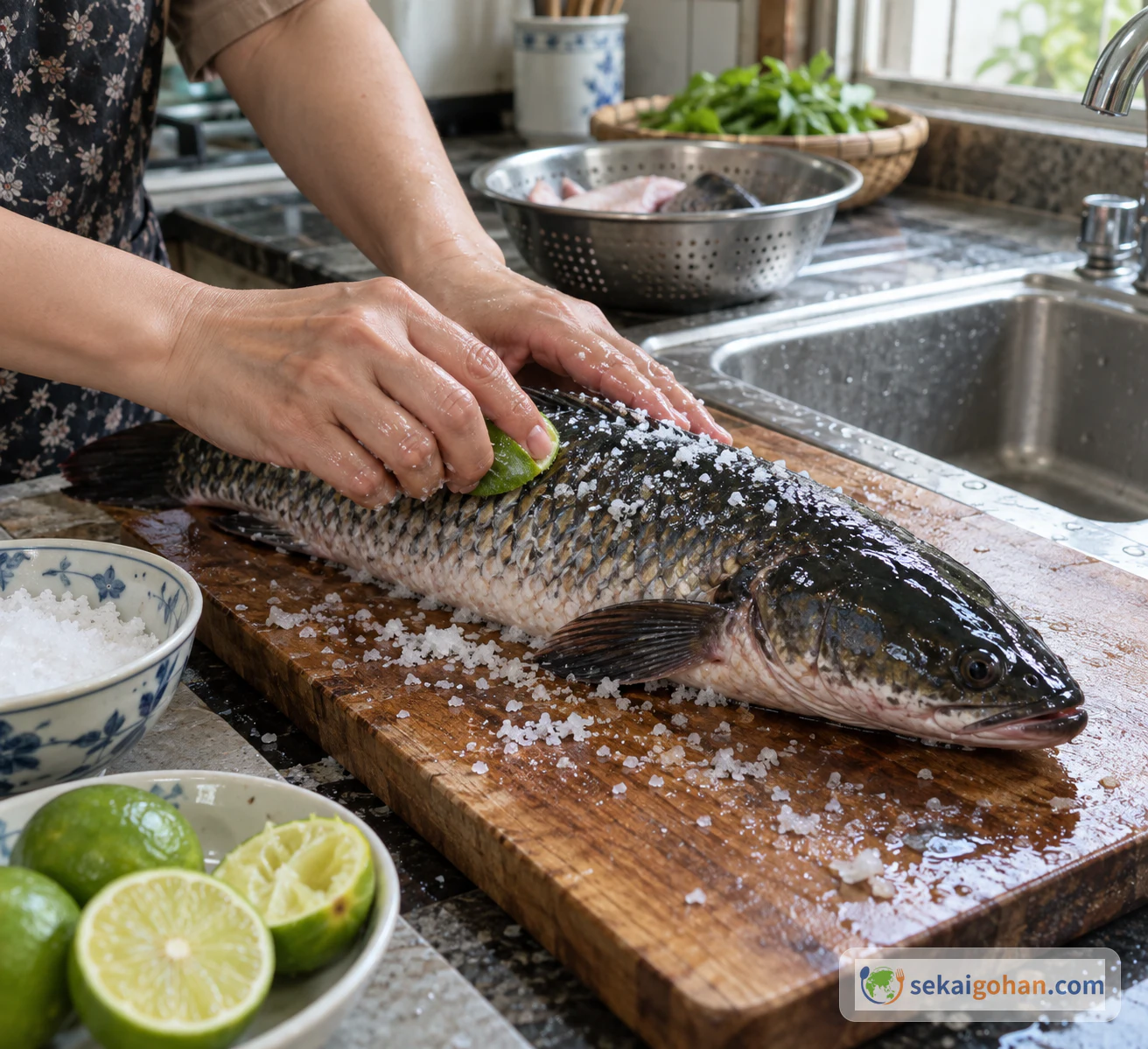
The lime. Chanh is the citrus here, and its only job is cleaning the raw fish. Rinse it off afterward. No citrus juice goes into the broth.
Water, noodles, greens, pork fat and seasonings are up to you. Use them as needed or to taste.
Method: From Whole Fish to a Clear Bowl
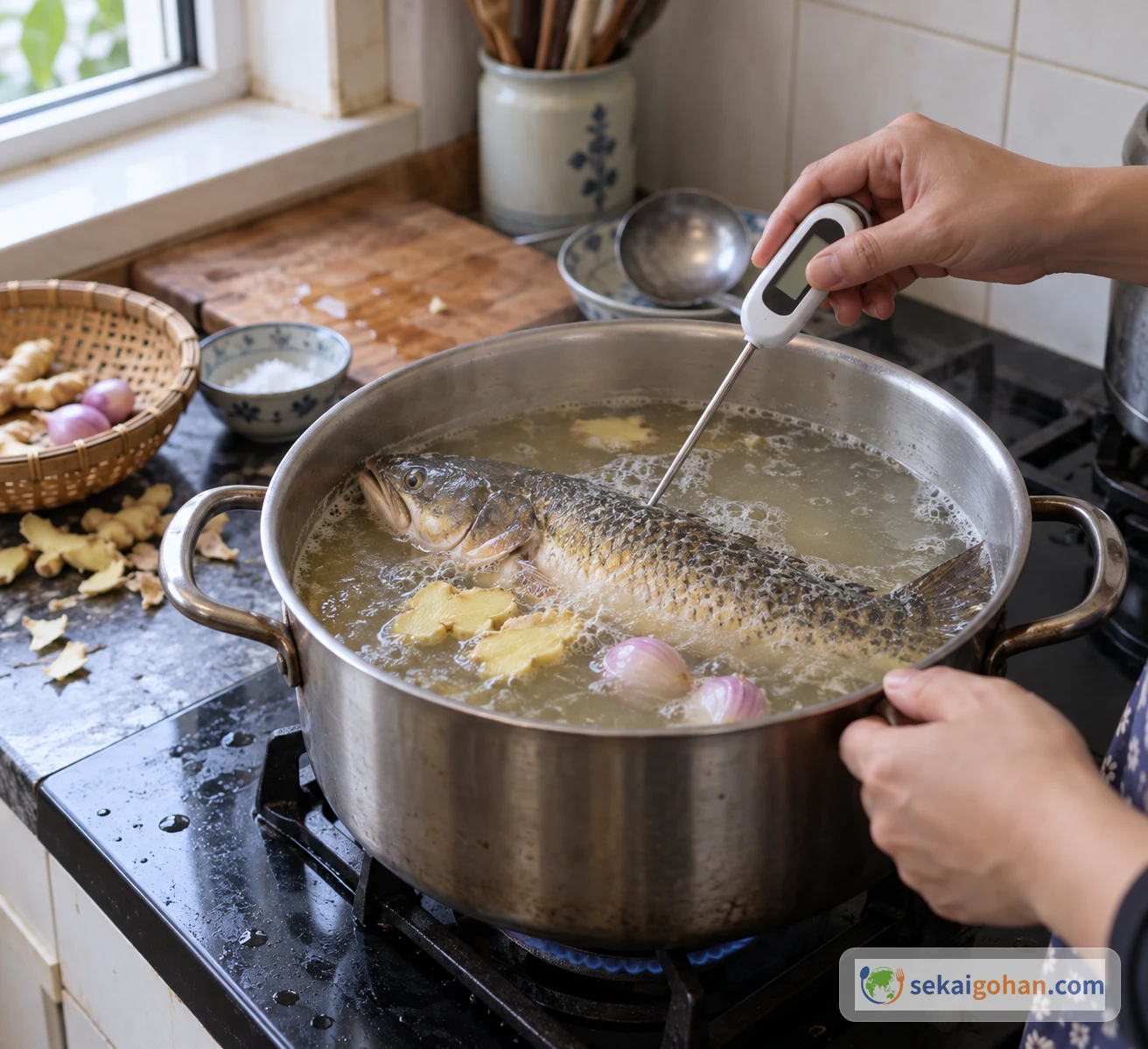
Cook the fish to an internal temperature of 63°C / 145°F, checked with a food thermometer. Without a thermometer, cook until the flesh is opaque and separates easily with a fork. Color and texture alone are not a safe test. Keep raw fish away from other foods, and wash hands, boards and utensils after handling it.
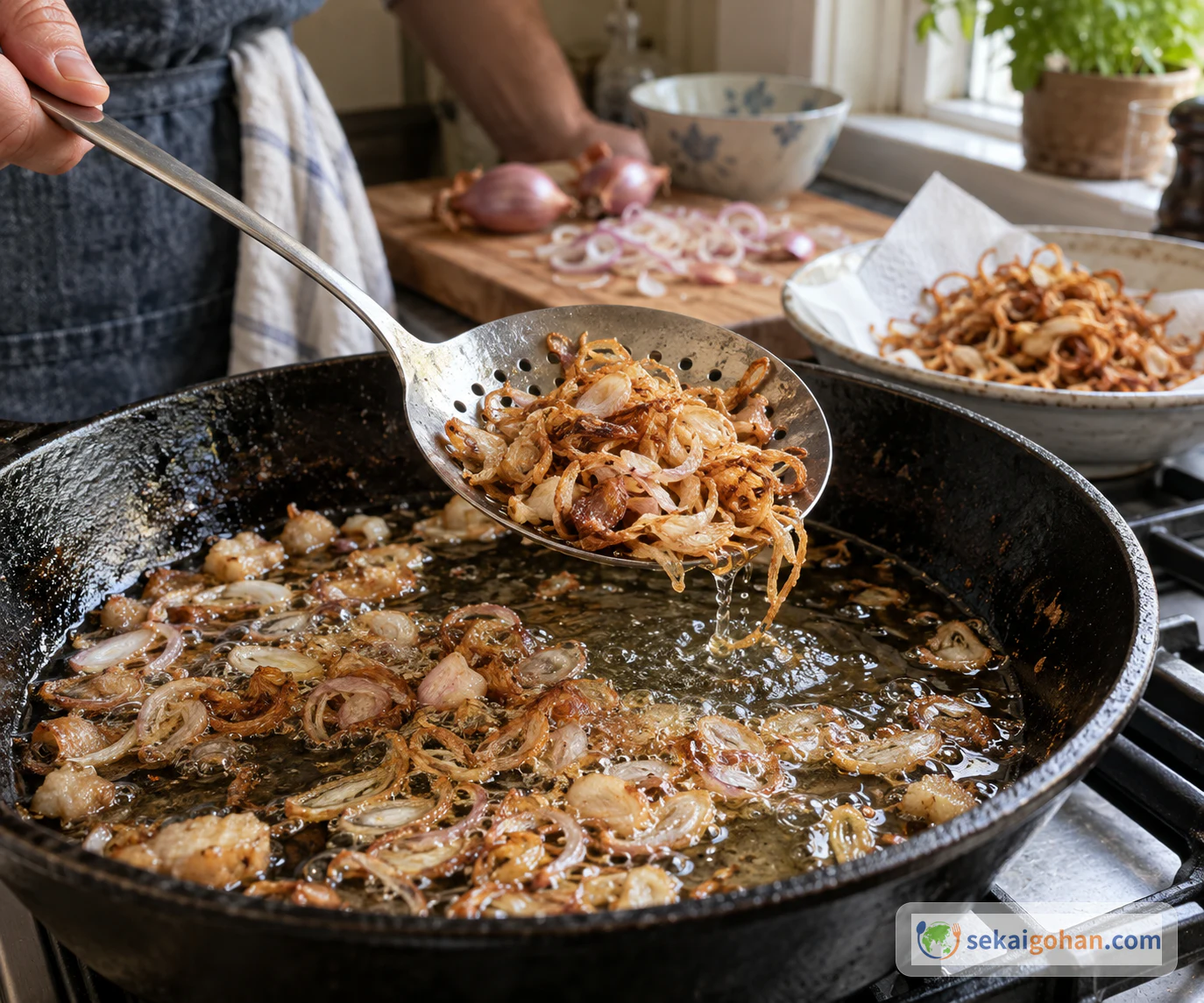
The order matters: the fish is cooked first, so its bones are ready for the broth. The pork fat is rendered before the shallots are fried, because the shallots are fried in that fat.
Bún Cá Troubleshooting
| Problem | Likely cause | What to do |
|---|---|---|
| The broth is cloudy | The bones were crushed | Keep the bones whole and simmer gently next time; strain through a fine-mesh strainer |
| Bone fragments in the broth | Straining was too coarse | Strain again through a fine-mesh strainer; never serve the bones or shards |
| Small bones in the fish | Missed while flaking | Go over the flakes again with tweezers before they go into the bowls |
| Unsure whether the fish is cooked | Judging by look alone | Check for 63°C / 145°F with a food thermometer, or opaque flesh that flakes easily |
| The broth tastes sour | Citrus or another sour ingredient got into it | Rinse the fish well after cleaning, and keep lime out of the pot |
| The broth tastes flat | Not yet seasoned | Adjust a little at a time with salt, fish sauce and MSG, tasting as you go |
Judge when the fish and the bone stock are done by the checks in the method, not by the clock.
Serving, Variations and Storage
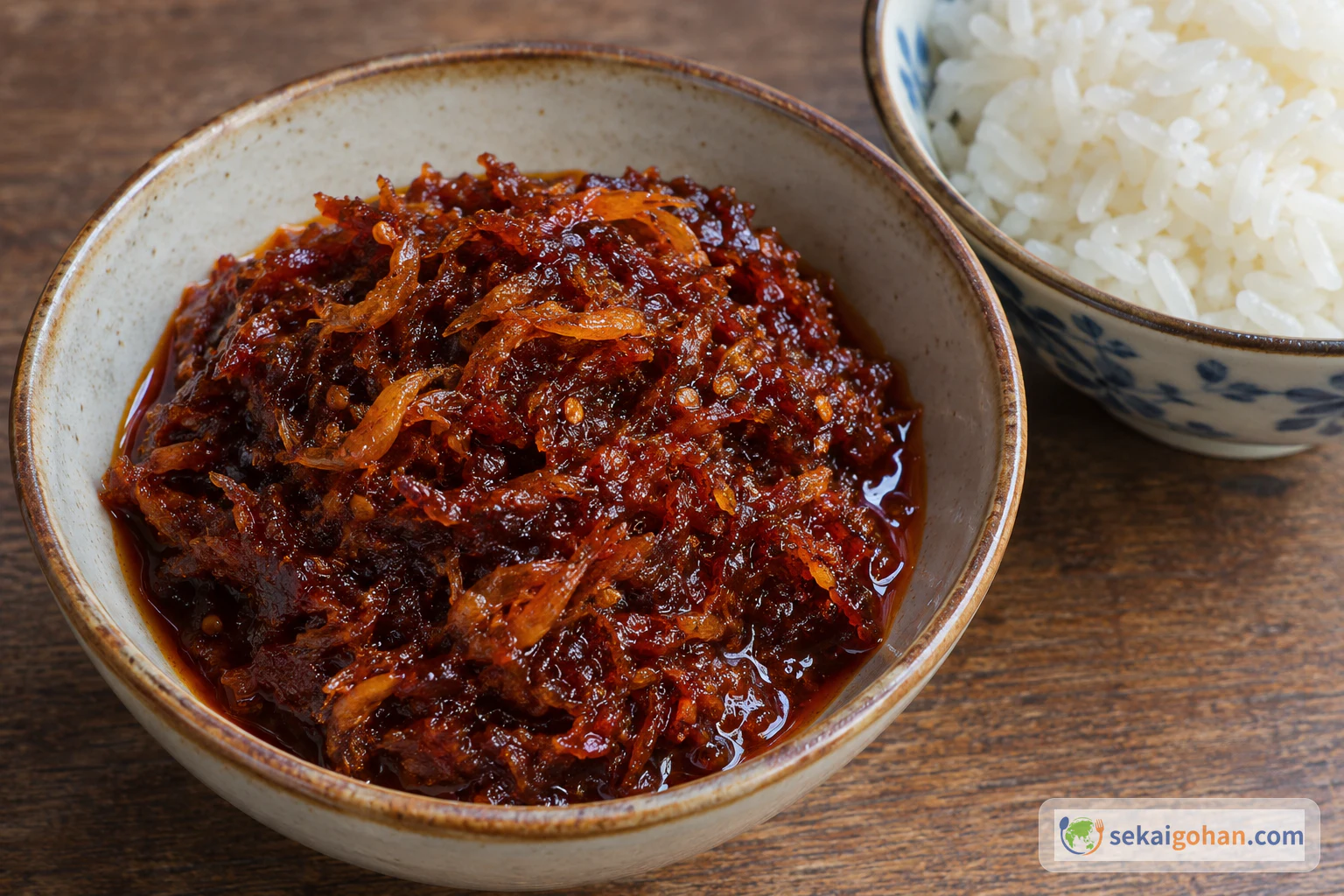
The condiments go on the table, so each person sets their own heat. The chili paste is optional, and anyone who wants a mild bowl can skip it. The broth stays the same either way. You can also leave out the tóp mỡ or the fried shallots, though the bowl loses some of its pork-fat richness and crunch.
Don't leave the fish, broth or other perishable parts at room temperature for long.
Frequently Asked Questions
Should I add something sour to the broth?
No. Canh bún cá has no sour element. Chanh is only for cleaning the raw fish, and you rinse it off before cooking.
How do I know the fish is cooked?
Cook the fish to an internal temperature of 63°C / 145°F, checked with a food thermometer. If you don't have one, cook until the flesh is opaque and flakes easily. Because the fish is boiled, it never turns golden, and color and texture alone aren't a safe test.
Do I need to add oil for frying the shallots?
No. Fry the shallots in the fat rendered from the pork when you make the tóp mỡ.