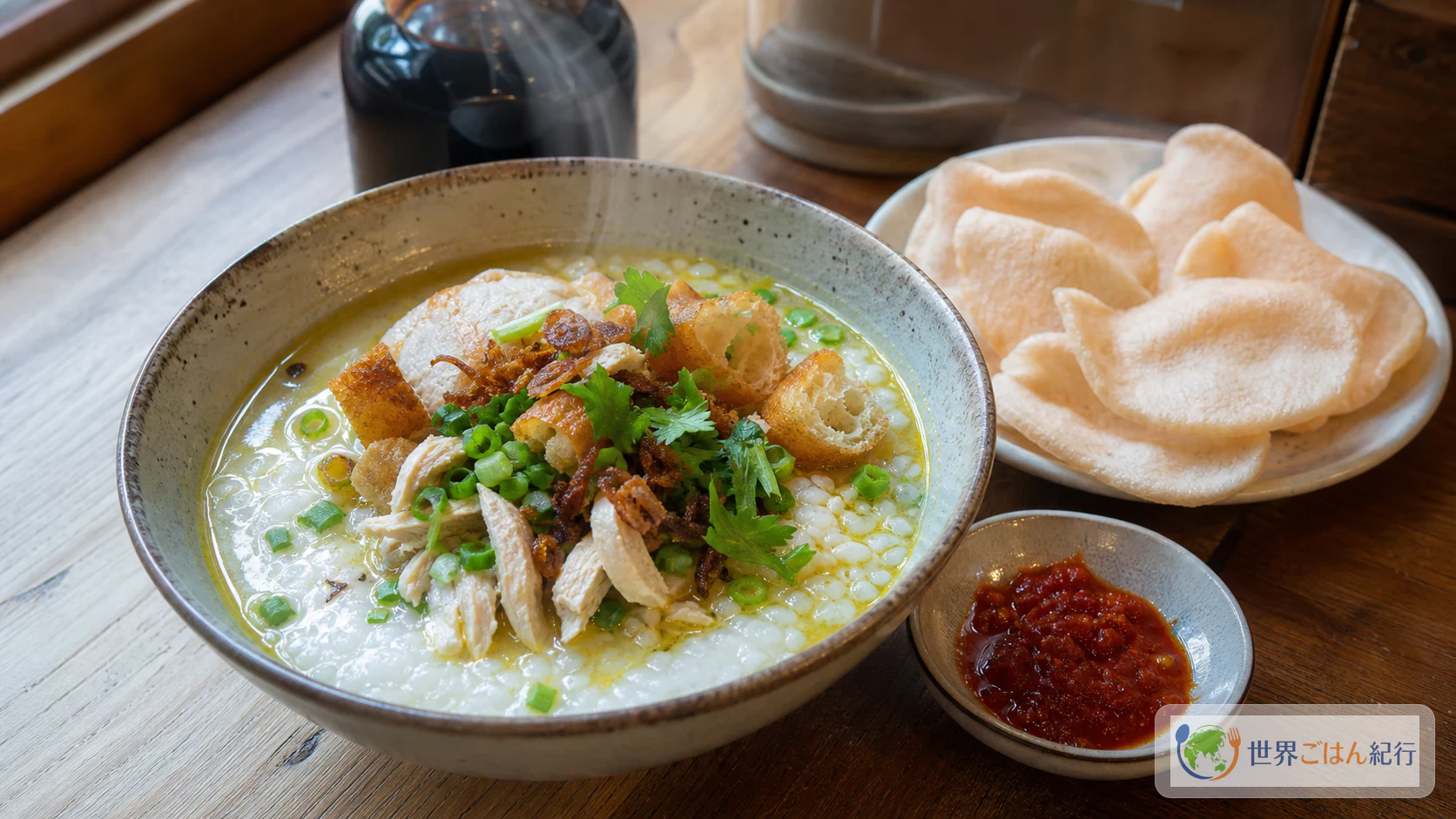
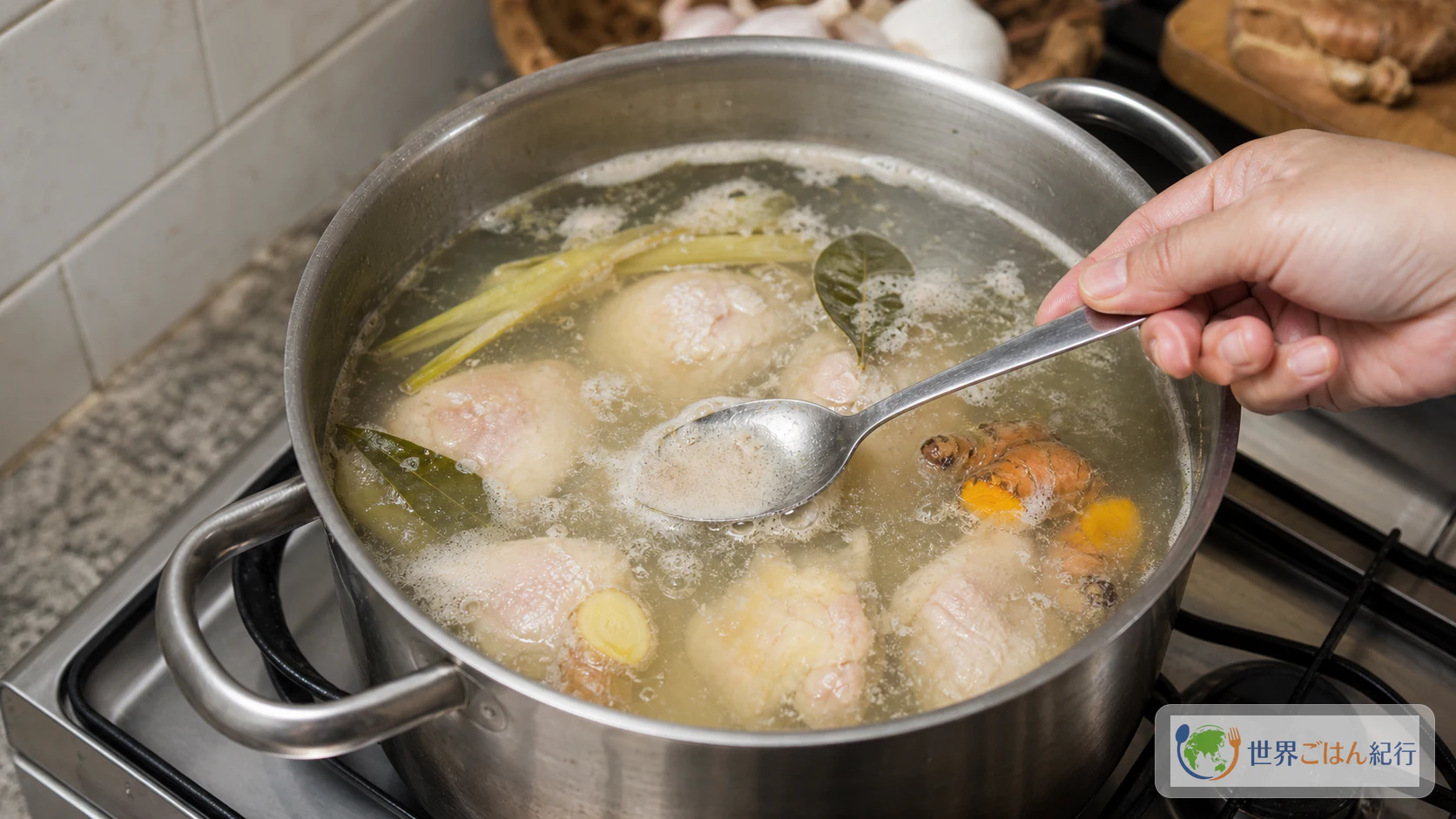
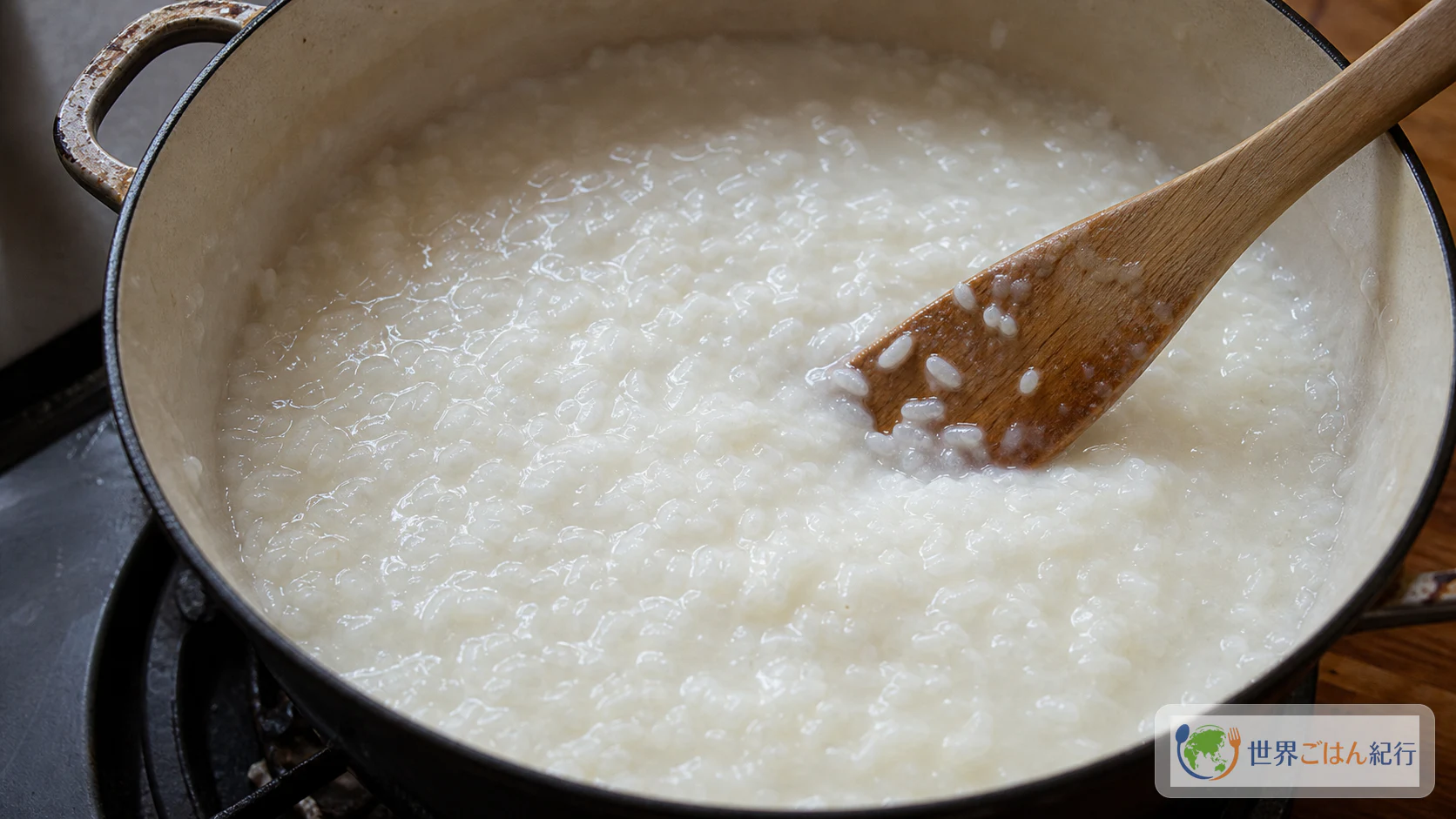
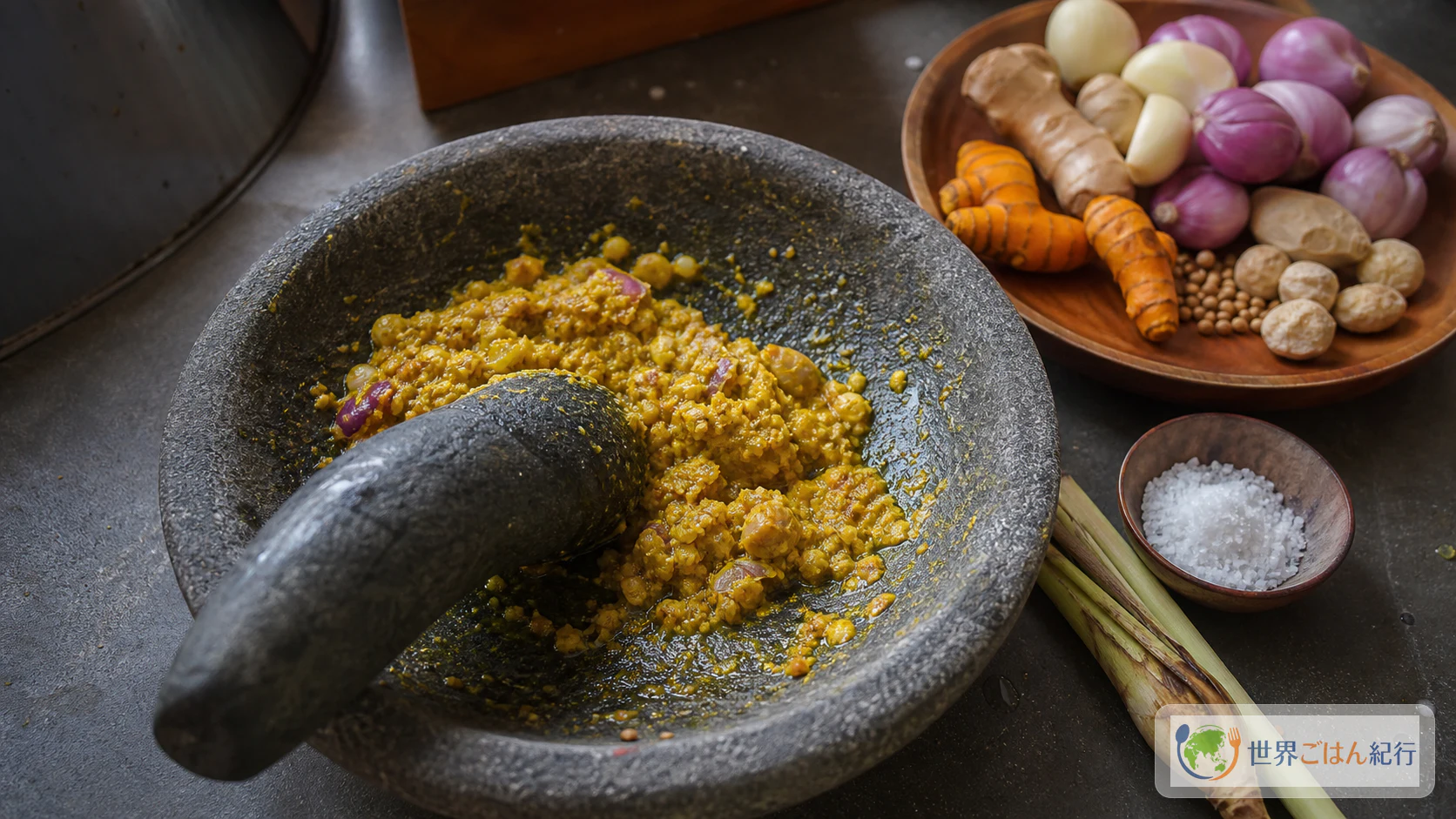
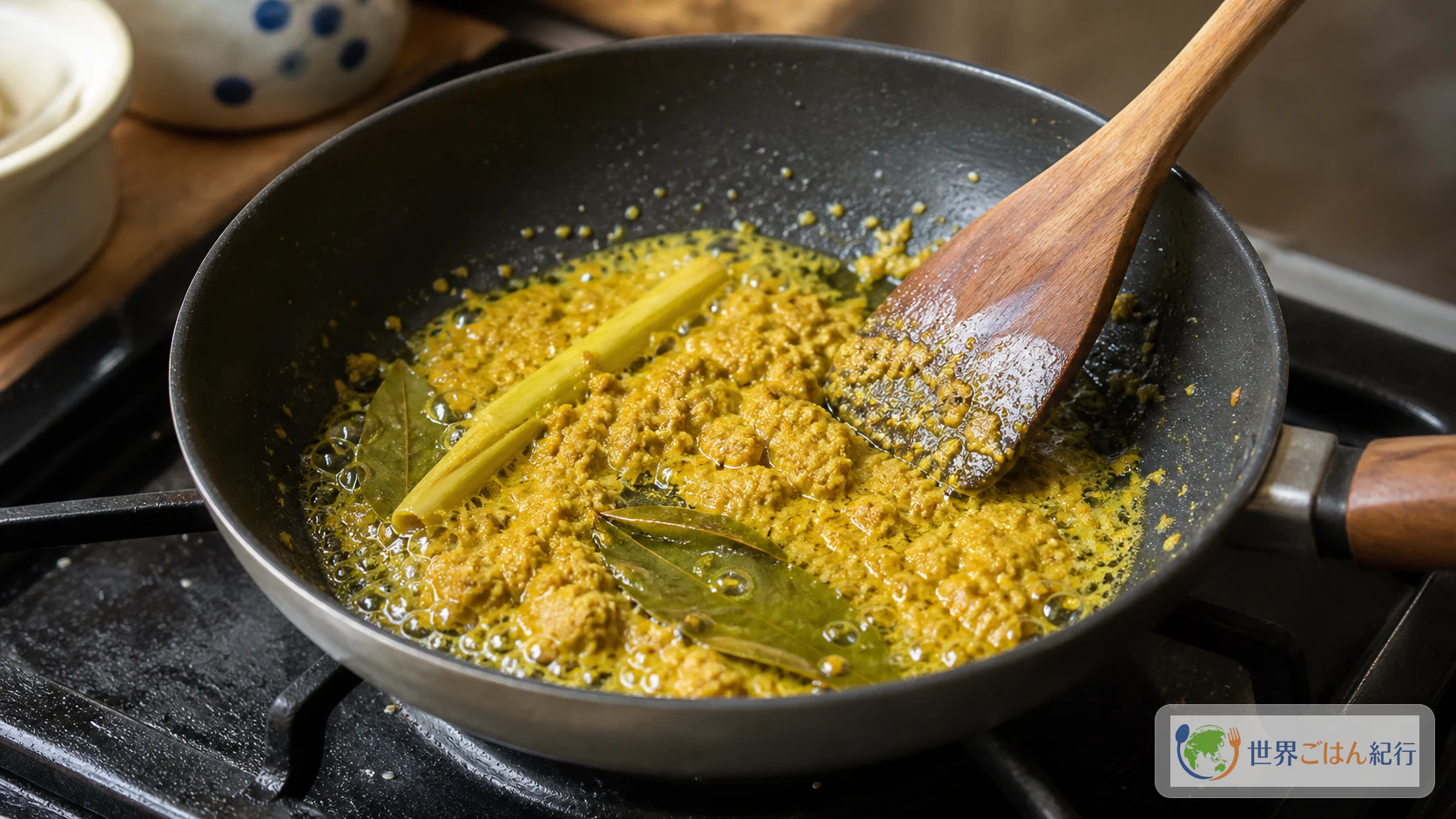
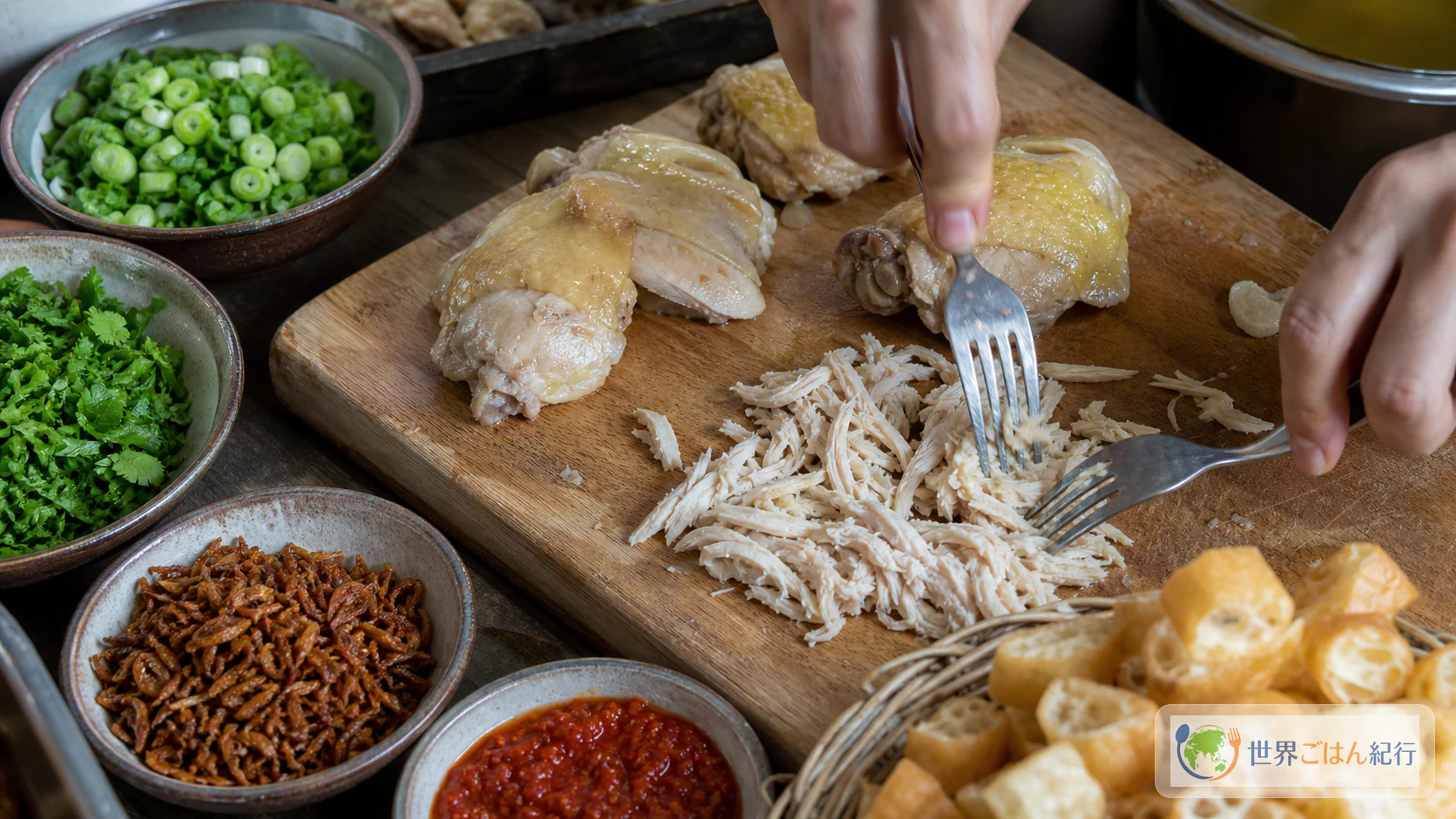
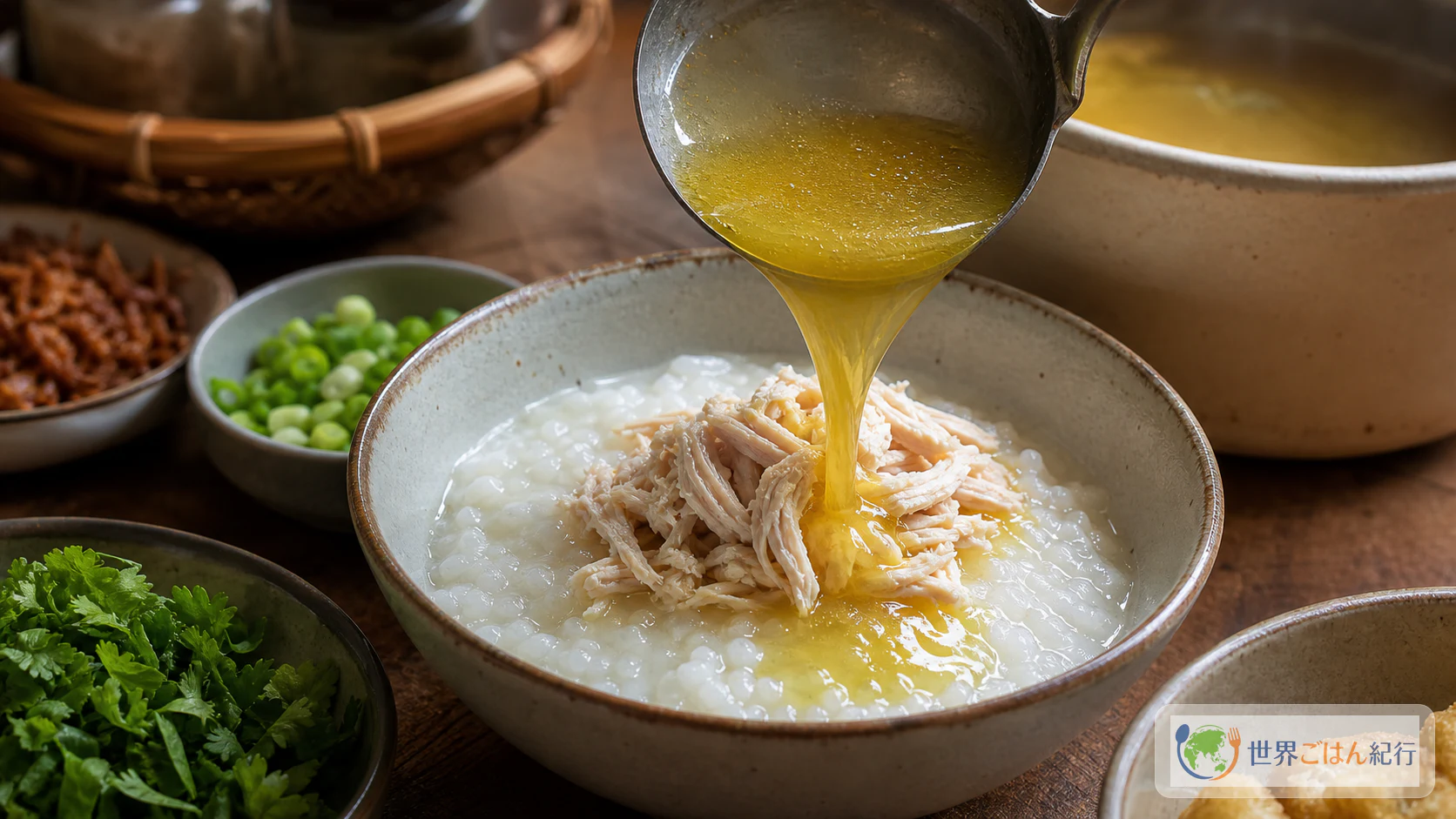
When the sweet steam of rice rises in the morning, the air in the kitchen softens a little. Then you pour chicken broth infused with turmeric, lemongrass and ginger over it from a small pot, and plain white porridge suddenly smells like an Indonesian morning. Bubur ayam is rice cooked into a silky porridge and layered with chicken, yellow chicken broth, fried shallots, scallions, celery leaves, cakwe (fried dough sticks), kerupuk (crackers), sambal and kecap manis. It's a breakfast that makes you stop in front of the street stall.
In Indonesian, bubur means porridge and ayam means chicken. In English it's often called Indonesian chicken congee or chicken rice porridge.
Bubur ayam in Indonesia
Street stalls and Cianjur
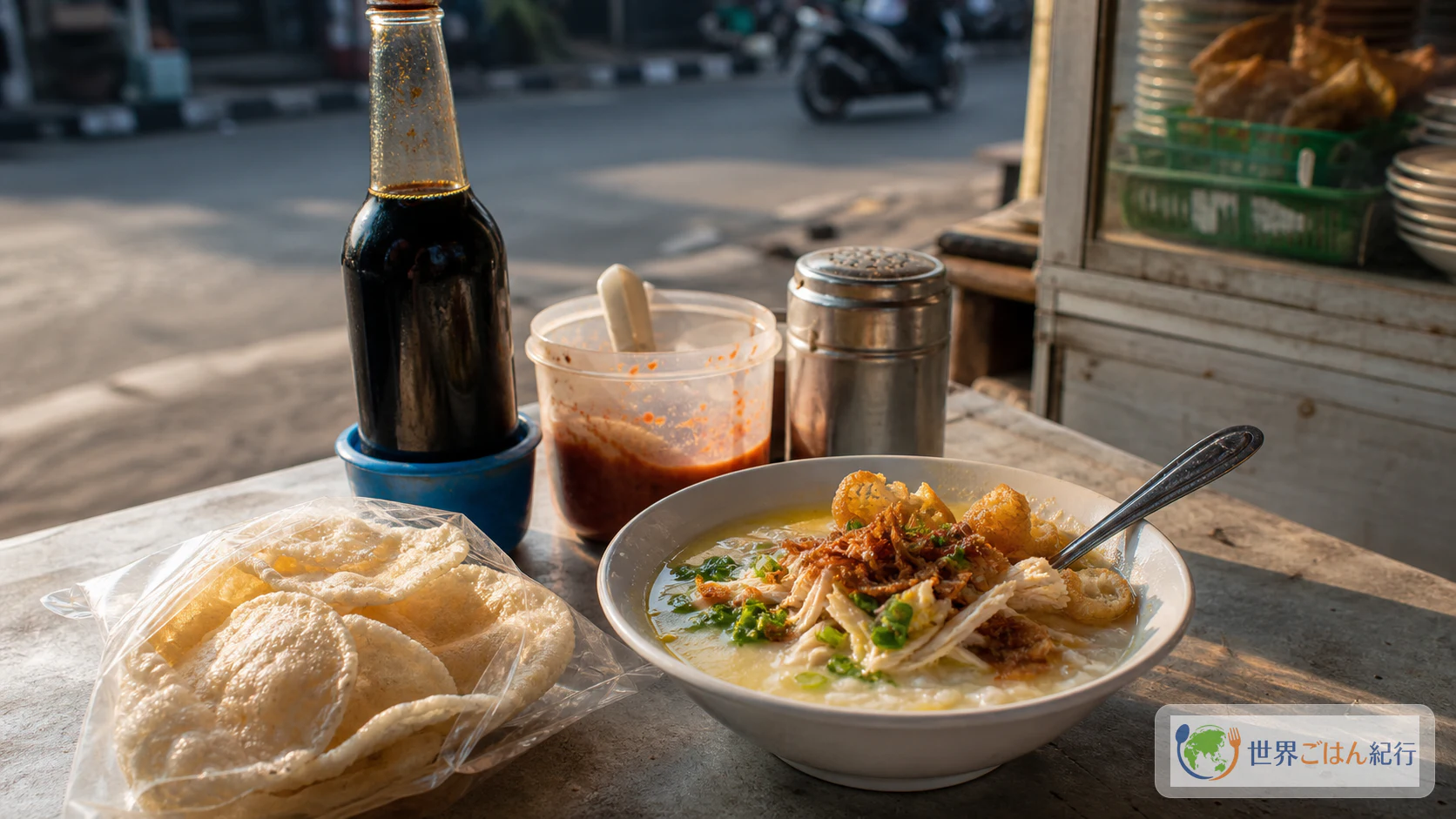
Bubur ayam is made all over Indonesia. In Jakarta and West Java it's a morning street-stall food, and in Cianjur it's the town's signature breakfast. Bubur Ayam Cianjur is known for its soft texture and savory taste, and it gets its character from shredded chicken, cakwe, fried shallots, kerupuk, kecap manis and sambal. Around Cianjur, some stalls pour the yellow chicken broth over separately, while others let the broth soak into the porridge itself.
West Java also has regional styles, such as the Bandung style and the Sukabumi style, where a raw egg is tucked under the hot porridge so it cooks to soft and runny. People eat it differently, too. Some stir the porridge and toppings together thoroughly from the start, while others save the fried shallots and crackers for the end.
From Chinese congee to an Indonesian breakfast
Bubur ayam descends from Chinese chicken congee. You can still see the Chinese influence in toppings like cakwe (the Indonesian take on Chinese youtiao), chopped preserved vegetables and soy sauce. Layers of local ingredients and condiments made it a firmly Indonesian dish. Porridge is eaten across East and Southeast Asia, but in Indonesia it becomes a way of layering flavors from the first thing in the morning: fried shallots, sweet soy sauce, sambal and crackers.
The coconut rice nasi uduk is another Indonesian breakfast. Nasi uduk cooks aroma into the rice itself. Bubur ayam layers yellow broth and toppings onto white porridge. Both are morning foods, but they build texture and aroma in very different ways.
Making it at home
The hard part at home is less the number of ingredients than the sequence. You cook porridge from raw rice, make broth in a small pot, fry a spice paste, and do all the topping at the end. Thinking about all four at once looks hectic, but taken one at a time, they're calm work even on a home stove.
There's no need to copy a famous Cianjur stall. Focus on a porridge with the grains slightly broken down, a chicken broth that isn't too cloudy, the yellow aromatics, and a finish of fried things and heat for texture. On its own, the porridge isn't much different from any chicken congee. The yellow of turmeric, the green aroma of lemongrass and the sweet toastiness of fried shallots are what move the same rice and chicken toward an Indonesian breakfast, much more than lavish toppings do.
Ingredients (serves 4)
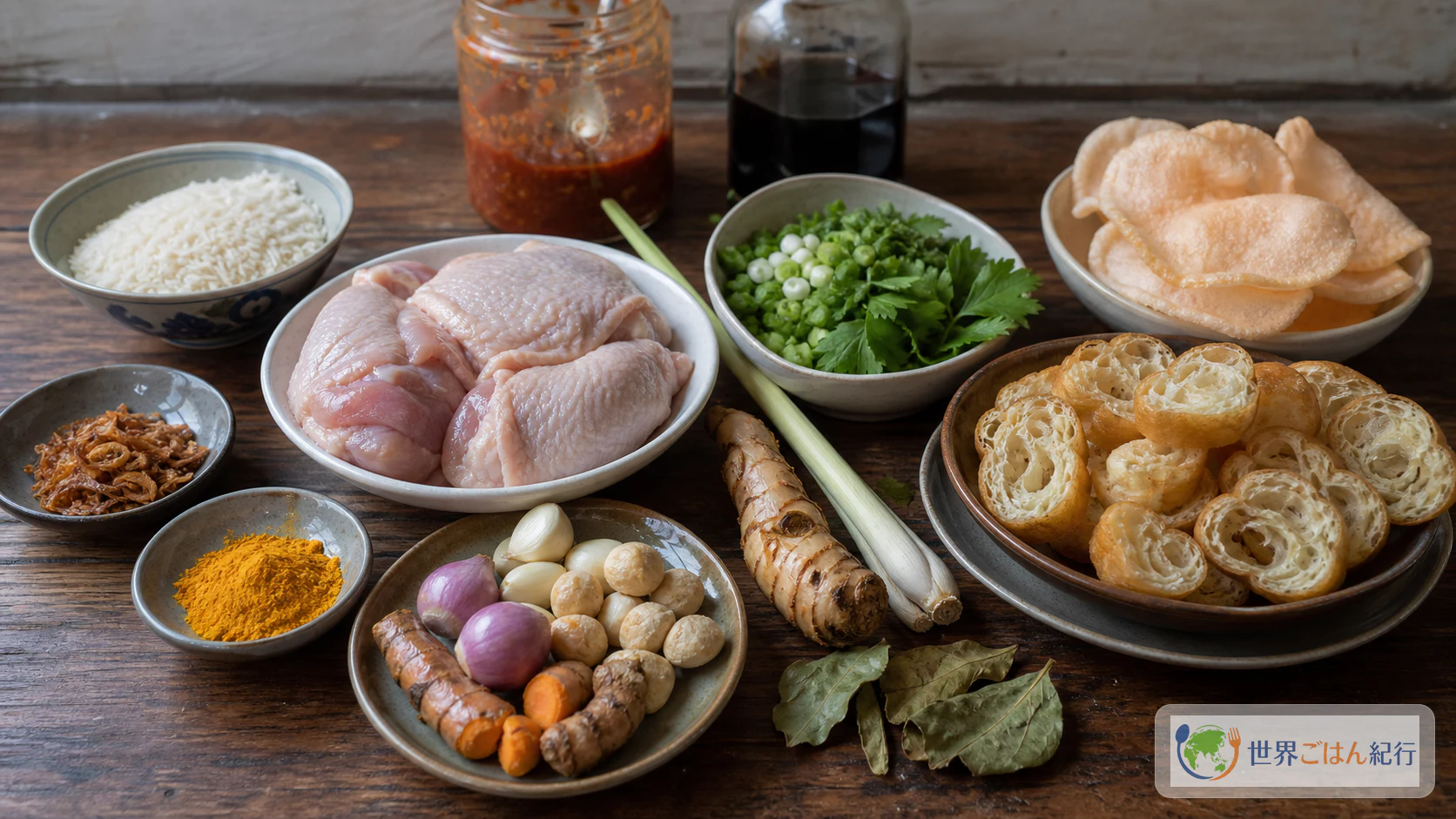
| Ingredient | Amount | Substitutes & notes |
|---|---|---|
| Rice | 1 rice-cooker cup, about 150 g | A Japanese rice cup holds 180 ml. Jasmine rice or Japanese rice both work |
| Water | 900 ml | Have another 200 ml hot water ready to add along the way |
| Chicken broth | 300 ml | Use the broth made in the step below |
| Salt | 1/2 tsp | Adjust for the saltiness of the broth |
| Vegetable oil | 1 tsp | Helps keep it from boiling over |
Yellow chicken broth and chicken
| Ingredient | Amount | Substitutes & notes |
|---|---|---|
| Chicken thighs | 1 lb (450 g) | If using breast, 14 oz (400 g). Skin-on gives more flavor to the broth |
| Water | 1.25 quarts (1.2 L) | For the broth |
| Lemongrass | 1 stalk | If dried, 2 tsp |
| Ginger | 20 g | Thinly sliced |
| Bay leaf | 1 | Daun salam is traditional; if you have it, use 2 |
| Salt | 1 tsp | For the broth |
| White pepper | 1/4 tsp | Black pepper also works |
Spice paste
| Ingredient | Amount | Substitutes & notes |
|---|---|---|
| Onion | 2.75 oz (80 g) | Shallots (bawang merah) are traditional. Red onion also works |
| Garlic | 3 cloves, about 15 g | Chopped or grated |
| Ground turmeric | 1 tsp | If fresh, 15 g |
| Ground coriander | 1 tsp | If whole, toast in a dry pan and crush |
| Macadamia nuts | 20 g | Candlenuts are traditional. Cashews also work |
| Vegetable oil | 1 1/2 tbsp | For frying the spice paste |
Toppings
| Ingredient | Amount | Substitutes & notes |
|---|---|---|
| Fried shallots | 5 tbsp | Homemade or store-bought |
| Scallions | 3, about 1 oz (30 g) | Thinly sliced |
| Celery leaves | 10 g | Mix in a little cilantro if you like it |
| Cakwe or youtiao | 1, about 2.75 oz (80 g) | If unavailable, toast fried tofu pouches and slice thinly |
| Kerupuk or shrimp crackers | 12 | Avoid with a shrimp allergy |
| Kecap manis | 2 tbsp | Substitute 2 tsp soy sauce and 2 tsp dark brown sugar |
| Sambal | 4 tsp | Serve separately to keep the heat optional |
This dish contains chicken, seasonings with soy, cakwe (fried dough sticks) made from wheat flour, kerupuk (check the label for shrimp), and a spice paste made with macadamia nuts. For a nut allergy, leave the nuts out of the spice paste (the broth will be a little less rich). If anyone has allergies, check the ingredients of the toppings and store-bought seasonings.
Choosing ingredients for bubur ayam
The chicken and rice are easy to buy. The items worth seeking out online or at an Asian grocer are kecap manis, the sweet soy sauce; sambal, so you can serve the heat on the side; and fried shallots, which add the finishing aroma in one go. You can make fried shallots yourself, but on a breakfast morning store-bought ones make things much easier. Keep them away from moisture until just before topping the porridge so they keep their aroma.
Kecap manis is a finishing touch, used sparingly. A few drops at the end add a sweet, caramelized note to the yellow chicken broth. You can also use it in mie goreng and sate ayam.
| Point to decide | Closer to the original | Practical at home | Direction to avoid |
|---|---|---|---|
| Rice | Long-grain rice or rice used for stall porridge | Japanese short-grain rice works. Cook gently, watching the moisture | Just thinning plain cooked rice with hot water |
| Broth | Chicken, lemongrass, daun salam, turmeric | Chicken thighs, bay leaf, ginger, turmeric | Adding lots of curry powder and making curry porridge |
| Toppings | Cakwe, kerupuk, fried shallots | Fried tofu, shrimp crackers, store-bought fried shallots | Leaving out all the fried things and losing the texture |
| Heat | Sambal on the side | Each person adds it by the teaspoon | Making the whole pot spicy |
| Sweetness | A little kecap manis | Approximate with soy sauce and dark brown sugar | Pouring on ordinary Worcestershire-style sauce |
Cakwe and kerupuk are fun if you can find them, but they don't have to be perfect the first time. Cakwe is rarely sold outside Asian bakeries. Toasted thin fried tofu pouches stand in well (thick fried tofu is too heavy): toast them in a toaster oven at 350°F (180°C) for 4 minutes and cut them into 0.5 inches (1 cm) strips. Thin slices of baguette also work. For kerupuk, use shrimp crackers or thin rice crackers. What matters is something light and crisp that softens a little in the porridge, and any of these is more fun than leaving them out.
Method: finish the white porridge and yellow broth separately
Cooking porridge and broth all in one pot is easier, but it makes the aromas harder to control. The first time, cook the white porridge in a separate pot and pour the yellow chicken broth over it afterward. Because you can correct the thickness of the rice and the saltiness of the broth separately, mistakes are easy to fix.
Put 1 lb (450 g) cold cooked rice, 3 cups (700 ml) water and 1¼ cups (300 ml) chicken broth in a pot and simmer on low for 20 minutes. The grains hold their shape more than when cooking from raw rice, so press them lightly with a wooden spoon along the way. Adding a lot of water at once dilutes the flavor, so add hot water 3 tbsp at a time.
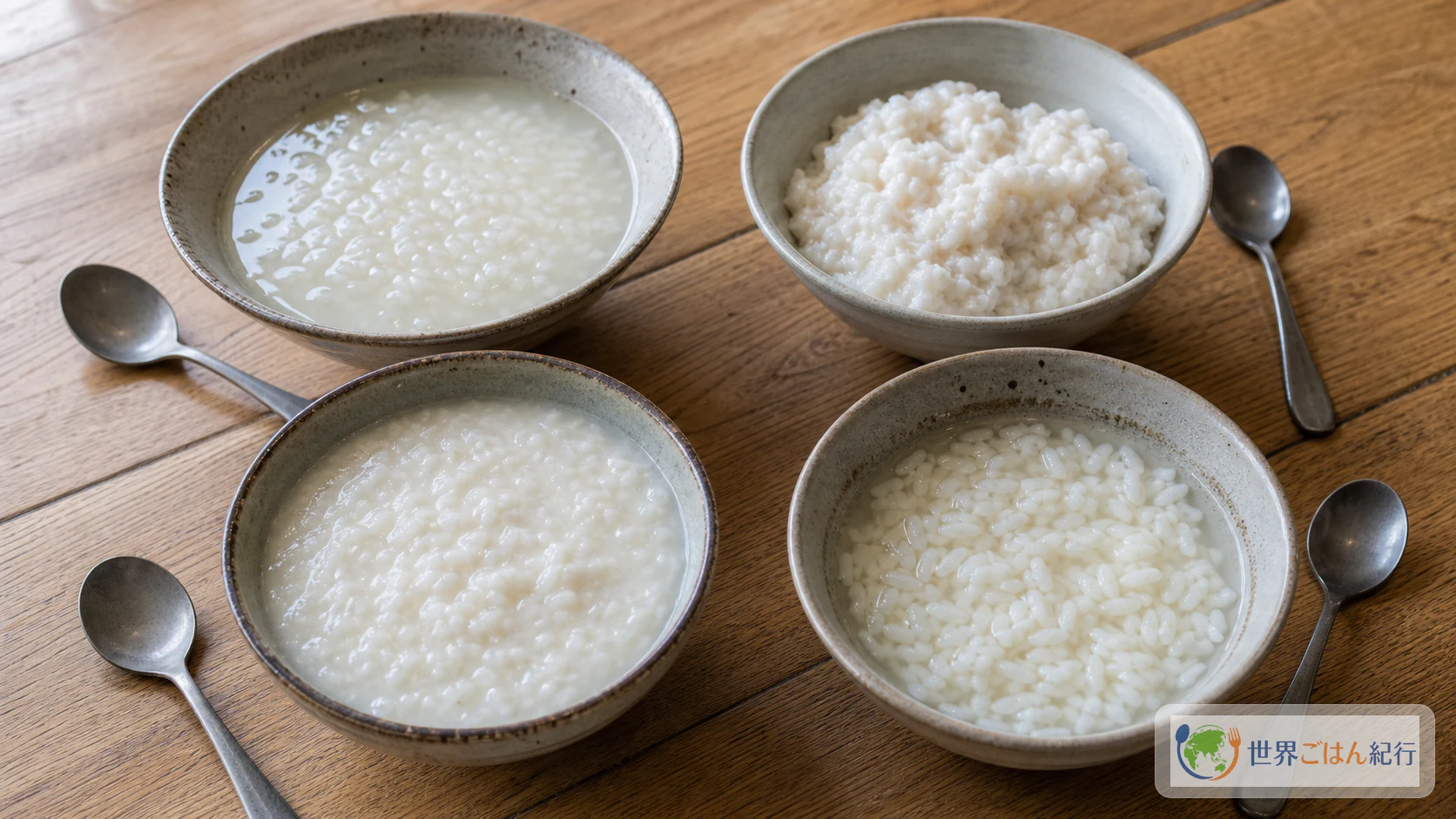
Bubur ayam problems and fixes
| Problem | Cause | Fix |
|---|---|---|
| Watery | Too much broth, or overmixed | Uncover and simmer down on low for 5 minutes |
| The grains are hard | Not cooked long enough, or too little water | Add ½ cup (100 ml) hot water and cook 8 more minutes on low |
| The broth tastes flat | The spice paste wasn't fried enough | Reduce the broth by half in a small pot and add 1/8 tsp salt |
| It tastes like curry | Too much curry powder | Go back to turmeric alone, and add aroma with ginger and lemongrass |
| The fried things go soggy | Too much time passed after plating | Add the fried shallots and kerupuk just before eating |
Stop the porridge slightly thick before ladling it into bowls. The yellow broth adds liquid, so porridge that's just right in the pot will be loose by the time you eat it. It's at its best when it drops off a wooden spoon in a thick dollop but doesn't set at the bottom of the pot.
If the broth tastes thin, go easy on the soy sauce. Too much clouds the color, and once you add kecap manis, all you taste is sweet and salty. Fry the spice paste thoroughly first, then add salt 1/8 tsp at a time, and sharpen the aroma with white pepper at the end. Done in that order, the flavor gets its shape back.
Serving and storing bubur ayam
At the table
At home, pour the yellow broth over the whole bowl and put the sambal and kecap manis at the edge, just 1 tsp of sambal per bowl. Then the first few spoonfuls are porridge and chicken broth, heat and sweetness come in partway through, and the softened fried things come at the end. With the heat on the side, people who like it hot and people who don't can eat from the same pot.
Storage and a morning game plan
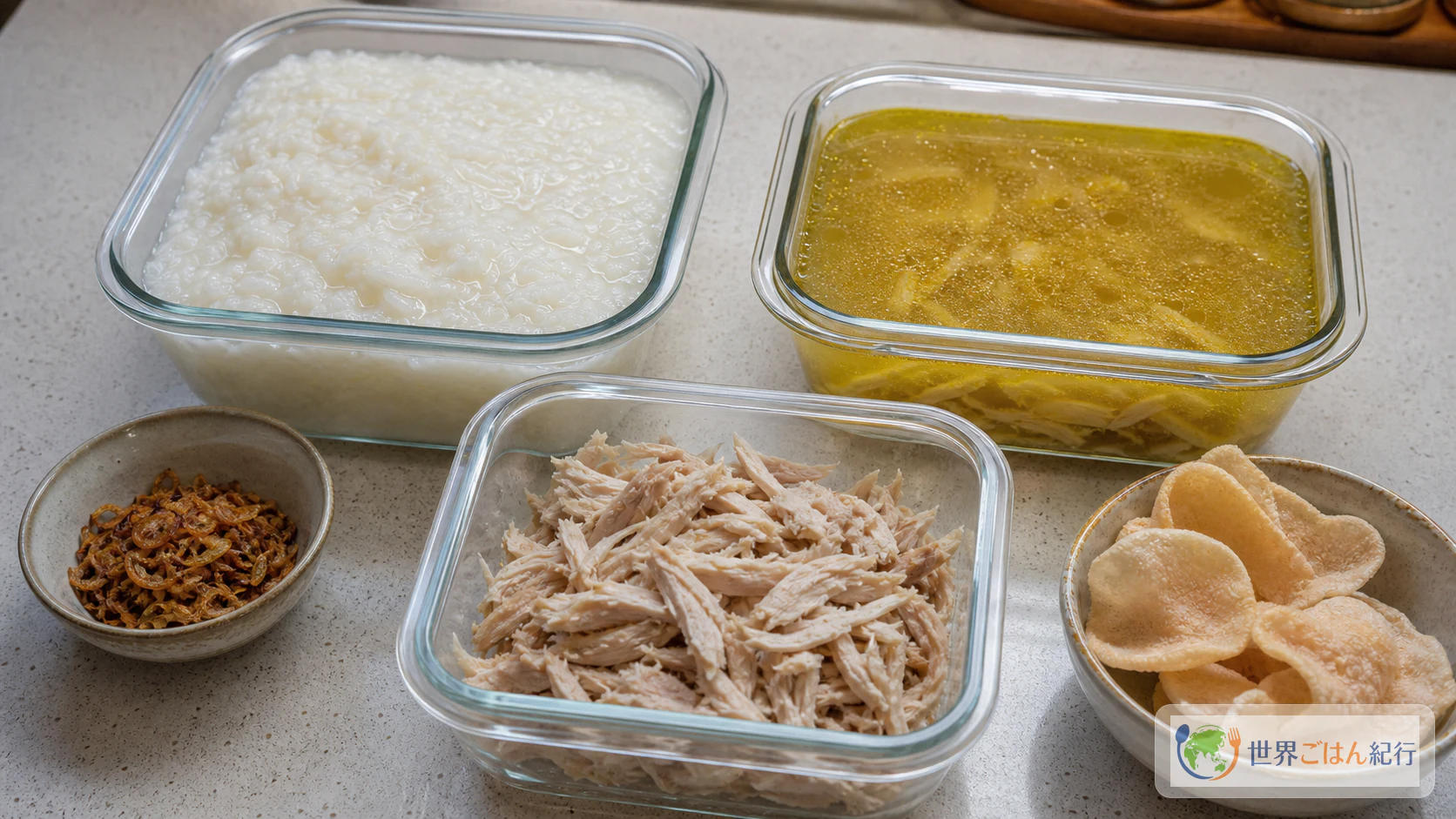
Don't store bubur ayam as a finished bowl. Separate the porridge, yellow broth, chicken, garnishes and fried things. Cool the porridge and broth, refrigerate them in shallow containers and finish them within about 2 days. Tossing the chicken with 2 tbsp broth keeps it from drying out.
To reheat, add 2 tbsp water or chicken broth per serving of porridge and microwave at 600 W for 1 1/2 minutes. Stir, and if it's still thick, continue in 20-second bursts. In a pot, use low heat for 4 minutes and add 2 tbsp hot water if it looks like it might scorch. Warm the yellow broth separately in a small pot until it bubbles and pour it on at the end.
On mornings when making everything feels like too much, make just the chicken broth and spice paste the night before. In the morning you only need to cook the porridge, warm the broth and shred the chicken. Leftover yellow chicken soup from soto ayam also makes a natural base for bubur ayam the next day.
Frequently asked questions
Q1. Can I use Japanese short-grain rice?
Yes. Japanese rice tends to get sticky, so start with 900 ml water and 300 ml chicken broth per cup of rice. Stirring too much makes it heavy, so just turn it from the bottom every 5 minutes. The texture is rounder than with long-grain rice, but it makes a delicious home version.
Q2. Can I make it without kecap manis?
Yes. Warm 2 tsp soy sauce, 2 tsp dark brown sugar and 1 tsp water in a small pan for 30 seconds. It gets close to sweet soy sauce, though the aroma is lighter than the real thing. Kecap manis is also used in nasi goreng and gado-gado, so if you'll keep cooking Indonesian food, a bottle won't go to waste.
Q3. Does chicken breast turn dry?
It can if it's overcooked. Use 14 oz (400 g) breast and take it out after 15 minutes on low. Tossing it with 3 tbsp yellow broth after shredding brings moisture back to the surface. Thighs give the broth more richness, though, so use thighs for a first try.
Q4. Can I share it with kids or people who don't like spicy food?
Yes. Keep the porridge and yellow broth mild and serve only the sambal on the side, so adults can mix it in little by little at the edge of the bowl. For kids, keep the kecap manis to a few drops. Going easy on the white pepper also makes it a gentler breakfast.
What to make next
Once you're used to the yellow chicken broth of bubur ayam, soto ayam is a natural next step with the same aromatics. To use up sweet soy sauce, try mie goreng; to branch out into rice dishes, move on to nasi uduk, and you'll see the range of Indonesian breakfasts and street food. On days you want to make your own heat, slip in how to make a sambal substitute, and you'll have a small Indonesian seasoning shelf in your fridge.