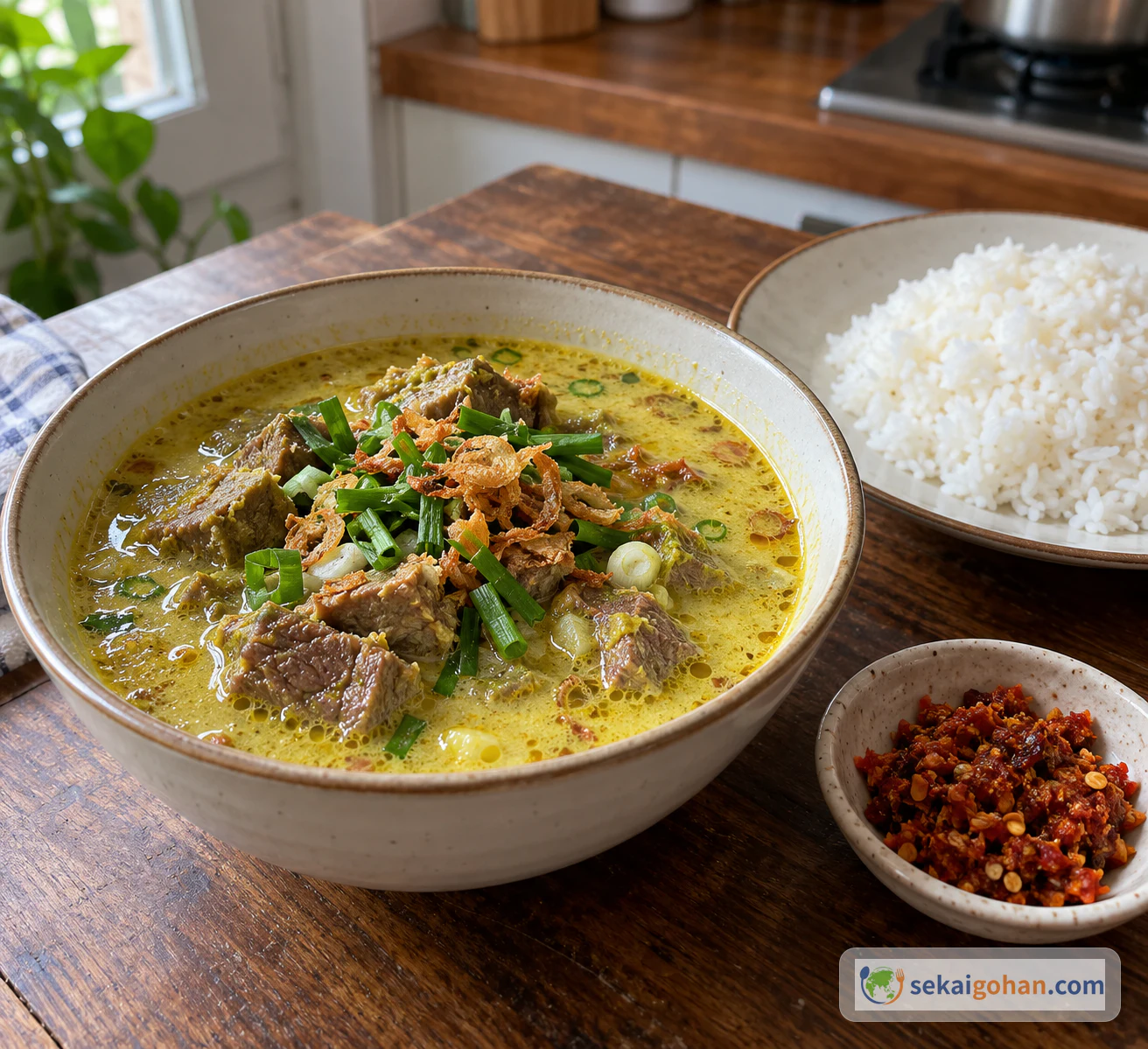
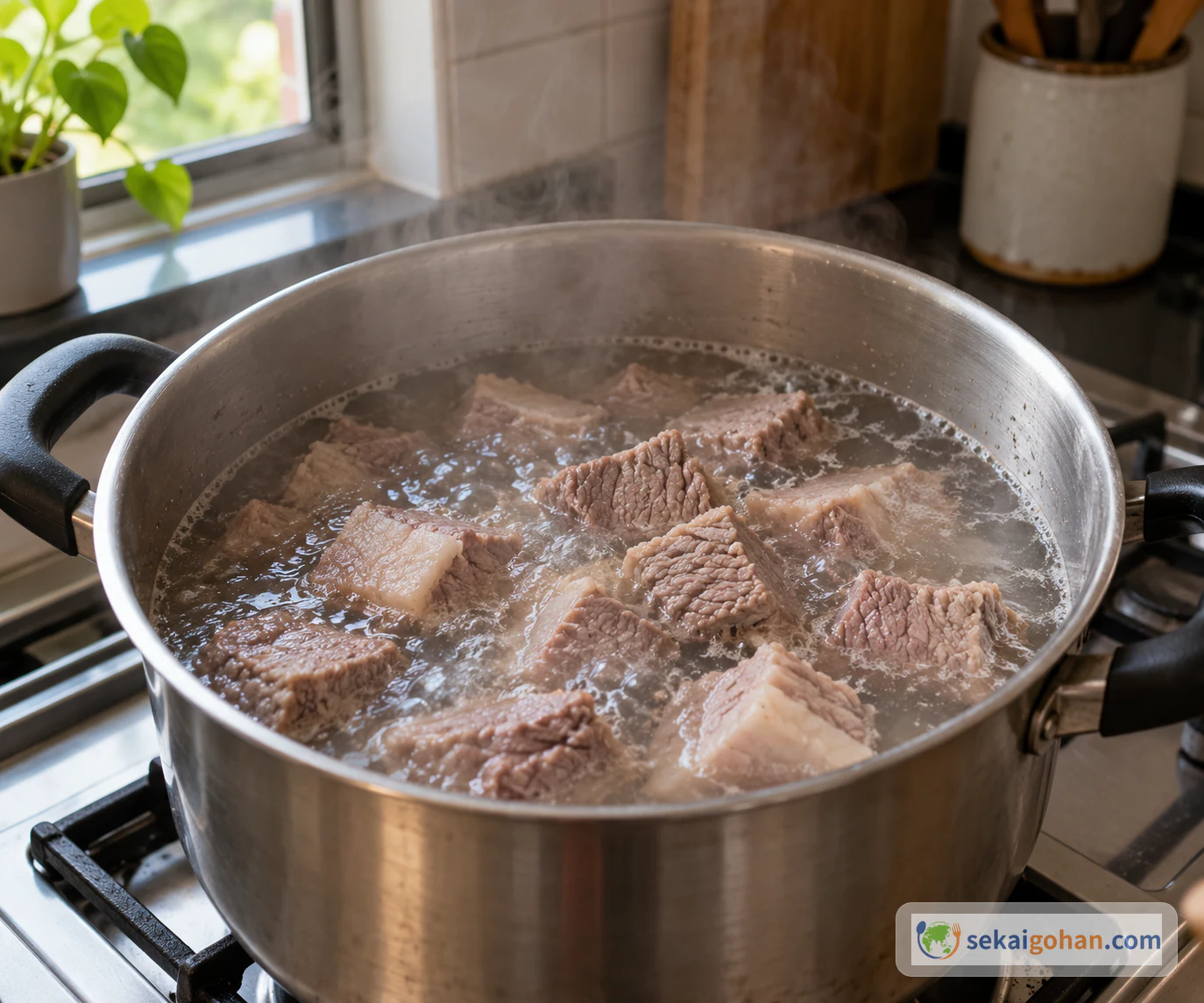
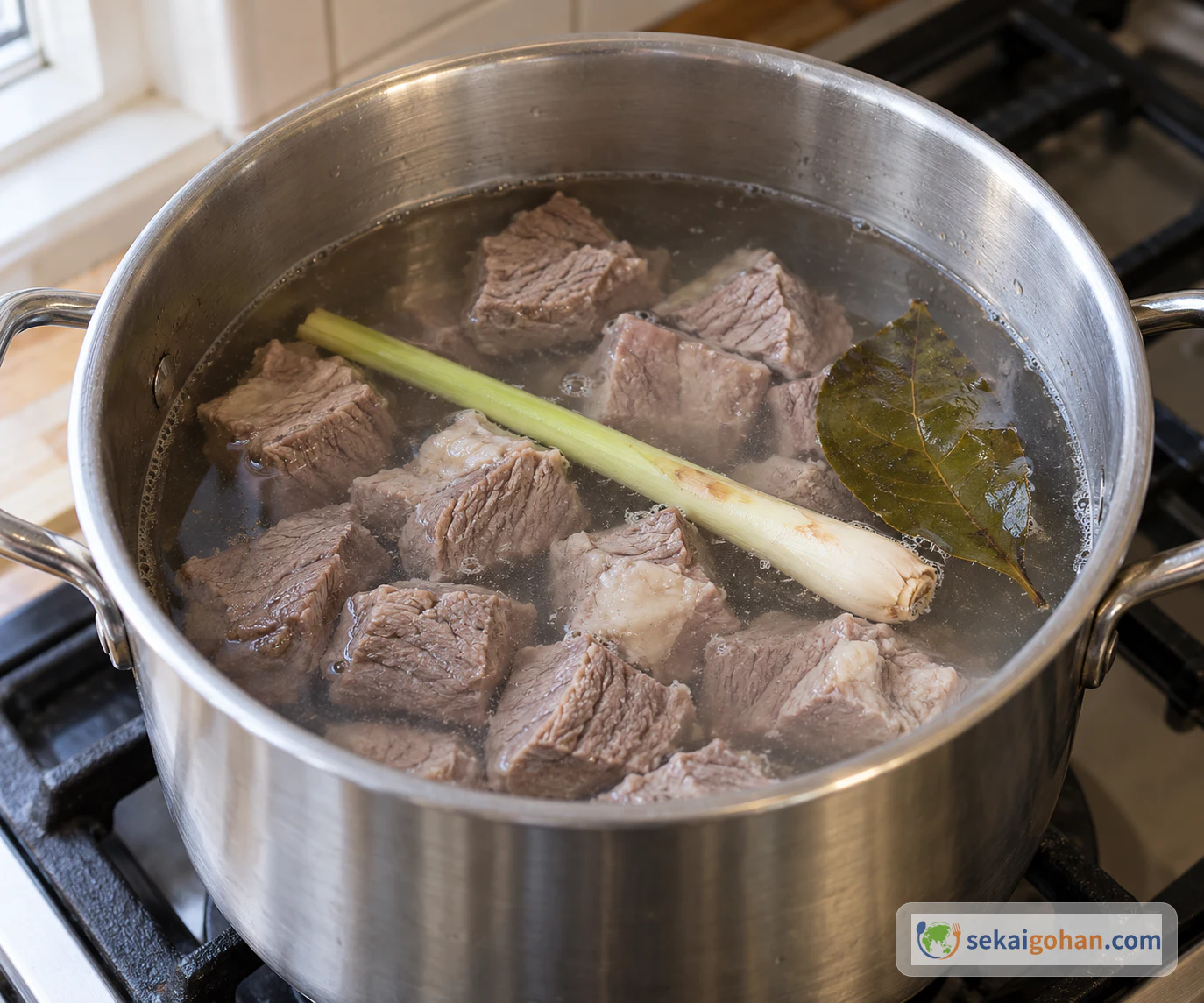
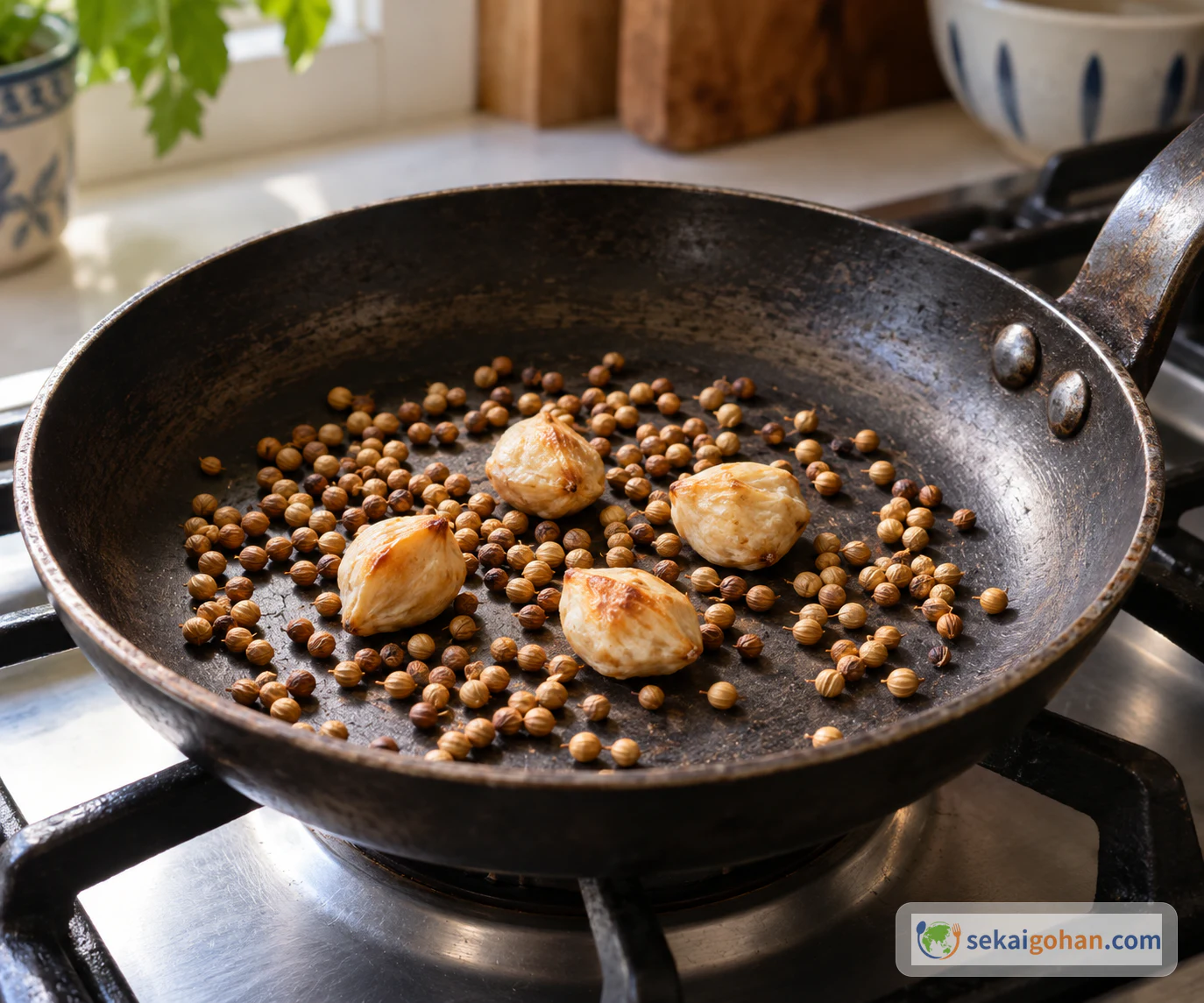
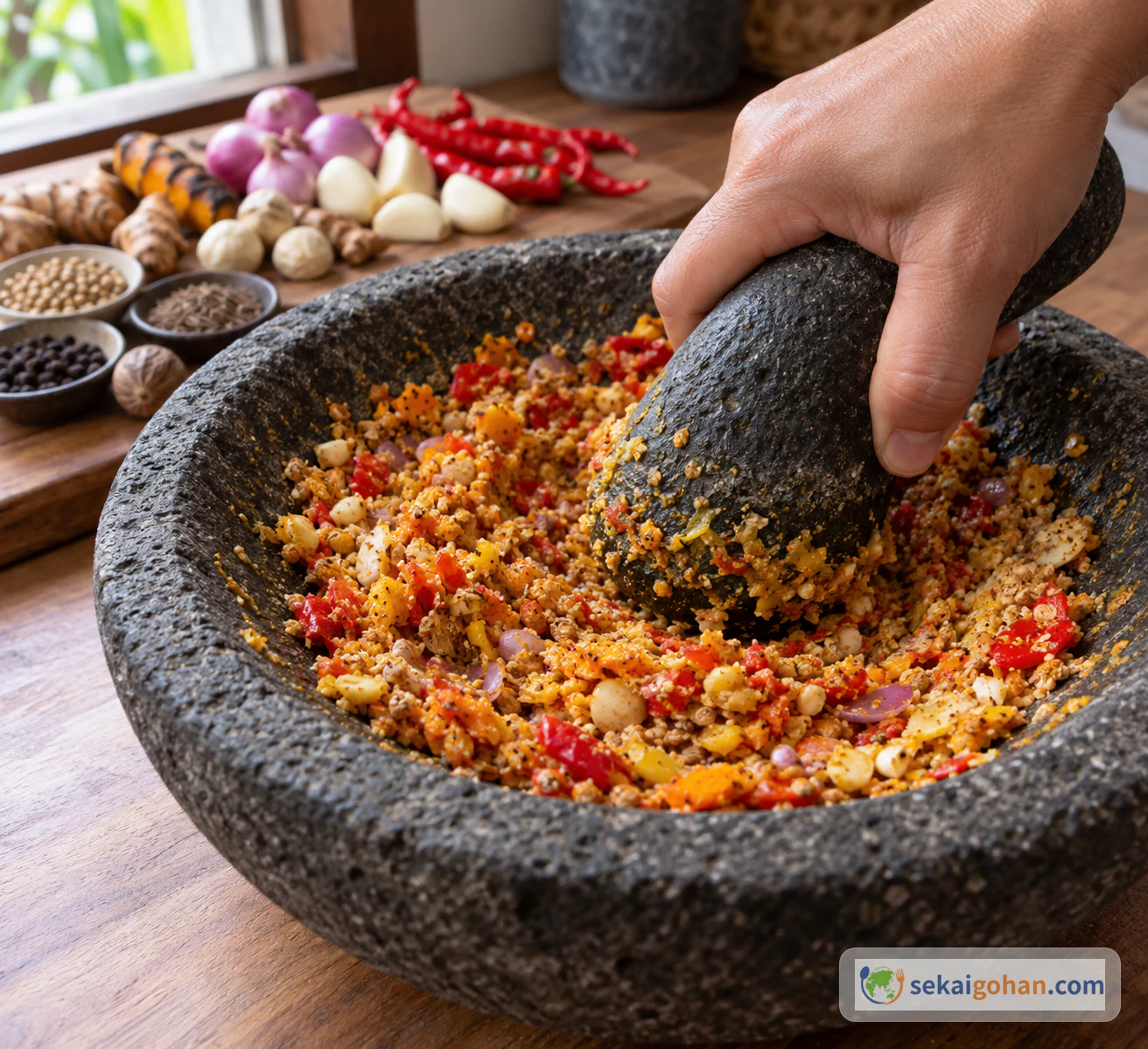
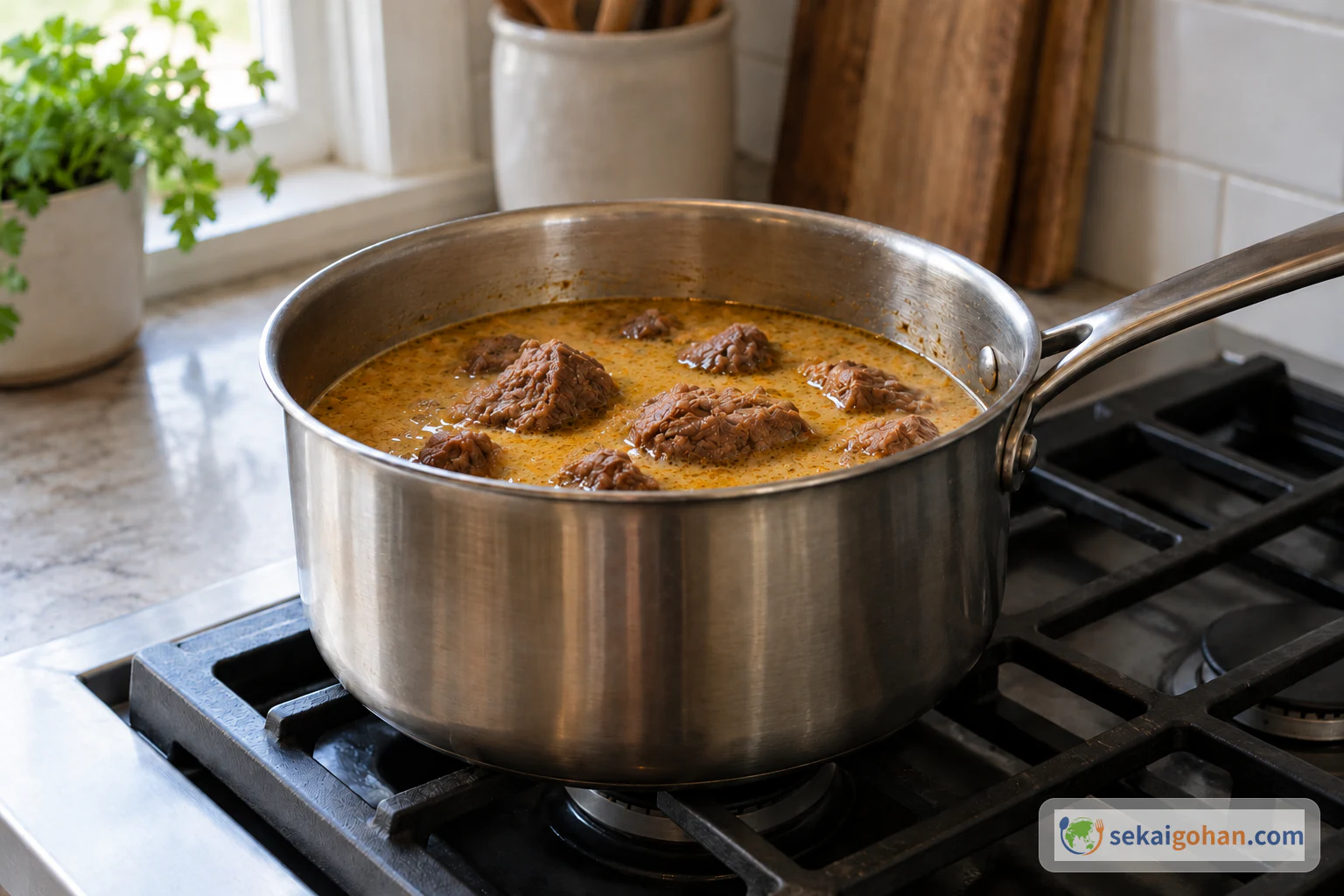
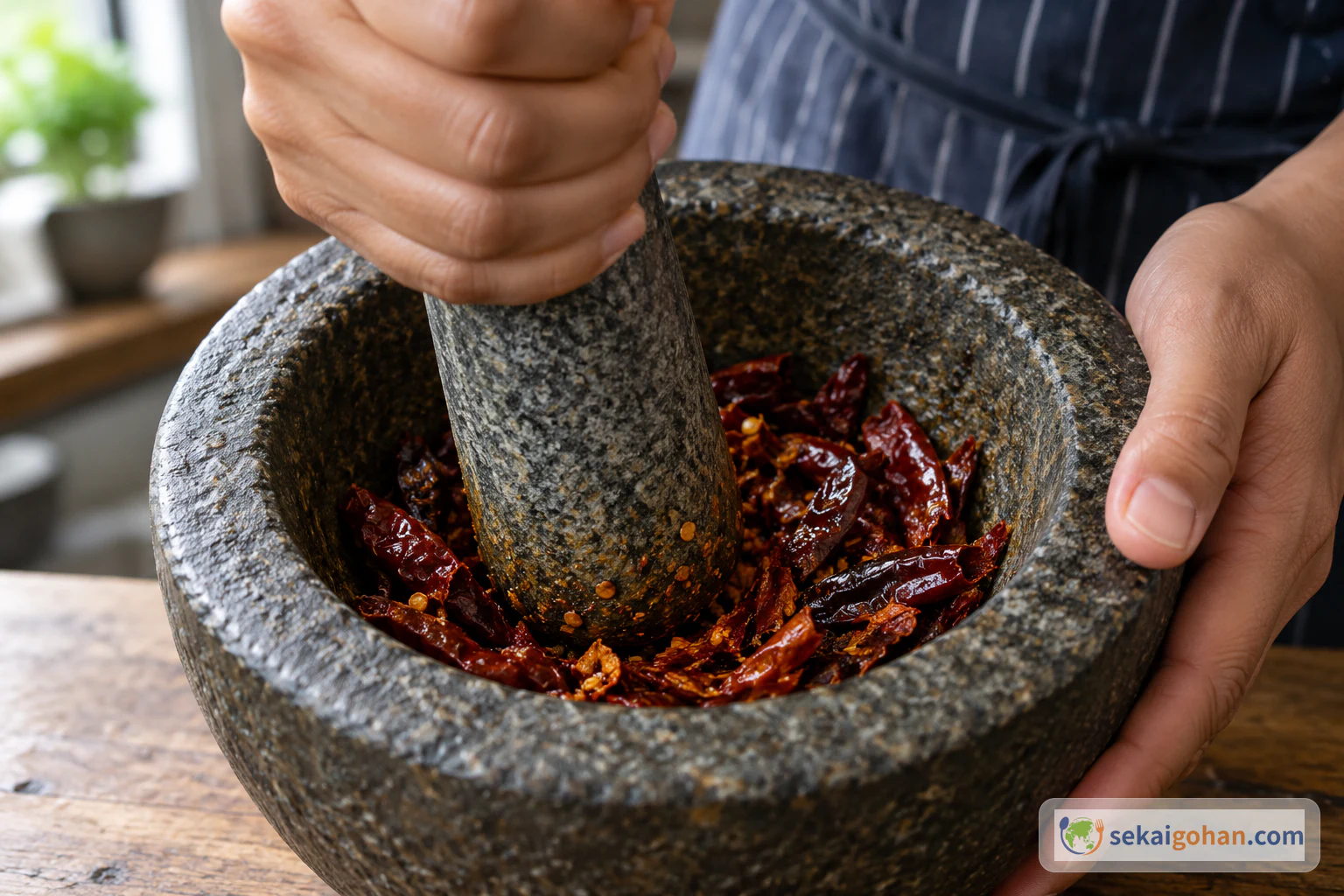
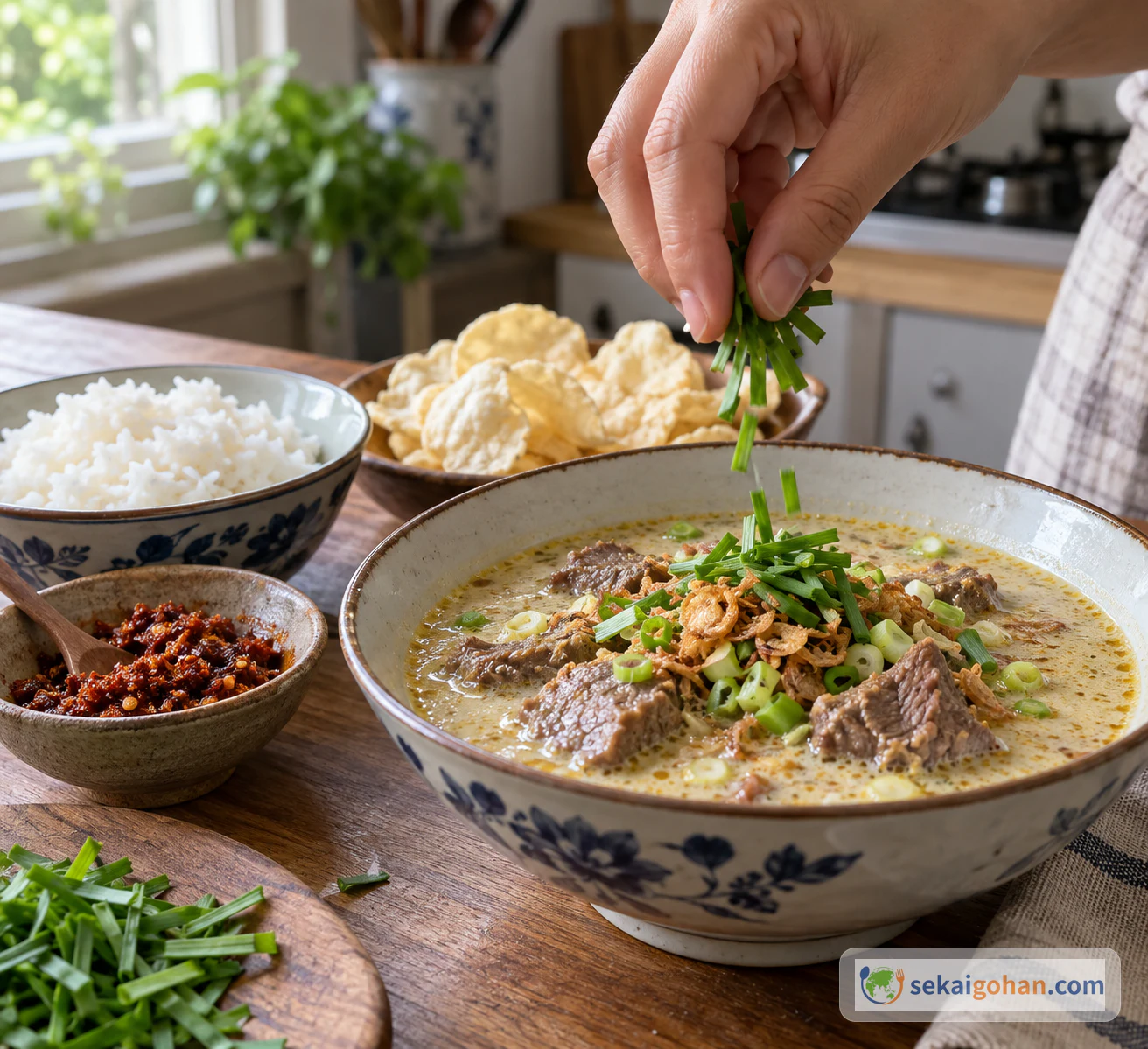
Picture pieces of beef in a coconut milk broth, with the scent of kucai, or garlic chives, rising from the bowl. That is empal gentong, a fragrant meat soup from Cirebon, and one of the regional foods to look for at eateries around the city. It is traditionally cooked in a gentong, a clay vessel, which is where the dish gets part of its name. This home version uses ordinary pots and a pan, so the aroma will differ a little from a bowl cooked in clay.
Empal Gentong and Cirebon
Cirebon is a city on the north coast of West Java with a long history of trade and shipping, and empal gentong is one of its specialties. The soup is built on beef and coconut milk, and kucai is part of its aroma. Cooking in a clay gentong is the traditional way. Making it in regular pots brings it into a home kitchen, but treat that as its own version rather than a copy of the clay-pot soup.
Published recipes for empal gentong differ a lot in their ingredients and amounts. Indonesia also has other beef soups, each with its own character: soto Betawi from Jakarta, coto Makassar from South Sulawesi, and rawon, a black soup built around keluak. Tahu gejrot comes from the same city but is a very different dish. You'll find more on our Indonesia page.
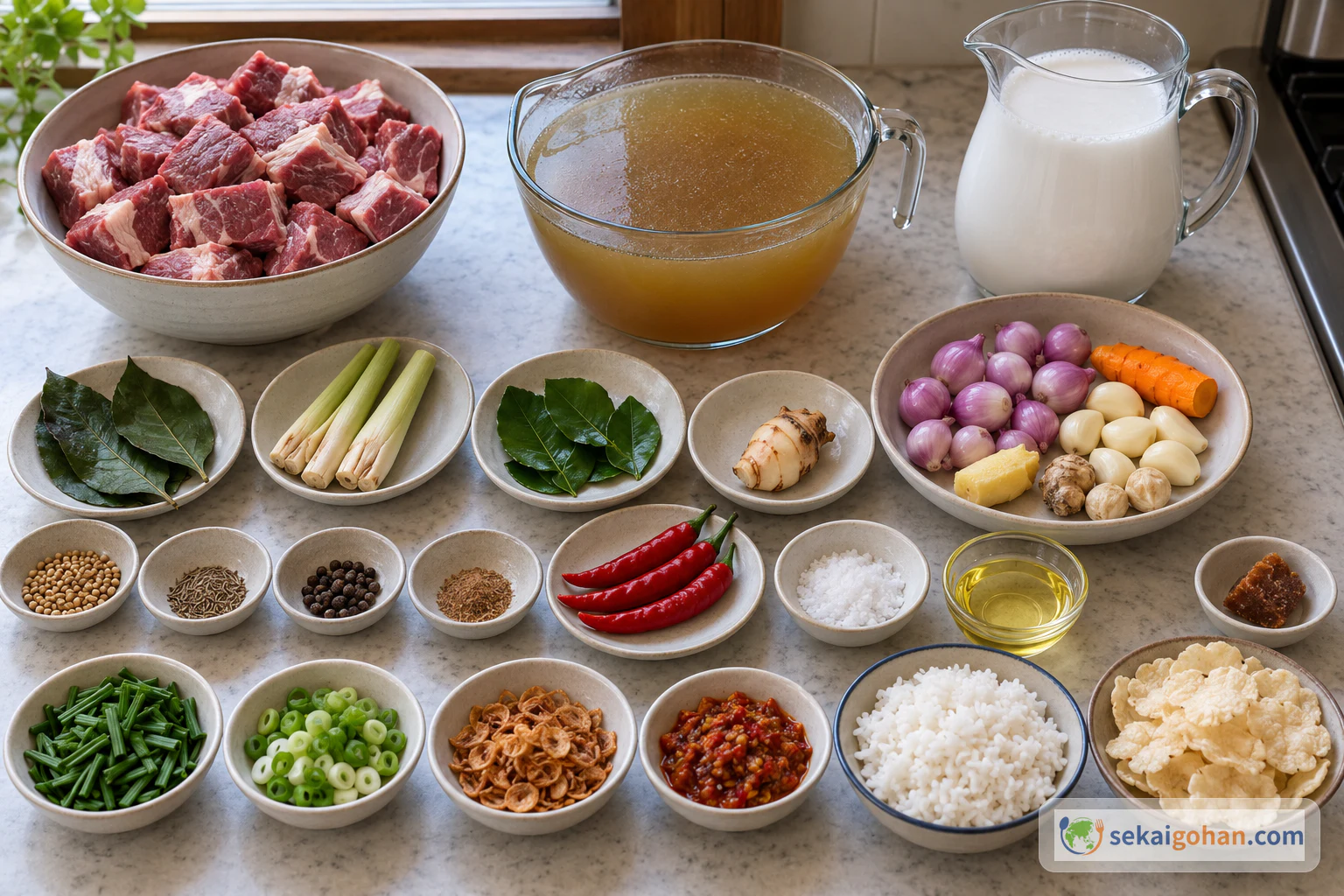
Ingredients (6–8 Servings)
Equipment
- Knife and cutting board
- Pot for boiling the beef
- Colander
- Measuring pitcher
- Tongs
- Small dry pan for toasting
- Stone mortar and pestle, or a blender
- Shallow pan for frying the spice paste
- Large pot for the soup
- Ladle
Choosing Ingredients for Empal Gentong
Beef. Sandung lamur is a brisket cut with some fat, and sengkel is shank. Use one cut for the full 2.25 lb (1 kg). If your butcher has different cuts, look for beef meant for long simmering, with some fat or sinew.
Kencur. This is Kaempferia galanga, also sold as sand ginger. Ginger and galangal are listed separately in the recipe, so neither one can stand in for it. Search under kencur, sand ginger or the botanical name at import grocers and online shops.
Kemiri, daun salam and daun jeruk purut. Kemiri is the candlenut, Aleurites moluccana, so look for kemiri or candlenut. Search for the leaves under their Indonesian names, and don't swap in bay leaf for daun salam. Gula merah is also easiest to find under its own name.
Coconut milk. Choose one route, fresh or instant, and stay with it. The instant route comes to 1.5 quarts (1.4 L), which is ½ cup (100 ml) less than the 1.5 quarts (1.5 L) of the fresh route. Leave that difference alone and don't add water to make up for it.
This soup contains beef, coconut and candlenut. If you use packaged ingredients, read their ingredient lists and allergen notes.
Checkpoints and Fixes
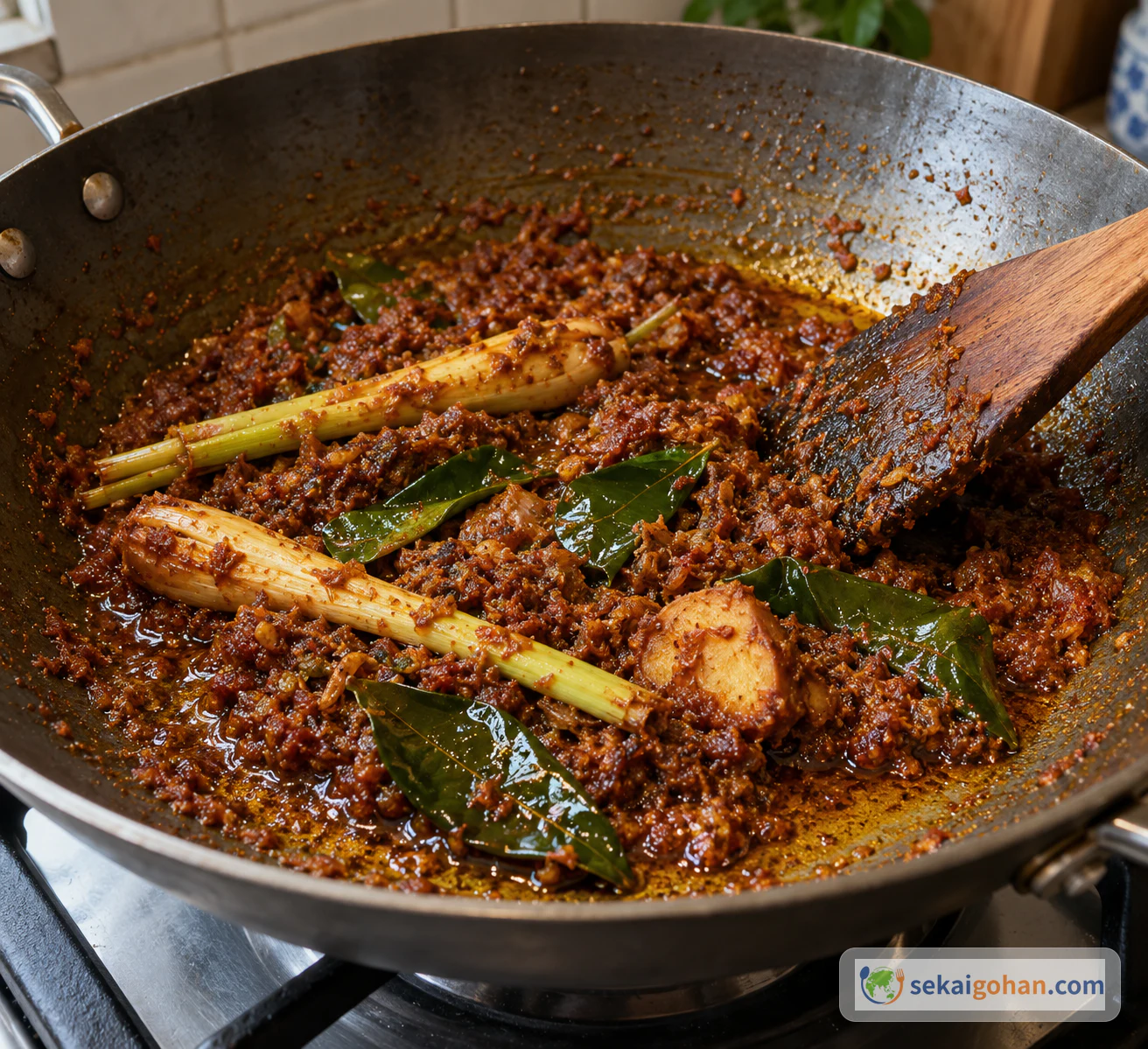
Fry the spice paste until the oil separates at the edge of the pan. Once the coconut milk goes in, keep the heat low and never let the soup boil hard.
A few things are left to your judgment: how much water to use for the first and second boils, the heat for those boils, how much salt to add, and whether to cover the pot during the final simmer and rest. Go by what the pot tells you.
| What you notice | What to check | What to do |
|---|---|---|
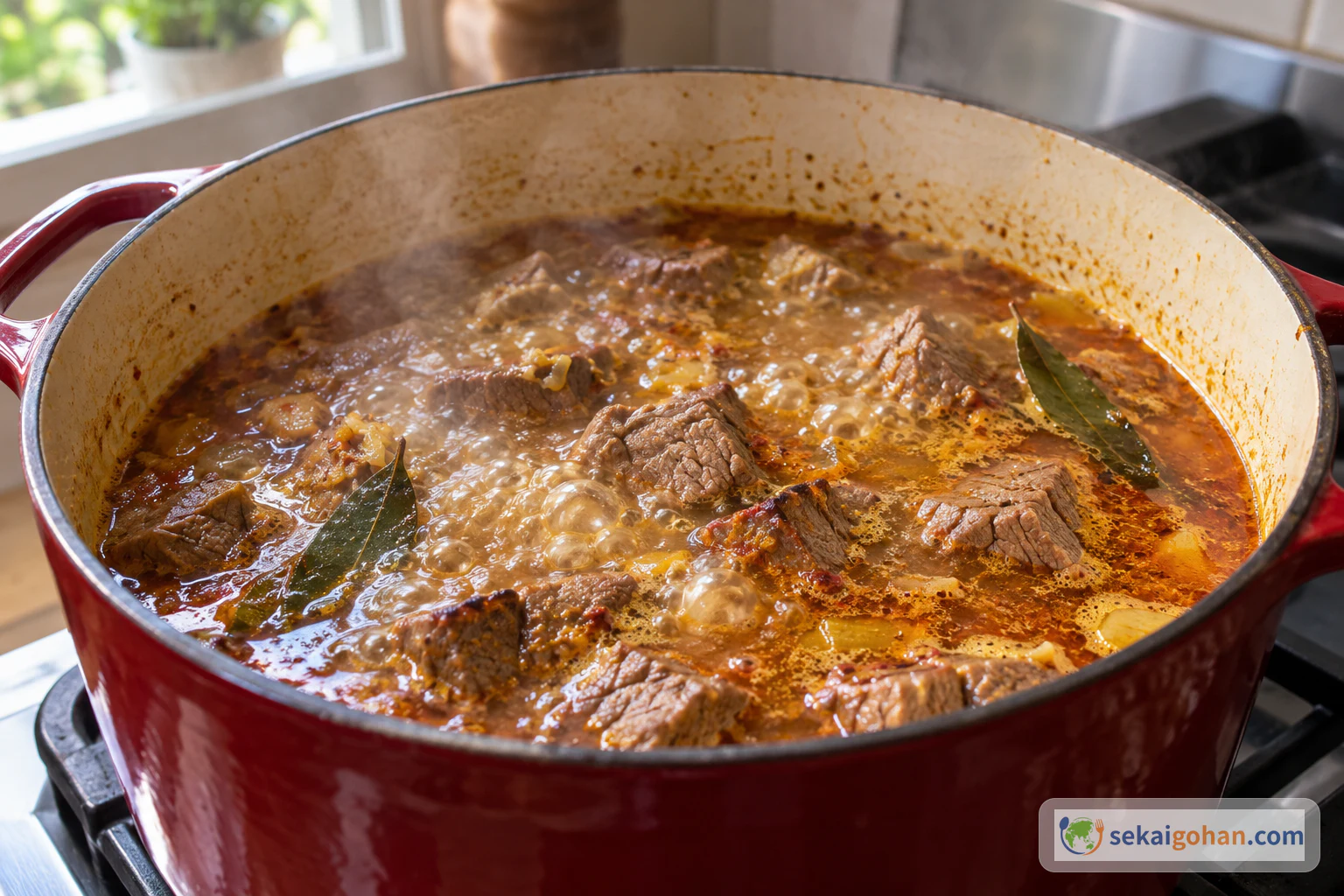
| The beef is still firm at 60 minutes | Tenderness is the cue, not the shortest time | Keep boiling within the 60–90 minute range and test again |
| The paste still smells raw | It needs more frying | Keep stirring over medium-low heat until it darkens, oil separates at the edge and the raw smell has gone |
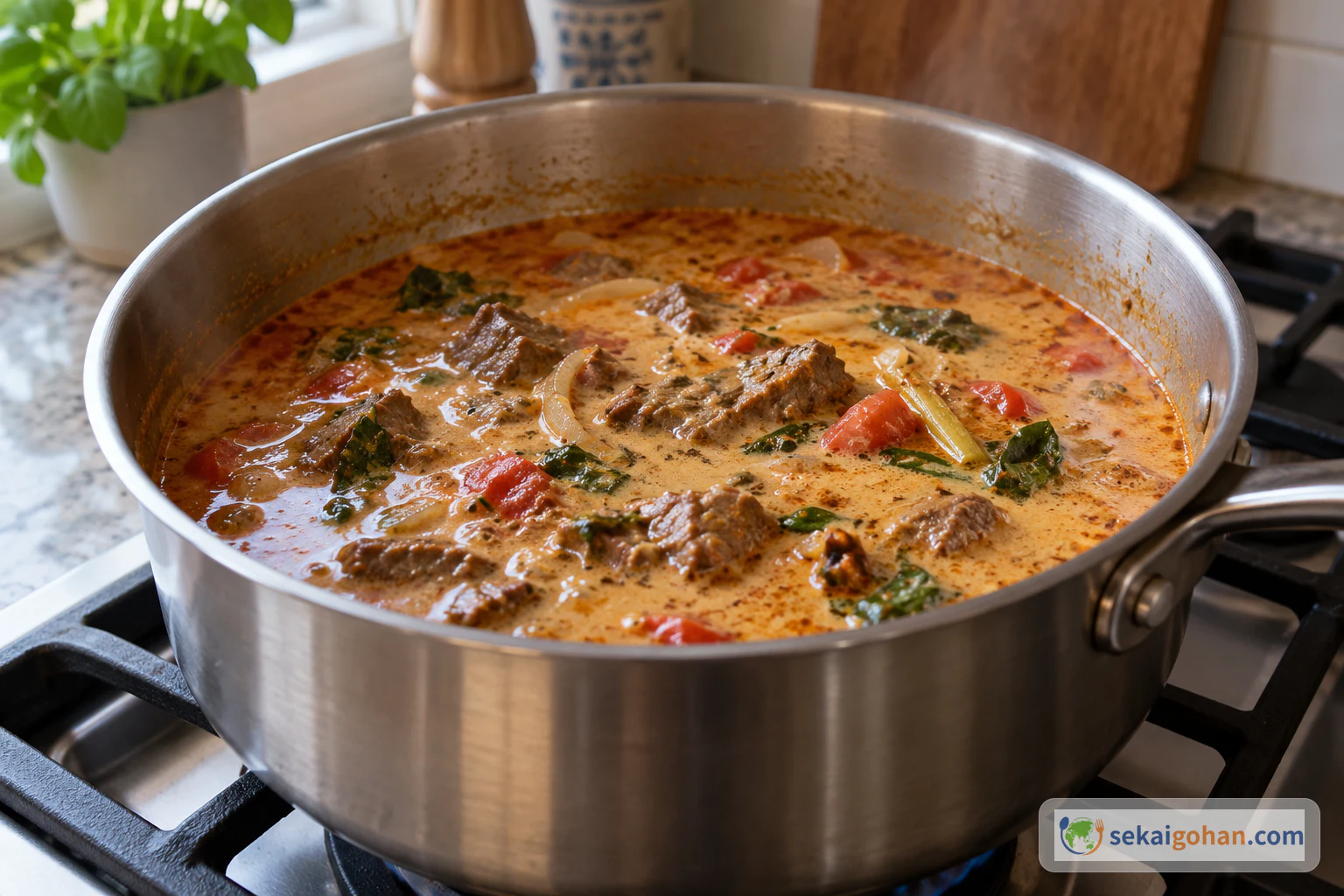
| The soup is starting to boil hard after adding coconut milk | The heat is too high | Return to low heat and keep stirring. Prevention matters most: keep the heat low when adding coconut milk |
| The broth tastes flat or unbalanced | Salt comes first | Add salt a little at a time, then add the 1 tbsp of gula merah only if you still need it |
| The soup is too hot or not hot enough | The 3 chilies in the paste set the heat in the pot | Next time, adjust the chilies in the paste. For now, use more or less of the pounded chili at the table |
Serving, Leftovers and Variations
Serving
Serve white rice or lontong on the side rather than adding it to the pot. Pounded dried chili goes on the table too, so each person can make their bowl as hot as they like.
| Choice | Options | What to keep in mind |
|---|---|---|
| Heat | Change the 3 chilies in the paste; serve pounded dried chili on the side | Each diner can add more at the table |
| Staple | White rice or lontong | Serve it separately |
| Beef cut | Sandung lamur or sengkel | Use one cut for the full 2.25 lb (1 kg) |
Food safety and leftovers
Heat the meat until the center reaches 167°F (75°C) for at least 1 minute. Cooking times alone don't confirm this, so check the temperature. Keep raw meat juices away from other foods.
This soup has no set storage time, so handle leftovers with care:
- Use clean utensils to divide the soup into shallow containers.
- Cool it quickly and don't leave it at room temperature for long.
- Reheat soup until it boils.
Optional offal
You can add 10.5 oz (300 g) of one type of offal: babat (tripe), usus (intestine) or kikil (a gelatinous cut). That's 10.5 oz (300 g) of a single choice, not of each. Cook it separately from the beef with ginger and lemongrass until it is cooked through, then cut it up and set it aside.
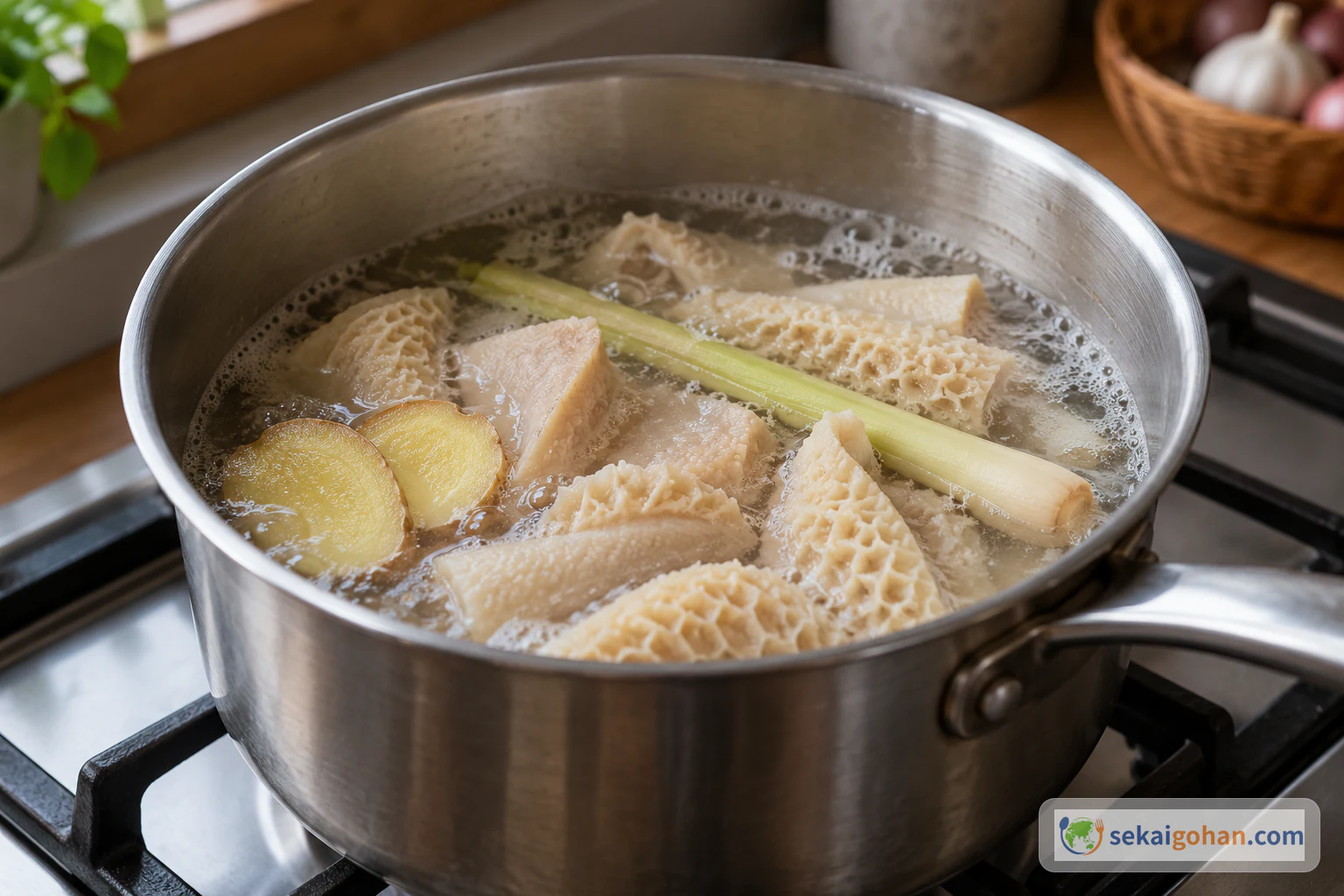
No amounts are given for the ginger, lemongrass or water, and no times, temperatures or cleaning steps either. Offal needs thorough heating and carries contamination risks, and that includes cattle offal other than liver. The 167°F (75°C) guide above applies to meat, not offal.
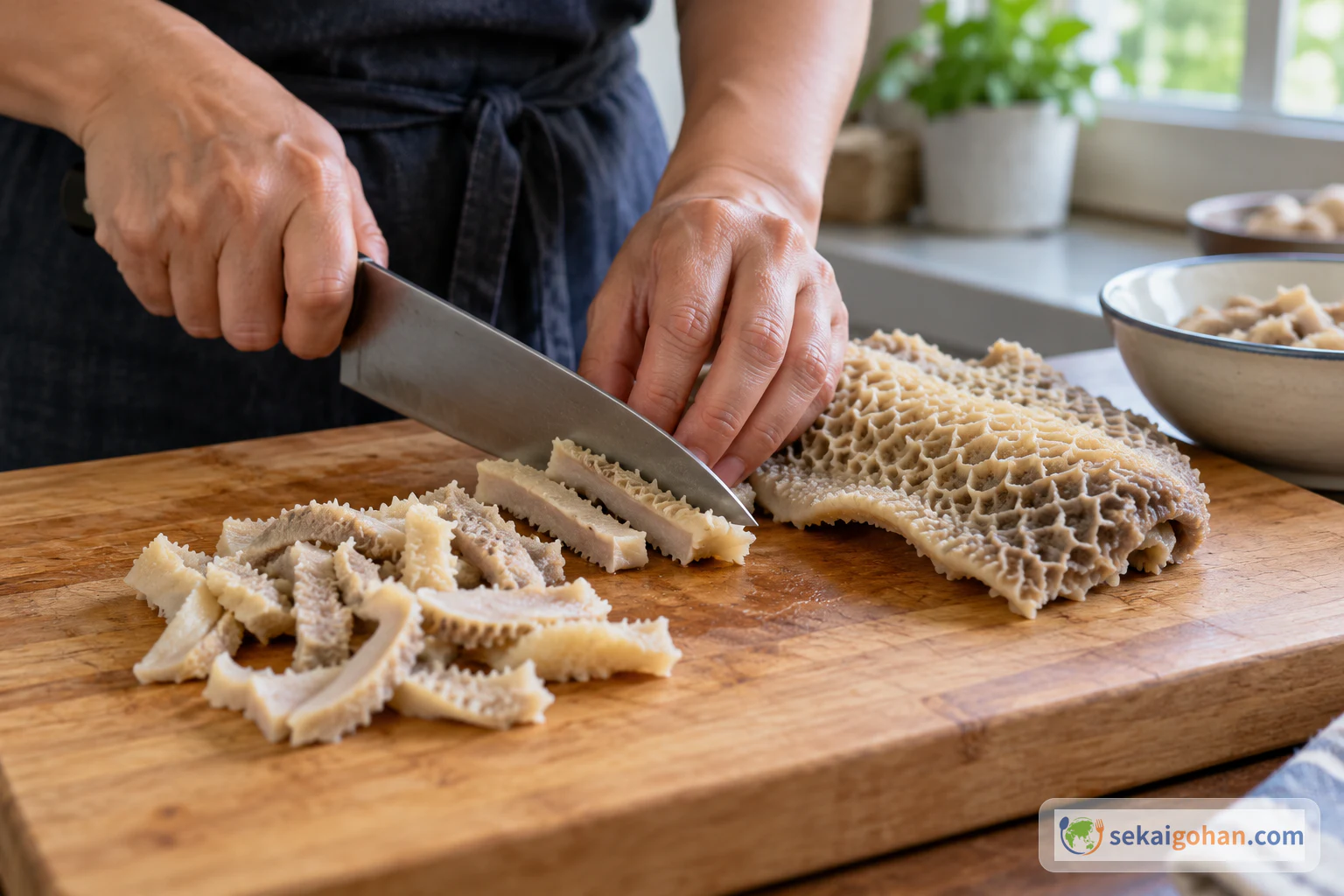
Because those conditions aren't specified, the method above and the hero bowl use beef only.
Frequently Asked Questions
Is discarding the first boiling water a safety step?
No. It's part of the method, not a food safety measure. Follow the food safety guidance as well.
How long does the whole recipe take?
There is no total or prep time. The times in the steps cover individual stages only, and cutting, grinding and preparing the garnishes have no stated times.
Is this the authentic recipe for all of Cirebon?
No single recipe can claim that. This is one home version, and published recipes for this soup vary widely in their ingredients and amounts.