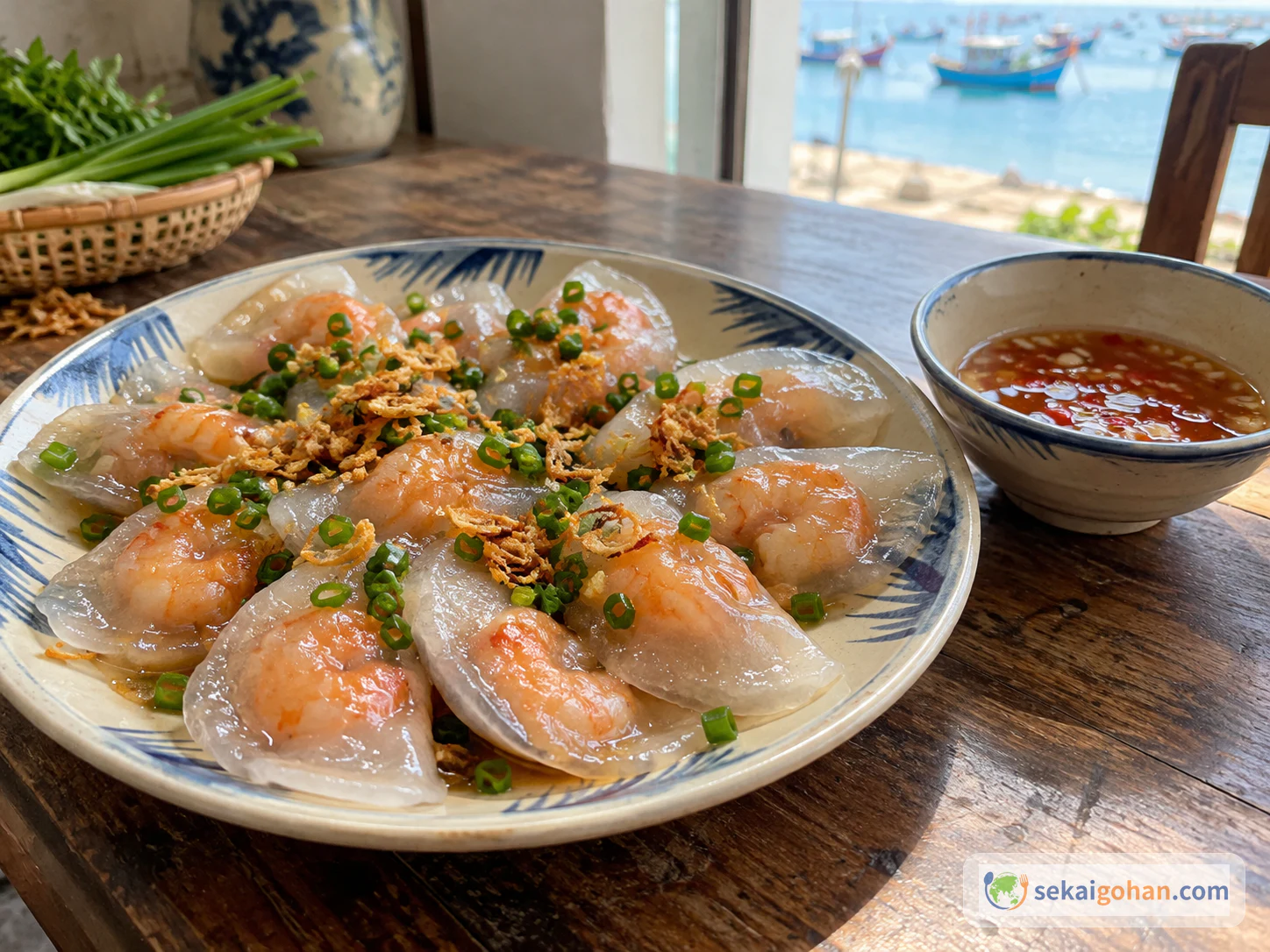
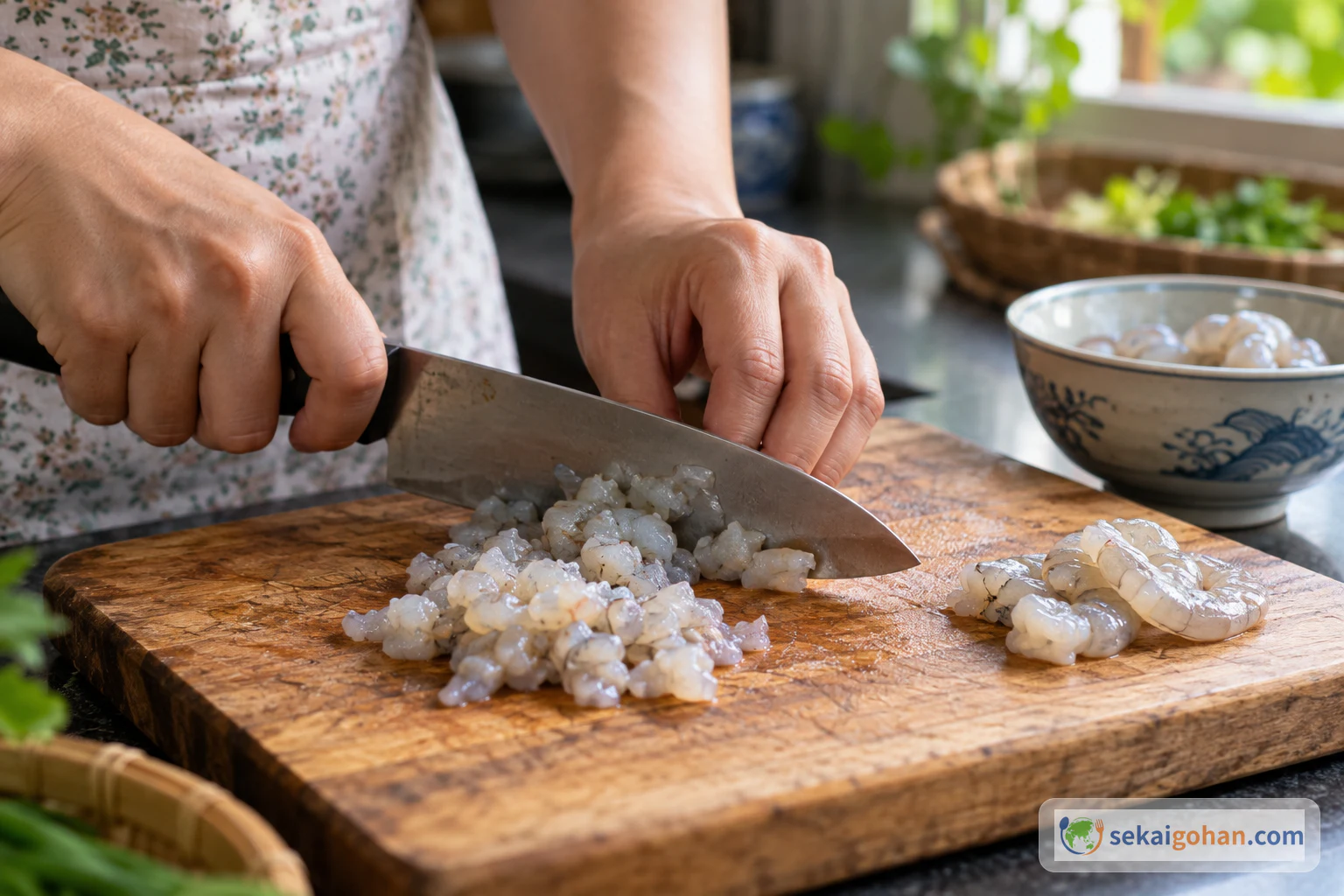
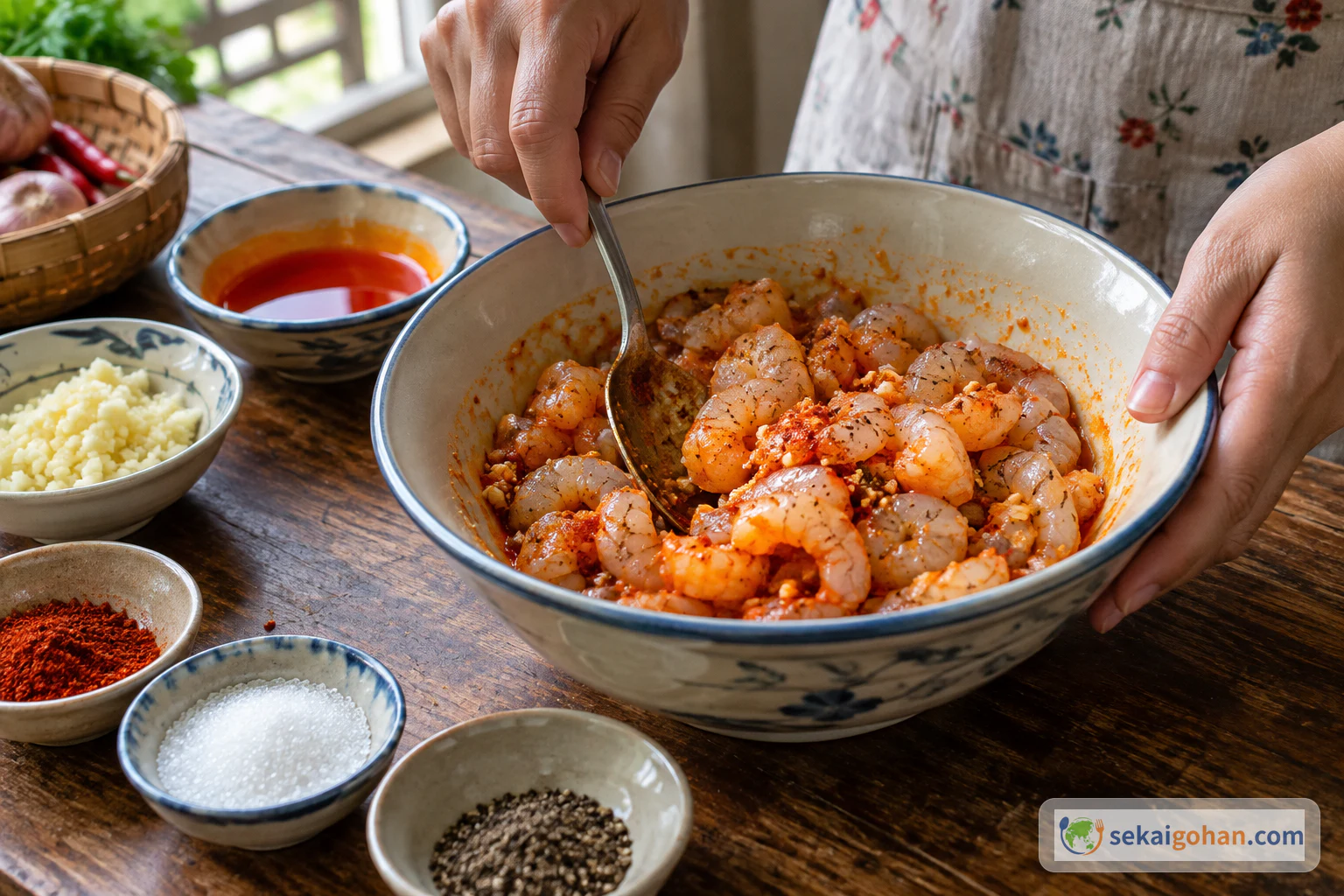
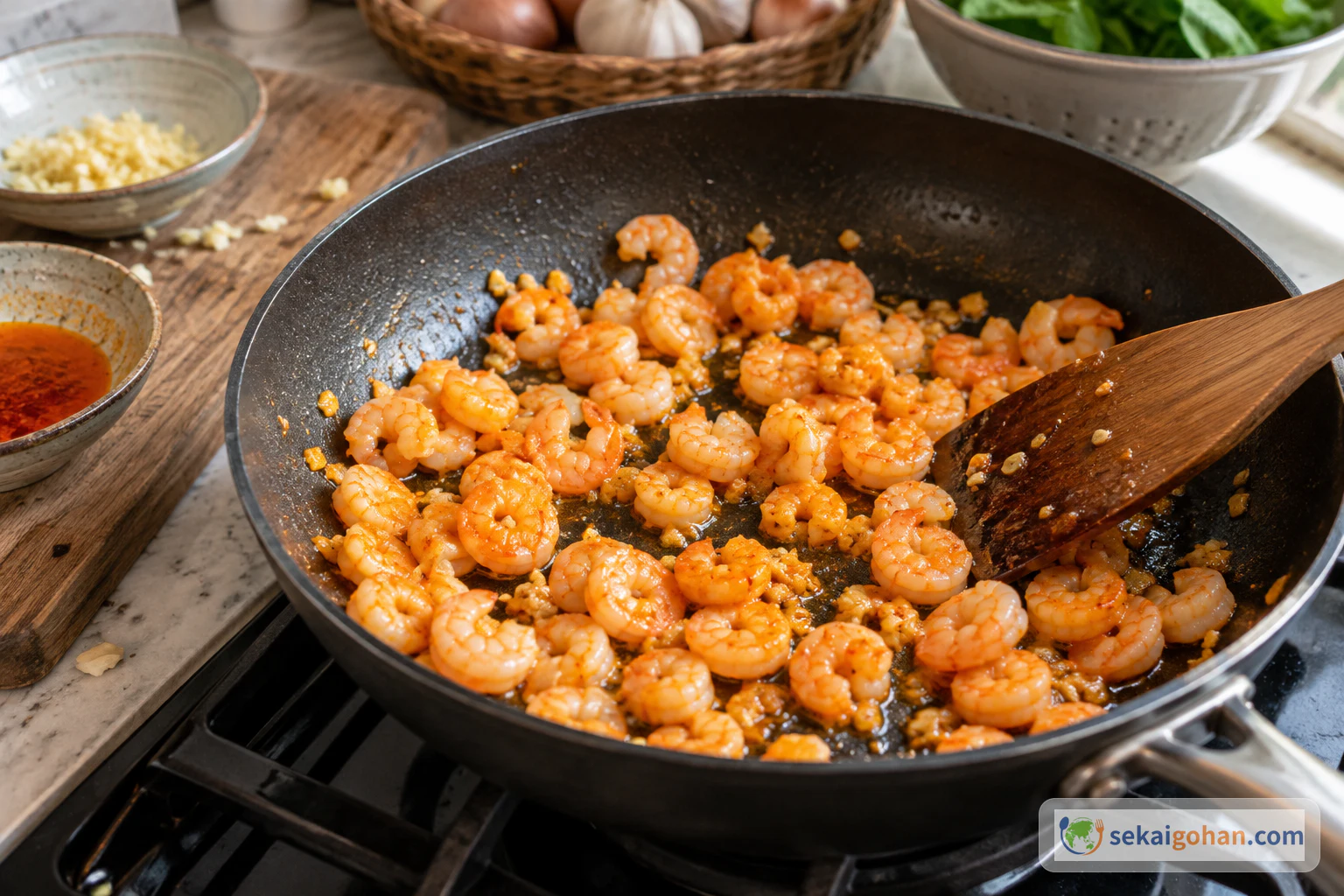
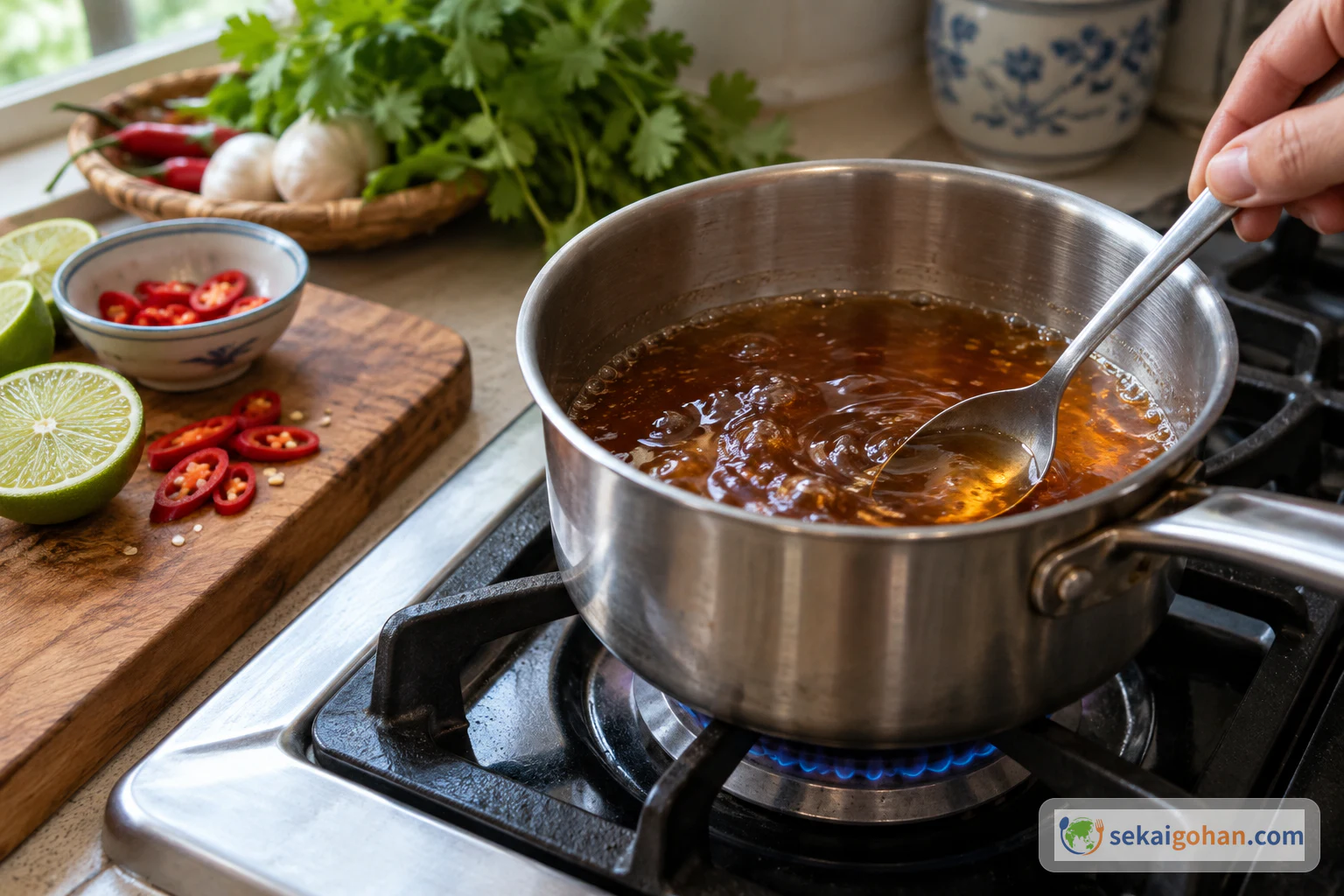
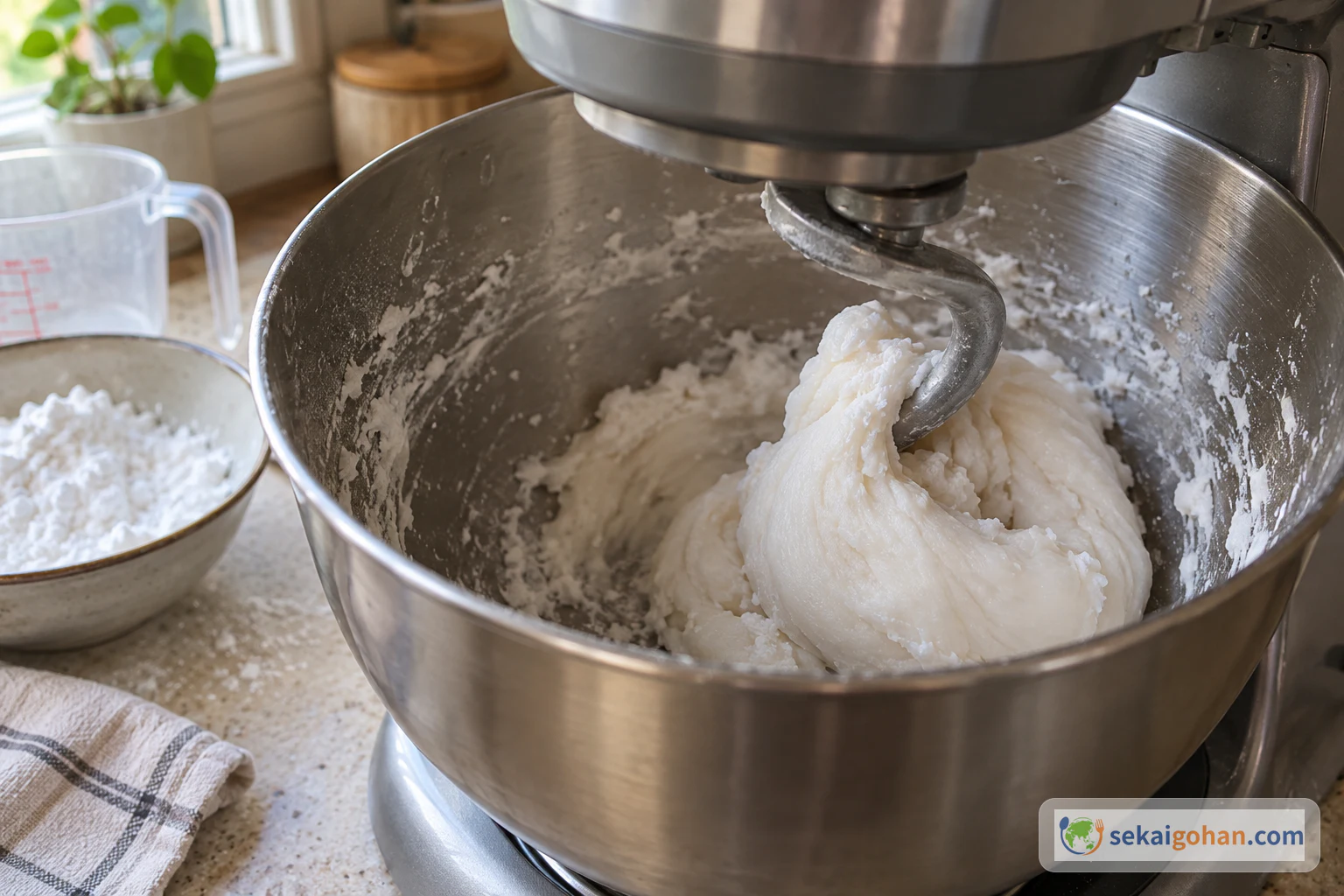
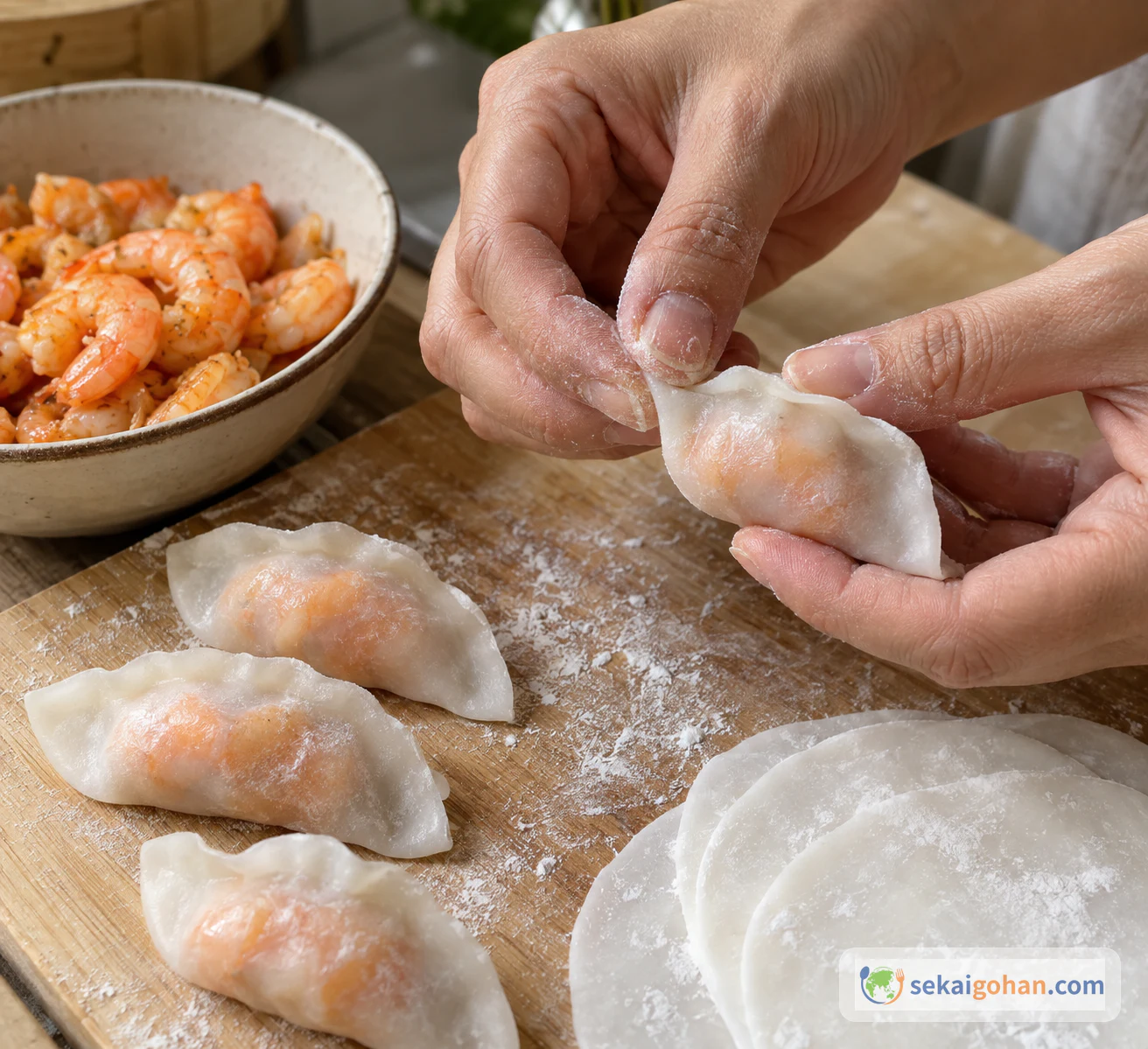
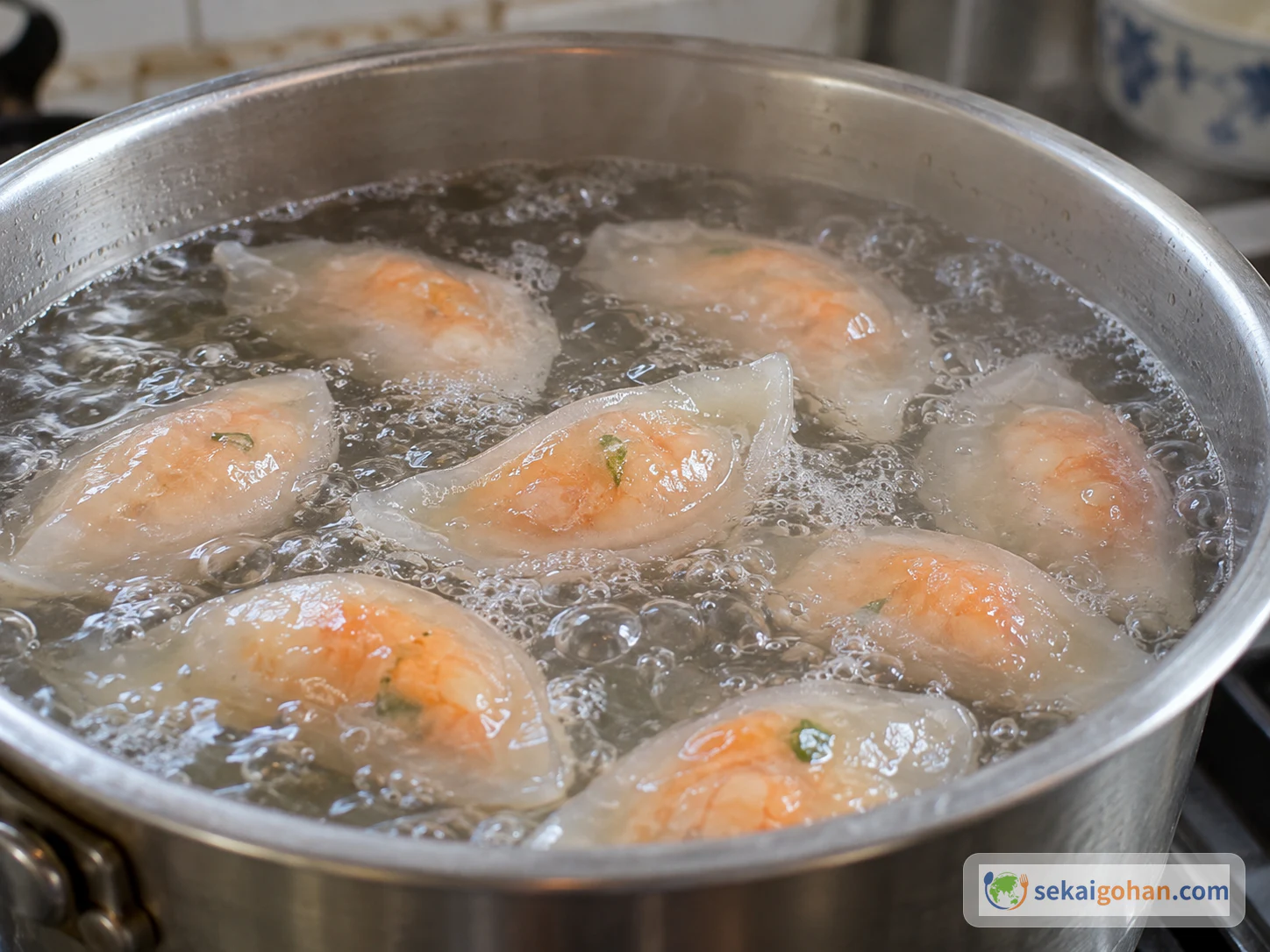
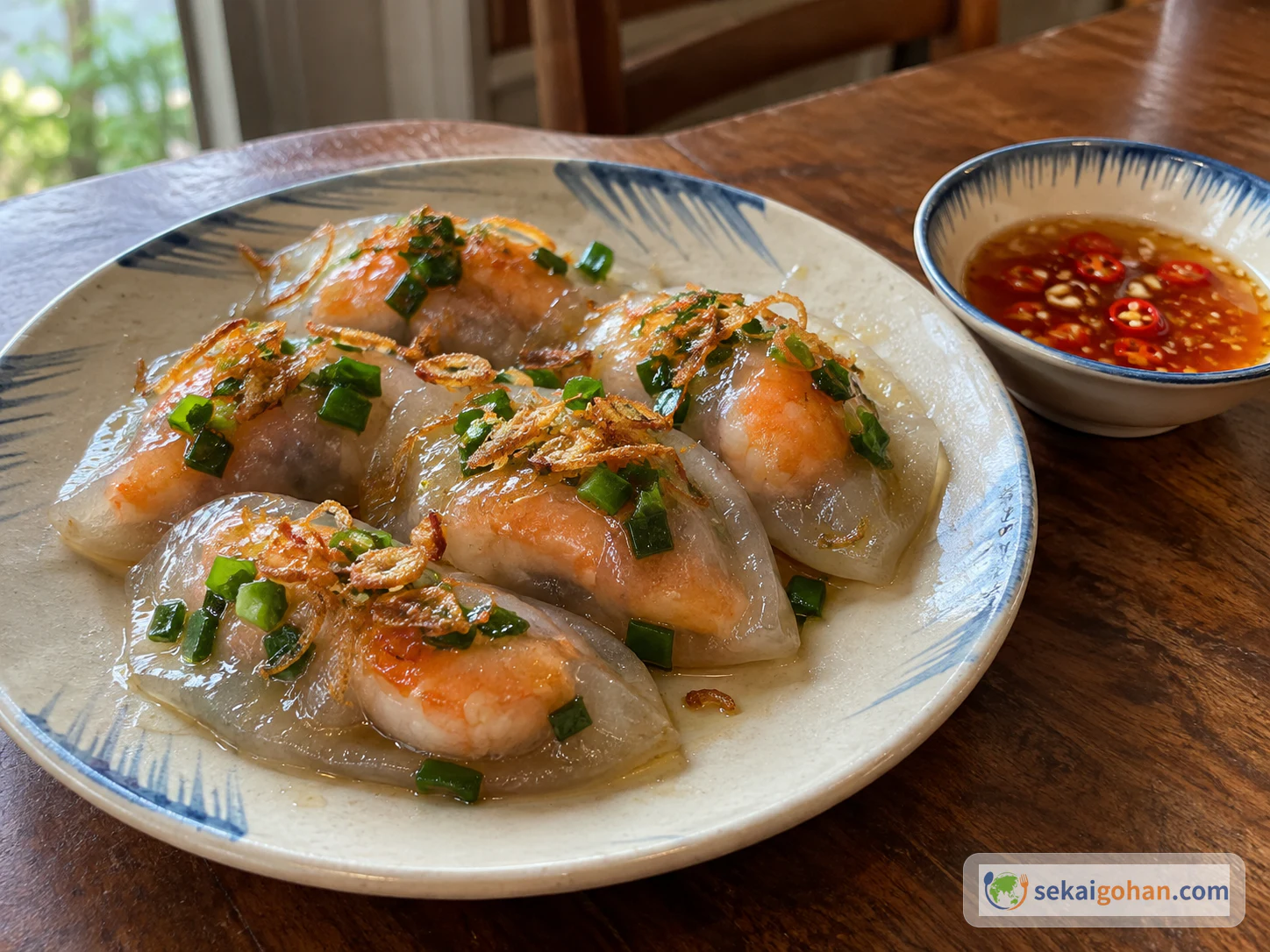
Bánh quai vạc starts as a thick, pale dough of tapioca starch and hot water. It gets rolled thin, cut into rounds and folded around cooked shrimp, and at that point it still looks plain and white. In the boiling water the wrapper slowly turns translucent, until the orange-red filling shows through. That's the plate to aim for: thin, clear half-moons from Phan Thiết, on Vietnam's south-central coast, with a sweet-salty fish sauce dip, scallion oil and fried shallots.
Bánh Quai Vạc in Phan Thiết
On the streets of Phan Thiết, bánh quai vạc is sold to eat on the spot or to take away. Street vendors and roadside stalls serve it with chopped scallion, fried shallot and a thick, sweet-salty fish sauce with sliced chili. Lemon is often offered too, and some people eat the dumplings with bread. A local vendor kneads the scalded tapioca dough while it's still hot, then portions it and rolls it thin.
The names overlap. Some locals say "bánh quai dạc," and in Phan Thiết, and in Bình Thuận more widely, bánh bột lọc and bánh quai vạc are used as two names for the same dumpling. It is a different dish from the fried bánh gối of northern Vietnam, from Hội An's white rose dumpling, also called bánh vạc, and from Huế's bánh bột lọc.
No one knows exactly when the dish appeared in Phan Thiết, and locals have no definite origin story. Fillings vary as well. This recipe uses shrimp only, but shrimp-and-pork dumplings are made in Phan Thiết too. For more of the country's food, see our Vietnamese recipes.
The recipe gives no shrimp weight, yield, number of servings or scallion oil formula.
Ingredients: Tapioca Dough, Shrimp Filling and Fish Sauce Dip
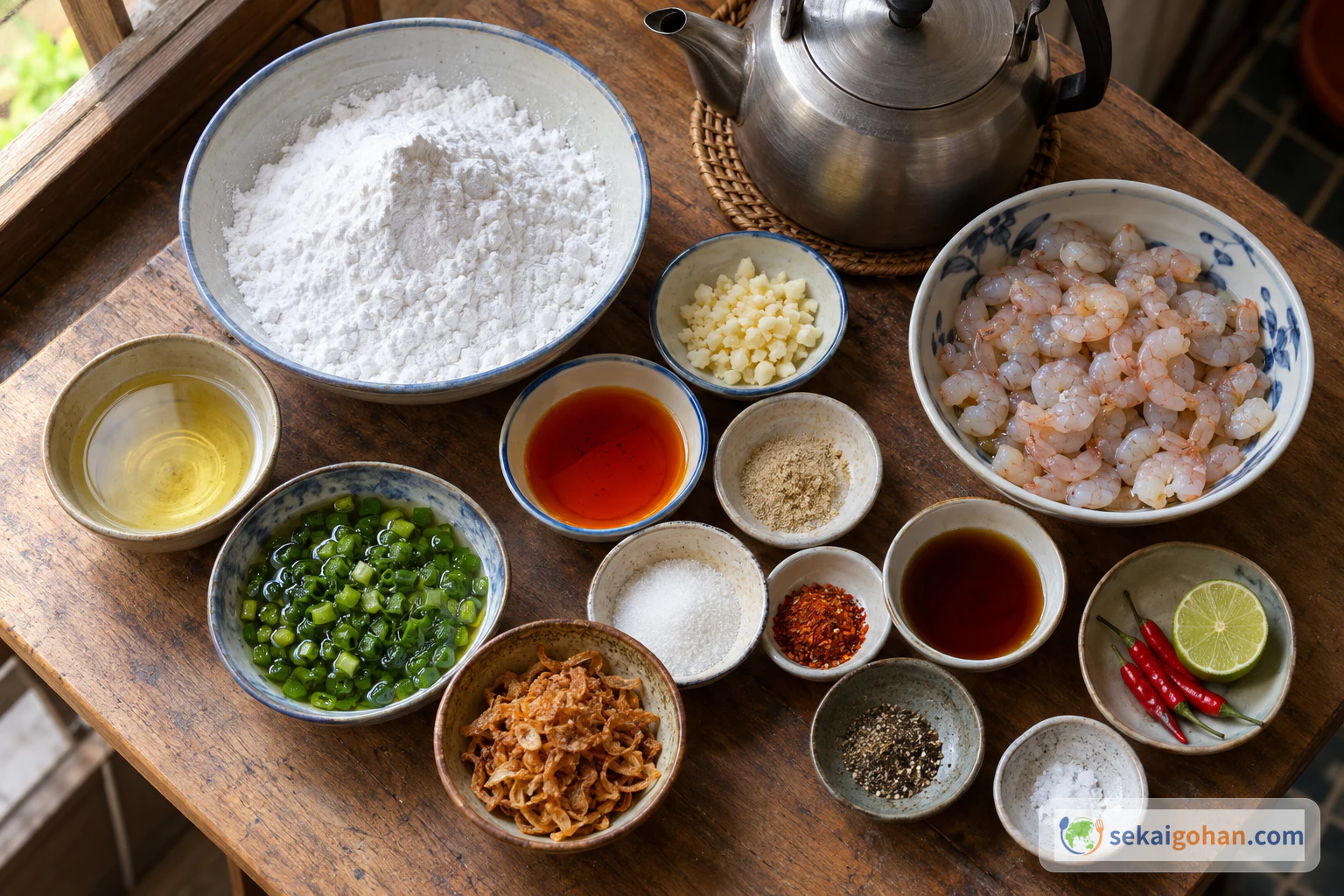
Equipment
- Stand mixer with a dough hook
- Rolling pin
- Round cutter
- Knife and cutting board
- Mixing bowl
- Skillet
- Small saucepan
- Large pot
- Slotted spoon
- Bowl for cold water
Choosing Ingredients and Substitutes for Bánh Quai Vạc
Tapioca starch is essential. If you replace it entirely with potato starch, the wrapper won't be as clear or springy.
Annatto oil gives the filling its red-orange color and aroma. You can leave it out if you can't find it, but you'll lose some of both, and paprika won't stand in for it. Korean chili powder adds color and some heat, and another chili powder will change the heat.
Seasoning powder varies in salt and savoriness from brand to brand. Check the label, and taste the filling before you start wrapping.
Fish sauce from Phan Thiết is a good choice if you can get it. Thai nam pla works, though the aroma will be different, and the same goes for using lemon in place of lime. The dipping sauce makes a large batch. To make less, cut the sugar, fish sauce, water and lime juice by the same factor so the proportions stay the same.
This dish contains crustaceans (shrimp) and fish (fish sauce). The basic ingredients don't include wheat, but check the allergen and shared-facility labeling on seasoning powder and other processed products. Hot water, steam and freshly mixed dough can all burn, so keep your hands away from the moving dough hook and the hot dough.
Fixing Cracks, Tears and Cloudy Wrappers
| Problem | What to check | What to do |
|---|---|---|
| The dough is stiff or cracks | Whether the hot water reached all of the starch | Before changing the water, make sure the dough has been mixed evenly through both speeds |
| The dough dries out while you work | How long the dough has been left uncovered | Keep unused dough covered with a damp cloth or plastic wrap |
| The wrappers tear | Whether the dough is rolled too thin or the dumpling is overfilled | Roll a little thicker, use less filling, and keep the shrimp away from the edge |
| The edges open | Whether the rim was wet and pinched firmly | Lightly wet the edge again and press it closed before boiling |
| The shrimp is tough | How long it was sautéed | Next time, stop as soon as the shrimp is opaque and cooked through |
| The wrappers look white and floury | Time in the pot and how crowded it is | Keep boiling over medium heat until the wrappers are translucent and the dumplings float, and don't crowd the pot |
| The dumplings stick together | Whether they were cooled and drained | Cool them in cold water and drain them well |
Serving and Variations
Serve the sliced chili on the side for the dip, or leave it out, so everyone can choose their own heat. In Bình Thuận the dumplings are also filled with mung bean or coconut. Shrimp and pork belly is its own version, so don't just add pork to the recipe above.
If you'd like to try another clear tapioca wrapper, Huế's bánh bột lọc has its own shrimp and pork filling and its own regional setting. Think of it as a neighbor of this dish, not a variation.
Frequently Asked Questions
Is bánh quai vạc the same as Huế's bánh bột lọc?
Both have tapioca wrappers and both are boiled, and in Phan Thiết the two names are sometimes used for the same thing. Huế's version has its own filling, and neither one is more authentic than the other.
Do I need a stand mixer?
The mixing times are written for a stand mixer, but local vendors also knead the hot dough by hand. If you work by hand, start with a tool, and only touch the dough once it's safe to do so.
How do I know when the dumplings are done?
Look for translucent wrappers and dumplings that float. The shrimp is fully cooked before wrapping, so these signs only tell you about the wrapper. Never wrap raw shrimp and rely on floating to show it's cooked.