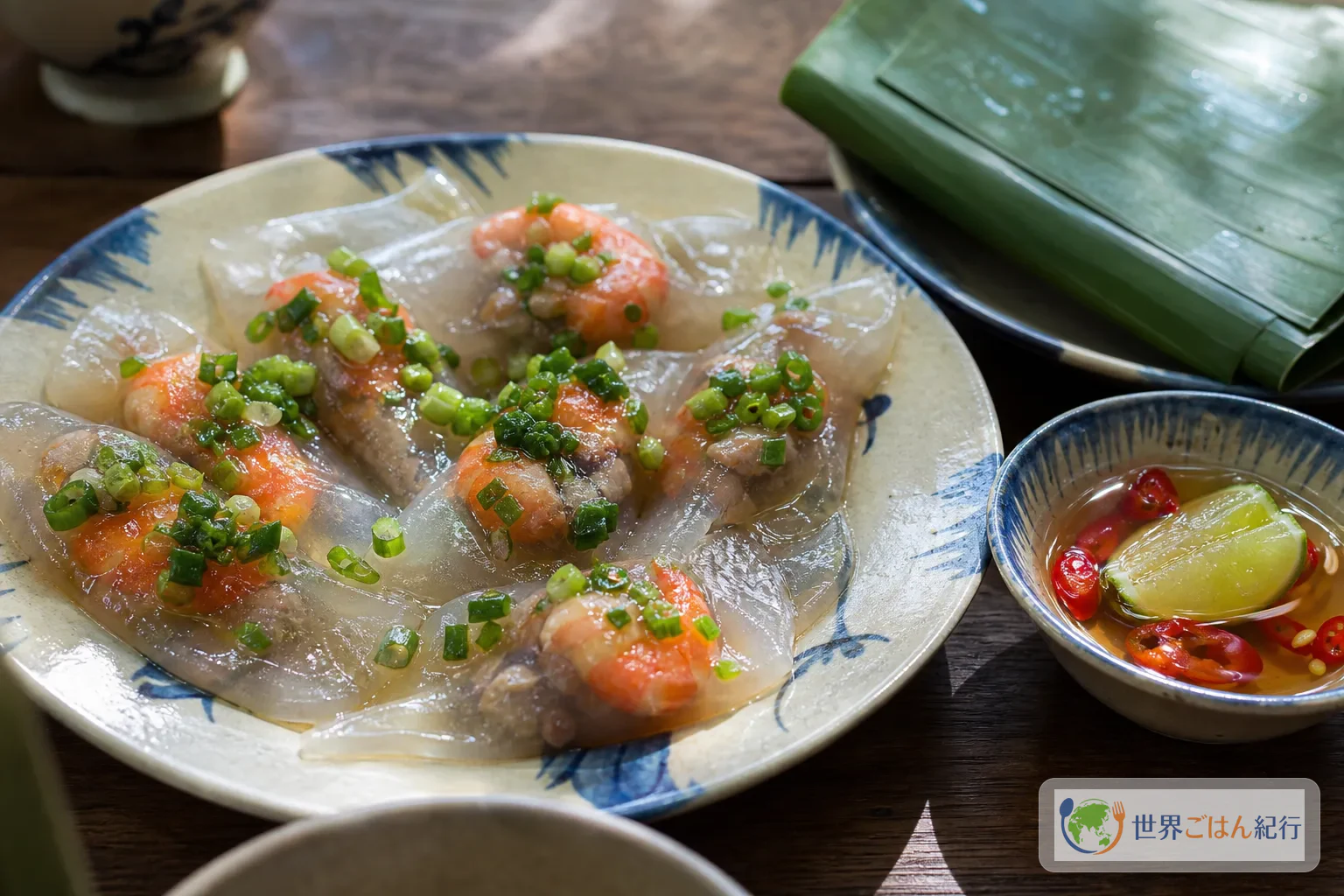
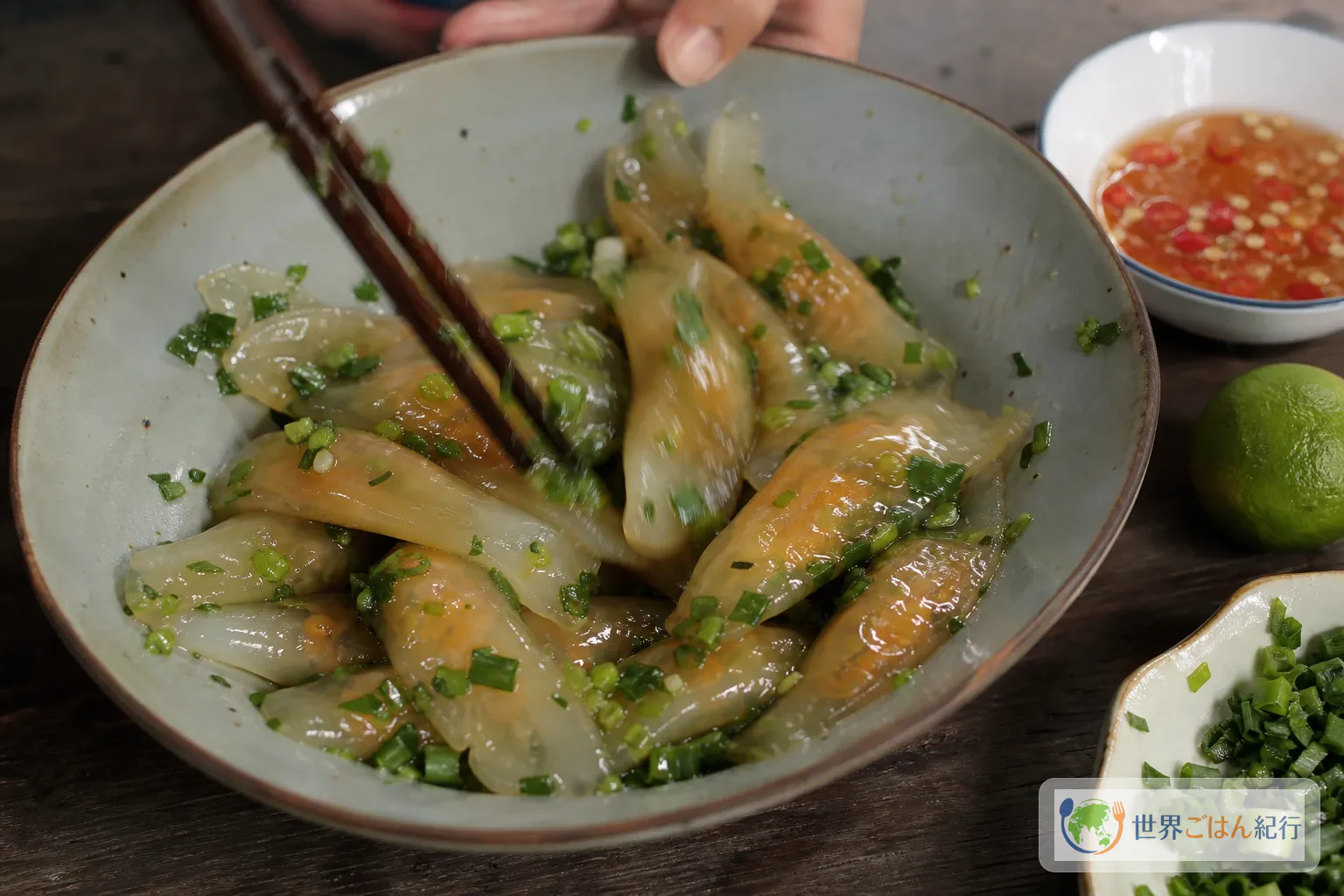
Imagine being handed a small plate at Dong Ba Market in Hue. Beyond the steam, leaf-wrapped pieces sit beside glossy, clear ones. You break one open, the wrapper gives a quick snap against your teeth, and then the saltiness of fish sauce and the aroma of scallion oil come through. Bánh bột lọc is Hue's bite-sized dumpling: shrimp and pork wrapped in tapioca dough, with the red filling showing through a wrapper you can see right into.
Bánh Bột Lọc and the Food of Hue
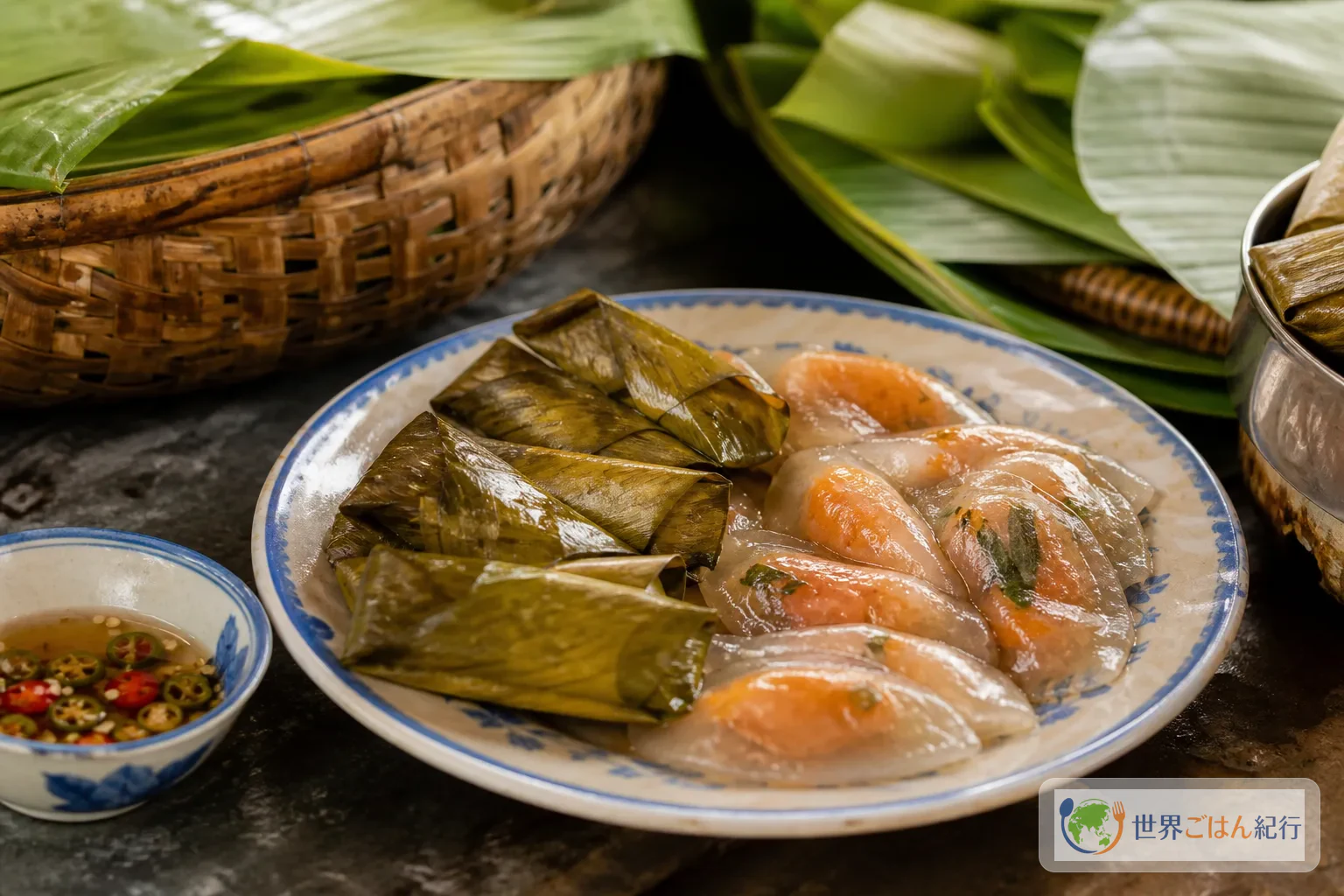
Hue was once the seat of the imperial court, and its cooking still carries the memory of that time. Shrimp bánh bột lọc is a major part of Hue cuisine and stands for the region's food culture. You can read more about Hue's food culture.
The market is where the dish feels most real. Dong Ba Market was completed in 1899, and people in Hue still shop there. Bánh bột lọc, cassava starch wrapped around shrimp and pork, belongs to its stalls and small plates (Dong Ba Market and Hue's food). With the leaf-wrapped kind, you open the banana leaf to see the shrimp and pork, then tear it away and eat the clear wrapper and filling in one bite. See how it is eaten in Hue.
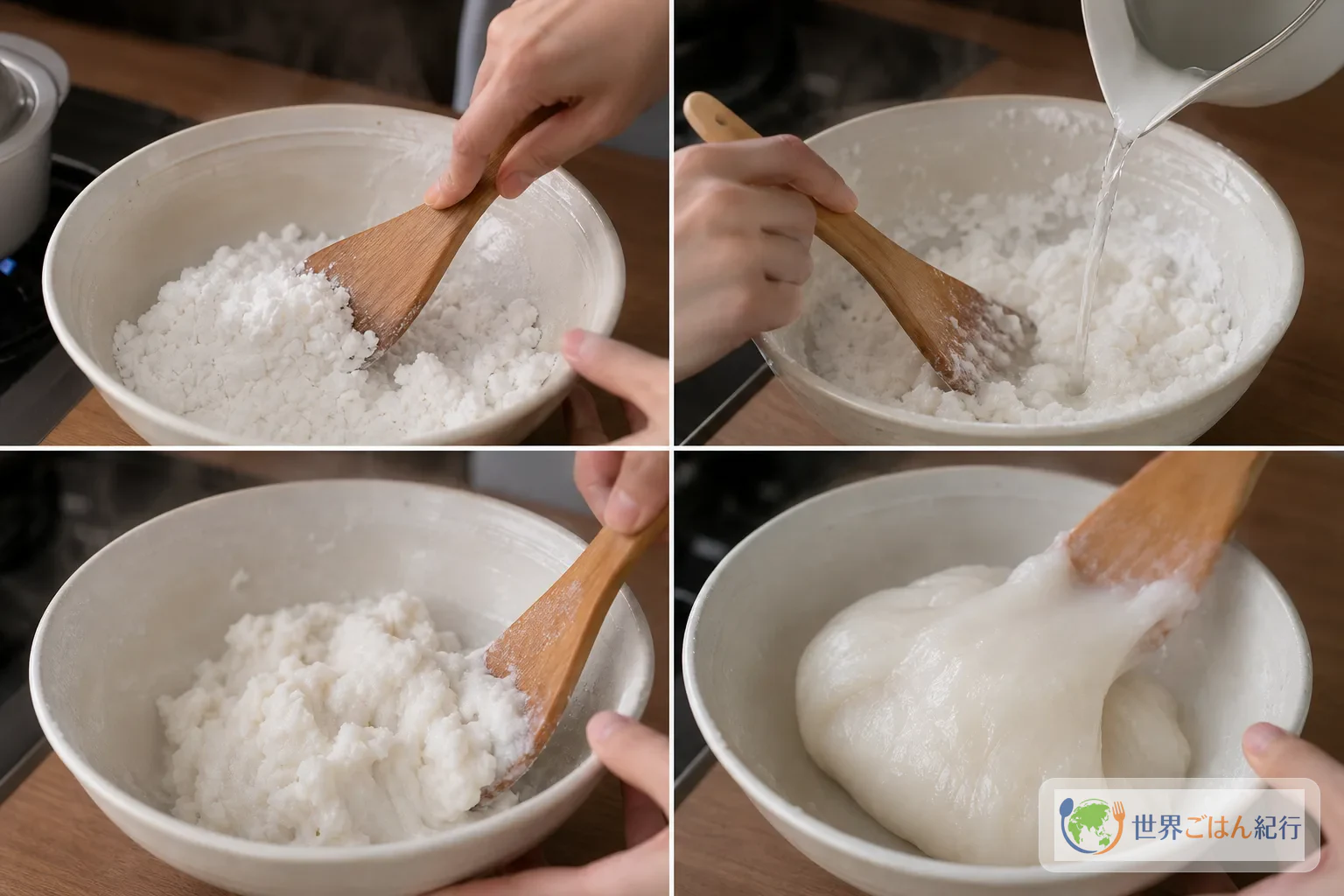
That clear wrapper comes from the starch. Tapioca starch is pure white in the bag, but once it takes in boiling water it turns translucent in your hands. Bound with boiling water and then cooked, it becomes clear and springy, with a chew unlike any rice-flour dumpling. The dumplings come in two forms, one steamed in leaves and one boiled without them, and you can read about both methods.
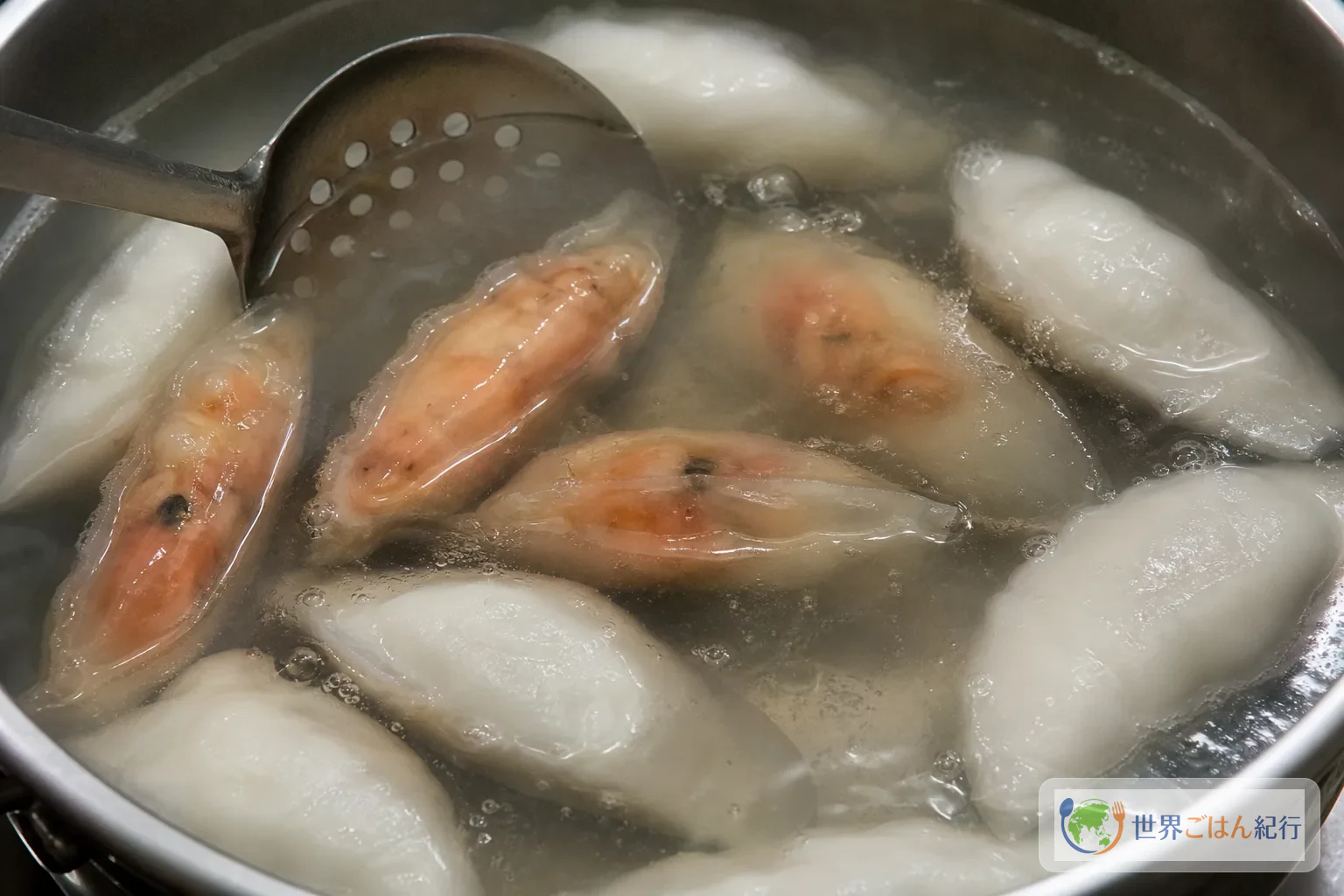
This recipe makes the boiled form, "bánh bột lọc trần." Trần means the dumplings aren't wrapped in leaves, so you get to watch them turn clear in the pot. The shopping is mostly tapioca starch and fish sauce, and a knife is the only tool you need.
The leaf-wrapped "bánh bột lọc lá" is steamed. In "trần," the shaped dumplings are boiled without leaves. If the wrapper is still cloudy white, don't serve yet.
Work Backward from the Clarity of the Wrapper to Choose Ingredients
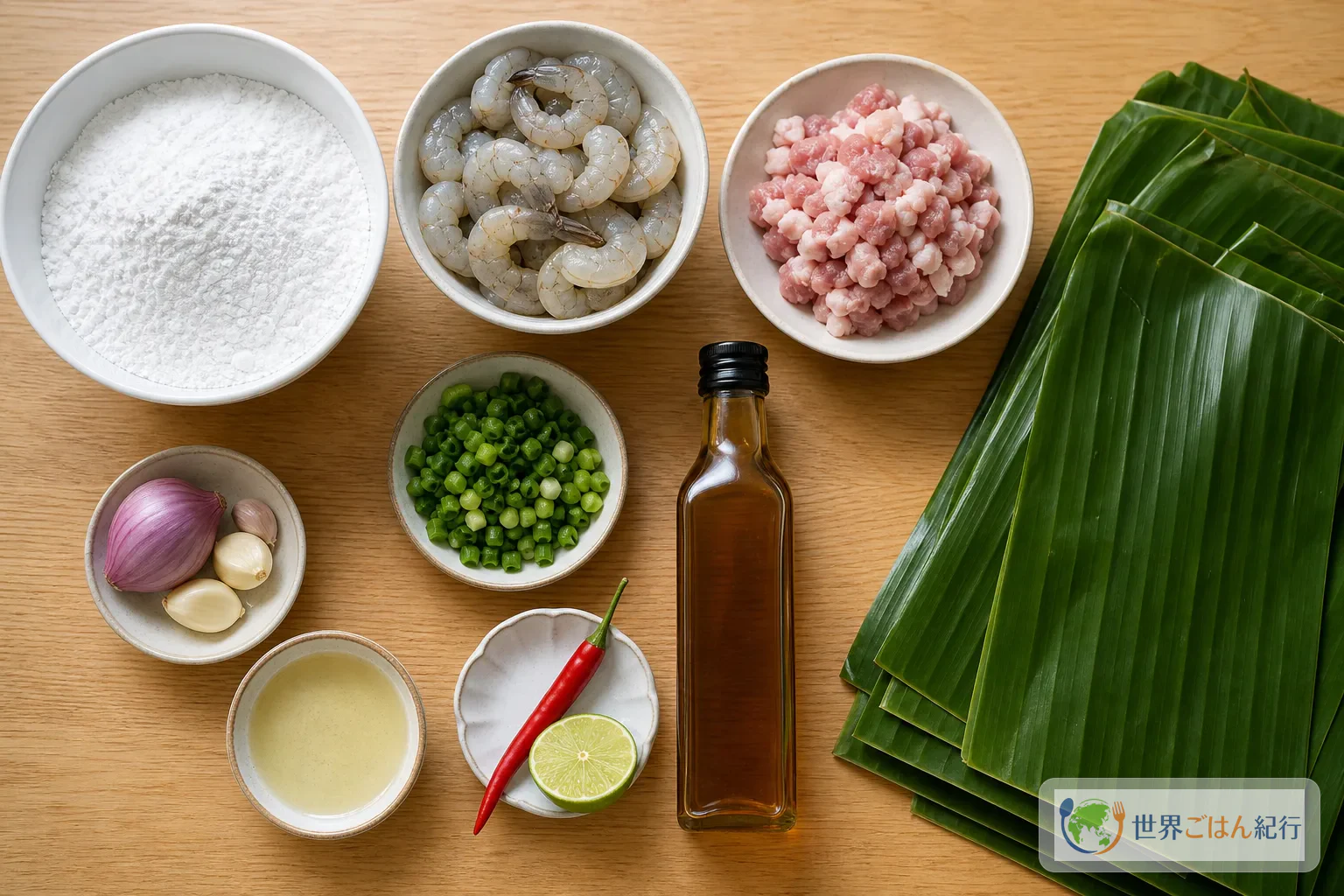
This serves 4 and makes about 24 dumplings. A larger dumpling keeps its filling hot longer and makes the wrapper less clear, so keep them small and even at first.
This uses shrimp, pork, and fish sauce. If you have a crustacean, pork, or seafood allergy, the ingredients need to change. Check the allergen information on the package, including whether the tapioca starch was made on shared equipment with other flours.
Choosing Ingredients for Bánh Bột Lọc
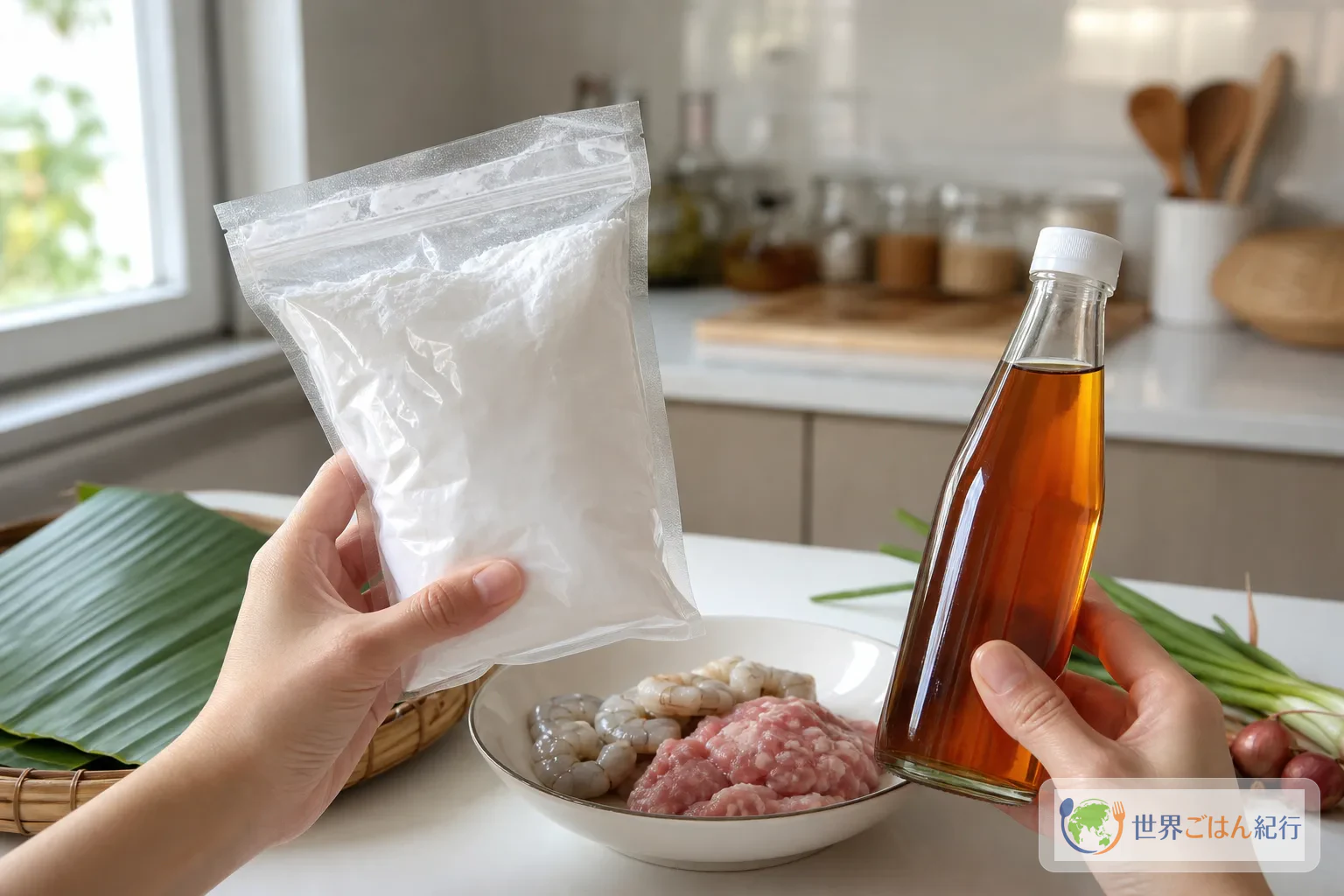
At home, the hard part to find is the starch, not the shrimp. Shrimp and pork are easy to buy nearby, but if you lean too heavily on potato starch, the wrapper turns chewy and loses its translucence.
| What is used locally | Options at home | What changes |
|---|---|---|
| Tapioca starch | Use tapioca starch as it is | Keeps the translucence and springiness |
| Vietnamese fish sauce, nuoc mam | Nam pla | A slightly stronger aroma; dilute the saltiness to adjust |
| Shallots | Onion and garlic | Gives sweetness but a milder aroma |
| Lime | Rice vinegar | Gives acidity but a weaker citrus aroma |
| Banana leaves | Not used | Not needed for the boiled trần type |
Tapioca starch is the one thing worth buying specially, because it makes the wrapper clear. A little potato starch mixed in is fine, but potato starch alone changes the springiness and the look once the dumplings cool. Pick a bag with a clearly labeled product name and size, check the ingredient list for "tapioca starch 250g," and if you won't make this often, think about whether you can use up 9 oz (250 g).
Vietnamese nuoc mam gets you closest to the local aroma. Nam pla isn't the same seasoning, but it gives the dip and filling the saltiness they need, and it's a good buy if you cook Thai dishes too. If you already have fish sauce at home, use that.
Method: Cool the Filling and Make the Wrapper Clear
Boiling looks easy, but most failures start earlier: wrapping hot filling, rolling the wrapper too thick, and boiling the pot too hard. Avoid these, and if something goes wrong, watch the state of the wrapper.
Bánh Bột Lọc Troubleshooting
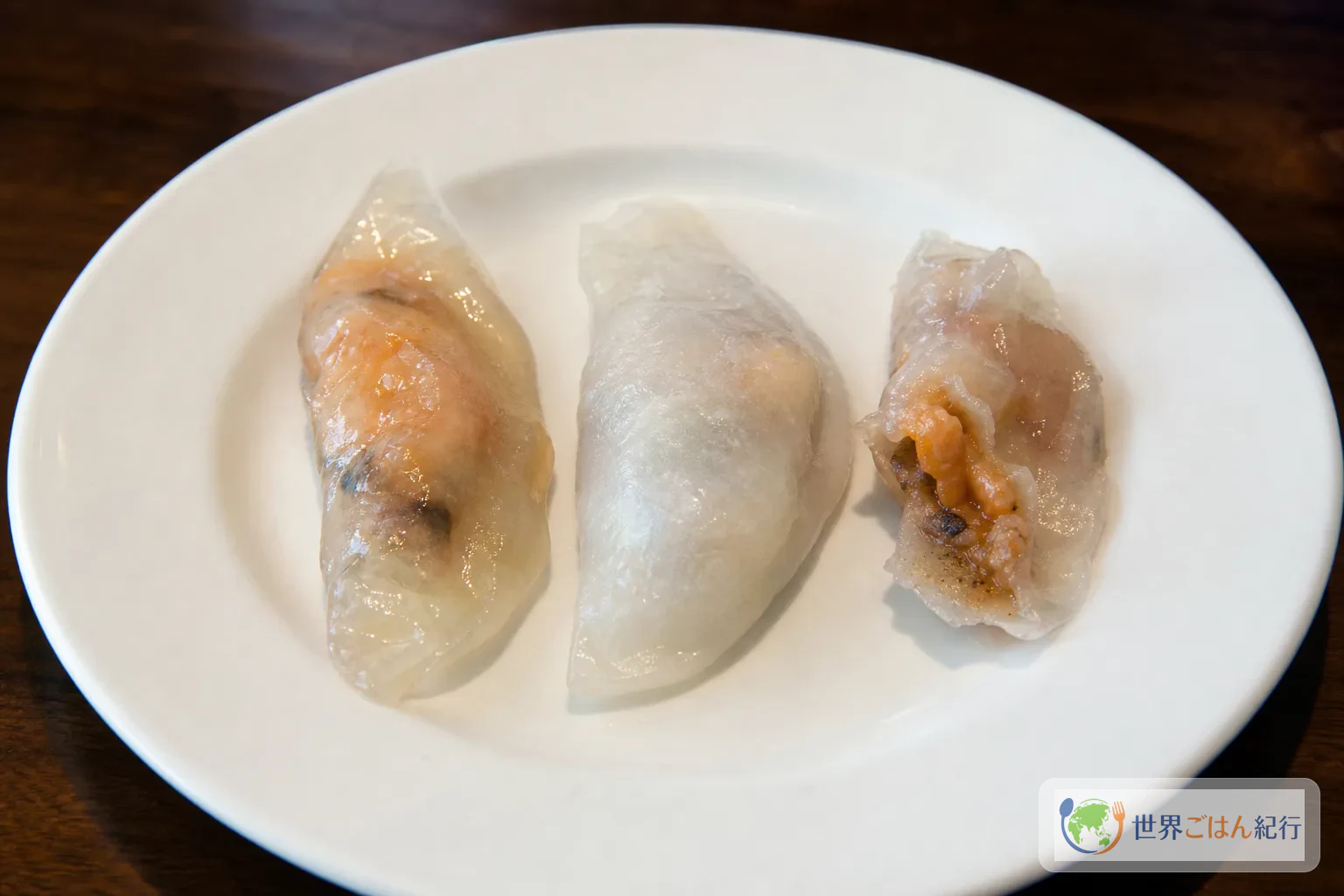
The wrapper shows you when bánh bột lọc is cooked. If it stays white, it needs more time or more heat. If it tears, the wrapper and filling are under strain. Fixing the wrapper gets you there faster than adjusting the flavor.
| Condition | What is happening | What you can do now |
|---|---|---|
| Still white after 10 minutes | Wrapper is thick, or the water temperature dropped | Bring the pot back to a boil and add 2 minutes at a time. Make the wrapper thinner next time |
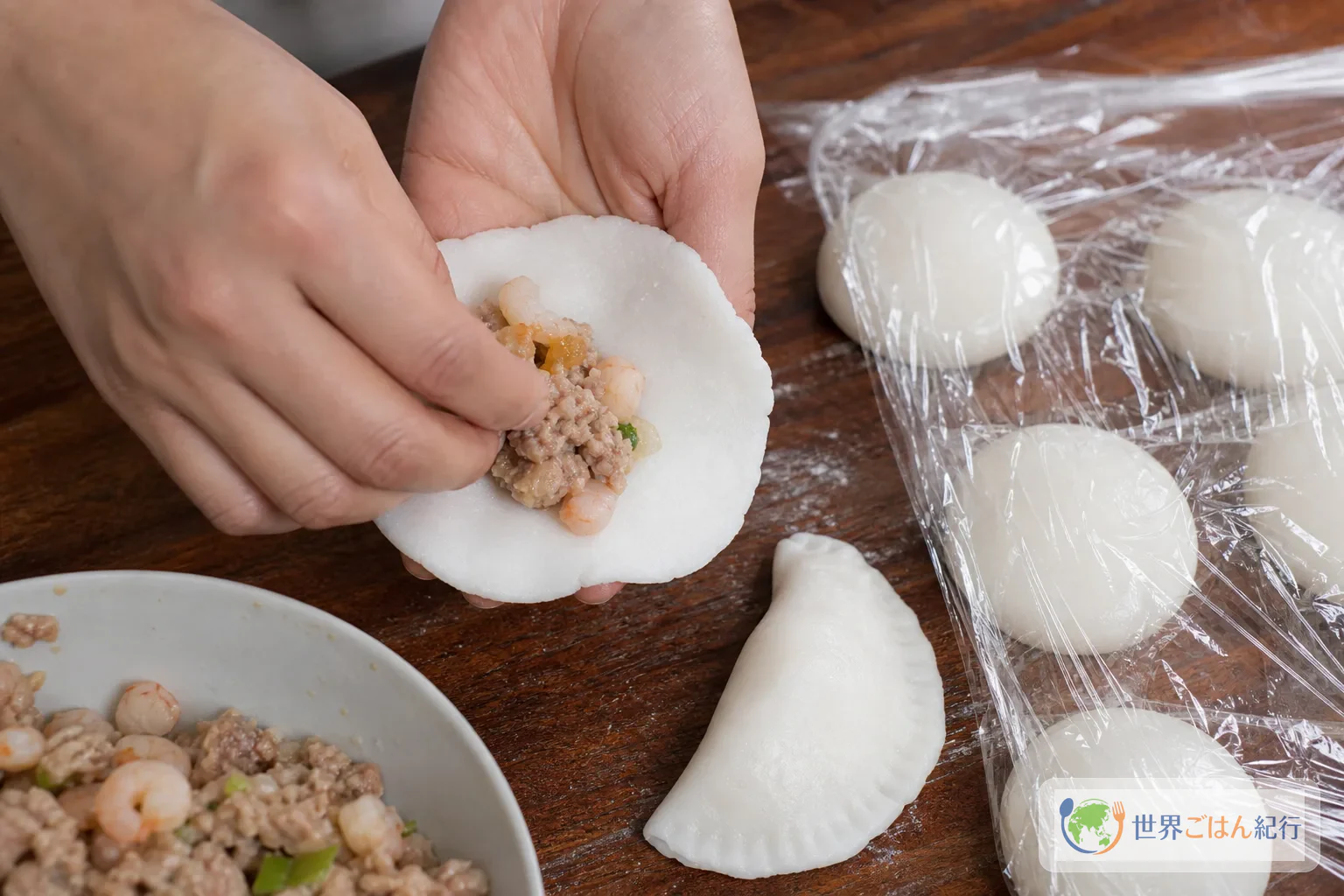
| Tears while wrapping | The dough dried out, or the filling is hot | Take out only what you'll use, and do not wrap hot filling |
| Opens during boiling | Oil got on the edge, or air was left in | Next time dry the edge before closing, and press the seam twice with your fingers |
| Wrapper is tough | Too little boiling water, or lifted out before done | Add boiling water 1 tsp at a time to the next dough, and wait until the cloudiness disappears |
| Fish sauce is too strong | Too much dip poured on from the start | Add 1 tsp water and a little lime, and go back to serving it on the side |
Most problems go away if you keep the dough, the filling, and the water separate, each handled in its own step. That's what keeps the wrapper clear. For the full steps, see Bánh Bột Lọc cooking steps.
Serving, Variations, and Storage
Leaf-Wrapped or Trần
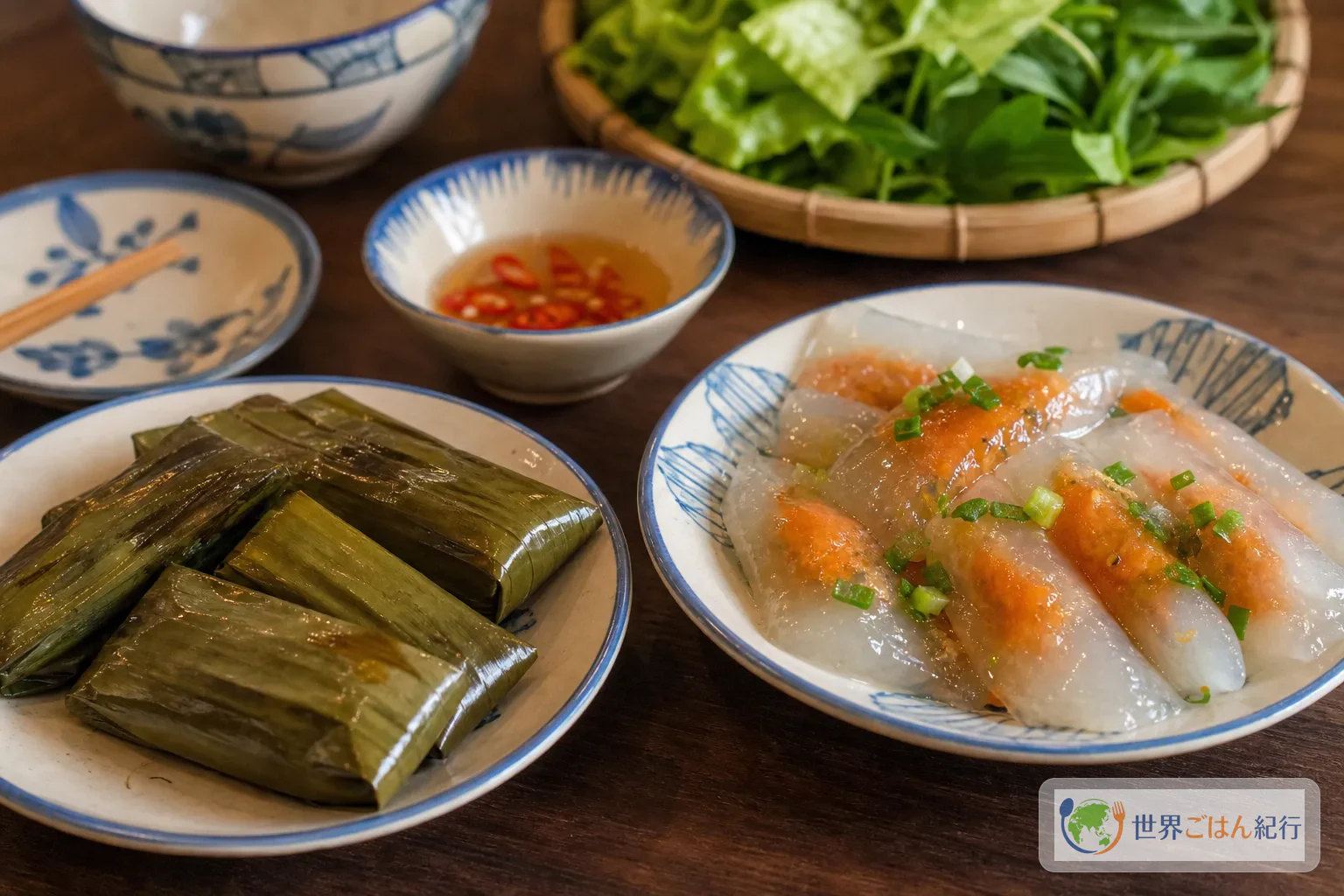
Steaming in banana leaf lets the leaf's aroma pass into the wrapper. Trần puts the gloss of the wrapper and the color of the filling right on the plate. Choose by what you want to enjoy.
| How to choose | Who it suits | What changes |
|---|---|---|
| Trần, boiled | People who want to see the clarity of the wrapper | Easy to check doneness in the pot |
| Lá, wrapped in leaves | People who want the aroma of the leaf and the local wrapped look | Needs a steaming step and banana leaves |
| Make both | People who want to show the difference at the table | The same filling gives a different impression of the wrapper |
If you want another Hue dish on the table, bánh bèo is rice flour steamed in small dishes. Next to each other, the springy bánh bột lọc and the soft bánh bèo show how much the starch alone changes the texture. For a thinner wrapper, try the related bánh cuốn.
Storing Bánh Bột Lọc
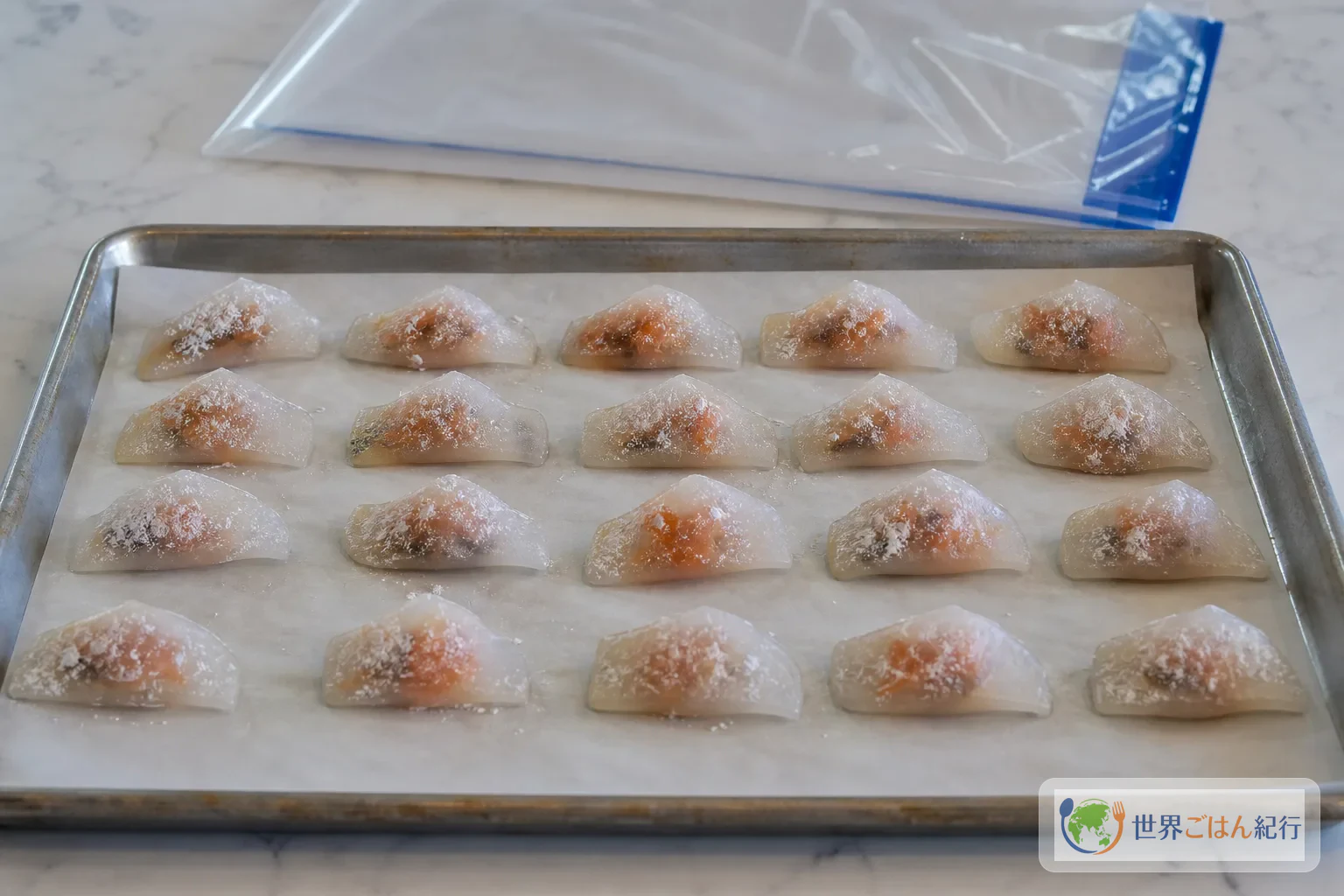
The wrapper holds its texture better if you freeze the dumplings raw, right after shaping, than if you store them boiled. Spread them on a tray so they don't touch, then move them to a bag once the surface has hardened. Cook them straight from frozen, giving them 2–4 minutes longer than fresh ones, from when they float until they turn clear.
Boiled leftovers should be cooled, sealed, and eaten by the next day. To reheat, bring the wrapper back with a little hot water and keep the fish sauce dip unheated. Heat leftovers to 74 degrees C all the way to the center, and see the reheating guideline for leftovers for details.
If the freezer isn't cold enough or the bag isn't well sealed, the surface of the wrapper dries out. For the first pot, boil just one dumpling from frozen and time how long it takes to turn clear after it floats. Then add the rest, and you'll know your heating time.
Frequently Asked Questions
Can I make it with only rice flour or potato starch?
Rice flour alone won't give you a clear wrapper. Potato starch alone will shape, but the springiness and the mouthfeel once it cools aren't the same as tapioca. For your first batch, make tapioca starch the main ingredient.
Can I wrap the peeled shrimp whole?
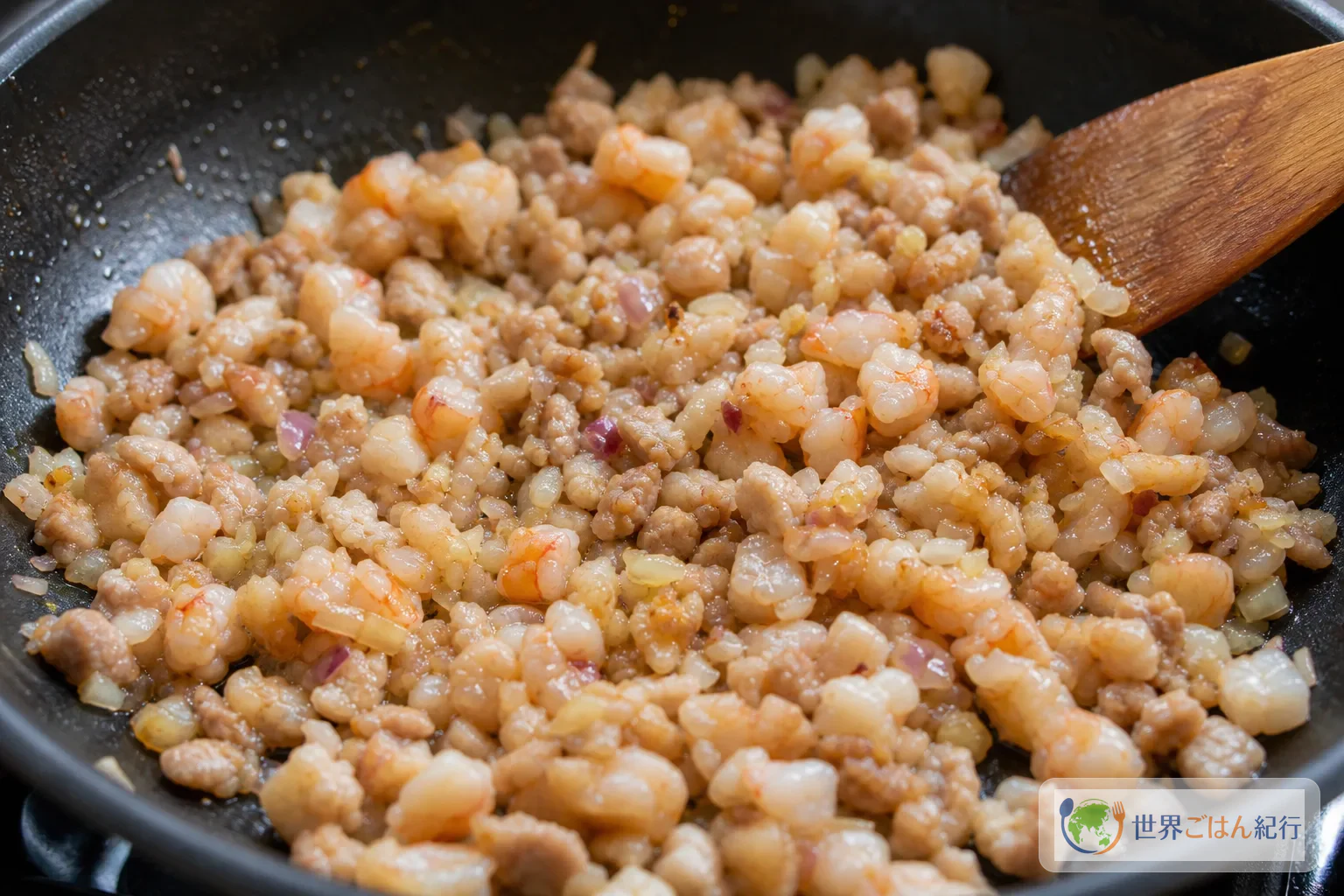
These are small dumplings, so cut the shrimp into 0.25 inch (5 mm) dice. It wraps more easily that way and is less likely to tear the wrapper, while large pieces strain the seam and tend to open in the pot.
What should I do to wrap in banana leaves?
Make the filling and dough the same way, cut the leaves into small pieces, wrap, and cook in a steamer once the steam is rising. The steaming time for the leaf-wrapped kind is its own; it doesn't carry over from this boiled version. For how the two forms differ, see this introduction to bánh bột lọc.
I don't like the smell of fish sauce
Halve the fish sauce in the dip and add a little more water and lime. Leaving it out of the filling takes away the core of the flavor, so start by cutting 1 tbsp down to 2 tsp and tasting for salt. If you use nam pla, add it gradually, and serve the dip on the side so it's easy to adjust.
What should I buy to change the authenticity the most?
Tapioca starch, because the clarity of the wrapper depends on it. A food processor is only worth it if you'll make these often.
The nutrition values are for the listed ingredients divided by 4. Shrimp size, pork fat, the saltiness of the fish sauce, and how much dip you eat all change the numbers.