Pour batter into the steaming pan and lift the lid: the edge of the white film lifts just a little while the center is still wet. Peel it now and the sheet tears between your fingers. Wait ten more seconds, though, and the surface turns clear like thin glass, and when you slide a spatula under it, the whole sheet moves in one piece.
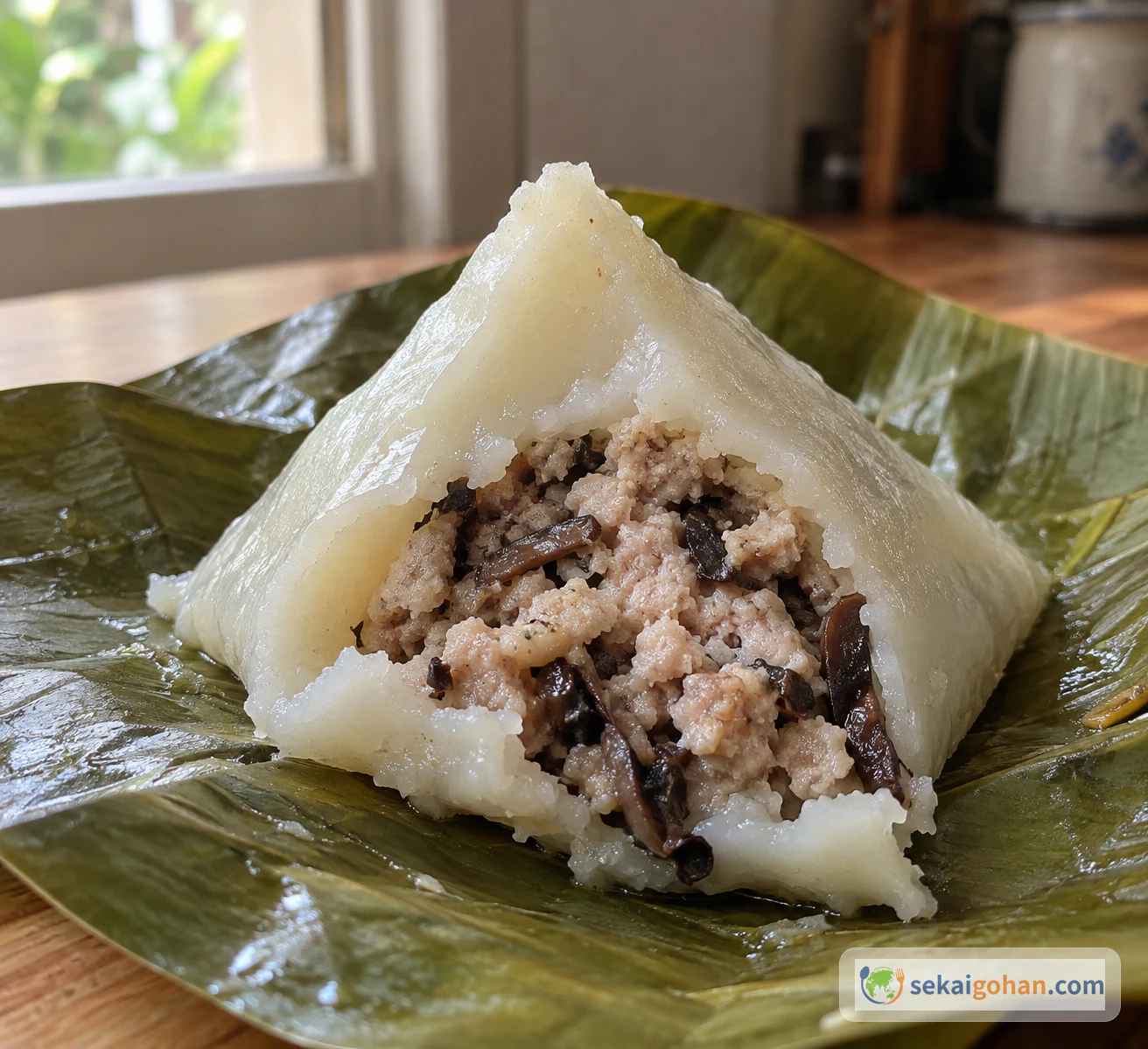
That sheet is bánh cuốn, rice batter steamed thin and rolled around a filling. It's a Hanoi breakfast and street snack, usually filled with pork and wood-ear mushrooms and served with fried shallots, herbs and a sweet-sour fish-sauce dip. The filling is the easy part at home. The sheet is the hard part, and the trick is to peel it while it's still slippery, just after the steam has set it.
Bánh Cuốn in Thanh Trì and Hanoi

Thanh Trì, southwest of Hanoi, is known for bánh cuốn and gives its name to the style: a thin, translucent, supple rice sheet made from ordinary rice and fragrant with it. Its traditional method and technique are registered as Vietnamese national intangible cultural heritage.
There are two kinds. "Bánh cuốn lá" is a thin sheet served nearly empty with fried shallots, while "bánh cuốn nhân thịt" wraps ground pork, wood-ear mushrooms and dried shallots. Both come with a sweet-sour, salty and spicy fish-sauce dip, herbs, fried shallots and Vietnamese pork sausage. One is all about the white sheet; the other is built around a substantial filling.
Bánh cuốn is a traditional breakfast, and the fillings and accompaniments shift from place to place while the thin northern rice sheet stays the same. Thanh Trì is about the sheet and the aroma of rice. Elsewhere in the north you'll find versions with pork filling or grilled pork, some regions and shops use egg or mixed fillings, Cao Bằng combines egg or bone broth, and Phủ Lý serves charcoal-grilled pork.
It helps to know how bánh cuốn differs from its rice-flour cousins. It's a thin sheet that turns translucent with steam, whereas bánh xèo is about the sound of oil and browned, toasty edges; the batter thickness and the way you read the heat are different. For the small, fried direction, bánh khọt shows how oil and mold depth change rice-flour batter. A good bánh cuốn sheet is soft when lifted with chopsticks, slightly springy on the tongue, and doesn't tear easily around the filling, which is something steamed spring-roll wrappers and rice paper can't quite copy.
At home, decide on your style before you shop. The pork and wood-ear filling is the easiest place to start, since the filling and sauce cover mistakes better than a plain sheet that has to carry all the flavor. On a first-time day, or when you want it as dinner, a generous filling eaten with herbs and cucumber is more satisfying. To lean toward Thanh Trì, use less filling and taste the rice sheet with fried shallots and the dip.
Choose Ingredients in the Order That Supports Thinness

Serves 4. Makes 12 to 14 sheets, 18–20 cm in diameter. Don't aim for a shop-thin sheet on the first try, since it tears easily. Make the batter slightly thicker the first time, and add water as you judge the consistency. The batter should be "much looser than pancake batter and slightly thicker than milk."
Tapioca starch does not replace the Thanh Trì tradition. There, ordinary rice is the main ingredient. At home, a small amount of tapioca starch supports the thin sheet so it tears less. It keeps the aroma of rice and the thin sheet, and makes the sheet easier to roll in a home frying pan.
Potato starch works too, but the sheet is less springy when cool, and it stretches differently as you peel it. If you plan to make this more than twice, buy tapioca starch. If you are trying it just once, use 1 oz (30 g) potato starch and switch to tapioca next time if the sheet tears easily.
For the filling, chop the wood-ear mushrooms to about 0.125 inch (3 mm) dice after soaking, and the filling will not gather in one place when you bite the sheet. If you use a food processor, do not make a full paste; run it in a few short bursts and leave grains. Cook the pork until at least 160°F (71°C) at the center. Color alone is hard to judge, so cook until the filling is crumbly and no red juice remains.
A food processor is not essential. It saves time for someone who finely chops wood ear, shiitake and onion in one go many times, but if you can chop for about 15 minutes with a knife, skip it.
The dip does not put strong flavor on the sheet. It is thinned with water, leaving the saltiness of fish sauce, sourness and sweetness of sugar, and balances the filling's fat and the rice sheet with each bite. If you have Vietnamese nước mắm, use it. If you cannot find it nearby, Thai fish sauce works, but its flavor is different, so start with 1.5 tbsp (25 ml), taste, and add 1 tsp (5 ml) at a time.
Look for fish sauce made from fish and salt, not sweet chili sauce. If a Vietnamese grocery is nearby, buy nước mắm there.
This recipe uses rice flour, tapioca starch, fish sauce, pork, mushrooms and herbs. Fish sauce contains fish, and some products contain wheat or soy. Rice flour and tapioca starch are sometimes processed on lines that handle wheat. If anyone at the table avoids allergens or gluten, check the package labels. If you buy ready-made fried shallots, check their ingredients too.
Choosing Ingredients and Substitutes for Bánh Cuốn
Rice flour is easy to find; the type of fish sauce and the herbs are harder. Choose Vietnamese fish sauce when it's available. Cilantro can be replaced with perilla and scallion, though the aroma shifts, and if you dislike mint, leave it out. Dried wood ear makes the filling's moisture easier to manage than fresh, and dried shiitake backs up the umami.
Buy tapioca starch if you can. Batter made from rice flour alone is closer to the traditional composition, but the sheets tear more easily in a home frying pan, while too much tapioca puts chewiness ahead of rice aroma. The 1.25 oz (35 g) here is about 30% of the 3.5 oz (100 g) rice flour, just enough to help you handle a thin sheet.
You can make it without local equipment. A cloth-covered steamer suits high-volume shop cooking, but for 12 sheets at home a lidded frying pan makes it easier to watch the heat and the sheet, and getting one sheet right in the pan you have beats buying a dedicated steaming cloth. A food processor is only worth it if you make the filling often.
Method: Steam One Sheet at a Time and Roll While It Is Slippery
While the batter rests, make the filling and the dip. You don't need an iron steamer; an 8 inch (20 cm) lidded nonstick frying pan is enough.
Fixing Torn or Thick Bánh Cuốn Sheets

Treat the first sheet as practice and aim for thinness from the second. When it tears, leave the flour mix alone. The cause is usually batter settling, pan temperature or peeling time, so change one thing at a time on the next sheet.
| What happened | Check first | How to fix it on the next sheet |
|---|---|---|
| Sets the moment it is poured | Heat is high and the pan is hot | Take off the heat for 30 seconds and resume over medium-low |
| Sheet tears like a net | Batter too thin, not mixed enough | Stop adding water, stir from the bottom, and add 1 tsp rice flour |
| Only the edge dries and curls | Lid opened late, heat too high | Check at 50 seconds and lower the heat one notch |
| Sticks when moved to the plate | Not enough oil, undercooked | Oil the plate lightly and add 20 seconds until the edge lifts |
| Juice comes out when rolled | Filling hot, too much moisture | Cool the filling and cook off moisture in the pan once more |
| Sheet thick and chewy like mochi | Too much batter | Reduce to 2–2.5 tbsp (30–35 ml) from now on and swirl the pan at once |
Settled flour is the sneakiest problem: the first sheet comes out thick and the later ones turn watery. Stirring with the bottom of the ladle before every sheet is a nuisance, but skip it and you'll repeat the same failure.
Do not throw away a torn sheet. Put filling and herbs on it, fold it small, and taste it. You can check the sheet, the dip's strength and the filling's saltiness at once, so you can set the flavor before you make the other 12 sheets for the table.
Serving and Storing Bánh Cuốn

Bánh cuốn is softest fresh from the steamer, so eat it the day you make it if you can. For a family meal, get the pork filling, cucumber and dip ready first; the plate holds together even if the sheets are a little uneven. Once you've found the right thinness in your own kitchen, try the filling-free Thanh Trì style, or detour to bánh bèo, another Vietnamese steamed rice-flour dish.
For leftovers, let the rolls cool, put parchment between them so they don't cling, and keep them in an airtight container in the refrigerator for about 2 days at most, with the dip and herbs stored separately. Let them sit briefly at room temperature, then microwave in short 10-second bursts. Too much heat toughens the sheet and drives the moisture out of the filling.
You can make the filling the day before: cool it, seal and refrigerate, then reheat it right before steaming the sheets, checking the moisture. Don't leave the pork filling out at room temperature. Reheat it until hot through, and don't eat it if there's a sour smell, sliminess or unusual moisture in the container. Freezing spoils the texture of the sheet, so freeze only the filling, in single-day portions.
Frequently Asked Questions

Can I use rice paper instead?
You can, but the dish changes. Rice paper softened in lukewarm water is easy to roll and you worry less about tearing, but it lacks the softness and aroma of a steamed rice-flour sheet. Use it to try the combination of flavors first, then come back to this batter when you want to enjoy the steaming.
Can I make it with rice flour alone?
Yes. Start with 4.5 oz (130 g) rice flour, 2–2¼ cups (500–550 ml) water and 1 tbsp (15 ml) oil, and make the sheet a little thicker so it's easier to handle. It tears more easily when peeled thin and is less supple once cool. Go with rice flour alone if Thanh Trì rice aroma is your priority; keep the tapioca starch if ease of rolling matters more.
The dip came out too salty. Can I fix it?
Add water 1 tbsp at a time, then lime juice and sugar a little at a time. More fish sauce only makes it saltier, so bring the balance back with sourness and sweetness. Since it's eaten with the sheet and herbs, a dip that tastes slightly strong on its own is fine.
What if I dislike wood-ear mushrooms?
Increase the shiitake or add finely chopped onion. The texture changes, but you still cook off the filling's moisture the same way. Some shops use shrimp instead; if you do, reduce the pork and cook until the shrimp are white and opaque. Check the allergen labels for seafood and fish sauce too.
Can I roll them ahead?
For 1–2 hours, keep them at room temperature with parchment between them and reheat briefly before eating. For longer, refrigerate, and add the dip and herbs just before serving. Steaming the sheets and making the filling the day before keeps the texture better than leaving rolled sheets to sit.