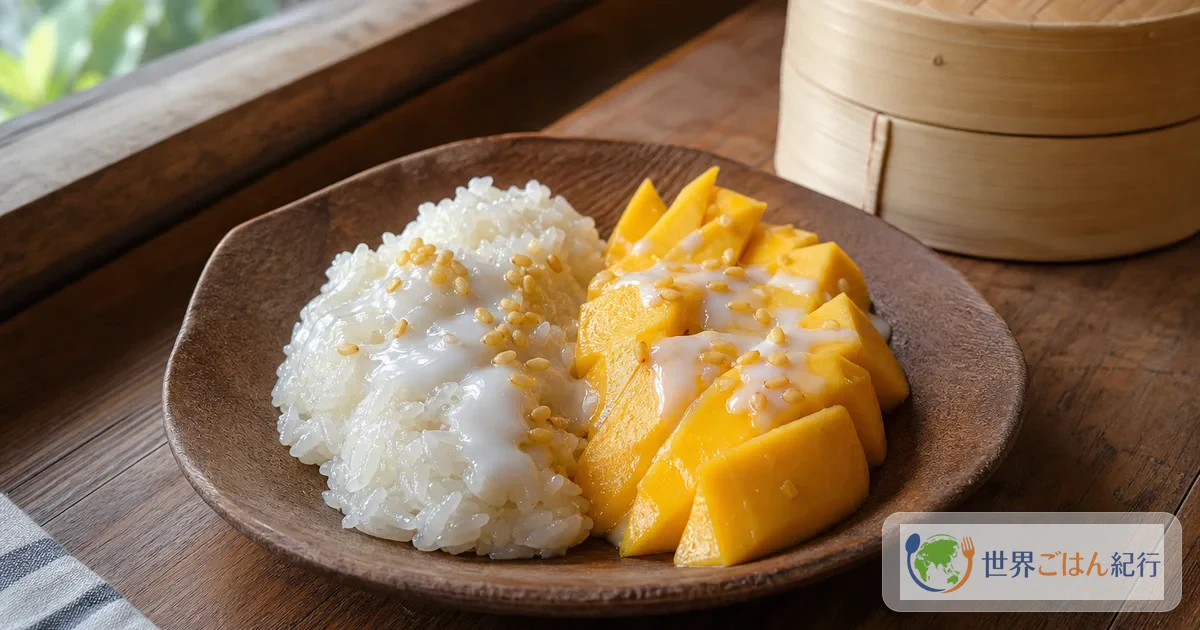
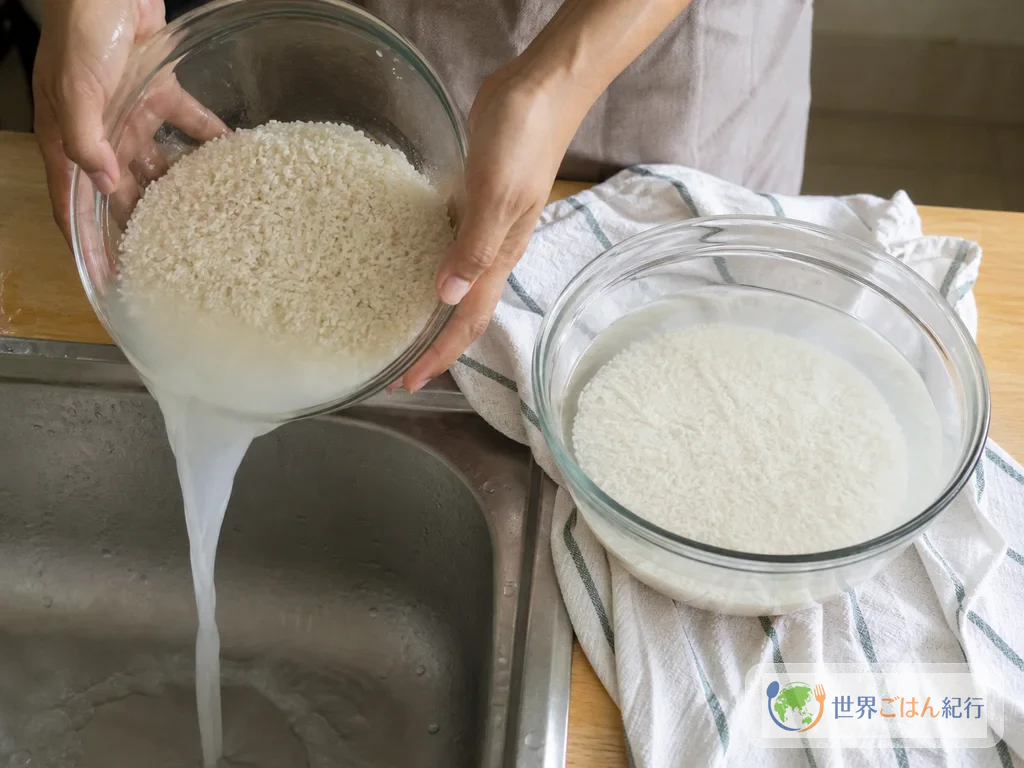
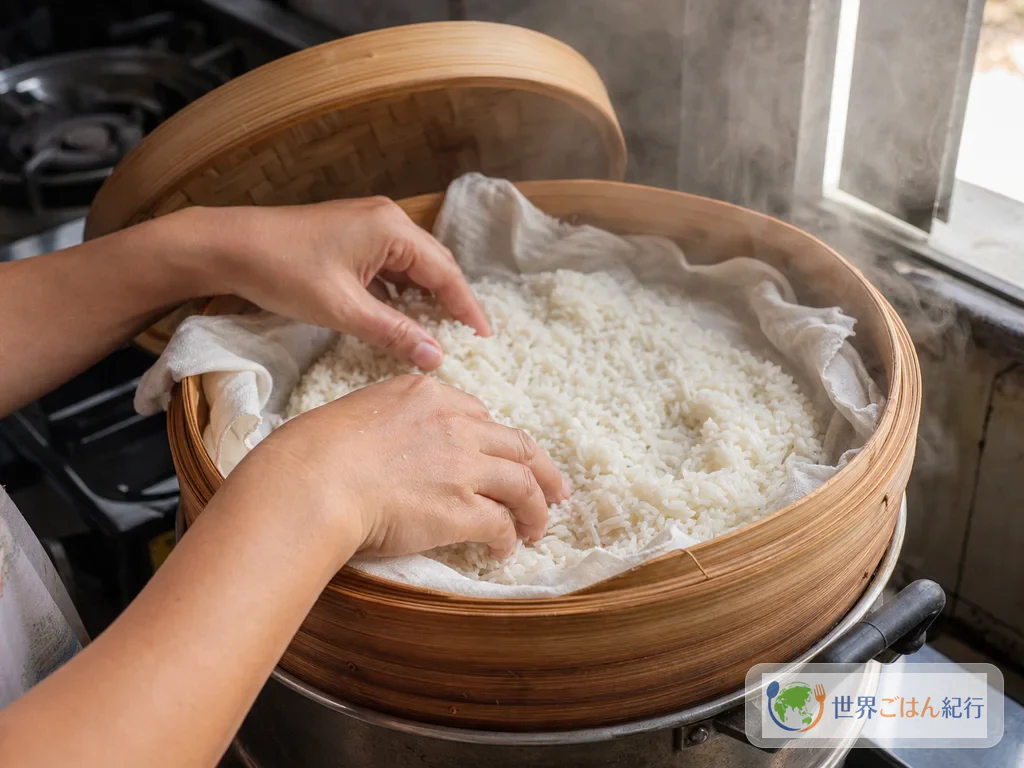
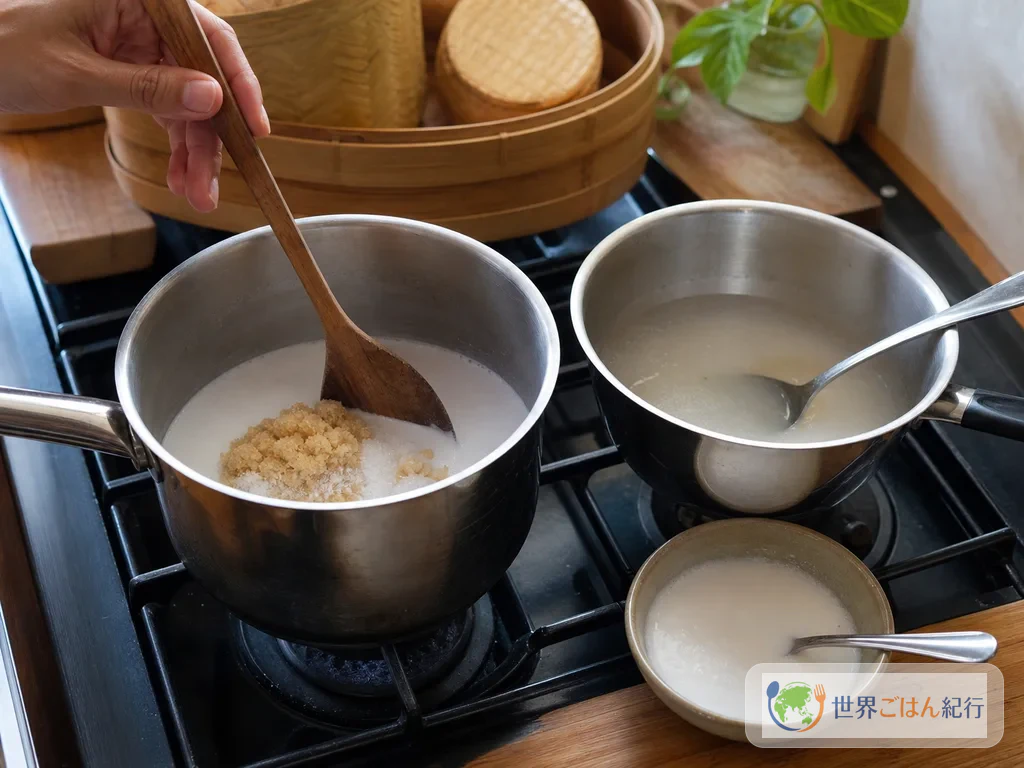
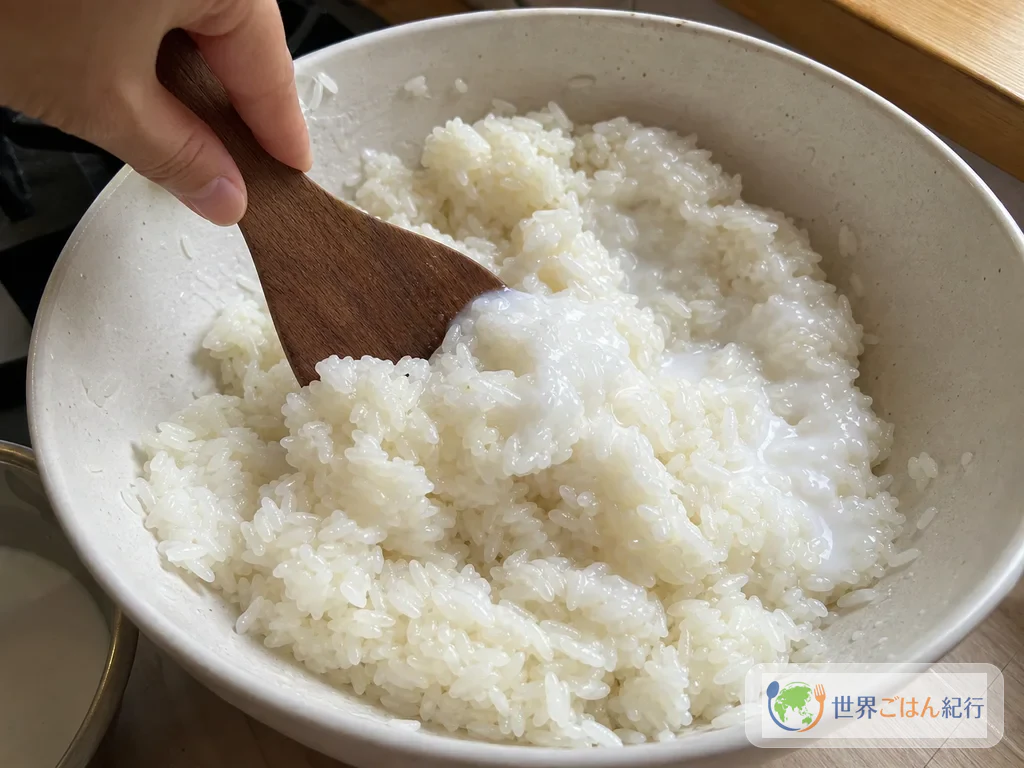
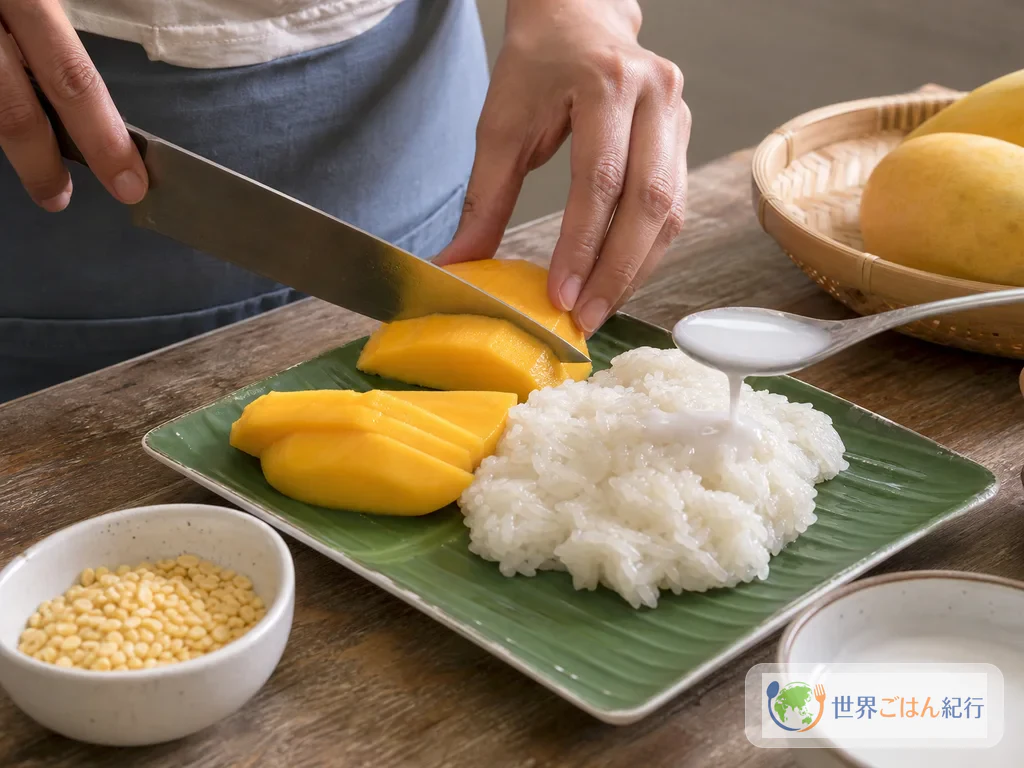
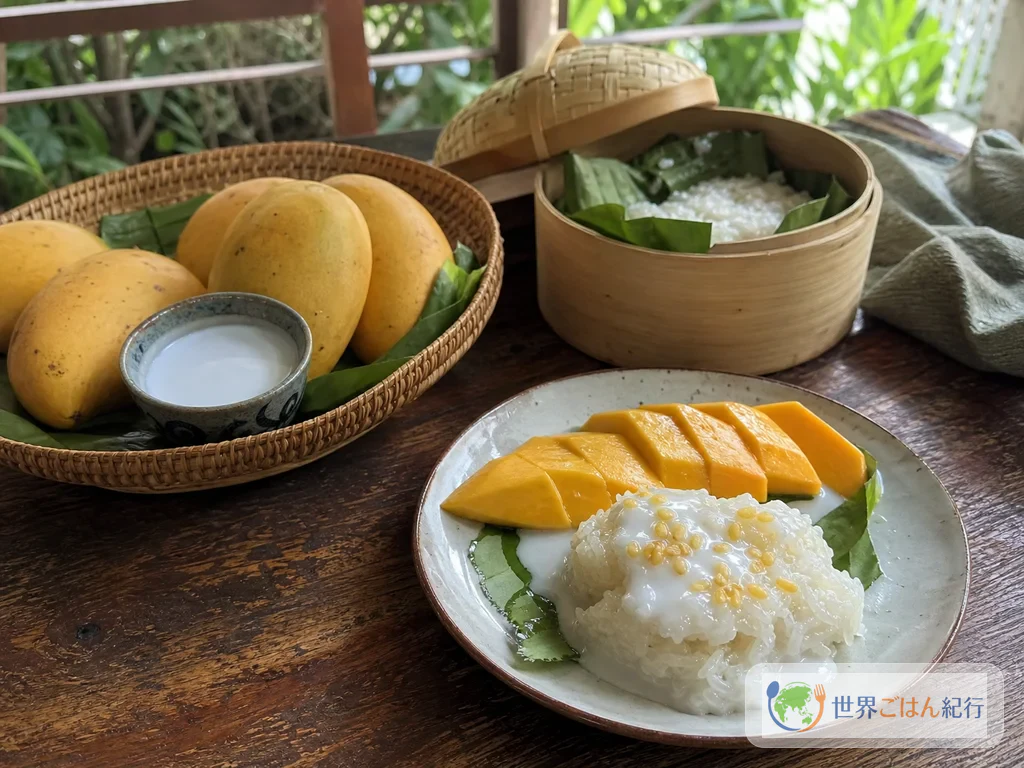
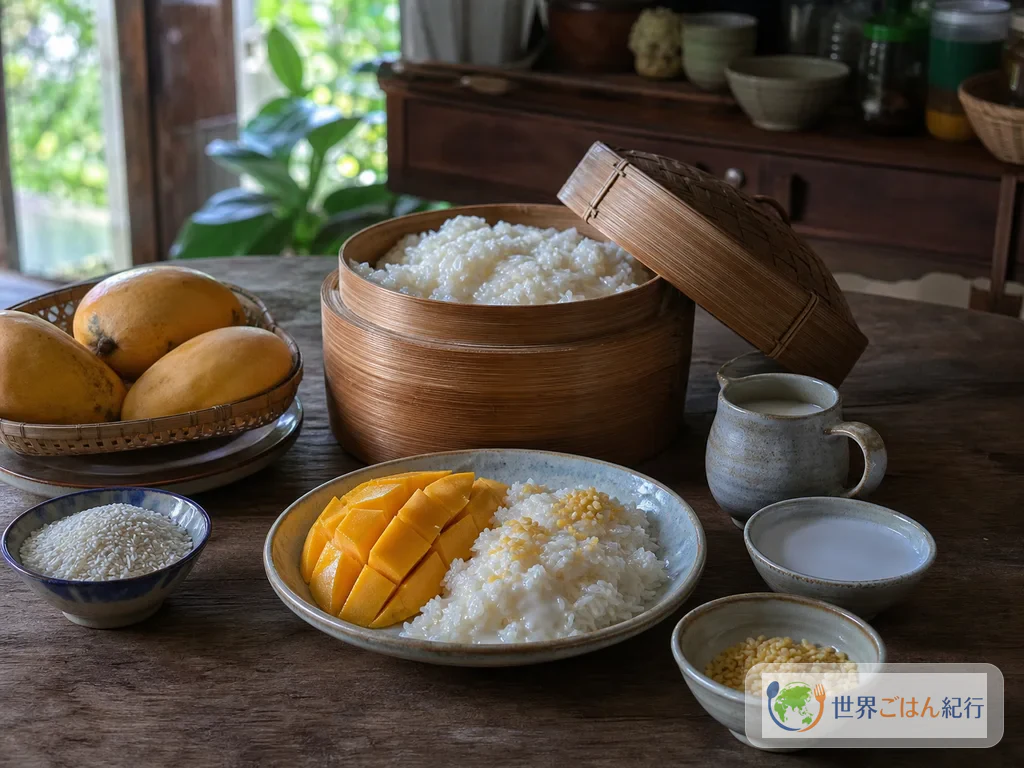
Lift the lid of the steamer and the glutinous rice has turned from white to translucent. There's no sweetness in the steam yet, only the round smell rice gives off when it has taken up its water. Then the warm coconut sauce goes in. The grains cling at first, and after a short rest they take on a sheen, ready for the sliced mango.
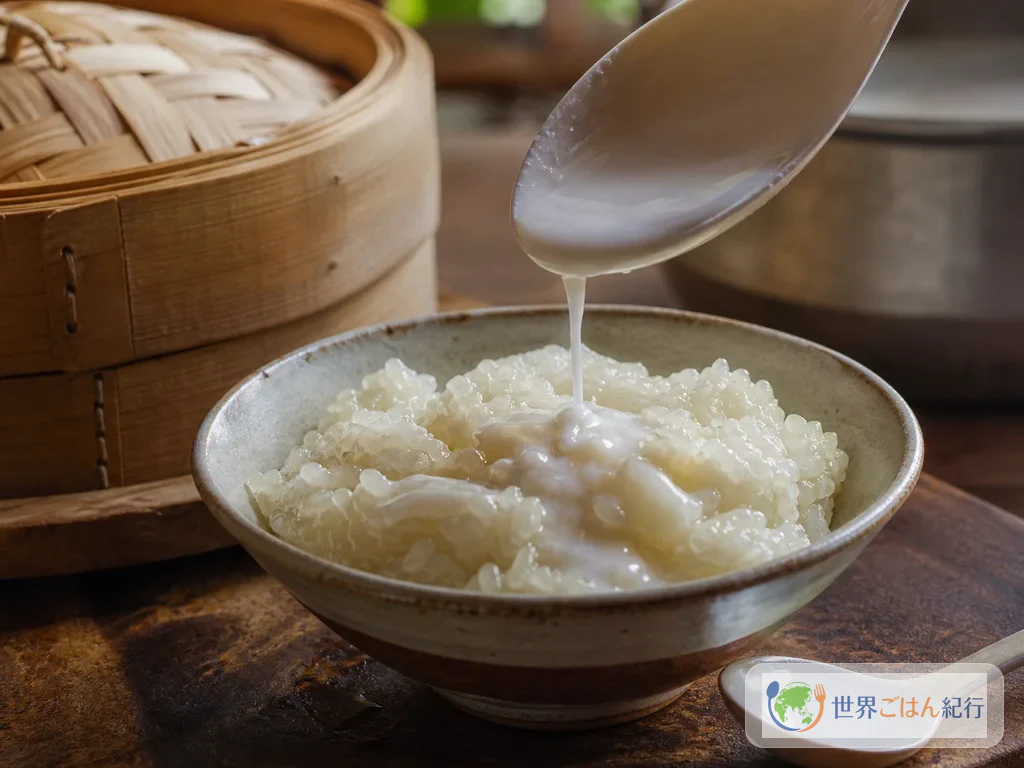
Khao niao mamuang (ข้าวเหนียวมะม่วง / Khao Niao Mamuang) is Thailand's mango sticky rice: sweet coconut rice served with ripe tropical fruit on the same plate. The mango is the star, and its acidity and aroma lead. The rice is the base, carrying the coconut's sweetness along with a little salt. This version serves 4 and is easy to make at home.
Khao Niao Mamuang and the Thai Hot Season
A plate for hot afternoons
Picture a small plate brought to the table on a hot afternoon. You scoop up the white coconut sauce with a spoon first, then go back and forth between rice and slightly tart mango, because the sweet rice alone would feel heavy. The dessert isn't served cold, but the juice of the fruit eases the heat in your mouth.
The interesting thing about this dessert is that rice is at the center. The fruit is more than a side, too: it changes the pace of the sweetness. It's eaten in mango season, and fragrant varieties such as Nam Dok Mai and Ok Rong suit it best.
Thailand's hot season runs roughly from mid-February to mid-May. In May, travel guides feature orchards and fruit, so hot-season fruit is bound up with memories of both meals and travel. The seasons guide and the May fruit introduction make it clear that a plate with mango belongs to a particular season rather than to the whole year.
Glutinous rice across Thailand
Glutinous rice is used differently from region to region. In Isan it's eaten with spicy, salty dishes, and in the north it's the staple at the center of the table. The central region has many sweets made with coconut. Read together, regional differences in Thai cooking and the northern Thai table show where khao niao mamuang comes from: everyday glutinous rice, the coconut sweets of the central region, and seasonal fruit, all on one plate.
| Axis | Local background | Judgment when making it in Japan |
|---|---|---|
| Rice | In the north and Isan, glutinous rice is an everyday staple | Thai rice brings the aroma closer; domestic glutinous rice is easier to find |
| Sweetness | Central-region sweets use coconut milk | Don't boil the sauce, and keep the salt. Fat and sweetness form the outline |
| Fruit | Tied to mangoes as the hot season turns into fruit season | Choose fully ripe, fragrant fruit that is still firm enough to slice |
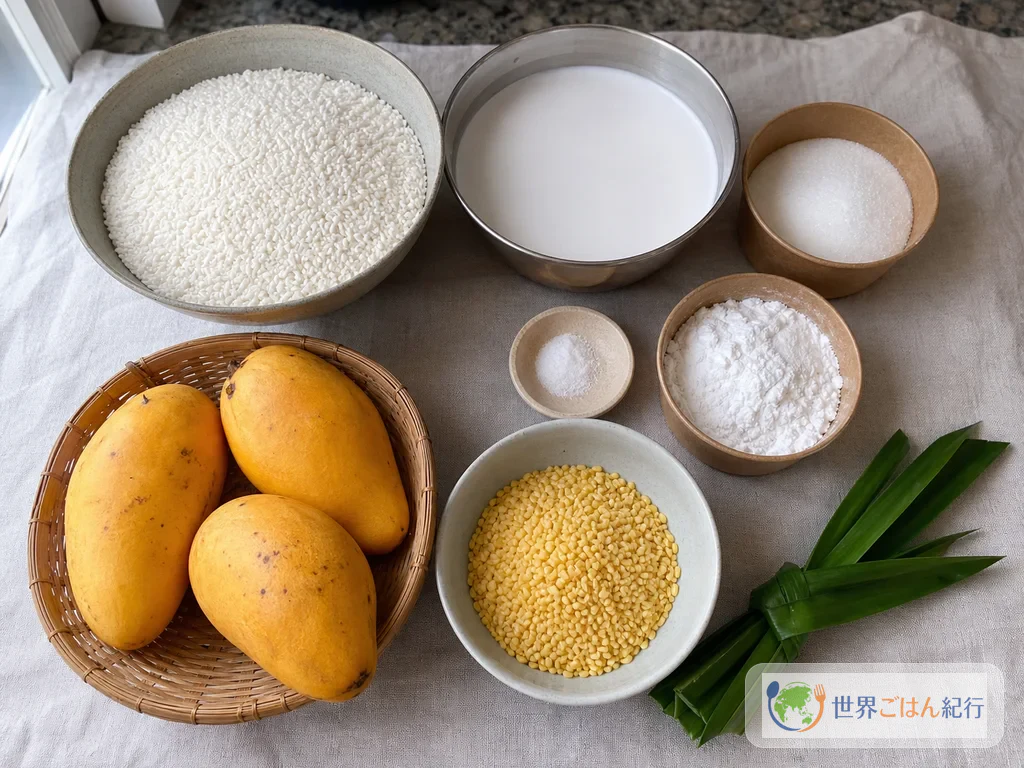
Ingredients (serves 4): Split the Sauce in Two
First, decide not to use all the coconut milk in one pot. If you separate the sauce worked into the rice from the sauce poured on at the end, the rice holds the flavor and a white line remains on the plate.
Buy Thai glutinous rice only if the product name says "glutinous rice" or "sticky rice" and the ingredient is glutinous rice. For a dish like this, steamed and then worked with sweet sauce, Thai rice is worth trying for its aroma and grain. If you will make it only once, and a 11 lb (5 kg) bag would be too much to store, start with 10.5 oz (300 g) of domestic glutinous rice. Check the content weight and the milling date on the label.
For coconut milk, choose a pourable unsweetened type, not "coconut cream." Even if solids float on top of the can, shake before opening and stir well in the pot, and it can be used. For mangoes, look at aroma, skin tautness, and softness of the flesh rather than variety name. If you chill them too much in the refrigerator the aroma closes, so take them out 30 minutes before cutting and the sweetness comes up.
This uses coconut, rice, and mango. Processed products may be made on lines that handle wheat, dairy, peanuts, or tree nuts, so those who need to should check the product labels. If mango juice touching the skin or around the mouth causes discomfort, do not force it and substitute another fruit.
Choosing Rice, Sauce, Mango, and a Steamer
Separate the roles of rice, sauce, and fruit, and you can choose how faithful to be. Glutinous rice from other countries still gives you the shape of the dish. Choose Thai rice if you want to get closer to the original aroma and the way the grains loosen. Thai glutinous rice is also easy to use up if you plan to make steamed sweets or Isan dishes next. Whatever rice you use, the dish holds together as long as you judge the steaming correctly and season the sauce with salt.
The sauce is a matter of taste. You can make it sweet and rich, or keep it thin enough that the mango stays the star. For the fruit, the variety and ripeness of the mango matter more than anything else on the plate.
To keep your shopping list short, start with domestic glutinous rice, canned coconut milk, and mango. Buy a bamboo steamer only if you'll steam glutinous rice or steamed sweets at least once a month and have room to store it. If you rarely steam food, try this recipe with a steaming rack in a pot you already own. If you do buy one, check that a 9.5 inches (24 cm) diameter fits your pot, that it comes with two tiers and a lid, and how to care for it before first use.
Method: Do Not Leave a White Core in the Grain
The hot water in the steamer is not water for boiling the rice directly. If the steam gives out, only the surface of the rice dries and the center stays hard as time passes. Bring the water in the pot to a full boil first, and while steaming keep a "not too strong boil."
Fixing Sticky Rice Problems
With so few ingredients, the moisture in the rice largely decides how the dessert tastes, so check the grains before you add any sweetness. "Soft" isn't the goal. You want grains with no hard white core that spring back when pressed with a finger instead of squashing.
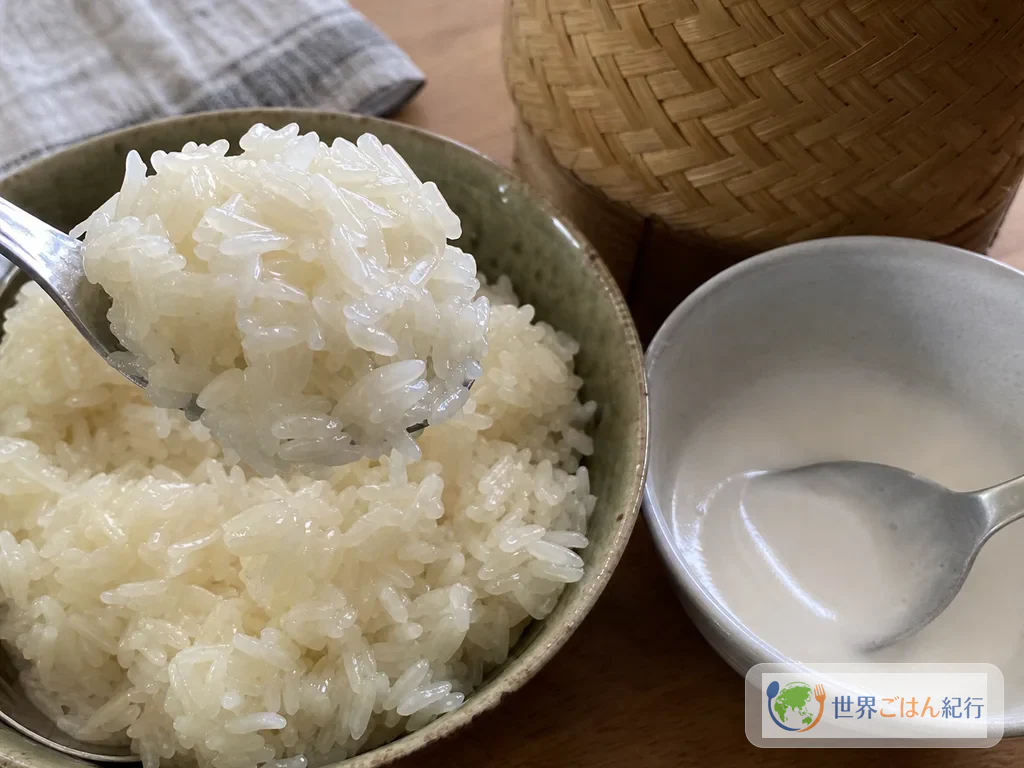
| Condition | What is happening | How to recover |
|---|---|---|
| A white core in the center | Not soaked enough, or the rice is too thick in the steamer | Sprinkle 1–1.5 tbsp (15–20 ml) hot water, cover, and steam 5 minutes at a time |
| The surface is watery | Not drained enough after washing, or steam droplets fell | Take off the lid for 5 minutes and turn from the bottom without crushing the rice |
| Grains collapse into a paste | Over-soaked, or steamed too long | Add no more water, use less sauce, and let it cool |
| The sauce separated | It was boiled, or mixed abruptly into cold rice | Stir over low heat again and work it into the rice a little at a time |
| The mango is sour | Not ripe enough, or a variety with strong acidity | Keep the sauce amount; dissolve 5 g raw cane sugar into it |
Variations, Storage, and More Thai Dishes
Five variations
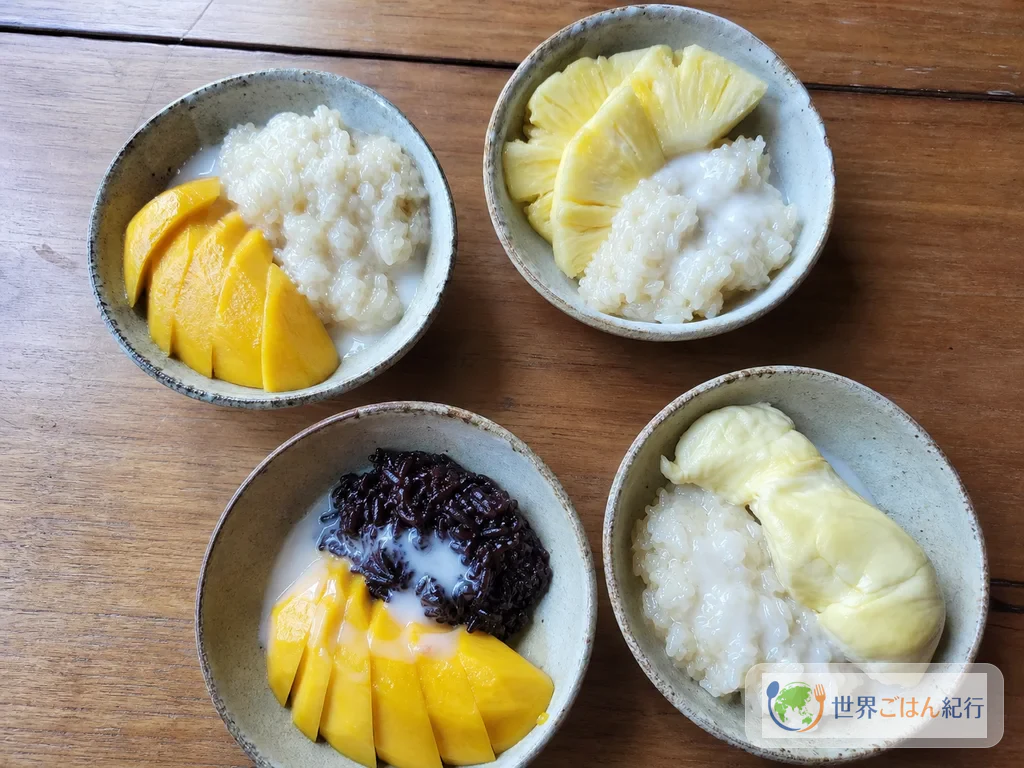
If you can't find the local varieties or ingredients, change one thing at a time and taste what stays the same and what changes. Make a baseline batch first so you can tell when the rice is done.
- Make it with domestic glutinous rice: Change only the rice. The aroma and the way the grains loosen shift a little, but the pairing of coconut sauce and mango holds. A good first batch if you're unsure about buying Thai rice.
- Switch to raw cane sugar: Using 2.75 oz (80 g) raw cane sugar in place of 2.75 oz (80 g) sugar gives a faint aroma like brown sugar. On days when the mango's aroma is weak, go back to white sugar so the fruit doesn't get lost.
- Replace the mango with pineapple: Use 1.25 lb (600 g) cored pineapple instead of 1.25 lb (600 g) edible mango flesh. Pineapple is quite acidic, so start the finishing sauce at 1 tbsp (15 ml) per person.
- Add durian: Durian sticky rice is a classic sweet, close cousin to mango sticky rice. The aroma is strong, so the first time, plate 1 lb (450 g) mango and 5.5 oz (150 g) ripe durian separately and compare them with the same sauce. For more, see the durian guide.
- Mix in black glutinous rice: Mix 1.75 oz (50 g) Thai black glutinous rice into 9 oz (250 g) white glutinous rice. Black rice absorbs water and steams differently, so soak it separately for 2 hours before combining. It adds color and a toasty note.
Nutrition and storage
Glutinous rice and sugar make this dessert high in carbohydrate, and coconut milk adds fat. The amounts vary with the mango variety, the richness of the can, and the type of sugar. If you have a medical condition or dietary restrictions, check the product labels and your own intake.
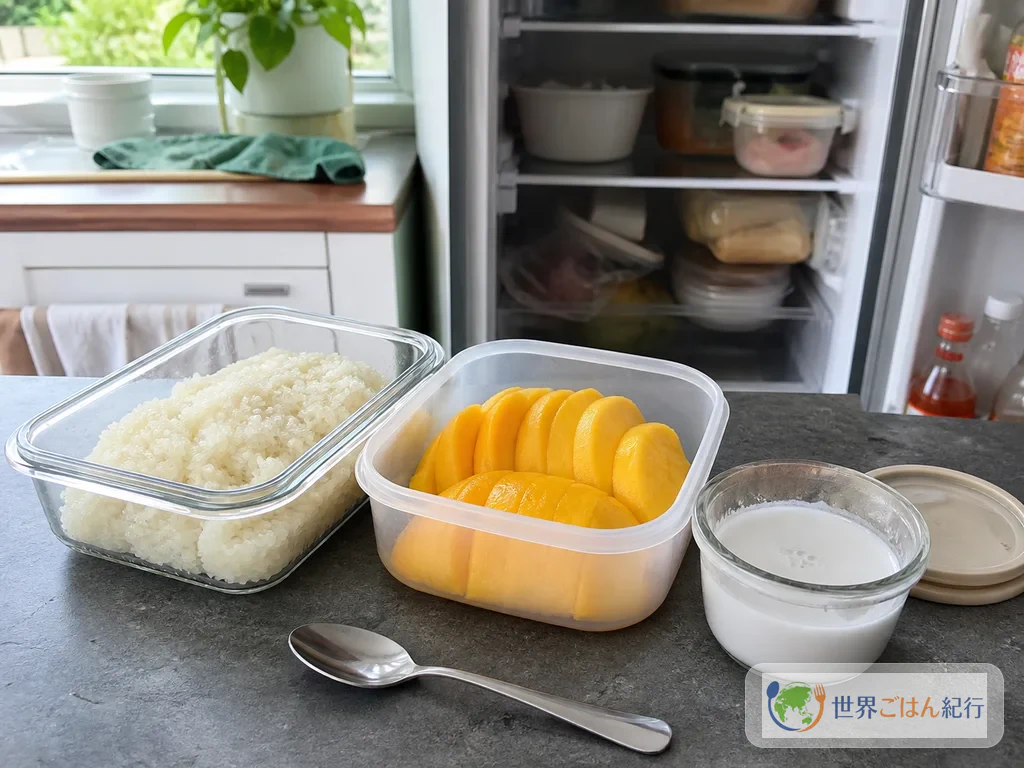
Cut the mango just before serving, and eat the rice the same day if you can. For leftovers, let them cool, then refrigerate the mango, rice, and sauce in separate clean airtight containers within 2 hours. Cooked leftovers keep refrigerated for 3 to 4 days, though the rice's texture and the mango's aroma fade the longer they sit, so make only what you can finish by the next day. For more, see the leftovers guide.
Cold rice hardens. Before eating, warm one serving in the microwave for 20–30 seconds at a time and add a little sauce to bring it back. Serve the mango straight from the refrigerator, without warming it.
More from the Thai table
Khao niao mamuang shows a side of Thai food beyond spicy stir-fries. Rice is both staple and sweet, coconut brings fat and aroma to the sauce, and fruit marks the season. If you'd like a Thai meal next, khao man gai, chicken with fragrant rice, is an easy dish to compare. For more steamed-sweet textures, try khanom chan, which relies on rice flour and tapioca starch. Laos's laab is another example of rice soaking up the aroma of a dish.
Frequently Asked Questions: Untangling the Doubts About Rice and Fruit
Q. Can I make it with ordinary glutinous rice from Japan?
Yes. Wash the rice, soak it for 4 hours, and spread it thin to steam. It will differ from Thai glutinous rice in aroma and in how the grains loosen, so buy the Thai rice only if you have another dish lined up for it.
Q. What do I do if I have no steamer?
Use a steaming rack that fits in your pot and a clean steaming cloth. Spread the rice within 1 inches (2 cm), and let the cloth stop droplets from the lid falling straight onto it. Each time you open the lid, steam escapes, so open it only for the single turn partway through.
Q. May I soak it overnight?
You can soak it overnight in the refrigerator, but the surface may crumble more easily. The first time, soak for 4 hours at room temperature, see how it steams, and adjust next time. If your kitchen is hot and you need a long soak, do it in the refrigerator.
Q. What if the mango is hard and has little aroma?
Let it ripen whole at room temperature and use it once it smells fragrant. Sugar on the cut flesh won't bring the aroma back. If it's still hard on the day, slice it thin, serve the sauce on the side, and enjoy it for its acidity and texture.
Q. Can I make the coconut sauce the day before?
The sauce on its own keeps in the refrigerator. Before serving, loosen it over low heat or in a water bath and stir the separated fat back in. Mix it into the rice on the day you serve it.
Q. Can someone with a nut allergy eat it?
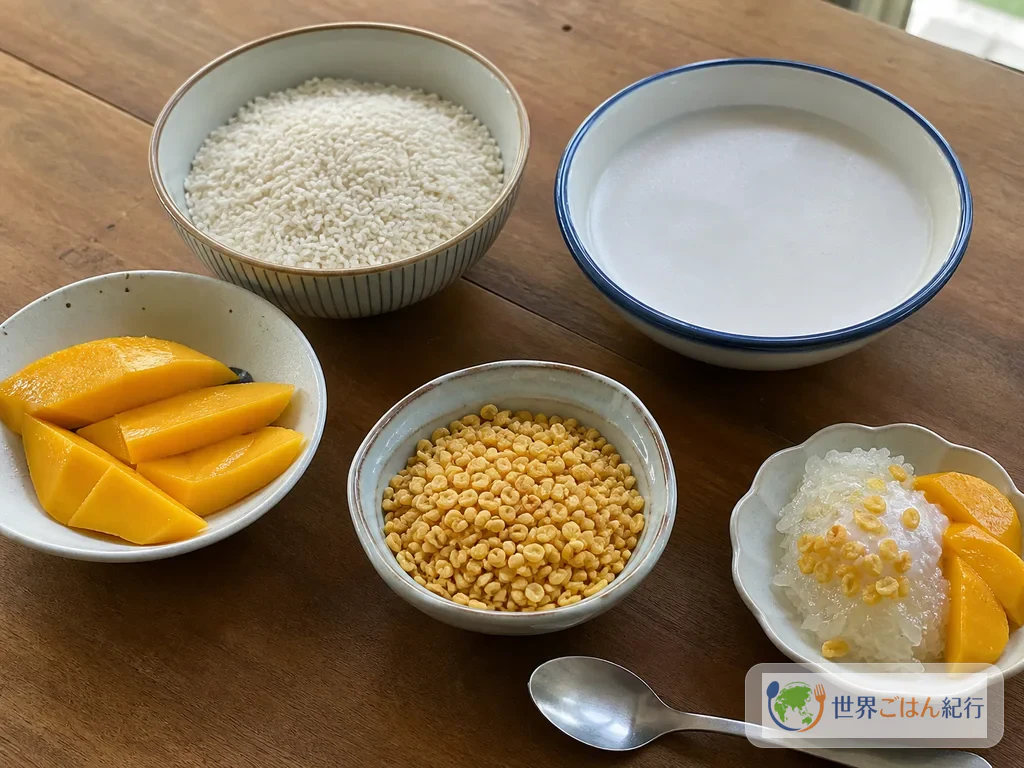
The basic recipe uses no nuts, but check the labels of any processed products that contain coconut. Leave out the toasted mung beans used for finishing, or swap in white sesame, depending on the production line and label at the shop. If you have symptoms, don't eat it, and follow your healthcare provider's instructions.