Tear mint in an evening kitchen and the air turns cool for an instant. Squeeze in lime, add a splash of fish sauce, crush toasted sticky rice in a mortar, and the moment the herbs touch the steam of the warm ground meat, the kitchen smells like a Lao eatery. Laab (ລາບ / laap, larb, laab) is chopped meat or fish tossed with lime, fish sauce, chili, herbs and toasted rice powder, a classic of Laos and of Isan in northeastern Thailand. It isn't simmered for hours like a curry, but its aroma rises fast. Toasty rice, green mint and cilantro, and a bright lime sourness all arrive in one bite.

Laab in Laos and Isan
In Japan, laab is often called Thai "larb," but its home is the sticky-rice culture of Laos and Isan. It makes more sense as a dish of a food culture that shares sticky rice, herbs and fermented fish sauce than as one divided by a national border. It is often described as a representative Lao dish, and in Isan people eat it every day.

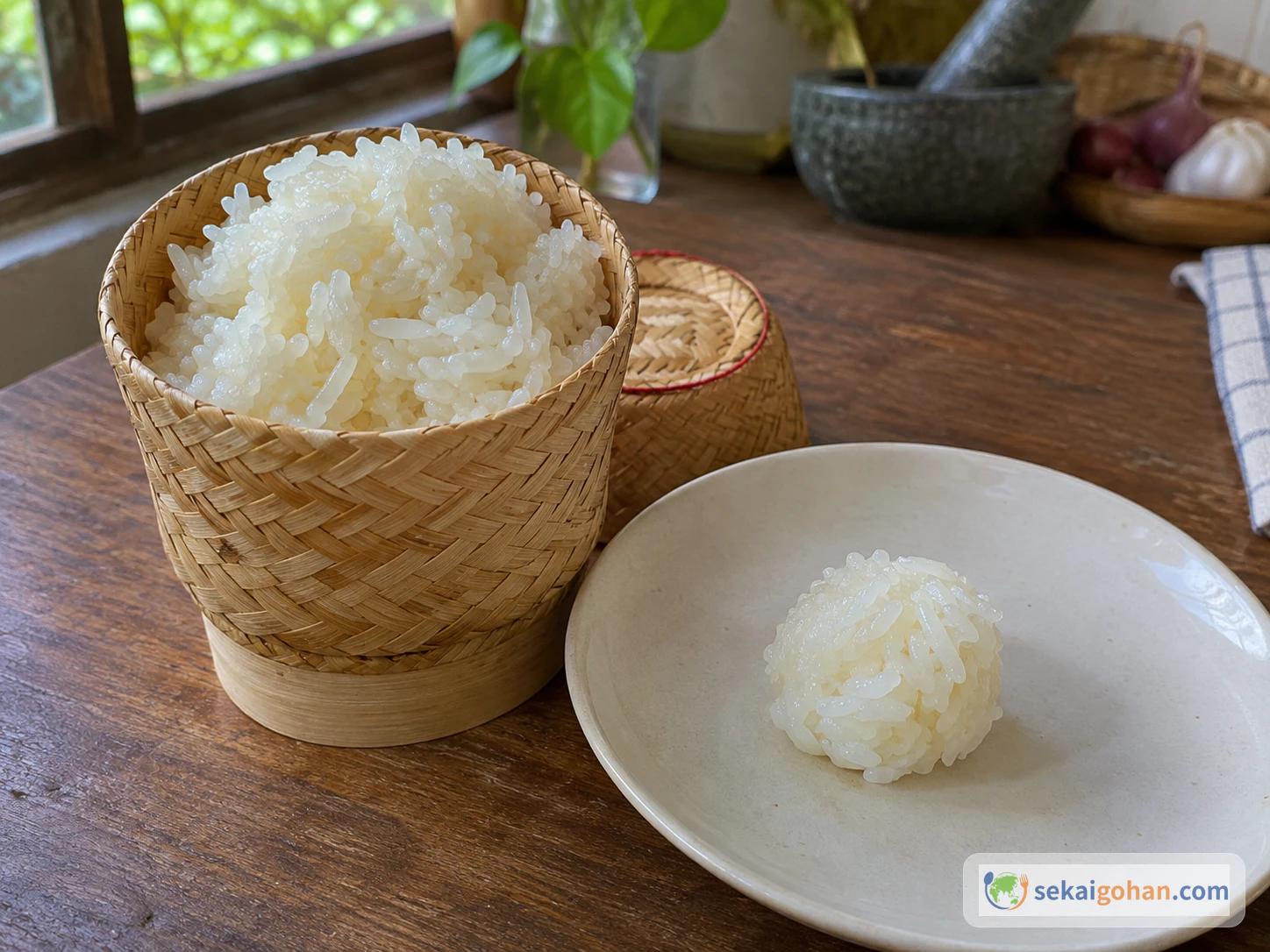
Lao cooking is built around how rice is eaten, as anyone who has read how to make khao piak sen will know, and laab is no exception. You don't spoon it over rice in a bowl. Instead, roll sticky rice into a small ball by hand and pick up a little laab with it. That's how the dish is meant to be finished.

Between a salad and a main dish
In English, laab is often called a "minced meat salad," but it's a little different from the cold, leafy dish the word "salad" brings to mind. Warm meat, a sour seasoning, herbs and rice powder come together in something that sits between a main and a salad. That in-between quality is what makes laab interesting.
Celebrations and regional versions
The name laab is linked with words in Lao and Thai that evoke "good fortune," and the dish is served on celebratory occasions. At home it's quick to make, but on special days some regions chop the meat finely by hand and add offal and bile. There is bitter-leaning laab, and laab made with pork, beef, duck, water buffalo or fish.

Lao-style and Thai-style larb
The larb you eat at a Thai restaurant can be a little sweet, with clear heat, and some Thai recipes use a little sugar. To lean Lao, keep the sweetness quite modest and bring forward the fish sauce, lime and the aroma of khao khua, with sticky rice on the side. It isn't a sweet-and-spicy salad but a meat dish eaten for its sourness and toastiness.
Ingredients (serves 4)
Laab looks like it needs few ingredients, but sorting them by role makes shopping easier. The meat brings savoriness, lime brings sourness, fish sauce brings saltiness, khao khua brings toastiness and absorbs moisture, and the herbs bring the final lightness. Make everything strong and the dish gets noisy, so start with the heat on the modest side.

This recipe contains chicken and fish sauce. Some laab in Laos and Thailand is made close to raw, but at home, cook the meat through to the center. Ground chicken spoils easily, so cook it the day you buy it, and refrigerate leftovers for the next day at most.
Choosing ingredients for laab
This recipe makes laab gai (chicken laab) with easy-to-find ground chicken. The cooked chicken version is safe, easy to handle and the easiest to get right the first time; it cooks quickly and takes on the flavor of the herbs well. Ground chicken, sticky rice, mint, cilantro, lime and fish sauce are all you need to start. Padaek and culantro can come later, once you're hooked.
Khao khua, the toasted rice powder
The toasted rice powder, khao khua (ເຂົ້າຂົ້ວ / khao khua) in Lao, decides the taste of laab, so make it before the meat. Toast dry sticky rice without oil until it is a little past golden, then crush it coarsely. Ground too fine, it turns heavy and starchy; too coarse, and the grains linger in your mouth. Aim for something between ground sesame and breadcrumbs.

Toasted sticky rice brings toastiness, a faint sweetness and a little graininess, and it soaks up the meat juices and lime juice so the flavor doesn't pool at the bottom of the plate. Leave it out and laab turns into a sour ground-meat stir-fry. In Lao cooking the same powder also goes into dips for unripe fruit; it's a foundation of the cuisine.
If you can't find sticky rice, use Thai rice or jasmine rice. White rice tends to get sticky, and its aroma is a little lighter. The first time, just buy enough sticky rice for 3 tbsp and use the rest in other sticky rice dishes.
Store-bought toasted rice powder is convenient, but it loses its aroma quickly. For one batch of laab, toast 3 tbsp of sticky rice in a skillet for 8 to 12 minutes and crush it. No mortar? Put it in a thick bag and pound it with a rolling pin or an empty bottle.
| Ingredient | Closer to local | Realistic at home | Verdict |
|---|---|---|---|
| Sticky rice | Raw sticky rice, dry-toasted | Supermarket sticky rice is fine | Top priority. Don't skip it if you can |
| Fish sauce | Padaek or fish sauce | Mainly fish sauce, a little padaek | Fish sauce alone is fine the first time |
| Herbs | Mint, cilantro, culantro | Mint, cilantro, scallions | Keep the mint |
| Heat | Coarsely ground dried chili | A little Korean chili flakes, red pepper flakes | Aroma before heat |
| Staple | Sticky rice rolled by hand | Sticky rice, or warm white rice | Sticky rice if possible |
Fish sauce and padaek
Padaek is a Lao fermented fish sauce, thicker than ordinary fish sauce, with a strong fermented smell. Look for it at Asian grocers or online. As a stand-in, mix a tiny pinch of miso, about an ear-pick's worth, into fish sauce for a little fermented depth. Any more and it turns into a Japanese miso dressing.
Fish sauce itself shouldn't be swapped for soy sauce alone, which pushes the flavor toward a Japanese-style crumbled-meat salad. If you dislike the fermented smell, use just 1 tbsp of fish sauce and make up the rest with salt. That keeps the laab character.
Herbs and chili
Mint gives laab its cool aroma, so keep it even if you cut back elsewhere. If cilantro isn't your thing, use half as much, but still use a full pack of mint, and tear it by hand just before eating for more aroma than a knife gives. Shiso or scallions can fill in for cilantro, and a little grated lime zest gets close to the aroma of makrut lime leaves.
Red pepper flakes work for the chili, but keep the amount modest. They give a straight, sharp heat, and too much pushes the heat forward before the herbs come through.
Pork, beef or tofu
Ground pork releases more fat, so reduce the water to 2 tbsp and blot a little of the excess fat after cooking. Ground beef has a stronger smell, and extra mint takes away the heaviness. For tofu, drain firm tofu well, crumble it by hand and dry-toast it before seasoning so it doesn't turn watery.
| Situation | Recommended adjustment | Adjustment to avoid |
|---|---|---|
| Children will eat it too | Serve the chili separately, more lime | Adding sugar to sweeten it |
| Dislike herbs | Half the cilantro, add shiso | Leaving out the mint as well |
| Fish sauce is too strong | Less fish sauce, make it up with salt | Using only soy sauce |
| No sticky rice | Warm white rice, lettuce wraps | Putting it on cold rice |
| Want to make ahead | Refrigerate only the meat, herbs right before | Mixing everything and keeping it two days |
Method
Laab takes little time over heat. If you chop the herbs first and make the khao khua beforehand, all that remains once the meat is cooked is to toss everything quickly. Conversely, if you cook the meat first and then start washing herbs, the meat cools and the fat sets, and the flavor doesn't go in.
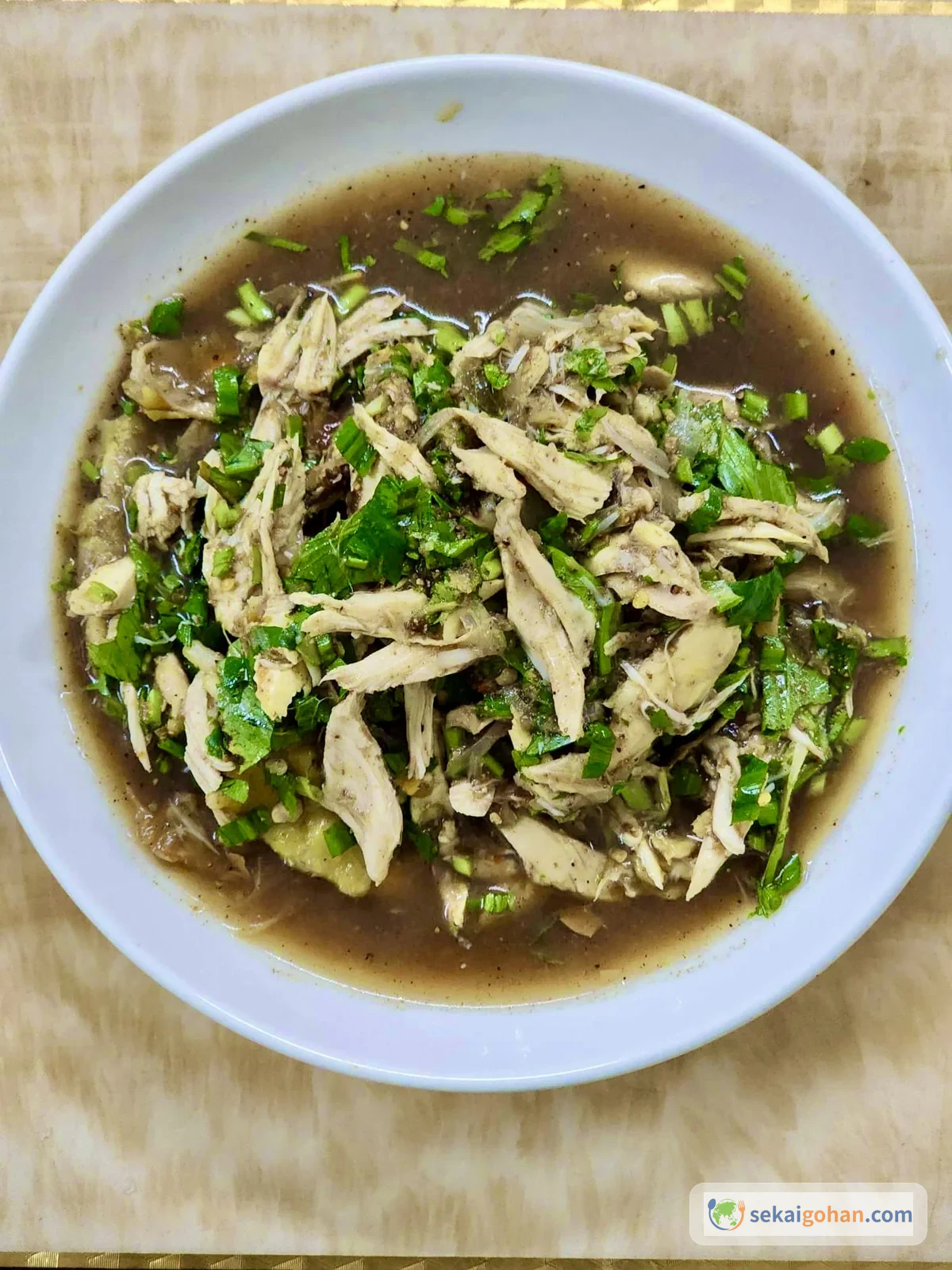
Laab is eaten with lettuce, cucumber and sticky rice. If you season the meat alone to the right saltiness, it will seem bland when eaten with the vegetables. Check the taste by putting a little on a small piece of lettuce or dipping a bit of sticky rice in it.
Common laab mistakes and how to fix them
Laab comes together in minutes, so mistakes show up in the taste right away. The two that matter most are letting the warm meat turn oily and skipping the toasted rice powder. Beyond that, five problems come up often, and each has a simple cause.
Watery
If you add lime and fish sauce while there's too much liquid in the pan, the flavor thins out. If the ground chicken gives off more than 4 tbsp of liquid, reduce it a little or spoon off about 2 tsp. Khao khua absorbs water, but it can't soak up all of it.
Tough meat
Fry ground meat hard in oil and it forms small lumps that won't blend with the herbs. Laab meat is less a stir-fry than "cooking through while breaking it up in a little water." Adding the water or stock before you turn on the heat keeps the meat from suddenly shrinking.
Blackened herbs
Herbs turn black if they go into very hot meat that then goes back on the heat. Turn off the heat, mix in the seasonings, and add the herbs once the meat has cooled a little: warm, not steaming.
Sharp sourness
Right after the lime goes in, the sourness is sharp. Before reaching for sugar, stir in the khao khua and wait 30 seconds; as the rice powder absorbs the liquid, the sourness softens. Only if it's still sharp, add 1/4 tsp sugar.
Bitter khao khua
When the heat is too high, the outside of the rice blackens while the inside stays white. Scorched grains are strongly bitter, and even a few spread through everything. Use medium-low heat and go by smell, not color: sweet and nutty means success, smoky means you've gone too far.
In its homeland, laab is also made with raw or nearly raw meat. At home, cook chicken, pork and beef all the way through to the center. Ground chicken in particular has bacteria throughout, not just on the surface, so cook until the color has changed completely.
Serving and storing laab
Laab isn't complete on its own. Set sticky rice, cucumber, cabbage, lettuce and herbs beside it and it starts to feel like a Lao table, with the vegetables and rice taking up the saltiness and sourness of the meat bit by bit.

Sticky rice or lettuce wraps
For the most Lao experience, steam sticky rice. Rinse it lightly, soak it for 3 hours or more if you can, and steam it for 25 to 30 minutes; a rice cooker's sticky rice (okowa) mode also works. Roll it into small balls and dip them lightly in the laab juices, and the toastiness of the khao khua comes back through the rice.
On a weeknight, lettuce wraps are plenty. Pile laab, cucumber and mint on lettuce and squeeze a little lime over, which is also handy when you're cutting carbs. Laab is seasoned to be eaten with rice, though, so for lettuce alone, reduce the fish sauce to 2 tbsp.
What to serve with laab
Another Lao dish, khao piak sen, balances soup against meat salad. Leaning Thai, set it beside som tam or pad thai, and the differences in sourness, heat and sweetness make for a fun table. Once you know laab, the sourness of som tam, the herbs of gapao rice and the sticky rice of khao piak sen start to feel connected.

| Occasion | Combination | Reason |
|---|---|---|
| Weekday dinner | Laab, white rice, cucumber, miso soup | Little shopping; the herbs bring the variety |
| Weekend Southeast Asian meal | Laab, sticky rice, som tam, omelet | Vegetables take the sourness and heat |
| When guests come | Laab, khao piak sen, pad thai, fruit | Soup, meat and noodles in small amounts |
| To go with drinks | Laab, lettuce, cucumber, nuts | Skip the rice for a light snack |

Finish with something sour, like pineapple or grapefruit. After the strong fermented flavors and herbs of a Lao meal, it clears the mouth better than a sweet cake would.
Storage and make-ahead
Laab is best freshly made; over time the herbs blacken and the lime goes flat. To get ahead on a weeknight, keep the components separate. Cook the ground chicken without seasoning, refrigerate it, then warm it lightly and mix in the lime, fish sauce, khao khua and herbs just before eating. Wash the herbs, wipe them dry and wrap them in paper towels, and keep the khao khua as toasted whole rice, crushing it at the last minute.
Finished laab keeps in an airtight container in the refrigerator until the next day. Reheating wilts the herbs, so eat it cold in lettuce wraps, and if the flavor has gone blurry, a little lime and 1 tsp more khao khua usually bring it back. Don't freeze finished laab: it loses the aroma of herbs and lime and turns watery on thawing, though the cooked meat alone can be frozen.
Leftovers make a good lunch spooned over rice with a fried egg. You can also stir-fry them like nasi goreng, though at that point it's really "herb crumble rice" rather than laab.
| What to store | How long | Tip |
|---|---|---|
| Cooked ground chicken | 1 day refrigerated | Store before seasoning. Warm before eating |
| Khao khua | Toasted rice keeps 1 week at room temperature | Crush just before |
| Washed herbs | 2 days refrigerated | Wipe off water and wrap in paper |
| Finished laab | Refrigerated until the next day | Don't reheat; use in lettuce wraps |
Frequently asked questions

Q1. Is laab a warm dish or a cold dish?
Somewhere in between: warm meat is seasoned and eaten close to room temperature, not piping hot like a stir-fry. Season right after cooking the meat, mix in the herbs and eat at once for the best balance of aroma and meat juices.
Q2. Is sticky rice essential?
Not essential, but serve it if you can. The saltiness and sourness of laab come out right when eaten with sticky rice. If you use white rice instead, go a little lighter on the fish sauce.