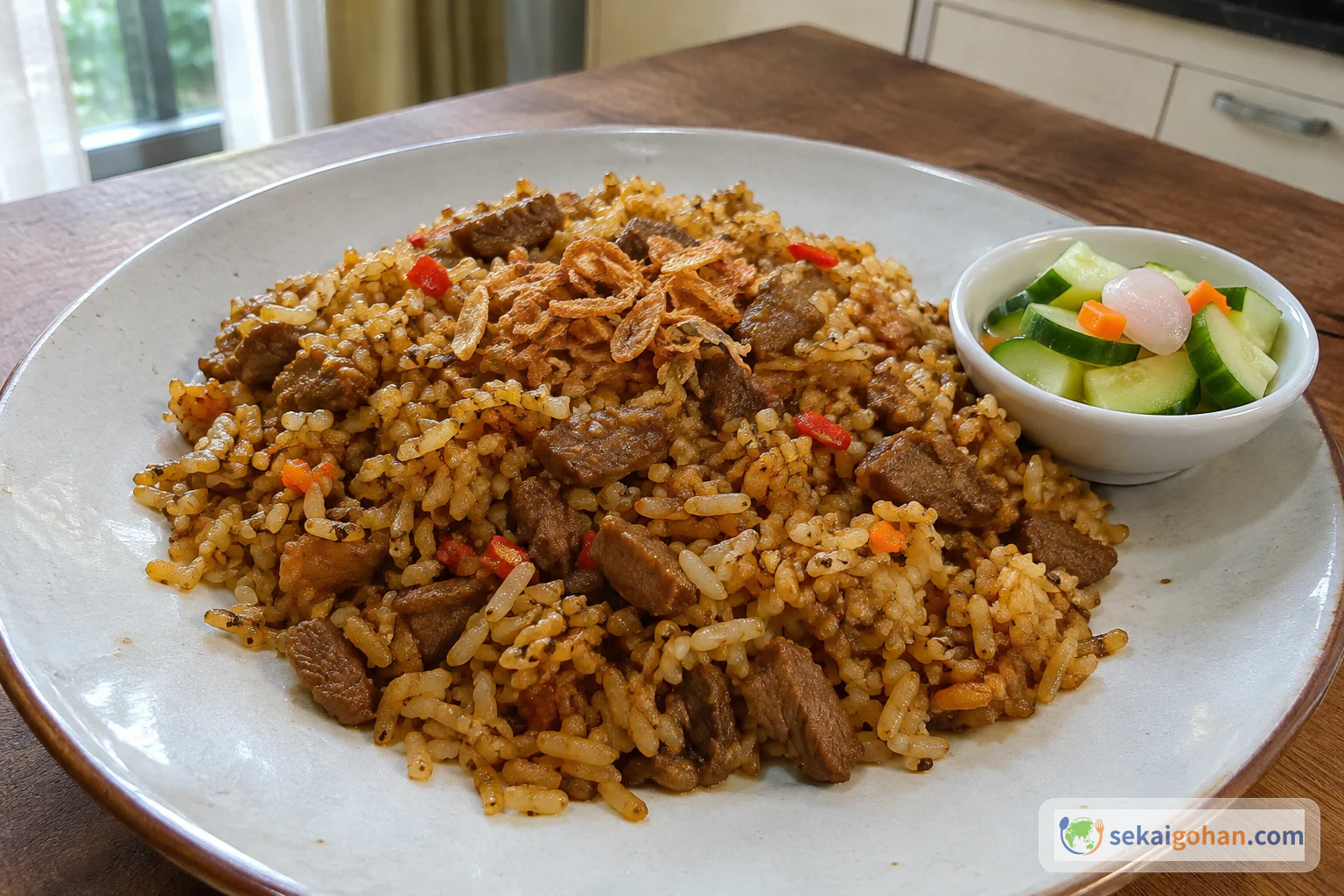
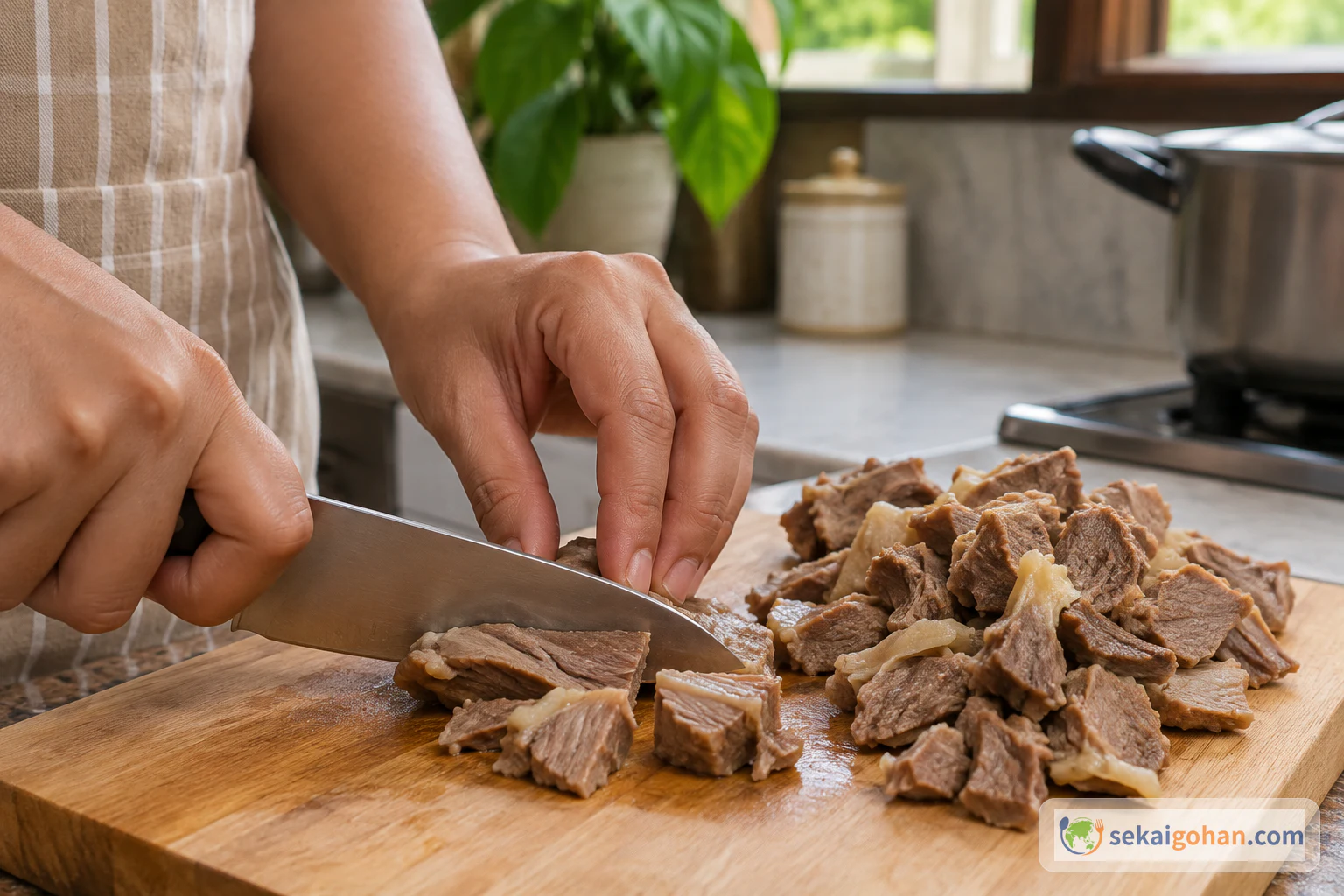
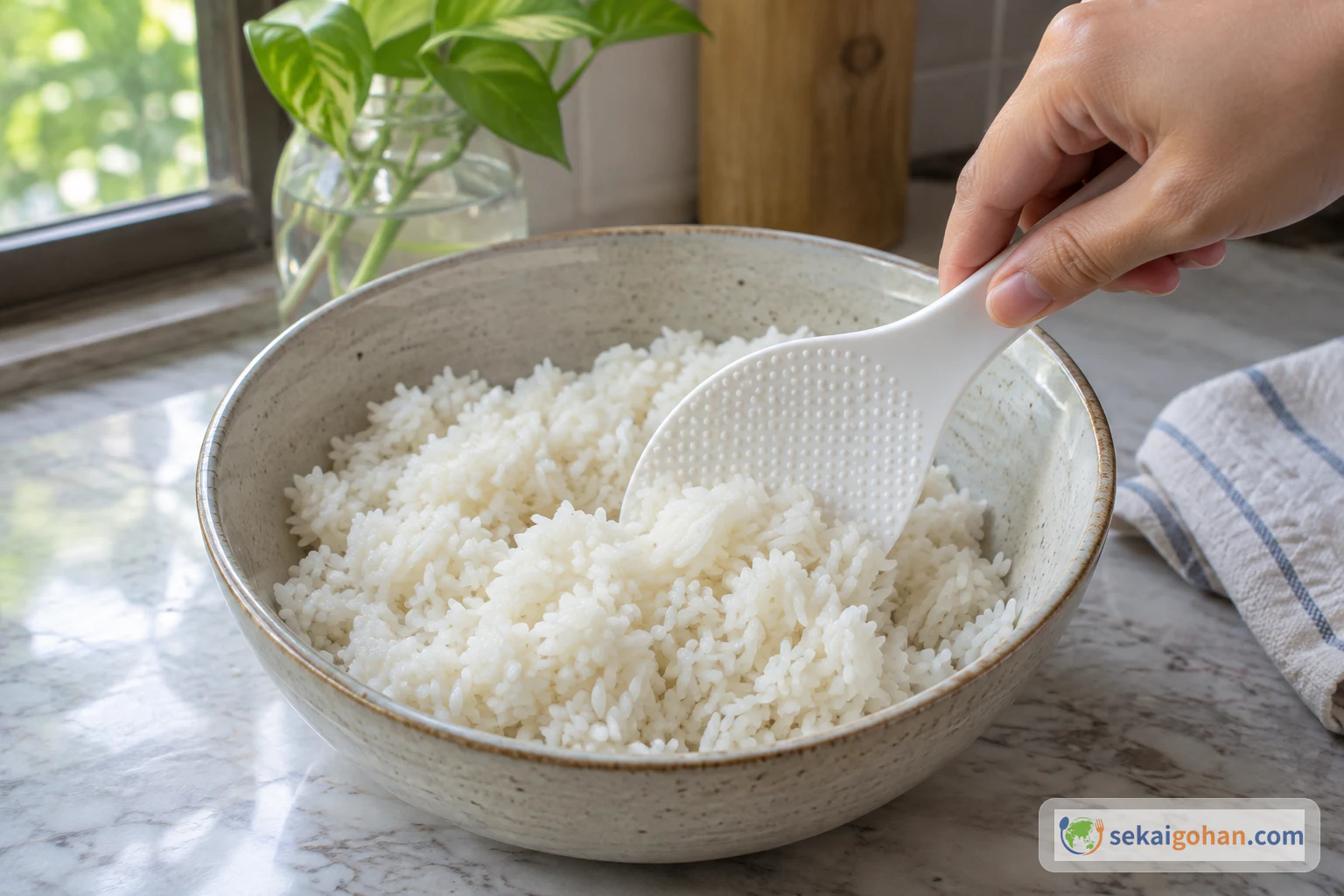
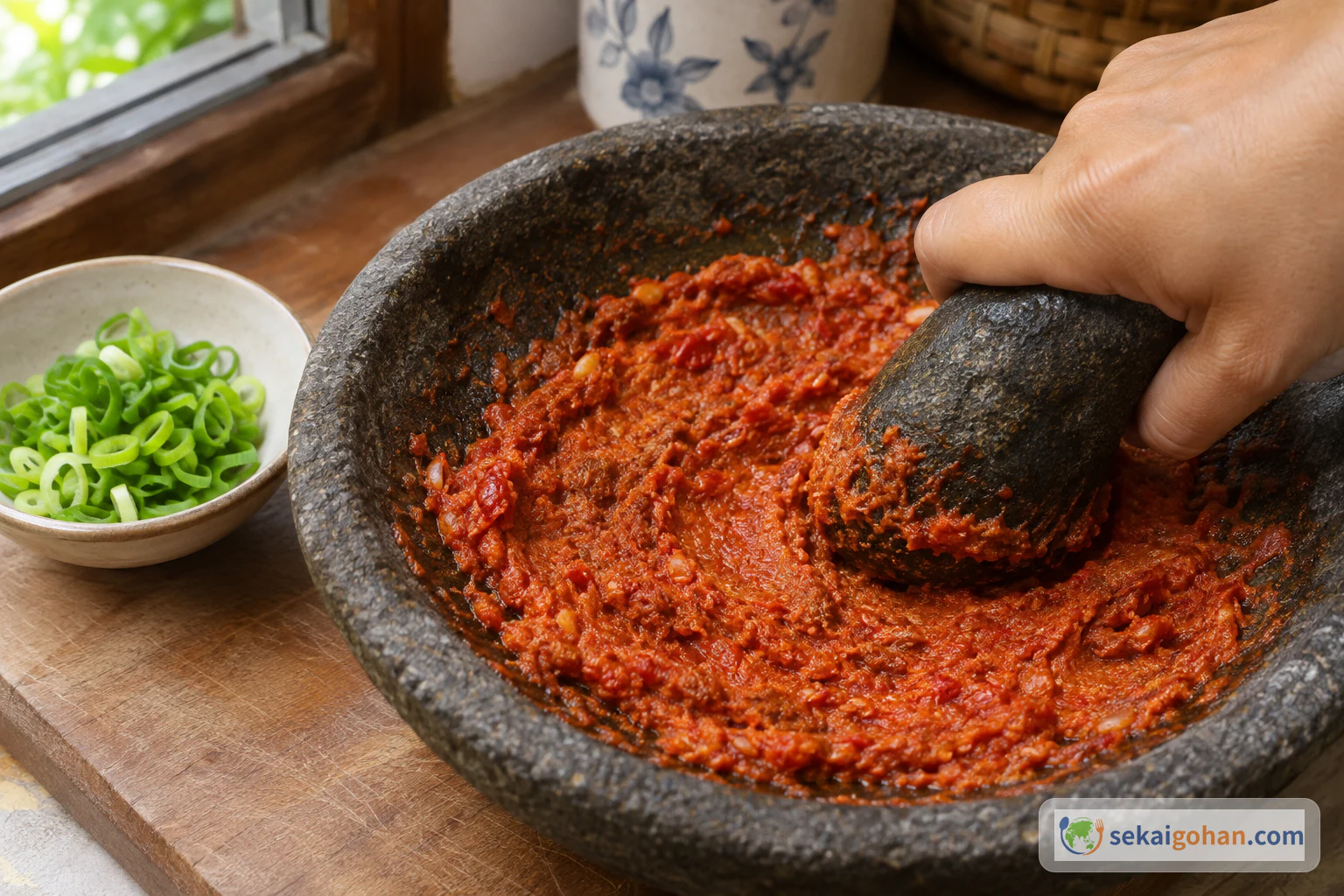
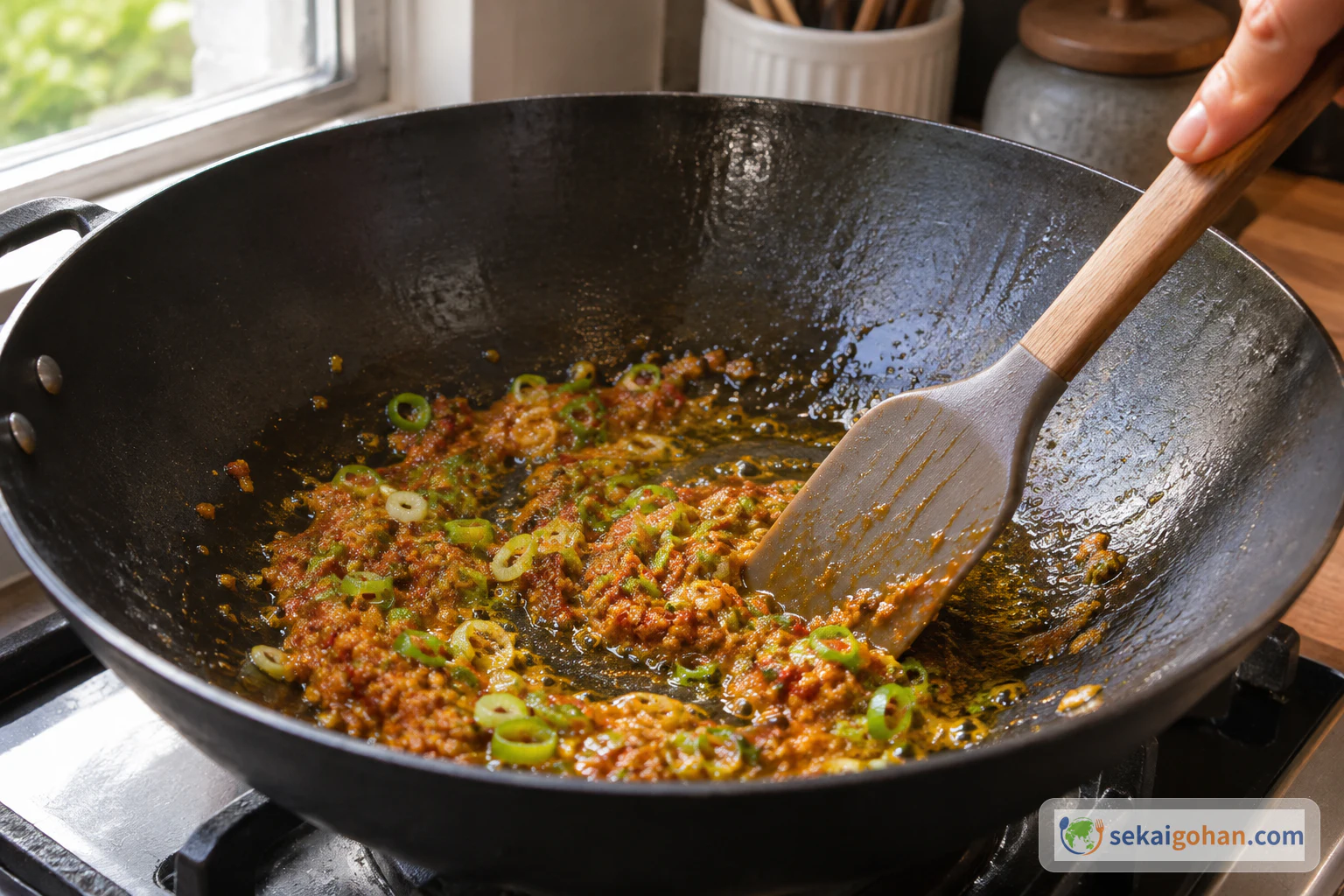
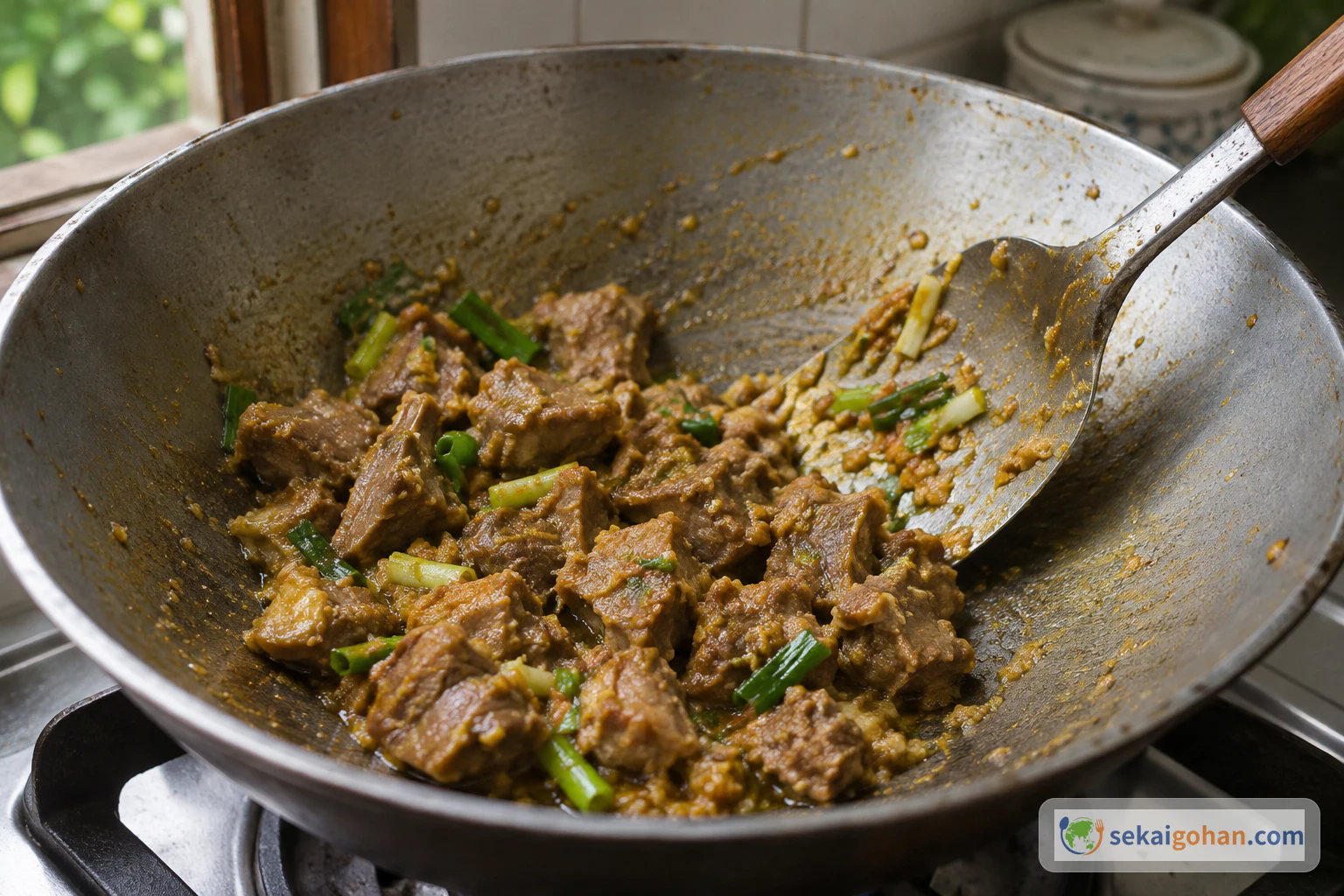
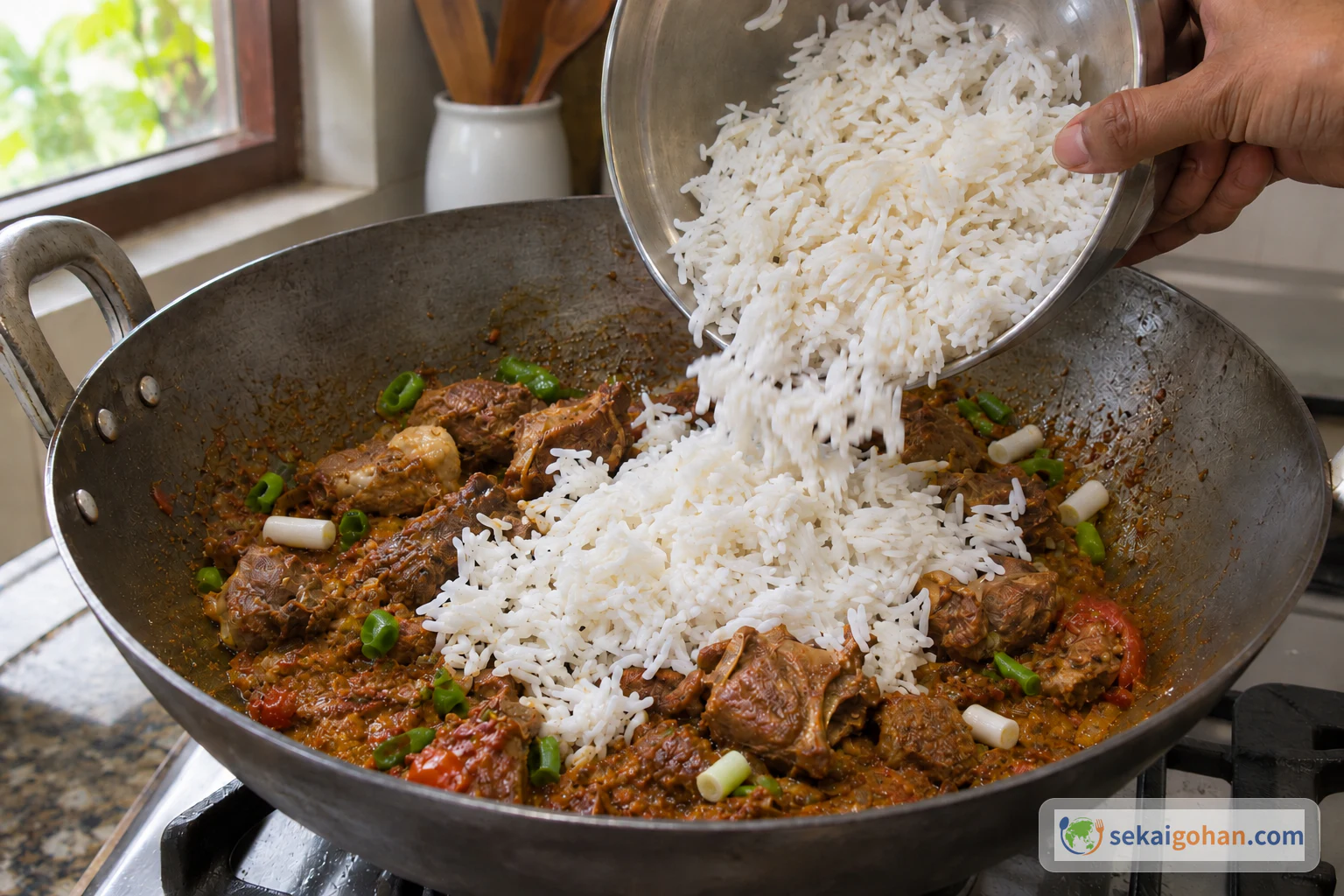
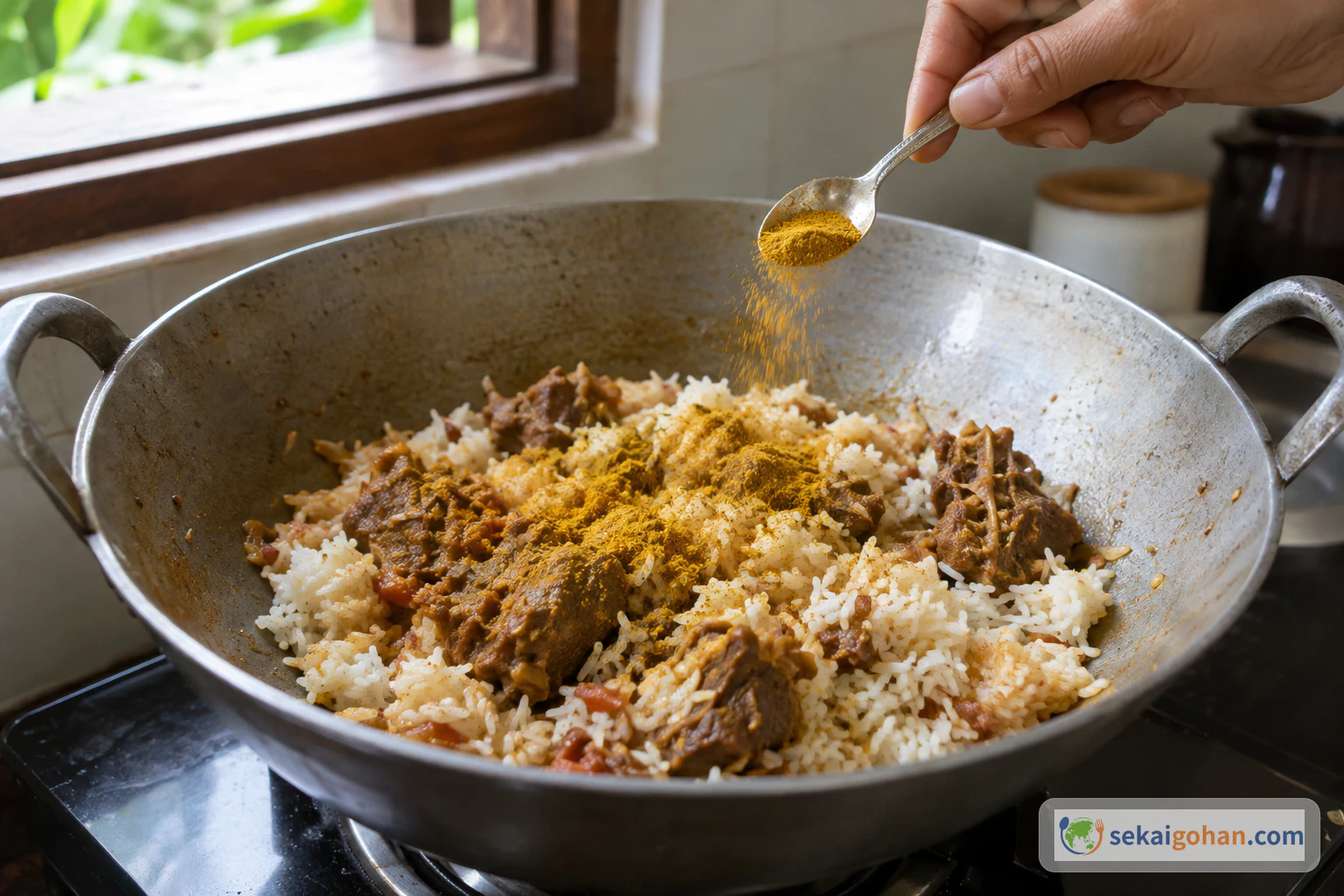
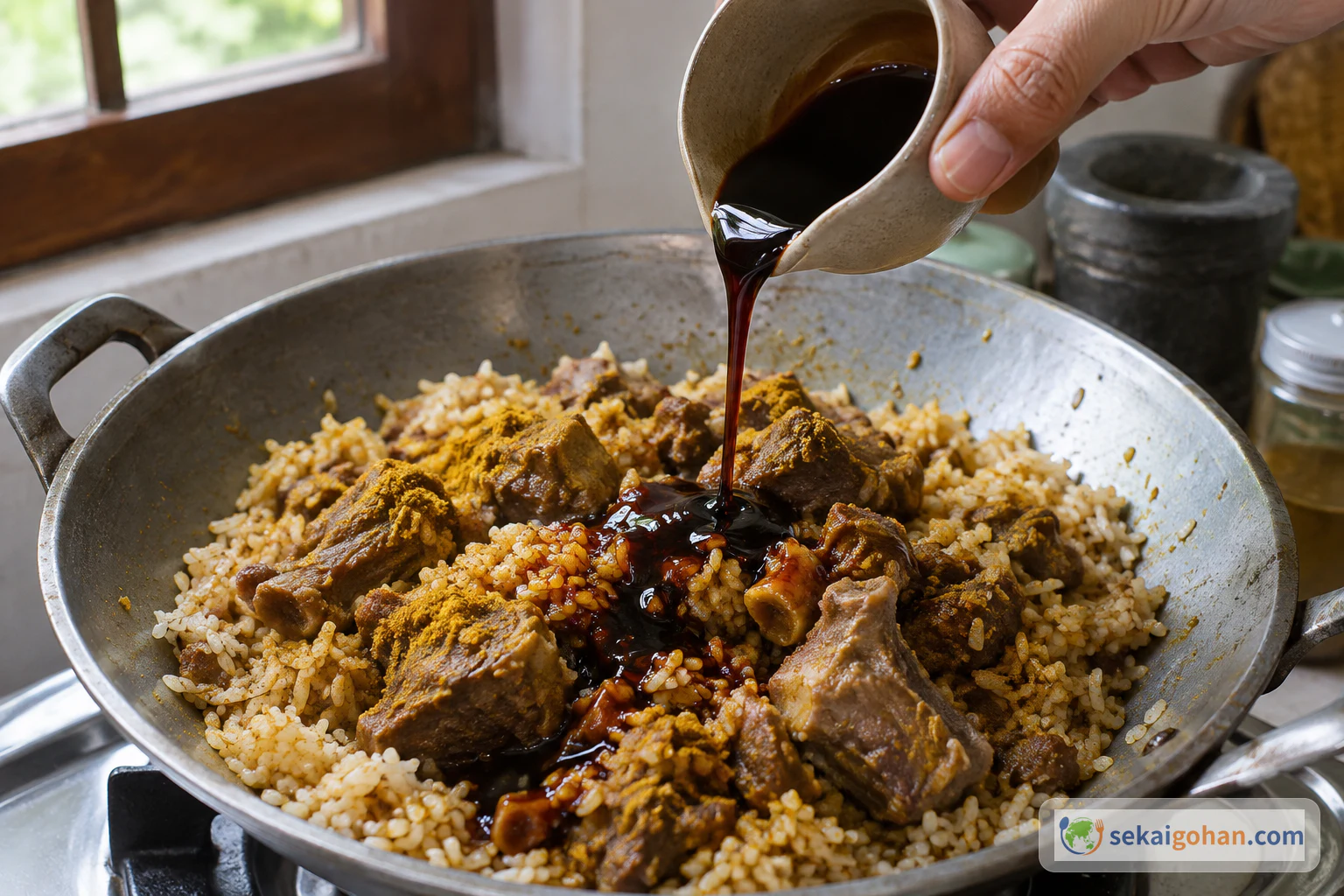
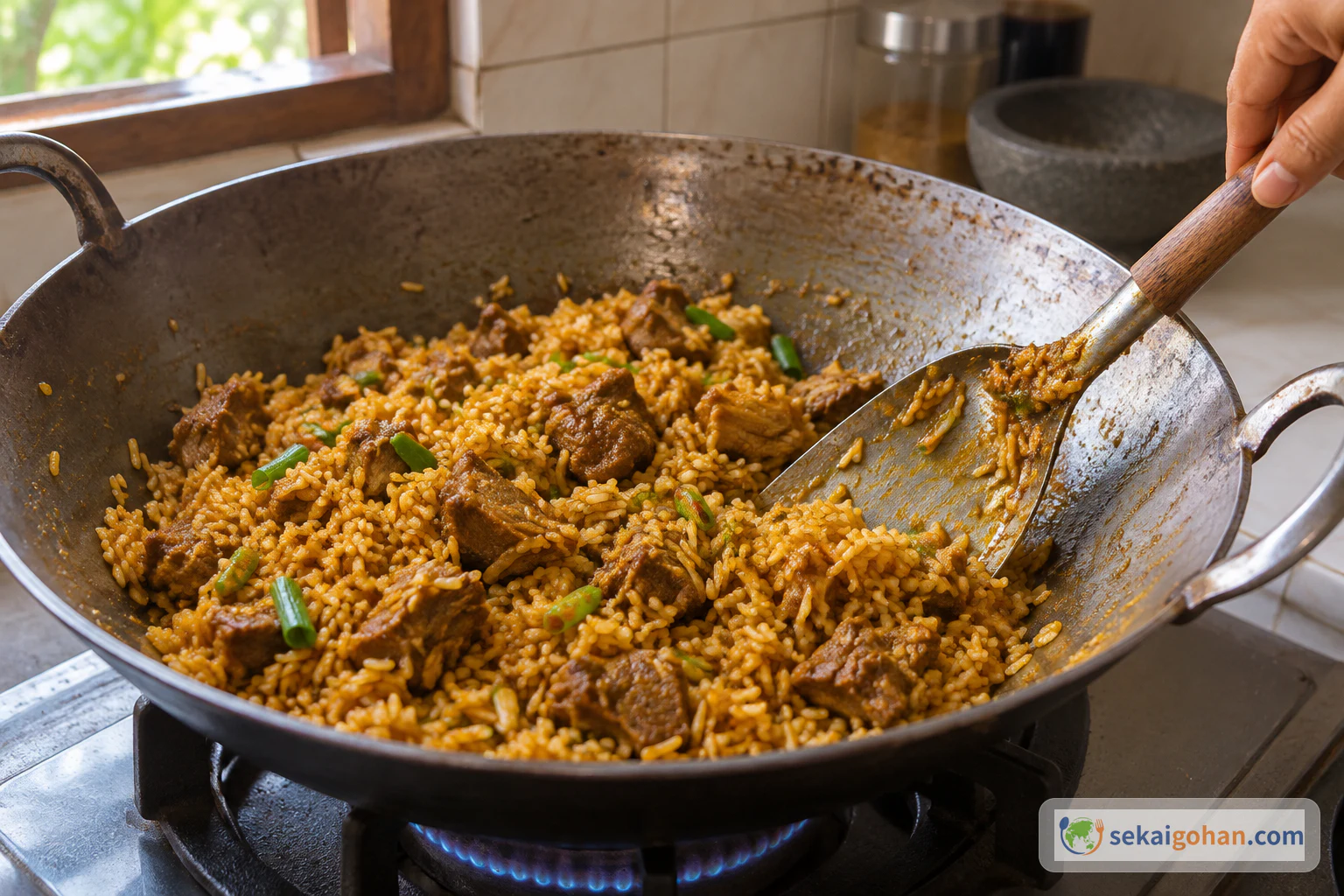
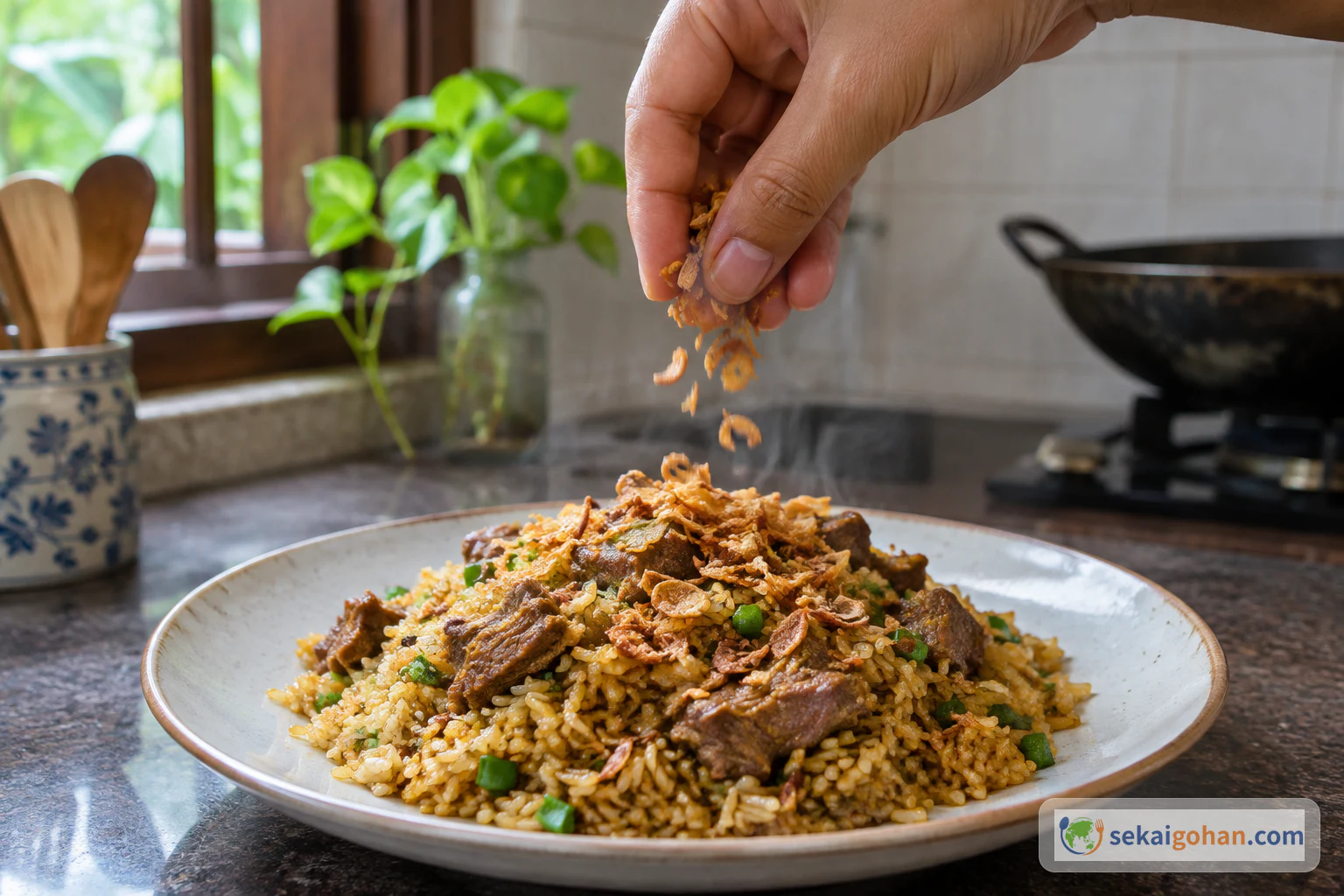
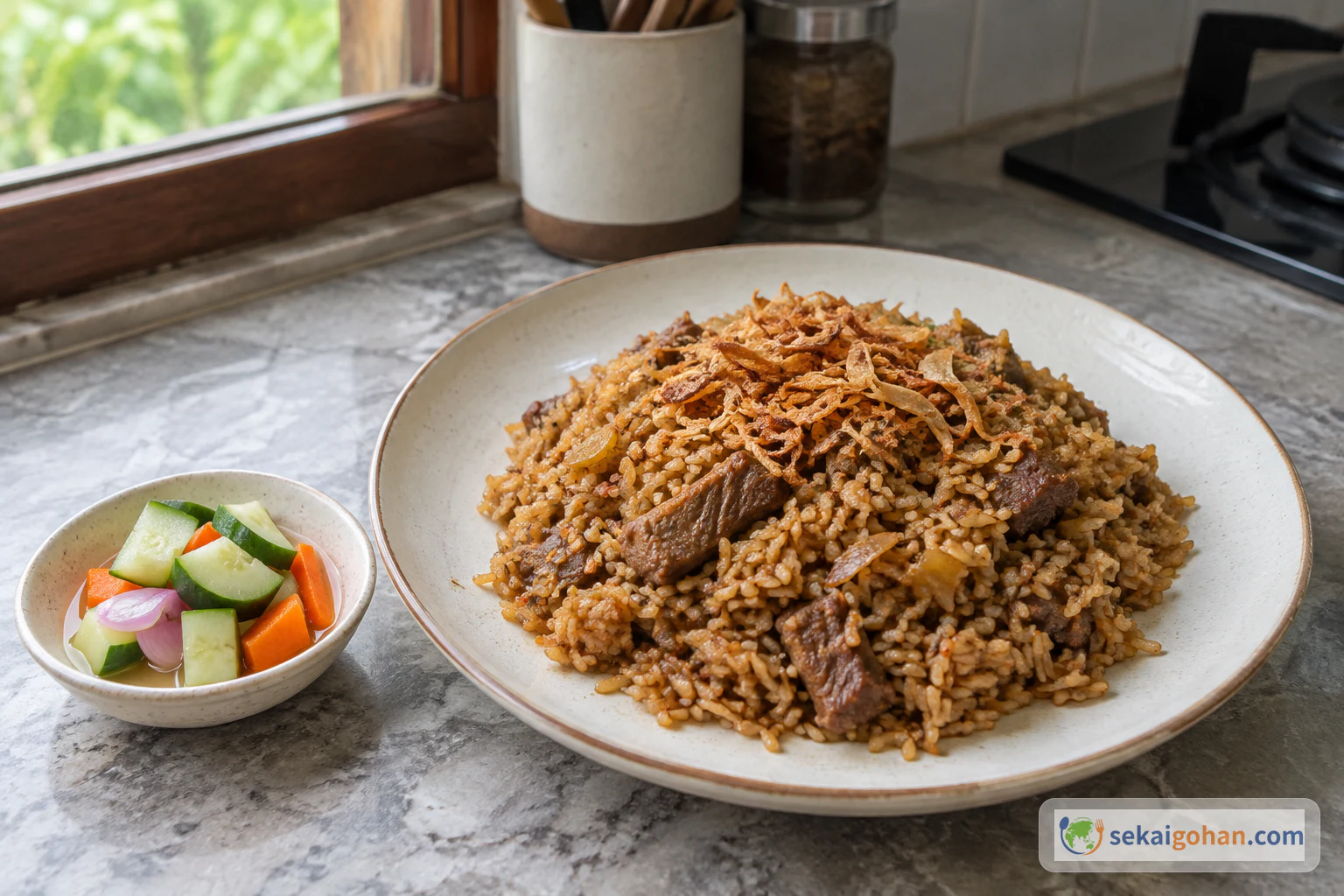
A red paste of chilies, shallots, garlic, ginger and fried shrimp paste sizzles in oil with sliced scallion. Small pieces of cooked goat go in and take on its color, then the rice follows, dusted with curry powder and glossed with dark, sweet kecap manis. Crisp fried shallots go on top, with cucumber pickle on the side. Nasi goreng kambing is a spicy, satisfying goat fried rice from Java, and it makes a fine special breakfast.
About Nasi Goreng Kambing
The name is simple: nasi means rice, goreng means fried, and kambing means goat. The dish comes from Jawa (Java), though cooks make it in many ways. For more dishes from the same country, see Indonesian recipes on Sekai Gohan.
Nasi goreng kambing has no single fixed formula. One version serves 4 and uses goat meat and goat fat, more chilies, scallion and cabbage. The meat is fried first, then the spice paste, meat and rice are fried together, and it comes to the table with egg and emping crackers.
It also sits among other Indonesian dishes. General nasi goreng is often made with chicken, and sate kambing uses goat in a completely different way, as grilled skewers. Mie goreng applies similar frying to noodles, while nasi liwet cooks the rice with its flavorings instead of frying it afterward.
Rice and Goat Safety
Spores of Bacillus cereus can survive cooking. Rice that was not cooled and stored properly cannot be made safe by frying it again.
Both the goat and the rice are cooked ahead, so the frying itself stays short. The goat is cooked beforehand, grilled or boiled (here it is boiled), and the rice is cooked and chilled. That makes the cooling and reheating rules as important as anything you do at the stove.
- Cool the rice fast. After cooking, divide the rice into portions and cool it as quickly as possible, getting it into the refrigerator within 1 hour. Spread it out of the rice cooker, steamer or pot to cool.
- Keep it cold. Keep your refrigerator at 39°F (4°C) or below. Refrigerate cooked goat quickly in shallow containers as well.
- Use it within a day. Use refrigerated rice within 24 hours, and reheat it only once.
- Heat it through. Reheat leftovers to 165°F (74°C) or higher. The rice and goat should be steaming hot all the way through; steam or a browned surface doesn't prove the temperature, so check with a food thermometer. Serve immediately.
- Watch the two time limits. Refrigerate perishable food within 2 hours, or within 1 hour if the room is above 90°F (32°C). For rice, aim for the 1-hour target.
- Skip uncertain starting points. Avoid takeaway rice that has already been reheated, and meat whose storage history you don't know.
- Keep raw and cooked apart. Use separate boards and utensils for raw meat and for foods that are ready to eat.
If you start from raw goat, cook it completely before it goes anywhere near this pan; the stir-fry is far too short to cook raw meat. Cook goat steaks, roasts and chops to 145°F (63°C) and rest them for 3 minutes. Cook ground meat to 160°F (71°C).
Ingredients for 3 Servings
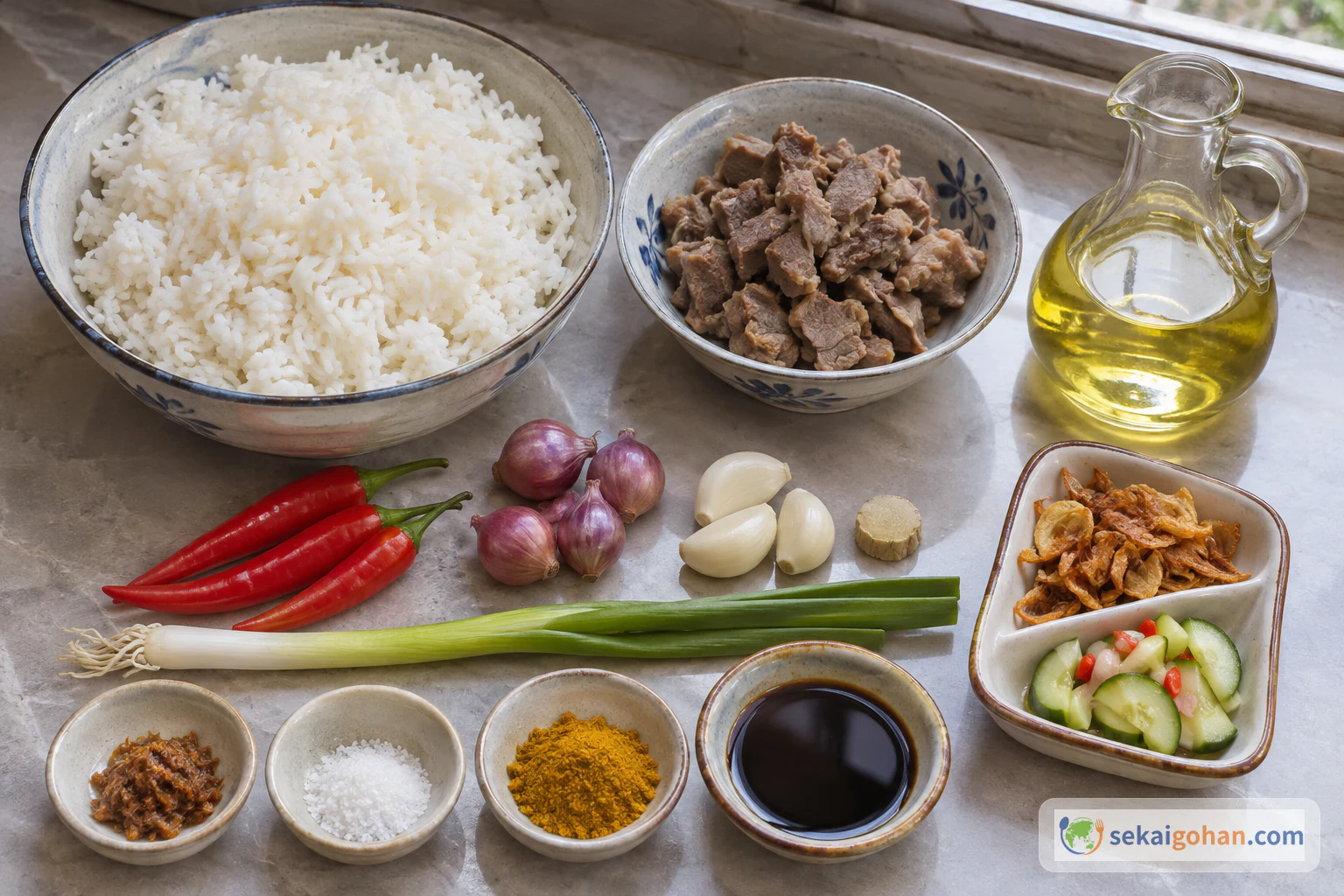
Cook the goat and the rice ahead of time, and have both cold from the refrigerator before you start.
Terasi goreng is shrimp paste that has already been fried, and it contains crustaceans. Check the label of every ready-made product for allergens. Kecap manis is a thick, sweet Indonesian soy sauce; it is not tomato ketchup. Use ready-to-eat fried shallots and a ready-made cucumber pickle, and follow their labels.
Equipment
- Knife and a clean board kept for cooked food
- Rice paddle or large spoon
- Mortar and pestle, or a small chopper
- Wide frying pan or wok with room to toss 14 oz (400 g) of rice
- Flat spatula
- Food thermometer, if you want to check the final temperature
- Serving plates and a small side dish for the pickle
Choosing Ingredients for Nasi Goreng Kambing
Goat, not lamb. Use boneless goat boiled separately until fully cooked. Grilled goat works too and brings more browned flavor with less moisture. Lamb has a different aroma and fat, so it makes a different dish. Leave out meat from a spiced stew or satay as well, since its seasoning would throw off the balance here.
Cold rice. Nasi putih dingin means cold white rice. Use rice that was cooled quickly and refrigerated, as described above; rice left out at room temperature won't do.
Terasi. This fried shrimp paste gives the dish savory depth and aroma. Terasi contains shrimp, so if anyone at the table has a shellfish allergy, leave it out completely and check labels. The result will be lighter and less savory. Fish sauce in the same amount is not a stand-in.
Chilies. Three red chilies with their seeds give real heat. For a milder plate, remove the seeds or use fewer, knowing the flavor will change.
Shallots. Small red shallots are the ones meant for the paste. Red onion would add more moisture and sharpness, and sliced onion has no place in this fried rice.
Kecap manis. Indonesian sweet soy sauce varies by brand in sweetness and thickness. If yours tastes too sweet, try a different kecap manis next time rather than mixing ordinary soy sauce with sugar in an untested ratio.
Cucumber pickle. Buy ready-to-eat acar timun (cucumber pickle); some products also contain carrot and onion.
Method
The goat is already cooked and the rice is already chilled. Get the paste ground and everything within reach before the oil goes in, because the frying moves quickly.
Fixing Nasi Goreng Kambing Problems
| Problem | Possible cause | What to do |
|---|---|---|
| Rice stays in clumps | Clumps weren't broken up before frying | Loosen the cold rice thoroughly with a paddle before it goes into the pan |
| Rice turns sticky or mushy | The pan may be too crowded, or the rice may hold extra moisture | Use a wider pan, leave room to toss, and fry in more than one batch if needed |
| Flavor seems flat | The paste may not have been fried long enough, or ingredients may differ | Before changing any amounts, check that the paste was fried until fragrant and that you used terasi goreng and kecap manis |
| Too sweet | Brands of kecap manis vary | Next time, try a less sweet kecap manis |
| Too hot | Three chilies with their seeds | Next time, remove the seeds or use fewer chilies, knowing the flavor will change |
| Not hot in the middle | Rice or goat went in too cold, or the pan was crowded | Keep stirring until steaming hot all the way through. If the rice was not stored properly, throw it out rather than cooking it longer |
Serving Nasi Goreng Kambing
Bring the fried rice to the table as soon as it is steaming hot, topped with crisp fried shallots. Serve the acar timun in its own small dish so its crunch and tang stay separate from the rice.
Frying the chilled rice already counts as its one reheat. Cook only what you will eat, and skip storing and reheating the finished fried rice.
Frequently Asked Questions
What is kecap manis?
Indonesian sweet soy sauce: thick, dark and sweet, and nothing like tomato ketchup. Ordinary soy sauce won't replace it directly.
How long does it take?
Allow 30 minutes for 3 servings. Cooking and chilling the rice and goat happen beforehand, so plan that time separately.