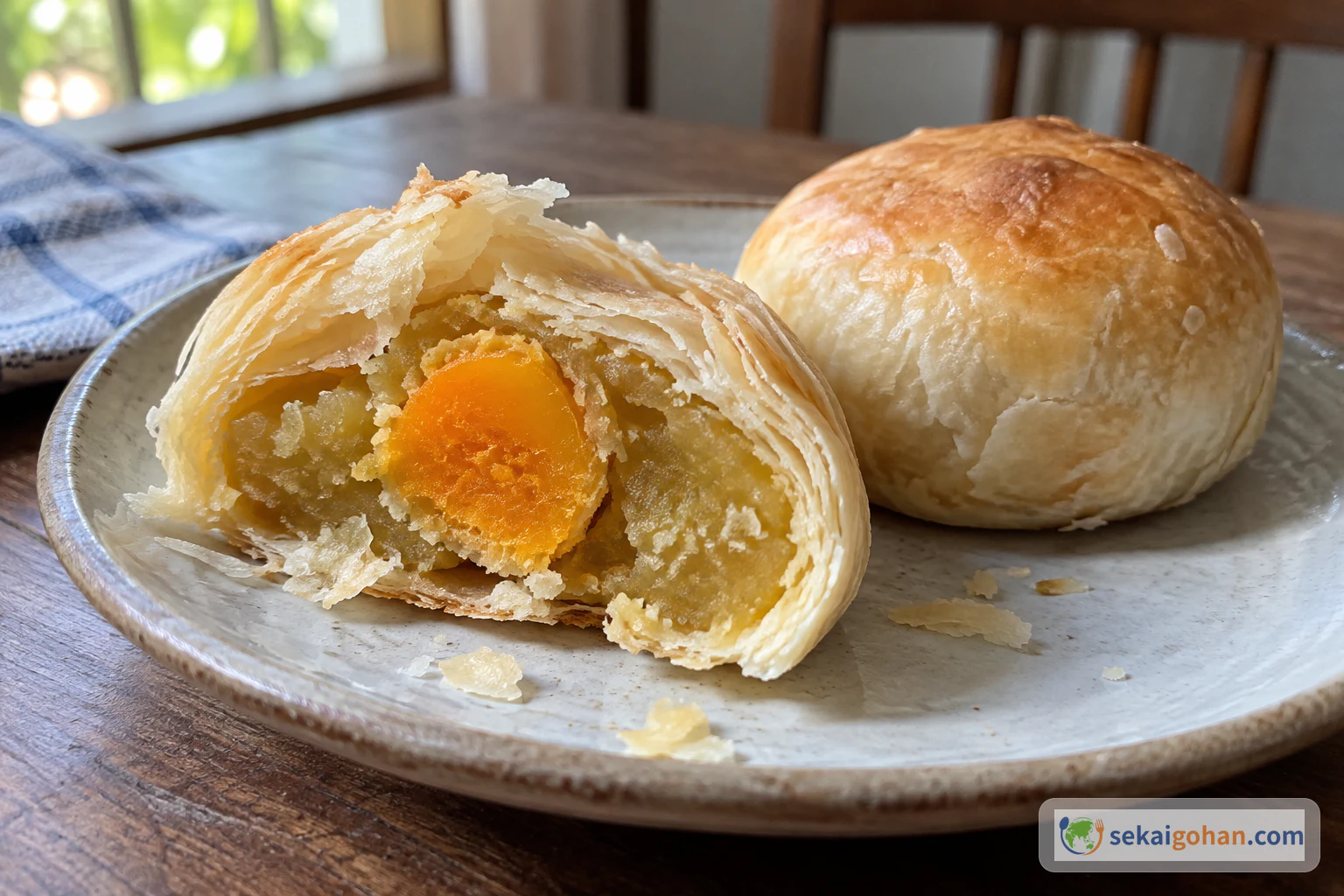
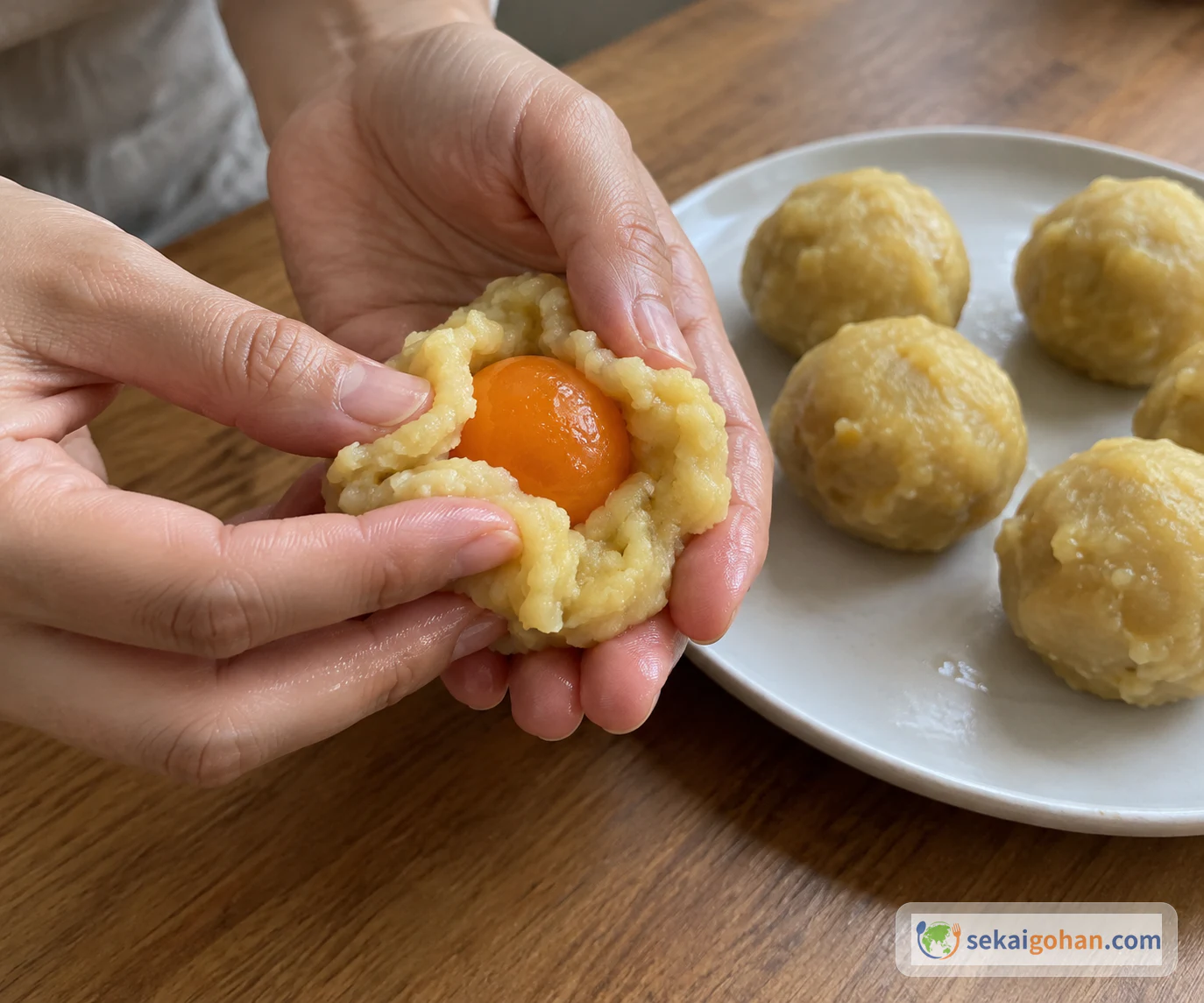
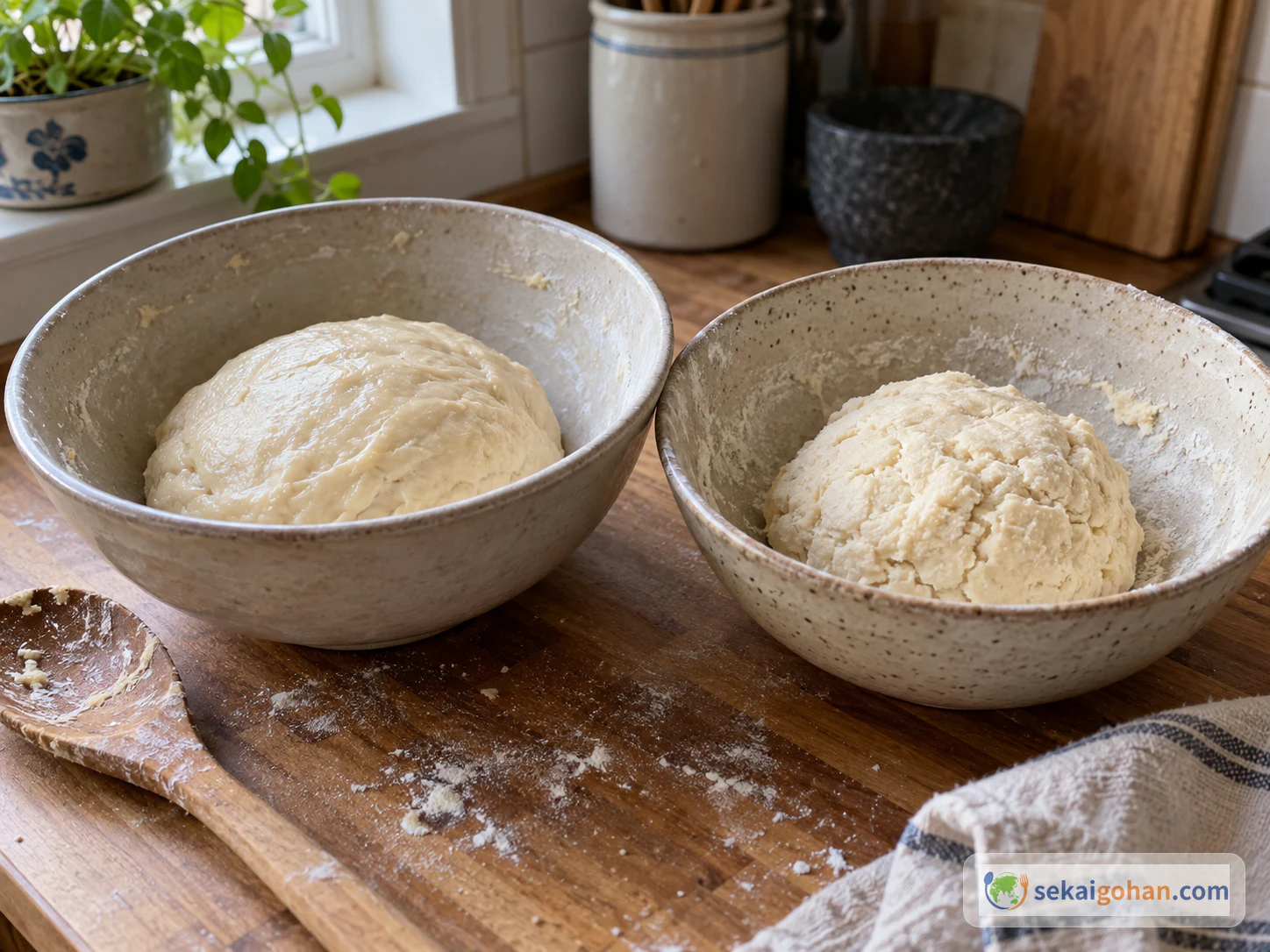
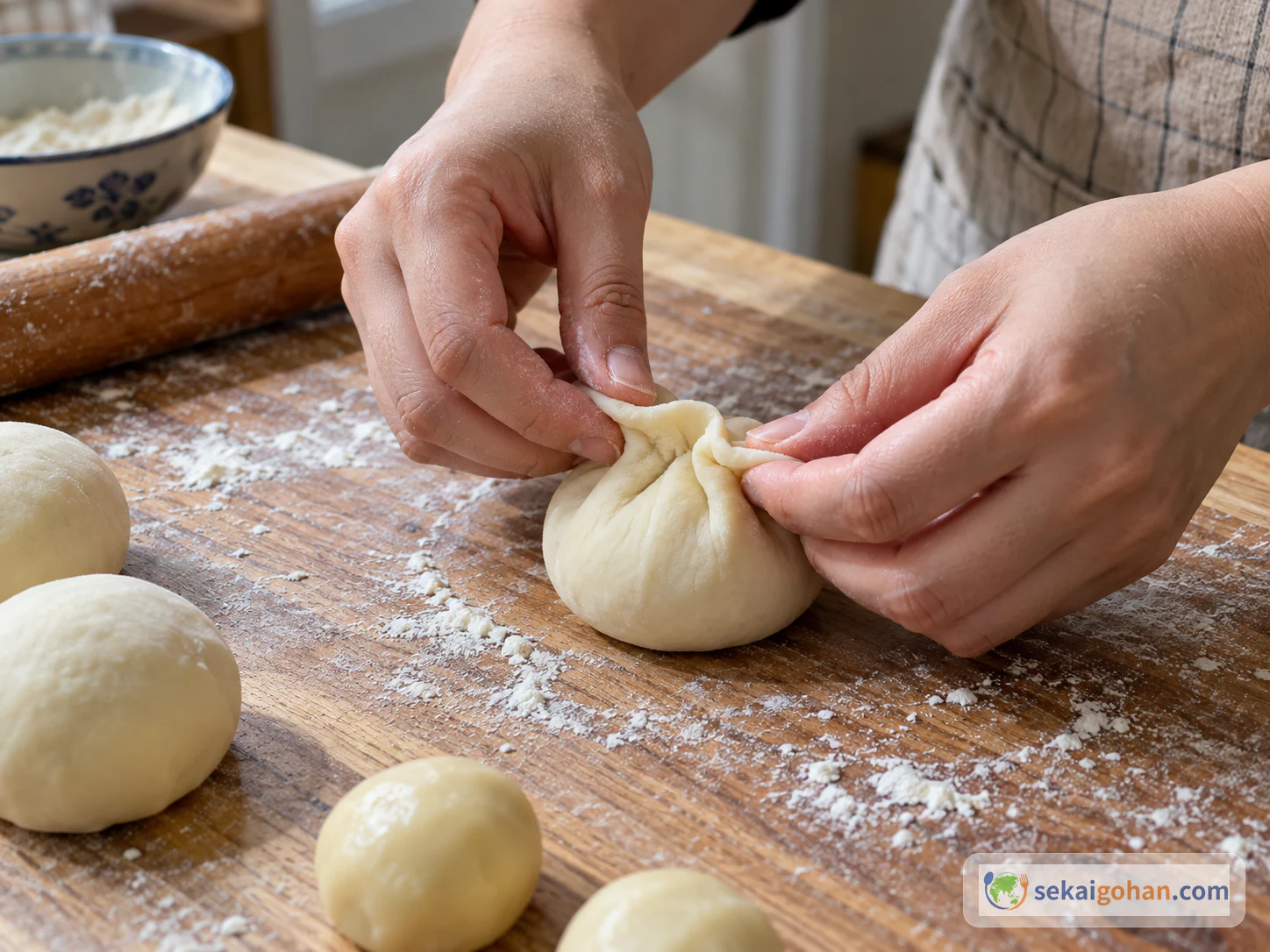
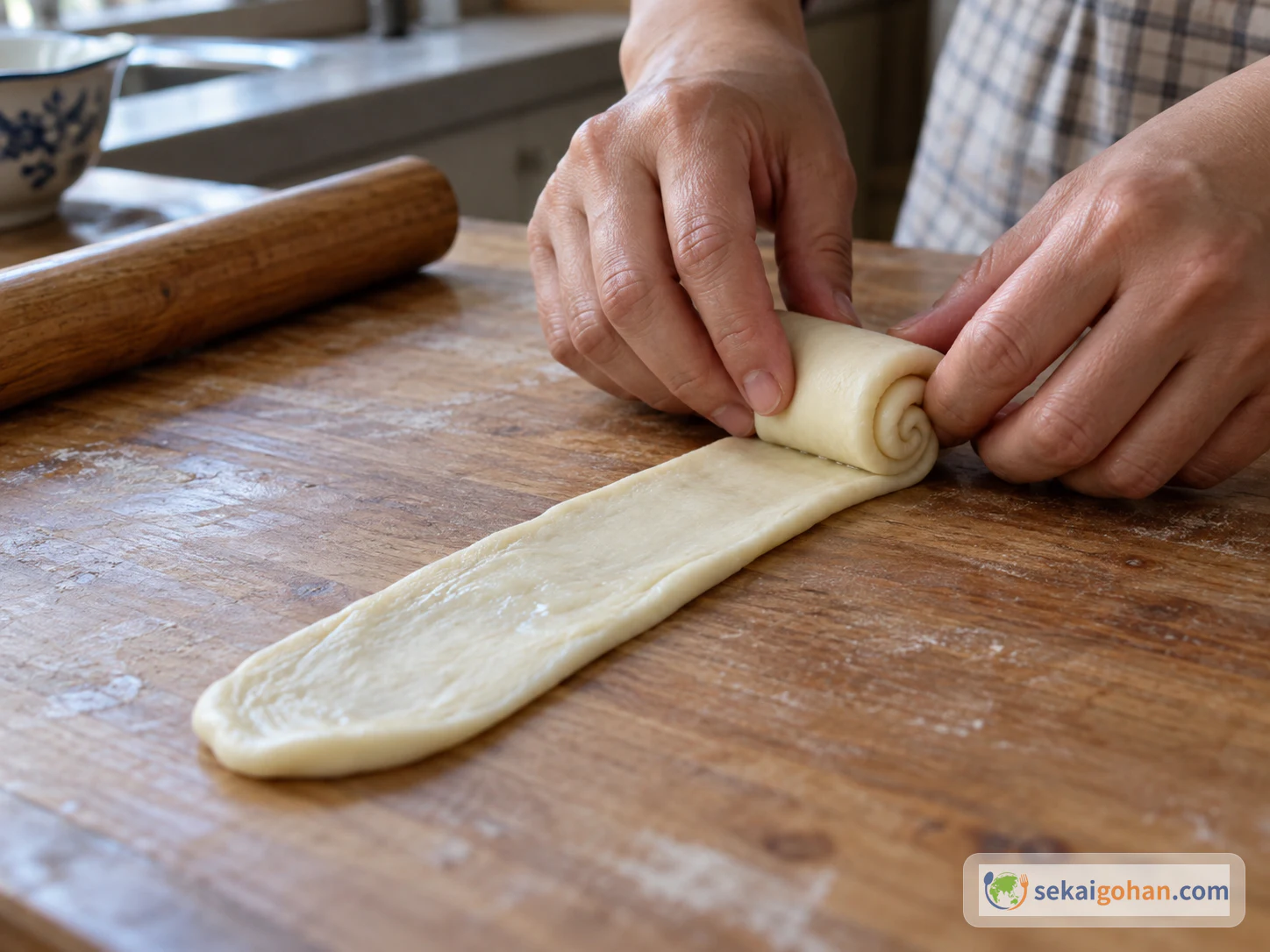
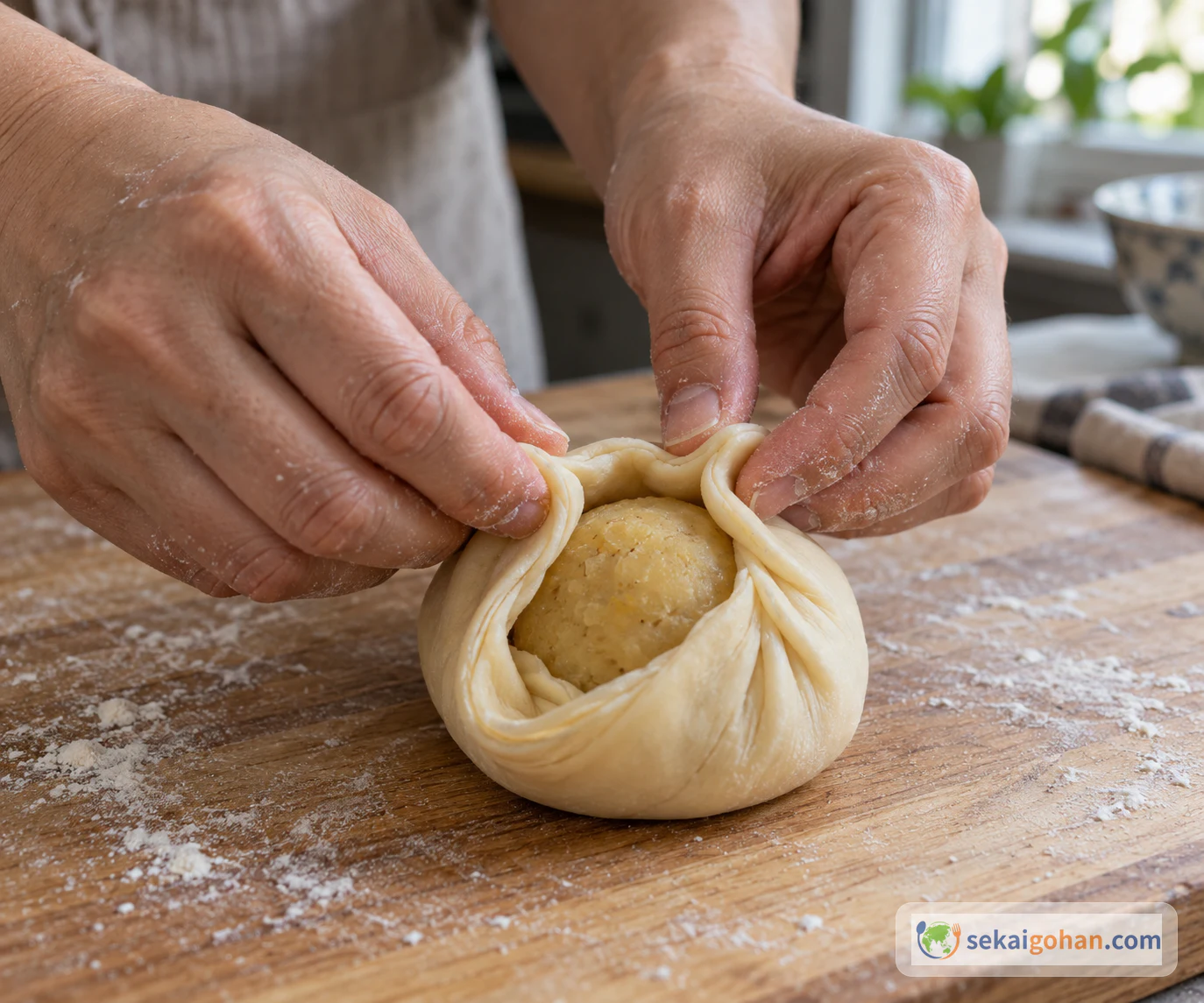
Break a bánh pía in half and the baked crust gives way in thin, papery sheets. Inside is a pale filling of mung bean and durian, and right in the center sits one round salted duck egg yolk. The pastry comes from Sóc Trăng in the Mekong Delta, where it's also called bánh lột da, a name for the way its layers peel away one by one. Each bite gives you a flaky, lard-scented crust, mild mung bean, the strong aroma of durian and the salt of the yolk. The layers come from two doughs, a water dough and an oil dough, wrapped and rolled together.
Bánh Pía in Sóc Trăng
Teochew Roots and Village Workshops
Pía (or pi-é) is a Teochew word for cake. The pastry is linked to the Minh Hương (Hoa) community who settled in the region, and to Teochew mooncakes. It came with the Teochew migration to the Mekong Delta, which is dated to either the 16th or the 17th century. The traditional crust has always had two layers, a water dough and an oil dough, made with tapioca starch, wheat flour and fat.
Today bánh pía making is a trade around Phú Tâm, Thuận Hòa and An Hiệp in Sóc Trăng Province. Family workshops in the villages and around Vũng Thơm sell their pastries through shops and markets.
How the Filling Changed
Mung bean was the early filling. Older versions combined mung bean, sugar, fat, a salted vegetable called Can Xại and salted duck egg yolk. Durian came later, through food exchange with the Kinh communities of the south, and more variety followed. Sóc Trăng bánh pía now comes in flavors including durian, salted duck egg yolk, mung bean and taro.
Bánh Pía as a Gift
In Sóc Trăng the pastry often leaves the house as a gift. At Hoa weddings, pía is one of five kinds of cakes presented together under the name "Ngũ phúc kỳ xương." People also give bánh pía at Cúng Trăng, the moon festival of the tenth lunar month, and at Tết. For more dishes from the same country, see Vietnamese recipes.
Ingredients: Two Doughs and a Filling Built Around 12 Yolks
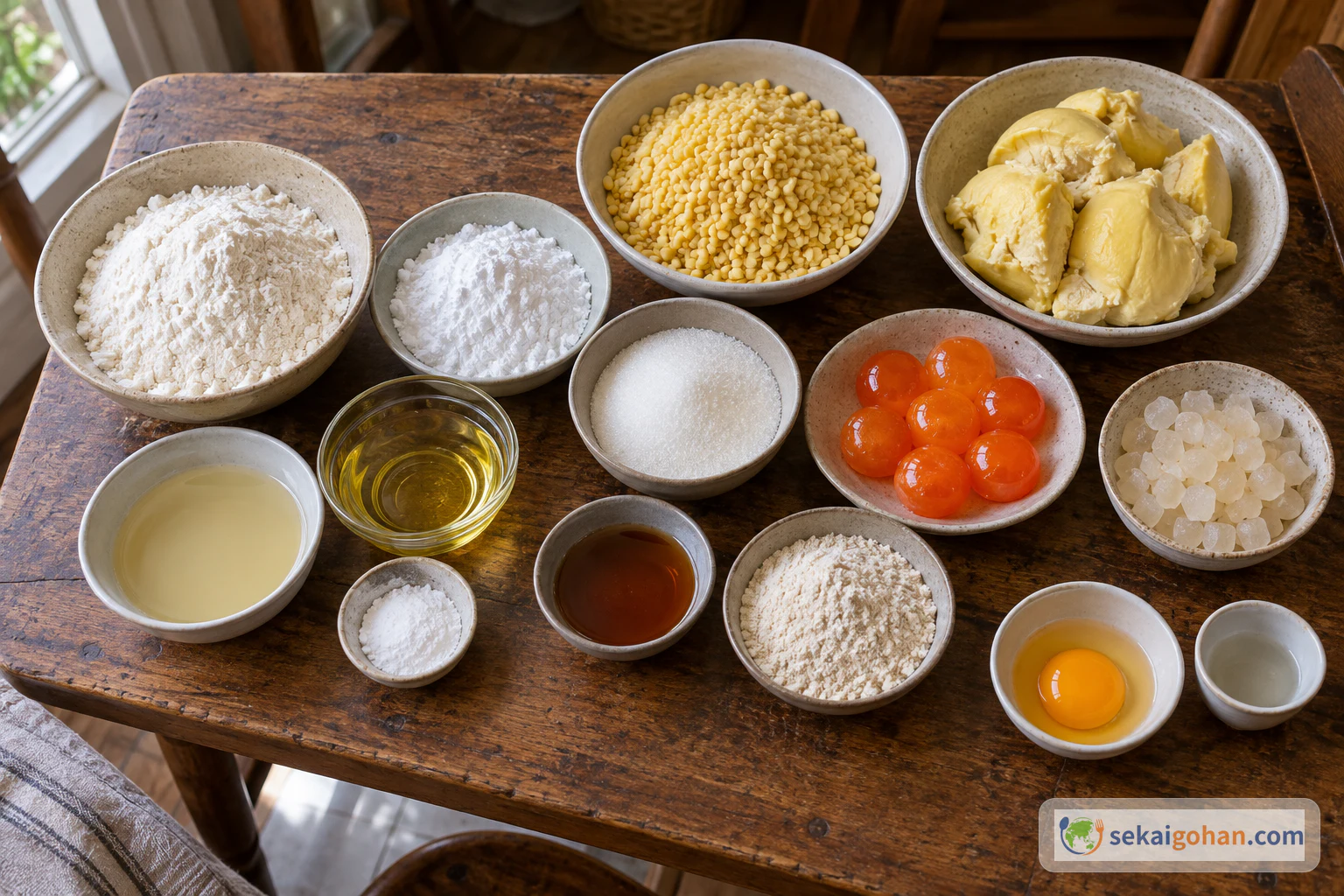
The water dough forms the outer, stretchy layer; the oil dough is wrapped inside it to create the flakes. The filling is divided into 12 balls, each holding one salted duck egg yolk. The chicken egg yolk at the bottom is only for brushing on the surface.
This pastry contains wheat, egg (both duck and chicken) and pork fat. Check the labels of processed items such as salted egg yolks, malt syrup and frozen durian for allergens, including soy and shared-facility statements. Heat the duck yolks until the center reaches 167°F (75°C) for at least 1 minute. Rice wine adds flavor, but it does not make the yolks safe without cooking. Do not leave the pork fat out in the open air at room temperature for a long time. If you stop partway through, refrigerate what you have made, covered, and make sure everything is heated through when you resume.
Choosing Ingredients for Bánh Pía
Wheat flour. Ordinary wheat flour works. You could also use a low-protein flour such as cake or pastry flour.
Tapioca starch. The oil dough uses bột năng, tapioca starch, and potato starch or cornstarch will behave differently. Look for "tapioca starch" or "tapioca flour" at Asian grocers or online.
Durian. The aroma comes from the fruit flesh, so use real durian as the main ingredient instead of leaning on durian essence. If you use frozen durian, thaw it and drain off the extra liquid, because added water makes the filling harder to firm up. Jackfruit and other fruits won't give you the same result.
Salted duck egg yolks. Start from whole salted duck eggs or buy the salted yolks on their own. Saltiness and moisture vary from brand to brand, so check the package, and if the yolks are sold already cooked, follow the label.
Malt syrup. Mạch nha binds the filling. Another syrup will taste different, so treat a swap as an experiment.
Roasted glutinous rice flour. This is the roasted glutinous rice flour sold for bánh dẻo. Raw glutinous rice flour or a starch won't do the same job. Use it only if the filling is still too loose after cooking. If the filling holds its shape once it cools, leave it out.
Lard. You can replace all the lard in both doughs with vegetable oil, but the crust will smell different and come out less tender and flaky. The candied pork fat in the filling is a separate ingredient, and the filling's texture changes without it.
Equipment
- Digital scale that reads in 1g steps
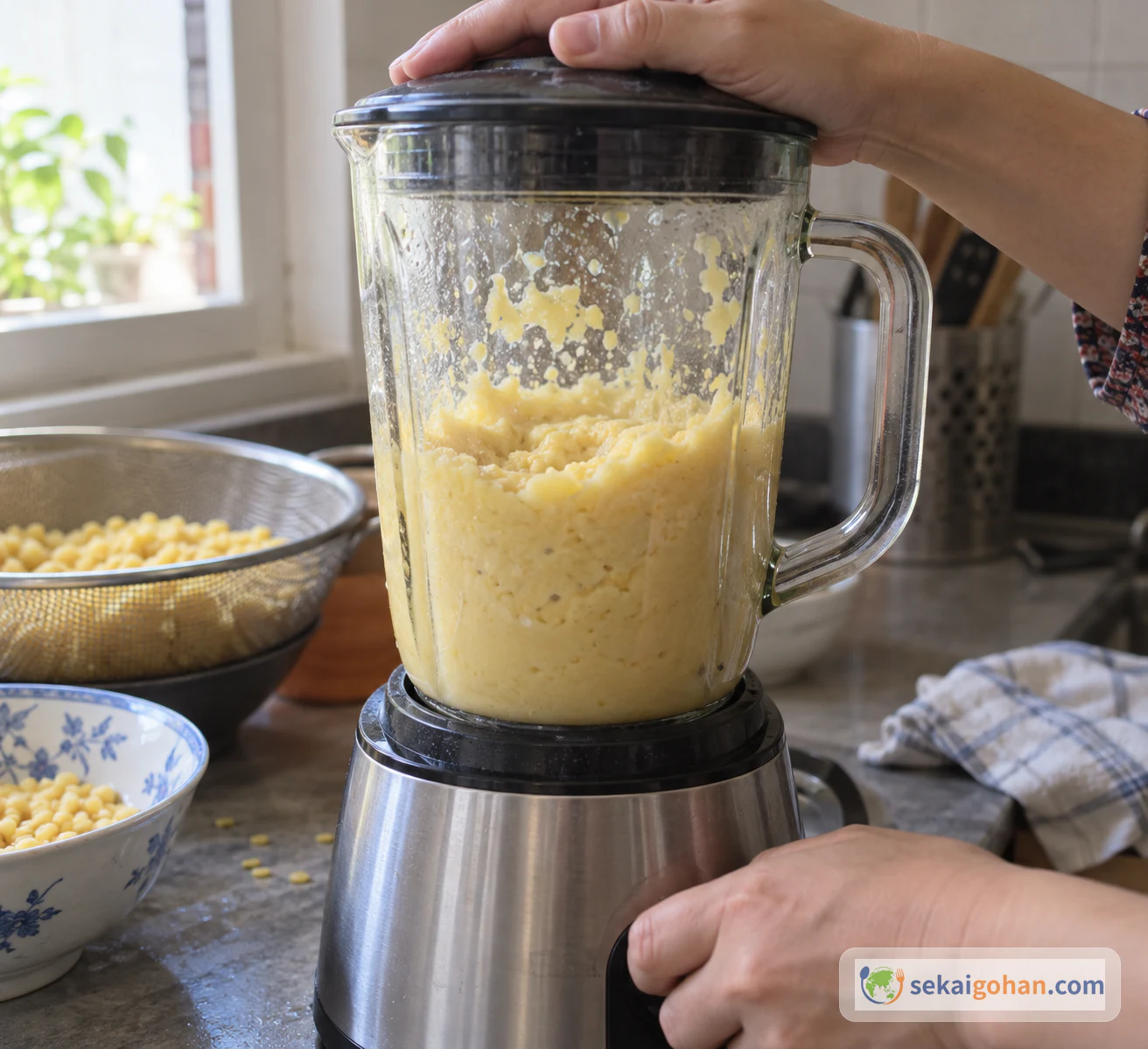
- Blender (or a masher)
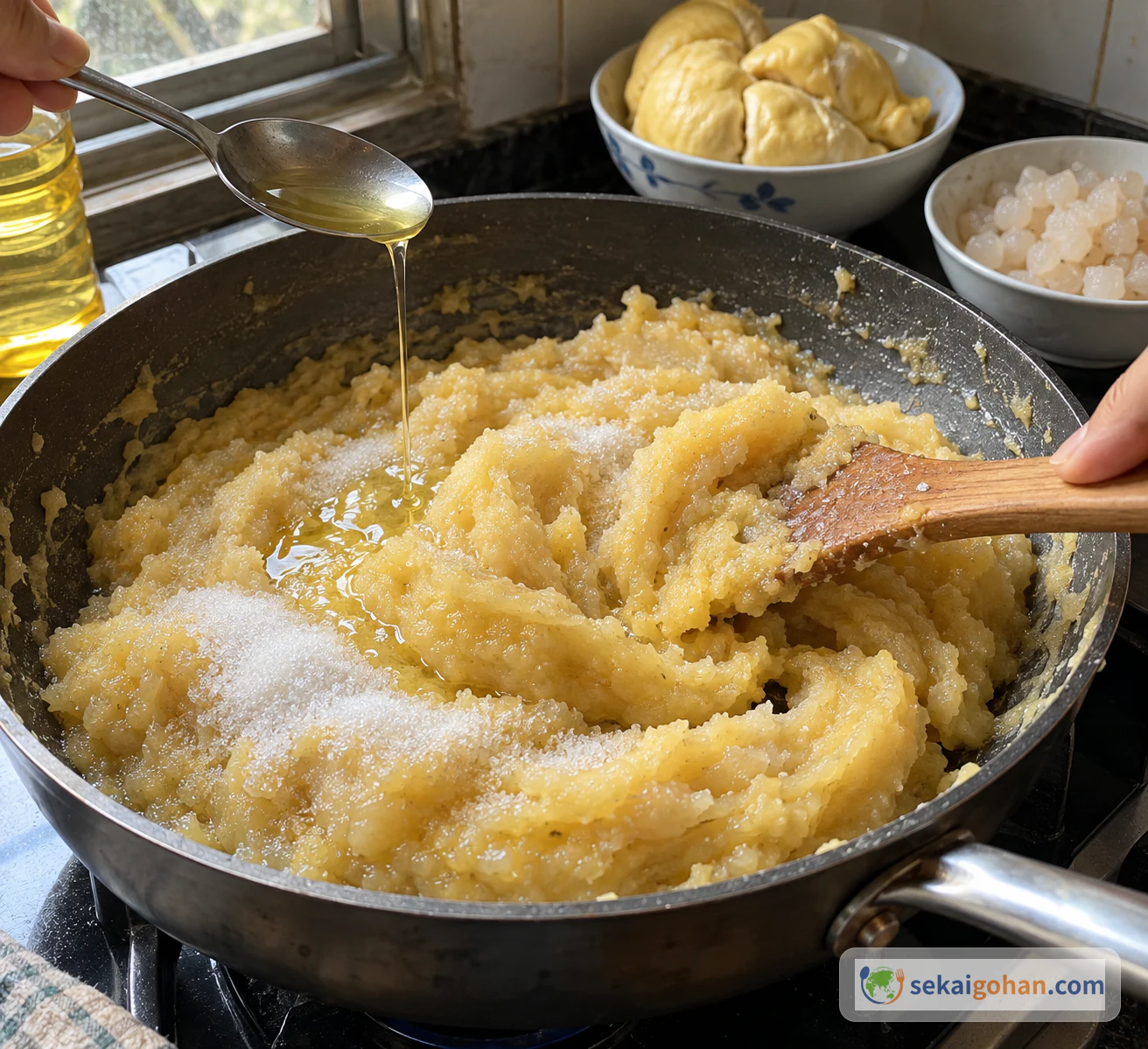
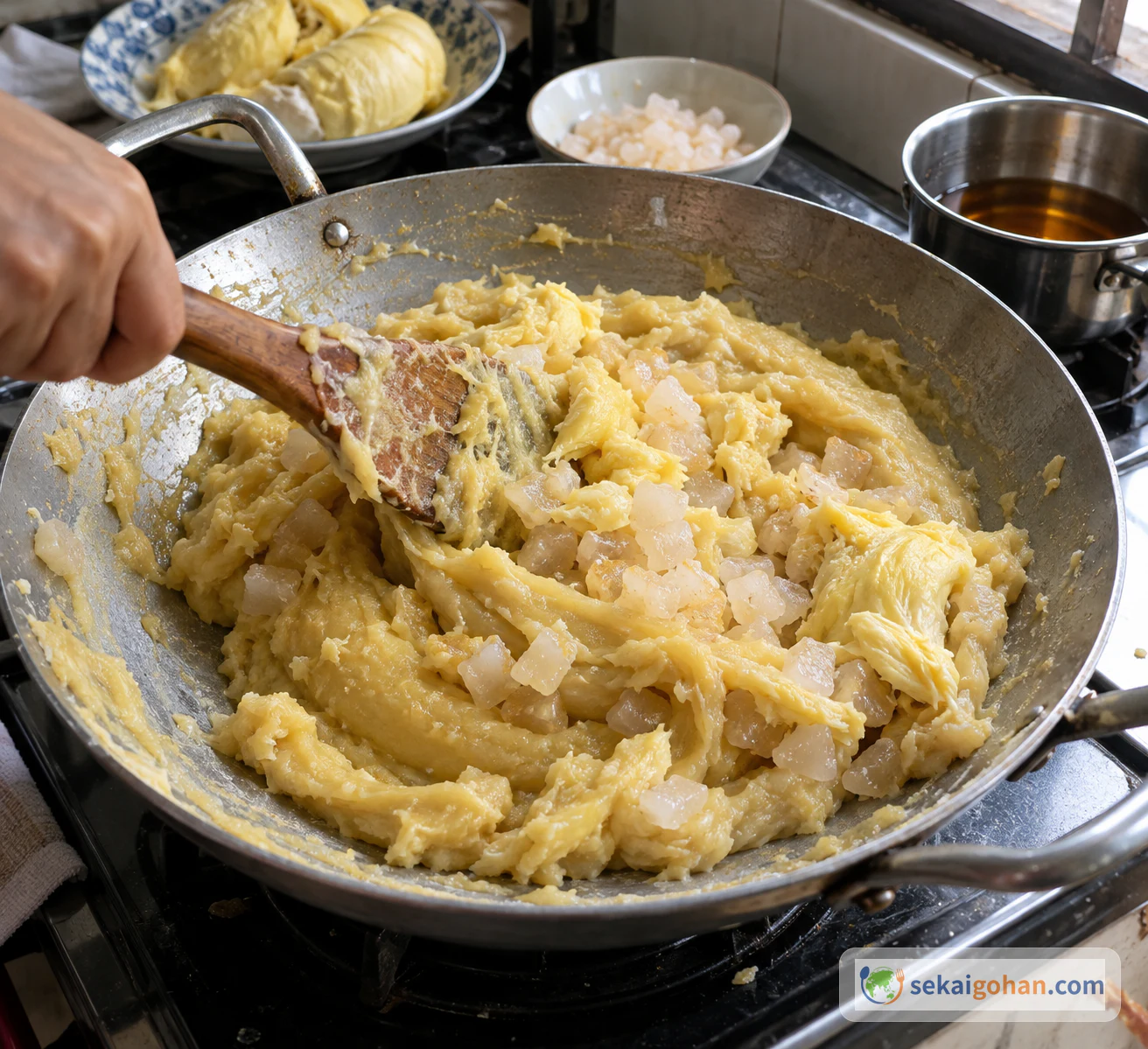
- Wide, heavy pan or skillet for cooking the filling
- Steamer
- Rolling pin
- Plastic wrap or a clean cloth for covering dough
- Baking tray
- Oven, plus an oven thermometer if you have one
- Food thermometer
- Pastry brush and a clean toothpick
Method: Firm Filling First, Then the Layered Crust
Make the filling first and let it cool completely; cold, firm filling balls make the delicate dough work much easier. Keep each piece of dough covered until you use it so the surface doesn't dry out.
Common Bánh Pía Problems
Keep the two doughs separate until you layer them, roll gently so the layers survive, and cook the filling until it is firm enough to wrap.
Most trouble at home comes from handling the doughs or from leaving too much moisture in the filling.
| Problem | Likely cause | What to do |
|---|---|---|
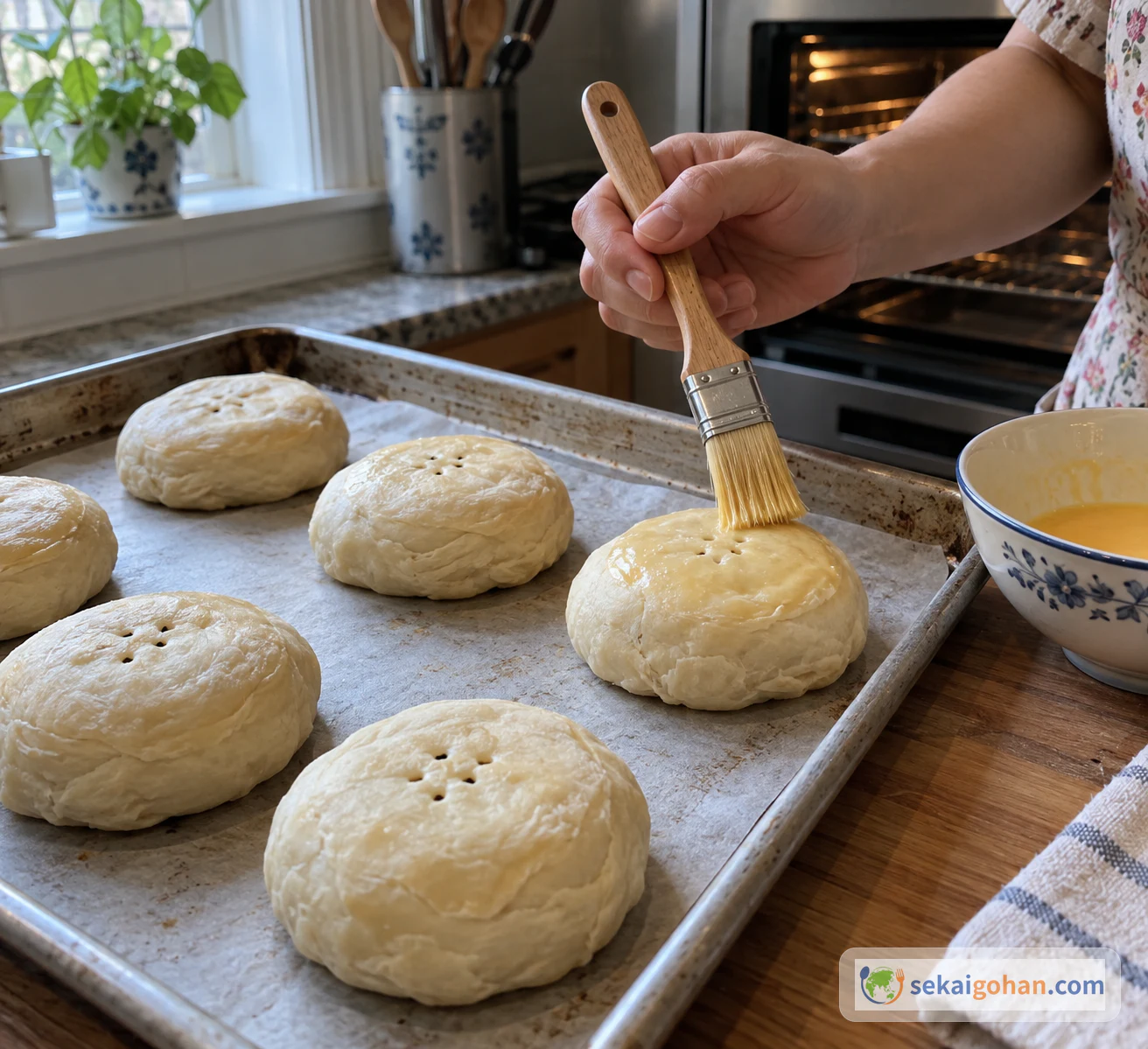
| No visible layers | Oil dough leaked out of the water dough, too much dusting flour, rolling or pressing too hard, glaze applied too heavily, dough surface dried out | Seal the seam fully in step 8, roll with light pressure, keep dough covered, and brush the wash on once and thinly |
| Filling too soft to wrap | Bean cooking water not drained, filling not cooked long enough | Drain the beans well, then cook until the paste turns clear and leaves the pan. Use the roasted glutinous rice flour only if it is still loose |
| Filling leaks during baking | Filling still warm, seam not sealed, pressed too hard | Wrap only completely cooled filling, press the gathered edges firmly, and place seam side down |
| Top browns but center seems underdone | Oven runs hotter or cooler than its setting | Start at 425°F (220°C) and check the real temperature with an oven thermometer. Judge the crust by color and make sure the yolks were cooked through before wrapping |
The workshops bake at around 525°F (270°C), but that's a commercial setting and not one to copy in a home oven.
Serving, Storing and Varying Bánh Pía
Serving
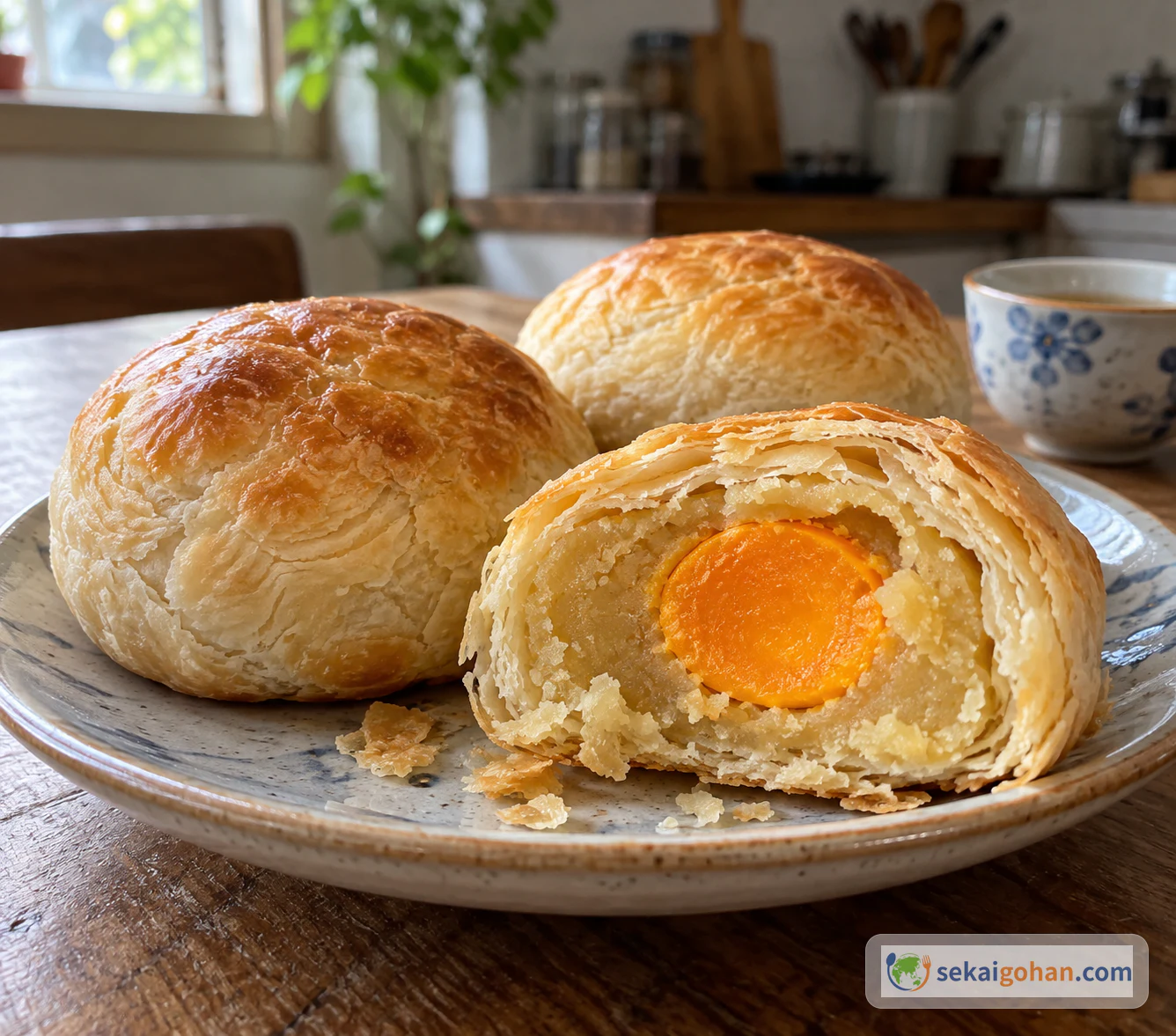
Once the pastries have cooled, break or cut them into small pieces so everyone can see the layers, the pale filling and the orange yolk. Serve them with tea.
Leftovers
Don't leave baked pastries out at room temperature for long. When they've cooled, divide them into clean, shallow containers so they chill quickly, then cover and refrigerate. Reheat thoroughly before eating.
Variations
- Without durian. Use only mung bean and salted yolk, which is closer to the early filling. It won't be the Sóc Trăng durian version anymore.
- Without the salted yolk. This makes a smaller pastry for tea time, though you lose the saltiness and the yolk in the cross-section.
- More or less durian. Changing the 7 oz (200g) changes how wet and sweet the filling is, so you'll need to adjust how long you cook it.
- Plain tops. Some bánh pía carry a red mark. You can skip it without changing the taste, and too much color on the surface can glue the top layers together anyway.
Frequently Asked Questions
Are bánh pía and bánh bía different pastries?
No. Bánh bía and bánh pía are spelling and regional variants of the same name. Bánh pía is a different pastry from Indonesian bakpia pathok and Filipino hopia, which come from other countries and use different doughs and fillings.
Should I leave them at room temperature for a day so the flavor settles?
The flavors do settle by the next day, but that's about taste, not about storing them safely at room temperature. Cool the pastries, refrigerate them right away in clean, shallow containers, and reheat thoroughly before eating.