Bánh Hỏi: Vietnamese Woven Rice Vermicelli Mats with Scallion Oil

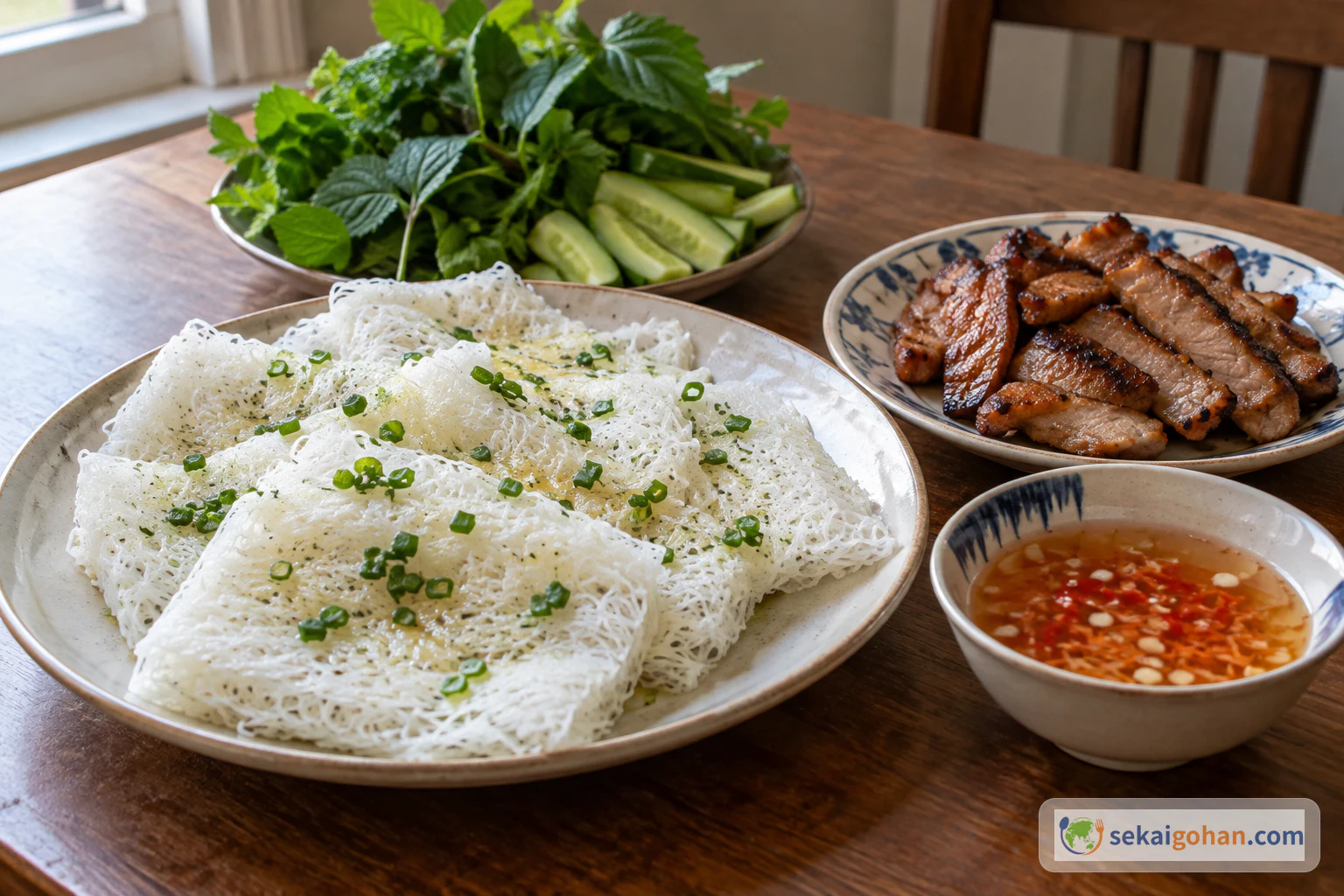
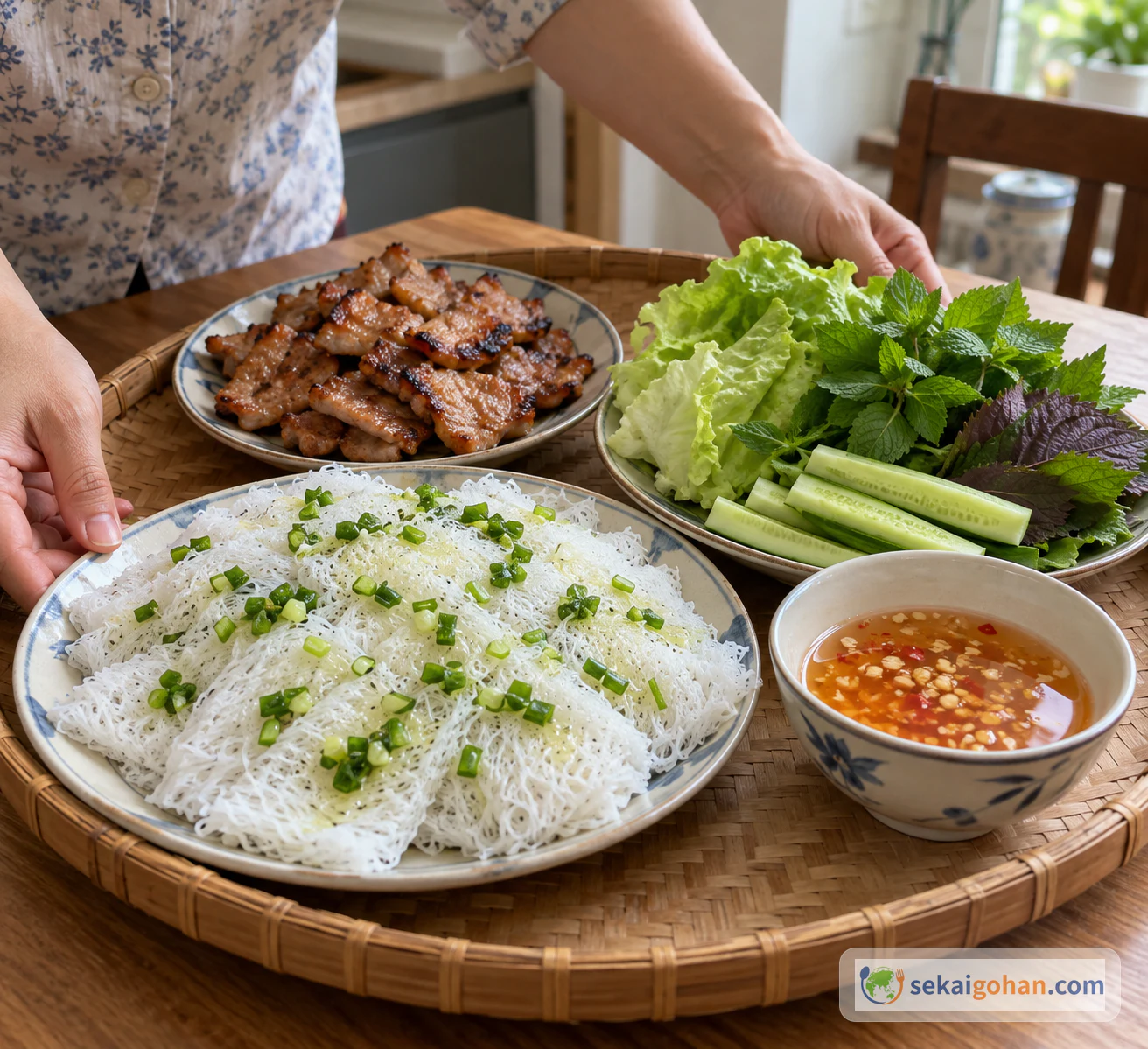
Mats of bánh hỏi coated in scallion oil, set out with pork, herbs and cucumber on a central Vietnamese table
Serves
4 servings
Cuisine
Vietnamese

How to make bánh hỏi, the fine Vietnamese rice vermicelli gathered into soft woven mats, from a dried pack with scallion oil for 4 servings. Covers boiling by the package, shaping warm mats, eating them with grilled pork, herbs and nước chấm, and how the garlic-chive oil of Bình Định differs from the scallion version.

Cooking flow

Cooking steps

STEP11 / 5

Make the scallion oil

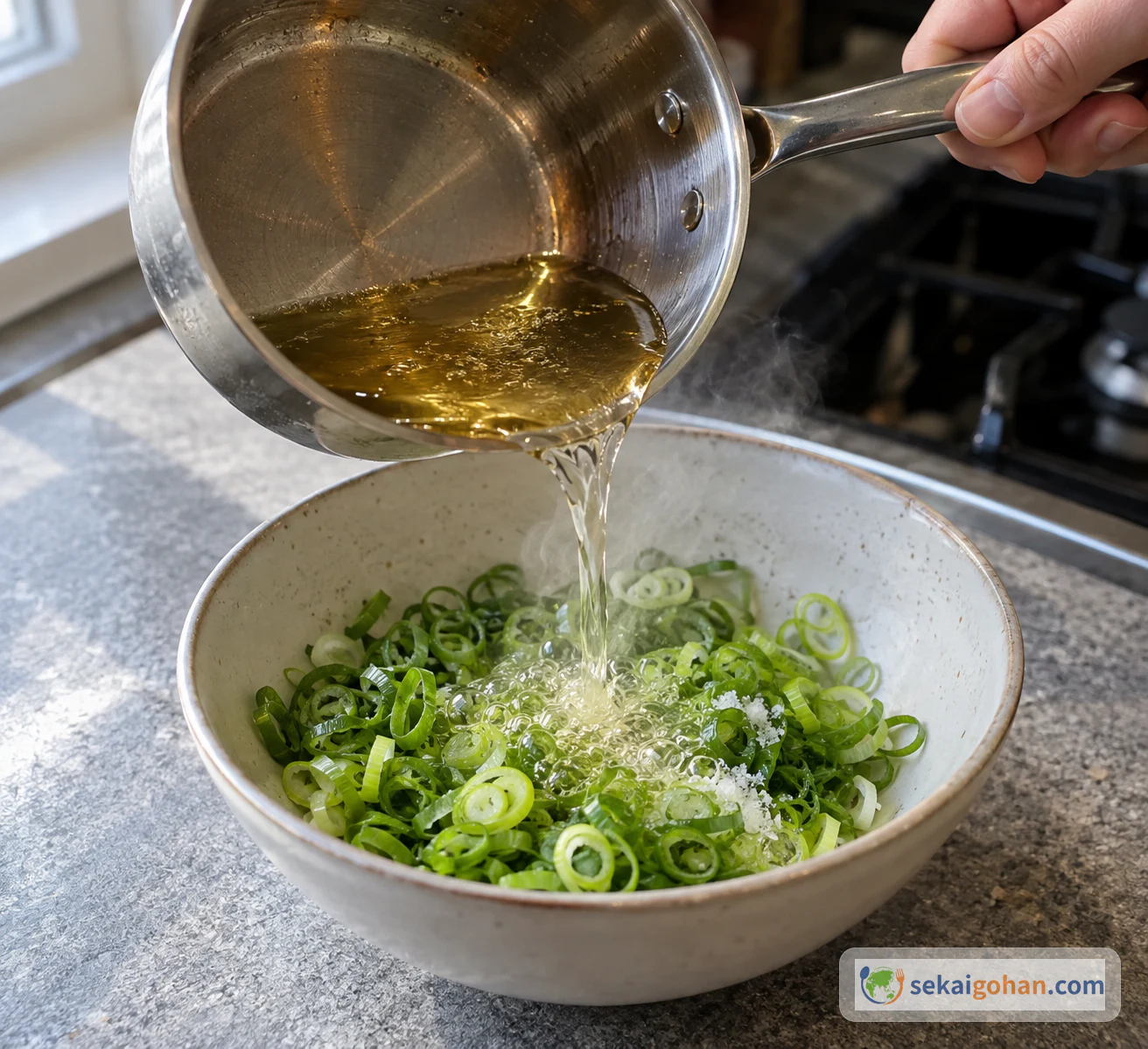
Pouring hot oil over sliced scallion greens to make scallion oil
The scallions should sizzle and stay vivid green, not turn brown

Thinly slice the scallion greens into rings and put them in a heatproof bowl with the salt and sugar. Heat the oil in a small saucepan to about 325°F (160°C), or until a piece of scallion dropped in bubbles straight away. Pour the hot oil over the scallions. They should turn bright green and soften; stop before they brown.

STEP22 / 5

Boil the dried bánh hỏi

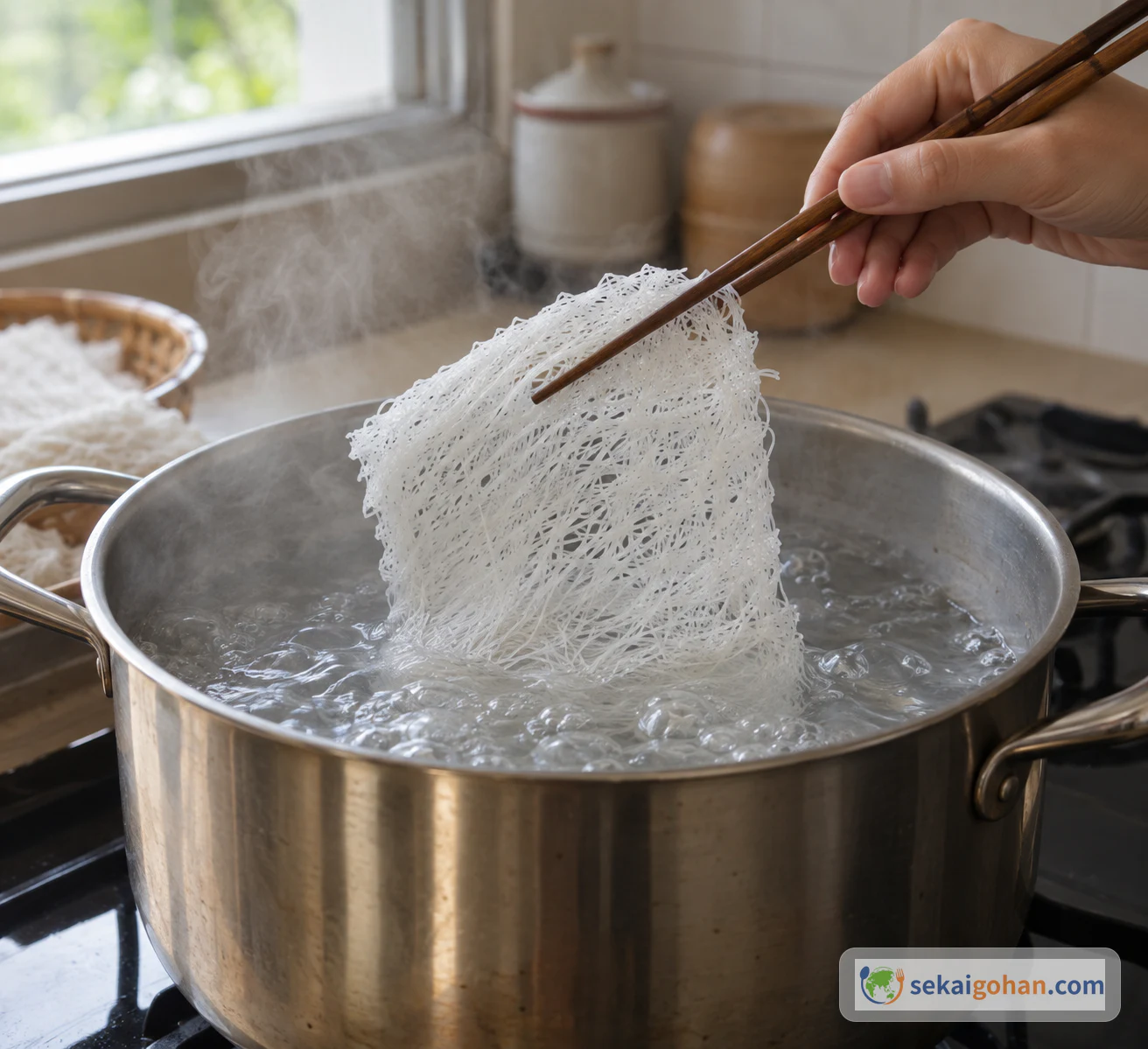
Lowering a dried bánh hỏi mat into a pot of boiling water
Lower the mats into the water gently, and follow the time on the package

Bring a large pot of water to a boil. Lower the dried bánh hỏi into the water and cook as directed on the package, about 2–3 minutes. Handle it gently so the sheets stay whole.

STEP33 / 5

Rinse, drain and lift onto the plate as mats

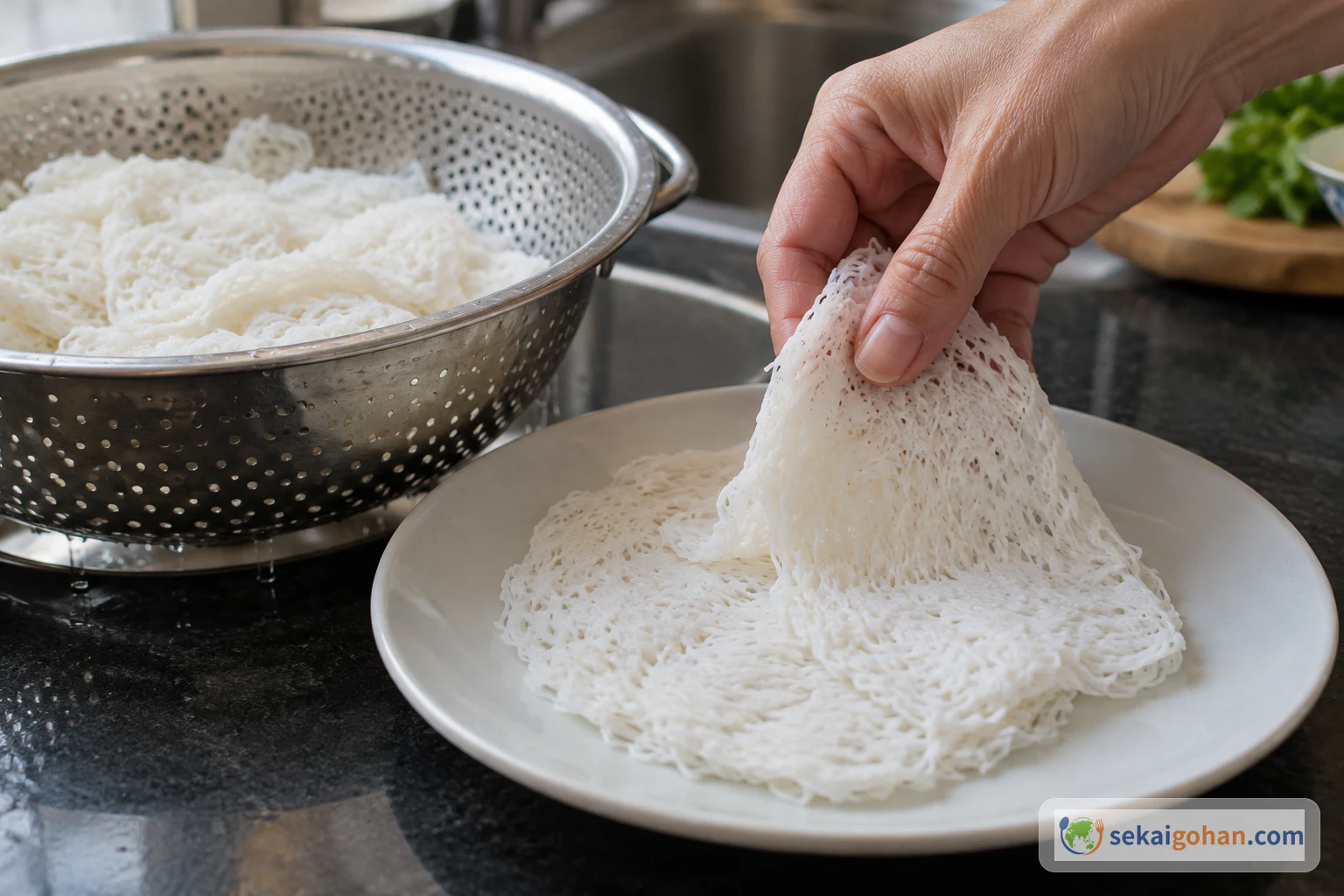
Lifting a palm-sized mat of rinsed, drained bánh hỏi onto a plate
Move the noodles as small mats; a little natural tearing is fine

Drain in a colander and rinse the surface briefly with warm water, then let the water run off. While the noodles are still warm, lift them onto a plate in loose, flat, palm-sized mats. Do not pull the bundles fully apart the way you would with ordinary vermicelli.

STEP44 / 5

Coat with scallion oil while warm

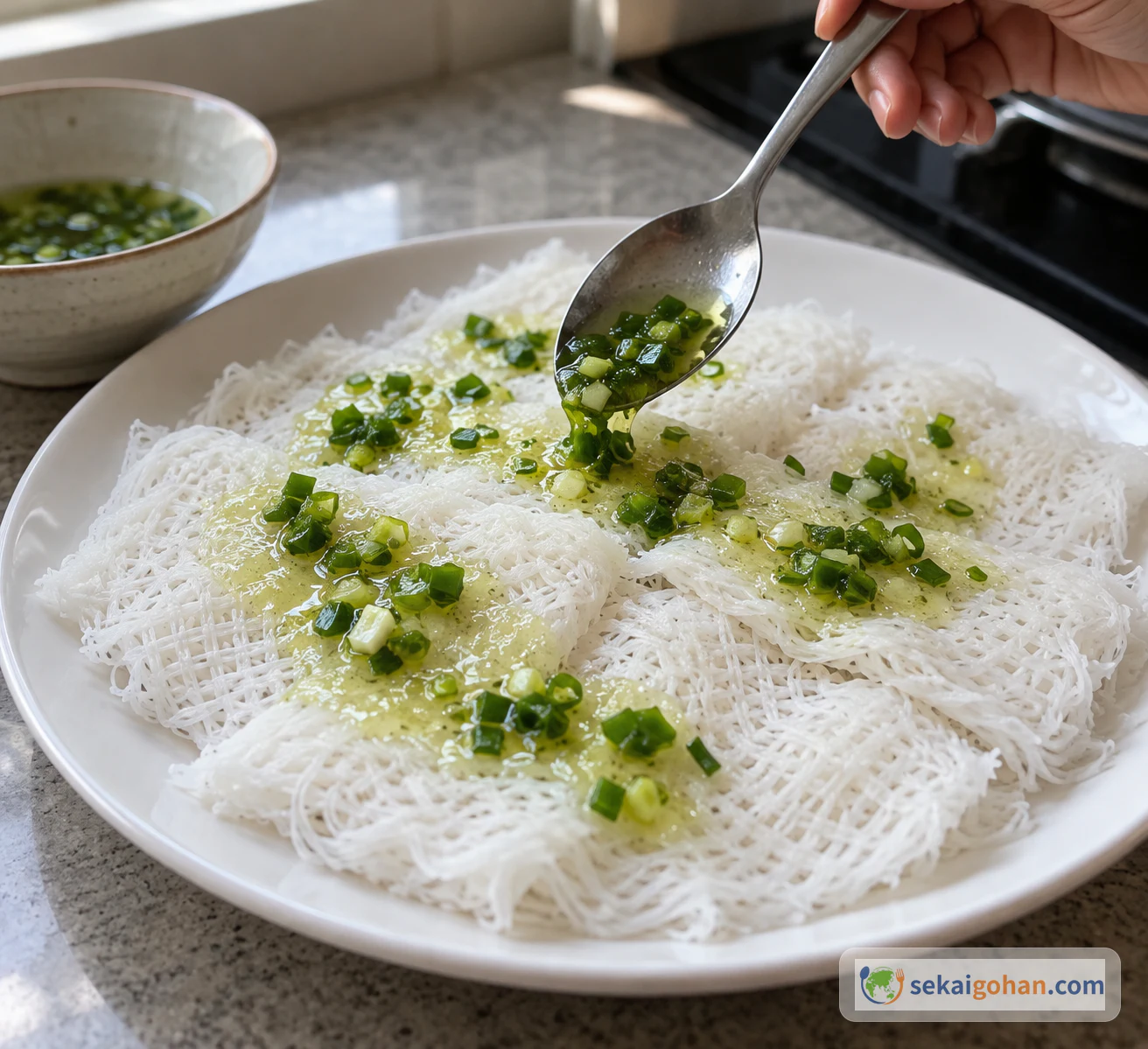
Spreading scallion oil across warm bánh hỏi mats to the edges
Get the oil all the way to the edges while the noodles are warm

While the mats are still warm, spoon the scallion oil over them and tilt the plate so the oil reaches the edges. Do this before the noodles cool and set; cold mats crack apart easily.

STEP55 / 5

Serve with pork, herbs and dipping sauce

Bánh hỏi served with grilled pork, herbs, cucumber and dipping sauce on separate plates
Keep the accompaniments on their own plates so each person can combine them

Set out the grilled pork, the herbs and cucumber, and the nước chấm on separate plates and bowls beside the bánh hỏi. Eat right away.

0 / 0
Ingredients

Ingredients

1 / 1

Ingredients

Ingredient Amount Role
Dried bánh hỏi (flat woven rice vermicelli mats) 7 oz (200g) The noodle mats
Scallions, green parts only 6 scallions For the scallion oil (mỡ hành)
Neutral-flavored oil (rice bran, rapeseed or peanut) ¼ cup (80 ml) Carries the scallion aroma and coats the mats
Fine salt 1/4 tsp Seasons the scallion oil
Sugar 1/4 tsp Seasons the scallion oil
Water as needed For boiling and rinsing the noodles
Grilled pork, already cooked 1 lb (500g) Served alongside
Herbs and cucumber (such as lettuce, mint, perilla) as needed Served alongside for wrapping and freshness
Nước chấm (fish-sauce dipping sauce), ready-made 1 cup (240 ml) For dipping
0 / 0

Bánh hỏi comes to the table as thin, lacy sheets of rice noodle, finer than ordinary vermicelli and joined so you can lift each one up whole. In Quy Nhơn it is remembered as breakfast, a dish bound up with family life and livelihood. The mats are glossed with scallion oil while they're still warm and eaten with grilled pork, herbs and nước chấm. That woven shape is what sets bánh hỏi apart from a plate of ordinary noodles.

Bánh Hỏi and the Bình Định Table

How Bánh Hỏi Is Made

Bánh hỏi is made from rice flour dough pressed into very fine threads and steamed into a mat. Traditionally, the dough is pushed through a mold into thin strands, caught on bamboo trays and steamed. A dried pack has already done that work for you, so this recipe starts there, with no extrusion mold needed at home.

It's made of rice, like ordinary bún (rice vermicelli) and bánh cuốn (the steamed rice sheet rolled around a filling). Still, the fine, woven mat and the way it's eaten make it a dish of its own. Nobody knows for sure where the name comes from or when the dish took shape.

Bánh Hỏi in Bình Định
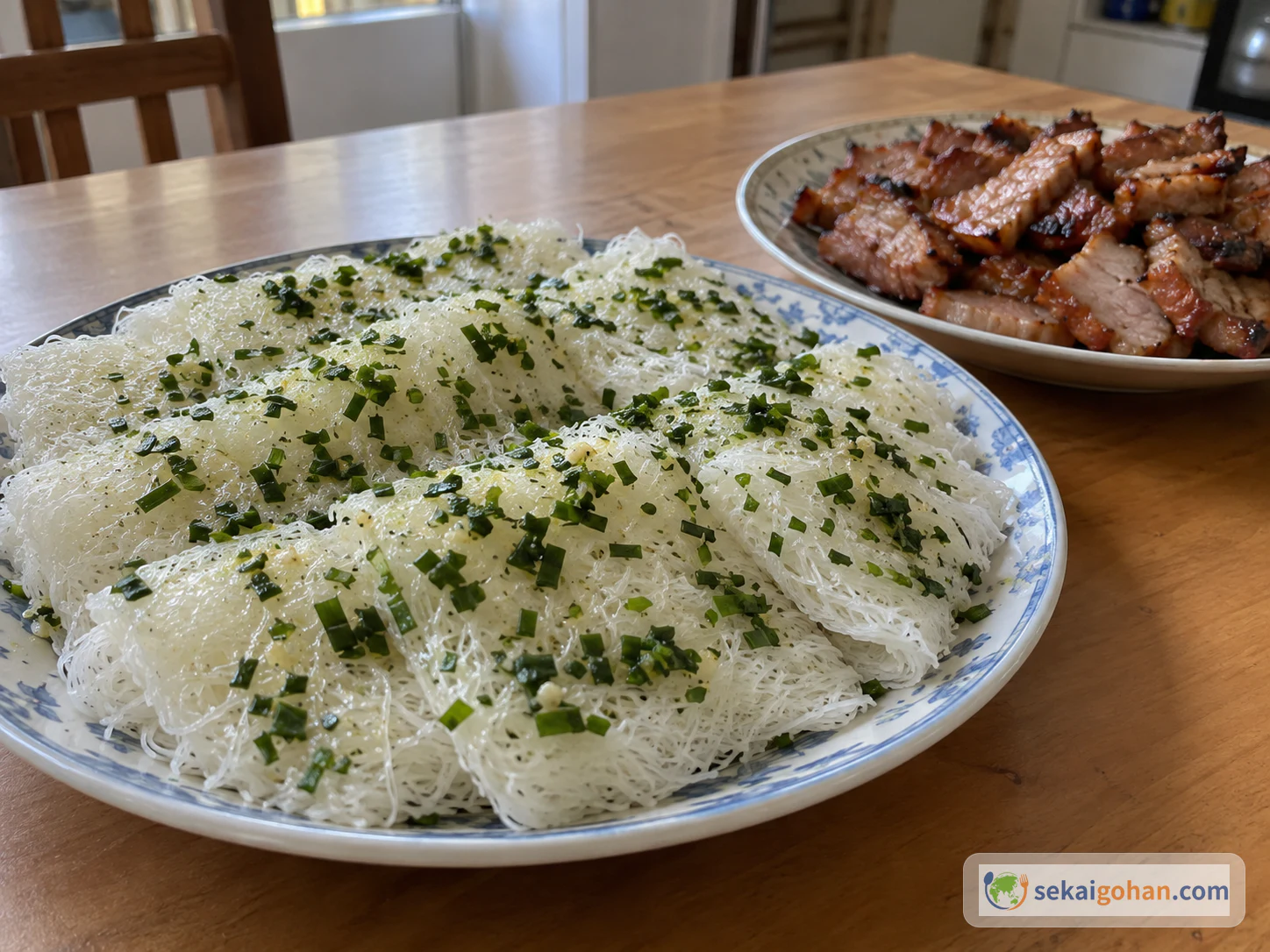
Bánh hỏi brushed with garlic-chive oil, arranged on plates for a family celebration table, showing the regional variation
In Bình Định, finely chopped garlic chives in oil are brushed over the mats

In Bình Định province in central Vietnam, bánh hỏi is an everyday food that can even stand in for a meal. It's also a celebration dish, served with boiled or roast pork at family gatherings, Tết, weddings, engagements and death-anniversary meals.

There, the mats are brushed with peanut oil so they don't dry out and stick. Then they're topped with leafy scallions or with chopped garlic chives (lá hẹ) that have been made fragrant in oil. The individual sheets are set on the plate and eaten right away with their accompaniments. Rolling them up with pork in rice paper isn't the usual way there. For more dishes from the country, start from Vietnam.

Ingredients (4 servings)
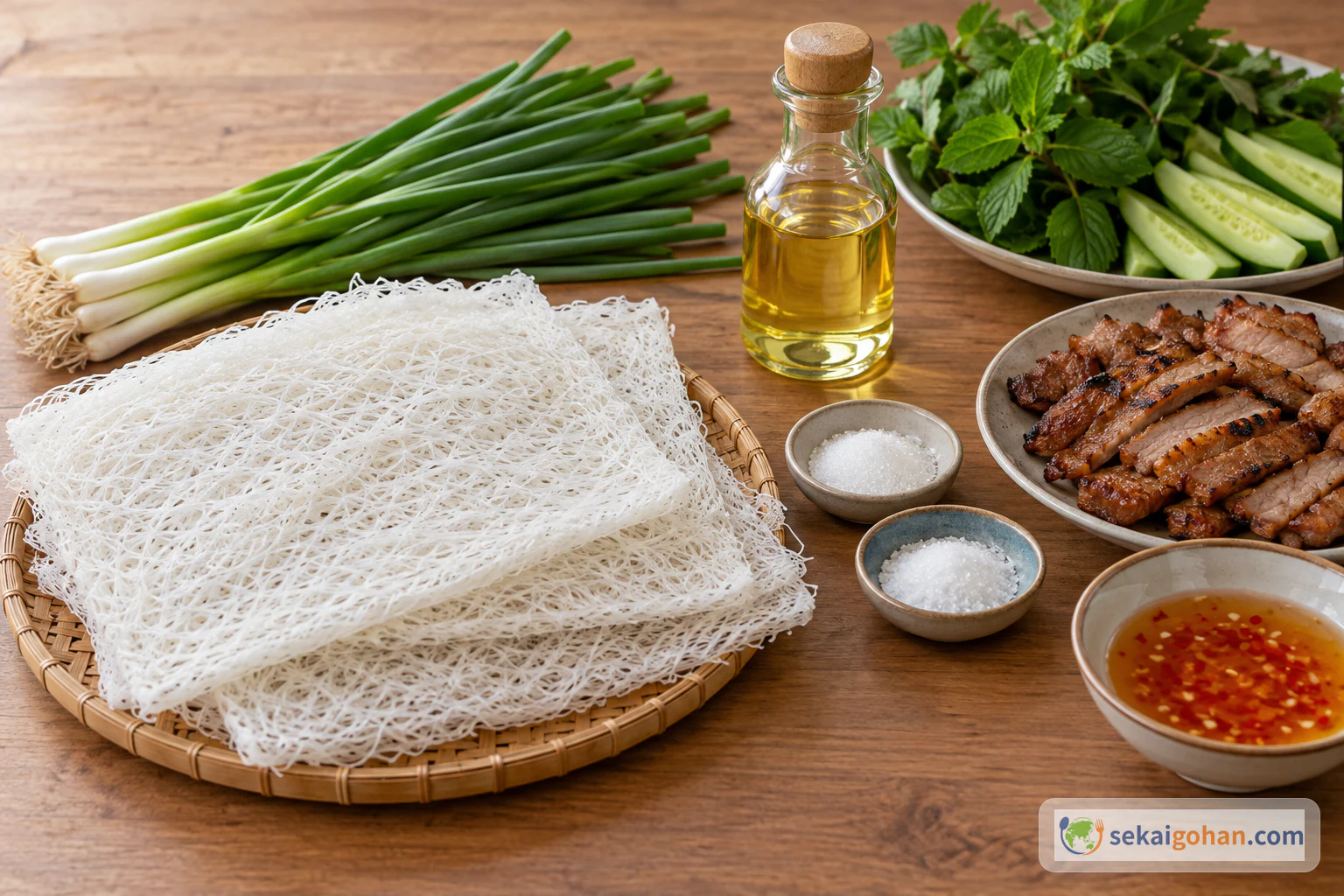
Dried bánh hỏi, scallions, oil, salt and sugar, with the accompaniments set to one side
The noodles and scallion oil are the recipe; the pork, herbs and dipping sauce are prepared separately

The noodles and scallion oil make the dish itself. The pork, herbs, cucumber and nước chấm are served alongside and are prepared separately.

Choosing Ingredients for Bánh Hỏi

Look for flat, dried bánh hỏi, not ordinary rice vermicelli. The packs hold thin sheets or bundles of joined strands. Ordinary vermicelli is a different thickness and has no woven structure, so it won't form the sheets. At Vietnamese grocers, look for packs labeled An Nhơn or Bình Định. Boiling times differ between products, so read the package before you start.

For the oil, rice bran, rapeseed or peanut oil all work. Peanut oil brings the aroma closer to Bình Định style, but check for peanut allergies before serving it to others. Rapeseed oil is easy to find and works well, though the aroma is slightly different.

The scallion greens are the base of the oil. If you want the Bình Định style, swap the six scallions for garlic chives and adjust the amount to your taste. The flavor will change. The pork, herbs and dipping sauce are optional, because the noodles and scallion oil alone still make the dish. If you avoid fish sauce, a soy-based dipping sauce works instead, though it tastes different from nước chấm.

Equipment

  • Large pot
  • Colander
  • Heatproof bowl
  • Small saucepan
  • Serving plates

Method: Keeping the Threads Together

The one rule for every step

Handle the noodles as mats, not as strands. Move them while they are warm, and get the oil on before they cool.

Common Bánh Hỏi Problems and Fixes

What you see Likely cause What to do
The noodles stick into one lump Boiled longer than the package says Next time, lift a strand to check early, rinse the surface briefly with warm water and drain
The mats fall apart into loose strands Pulled apart too hard while rinsing or handling, or moved after cooling Transfer from the colander as small mats, and oil them while warm
The scallions turn brown The oil was too hot Use the 325°F (160°C) guide and the color of the scallions, and pour before they darken
No woven sheets form at all Ordinary rice vermicelli was used It still makes a meal, but it is a different dish from bánh hỏi

Most problems come down to timing and the temperature of the noodles. Follow the package for boiling and keep the rinse short and warm.

What this plate should keep

The noodles stay together as small, loose, flat mats rather than a heap of loose strands. Coat them with scallion oil while they are still warm, and let the pork, herbs and dipping sauce sit alongside rather than on top.

Serving Bánh Hỏi
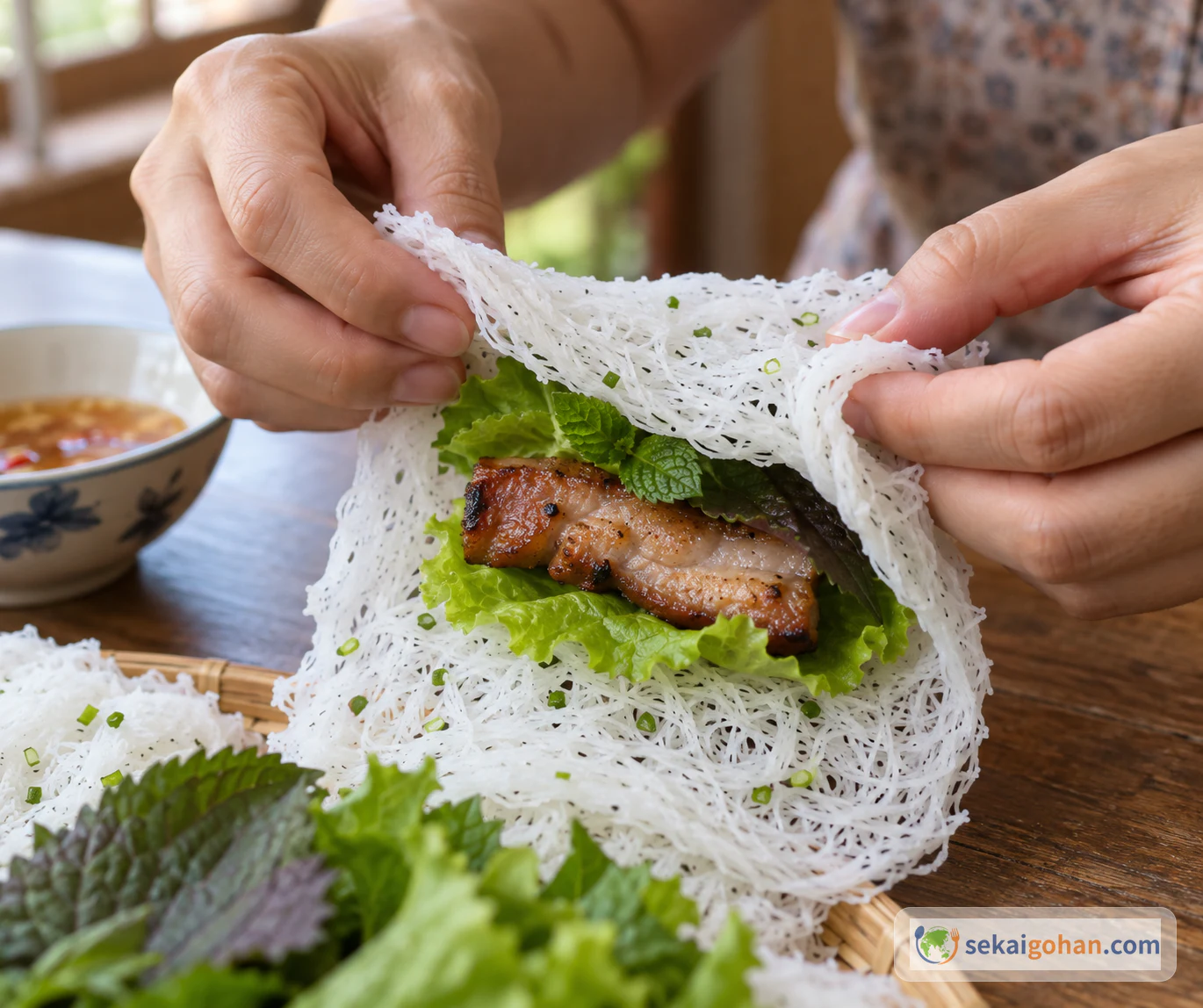
Folding a bánh hỏi mat around grilled pork and herbs, with dipping sauce nearby
One way to eat it: wrap pork and herbs in a mat and dip it in the sauce

Take one sheet, wrap it around a piece of pork and some herbs, and dip it in nước chấm. For the pork, use some you've cooked from another recipe or bought ready-made, and serve it with a prepared nước chấm.

  • Choose one pork. Roast pork, grilled pork belly or nem nướng (grilled pork sausage) can each sit beside the noodles. One is enough.
  • Pick herbs by season and shop. Lettuce, mint, perilla and cucumber all work, in whatever combination is easy to find. None of them is required.
  • Noodles and scallion oil as a side dish. Serve the oiled mats on their own, without meat or sauce.

Frequently Asked Questions

Is bánh hỏi the same as rice vermicelli (bún)?

No. They're eaten in similar ways, but bánh hỏi uses finer threads joined into a sheet, and ordinary rice noodles won't give you that.

Another recipe says to boil the noodles for 1 minute. Which is right?

Some recipes boil bánh hỏi for 1 minute and separate it in cold water, which is a different method. Follow your package first. For dried bánh hỏi in this recipe, 2–3 minutes is the guide.
Sources

  • Vietnamese Cookbook, "Bánh Hỏi with Scallion Oil." The recipe used here: 200g dried bánh hỏi, the green parts of 6 scallions, 80ml oil and 1/4 tsp each of salt and sugar for 4 servings; boiling about 2–3 minutes while checking the package; shaping warm mats and pouring over scallion oil; serving with grilled pork, herbs and nước chấm. The pork and the dipping sauce are referred to separately and are not fully described on this page. https://vietnamesecookbook.com/recipes/banh-hoi/
  • Vietnam Women's Union, "Bánh hỏi." Bánh hỏi as an everyday food in Bình Định that can replace a meal; the name's origin and period not being clearly explained; the traditional method of pressing rice flour dough into fine threads and steaming them on bamboo trays; peanut oil and leafy scallions or garlic chives; eating with pork at celebrations and family gatherings. Written in 2006. https://www.hoilhpn.org.vn/tin-chi-tiet/-/chi-tiet/banh-hoi-4311-201.html
  • Vietnam National Authority of Tourism, "Bánh hỏi Bình Định." Garlic chives in oil spread over the top in the Bình Định style; sheets placed on the plate and eaten right away with accompaniments; wrapping with pork in rice paper described as not typical; appearance at Tết, weddings, engagements and death-anniversary meals. https://vietnamtourism.vn/index.php/about/items/2072
  • Flinders University, "Our Food, Our Story Cookbook: Bánh hỏi heo quay." A contributor from Quy Nhơn recalling bánh hỏi as breakfast tied to family life; a separate recipe boiling the noodles 1 minute and serving with cucumber, fried red onion, pork and a fish-sauce dip. Used for comparison only, not for this recipe's amounts or boiling time. https://www.flinders.edu.au/content/dam/documents/study/international/our-food-our-story-cookbook.pdf