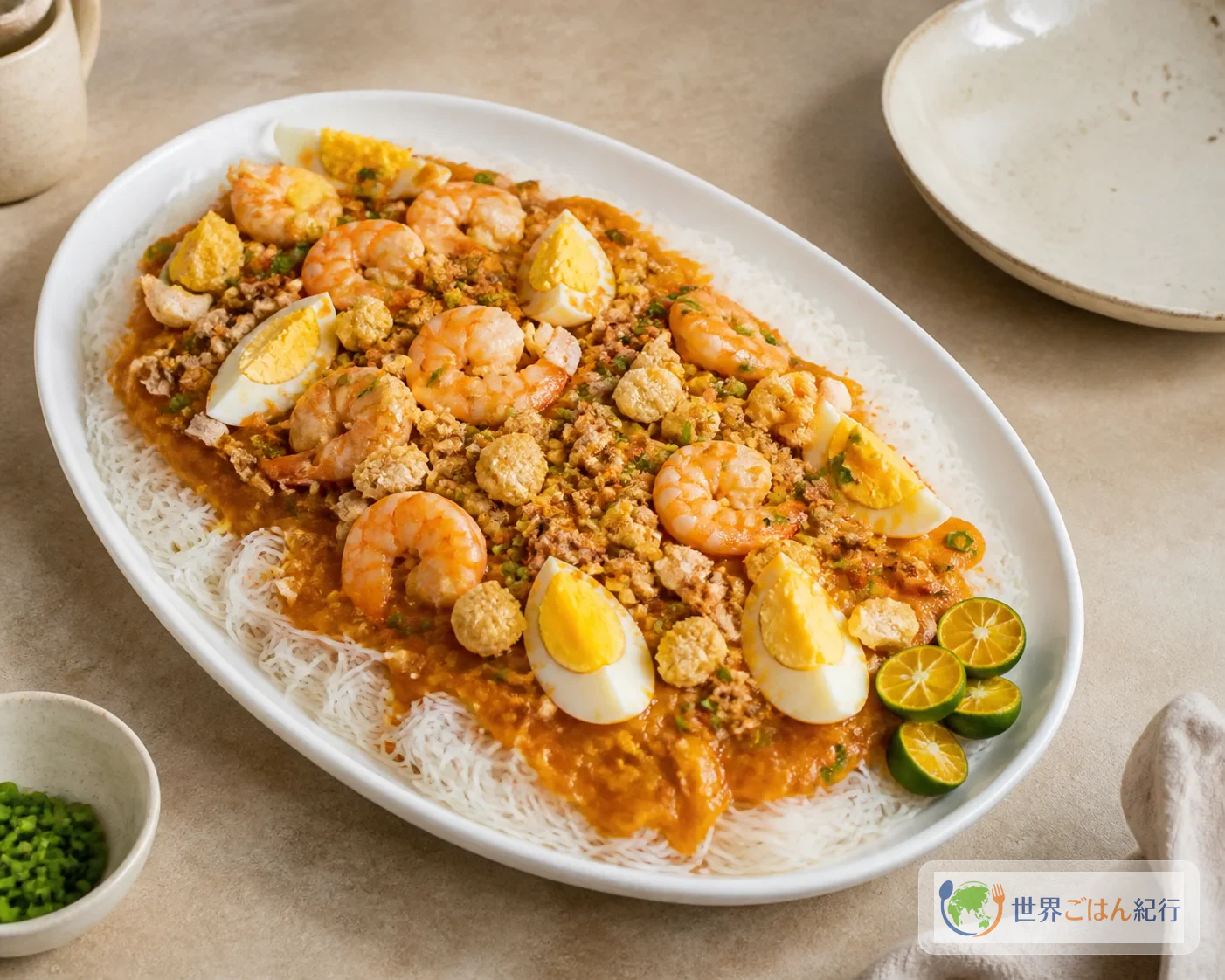
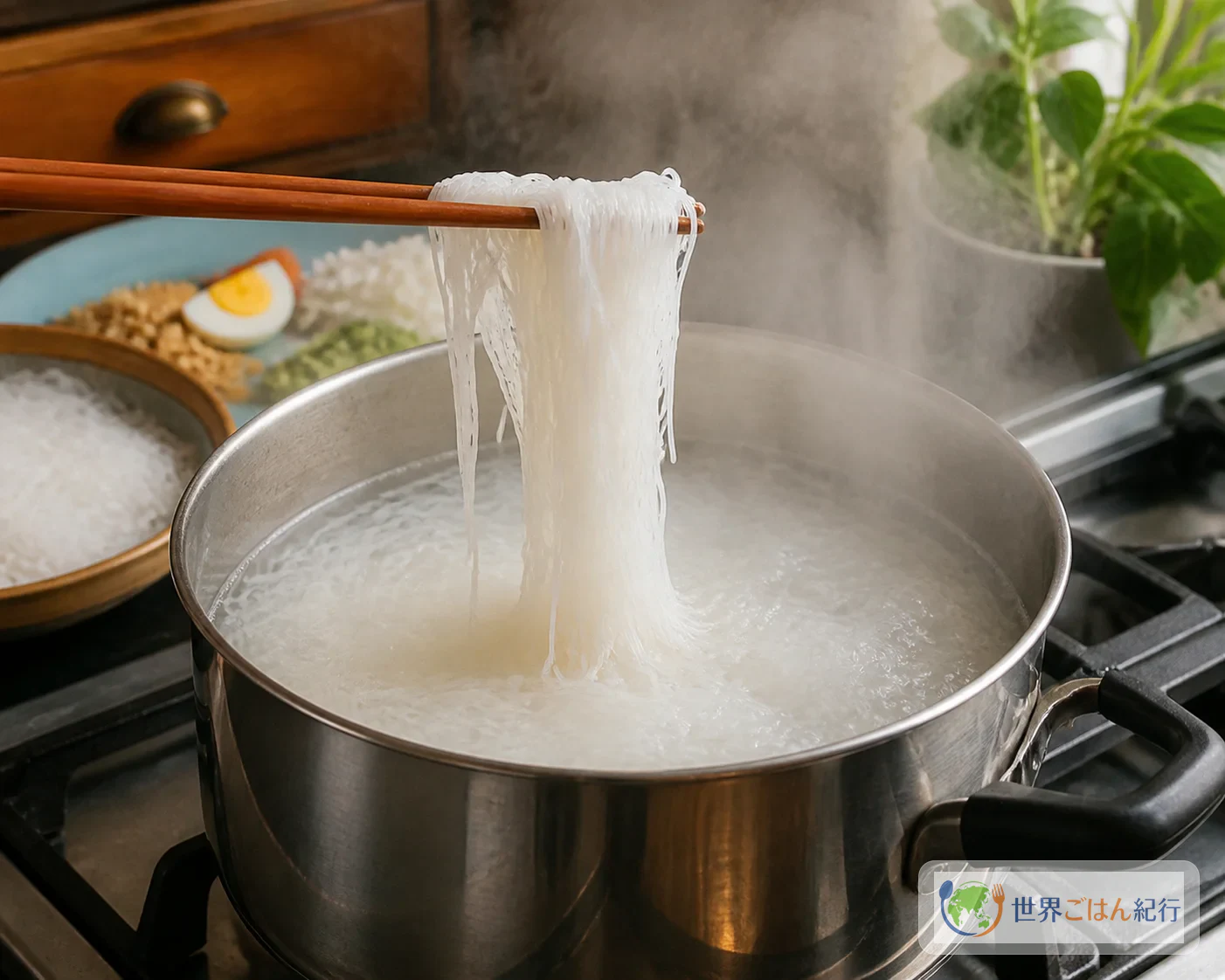
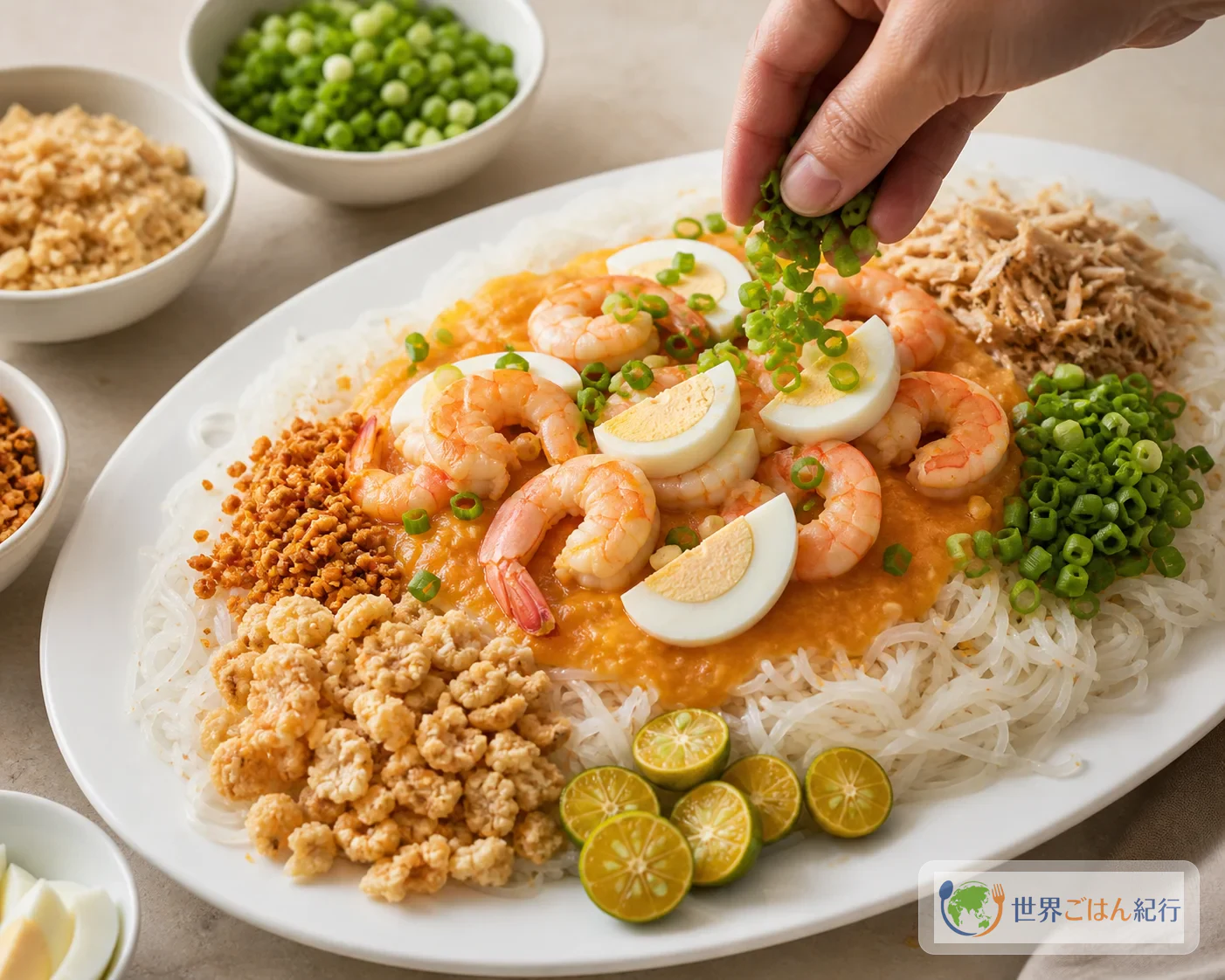
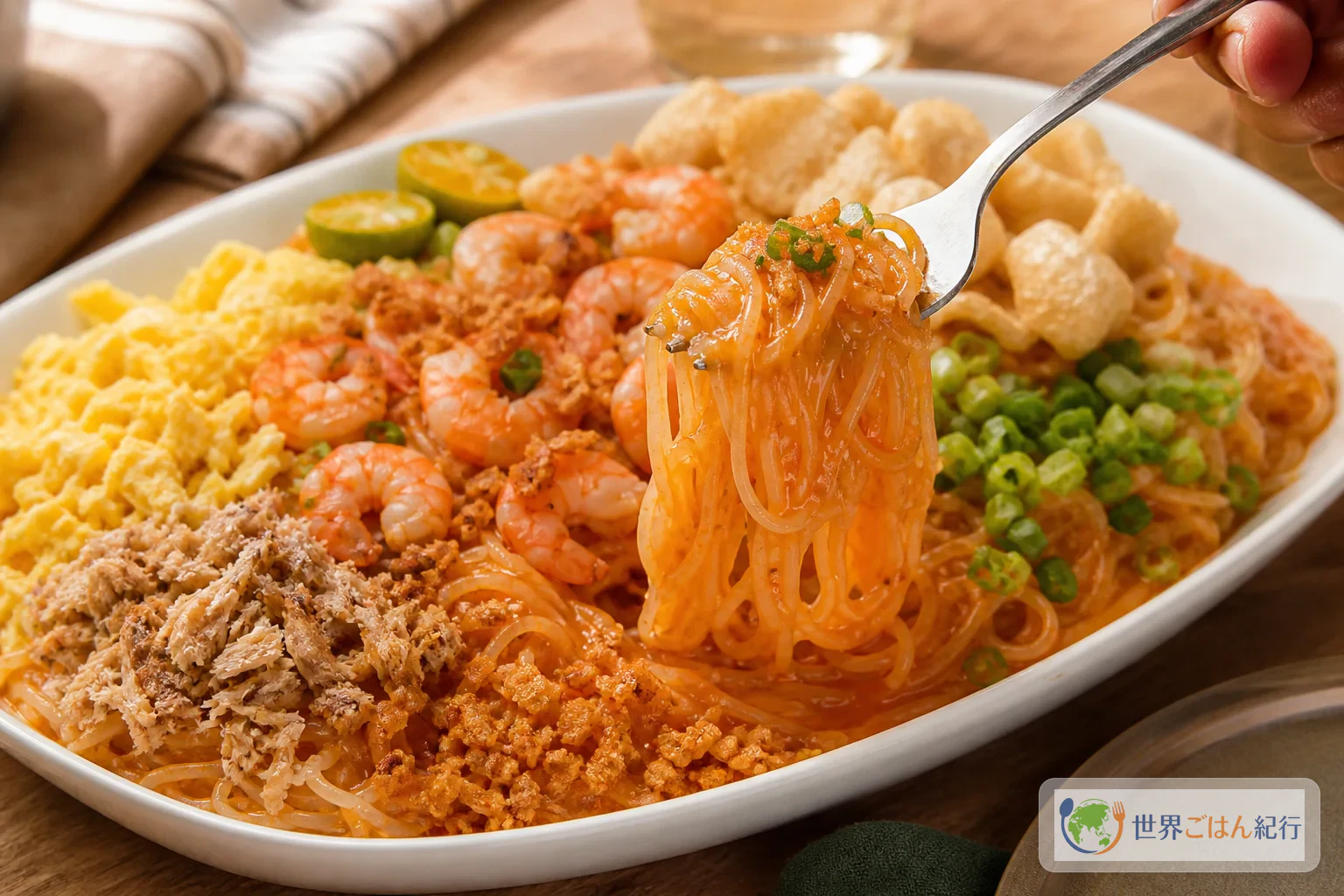
Through the steam, white rice noodles take on the aroma of shrimp as an orange sauce slowly spreads over them. On top go boiled shrimp, halved eggs, scallions, fried garlic, and flaked smoked fish, and last of all, crushed chicharron. This is pancit palabok, the Filipino platter of thin rice noodles under a shrimp-and-pork sauce. In a single bite you get the sweet scent of the stock, smoke from the fish, pork fat, the crackle of skin, and the sourness of calamansi, one after another. At home, the hard part isn't the number of ingredients. It comes down to three things: using the shrimp shells for the stock, going easy on the annatto, and boiling the noodles last.
Pancit Palabok in Filipino Cooking
Pancit across Luzon
Pancit is not the name of one dish. On Luzon it changes from region to region, province to province, and town to town: the noodles, the ingredients, the cooking equipment, how it is sold, and when it is eaten. Noodles brought by merchants from southern China were the foundation. Filipino cooks added local seafood, pork, vegetables, and sour fruit, and kept remaking the dish from whatever their households and towns had on hand.
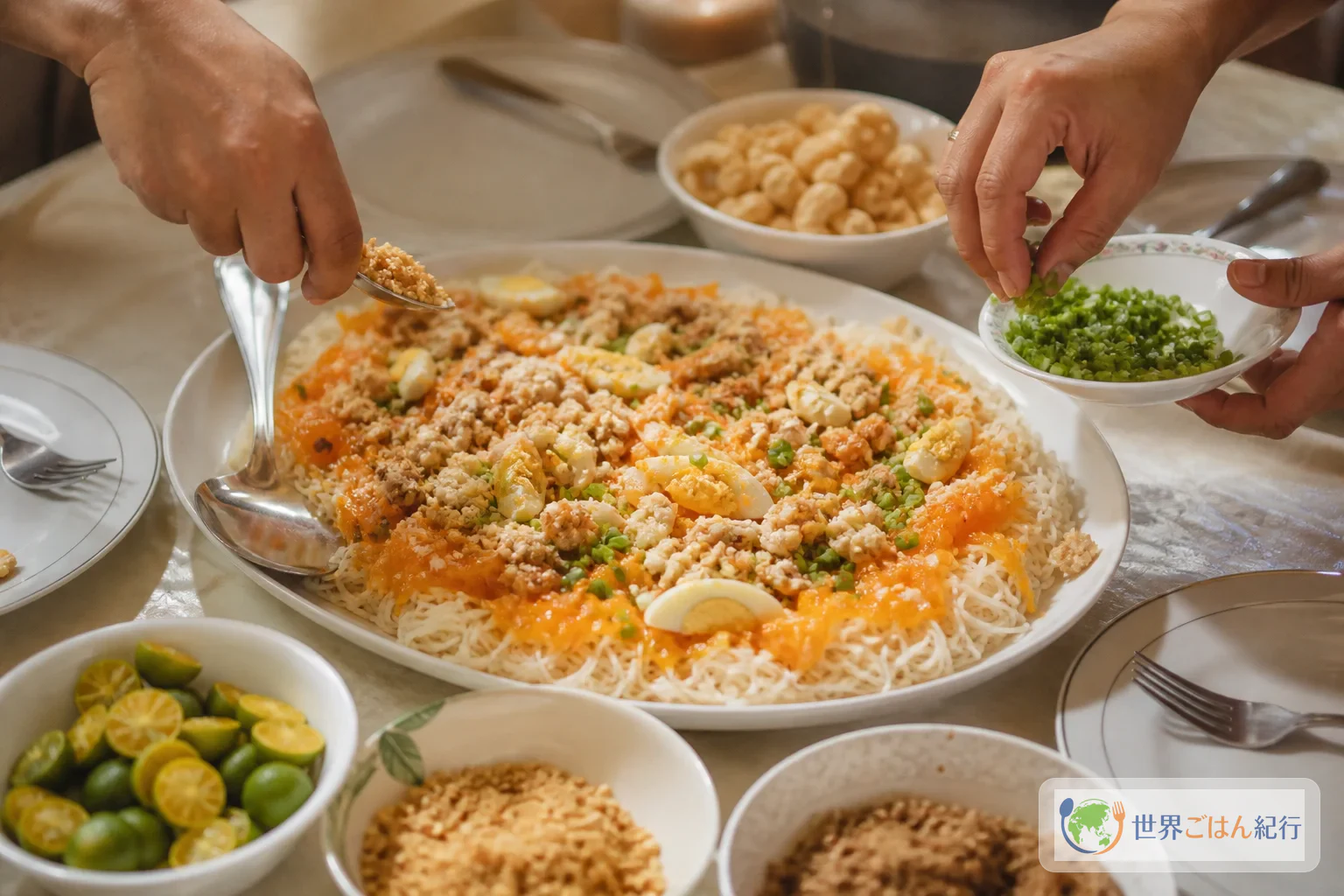
Palabok turns up at weekday snacks and lunches, and on large platters for birthdays, gatherings, and celebrations. On a platter with the toppings laid out, each person takes a little of whatever they like, so the same dish can be eaten in different combinations at the same table. Some people want more tinapa smoke, some want more shrimp, and some add tofu or squid. It still reads as one dish on the plate, and that's the fun of it.
Palabok, luglug, and Malabon
Unlike pancit bihon, where the noodles are stir-fried to absorb the seasoning, here the noodles and the sauce are prepared separately and combined on a large platter. The lines between palabok and its close relatives blur from shop to shop and region to region, and shop names and regional names do not always line up. As a rule of thumb, palabok uses thin rice vermicelli with the sauce poured over the top. Luglug, from the Pampanga region, uses thicker cornstarch noodles that are dipped briefly in hot water to finish. Malabon, named for a city in Metro Manila, has thick tubular noodles, a seafood-heavy topping, and a sauce made with crab fat.
| Dish | Noodle guide | Sauce and topping tendencies | Decision in a home kitchen |
|---|---|---|---|
| Pancit palabok | Thin rice noodles, vermicelli | Sauce poured over; shrimp, pork, egg, and tinapa layered on | Make with thin vermicelli and show the toppings |
| Pancit luglug | Thicker cornstarch noodles | Noodles dipped briefly in hot water; somewhat more sauce | Lean toward this if you only have thick noodles |
| Pancit Malabon | Thick tubular rice noodles | Some versions add seafood and crab fat | Choose this if you want more squid, shellfish, and crab flavor |
At an import grocery, the three use similar orange sauces and the product names get mixed up. Choose by noodle thickness and how the sauce is combined, and shopping gets much easier.
Ingredients (serves 4): Prepare the Stock, Noodles, and Toppings Separately
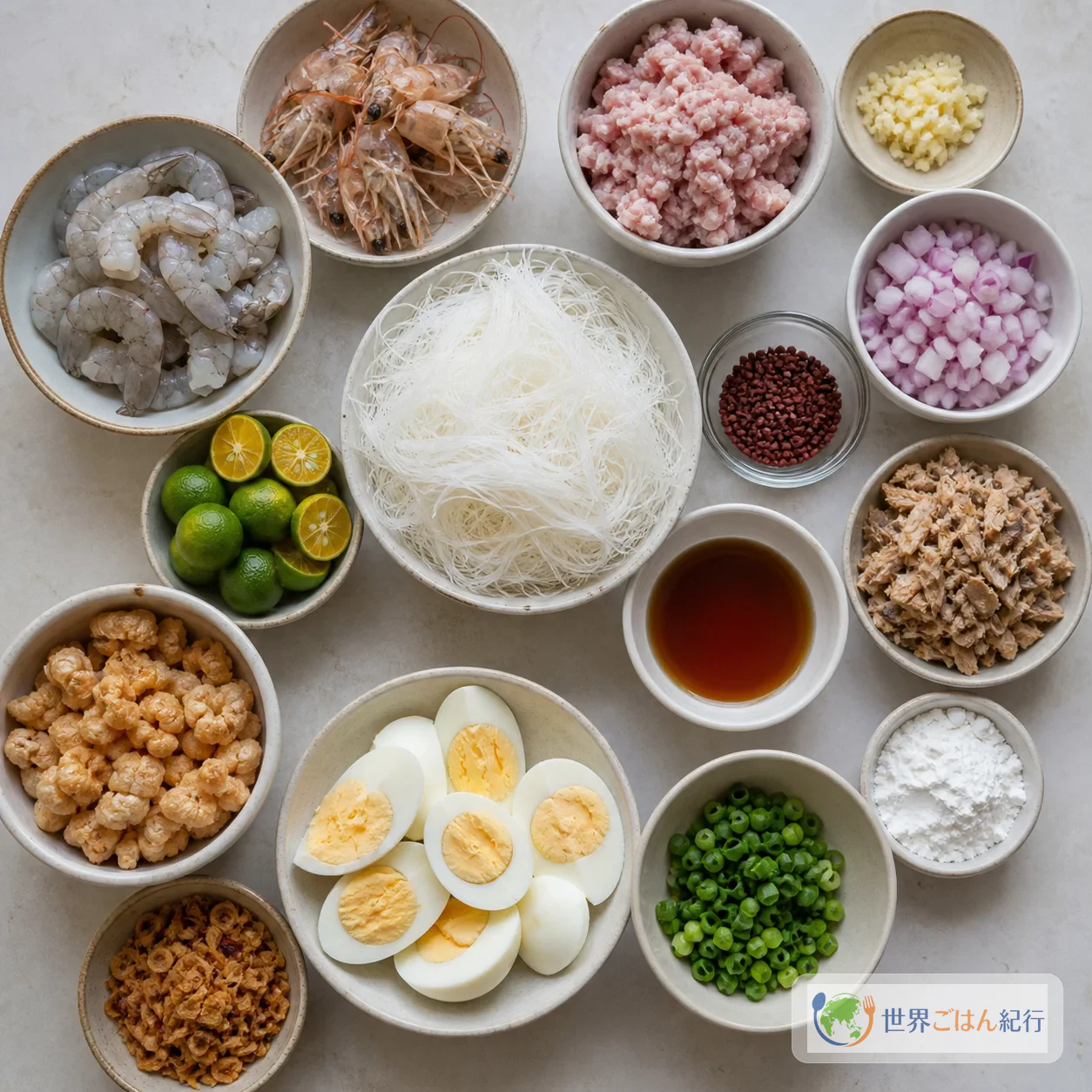
This makes 4 servings. For a platter people serve themselves from, make plenty of sauce and toppings; that keeps the table from drying out better than boiling extra noodles. Shrimp with heads and shells is ideal. If there are no heads, use just the shells for the stock.
This dish uses shrimp, fish sauce, smoked fish, pork, and eggs. The ingredients and allergen labels of patis, tinapa, chicharron, and rice vermicelli vary by product, so if you are allergic to crustaceans, fish and shellfish, soy, wheat, or eggs, check the package. If you leave out the shrimp, leave out the shrimp stock too. Make a different noodle dish instead of swapping in a seafood stock.
If you buy anything extra, start with the fish sauce
Soy sauce adds saltiness, but it does not give the fermented fish note that lingers deep in the sauce. If you are making this only once, Thai-style fish sauce is a fine substitute. If you cook Filipino food regularly, buy patis; using it by the teaspoon moves the flavor toward the Philippines without adding salt. If you buy a large bottle, check that it is Filipino fish sauce, and decide beforehand whether it will fit in your refrigerator door. If a big bottle for one dish would sit unused, make it with the fish sauce you already have.
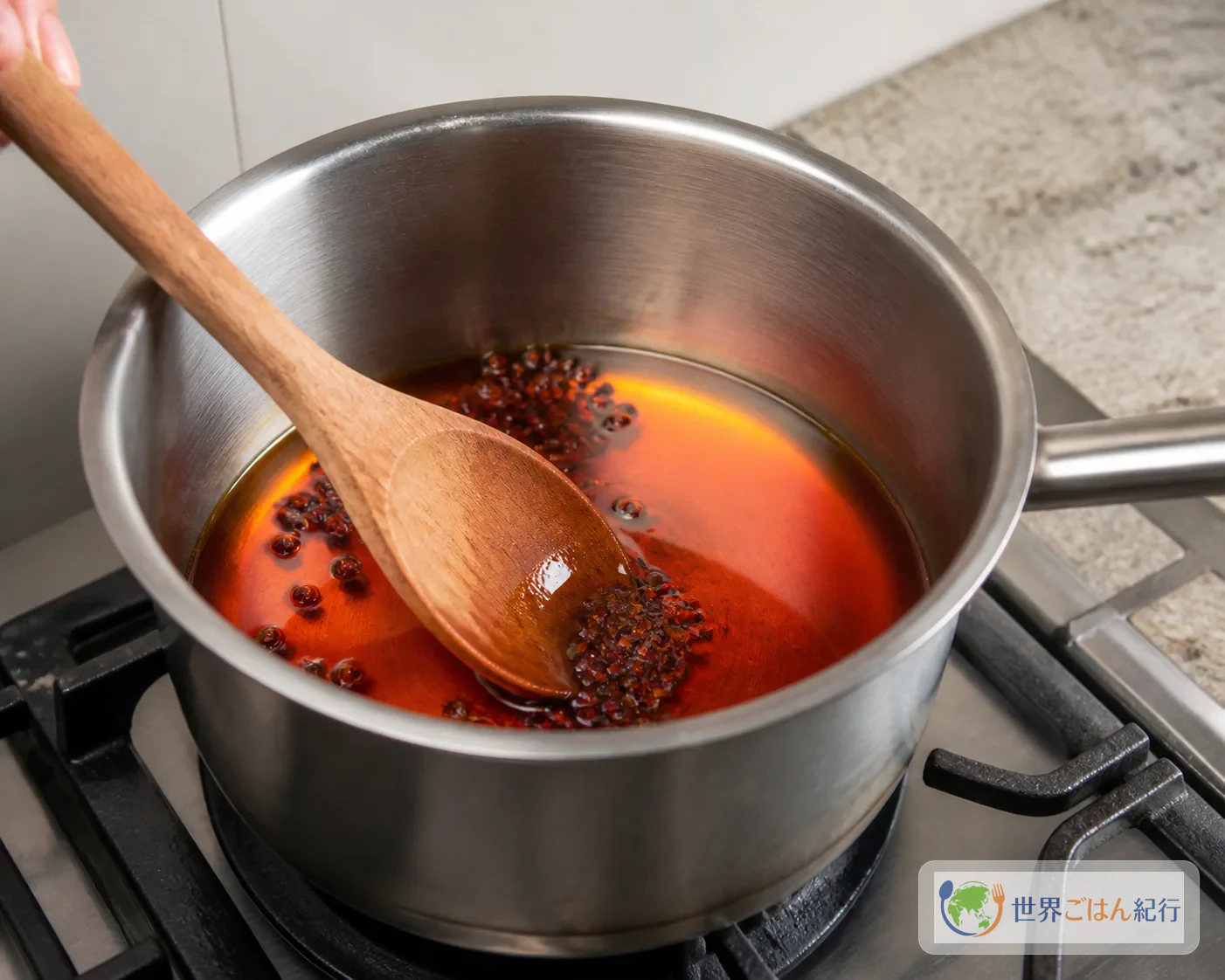
Annatto does not make the dish spicy. It gives the sauce the orange color typical of the Philippines and a mild, earthy aroma. Paprika or turmeric can supply the color alone. If you plan to make this several times, soak whole seeds in oil to pull out the color. Buy whole seeds. If you need color only once, a small amount of paprika from your pantry will do, and you can skip annatto.
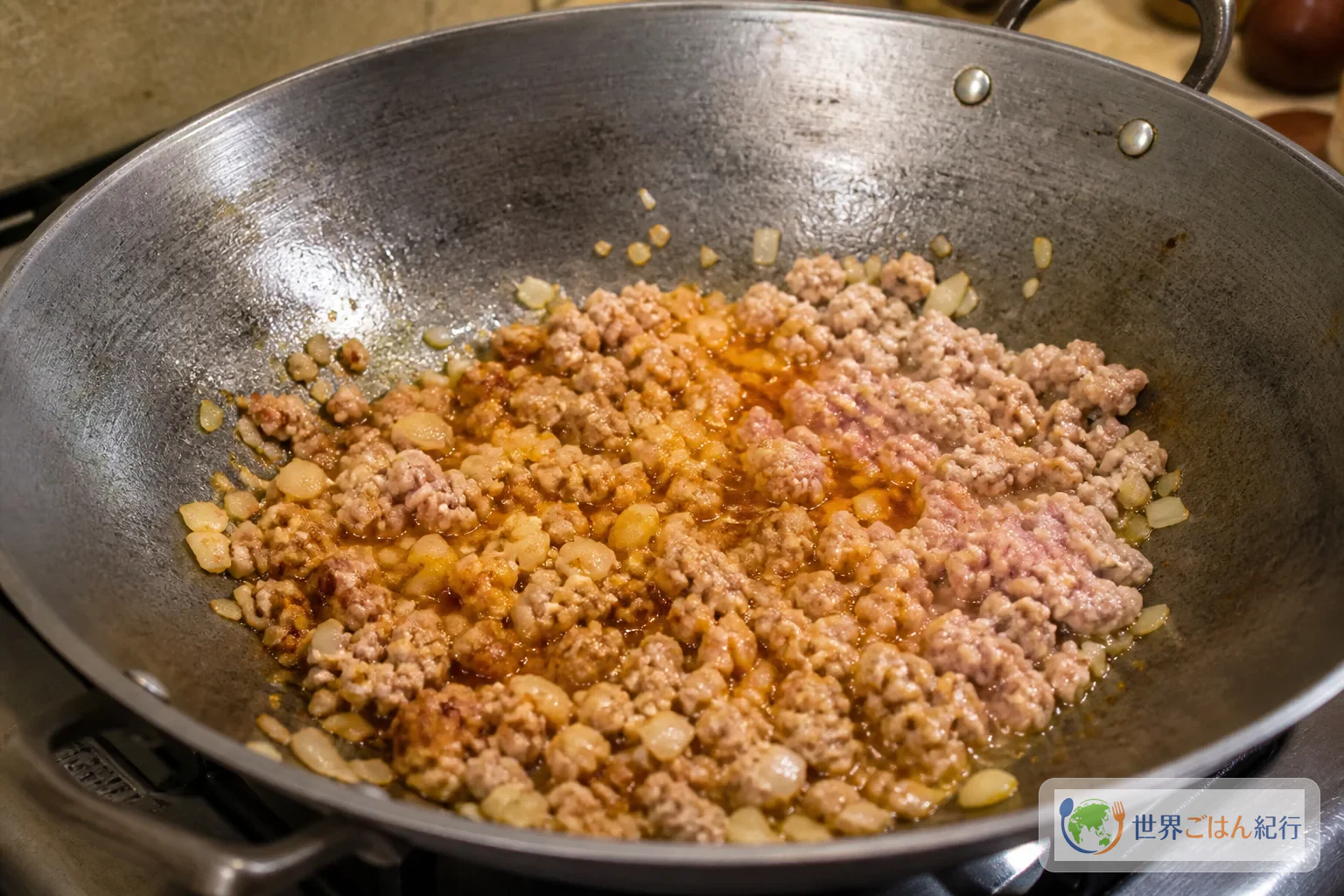
Mix the sauce in one wide pan. It makes flour lumps easier to spot and the pork easier to brown. A skillet of about 10 inches (26 cm) is enough, so you do not need to buy anything. Consider a wok of about 13 inches (33 cm) only if you want a separate place to spread the toppings and sauce, apart from the noodle pot. Skip it if you have no storage space or only cook small amounts.
Choosing Ingredients for Pancit Palabok
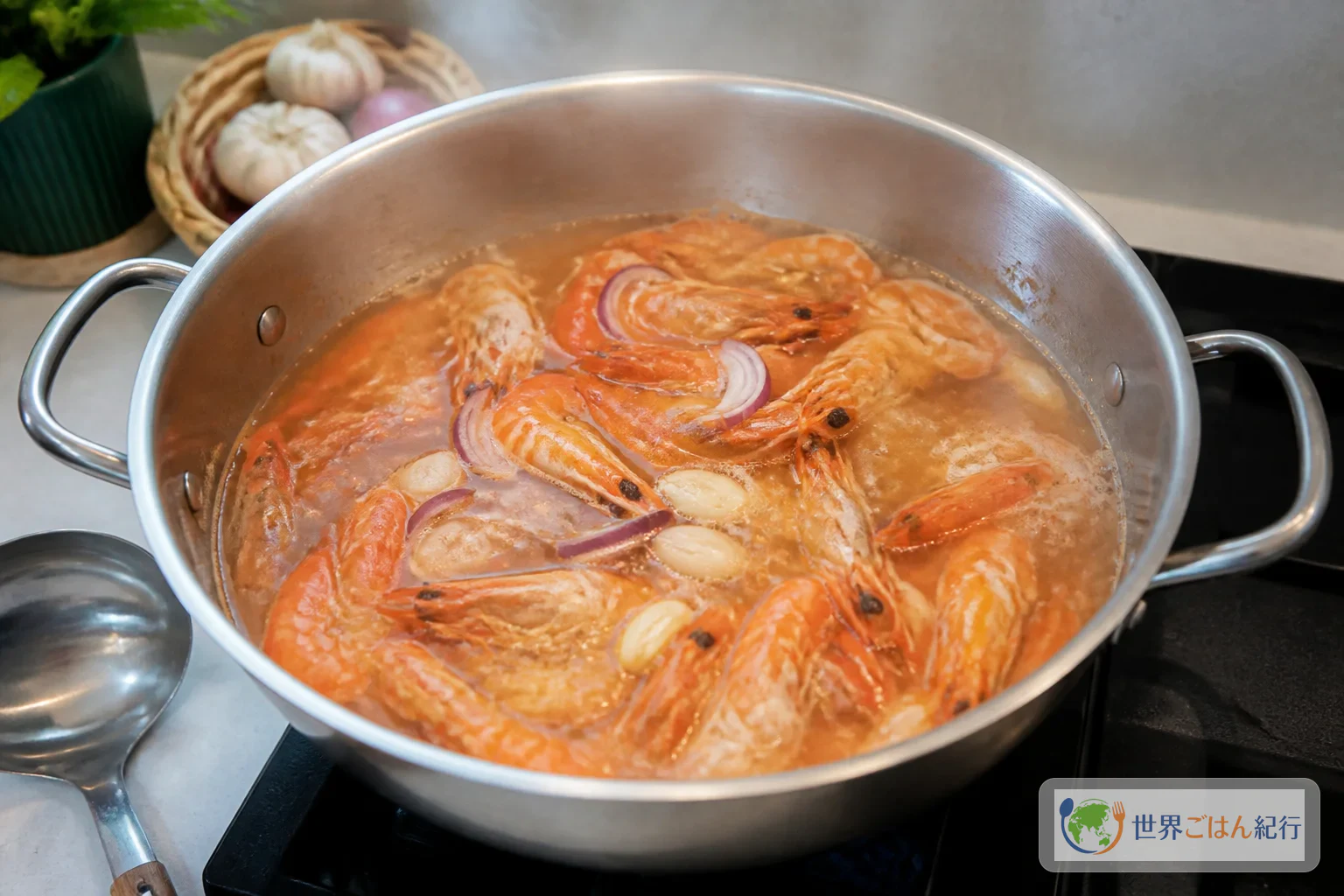
For your first batch, gather thin Filipino rice vermicelli, unfrozen shrimp with the shells on, annatto seeds, and patis, and the backbone of the aroma comes together easily. The principle to follow: don't throw away the shrimp heads and shells; use them for the sauce's stock. Annatto adds color, not heat; it's a seed that turns oil or water red-orange.
From there you layer the saltiness of patis, the smoke of tinapa, the crunch of chicharron, and the sourness of calamansi. The noodle thickness and the cut of pork can change. As long as each of these five roles is covered, the dish holds its shape even with substitutes, and smoked mackerel and lemon will stand in well for tinapa and calamansi.
Noodles
If you can't find thin noodles, thick ones still make a dish that works at the table. They change how much sauce reaches each bite, though, and the texture moves closer to luglug or Malabon. Thin noodles want a lighter layer of sauce and toppings; thick noodles need more sauce to give them substance.
Tinapa
Tinapa is smoked fish from the Philippines. In palabok, it adds saltiness and smoke. If it's hard to find, finely flake smoked mackerel or smoked trout. Bonito flakes bring fish savoriness too, but their smoke is weaker. If your smoked fish is salty, reduce the patis in the sauce to 2 tsp and then taste.
Calamansi
Lemon is a fine stand-in for calamansi. Rather than mixing the juice into the sauce from the start, serve wedges and squeeze at the table, so you can balance the sweetness of the shrimp stock and the pork fat bite by bite. Sudachi is strongly aromatic and lime brings forward a green scent, so serve half of each and compare.
Annatto
Paprika in place of annatto gets close in color, but the earthy aroma that passes into the oil is weaker. Turmeric is strongly yellow and adds bitterness, so keep it to 1/8 tsp or less. A pale sauce is fine: the core of the dish is the shrimp stock, patis, and tinapa, and extra powder for color only makes the sauce bitter.
Patis and Thai fish sauce
Patis varies widely in saltiness and aroma from brand to brand, and Thai-style fish sauce varies in strength too. Instead of adding the full 1 tbsp at once, add 2 tsp, let a spoonful of the sauce cool, and taste; salt reads weaker when hot, so a cooler taste is easier to judge. Add 1 tsp at a time only if it needs salt, and stop where the sweetness of the stock is not lost.
Method: Sauce First, Noodles Last
Palabok is not a dish where the noodles soak up a strong sauce. Build the shrimp stock, the savoriness of the pork, and the color of the annatto first. Boil the noodles just before eating, then drain them. You are ready to plate when the sauce clings thinly to the back of a spoon and the noodles loosen with chopsticks instead of staying in a bundle.
Boil the rice noodles just before eating and drain them, then pour the sauce over the top. Cooking the noodles in the sauce makes them swell and break easily.
This dish uses shrimp, fish sauce (patis), smoked fish, eggs, pork, and wheat (flour). If you have allergies, check the ingredients. Cook the shrimp through to the center before plating.
Getting Pancit Palabok Right
Judging the finished dish
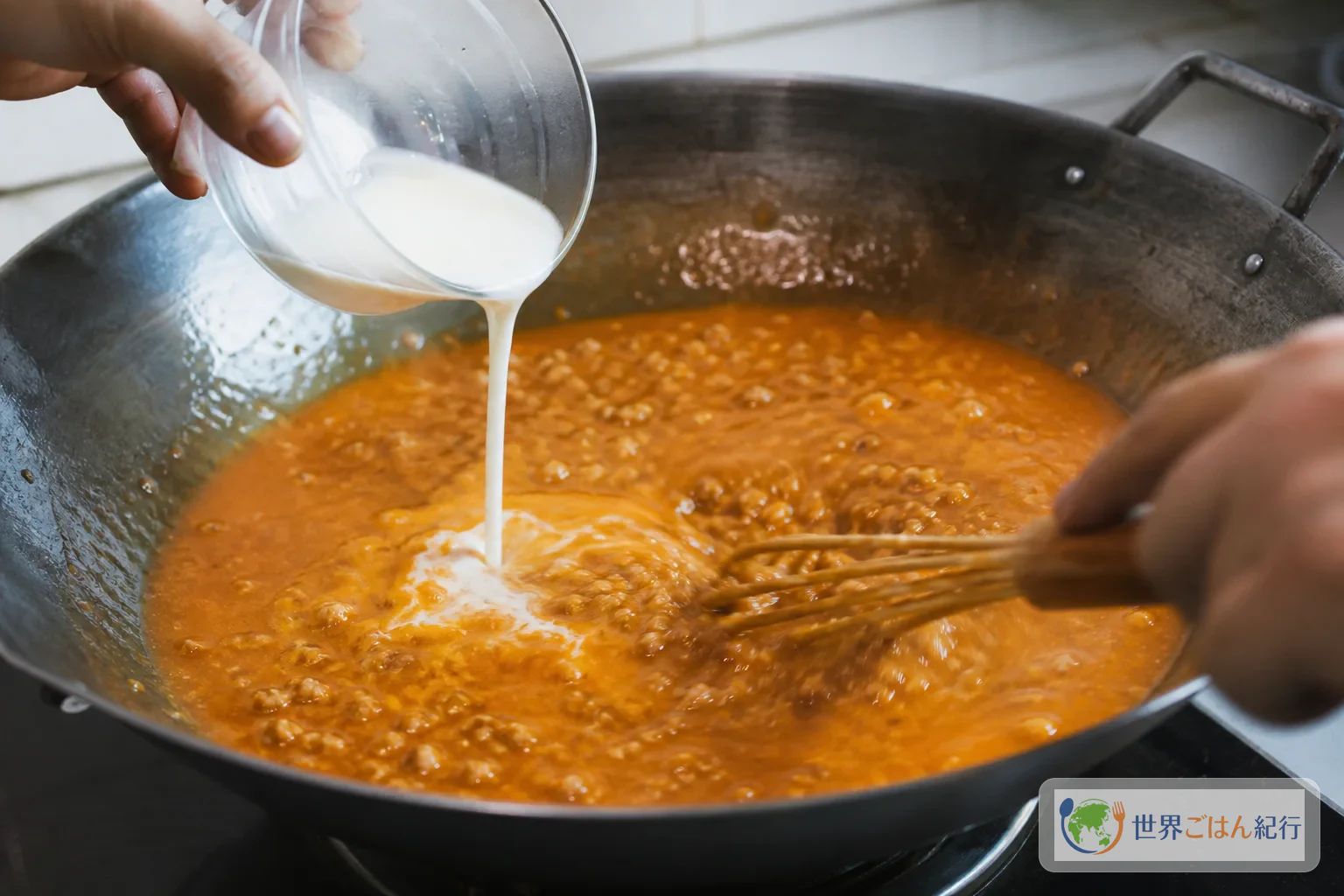
A deep orange doesn't make a good sauce on its own. Too much annatto pushes the color forward and hides the sweetness of the shrimp stock. Aim for a sauce that lightly coats the back of a spoon and spreads slowly when poured onto a plate.
For the noodles, take one strand and check that the powdery white in the center is gone. Noodles that are too soft right after boiling will soak up all the sauce once plated, and a raw core can't be fixed once the sauce is on. If you find one, return them to boiling water for 10 seconds, drain in a colander, and plate again.
The order of the toppings matters, too. Put the tinapa on top to keep its smoke, and scatter the chicharron last to keep its crunch. Fried garlic mixed into the sauce rounds out the aroma, while garlic on top gives a toasty note on the first bite, so split it however you like.
The sauce is loose
Before pouring it over the noodles, reduce it over low heat for 1 minute and check the consistency. If it's still loose, mix 1 tsp potato starch (or cornstarch) with 2 tsp water and add it a little at a time to the pot over reduced heat. Dumping it in all at once turns the sauce jelly-like and loses the smoothness of the shrimp stock.
The sauce is thick
Thin it with the reserved shrimp stock or boiling water, 1 tbsp at a time. A flour-thickened sauce firms up as it cools, so stop when it feels a bit loose in the pot and it will be about right on the noodles.
The noodles are watery
Either the noodles weren't drained well enough in the colander, or they were rinsed in cold water. If you have not poured the sauce on yet, put only the noodles into a dry skillet and warm for about 30 seconds over low heat to drive off the surface moisture. If the sauce is already on, skip the extra flour and add more chicharron and fried garlic to bring back some texture.
The shrimp stock smells fishy
There are three likely causes: the shells were stir-fried too briefly, the stock boiled over high heat, or the foam wasn't fully skimmed. Next time, stir-fry the shells for 3 minutes until they turn red-orange, and drop the heat to low once the stock boils. To rescue this batch, add 1 thin slice of ginger and the green part of a leek to the strained stock, warm over low heat for just 3 minutes, then take them out. The aroma settles a little.
The dish is too salty
Add a little shrimp stock and unsalted sauce, and increase the noodles. Fish sauce tastes saltier as it cools, so do not add more at the last minute. If you plan to add bagoong or chicharron, stop adjusting the sauce before the toppings go on.
Serving and Storing Pancit Palabok
At the table
Hold off on mixing everything the moment the sauce goes over the noodles; the toppings keep their aroma better that way. Take a little noodle from the edge of the plate, coat it with sauce, shrimp, tinapa, and chicharron, and squeeze calamansi on top. On the next bite, reach for more fried garlic. For a single serving you can toss it all together, but on a large platter, pouring the sauce over the top keeps the noodles from absorbing too much liquid and lets everyone adjust the sourness and smoke.
On a Filipino table, pancit is less a dish to savor quietly on its own and more one people serve themselves from, choosing toppings between conversations. At home, keeping the sauce warm in a separate pot and setting out the noodles and toppings apart on a platter recreates that flow of time.
Storage and reheating
Store the noodles, sauce, shrimp, eggs, tinapa, and chicharron separately. Once they have cooled slightly, move them to airtight containers and eat within about 3 days in the refrigerator. The sauce freezes well, but the noodles don't; they absorb water and turn soft after thawing, so boil only what you'll eat that day.
To reheat, put the sauce in a small pot with 1–2 tbsp water or shrimp stock and warm it over low heat. When the edges bubble, stir, and take it off before it boils for long. Dip cold noodles in boiling water for about 10 seconds, drain in a colander, and plate. Warm the chicharron and fried garlic briefly in a dry skillet so they stay crisp.
FAQ
Can I make it without shrimp?
If you only leave out the shrimp flesh, you can still build the flavor with stock from the heads and shells. If you have a crustacean allergy, do not use shrimp at all, including the stock. A fish stock works, but without the sweet scent of shrimp, think of it as a substitute for palabok.
I cannot find tinapa.
Try smoked mackerel, smoked trout, or bonito flakes, in that order. Smoked mackerel is rich in fat, so scatter 1 oz (30 g) and taste before adding all 1.75 oz (50 g). Bonito flakes are lighter in aroma, so add a little more chicharron and fried garlic to make up for it.
I only have thick rice noodles.
Boil them as the package says and increase the sauce by about 3.5 tbsp (50 ml). The texture will be closer to luglug or Malabon than palabok, but the toppings play the same roles.
More to Cook Alongside
- Pancit bihon: the same thin rice noodles, stir-fried so they absorb the stock.
- Pancit canton: stir-fried pancit made with wheat noodles.
- Kare-kare: another Filipino celebration dish, served at the table with bagoong.