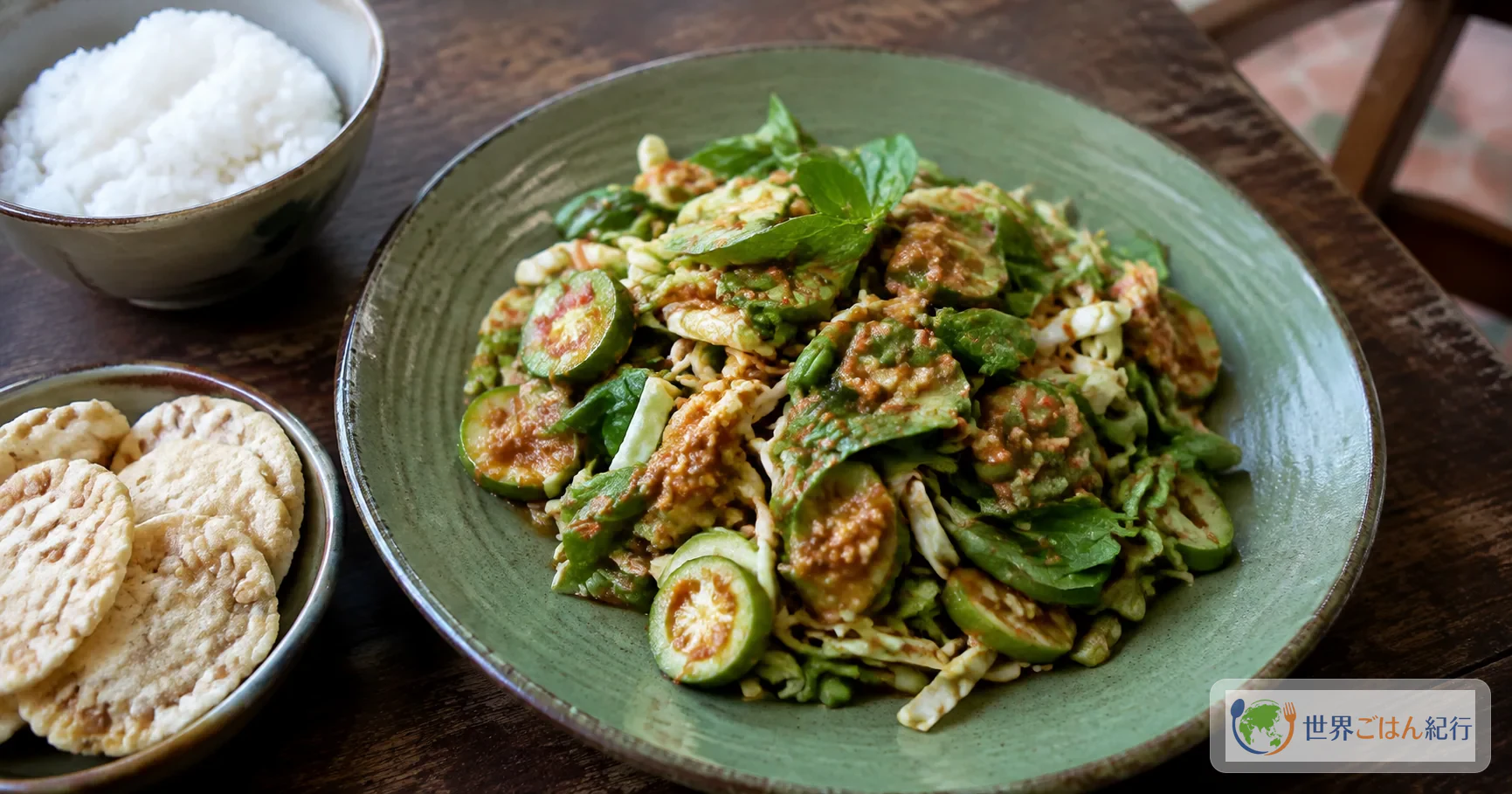
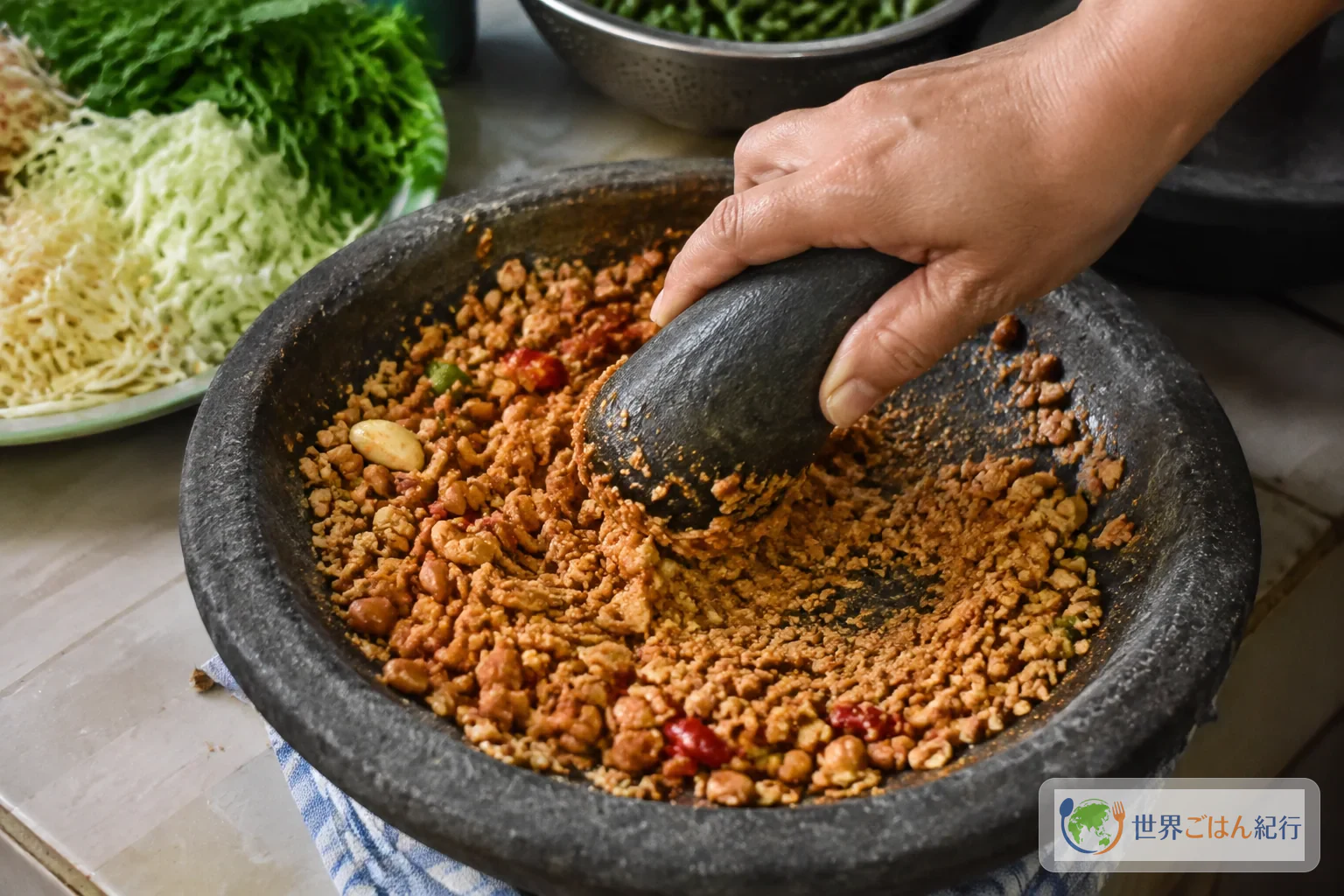
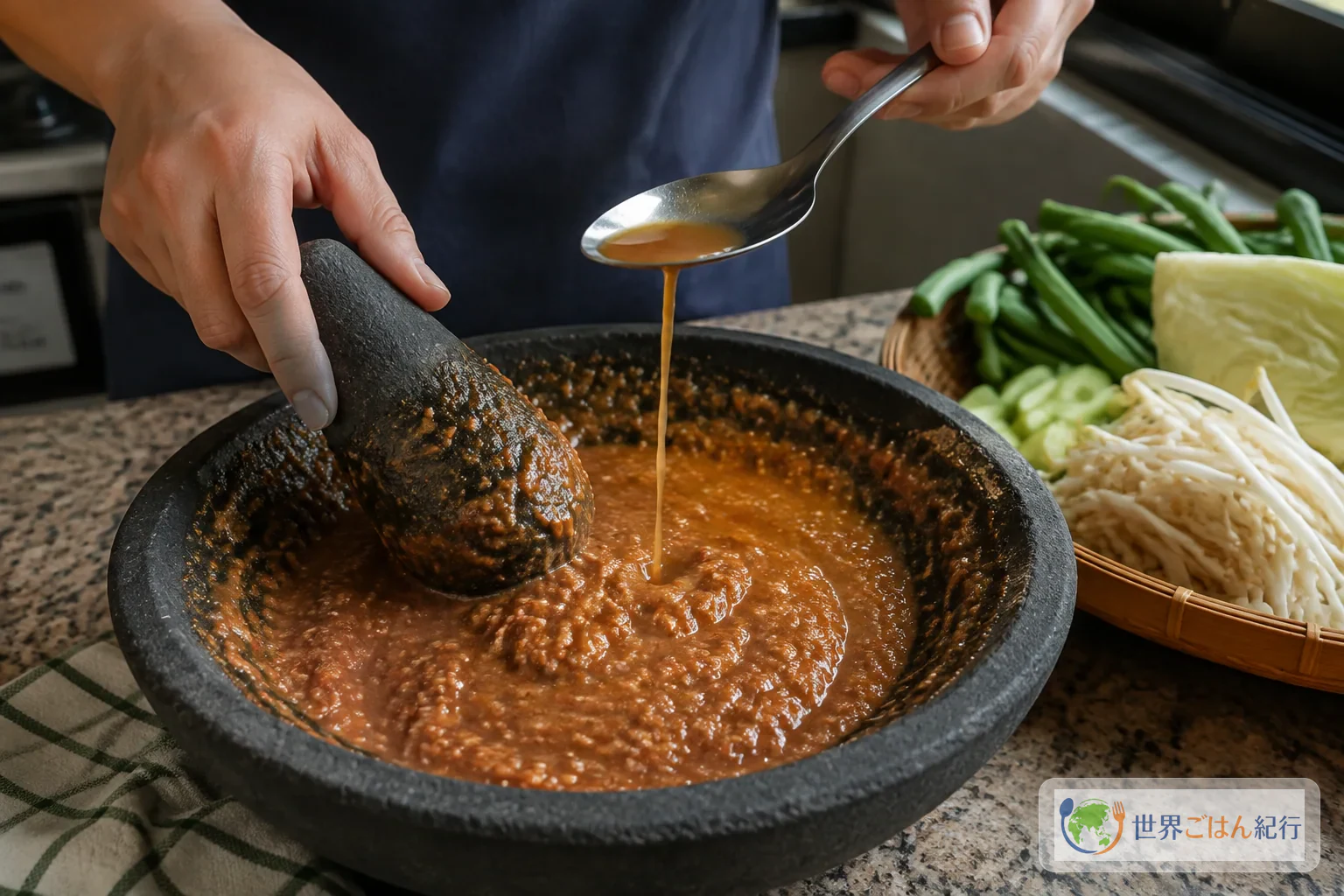
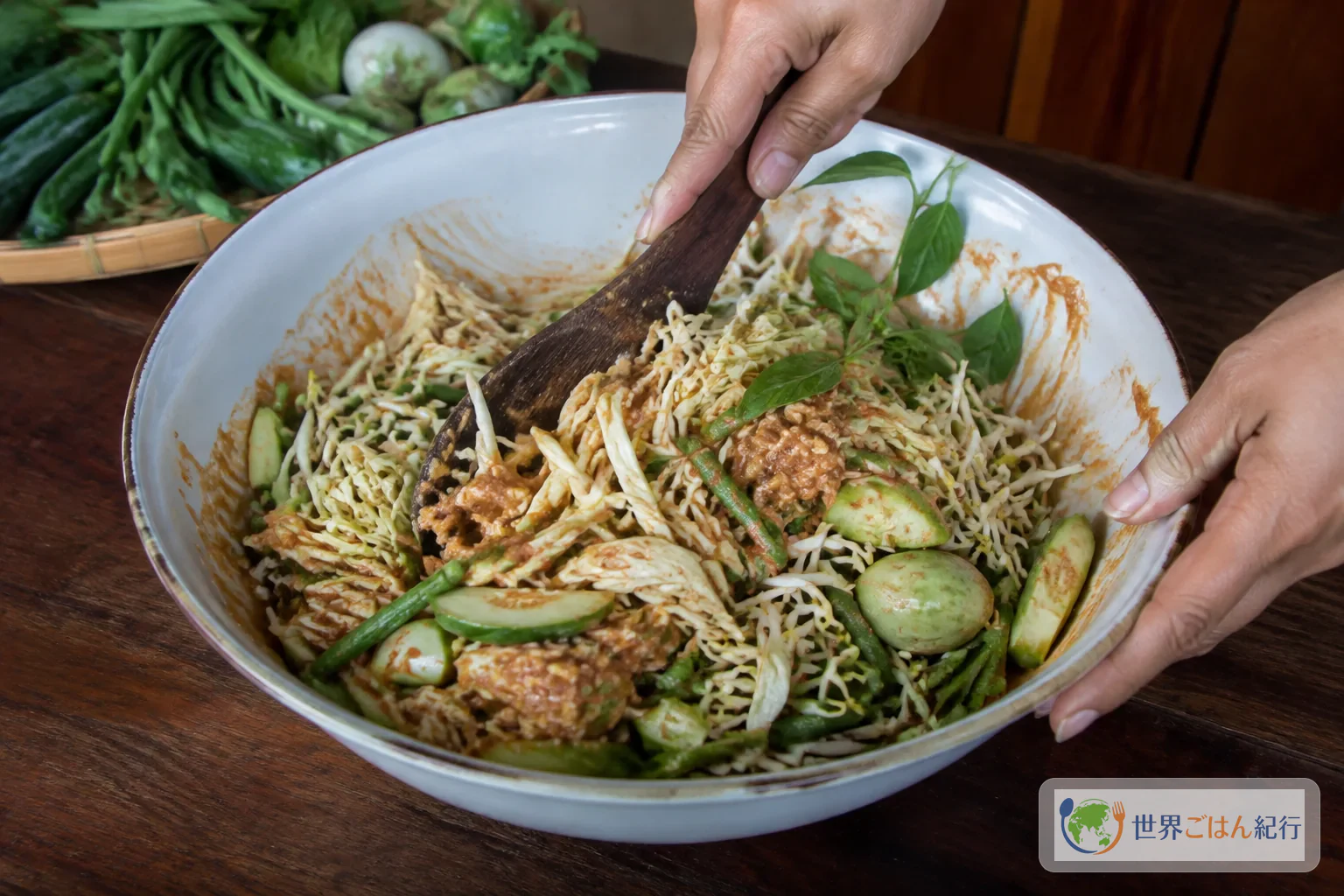
The small snap of a raw green bean, the green smell rising off a cut cucumber, peanuts breaking into coarse bits at the bottom of the mortar. Karedok comes from the Sundanese region of West Java, Indonesia. It is a plate of raw cucumber, cabbage, bean sprouts, green beans and small eggplant coated in a thick peanut sauce. Nothing is cooked, so the water in the vegetables and the thickness of the sauce decide how the dish turns out. The sauce goes well beyond sweet peanut: the earthy aroma of kencur, the heat of chili and the sourness of tamarind or lime are layered in, and it makes you want a bowl of white rice alongside.
Karedok in West Java
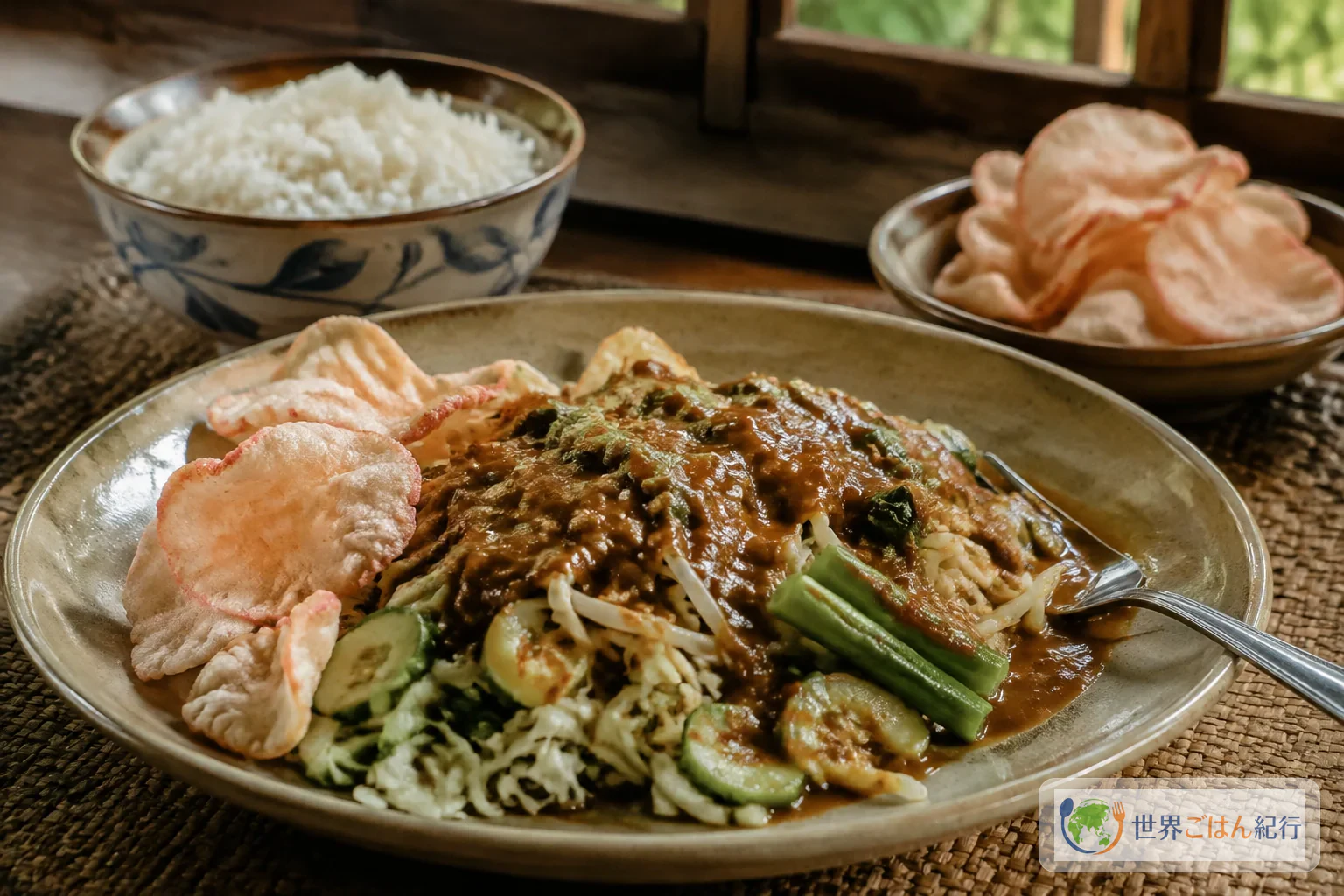
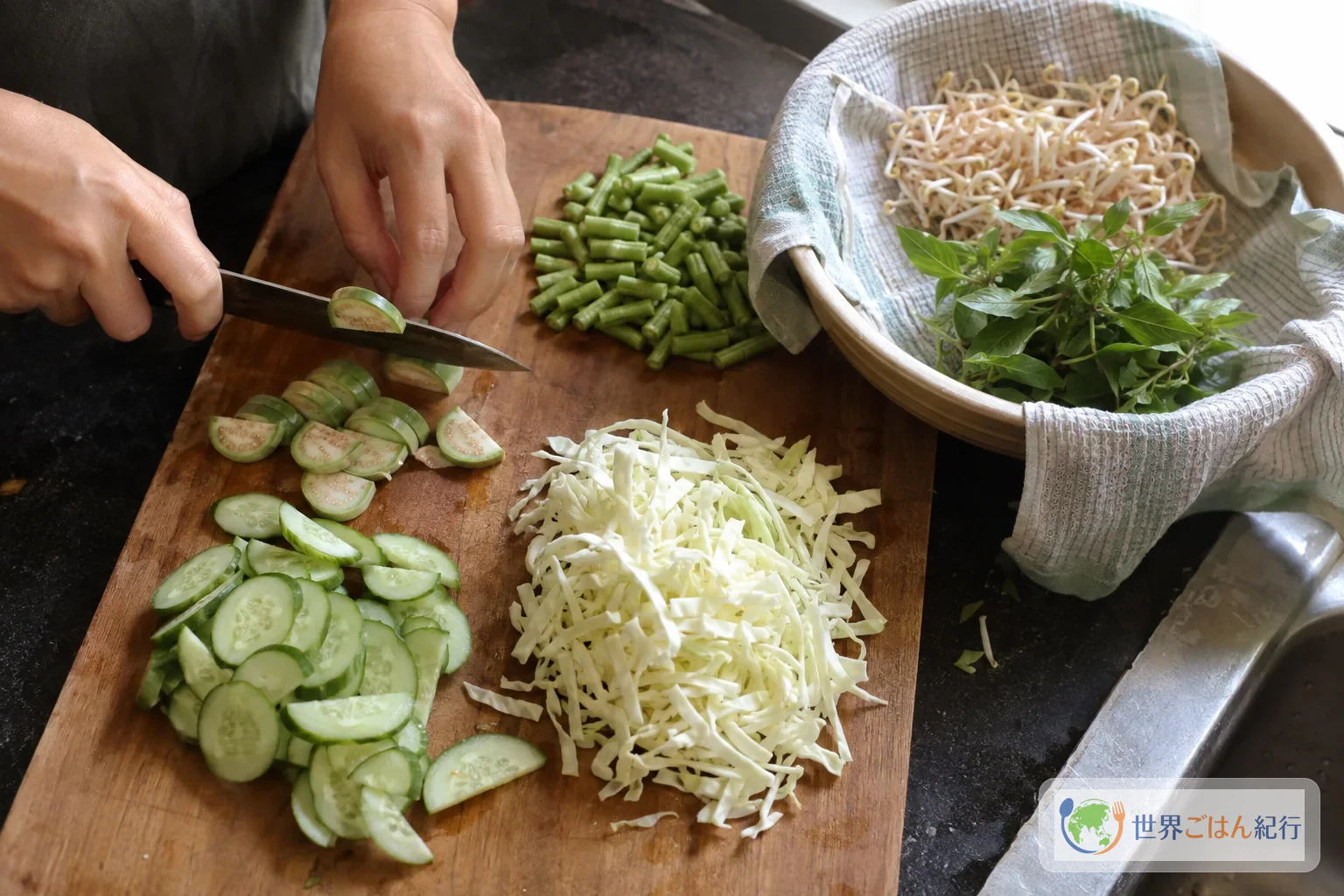
Karedok has no single fixed formula, and it helps to know that before you shop. Sundanese karedok from West Java uses cucumber, cabbage, bean sprouts, long beans, green eggplant and kemangi (lemon basil). Some versions add cauliflower, sweeten the sauce with kecap manis, or use lime or tamarind. As long as you have raw vegetables and peanut sauce, use what your household or shop has.
It's served as a meal, with warm rice, krupuk (shrimp crackers) and emping (melinjo crackers). The sauce picks up water from the vegetables and drips onto the rice, the crackers add a light saltiness and a fried aroma, and a cold salad becomes something filling. At home, let freshly cooked rice cool a little, and keep the crackers on a separate plate so they stay crisp to the end.
Gado-gado uses the same kind of peanut sauce, but it combines boiled vegetables with tofu, tempeh and egg to make a warm, substantial meal. In karedok the aroma and water of the raw vegetables lead, so what matters is washing, draining, how thick you cut, and when you toss. Make it alongside gado-gado, the cooked vegetable dish of Jakarta and the same sauce shows the difference: one is satisfying because of its cooked ingredients, the other is light because of its raw crunch.
Versions differ less in the vegetables than in how the aroma and sourness are built. Kencur gives a deeper aroma, and more kemangi adds a green, citrus-like fragrance. With terasi, a fermented shrimp note sits behind the sweetness of the peanuts. Without terasi or dried shrimp, the sauce is built from chili, garlic, palm sugar and tamarind; it smells lighter, and the greenness of the vegetables comes forward. More lime makes it refreshing, but every squeeze also loosens the sauce, so add it a little at a time.
In Indonesian it is spelled karedok. Kencur is an aromatic root of its own, separate from ginger.
Ingredients | Serves 4
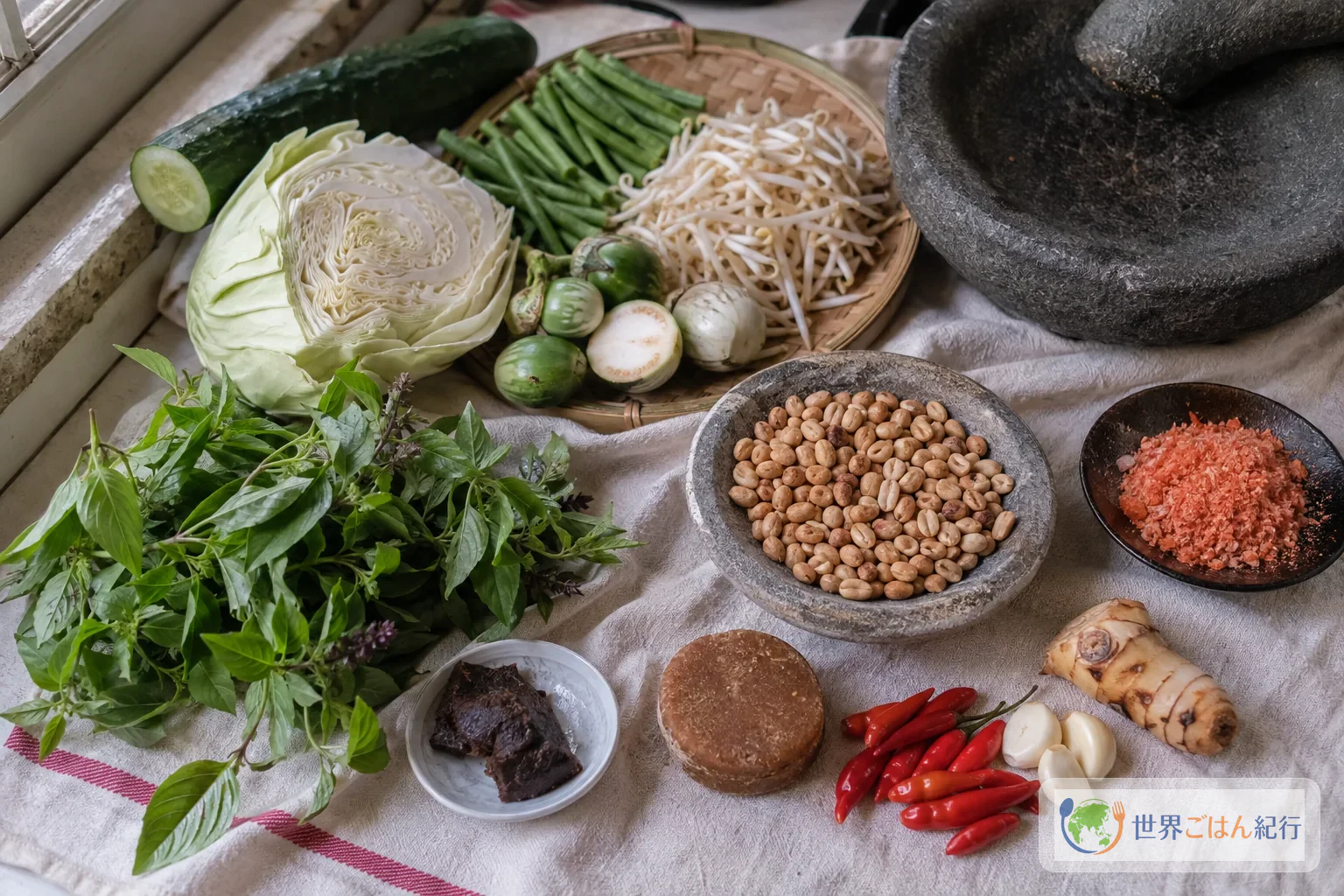
It makes four servings as a main dish with white rice. The vegetables total about 1.75 lb (750 g). As a light salad it serves about 2, and as a side for meat or fish about 6. The peanut sauce makes a little extra, so toss only what you'll eat and serve the rest on a separate plate.
Peanuts, dried shrimp and krupuk bring allergens that a vegetable-only salad doesn't. Check the ingredients and shared-facility labels on store-bought peanut products and crackers. If you leave out the dried shrimp, don't just add more salt; that makes the flavor sharp. Thin the sauce and adjust it with lime and palm sugar.
Choosing ingredients for karedok
Vegetables and substitutes
The vegetables, peanuts, chili and lime are easy to find at a nearby supermarket. If you can't get long beans, use ordinary green beans. Small eggplants can stand in for the small green ones, and sweet basil with a few shiso leaves can replace kemangi. Watery bean sprouts blur the flavor more than any substitute does, though. If you have to choose what to protect, here is the order: dry vegetables, coarsely crushed peanuts, a core of aroma from kencur or ginger, sourness from both tamarind and lime, and tossing just before eating.
| What to look at | A West Java-leaning composition | Substitutes elsewhere |
|---|---|---|
| Vegetables | Long beans, cucumber, bean sprouts, green eggplant, cabbage, kemangi | Green beans, small eggplant, sweet basil or shiso for texture and aroma |
| Aroma of the sauce | Peanuts, garlic, chili, kencur, terasi | Kencur if you can find it, ginger if not; dried shrimp powder in small amounts for terasi |
| Sourness | Tamarind, lime, lemon and so on | Tamarind as the base, lime at the end; rice vinegar alone makes the aroma flat |
| How to eat | Coat raw vegetables with sauce, serve with rice and krupuk | Serve the sauce separately and toss only what you will eat, to avoid wateriness |
Washing raw vegetables and sprouts
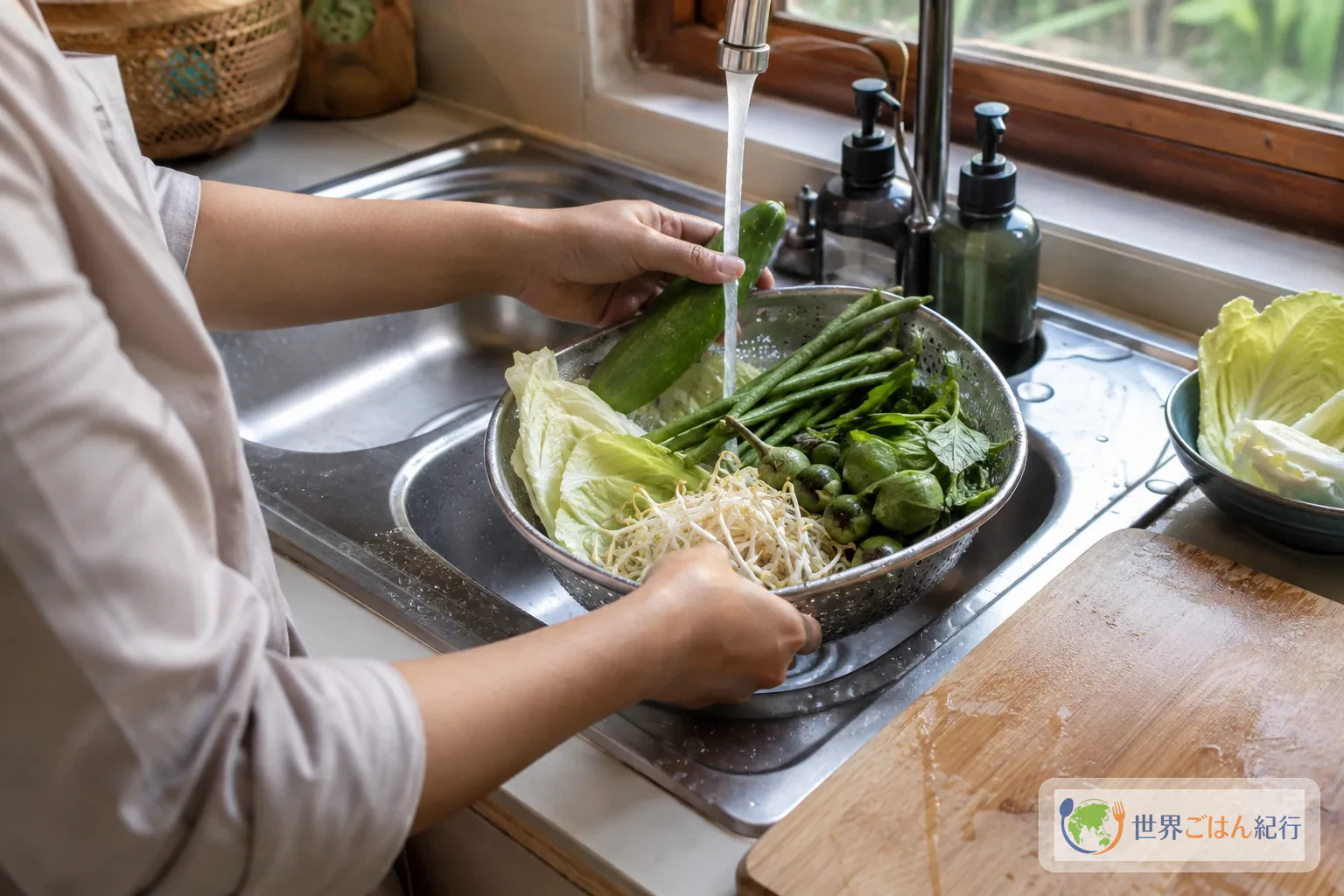
Because karedok is eaten raw, washing alone doesn't make it fully safe. Rinse the vegetables under running water, skip soap and produce wash, and dry them on a clean cutting board. Raw sprouts can carry bacteria, so pregnant women, older adults, young children and people with weakened immune systems should avoid them. For those eaters, boil the bean sprouts briefly and cool them before adding, or use cabbage or cucumber instead. It won't be true raw karedok, but safety comes first.
Kencur, terasi and dried shrimp
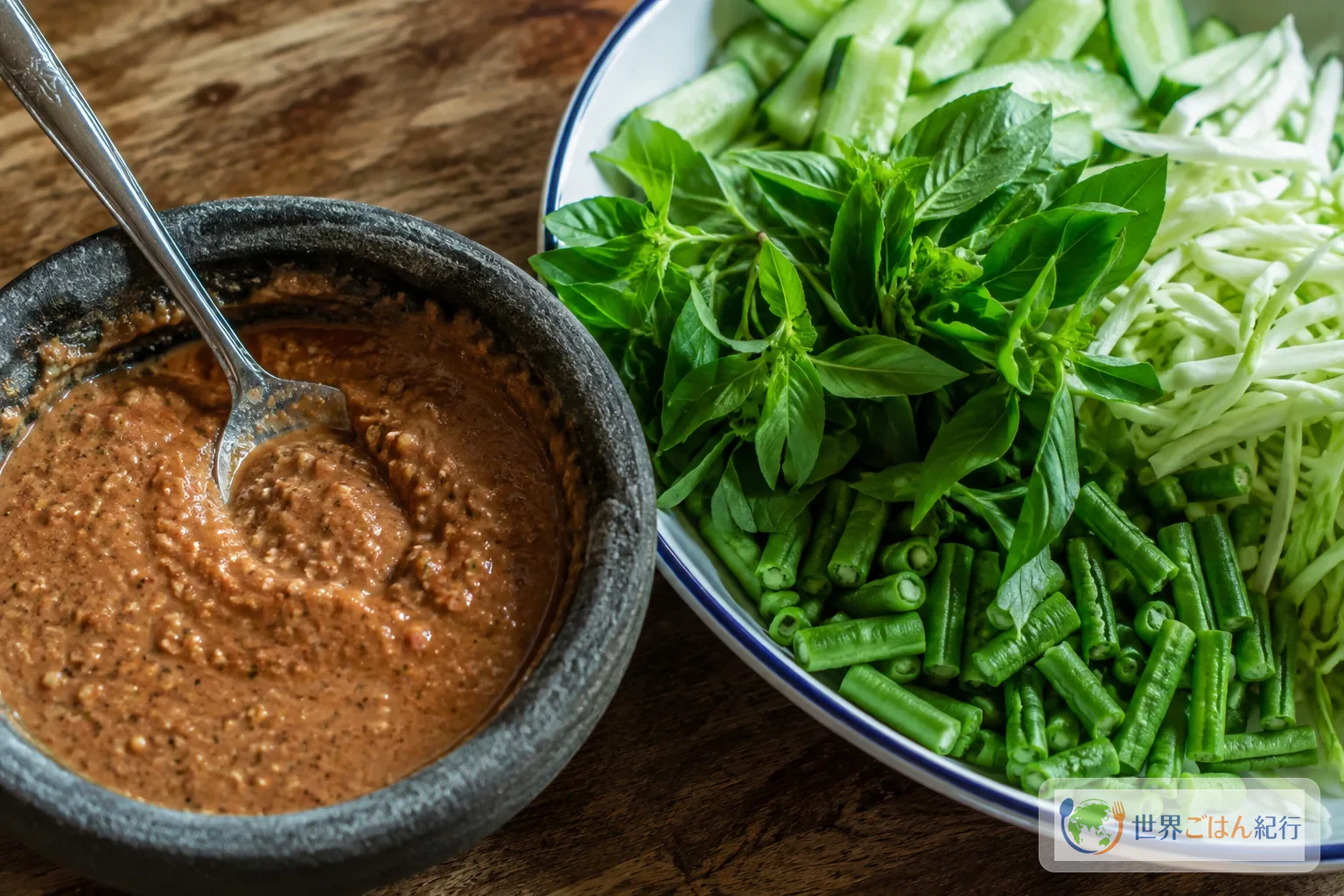
Kencur and terasi are the two ingredients worth seeking out. Ginger can stand in for kencur, but the earthy aroma that rises into your nose turns into something else. Terasi (fermented shrimp paste) has a strong smell, and once it's open you only use a little at a time. For your first jar, buy a small container that lists the ingredients and weight.
If you haven't cooked with terasi yet, start with 1/2 tsp dried shrimp powder. It smells gentler and leaves fewer bits in the sauce. Check whether it's powder or flakes, the weight, and whether salt or seasoning has been added. If something sold as "dried shrimp" is salted, start with half the salt in the table.
People who don't eat crustaceans, or who want a lighter aroma, can leave the shrimp out. The sauce then turns mild, with peanut sweetness and chili in front. A little miso can fill the gap, but it brings a soybean flavor and won't recreate terasi. If someone at home has a crustacean allergy, check the ingredients of any substitute too, and don't share the same mortar or spoon.
A sauce that uses dried shrimp or terasi contains crustaceans even in a vegetable-only dish. Anyone avoiding shrimp should check the ingredients of the products and crackers and make the dried-shrimp-free sauce with separate utensils. Also, washing alone doesn't remove the risk of raw bean sprouts, so consider the health and age of the eaters, and heat them or replace them with another vegetable if needed.
Mortar or food processor
A mortar lets you crush the aromatics before oil or water dilutes them, and you can decide by hand how coarse the peanuts end up. If yours is small, crush the peanuts on their own in two batches. A food processor works too, but if you run it continuously the paste turns uniform and loses the coarse bits that cling to the vegetables. Pulse in short 5-second bursts, wipe down the sides once, and stop when pieces of up to 0.125 inch (1–2 mm) remain.
A heavy ridged ceramic bowl works: crush the aromatics first, then add the peanuts in two batches. A food processor on short pulses can also stand in.
If you do buy a mortar, look at the inner diameter, whether a pestle comes with it, the weight and how you'll wash it. A shallow spice dish spills when you crush the peanuts for four servings at once, so a heavy bowl with a non-slip base is better. Heavy granite stays put while you work but is harder to store and lift. It earns its place if you'll also crush sambal, curry spices or herb pastes; if you make karedok once a year, the tools you already have are enough.
Instructions | Toss the raw vegetables last
Once the tools are ready, make the sauce while the vegetables drain. Settle the flavor and thickness first, and leave only the tossing for just before serving. That keeps the vegetables crisp.
Fixing the karedok sauce
The sauce is finished before it meets the vegetables, so you can still correct it partway. Instead of adding seasoning to the whole bowl after mixing, fix the reserved sauce in a small dish and add it back a little at a time. If you keep adding seasoning without watching the water coming out of the raw vegetables, it easily ends up sour but thin, or sweet but short on salt.
| State | How to restore | What it should look like |
|---|---|---|
| The sauce is stiff and doesn't spread over the vegetables | Add warm water 1 tsp (5 ml) at a time and mix | It flows thickly from the spoon, and the mark closes in 2 seconds |
| The sauce is watery | Crush 10 g unsalted peanuts and mix into the sauce | Pieces remain and no water pools at the bottom of the bowl |
| Too sour | Add palm sugar or dark brown sugar 3 g at a time | Not only sweetness remains at the back of the tongue; the sourness comes back afterwards |
| Too salty | Combine 10 g unsalted peanuts and 1 tsp (5 ml) warm water | The sauce alone is a little strong, but not sharp when eaten with the vegetables |
| Water came out of the vegetables | Move them to a strainer for 2 minutes and fix the sauce separately | Pour off the water, then toss only the amount you'll eat |
| Not enough heat | Chop chili separately and add per plate | Don't make the whole bowl spicy; let each person adjust |
How much warm water you need depends on the vegetables. With watery cucumber and bean sprouts, start with ¼ cup (60 ml). With drier cabbage and green beans, the full amount in the table still keeps the sauce thick. Sourness fades after tossing, so keep the sauce a little restrained and put lime on the plate, which makes it easy to correct at the table.
The earlier you mix vegetables and sauce, the more water the salt and acid draw out. Stop when the sauce tastes "a little strong," toss in only half of it just before it goes to the table, and add the rest if it needs more.
Storage and substitution Q&A
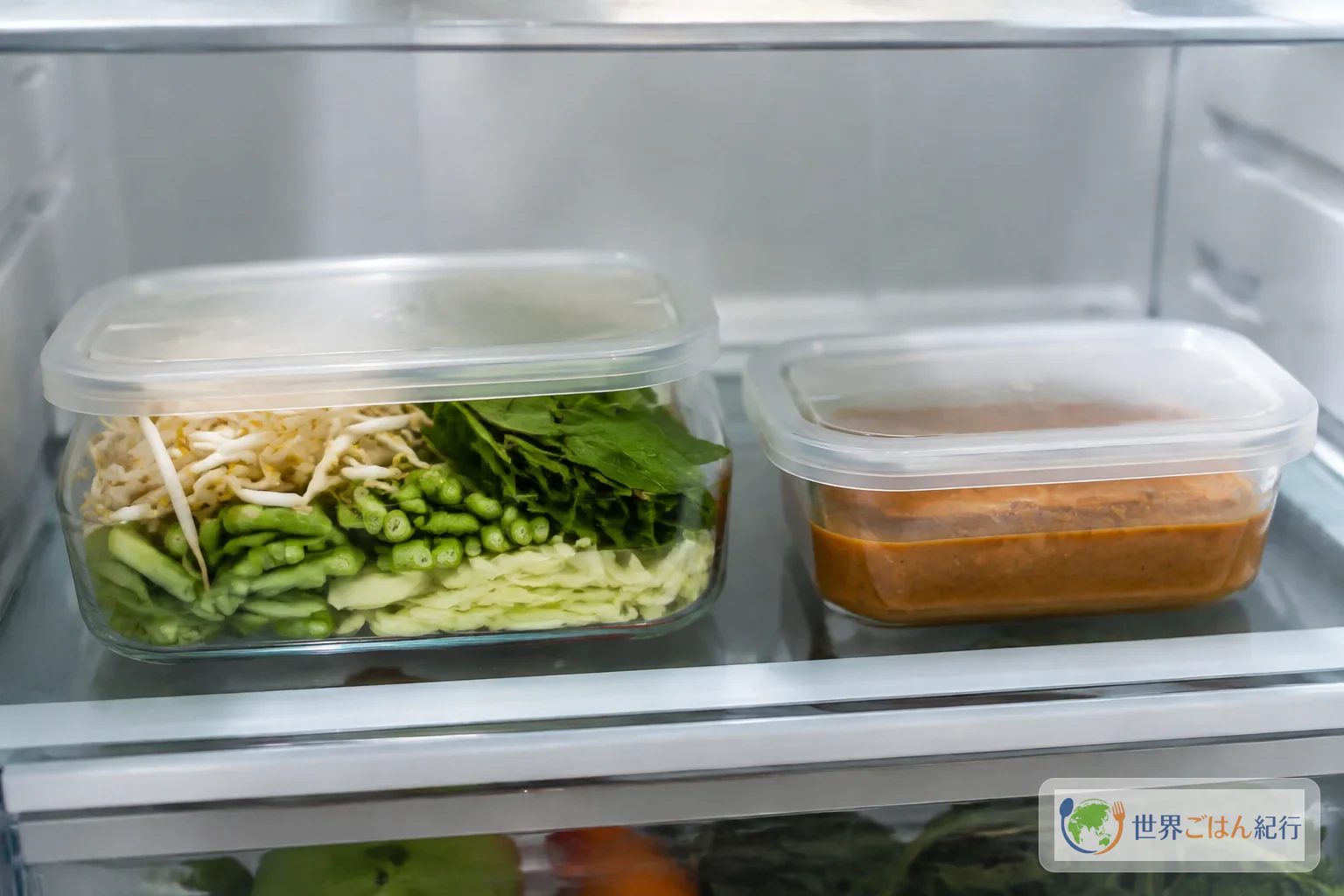
How far can I prepare the day before?
You can wash, cut and thoroughly dry the vegetables the day before. Store them in a clean airtight container lined with paper towel, and refrigerate the sauce separately. Keep everything at 50°F (10°C) or below, and don't leave it out at room temperature for long. Store raw bean sprouts on their own, and throw them out if they smell, feel slimy or look discolored. Once tossed, the vegetables release water overnight and lose their crunch, so eat it the day you make it.
I have no kencur. Can I make it with ginger alone?
Yes. Replace 10 g kencur with 8 g ginger, and add the lime juice from the table a little at a time. Ginger has a hot, cooling aroma while kencur is earthy and round, so it won't taste the same, but raw vegetables, peanuts, chili and sourness still work together. Doubling the ginger to make up the aroma only makes the heat stick out. For a little extra green aroma, grate a tiny bit of lime zest; wash the lime well first and stop before the white pith.
Are terasi and dried shrimp powder the same?
No. Terasi is a fermented shrimp paste with a strong, moist fermented aroma and saltiness. Dried shrimp powder adds a dry seafood savor and a gentler aroma. If you use terasi, warm a little in a dry pan to bring out its aroma, cool it and crush it. With dried shrimp powder, start with 3 g, check the salt on the label and adjust the salt in the sauce.
Can people who dislike heat eat it?
Yes. Halve the red chili and remove the seeds. Sweetening the whole sauce to hide the heat drowns out the kencur and tamarind, so put chili on a separate dish for people to add themselves. For children or anyone sensitive to heat, set aside their portion of sauce before the chili goes in, and don't mix it in the same mortar.
What can I substitute if I have a peanut allergy?
Sunflower seeds or cashews can give a similar thickness, but that doesn't make the sauce safe for someone with a nut allergy, so check product labels. If someone at home has an allergy, keep the sauce and utensils separate from the ones used for peanuts. A seed sauce moves away from karedok's classic taste, so serve it as its own dressed vegetable plate rather than as karedok.