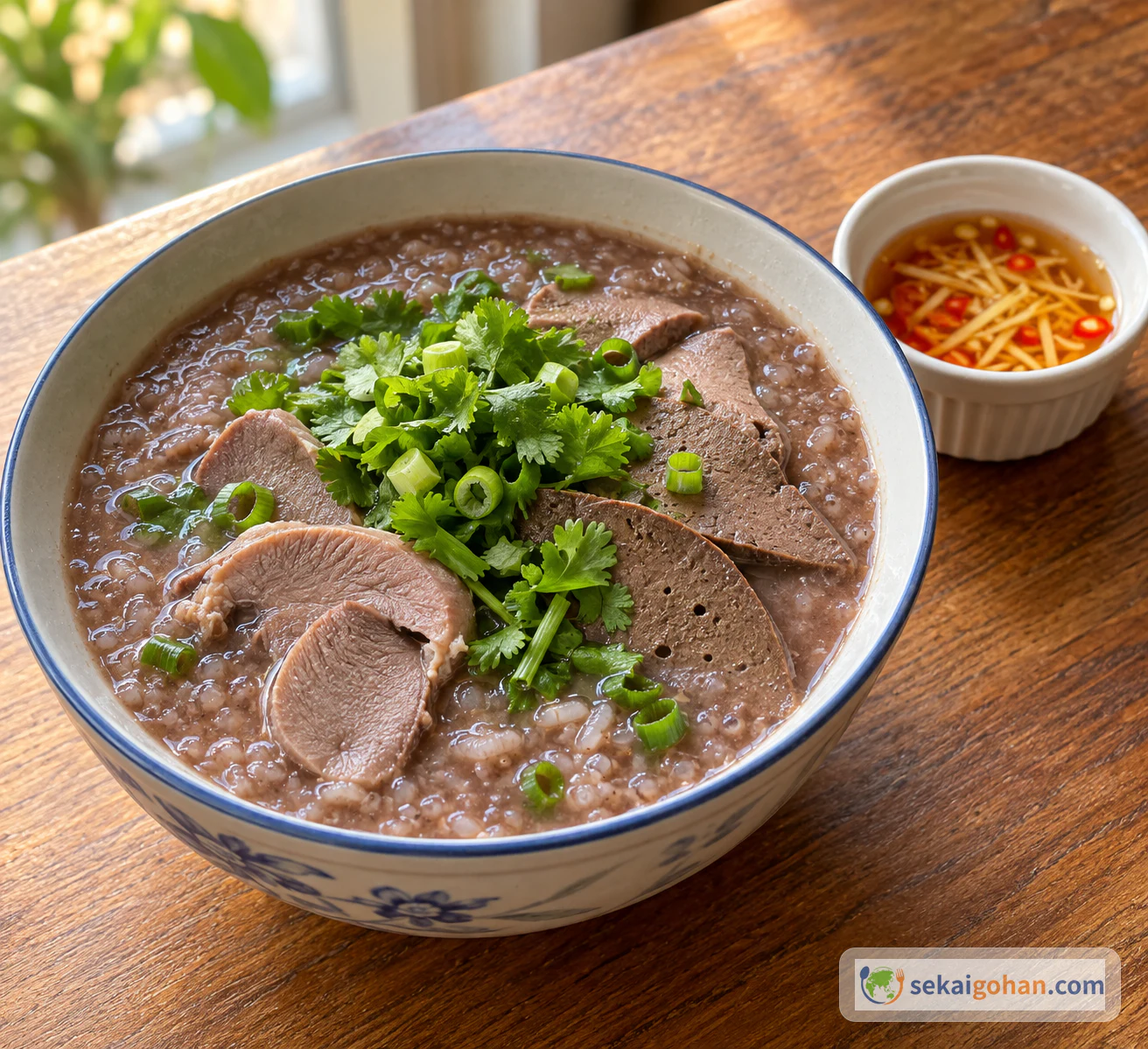
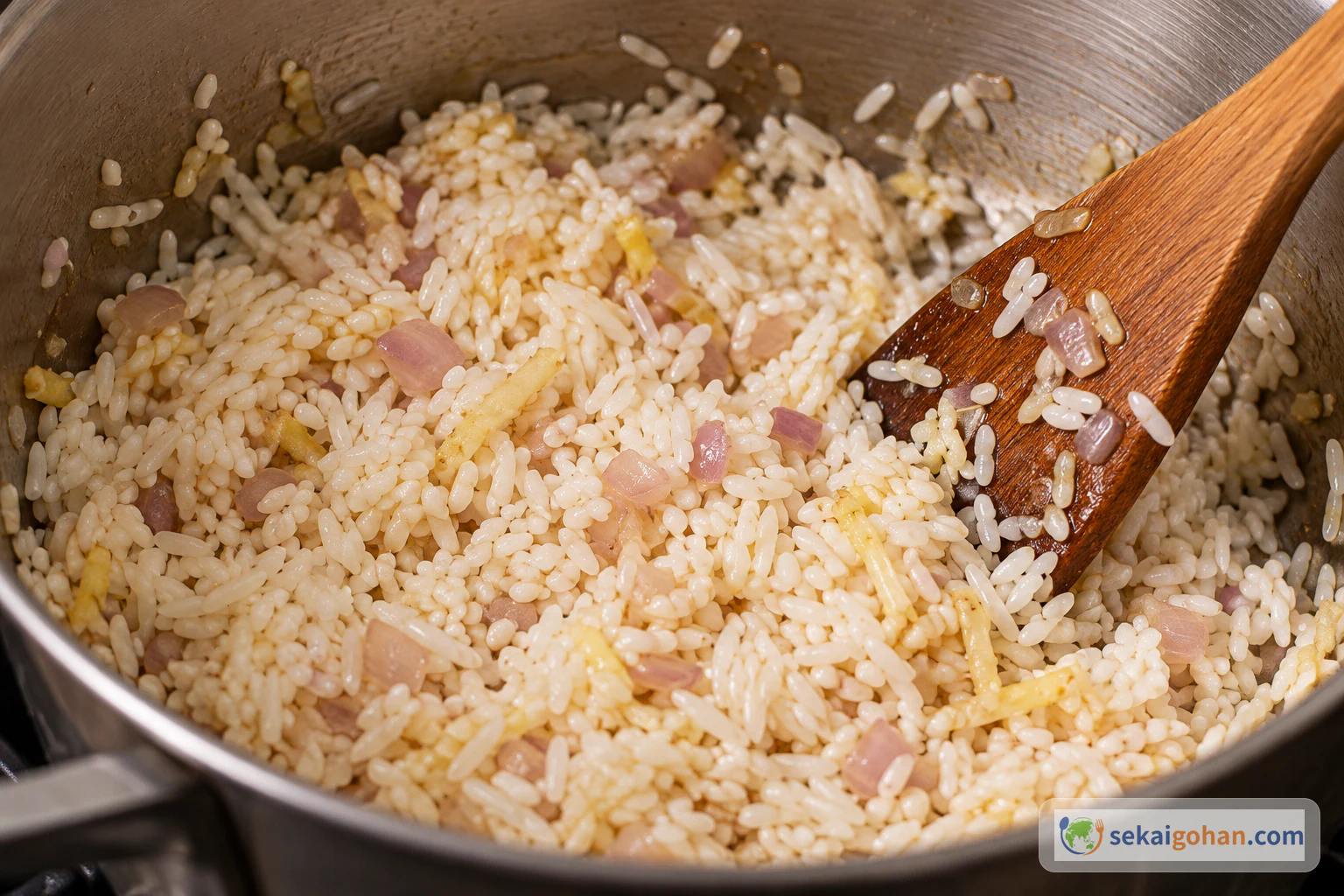
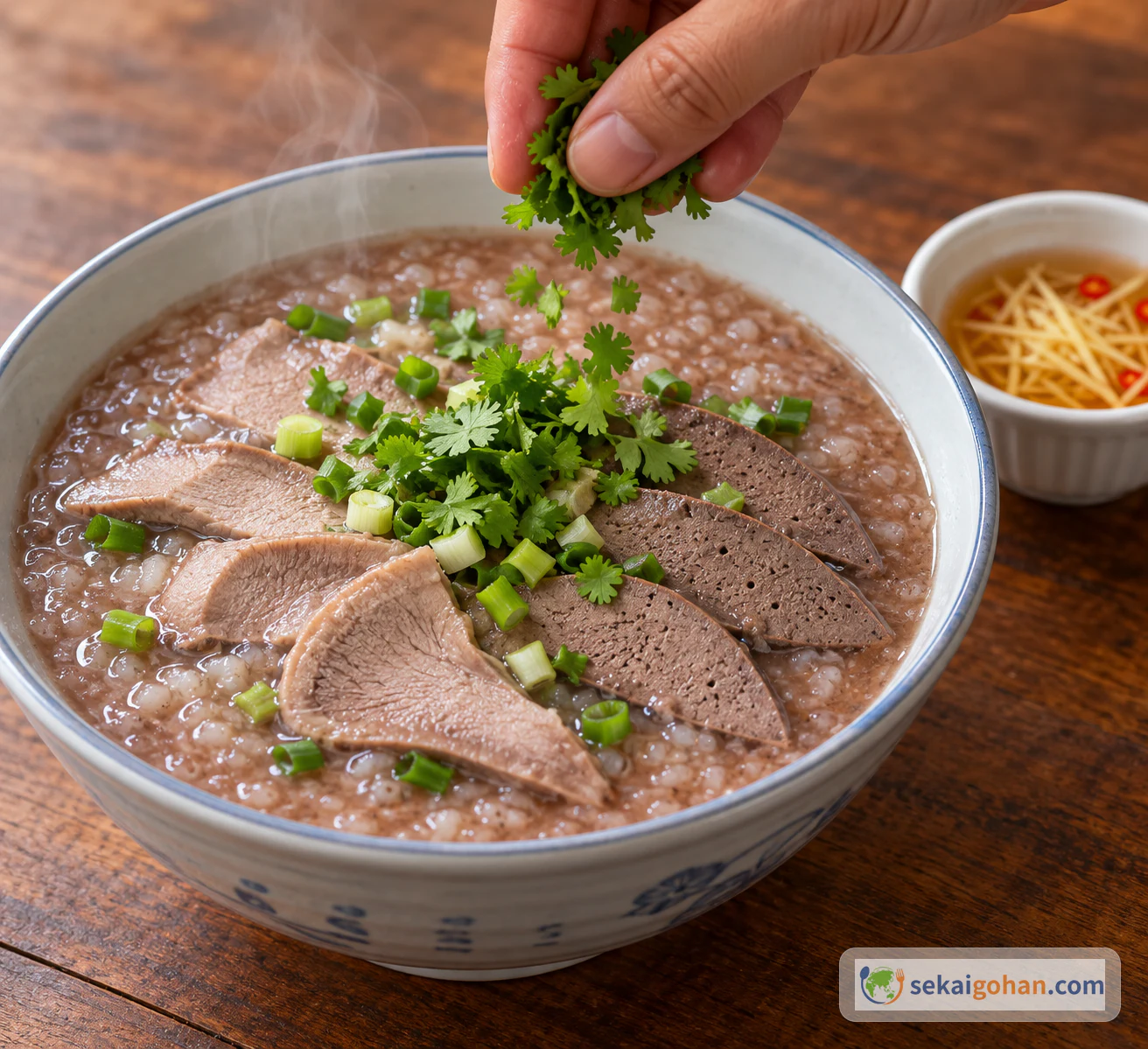
A birthday in the family is where this cháo lòng starts. The mother-in-law asks what she should cook, the husband asks for cháo lòng, and a special meal gets made from scratch. Cháo lòng is Vietnamese rice porridge topped with pork organs. Raw pork blood cooks right into the porridge, which turns it a deep, dark color. Each bowl comes to the table with green onion, cilantro and ginger fish sauce on the side.
Cháo Lòng in Vietnam
No one knows who invented cháo lòng, or when or where. What is clear is how much a bowl can vary. Restaurants serve pork organs and cooked blood pudding in a broth made from pork bones, head and innards. In Hanoi in the north the porridge is thicker. Further south it is looser and comes with ginger fish sauce and bean sprouts.
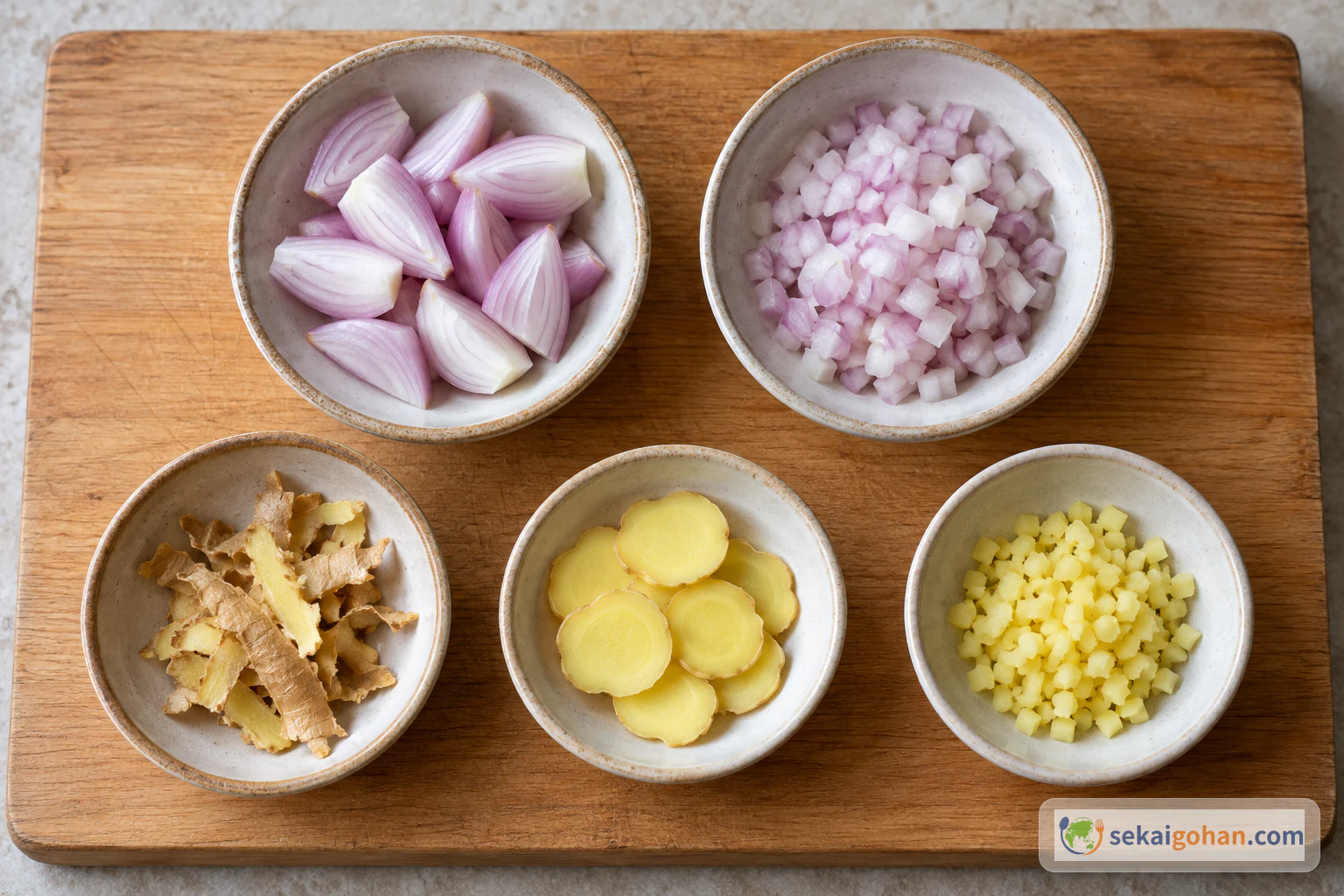
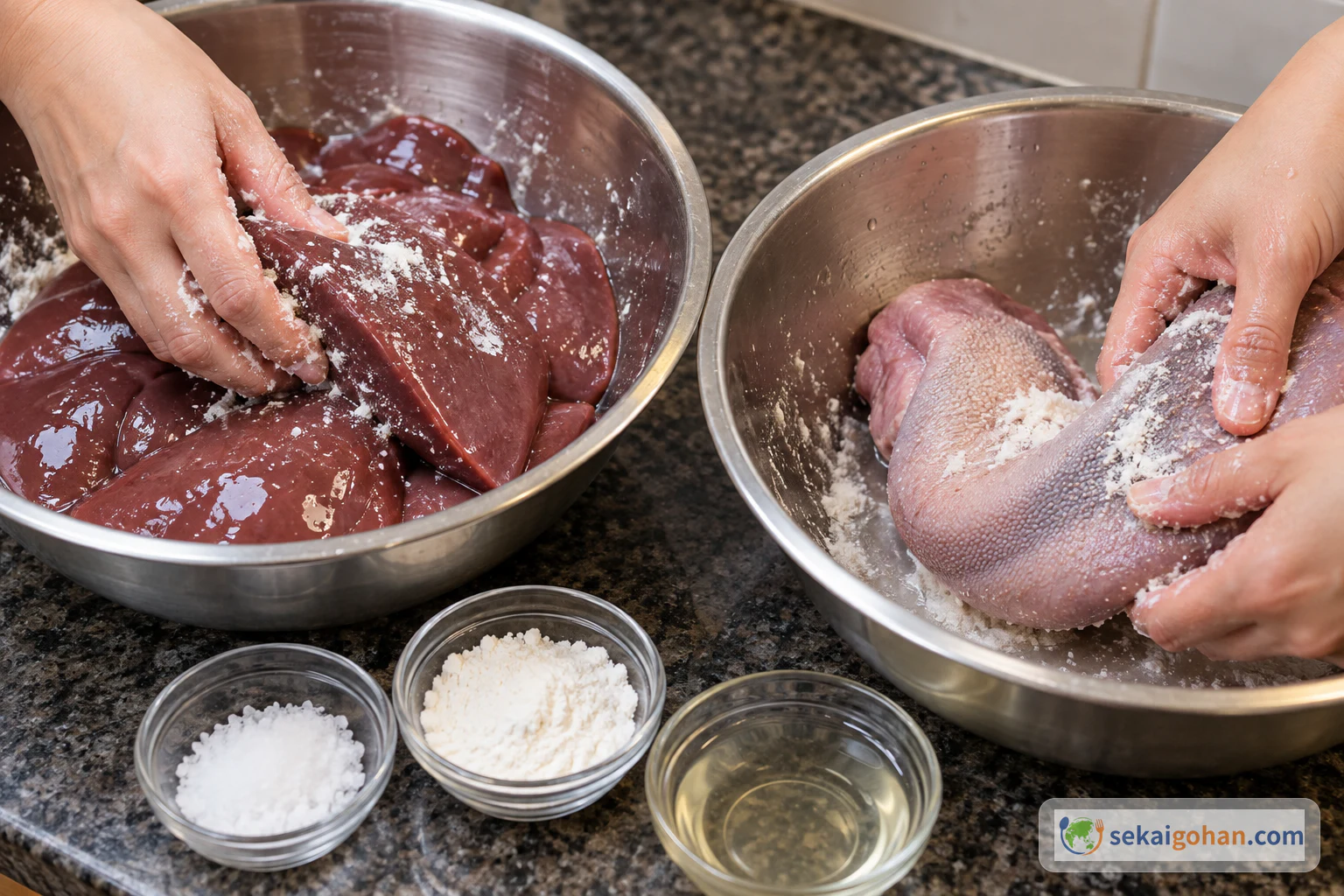
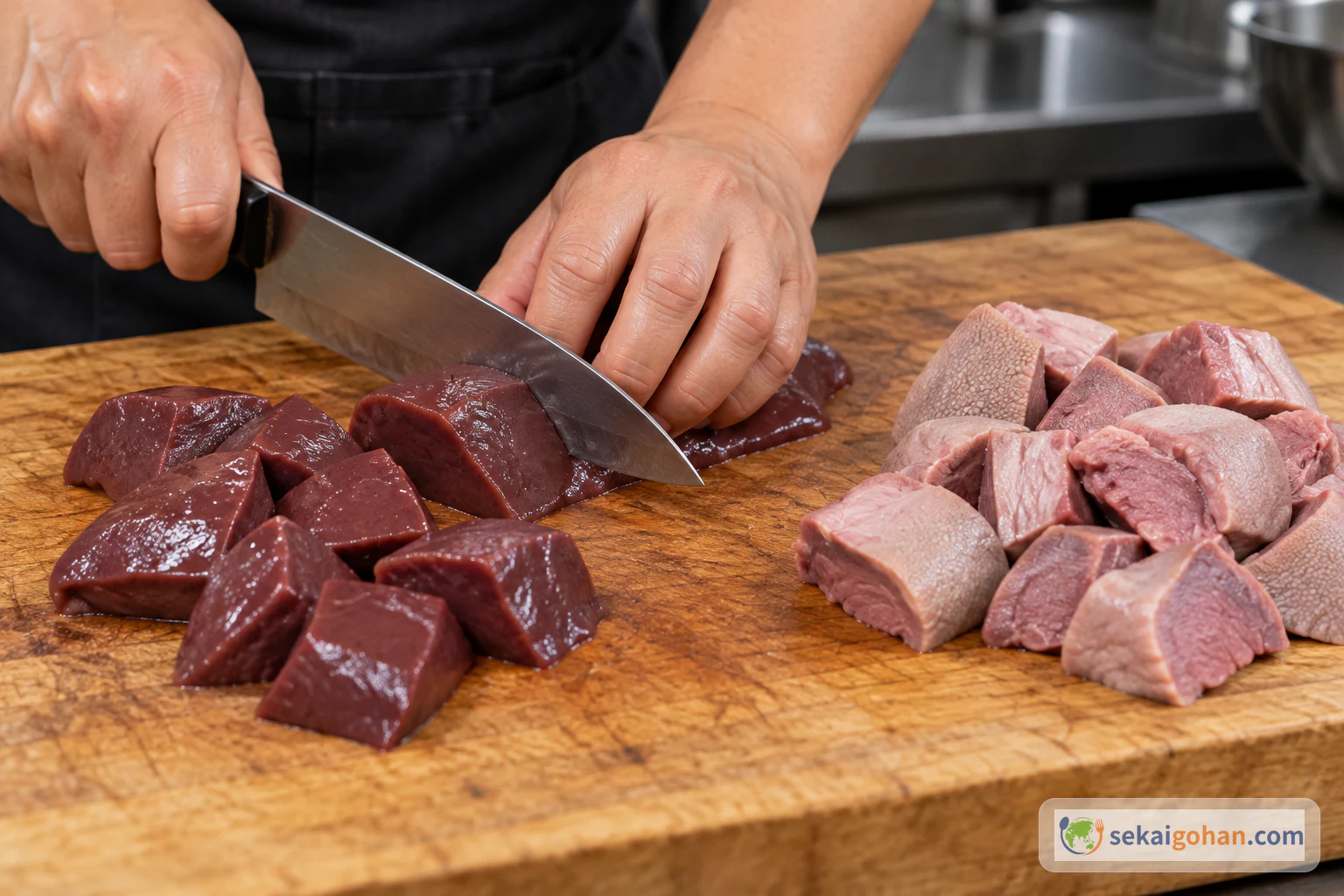
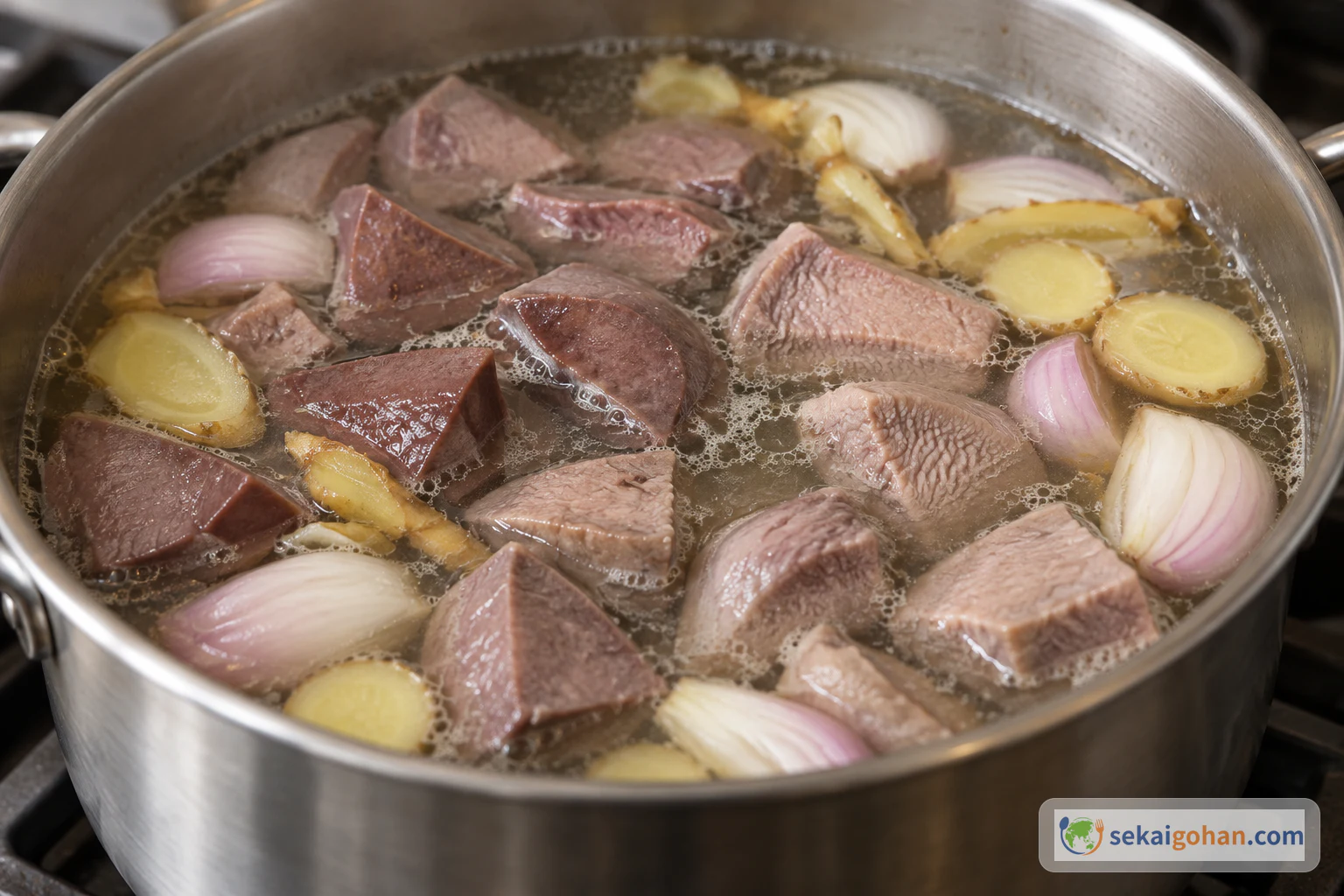
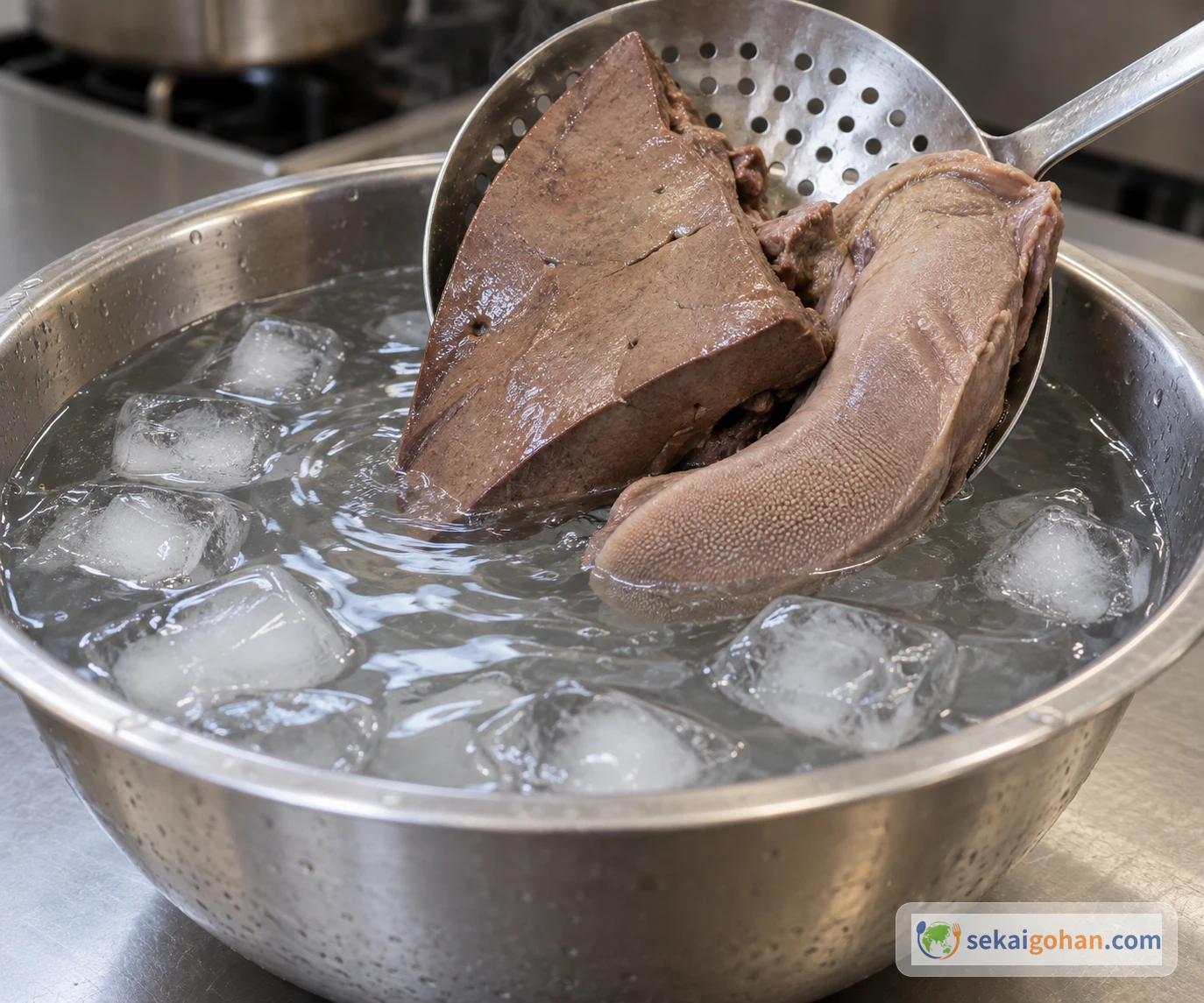
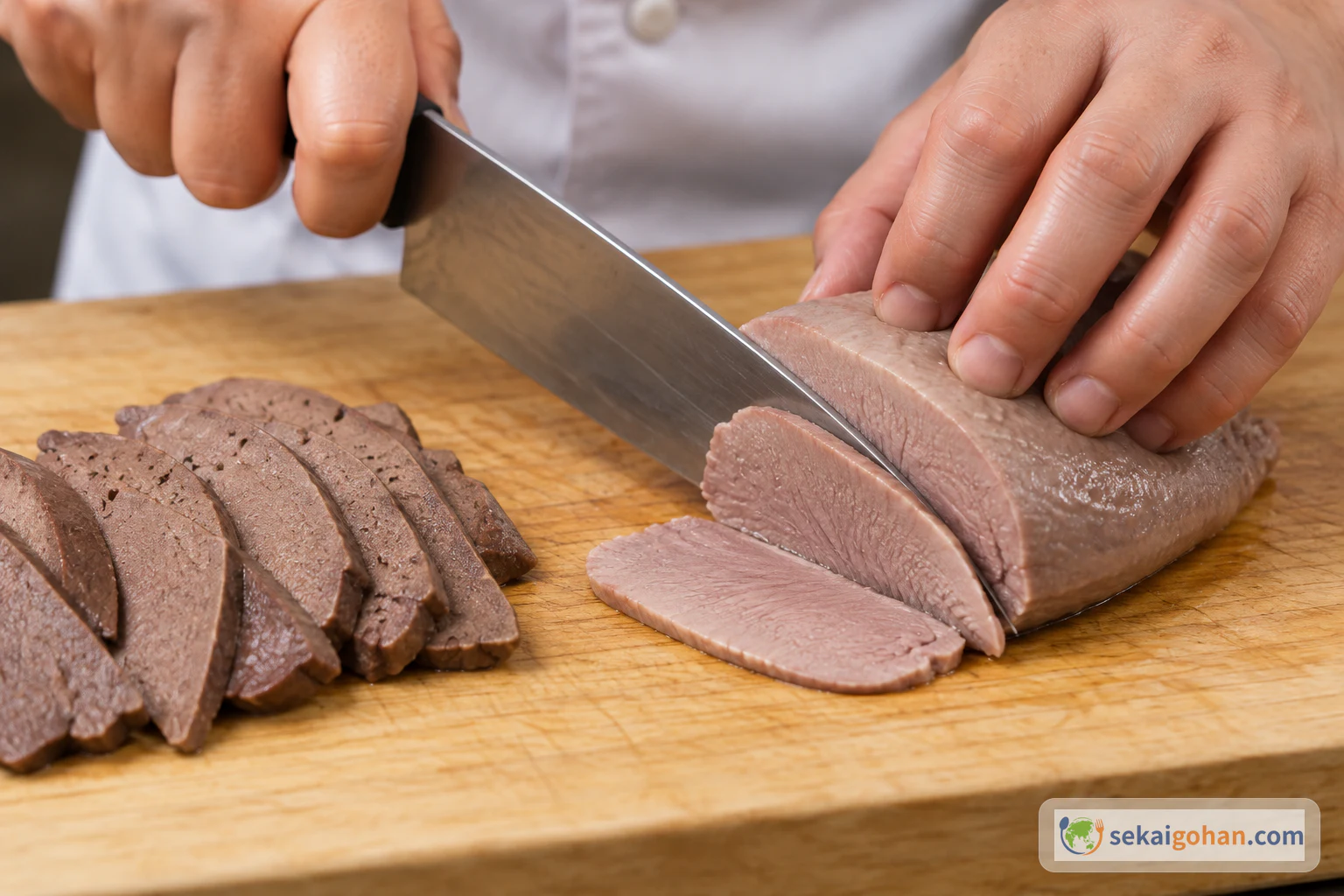
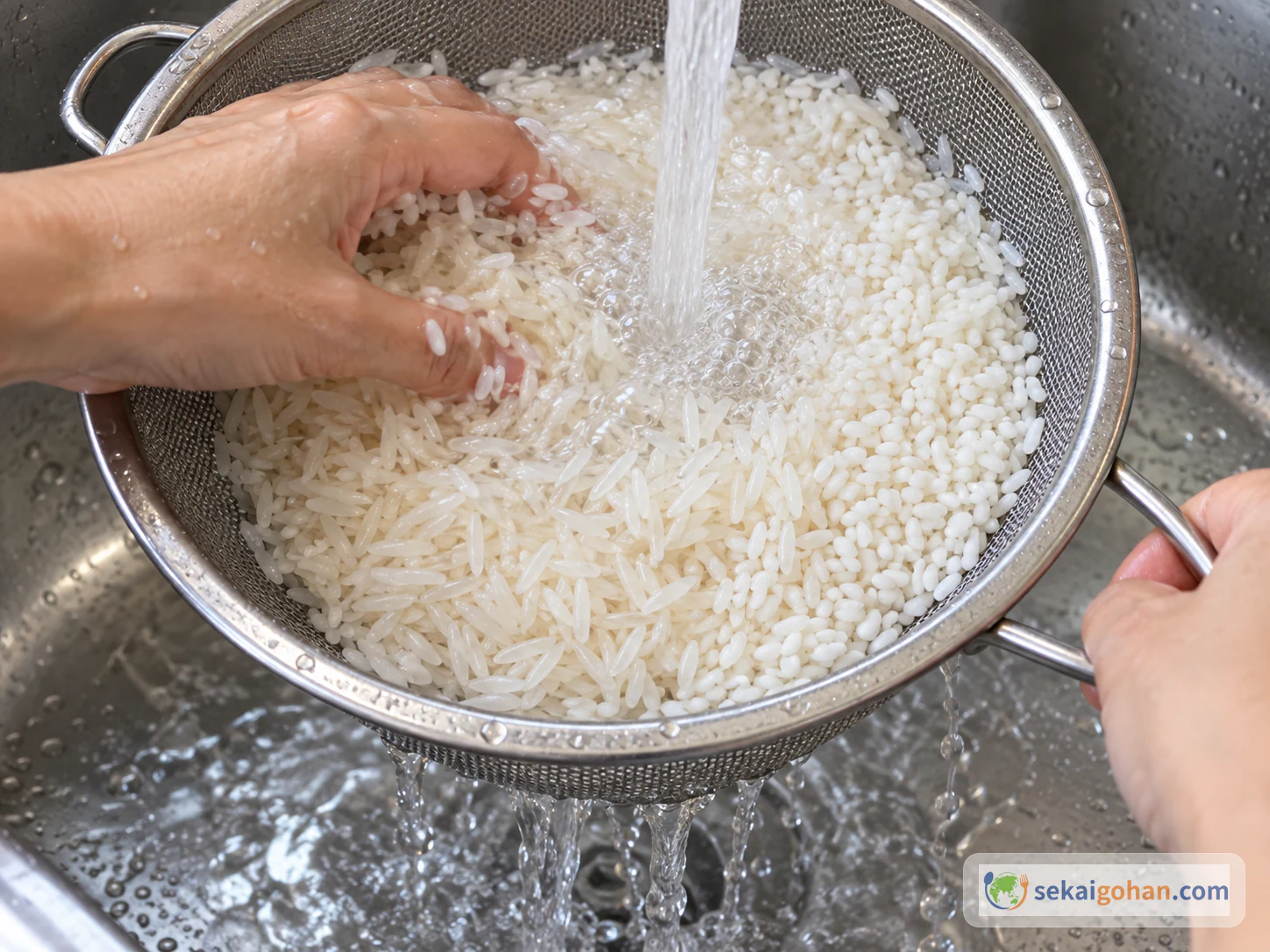
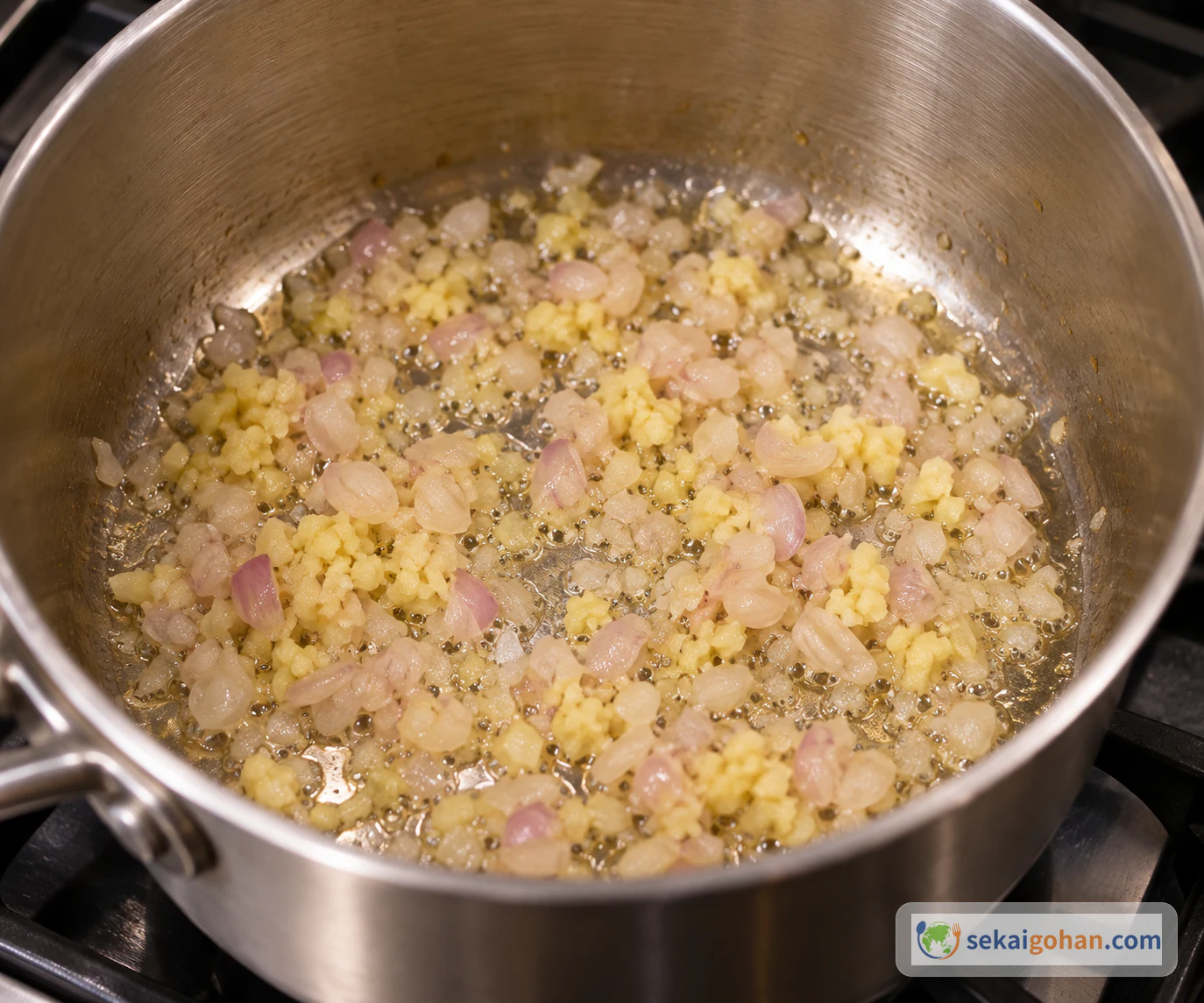
Home cooks make their own versions too, with pork bones and different kinds of rice, offal and blood jelly. This version uses two pots. The organs are scrubbed, simmered with shallot and ginger, cooled and sliced. In the second pot, Jasmine and glutinous rice cook down into porridge with crumbled raw congealed pork blood. The two parts only come together in the bowl. For more of the country's food, see our Vietnam page.
Cooking Cháo Lòng Safely
Raw organs and raw blood have to be cooked to a measured temperature, so keep a food thermometer on hand before you start. The conditions below follow Japanese food-safety standards. Each pot simmers for about 45 minutes, but the time alone won't tell you the right temperature has been reached. Check the temperature as well as watching the clock.
Liver and tongue: measure the center of the largest piece with a food thermometer. Once it reaches 167°F (75°C), keep it there for at least 1 minute.
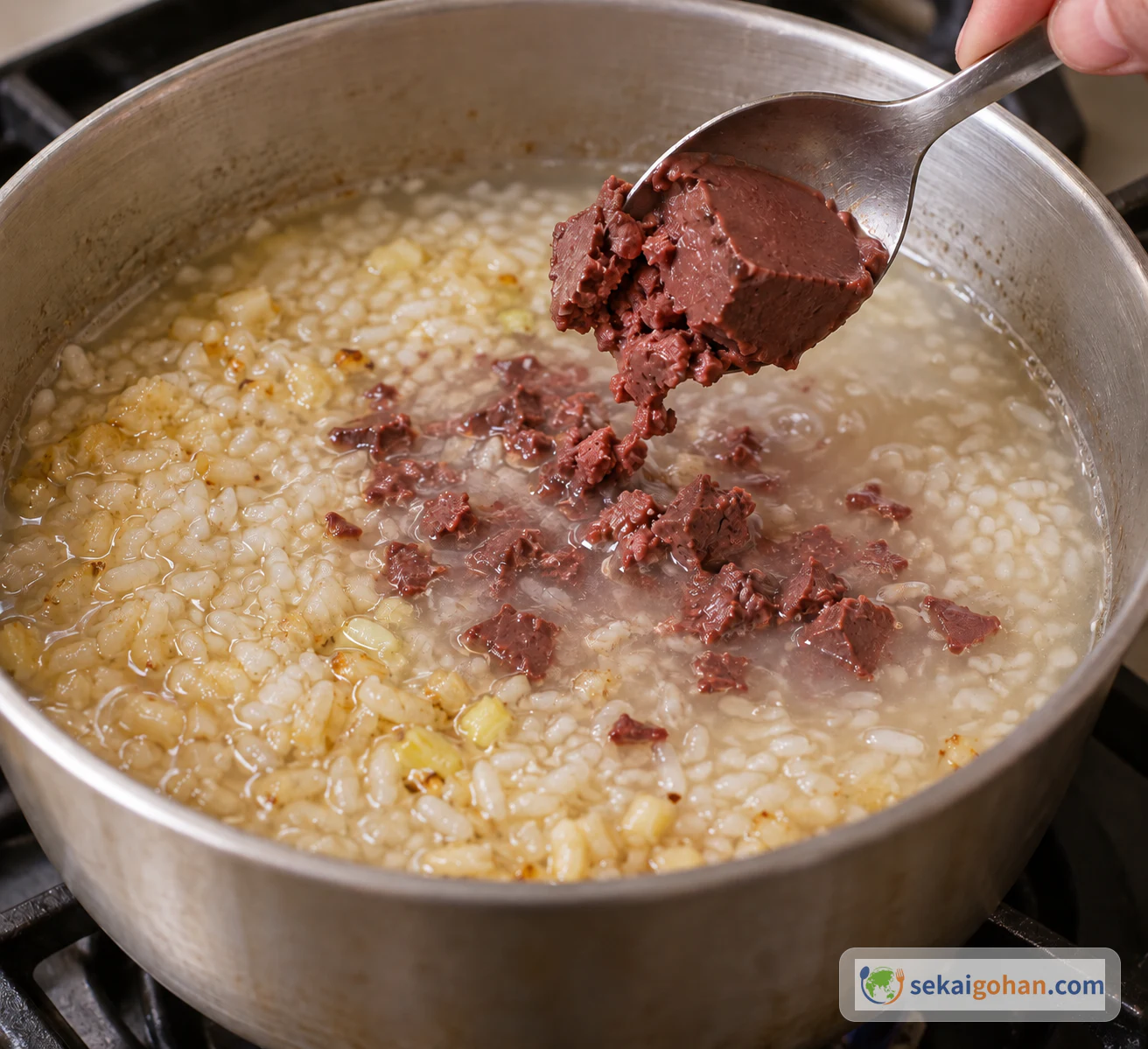
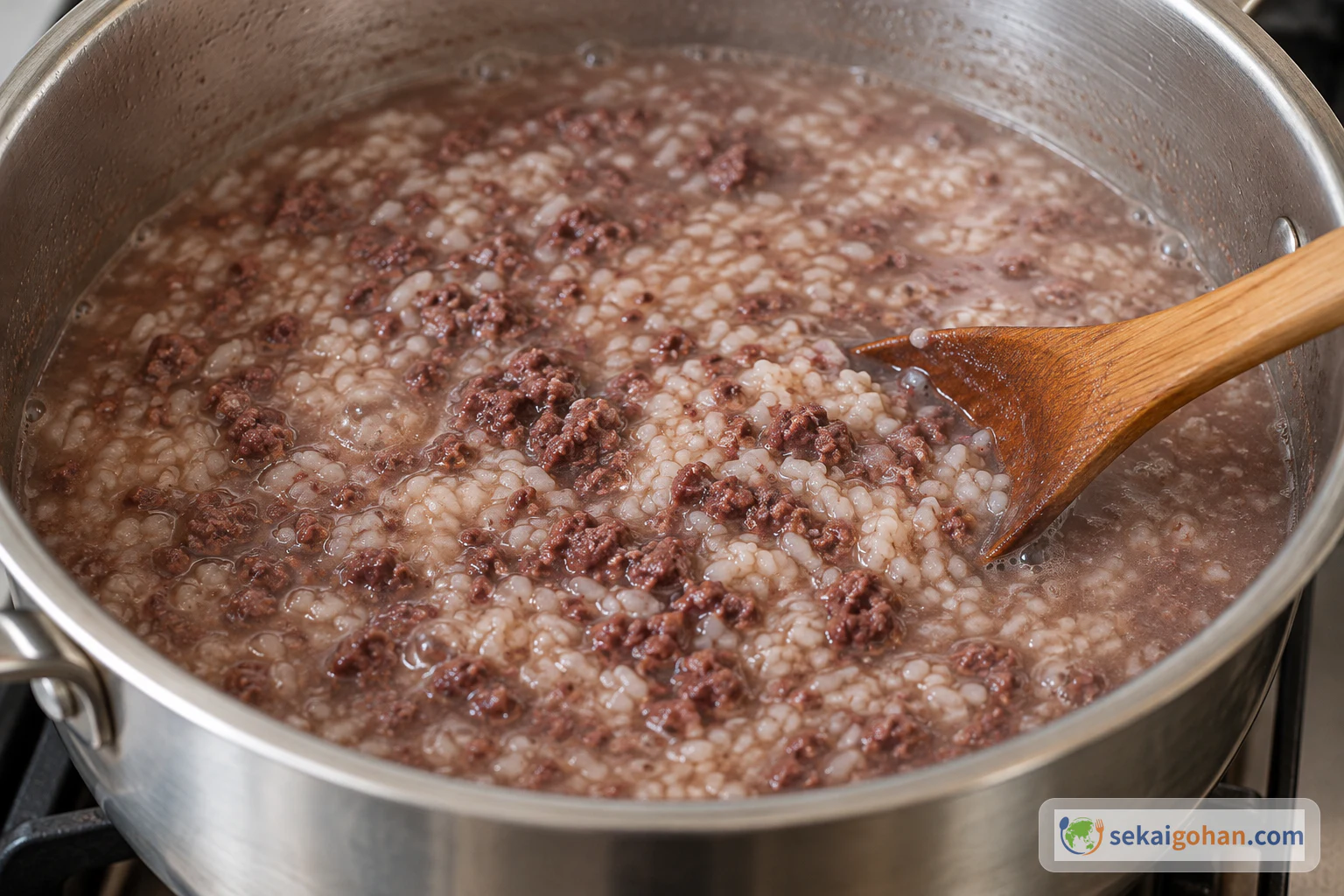
Raw congealed pork blood: once it is crumbled in and the whole pot is simmering, confirm that the porridge, including the center of the blood pieces, is at 167°F (75°C) or above. Keep it there for at least 30 minutes.
If you cannot measure the temperature, or it falls short, keep heating. Do not rely on the clock, color, smell or steam.
| Material | Japanese food-safety standard | Condition to reach |
|---|---|---|
| Pork meat and offal | Covers internal organs too. Center at 145°F (63°C) for at least 30 minutes, or an equivalent method. 167°F (75°C) for at least 1 minute, counted from when the center reaches 167°F (75°C), is an equivalent example | Center of the largest piece reaches 167°F (75°C), then at least 1 more minute |
| Livestock blood, including pig blood | 145°F (63°C) for 30 minutes, or a method with an equivalent or greater sterilizing effect | 167°F (75°C) or above, including the center of the blood pieces, for at least 30 minutes |
- The formal pork standard is written for sellers. Consumer guidance on cooking meat gives 167°F (75°C) for at least 1 minute.
- The standard covers internal organs broadly. Tongue is not named.
- The blood falls under a separate standard that does not accept 167°F (75°C) for 1 minute. That is why the blood is held at 167°F (75°C) for 30 minutes, which goes beyond the standard's 145°F (63°C) for 30 minutes.
Raw or undercooked meat and liver can carry a risk of food poisoning. Keep raw organs and blood away from any food that won't be cooked further. Go by the thermometer, not by how the pot looks.
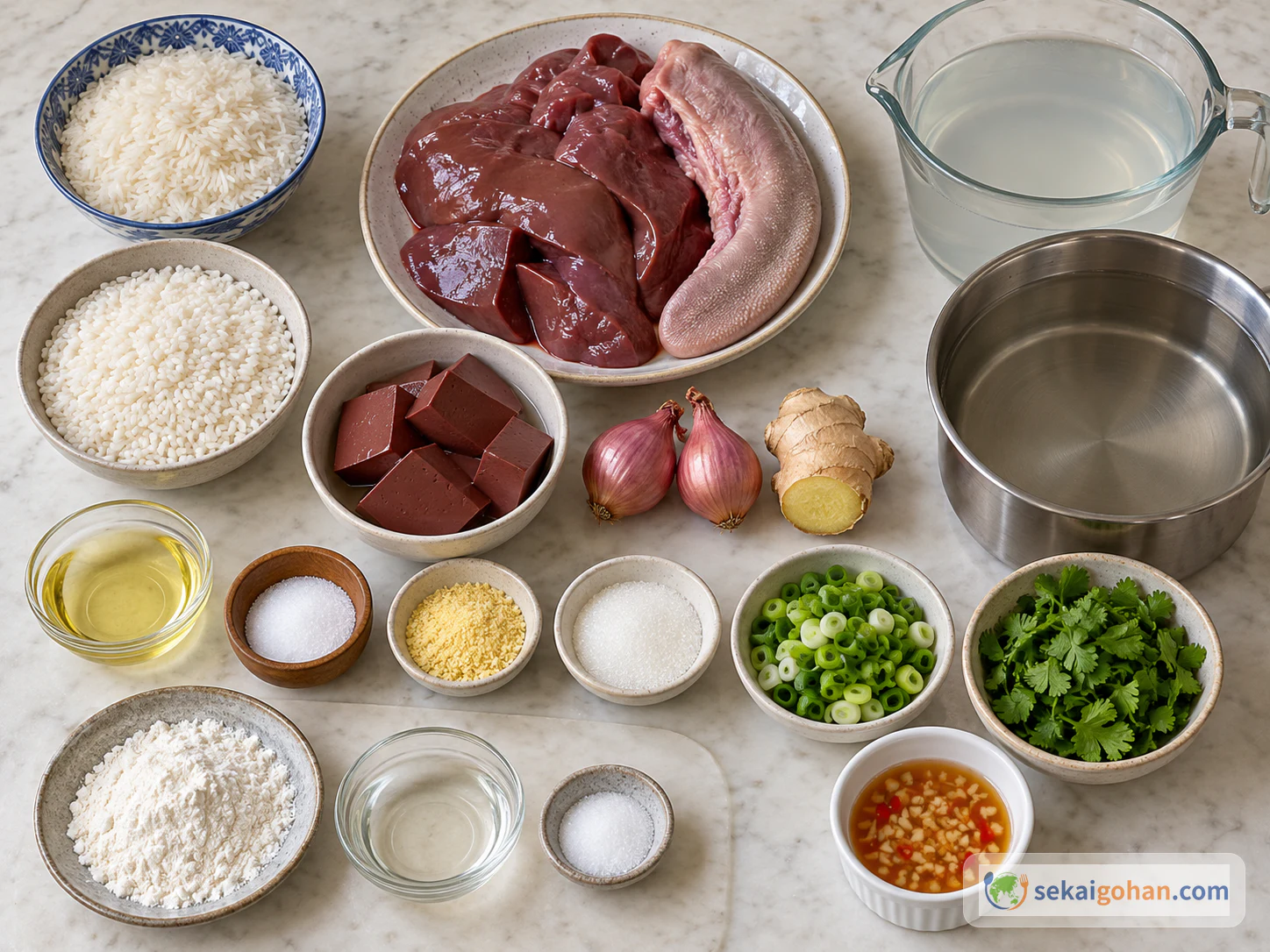
Ingredients for 4–5 Servings
Equipment
- Medium pot for the organs
- Large pot that comfortably holds the rice and 12 US cups of water
- Food thermometer
- Separate cutting boards and knives for raw organs and for cooked organs and garnishes
- Bowl for scrubbing the organs
- Bowl for the ice-water bath
- Skimmer or slotted spoon
- Colander
- Spoon for stirring, plus a clean spoon for tasting
Choosing Ingredients for Cháo Lòng
- Rice: use white Jasmine or another long-grain rice, plus glutinous rice. The brown color comes from the blood, not from brown rice.
- Pork blood: buy blood sold for eating, and ask the seller to confirm it is raw and congealed.
- Liver and tongue: you need 2 lb of organs in total, in any mix you like. Liver and tongue are the two favorites here. Tell the seller which cuts you want and that you need them raw.
- Fish sauce: have the ginger fish sauce (nước mắm gừng) ready before you serve. It goes on the table and never into the pot.
Cháo Lòng Troubleshooting
| What you notice | What to do |
|---|---|
| The thermometer reading falls short, or you cannot get one | Keep heating. Do not go by time, color, smell or steam |
| Large lumps of blood remain | Crumble them smaller, or measure their centers directly |
| The porridge is too thick | Add a little more water and return it to a simmer |
| The porridge sticks to the bottom | Keep the heat gentle and stir from the bottom more often |
| The organs still smell strong during cleaning | Repeat the scrub and rinse until the water runs clear and the odor is gone |
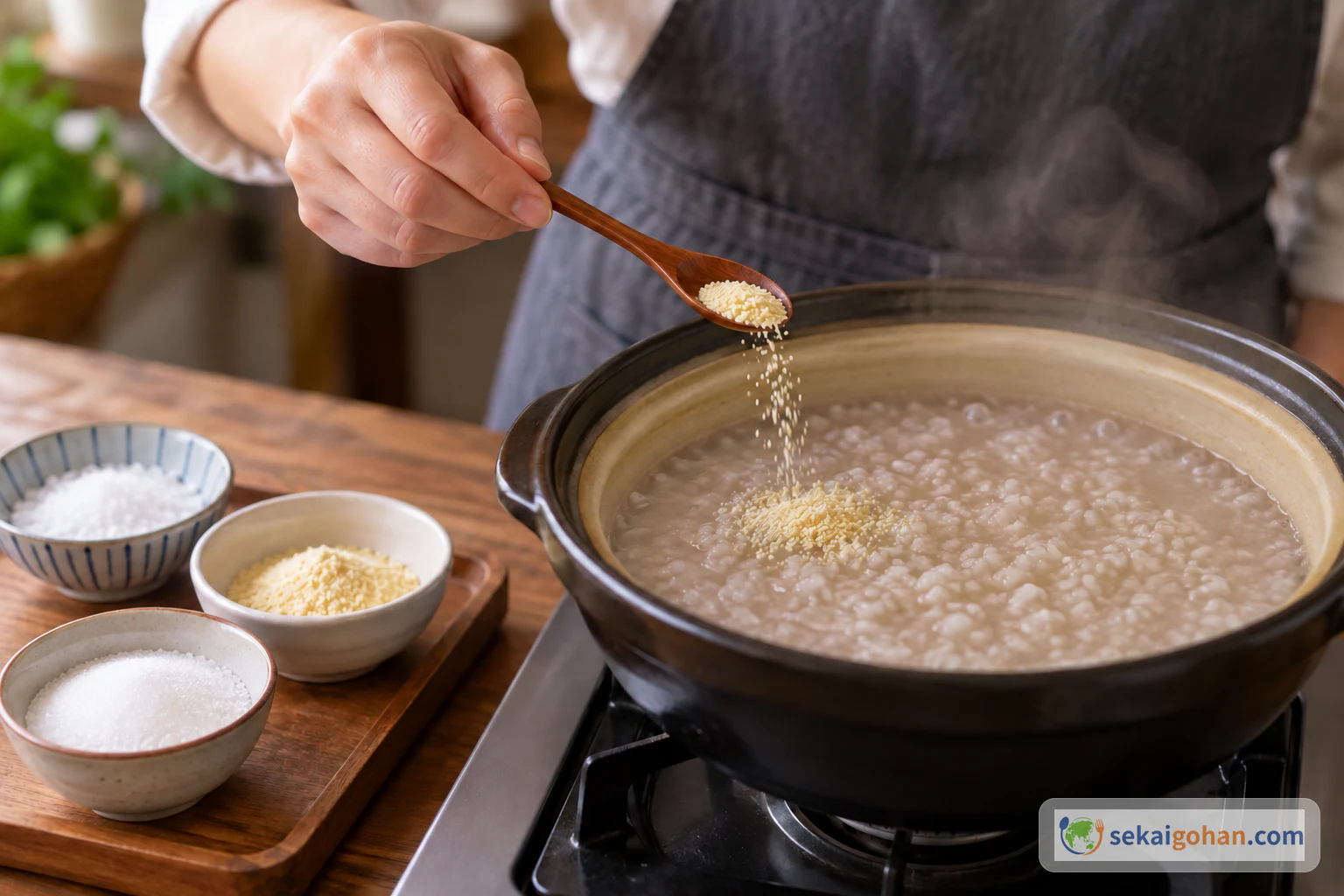
| The porridge tastes flat | Add salt, bouillon powder or sugar a little at a time, tasting after each addition |
| The porridge looks brown | This comes from the pork blood. Color does not show that it is done |
Serving Cháo Lòng and Variations
Ladle the porridge into bowls, lay the sliced organs on top and finish with green onion and cilantro. Put the ginger fish sauce on the table so everyone can add as much as they like. Southern bowls usually come with bean sprouts too.
Other cooks change the dish in a few ways. Some leave the blood in the porridge whole or smash it instead of crumbling it. Others add pork blood sausage or blood cake on top, build the porridge on pork bones and water, or set out a wider spread of garnishes. Crumbling the blood keeps the pieces small, which makes their centers easier to check with the thermometer.
Frequently Asked Questions
Does a 45-minute simmer make the organs and blood safe?
Time alone won't tell you. The simmer times don't come with measured temperatures, so use the thermometer conditions in steps 4 and 11.
How long does it take?
The total is 1 hour: 15 minutes of prep and 45 minutes of cooking. The method has two simmers of about 45 minutes each, one for the organs and one for the porridge. If you cook them one after the other, or the temperature checks take longer, expect it to run past an hour.
Can I use liquid blood or cooked blood cake instead?
No. The 5 oz is a raw congealed piece, measured by weight. Liquid blood and cooked blood cake are different ingredients and don't work with this method.
Can I replace the glutinous rice?
You can use more long-grain rice in its place. The method and images here use glutinous rice.
Can I cook the porridge in the water from the organ pot?
No. The porridge cooks in its own 12 US cups of water.