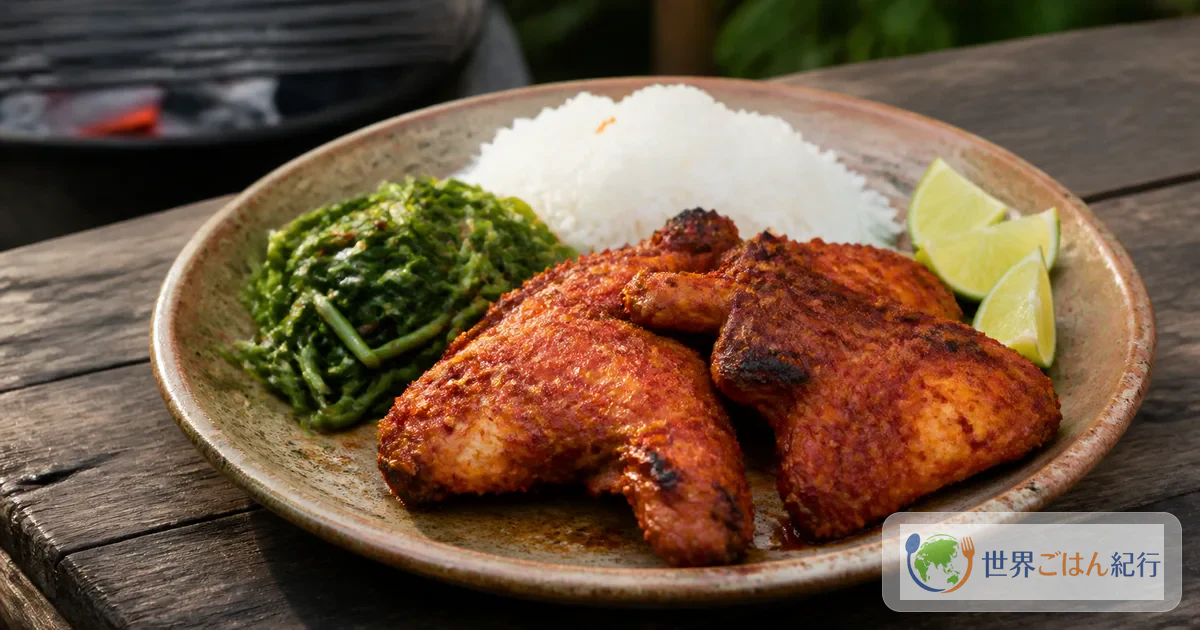
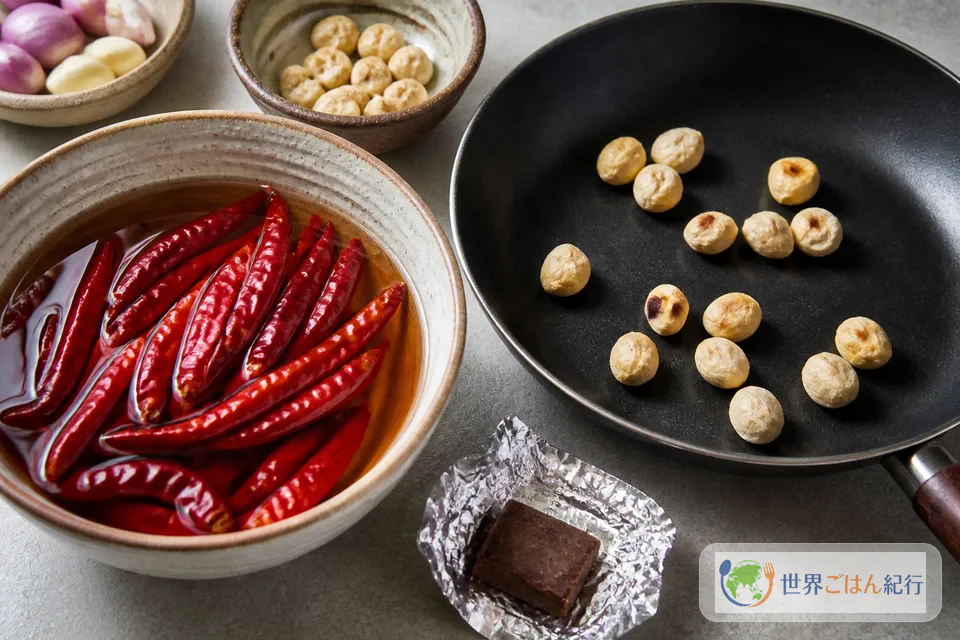
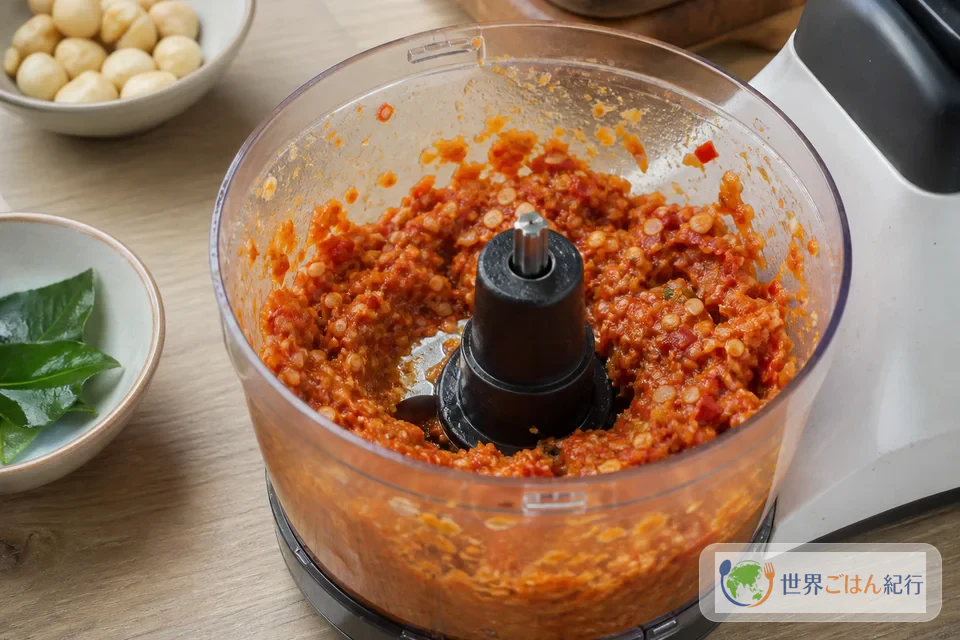
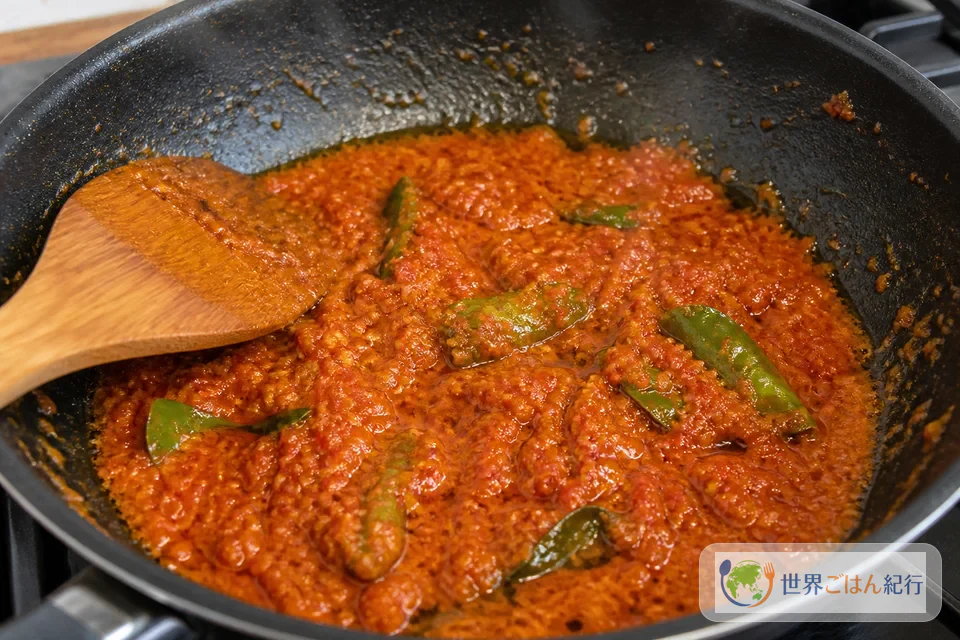
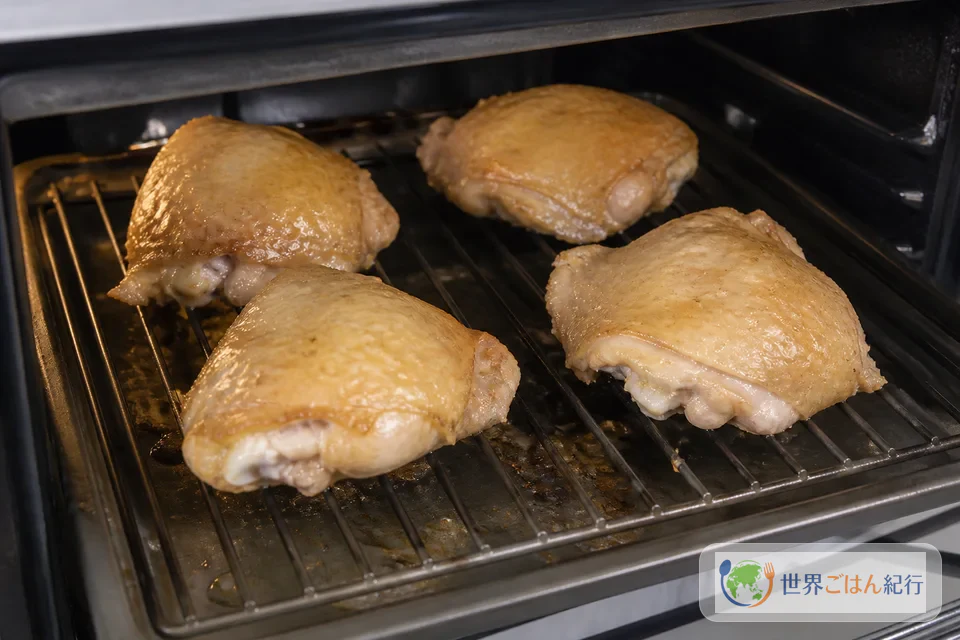
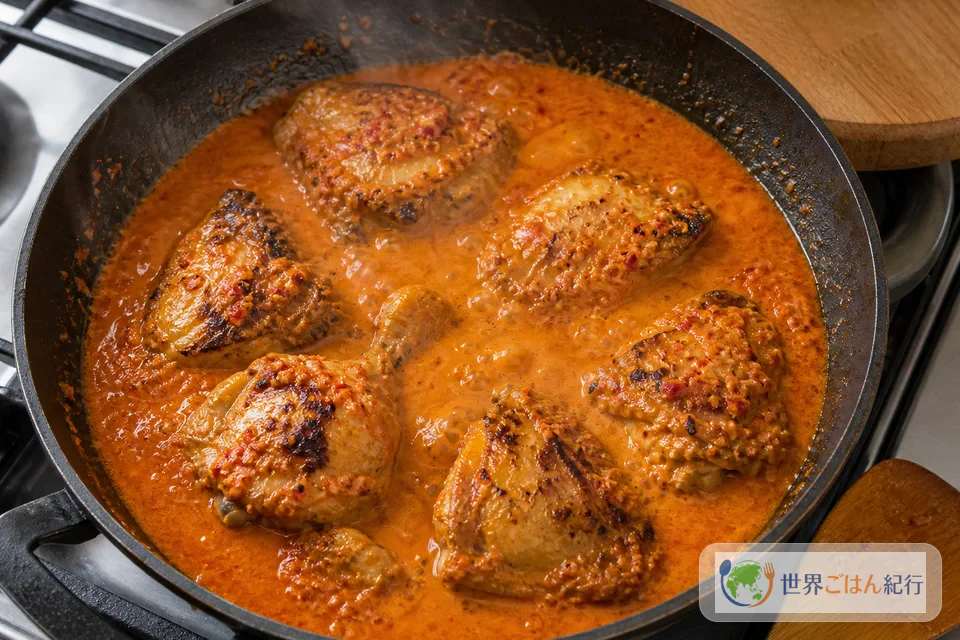
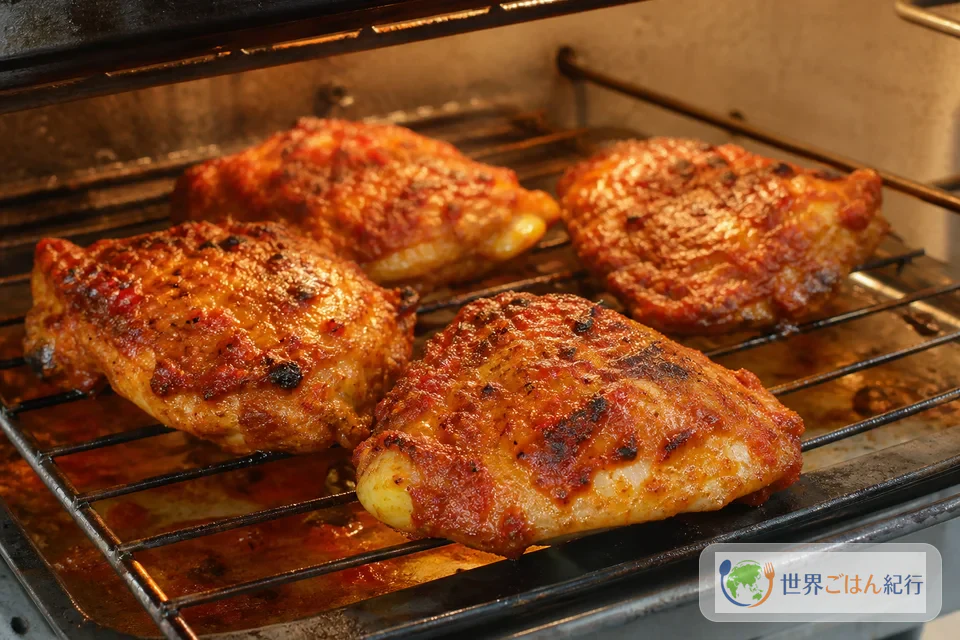
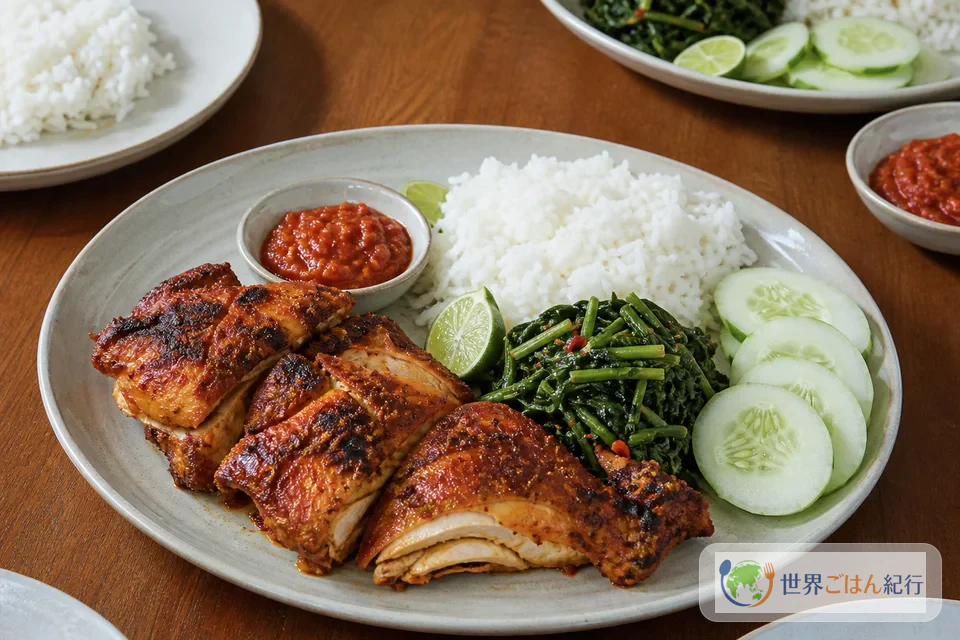
Each time fat from the chicken skin drips onto the rack, the fire flares for a moment. The smell of garlic, chili and fermented shrimp from the red paste mixes into the smoke. Once the surface has dried, you brush on more bumbu (aromatic paste). That is ayam taliwang: young chicken seasoned with chilies, garlic, tomato, terasi and palm sugar, brushed with paste as it grills. Ayam means "chicken" in Indonesian. In this dish the flavor moves into the chicken partway through cooking and the aroma is seared on at the finish, so you get a fragrant exterior with heat and fermented savoriness under the skin. Here we use bone-in thighs. You fry the bumbu once, grill the chicken, simmer it in a coconut milk paste, then grill it again.
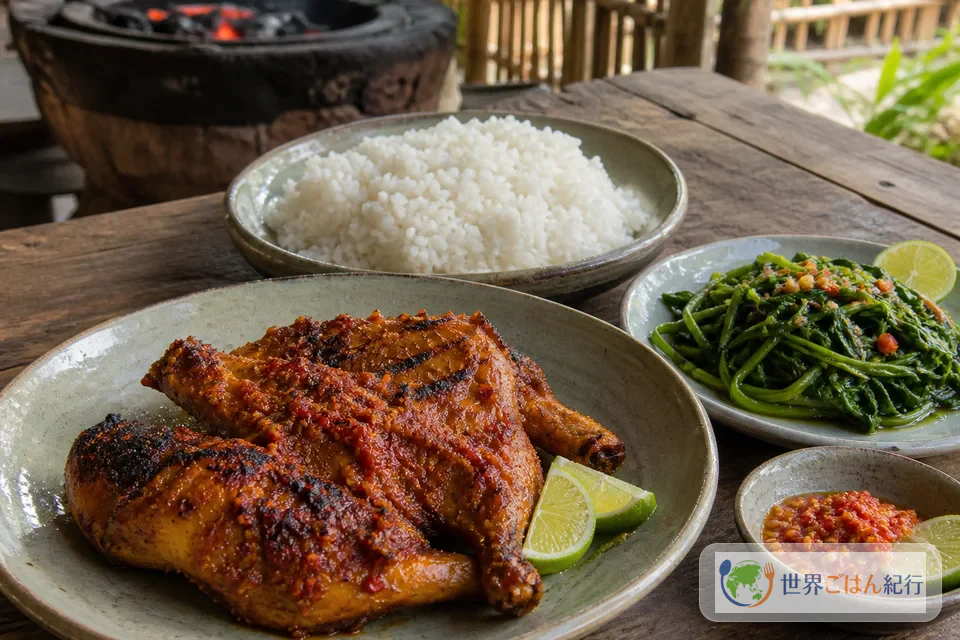
Ayam Taliwang from Taliwang to Lombok
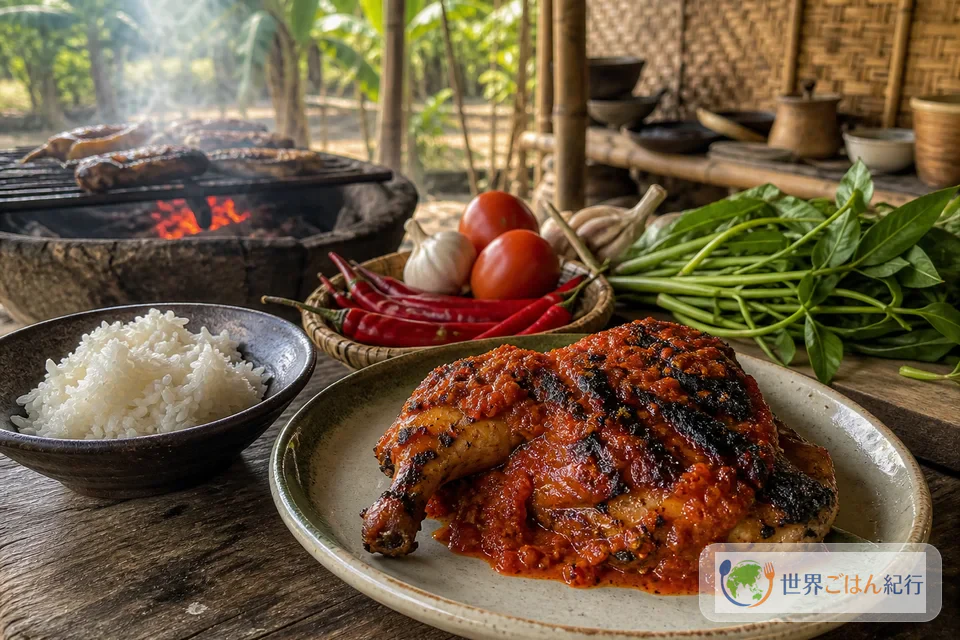
The dish takes its name from Taliwang, a place in western Sumbawa. As people and ingredients moved across the strait, it became a Lombok specialty. Today it turns up in Lombok's warung (eateries) and home kitchens as grilled chicken coated in spicy bumbu, with rice and vegetables alongside. One story says it began with a cook of the 17th-century Taliwang kingdom, though that is told as tradition rather than fixed history.
Cooks make it in more than one way. One version marinates the chicken in lime and simmers it with dried chilies, bird's-eye chilies, terasi, candlenuts and kencur before grilling. Another butterflies a whole chicken, brushes on the paste and cooks it in the oven. The first adapts easily to weeknight cuts. The second is closer to a celebration dish built around one bird.
Bali's ayam betutu makes a useful comparison. Betutu is a chicken stuffed with aromatic paste, wrapped in leaves and slowly steam-roasted, so the aroma is sealed in. Taliwang brings the heat of the grate and the fragrance of the red bumbu to the surface. Both are spicy chicken dishes, but they eat very differently.
Ingredients (serves 4): Choose the Core of the Aroma First
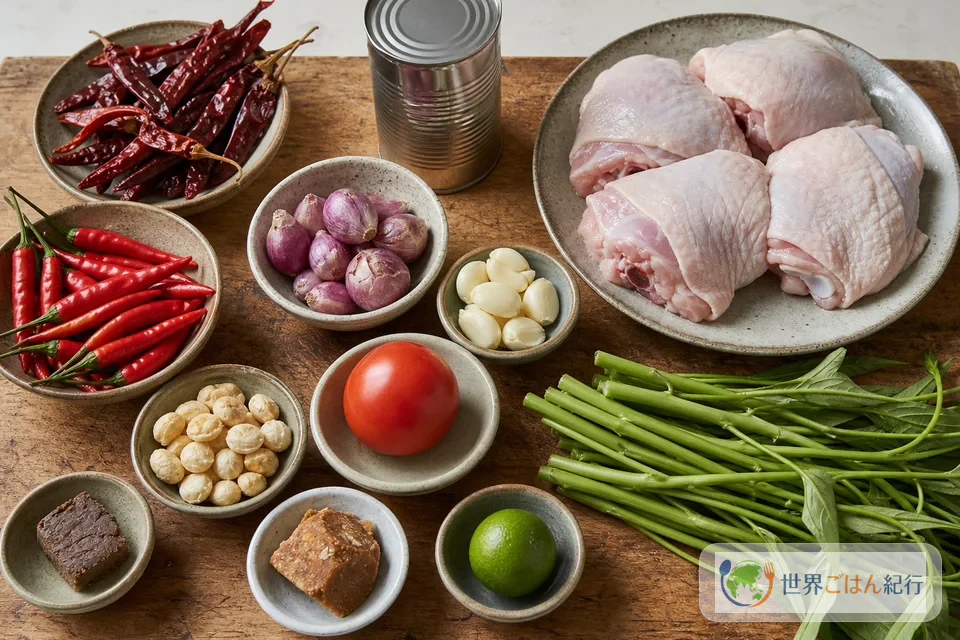
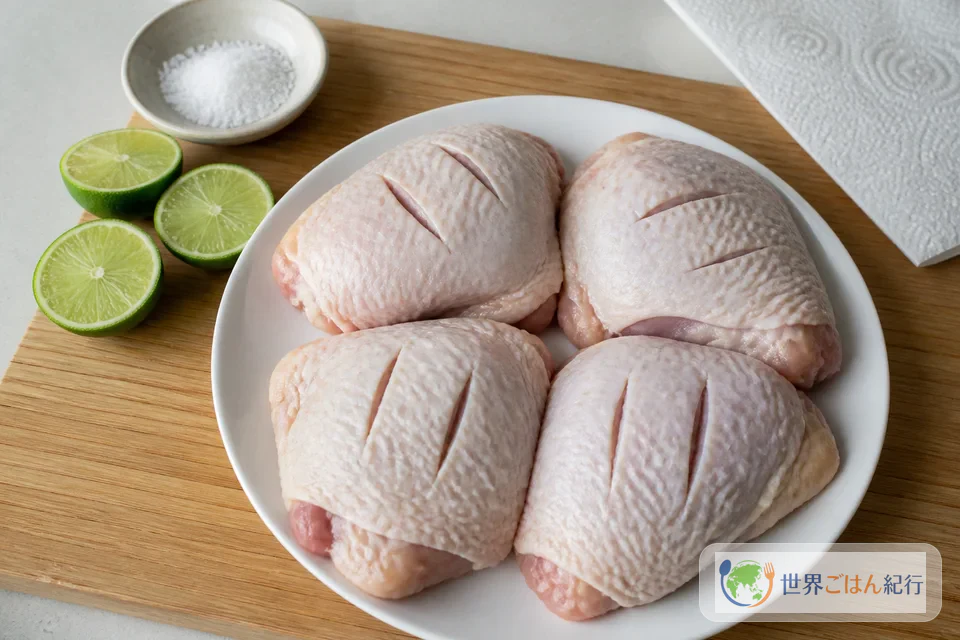
Prepare 4 bone-in thighs, 900–1,000 g in total. If using a whole chicken, substitute a young chicken of 900–1,100 g, opened and flattened. A whole bird gives more atmosphere at the table, but measure first whether it fits under your broiler.
Terasi is a fermented shrimp paste. Though it shares the seafood umami of fish sauce, it is not something that adds liquid saltiness. A small amount put into the fried bumbu lets its strong smell blend into the meat's fat and the chili. If you avoid shellfish, use neither terasi nor dried shrimp, and increase the salt slightly.
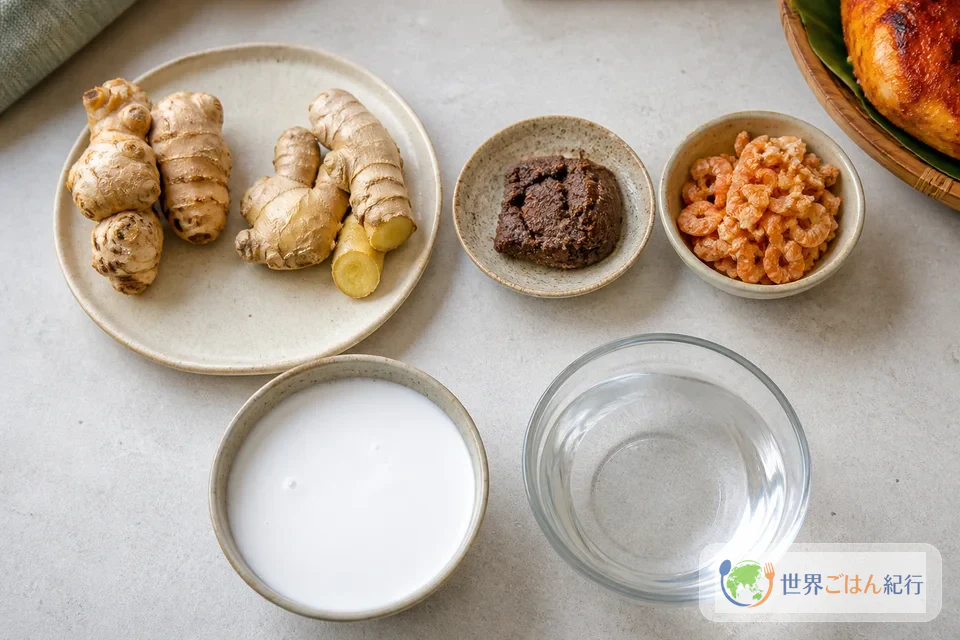
Kencur is a rhizome similar to ginger but not the same. If you prioritize the local aroma, look for kencur; if you don't want to add to your first shopping trip, replace it with ginger. Candlenuts add body to the paste, working more like oil than texture.
This recipe uses chicken, terasi (which contains shrimp), and nuts. Check the ingredient labels of any substitutes too. Do not reuse cutting boards, knives, plates or brushes that touched raw chicken for cooked food.
Choosing Ingredients and Substitutes for Ayam Taliwang
Coconut Milk, Kencur and Terasi
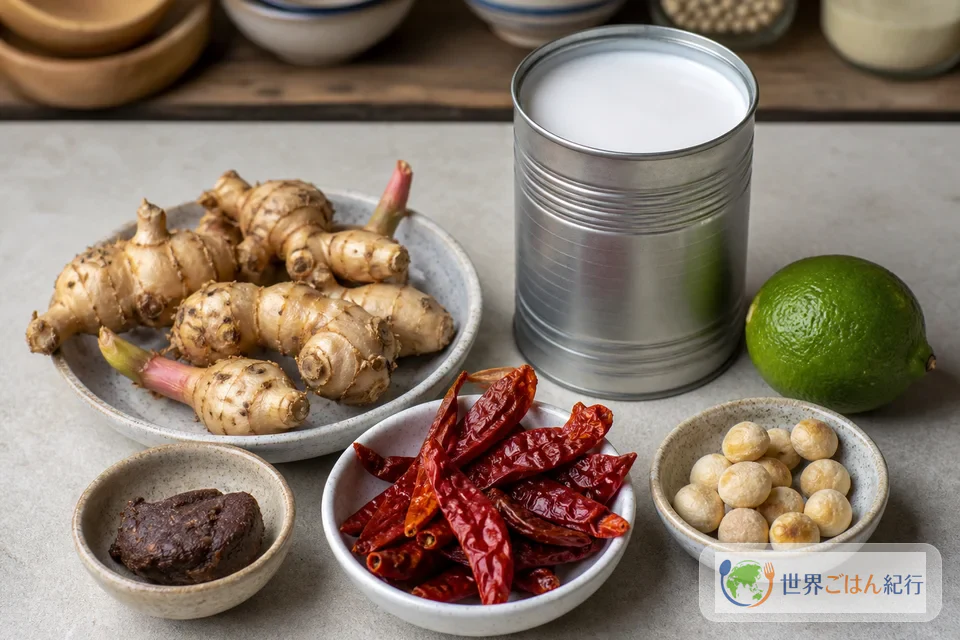
Coconut milk adds moisture and roundness and helps the bumbu cling to the chicken. Choose an unsweetened cooking type made mainly of coconut and water, not the sweetened dessert kind. The recipe uses ¾ cup (200 ml). A 1¾-cup (400 ml) can makes sense if you'll put the rest into curries or braises. If you're making this only once, look for a small size at a nearby import store.
Kencur is shelved apart from ginger, and its earthy, cooling aroma is quite different. It's worth buying if you'll cook Indonesian food several times. For a single batch, use ginger, and look for a frozen pack when you want to try the real aroma. Terasi is a fermented shrimp paste mixed into the bumbu in small amounts, not a liquid seasoning like fish sauce. It smells strong once opened, so buy a small packet at an import store, where you can read the label and avoid leftovers. If you use little, you don't have to buy it at all.
Makrut lime leaf is optional. It adds a green citrus scent when you cook under a broiler, and 2 leaves is enough. Buy it only if you can use the rest in Thai soups or Indonesian braises.
Substitutions
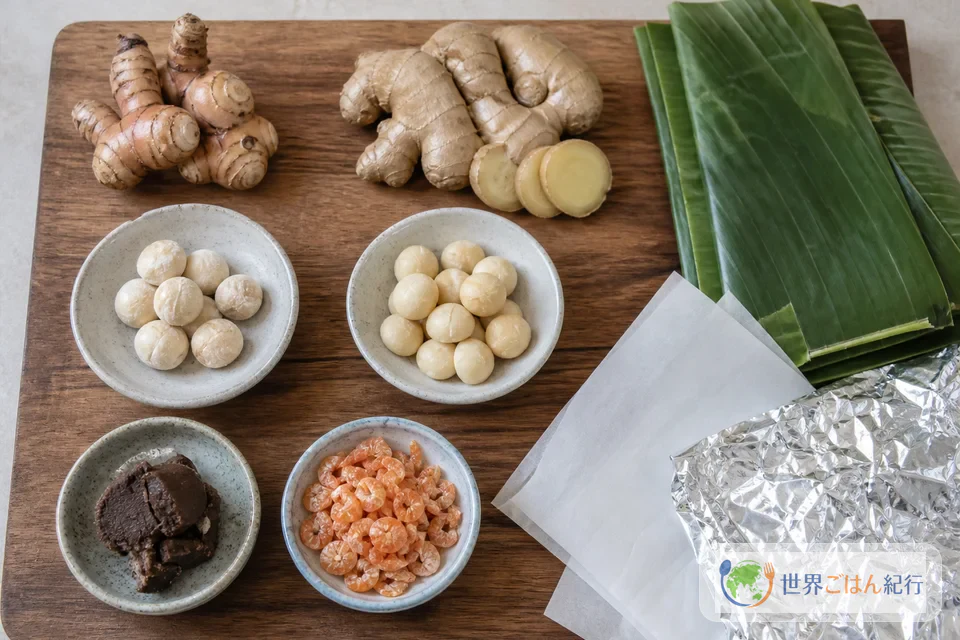
What defines ayam taliwang is grilling the chicken, frying chilies and tomato in oil, the umami of terasi, and searing the paste on at the end without scorching it. Everything else can bend. Just know what changes when you swap something.
| Local ingredient or method | Replacement in a home kitchen | What changes |
|---|---|---|
| Whole grilled young chicken | 4 bone-in thighs | Less skin area and less drama at the table |
| Kencur | 15 g ginger + a little lime zest | The earthy, hard aroma moves toward a warm one |
| Terasi | Omit, or dried shrimp | The deep aroma of fermented shrimp weakens |
| Candlenuts | Macadamia nuts | The body of the paste is easy to keep |
| Coconut milk | ½ cup (100 ml) water and 1.75 oz (50 g) tomato | Less roundness and the edge of the chili comes forward |
| Charcoal | Home broiler | Weaker smoke aroma, easier to adjust distance from the heat |
Substitute dried shrimp for terasi only when no one at the table has an allergy.
Controlling the Heat
Think about the type of chili and the amount separately. Cutting back on dried red chilies also reduces the color and sweet aroma. Dropping only the bird's-eye chilies lowers the sting and keeps the look of the red bumbu. If even one of four people dislikes heat, make the bumbu milder overall and put sambal at the edge of the plate so everyone can set their own level. That's easier in a household with children than making the paste hotter from the start. When buying sambal, check the ingredients (chili, garlic, vinegar, salt), the blend and the container size, and pick one you'll use up.
Tools
You can chop the bumbu finely with a knife. A small food processor turns onion, tomato and nuts into a coarse paste all at once. Before buying one, check the bowl capacity, how many parts need washing and whether it handles liquids. For only the 4 oz (120 g) or so in this recipe, though, a knife is enough.
Method: Grill First, Simmer in Bumbu, Then Grill Again
Putting the bumbu on the chicken between the two grillings keeps the flavor from staying only on the skin's surface. The first browning is the base of fragrance, cooking in the pan is the time for flavor to move into the meat, and the last grill is the time to dry the red paste.
For a young chicken of 900–1,100 g, open it from the back to flatten and make shallow cuts in the skin. Grill 8 minutes per side the first time, extend the bumbu simmer to 15 minutes, and check the center temperature at the end. If it doesn't fit under the broiler, cook it in a 350°F (180°C) oven and move it to the broiler only for the finish.
Common Ayam Taliwang Problems and Fixes
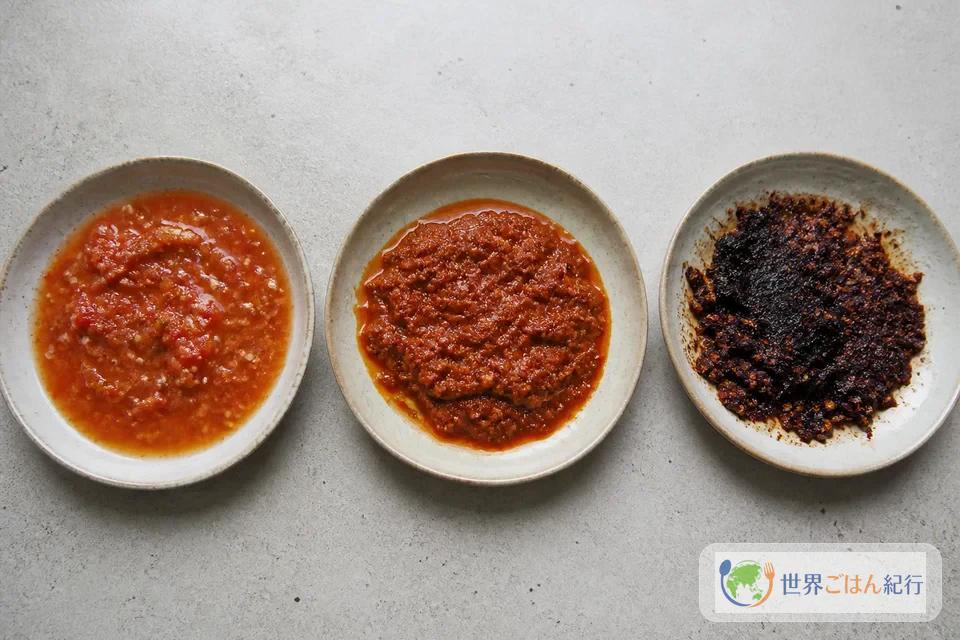
More heat doesn't fix ayam taliwang. If moisture remains in the bumbu the aroma blurs, and if the chicken goes straight under high heat, only the skin turns black. Use the table to find where things went wrong.
| State | Main cause | How to fix it |
|---|---|---|
| Bumbu is watery | Moisture of tomato and onion, not fried enough | Cook 3–5 minutes more over medium-low heat until a spatula track remains |
| Terasi smell is strong | Added before frying, too much | Next time warm it for 30 seconds first; this time catch it with coconut milk and rice |
| Too spicy | Too many bird's-eye chilies | Don't brush on extra paste; serve greens, rice and coconut milk |
| Too salty | Raised terasi and salt together | Stop adding salt and increase unsalted rice and tomato |
| Only the skin is black | Rack too close to the heat, paste too thick | Cover with foil and check the center temperature over lower heat |
| Center undercooked | Meat thick, simmer too short | Add 10 minutes at a time in a 325°F (160°C) oven and confirm 167°F (75°C) for 1 minute |
| Meat is dry | Final grill too long, not rested | Spoon a little juice over and rest 5 minutes; shorten the final grill next time |
Judge doneness by temperature, not by skin color or how easily a skewer goes in. Cook the chicken until the center reaches 75°C for at least 1 minute. The poultry minimum is 74°C (165°F), so that gives you a margin. Without a thermometer, cut open the thickest part and check that no red juice remains and the meat has begun to pull away from the bone. Color is still no substitute for a safe temperature, so if you'll make this again, a poultry thermometer is worth having.
Serving and Storing Ayam Taliwang
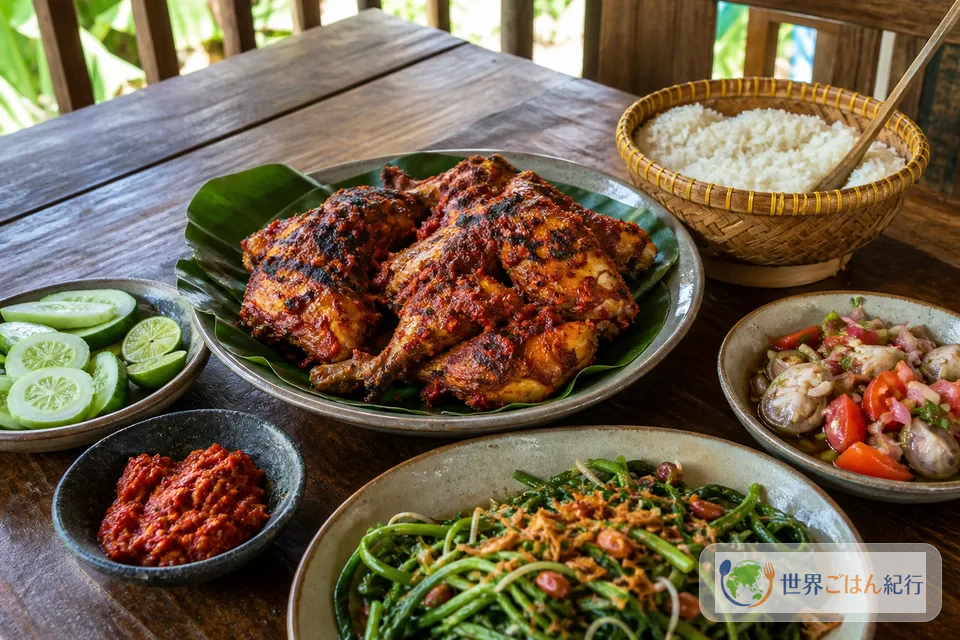
In Lombok, ayam taliwang comes with rice, plecing kangkung (boiled water spinach with a tomato and chili sambal), beberuk terong (a raw eggplant salad) and so on. The idea is to set watery greens and tart tomato next to the chicken rather than pile on more spice, so the heat doesn't linger in your mouth. At home, rice and plecing kangkung are enough to start. If you can't find water spinach, boil komatsuna or similar greens for 45 seconds and cut them into 1.5 inches (4 cm) lengths. Split only the thick stems lengthwise so you can chew them along with the leaves.
Lime cuts the fat of the grilled skin. Squeezing it on just before eating keeps the fragrance of the paste better than mixing a lot of acid into the bumbu. Cucumber on the side isn't traditional, but it gives your palate a break from the heat and fat.
Debone leftover chicken and move it to a shallow airtight container with its sauce. Refrigerate it once it has cooled a little, and finish it within 2 days. When reheating, heat until steam rises from the center. If only the surface gets hot, stir it or heat it in portions by thickness. High heat dries out stored meat, so spoon on a little sauce before reheating.
FAQ
Q1. Can I make ayam taliwang only with a whole chicken?
Bone-in thighs work well. Cut pieces take the bumbu easily and don't depend on the height of your broiler. A whole chicken gives the celebratory look, but it has more thick parts, so always measure the temperature in the same spot.
Q2. Is kencur the same as ginger or galangal?
No. Kencur has an earthy, cooling aroma, ginger a warm, pungent one, and galangal a hard, citrus-like one. Ginger can stand in for kencur in taliwang, but the finished aroma changes.
Q3. How can I make the smell of terasi milder?
Keep to the amount and warm it for 30 seconds over low heat. Once the raw smell has turned into the smell of grilled shrimp, add it to the fried bumbu. If you still dislike it, use dried shrimp, or leave it out and adjust with salt. If you have a shrimp allergy, skip the dried shrimp too.
Q4. Can I get a fragrant result without charcoal?
Yes, under a broiler. First render the fat from the skin. After the simmer, brush on the bumbu thinly and finish quickly. A thick coat scorches near the heat, so grill in two rounds rather than applying a lot at once.
Q5. Does it work without coconut milk?
It does. Use the water and tomato from the substitution table and simmer a little longer, until the liquid clings to the meat. It tastes lighter, and the chili's sting comes forward. It's a good place to start if you don't want leftover coconut milk from an unsweetened can.